







Abstract
Loneliness negatively impacts on the well-being of older adults, especially those with small social networks. While expanding networks and participating in social activities are commonly associated with lower loneliness, these strategies are not always feasible for everyone. Solitary activities, such as reading, may offer an alternative by relating to the subjective experience of loneliness and promoting satisfaction with existing networks. Using Waves 4–8 of the Survey of Health, Ageing, and Retirement in Europe (SHARE), we analyzed and compared how social and solitary activities moderated the relationship between core network size and loneliness among 31,935 participants aged 54 and above. We further conducted moderated mediation analyses to explore whether these activities moderate the association between network size and network satisfaction, which serves as a mediating path between network size and loneliness. Results show that daily engagement in solitary activities, particularly reading, was linked to lower loneliness among older adults with small social networks, with stronger associations than those observed for regular social activity participation, even after accounting for baseline loneliness, personality, changes in network size, and other sociodemographic factors. Network satisfaction helped explain the link between network size and loneliness, especially in relation to social activity. However, reading showed a broader protective effect that was associated with both greater satisfaction with one’s network and reduced loneliness, even beyond the role of satisfaction. These findings suggest that engaging in cognitively stimulating solitary activities, especially reading, may offer a meaningful alternative for individuals with a limited core network and at risk for loneliness.
Keywords
Introduction
Loneliness is a recognized threat to older adults’ well-being, linked to lower physical and mental health, worsened cognitive function, and higher mortality risk (Boss et al., 2015; Hawkley & Cacioppo, 2010; Holt-Lunstad et al., 2015; Luo et al., 2012). Studies show that almost 10% of older adults in Europe experience loneliness most of the time, and 41% feel lonely some of the time (Hansen & Slagsvold, 2016; Vozikaki et al., 2018). Despite public health recommendations to maintain and expand social networks (Holt-Lunstad, 2017; Teh & Tey, 2019; Vozikaki et al., 2018), many older adults face involuntary losses in their core network and encounter barriers to rebuilding such connections. The resulting smaller networks put them at higher risk of loneliness. This raises a pressing question: what strategies can help mitigate loneliness among older adults with smaller social networks?
Limited research has explored how the relationship between small core networks and loneliness may be contingent on people’s lifestyles, including their engagement in social and solitary activities. These lifestyle patterns are important because they calibrate how much people rely on their personal networks to meet their emotional and supportive needs (Wrzus et al., 2013; York Cornwell & Waite, 2009). Loneliness is widely understood as a subjective experience arising from the discrepancy between desired and actual levels of social engagement (Peplau & Perlman, 1982). This subjective construct encompasses two dimensions: social loneliness, which stems from the lack of a broader social network, and emotional loneliness, which reflects the perception of inadequate intimate relationships (Weiss, 1973). Participating in social activities holds significant potential to bridge this gap by facilitating interactions with a wide array of peripheral connections, fostering emotional support and a sense of belonging (Adams et al., 2011). Such alternative source of social connectedness could alleviate the strain on limited core networks, enhancing the likelihood that these networks are perceived as adequate.
Surprisingly, the relationship between small core networks and social participation remains relatively underexplored. But a particularly concerning group comprises individuals who rely on restricted networks while also being limited in social activities due to factors such as health, mobility, or accessibility constraints. In light of these challenges, it is also essential to assess whether solitary activities, such as reading, might serve as viable alternatives for alleviating loneliness. When these activities are immersive and engaging (Csikszentmihalyi, 1991; Rane-Szostak & Herth, 1995), they may promote a sense of contentment with their existing close networks.
This study investigates these potential approaches to addressing loneliness, with a particular attention to solitary activities. Drawing on detailed network measures from Wave 6 of the Survey of Health, Ageing, and Retirement in Europe (SHARE), alongside other information from adjacent waves (Wave 4, 5, 7 and 8), the first aim is to examine the frequency of social and solitary activity participation among older adults. The second aim is to assess whether and how solitary activities, especially cognitively stimulating ones like reading, moderate the association between small network size and loneliness. To contextualize this analysis, we compare the strength of these moderating effects with those observed for social activities, the more conventionally examined antidotes to loneliness. Our analysis adopts a moderated-mediation framework by assessing whether the moderating effects of these activities—social and solitary—are partly expressed through higher network satisfaction, a potential mediator between network size and loneliness. This integrated approach aims to offer a comprehensive perspective on how patterns of activity engagement relate to experiences of loneliness among individuals with limited social networks.
Background
Small networks and loneliness: The potential and limits of social activities
Social network size is widely recognized as one of the structural foundations of one’s social connectedness (York Cornwell & Waite, 2009), where larger networks often indicate more access to various social resources, including companionship, emotional support, a confiding ear, and exchanges of practical and monetary help with others (Aartsen et al., 2004; Djundeva et al., 2019; Thoits, 2011; Wrzus et al., 2013; York Cornwell & Waite, 2009). Recent literature reviews suggest that personal network size has a robust and inverse association with perceived loneliness (Barjakova et al., 2023; Dahlberg et al., 2022). However, when older adults’ networks shrink, especially after involuntary losses like the death of a partner or a loss of friends, the risk of loneliness is more frequently reported (Aartsen & Jylhä, 2011; Böger & Huxhold, 2018; Dahlberg et al., 2022; Wrzus et al., 2013). Small networks may fall short of meeting individuals’ expectations for social interaction, contributing to increased risk of loneliness. Even so, there is a notable gap in research on how modifiable factors condition the association between small network size and loneliness in later life.
Social activities have the potential to compensate for smaller networks and help to alleviate loneliness associated with them. According to continuity and activity theories, social activities such as volunteering, taking courses, and engaging in various organizations allow older people to maintain their accustomed social roles and adjust them as necessary (Atchley, 1989; Donnelly & Hinterlong, 2010). Indeed, participating in these of activities is also a key component of social connectedness (Böger & Huxhold, 2018; Dahlberg et al., 2018, 2022; Newall et al., 2009; York Cornwell & Waite, 2009). However, the extent to which social activities are associated with lower loneliness for those with smaller core networks remains unclear.
Examining the intersection of small network size and active social participation, especially how it relates to loneliness, is important for several reasons. First, having a large core network may not always be feasible or even desirable for everyone. Some individuals may prefer a more selective approach, choosing to discuss important matters only with close, trustworthy connections that have stood the test of time. Others may struggle to identify core network members due to small family size (Mair, 2019), fewer available family and non-kin age peers due to health issues or mortality (Böger & Huxhold, 2018; Litwin & Levinsky, 2021), or a lack of response from non-kin candidates who are more focused on their own families (Charles & Carstensen, 2010). Second, building trusting relationships and expanding one’s core network is often a slow process, offering little immediate relief from loneliness. In these scenarios, participation in social activities can offer a more accessible alternative, one that is associated with feelings of connection and social engagement, but without the deeper commitment core ties require. These activities might help distribute social interactions more broadly, potentially reducing reliance on a small core network for the bulk of companionship needs. Consequently, we expect that individuals involved in social activities will tend to report lower loneliness despite having smaller networks, especially when they report greater satisfaction with their current social ties.
Crucially, however, the factors associated with smaller network size often overlap with those linked to reduced social participation. These key factors include health and physical mobility issues (Adams et al., 2004; Böger & Huxhold, 2018; Bukov et al., 2002; Cornwell, 2009; Schafer, 2011, 2013; Vozikaki et al., 2018), lack of prior involvement in activities (Dahlberg et al., 2018), and socioeconomic or neighborhood constraints (Cornwell, 2015; York Cornwell & Behler, 2015; York Cornwell & Goldman, 2021). Therefore, while examining whether social participation is associated with lower loneliness among those with smaller networks, it is equally important to consider alternative strategies that are more feasible for individuals with both limited networks and reduced access to participation opportunities.
Solitary activities: An underexplored alternative remedy for loneliness
Given the subjective nature of loneliness, solitary activities may present a practical alternative option for individuals with limited access to social connections or organized activities. Solitary activities have received relatively little attention in loneliness research, likely because they are falling outside the scope of social interaction. Inspired by the concept of flow experience (Csikszentmihalyi, 1991), Rane-Szostak and Herth (1995) suggested that enjoyable and engaging self-directed activities are associated with altered perceptions of time and a heightened sense of personal control. In particular, they highlighted how reading and playing games—solo activities that are accessible for people of any age, any place, and at any time—are linked to highly-rewarding mental states and fewer unpleasant emotional conditions. Importantly, these activities remain accessible to many older adults who face physical limitations, limited social networks, or financial constraints. The psychological benefits of the flow experience found in solitary activities have been linked to reduced feelings of uselessness, anxiety, and boredom—emotional states that are commonly reported alongside loneliness (Aartsen & Jylhä, 2011; Cohen-Mansfield et al., 2016). Furthermore, the engaging and immersive nature of solitary flow activities may also be associated with a reduced sense of dependence on social engagement from one’s network. Some solitary activities like reading may also foster parasocial relationships, a one-sided but emotionally meaningful and stable bond with fictional characters, which often simulate real-world social connection, sometimes complementing or even partially compensating for limited interpersonal relationships (Bond, 2018, 2021; Hartmann, 2016; Horton & Wohl, 1956; Madison et al., 2016; Wang et al., 2008). The insights gained from reading and other solitary activities can also serve as interesting topics for conversation with existing network members. These experiences with emotional benefits and reduced expectations of one’s network may increase satisfaction with existing ties, offering an indirect yet powerful buffer against loneliness.
Despite its promising theoretical foundation, existing empirical research on solitary activity, solitude, and loneliness yields mixed findings. One study suggests that engaging in a wider variety of solitary activities (e.g., baking, exercising, reading) may be associated with reduced loneliness among older Americans, particularly when that loneliness stems from infrequent contact with family members. However, these activities appear to be less protective against loneliness in other higher-risk contexts, such as being unmarried, living alone, having limited engagement in social activities, or maintaining infrequent contact with children or friends (Li & Tang, 2022). Another study using time-use data reports an inverse relationship between time alone and psychological well-being (though loneliness was not directly studied); nevertheless, the analysis did not specify the activities individuals engaged in during their solitude (Lam & García-Román, 2020). The authors raise concerns that solitary activities may be at odds with normative models of aging—such as the successful aging framework—which emphasizes the maintenance of social ties and engagement in productive activities. Another line of research highlights that TV viewing, a common solitary activity, is generally a poor substitute for social interaction and companionship, as retrospective surveys and real-time assessments have linked it to higher reported levels of loneliness (Fingerman et al., 2022; Toepoel, 2013; Tsao, 1996).
Although existing research on social and solitary activities and their relationship with loneliness is informative for the present study, it has several key limitations. First, daily experience studies that simply calculate solitary time without considering the specific activities involved may not fully capture the essence of solitary engagement. It is difficult to determine whether an individual is engaging in enjoyable, immersive activities that may support a flow experience, or in more passive activities like watching TV, which are often associated with unfulfilling or alienating feelings (Fingerman et al., 2022; Rodriguez et al., 2020; Toepoel, 2013). Second, widely used aggregated measures describe the range of activities but do not examine how each specific activity is differentially associated with loneliness, often overlooking the frequency and regularity of participation. For instance, consistent reading to fill schedule gaps likely offers better protection against loneliness than sporadic reading. Third, few studies have examined whether social and solitary activities are associated with reduced loneliness in light of individuals’ available networks, that is, how these activities interact with the size of one’s network and satisfaction with it.
The present study
The prevalence of restricted networks and their association with loneliness form the central research question of this paper: what modifiable lifestyle features are linked to lower loneliness among older individuals with smaller networks? This study posits that even for those with limited networks (i.e., 0 or 1 core connections, lowest 25% of the sample), regular engagement in social and solitary activities may complement these networks and be associated with lower loneliness, in part by making one’s network more acceptable and appealing. Specifically, we will first assess the extent to which individuals, including those with smaller networks, participate in social and solitary activities. Next, we will examine how participation in each activity moderates the association between smaller network size and loneliness, with particular attention to solitary activities, and compare their effect magnitudes to those of social activities. Additionally, we will investigate whether any moderating effects are explained in part by variation in network satisfaction, which reflects the subjective dimension of loneliness and serves as a mediator between network size and perceived loneliness. To address these research questions, we will conduct descriptive analyses and a series of moderated mediation models using structural equation modeling, leveraging longitudinal data from the Survey of Health, Ageing, and Retirement in Europe (SHARE).
Methods
Data
The current study primarily uses Wave 6 of SHARE, collected in 2015 across 14 European countries (Börsch-Supan et al., 2013; Malter & Börsch-Supan, 2017; SHARE-ERIC, 2024). Our sample consists of community-residing individuals aged 50 and above (range: 54–103) capable of independently responding to the inquiries. The full sample is made up of 31,935 Europeans from the participating nations. We focused on Wave 6, as it is the most recent wave with available network information, and social activity patterns were not yet affected by COVID-19. Models also retrieve information from additional SHARE waves, namely baseline levels of loneliness from Wave 4 (2011) and Wave 5 (2013), as well as personality measures first introduced at Wave 7 (2017) and Wave 8 (2019/20), under the assumption that personality is relatively stable over short periods in later life (Costa et al., 2019).
Variables
We measured loneliness, our dependent variable, at Wave 6 (2015) using the 3-item version of Revised-UCLA loneliness scale (Hughes et al., 2004). The three items prompt respondents to indicate how often they feel (1) left out, (2) isolated, and (3) without companionship. Possible responses are 1 (rarely ever or never), 2 (sometimes), and 3 (often). The UCLA loneliness measure consistently demonstrates high construct validity across countries (Boss et al., 2015; Pikhartova et al., 2016). Following common practice, we derived a composite score by summing the three items, with potential scores ranging from 3 to 9 (alpha = 0.74 in the W6 sample; higher scores indicating more loneliness). For establishing baseline loneliness levels as a lagged dependent variable in the multivariate analysis, we also retrieved respondents’ loneliness from Wave 5 (2013), and when unavailable, from Wave 4 (2011), operationalizing it identically.
The size of one’s core discussion network, our focal independent variable, derives from the following prompt at Wave 6: “Most people discuss the good or bad things that happen to them, the problems they are having, or important concerns they may have. Looking back over the last 12 months, who are the people with whom you most often discussed important things?” Respondents could list up to seven confidants, and we derived the network size variable from summing all named individuals. Respondents were then asked to rate overall satisfaction with their social network on a scale from 0 (completely dissatisfied) to 10 (completely satisfied). We assume that network satisfaction, as a subjective appraisal, captures the mediating link between network size and loneliness.
The focal moderators, central to our moderated-mediation analysis, are routine engagement in social and solitary activities over the past 12 months, assessed at Wave 6. SHARE posed the question to each respondent: “How often in the past twelve months did you do voluntary, or charity work; attend an educational or training course; go to a sport, social or other kind of club; take part in a political or community-related organization; read books, magazines or newspapers; do word or number games such as crossword puzzles or Sudoku; or play cards or games such as chess?” We considered volunteering, courses, clubs, organizations, and interactive games as social and interactive activities, and treat reading and word/number games as solitary activities. Recognizing that different activities may compete for time and energy, and that individual preferences may vary, we define regular engagement in social and interactive activities as participation in any of them monthly or more often, coding this as 1. For solitary activities such as reading and word/number games, we consider any daily engagement as indicative of having a routine, also coded as 1.
We acknowledge some arbitrariness in categorizing activities as social versus solitary and in selecting monthly and daily as thresholds. For instance, card or chess games can be played against computers or online, and some volunteering, courses, or organizational tasks may involve remote or individual components. Conversely, reading and solitary games can also take place in group settings. Unfortunately, the data lacks sufficient detail to distinguish these contexts. Nevertheless, the large sample size and the community-dwelling nature of respondents help partly mitigate these concerns. Furthermore, the monthly threshold consistently captures about top 25% or higher frequency of participating in each activity that we believe typically occurs in interactive settings. Considering this potential complexity, our analysis also examines each activity individually to identify its moderating effect on the relationship between network size and loneliness, as well as its influence on satisfaction with one’s current network as a mediator.
Our analysis also incorporates a set of covariates that could affect network size, network satisfaction, and perceived loneliness simultaneously. Network composition captures the proportion of friends in one’s core network, recognizing that networks of the same size may differ in content, which can influence one’s network satisfaction, activity participation, and experience of loneliness. Network changes capture the losses and additions to the network since the previous network measurement. In addition to these network measures, we include self-rated health as a key control variable, where we code the categories “fair” or “poor” as 1 to signify poor health, while the categories “excellent,” “very good,” and “good” serve as the reference group, coded as 0. We also included a variable indicating whether the respondent used the internet in the past 7 days (Yes = 1), as internet access and proficiency may influence their ability to sustain network interactions, shape their experience of loneliness, and affect their engagement in social and solitary activities. For living arrangements, we code living alone as 1, while living with others as 0. Notably, living alone also implies that the individual does not have a partner in the household.
Regarding social demographic backgrounds, we coded the gender of respondents as 0 for males and 1 for females. We included the age of the respondent (at Wave 6 in 2015) in the models as a continuous variable. For educational background, we used the International Standard Classification of Education 1997 (ISCED-97) criteria from the SHARE data and recategorized them into three: low education (up to lower secondary education/compulsory education), medium education (upper secondary and post-secondary non-tertiary education), and high education (first and second stage of tertiary education). Financial difficulties are based on respondents’ self-assessment of their household’s financial standing through the question: “Considering your household’s total monthly income, would you say your household can make ends meet?” Answers range from 1 (“with great difficulty”) to 4 (“easily”). This measure should capture perceived financial strain, factoring in varied income sources and welfare accessibility. Respondents indicating any form of financial difficulty receive a code of 1. We classified individuals as employed if they reported being employed or self-employed, and zero otherwise. The Big Five personality measures, sourced from Waves 7 and 8, help to account for the personality influences on an individual’s satisfaction with their social network size and their participation in social and solitary activities. The Big Five dimensions—Openness, Conscientiousness, Extraversion, Agreeableness, and Neuroticism—are each scored on a scale from 1 to 5. The country of origin corresponds to where the interview took place.
Analytical strategy
We began with descriptive analyses to outline the demographics of the sample and examine participants’ engagement in social and solitary activities, with particular attention to individuals with smaller networks. Figure 1 illustrates the framework of our multivariable analyses. The initial step explored the direct relationship between network size and loneliness (A1), followed by an examination of how participating in monthly social and daily solitary activities moderate this relationship (B1). This framework also facilitated a comparison of the effect magnitude of each solitary activity relative to each of the commonly pursued social activities measured by the data. The conceptual model of multivariate analysis.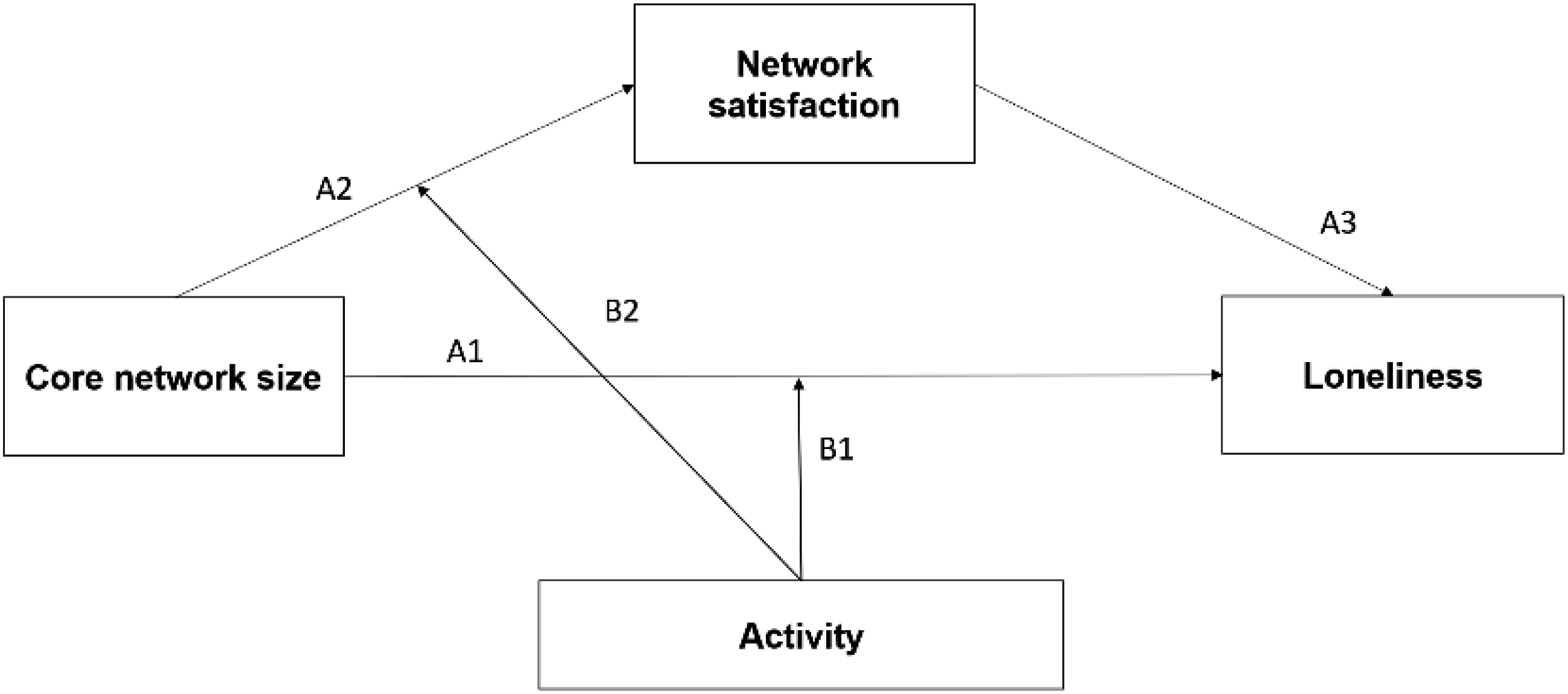
Next, we verified the possible mediation pathway to determine the extent to which network satisfaction explains the relationship between core network size and loneliness (A2–A3), aligning with the classical framing of loneliness as a subjective experience. We then conducted a set of moderated-mediation analysis to examine how regular participation in social and solitary activities, as well as each specific activity, moderates both the direct relationship between network size and loneliness (B1) and the mediation process (B2). Our focus was specifically on the moderation of the link between network size and network satisfaction (A2), as this first half of the mediation pathway underpins our theoretical framework: older adults who actively engage in social and solitary activities are more likely to cultivate contentment with their existing networks, even if small, and thereby feel less lonely.
When examining the moderating effect of each specific activity, we controlled participation in all other activities as well as relevant personal characteristics. To partly alleviate potential endogeneity concerns related to unobserved heterogeneity and baseline differences, we included the level of loneliness from the preceding wave as a lagged dependent variable, accounting for individuals’ baseline levels of loneliness. We also controlled any changes in network size between the two waves, while focusing on their current network size. We used structural equation modeling with full information maximum likelihood (FIML) estimation to handle missing data, ensuring the use of all available information (8.8% missing across all variables, except for personality measures, which had approximately 20% missing). The Delta method (Sobel, 1982) was used to test the significance of indirect effects, while bootstrapping with 5000 replications provided more reliable estimation of standard errors in testing the indirect effects and moderated mediations in SEM. We used Stata 17 (StataCorp, 2021) for all analysis.
Results
Descriptive statistics
Descriptive statistics.
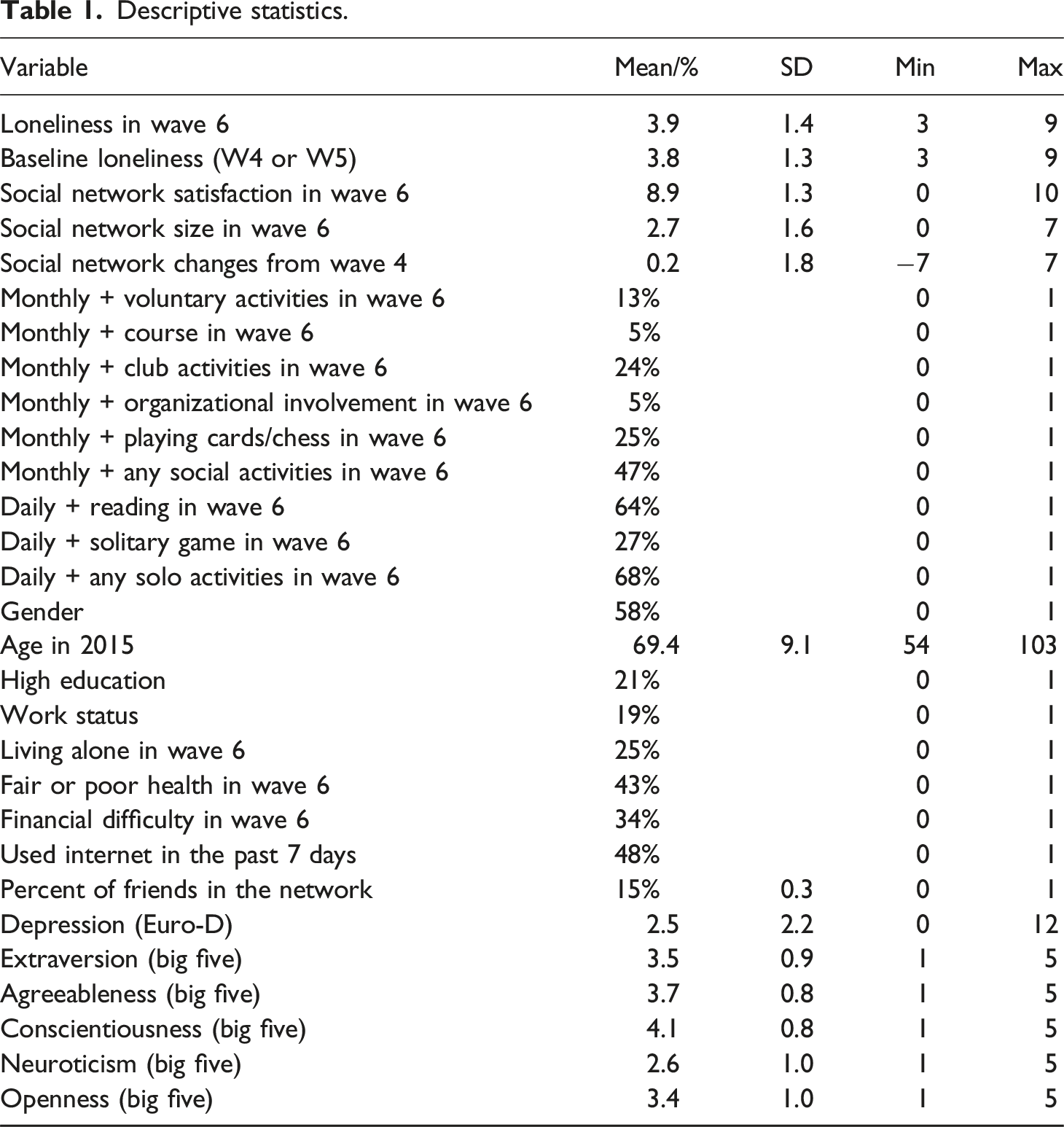
In terms of activities, 47% of older Europeans regularly engage in social activities at least monthly, with club activities and interactive games being the most popular (both with about 25% participation rate). Volunteering is also relatively popular (13%). Furthermore, 68% of respondents engage in either reading or word/number games daily, with reading being more prevalent (64%) compared to word or number games (27%).
Selected outputs from moderated-mediation analysis of the relationships between core network size and loneliness.
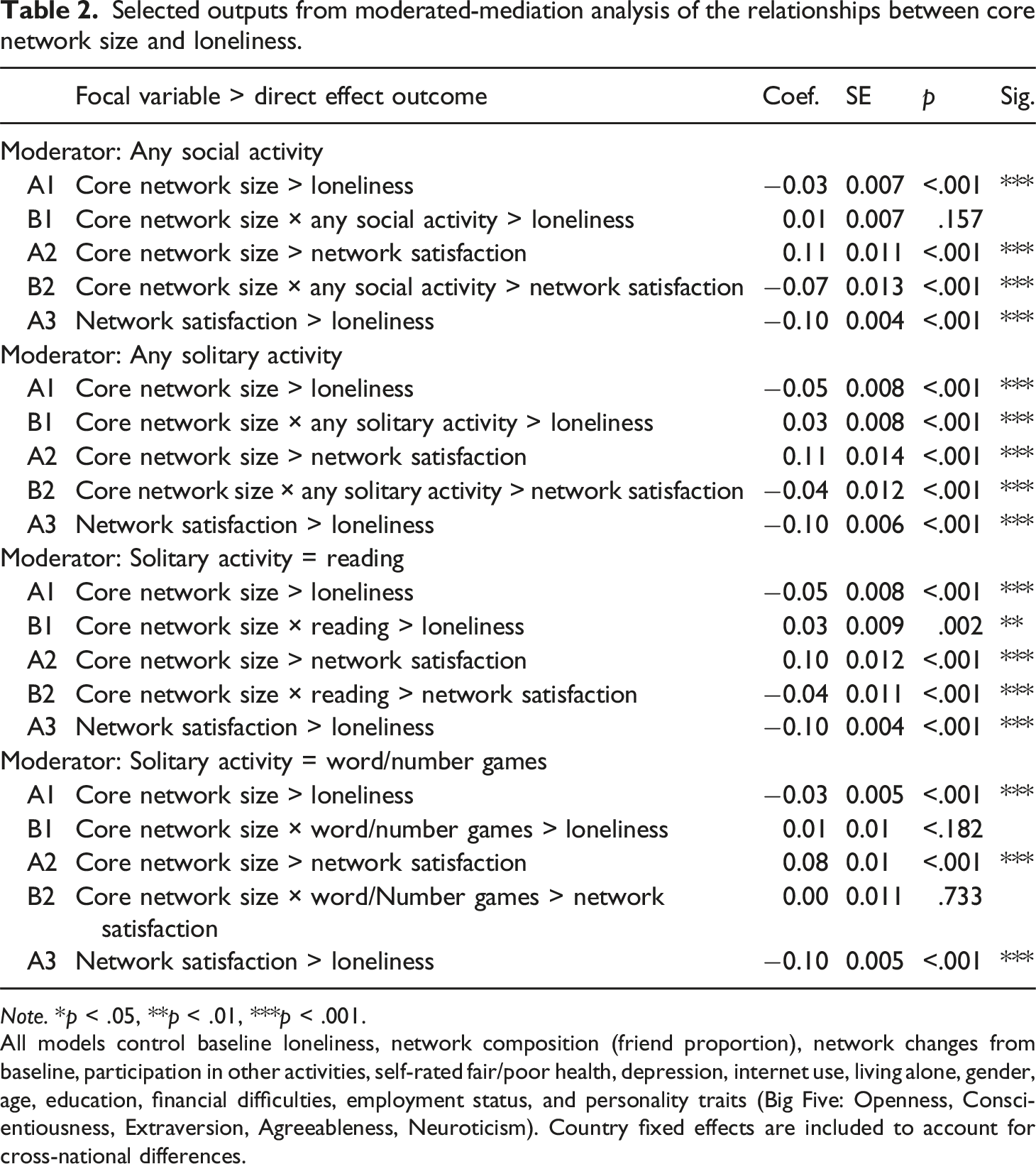
Note. *p < .05, **p < .01, ***p < .001.
All models control baseline loneliness, network composition (friend proportion), network changes from baseline, participation in other activities, self-rated fair/poor health, depression, internet use, living alone, gender, age, education, financial difficulties, employment status, and personality traits (Big Five: Openness, Conscientiousness, Extraversion, Agreeableness, Neuroticism). Country fixed effects are included to account for cross-national differences.
Moderating effects
In our multivariable analysis, we first examined the extent to which regular engagement in any social activity or having a solitary activity routine moderates the relationship between network size and loneliness. We then conducted a set of more detailed analysis to identify specific activities that may be particularly relevant among individuals reporting lower loneliness levels despite having smaller networks (Supplemental Table 2). The results indicate that both monthly participation in social activities and maintaining a daily routine of solitary activities corresponded with a reduced strength of the negative association between core network size and loneliness. It is also noteworthy that the magnitude of the moderating effect in solitary activities was nearly twice that observed in social activities. Surprisingly, except for club activities (interaction term b = 0.02, p < .01), none of other specific social activities showed a statistically significant interaction with network size in relation to loneliness, including volunteering, attending courses, participating in political or community organizations, or interactive games. Meanwhile, among solitary activities, maintaining a daily reading routine showed a significant interaction with network size in relation to loneliness (b = 0.05, p < .001), whereas the effect of a daily solitary game routine was not statistically significant at the 0.05 level (b = 0.02, p = .106), though its magnitude was comparable to that of the aggregated measure of social activities.
The mediating role of network satisfaction and moderated mediations
In line with the theoretical construct that loneliness is a subjective experience, the mediation analysis suggests that network satisfaction plays an intermediate role in the association between core network size and loneliness (Supplemental Table 2). Specifically, core network size is positively and significantly associated with greater network satisfaction (Path A2, b = 0.08, p < .001), which, in turn, is associated with lower perceived loneliness (Path A3, b = −0.10, p < .001). The estimated indirect pathway via network satisfaction accounts for approximately 23% of the total association between core network size and perceived loneliness. At the same time, a direct association persists between network size and loneliness (Path A1, b = −0.03, p < .001), independent of network satisfaction.
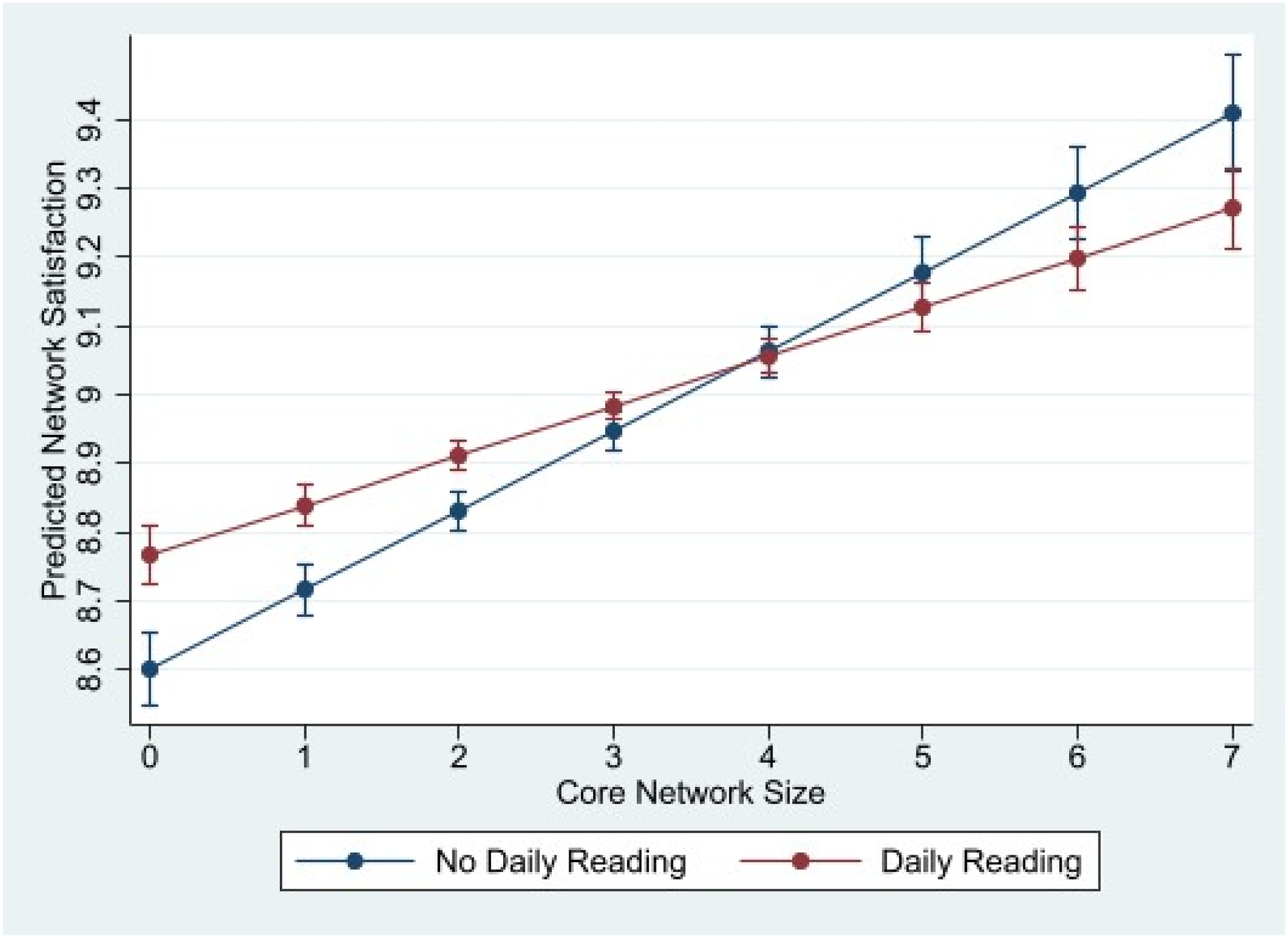
Subsequently, we examined a series of moderated mediation models by incorporating interaction terms (core network size x activity participation) in both the direct path and indirect path through network satisfaction between network size and loneliness (Supplemental Table 3). For clarity in interpreting the moderated mediation models, we conducted a separate set of regression analyses for each stage of the mediation process for visualization purposes, using multiple imputations to address missing data. For social activity participation, engaging in any monthly social activity significantly moderated only the mediating path (i.e., through network satisfaction, b = −0.07, p < .001, visualized as Supplemental Figure 1), whereas the interaction effect on the direct path was not statistically significant (b = 0.01, p = .16). This pattern was consistent across almost all specific types of social activities, including volunteering, taking courses, club activities, and participation in organizations, except for interactive games. Meanwhile, participation in daily solitary activity showed significant interaction effects on both the mediating path (b = −0.04, p < .001) and the direct path (b = 0.03, p < .001). Specifying types of solitary activity, interactions between network size and daily reading were significant on both the direct path (b = 0.03, p < .001, illustration in Figure 2) and the mediating path (b = −0.04, p < .001, illustration in Figure 3), whereas no statistically significant moderation effect was detected for solitary games. Associations between network size and predicted loneliness conditional on daily reading. Associations between network size and predicted network satisfaction conditional on daily reading.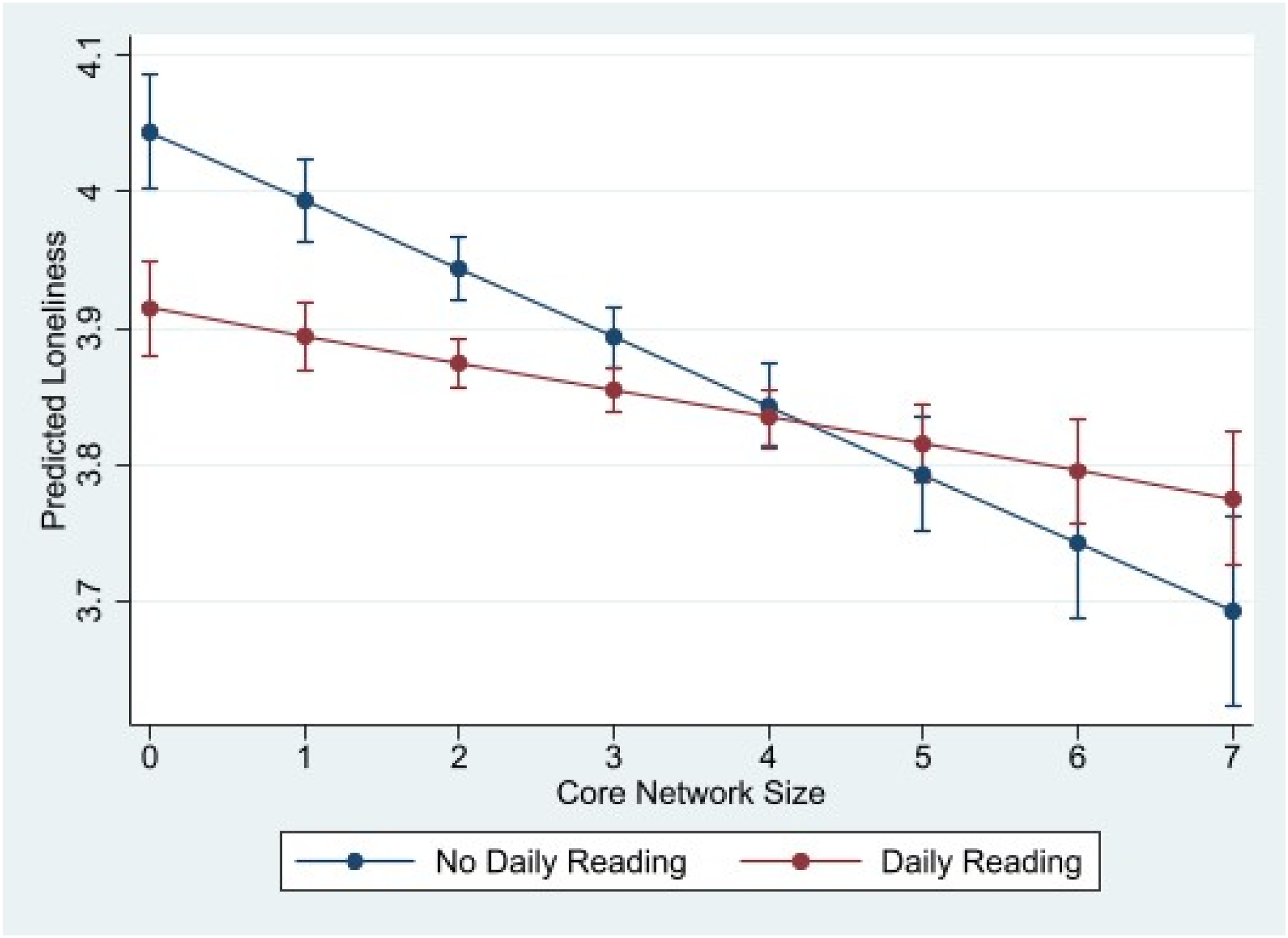
Discussion
Combating loneliness is an urgent public health concern, given its serious implications for the well-being and longevity of older adults (e.g., Hawkley & Cacioppo, 2010). While past studies have highlighted larger social network size as a key point of protection against loneliness, it remains unclear which aspects of a person’s lifestyle might relate to differences in how individuals experience loneliness when their networks are limited. Social activities are one potential solution, but factors that limit social networks, such as health problems and widowhood (Aartsen & Jylhä, 2011; Böger & Huxhold, 2018; Wrzus et al., 2013), can also hinder participation in social activities. The potential role of stimulating solitary activities as alternatives has been underexplored in the context of one’s social network and social activities. The present research addresses these gaps from three interconnected angles, by answering: (1) To what extent do social and solitary activities moderate the association between core network size and loneliness, particularly among older adults with smaller core networks? (2) How do solitary and social activities compare in their moderating effects? (3) Is the moderating effect of social and solitary activities on the relationship between network size and loneliness partially accounted for by variation in network satisfaction?
Our study suggests that both social and solitary activities are related to lower loneliness levels, particularly among older adults holding relatively small core networks. Notably, as discussed in the results and shown in Supplemental Table 2, the moderating effect of solitary activities on direct association between core network size and loneliness is about twice as strong as that observed for monthly participation in social activities, with reading emerging as the primary contributor. When examining specific social activities, we were surprised to find that many, including volunteering, taking courses, participating in political or community organizations, and playing interactive games, did not show statistically significant moderation of the association between network size and loneliness. 1 Meanwhile, reading, the most common activity in the sample, showed a significant moderating effect.
These findings gain further relevance given the prevalence of solitary activities across all network sizes. Indeed, more than half of older adults, regardless of occupying large or small social networks, engage in reading and word/number games daily. This highlights the enduring popularity of traditional solitary pursuits among older Europeans, even amidst the rise of more passive entertainment options like television and digital media that may exacerbate loneliness. While we do not suggest that solitary activities can fully substitute for core networks or social activities, we propose that developing a routine of solitary activities may serve as a practical and proactive approach to managing loneliness, particularly for older adults who face challenges in maintaining or expanding their social networks, or for those who are unable or uninterested in participating in social activities.
Our findings further highlight the nuanced differences in how these activities relate to lower reported loneliness levels. While network satisfaction partially mediates the relationship between network size and loneliness, reflecting its subjective nature (Peplau & Perlman, 1982), the moderating effect of having any monthly social activities appears largely linked to variation in network satisfaction, especially with smaller networks. However, social activity engagement does not appear to moderate the remaining direct path between smaller networks and greater loneliness, possibly representing unmet emotional and practical needs beyond network satisfaction. This pattern is consistent across all specific social activities with the only exception of interactive games. In contrast, maintaining daily solitary routines relates to lower loneliness levels, both through increased network satisfaction and a direct association. Analyses focused on reading mirror the overall pattern, which was not observed for word/number games. A plausible explanation is that while games help pass the time and provide some sense of fulfillment, they may not offer the same depth of emotional engagement or imaginative connection with characters as reading does (Csikszentmihalyi, 1991; Rane-Szostak & Herth, 1995), a distinction which resonates with theoretical perspectives on parasocial relationships and narrative transportation. The expansive inner life cultivated through reading may help individuals feel more content with their current networks, even when those networks are small. At the same time, reading may speak to emotional aspects of loneliness that are not fully addressed by network satisfaction alone. The consistent availability and emotionally resonant nature of fictional narratives may allow readers to form parasocial bonds with characters, fulfilling emotional needs in ways that complement and sometimes even compensate for real-world relationships (Bond, 2021; Hartmann, 2016). Moreover, the immersive quality of reading can elicit narrative transportation, offering a psychological escape from daily constraints and drawing readers into richly meaningful emotional and cognitive experiences (Green & Brock, 2000).
Together, the findings highlight overdue attention to solitary activities, particularly cognitively engaging ones such as reading, as potentially valuable strategies for addressing loneliness. Returning to continuity and activity theories (Atchley, 1989; Donnelly & Hinterlong, 2010), interventions could benefit from further expanding their focus to include engaging solitary pursuits, fostering the development of enjoyable routines early on and promoting their continuity into older age. However, the effectiveness and underlying mechanisms are likely to vary across specific types of social and solitary activities. Future research and data collection should broaden the scope of self-directed activities explored for their potential to alleviate loneliness, paying particular attention to those that induce an engaging and immersive flow experience, such as engaging in arts or gardening. Moreover, as data on specific activities accumulates, it may not be always ideal to compress them into aggregate measures or to take a snapshot of someone’s one-day experience. While aggregate measurements and time-use data serve unique purposes, understanding the frequency and regularity of each specific activity, as well as how people combine them, can further enhance our understanding of loneliness experiences and inform the development of tailored support strategies. It is also essential to recognize that some activities may require time to develop necessary skills or may involve costs for equipment, potentially limiting accessibility for more disadvantaged groups or those newly developed such needs. These considerations are a major reason we highlight reading as a particularly promising area for further investigation. Additionally, future studies should also consider marginalized populations, such as individuals with visual impairment, to ensure the benefits of engaging activities are accessible to all. Exploring viable alternatives like audiobooks, which have been associated with higher well-being and sense of life meaning (Poerio & Totterdell, 2020), is crucial in making potential interventions more inclusive and effective.
While our findings provide valuable insights into the role of solitary and social activities in shaping experiences of loneliness, several limitations should be acknowledged. First, our reliance on self-reported data for assessing solitary and social activities may not capture the detailed nuances that time-use data can provide through more objective methodologies. Despite this, our approach offers insights into long-term patterns of behavior, reflecting individuals’ lifestyles rather than a snapshot of a single day. Second, we recognize that solitary activities like reading and engaging in word or number games can sometimes occur within social settings, such as in a formal club or with friends at a café. Nonetheless, these activities are intrinsically rewarding and readily available as individual pursuits. Third, we chose not to use Wave 8 measures for our main analysis but incorporated the personality measures from Waves 7 and 8 only as supplementary verifications. This decision was because Wave 8 was collected during 2019 and 2020, a period that overlaps with the onset of the COVID-19 pandemic, which could have impacted participants’ perceptions of loneliness and their patterns of solitary and organized activities. Finally, we acknowledge the limitations of observational data in establishing causality. While we interpret the negative association between network size and loneliness as smaller networks contributing to greater loneliness, the reverse pathway—loneliness leading to social withdrawal—is also plausible. Our aim, however, is not to assert direct causality, but to compare groups with similar structural risks who differ in their lifestyle patterns. To support our interpretations, we conducted a robustness check using a change score analysis (available upon request), which yielded results consistent with our main findings.
Conclusion
In conclusion, our study suggests that regular engagement in both social and cognitively stimulating solitary activities, such as reading, is linked to lower perceived loneliness, especially for those with limited social networks. While previous studies have shown mixed results, our research highlights the need to expand the list of self-directed activities that may contribute to a reduced experience of loneliness. Solitary activities that potentially provide a flow experience—characterized by deep engagement and personal fulfillment—represent a promising starting point. As more beneficial solitary activities are identified, future efforts should focus on uncovering common traits among the most protective ones. Intervention strategies addressing loneliness may benefit from incorporating solitary activities as part of a broader approach. These interventions should be introduced early, by encouraging enjoyable, self-directed habits that reflect individual preferences and with high accessibility.
Supplemental Material
Supplemental Material - Reading between the ties: Solitary and social activities, network satisfaction, and loneliness in later life
Supplemental Material for Reading between the ties: Solitary and social activities, network satisfaction, and loneliness in later life by Haosen Sun and Markus H. Schafer in Journal of Social and Personal Relationships.
Footnotes
Author Contributions
Haosen Sun initiated the idea, conducted the literature review and data analysis, and assembled the manuscript. Markus Schafer collaborated with conceptualization, refined the study framing, helped structure the literature review and the data analysis, and assisted with editing.
Declaration of conflicting interests
The author(s) declared no potential conflicts of interest with respect to the research, authorship, and/or publication of this article.
Funding
The author(s) disclosed receipt of the following financial support for the research, authorship, and/or publication of this article: The SHARE data collection has been funded by the European Commission, DG RTD through FP5 (QLK6-CT-2001-00360), FP6 (SHARE-I3: RII-CT-2006-062193, COMPARE: CIT5-CT-2005-028857, SHARELIFE: CIT4-CT-2006-028812), FP7 (SHARE-PREP: GA N°211909, SHARE-LEAP: GA N°227822, SHARE M4: GA N°261982, DASISH: GA N°283646) and Horizon 2020 (SHARE-DEV3: GA N°676536, SHARE-COHESION: GA N°870628, SERISS: GA N°654221, SSHOC: GA N°823782, SHARE-COVID19: GA N°101015924) and by DG Employment, Social Affairs & Inclusion through VS 2015/0195, VS 2016/0135, VS 2018/0285, VS 2019/0332, VS 2020/0313, SHARE-EUCOV: GA N°101052589 and EUCOVII: GA N°101102412. Additional funding from the German Federal Ministry of Education and Research (01UW1301, 01UW1801, 01UW2202), the Max Planck Society for the Advancement of Science, the U.S. National Institute on Aging (U01_AG09740-13S2, P01_AG005842, P01_AG08291, P30_AG12815, R21_AG025169, Y1-AG-4553-01, IAG_BSR06-11, OGHA_04-064, BSR12-04, R01_AG052527-02, R01_AG056329-02, R01_AG063944, HHSN271201300071C, RAG052527A) and from various national funding sources is gratefully acknowledged (see  ).
).
Open research statement
As part of IARR’s encouragement of open research practices, the authors have provided the following information: This research was not pre-registered. The data used in the research are available. The data can be obtained at: following the regular free sign-up procedure. The materials used in the research can be publicly posted.
Data Availability Statement
This paper uses data from SHARE Waves 1, 2, 3, 4, 5, 6, 7, 8 and 9 (DOIs: 10.6103/SHARE.w1.900, 10.6103/SHARE.w2.900, 10.6103/SHARE.w3.900, 10.6103/SHARE.w4.900, 10.6103/SHARE.w5.900, 10.6103/SHARE.w6.900, 10.6103/SHARE.w6.DBS.100, 10.6103/SHARE.w7.900, 10.6103/SHARE.w8.900, 10.6103/SHARE.w8ca.900, 10.6103/SHARE.w9.900, 10.6103/SHARE.w9ca900, 10.6103/SHARE.HCAP.0) see for methodological details.(1)
Supplemental Material
Supplemental material for this article is available online.
Note
References
Supplementary Material
Please find the following supplemental material available below.
For Open Access articles published under a Creative Commons License, all supplemental material carries the same license as the article it is associated with.
For non-Open Access articles published, all supplemental material carries a non-exclusive license, and permission requests for re-use of supplemental material or any part of supplemental material shall be sent directly to the copyright owner as specified in the copyright notice associated with the article.
