







Abstract
Numerous mechanisms for intimate partner violence (IPV) perpetration have been identified at the individual and relationship levels, wherein evidence suggests that relationship dissatisfaction and impulsivity (i.e., negative and positive urgency) predict IPV perpetration. Despite this, few studies have dyadically examined the interactive effects of these two risk factors on IPV perpetration. The present study examined main and interactive effects of relationship dissatisfaction and both negative and positive urgency on physical and psychological IPV perpetration among heterosexual couples. Participants included 333 heavy-drinking couples who reported past-year physical and/or psychological IPV perpetration. Actor Partner Interdependence Models (APIM) were used to determine dyadic associations between relationship dissatisfaction, negative and positive urgency, and physical and psychological IPV perpetration. Results indicated significant interaction effects, including: (1) Actor relationship dissatisfaction was more positively associated with psychological IPV perpetration at low, relative to high, levels of Actor negative urgency and Partner relationship dissatisfaction; and (2) Actor negative urgency was more positively associated with psychological IPV perpetration at low, relative to high, levels of Partner negative urgency. Using the I3 Model as a meta-theoretical framework, findings suggest that high instigation (e.g., partner dissatisfaction and negative urgency) may reduce the levels of actor impelling and disinhibiting factors required to facilitate psychological IPV perpetration. These findings underscore the importance of investigating relational dynamics when appraising risk for IPV perpetration.
Intimate partner violence (IPV) is a major public health concern that impacts more than one-third of those within romantic relationships (Breiding et al., 2015; Smith et al., 2018) and is associated with numerous negative physical and mental health consequences (Black, 2011; Eshelman & Levendosky, 2012). Although researchers have identified numerous risk factors that contribute to IPV (Smith Slep et al., 2014), individual- and relationship-level variables hold particular promise for informing clinically relevant prevention and treatment programs. At the relationship-level, researchers have consistently demonstrated an inverse association between relationship satisfaction and IPV perpetration (Arseneault et al., 2023; Lawrence & Bradbury, 2007; Panuzio & DiLillo, 2010; Ulloa & Hammett, 2015). At the individual level, impulsivity-related traits (i.e., negative and positive urgency; see Cyders & Smith, 2008; Oesterle, 2023) have been identified as significant risk factors for IPV perpetration (Bresin et al., 2022; Leone et al., 2016). The present study focuses on patterns of IPV most consistent with situational couple violence, which is characterized by bidirectional, conflict-driven acts of psychological and physical aggression that emerge in the context of relationship distress rather than coercive control (Johnson & Leone, 2005).
Since IPV occurs within the context of a current or past intimate relationship, it is critical to examine how individual- and relationship-level risk factors interact among partners within a dyad (Eckhardt et al., 2019; Rodriguez & Derrick, 2017). The bioecological model (Bronfenbrenner & Morris, 2007) emphasizes that behavior is shaped through ongoing exchanges between people and the environments in which they are embedded. However, relatively few studies have examined IPV perpetration risk within a dyadic context (Eckhardt et al., 2019), and it is even less common to examine risk factors at varying levels of the social ecology. To address this gap, the present study used an Actor-Partner Interdependence Modelling (APIM) framework (Cook & Kenny, 2005; Kenny et al., 2006) to assess the effects of relationship dissatisfaction and impulsivity on IPV perpetration among couples at high risk for IPV.
Relationship Dissatisfaction Is a Risk Factor for IPV Perpetration
Findings from decades of research underscore the robust association between relationship dissatisfaction and IPV perpetration (Lawrence & Bradbury, 2007; Love et al., 2020; Stith et al., 2008). Cross-sectionally, studies of both civilian and military couples have demonstrated an independent, positive association between relationship dissatisfaction and IPV perpetration (Stith et al., 2008). Newlywed couples reporting higher initial relationship dissatisfaction subsequently experienced an increased likelihood of IPV over the course of a year (Ulloa & Hammett, 2015). When examined longitudinally over a 12-year period, relationship dissatisfaction has emerged as the strongest predictor of IPV perpetration over and above interpersonal stress (Shortt et al., 2013). Relationship dissatisfaction and IPV are widely understood as reciprocal, such that dissatisfaction may heighten conflict and aggression, while IPV further erodes relationship quality over time. Conversely, high relationship satisfaction serves as a protective factor against IPV perpetration (Woerner et al., 2024; Wojda et al., 2021). Although relationship dissatisfaction is robustly associated with IPV perpetration, dissatisfaction alone does not fully explain why conflict escalates into violence. From a mechanistic perspective, IPV is often understood as occurring within relational dynamics characterized by power imbalances and attempts to exert control, particularly during periods of heightened relational distress. Dissatisfaction may increase the salience of perceived threats to power within the relationship, thus intensifying efforts to assert control through aggressive behaviors (Gou et al., 2019; Kaura & Allen, 2004). As such, it is imperative to examine how relationship dissatisfaction interacts with other key risk factors to increase the likelihood of IPV perpetration within romantic couples.
Putative Moderating Variable: Impulsivity
Affective processes represent important putative mechanisms that may moderate the association between relationship dissatisfaction and IPV perpetration. Relationship dissatisfaction is more positively associated with IPV perpetration among those who endorse high (relative to low) positive and negative affect (Arseneault et al., 2023; Slep et al., 2021), and low (relative to high) emotion regulation (Halmos et al., 2018). At the dyadic level, IPV perpetrators report more instances of experiencing heightened negative affect in response to their partner’s negative affect (Tiberio & Capaldi, 2019). Collectively, these findings suggest that general affective processes may unfold both dynamically and interpersonally to strengthen the association between relational distress and IPV perpetration. While compelling, more information is needed regarding specific individual factors, such as impulsivity, that may underlie these affective processes.
Research has identified a robust association between impulsivity-related constructs and IPV perpetration (Bazargan-Hejazi et al., 2014; Field et al., 2004; Gildner et al., 2021; Spencer et al., 2022). Impulsivity is commonly operationalized using the UPPS-P model, is a dimensional trait model that has frequently been applied within the aggression literature (Dvorak et al., 2013; Whiteside & Lynam, 2003; Miller et al., 2012). Within the UPPS-P Model, researchers have disproportionately emphasized the role of negative urgency—emotion-based rash action in the presence of negative emotions—as a robust risk factor for IPV perpetration (Bresin et al., 2022; Derefinko et al., 2011; Leone et al., 2016; Maloney et al., 2024; Peters et al., 2017). Notably, one experimental study examined the interactive effects of relationship satisfaction and negative urgency on hostile vocalizations relevant to IPV among college students within heterosexual romantic relationships. Findings from this study indicated that negative urgency was positively associated with hostile vocalizations only among those reporting low levels of relationship satisfaction (Blake et al., 2018). Although underemphasized within the IPV literature, emerging evidence also positions positive urgency—emotion-based rash action in the presence of intense positive emotions—as a putative risk factor for IPV perpetration (Leone et al., 2016; Oesterle et al., 2023). Despite these findings, we are unaware of any research that has examined these associations dyadically.
The I3 Model
While both negative and positive urgency appear to be risk factors for IPV perpetration, likely, their effects vary substantially based on the impelling and inhibiting effects of other individual, dyadic, and contextual-level factors. According to the I3 Model (Finkel, 2014; Finkel & Eckhardt, 2013), IPV perpetration can be predicted according to the interaction among variables that push for and against its enactment; these factors are organized into three categories: instigators, impellors, and inhibitors. An instigating factor is any provocation that normatively triggers an aggressive response in the actor (Tiberio & Capaldi, 2019). Impelling factors are situational or dispositional factors that prepare an individual to experience a strong urge to aggress after being provoked. Thus, instigating and impelling factors interact to produce an aggressive urge. Inhibitory factors increase the likelihood that an individual will override the aggressive urge (e.g., emotion regulation; Maldonado et al., 2015). In contrast, a disinhibiting factor makes it less likely that an individual will override the urge to aggress (e.g., acute alcohol intoxication; Eckhardt et al., 2021).
Both conceptually and in line with previous literature (Halmos et al., 2018), relationship dissatisfaction serves an impelling role within the I3 framework. Specifically, high levels of distress in one’s relationship may sensitize an individual to relationship conflict and thus increase one’s proclivity to perpetrate IPV. Conversely, prior literature also suggests that both negative and positive urgency are best conceptualized as (dis)inhibiting risk factors for perpetrating IPV (Bresin et al., 2022). Taken together, relationship dissatisfaction heightens sensitivity to conflict and provocation, while impulsivity weakens inhibitory control in emotionally salient contexts. Within this framework, psychological and physical IPV are conceptualized as related but distinct behavioral outcomes that may be differentially associated with risk factors. Specifically, these forms of IPV may reflect varied patterns of association among instigating, impelling, and disinhibiting influences within a dyad. Accordingly, it is important to examine psychological and physical IPV separately to allow for a defined understanding of how relationship dissatisfaction and urgency operate across IPV forms.
The Present Study
While existing literature suggests an interactive effect of relationship dissatisfaction and urgency on IPV perpetration, few studies utilize a dyadic analytic approach to understand how these risk factors may be associated with psychological and physical IPV perpetration. Using the I3 Model as an organizing framework, the present study used the APIM (Cook & Kenny, 2005; Kenny et al., 2006) to examine dyadic associations between relationship dissatisfaction, negative and positive urgency, and physical and psychological IPV perpetration in a high-risk community sample. Consistent with the cross-sectional nature of the data, analyses focus on patterns of association within dyads rather than directional or causal effects. While relationship dissatisfaction and urgency are consistent predictors of IPV perpetration, applying the APIM provides an opportunity to investigate the dyadic interplay between these factors.
The present study utilizes data from participants recruited as part of a larger laboratory investigation in which at least one member of the dyad reported IPV perpetration and past-month heavy episodic drinking. This recruitment strategy is consistent with established evidence that alcohol use is a contributing cause of IPV perpetration (Leonard, 2005; Leonard & Quigley, 2017). The Alcohol Myopia Theory (AMT; Steele & Josephs, 1990) suggests that alcohol narrows attention to salient cues, increasing the likelihood that conflict-related stimuli dominate responding and elevate aggression risk. Although the present study does not directly examine alcohol use, recruiting couples characterized by co-occurring IPV and heavy episodic drinking situates the sample within a population at elevated risk for IPV.
The current study utilizes data from heterosexual couples; therefore, gendered socialization processes and power dynamics are important for understanding conflict and aggression within intimate relationships. Prior research indicates that traditional beliefs about gender roles and norms have been examined as potential contributors to male IPV perpetration and are conceptually linked to relational power and control dynamics (McCarthy et al., 2018). However, gender differences in IPV perpetration and victimization become less distinct in cases involving less severe or less frequent violence, which is often characteristic of situational couple violence (Johnson, 2006). Evidence further suggests that IPV frequently co-occurs within couples, with the form and expression of violence potentially varying as a function of gendered relational dynamics (Hardesty & Ogolsky, 2020). Accordingly, the present dyadic analytic approach allows for examination of how each partner’s characteristics contribute to situational IPV perpetration within a gendered relational context.
Based on extant literature, we made the following hypotheses:
There will be main effects for relationship dissatisfaction, negative urgency, and positive urgency on both psychological and physical IPV perpetration outcomes. More specifically, we expected a significant positive association between Actor relationship dissatisfaction, Actor negative urgency, and Actor positive urgency on both forms of Actor IPV perpetration.
We predicted that Actor negative urgency would moderate the effects of Actor relationship dissatisfaction on Actor physical and psychological IPV perpetration.
We expected Actor relationship dissatisfaction to be more positively associated with Actor physical IPV perpetration for individuals who endorsed high (relative to low) Actor negative urgency.
We expected Actor relationship dissatisfaction to be more positively associated with Actor psychological (Hypothesis 2b) IPV perpetration for individuals who endorsed high (relative to low) Actor negative urgency.
We hypothesized that Actor positive urgency would moderate the effects of Actor relationship dissatisfaction on Actor physical IPV perpetration and psychological IPV perpetration (see Figure 1 for a conceptual model of the tested main and interactive effects).
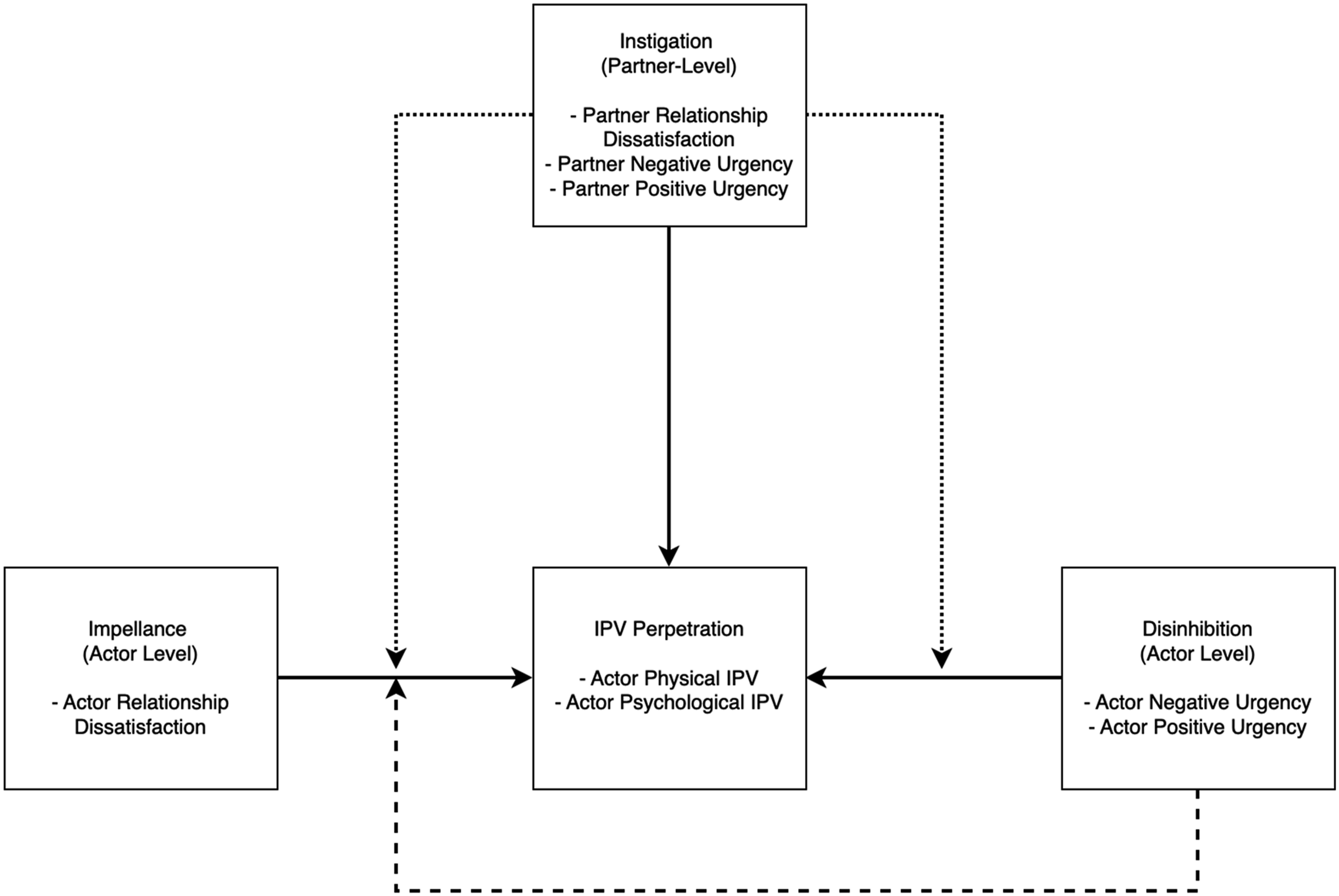
Conceptual model of tested main and interactive effects
We expected that Actor relationship dissatisfaction would be more positively associated with Actor physical IPV perpetration for individuals who endorsed high (relative to low) Actor positive urgency.
We expected that Actor relationship dissatisfaction would be more positively associated with Actor psychological IPV perpetration for individuals who endorsed high (relative to low) Actor positive urgency (see Figure 1 for a conceptual model of the tested main and interactive effects).
Method
The distinct set of hypotheses tested herein utilized data that were drawn from a larger multisite investigation on the effects of acute alcohol intoxication on IPV within a community-based sample of high-risk, heterosexual couples. Although the focus of the present study did not examine the effects of acute alcohol intoxication, participants were required to meet eligibility criteria for an alcohol administration study (see below). The present hypotheses are novel and have not been tested previously within this dataset; therefore, an analytic plan was developed specifically to address these aims.
Participants
Participants were 680 cisgender, heterosexual individuals nested within 340 couples recruited from two metropolitan areas in the Midwest and Southeastern United States through advertisements placed in online/social media sites, community newspapers, and public transportation contexts. Couples were screened individually by telephone to establish initial eligibility. To be eligible, couples had to be in a heterosexual relationship, with both individuals from the couple needed to have been dating for at least one month, and both partners needed to be at least 21 years old and identify English as their native language. At least one partner within each dyad was required to meet two additional criteria: (1) report consumption of an average of at least five (for men) or four (for women) alcoholic beverages at least twice per month during the past year; and (2) be identified via self- or partner report as having perpetrated psychological or physical IPV toward their current partner in the past year on the Revised Conflict Tactics Scale (CTS2; Straus et al., 1996). Couples were excluded from the study if either partner reported a serious head injury, a medical condition that rendered them unable to drink alcohol, or a desire to seek treatment for alcohol use. Eligibility was verified again upon arrival to the laboratory using measures of IPV (CTS-2) and alcohol use (quantity-frequency). Individuals were compensated $10.00 USD per hour for their time. This study was approved by each university’s Institutional Review Board.
Five couples were removed for missing data on multiple key variables, and two couples were removed from analyses because they were in a same-sex relationship. It is critical to understand risk for IPV perpetration among varying relationship configurations, including same-sex or LGBTQ + relationships. However, unique risk factors for IPV among these minoritized populations (e.g., sexual minority stress; Parrott & Edwards, 2026) likely influence the overall etiology of IPV relative to cisgender, heterosexual couples. Therefore, individuals not currently within a romantic relationship with an opposite-sex partner were excluded from study analyses. As such, the final sample included 333 couples.
Participant Demographics
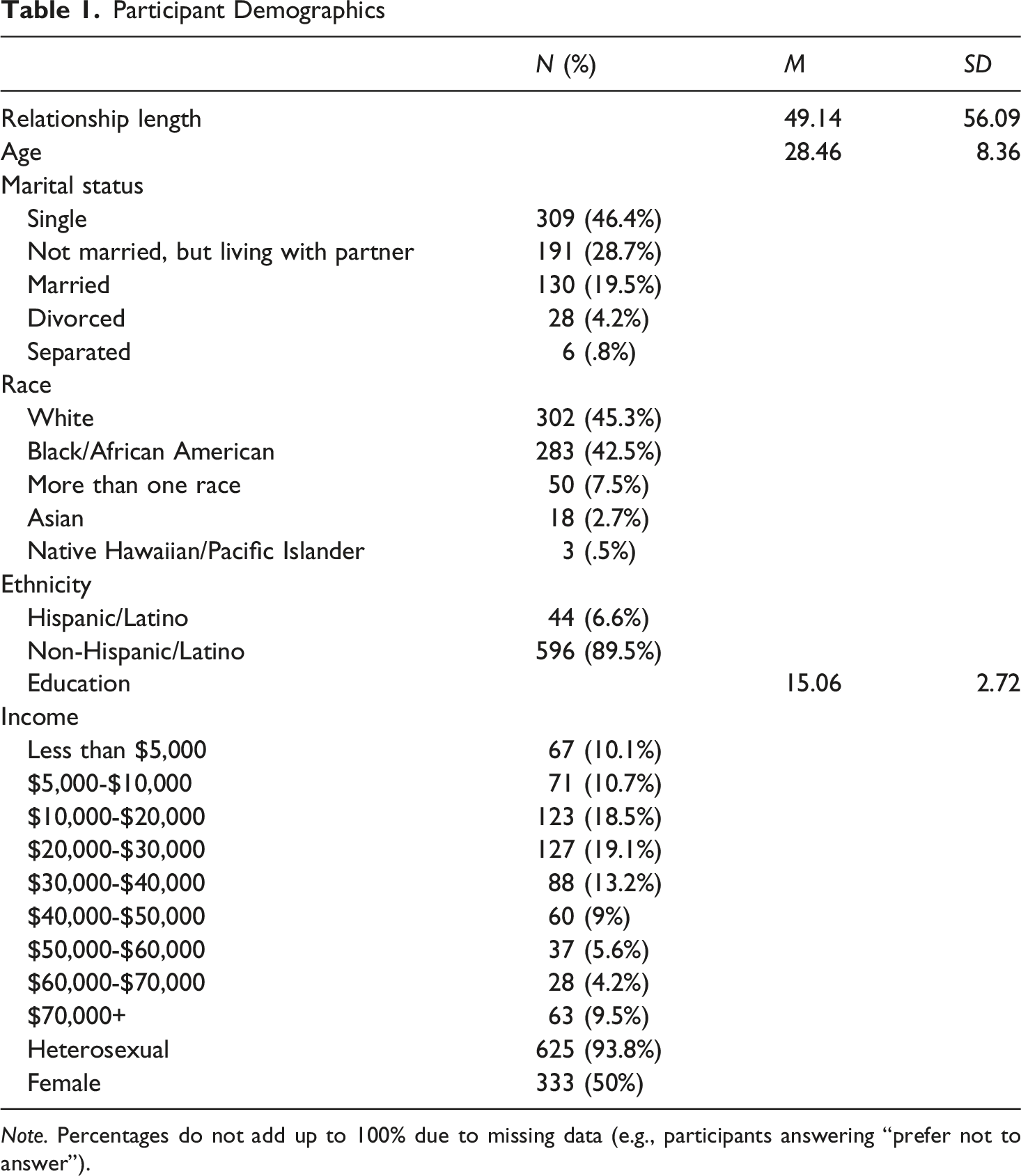
Note. Percentages do not add up to 100% due to missing data (e.g., participants answering “prefer not to answer”).
Measures
Data Analytic Plan
Post hoc power analyses were conducted using R Studio (version 4.2.2; R Core Team, 2022). This analysis used the “MASS” package (Venables & Ripley, 2013) to generate the Negative Binomial regression model and the “pwr.f2. test” function within the “pwr” package version 1.3.0 (Champely et al., 2022) to detect main effects at α = 0.05 with a fixed model of seven predictors. Results indicated that our sample of 337 was sufficiently powered to detect main effects at b > 0.99 (α = 0.05). Additionally, using the “powerBinom” function within the “InteractionPoweR” package (version 0.2.2; Baranger et al., 2023), our sample was sufficiently powered to detect interactive effects at b = 0.88 (α = 0.01). To account for family-wise error rates in detecting interactive effects, alpha values for detecting significant interactive effects were set to p < 0.01, given that four single two-way interactions were run.
Descriptive Statistics and Intercorrelations
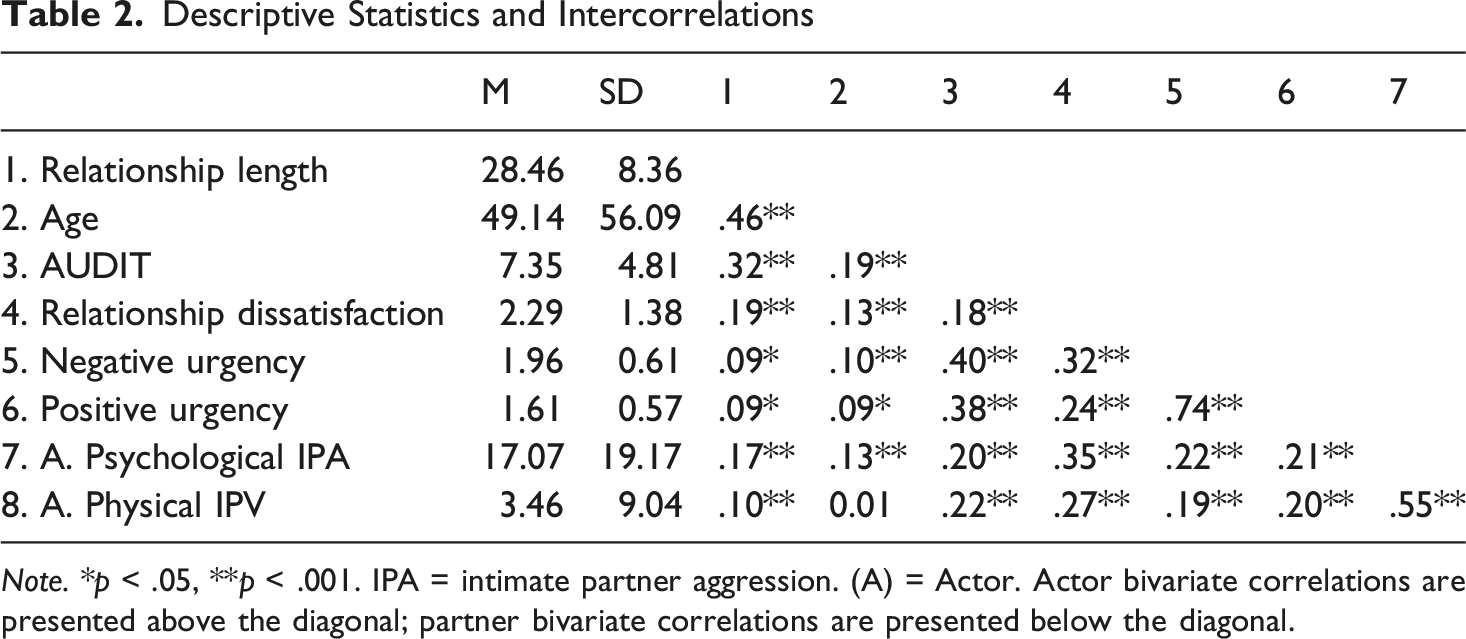
Note. *p < .05, **p < .001. IPA = intimate partner aggression. (A) = Actor. Actor bivariate correlations are presented above the diagonal; partner bivariate correlations are presented below the diagonal.
To test study hypotheses, a main effects model was run first with all covariates and predictors followed by a second interaction model that included all possible Actor × Partner interactions for negative urgency, positive urgency, and relationship dissatisfaction: [1] Actor Relationship Dissatisfaction x Partner Relationship Dissatisfaction, [2] Actor Negative Urgency x Partner Negative Urgency, [3] Actor Relationship Dissatisfaction x Partner Negative Urgency, [4] Actor Negative Urgency x Partner Relationship Dissatisfaction, [5] Actor Positive Urgency x Partner Positive Urgency, [6] Actor Relationship Dissatisfaction x Partner Positive Urgency, [7] Actor Positive Urgency x Partner Relationship Dissatisfaction. Significant interactions were interpreted using simple slopes analyses with extreme values of continuous variables set at 1 standard deviation above and below the mean (Aiken & West, 1991). Results are reported as incidence rate ratios (IRR; i.e., exponentiated coefficients), interpreted as the factor change in physical or psychological IPV perpetration for each unit increase in the predictor variable.
Results
Preliminary Analyses
Means, standard deviations, and bivariate correlations of pertinent study variables are presented in Table 2. Estimates of the number of acts of Actor-reported physical IPV perpetration ranged from 0 to 206, and totals underwent Winsorization at 5 standard deviations to minimize the effects of the four greatest outliers. Estimates of the number of acts of Actor-reported psychological IPV perpetration ranged from zero to 169, and totals underwent Winsorization at 5 standard deviations to minimize the effects of the three greatest outliers. There were no differences between study sites in Actor physical IPV perpetration (Site 1: M = 3.68, SD = 11.06; Site 2: M = 3.99, SD = 15.94; t (670) = −.29, p = .772) or psychological IPV perpetration (Site 1: M = 16.68, SD = 19.71; Site 2: M = 18.04, SD = 21.43; t (670) = −.80, p = .422). Additionally, no gender differences were detected for Actor physical IPV perpetration (Men: M = 3.97, SD = 11.26; Women: M = 3.58, SD = 14.10; t (670) = .39, p = .697) or psychological IPV perpetration (Men: M = 18.47, SD = 21.19; Women: M = 15.74, SD = 19.21; t (670) = 1.75, p = .081).
Physical IPV Perpetration
Negative Binomial Models for Actor Physical Violence Perpetration
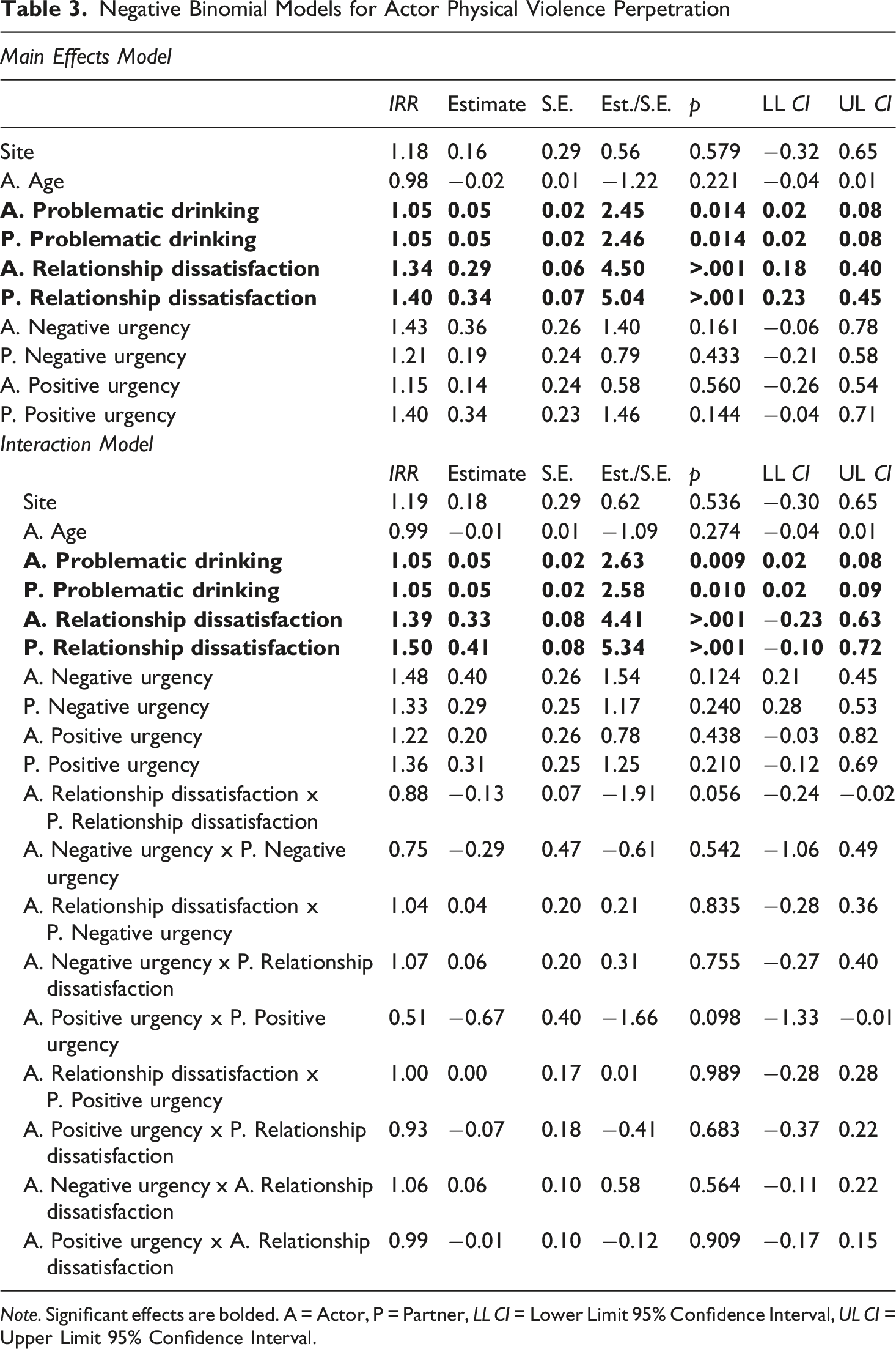
Note. Significant effects are bolded. A = Actor, P = Partner, LL CI = Lower Limit 95% Confidence Interval, UL CI = Upper Limit 95% Confidence Interval.
Psychological IPV Perpetration
Negative Binomial Models for Actor Psychological Violence Perpetration
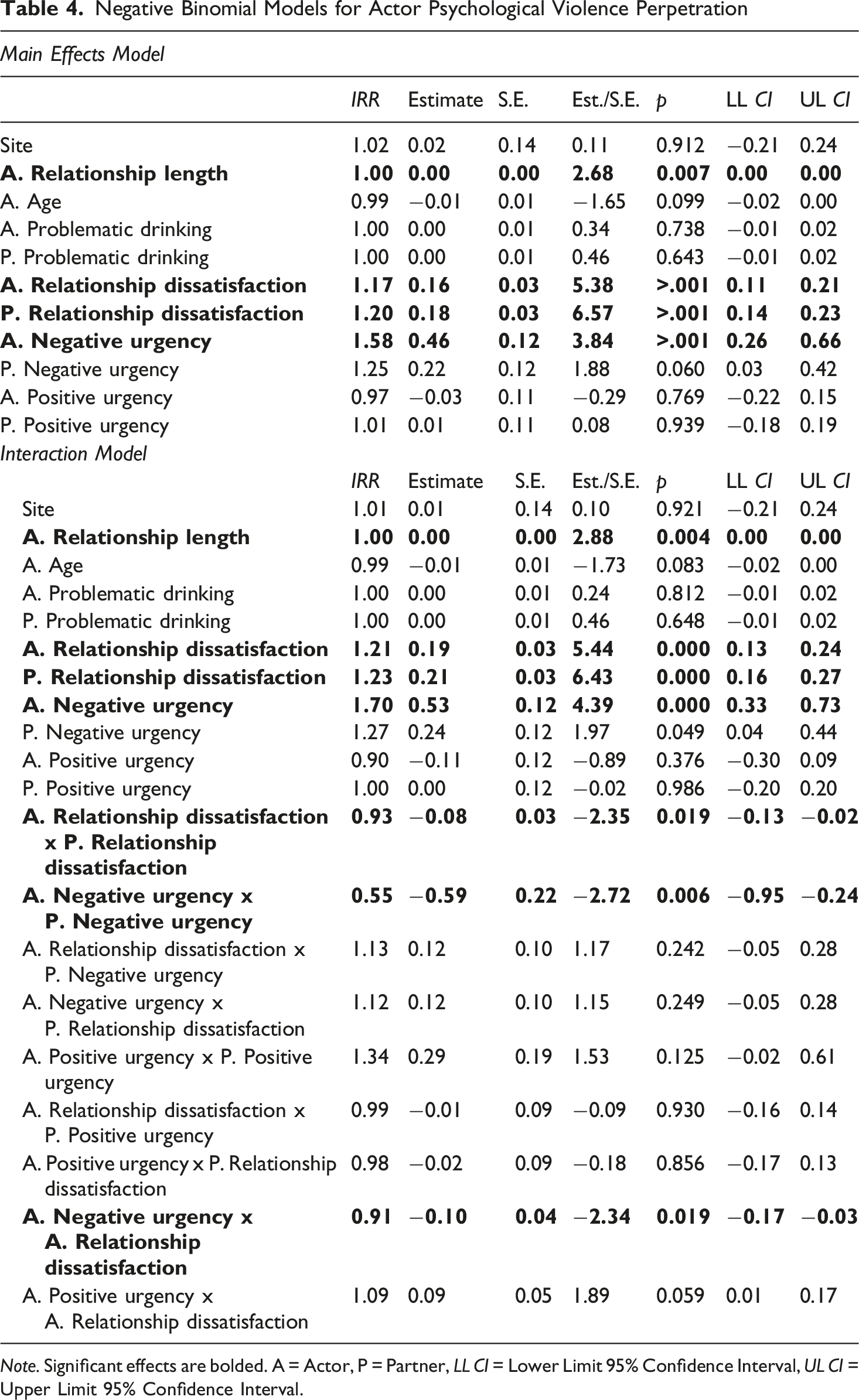
Note. Significant effects are bolded. A = Actor, P = Partner, LL CI = Lower Limit 95% Confidence Interval, UL CI = Upper Limit 95% Confidence Interval.
Interaction Model. Consistent with Hypothesis 2b, there was a significant Actor Relationship Dissatisfaction x Actor Negative Urgency interaction (b = −.10, IRR = .91, p = .019). Simple slopes analysis revealed that the association between Actor relationship dissatisfaction and Actor psychological IPV perpetration was significantly more positive when Actors reported lower (b = .59, IRR = 1.80, p < .001), compared to higher (b = .47, IRR = 1.60, p < .001), levels of negative urgency. As depicted in Figure 2(a), this interaction was largely driven by Actors who endorsed lower levels of relationship dissatisfaction, reporting significantly higher levels of psychological IPV perpetration when also self-reporting high, relative to low, levels of negative urgency [insert Figure 2(a)]. No significant interactions involving Actor positive urgency were detected; therefore, Hypothesis 3b was not supported. Plotted significant interactions from the Actor psychological IPA negative binomial regression model. Note. Psychological IPV scores range from 0-64 in the present study. We have restricted the y axis to the psychological IPV mean score to depict the interaction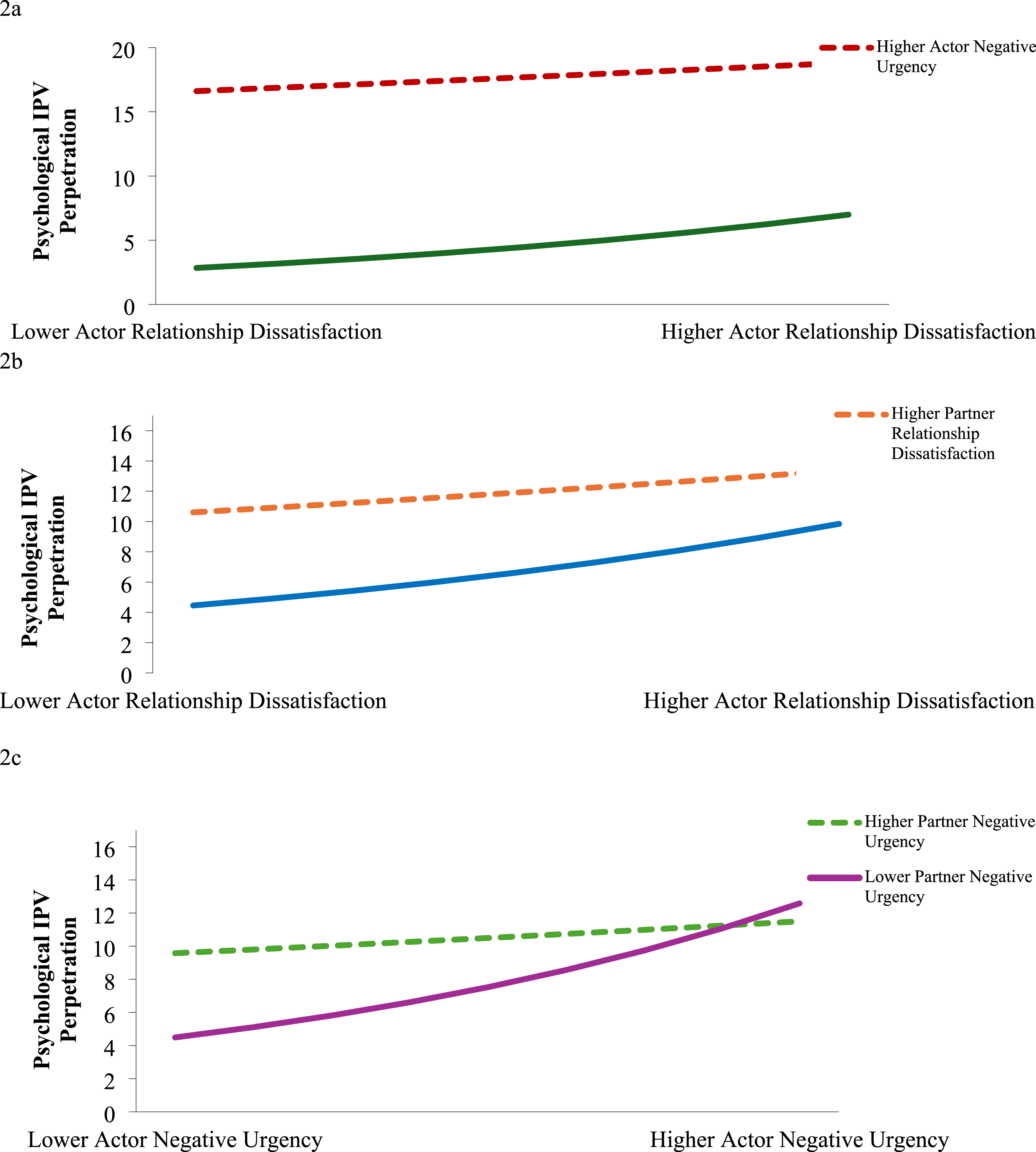
While not hypothesized, there was also a significant Actor Relationship Dissatisfaction x Partner Relationship Dissatisfaction interaction (b = −.08, IRR = .93, p = .019). Simple slopes analysis revealed that the association between Actor relationship dissatisfaction and Actor psychological IPV perpetration was significantly more positive when Partners reported lower (b = .29, IRR = 1.34, p < .001), relative to higher (b = .08, IRR = 1.09, p = .078), levels of relationship dissatisfaction. As depicted in Figure 2(b), this interaction was largely driven by Actors who endorsed lower levels of relationship dissatisfaction, reporting significantly higher levels of psychological IPV perpetration toward a partner who reported high, relative to low, levels of relationship dissatisfaction [insert Figure 2(b)].
Finally, while also not hypothesized, there was a significant Actor Negative Urgency x Partner Negative Urgency interaction (b = −.59, IRR = .55, p = .006). Simple slopes analysis revealed that the association between Actor negative urgency and Actor psychological IPV perpetration was significantly more positive when Partners reported lower (b = .89, IRR = 2.43, p < .001), but not higher (b = .17, IRR = 1.19, p = .289), levels of negative urgency. As depicted in Figure 1(c), this interaction was largely driven by Actors who endorsed lower levels of negative urgency reporting significantly higher levels of psychological IPV perpetration toward a partner who reported high, relative to low, levels of negative urgency [insert Figure 2(c)].
Discussion
Using an APIM-informed dyadic approach, the present study examined the independent and interactive effects of relationship dissatisfaction with two dimensions of impulsivity—positive and negative urgency—on psychological and physical IPV perpetration among couples at high risk for IPV. Significant main effects of Actor and Partner relationship dissatisfaction on physical IPV perpetration were detected. Significant main effects of Actor and Partner relationship dissatisfaction and Actor negative urgency, as well as several interactive effects, were identified for psychological IPV perpetration.
Physical IPV Perpetration
Consistent with Hypothesis 1, both Actor and Partner relationship dissatisfaction were significantly and positively associated with physical IPV perpetration. This finding supports previous studies, which position relationship dissatisfaction as a robust risk factor for physical IPV perpetration (Baker & Stith, 2008; Keilholtz et al., 2023; Spencer et al., 2019; Ulloa & Hammett, 2015). Contrary to both the existing literature (Blake et al., 2018), as well as Hypotheses 2a and 3a, urgency and relationship dissatisfaction did not interact to predict physical IPV perpetration.
While exploratory, Actor problematic drinking and Actor physical IPV perpetration were significantly and positively associated. Alcohol Myopia Theory (Steele & Josephs, 1990) may provide a helpful lens to interpret this finding, such that Actor problematic drinking may result in increased attention towards situationally salient stimuli (Massa et al., 2019). More specifically, within the context of acute intoxication, relationship conflict—and an increased likelihood to respond to provocation with aggression—may be particularly salient and provoking stimuli (Giancola et al., 2010; Parrott & Eckhardt, 2018). Additionally, Partner problematic drinking was significantly associated with Actor physical IPV perpetration. Existing research indicates positive associations between Partner problematic drinking and Actor IPV perpetration in cisgender heterosexual (e.g., Testa et al., 2012) and sexual minority populations (e.g., Leone et al., 2022; Parrott et al., 2023). While perpetrators are culpable for their own behavior, this literature, in tandem with findings from the present study, supports the view that Partner problematic drinking contributes to greater relationship conflict (i.e., high instigation), which subsequently heightens risk of Actor physical IPV perpetration (Testa et al., 2012; Woodin et al., 2014).
Psychological IPV Perpetration
As predicted by Hypothesis 1, present study findings indicate that both Actor and Partner relationship dissatisfaction, as well as Actor negative urgency, are positively associated with Actor psychological IPV perpetration. These findings support extant non-dyadic research indicating an inverse association between relationship satisfaction and psychological IPV perpetration (Panuzio & DiLillo, 2010) and victimization (Marshall et al., 2011). Coupled with non-dyadic research on aggressive behavior (Miller et al., 2012), these results also support prior dyadic research reporting an association between negative urgency and IPV perpetration (e.g., Leone et al., 2016).
These main effect findings were qualified by multiple interaction effects. Consistent with Hypothesis 2b, a significant Actor Relationship Dissatisfaction x Actor Negative Urgency interaction indicated that the relation between Actor relationship dissatisfaction and psychological IPV perpetration is significantly more positive for Actors who endorse low, relative to high, negative urgency. Not surprisingly, the highest levels of psychological IPV were observed among Actors with both high relationship dissatisfaction and negative urgency; however, this interaction was primarily driven by Actors with lower levels of relationship dissatisfaction. These individuals, who were generally more satisfied in their relationships, reported significantly higher levels of psychological IPV perpetration when also self-reporting high levels of negative urgency.
While not part of the present study’s confirmatory analyses, two non-hypothesized interaction effects merit discussion. The significant Actor Negative Urgency x Partner Negative Urgency interaction indicates that the association between Actor negative urgency and psychological IPV perpetration is significantly more positive toward Partners who endorse low, relative to high, negative urgency. Notably, results indicate that psychological IPV perpetration is consistently high toward partners who endorse high negative urgency. When examining this finding dyadically, this interaction is primarily driven by Actors with lower levels of negative urgency. More specifically, individuals who endorse lower levels of negative urgency report significantly higher levels of psychological IPV perpetration toward a partner who reports high, relative to low, levels of negative urgency. These findings extend prior research by Dugal et al. (2020, 2021) and Leone et al., (2016), which primarily focus on Actor negative urgency as an individual risk factor for IPV. Our results suggest that Actor negative urgency also functions within a dyadic context, highlighting the importance of Partner negative urgency in understanding risk for psychological IPV perpetration.
The significant Actor Relationship Dissatisfaction x Partner Relationship Dissatisfaction interaction indicates that the association between Actor relationship dissatisfaction and psychological IPV perpetration is significantly more positive toward Partners who endorse low, relative to high, relationship dissatisfaction. Notably, results indicate that psychological IPV perpetration is consistently high toward partners who endorsed high relationship dissatisfaction. As such, this interaction is primarily driven primarily by Actors with lower levels of relationship dissatisfaction. These individuals, who were generally more satisfied in their relationships, report significantly higher levels of psychological IPV perpetration toward a partner who reported high, relative to low, levels of relationship dissatisfaction. These results extend limited research on Actor–Partner interactive effects of relationship dissatisfaction on IPV perpetration.
In contrast to physical IPV perpetration—which may require the presence of stronger disinhibiting forces to elicit this specific form of aggression—it is possible that a lower behavioral threshold exists for psychological IPV perpetration. Specifically, the aggressive urge generated by the observed Actor–Partner interaction effects (i.e., Actor Relationship Dissatisfaction x Actor Negative Urgency; Actor Negative Urgency x Partner Negative Urgency; Actor Relationship Dissatisfaction x Partner Relationship Dissatisfaction) appears sufficient to elicit psychological IPV, but not sufficient to meet the threshold for physical IPV perpetration. Thus, psychological IPV may represent a more accessible means of expressing relationship dissatisfaction or frustration, whereas physical IPV may require stronger disinhibiting influences.
The present findings can be interpreted in light of the etiological predictions of the I3 Model (Finkel, 2007; 2014). Partner risk factors, such as high levels of relationship dissatisfaction and negative urgency, likely act as instigating factors by introducing conflict into the relationship that increases the likelihood of an aggressive response by the Actor. Within the context of romantic dyads, the presence of consistently high instigation is associated with higher Actor physical and psychological IPV perpetration (i.e., Instigation main effects) and may lessen the levels of Actor impelling and disinhibiting factors required to facilitate Actor psychological IPV perpetration (i.e., Instigation x Impellance and Instigation × Disinhibition interaction effects). Alternatively, in the context of low instigation (e.g., low Partner relationship dissatisfaction, low negative urgency), higher levels of Actor impelling and disinhibiting factors become stronger predictors of psychological IPV perpetration. Important differences in the strength of impelling and inhibiting forces may also be fundamentally different based on type of IPV perpetrated. That is, while relationship dissatisfaction may be impelling enough to produce psychological IPV in a broader range of contexts and situations, our findings also suggest that physical IPV is most likely when impelling forces (such as relationship dissatisfaction) are experienced within the context of strong disinhibiting forces. These findings highlight the importance of applying dyadic approaches that illuminate the dynamic interplay between partner-level instigation and actor-level impellance and disinhibition variables that are associated with IPV perpetration.
Significant main and interaction effects involving Actor positive urgency on IPV perpetration were not detected. Overall, there is limited research that examines the independent and interactive effects of positive urgency on all forms of IPV perpetration. Thus, the present null findings should be considered within this emerging literature and underscore the importance of further investigating contexts in which positive urgency may uniquely predict IPV perpetration.
Limitations & Future Directions
There are several limitations of the current study that merit discussion. This study utilized a cross-sectional design that precludes our ability to draw temporally based causal conclusions between the variables of interest. This limitation is particularly relevant when considering the bidirectional nature of the association between relationship dissatisfaction and IPV. Indeed, relationship dissatisfaction can be an antecedent (Shortt et al., 2013) or consequence of IPV perpetration (Hammett et al., 2021; Panuzio & DiLillo, 2010). Utilizing daily diary or novel ambulatory methods (i.e., ecological momentary assessment) could provide more nuanced insights into the proximal and temporal effects of relationship dissatisfaction on IPV perpetration. Additionally, it is unclear whether the present findings generalize to sexually and gender diverse (SGD) individuals in intimate relationships. Pertinent theory posits that relationship dissatisfaction and urgency are likely “common” risk factors that increase IPV risk in all relationships (Parrott et al., 2025); however, the extent to which the unique experience of minority stressors by SGD individuals moderates these associations has not been tested. Further, the study utilizes self-report measures of study variables, which depends upon the honesty of the participant in their responses when reporting IPV perpetration. Individuals who perpetrate more severe forms of IPV may be more likely to minimize their IPV by endorsing more moderate forms, due to potential legal or social consequences (Freeman et al., 2015; Morrison et al., 2021). Several demographic characteristics recommended by APA reporting guidelines (e.g., disability status, occupational status, gender identity, sexual orientation beyond identifying as heterosexual) were not fully assessed in the present study, restricting a more comprehensive understanding of how these contextual factors may intersect with IPV risk. Additionally, although rates of perpetration and victimization were relatively comparable across partners in the present sample, this assumption may not generalize to couples characterized by more asymmetric IPV dynamics.
Although the present study focuses on individual and couple-level risk factors for IPV perpetration, these findings must be interpreted within the broader context in which they occur. The etiology of IPV perpetration reflects myriad structural, developmental, and cultural factors that cannot be examined within a single study. As such, the present findings should not be interpreted to indicate that IPV perpetration is solely a function of relationship dissatisfaction, impulsivity, and/or alcohol use. Rather, these data highlight proximal dyadic mechanisms that may operate within a larger constellation of risk factors. It is also important to contextualize and situate how the present findings align with established typologies of IPV. More specifically, the impulsivity-related mechanisms may be best understood as reflecting situationally motivated IPV when viewed through an I3 Model lens. That is, this type of IPV can be characterized as being primarily conflict-driven, reactive in nature, and is most often a bidirectional—rather than coercive, controlling, or power-based—form of IPV. As a result, the observed interactions among instigation, impellance, and disinhibition may not generalize to coercive controlling IPV. Future research should test whether these I3 consistent mechanisms generalize to coercive controlling IPV by incorporating direct assessments of power and control within dyadic and longitudinal designs.
Clinical Implications
The present findings suggest several treatment considerations when working with individuals with a history of IPV. Given that both partners’ relationship dissatisfaction and actor negative urgency were associated with increased risk for IPV perpetration, clinicians should routinely assess dissatisfaction and impulsive responding to negative emotional states to identify couples who may be at elevated risk for aggression and to inform treatment targets. Interventions may benefit from attending to each partner’s perceptions of relationship functioning rather than focusing solely on one individual within the dyad. In addition, the current study identifies negative urgency as a potential mechanism for intervention, particularly for clients who are more likely to react impulsively when experiencing negative emotions such as anger or stress. Consistent with prior clinical recommendations, ongoing screening for both psychological and physical IPV should occur, with attention to how impulsive reactions during conflict may elevate risk. These considerations align with previous reviews suggesting the potential utility of considering dyadic factors as a means of improving effectiveness of interventions for IPV (Capaldi & Langhinrichsen-Rohling, 2012), and specifically interventions that work with couples to improve relationship satisfaction and conflict management (Keilholtz & Spencer, 2022).
Conclusions
The current study dyadically examined the main and interactive effects of relationship dissatisfaction and both negative and positive urgency on physical and psychological IPV perpetration. While previous research has identified significant effects of relationship dissatisfaction and urgency on IPV, this study provides robust dyadic evidence of these associations. Specifically, results suggest (1) partner risk factors (i.e., high relationship dissatisfaction, high negative urgency) likely introduce Instigation into the relationship that increases the Actor’s IPV likelihood, and (2) low levels of partner risk factors (i.e., low relationship dissatisfaction, low negative urgency), and thus low Instigation, heighten the relative influence of Actor Impellance (by sensitizing Actors to instigation) and Disinhibition (by lowering Actors’ threshold for IPV) on psychological IPV perpetration. By highlighting the distinct mechanistic pathways through which psychological and physical IPV may be influenced, findings from the present study add to the growing literature that calls for dyadic approaches to elucidate the etiology of IPV perpetration.
Supplemental material
Supplemental material - Dyadic Effects of Relationship Dissatisfaction and Impulsivity on Physical and Psychological Intimate Partner Violence Perpetration
Supplemental material for Dyadic Effects of Relationship Dissatisfaction and Impulsivity on Physical and Psychological Intimate Partner Violence Perpetration Niamh J Christie, B.S, Daniel W Oesterle, M.S, Amelia Phan, MPH, Fiya Rivers, B.S, Ruschelle M. Leone, Ph. D, Christopher Eckhardt, Ph. D, Dominic J Parrott, Ph. D in Journal of Social and Personal Relationships.
Footnotes
Author’s Note
Amelia Phan is now at the Mayo Clinic, Rochester, MN, 55905, USA. Fiya Rivers is now at the Department of Psychology, Fordham University, Bronx, NY, 10458, USA.
Ethical Considerations
The Institutional Review Boards of Purdue University and Georgia State University fully approved this study (Purdue IRB protocol number: 111201601; Georgia State IRB protocol number: H12220).
Funding
The authors disclosed receipt of the following financial support for the research, authorship, and/or publication of this article: Preparation of this manuscript was supported, in part, by National Institute on Alcohol Abuse and Alcoholism grant R01-AA-020578 (MPI: Eckhardt & Parrott).
Declaration of Conflicting Interests
The authors declared no potential conflicts of interest with respect to the research, authorship, and/or publication of this article.
Data Availability Statement
The datasets generated during and/or analyzed during the current study are not publicly available, since at the time of submission no codebook is available. However, these are available from the corresponding author on reasonable request.
Open Research Statement
As part of IARR’s encouragement of open research practices, the author(s) confirm the current project was pre-registered. The aspects of the research that were pre-registered were  . The registration was submitted to Open Science Framework (OSF). The data used in the research cannot be shared with any person because of legal/ethical constraints. The materials used in the research cannot be shared with any person because at the time of submission no codebook is available.
Supplemental material
Supplemental material for this article is available online.
References
Supplementary Material
Please find the following supplemental material available below.
For Open Access articles published under a Creative Commons License, all supplemental material carries the same license as the article it is associated with.
For non-Open Access articles published, all supplemental material carries a non-exclusive license, and permission requests for re-use of supplemental material or any part of supplemental material shall be sent directly to the copyright owner as specified in the copyright notice associated with the article.
