






Abstract
Although ghosting (i.e., ending a relationship by cutting off contact) is a common form of social rejection across multiple social contexts and has been studied in countries across the globe, there have been no systematic comparisons of how people may differ in their ghosting knowledge, attitudes, intentions, and behaviors across countries. In two cross-national studies spanning 12 countries, we examine whether people know of ghosting as a rejection strategy for ending friendships and romantic relationships, are accepting of it, intend to use it in the future, and have used it in the past. In Study 1 (N = 885), we collected data from Canada (n = 146), Kenya (n = 140), Mexico (n = 145), Nigeria (n = 148), South Africa (n = 156), and the United States (n = 150). In Study 2 (N = 1,741), we collected data from Brazil (n = 236), Ghana (n = 243), India (n = 236), Indonesia (n = 267), Kenya (n = 240), the Philippines (n = 257), and Ukraine (n = 262). Across both studies, we find that ghosting is a widely known form of social rejection across many countries, but that there are clear country-based differences in how people feel about it, whether they intend to use it, and whether they have used it previously in ending friendships and romantic relationships.
Ghosting is seen as a common social rejection phenomenon (Freedman & Powell, 2024). Researchers have posited various definitions for ghosting (Kay & Courtice, 2022), but ghosting is broadly understood to occur when someone cuts off contact to end an interpersonal relationship. However, is it well known and commonly used across multiple continents?
Much of the research on ghosting has focused on participants within select countries and regions, which is also true of the broader close relationships literature (Williamson et al., 2022). Ghosting can occur in any interpersonal relationship, but research has largely focused on ghosting in romantic relationships (Freedman & Powell, 2024). However, there is a growing body of research focusing on ghosting in other contexts, such as friendships, though these contexts are rarely compared. In the present research, we compare ghosting knowledge, attitudes, intentions, and behaviors in both friendships and romantic relationships across 12 countries in two studies to explore how this phenomenon may differ cross-nationally and to motivate future cross-cultural research on ghosting.
Cross-Cultural Differences in Interpersonal Relationships
There are clear cultural differences in how people navigate their close relationships and think about social rejection (e.g., Fiske & Yamamoto, 2013), which likely have a bearing on ghosting experiences across countries. For example, phubbing (i.e., feeling ignored by someone on their phone) has been identified as an act of rejection that occurs across many different countries and is consistently associated with psychological distress (Błachnio et al., 2021). Although cross-cultural work on phubbing has not shown significant differences in perceptions of exclusion between individuals from collectivistic compared to individualistic cultures, individuals from collectivistic cultures make more internal attributions for someone else engaging in phubbing (Büttner et al., 2025).
More broadly, differences in the level of interdependent and independent self-construals (Markus & Kitayama, 1991) and individualism and collectivism within a culture (Triandis et al., 1988) play a role in how individuals respond to ostracism (i.e., excluding via the silent treatment; Uskul & Over, 2017). For example, adults from more collectivistic cultures are less affected by ostracism than participants from more individualistic cultures, with those from more individualistic cultures reporting more antisocial intentions (Pfundmair et al., 2015b) and lower levels of fundamental psychological needs (Pfundmair et al., 2015a). Furthermore, Turkish children from interdependent communities thought that an ostracized child would feel less sad compared to children from independent communities (Over & Uskul, 2016). Relatedly, individuals with higher levels of interdependent self-construals recover their sense of belonging and meaningful existence after being ostracized better than those with lower levels of interdependence (Ren et al., 2013).
However, there is some conflict in the cross-cultural literature as to how individualism and collectivism relate to experiences of exclusion (Uskul & Over, 2017). For example, although people from collectivistic cultures seem to show less of a response to being socially excluded, they tend to report higher rejection sensitivity (e.g., Lou & Li, 2017) and rejection avoidance (e.g., Eisen & Ishii, 2019) than those from individualistic cultures. One potential explanation is that other cultural factors beyond collectivism/individualism play a role in perceptions of exclusion. For example, relational mobility (i.e., the degree to which people have the opportunity to choose new interpersonal relationships; Yuki & Schug, 2012) partially mediated the association between country and rejection sensitivity in studies comparing participants in Japan to the United States (U.S.; Sato et al., 2014) and Hong Kong to Canada (Lou & Li, 2017).
Beyond rejection specifically, culture is likely to play a role in how individuals perceive relationships. For instance, North Americans are more likely to report pity toward someone without any friends, whereas West Africans are more likely to accuse such a person of having done something wrong (Adams & Plaut, 2003). Furthermore, motivations and expectations underlying interpersonal relationships may differ based on culture. Specifically, participants from the U.S. focus more on autonomy and flexible relationships whereas Japanese participants focus more on harmony and security (Fiske & Yamamoto, 2013). Moreover, individuals in China demonstrate less conflict avoidance toward strangers but more conflict avoidance toward friends than individuals in the U.S. (Leung, 1988). Further, this difference may be driven by relational goals (e.g., productivity versus harmony; Leung & Bond, 1984) or conflict styles and a desire to save face (Oetzel & Ting-Toomey, 2003). Thus, it is likely that there are also differences across cultures with respect to relationship dissolution strategies including ghosting.
Ghosting Worldwide
Most of the research on ghosting has relied on samples from the U.S. and Western Europe (Freedman & Powell, 2024). This is reflective of the broader field of close relationships: a recent meta-analysis found that in 95% of articles on close relationships the samples were drawn from the U.S., European countries, Canada, Australia, and New Zealand. Furthermore, less than 1% of the samples were drawn from African and Latin American countries (Williamson et al., 2022).
Relatedly, a recent review of the romantic relationship dissolution literature showed that most samples in the dissolution research were white and Western (Machia et al., 2023), which matches the research on ghosting in which there has been almost no representation from African and Latin American countries (for a review, see Freedman & Powell, 2024). In one ghosting study that sampled from a broad range of countries, the researchers included participants from Egypt, South Africa, and Mexico, but there were fewer than ten participants from each of those countries (Astleitner et al., 2023). Furthermore, even when ghosting research has included participants from a broader array of countries (e.g., Astleitner et al., 2023; Sukmana et al., 2022), researchers have not yet systematically examined the similarities and differences in ghosting across countries.
Ghosting Knowledge, Attitudes, Intentions, and Behaviors
In areas where ghosting has been studied, people are generally knowledgeable about ghosting, with 80-90% of the participants having knowledge of ghosting in recent studies in Italy (Campaioli et al., 2022) and the U.S. and Canada (Collins et al., 2023; Koessler et al., 2019; Powell et al., 2021, 2022). However, in earlier studies in the U.S., only 45-65% of participants knew the term (Freedman et al., 2019), and fewer participants knew the term ghosting in Spain (36.4%; Navarro et al., 2020).
Although knowledge of ghosting has varied somewhat across time and country, there has been a consensus across studies in terms of attitudes toward ghosting. Specifically, ghosting is viewed negatively (Freedman et al., 2019; Freedman & Powell, 2024; LeFebvre et al., 2019) with people perceiving ghosters as uncaring across multiple countries including the U.S., the United Kingdom, and Singapore (Manning et al., 2019; Park & Klein, 2024). These negative attitudes align with findings from Italy that ghosting threatens belonging more than other forms of rejection (Pancani et al., 2022). However, ghosting is not viewed the same across all contexts. Ghosting is perceived to be more acceptable in short-term than in long-term relationships (Freedman et al., 2019; Jonason et al., 2021) and in friendships compared to romantic relationships in the U.S. (Freedman et al., 2019). However, in Turkey, people who have ghosted a friend are perceived less positively than people who have ghosted a romantic partner (Kabasakal & Cimsir, 2025).
For ghosting intentions, people in the U.S. report being more likely to ghost in short-term than long-term relationships (Freedman et al., 2019), in friendships than in romantic relationships (Freedman et al., 2019; Leckfor et al., 2023), and think that about 50% of adults but only 39% of their friends would be willing to ghost a romantic partner (Powell et al., 2022). Finally, those who have been ghosted are more likely to think others will engage in ghosting in the U.S. (Powell et al., 2022) and are more likely to intend to engage in ghosting in Spain (Navarro et al., 2021).
Further, ghosting behaviors are relatively frequent (Freedman & Powell, 2024). However, the frequency of ghosting experiences varies considerably across studies. Some studies in the U.S. (e.g., Freedman et al., 2019; LeFebvre et al., 2019; Powell et al., 2021), Spain (Navarro et al., 2020), and Italy (Pancani et al., 2022) show rates of approximately 20%–40%, and others in the U.S. (e.g., Halversen et al., 2021; Leckfor et al., 2023; Wu & Bamishigbin, 2023), Indonesia (Sukmana et al., 2022), and Belgium and the Netherlands (Timmermans et al., 2021) show 70%–90%. Furthermore, participants often report having been ghosted more than having ghosted someone (e.g., Freedman et al., 2019; Leckfor et al., 2023; Timmermans et al., 2021), though many report having been on both sides of the ghosting equation (e.g., Wu & Bamishigbin, 2023).
Present Research
Taken together, cross-cultural differences in ghosting are likely, but a key first step in such research is exploring ghosting cross-nationally. As such, the present descriptive, exploratory research examines whether ghosting is a cross-national phenomenon, specifically focusing on countries neglected in the literature. This project aims to prompt future cross-cultural research in understanding the similarities and differences among individuals in various countries. Modeled after prior work on ghosting (Freedman et al., 2019), in the present research we compared ghosting knowledge, attitudes, intentions, and behaviors in friendships and romantic relationships across 12 different countries in two studies. We focused our work on a set of four related research questions. First, is ghosting a known relationship dissolution strategy across a diverse range of countries? Second, are there country-based differences in the acceptability of ghosting as a relationship dissolution strategy? Third, are there country-based differences in individuals’ intentions to ghost in short- and long-term friendships and romantic relationships? Finally, are there country-based differences in individuals’ previous ghosting behaviors in friendships and romantic relationships? We report how we determined our sample size and all exclusions and measures. All data, analysis code, and materials are available at the following link: https://osf.io/nerhf/overview. Data were analyzed using SPSS version 29, jamovi 2.6.45, and RStudio with the emmeans package (Lenth, 2025).
Study 1
In Study 1, we recruited emerging adults from three North American countries (Canada, U.S., Mexico) and three African countries (Nigeria, Kenya, South Africa). The U.S. and Canada were chosen as two countries from which ghosting researchers have previously sampled. Mexico was chosen as the third North American country as there has not been research on ghosting in Mexico. For the three African countries, we chose three different regions of Africa: West Africa (Nigeria), East Africa (Kenya), and Southern Africa (South Africa). Furthermore, we chose African countries in which English is one of the official languages. We restricted our sample to emerging adults (i.e., 18-29) because younger samples tend to be more familiar with ghosting and are less likely to be in long-term, committed relationships (Freedman & Powell, 2024). Thus, if ghosting was present in each country, we believed it would most likely be known and engaged in by this age group. Our first aim was to examine whether ghosting was an action that people in all six countries knew about and whether they called it ghosting or another term. Our second aim was to compare participants’ ghosting attitudes, intentions, and behaviors across the six countries to examine where ghosting was more common and viewed more positively. We did not posit any a priori hypotheses given the lack of research on ghosting in four of the countries.
Method
We surveyed emerging adults from the U.S., Canada, Mexico, Kenya, Nigeria, and South Africa to explore whether ghosting is a well-known phenomenon and how ghosting behaviors, attitudes, and intentions differed across these countries. This study was approved by the first author’s Institutional Review Board (SU24_06).
Participants
Demographics by Country in Study 1
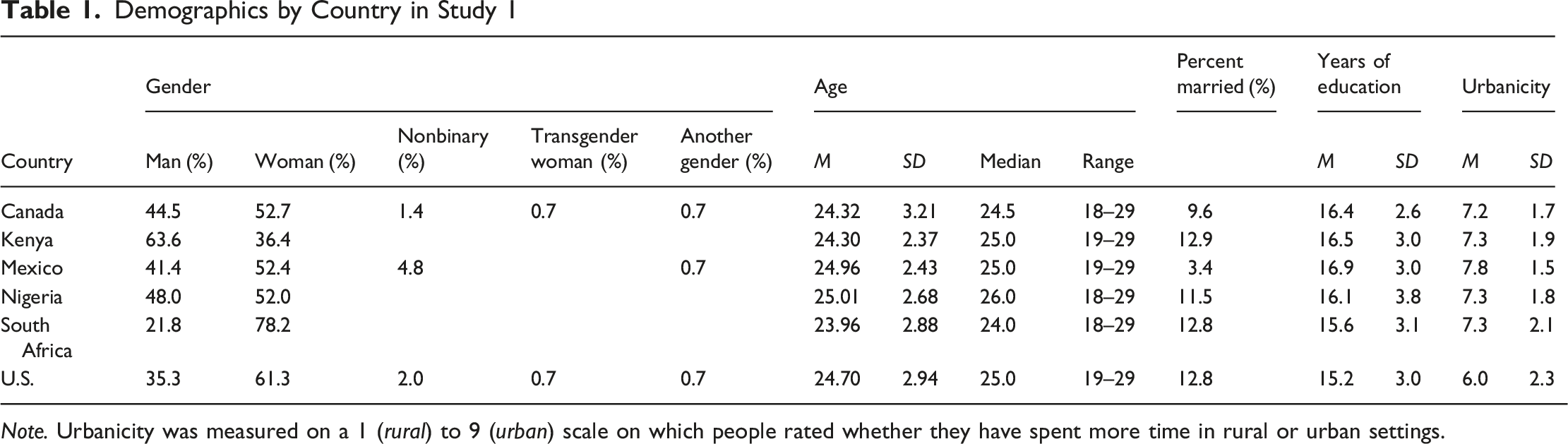
Note. Urbanicity was measured on a 1 (rural) to 9 (urban) scale on which people rated whether they have spent more time in rural or urban settings.
Procedure
After accessing the Qualtrics survey and providing consent, participants were asked if they had heard of ghosting as a way to end a relationship. Individuals who had were asked to define it. Then, all participants were presented with the following description of ghosting (Freedman & Powell, 2024): One way that people can end a relationship is by ghosting. Sometimes, ghosting is described in the following way: Ghosting is when one person has ended a relationship by suddenly ignoring or ending communication with another person, without telling them why.
Participants completed a multiple-choice attention check about the definition. If they answered incorrectly, they were shown the definition and attention check question again. Regardless of their response the second time, all participants advanced to the next part of the survey in which they were asked about their previous ghosting experiences, their future ghosting intentions, and their attitudes toward ghosting (Freedman et al., 2019). Finally, they completed a relational mobility scale 1 , demographic information, and indicated whether we should use their data prior to being debriefed and paid $1.50 for the ten-minute study.
Measures
The ghosting questions were modeled after the questions in Freedman et al. (2019).
Knowledge
Participants were first asked if they had heard of ghosting as a way to end a romantic relationship. If they indicated “yes,” they were asked to define it. Regardless of their response, all participants then viewed a description of ghosting (Freedman & Powell, 2024). They were also asked if they had heard of ghosting described this way and if there was another word/phrase they would use for it.
Behaviors
Participants indicated whether they had ever ghosted or been ghosted in a friendship or romantic relationship. The response options for each of these was no, yes, or not sure with a request to explain.
Intentions
Participants indicated on a 0% to 100% scale how likely they would be to ghost in a short-term romantic relationship, a long-term romantic relationship, a short-term friendship, and a long-term friendship.
Attitudes
Participants indicated on a 1 (strongly disagree) to 7 (strongly agree) scale how much they agreed with each of the following statements: “Ghosting is acceptable to end a short-term romantic relationship,” “Ghosting is acceptable to end a long-term romantic relationship, “I would think poorly of someone who uses ghosting to end a romantic relationship,” “Ghosting is acceptable to end a short-term friendship,” “Ghosting is acceptable to end a long-term friendship, “I would think poorly of someone who uses ghosting to end a friendship.” Two items were reversed scored (i.e., “I would think poorly…”) and an average was calculated to reflect overall acceptability (α = .80).
Demographics
Participants shared their age, gender, race/ethnicity, current country of residence, relationship status, years of education, population density of locale, and perceived adulthood status.
Results
Due to gender and age differences across the country samples, we controlled for age and gender in all relevant inferential statistical analyses. The patterns remain largely similar without age and gender entered as control variables (see Supplement).
Ghosting Knowledge
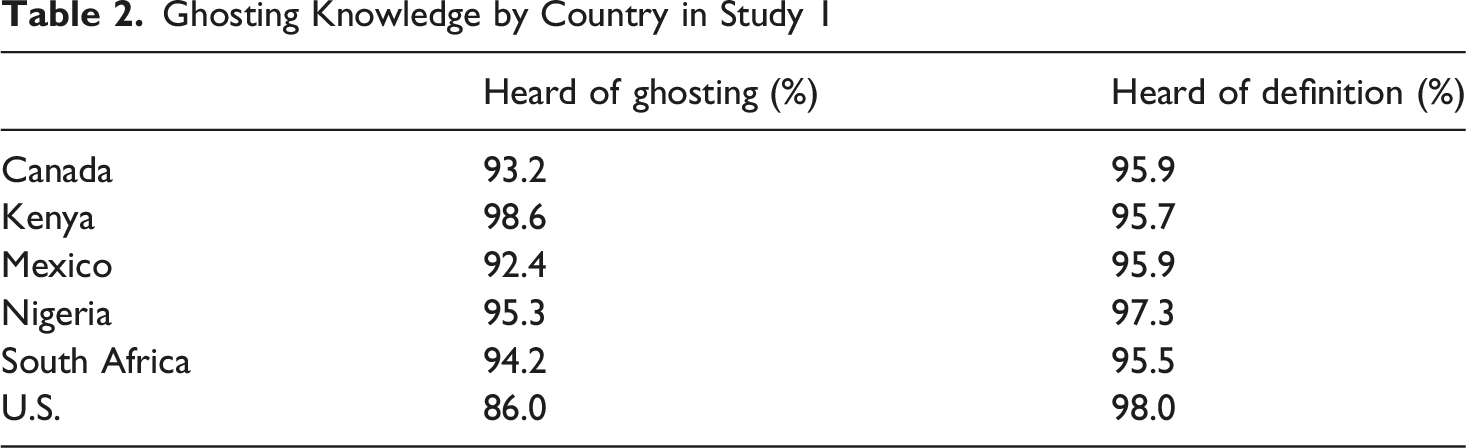
Ghosting Knowledge by Country in Study 1
Use of Alternative Words for Ghosting Across Countries in Study
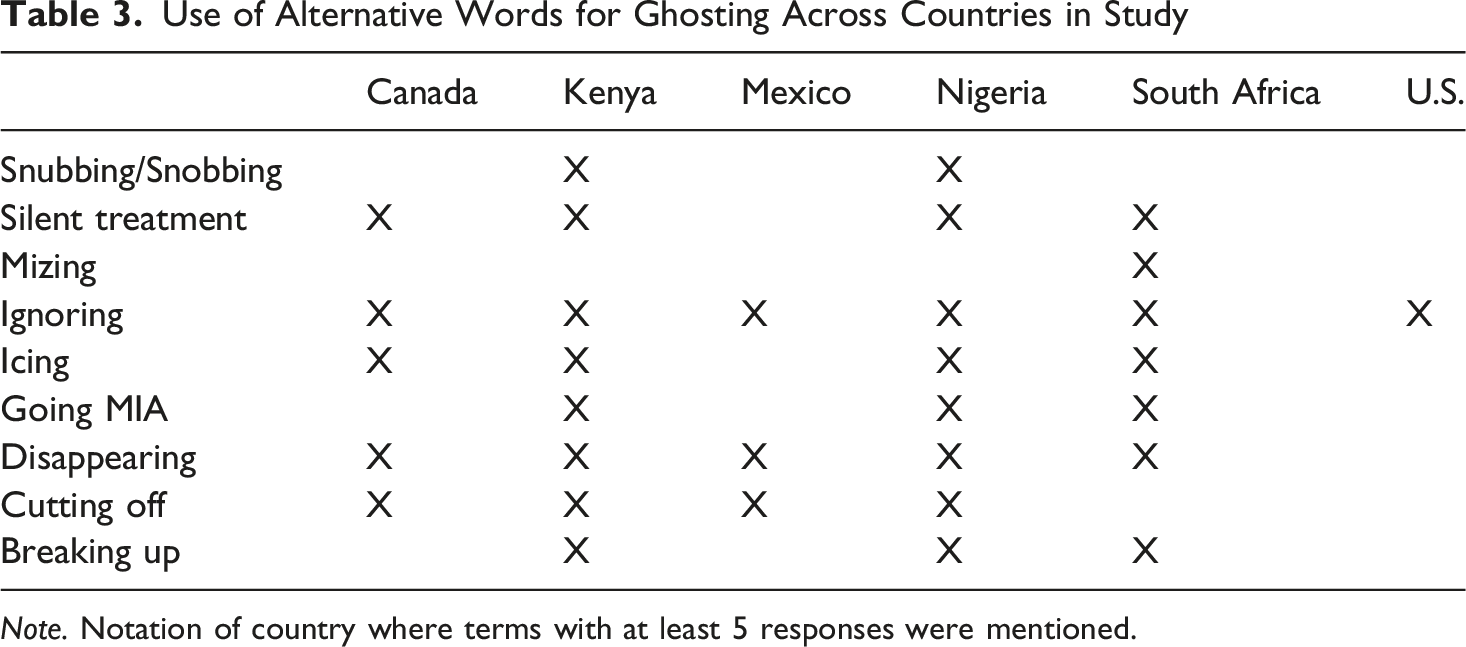
Note. Notation of country where terms with at least 5 responses were mentioned.
Ghosting Attitudes
Mean Differences in Acceptability in Study 1
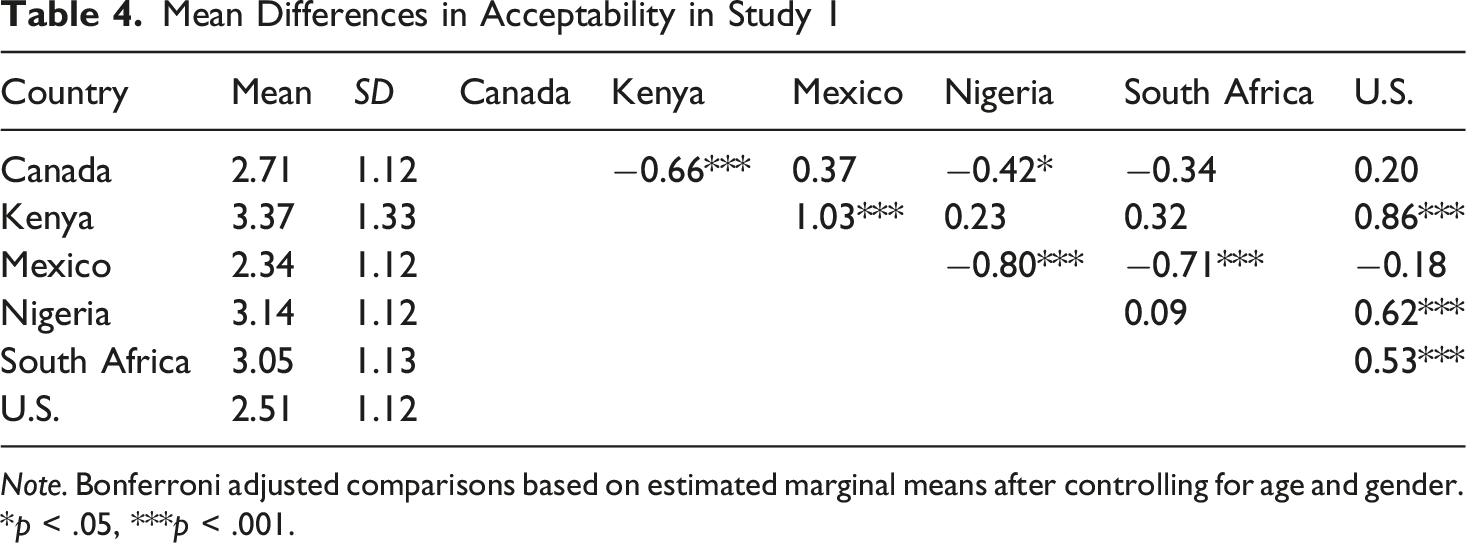
Note. Bonferroni adjusted comparisons based on estimated marginal means after controlling for age and gender.
*p < .05, ***p < .001.
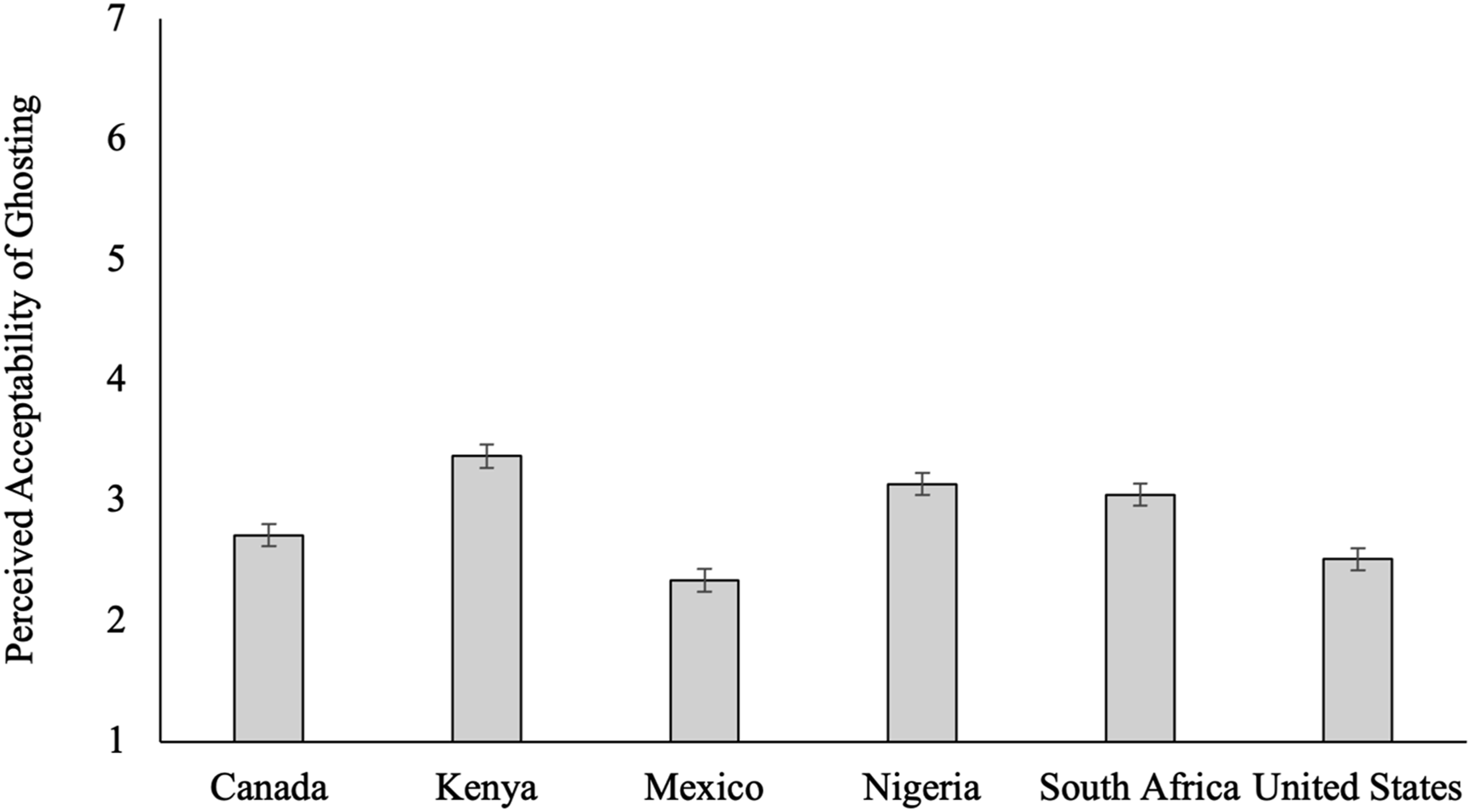
Mean levels of acceptability by country in Study 1 controlling for age and gender
Ghosting Intentions Across Romantic and Friendship Contexts
To examine how intentions to ghost in the future in short and long-term romantic relationships and friendships differed across the six countries, a 2 (Relationship Type: romantic, friendships) × 2 (Relationship Length: short-term, long-term) × 6 (Country) mixed ANCOVA controlling for age and gender was conducted with Bonferroni-adjusted comparisons. There was a main effect of Relationship Length (F(1, 769) = 9.28, p = .002, ηp2 = 0.01), such that participants were more likely to say they would ghost in short-term relationships (M = 51.68%, SD = 27.76) than in long-term relationships (M = 20.26%, SD = 21.80). In addition, there was a main effect of Country (F(5, 769) = 31.26, p < .001, ηp2 = 0.17) such that participants in Kenya, Nigeria, and South Africa were more likely to intend to ghost than participants in Canada, Mexico, and the U.S. (all p < .001). There was no main effect of Relationship Type (F(1, 769) = 0.76, p = .384, ηp2 = 0.001). These main effects were qualified by significant interactions between Relationship Type and Country (F(5, 769) = 8.86, p < .001, ηp2 = 0.05) and Relationship Length and Country (F(5, 769) = 2.82, p = .016, ηp2 = 0.02). There was no significant interaction of Relationship Type and Relationship Length (F(1, 769) = 0.13, p = .715, ηp2 < 0.001).
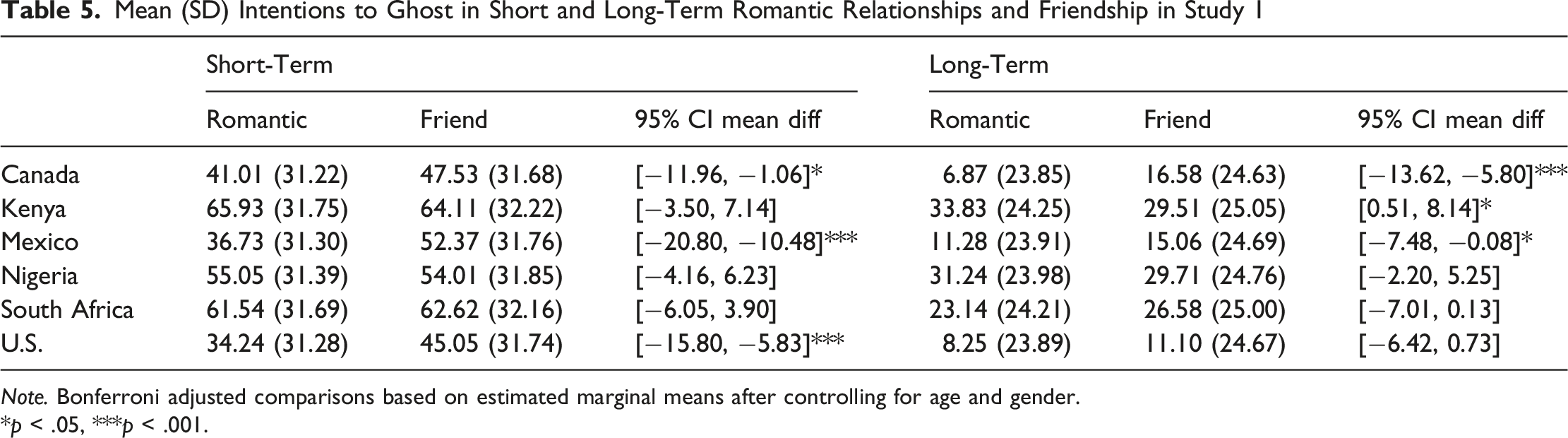
The two-way interactions were qualified by a significant three-way interaction between Relationship Type, Relationship Length, and Country (F(5, 769) = 3.94, p = .002, ηp2 = 0.03; see Figure 2). The three-way interaction indicated that participants in Canada and Mexico were more likely to intend to ghost in friendships than romantic relationships in both short and long-term relationships, whereas participants in the U.S. were only more likely to intend to ghost in friendships compared to romantic relationships in short-term relationships. Furthermore, participants in Kenya were less likely to intend to ghost in friendships compared to romantic relationships in long-term relationships (see Table 5). Intentions to ghost by relationship type and relationship length within each country in Study 1 controlling for age and gender Mean (SD) Intentions to Ghost in Short and Long-Term Romantic Relationships and Friendship in Study 1 Note. Bonferroni adjusted comparisons based on estimated marginal means after controlling for age and gender. *p < .05, ***p < .001.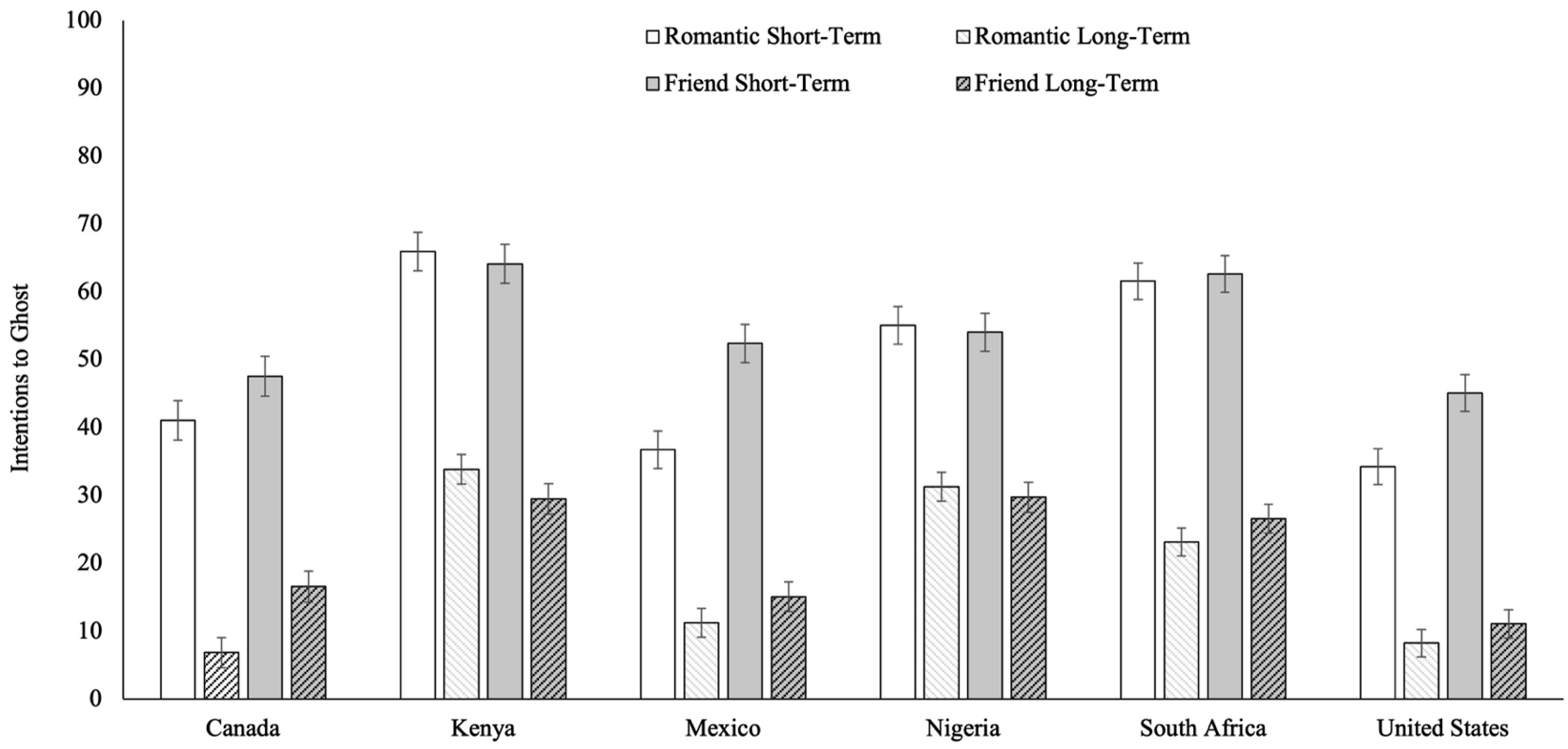
Ghosting Behaviors
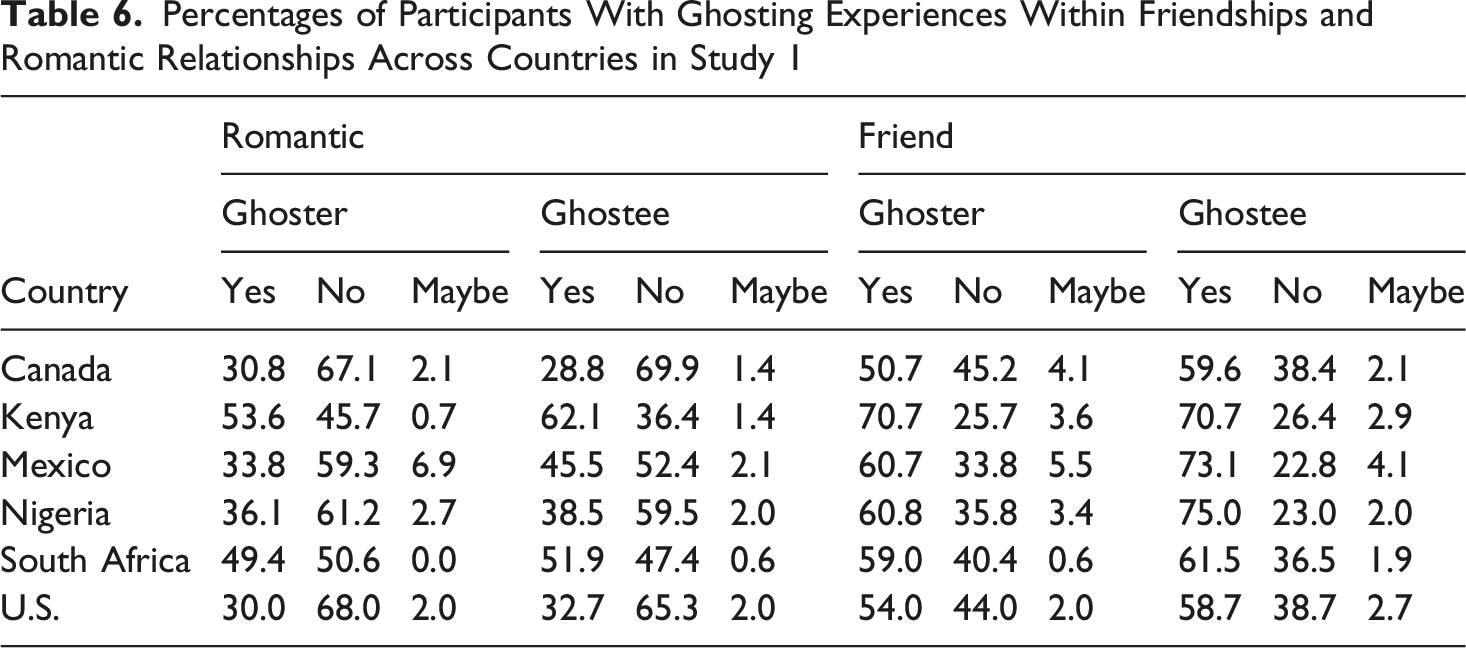
Percentages of Participants With Ghosting Experiences Within Friendships and Romantic Relationships Across Countries in Study 1
Romantic
A binomial logistic regression tested the effects of Country on whether participants had ghosted someone in a romantic context while controlling for age and gender. The model was significant (χ2(7) = 32.44, p < .001, AIC = 1,144, R 2 McF = 0.03), as was the effect of Country (χ2(5) = 30.20, p < .001, ΔR2McF = 0.03). Tukey-adjusted pairwise comparisons indicated that a significantly higher percentage of participants had ghosted a romantic partner in Kenya compared to the U.S. (z = 4.14, p < .001, odds ratio = 2.84, 95% CI [1.73, 4.65]), Canada (z = 3.89, p = .001, odds ratio = 2.65, 95% CI [1.62, 4.33]), Mexico (z = 3.14, p = .021, odds ratio = 2.20, 95% CI [1.35, 3.60]), and Nigeria (z = 3.06, p = .027, odds ratio = 2.12, 95% CI [1.31, 3.43]) and in South Africa compared to the U.S. (z = 3.40, p = .009, odds ratio = 2.28, 95% CI [1.42, 3.66]) and Canada (z = 3.10, p = .024, odds ratio = 2.13, 95% CI [1.32, 3.43]).
A binomial logistic regression tested the effects of Country on whether participants had been ghosted within the romantic context while controlling for age and gender. The model was significant (χ2(7) = 49.82, p < .001, AIC = 1,159, R2 McF = 0.04), as was the effect of Country (χ2(5) = 48.6, p < .001, ΔR2 McF = 0.04). Tukey-adjusted pairwise comparisons indicated that a significantly higher percentage of participants had been ghosted by a romantic partner in Kenya compared to Canada (z = 5.71, p < .001, odds ratio = 4.35, 95% CI [2.63, 7.20]), the U.S. (z = 5.14, p < .001, odds ratio = 3.68, 95% CI [2.24, 6.04]), Nigeria (z = 4.13, p < .001, odds ratio = 2.78, 95% CI [1.71, 4.51]), and Mexico (z = 2.95, p = .037, odds ratio = 2.08, 95% CI [1.28, 3.38]) and in South Africa compared to Canada (z = 3.90, p = .001, odds ratio = 2.61, 95% CI [1.61, 4.21]) and the U.S. (z = 3.30, p = .012, odds ratio = 2.20, 95% CI [1.38, 3.52]). Finally, a significantly higher percentage of participants had been ghosted by a romantic partner in Mexico compared to Canada (z = 2.95, p = .037, odds ratio = 2.09, 95% CI [1.28, 3.42]).
Friendship
A binomial logistic regression tested the effects of Country on whether participants had ghosted a friend while controlling for age and gender. The model was significant (χ2(7) = 17.16, p = .016, AIC = 1,143, R2 McF = 0.01), as was the effect of Country (χ2(5) = 14.70, p = .012, ΔR2 McF = 0.01). Tukey-adjusted pairwise comparisons indicated that a significantly higher percentage of participants had ghosted a friend in Kenya compared to Canada (z = 3.37, p = .001, odds ratio = 2.40, 95% CI [1.44, 4.00]) and the U.S. (z = 2.97, p = .036, odds ratio = 2.16, 95% CI [1.30, 3.59]).
A binomial logistic regression tested the effects of Country on whether participants had been ghosted by a friend while controlling for age and gender. The model was significant (χ2(7) = 21.48, p = .003, AIC = 1,072, R2 McF = 0.02), as was the effect of Country (χ2(5) = 20.90, p < .001, ΔR2 McF = 0.02). Tukey-adjusted pairwise comparisons indicated that a significantly higher percentage of participants had been ghosted by a friend in Nigeria (z = 2.99, p = .033, odds ratio = 2.18, 95% CI [1.31, 3.63]) and Mexico (z = 2.97, p = .035, odds ratio = 2.19, 95% CI [1.31, 3.67]) compared to the U.S. No other pairwise comparisons were significant across the four analyses.
Discussion
Across six countries within two continents, there were high levels of knowledge of ghosting as a term for ending a relationship by cutting off contact. Thus, in the countries sampled, ghosting seems to be a recognized option for ending relationships. There were also multiple other terms that participants used for ghosting with some of those terms appearing in consistent patterns. For example, at least some participants from all the countries felt that “ignoring” had the same meaning, whereas “going MIA” and “breaking up” were only used in the African countries, and “mizing” was only used in South Africa where “mizing” is a slang term that means to ignore (Johnson, 2023). The use of a term like “going MIA” suggests a more permanent end than “ignoring,” which points to an important area of future research: understanding whether ghosting is considered a permanent or temporary severance of a relationship. Thus, the different terms that participants provided offers a unique window into how ghosting may be perceived across different countries. For example, does the term imply intention (i.e., is ghosting seen as more accidental when it is described as “disappearing” compared to “snubbing”) or duration (e.g., “going MIA” compared to “ignoring”)?
Furthermore, there were consistent differences in ghosting attitudes, intentions, and behaviors. Participants from the African countries reported similar attitudes toward ghosting and largely reported higher ghosting acceptability than those from North American countries with participants in Mexico and the U.S. reporting the lowest levels of acceptability. Relatedly, participants in the African countries were more likely to intend to ghost than participants in the North American countries. Relationship-focused factors such as differences in relational mobility, face saving, or levels of interdependence may be contributing to these continental differences. For example, participants in Nigeria, Kenya, and South Africa tend to score higher on measures of collectivism than those from the U.S., Canada, and Mexico (Minkov & Kaasa, 2022), and participants from collectivistic cultures may be less affected by rejection experiences like ostracism (e.g., Pfundmair et al., 2015a), which may be one explanation for the higher levels of ghosting acceptability and intentions to ghost in the African countries.
Additionally, participants in Canada and Mexico were more likely to ghost in friendships than romantic relationships in both short and long-term relationships. Furthermore, participants in the U.S. were only more likely to ghost in friendships compared to romantic relationships within short-term relationships. Participants in Kenya were less likely to ghost in friendships compared to romantic relationships within long-term relationships, but romantic ghosting occurred most frequently in Kenya.
In general, ghosting was more common in friendships than romantic relationships. Past research has also suggested increased rates of ghosting in friendships compared to romantic relationships (Freedman et al., 2019). It may also be that ghosting tends to be more common in friendships than romantic relationships because people are more likely to have multiple friends but only one romantic partner at any point in time. Further, given that ghosting is more common in short-term than long-term relationships, it may be that the transitory nature of emerging adulthood (e.g., Shulman & Connolly, 2013) is particularly promotive of ghosting. Taken together, although an overwhelming majority of participants in all countries were aware of ghosting as a relationship dissolution strategy, there are clear differences across countries and particularly between the two continents in ghosting attitudes, intentions, and behaviors.
Study 2
In Study 2, we broadened our sample to other underrepresented countries in close relationships research (Machia et al., 2023; Williamson et al., 2022). Furthermore, in Study 1, we recruited emerging adults; however, in Study 2, we included participants from a wider age-range of adult participants. As with Study 1, this was an exploratory study, and we did not posit any a priori hypotheses.
Method
The dataset for this study was collected by Besample as part of their global research project. Besample collected data from 11 countries (Argentina, Brazil, Colombia, Germany, Ghana, India, Indonesia, Kenya, Mexico, the Philippines, Ukraine). During data collection, researchers were invited to submit a small selection of questions to a large survey that would be disseminated to the participants in the 11 countries who were registered as participants on Besample. The study was presented in English to participants in Germany, Ghana, India, Kenya, and the Philippines and in the most popular local language to participants in Argentina, Brazil, Colombia, Indonesia, Mexico, and Ukraine. Translations were conducted by Besample: the questions were translated by machine and then a professional native speaker translator verified the conceptual equivalence of the translation. The research protocol was approved through Pearl IRB (IRB ID: 2025-0106). We submitted our items to be included in the survey, but we did not receive any information about the other researchers’ questions or responses to those questions. Therefore, we only describe the questions to which we had access.
Participants
Age and Gender Demographics Within Each Country in Study 2
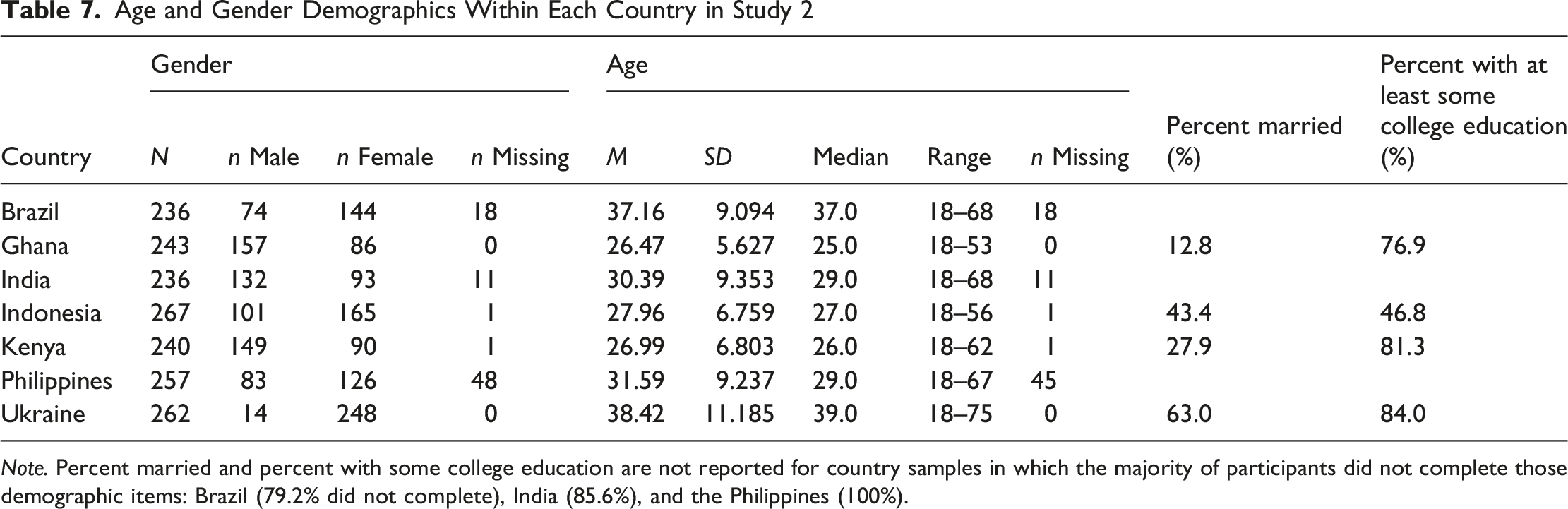
Note. Percent married and percent with some college education are not reported for country samples in which the majority of participants did not complete those demographic items: Brazil (79.2% did not complete), India (85.6%), and the Philippines (100%).
Procedure
For our measures on ghosting, participants first answered a knowledge question, followed by questions about their attitudes, intentions, and behaviors.
Measures
The measures in Study 2 were similar to those in Study 1 but adapted slightly due to space limitations.
Knowledge
Participants were first introduced to the term ghosting (Freedman & Powell, 2024) with the following statements and question: One way that people can end a relationship is by ghosting. Sometimes, ghosting is described in the following way: Ghosting is when one person has ended a relationship by suddenly ignoring or ending communication with another person, without telling them why. Have you heard of ending a relationship described in this way before?
Participants responded to the question in a multiple-choice format with three options: No; Yes: with it referred to as ghosting; Yes: but referred to using a different word (please specify).
Behaviors
As in Study 1, for ghosting behaviors, we asked participants whether they had ever ghosted or been ghosted in a friendship or romantic relationship. The question was presented as a “select all that apply” multiple choice: I have ghosted a romantic partner, I have been ghosted by a romantic partner, I have ghosted a friend, I have been ghosted by a friend. We then created four new variables: romantic ghoster, romantic ghostee, friend ghoster, and friend ghostee in which participants scored either a 0 for not engaging in the behavior or a 1 for engaging in the behavior.
Intentions
For intentions, participants indicated on a 0% to 100% scale how likely they would be to ghost in a short-term romantic relationship, a long-term romantic relationship, a short-term friendship, and a long-term friendship.
Attitudes
For attitudes, participants indicated on a 1 (strongly disagree) to 7 (strongly agree) scale how much they agreed with each of the statements from Study 1, and an average was calculated to reflect overall acceptability (α = .70). 2
Results
Ghosting Knowledge
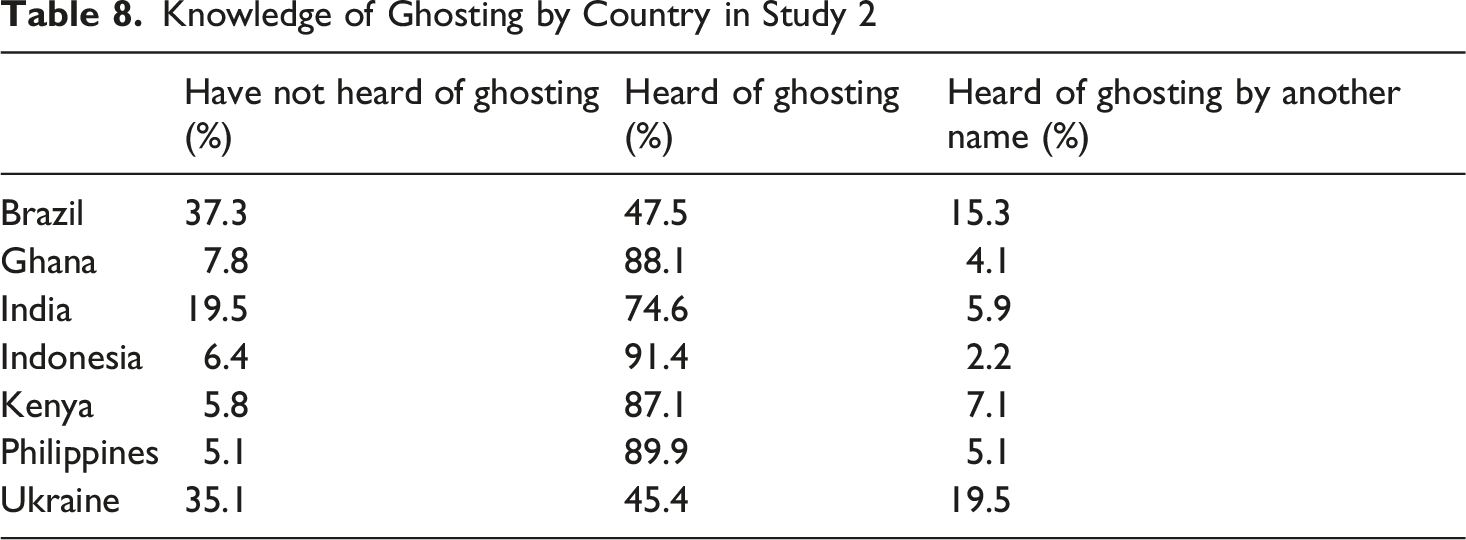
Knowledge of Ghosting by Country in Study 2
Ghosting Attitudes
Mean Differences Across Countries in Perceived Acceptability of Ghosting in Study 2
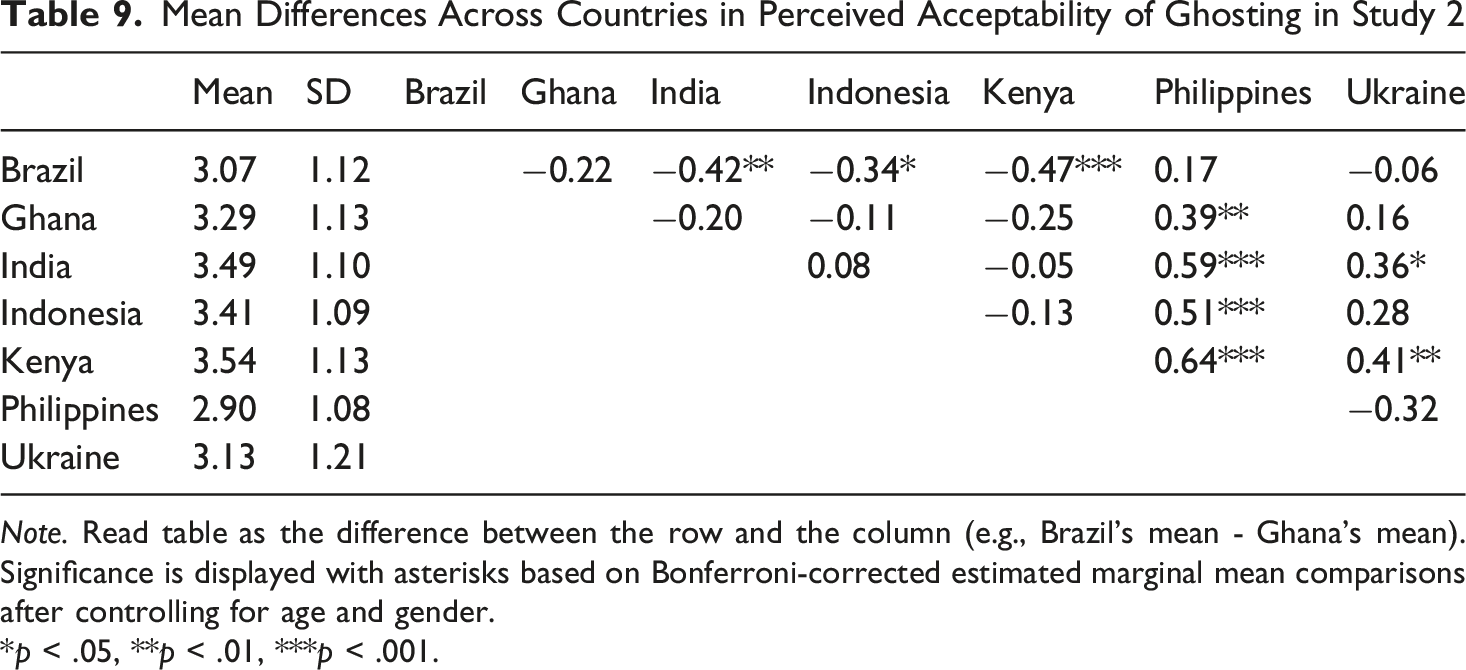
Note. Read table as the difference between the row and the column (e.g., Brazil’s mean - Ghana's mean). Significance is displayed with asterisks based on Bonferroni-corrected estimated marginal mean comparisons after controlling for age and gender.
*p < .05, **p < .01, ***p < .001.
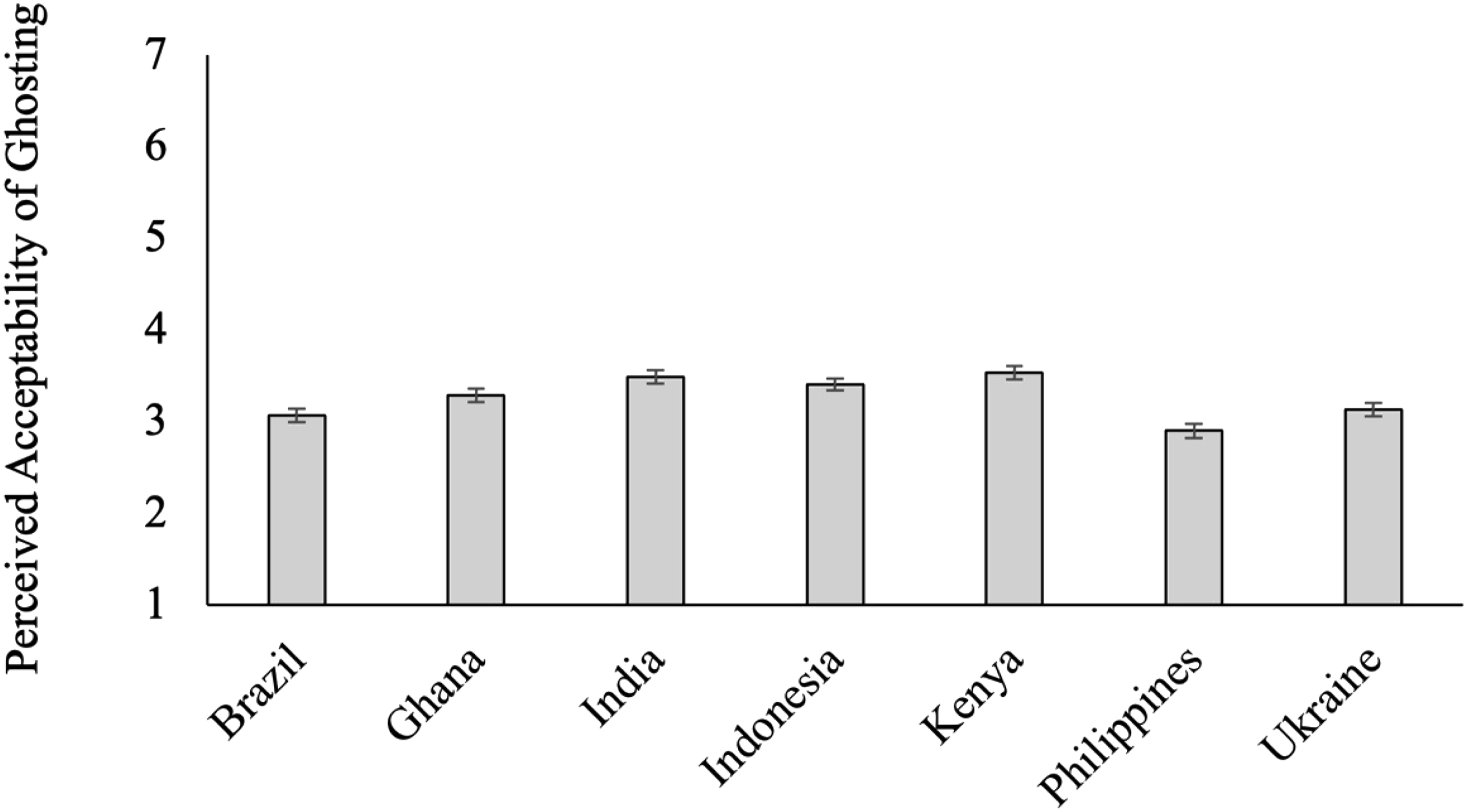
Mean levels of acceptability by country in Study 2 controlling for age and gender
Ghosting Intentions Across Romantic and Friendship Contexts
Mean Differences Across Countries in Likelihood of Ghosting in Study 2
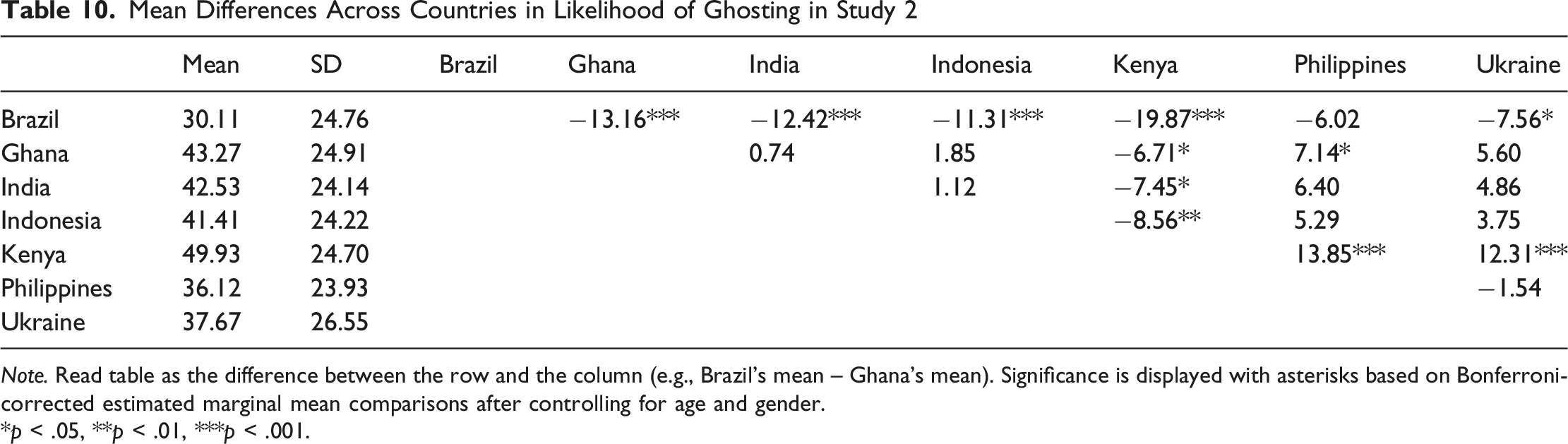
Note. Read table as the difference between the row and the column (e.g., Brazil’s mean – Ghana’s mean). Significance is displayed with asterisks based on Bonferroni-corrected estimated marginal mean comparisons after controlling for age and gender.
*p < .05, **p < .01, ***p < .001.
The main effects were qualified by two two-way interactions. First, there was an interaction of Relationship Type and Country (F(6, 1,653) = 5.97, p < .001, ηp2 = 0.02). Participants were more likely to ghost in friendships compared to romantic relationships in Brazil (M diff = 8.01, SE = 1.47, p < .001, 95% CI [5.14, 10.88]) and in India (M diff = 6.17, SE = 1.41, p < .001, 95% CI [3.41, 8.93]), but in the other countries there was no significant difference in ghosting likelihood based on type of relationship.
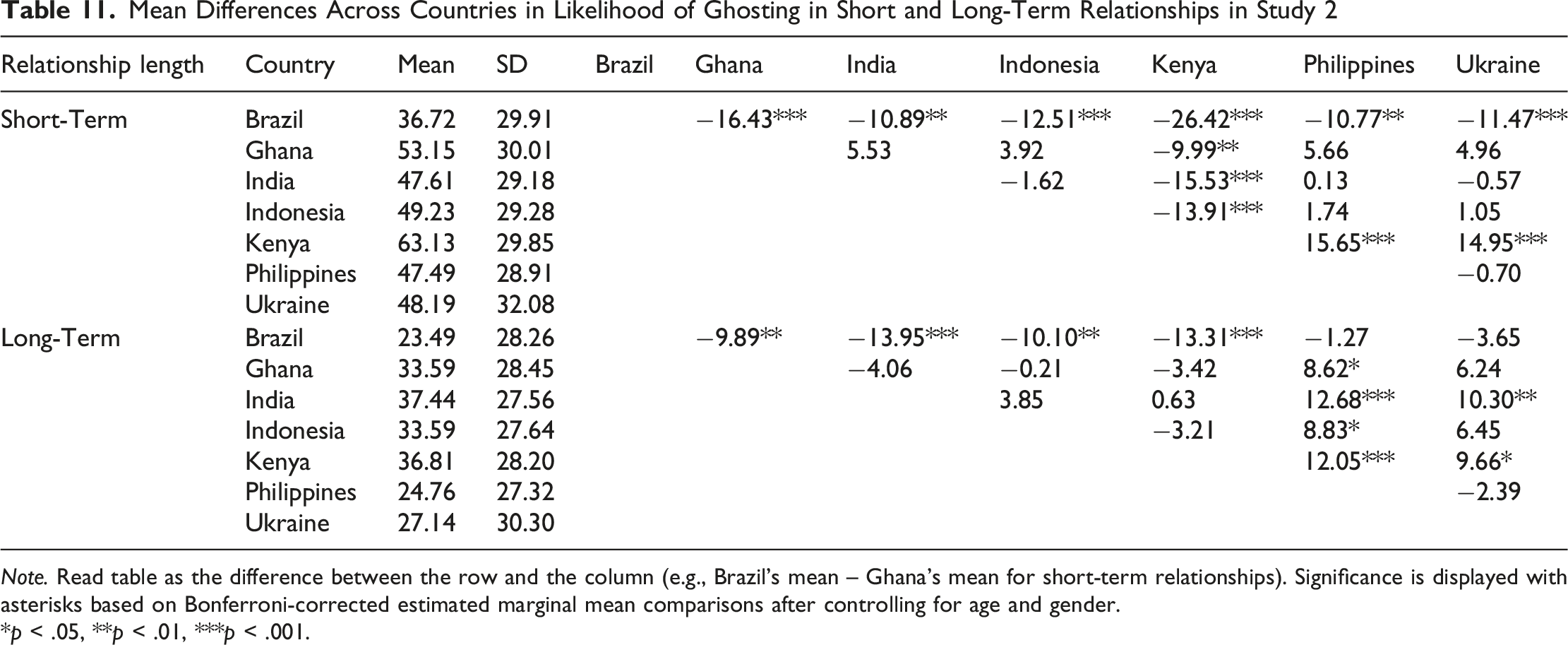
Second, there was an interaction of Relationship Length and Country (F(6, 1,653) = 8.38, p < .001, ηp2 = 0.03). Participants were more likely to intend to ghost in short-term compared to long-term relationships in all seven countries (see Figure 4). For short-term relationships, participants from Brazil were less likely to ghost than participants from all other countries, but for long-term relationships, participants from Brazil were only less likely to ghost than those from Ghana, India, Indonesia, and Kenya. Furthermore, participants from Kenya were more likely to ghost in short-term relationships than participants from all other countries, but for long-term relationships, participants from Kenya were only more likely to ghost than participants from the Philippines and Ukraine. Finally, in long-term relationships, participants from the Philippines were less likely to ghost than participants from Ghana, India, and Indonesia, and participants from Ukraine were less likely to ghost than participants from India (see Table 11). The other country comparisons were not significant. There was no interaction of Relationship Type and Relationship Length (F(1, 1,653) = 0.85, p = .357, ηp2 = 0.001) or three-way interaction of Relationship Type, Relationship Length, and Country (F(6, 1,653) = 1.09, p = .366, ηp2 = 0.004). Intentions to ghost by relationship type and relationship length within each country in Study 2 controlling for age and gender Mean Differences Across Countries in Likelihood of Ghosting in Short and Long-Term Relationships in Study 2 Note. Read table as the difference between the row and the column (e.g., Brazil’s mean – Ghana’s mean for short-term relationships). Significance is displayed with asterisks based on Bonferroni-corrected estimated marginal mean comparisons after controlling for age and gender. *p < .05, **p < .01, ***p < .001.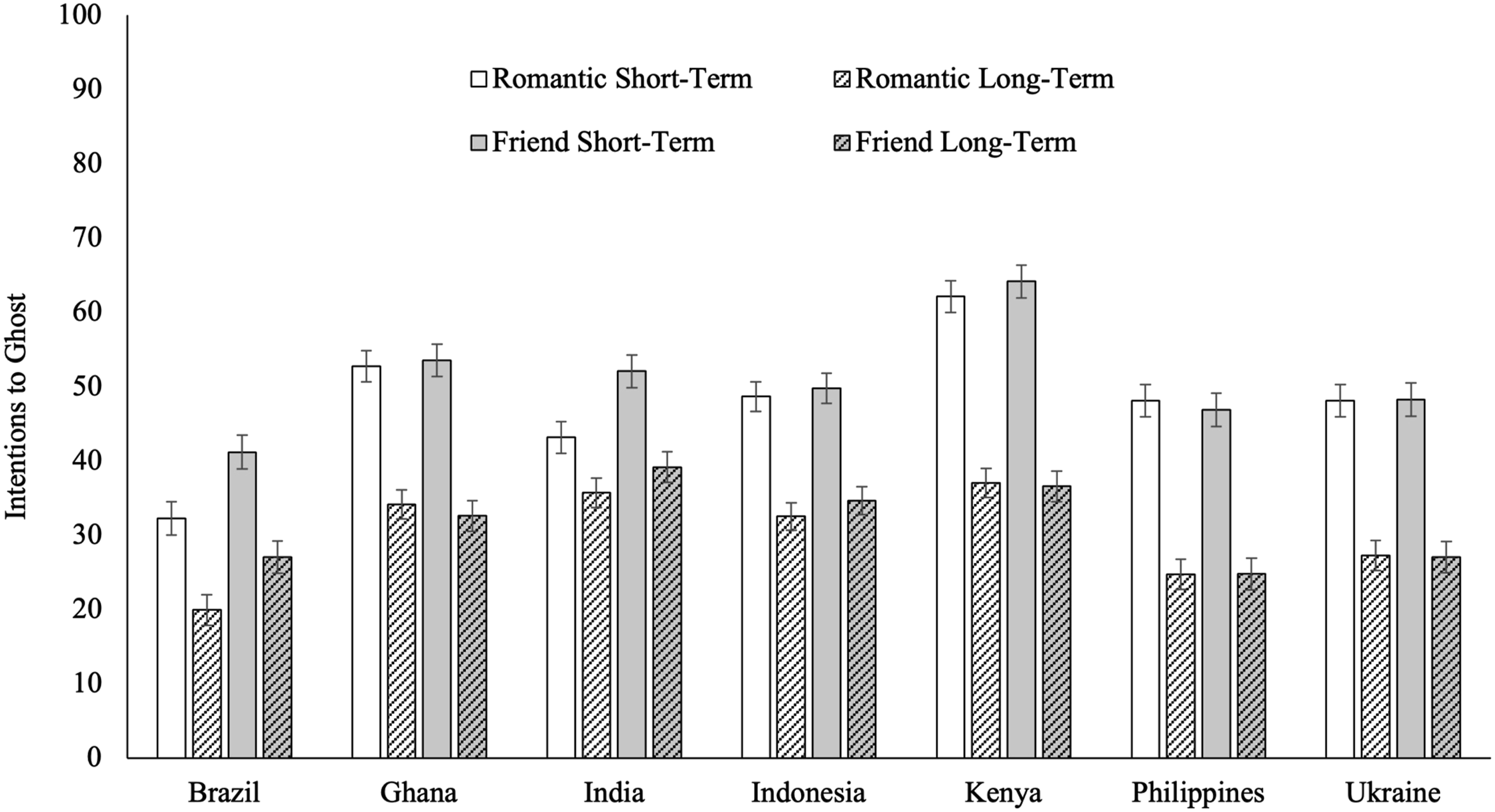
Ghosting Behaviors
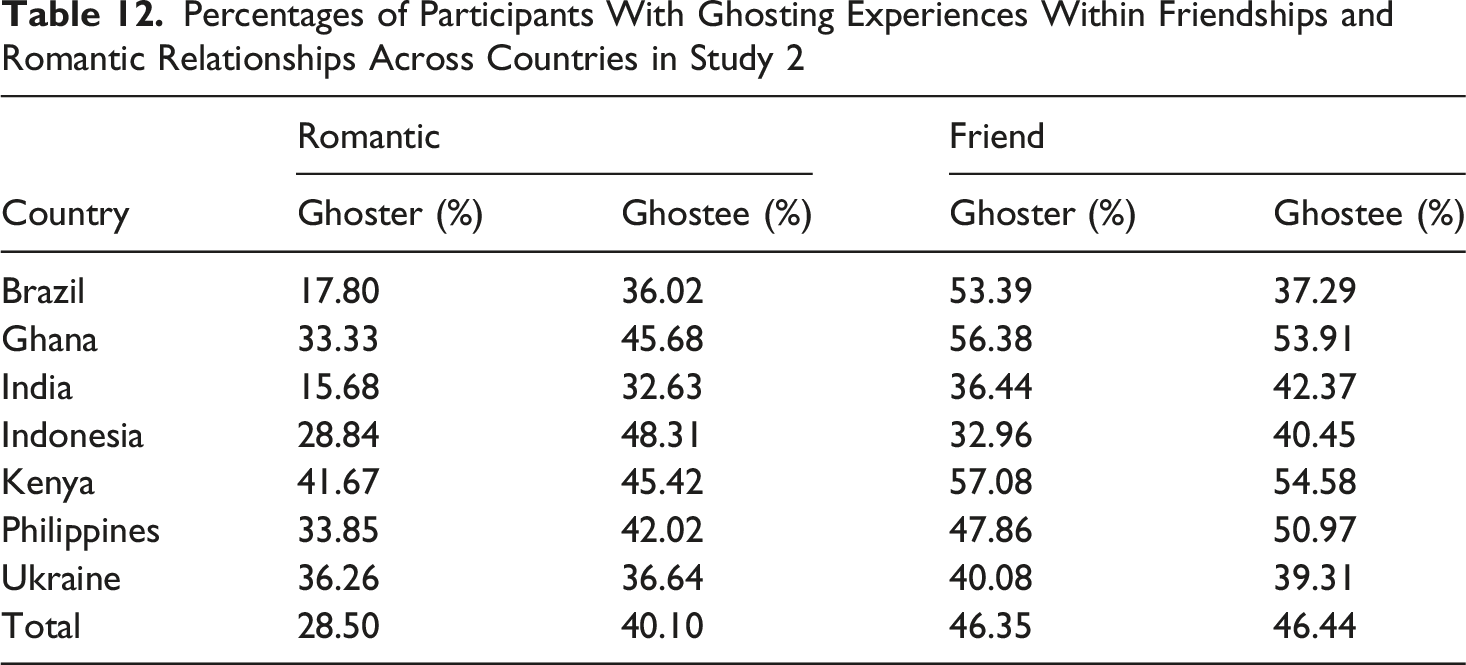
Percentages of Participants With Ghosting Experiences Within Friendships and Romantic Relationships Across Countries in Study 2
Romantic
A binomial logistic regression tested the effects of country on whether participants had ghosted within the romantic context while controlling for age and gender. The model was significant (χ2(8) = 76.50, p < .001, AIC = 1,954, R2 McF = 0.04) as was the effect of country (χ2(6) = 66.20, p < .001, ΔR2 McF = 0.03). Tukey-adjusted pairwise comparisons indicated that a significantly higher percentage of participants had ghosted a romantic partner in Indonesia (z = 3.78, p = .003, odds ratio = 2.41, 95% CI [1.53, 3.80]), Ghana (z = 4.18, p < .001, odds ratio = 2.64, 95% CI [1.67, 4.16]), the Philippines (z = 3.93, p = .002, odds ratio = 2.60, 95% CI [1.61, 4.18]), Ukraine (z = 5.99, p < .001, odds ratio = 4.35, 95% CI [2.69, 7.04]), and Kenya (z = 5.90, p < .001, odds ratio = 3.87, 95% CI [2.47, 6.06]) compared to India. A significantly higher percentage of participants had ghosted a romantic partner in Ukraine (z = 4.88, p < .001, odds ratio = 2.97, 95% CI [1.92, 4.60]) and Kenya (z = 4.17, p < .001, odds ratio = 2.64, 95% CI [1.67, 4.16]) compared to Brazil.
A second binomial logistic regression tested the effects of country on whether participants had been ghosted within the romantic context while controlling for age and gender. The model was significant (χ2(8) = 24.30, p < .001, AIC = 2248, R2 McF = 0.01) as was the effect of country (χ2(6) = 23.50, p < .001, ΔR2 McF = 0.01) with Tukey-adjusted pairwise comparisons indicating that that a significantly higher percentage of participants had been ghosted by a romantic partner in Indonesia (z = 3.37, p = .013, odds ratio = 1.90, 95% CI [1.31, 2.75]), Ghana (z = 3.02, p = .040, odds ratio = 1.80, 95% CI [1.23, 2.62]) and Kenya (z = 2.96, p = .049, odds ratio = 1.78, 95% CI [1.21, 1.60]) compared to India and in Indonesia compared to Ukraine (z = 3.28, p = .018, odds ratio = 1.88, 95% CI [1.29, 2.75]).
Friendship
A binomial logistic regression tested the effects of country on whether participants had ghosted a friend while controlling for age and gender. The model was significant (χ2(8) = 65.34, p < .001, AIC = 2246, R2 McF = 0.03) as was the effect of country (χ2(6) = 55.40, p < .001, ΔR2 McF = 0.02) with Tukey-adjusted pairwise comparisons indicating that a significantly higher percentage of participants had ghosted a friend in the Philippines (z = 3.29, p = .018, odds ratio = 1.88, 95% CI [1.29, 2.74]), Brazil (z = 5.10, p < .001, odds ratio = 2.74, 95% CI [1.86, 4.03]), Ghana (z = 4.92, p < .001, odds ratio = 2.50, 95% CI [1.74, 3.60]), and Kenya (z = 5.07, p < .001, odds ratio = 2.58, 95% CI [1.79, 3.72]) compared to Indonesia. Additionally, a significantly higher percentage of participants had ghosted a friend in Brazil (z = 4.25, p < .001, odds ratio = 2.35, 95% CI [1.59, 3.49]), Ghana (z = 4.01, p = .001, odds ratio = 2.15, 95% CI [1.78, 3.13]), and Kenya (z = 4.16, p < .001, odds ratio = 2.22, 95% CI [1.52, 3.23]) compared to India.
A second binomial logistic regression tested the effects of country on whether participants had been ghosted within the friend context while controlling for age and gender. The model was significant (χ2(8) = 37.06, p < .001, AIC = 2272, R2 McF = 0.02) as was the effect of country (χ2(6) = 24.10, p < .001, ΔR2 McF = 0.01) with Tukey-adjusted pairwise comparisons indicating that a significantly higher percentage of participants had been ghosted by a friend in Kenya (z = 3.23, p = .021, odds ratio = 1.93, 95% CI [1.30, 2.88]), the Philippines (z = 3.13, p = .029, odds ratio = 1.87, 95% CI [1.26, 2.77]), and Ghana (z = 3.01, p = .041, odds ratio = 1.85, 95% CI [1.24, 2.76]) compared to Brazil and in Kenya compared to Indonesia (z = 3.04, p = .038, odds ratio = 1.74, 95% CI [1.22, 2.49]). No other pairwise comparisons for the four behaviors were significant.
Discussion
As in Study 1, most participants had heard of ghosting and participants from Kenya reported the highest levels of acceptability and were the most likely to intend to ghost overall. Participants from Kenya were more likely to ghost in short-term relationships than participants from other countries, but for long-term relationships, participants from Kenya were only more likely to ghost than participants from Brazil, the Philippines, and Ukraine. Finally, in friendships, participants from Kenya were most likely to have ghosted or been ghosted. Interestingly, participants from Indonesia also reported a relatively high level of acceptability and higher likelihood of being ghosted by a romantic partner but were least likely to have ghosted a friend. Participants from India were least likely to have ghosted or been ghosted in romantic relationships, despite having one of the highest levels of acceptability for ghosting.
Nevertheless, over a third of participants in Brazil and Ukraine had not heard of ghosting, and they were more likely to have heard of ghosting by another name than participants from other countries. In line with the lower levels of knowledge of ghosting in Brazil and Ukraine, participants from those countries also tended to report lower levels of acceptability and intentions toward ghosting. Specifically, participants from Ukraine (and the Philippines) reported the lowest levels of ghosting acceptability. Furthermore, participants from Brazil were the least likely to intend to ghost overall, and for short-term relationships, participants from Brazil were less likely to ghost than participants from other countries. However, participants from Ukraine and Brazil were not the least likely to report engaging in ghosting behaviors.
These findings speak to a potential disconnect between attitudes, intentions, and behaviors within ghosting (Manning et al., 2019). The degree to which ghosting is seen as acceptable may have differential impacts on behavior depending on how face is negotiated in that context. For example, in collectivistic cultures, other-face (i.e., one’s concern about someone else’s image) is a more critical concern (Oetzel & Ting-Toomey, 2003). In those contexts, ghosting may be seen as unacceptable because it threatens the ghostee’s image, thereby leading to less engagement in ghosting behaviors. However, if ghosting is seen as unacceptable because it threatens the ghoster’s image, there may be more of a disconnect between ghosting attitudes and behaviors in collectivistic cultures.
General Discussion
Across two studies in which participants were recruited from 12 countries, we compared ghosting knowledge, attitudes, intentions, and behaviors. This is the first package of studies to systematically compare how individuals across different countries think about and engage in ghosting. These foundational studies demonstrate that ghosting is a recognized, global phenomenon with participants reporting a high level of knowledge of ghosting, at least in places that have the technological access to online participant recruitment platforms. In both the emerging adult-aged samples in Study 1 and in the broader adult-aged samples in Study 2, most participants across countries were aware of ghosting as a relationship termination strategy and used that specific term for the phenomenon. Further, a sizeable proportion across all countries also had prior experiences with ghosting – as the initiator, recipient, or both. Therefore, from a practical perspective, future studies on relationship dissolution should likely include ghosting when listing options for how the relationship ended.
It is important to note, though, that in some countries, other phrases were used instead of ghosting (e.g., “mizing” in South Africa). As such, scholars should first identify the predominant terminology within the countries from which they sample. Moreover, they should explore whether there are identifiable differences in the actions associated with terms (e.g., ghosting versus mizing). Furthermore, ghosting shares commonalities with other forms of rejection (e.g., orbiting; Pancani et al., 2021), and examining whether the term ghosting encompasses actions like orbiting in other countries will be an important consideration.
This project also demonstrated that, on average, most participants’ attitudes about ghosting across the sampled countries were relatively neutral or only slightly negative. Early research suggested that ghosting was perceived negatively (Freedman et al., 2019), but this research suggests that attitudes about ghosting may have softened. An overall acceptability measure was used in this study and largely demonstrated moderate levels of acceptability. Prior work has considered differences in perceived acceptability for short-term and long-term relationships, and future cross-national work could take a more fine-grained approach. For example, in cultures with higher levels of relational mobility, ghosting may be seen as more acceptable in short-term relationships because people feel more comfortable moving in and out of relationships (Yuki & Schug, 2012), but that may not be in the case in cultures that have lower levels of relational mobility.
For intentions, participants across countries were more likely to intend to ghost in short-term than long-term relationships and in friendships than in romantic relationships, replicating prior research (Freedman et al., 2019). Thus, like knowledge, the preference to use ghosting as a short-term relationship dissolution strategy may be a broad cross-cultural phenomenon as well. It is important to note that we permitted participants to use their implicit definitions for short- and long-term relationships. Future research could stipulate relationship lengths and examine how those lengths alter ghosting responses.
Additionally, participants were typically more likely to intend to ghost in friendships than in romantic relationships, replicating prior research (Freedman et al., 2019). It may be that there are distinct features of romantic relationships that reduce individuals’ intentions to ghost partners. For example, romantic relationships are more likely to have a clean break point (Sprecher et al., 2010). Friendships that are ending are more likely to fade in the frequency of their interaction over time (Vieth et al., 2022), and it may be that the act of ghosting - or ignoring attempts to reach out - becomes a part of the dissolution process (Santucci et al., 2025).
However, the pattern of intending to ghost in friendships more frequently than romantic relationships was not consistent across all countries. For example, the participants from Kenya in Study 1 reported a greater intention to ghost in long-term romantic relationships than in long-term friendships. Additionally, in Study 2, across most countries there was not a difference in ghosting intentions between friendships and romantic relationships. One possibility for the discrepancies between countries is that the ways in which relationships are viewed can vary cross-culturally. For example, friendship network sizes and motivations for engaging in friendships differ in independent and interdependent cultural contexts (Adams & Plaut, 2003). Thus, depending on how individuals within a country perceive friendships, they may be more or less likely to treat them similarly to their romantic interests in terms of relationship dissolution.
Similarly, for behaviors in Study 1, we replicated earlier findings from the U.S. that individuals were more likely to report prior experiences with ghosting within friendships than romantic relationships (Freedman et al., 2019). However, like intentions, that pattern of behavioral differences in ghosting experiences was not consistent across all countries. For example, in Indonesia, individuals were more likely to report having been ghosted within romantic relationships than friendships. As such, it will be important to explore cultural factors that may contribute to ghosting differences across relationships.
Participants from African countries reported higher rates of ghosting than participants from other countries, and especially when comparing Kenya to countries outside of Africa. The higher rates of ghosting in Kenya across both studies is an aspect of the current research that should be examined further. One potential avenue of exploration is to consider the role of implicit theories (i.e., whether people view the self and relationships as fixed or malleable; Dweck & Leggett, 1988; Knee, 1998) in ghosting attitudes and behaviors. Individuals with more fixed mindsets about relationships are more likely to have ghosted (Freedman et al., 2019; Powell et al., 2021). Cross-national work across more than 50 countries demonstrated college students from Kenya had the lowest rates of wanting to change their personality (Baranski et al., 2021). As such, future research should explore whether people in Kenya see personality and implicit theories of relationships as more fixed and whether that links to ghosting behaviors.
Study 2 demonstrated that participants from Brazil tended to be less aware of ghosting, have less favorable attitudes, and lower intentions toward ghosting than many of the participants from other countries, but they still reported similar rates of ghosting behaviors. Thus, higher intentions to ghost within a given country did not automatically translate to a greater proportion of ghosting experiences. It may be that norms associated with ghosting (Powell et al., 2022) contribute to the disconnect between attitudes, intentions, and behaviors (Manning et al., 2019), though future work is warranted to explore that possibility across countries. As such, while attitudes can predict intentions, and intentions can be a predictor of behavior (Ajzen, 1985), it is important to continue researching them as separate entities.
It is important to also note that the results suggest that there is noticeable variability within many countries related to individuals’ attitudes, intentions, and behaviors, suggesting that examinations into individual differences may be worthwhile. For example, scholars could examine individual difference variables identified within US- or European-based samples such as attachment (Powell et al., 2021) within other country contexts.
Limitations and Future Directions
The present set of studies are the first to compare ghosting knowledge, attitudes, intentions and behaviors across a wide range of countries, but there are some limitations inherent to such a comparison. First, as our focus was on country-based comparisons, it is important to not conflate country differences with cultural differences. In seeking to understand the patterns of ghosting attitudes, intentions, and behaviors, researchers should consider cultural facets of the individuals in their studies, including but not limited to individualism and collectivism (e.g., Garris et al., 2011), independent versus interdependent communities (e.g., Over & Uskul, 2016), relational mobility (Yuki & Schug, 2012), and conflict aversion (e.g., Hashimoto & Yamagishi, 2013). Additionally, the samples from each country were convenience-based. Although a useful first step in understanding ghosting as a global phenomenon, future researchers should seek more nationally-representative samples.
The language expectations also differed between the two studies. In Study 1, only participants who were fluent in English were recruited, which may reduce the generalizability of the findings within each country. However, English is an official language of five of the six countries in Study 1. In Study 2, participants were not required to be fluent in English as the survey was translated to the most popular local language of the country. However, back-translation was not part of the process when converting the survey into non-English languages. It will be important in future research to use a more thorough translation process to ensure the most accurate presentation of the questions.
Furthermore, in Study 1, we only recruited emerging adults, whereas in Study 2 the age range was broader. In addition, we controlled for gender and age in the analyses as there were gender and age differences across the country samples within both studies. A worthwhile direction for future research will be to examine gender and age-related differences in ghosting within and across countries. Future researchers may also consider the extent to which other demographic factors contribute to differences in ghosting attitudes, intentions, and behaviors. Such demographic factors could include but are not limited to sexual orientation and disability status 3 . In addition to allowing for the exploration of possible individual differences, that information would also provide a fuller picture of sample heterogeneity.
Conclusion
The present set of studies provides a foundation for future work examining cross-cultural differences in ghosting. These studies provide evidence that ghosting exists and is widely known across 12 countries that span five continents. We found that ghosting intentions and behaviors vary based on both country and on the interpersonal context. Taken together, this work points to the importance of broadening the scope of ghosting research both in terms of populations studied and the social context.
Supplemental Material
Supplemental Material - A Cross-National Comparison of Ghosting Knowledge, Attitudes, Intentions, and Behaviors in Friendships and Romantic Relationships Spanning Twelve Countries
Supplemental Material for A Cross-National Comparison of Ghosting Knowledge, Attitudes, Intentions, and Behaviors in Friendships and Romantic Relationships Spanning Twelve Countries by Gili Freedman and Darcey N. Powell in Journal of Social and Personal Relationships.
Footnotes
Acknowledgments
The authors gratefully acknowledge the assistance of the following people for their help with the research: Melak Armstrong, Leslie Fuentes, Daisha Jones, Shannon Lutz, Kristina Howansky, Scott Mirabile, Kurayi Mahachi, and Drew Sonnenberg.
Ethical Considerations
Study 1 was approved by the St. Mary’s College of Maryland IRB (Study ID: SU24_06). Study 2 was approved through Pearl IRB (IRB ID: 2025-0106). Participants provided consent via online surveys.
Funding
The authors disclosed receipt of the following financial support for the research, authorship, and/or publication of this article: Study 1 was funded by St. Mary’s College of Maryland. The data for Study 2 were provided free of charge by BeSample.
Declaration of Conflicting Interests
The authors declared no potential conflicts of interest with respect to the research, authorship, and/or publication of this article.
Open Research Statement
As part of IARR's encouragement of open research practices, the author(s) have provided the following information: The studies were exploratory and thus not pre-registered. The data and code used in the research can be obtained at:  . The materials used in the research can be obtained at: https://osf.io/nerhf/overview.
Supplemental Material
Supplemental material for this article is available online.
Notes
References
Supplementary Material
Please find the following supplemental material available below.
For Open Access articles published under a Creative Commons License, all supplemental material carries the same license as the article it is associated with.
For non-Open Access articles published, all supplemental material carries a non-exclusive license, and permission requests for re-use of supplemental material or any part of supplemental material shall be sent directly to the copyright owner as specified in the copyright notice associated with the article.
