






Abstract
The Similarity–Attraction hypothesis suggests that people tend to like others who are more similar to them. Friends tend to resemble each other, but it is unknown whether the greater resemblance leads to greater friendship quality. This association might also depend on the person’s personality traits, which have been associated with differences in friendship patterns. The current study examined whether similarity in four sociodemographic characteristics (age, sex, marital status, and parenthood status) between friends, and the personality traits of the participant (extraversion, emotional stability, agreeableness, conscientiousness, and openness to experience), were associated with higher emotional closeness with friends, as reported by the participant. Data were from the German Panel Analysis of Intimate Relationships and Family Dynamics (pairfam; n = 7,699 participants who reported relationship information on 44,199 of their friends across two study waves). We used fixed-effect multilevel regression models to examine associations between sociodemographic similarity and emotional closeness based on within-participant variation across different friends of the participant. Higher sociodemographic similarity was associated with higher emotional closeness, more strongly for women than men. Higher extraversion, agreeableness, conscientiousness, and openness to experience of the participant were associated with higher emotional closeness, and the associations of conscientiousness and openness to experience were amplified by higher friend similarity. Most of these associations between personality and friendship emotional closeness were small in magnitude. The findings extend the Similarity–Attraction hypothesis by showing that friend similarity is related to higher emotional closeness.
Introduction
Besides family members, friends are some of the most important individuals in people’s social lives (Dunbar, 2022). Friends share experiences together, help when the other is in need, and provide emotional support and social trust (Hojjat & Moyer, 2017). Unsurprisingly, having close friendships is one of the important factors predicting better mental health and wellbeing (Pezirkianidis et al., 2023). Friendships come in varying levels of emotional closeness, so that people tend to have a few best friends, a small group of good friends, and larger group of more distant acquaintances (Dunbar, 2018). The wellbeing benefits of friends can be accrued from all of these levels: much of research has focused on close friends, but even minimal social interactions with others have been shown to improve people’s happiness (Moreton et al., 2023).
Friends are likely to resemble each other in many characteristics. They are more likely to be of the same sex, same age, same marital status, and same socioeconomic background, for instance (Smith et al., 2014; Thomas, 2019). There’s even some evidence of genetic similarity between friends (Guo, 2006). These findings provide support for the Similarity–Attraction Hypothesis which states that people experience more positive feelings toward people who they perceive to be like themselves (Byrne, 1997; Montoya & Horton, 2013). Two main models have been put forward to explain this effect (Montoya & Horton, 2013): According to the reinforcement model, we all prefer cognitive coherence, and therefore we like others who validate our views and ideas. According to the information model, similarity with another person leads us to expect more positive aspects about the person. Both models would suggest higher likelihood of friendship between more similar individuals. Dissimilarity with a friend, in contrast, might induce uncertainty and incoherence across differing worldviews, and the negative feelings associated with uncertainty might translate into less positive views towards the friend.
Given the importance of similarity in friendship formation and selection, one could assume that similarity would also translate into better friendship quality, but the empirical evidence on the friendship outcomes associated with similarity is very limited. Some studies have addressed it when looking at personality similarities between friends. Kurtz & Sherker (Kurtz & Sherker, 2003) found similarity in Conscientiousness—but not in the other four personality traits of the Five Factor Model—to be associated with higher relationship quality among female college roommates. Körner and Altmann (Körner & Altmann, 2023) observed no association between personality similarity and friendship satisfaction in a sample of German students. In a sample of Finnish military cadets, Ilmarinen and colleagues (Ilmarinen et al., 2016) observed higher liking among platoon mates who were more similar in traits of manipulativeness and egotism, but not in the Five Factors Model personality traits. In a study of zero-acquaintance encounters, dyadic similarity in the Five Factor Model personality traits between the participants was not associated with interpersonal liking of the other (Back et al., 2011), providing no support for the importance of similarity. Regarding sociodemographic similarity, there is considerable evidence for sociodemographic similarity between friends (Smith et al., 2014), but it is unknown whether the sociodemographic similarity translates into better friendship quality.
The role of similarity may not apply to everyone in the same manner because not everyone forms the same types of friendships. Some individuals have many friends, others have only few; some meet their friends frequently, others only every now and then; and so on. These differences in friendship patterns are related to people’s personality (Harris & Vazire, 2016; Laakasuo et al., 2017). Personality differences have been demonstrated in many patterns of friendship formation and maintenance, such as number of friends or frequency of meeting friends (Altmann, 2020; Campbell et al., 2015; Wrzus & Neyer, 2016). For instance, individuals with higher extraversion and agreeableness tend to have friends who live close by and who they meet more frequently than those with lower extraversion and agreeableness (Laakasuo et al., 2017). High openness to experience, by contrast, seems to be related to less conventional friendships, such as meeting friends less frequently and having more dissimilar friends (Laakasuo et al., 2017). Thus, the psychological and social importance of friendships varies across individuals, and some of this variation is systematically related to people’s personality differences.
The current study extends previous research on friendship similarity and personality in two ways. First, it examined whether friend similarity in sociodemographic characteristics (sex, age, marital status, parenthood status) was associated with higher emotional closeness with the friend. The purpose was to test whether the similarity–attraction effect not only brings similar individuals together but whether it also carries over to higher friendship emotional closeness as well. Second, the study examined the relevance of personality differences in these associations by examining (1) whether the Five Factor Model personality traits of the participant were associated with friend sociodemographic similarity and friend emotional closeness, and (2) whether the associations between the participant’s personality and emotional closeness with the friend were more or less strong depending on the sociodemographic similarity of the friend. The analysis was based on participant-reported emotional closeness, as there were no dyadic data available from the friends.
Materials and Methods
Participants
Participants were from the pairfam cohort (Panel Analysis of Intimate Relationships and Family Dynamics; release 10.0 (Brüderl, Josef et al., 2019)), which is a German Family Panel study that started in 2008 with a national sample of ∼12,000 randomly selected persons from three birth cohorts (1991-93, 1981-83, and 1971-73). A detailed description of the study can be found in (Huinink et al., 2011). All participants from waves 2 and 4 were included if they had data on personality (assessed at wave 2) and friends at least in one of the study waves (n = 7,699 participants). The interviews for wave 2 data collection were carried out between 24th October 2009 and 24th April 2010, and for wave 4 between 28th October 2011 and 7th May 2012. The data are available to download at the GESIS data archive (gesis.org). Participants provided informed consent. The pairfam study was approved by the ethics committee of the Faculty of Management, Economics and Social Sciences of the University of Cologne. The current analysis was exempt from research ethics review because it only used secondary archival data.
Descriptive Statistics
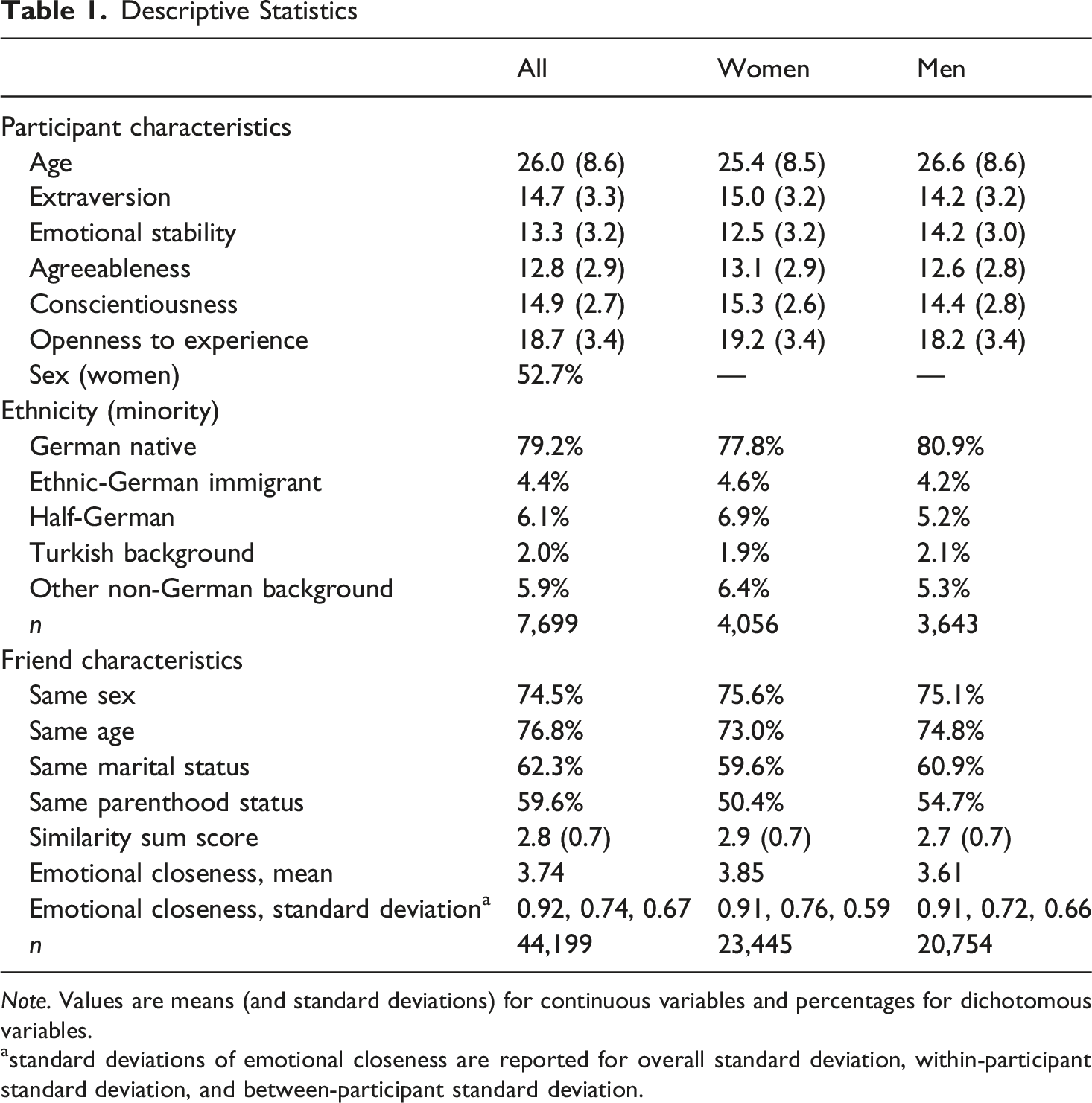
Note. Values are means (and standard deviations) for continuous variables and percentages for dichotomous variables.
astandard deviations of emotional closeness are reported for overall standard deviation, within-participant standard deviation, and between-participant standard deviation.
Measures
Information on social relationships was collected in waves 2 (2009-2010) and 4 (2011-2012) using a name generator methodology: The participants were first asked four questions with which to name individuals in their life with whom they (1) shared personal thoughts or feelings, (2) had regular meetings for activities, (3) got help with information or advice in practical matters, or (4) occasionally quarrels or has conflicts. Up to 30 persons were listed with these questions, after which the participants described their relationship with each of the mentioned persons. More information was asked about up to eight persons on the list, not including the partner, the children, or the parents of the respondent. If more than eight persons were listed, the eight persons were selected randomly. For the present analysis, only persons who were not relatives or kin were included, that is, only persons who the participants included in the category of “friends/acquaintances/other non-relatives” when asked about how the participant was related to the person in the name list. In the publicly available data, it was not possible to directly identify whether a friend reported in wave 2 would be the same person as a friend reported in wave 4; it might have been possible to indirectly estimate this probability by the characteristics of the friend, but we did not attempt to do this in the current analysis.
Personality was assessed only for the participant, not the friends. In study wave 2, the participants were administered a shortened 21-item version of the Big Five Inventory (BFI-K; (Rammstedt & John, 2005). In the validation study of this measure with two different samples (Rammstedt & John, 2005), the Cronbach alphas were 0.86 and 0.81 for extraversion, 0.74 and 0.77 for emotional stability, 0.64 and 0.59 for agreeableness, 0.70 and 0.69 for conscientiousness, and 0.66 and 0.70 for openness to experience. The estimates of test–retest reliability was 0.93 for extraversion, 0.77 for emotional stability, 0.76 for agreeableness, 0.85 for conscientiousness, and 0.85 for openness to experience. In the current data, the Cronbach alphas were 0.73, 0.66, 0.53, 0.63, and 0.62, respectively.
Emotional closeness with the friend was reported only by the participant, not by the friends. For each friend separately, the participant was asked the question “How close do you feel to [name person]?”. There does not seem to be validity studies for the one-item emotional closeness measure, but items of emotional closeness are often included in questionnaires of friendship quality, and these items correlate with other friendship quality items that load on to a common factor of relationship closeness (e.g., Dibble et al., 2016).
The participants also reported the friends’ sex, age, marital status (single, married, civil union, divorced/separated, widowed), and whether the friend had children under 3-years-old. Four separate variables were first created based on whether the participant and the friend were similar or not in that characteristic: sex (same sex or not), parenthood status (same parenthood status or not), marital status (same marital status or not), and age (no more than 3-year age difference or not). Each of these four similarity variables was coded as 0 = not similar, 1 = similar. An overall index of friend sociodemographic similarity was then created across the four sociodemographic characteristics by calculating a sum score of sociodemographic similarity between the participant and friend based on the four characteristics, which could thus range from 0 (dissimilar in each of the four characteristics) to 4 (similar in each of the four characteristics). There was no measure of personality similarity between friends, because personality data were available only for the participant.
Covariates included self-reported age, sex, race/ethnicity (categorized into 0 = ethnic majority, 1 = ethnic minority), marital status (single, married, civil union, divorced/separated, widowed; recoded into 0 = not married, 1 = married/civil union), and parenthood status (0 = no children under the age of three, 1 = has children under the age of three).
Statistical Analysis
In order to use all the available data on friends, the information on friends from both waves 2 and 4 were included in the analysis. The data were structured in a multilevel format in which each friend was represented by a row of observation. With up to eight friends selected in each wave, the maximum number of observations was 16 friends per participant (the average was 3.1 friends in wave 2 and 3.5 friends in wave 4). The associations were estimated using random-intercept multilevel linear (emotional closeness), logistic (similarity in sex, ethnicity, marital status, or parenthood status), or ordered logistic (sum score of similarity) regression models that took into account the non-independence of the reported friends who were nested within participants. For a sample size of 7,699 individuals, and significance level of a = 0.05, the study had 80% statistical power to correctly detect a correlation coefficient of r = 0.03.
Given that emotional closeness was reported by the participant for multiple friends separately, it was possible to apply fixed-effect regression to examine whether differences in friend characteristics were associated with differences in closeness within the same participant. That is, it was possible to examine whether the same participant rated his/her emotional closeness higher for the friends with he/she had more similarity vs for those friends with less similarity—and thus not only examining whether different participants with more similar friends reported higher friend closeness than other participants with less similar friends (Carlin et al., 2005). This analysis automatically adjusted for all the differences between participants, and between the interviewers carrying out the data collections, because the influence of the between-participant characteristics would be removed by the within-participant analysis. The main analysis of friend similarity and closeness were estimated using the fixed-effect (within-participant) analysis. The associations between personality traits and emotional closeness were fitted with ordinary regressions without fixed-effect estimation, because personality traits could not vary within participants whose personality traits were assessed only once. Statistical code for the analyses is available in the online supplementary material.
Results
Associations of Friend Characteristics With Emotional Closeness
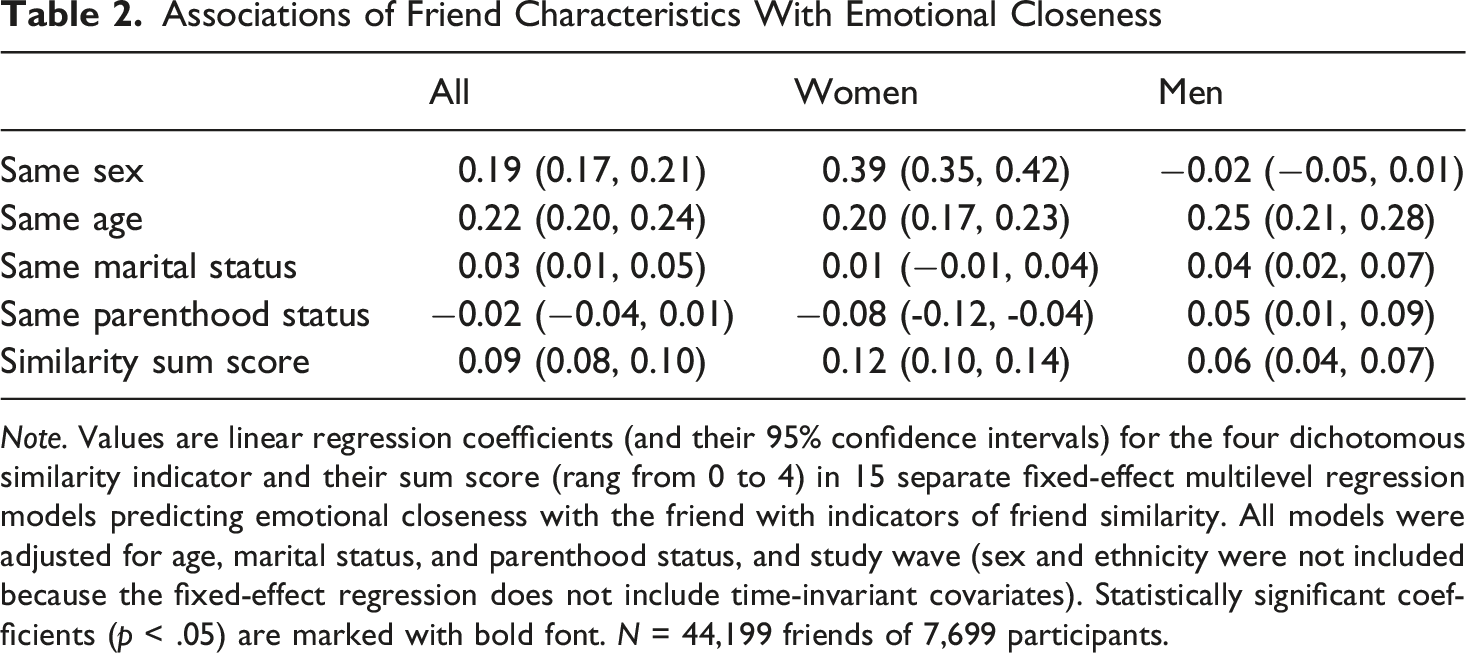
Note. Values are linear regression coefficients (and their 95% confidence intervals) for the four dichotomous similarity indicator and their sum score (rang from 0 to 4) in 15 separate fixed-effect multilevel regression models predicting emotional closeness with the friend with indicators of friend similarity. All models were adjusted for age, marital status, and parenthood status, and study wave (sex and ethnicity were not included because the fixed-effect regression does not include time-invariant covariates). Statistically significant coefficients (p < .05) are marked with bold font. N = 44,199 friends of 7,699 participants.
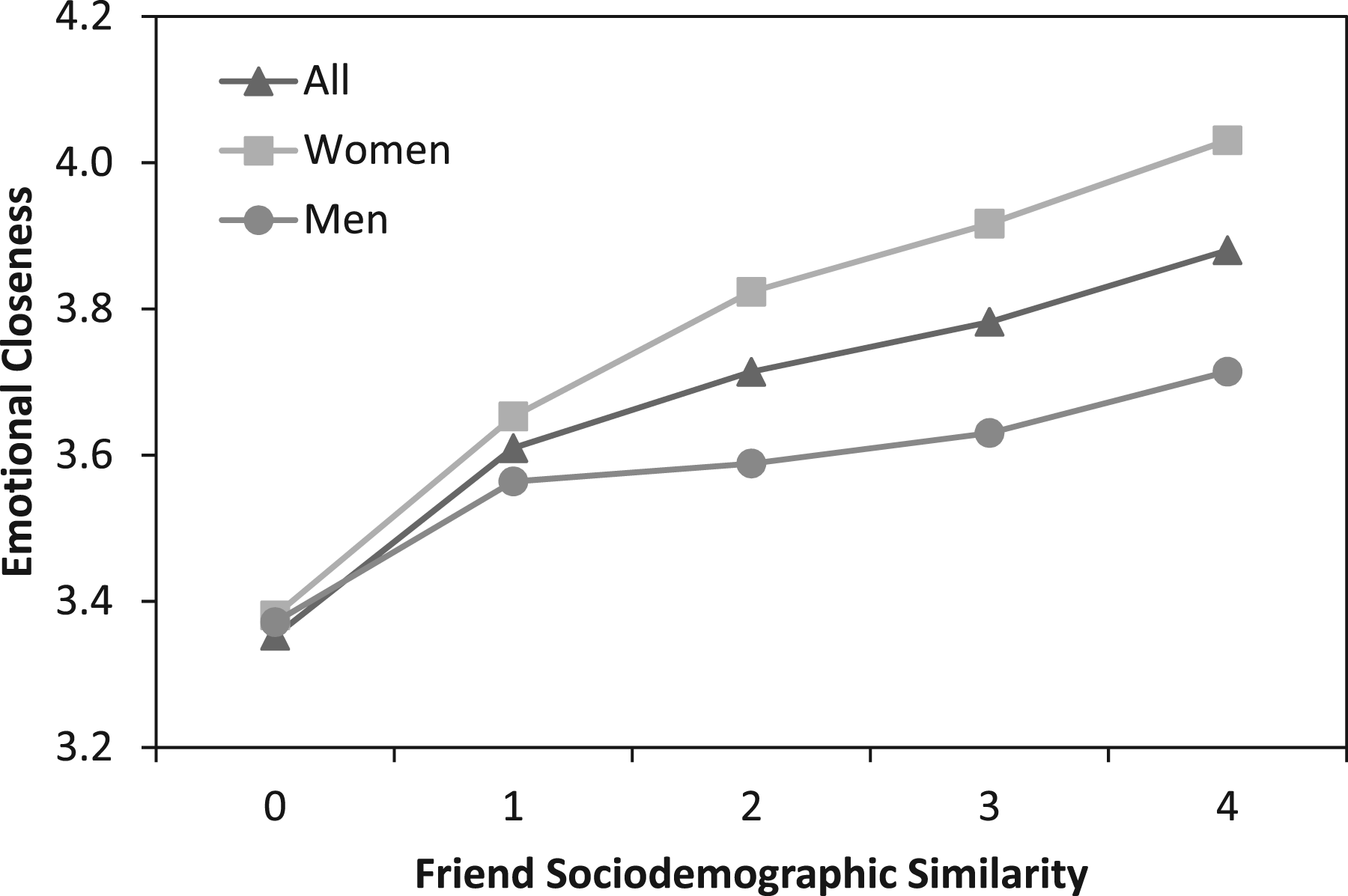
Emotional closeness with friends by degree of friend sociodemographic similarity. Note. Friend similarity was assessed with a sum score of four characteristics (same sex, same age, same marital status, same parenthood status). N = 44,199 friends of 7,699 participants
Associations of Personality Traits With Friend Similarity and Friend Emotional Closeness
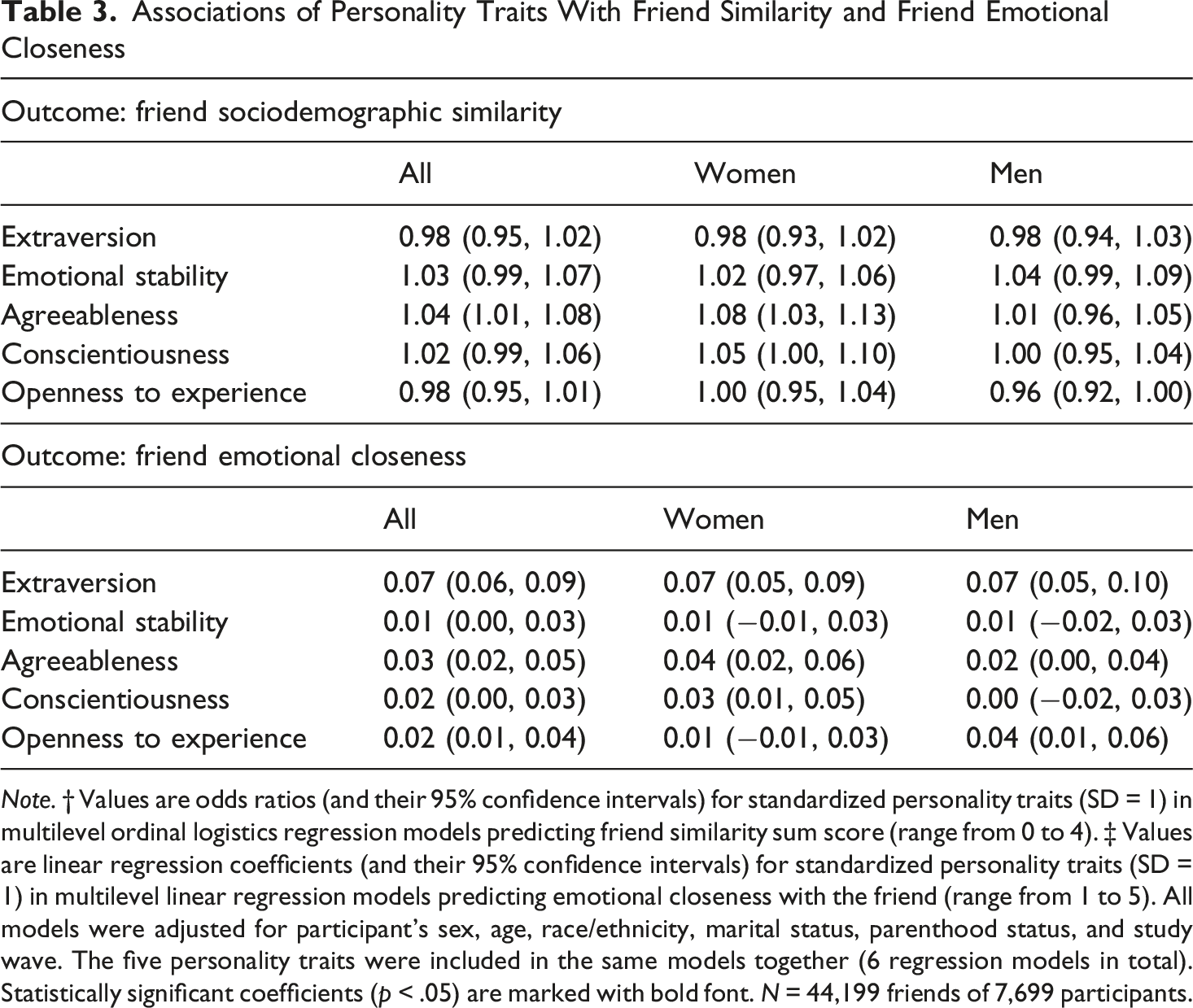
Note. † Values are odds ratios (and their 95% confidence intervals) for standardized personality traits (SD = 1) in multilevel ordinal logistics regression models predicting friend similarity sum score (range from 0 to 4). ‡ Values are linear regression coefficients (and their 95% confidence intervals) for standardized personality traits (SD = 1) in multilevel linear regression models predicting emotional closeness with the friend (range from 1 to 5). All models were adjusted for participant’s sex, age, race/ethnicity, marital status, parenthood status, and study wave. The five personality traits were included in the same models together (6 regression models in total). Statistically significant coefficients (p < .05) are marked with bold font. N = 44,199 friends of 7,699 participants.
Moderation Effects of Personality Traits in the Associations Between Friend Similarity Sum Score and Friend Emotional Closeness
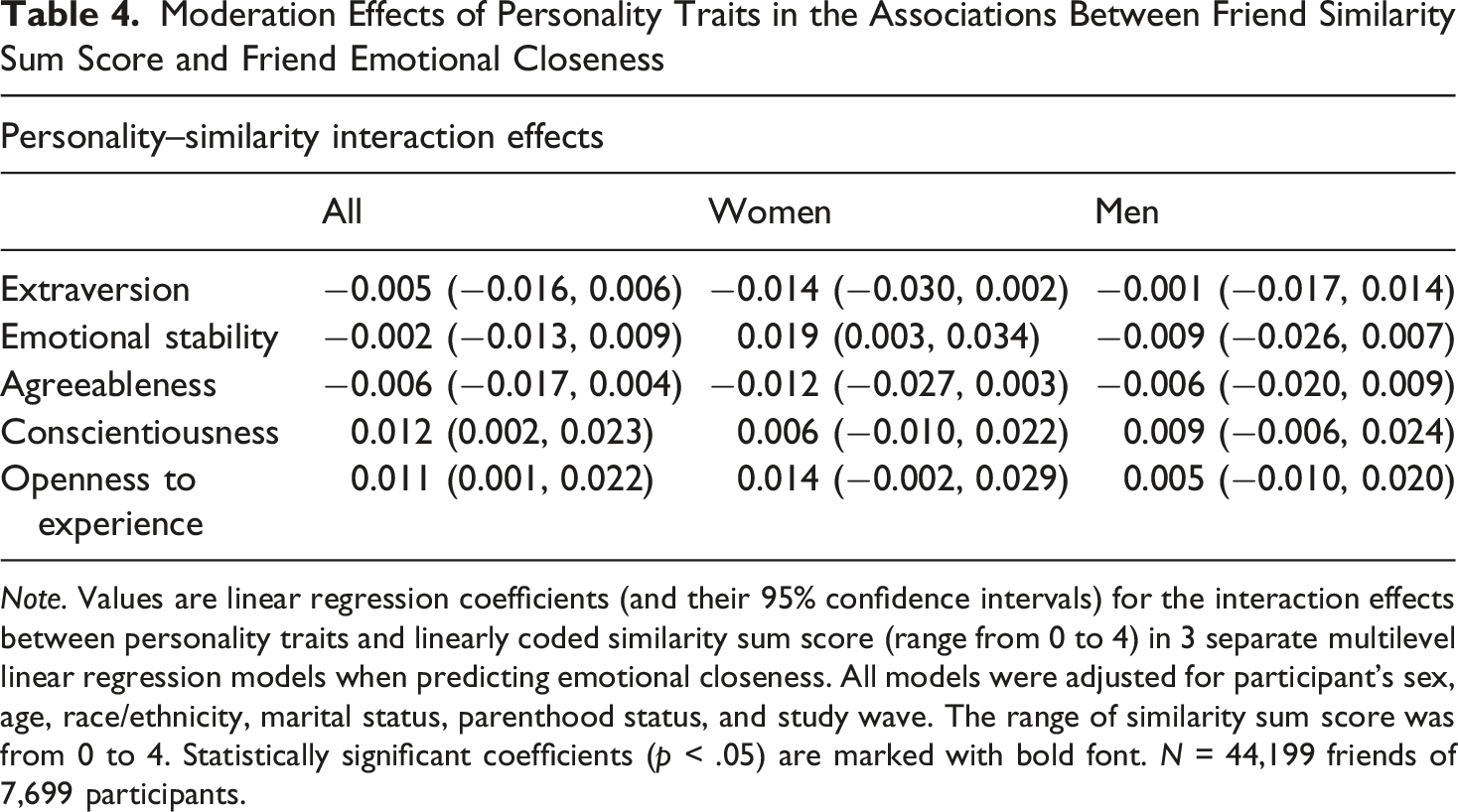
Note. Values are linear regression coefficients (and their 95% confidence intervals) for the interaction effects between personality traits and linearly coded similarity sum score (range from 0 to 4) in 3 separate multilevel linear regression models when predicting emotional closeness. All models were adjusted for participant’s sex, age, race/ethnicity, marital status, parenthood status, and study wave. The range of similarity sum score was from 0 to 4. Statistically significant coefficients (p < .05) are marked with bold font. N = 44,199 friends of 7,699 participants.
Discussion
Findings from a large German study suggest that (1) friend similarities in age, sex, and marital status are associated with higher participant-reported emotional closeness with the friend, (2) higher extraversion, agreeableness, conscientiousness, and openness to experience were associated with higher emotional closeness with the friend, but only higher agreeableness was associated with higher sociodemographic similarity with the friend, and (3) the associations of conscientiousness and openness to experience with emotional closeness with the friend were strengthened by sociodemographic similarity with the friend.
The association between overall friend similarity and emotional closeness supports the hypothesis that people are not merely attracted to similar others (Byrne, 1997), but that the similarity also has a psychological function that helps to improve the quality of the friendship. This may help to explain why similar individuals are more likely to end up being friends with each other (McPherson et al., 2001). As suggested by the Similarity–Attraction hypothesis (Byrne, 1997; Montoya & Horton, 2013), similar individuals elicit more positive expectations and self-validating experiences that are shared by the friends.
The current analysis was not based on experimental study design, so no strong causal inferences are possible. However, the associations between similarity and emotional closeness provides important evidence beyond earlier studies that have focused largely on similarities between friends, but less on the relationship outcomes associated with similarity (Byrne, 1997; Montoya & Horton, 2013). Mere similarities between friends could arise from the fact that people are more likely to encounter more similar others in their social circles, and not because similarity would lead to more attractive friendships (McPherson et al., 2001). Thus, the current analysis of emotional closeness adds a psychological layer for the evaluation of the similarity–attraction hypothesis, suggesting that sociodemographic similarity may have relationship consequences. The present study also had the methodological strength of within-individual analysis that adjusted for all the between-participant differences by considering only how emotional closeness was related to sociodemographic similarity within the same participant’s friends, and not between the friends reported by different participants.
Similarities in age and sex were much more important for emotional closeness than similarities in marital or parenthood status, suggesting that not all sociodemographic factors are equally important for friendship. The higher emotional closeness of same-sex friendships was observed only for women but not for men. That is, women rated their friendships with female friends emotionally closer than their friendships with male friends, whereas men rated their female and male friends as equally close. This might be related to how men and women perceive their friendships, rather than about cross-sex friendships in general (Altmann, 2020), because both men and women were rating their emotional closeness in same-sex vs cross-sex friendships. Women may perceive their female friendships emotionally closer because their same-sex friendships involve more relational activities than their male friendships (Machin & Dunbar, 2013; Pearce et al., 2021; Watson, 2012). Men’s friendships, in turn, tend to rely more on shared activities than self-disclosure (Dunbar, 2018), which might explain why their same-sex friendships are less likely to grow emotionally closer than their different-sex friendships.
At the same time, the results cast some doubt on the beneficial effects of similarity in friendships. A previous study with the same pairfam cohort as used here showed homophily for parenthood status (Lois & Arránz Becker, 2023): connections with individuals who had the same parenthood status were more likely to be retained over time, and mothers’ new social relationships were more likely to be with parents than with non-parents. Similarity in parenthood status could be expected to have reinforcing properties for friendship, and thereby to bring friends closer to each other, because of the shared life-course circumstances (Campbell et al., 2015). In the present study, parenthood status similarity was associated only weakly with higher emotional closeness in men, and even lower emotional closeness in women. These observations suggest that not all similarities lead to closeness, even if the characteristic was very prominent for the person’s life—as being a parent of a toddler probably is to many individuals (Nomaguchi & Milkie, 2020). Other mechanisms besides the availability of self-validating experiences with a friend (Byrne, 1997) may be needed to explain why not all similarities increase emotional closeness between friends. For parenthood, it seems plausible that parenting stress (Nomaguchi & Milkie, 2020) would reduce the amount and quality of time friends can spend together, and focusing on each other’s experiences, if they both have small children, which would then lead to emotional distance between them. This might also explain why the negative association of similarity was only observed among women, as women tend to spend more time on childcare (Steinbach & Schulz, 2022).
Of the Five Factor Model personality traits, extraversion had the strongest association with emotional closeness with friends. Agreeableness, conscientiousness, and openness to experience had weaker associations, and emotional stability had none. Friendships are voluntary social relationships of shared feelings and activities, which makes extraversion the prime candidate for a personality trait associated friendship closeness, because individuals with higher extraversion are more likely to seek out social contacts (Van Zalk et al., 2020). Individuals with higher agreeableness and higher openness to experience, in turn, have been shown to use more effective behaviors of friendship maintenance (Apostolou, 2024) that are likely to bring friends closer to each other. Higher conscientiousness has also been associated with interpersonal styles of warmth and communion (Du et al., 2021), which might become reflected as higher emotional closeness in friendship relations. However, the effect sizes for personality traits were small, so their importance should not be overstated. The largest association with emotional closeness was observed for extraversion, for which the difference between high versus low levels of extraversion (i.e., 1 standard deviation below vs above the mean) was only 0.14-unit difference in emotional closeness. On the other hand, the differences in emotional closeness associated with similarity in age (0.22 units) or similarity in sex (0.19 units) were rather small as well, which may provide a suitable reference metric for evaluating the strength of associations of personality traits in comparison to other factors associated with emotional closeness. Similarly, the associations between personality and friendship similarity in sociodemographic characteristics were small in magnitude. These findings suggest that personality may not be a major determinant of friendship similarity or emotional closeness.
The associations of conscientiousness and openness to experience with emotional closeness were stronger for more similar friends. The interaction effects indicated that these personality traits were not associated with emotional closeness if the friends shared no more than one common sociodemographic characteristic of the four assessed characteristics, but both traits were associated with higher emotional closeness with friends who shared all the four sociodemographic characteristics. This is in line with the hypothesis that individuals with different personality traits may enjoy different types of friendships (Harris & Vazire, 2016). The direction of the interaction effect with openness to experience was unexpected, because previous evidence has suggested more diverse and unconventional friendship patterns for higher openness to experience (e.g., higher likelihood of having friends of different sex, age, and ethnicity; (Laakasuo et al., 2017). However, both of the interaction effects were rather weak, the difference between high vs low levels of these personality traits being ∼0.10 standard deviations of emotional closeness even with the most similar friends.
The results need to be considered within some methodological limitations. First, the data only included information on sociodemographic similarities but not similarities in social attitudes, personality traits, and other psychological factors. There have been no systematic comparisons of similarities across different characteristics in friendships, so we do not know which similarities are the most important ones. In an American online sample (Treger & Masciale, 2018), people were asked to rate the importance of similarity in 18 different life domains (not including sociodemographic factors). The three most highly ranked domains were political views, music preferences, and movie preferences. Another experimental study also showed that similarities in political views and musical taste were the most important characteristics when the participants were rating the likeability of strangers (Launay & Dunbar, 2015). Of course, it is not clear whether these similarities would actually be related to better friendship quality, so additional studies with independent evaluation of friendship quality and domains of similarity would be required.
Second, friendship quality was assessed with only one question on emotional closeness. Similarities might be differentially associated with different facets of friendships, such as trust, reciprocity, support, or spending time with each other (Campbell et al., 2015; Galupo & Gonzalez, 2013; Hall, 2012). Third, the questionnaire did not specify the nature of the friendship beyond the category of “friends/acquaintances/other non-relatives”, and so the people named in this category could represent a wide range of individuals in the participant’s life. It is possible that similarity and personality are differently related to the quality of the friendship depending on whether the friends are best friends, good friends, friends from work or leisure-time activities, or mere acquaintances. The perceived nature of the friendship might have relational implications not captured by ratings of emotional closeness. It is quite possible that the same emotional closeness rating would have a different psychological meaning for, say, your best friend compared to a very close friend from work with whom you do not share as much time and personal thoughts compared to your best friend. Fourth, even though data on friends were collected in two study waves, it was not possible to identify whether the individual friends across study waves. Fifth, emotional closeness was reported only by the participant and not by the friends. The associations of emotional closeness and friend similarity might be confounded by common-informant bias if the ratings of similarity would depend on the rater who would also be rating the emotional closeness of the dyad. However, given that our similarity measure was based on rather objectively assessed sociodemographic characteristics, it seems unlikely that such confounding was a major source of bias in the present study. Some of the associations between personality and participant-reported emotional closeness, however, might have been confounded by common-informant bias because personality and emotional closeness were both reported only by the participant.
Future studies could examine how similarity in other traits besides sociodemographic characteristics, such as social attitudes, are associated with friendship quality. This could be examined for both actual similarity and perceived similarity, as these may follow different interpersonal dynamics (Montoya et al., 2008). It would also be helpful to have more detailed measures of friendship processes (Fehr, 1996), such as self-disclosure, trust, and maintenance behaviors, to examine the aspects of friendship that are most relevant for similarities between friends. In the most optimal study design, these ratings would be obtained from both friends, and not just one of them, which would allow the study of agreement between friends.
In conclusion, findings from a large German cohort study provide extended support for the Similarity–Attraction hypothesis by showing that people do not just have friends who share sociodemographic similarities but that these similarities are also associated with emotionally closer relationships with the friends. Personality differences are associated with emotional closeness, extraversion in particular, and friend similarity may amplify some of these associations.
Footnotes
Acknowledgements
This paper uses data from the German Family Panel pairfam, coordinated by Josef Brüderl, Sonja Drobnič, Karsten Hank, Bernhard Nauck, Franz J. Neyer, and Sabine Walper. Pairfam is funded as long-term project by the German Research Foundation (DFG).

Ethical Considerations
The pairfam study was approved by the ethics committee of the Faculty of Management, Economics and Social Sciences of the University of Cologne. The current analysis was exempt from research ethics review because it only used secondary archival data.
Consent to Participate
Participants provided informed consent. In the data protection declaration, it was pointed out that participation is voluntary and that there are no negative consequences for non-participation. Respondents received this information in the written invitation to the survey. The interviewer who conducted the face-to-face interview confirmed that the interviewee was informed about data protection or had the data protection sheet available.
Funding
The author disclosed receipt of the following financial support for the research, authorship, and/or publication of this article: The study is part of NetResilience consortium funded by the Strategic Research Council of the Academy of Finland (grant numbers 345186 and 364384).
Declaration of Conflicting Interests
The author has no conflicts of interest to declare. The funding organizations and/or sponsors had no role in the design and conduct of the study; in the collection, analysis, and interpretation of the data; and in the preparation, editing, or censuring of the manuscript.
Data Availability Statement
The pairfam data can be downloaded via the gesis.org data repository.
Open Research Statement
Statistical code for the analyses is available in the online supplementary material.