






Abstract
Adolescence is a time of increasing propensity to engage in prosocial behaviors toward family, with more recent work showing this proclivity toward siblings specifically. Sibling warmth and constructive problem-solving have been shown to promote adolescent well-being in several domains, but their contribution to adolescent prosocial decision-making towards siblings is unclear. Using multi-informant multi-methods data from 45 adolescent sibling pairs (older sibling: Mage = 14.5; younger sibling: Mage = 12.1) across time, this study examined whether dyadic sibling problem-solving (self-reported by both siblings) and observed warmth between siblings (coded from dyadic interactions) contributed to older "siblings" prosocial behavior toward young siblings (measured with an experimental task). We found a significant moderation, such that more constructive problem-solving predicted more prosocial decisions from older siblings to their younger siblings, but only when observed older sibling warmth toward younger siblings was high. These findings highlight the complex nature of relational processes in shaping older sibling prosociality toward younger siblings.
Adolescence represents a meaningful period to engage in prosocial behavior, which entails actions to help, share, or cooperate with others, and to contribute to society, as prosociality can simultaneously enhance identity development, strengthen relationships, and well-being (Crone & Fuligni, 2020). Prosocial risk-taking, defined as behaviors that help others at a personal cost, is a unique phenomenon during adolescence given the increased motivation to take risks and build meaningful connections with others during this time (Do et al., 2017). Indeed, developmental social neuroscience paradigms have shown that adolescents have the capacity to give money to their families and peers at a risk to themselves, with this propensity increasing across adolescence (Karan et al., 2022; Uy et al., 2023). Furthermore, peers, mothers, fathers, and siblings can influence adolescent prosocial behavior (van Meegen et al., 2024), but the relational processes that underlie decisions to behave prosocially are less understood.
Sibling relationships are an ideal social context to better understand adolescent prosocial behavior, as siblings can serve as salient sources of warmth and support in promoting adolescent decision-making and well-being (Rogers & Morgan, 2025). Specifically, sibling warmth contributes to prosocial behavior toward siblings during childhood (Piotrowski, 2024) and prosocial skills (Lam et al., 2021), and engagement in volunteer activities during adolescence (Maiya et al., 2023). Siblings who identify as the same gender (i.e., sister pairs, brother pairs) are more likely to exhibit similar risk-taking behaviors compared to those who differ in their gender identities (Slomkowski et al., 2001), particularly for sister pairs in early adolescence (Huijsmans et al., 2018). Despite the scarcity of research on sibling gender constellation and prosocial behavior, this pattern may also apply to prosocial risk-taking during early adolescence.
Early adolescents who perceive their siblings as warmer engage in more constructive problem-solving behavior with their sibling (Karos et al., 2007), which is defined as using effective behaviors toward solving a problem such as listening, suggesting helpful ideas, and flexibility in perspective-taking (Conger et al., 2009). Relatedly, individuals who perceive their sibling to use more constructive problem-solving when they have a problem to solve together later report a greater sense of mastery in adolescence (Conger et al., 2009), and greater prosocial interactions with others during emerging adulthood (Morgan & Rogers, 2026). Importantly, both younger and older sibling constructive problem-solving behaviors elicit similar behaviors from their sibling across time (Borairi et al., 2023), emphasizing the dynamic relational nature of adolescent sibling relationships. Although rigorous work shows the capacity of warm sibling relationships to contribute to constructive problem-solving skills and prosocial behavior, the role of sibling problem-solving in these associations is less clear.
The current study used multi-informant multi-method data from 45 adolescent sibling pairs across time to examine relational processes that may predict older siblings’ prosocial behavior toward their younger siblings. This study focused on older sibling prosocial behavior given that older siblings tend to engage in more prosocial behavior (Lam et al., 2021) and sharing intimacy with younger siblings in adolescence (McHale et al., 2024) compared to younger siblings. To this end, the current study examined (1) the main effects of dyadic sibling problem-solving and observed warmth towards siblings (via behavioral interactions) on older sibling prosocial behavior toward younger siblings (via an experimental task), and (2) the interactive effects of these associations, such that high warmth combined with high problem-solving would predict greater older sibling engagement in prosocial behaviors towards young siblings.
Methods
Participants
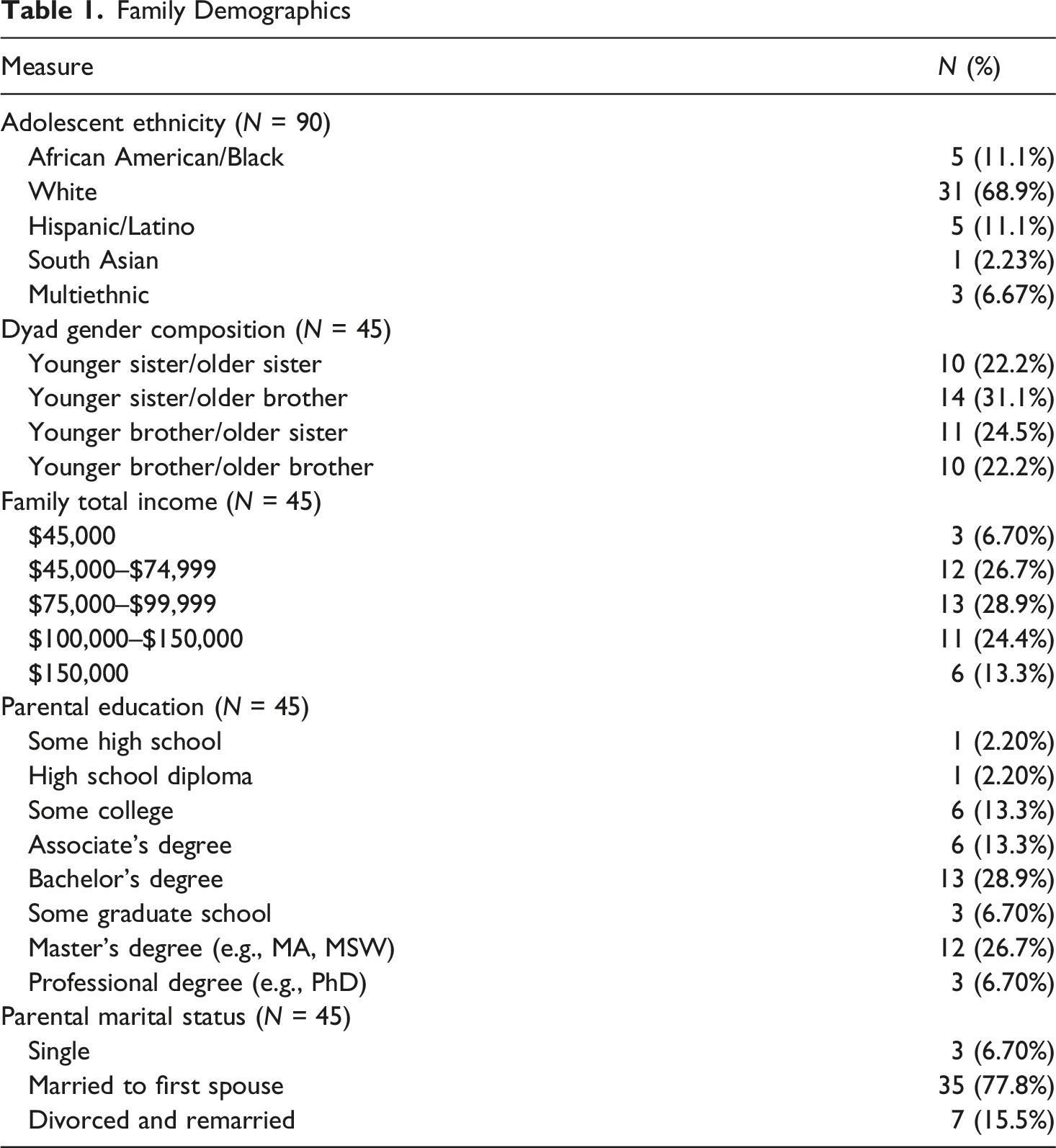
Family Demographics
Dyadic Sibling Problem-Solving
Younger and older siblings each completed the self-report Sibling Problem-Solving Scale (Conger et al., 2009) at Time 1. Participants completed eight items on a scale from 1 (never) to 7 (always) to indicate how frequently their sibling behaves constructively when the dyad has a problem to resolve together (e.g., “Consider your ideas for solving the problem,” and, “Show a real interest in helping to solve the problem.”). The scale showed satisfactory reliability for younger and older sibling (α = .80, .84). Both sibling scores were averaged to reflect dyadic sibling problem-solving, with higher scores indicating greater perceptions dyadic sibling problem-solving.
Desert Survival Task
Sibling dyads participated in laboratory visit at Time 1, during which they completed the Desert Survival Task (Lafferty & Pond, 1974), a collaborative problem-solving task that has been used to examine dyadic and group affect and behavior (e.g., McClellan et al., 2024). This task was video recorded by two cameras and several microphones in a laboratory observation core. First, siblings separately ranked 15 survival items (e.g., jackknife, cosmetic mirror, magnetic compass) in order of importance for survival. Second, siblings were video-taped for 7 minutes while they discussed their ratings and came to a consensus on the order of items. Trained independent raters coded global warmth expressed by each adolescent sibling to the other across the task, which was defined as behavior and affect encompassing directional support, encouragement, care, and positivity via facial expressions, vocal tone, and physical gestures (e.g., laughter, nodding, relaxed tone). Verbal communication was only used to occasionally discern the intent of affect and behavior. Warmth codes ranged from 1 (not at all characteristic) to 9 (mainly characteristic). Two raters conducted reliability coding on 18 videos (21%) and established good inter-rater reliability (ICC(2,2) = .85). From this observational task, we had an index of expressed warmth towards younger siblings and expressed warmth towards older siblings.
Giving Task
The older sibling completed the Giving Task at Time 2, a costly giving experimental task that has been used in previous research to assess prosocial decision-making towards different people (e.g., family, friends, strangers; Karan et al., 2022; Telzer et al., 2013; Uy et al., 2023). Participants responded to a series of financial offers (112 total) in which they could earn money for themselves and their younger sibling. Four types of offers were presented during task: (1) Costly Giving (40 trials), in which the older sibling could give money to their younger sibling at a cost to themselves (e.g., YOU -$1.00, SIBLING +$3.00), (2) Non-Costly Rewards (24 trials), in which the older sibling earned money without a cost to their sibling (e.g., YOU +$3.00, SIBLING -$0.00), (3) Non-Costly Giving (24 trials), in which the older sibling gave money to their younger sibling without a cost to the themselves (e.g., YOU -$0.00, SIBLING +$3.00), and (4) Costly Reward (24 trials), in which the older sibling earned money at a cost to their younger sibling (e.g., YOU +$3.00, SIBLING -$1.00). For each trial, participants saw a picture of themselves and a picture of their sibling, taken prior to the scan, with the monetary amount beneath each picture. They could either accept or reject each offer. For example, on a Costly-Giving trial, accepting the offer resulted in a loss of money for the older sibling and the gain of money for the younger sibling, whereas rejecting the offer resulted in no change to earnings. Participants were informed that two random offers would be chosen from the game and implemented with real money, so both the older sibling and their younger sibling had the chance to win or lose money. In reality, the older and younger sibling each received $2. The total number of Costly Giving trials accepted by the older sibling (40 possible) was operationalized as prosocial behavior and is the primary outcome in the present study.
Covariates
Older sibling age was included as a covariate. Each sibling’s continuous age was calculated by subtracting the first session date from the participant’s birth date. Age spacing was computed by subtracting younger sibling age from older sibling age. Older sibling sex assigned at birth was included as a covariate, with male = 1 and female = 2. In addition, sex composition of the sibling dyad was coded such that 1 represented dyads with the same sex assigned at birth, and 0 represented dyads with different sex assigned at birth. This construct was labeled as same sex sibling dyad.
Analytic Plan
One hierarchical linear regression model was tested for the outcome of older sibling costly giving to their younger sibling. In the first block, the main effects of the variables of interest as well as covariates were modeled including age spacing, same sex sibling dyad, dyadic sibling problem-solving, younger sibling warmth toward the older sibling, and older sibling warmth toward the younger sibling. In the second block, two interactions were additionally modeled. Specifically, observations of younger sibling warmth and older sibling warmth served as a moderator between dyadic sibling problem solving and older sibling costly giving to their younger sibling. Of note, no data was missing for these analyses.
Results
Descriptive Statistics and Correlations of the Variables of Interest
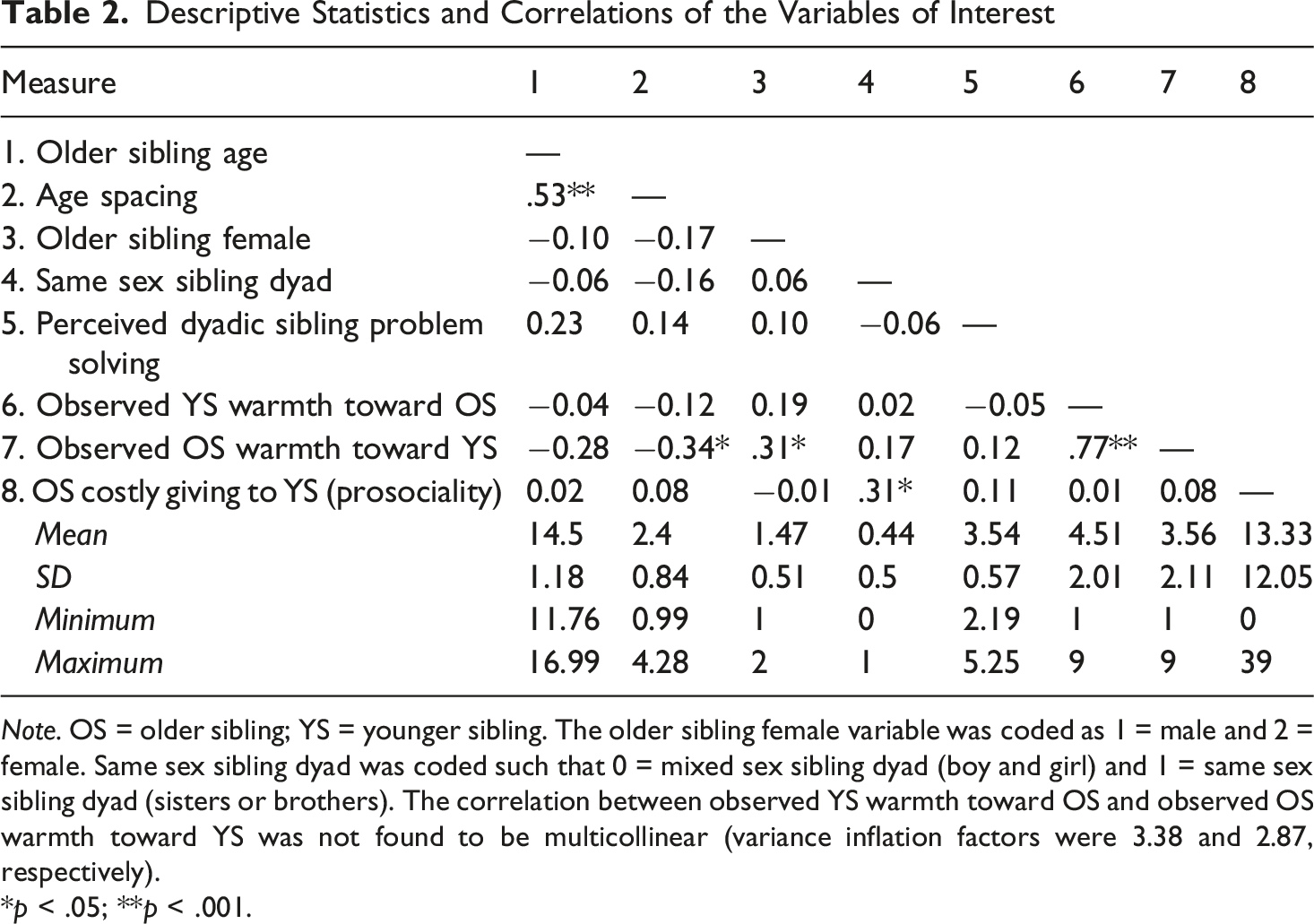
Note. OS = older sibling; YS = younger sibling. The older sibling female variable was coded as 1 = male and 2 = female. Same sex sibling dyad was coded such that 0 = mixed sex sibling dyad (boy and girl) and 1 = same sex sibling dyad (sisters or brothers). The correlation between observed YS warmth toward OS and observed OS warmth toward YS was not found to be multicollinear (variance inflation factors were 3.38 and 2.87, respectively).
*p < .05; **p < .001.
Main and Interaction Effects Predicting to OS Costly Giving to YS (Prosociality)
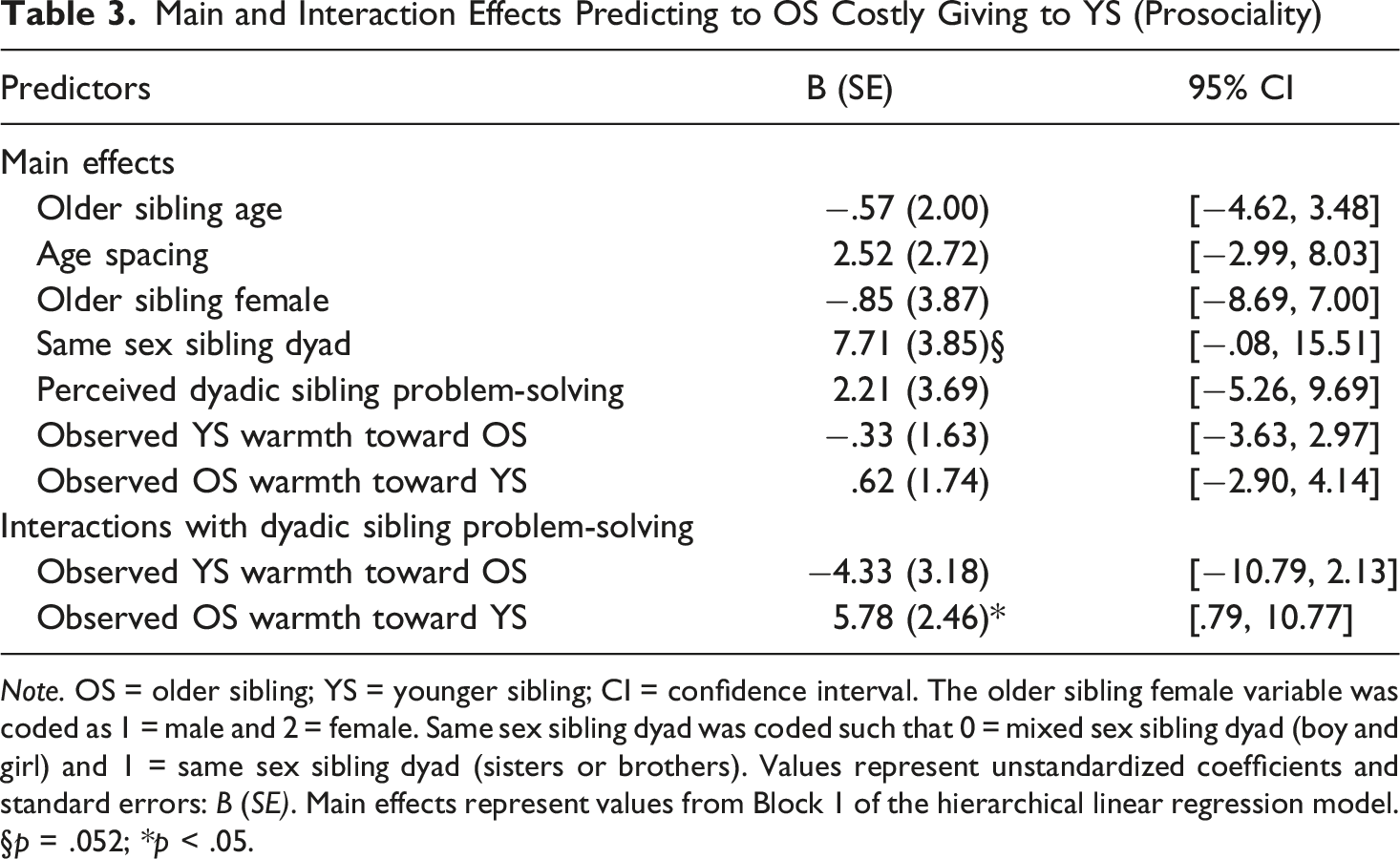
Note. OS = older sibling; YS = younger sibling; CI = confidence interval. The older sibling female variable was coded as 1 = male and 2 = female. Same sex sibling dyad was coded such that 0 = mixed sex sibling dyad (boy and girl) and 1 = same sex sibling dyad (sisters or brothers). Values represent unstandardized coefficients and standard errors: B (SE). Main effects represent values from Block 1 of the hierarchical linear regression model.
§p = .052; *p < .05.
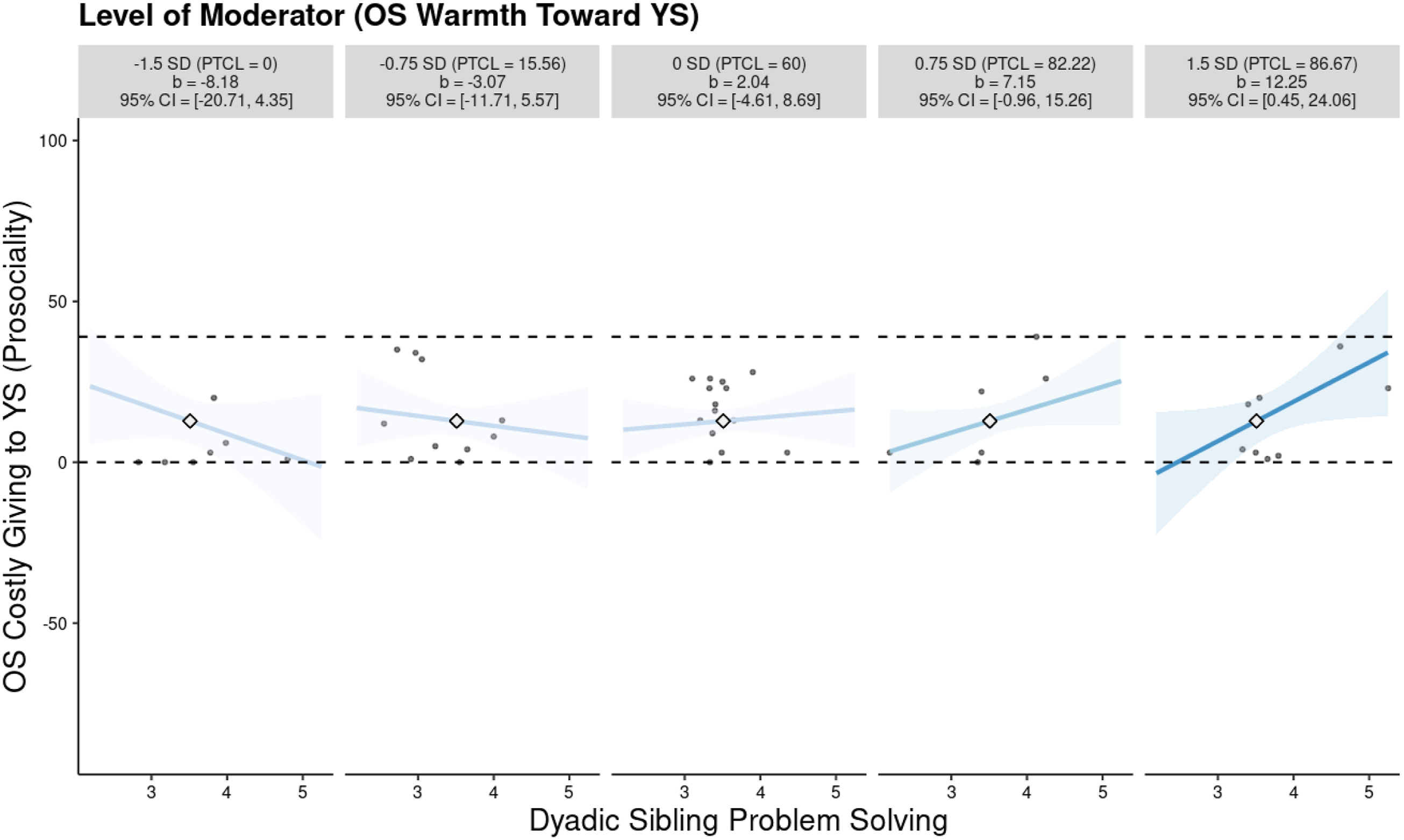
Small-Multiples Depicting Interaction Predicting OS Costly Giving to YS (Prosociality). Note. OS = older sibling; YS = younger sibling; PTCL = percentile. The small multiples (McCabe et al., 2018) illustrate the interaction across the range from −1.5 SD below to 1.5 SD above the mean in dyadic sibling problem-solving and observed OS warmth toward YS. The graphic shows the computed 95% confidence region (shaded area), the observed data (gray circles), the maximum and minimum values of the outcome (dashed horizontal lines), and the crossover point (diamond)
Discussion
Emerging work highlights the potential of adolescents to engage in prosocial behavior, often at a greater capacity than individuals in other developmental periods (Karan et al., 2022). Further, siblings increasingly serve as salient forces in adolescent decision-making (Rogers & Morgan, 2025), including engagement in prosociality (Maiya et al., 2023). However, the sibling dynamics that contribute to adolescent prosocial behavior are less understood. The multi-informant multi-method design of this study across time decreased measurement bias and provided a nuanced approach to understanding relational processes that may shape older sibling prosocial behavior toward younger siblings. The findings underscore that for older siblings who display high warmth toward their younger siblings during collaborative problem-solving, greater perceptions of dyadic sibling constructive problem-solving associates with more prosocial decisions toward younger siblings during adolescence.
Observations of older sibling warmth toward younger siblings and perceived dyadic sibling problem-solving played an important role together in predicting whether older siblings chose to give to their younger siblings at a cost to themselves. Nonverbal cues of warmth from older siblings to their younger siblings may reflect an older sibling’s willingness to place their younger sibling’s needs and opportunities before their own. In kind, an elevated level of constructive problem-solving between siblings may facilitate social perspective-taking, which often associates with greater prosocial motivation during adolescence (Tamnes et al., 2018), resulting in choosing family over the self. Together, these findings suggest that positive affect and problem-solving strategies exchanged between siblings may shape older sibling prosocial behaviors decisions toward younger siblings.
Although the study design provided strengths to this investigation, the limitations deserve recognition. First, the smaller sample size restricted potential analyses due to limited power. For instance, a greater sample size would allow for more rigorous group comparisons based on sibling demographics such as gender, age, and family composition. Second, most of the sample identified as White, limiting the cultural contexts that shape sibling interactions. Future work would benefit from including a more ethnic-racially diverse sample as previous work has shown distinct cultural differences in sibling relationships and interactions (Jensen et al., 2023). Further, sexual identity was not measured, and such information would be beneficial in understanding the generalizability of the findings. Lastly, only older siblings completed the Giving Task given that older siblings tend to provide more caregiving and support to their younger siblings than vice versa during adolescence. Obtaining younger sibling prosocial decisions in favor of their older sibling would be advantageous given emerging work showcasing that adolescent younger siblings can also influence the well-being of their older sibling (e.g., Rogers et al., 2026), and would also increase the developmental generalizability of the results beyond siblings in early adolescence as targets of prosocial decisions. Further, it would be beneficial to measure prosocial behavior toward siblings through surveys, vignettes, and interactive behavioral tasks to capture greater variability and dimension in this construct. Additionally, measuring observed behaviors of all constructs of interest (i.e., including dyadic sibling problem-solving and sibling prosocial behaviors) in a longitudinal design would increase our understanding of how prosocial behaviors toward siblings change over time.
In conclusion, this study highlights the potential of older siblings to take risks to benefit their younger siblings, and that sibling relational dynamics shape these decisions during adolescence. The ways in which adolescents express warmth, approach problems, and help their siblings appears meaningful integrated. These findings inform family and afterschool programs that aim to increase social competence and prosocial behavior, as integrating sibling relations into curriculum may benefit adolescents.
Footnotes
Acknowledgements
We would like to thank Cassidy Fry, Elise Breitfeld, Sue Hyun Kwon, Madison Marcus, Amanda Carter Benjamin, Susannah Ivory, and Virnaliz Jimenez for their hard work and assistance in data collection and management, as well as the participating families for their time and cooperation.

Ethical Considerations
The Internal Review Board at the University of North Carolina at Chapel Hill approved our study (Modification: 16-2350) on May 17, 2017. Respondents gave written assent and their guardians provided written consent for review and signature before starting research activities.
Funding
The authors received no financial support for the research, authorship, and/or publication of this article.
Declaration of Conflicting Interests
The authors declared no potential conflicts of interest with respect to the research, authorship, and/or publication of this article.
Open Research Statement
As part of IARR's encouragement of open research practices, the authors have provided the following information: This research was not pre-registered. The data and materials used in this research cannot be publicly shared, but is available upon request. The data and materials can be obtained by emailing