






Abstract
The most common interventions for children with lexical disorders are forms and combinations of interventions focusing on phonological and semantic elaboration and retrieval. Systematic reviews of intervention studies on children with lexical disorders show that a significant generalization of therapeutic effects to untrained vocabulary was rarely achieved. The aim of this study was to investigate whether preschool children with lexical deficits profit from an intervention approach that focuses on implementing lexical learning strategies. A randomized controlled trial was conducted. The control group consisted of 25 children, who received language support in their kindergarten. The 26 children in the experimental group additionally received 15 intervention sessions of the lexical strategy intervention ‘lexicon pirate’. Intervention effects were measured using a standardized expressive vocabulary assessment one year after the intervention. All children significantly improved on the expressive vocabulary measure. In addition, the gain in expressive vocabulary size was higher for children in the experimental group than for the participants in the control group. Further analysis revealed that ‘lexicon pirate’ was as effective for children with qualitative (word-finding) lexical deficits as for those with quantitative (vocabulary) lexical deficits. The gain in expressive vocabulary size was independent of nonverbal IQ, deficits in phonological working memory or other possible influencing factors.
Keywords
I Introduction
1 Lexical disorders in children with SLI and LI
Specific language impairment (SLI) is characterized by a delayed, inconsistent, and desynchronized language acquisition in children with an average nonverbal IQ (Menyuk, 1993; Schöler, 1998). According to ICD-10 (International Classification of Diseases, 10th revision), SLI is a developmental language deficit in the absence of neurological impairments, sensory-perceptual deficits, and pervasive developmental disorders. Within the group of children with SLI, 23–40% show lexical disorders (German, 1994; Messer and Dockrell, 2006).
In addition, within the group of children whose nonverbal IQ is below average, some also show lexical disorders (approximately 72%; Glück, 2007). These children with language impairment (LI) also need intervention, although they do not match the defined criteria of SLI. Semantic and lexical deficits already show through late onset of first words in both groups of children (Bishop, 1997; Trauner et al., 2000). Later, the children lack the vocabulary appropriate for their age. Schwartz (2009) suggested that the question has not yet been answered whether possible reasons for lexical deficits are to be found in general cognitive processes (i.e. working memory, auditory perception) or in language-specific functions of these processes, such as phonological working memory or speech perception.
2 Nature of different vocabulary deficits
Two different forms of lexical disorders are to be discerned: qualitative and quantitative deficit. With a quantitative deficit, the child has too few entries in its lexicon (small vocabulary size). This deficit is often described as vocabulary deficit. With a qualitative deficit, the child possesses considerably more entries than he or she is able to activate in communication. The retrieval of words fails due to semantically or phonologically based storage and retrieval deficits. This difficulty is often referred to as a word finding deficit (Best, 2004; Messer and Dockrell, 2006). Incomplete storage of semantic characteristics (lemma) or phonological structure (lexeme), as well as insufficient connections between entries according to semantic fields and semantic relations hinder word retrieval (production of words; McGregor et al., 2002; Messer and Dockrell, 2006; Sheng and McGregor, 2010) as well as receptive identification of a word (comprehension of words; Kail and Leonard, 1986).
A successful therapy for lexical disorders would have to show that it proves effective for at least one of the two subgroups. An improvement should also be possible for those children who have been diagnosed with cognitive impairments of working memory or IQ. The explicit goal of every lexical therapy is to turn the children into self-learners.
3 Different types of lexical intervention
Several intervention approaches have been developed (Glück, 2007): expansion of the lexicon, semantic and phonological elaboration and retrieval therapy, learning strategies and self-management. Phonological and semantic elaboration and retrieval interventions have been state-of-the-art in lexical therapy since Leonard (1998). Within a semantic field (e.g. farm), semantic features of persons, animals, objects and actions are exemplified (semantic elaboration). New words are frequently presented in a salient manner (stressed and slow, phonological elaboration). Activities to facilitate retrieval include rapid naming of words, finding various associations to words and retrieving words with the help of phonological and semantic prime cues.
As the time a child spends in speech and language therapy does not suffice to teach several thousand words to a child, it is the job of parents, kindergarten and school to support children in expanding their vocabulary. Thus, speech and language therapists have to create conditions for children and parents, which can enable this expansion of the lexicon in everyday life. Unfortunately, this expected generalizing effect of therapy could not be verified in the systematic review on intervention studies published by Glück (2003). No transfer effects were observed in the intervention studies of McGregor and Leonard (McGregor and Leonard, 1989; McGregor, 1994), Köck (1998) and German (2002). Only Wright (1993) achieved a transfer effect for untrained vocabulary, which differed from that of a control group, by conducting a semantic–phonological elaboration therapy that was carried out with high frequency. Wing (1990) reported significant improvements in the standardized Test of Word Finding (TWF; German, 1989) after the completion of a phonological elaboration and retrieval therapy. However, as there was no control group, it is unclear whether the increase over the three months of the intervention was achieved by the intervention itself or by processes of general development and maturation. The same was true for the improvement in naming performance for control items, which was shown by four children in Best (2004). The results of the study by Zens et al. (2009) are difficult to interpret as there were no standardized tests implemented to assess the transfer effects on untrained words (generalization).
In recent publications, some authors (e.g. Glück, 2007; Kannengieser, 2009) expect therapy forms to be more successful that enable children to self-manage their lexical knowledge. This can be achieved by teaching them to discover lexical gaps, to actively acquire lexical knowledge, and to use strategies that improve word storage and retrieval (for further description, see Section III). The goal of self-managed learning (self-control and self-instruction) was already described by German (1992) for the group of school children. Therefore, it is not surprising that some intervention studies with school children that include forms of a strategy therapy could show generalizing effects (Hyde Wright et al., 1993; Wittmann, 1996; Easton et al., 1997).
Among the intervention studies published over the last 20 years, there are only two that address the effect in preschool children, both of which are methodologically limited. McGregor (1994) reported cases of two children (4;9 and 5;0 years old) who received a combination of phonological elaboration and retrieval therapy, and did not find generalizing effects on untrained words. The pilot study by Munro et al. (2008) with 17 children (4;8–6;5 years old) showed significant improvements of phonological awareness and expressive vocabulary size with a combination of lexicon therapy, training of phonological awareness and daily cooperation of parents, but demonstrated little evidence, due to the lack of a control group.
In summary, a generalization of intervention effects in the sense of an improved ability to store, link, and retrieve untrained words has not yet been convincingly documented. Similarly, the question of whether different therapeutic methods are required for different subgroups of lexical deficits has remained unanswered. Therefore, no lexical intervention approaches for preschool children have robust evidence, when compared to the research on grammatical intervention approaches for children with SLI (Motsch and Riehemann, 2008; Motsch, 2010).
In his usage-based theory of language acquisition, Tomasello (2003) emphasized the major importance of social learning and imitation for lexical learning. Children with typical language development have the ability to recognize patterns as well as the ability of intention reading, which is recognizing other people as ‘intentional beings’, and by putting themselves in their position to interpret and understand their intentions. The basis for understanding words is joint attention. Children develop their understanding for adult linguistic symbols and specific communicative intentions that are expressed through them within this joint focus of attention. Even a one-year-old child begins to move objects into this joint focus of attention with the mother by pointing, fetching and handing them over (Bruner, 2002; Tomasello, 2003; Tomasello and Farrar, 1986). With this triangular view that connects the object and the mother, the child asks questions such as: What do you call this? What do you do with it? What is it for? The child actively calls for lexical knowledge. With growing linguistic abilities, verbal questions are added, which is the child’s most effective instrument for increasing his or her vocabulary. According to Tomasello’s social-pragmatic approach, the child’s individual learning strategies as well as the responsiveness of his or her attachment figure are seen as main factors in lexical learning.
Lexically disordered children stop showing their lexical gaps and actively demanding lexical knowledge from their attachment figure for different reasons. Some children have stopped asking questions as they are discouraged by negative reactions of their communication partners (Rice, 1993). Others are unaware of the distinction between understanding and failing to understand (Dollaghan and Kaston, 1986). Often parents are made insecure by this behaviour and do not know how to help their children (Olswang et al., 1998; Tannock and Girolametto, 1992). For this reason, the functional approach of language acquisition forms the theoretical basis for the development of the strategy therapy (Tomasello, 2003). Against this background, Motsch developed the strategy therapy ‘lexicon pirate’ for lexical disorders. The intervention’s goal is to change the children’s reactions in situations in which they lack lexical knowledge or when retrieval of words is not possible. In a pilot study (Zimmermann, 2009) the method ‘lexicon pirate’ was evaluated on three children (4, 5, and 6 years old). The outcome variable was whether the spontaneous behaviour of asking for unknown words and their meaning could be established. All three children managed to ask an average of 15–20 spontaneous questions during the final therapy sessions.
4 Aims of the study
The present study tests the hypothesis that 3;9- to 4;9-year-old preschool children with lexical deficits can benefit from a lexical strategy therapy. The hypothesis can be accepted if:
effects manifest themselves as significant improvements in standardized expressive vocabulary assessments; and
effects significantly outmatch the improvement of a parallel control group.
The size of expressive vocabulary was chosen as the primary goal variable to reflect the generalizing effects of the intervention. In contrast to receptive vocabulary size, the expressive vocabulary size comprises that part of lexical entries that is stored sufficiently well to be activated for speech production in a particular situation. If the generalization was assessed through receptive vocabulary size, qualitative deficits in the storage of lexical entries could be overlooked, as entries that are stored incompletely often suffice for understanding, but not for production of words. The expressive vocabulary is the ‘stronger’ diagnostic criterion for measuring generalizing effects.
The second hypothesis is that children with different types of lexical deficits profit from the strategy therapy to a comparable extent. ‘Lexicon pirate’ was intentionally designed as an intervention method for children with different types of lexical deficits. With the help of different strategies, the child is enabled to acquire exactly that part of lexical knowledge that it lacks (see Section III). The second hypothesis can be accepted if the performance gain among the group of lexically disordered children with a quantitative deficit (vocabulary deficit) does not differ significantly from the group with a qualitative deficit (word finding deficit).
II Method
1 Selection of participants
A total of 92 monolingual, German-speaking, 4-year-old preschool children from 43 day-care centers from the city of Cologne took part in the clinical selection procedure for the study. In the screening assessment of language development, which is carried out in North Rhine Westphalia for every 4-year-old, all of the 92 children had been suspected to have a lexical disorder. From the beginning of the intervention each child has been receiving specific linguistic support in the kindergartens from a preschool teacher for two years once or twice a week.
Every child was tested individually by a speech and language therapist. All children with a diagnosed lexical deficit were included in the study.
The lexical deficit was measured by the ‘Aktiver Wortschatz Test für 3- bis 5- jährige Kinder: Revised’ (AWST-R; Kiese-Himmel, 2005). AWST-R is a standardized picture-naming test for preschool children, consisting of nouns and verbs. Children who score at least 1 SD below the mean (i.e. reach a T-score of < 40), are diagnosed as ‘lexically disordered’ (Kiese-Himmel, 2005).
The minimum linguistic qualification for participating in the ‘lexicon pirate’ therapy was the child’s ability to understand and ask wh-questions (e.g. what, who). This was assessed by ‘Evozierte Sprachdiagnose grammatischer Fähigkeiten: Revised’ (ESGRAF-R; Motsch, 2009).
2 Pretests
Pretests were carried out in September 2009. A total of 54 preschool children (32 boys, 22 girls) from 3;9 to 4;9 years of age showed the criteria for inclusion and were selected for definite participation. More assessments were carried out with these children:
receptive vocabulary size: measured by the subtests ‘Wortverstehen: Nomen’ and ‘Wortverstehen: Verben’ of the ‘Patholinguistische Diagnostik bei Sprachentwicklungsstörungen’ (PDSS; Kauschke and Siegmüller, 2009), standardized comprehension tests for nouns and verbs. Receptive measures were carried out in order to determine the profile of lexical deficit (i.e. vocabulary deficit or word finding deficit) for each child by relating expressive to receptive performance;
nonverbal intelligence: assessed by the nonverbal scale of the ‘Kaufman Assessment Battery for Children’ (K-ABC; German edition: Melchers and Preuss, 1991);
phonological short-term memory: assessed by the subtest ‘Number Recall’ of the ‘Kaufman Assessment Battery for Children’ (K-ABC; German edition: Melchers and Preuss, 1991);
naming of 39 intervention items (nouns and verbs), a sample of 50% of all the intervention items used in the programme.
The selected participants included a larger group of children with SLI (n = 38) and a smaller group of 16 children whose nonverbal IQ was between 68 and 84 (language impairment, LI, n = 16). The latter were included in this study for exploratory reasons. The purpose was to check whether the children with lower cognitive abilities, who are not defined as children with SLI, but show comparable lexical ability, can also benefit from the strategy therapy. All children were randomly assigned either to the experimental group (EG) or to the control group (CG). If not indicated differently, all children with a nonverbal IQ from 68 to 125 are included in the further description.
3 Lexical subgroups within the EG
The non-homogeneity in the groups of lexically disordered children is often highlighted in the literature, and thus the need to apply intervention methods and goals specific to each deficit is deduced (Glück, 2010; Rothweiler, 2001). ‘Lexicon pirate’, however, has been designed as an intervention method to enable children regardless of their profile of lexical deficit to enlarge and structure their lexicon independently.
To answer the question whether the intervention method, ‘lexicon pirate’, succeeded in effectively supporting children with different profiles of lexical deficit, the children from the EG were assigned to one of the following deficit profiles:
Group 1: Children with quantitative lexical deficit (vocabulary deficit): There are too many missing entries in the lexicon. Such a lexical deficit appears diagnostically as comparably poorer performance in expressive and receptive vocabulary.
Group 2: Children with qualitative lexical deficit (word finding deficit): The existing entries are qualitatively insufficiently stored, differentiated, and linked to each other. These children can clearly do better in receptive than in expressive tests, as the deficient entry can suffice for recognition, though not for production (Kauschke and Rothweiler, 2007).
For our project, we put this into effect as follows:
Each child’s performance on the receptive vocabulary test for nouns and verbs was compared to the child’s score for the expressive vocabulary measure. If the difference was less than one standard deviation, the children were considered to have a quantitative deficit. If the receptive vocabulary was at least one standard deviation better than the expressive one, the children were regarded as qualitatively disordered; n = 18 children in the EG were considered to have a quantitative disorder and n = 8 children met the criteria for a qualitative disorder.
4 Posttests
a T2:
Immediately after the intervention (T2), the intervention effects on trained vocabulary were assessed through naming performance for 39 of the 78 intervention items. Long-term maintenance of the intervention effects was measured at T3 and T4 (6 and 12 months after completion of the intervention) by re-administering the naming test. To make sure that improvements in naming performance were not due to general maturation effects, the naming performance for the children in the control group was also assessed at all three time points.
b T3 and T4:
Changes in standardized vocabulary assessments cannot be expected after an intervention period of only five weeks. Therefore, the standardized expressive vocabulary test AWST-R was carried out with all children at 6 months and 12 months after completion of the intervention (in March and October 2010, known as T3 and T4 respectively) to evaluate the lexical stage of development. To guarantee maximum objectivity of the results, the tests performed at T3 and T4 were ‘single-blinded’, meaning that the therapists performing the tests did not know which trial group the particular child belonged to.
c Dropouts:
At the time of T4 (12 months after completion of the intervention), two children from the CG and one child from the EG could not be tested further as they had moved away from the area or they had a long-term disease. These three children were excluded from all the analyses reported here. Final sample sizes were n = 26 children in the EG (n = 20 SLI; n = 6 LI) and n = 25 children in the CG (n = 15 SLI; n = 10 LI).
5 Intervention procedure
Prior to the intervention, four speech and language therapists were instructed how to carry out the lexical strategy therapy, ‘lexicon pirate’. In addition, the therapists met once a week during the intervention phase to clarify questions and coordinate the methodical approach for the following week. For optimal comparability, all therapists carried out the therapy sessions in the same order and with the same materials.
After completing pretests and randomization, the intervention phase for the children in the EG began in immediate succession. All children in the EG received 13 intervention sessions of 30 minutes, which were carried out three times per week within a period of 5 weeks. The therapy took place as individual intervention sessions in a separate room in the children’s kindergarten. In addition, two meetings with parents for consultation and instruction took place. In total, the intervention consisted of 15 appointments during the period of time from the beginning of September until mid-October 2009.
6 The ‘lexicon pirate’
‘Lexicon pirate’ is an intensive short-term therapy designed to kick-start word learning. From the first therapy session onwards, children are taught strategies that help them to become a ‘lexical vacuum cleaner’ (Pinker, 1994). The therapy method contains elements of self-management. It encourages the children to learn actively by discovering lexical gaps. The children are taught a variety of semantic and lexical learning strategies, including:
to ask for the name of a word they do not know (missing or insufficiently stored phonological representations);
to ask for the meaning or the function of objects and actions they do not know (missing or insufficiently stored semantic representations);
to support encoding of lexical entries by elaborating word meanings, by segmenting the phonological word forms (clapping or jumping to the syllables of a word) or by using rehearsal strategies. Rehearsal prevents verbal material in the phonological loop of the working memory from decaying, and allows a detailed analysis of the phonological representation of the lexical entry to be stored (Baddeley, 2003; Gathercole, 1993);
to categorize lexical entries on the basis of shared/distinct semantic features;
to support word retrieval by repeating and frequently using a word. Frequent repetition/production of a word leads to better storage as well as facilitated retrieval (Anderson, 2005).
From this wide range of different strategies, the children are free to apply exactly those strategies that help them to add the missing part of their lexical knowledge. Children with a quantitative deficit would probably rely on strategies with which they ask for meaning and denomination of objects that they do not yet know (for which no entry exists). Children with qualitative deficits could, for example, use phonological encoding strategies to differentiate existing, but sparsely stored phonological representations.
Each therapy unit covers a certain topic and consists of three to four phases. The child accompanies Pirate Tom (hand puppet) on a treasure hunt. Tom is only interested in unknown things. While up until now situations of not knowing something led to frustration, shame, and discouragement, ‘not knowing’ becomes the key to success here. Discovering unknown words creates a feeling of success. The puppet Tom serves as a model that repeatedly demonstrates the above-mentioned strategies.
Phase 1: Discovering the treasure chest:
In each case, there are four objects and two photographs in the treasure chest. The objects represent four nouns, while activities (verbs) are shown in the photographs. After having discovered the chest, the goal is to find out which objects or activities are unknown or cannot be named. Tom and the child are allowed to put only the unknown ones into their treasure bag.
Phase 2: Exploring collected treasures:
In the second phase, the treasures are taken out of the bag, explored, and tested. Beginning in Phase 1, and increased in Phases 2 and 3, Tom shows as a role-model how he acquires lexical knowledge by asking (‘What is this?’, ‘What is this needed for?’, ‘What can you do with this?’, ‘What is this called?’, etc.). For difficult words, especially polysyllabic ones, Tom shows the child a trick how to remember them: say it aloud three times loud, slow, and clear (rehearsal function). Topics for therapy units (word material) are, for example, fruit, clothing, animals, vehicles, tools, kitchen, shopping, etc. In contrast to elaboration therapy, the word material serves only as means to teach a strategy.
Phase 3: The magician:
In Phase 3, the magician (hand puppet) appears. He turns all discovered objects into small pictures under the condition that Tom and the child can tell him what the treasures are called and which function they have.
Phase 4: Categorize (treasure notebook):
This last phase takes place only in every second therapy unit. The pictures from the magician are glued into the treasure notebook. The child reflects with Tom and the therapist which photographs belong together and can be glued to one page and for what reasons. Strategies for categorizing (semantic field, semantic relations) are offered.
7 Cooperation with parents
The transfer of acquired strategies into everyday life has to be supported by others, including the parents. A consultation for the parents takes place after the sixth therapy unit. The parents get to know the goal of the therapy and are prepared to assist with their child’s questions. They should understand that their child’s questions are presents. These enable the parents to help their children with answers. For the following five weeks, the child is given the task to collect three unknown words at home on the days without therapy. He/she turns into a ‘daily pirate.’ The parents make a note of these treasures and keep the therapist informed. The therapist sorts the everyday treasures as pictures into the word treasury notebook with the child.
The last intervention unit consists of a second parent consultation where the parents learn additional essential features of communication behaviour that will support their child’s learning words (joint attention, improved feedback, name and differentiate, ask open questions).
8 Data analysis
The groups EG and CG were compared in standardized tests regarding their improvements; the calculations were made with SPSS 19 (Statistical Package for the Social Sciences 19). Variance analyses with repeated measures (ANOVAs) as well as paired t-tests and t-tests for independent samples were used. The effect of other factors on the results – such as nonverbal intelligence – was measured with the help of co-variance analyses. In correlation analyses, connections between lexical achievements and other variables were searched. A level of significance of p < 0.05 was taken as the basis for all statistical calculations.
III Results
1 Randomized assignment of groups
The 54 children in the sample were randomly assigned to the two different groups: Children in the experimental group (EG) received the new strategy therapy ‘lexicon pirate’, in addition to the language support in kindergarten. Children in the control group (CG) were cared for exclusively in the kindergarten by a regular teacher and did not receive additional therapeutic intervention.
Table 1 gives an overview of the most important variables comparing the groups in pretest (T1). The t-tests for independent samples confirmed that both the groups’ means differed significantly only in one assessment of selection diagnostic – comprehension of verbs – with significantly lower mean T scores for the control group (t(40) = −2.65, p = .011). The means in expressive vocabulary size and nonverbal intelligence did not differ significantly between the groups (see Table 1). Additionally, the relation between boys and girls was nearly equal, so that, generally, both groups can be assumed to be comparable.
Participant characteristics in both groups at pretest (T1)

2 Intervention effects on trained words
Although the intervention effect on trained words was not the primary variable of interest in this study, a brief description of these results will be given here. Figure 1 shows the naming performance for 39 of the 78 intervention items at pretest (T1), immediately after the intervention (T2) and 12 months after the completion of the intervention (T4).

Naming performance for 39 of the 78 intervention items
Immediately after the intervention (T2), children in the EG were able to name correctly 41.77% of the intervention items. These intervention effects were maintained until T4 (12 months later) with a trend to increase over time (43.98% correct responses at T4). Children in the CG also showed an increase in naming performance, which may be due to processes of maturation. However, the control children did not reach the performance level of children in the EG. Six and 12 months after completion of the intervention (T3 and T4, respectively), a significant difference in naming performance between CG and EG could still be found (T3: t(49) = −3.547, p = .001, two-tailed, T4: t(49) = −4.514, p < .001, two-tailed).
3 Generalization effects in standardized vocabulary assessment
The results of the standardized expressive vocabulary test before the intervention and 12 months after the completion of the intervention were compared. During the year of the study, all children were able to improve their expressive vocabulary size to a highly significant extent (improvement from T1 to T4: t(50) = −6.89 p < .001, two-tailed). Significant improvements in naming performance appeared in the first and in the second half of the year (improvement from T1 to T3 = t(50) = −4.668, p < .001, two-tailed; improvement from T3 to T4: t(50) = −2.183, p = .034, two-tailed). Table 2 shows the results of the standardized expressive vocabulary assessment AWST-R at times T1, T3 and T4.
Means and standard deviations in expressive vocabulary size for children in experimental group and control group (mean values with standard deviation in parentheses)

Notes: CG = control group; EG = experimental group
4 Comparison of EG and CG
To answer the question whether an additional lexical strategy therapy leads to recognizable improvements in lexical development beyond the effects of general linguistic support, the size of the expressive vocabulary as a goal variable was compared separately for children in the experimental group and control group. To compare the group mean values of EG and CG at the time window T1 (before the therapy), T3 (half a year after the intervention), and T4 (12 months after the intervention), a repeated-measures ANOVA (GLM) was conducted.
It confirmed the significant main effect for the within-participants variable time (F(1.676, 98) = 27.33, p < .001, η2 = 0.358). According to recommended cut-off values for variance analysis (Cohen, 1988), this is a large effect. The main effect for the between-participants factor group failed to reach statistical significance at the p value of 0.05 (F(1,49) = 3.728, p = .059, η2 = 0.071). The interaction time × group was not significant (F(1,724; 98) = .407, p = .636, Greenhouse–Geisser).
In addition, the performance of the groups was compared separately at times T1 (before the intervention) and T4 (12 months after the intervention). T-tests for independent samples showed that there was no significant difference in the mean values of EG and CG in the pretest (t(49) = −1.519, p = 0.135, two-tailed). Twelve months after the intervention, the mean score of the experimental group was higher than that of the control group (M = 41.75 and M = 36.12, respectively, see Table 2). This was a significant difference at the p value of 0.05 (t(49) = −2.33, p = .024, two-tailed). The gain in expressive vocabulary size from T1 to T4, however, did not differ between the groups to a statistical significant extent (t(49) = −1.51, p = .137, two-tailed).
In summary, there was a significant difference in the mean scores of EG and CG 12 months after the intervention. However, as the gain in expressive vocabulary size throughout the year did not differ between the groups, a clear differential change of achievement due to the intervention alone cannot be assumed. This suggests that other factors might have influenced the results. Some of the possible factors are discussed below.
5 Possible factors influencing the results
Analysis of covariance considering both groups (EG and CG) together indicated that nonverbal intelligence had no statistically significant effect on the results of the repeated measures ANOVA reported above (F(1,42) = 1.411, p = .242). In contrast, the capacity of the phonological short-term memory worked as a significant covariate and accounted for 8.5% of the variance (F(1,46) = 4.253, p = .045, η2 = 0.085).
To determine the relationship between gain in expressive vocabulary size and possible influencing factors, correlation analyses were carried out separately for each of the groups.
For the experimental group, no significant correlation between gain in expressive vocabulary size during the year and nonverbal intelligence was found (r = −.247, p = .117).
A positive correlation was found between phonological short-term memory and size of expressive vocabulary before the beginning of the therapy (r = .48). This was statistically significant (p = .015). However, there was no significant relationship between improvement in expressive vocabulary size and phonological short-term memory (r = −.18, p = .39). Thus, within the EG, the improvements in expressive vocabulary seem to be independent of the capacity of the phonological short-term memory. Further analyses revealed no significant relationship between gain in expressive vocabulary size and other possible influencing factors (e.g. gender, therapist, kindergarten) for children in the experimental group.
Only for the control group a significant positive correlation between gain in vocabulary size and nonverbal intelligence was found (r = .502, p = .012). According to Cohen’s conventions for correlation analyses this is a strong correlation (Cohen, 1988).
A stepwise regression analysis including nonverbal intelligence, phonological working memory and age as possible predictors confirmed nonverbal intelligence as the only independent predictor for gain in vocabulary size, accounting for 21% of the variance (R2 = .21, p = .024).
In summary, there was a strong relationship between nonverbal intelligence and gain in expressive vocabulary size for the control group. Children with higher nonverbal IQ expanded their expressive vocabularies to a higher extent than children with low nonverbal IQ. In contrast, improvement of children in the experimental group was independent of nonverbal intelligence or phonological working memory.
6 Individual improvements
Twelve months after completion of the intervention, 61.5% of the children of the EG reached a T-value of >40 in the AWST-R, thus, had overcome their lexical disorder. The same was true for 40% of the control children, who had shown a slightly lower, but not significantly different, t-score in pretest than children in the EG (see Table 1).
To gain insight into the individual improvements in expressive vocabulary size beyond comparison of mean scores, single case analysis with the ‘exact Fisher test’ (80× 80 items) was carried out for every participant in the study (de Bleser et al., 2004). The analysis revealed that 88% of children in the CG had significantly expanded their expressive vocabulary (see Table 3). Only 3 children in the CG (12%) showed no significant improvement of their expressive vocabulary.
Individual improvements in expressive vocabulary size: Total number of children and percentage of children within each group

Notes: CG = control group; EG = experimental group
In the EG there was a higher proportion of children who did not improve significantly (26.9%; see Table 3). On the other hand, there were more children in the experimental group, who had an extremely significant expansion of their expressive vocabulary (38.5%, in contrast to 12% in the CG; see Table 3). It seems to be the case that within the experimental group there was a sizable difference between children who did not benefit from the intervention and children who benefited to a highly significant extent. This leads to the following question: whether factors can be identified as to why some of the children of the EG did not benefit from the intervention as much as others.
7 Cooperation of parents
One possible influencing factor may have been the cooperation of the children’s parents. After completion of the intervention, all therapists of the experimental group rated the quality of the parents’ cooperation on the basis of the following criteria:
good cooperation: parents attended both consultations and made sure that at least 5 of the 6 transfer activities (‘daily pirate’) were completed;
mediocre cooperation: 2 of the 6 transfer activities (‘daily pirate’) had not been completed;
insufficient cooperation: parents missed at least one of the consultations or/and completed 3 or less of the 6 transfer activities (‘daily pirate’).
Figure 2 shows that the cooperation of approximately two thirds of the parents was judged as being mediocre or insufficient. Only 33% of the parents cooperated in a way that could promote and support the transfer of strategies into everyday life. The parental cooperation in 6 of the 7 children in the experimental group who did not improve their expressive vocabularies significantly (see Table 3) was judged as ‘mediocre’ or ‘insufficient’.
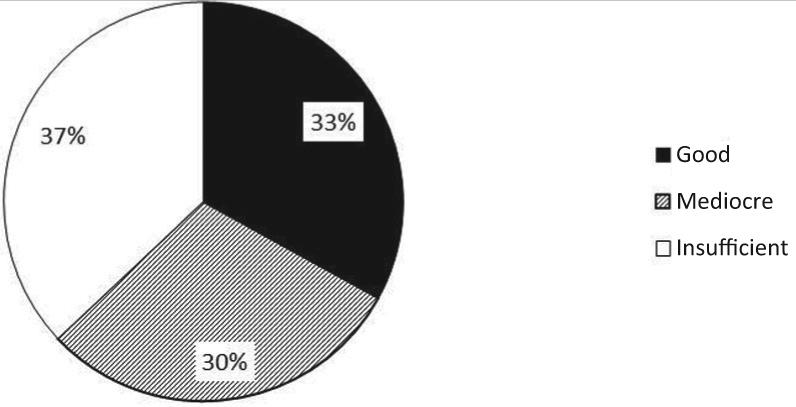
Therapists’ rating for parental cooperation in the experimental group
To answer the question whether the intervention method ‘lexicon pirate’ succeeded in effectively supporting children with different profiles of lexical deficit, the gain in expressive vocabulary size throughout the year (T1 to T4) was compared for the two subgroups:
children with a quantitative (vocabulary) deficit; and
children with a qualitative (word-finding) deficit.
Figure 3 shows that both the groups could enlarge their expressive vocabulary size. The gain in expressive vocabulary size throughout the year was highly significant for each of the subgroups (quantitative: t(17 ) = −4.865, p < .001; qualitative: t(7) = −3.937, p = .006, two-tailed). Although the group of children with qualitative deficits showed a larger gain in expressive vocabulary, the difference to the gain of children with quantitative lexical deficits did not reach statistical significance at the p value of 0.05 (t(24) = −1.993, p = .058, two-tailed).

Improvements in expressive vocabulary size for lexical subgroups in experimental group
IV Discussion
A randomized controlled trial was conducted to evaluate the effectiveness of the lexical strategy therapy ‘lexicon pirate’. Twelve months after the completion of the intervention, the children in the EG achieved significantly higher scores on the standardized expressive vocabulary assessment compared to the children in the CG. This difference was significant at the p value of 0.05. However, the gain in expressive vocabulary size from T1 to T4 did not differ significantly between the groups.
Progress for children in the CG may be due to the fact that they had been receiving continuous language support during the year of the study: Language fostering was carried out once or twice a week in small groups of children by specifically trained preschool teachers in the kindergartens. Therefore, the finding that a specific therapeutic short-term intervention over only 5 weeks can increase the effects of general language support is very encouraging.
In addition, looking at the results of the more qualitative analyses, a number of results can be identified that justify the conclusion that ‘lexicon pirate’ is a successful method that would be worth enhancing in the future. The most important finding is that an intervention approach teaching general lexical learning strategies to support self-managed learning can be effective for 4-year-old children. In respect of the limited metacognitive and metalinguistic abilities of young children, the feasibility to teach self-learning strategies to preschool children has so far been questioned (German, 1992; Glück, 2007).
The majority of the children in the EG (61.5%) had overcome their lexical disorder after 12 months and reached a T-value of >40 in the AWST-R. Parent and child interaction involving word learning was encouraged, which Tomasello (2003) called the motor of lexical development. Lexical learning was deblocked and accelerated. Forty percent of the children in the control group, who received general language support, also reached T-values above 40.
Naming performance for trained words (41.77% correct immediately after the intervention) is comparable to findings from other intervention studies (Best, 2004; Easton et al., 1997; Wright, 1993). Until now, maintenance of these intervention effects has only been shown in follow-up tests 3 to 9 weeks after the completion of the intervention (see Glück, 2003). In the current study, long-term maintenance of the intervention effects was demonstrated even 12 months after the completion of the intervention.
Through the intervention method ‘lexicon pirate’, both children with SLI and children with low nonverbal IQ were able to expand their expressive vocabulary size. As anticipated, capacity of phonological short-term memory correlated significantly with the degree of the lexical deficit before the intervention (Archibald and Gathercole, 2006). Therefore, it is positive that increase in lexical abilities through the intervention was possible even where phonological short-term memory was reduced.
In the control group, children with higher nonverbal IQ benefited from general language support to a greater extent than children with lower nonverbal IQ. In contrast, a negative correlation was found between gain in expressive vocabulary size and nonverbal IQ for the experimental group, suggesting that in the EG children with lower cognitive abilities were able to enlarge their expressive vocabularies to a greater extent than children with higher nonverbal IQ. This is an interesting finding, which needs to be examined further in future studies.
Both children with quantitative (vocabulary) deficits and children with qualitative (word- finding) deficits benefited from the intervention method ‘lexicon pirate’. This may be because the children learned not only to identify and ask for information about new words, but also to elaborate these semantically, to store the phonological structure, and to connect them with other entries in the mental lexicon. Children with qualitative deficits achieved lower T scores in the pretest. This may have been due to their difficulty in activating insufficiently stored lexical entries for production in the naming test. To improve performance in expressive vocabulary tests, children with qualitative deficits did not have to ‘learn new words’, but had to enhance storage and retrieval of already existing lexical entries. Therefore, they had a ‘shorter way to go’ than children with quantitative disorders to achieve gains in expressive vocabulary assessments.
The small differences between the EG and CG groups may be due to the fact that while a considerable number of children from the EG (n = 10) made highly to extremely significant progress, some of the children obviously did not benefit from the intervention and could not significantly improve their lexical abilities.
One goal of future research will be to identify predictors that help to determine which lexical strategy therapy can be successful for which children. The analysis of data for the children in the EG, which did not significantly benefit from the intervention, indicates that changes in the setting of the therapy may possibly enhance the effectiveness of ‘lexicon pirate’. The majority of these children’s parents did not cooperate dependably. In addition, the therapists came to the conclusion that the estimated consultation time for parents was probably too short. This supports the assumption that parent consultation should take place more frequently and in smaller steps. The time for supporting children and parents during ‘daily pirate’ should also be increased to ensure that the strategies acquired during the therapy are transferred permanently into the family’s everyday life.