






Abstract
Understanding children's experiences of being multilingual is an important contribution to culturally sensitive clinical practice in speech and language therapy. Irish is simultaneously an official, minority, endangered language and little is known about children's experiences of being bilingual in this context. This study explores the perspectives of five Irish-English-speaking children aged 8–11 years, using Language Portraits (LPs) (a visual method of data collection) and semi-structured interviews about the LPs. The most frequent patterns of colour choices and placement in the LP were summarised. The most common colour choices were based on national symbols, such as flags, and the most common language placement choices were based on body part function and associated languages. Interview data were analysed using reflexive thematic analysis. Themes developed were: (1) the value of English for communication, (2) the value of Irish, (3) Irish outside the academic context, and (4) language abilities. This study shows that a language questionnaire, LPs and semi-structured interviews can be employed to understand Irish-English-speaking children's multilingual experiences and promote cultural competence among speech and language therapists working with this community. This research recognises children as valuable sources for understanding their experiences of being multilingual Irish-English speakers and their right to be heard.
Keywords
Introduction
The importance of giving children the opportunity to share their views has been documented in the literature (McCormack et al., 2022) and has gained attention since the introduction of the Convention on the Rights of the Child (UNCRC) (United Nations (UN), 1989) with Articles 12 and 13 noting that children should have the opportunity to share their views through any medium they choose. Although there has been a surge of interest in children's perspectives according to Peace-Hughes et al. (2021), there is a lack of research on their perspectives on being multilingual. A relatively unexplored multilingual context for children in Ireland is children who speak both Irish and English in their daily lives. This study strives to add to the research on exploring the perspectives of Irish-English-speaking children on being bilingual to contribute to these understandings and enhance cultural sensitivity in speech and language therapy (SLT) practice.
Multilingualism
In order to define multilingualism, we turn to Grosjean and Li (2012: 6) who state ‘… we will define bilingualism, and indeed multilingualism, as the use of two or more languages (or dialects) in everyday life’. We have chosen to use the term multilingual to acknowledge the diverse range of linguistic and cultural influences in the Republic of Ireland (ROI), following McLeod et al. (2016). Research about multilingual children has tended to focus on parental perspectives (Peace-Hughes et al., 2021). However, there have been several studies that have provided valuable insights from children. Peace-Hughes et al. (2021) used an array of qualitative methods such as life history timelines and interviews to investigate children's views on Gaelic in Scotland. Some participants viewed Gaelic as the language of school and the older generation. This perspective was also identified by Ó Giollagáin et al. (2020) among Gaelic-speaking adolescents. Factors such as age, language proficiency, friendships and perceived language superiority, can affect children's views on their multilingualism (Peace-Hughes et al., 2021). When there are discrepancies between the perceived value of a language across home and school, it can lead to negative language attitudes among children (Kaveh and Lenz, 2022). Even in diglossic communities (where different dialects or languages fulfil different functions in a community) children may forgo their heritage language if they believe the majority language can be more advantageous to them in society (Dragojevic, 2017). Peace-Hughes et al. (2021) advocate for the increased use of qualitative research on children's experiences of their multilingualism.
The linguistic context – Irish and English
Irish is the first official language of the ROI, an official working language of the European Union (Slatinská, 2017) and a minority language (Nic Fhlannchadha and Hickey, 2016). Irish has been spoken in Ireland since before 600 AD and has reduced in use following gradual colonisation by England beginning in 1169, and due to migration and death following the famine of 1845 (Doyle, 2015). There is limited research on children's awareness of the politics of the Irish language. Waldron and Pike's (2006) study which consisted of drawings, interviews and written accounts with 119 children aged 10–11 years explored children's perceptions of Irish identity. A small number of children discussed Irish identity in the context of Ireland's history, including conflict with England. Forty percent of the participants linked the Irish language with their Irish identity.
In the 21st century, the most frequently used language in Ireland is English with 98% of the population speaking it, according to a survey requested by the European Commission (Special Eurobarometer 386, 2012). English is also a common language internationally with 51% of EU citizens being able to speak it as a first or second language (Special Eurobarometer 386, 2012). English serves as a common language across a range of sectors including tourism, science, technology, business, and education giving rise to its role as a global language (Srinivas Rao, 2019).
According to the most recent Census (Central Statistics Office [CSO], 2023), 40% of the Irish population aged three years and above can speak Irish and 33% of these respondents speak Irish daily within and outside the education system. An area where Irish is spoken in the community is known as the Gaeltacht. Gaeltachtaí tend to exist in rural communities along the north, west, and south coast of Ireland (Nic Fhlannchadha and Hickey, 2016). Due to the dominance of English in Ireland, Irish is often learnt in a bilingual context (O’Toole and Hickey, 2017). A study by O’Toole and Hickey, 2017, involving 34 children aged between 17 and 36 months living in the Gaeltacht, found that most children were exposed to both Irish and English in the home to some degree.
As noted, most people who can speak Irish do so within the education system. While most schools outside the Gaeltacht use English as the language of instruction and teach Irish as a subject, there are also schools in English-speaking areas which use Irish as the medium of instruction. These are called Gaelscoileanna (Devitt et al., 2016). The current study concerns participants from a Gaeltacht school (scoil Ghaeltachta), where the language of instruction is Irish and the school is located in the Gaeltacht (Parsons and Lyddy, 2016). There have been limited detailed and recent studies carried out exploring parents’ reasons for choosing Irish immersion education (IME), particularly that match the participant profile in this study. Mhic Mhathúna and Nic Fhionnlaoich (2021) carried out a questionnaire with 156 parents of children attending IME pre-schools. The questionnaire contained an open-ended question about parents’ reasoning for choosing IME. Thefive most common reasons were: the child's social development, having the opportunity to attend IME primary education, cognitive development, the parents having an interest in Irish and wanting their child to be able to speak Irish. Darmody and Daly (2015) found that in 2001, 13% of parents surveyed in the ROI reported that they would be inclined to send their children to an Irish-medium school located near their home and in 2013, the figure had risen to 23% of parents surveyed.
Children's positive attitudes towards Irish have been documented in the literature. Fleming and Debski (2007) used questionnaires to explore attitudes to the Irish language with 125 children from English-speaking schools, Gaelscoileanna, and Gaeltacht schools. This study included a relatively large sample size, participants across a variety of ages (10–12 years and 16–18 years), and range of language of schooling, which provided informative findings on children's perspectives of Irish in the early 2000s. By using a questionnaire to generate data, a relatively large sample size was obtained. However, it is noted that questionnaires can restrict participants in expressing supplementary opinions (Lyons & McAllister, 2019a). This study found that the children liked to use Irish as a secret language. This was the most popular reason for speaking Irish online for the participants (Fleming & Debski, 2007). Children in English-speaking schools displayed the most positive attitudes to Irish, Gaelscoileanna students displayed less positive attitudes, and Gaeltacht children the least positive. However, all three groups had overall positive attitudes to the language. In contrast, negative attitudes to the language were identified by Ó’Halloran (2020) which examined the attitudes of 22 children in fourth class (approximately 9–10 years old) attending English-medium education, using a reflective journal. Academic challenges with Irish were also identified by Ó’Halloran (2020) with the majority of participants expressing that Irish was difficult, including challenges understanding what their teacher was saying. Understanding the positive and negative aspects of children's experience with Irish is essential, as attitudes and motivation regarding a language can affect a person's use of the language (Fleming and Debski, 2007). It is therefore important to understand children's views of Irish as this in turn can inform clinical practice.
SLT and the Irish language
Under the Official Languages Act (2003), the public are entitled to engage in services in Irish. However, there are barriers to working with multiple languages in SLT which may include clinicians’ proficiency in the language and lack of resources available (Mulgrew et al., 2022). Research on the Irish language in SLT has been scarce (O’Toole and Hickey, 2013). McLeod et al. (2017) note that even when speech and language therapists (SLTs) do not speak the language of the client, they are expected to demonstrate cultural competence, which includes exploring and respecting the client's identity and linguistic and cultural background. Washington et al. (2024) note that creative modes of expression such as drawings, can be used by SLTs to explore children's linguistic experiences.
Visual research methods
When we elicit children's views, it is necessary to employ child-friendly methods (Hart, 1992). The ‘visual turn’ is the term used to describe the increasing use of visual methods in applied language studies (Kalaja and Pitkänen-Huhta, 2018). At the UN's Special Summit on Children's Rights (2002), children and young people noted that drawing projects can be used as a fun medium to elicit children's opinions (Lundy, 2007). A scoping review, by Brown et al. (2020), which analysed 21 studies, found visual participatory methods to be effective for exploring first-hand experiences of newcomer children. Brown et al. (2020) noted that visual productions by participants were not more accurate than language, but rather they facilitated conversations to elicit further data.
Language portraits
An example of a visual research method is Language Portraits (LPs), which according to Busch (2012), were developed by Neumann (1991) and Krumm and Jenkins (2001) to create multilingual awareness in the classroom. LPs ‘are empty whole-body silhouettes in or around which research participants color or draw languages, language variants or other aspects or modalities of communication’ (Kusters and De Meulder, 2019: 2). Prasad (2014) employed LPs with youth in Toronto, Canada, in Grade 11 (approximately 16–17 years old) to describe their plurilingual identities. Body parts where languages were placed were also discussed (e.g. hands for languages related to academic work, the heart for languages linked to a deep connection). Prasad (2014) notes that LPs allowed the participants to express the values, roles, and functions of the various languages they possess.
LPs have recently been more widely used to facilitate the expression of the multilingual experience in research (Soares et al., 2021). Soares et al. (2021) used LPs with children aged 6–13 years living in the Netherlands to depict their language experiences. Qualitative content analysis was used to analyse the interview data about colour choice and language placement. The participants’ colour choices related to country flags, their own experiences of the country, and emotions. Language placement referred to the children's skills in the language and body functions. Krumm (2010: 103) notes ‘languages are distributed on the bodies in different ways because children have very different ways of representing themselves’. LPs focus on the individual lived experience of the language (Busch, 2012). Soares et al. (2021) found LPs to demonstrate a deeper understanding of the participants’ experiences when compared to surveys. Riessman (2007) notes that by including both visual and oral/written accounts, participants are given the opportunity to express themselves in more than one way. This is a multimodal format (Busch, 2012) which can allow researchers to understand multilingual experiences from different perspectives. Furthermore, limitations of each mode are addressed (Soares et al., 2021). Soares et al. (2021) noted that many researchers make use of oral/written accounts alongside LPs to overcome the limitations of visual data on its own. Soares et al. (2021) reported that oral/written accounts were required to understand the reasoning for participants’ colour choice. LPs were used in this study to give multilingual children the opportunity to express their perspectives on speaking their languages with a view to informing clinical practice. To the knowledge of the researchers, there has been no research published using LPs among Irish-English speakers to date.
The research question that underpinned this study was:
What are the perspectives of Irish-English-speaking school-aged children on being speakers of these languages?
Methods
Design
A concurrent, multi-method approach was adopted which was influenced by social constructionist principles of childhood, which view children as reliable narrators of their own lives (Sudarsan et al., 2022). A language background questionnaire adapted from Soares et al. (2021) was completed by the children to gain insights into their linguistic repertoires and background information. In parallel, LPs were completed by the children to provide graphic visual representations of their linguistic repertoires. Along with the previously mentioned tasks, semi-structured interviews were conducted with the children to gain insights into emotions, attitudes, and experiences associated with the languages. (Please see Appendix A for the topic guide.)
Ethical considerations
Ethical approval was granted by the Research Ethics Committee of the College of Medicine, Nursing and Health Sciences at the University of Galway. Parents provided written consent, and children provided written assent.
Researchers’ positionality
Braun and Clarke (2022) describe owning your perspective as the practice of researchers striving to acknowledge and articulate their personal and theoretical perspectives. It also involves reflecting on how these perspectives shape and constrain research practices. With this in mind, the first author who also collected and analysed the data was a final-year student in an undergraduate speech and language pathology programme. This author's first language is English and speaks Irish as a second language. At the time of data collection, the first author had conversational Irish language abilities and had completed a Diploma in Irish (Level 7 NFQ). The second and third authors are experienced paediatric clinicians and academics who provided peer debriefing throughout the stages of analysis. They are both positively disposed towards the Irish language. The second author has expertise in the use of visual methods with children. The third author has basic conversational proficiency in Irish and was also involved in study design and establishing a connection with the gatekeeper at the data collection site.
Recruitment
Purposive sampling was used to ensure participants had the relevant experience which was being investigated (Lyons and McAllister, 2019a). Participants were recruited via the principal of a Gaeltacht school that was on the periphery of an English-speaking region.
Participants
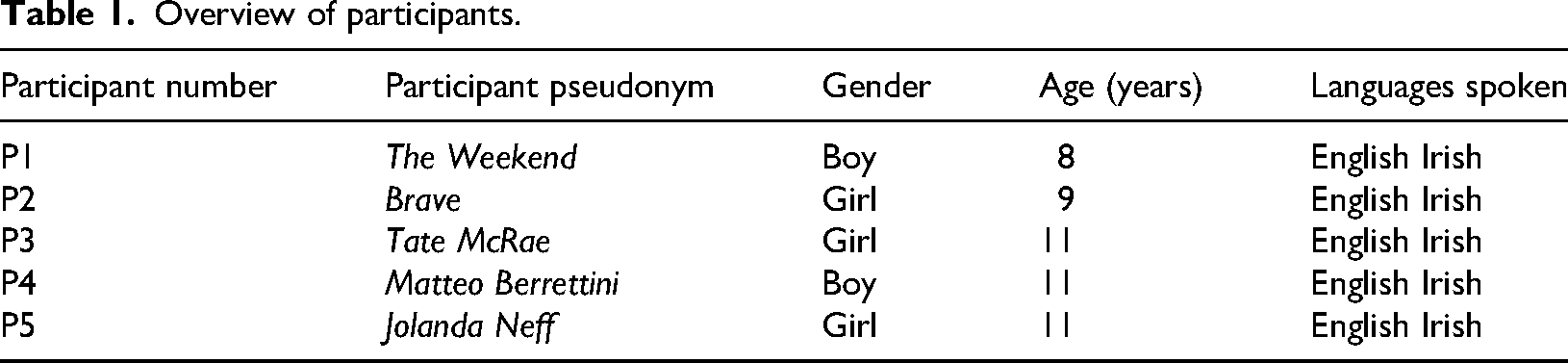
Five Irish-English-speaking children were recruited. Each child chose their own pseudonym. The mean age of participants was 10 years with ages ranging from 8 to 11 years. Two participants were boys and three were girls. Each child completed a language background questionnaire adapted from Soares et al. (2021) and this showed that all participants spoke English in the home and with family members. All participants spoke Irish at school. Forty percent of participants reported speaking Irish outside of school sometimes. Table 1 presents an overview of the participants.
Overview of participants.
Data collection
Face-to-face data collection sessions were conducted in the school with each child (n = 5). During each session, a language questionnaire, LP task, and a semi-structured interview guide were used. In line with the policy on Gaeltacht Education (Department of Education and Skills, 2016), children in Gaeltacht schools are expected to communicate in Irish in school. The first author's Irish abilities were a strength from the point of view of establishing a relationship with the gatekeeper in order to recruit participants. However, the interviews were conducted in English, as the first author had a stronger proficiency in English than in Irish. This aimed to maximise the quality of data collection and analysis. The participants were assured by the researcher, school principal, and parents that they had permission to speak English for the duration of the interview which took place in the school. All participants spoke mainly English at home and this reassurance meant that they could comfortably use English during data collection although this was a departure from daily practice in the school. None of the children spoke Irish during data collection.
Language portrait
The LP provided a visual production of the participants’ linguistic repertoires. The researcher provided each participant with 10 World of Colour felt-tip pens (yellow, orange, red, pink, purple, dark blue, light blue, green, brown, black). These colours were used in the Sound Effects Study Drawing Protocol (McCormack et al., 2022). Participants were also provided with a blank LP on an A4 page (Figure 1).

LP template.
The above outline in Figure 1 used in Busch (2018) is freely available from www.heteroglossia.net (Heteroglossia, n.d.). Busch (2018) used this template instead of other LP templates available, as this body outline was designed by an art therapist and psychotherapist, Isabelle Rentsch. Busch (2018) notes the following important characteristics of the template: (1) the formatting of the arms allows for the potential of differentiation in the portraits, (2) the outline is provided on an A4 page, as larger dimensions may be more daunting to complete and (3) the outline does not contain a mouth, eyes, or ears to allow participants to add them to their drawing if they wish.
Busch (2018) notes that the prompts given to complete the portrait can affect the final product. The following introductory prompt was used in the current study and was adapted from Soares et al. (2021) and Busch (2018) to suit the young participants and aims of the study: Here is an outline of a body and colouring markers. I would like you to pretend this is a drawing of you. I would like you to think of the languages you speak and colour the languages into the body outline. Choose colours that fit/go with the languages you speak. You can place your languages in any part of the body.
Semi-structured interviews
Bland (2018) recognises the importance of visual data collection methods to be used in conjunction with conversation. Semi-structured interviews, which took place immediately after the LPs were completed, enabled the children to explain their LPs and to further discuss their experiences of being Irish-English-speaking children. Interviews were audio-recorded and the mean length of interview was 8 min 63 s.
Data analysis
Language portraits
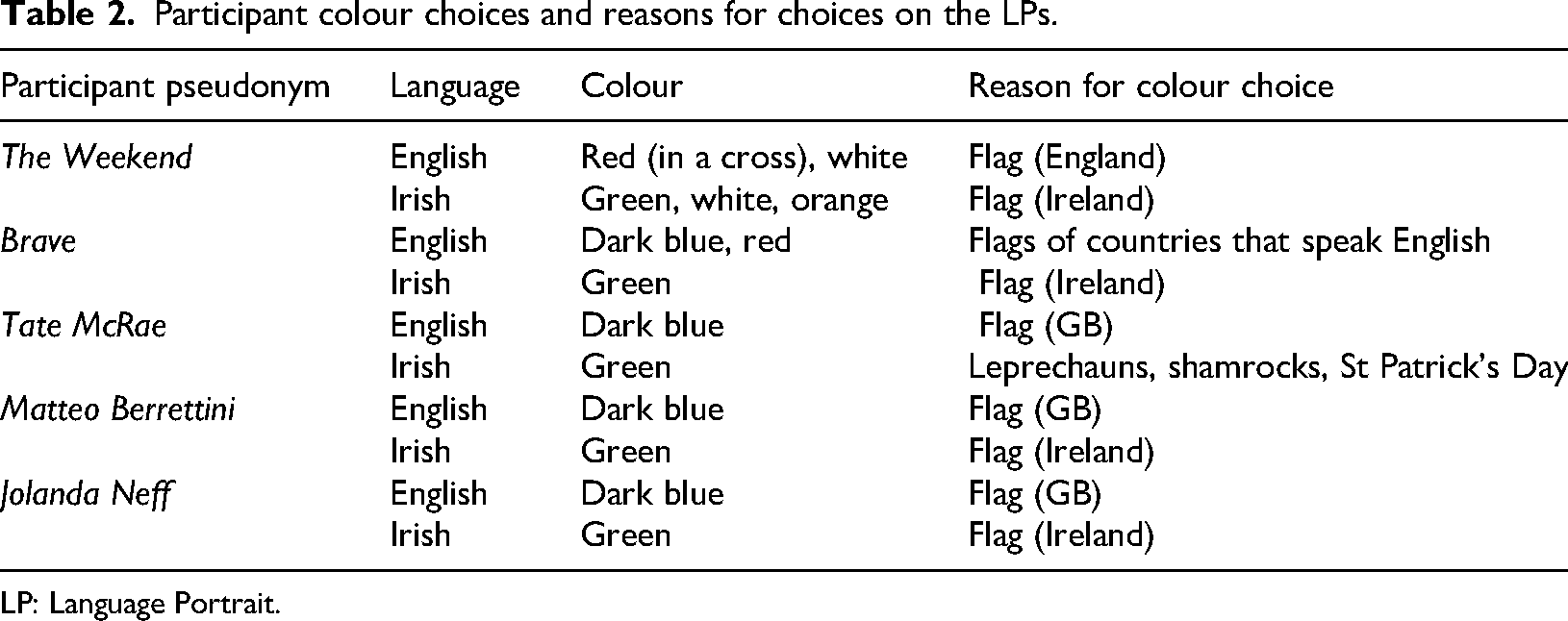
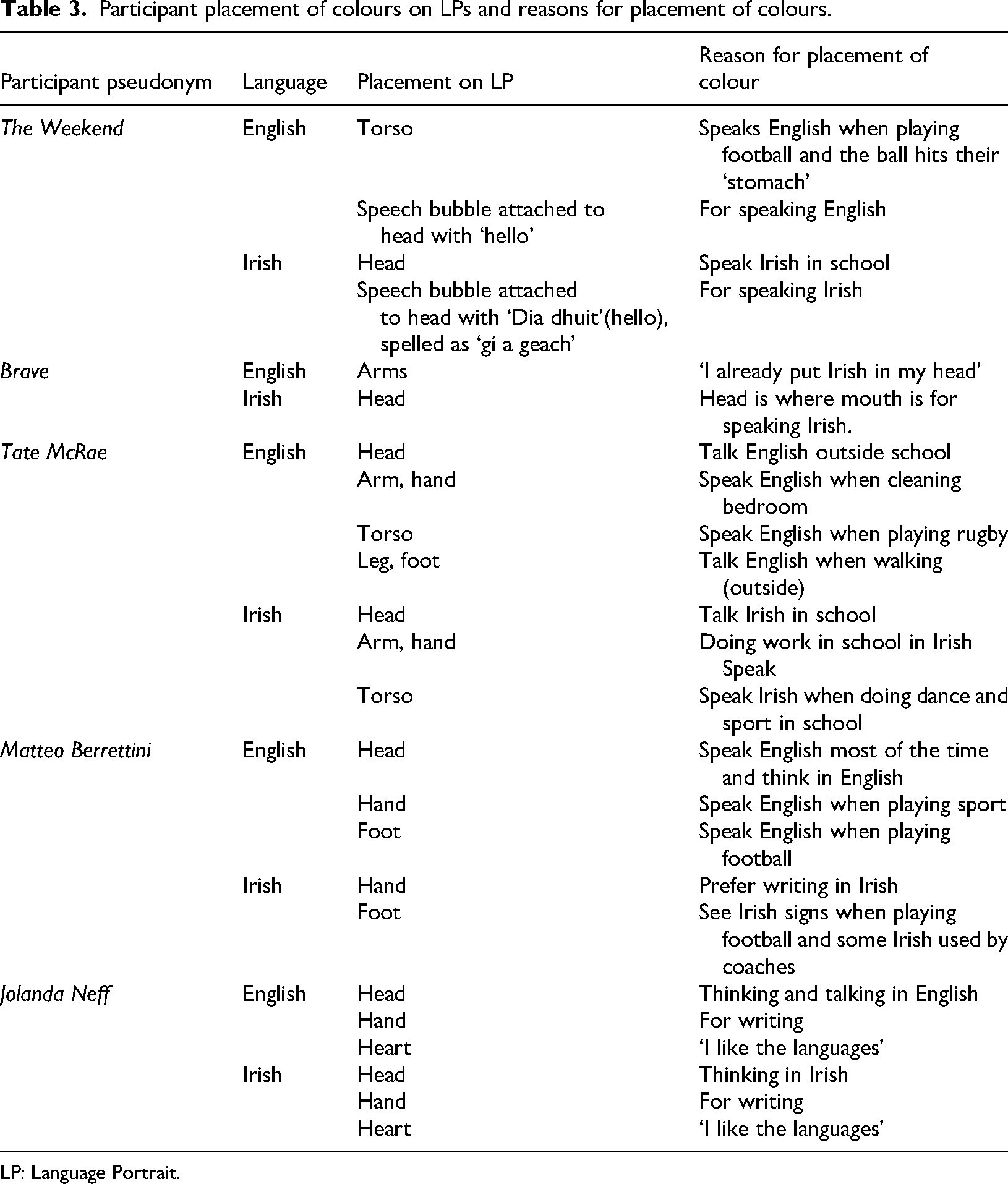
The researcher reviewed the LPs to identify the range of placement of colours and colours used. The patterns of colour choices, placement of colours on the LPs, and children's reasons for their choices are presented in a descriptive summary in Tables 2 and 3.
Participant colour choices and reasons for choices on the LPs.
LP: Language Portrait.
Participant placement of colours on LPs and reasons for placement of colours.
LP: Language Portrait.
Interview data
The first author used reflexive thematic analysis (Braun and Clarke, 2022) to analyse the interview data. Following reading and re-reading of each transcript, initial codes were developed. The first author reviewed each transcript to identify recurring patterns. These codes were combined into themes which were then refined and defined.
Rigour
Crystallisation of data promoted credibility and a more rounded understanding (Lyons and McAllister, 2019b). Using the participants’ direct words, as a form of thick description, contributed to the authenticity of the analysis and enables readers to consider its transferability (Lyons and McAllister, 2019b). Including the participants’ LPs was also a form of thick description which promoted rigour (Crawford et al., 1992, as cited in Kharel, 2015). To mitigate bias, the researchers consistently considered how their values and assumptions may influence all aspects of data collection and analysis.
Results
A descriptive summary of the LPs is presented first followed by an analysis of the interview data. Each participant chose their own pseudonym. Table 2 summarises the colours used for each language and the reasons for the colour choice. Table 3 summarises the placement of the languages on the LPs and reasons for the placement.
Colour choices
National symbols
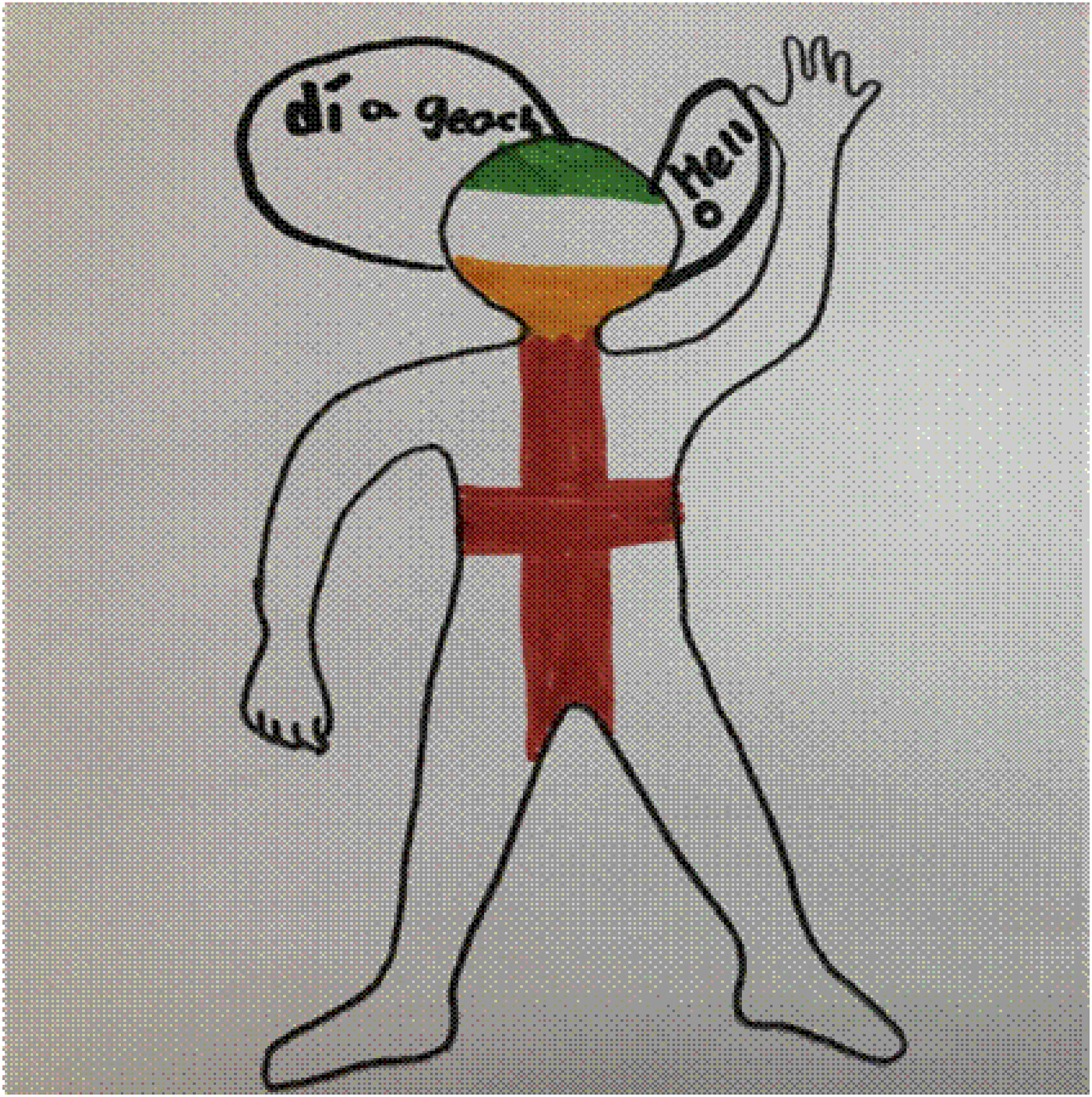
All participants made their colour choices based on national symbols such as flags and identifiers (e.g. shamrock, leprechaun, St Patrick's Day). Colours to represent the Irish language were green, white, and orange (the flag colours). Colours to represent English included red, blue and white as the participants noted these colours are on the flags of English-speaking countries. An example of an LP which portrayed these colours can be seen in Figure 2, completed by Brave.
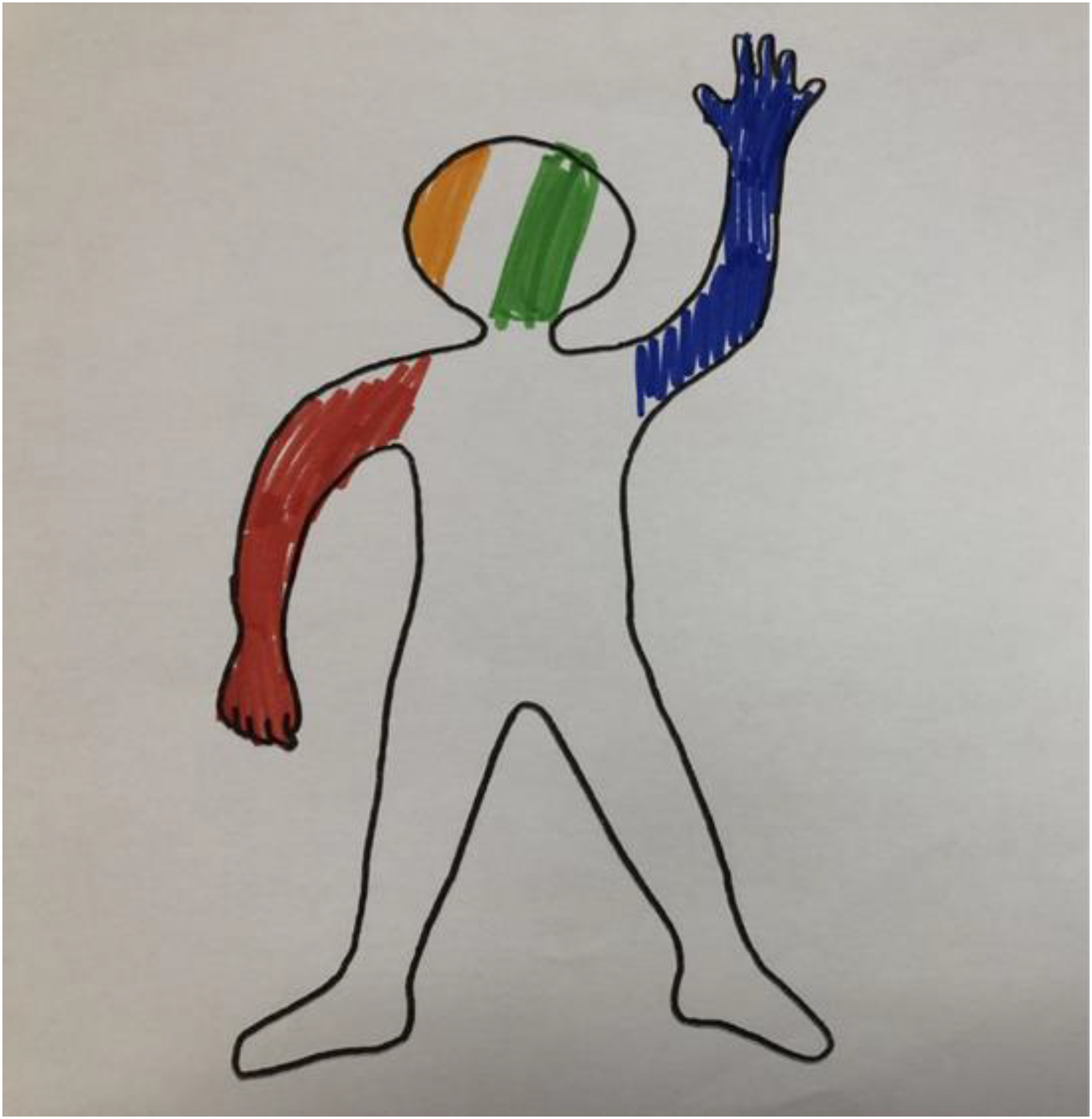
Brave LP.
Placement of colour on LP
Body parts and functions associated with language
All participants placed languages on their LP using body parts and functions associated with the language, as seen in the extract below and Figure 3 from Participant 3 who used both green (Irish) and blue (English) in the head, arm/hand and torso:
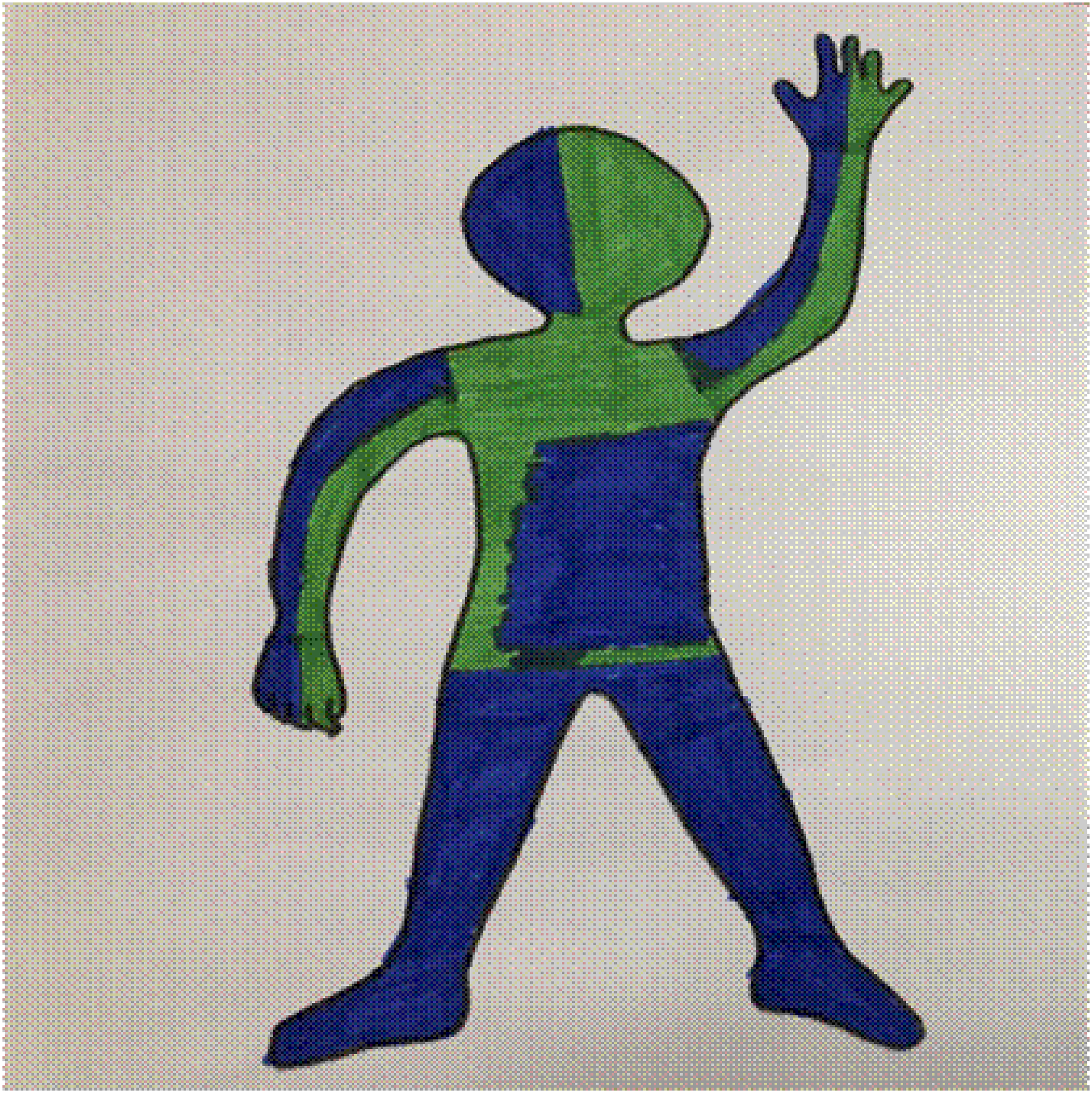
Tate McRae LP.
Body parts and hobbies
Three of the participants placed languages on body parts associated with hobbies. For example, Participant 1 put English in the torso on the portrait (Figure 4):
The weekend LP.
Participant 4 put English and Irish in the feet on the portrait (Figure 5):

Matteo Berrettini LP.
The above extracts show that some children associate certain hobbies with speaking certain languages and how sometimes the languages can overlap.
Body parts and frequency of language use
Two participants used their portraits to display the frequency of language use (Figure 5). The amount of space which a language covered in a body part reflected the frequency of the participant's use of the language. When asked about placing English in the head, Participant 4 stated: Because I normally speak through English majority of the time, and I think through English.
This participant placed English in their head to demonstrate that they spoke English more often than Irish and thought in English.
Enjoyment of the language
One participant placed both Irish and English in the heart because they liked the languages, as seen in Figure 6.
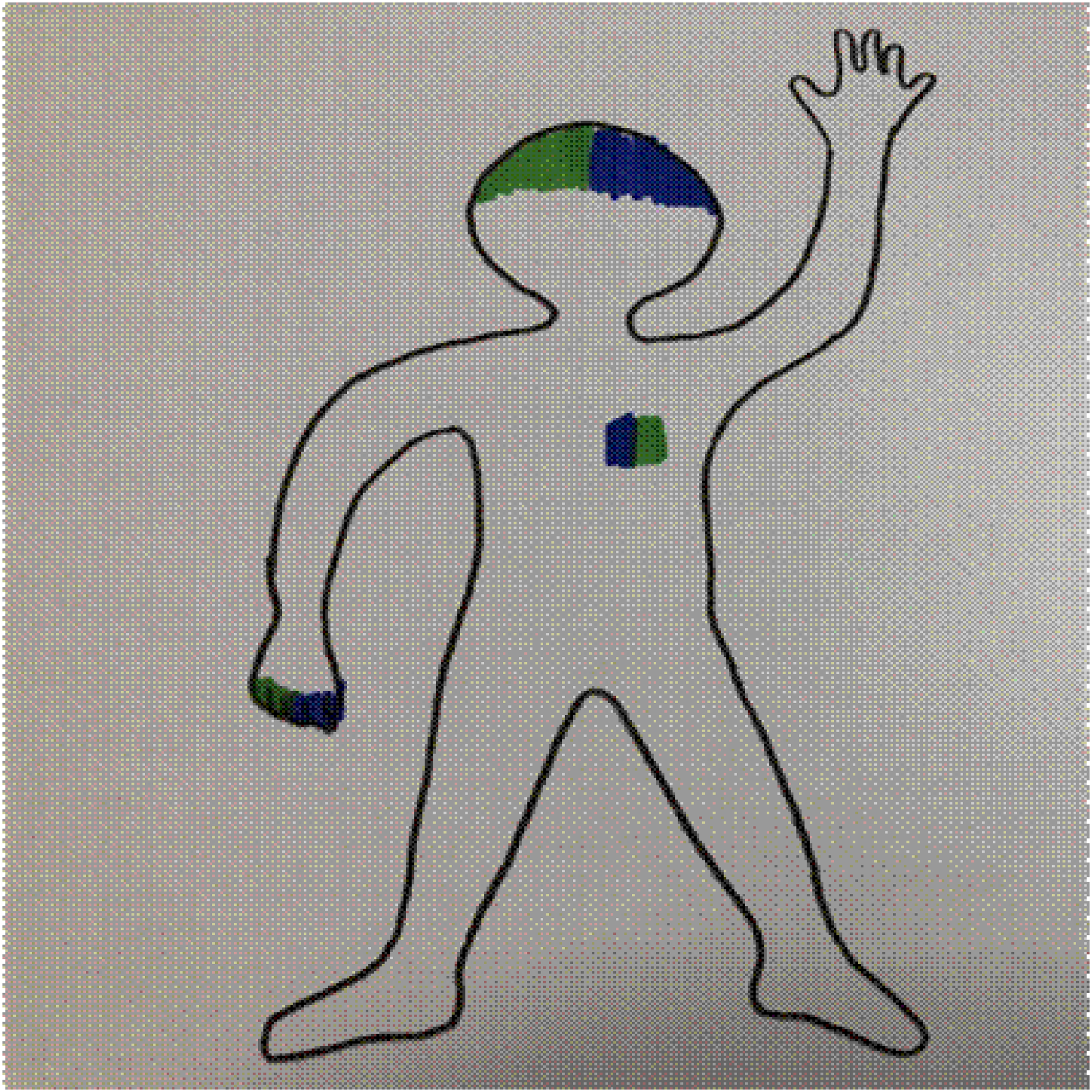
Jolanda Neff LP.
Themes
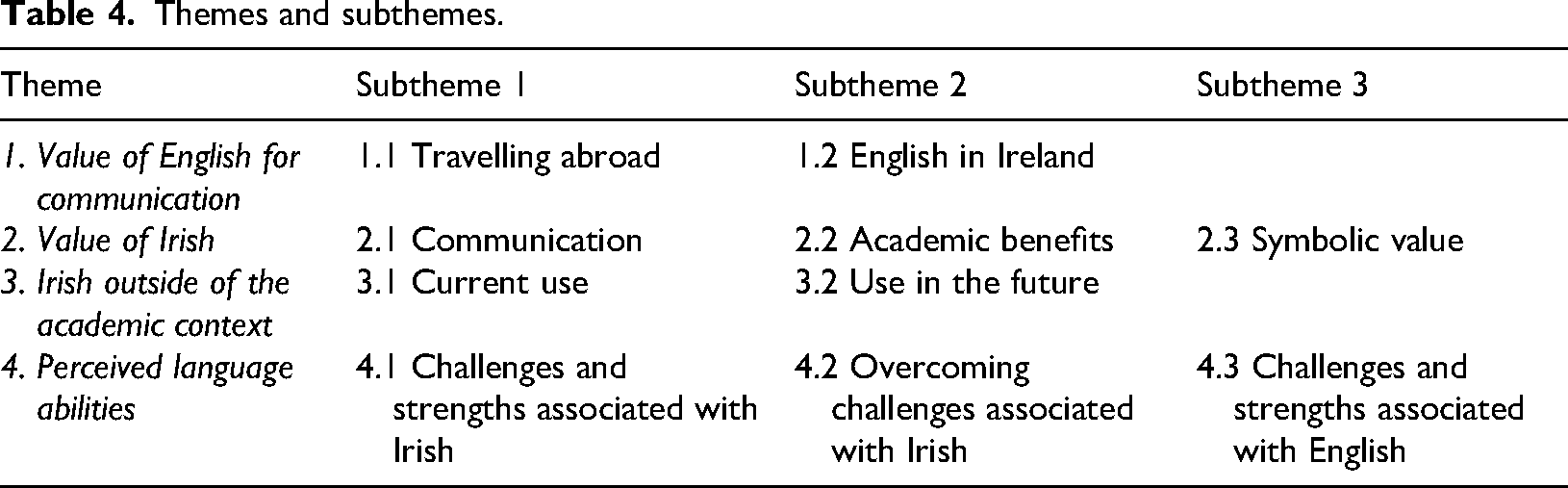
Four overarching themes and 10 subthemes were generated from the interviews, and these are shown in Table 4. The themes centred on the value of English for communication, the value of Irish, Irish outside the academic context, and perceived language abilities.
Themes and subthemes.
Theme 1: Value of English for communication
This theme refers to the participants’ perceived importance of English for communication abroad and in Ireland and is comprised of two subthemes:
Subtheme 1.1: Travelling abroad
Two children discussed the importance of being able to speak English when going abroad. They noted that English is a common language internationally and it enables them to communicate with others. This contrasts with Irish which they observed as a language not spoken in other countries. They expressed that it is convenient to be able to speak English, indicating that knowing English makes their lives easier: Like if you're travelling it’d be English, you can't learn a whole other language just to travel somewhere one time (Participant 4 Matteo Berrettini).
Subtheme 1.2: English in Ireland
The importance of being able to speak English in Ireland was also discussed. When one participant was asked if there were any negative aspects about speaking Irish, they replied that it would be bad if you could speak only Irish and not English, indicating that one may be restricted by not knowing English. English was viewed as being more useful in Ireland. One participant expressed that she generally assumes people speak English in Ireland: I normally think [people speak] English. But then if I hear them like, say, something in Irish I'll be like, oh, they'll probably they'll probably know hello or yeah, have a good day or something (Participant 5 Jolanda Neff).
Participants demonstrated awareness of the widespread use of English in Ireland and other countries.
Theme 2: Value of Irish
This theme is about the value the participants placed on the Irish language and its associated functions and is comprised of three subthemes presented below.
Subtheme 2.1: Communication
Irish was also identified as having communication benefits. Participant 4 (Mateo Berrettini) identified the importance of knowing Irish when going to the Gaeltacht and when reading signs. During their portrait explanation (see Figure 4), they noted that they see Irish signs around them when they are at football training. Participant 5 (Jolanda Neff), who sometimes spoke Irish at home and with their grandparents, expressed that if they had to choose to speak English or Irish only, they would choose Irish because Irish is spoken by most of the people they know.
Subtheme 2.2: Academic benefits
Irish was also associated with academic benefits, including obtaining more marks in state exams (an incentive by the Department of Education to promote the language (Mac Aogáin et al., 2010)). Participant 3 (Tate McRae) noted that they would be confused in their Irish-speaking school if they did not speak Irish. This emphasises the importance of knowing Irish to access the curriculum for this participant who attends a Gaeltacht school.
Subtheme 2.3: Symbolic value
Some participants discussed the symbolic value of Irish referring to identity and pride: Irish … it's the native language … it represents who you are in a way (Participant 4 Mateo Berrettini). The importance of preserving the language was also discussed: If everyone just stopped speaking Irish, we would forget how to speak it and people will even forget what Irish is, and now it's almost like it won't exist anymore (Participant 2 Brave). This participant further explained that it would be bad if Irish did not exist anymore because Ireland would no longer have its own language. The symbolic value of Irish fostered strong personal connections to the language for the participants.
Theme 3: Irish outside of the academic context
This theme refers to speaking Irish outside of school-related tasks, both currently, including outside of homework tasks, and in the future.
Subtheme 3.1: Current use
Irish use outside of school-related activities was discussed by participants, including using Irish as a secret language and during casual conversation. However, it was less common for participants to speak Irish at home compared to school. Three participants discussed using Irish as a secret language among both family and friends who could not speak Irish: If I want to speak with my mom without my dad knowing I can speak with her because my dad doesn’t know Irish (Participant 2 Brave).
Reasons for using Irish as a secret language included trying to confuse a family member, planning a surprise, and discussing private information. Other contexts in which Irish was used included Irish cafés which were mentioned by three participants. Each participant mentioned a different Irish café in the county which were in both Irish and English-speaking communities. Cafés appeared to be one of the few functional contexts outside the home where Irish was spoken. One participant also highlighted tokenistic uses of the language when she described how her mother would mostly speak in English in a shop but might say ‘go raibh maith agat’ (thank you) to the cashier.
Subtheme 3.2: Future use
Participants also discussed speaking Irish in the future when they finished school. One participant noted they would no longer learn Irish but would still be speaking it. Another noted they would take online classes to keep learning the language. A third participant expressed they would only keep speaking Irish sometimes, if they were living in Ireland, further linking the value of Irish for communication in Ireland but not abroad.
Theme 4: Perceived language abilities
Theme 4 concerns strengths and challenges associated with both languages and is comprised of two subthemes presented below.
Subtheme 4.1: Challenges and strengths associated with Irish
Irish was identified as difficult to some degree by all participants, with the language being described as complicated and confusing. Challenges with Irish included vocabulary, counting, adding diacritic marks (‘fada’) and pronunciation when reading: Well, like when I'm reading it [Irish] for example, like it's a lot more complicated than English … it's like harder for me to pronounce words (Participant 3 Tate McRae).
Positive Irish abilities were also explored. Two participants noted that speaking Irish feels normal, indicating an ease with the language. Participant 5 (Jolanda Neff) expressed that Irish was a nice language because of ‘Just the way it can really roll off your tongue’ emphasising its naturalness for her.
Subtheme 4.2: Overcoming challenges associated with Irish
Participants demonstrated a variety of ways to overcome challenges associated with Irish. Strategies included asking a classmate, teacher, or family member for help, using a dictionary and codeswitching to English. Participants were resourceful when overcoming difficulties with Irish.
Subtheme 4.3: Challenges and strengths associated with English
Compared to Irish, less difficulties were identified with English, with only one child noting that English spelling was sometimes confusing. Abilities in English included having a more extensive vocabulary compared to Irish and feeling more comfortable speaking English. Two participants acknowledged that English was their first language with one noting that this makes them more comfortable speaking it than Irish.
Discussion
This study explored the perspectives of Irish-English-speaking children on being multilingual using LPs and semi-structured interviews. All participants actively engaged with the LP to visually represent their multilingual identities. Kress and Van Leeuwen (2002) note that colour associations can emerge from where colours have been seen before. The majority of colour choices referred to country flags. This was also a common pattern identified by Soares et al. (2021), where 7/21 participants used flag colours to represent languages and Melo Pfeifer and Schmidt (2012), where 419/459 drawings contained the German flag. These authors hypothesise that country flags are often used to represent languages because a country is associated with a particular language and that country is then viewed as a linguistic homogeneity.
Regarding the placement of colours on body parts on the LP, the most common pattern was body parts and functions associated with a language. This was a common pattern observed in Soares et al. (2021) and demonstrates participants’ insights into the use of their languages for different functions and across different contexts. The body placement of colour choices demonstrates that both Irish and English are intertwined in the participants’ everyday lives through school, home, extra-curricular, and leisure activities. Participants were able to give a reason for colour choice and colour placement in their LP demonstrating awareness of their multilingualism including how they use their languages, contexts and frequency of language use. This is similar to the results from Soares et al. (2021).
Participants were observed to portray their languages separately, which may be due to the way the languages are used in their lives, age of the participants, or due to the LP task instructions (Soares et al., 2021). This is different to LPs in Prasad (2014) where older participants aged 16–17 years mixed country flags to demonstrate the interplay of their languages and the impact on their identity. Busch (2018) emphasises that the way the task is presented (e.g. prompts, colours provided) will affect the LP, emphasising the interactional aspect of this method.
The LPs allowed the children to express their multilingual repertoires in a creative way, and the interviews allowed the children to explain their reasoning for colour choice and body placement, as well as express other opinions verbally. Busch (2018) notes that LP facilitates the opening of a conversation about the participants’ multilingual experience. The LPs and verbal accounts are not a translation of one another, but when combined, provide a multifaceted understanding of the children's multilingual identities (Busch, 2018). This is a clear strength of this study.
For some people in Ireland, both the Irish and English languages have their own functions and environments in which they are spoken with a degree of overlap, however, these participants appear to be aware of the widespread use of English in Ireland. It is expected that these participants are aware of this considering the close proximity of their school to an English-speaking area. It is also unknown whether these participants live in the Gaeltacht in which their school is located or if they live in an English-speaking area.
These participants appear to be attuned to languages in local, national, and international contexts. Some participants expressed a preference for English due to its functional uses. While these participants attended a Gaeltacht school, it was located in close proximity to English-speaking communities and all of the children's main home language was English, which may inform the participants’ views on the value of English for communication.
Although Irish is a minority language in Ireland, participants identified Irish to be important for communication. Functional uses of knowing Irish included being able to read signs, being able to communicate with other Irish speakers, and for education. 11% of daily Irish speakers speak it outside the education system (CSO, 2023). Nevertheless, these participants identified Irish as having a communicative role in Irish society. Participants may perceive Irish to have a functional value due to their school's location in the Gaeltacht. Participants also identified symbolic values of the language, including identity and pride. Knowing a language that others did not created a sense of uniqueness which was also discussed by older native and non-native speakers interviewed by Nic Fhlannchadha and Hickey (2016).
Participants in this study expressed a link between Irish language and Irish identity which corresponds with Slatinská's (2017) discussion about identity and language which noted that minority languages, such as Irish, are linked with ethnicity and belonging to a community, as an ethno-significant factor. The participants in the current study linked their connection to the Irish language with their identity as Irish children. Identity can be expressed through communication in a particular language and one of the most important aspects of cultural and national identity is language (Slatinská 2017). The link between speaking the language and identity was also reported as a theme in Murray et al. (2023), in which views on Irish from 149 adults were analysed, and was also identified by chlidren in Waldron and Pike (2007), which explored the views of 119 children. Ó Ceallaigh and Ní Dhonnabháin (2015) note the motivation for revitalisation of the language to be linked with its role in identity. This was identified by one participant in this current study who expressed the language will no longer exist if people do not keep speaking it and noted the consequences of this to be Ireland not having its own unique language anymore. The participants in this study felt strongly about what Irish represents and how it is linked to their identity. However, Slatinská (2017) states that symbolic value of a language may not promote the use of the language. When a language has a predominantly symbolic value, it can be mythologised and romanticised, which may overshadow its functional uses (Murray et al., 2023).
The education system has been described as one of the ‘critical engines for generating linguistic ability’ regarding Irish (Government of Ireland, 2010: 12). As demonstrated through their LPs and interviews, all the participants in this study have learned and maintained their Irish language skills predominantly in school. However, these participants identified some functional uses of Irish outside the academic context. Participants discussed using Irish as a secret language similar to Fleming and Debski (2007). The main language outside school for all participants was English with Irish being spoken in the home sometimes by most participants, as revealed through LPs and interviews. Participants in this study appeared to speak less Irish at home compared to participants in Fleming and Debski (2007), where 25% of Gaeltacht school participants spoke Irish only or more Irish than English at home. Aside from the larger sample size, this difference may be because the Gaeltacht school in Fleming and Debski (2007) was located in the middle of the Gaeltacht compared to the school in this current study, which is on the periphery of an English-speaking area. When compared, the use of Irish at home by the participants in this study aligns more with those in Fleming and Debski (2007) who attended Gaelscoileanna. Peace-Hughes et al. (2021) and Ó Giollagáin et al. (2020) note that if school is the main context with which the language is associated, there are concerns over the sustainability of the language when children leave school as the same support may not be available at home or in the community.
Parents’ ability to speak the language with their children gave rise to intergenerational Irish language communication (Ó hIfearnáin, 2013). Bratož et al. (2021) notes language attitudes form amidst the political, ideological, and cultural environment in which a child is raised. The participants’ overall positive disposition to Irish may be linked to the positive attitudes of their parents and the decision for the children to attend a Gaeltacht school when other options are available in close geographical distance. The parents in the study by Mhic Mhathúna and Nic Fhionnlaoich (2021) had positive perspectives on IME and it is possible that this positivity would be passed onto their children. The participants’ positive attitudes to Irish were reflected in their desire to continue speaking and learning Irish once they completed education, with one participant noting they would continue learning Irish through online classes. However, these positive views may change over time as positive minority language attitudes tend to decline as children become older (Cho et al., 2004).
Almost all participants expressed challenges associated with Irish with fewer difficulties identified with English. Difficulties with Irish were also identified by most participants in Ó'Halloran (2020). Despite challenges with the language, participants identified many ways to surmount these difficulties. This indicated that their difficulties with the language did not deter them from speaking it. This demonstrates motivation to not only speak the language but also to improve their skills. This motivation may be fostered by the encouragement the participants receive in school and at home. The children's ability to compensate for their Irish language difficulties may contribute to their positive attitude toward the language as language competence impacts language attitudes (Peace-Hughes et al., 2021).
Overall, participants demonstrated positive views on both English and Irish. The participants’ positive views on the Irish language align with previous studies by Fleming and Debski (2007) and Wright and Scullion (2007). Wright and Scullion (2007) note that it is expected that children in IME would display positive views on the Irish language. Despite varying linguistic strengths and challenges with each language, all participants identified ways in which both languages benefit them and add value to their daily lives, as expressed through their LPs and interviews.
Future research may involve bilingual Irish-English-speaking children with communication disorders to explore LPs as a tool for engaging in culturally sensitive practice in SLT for such children. Cultural competence aims to reduce inequalities in healthcare and prevent biases and discrimination through culturally sensitive clinical practice (Duveau et al., 2022). This is linked with UN Sustainable Development Goals (SDGs), such as Reduced Inequalities. The relevance of UN SDGs to SLT has been discussed by researchers across an array of areas in the profession (Carroll et al., 2023; McLeod and Marshall, 2023). This article aims to support the relevance and importance of UN SDGs to SLT, and specifically in the context of working with bilingual Irish-English-speaking children by showing how typically developing children represent and talk about their languages. It also demonstrates how LPs could potentially be incorporated into clinical practice as part of culturally sensitive assessments.
As the sample size was relatively small, transferability is restricted. However, the multi-method approach would be useful to obtain more children's perspectives and a wider range of perspectives. A parental questionnaire may have provided another angle on the children's language use. However, the researchers were wary of taking attention away from the children's perspectives (Peace-Hughes et al., 2021).
Despite the limitations, this study presents an emerging holistic method of understanding the lives of multilingual Irish-English speakers. Slatinská (2017) notes language attitudes and identity to be fluid entities that change over time. Further studies should therefore focus on longitudinal research, which would provide more information on how children's language perspectives evolve as they grow older. In these research areas, children should always remain at the centre of the investigation to ensure their voices are heard, respected, and most importantly, implemented for change (Lundy, 2007).
Conclusion
Data from LPs and interviews enabled children's views on their multilingualism, within a unique linguistic context, to be represented in this study. LPs allowed children to portray their multilingual identities in a creative mode which was not restricted by expressive language use. Interviews enabled the children to further explain their linguistic experiences in their daily lives. By listening to children's views, we are enabled to understand their experiences of the world (McLeod et al., 2015). Specifically, this study contributes to the research regarding the linguistic perspectives of Irish-English-speaking children. This method enables us to understand children's perspectives on the non-traditional model of diglossia (Smith-Christmas and O’ hIfearnáin, 2015, as cited in Nic Fhlannchadha and Hickey, 2016) in Ireland and how this impacts children's multilingual identities. This information has clinical implications not only for SLTs working with Irish-English-speaking children in Ireland but for the profession in general as the LP is an activity that could reasonably be incorporated into holistic, culturally sensitive assessment practices for multilingual children in order to plan authentic intervention. LPs can serve as ‘mediating artefacts’ (Verdon et al., 2015) to obtain multilingual children's perspectives in a child-friendly way.
Footnotes
Acknowledgements
We are sincerely grateful to the participants who shared their time, experiences and creativity for this research.

Ethical approval
This study was approved by the Research Ethics Committee of the College of Medicine, Nursing and Health Sciences at the University of Galway (CMNHS REC application no. 22.23-081) on 22nd June 2023.
Consent
Informed written consent from parents and informed written assent was obtained for all participants for the research and its publication
Author contributions
Katie Devane and Dr Mary-Pat O'Malley developed the research question, aims and protocol. Katie Devane and Dr Mary-Pat O'Malley were involved in seeking ethical approval, recruitment and data analysis. Katie Devane wrote the first draft of the article. Katie Devane, Dr. Mary-Pat O'Malley and Dr. Clare Carroll reviewed, edited and approved the final version.
Funding
The authors received no financial support for the research, authorship, and/or publication of this article.
Declaration of conflicting interests
The authors declared no potential conflicts of interest with respect to the research, authorship, and/or publication of this article.
Data availability statement
The authors report that the data associated with this study is not freely available to the public. The corresponding author can be contacted for further inquiries.
Appendix A: Interview topic guide
Now that you have finished your colouring, I am going to ask you some questions about it, as well as some more questions about speaking Irish and English. Remember that you can tell me if you want to stop the conversation at any time
Why did you choose this [insert colour] for [insert language]? Why did you place [insert language] in the [insert body part]? How do you feel when you speak Irish? How do you feel when you speak English? Do you prefer to speak one language over the other? Do you have a favourite language? Tell me about the languages you speak at home Do you think it is important to speak Irish? Do you think it is important to speak English? If you had to choose to speak only English or only Irish, which would you choose? What are the good/bad things about speaking Irish? What are the good/bad things about speaking English? Is there anything you find difficult about speaking Irish? Is there anything you find difficult about speaking English? Tell me about the languages you speak in school Tell me about the languages you speak to your friends in What else would you like to tell me about your colouring or about speaking Irish or English