







Abstract
For centuries, landscape architects, architects, and urban planners have been designing outdoor green spaces for one to contemplate. In today’s urban realm, we can understand a contemplative space more specifically as one joining esthetic and environmental values with mental health benefits for its visitors. So far, the concept of contemplativeness of a space has not been operationalized and a definitive list of design principles of such a space has not been developed. In response to this gap of knowledge, we have identified a set of features that may be used in order to design and create a space of contemplation within seven categories: Landscape Layers, Landform, Vegetation, Light and Color, Compatibility, Archetypal Elements, and a Character of Peace and Silence. The developed framework is based on development and analysis of a Contemplative Landscape Questionnaire. This instrument was developed based on literature review and Delphi expert evaluation of multiple landscapes. The statistical tests on the Contemplative Landscape Questionnaire revealed satisfactory reliability and validity measures, which provided evidence-based support for the efficacy of designed spaces. This approach could enhance the practice of landscape architects and urban designers by reinforcing intuition-based designs with scientific evidence. The developed framework can also serve to identify contemplative spaces for subsequent research purposes.
Keywords
Introduction
Most invented green spaces are considered places for calm relaxation, reconnecting with nature, and contemplation. Landscape architecture, as an art discipline, understands contemplation as a state of mind, where we direct our attention toward a piece of art, or in this case, the designed landscape (Norberg-Schulz, 1976). Professionals who design or review urban green spaces often use the word “contemplation” to describe a desired output or function of these spaces. For example, the designer of the famous Porto City Park, Sidónio Pardal, describes his creation: “The Park’s landscape is an end in itself and expresses its essence. It doesn’t attempt to imitate nature and has no other purpose than direct use as a public urban space for recreation activities and contemplation …” (Pardal, 2006).
In fact, reflection on any invented landscape, in terms of the psychological or mental states they induce, ultimately leads to the concept of contemplation. Contemplation is a major part of passive recreation, including activities requiring a minimal use of facilities and which have a low environmental impact on the recreational site, i.e. walking, hiking, bird watching, and all sorts of sedentary activities. Therefore, contemplation can be associated with exposing oneself to landscape scenes while simply relaxing and being in nature, which seems to be the main motive for visiting the parks by urban dwellers (Chiesura, 2004).
Although technical information in the design professions for recreation and park facilities is plentiful (Harris and Dines, 1988; Neufert and Neufert, 2012), there is very little on the physical attributes that create a contemplative outdoor space.
In the existing literature about contemplative landscapes, authors mostly refer to contemplation as an effect that some particular designed space had on them as visitors. This type of literature does not follow the rigorousness of the scientific process and is mostly based on subjective descriptions, reports, or summaries about the designed areas from the expert’s point of view. This suggests that the described attributes of such spaces are potentially contemplative. For example, Heinrich Hermann (2005) describes two case studies of contemplative outdoor places: The Salk Institute in California and the Woodland Cemetery in Stockholm. He provides a deep analysis of design attributes of each of those spaces in association with reflections and other psychological effects that he experienced during his visits, and assumingly can be experienced by anybody visiting those places. Contemplation according to him is an inner silence “understood not only in the acoustic sense, but as the absence of distracting sensual stimuli.” What is more, he suggests which physical attributes of the designed space can be associated with the psychological response labeled as contemplation (e.g., the visibility of shade movements along the daily cycle symbolizing the transcendence of time by “making one acutely aware of the passage of time and its cyclical nature” (Hermann, 2005: 46). Similar approaches have been made by Krinke (2005) and Treib (2005) who described how particular case examples from the existing world can create a feeling in the observer that can be referred to as contemplation. Their essays were gathered in the book Contemporary Landscapes of Contemplation, which proved to be a vital source of reference for this study (Krinke, 2005). Contributors to this book (including Marc Treib, Heinrich Hermann, Michael Singer, among others) consistently define contemplation as a fixed attention, an elimination of thought, an inner orientation of oneself, and the reaching of an inner silence. In seeking after the set of physical attributes of contemplative spaces, they present different case examples of spaces that, according to them, are the most contemplative (e.g. Bloedal Reserve in Washington State, USA; National Library in Paris, France; Thermal Baths in Vals, Switzerland; Lightning Field in New Mexico, USA, among others).
Another focus in the literature review is the concept of restorative environments that potentially share similar values with the contemplative landscapes. The concept of a restorative environment was introduced in the 1980s by environmental psychologists Stephen and Rachel Kaplan (Herzog and Barnes, 1999; Kaplan and Kaplan, 1989, Kaplan, 1995; Ulrich and Parsons, 1992). This concept distinguishes contact with natural vegetation as the main contributing factor of the restorative experience, which improves health and well-being by eliminating mental fatigue, provides recovery of directed attention capacity, and enhances the ability to reflect on issues of importance (Herzog et al., 2003). Even though environmental psychologists did not address contemplation in their study, their theory can provide a useful tool for examining contemplative landscapes. In their book The Experience of Nature: A Psychological Perspective, the Kaplan and Kaplan (1989) describe four attributes of the restorative experience—fascination, being away, extent, and compatibility. However, these are only partly formalized in the physical space (e.g. wilderness experience as part of being away, densely vegetated landscapes with natural character, etc.)
More recently, Stiggsdotter (2005) used the restoration theory to more precisely establish the physical features of the space that improve visitor health and well-being. She describes eight characteristics of a healthy (restorative) public garden, which include serene, wild, rich in species, spacious, common, pleasurable, festive, and cultural. The description of those characteristics provides some technical design guidelines (e.g. biodiversity, character of peace and silence, or sense of wilderness achieved by low maintenance of some parts of the garden). Similar to many of the articles in this area, this work appears to be based more on the theorist’s or designer’s personal observations rather than empirically based research studies.
The literature also revealed a focus on design strategies for achieving particular effects in space. For example, Skalski (2005), whose research interest focuses on the values of long vistas in urbanized landscapes, pointed out several benefits of creating long-distance view in cities, which can be associated with the contemplative experience of the space. These include a “sense of personal freedom … to use of natural, perceptional possibilities” and “mental pleasure,” which all lead to stress reduction.
There is also extensive literature by theorists, geographers, and designers about the use of symbols and archetypes in the designed space, which may have a strong influence on the psychological response. Some theorists (e.g. Hermann, 2005; Tuan, 1974) refer to archetypal elements as space elements that induce contemplative responses by triggering some particular emotions and reflections. However, they do not list all of the possible archetypes that one can encounter in parks. Instead, as previously mentioned, they highlight an existing archetype in a described space and describe its importance. Due to this, additional research on the symbolic and archetypal elements had to be undertaken in order to find which ones can appear in the designed urban landscapes and what is their significance. One important reference for establishing a list of landscape-archetypal elements is Jung’s work on dream analysis and symbols (Jung, 1955, 1964). Symbols are important elements of the collective unconscious for they have been present in our civilization since prehistoric times (e.g. the big stone boulder has consistently been associated with the grave and, due to this, has a potential to induce contemplative, commemorative experiences).
The literature about contemplative spaces refers to different psychological benefits that may be achieved by visiting and emerging in such spaces, but there does not exist one established list of physical attributes that would make it contemplative. Also, not every author uses the word “contemplation” to describe the possible psychological benefits on visitors induced by a particular space. This makes it challenging to determine if a particular study is relevant or applicable to the study of contemplative landscapes or if they are addressing some other concept. Therefore, there is a need to study the concept of contemplative landscapes, particularly with a focus on operationalizing this term within a rigorous, empirical study.
Due to the fact that concept of contemplative space has a broad range of potential meanings this study associates it with all psychological benefits that green designed spaces can offer in connection to passive park recreation (e.g. a sense of well-being, inner silence, relaxation, focused attention, attention restoration, stress reduction, recovering of mental fatigue). By looking at how professional landscape architects, namely experts, describe the physical attributes of a contemplative space, we sought out a common understanding of such a construct and developed a framework to operationalize its evaluation in designed settings.
Recently, there has been a strong trend in landscape architecture for evidence-based design. Clients, including the general public and government agencies, are increasingly putting pressure on designers to demonstrate that their projects will achieve both the environmental and social benefits proposed. Mental health and well-being are more and more often among the main targets of such attempts (Chiesura, 2004; Eberhard, 2009; WHO, 2005; Windhager, 2009). Therefore, there is a clear interest in new solutions that could help reaching these goals.
In summary, it would be useful to operationalize the artistic concept of contemplation. This would allow researchers to analyze contemplative landscapes using scientific approaches, by comparing them with noncontemplative ones in terms of their impacts on individuals for example. There is at least one controlled study examining brainwave patterns induced by contemplative landscapes (Olszewska, 2015). The results of this study suggested greater activation in the brain regions responsible for visual attention when participants were viewing landscapes which scored highest on the Contemplative Landscape Questionnaire (CLQ). This suggests that contemplative landscapes can stimulate the benefits associated with switching the mechanisms of attention. Nevertheless, this is only one example of how the operationalized concept of contemplative landscapes can be used by researchers, and why it is worthy to design and experience contemplative landscapes in our cities.
Methods
In order to come up with the range of elements and strategies that designers may use to create contemplative spaces, we used methods well known in landscape architecture research, including:
Literature review on contemplative landscape features Visual Resources Management (VRM) model of evaluating the scenic quality of natural landscape settings (U.S.D.A., Forest Service, 1973) Delphi method, based on the evaluation by a panel of experts who form a consensus about the problem with multiple possible scenarios (Hsu and Sanford, 2007) On-site Photographic Documentation and Analysis (Markwell, 2000) Sampling method according to principles of environmental photograph-based research (Kaplan et al., 1972; Kaplan and Kaplan, 1989) 1. Literature review:
Checklist of contemplative landscape characteristics—37 items characteristic for the contemplative landscapes with the source references from the literature.

Notes: (1) Smardon et al. (1986), (2) Hermann (2005), (3) Krinke (2005), (4) Treib (2005), (5) Stigsdotter (2005), (6) Skalski (2005), (7) Krippendorff (1995), (8) Kaplan et al. (1998), (9) Kaplan and Kaplan (1989), (10) Tuan (1974), (11) Hou (2015), (12) Zelanski and Fisher (1996), (13) Herzog and Barnes (1999), (14) Bell (1998), (15) Jung (1955), and (16) Jung (1964).
Twenty-four identified items were physical attributes of the space, nine constituted archetypal elements originating from nature, three items focused on the psychological effects on the visitor, and a final item served to identify the spatial composition type.
2. Building a contemplative landscape model (CLM) based on VRM:
Providing a clear, “rater-friendly” evaluation tool was the next step. Thus, the Checklist was transformed into an online-based Questionnaire using the structure of the VRM model. The VRM model, developed by the US Forest Services, is based on visual studies conducted for the construction of utilities and other infrastructure on public lands throughout the western United States (U.S.D.A. Forest Service, 1973). According to the VRM, all landscapes have some level of scenic value that can be assessed. Although it is designed more for natural landscapes (with some level of “cultural modifications”) and is not too sensitive to rural or urban landscapes, it has served as the basis for numerous landscape-visual quality studies.
The decision to use the VRM model was motivated by a similar base assumption—each given outdoor space has some level of contemplativeness that can be evaluated. The chart below (Figure 1) presents this transformation process of the VRM model, which led to creating a new CLM. The scheme also incorporates an example of the Boston model, which is an adaptation of the VRM model used to evaluate the visual impact of wind energy turbines and other new development in the Boston Harbor Islands National Recreational Area (Burney et al., 2007).
Scheme of transformation of the VRM model, using inputs from the list of contemplative landscape characteristics, to create the CLM—answer key for the questionnaire.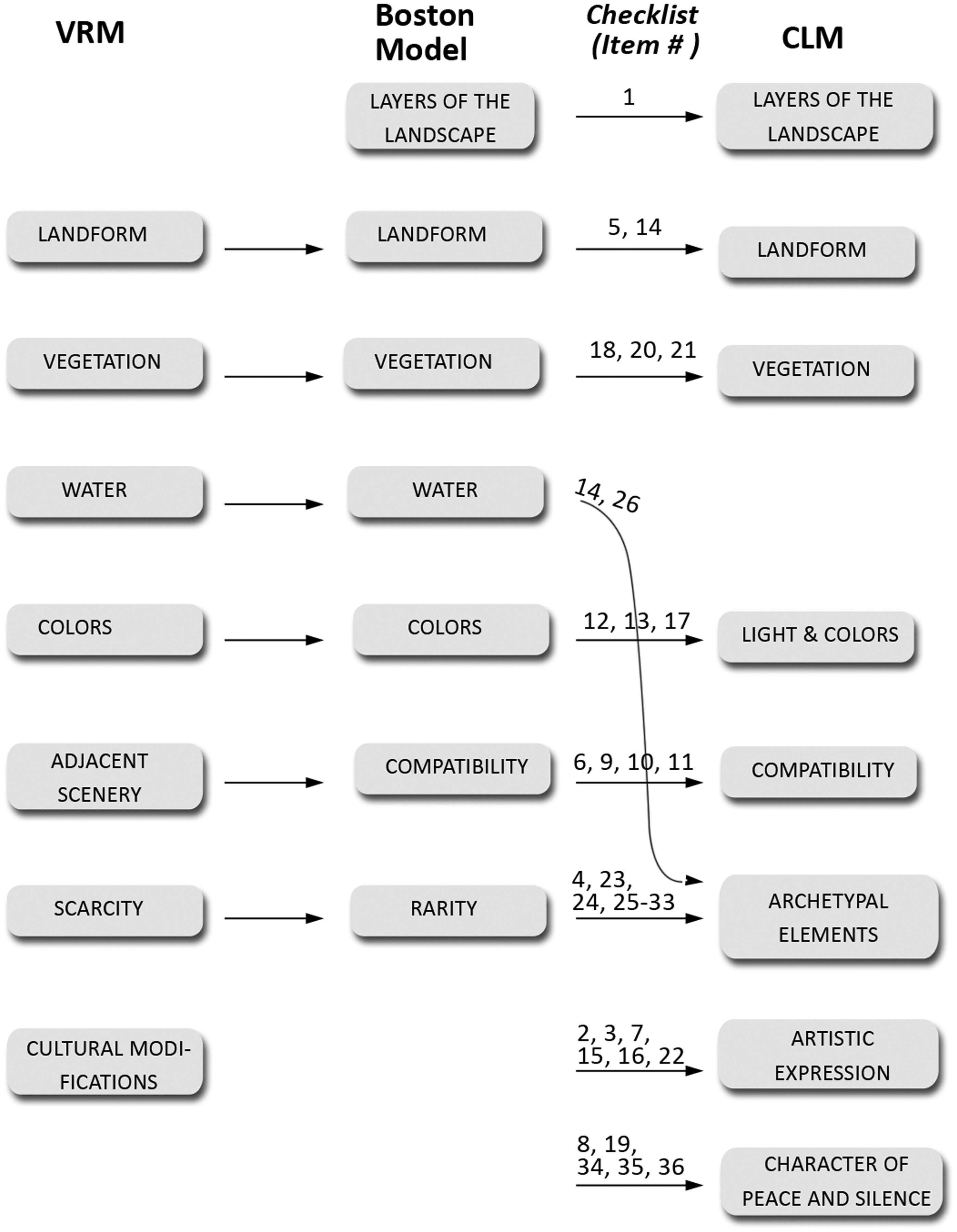
Some categories of our contemplative model remained the same as in the VRM and Boston models: Landform, Vegetation, and Adjacent Scenery (equivalent to Compatibility). One very important key element of the contemplative landscape that the VRM model did not consider is Layers of the Landscape (i.e. the depth of the view), which is connected directly to the visibility of three planes and the comfort of long-distance views.
The VRM and Boston models incorporated Water as a key element in the visual quality of landscape evaluation. However, each of these models has slightly different reasons for addressing this element. In the VRM model, it is present because water is an important factor of any natural landscape and generally increases the attractiveness of this landscape. On the other hand, the Boston model is prepared for evaluating harbor landscapes, where water is present in every evaluated case. In the CLM, water may be considered an archetypal landscape element. Therefore, the Water element was fully transferred to the new category Archetypal Elements, which replaces the Scarcity/Rarity categories. The scarcest elements of landscapes according to the VRM model are, in fact, archetypal elements—with features such as stones, waterfalls, and dense forests as strong archetypes. Thus, we decided to create the all new category of Archetypal Elements, which combines both the water and scarcity elements from the VRM model. Archetypal elements to consider include path, clearing, single old tree, forest, still water (water mirror), waterfall, circle, grave, and boulder.
The VRM category Colors appeared incomplete for use in the contemplative model, because most of the colors that we perceive depend on the light conditions of the site. Also, many contemplative attributes of the space dealt with light and shade. Therefore, the Color category was extended to the Color and Light category.
Finally, we created two all new categories that did not exist in either the VRM or the Boston model, because these models dealt with more or less natural scenery. These new categories are Artistic Expression and Character of Peace and Silence. Implementing these elements was necessary in order to make the CLM sensitive to the designed landscapes in urban areas. These were designed with artistic concern, mostly on a completely modified environment, using some artistic expression strategies, including large-scaled elements in relation to the human body, repetition, natural asymmetry, simplification of forms (abstraction), architectural/geometrical use of plants. Also, the character of peace and silence is very important for urban contemplative spaces, as it is a contrast to the noise and crowdedness of the typical urban environment (in natural landscapes, this factor is usually assumed to be the case).
After incorporating Checklist items within the VRM structure, a scoring system was applied in order to create the scoring key to be used directly by the experts.
Scoring system. The CLM, as well as the VRM and Boston model scoring systems, was based on a Likert scale, but with one major difference. Both the VRM and Boston models used a 5-point Likert scale, while we opted for a 6-point Likert scale as to avoid the so-called central tendency bias—a data collection error caused by the odd number of points in the Likert scale, which creates a single central point and a propensity in the respondents to choose it (Tatler, 2007).
3. Developing the questionnaire with the Delphi technique:
Asking experts was considered the best approach to check if a given item would characterize a landscape as contemplative or not and then to develop a model based on those findings. Asking the public about contemplativeness of space would be feasible, but would also have more limitations than asking experts. Multiple items from the list presented in Table 1 concern technical aspects of space design, because they originate from textbooks written by experts and not directly addressed to the general public. The need to interpret these technical terms for the public would dilute the nuances within the expert approach and would require both additional knowledge and a detailed explanation, which would neither be feasible within this study nor desirable from a methodological standpoint. Moreover, due to the lack of technical criteria, variances on the appraisal of the landscape characteristics would likely be higher, leading to the need of a larger sample size than in the case of expert evaluation. Thus, the survey was addressed only to experts with the understanding that subsequent phases of the research could include the general public once the CLM was calibrated with expert responses.
The development of the questionnaire was based on the Delphi method, which is a commonly used tool to establish a professional, objective judgment about a complex problem with a wide range of scenarios. The evaluation of landscapes according to set criteria fits well into that concept (Hsu and Sandford, 2007). According to the Delphi method, experts (raters) should be carefully selected individuals with a background related to the topic of investigation.
There is no consensus on the optimal number of subjects in the Delphi expert evaluation (Hsu and Sandford, 2007). If the experts represent different areas, then up to 50 respondents are recommended. If the background of the Delphi subjects is consistent, which is the case for this study, 10–15 would be an optimal number of experts (Delbecq et al., 1975). Therefore, 21 experts from around the world were invited to participate in our investigation. The data collection was closed upon reaching 10 respondents, which was two months after the initial invitation. All participating experts (four women and six men) were academics in the area of landscape architecture at the PhD level with 6–31 years of professional practice and at least one peer-reviewed publication on landscape design strategies, perception of the landscape, theory of design, or environmental psychology. Their countries of origin were Portugal (n = 2), Poland (n = 3), United States of America (n = 2), Scotland (n = 1), Germany (n = 1), and Italy (n = 1).
4. Photographic documentation and sampling process:
Parks and gardens included in the research with the location and designer.
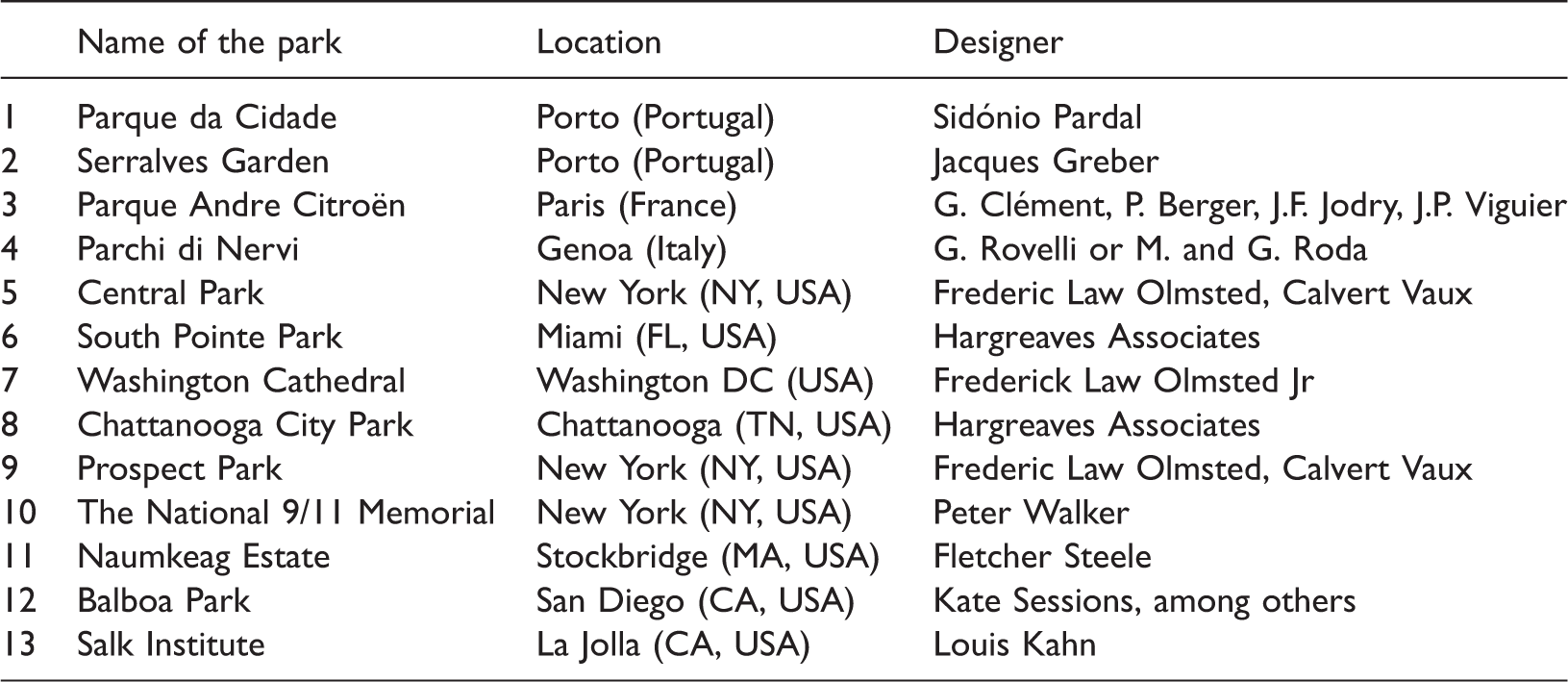
Site visits and photographic documentation were conducted under specific conditions in order to ensure the least amount of variability across some key variables related to “peak season” for vegetation, time of day, and weather. The peak point of vegetation in the park included peak leafing and flowering periods. This period was considered the most advantageous for a park visit. Concerning the weather, all photos were taken during sunny days with a clear sky. This ensured that, in the case of open views, one could observe a blue sky and, in the case of canopied views, one could see all factors related to light, shade, and colors. It was also important to select views with no distracting elements, such as people, animals moving along the vista, falling leaves, vehicles, and so forth (Kaplan and Kaplan, 1989).
The output of the park visits was a database of photographs out of which only 40 were selected for the evaluation that was conducted by the participant experts (using the Questionnaire). Photographs with repeating content were eliminated. In order to cover all the listed elements of contemplative landscapes and all composition types, at least four instances per type were kept. Dominant and iconic park vistas were also considered during the selection process.
5. Online collection of responses:
Based on the eight key categories of the CLM (Landscape Layers, Landform, Vegetation, Color and Light, Compatibility, Archetypal Elements, Artistic Expression, Character of Peace and Silence), eight questions were formulated with a 1–6 point Likert rating scale.
These eight questions (# 1–8) constituted the initial part of the Questionnaire. The following question (# 9) concerned the composition type of the setting, and the last question (# 10) was a validating question, in which experts were asked to rate the contemplativeness of the setting according to their experience and knowledge. We used the Google-Forms tool, which allowed experts to evaluate the selected landscapes at their own individual pace.
Results
Statistical measures on the quality of the questionnaire
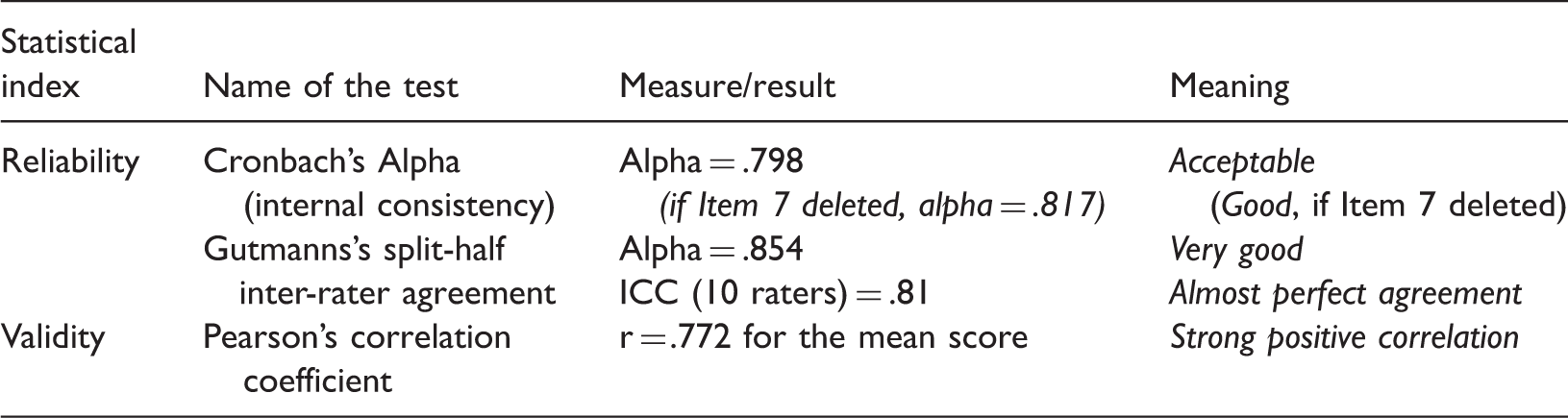
The quality of the questionnaire was measured in terms of (1) reliability and (2) validity, which are the most common statistical measures in psychometry. Both reliability and validity measures have shown satisfactory results, as described below.
Reliability
Item-total correlation and Cronbach’s alpha analyses (n = 40).
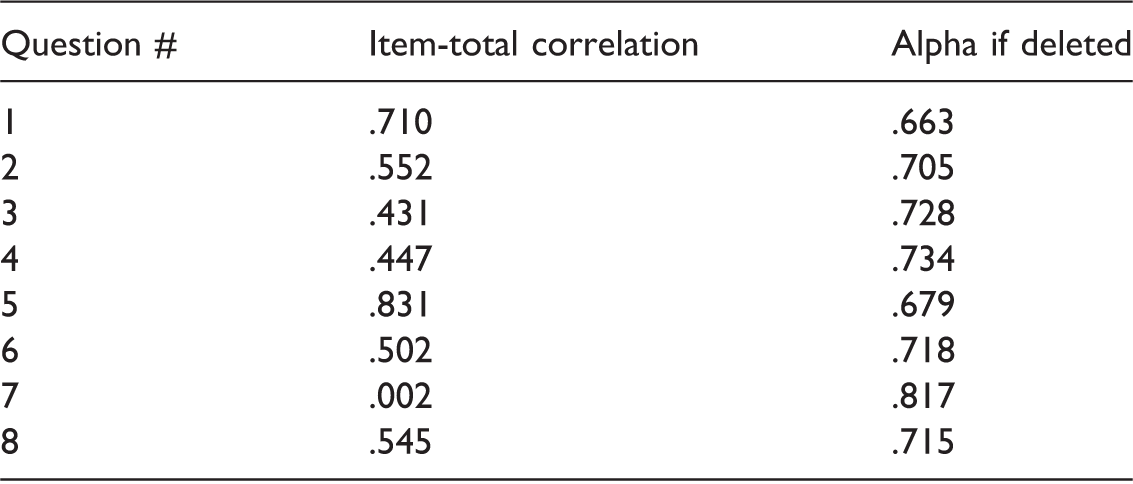
Notes: Standardized alpha = .798; Average inter-item correlation = .352.
Question 7 appeared not to contribute to the total score. Its correlation with the total score is close to zero and the overall internal consistency of the survey would be considerably higher (.817) if this item were absent. For this reason, question 7 was excluded from the final version of the Questionnaire.
In addition to Cronbach’s alpha, a Guttman split-half test was conducted to examine reliability, and the obtained result of rSHG = .854 suggests that the questionnaire is highly reliable.
The final method of reliability analysis performed was the ICC test to measure the homogeneity between experts when rating a particular landscape. For continuous data, even if measured through interval or ordinal scales, consensus is measured by inter-class correlation (ICC).
Inter-class correlation for each item.
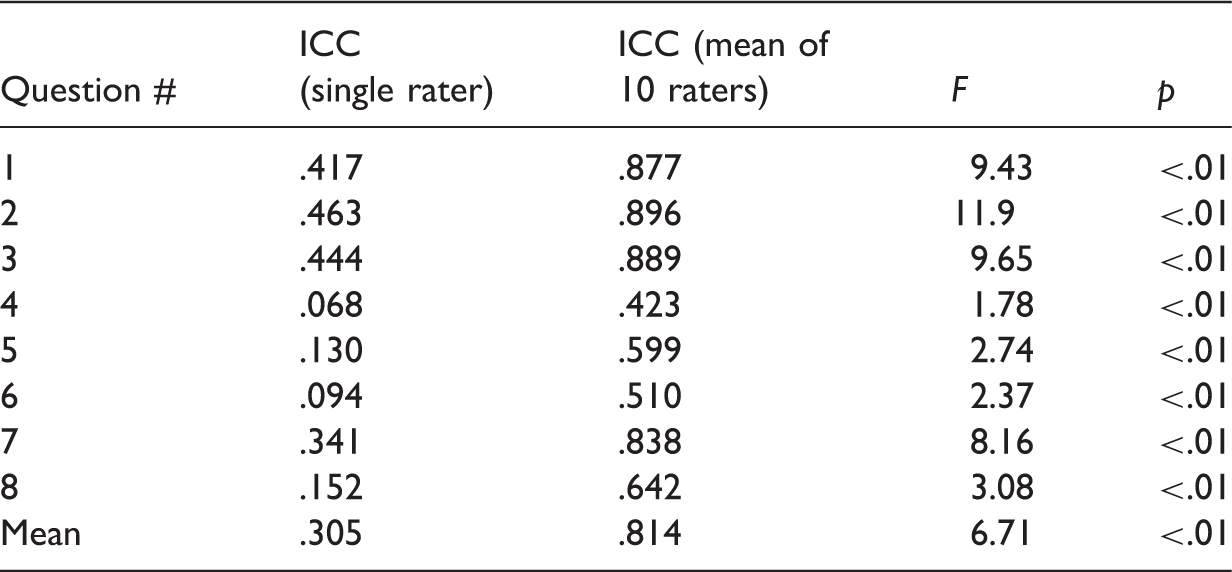
It is evident that the evaluation of certain characteristics of the landscapes, namely the ones that are represented in questions 4–6 and 8, become significantly more accurate if a group of experts appraise such characteristics.
Also, question 7 performed well in the inter-rater agreement test, which means that the responses of experts concerning the Artistic Expression of the evaluated landscapes were similar. Therefore, it can be assumed that question 7 was formulated well and understood correctly by the experts even if Artistic Expression in the landscape design does not have much to do with the contemplative value of spaces, as the reliability tests have shown, leading us to exclude Artistic Expression from the final version of the Questionnaire (CLQ).
Fleiss kappa computation (Fleiss, 1971) was used in order to compute the reliability of question 9. This method assesses the inter-rater agreement between multiple raters when responses represent categories. question 9 is about the type of landscape composition and consists of five options (canopied, enclosed, feature, focal, and panoramic), among which experts were supposed to choose only one (the dominant type). The Fleiss Kappa score was .304, which signifies fair inter-rater agreement (values of Kappa below .21 are considered to be of slight or poor agreement).
Validity
The validity of questionnaires in general is not easy to determine in most situations. In each case, researchers have to find a method of assessing how accurately the data provided by responses correspond to the real world. (Amer. Educational Research Assn., 1999)
In the case of our Questionnaire, the validity of the eight items of Part A was tested by correlating the mean values across experts per image for questions 1–8, with the mean values for the question “How contemplative is this landscape for you?” (question 10), which served as a validity question. The Pearson Product-Moment Correlation Coefficient was used for estimating the validity. This test measures the linear association between two sets of values. There was a correlation coefficient of r = .772 (p < .001), which indicates a statistically significant and strong positive correlation between combined responses to questions 1–8 and how contemplative landscapes are from the experts’ judgment (Figure 2). Testing the validity was also performed by measuring the statistical significance of the correlations between the mean response scores of each question and question 10 (Table 5).
Correlation between two sets of data: mean of responses for questions 1–8, and question 10 (validity question). Correlations between questions 1–8 and question 10. Notes: Marked correlations are significant at p < .05.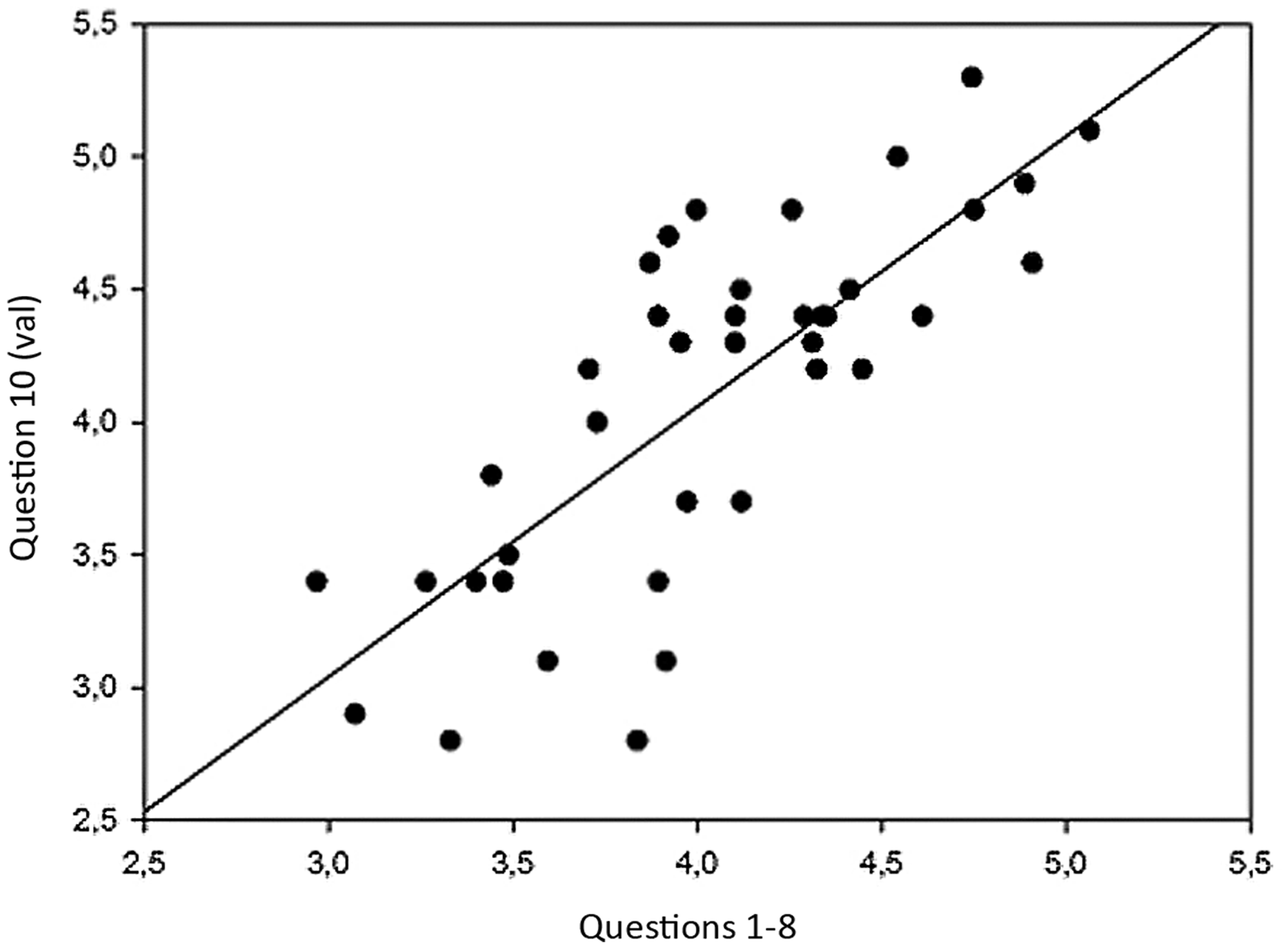
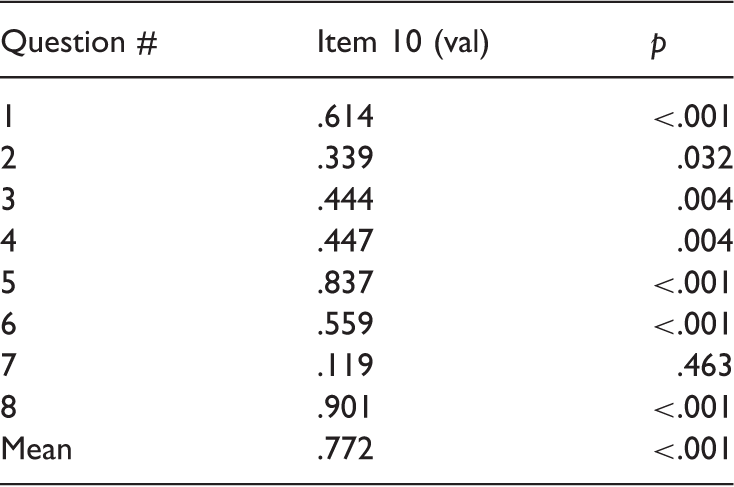
In an item-to-item analysis, there were very strong positive correlation coefficients between questions 5 and 8, and the validity question; strong positive correlations between questions 1, 3, 4, and 6, and the validity question. Question 2 showed a moderate correlation (positive) with the validity question, while question 7 has a negligible relation to the validity question. In fact, all correlations were statistically significant (all p < .05), with the exception of question 7 and the validity question. Therefore, the decision about deleting question 7 from the final version of the CLQ was reinforced.
Summary of the reliability and validity indexes of the questions 1–8 of the questionnaire on contemplation features and their meaning.
Ratings of the landscapes
A default output of this method is a ranking of tested photographs. It can be used for landscape research, together with the Questionnaire or without it. In order to use any of the 40 landscapes in studies where contemplation is a variable of interest, researchers need a classification system or criteria to select subsets of the most contemplative and the least contemplative landscapes out of the ranking.
For example, considering that the mean score for the 40 landscapes was 4.05 (on the 6-point Likert scale) with a standard deviation of 0.562 (Max = 5.12; Min = 2.82), each landscape with a score of half standard deviation above the average (i.e. scoring higher than 4.33 on contemplative features) may be selected for the most contemplative set. On the other hand, each photo with a score of half standard deviation below the average (i.e. scoring lower than 3.77) may be included in the least contemplative set. The criteria may be easily adjusted in order to select a lower number of landscapes for each subset, namely by increasing the standard deviation around the mean score. This procedure may be particularly useful when only extreme contemplative and noncontemplative landscapes are desired. To that purpose, Figure 3 presents the three photos that scored the highest in contemplativeness and the three that scored the lowest.
Three photos that scored the highest and three photos that scored the lowest in contemplativeness. (a) Most contemplative scenes and (b) least contemplative scenes.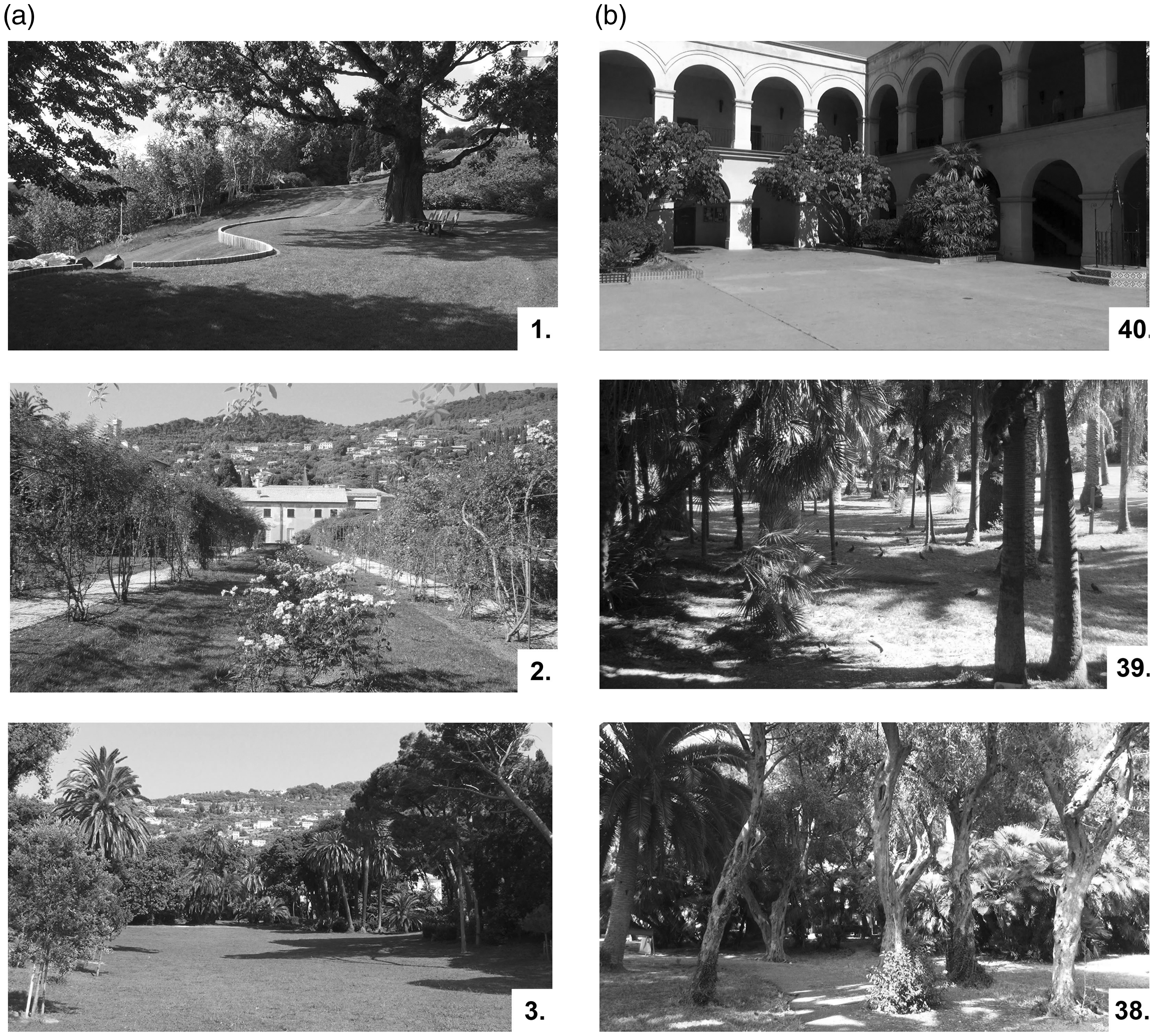
Experts classified the majority (43%) of the most contemplative landscape settings as panoramic, 29% as focal, 14% as feature, and 14% as enclosed composition type. None were classified as a canopied landscape (see Figure 4). Experts classified the majority (50%) of the least contemplative landscape settings as enclosed, 30% as canopied, 10% as a feature, and 10% as a focal composition type. None were classified as a panoramic landscape (see Figure 4).
Distribution of (a) most contemplative (CL) and (b) least contemplative (NCL) landscape pictures across composition types.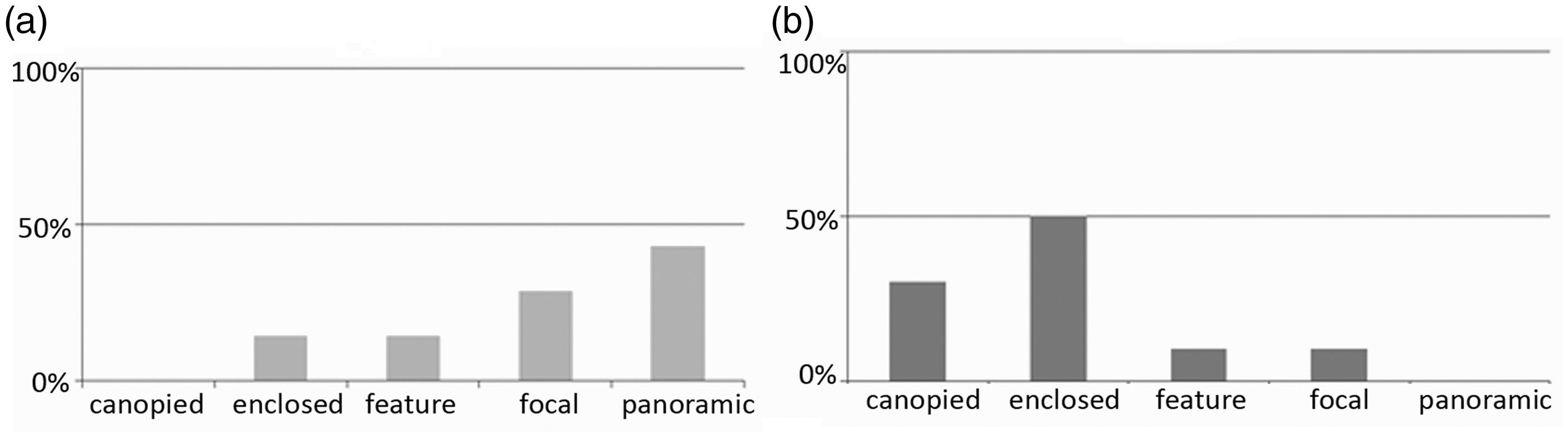
Discussion
Through this study, a tool has been developed to evaluate landscape settings in terms of their contemplativeness, which in its final version is the CLQ.
Through the developed framework, the question of what makes landscapes contemplative has been answered and empirically explored. The contemplativeness of the landscape is determined by seven key elements, which can be identified on photographs of landscape settings and evaluated using the CLQ (see Figure 5 in Appendix 1).
In the study, eight key components of the landscape setting were tested in terms of reliability and validity. The reliability measures showed how much each of the eight items contributed to the overall score. Items 1, 5, and 8 (Landscape Layers, Compatibility, and Character of Peace and Silence, respectively) provided the highest contribution to the contemplative character of the space (Table 3). Also, items 2, 3, 4, 6 (Landform, Vegetation, Light and Color, Archetypal Elements, respectively) demonstrated importance. On the other hand, the contribution of question 7 (Artistic expression) to the overall score was negligible, diminishing the overall score of the Questionnaire in terms of reliability. It may be that artistic expression has less to do with the overall scene perception in general and the other aspects of the scene (e.g. character of peace and silence) influence the overall setting perception more significantly. Considering the Cronbach’s alpha value of question 7 (.001), it seems that the level of its importance is so low to the construct of contemplativeness that, if preserved in the Questionnaire, it would deteriorate the overall quality of future studies.
The finding above may seem controversial, because the contemplation of nature has often been compared to the contemplation of art. Also, art is typically considered to be an important factor in improving the quality of public space. However, in light of the presented study, it may be more reasonable to distinguish natural and artistic contemplation as two separate concepts. In any case this issue needs further research.
The study shows that, in terms of landscape composition, panoramic and focal are the most contemplative, and enclosed and canopied are the least contemplative landscape composition types (Figure 4). This suggests that open landscapes with long-distance views are the most contemplative, no matter if it is a wide-open vista or an axis leading to one distant point. Moreover, Landscape Layers (question 1) show the highest contribution to the overall contemplativeness of the scene. In addition, enclosed and canopied landscapes are designated as much less contemplative, which suggests the contemplative experience largely depends on how far one can see into the landscape.
Some existing research seems to confirm this statement. For example, the previously mentioned study about the comfort of the long-distance view (Skalski, 2005), and the Savannah hypothesis, which proposes that people prefer open spaces or sparsely wooded areas rather than dense, complex environments (such as forests or mountains), because of their anatomical and psychological construction (Kaplan and Kaplan, 1989; Lidwell et al., 2003), would appear to support these findings.
The results of this research also seem to correspond to the findings of environmental psychology regarding studies on landscape preference. According to such studies, people prefer landscape settings with long-distance views framed with dense vegetation, even though they found the desert and prairie landscapes less interesting (Kaplan et al., 1998). However, the canopied or enclosed composition type, which is often a preferred landscape, was rated low in contemplation. This may suggest that the contemplative experience of the landscape needs more open sky and distant views in some cases or at least a far-away focus within an enclosed landscape. The difference between landscape preference and contemplative landscape is probably connected with the research scope and balances between public versus expert-based surveys.
One limitation of the presented framework is item 9 (composition type), which is based on the already existing landscape composition classification developed by Richard Smardon et al. (1986). This item showed fair inter-rater agreement, which is not considered satisfactory in terms of reliability. It means that experts were not consistent about the composition types of the landscape. This is why including or rejecting this item should be carefully considered in future studies. It would not be recommended to use item 9 for evaluation of a small number of landscape settings. Some general conclusions were based on this item (Figure 4), mainly due to the large number of landscape settings and to illustrate some general tendencies.
Conclusions
Creating landscapes for contemplative purposes has been present in the space-design professions for centuries, but a lack of common understanding and an operational definition has limited contemplativeness to the artistic and spiritual, excluding the technical and practical. The presented study has shown that it is possible to operationalize a concept such as contemplativeness of a space and to create a reliable and valid tool (CLQ) for evaluating the contemplativeness of designed outdoor spaces (mainly, urban parks and gardens).
The contemplativeness of the space depends on seven key components, identified as: Layers of the Landscape, Landform, Vegetation, Light and Color, Compatibility, Archetypal Elements, and Character of Peace and Silence. The most contemplative landscapes can be then defined as ones with a high level of compatibility, characterized by adjacent scenery and all elements and views of the landscape worked out in terms of scale, balance, and harmony. Also, those with long-distance views, where the observer is able to see the fore, middle, and background, with a smooth landform and vegetation seemingly native, but maintained and organized, where all elements of composition are worked out in terms of scale and inter-relations, where colors are natural, and not too contrasting, but one can observe light and shade movements. The most contemplative landscapes contain archetypal elements, such as a water mirror or an old single oak tree, and invite rest and relaxation through their character of peace and silence.
The findings described above confirm that contemplative landscapes are a measurable reality.
The importance of defining contemplative landscapes is directly connected to the improvement of the quality of the designed urban parks and gardens, which leads to improvement in the quality of life of city inhabitants as well as benefits in terms of their mental health and well-being.
This study is relevant for design professionals, researchers, and anyone interested in improving the quality of life in urbanized areas. Landscape architects and urban planners can use the patterns illustrated in the CLM to plan new parks and gardens for improving the quality of life and well-being in cities, contributing to mental health through attention restoration and stress reduction. The CLQ can also be used for evaluation of specific, already existing landscape scenes, i.e. to evaluate their beneficial potential, reprogram, protect, or compare with others. The findings of this study can be used for reinforcing the design process with evidence, in the continuous endeavor of improving the quality of the built environment and the well-being of urban inhabitants.
For future research, this study presents the opportunity to engage in a more profound investigation that links the effects of the designed environment with the well-being of people. One suggested focus could be to continue the investigation of this research team on the brain responses to different kinds of landscape settings. Building bridges between seemingly distant areas of the arts and sciences is still in its infancy, but is essential for better understanding the interrelations between man and his living environment.
Footnotes
Acknowledgements
The research presented in this paper was conducted with contribution of the team of Laboratory of Neuro-psychophysiology of the University of Porto.
Declaration of conflicting interests
The author(s) declared no potential conflicts of interest with respect to the research, authorship, and/or publication of this article.
Funding
The author(s) disclosed receipt of the following financial support for the research, authorship, and/or publication of this article: The presented research was funded by the Portuguese National Foundation for Science and Technology (FCT) with the individual doctoral grant for the lead author (ref# SFRH/BD/77141/2011).