







Abstract
By integrating relational embeddedness in international strategic alliance networks (ISANs) and the dynamic capability perspective, this article presents an examination of the drivers of the post-entry internationalisation commitment of small- and medium-sized enterprises (SMEs). Specifically, we investigated the mediating effect of opportunity-sensing capabilities (OSCs) on the relationship between ISAN relational embeddedness and the post-entry internationalisation commitment of SMEs. We also examined the moderating impact of strategic adaptiveness on the relationship between OSCs and post-entry internationalisation commitment. An analysis of 320 UK-based SMEs, performed using structural equation modelling, revealed that OSCs are an important mechanism through which the ISAN relational embeddedness leads to increased post-entry internationalisation commitment. Furthermore, strategic adaptiveness strengthens the positive relationship between OSCs and post-entry commitment to foreign markets. This article extends the existing SME venturing and internationalisation literature to the domain of SME post-entry internationalisation commitment.
Keywords
Introduction
The international entrepreneurship literature highlights the importance of internationalising small- and medium-sized enterprises (SMEs) in driving economic growth (Gerschewski et al., 2018; Riviere and Suder, 2016). Accordingly, the strategies used by such SMEs have been attracting interest (Knight and Liesch, 2016; Safari and Chetty, 2019). In this regard, while most SME research is focussed on the pre-internationalisation stage and analyses why and how SMEs internationalise from their inception (Cavusgil and Knight, 2015; Petrou et al., 2020), ‘less is known about continued SME internationalisation after this point’ (Hilmersson and Johanson, 2016: 68). As such, SME post-entry internationalisation commitment – referring to the resources allocated to foreign markets after initial market entry (Putzhammer et al., 2018) – has been relatively neglected. Investigating post-entry commitment is crucial because those SMEs that promptly commit resources to international markets can gain a platform suited to develop relationships, access new markets and promote learning (Chetty et al., 2014; Sleuwaegen and Onkelinx, 2014). However, the complexity and magnitude of the heterogeneous resources required for post-entry internationalisation commitment may be a challenge for small and resource-constrained SMEs (Puthusserry et al., 2020b). Yet, many SMEs do commit to foreign markets, competing with established firms during the post-entry phase (Khan and Lew, 2018).
Prior studies highlight the role played by international strategic alliance networks (ISANs) – that is, networks of ‘voluntary arrangements between firms involving exchange, sharing, or co-development of products, technologies, or services’ (Gulati, 1998: 293) 1 – within which SMEs are engaged in foreign markets. Being part of ISANs is a critical strategic option for the international venturing journey of SMEs, which have limited resources and knowledge for foreign market entry and expansion (Fernhaber and Li, 2013; Stoian et al., 2018). ISANs can specifically facilitate the post-entry internationalisation commitment of SMEs as they assist in accessing the complementary knowledge possessed by partners and reduce the cost of international venturing (Gerschewski et al., 2018; Hughes et al., 2019; Martineau and Pastoriza, 2016) by overcoming the liabilities of foreignness and newness (Fernhaber and Li, 2013). ISANs, however, present SMEs with considerable risks given the transaction costs involved and the unpredictability of the opportunistic behaviours of partners (Gao et al., 2016; Lew et al., 2013). Thus, another stream of the alliance literature focusses on the role played by relational capital in ISANs, as the risks inherent in foreign relationships may be mitigated by favouring familiar partners and strong relational ties (Catanzaro et al., 2019; Dimitratos et al., 2016).
In particular, relational embeddedness – which refers to the ‘actual and potential resources embedded with, available through, and derived from the network of relationships possessed by an individual or a social unit’ (Nahapiet and Ghoshal, 1998: 243) – is an important governance mechanism in ISANs. It denotes the quality of the interpersonal relationships that develop between ISAN actors due to their ongoing interaction (Bermiss and Greenbaum, 2016; Dong et al., 2015). Thus, being part of a tight knit ISAN may mitigate the risk inherent in international alliances. For example, through information exchange, ISAN relational embeddedness encourages partners to participate in knowledge creation promoting social interaction and enhancing value creation (Ebers and Maurer, 2014; Sanz-Blas et al., 2021; Zhang et al., 2018). Furthermore, the regular exchange of foreign market knowledge found in tight knit ISANs can enhance the post-entry resource commitment of SMEs to foreign markets (Vahlne and Johanson, 2013). However, the extant scholarly work has largely focussed on ISAN relational embeddedness in the context of multinational enterprises (MNEs) (Figueiredo, 2011; Oehmichen and Puck, 2016) with few studies dedicated to internationally venturing SMEs (Masiello and Izzo, 2019). SME internationalisation differs from that of MNEs in several ways, including organisational architecture (e.g. structure, decision-making, culture and control) and the availability of resources and knowledge pools (Dasí et al., 2015; Deschryvere, 2014; Dimitratos et al., 2016). For example, due to their lesser international diversification and foreign engagement, SMEs lack foreign market knowledge (Knight and Liesch, 2016). Such differences force SMEs to exploit their ISAN relational embeddedness for post-entry internationalisation commitment (see Coviello and Cox, 2006); accordingly, this was the focus of our study.
In our research, we developed an integrative conceptual framework by building on ISAN relational embeddedness and the dynamic capability perspective on the firm. ISAN relational embeddedness (Tsai and Ghoshal, 1998; Uzzi, 1997), in particular, may provide SMEs with potential opportunities – such as information and knowledge access – for their post-entry internationalisation commitment. As such, to convert the potential benefits of network relationships into realised international venture performance, SMEs need to develop their opportunity-sensing dynamic capabilities (Teece, 2007; Vahlne and Johanson, 2013). In other words, SMEs should develop the important dynamic capability to sense and identify opportunities in their search for technological and market knowledge (Teece, 2007; Teece et al., 1997).
Post-entry internationalisation is a risky venturing process that requires up-to-date market information and specialised knowledge (Khan and Lew, 2018). Failure to properly exploit the critical knowledge found in external relationships may limit the ability of SMEs to achieve post-entry internationalisation commitment in highly volatile environments and global landscapes. Therefore, opportunity-sensing capabilities (OSCs) could be essential for SMEs to convert the potential benefits of ISAN relational embeddedness into realised post-entry internationalisation commitment (Ren et al., 2021) – which mere information sharing cannot guarantee – by enabling them to identify opportunities and renew their competencies in order to align their offerings with the demands of dynamic international markets (Teece, 2014b).
In addition, we posited that OSCs and post-entry internationalisation commitment relationships are contingent on strategic adaptiveness, which refers to the ability of SMEs to adapt their upstream technological and downstream marketing practices to foreign market idiosyncrasies (Hollender et al., 2017). Strategic adaptiveness creates value for SMEs, as customising their foreign market offerings helps them to better position their products in such markets and, in turn, represents a major source of competitive advantage (Domurath et al., 2020; Fariborzi and Keyhani, 2018). Therefore, the possession of greater strategic adaptiveness enables SMEs to better exploit their OSCs to attain post-entry internationalisation commitment (Puthusserry et al., 2020b).
Based on the issues raised above, we formulated the following research questions: ‘To what extent does ISAN relational embeddedness affect the OSCs and SME post-entry internationalisation commitment’? and ‘How does strategic adaptiveness moderate the relationship between OSCs and SME post-entry internationalisation commitment’? To answer these questions, we conducted a survey involving 320 UK-based SMEs from different manufacturing sectors and analysed the data using structural equation modelling.
Our article makes two important contributions to the SME literature. First, the extant literature largely focusses on the pre-internationalisation stage (cf. Zahoor et al., 2020), neglecting the post-entry one (Khan and Lew, 2018; Puthusserry et al., 2020b). Scholars therefore called for more research on the determinants of internationalisation commitment in the post-entry stage (Ibeh et al., 2018; Puthusserry et al., 2020a). In our endeavour, we highlighted the role played by the social aspect of ISAN in facilitating the post-entry internationalisation commitment of SMEs and empirically examined their relationships. Our study thus provides a deeper understanding of SME post-entry internationalisation by considering the social structures of ISANs. In doing so, our study considered the role played by ISAN relational embeddedness – as social structures – to promote the post-entry internationalisation commitment of SMEs.
Second, our article demonstrates that ISAN relational embeddedness does not directly lead to post-entry internationalisation commitment. Conceptually, it employs OSCs as a mediating mechanism to associate ISAN relational embeddedness with effective post-entry internationalisation commitment. Furthermore, our conceptual model considers the moderating role played by the strategic adaptiveness of SMEs in the relationship between their OSCs and post-entry internationalisation commitment. The validated model shows that, through their OSCs and strategic adaptiveness, SMEs mitigate their lack of knowledge of foreign markets and of sensitivity to international market challenges without overstretching their limited resources. Therefore, from the social (i.e. ISAN relational embeddedness), strategic (i.e. OSCs) and contingent (i.e. strategic adaptiveness) perspectives of SME internationalisation, our research extends the existing SME internationalisation literature to the domain of post-entry internationalisation commitment.
Literature review
ISAN relational embeddedness
Embeddedness focusses on the closeness whereby actors become more socially attached to their relationships over time, altering the characteristics of their exchange relationships from arm’s length transactions towards trust and producing mutually beneficial relationships (Uzzi, 1997). However, most of the international business literature related to embeddedness is focussed on the MNE headquarters-subsidiary context (Nell and Ambos, 2013; Oehmichen and Puck, 2016). Scholars have often argued that subsidiaries are embedded in internal and external relationships to enhance their opportunity development and, ultimately, international growth (Ferraris et al., 2018). For example, within internal embeddedness, subsidiaries develop close relationships with other sub-units and their headquarters, which provides them with access to existing resources and capabilities for business-related needs (Ciabuschi et al., 2014). In contrast, external embeddedness concerns the mutual adaptation between subsidiaries and their business partners (e.g. primarily customers and suppliers) to develop production processes and technological competencies (Oehmichen and Puck, 2016).
Despite the long-acknowledged role played by the multi-level aspect of embeddedness in extensive MNE networks, the SME context seldom receives attention in the international alliance literature (Ciabuschi et al., 2014; Ferraris et al., 2018). Prior research suggests that the extent to which ISAN partners share knowledge and promote learning is determined by the strength of their embeddedness (Soontornthum et al., 2020; Zhang et al., 2018). This infers that ISAN embeddedness forces actors away from the pursuit of narrow economic benefits and towards the nurturing of relations through social exchange and mutual adaptation (Frasquet et al., 2018). This indicates the prevalence of the vital underlying construct of ‘ISAN relational embeddedness’, which refers to the quality of the social linkages in which a firm is involved (Ebers and Maurer, 2014).
ISAN relational embeddedness can provide access to fine-grained information on strategy, production processes and financial structure, thereby promoting learning and opportunity recognition (Inkpen and Tsang, 2005). This is particularly relevant for internationalising SMEs that, lacking internal resources, often get involved in networks as a countermeasure (Coviello and Cox, 2006). By developing close relationships with international alliance partners, SMEs can access accurate and time-sensitive information and knowledge while minimising the related transaction costs (Masiello et al., 2013). In addition, ISAN relational embeddedness can enable SMEs to develop location-bound and firm-specific advantages (Fraccastoro et al., 2021) and minimise their liability of foreignness, thus broadening the scope of their post-entry internationalisation commitment (Vahlne and Johanson, 2017). Prior studies have modelled ISAN relational embeddedness to investigate its influence on various MNE outcomes, such as knowledge transfer (Ferraris et al., 2018), innovation (Isaac et al., 2019) and international performance (Rugman, 2014). However, to date, the relevance of ISAN relational embeddedness for SMEs is conspicuously missing in the literature (Prashantham and Dhanaraj, 2015). Indeed, due to commonly lacking resources, operational history and the experience vital to achieving foreign market objectives, SMEs are particularly suited to the examination of ISAN relational embeddedness (Oehme and Bort, 2015; Prashantham and Birkinshaw, 2020). In particular, partner closeness in ISAN relational embeddedness can unlock tacit knowledge and promote valuable information sharing, hence ensuring SME post-entry internationalisation commitment (Prashantham and Dhanaraj, 2015).
SME post-entry internationalisation commitment
The international entrepreneurship literature divides the internationalisation process into successive stages wherein firms increase their level of international involvement over time (Johanson and Wiedersheim-Paul, 1975). As argued by Jones and Coviello (2005: 7), ‘by definition, internationalisation behaviour takes place over time, manifests in a time sequence in which events occur’. In particular, the pre- and post-entry stages of internationalisation are two key dimensions of SME international venturing (Freixanet and Renart, 2020; Sleuwaegen and Onkelinx, 2014). Although the post-entry stage is crucial for SME international development (Fariborzi and Keyhani, 2018; Puthusserry et al., 2020b), scholars have only recently started distinguishing between the two stages (Gerschewski et al., 2018; Khan and Lew, 2018). Although an extensive body of research has focussed on the rapid entry into distant markets (i.e. pre-entry), only limited scholarly efforts have been dedicated to the increase in internationalisation commitment that follows (i.e. post-entry) (Freixanet and Renart, 2020; Zahoor et al., 2020). Specifically, post-entry internationalisation commitment is related to the investment of tangible and intangible resources in international activities (Chetty et al., 2014; Dominguez and Mayrhofer, 2017). Those SMEs that commit to international markets at their inception can make better use of their resources, achieve fast growth and gain better market positioning (Hilmersson and Johanson, 2016; Sleuwaegen and Onkelinx, 2014). Post-entry internationalisation commitment can lead to entrepreneurial behaviours and to the achievement of higher revenues (Xue et al., 2021). However, the complexity or difficulty involved in investing large amounts of resources can be associated with high failure rates in SME international venturing.
Overview of the post-entry internationalisation commitment research and of the contributions of our study.
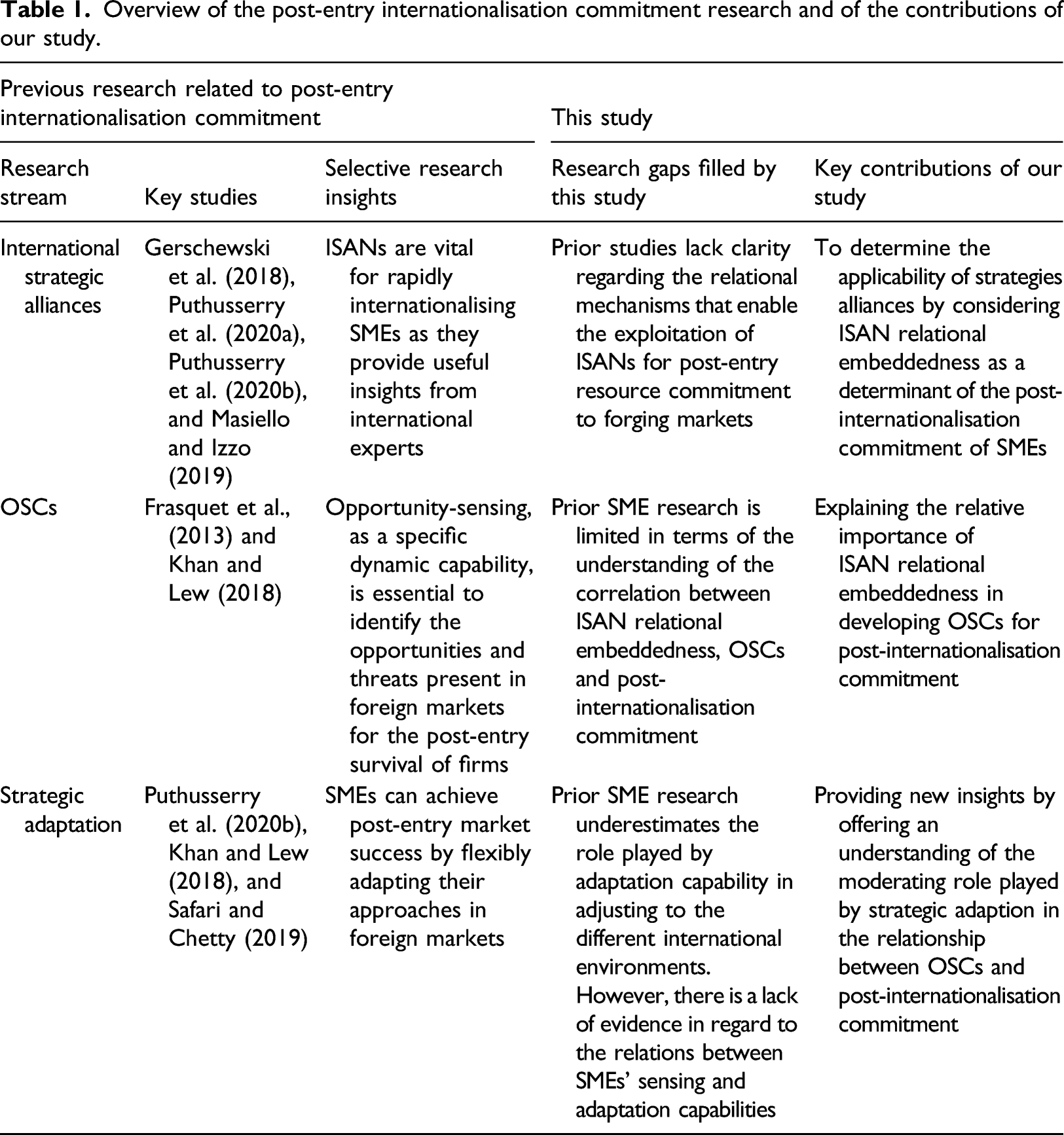
Researchers have recognised that ISANs help SMEs to acquire the knowledge and promote the learning that are vital for their post-entry internationalisation commitment (Masiello and Izzo, 2019; Puthusserry et al., 2020b). However, ISANs present inherent risks linked to the opportunistic behaviours of partnering firms, which lead to alliance failures (Dong et al., 2015). As such, ISAN relational embeddedness – which is characterised by closeness and reciprocity – encourages interaction and fosters the transfer of ‘fine-grained’ information and knowledge (Uzzi, 1997: 45). This is also vital in order to overcome the liabilities of smallness and foreignness of SMEs that enter into foreign markets, especially when these markets are characterised by complex infrastructure (Galkina and Chetty, 2015; Masiello and Izzo, 2019). These studies are, however, less clear about how ISAN relational embeddedness contributes to SME post-entry internationalisation commitment (Puthusserry et al., 2020b). To move beyond, our study links ISAN relational embeddedness with OSCs, which, in turn, promotes post-entry internationalisation commitment.
Hypotheses
ISAN relational embeddedness and post-entry internationalisation commitment
Although legal contracts explicate the boundaries of the signatories commitment in a relationship (Cao and Lumineau, 2015), relationally embedded relationships go beyond. Particularly, the notion of ISAN relational embeddedness points to the free exchange of resources as an outcome of closeness and mutual gratification (Bermiss and Greenbaum, 2016). Therefore, SMEs with greater ISAN relational embeddedness have a higher likelihood of gaining access to knowledge, information and other resources, and, consequently, to promote their post-entry internationalisation commitment (Soontornthum et al., 2020). From the relational aspect of interdependence, ISAN relational embeddedness develops familiarity, reliability and, ultimately, dependability between distant partners (Menzies et al., 2020). Furthermore, relationships between highly committed international partners are conducive to high quality information (Uzzi, 1997); therefore, strongly connected partners are likely to learn from each other (Song et al., 2020). The knowledge available through ISAN relational embeddedness enables SMEs to better understand the foreign market environment and learn what is strategically feasible for them (Tasheva and Nielsen, 2020), which makes them more comfortable in committing resources during the post-entry stage (Puthusserry et al., 2020a).
In particular, in an international context characterised by significant uncertainty, SME reliance on ISAN – facilitated by relational embeddedness – may reduce the risks involved in post-entry internationalisation commitment. From the social perspective, ISAN relational embeddedness helps SMEs to develop legitimacy and credibility, and facilitates the development of the new capabilities (e.g. complementary assets, product quality) needed for post-entry internationalisation commitment (Lu et al., 2018). ISAN relational embeddedness opens up new possibilities and channels for partnership development aimed at increasing the attractiveness of SMEs in international markets (Puthusserry et al., 2020b). As such, SME entry into new partnerships denotes a lower liability of outsidership and less difficulty in doing business abroad (Vahlne and Johanson, 2013), thereby promoting SME post-entry internationalisation commitment. Relational embeddedness can also enhance the chance of SMEs being matched with other firms possessing complementary assets, thereby encouraging the former to commit more resources to international markets (Laursen et al., 2012).
The discussion above suggests that ISAN relational embeddedness nurtures SMEs by providing them with various market information and knowledge, which is particularly relevant in the post-entry stage. More specifically, a higher level of ISAN relational embeddedness will lead SMEs to a higher post-entry internationalisation commitment.
ISAN relational embeddedness positively affects SME post-entry internationalisation commitment.
The mediating role of OSCs
Beyond our contention that ISAN relational embeddedness has implications for post-entry internationalisation commitment, more clarity is needed on the ‘black-box’ of mechanisms through which these variables are related (Sedziniauskiene et al., 2019). This question is akin to one of the key ones in the strategic alliance and post-entry literature (Ibeh et al., 2018; Zahoor et al., 2020) – namely, what is the nature of the link between ISAN embeddedness and post-entry internationalisation? This question is particularly important because, in a rapidly changing environment, a partner’s knowledge can quickly become obsolete or valueless (Wohlgemuth and Wenzel, 2016). To respond to changes effectively, SMEs need to be able to effectively and efficiently transform their external knowledge (Teece, 2007; Nayak et al., 2020). As such, Al–Aali and Teece (2014: 107) argued the importance of OSCs, manifesting them as the ‘identification and assessment of opportunities at home and abroad’ across upstream technological and downstream market domains. In our study, we maintain that ISAN relational embeddedness engenders post-entry internationalisation commitment through OSCs.
OSCs not only involve a firm’s ability to identify upstream technological possibilities in the wavering global environment but also concern the understanding of downstream market opportunities. Furthermore, a firm can sense upstream technological opportunities while simultaneously investigating downstream market needs, gaining the ability to develop innovations and thereby promoting a superior competitive advantage in foreign markets (Teece, 2007; Teece, 2014a). The international entrepreneurship literature asserts that OSCs enable SMEs to identify opportunities in other countries, whether for upstream technology advancement or for downstream market exploitation (Al–Aali and Teece, 2014). SMEs with OSCs are likely to be eminently alert and possess the ability to connect foreign market experiences and trends (Eisenhardt and Martin, 2000). Thus, opportunity-sensing is one of the core dynamic capabilities that enable firms to recognise complementary resources – that is, a resource-picking mechanism – and combine them with their internal resource/knowledge base – that is, a capability-building mechanism (see Eisenhardt and Martin, 2000; Fang and Zou, 2009) – to enhance post-entry internationalisation commitment (Teece, 2014a; Vahlne and Johanson, 2017).
In regard to OSCs as a mediating mechanism, prior research suggests that the mere possession of resources lacks effectiveness without the dynamic capabilities needed to realise their latent value (Teece, 2007). We therefore argued that OSCs mediate between ISAN relational embeddedness and post-entry internationalisation commitment. From the social perspective, SMEs can counteract their internal resource deficiency by exploiting partners complementary resources, thereby bolstering their ability to achieve the desired outcomes (Inkpen and Tsang, 2005). By synergically combining their partners’ resources with their own, SMEs can acquire unique and difficult to imitate competencies (Donada et al., 2015; Dong et al., 2019). Accordingly, we argued that the maintenance of ISAN relational embeddedness is a solid foundation for the integration of complementary assets (Alinaghian et al., 2020), which can counteract SMEs’ internal resource deficits and generate new functions from the existing ones, ultimately playing a vital role in promoting OSCs (Teece et al., 1997). As a result, due to their ability to identify options in the competitive markets, OSCs establish a sound basis for SMEs to achieve post-entry internationalisation commitment (Teece, 2007).
Specifically, given their relative lack of knowledge and resource bases – compared, for instance, to resource-abundant large multinationals – ISAN relational embeddedness is critical for internationalising SMEs to build and refresh their OSCs (Khan and Lew, 2018; Su et al., 2020). Furthermore, SMEs engaged in highly embedded relationships will be capable of engaging in vicarious and congenial learning from network partners (Puthusserry et al., 2020a). This creates a shared understanding of behaviours, enables mutual adaptation processes for resource exchange (Alinaghian et al., 2020) and consequently supports OSCs. Moreover, a strong emotional attachment broadens the range of topics discussed, which influences OSCs by increasing the acquisition and assimilation of knowledge beyond the existing stocks found within SME boundaries, thereby providing new business opportunities (Yoo et al., 2016; Zhang and Wu, 2017). Particularly, in an atmosphere of intimacy, ISAN partners can share information freely, being assured that they do not need to protect themselves from the opportunistic behaviours of others (Chung and Luo, 2013). In other words, high levels of relational embeddedness in quasi-hierarchical modalities – such as international alliances – reduce the transaction costs of network partnerships (Lew and Sinkovics, 2013).
Mutual understanding increases with the level of intimacy among partners, thus providing an effective channel for OSCs (Masiello and Izzo, 2019). ISAN relational embeddedness helps SMEs to develop various types of social capital through the creation of linkages (Coviello and Cox, 2006), which heightens their abilities to sense new technological upstream opportunities (e.g. technological knowledge and skills and product development) and market-related downstream ones (e.g. market development, market knowledge, commercialisation, sales and marketing).
SMEs possessing well-developed OSCs will aggressively explore innovations (Giudici et al., 2017; Koryak et al., 2015) by introducing new attributes to their upstream technology- and downstream market-related business activities (Johannessen et al., 2001; Prajogo et al., 2008). Moreover, with increasing involvement in foreign markets, OSCs intensify a firm’s efforts to seek and attain new knowledge of market conditions and customer demands (Giudici et al., 2017). Accordingly, the knowledge so acquired can act as a resource suited to coordinate upstream technology- and downstream market-related business activities (Vahlne and Johanson, 2017), resulting in the achievement of higher post-entry internationalisation commitment by SMEs.
Taken together, the speed and activities inherent in OSCs enable SMEs to remain attentive to any emerging technology and market options in international markets, ultimately enabling them to choose the most appropriate opportunities (Weerawardena et al., 2019). OSCs enable a fit between SME resources and new market opportunities, thereby facilitating the realisation of the values underlying the relational embeddedness resources. Furthermore, the flexibility inherent in OSCs creates a link between firm offerings and international market demands (Miocevic and Morgan, 2018). This accommodates effective market and organisational learning (Park et al., 2020), which translates the benefits associated with ISAN relational embeddedness into post-entry internationalisation commitment (Khan and Lew, 2018). Stated differently, OSCs act as a paramount mechanism that enables SMEs to transform the latent value of ISAN relational embeddedness into post-entry internationalisation commitment.
OSCs mediate the relationship between ISAN relational embeddedness and post-entry internationalisation commitment.
The moderating role of strategic adaptiveness
Strategic adaptiveness is a firm’s ability to strategically counter any challenges caused by foreign market idiosyncrasies (Hollender et al., 2017). It is regarded as a vital capability in today’s dynamic and globalised business environment (Nyuur et al., 2016). Strategic adaptiveness is particularly relevant for resource-constrained SMEs because it can enable them to fully exploit their flexibility advantage when operating in dynamic environments characterised by intense competition, demanding customers and technological sophistication (Nyuur et al., 2018). In an attempt to illustrate the direct effects of strategic adaptiveness, earlier studies have drawn on the institutional perspective and argued that adaptation of marketing practices and product offerings in accordance with foreign market norms is necessary to ensure firm legitimacy and make international gains (Brouthers et al., 2013; Sasaki et al., 2020). Other scholars contend for a contingency perspective of matching organisational resources with strategic adaptation to achieve internationalisation performance (Hollender et al., 2017; Mallett et al., 2019). To advance this line of research, we asserted that strategic adaptiveness is an important contingency factor suited to strengthen the influence of OSCs on post-entry internationalisation commitment. To counter lack of foreign market knowledge, OSCs facilitate SMEs to identify market opportunities, whereas strategic adaptiveness facilitates the prompt tailoring of products and marketing practices to meet international market needs, thereby prompting post-entry internationalisation commitment. In this regard, strategic adaptiveness is a form of flexibility; a complementary dynamic capability (Eisenhardt and Martin, 2000) suited to overcome inertia and to quickly respond to varying contexts through the adaptation of competencies (Zhang et al., 2019).
When products and marketing practices are launched in international markets, foreign customers and buyers may misconstrue them and eventually fail to appreciate them due to differences in demands and preferences. As a countermeasure, strategic adaptiveness enables SMEs to meet the global demands of different groups by flexibly altering their products and marketing practices regardless of their lack of knowledge of foreign markets. This rationale was supported by Hollender et al. (2017), who suggested that product adaptation is a vital capability in dealing with any significant taste differences between foreign and domestic customers. However, strategic adaptiveness – for example, changes in marketing practices to adapt to foreign markets – does not work in a vacuum (Sasaki et al., 2020). Rather, OSCs are vital to identifying opportunities and learning about the actions of other firms and their consequences (Surdu et al., 2020). This hints at the relevance of combining OSCs with strategic adaptiveness. While OSCs may enable SMEs to learn about which changes could lead to positive market consequences, strategic adaptiveness facilitates actual product and marketing localisation based upon the varied local requirements in heterogeneous foreign markets (Zhang et al., 2019). Thus, with increased strategic adaptiveness, SMEs could better exploit the OSCs for their post-entry internationalisation commitment.
OSCs are necessary to identify any opportunities and threats found in the external environment (Teece, 2014b), whereas strategic adaptiveness enables SMEs to strategically reduce their vulnerability to international market challenges (Zhang et al., 2019). SMEs utilise their OSCs to identify foreign market condition fluctuations and use the flexibility advantage conferred by strategic adaptiveness to localise their products, thereby quickly responding to environmental challenges (Johnson et al., 2013; Un and Rodríguez, 2018). Notably, strategic adaptiveness opportunities enable SMEs to fully exploit their OSCs because product and marketing practices can be adapted in response to the proactive identification of opportunities (Boojihawon et al., 2020; Miocevic and Morgan, 2018), therefore promoting post-entry internationalisation commitment. At low levels of strategic adaptiveness, SMEs can only make minor changes to their products and/or market practices in response to foreign market opportunities and threats; conversely, at high levels, SMEs can offer high-quality innovative products and refine their marketing practices to suit international markets.
Strategic adaptiveness moderates the relationship between OSCs and post-entry internationalisation commitment.
Figure 1 provides this study’s conceptual framework, which indicates that ISAN relational embeddedness affects OSCs, and ultimately leads to effective post-entry internationalisation commitment. It further proposes that the relationship between OSCs and post-entry internationalisation commitment is moderated by strategic adaptiveness.
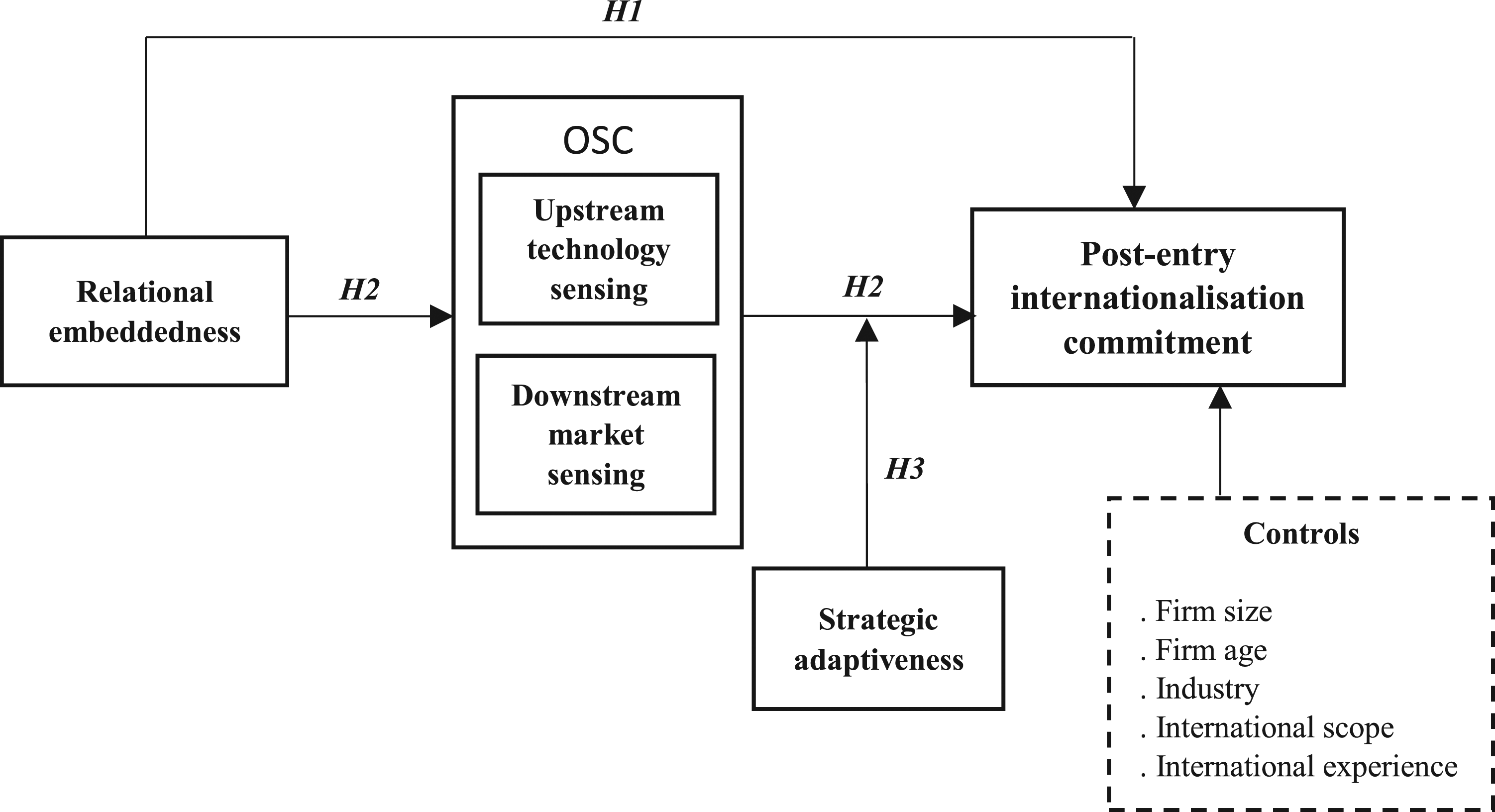
Conceptual model.
Methods
Research setting
Our study was focussed on UK SMEs for two reasons. First, the business landscape of the UK is dominated by SMEs – which account for six million businesses (99.9% of the business population) (FSB, 2020). SMEs are major contributors to the UK’s job creation (60% of the country’s total employment), economic growth (49.8%) and gross domestic product (DBEIS, 2020). Accordingly, international business research will benefit from understanding how UK SMEs – with their superlative impact upon economic growth – achieve high performance after entering into international markets. Second, the UK is characterised by an open market economy, with liberal trade policies and favourable political conditions that have resulted in growing internationalisation activities (Bagheri et al., 2019; Stoian et al., 2018). For example, around 22.4% of UK SMEs are currently internationalised, with 17.3% engaging in frequent international activities and the remaining 5.1% in occasional ones (Love et al., 2016). Thus, we deemed the UK an appropriate location to test our study’s conceptual model.
Sample and data collection
Our survey data were drawn from SMEs operating in various manufacturing industries. We developed our sampling frame from the Financial Made It Easy (FAME) database. Following previous research (Boso et al., 2016; Wiklund and Shepherd, 2011), we adopted the following criteria to select our sample: 1) firms that were independent entities and not part of larger groups; 2) firms with fewer than 250 employees (classified as SMEs according to the European Union definition); 3) manufacturing firms engaged in international market activities; and 4) firms with complete contact information for their top executives or senior managers. Based on these criteria, 1200 SMEs qualified for the sampling frame for our study.
We designed a questionnaire and distributed it online to our sample SMEs through the Qualtrics platform. Our targeted respondents were owners, top executives and senior managers (e.g. marketing managers and export managers). The definition of ISAN was presented and the following screening question was included on the front page of the questionnaire: ‘Has your firm actively participated in international strategic alliances that involved the participation of external organisations, such as customers, suppliers, competitors, consulting firms, and universities’? (Yan and Wagner, 2017). Only those participants who responded affirmatively to the screening question were allowed to complete the questionnaire. To further ensure our respondents competency level, we included questions related to 1) knowledge of the specified issues and 2) confidence in answering the questions. Eventually, we received 320 usable responses, representing a response rate 26.67%.
Our sample firms operated in various industries, including pharmaceuticals, computing, medical instruments, machinery and equipment, chemicals, rubber, nuclear fuel, metal products, recycling, food products and textiles. Most of these firms (53.1%) operated in high-technology industries, and the remaining in the medium- (26.6%) and low-technology industries (20.3%). 51.2% of our respondents were top executives, and the remaining 48.8% senior managers. On average, the age of our sample firms was 20.14 years and they had engaged in international operations in about seven countries. Their employee numbers ranged from 9 to 250, with an average of 89.
Bias testing
Non-response bias was assessed by comparing the early and late response groups (Armstrong and Overton, 1977). The independent t-tests were performed on demographic variables (e.g. number of employees and firm age) and on the key variables of the study (e.g. relational embeddedness and downstream market sensing). The results did not suggest any significant difference between the two groups, thereby indicating that non-response bias was not an issue in our dataset.
Additionally, as our data were self-reported, we assessed whether common method variance (CMV) posed a threat. Following Podsakoff et al. (2003), we had adopted ex-ante procedures in the design of our questionnaire. These included: 1) assuring our participants of the confidentiality and anonymity of their responses; 2) counterbalancing the order of independent and dependent variables; 3) defining any unfamiliar terms; 4) keeping questions simple and concise and 5) avoiding double-barrelled questions. Furthermore, we applied ex-post statistical remedies to control for CMV. Specifically, we estimated three competing confirmatory factory analysis (CFA) models. A method-only model (Model 1) wherein all items were loaded on a single latent construct: (χ2/DF = 1003.66/160 = 6.27, p = .000; NFI = 0.74; CFI = 0.77; RMSEA = 0.13; SRMR = 0.11); a trait-only model (Model 2) whereby each item was loaded on its respective latent construct: (χ2/DF = 165.24/139 = 1.19, p = .06; NFI = 0.96; CFI = 0.99; RMSEA = 0.02; SRMR = 0.04); and a method-trait model (Model 3) where a common factor was included, linking all the items in Model 2 (χ2/DF = 159.47/137 = 1.16, p = .09; NFI = 0.96; CFI = 0.99; RMSEA = 0.02; SRMR = 0.04). The comparison of our three competing models suggested that Model 2 and Model 3 were superior to Model 1, and that Model 3 was not significantly superior to Model 2. This suggested that CMV did not explain our study data, and we thus concluded that CMV was not a serious concern in our study.
Measures
Based on previous studies, we utilised multiple-item scales. All the items were measured on seven-point Likert scales. In order to gain feedback on the clarity and wording of the questionnaire, we piloted it with senior academics and SME managers in the UK manufacturing industry. The final questionnaire was designed based on their comments.
Relational embeddedness relates to ‘how well one knows others’ (Moran, 2005: 1130), signalling the close and personal relationship between ISAN partners (Dong et al., 2015). We operationalised this construct using four items adopted from Chien et al. (2012) and Rindfleisch and Moorman (2001). The respondents were asked to evaluate the nature of their relationship with their international alliance partners.
OSC refers to ‘the ability of a firm to sense and identify opportunities and options in its scanning, searching and exploring across technologies and markets’ (Zhang and Wu, 2013: 539). It advances the understanding of the business landscape, enables the identification of potential opportunities at home and abroad (Teece, 2014b) and involves gathering and filtering ‘technological and market information’ (Teece, 2007: 1326). Accordingly, we conceptualised it as a second-order construct consisting of two first-order dimensions: upstream technology-sensing capability and downstream market-sensing capability. We measured the former using a four-item scale adopted from Srinivasan et al. (2002), which assesses the extent to which SMEs understand any technological advancement that may affect their business. On the other hand, we measured the latter using a four-item scale adapted from Morgan et al. (2009) and related to the extent to which firms sense market trends in relation to customers, competitors and channel members.
Strategic adaptiveness was conceptualised as the ability of SMEs to adapt to challenges stemming from foreign market changes (Hollender et al., 2017). Strategic adaptiveness was measured using a four-item scale adopted from Nyuur et al. (2016).
Post-entry internationalisation commitment concerned the investment of resources in international activities after the initial entry into foreign markets (Chetty et al., 2014; Dominguez and Mayrhofer, 2017; Hilmersson and Johanson, 2016). A four-scale item was adopted from Armario et al. (2008) and Khalid and Bhatti (2015). To ensure their focus on the post-entry stage, the respondents were asked to evaluate the degree to which their firms had made investments during the first 3 years of initial international market entry, relative to their expectations (Khalid and Bhatti, 2015; Knight and Cavusgil, 2004).
To test for potential sources of heterogeneity in our sample, we included control variables. First, firm size was measured as the logarithm of the number of employees. Second, firm age was measured as the logarithm of the years since its founding. Third, concerning industry type identification, 1 represented high-tech, 2 medium-tech and 3 low-tech firms. Fourth, international scope was controlled by using the logarithm of the number of countries in which each firm was selling its products. Finally, international experience was measured as the number of years of operation in international markets.
Model fit, reliability and validity
CFA was performed using the SPSS AMOS 26.0 software to assess the model fit, reliability and validity of the multiple-item scales. Our six-factor measurement model fit the data well, with all indices meeting the criteria (χ2/DF = 165.24/139 = 1.19, p=.06; NFI = 0.96; CFI = 0.99; RMSEA = 0.02; SRMR = 0.04).
Constructs, measurement items and reliability and validity tests.
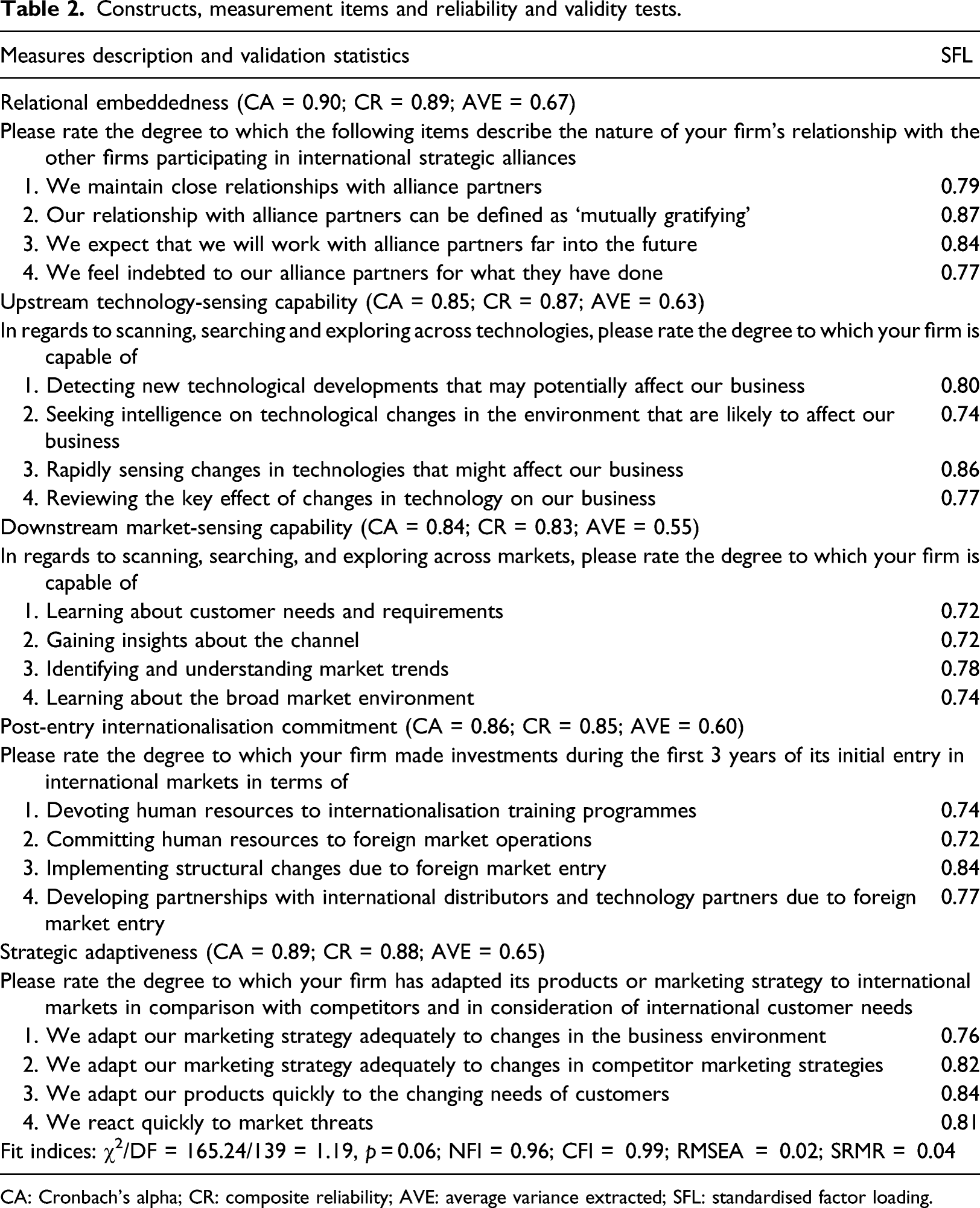
CA: Cronbach’s alpha; CR: composite reliability; AVE: average variance extracted; SFL: standardised factor loading.
To assess convergent validity, we observed the factor loadings on their corresponding latent constructs and average variance extracted (AVE). First, the path coefficients from the latent constructs to their respective items were found to be statistically significant. Moreover, each item was found to load significantly on its respective latent construct. Second, AVE showed satisfactory values of 0.5 and above (see Table 2). Taken together, the results provided evidence of convergent validity.
Descriptive statistics and inter-construct correlations.
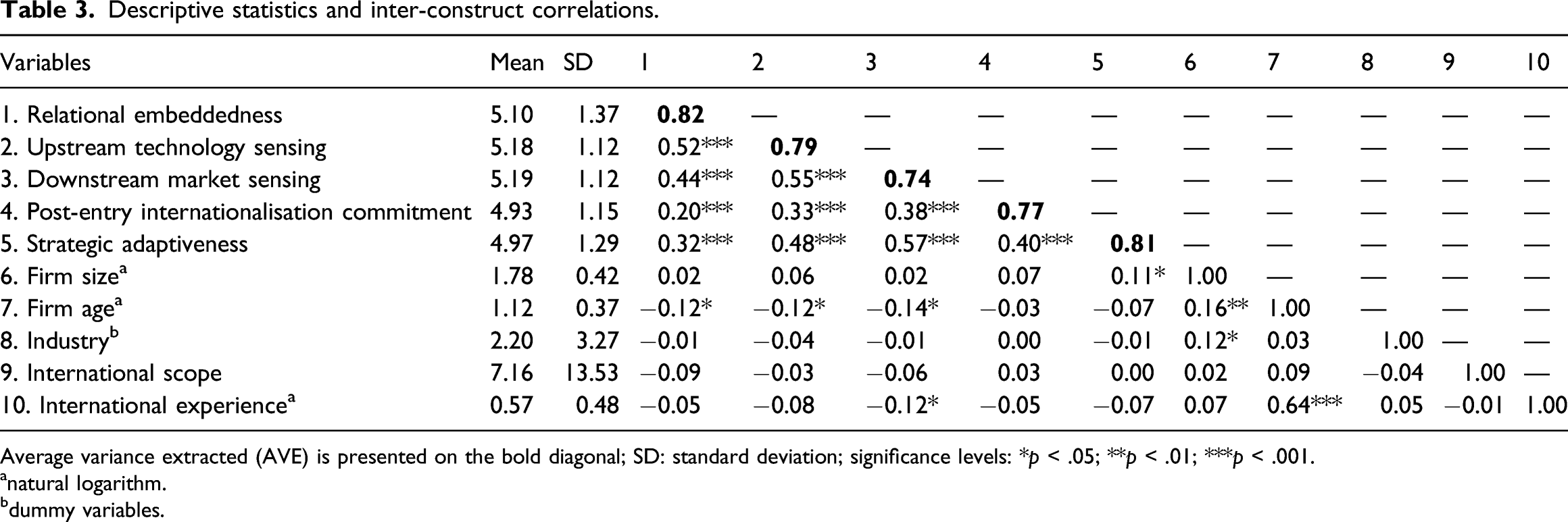
Average variance extracted (AVE) is presented on the bold diagonal; SD: standard deviation; significance levels: *p < .05; **p < .01; ***p < .001.
anatural logarithm.
bdummy variables.
Results
Hypotheses testing
Prior to the interpretation of the hypothesised path coefficients, we assessed the significance of the overall model and determined the fit of the paths with the basic structure of the data. The results suggested a good structural model fit (see Table 2). Following this, we estimated a series of five structural models using the AMOS 26.0 software. Model 1 was assessed permitting the control variables and relational embeddedness to be non-zero. In Model 2, the control variables and direct path of relational embeddedness for post-entry internationalisation commitment were estimated. Then, Model 3 was assessed, estimating the control variables and OSC for post-entry internationalisation commitment. In Model 4, the control and all variables were added to assess the mediation effect. Finally, in Model 5, the control, main effects and interaction variables were freely estimated.
Results of direct, indirect and moderating effects.
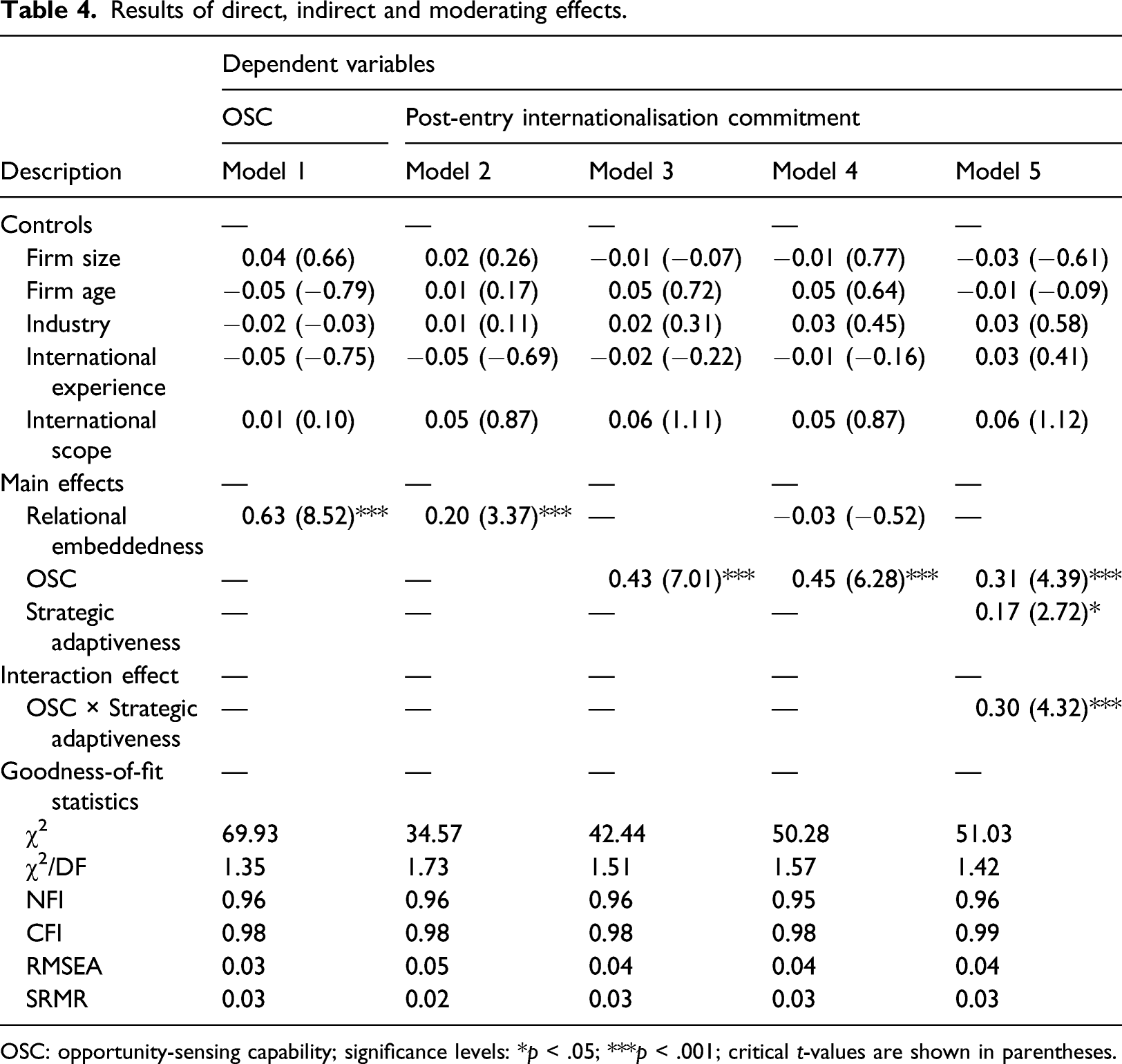
OSC: opportunity-sensing capability; significance levels: *p < .05; ***p < .001; critical t-values are shown in parentheses.
To test H2 (the mediating role of OSC), we followed Baron and Kenny’s (1986) technique. Model 2 supported the first condition of Baron and Kenny’s (1986) approach, suggesting that ISAN relational embeddedness is positively and significantly related to post-entry internationalisation commitment. Model 1 confirmed the second condition by highlighting the positive and significant effect of ISAN relational embeddedness on OSC (β = 0.63; p<.001). Model 3 confirmed the positive and significant effect of OSC on post-entry internationalisation commitment (β = 0.43; p<.001).
Moreover, Model 4 tested Baron and Kenny's (1986) final condition. Showing that the significant impact of ISAN relational embeddedness on post-entry internationalisation commitment vanishes (β = −0.03; p>.10) when OSC is included in the post-entry internationalisation commitment structural model. OSC still has a significant and positive effect on post-entry internationalisation commitment (β = 0.45, p<.001). These results together affirm the mediating role of OSC, indicating support for H2.
H3 contended that strategic adaptiveness strengthens the positive effect of OSC on post-entry internationalisation commitment. The interaction term between OSC and strategic adaptiveness Model 5 was found to be significant and positive (β = 0.30, p<.001), indicating that, as the level of strategic adaptiveness increases, the positive effect of OSC on post-entry internationalisation commitment becomes also increases, suggesting support for H3.
Robustness checks
Results of Sobel and bootstrapping tests.
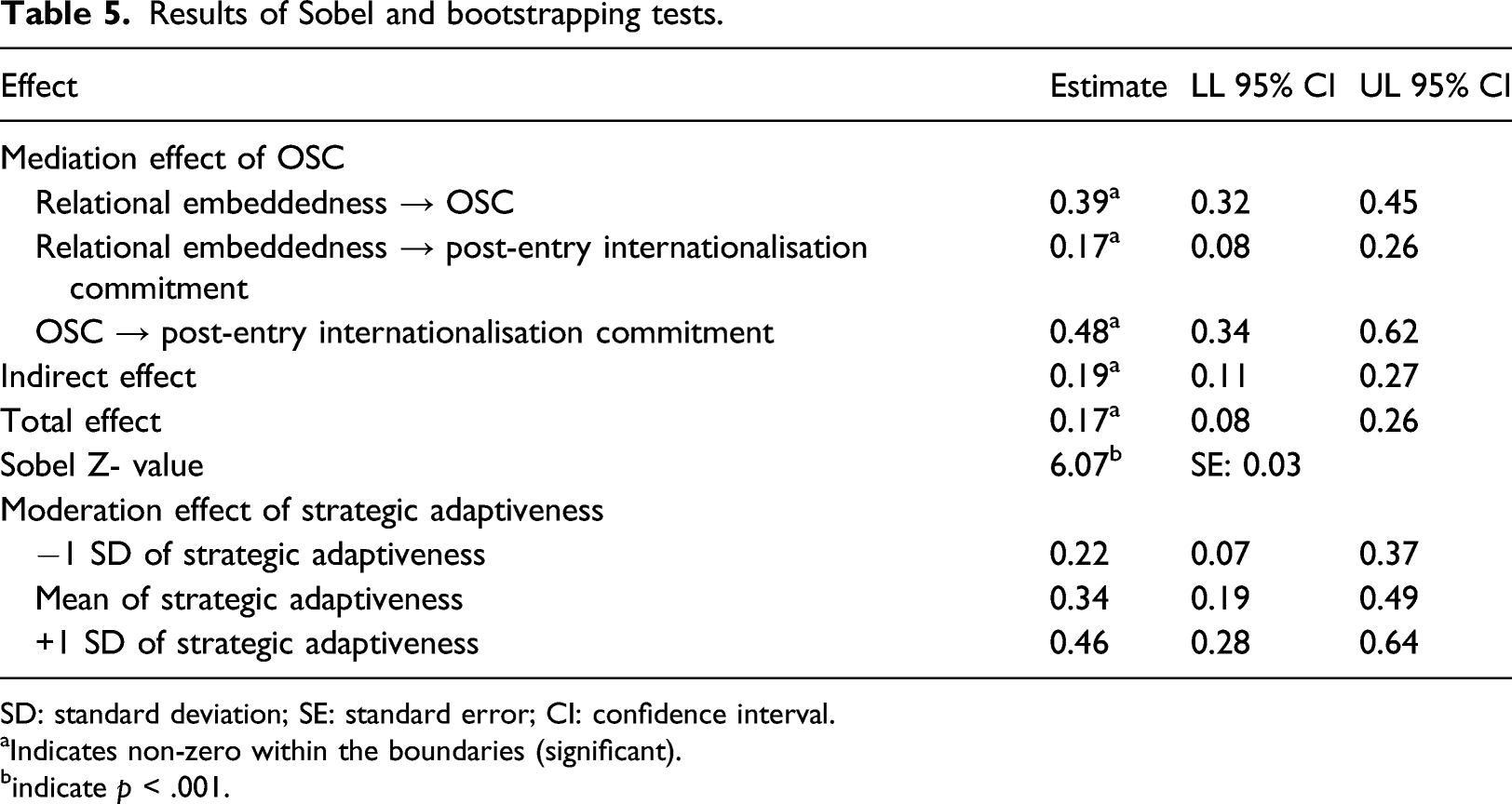
SD: standard deviation; SE: standard error; CI: confidence interval.
aIndicates non-zero within the boundaries (significant).
bindicate p < .001.
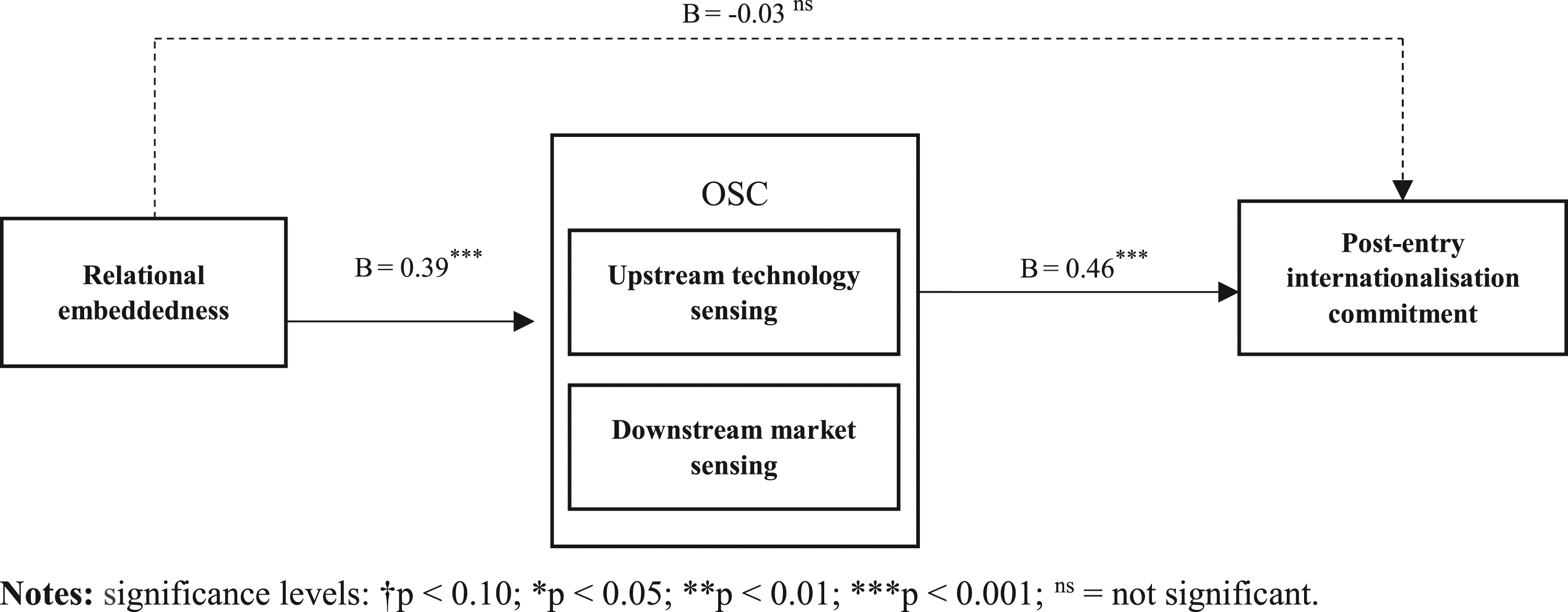
Results of direct and indirect effects for mediation.
Further, our moderation analysis was confirmed using PROCESS Macro. The interaction term between OSC and strategic adaptiveness was found to be positively and significantly related to post-entry internationalisation commitment (β = 0.10, p<.01). Furthermore, the results in Table 5 shows that the effect of OSC on post-entry internationalisation commitment is stronger at high levels of strategic adaptiveness (effect = 0.46; LL = 0.28; UL = 0.64), thus supporting H3. To further show the moderation effect, the interaction graph was plotted following Aiken et al.'s (2003) approach. Figure 3 graphically shows support for H3. Moderating effect of strategic adaptiveness.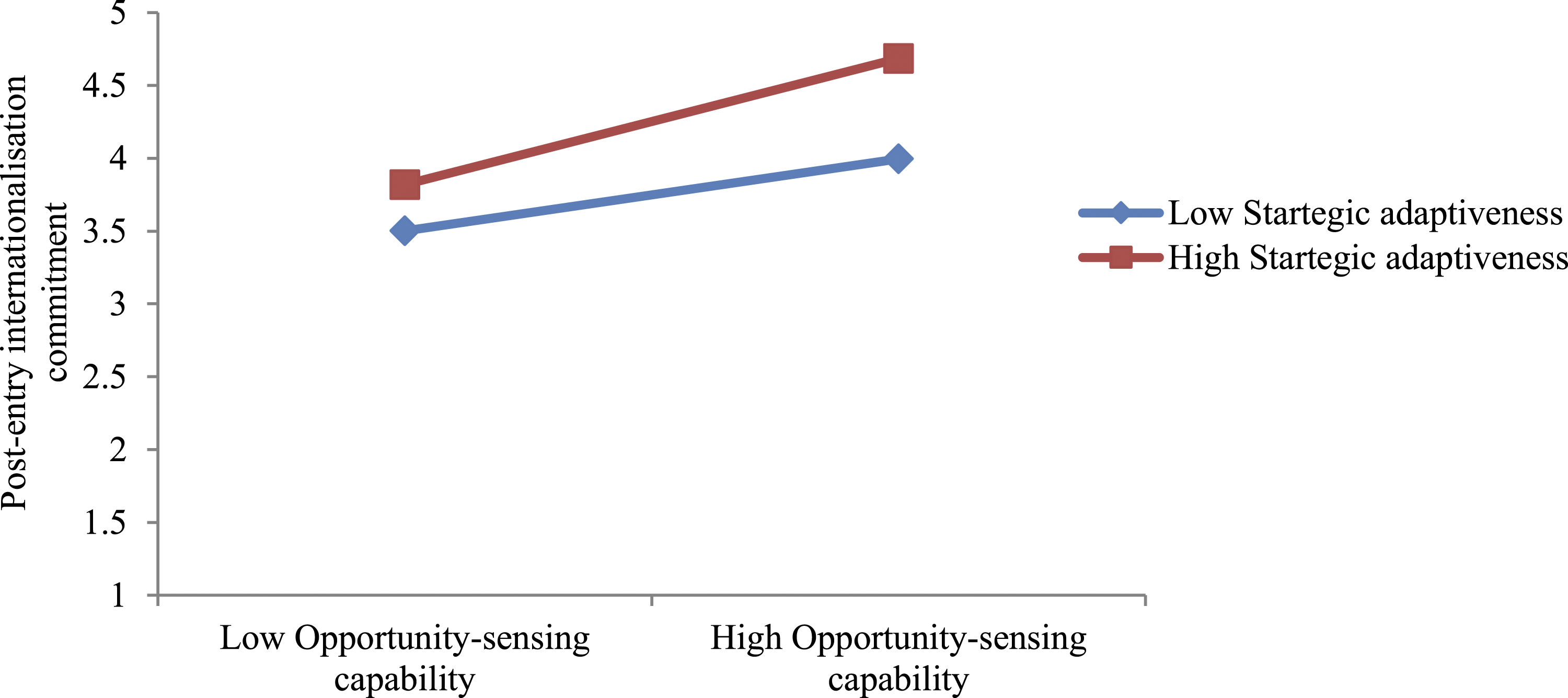
Moreover, to confirm the robustness of OSC as a second-order construct, we tested the individual effects of downstream market-sensing and upstream technology-sensing capabilities. The results suggested that post-entry internalisation commitment is determined by both downstream market-sensing (β = 0.29, p<.001) and upstream technology-sensing capabilities (β = 0.16, p<.01). A small effect of both downstream market-sensing (f-squared = 0.07) and upstream technology-sensing capabilities (f-squared = 0.04) on post-entry internalisation commitment was also found (Aiken et al., 2003). Also, the relationship between ISAN relational embeddedness and post-entry internationalisation commitment was found to be mediated by downstream market-sensing (effect = 0.13; LL = 0.06; UL = 0.20) and upstream technology-sensing capabilities (effect = 0.13; LL = 0.06; UL = 0.21). However, our conceptualisation of OSC as a higher-order construct has much more explanatory power (effect = 0.19; LL = 0.11; UL = 0.27) for its mediation of the relationship between ISAN relational embeddedness and post-entry internationalisation commitment.
Discussion
Evidence of post-entry internationalisation dynamics is drawing considerable attention from both scholars and managers, making it increasingly important for SMEs to establish that their early internationalisation efforts are balanced with their post-entry ones (Puthusserry et al., 2020a). Although empirical studies have attempted to determine the antecedents of SME post-entry internationalisation commitment, so far they have remained limited and their analyses inconclusive (Gerschewski et al., 2018; Sleuwaegen and Onkelinx, 2014). In this regard, our study proposed and validated a conceptual model in Figure 1. The findings suggest that ISAN relational embeddedness is vital for SME post-entry internationalisation commitment. This is in line with findings of prior studies, which suggested that ISAN relational embeddedness develops insidership to acquire foreign market information and reduce the risk of investing abroad, thereby driving international market venturing (Gerschewski et al., 2015; Hennart et al., 2021). Furthermore, our results confirm that OSC is an important mechanism through which ISAN relational embeddedness leads to increased post-entry internationalisation commitment. Trusting relationships with international partners engender in SMEs downstream market-sensing and upstream technology-sensing capabilities suited to identify opportunities and commit to post-entry internationalisation (Alinaghian et al., 2020; Teece, 2014a). In addition, we found that strategic adaptiveness strengthens the positive relationship between OSC and post-entry internationalisation commitment. Overall, our analysis extends the current literature on SME internationalisation to include the domain of SME post-entry internationalisation commitment.
Theoretical implications
Our article contributes to the SME international and entrepreneurial literature in three ways. First, research on post-entry internationalisation commitment remains relatively scarce (Fuentelsaz et al., 2020; Liedong et al., 2020); thus, by integrating insights from the social perspective of SME internationalisation and entrepreneurship (Menzies et al., 2020; Soontornthum et al., 2020), our analysis shows that SME post-entry internationalisation commitment is largely shaped by ISAN relational embeddedness. Existing research has, to date, shown that ISANs are vital for SMEs to access the resources and knowledge possessed by their global partners (Forsgren, 2016; Lin et al., 2020). However, SMEs vary in their ability of attaining ISAN insidership (Gerschewski et al., 2020; Johanson and Vahlne, 2009) and also of building and securing legitimacy in ISANs at their post-entry internationalisation stage. In this regard, the extent to which close ISANs enable SMEs to realise knowledge benefits for post-entry internationalisation commitment has not yet been sufficiently explained. We therefore consider ISAN relational embeddedness both a social structure and a strategic resource suited to ensure that the relationships between SMEs and their international partners are high-quality, being based on mutual trust, solidarity and reciprocity (Isaac et al., 2019; Liu et al., 2021). Such high-quality relationships stimulate the development of ISAN relational capital, which enables SMEs to request more tacit knowledge and collaborate over market information gathering, thereby leading to enhanced post-entry internationalisation commitment (Puthusserry et al., 2020b; Soontornthum et al., 2020). Thus, our study enriches the relational perspective on SME post-internationalisation research by demonstrating the importance of ISAN relational embeddedness for the post-entry internationalisation commitment of SMEs.
Second, our analysis helps to close the knowledge gap regarding the mediating mechanisms that connect ISAN relational embeddedness and SME post-entry internationalisation commitment. In this endeavour, we scrutinise the mediating role of OSC for ISAN relational embeddedness and SME post-entry internationalisation commitment relationships. As argued by Teece (2014b: 339), ’while no firm will succeed forever in a particular market, strong dynamic capabilities allow a firm to ride successive waves of change across lines of business by renewing and leveraging their valuable and difficult-to-replicate resources for competitive advantage’. Accordingly, we suggest OSCs as a mechanism through which SMEs ‘integrate, alter and deploy’ ISAN relational embeddedness to pursue post-entry internationalisation commitment (Teece, 2014a: 17). Our results further suggest that market-sensing capabilities are more paramount than technology-sensing ones in attaining SME post-entry internationalisation commitment. This finding corroborates the view that SMEs must possess market-specific knowledge to recognise international opportunities and develop new technologies to retain such opportunities (Xue et al., 2021). However, by combining these two capabilities, SMEs can attain higher benefits in international markets. These findings confirm that our study is an important extension of the dynamic capability and SME internationalisation literature because prior researchers had overlooked the linkage between ISAN relational embeddedness, OSC and post-entry internationalisation outcomes (Zahoor et al., 2020). Thus, our study responds to the calls made by Khan and Lew (2018), Zahoor et al. (2020), and others to consider the social structures of ISANs and OSCs as important determinants of the achievement of post-entry internationalisation commitment.
Third, our results explicitly define the conditions under which OSCs enhance post-entry internationalisation efficacy. Although growing research on dynamic capabilities suggests their relevance for SME internationalisation (Buccieri et al., 2020), the issue of the possible interaction between capabilities for SME post-entry internationalisation commitment remains limited in the dynamic capabilities literature (Frasquet et al., 2018). Our study shows that SME strategic adaptiveness represents a crucial boundary condition for the effectiveness of OSCs in enabling post-entry internationalisation commitment. In doing so, it reveals that the relevance of OSCs for SME post-entry internationalisation commitment is driven by the extent to which they exploit strategic adaptiveness capabilities to improve learning and improve international commitment. In general, this is consistent with the viewpoint of Helfat and Peteraf (2015), suggesting that adaptiveness capability, underpinned by specific routines of alteration and strategic change, can be used in concert with other dynamic capabilities that enable reliable performance.
Managerial implications
Our findings have some practical implications. First, SME managers should be aware that their relationship with international partners is, in fact, an important channel for realising their post-entry internationalisation commitment. Specifically, it is crucial for SMEs to invest socially (i.e. relational embeddedness) in ISANs in order to gain access to complementary knowledge and information necessary for successful innovation and market development in the post-entry stage. Therefore, SME managers should gain the trust of their partners to convert ISANs into cooperation networks involving the exchange of knowledge and information based on mutual adaptations. Such collaborative and adaptive partnerships would lead to unique commercial advantages and innovations conducive to post-entry internationalisation commitment. This is particularly relevant in the case of the UK, where the majority of firms are small. As a result of the prevalence of intense competition between a large number of them, SMEs are forced to make efforts for post-entry internationalisation commitment to remain competitive; to this end, ISAN relational embeddedness, in the form of closer and mutually beneficial ties, is essential. However, too much trust can have a boomerang effect for SMEs, particularly in relationships with unsuitable partners. SMEs will be reluctant to monitor highly trusting relationships, which could lead to lower performance. As such, SME managers should avoid over-relying on trust as this can inhibit access to various external sources of knowledge.
Second, SME managers should understand that current marketplaces are increasingly characterised by global competition, shorter product lifecycles and market uncertainty, as in the case of the recent COVID-19 pandemic crisis and its disruption of global value chains. In such environments, managers should give special attention to OSCs in order to recognise technology and market changes ahead of competitors (Bharadwaj and Dong, 2014). OSCs yield continuous insights into the global market and technology trends that enable SMEs to respond by creating new resources or resource combinations. As shown in our study, ISAN relational embeddedness can serve as a building block of OSCs, as it provides access to complementary knowledge and resources and helps to identify opportunities. Once OSCs are nurtured, opportunities become more visible, enabling SMEs to move forward in committing to post-entry internationalisation. Thus, the managers of SMEs in international partnerships need to establish collaborative environments suited to promote relational quality for the development of OSCs and subsequent foreign market commitment, which can eventually lead to superior SME performance.
Third, SME managers would be advised to pay attention to strategic adaptiveness in their post-entry internationalisation endeavours. In particular, they should be aware that foreign market conditions and demands change over time. To turn these changes into favourable post-entry internationalisation commitment, managers should adapt their offerings to such changing conditions and demands. In particular, our findings suggest that managers should use OSCs and strategic adaptiveness simultaneously. While OSCs enable managers to identify changing trends, strategic adaptiveness facilitates the tailoring of SME offerings to them, ultimately leading to increased post-entry internationalisation commitment.
Limitations and future research
Our study has some limitations which point at fruitful avenues for future research. First, we only focussed on ISAN relational embeddedness as one of the relational mechanisms for post-entry internationalisation commitment. However, a more accurate understanding of the role played by relational factors in post-entry internationalisation commitment could be gained by extending the focus to other relational mechanisms – such as inter-firm commitment – and to how these interact with contractual governance mechanisms to predict the degree of post-entry internationalisation commitment. In a similar vein, our study does not entirely open the black-box of ISAN relational embeddedness. Future studies could scrutinise the level of ISAN embeddedness and explain its relevance for post-entry dynamics.
Second, future research could also investigate the relationships between OSCs, country risks and/or institutional environments and post-entry internationalisation commitment. Prior research suggests that institutional support and barriers play an important role not only in strategic alliance capabilities but also in SME performance in international markets (Torkkeli et al., 2019). Our results suggest that OSCs are likely to aid in the proactive identification of opportunities for post-entry internationalisation commitment. Further research could therefore examine the interplay between OSCs and institutional environment in relation to SME post-entry internationalisation commitment. Also, the influence of SME strategic adaptiveness on technology-sensing and market-sensing opportunities may differ in seizing such opportunities. Thus, future research could investigate the micro-foundations of sensing and seizing capabilities in the post-entry internationalisation process, and examine how contingency factors affect different elements of dynamic capabilities in the SME context.
Third, our analysis focussed on opportunity-sensing as an important aspect of dynamic capabilities. Future studies could consider other such capabilities, such as seizing, transforming and realigning (Teece, 2007), and relate them to SME post-entry internationalisation commitment. Additionally, future studies could consider the relevance of organisational micro-foundations (e.g. leadership attributes and entrepreneurial decision-making for international network formation) for dynamic capabilities and their impact on post-entry internationalisation commitment.
Finally, the alliance formation and governance mechanisms of SMEs may differ from those of MNEs (O'Dwyer and Gilmore, 2018), potentially driving the post-entry internationalisation commitment of SMEs in a distinctive manner. As no data were collected from MNEs, it was impossible for us to compare our findings across SMEs and larger firms; future research could thus explore the ISAN relational embeddedness/post-entry internationalisation nexus through a sample involving both SMEs and MNEs.
Conclusion
In conclusion, drawing from ISAN relational embeddedness and dynamic capability perspectives, this study investigates how and to what extent SMEs can improve the post-entry internationalisation commitment. This article has demonstrated that ISAN relational embeddedness positively influences post-internationalisation commitment through SME OSC. Especially, strategic adaptiveness enhances the positive impact of SME OSC on post-entry internationalisation commitment. Such key findings make important contributions to the SME’s venturing and post-entry internationalisation literature. We hope that our study will encourage future research on different mediators and moderators of SME post-entry internationalisation commitment.
Footnotes
Declaration of Conflicting Interests
The author(s) declared no potential conflicts of interest with respect to the research, authorship, and/or publication of this article.
Funding
The author(s) disclosed receipt of the following financial support for the research, authorship, and/or publication of this article: This research was supported by University of Strathclyde. This research was supported by Hankuk University of Foreign Studies Research Fund.
