







Abstract
‘Ad hoc organising’ is becoming an increasingly important topic in the growing literature on disrupted contexts. It is viewed as an emergent, largely unpredictable phenomenon. However, few theoretical frameworks exist for understanding how small and medium-sized enterprises (SMEs) engage in ad hoc organising, via the convergence of people and organisations, to alleviate suffering in a disrupted context. In this inductive, theory-building, multiple case study, we explore the way collective agency in an SME emerges in the process of ad hoc organising. Our findings identify two overlapping micro-processes that enable collective agency in a disrupted context: building collective efficacy and initiating communal coping. Together, these micro-processes lead to SME leaders achieving collective outcomes for the community in ad hoc organising. We discuss these findings in relation to the literature on ad hoc organising and SMEs in disrupted contexts.
Keywords
Introduction
‘Ad hoc organising’, via the convergence of people and organisations to alleviate suffering, is a normative response in the wake of disrupted contexts such as natural disasters and pandemics (Auf Der Heide, 1989). In such disrupted contexts (Hällgren et al., 2017), small and medium-sized enterprises (SMEs) face significant disruption to their overall functioning, challenging their survival and viability. People, communities and businesses have critical roles in developing responses and actions in the chaos that follows these disruptive events. Some studies document the way these emergent groups help to provide the structural order and frameworks for actions (Fritz and Marks, 1954; Stallings and Quarantelli, 1985); others show that the resources generated in this emergent context can provide opportunities for alleviating suffering (Shepherd and Williams, 2014). While noting that these emergent groups can increase the efficiency of responses to the disrupted context, some studies note that they can impede progress and efficiency if they are not properly managed (Harris et al., 2017; Simsa et al., 2019). Thus, after a disruptive event, SMEs responding to a community’s needs can aid with recovery efforts (Chandra and Paras, 2020).
Assuming that the frequency of disrupted contexts is likely to increase in the future, scholars advocate understanding how SMEs deal with disruptive events so that their managers can limit their adverse effects (Doern, 2016; Herbane, 2010). However, contemporary knowledge of how organisations deal with disrupted contexts is frequently borrowed from the perspective of large organisations, emphasising preparedness and reliability (O'Brien et al., 2010). These ‘top-down’ rational approaches are inconsistent with the way ad hoc organising predominates in early responses to disrupted contexts (Lanzara, 1983; Majchrzak et al., 2007). Ad hoc organising occurs as actors spontaneously converge to alleviate suffering (Drabek and McEntire, 2003; Williams and Shepherd, 2014), with emergent decisions, actions and behaviours shaping the context further. At this stage, little is known about this process, although it is clear that good leadership is critical (James et al., 2011; Williams et al., 2017).
Having to balance the seemingly contradictory priorities of firm survival and helping others, points to the judicious use of an SME’s resources and capabilities, giving rise to tensions that are not described or fully explained in the extant literature (Majchrzak et al., 2007; Williams et al., 2017; Williams and Shepherd, 2020). In this context, social and ethical obligations can influence the decision making of SME leaders and are particularly important considering the relational disturbances that occur during and after disruptive events (Gittell et al., 2006; Kahn et al., 2013). These socio-cognitive processes are rarely examined in terms of the relational imperatives and resource dependency in these disrupted contexts, let alone the emergent behaviours (Bundy et al., 2017; Polyviou et al., 2019). Insights into how ad hoc organising can aid SMEs and why they participate in this emergent phenomenon, especially when dealing with their own survival, can help them to understand their role in ad hoc organising and limit the adverse effects arising from the mismanagement of emergent behaviours in disrupted contexts.
The purpose of this article is to extend research on the micro-processes involved in ad hoc organising. In particular, we focus on what convergent management research recognises as being critical to the efficient coordination of emergent action in a disrupted context: the internal dynamics of collective agency for ad hoc organising (Drabek and McEntire, 2003; Majchrzak et al., 2007). ‘Collective agency’ is defined as the social coordination and interdependence of effort in individuals and groups to produce outcomes (Bandura, 2000). Through shared beliefs in collective power to produce desired results, collective agency influences the way individuals manage their resources, motivations and strategies (Bandura, 1997). There is only limited research on collective agency, especially in disrupted contexts, despite its potential to aid an understanding of collective and emergent behaviours in ad hoc organising (Babcicky and Seebauer, 2020). Thus, more research on collective agency in SMEs in disrupted contexts, particularly the socio-cognitive processes whereby collective action is formed and developed during ad hoc organising, is required (Williams et al., 2017).
We build on the extant literature utilising the notion of collective agency, to provide a framework for exploring ad hoc organising in the SME context. We examine the process of collective agency through the lens of SME leaders, noting that they are the key decision makers that influence the outcomes for SMEs (Ribeiro Soriano and Manuel Comeche Martínez, 2007; Sklaveniti, 2017). This approach is consistent with our understanding of leadership in disrupted contexts (James and Wooten, 2005; James et al., 2011), allowing a more granular view of ad hoc organising, particularly the internal dynamics of SME leader decision making, action and behaviour. Given the sparse research on SMEs in disrupted contexts, we implement an inductive study that addresses the question: ‘How does collective agency in an SME emerge in the process of ad hoc organising?’
The context of our study is an SME that was engaged in multiple cases of ad hoc organising in the aftermath of the 2010–2011 Christchurch earthquakes in New Zealand. This study adopts a micro-process approach, focusing on SME leader decision making and behaviour, to build theory from the qualitative evidence collected within a multiple case study design. The inductive design facilitates theory building in situations that have limited theory and where the phenomena are complex and not easily measured (Eisenhardt et al., 2016; Gehman et al., 2018).
This article contributes to the crisis management literature by highlighting two overarching critical processes, building collective efficacy and initiating communal coping, which allow SME leaders to motivate and coordinate employees to combine their actions, activities and resources for ad hoc organising. The micro-processes identified in the study highlight the critical, complementary socio-cognitive mechanisms that facilitate collective action in ad hoc organising, and we explain how these micro-processes can lead to collective outcomes. These critical processes highlight the agency of SME leaders and their role in enabling collective agency, extending theory related to SMEs and ad hoc organising in a disrupted context whilst building a broader empirical base for entrepreneurship research.
Theoretical framework
Ad hoc organising in disrupted contexts
The increasing occurrence of crises such as natural disasters and pandemics has spurred greater scholarly interest in understanding how SMEs navigate the often fraught and uncertain environments that profoundly affect their viability and the lives and well-being of their organisational members (Bundy and Pfarrer, 2015; Kahn et al., 2013). Hällgren et al. (2017), in a review of the research on extreme contexts, refer to these external crises as disrupted contexts: environments that are triggered by extreme events that occur outside the core activities of organisations or communities. Disrupted contexts are often perceived as being unprecedented, uncategorisable or even unique, meaning organisations and/or communities can be caught off guard and believe that planning can be futile (Christianson et al., 2009; Lanzara, 1983). In these contexts, even well-resourced and efficient SMEs struggle to handle these types of disruptions. Therefore, the emergence of temporary groups and organisations converging towards short-term ad hoc responses to the disrupted context is essential at this time. This ad hoc organising occurs because these events are so disruptive that regular routines and activities have to cease, and uncertainty of action, information and responsibility becomes the norm (Auf Der Heide, 1989; Drabek and McEntire, 2003).
As noted earlier, ad hoc organising refers to the convergence of individuals and groups to alleviate suffering following a triggering event (Williams and Shepherd, 2016a, 2016b). Following early work on convergence behaviour following disasters (Fritz, 1957; Fritz and Marks, 1954), the literature variously describes this phenomenon as ‘compassion organising’ (Shepherd and Williams, 2014), ‘altruistic community’ (Barton, 1969), the ‘utopian community’ (Taylor et al., 1970), the ‘therapeutic community’ (Twigg and Mosel, 2017) or ‘emergent behaviour’ (Bardo, 1978). Williams et al. (2017) note that ad hoc organising has a vital role as an inevitable response to crisis organising, warning that failure to coordinate efforts to alleviate suffering can have profound negative outcomes such as increased conflict and prolonged suffering and inefficiencies. In these crisis situations, community infrastructure is often disabled or destroyed, leading to a fragmented and broken-down environment where established organisations and communities struggle to respond and cope (Lanzara, 1983). Empirical research suggests that ad hoc organising can provide stability and alleviate the immediate concerns of a community, organisation or group following a disruptive event (Schneider, 1992; Wang, 2019). It is noted that there are challenges with these emergent responses as they are often inadequate and short term (Kapucu et al., 2020; Twigg and Mosel, 2017). Indeed, ad hoc organising challenges the coordination of these emergent groups (Waugh and Streib, 2006), including identifying, communicating and organising across diverse stakeholders (Drabek and McEntire, 2003). Emergent groups lack a strict hierarchical structure for decision making and coordination, although they can (and often do) work with previously established networks (Kapucu et al., 2020).
Despite being a regular feature in disrupted contexts, ad hoc organising has traditionally received little attention from entrepreneurship researchers, due to challenges in incorporating its emergent qualities, such as spontaneity and transience (Boin and Bynander, 2015; Twigg and Mosel, 2017). However, the literature highlighting its importance for SMEs is growing. For example, Shepherd and Williams (2014) describe the way these disrupted contexts can give rise to opportunities and new venture formation for alleviating suffering. Williams and Shepherd (2020) find that the way entrepreneurs interpret the nature of the crisis can shape the ventures level of embeddedness in the communities. Johannisson and Olaison (2007) identify the local knowledge and social capital of entrepreneurs as important sources of ‘emergency entrepreneurship’ to bridge the challenges faced in communities. Some expand on the aspect of embeddedness in the community by providing evidence that entrepreneurs provide critical social functions such as supplying needed resources, social capital, community attachment and helping to support business and community goals (Grube and Storr, 2018). Although much of the extant research focuses on individual entrepreneurs, these studies suggest reasons for SME usefulness in ad hoc organising. For example, community embeddedness can facilitate finding resources, coordinating activities and potentially acquiring greater legitimacy for aid (Almandoz, 2012; Marquis and Lounsbury, 2007). At this early stage of research on the topic, questions remain regarding the way an SME navigates ad hoc organising, including what occurs within its internal dynamics and the firm’s collective effort.
Micro-foundations of collective agency
We contribute to a more granular understanding of ad hoc organising by analysing its micro-foundations or micro-processes: that is, the way individual-level factors aggregate to the collective level in disrupted contexts (Barney and Felin, 2013; Felin et al., 2012). Although research acknowledges that SME leaders can make a difference in responses to crises, the bulk of research focuses on ‘top-down’ or planned processes (Herbane, 2019). Little is known about the actions, decisions and behaviours that SME leaders take, beyond the coordination and control perspective, which is limited in explaining emergent behaviours (Helsloot and Groenendaal, 2017). Therefore, this study attempts to understand ad hoc organising through the lens of collective agency, exercised through social coordination and interdependence of effort (Bandura, 2000). Overall, the literature suggests that a collective social-cognitive perspective of SMEs, recognising SMEs as a collection of those diversely affected by disruptive events and often engaging with their communities, government, aid organisations and even competitors, is a more helpful lens for understanding ad hoc organising (Hällgren et al., 2017; Williams and Shepherd, 2020).
A social-cognitive micro-process view also helps to explain the modes of agency through which people, particularly SME leaders, produce outcomes and influence their emergent surroundings (Bandura, 2000, 2001). This approach is consistent with our understanding of SME leadership (Cogliser and Brigham, 2004; Sklaveniti and Tzoumpa, 2018) and the importance of motivating collective agency in disrupted contexts (Cohen et al., 2013; Paton et al., 2009). In disrupted contexts, SMEs must collectively decide with whom to work, what resources to use and how to evaluate risk and perform sustained protective actions (Babcicky and Seebauer, 2020; Fay-Ramirez et al., 2015). However, as Boin and Bynander (2015) surmise, these are collaborative conundrums that leaders can only address ‘on the fly’, coordinating chaotic, disparate and unregimented resources to balance the dichotomous functions of improvisation and structure: that is, a context that is yet to be described and explained. Consequently, resilience in a disrupted context may consist of a complex aggregation of agency, resources and capabilities, including critical social interactions (Harland et al., 2005; Youssef and Luthans, 2007). Thus, a socio-cognitive micro-process approach can provide significant explanatory power for the way endogenous micro-processes in ad hoc organising can lead to organisational-level action and outcomes. This is helpful in creating theory regarding the internal dynamics of SMEs and ad hoc organising.
Early research into ad hoc organising identifies that emergent groups rely on a learn-by-doing action-based model, highlighting sensemaking processes and improvisation around collaboration and communication (Majchrzak et al., 2007; Moynihan, 2005). However, Boin and Bynander (2015) suggest that these emergent ‘bottom-up’ processes ‘need a little help’, citing potential formal mechanisms embedded in organisational settings (p. 126). Insights into the internal working of SMEs may provide answers into the way ad hoc organising can potentially balance SME’s critical needs in disrupted contexts. For example, Battisti and Deakins (2011) find that the ability of SMEs to learn and integrate knowledge and resources, especially when there are limited internal resources, aid their ability to survive and recover from a disruption. Such research points to managerial agency and coordination as being the basis for SMEs enacting resilience and recovery in disrupted contexts (Sullivan-Taylor and Branicki, 2011; Vargo and Seville, 2011). Others suggest that SME leaders must cope with uncertainty or develop ‘conceptual slack’ for flexibility and adaptation during disruptive events (Branicki et al., 2018; Doern, 2016). The knowledge and experiences of leaders (Hong et al., 2012; Vargo and Seville, 2011) and their ability to obtain and integrate resources are critical in disrupted contexts (Macpherson et al., 2015).
Despite these insights, these rational internal dynamics for survival are just one part of the range of responses for SMEs in a disrupted context, with emergent bottom-up processes still relatively unexplored. The existing research focuses extensively on the entrepreneur and their organising activities, giving little attention to the emergent collective agency that forms a central feature of disrupted contexts (Kapucu et al., 2020). Therefore, our approach focuses on emergent SME leaders and the micro-processes that give rise to collective action in ad hoc organising in a disrupted context. The next section explains our inductive approach for generating theory on hoc organising by SMEs.
Method
Research design
Given the limited extant research, our study employed an inductive enquiry approach, allowing a closer exploration of this under-researched and poorly understood process (Eisenhardt and Graebner, 2007). The inductive enquiry approach is appropriate for examining process research questions that frame ‘how’ phenomena unfold, such as this study’s research question (Eisenhardt, 1989; Yin, 2009). This study incorporated a multiple case study design within a single SME. Our multiple cases were ‘ad hoc organising episodes’, wherein the firm’s leaders responded to others (both internal and external to the SME) converging to alleviate suffering following a triggering event (Williams and Shepherd, 2016a).
Description of cases.
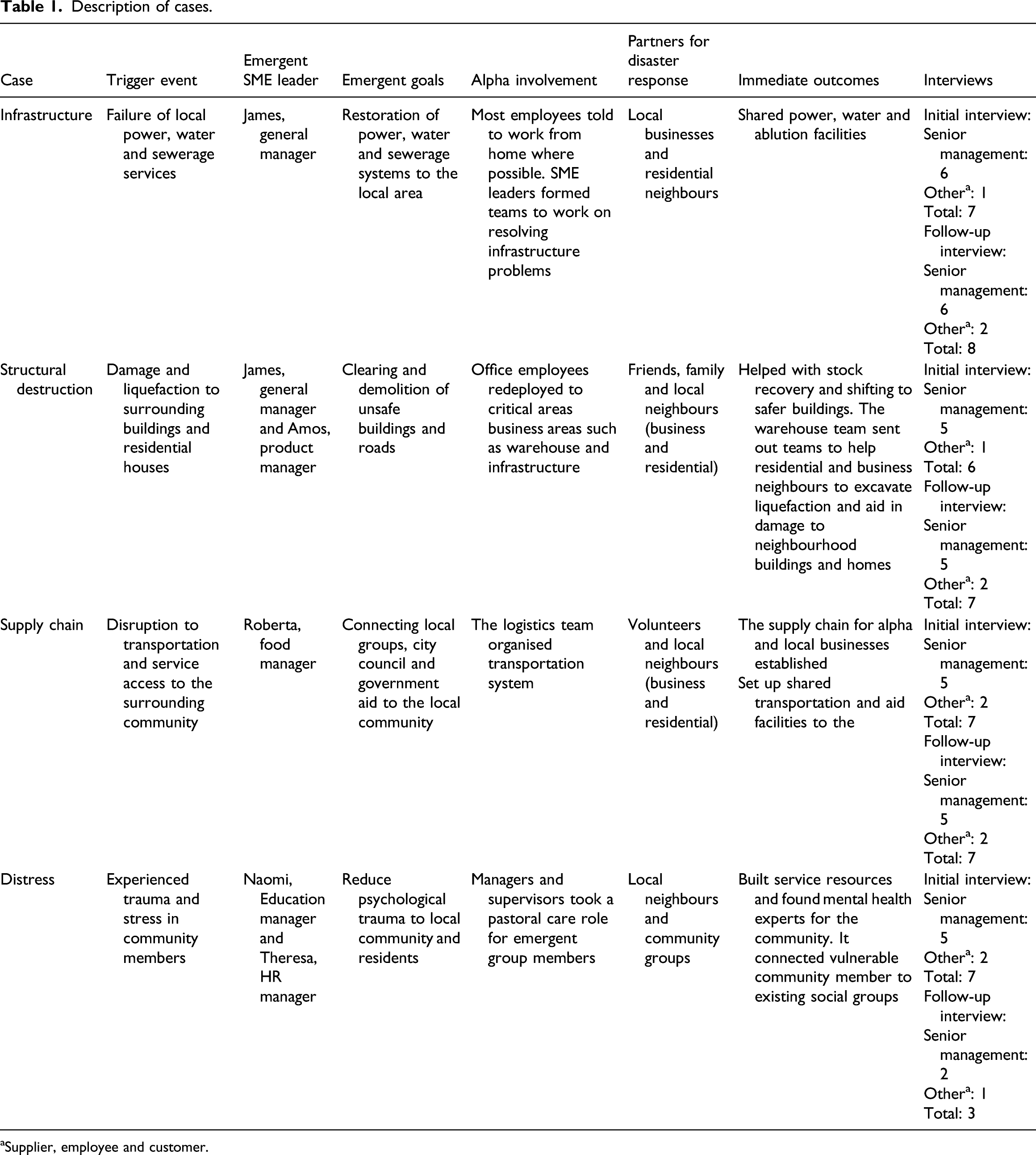
aSupplier, employee and customer.
Research setting
The research setting was an SME (which we are calling ‘Alpha’) in the aftermath of a natural disaster known as the Christchurch earthquakes. These two major earthquakes (4 September 2010 and 22 February 2011, and their accompanying aftershocks) occurred in Christchurch, which is the biggest city in New Zealand’s South Island and the second-largest city in the country, with a population of 386 100 people (Dorahy et al., 2015). The second, shallow 6.2 magnitude earthquake (22 February 2011) was one of the worst earthquakes to befall New Zealand, resulting in the deaths of 185 people. It caused widespread destruction in the city, with thousands of buildings destroyed, severe soil liquefaction (with rising silt and water residue) and damage to the infrastructure of the city, including roads, bridges, power and water (Fischer-Smith, 2013; Sutton and Fourie, 2011).
Consistent with theoretical sampling, we selected an SME in which the phenomenon of interest, ad hoc organising, was likely to occur (Coyne, 1997; Draucker et al., 2007). Alpha was chosen, as the organisation faced significant disruption to its viability and was among several businesses in an isolated and disrupted suburb where help from established emergency, government or local services was not forthcoming. News media and the local council have subsequently recognised Alpha’s actions and help in establishing the local ‘community hub’ for emergency help and services following the February 2011 earthquake. Alpha provided cases of ad hoc organising wherein we could hone in on the focal phenomena of interest while limiting extraneous variation (Eisenhardt and Graebner, 2007).
Alpha is a limited liability company for a fair-trade movement network of non-government organisations, family groups and cooperatives. It sells fair-trade retail products in 30 retail stores and over 302 related retail shops throughout New Zealand. Alpha supplies trade gifts and handicrafts, as well as food products such as coffee, tea and chocolate, supplying around 70% of fair-trade coffee green beans to New Zealand’s coffee industry. Alpha functions as the central headquarters and warehousing for its retail shops and provides franchisor services such as marketing, education, accounting and human resource services throughout New Zealand. Alpha employs 70 full-time employees.
Data collection
Data collection commenced in November 2014, several years after the Christchurch earthquakes, to allow the SME to demonstrate recovery or adaptation, and allow the actors to make sense of their recovery or adaptation following this disruptive event. This was followed by a second visit in November 2016 to explore, verify and expand our initial data analyses with the original participants. The time lag also allowed informants to reflect on their recollections of the disruptive events and the subsequent trajectories of outcomes for the company.
We collected primary data through semi-structured interviews with the senior leadership team, managers, employees, customers and retail managers (see Table 1). These people formed the primary data source for the ad hoc organising episodes and were highly knowledgeable informants regarding these episodes. All interviews were 60–90 min in length and the recordings were later transcribed. We supplemented these interviews with follow-up and clarification questions at the second data collection. We mitigated informant bias in two ways. Firstly, we utilised interview guides that focused informants on the chronologies of events, behaviours and facts. Then we used secondary data from multiple data sources, both on site and from other perspective sources such as retail managers and customers, to triangulate our analyses and the historical timeline of the interviews (Denzin and Lincoln, 1994). This included using archival data from local news articles and social media (e.g. Alpha’s blog, Twitter feed, Facebook postings and official website) to triangulate timelines and key events. We guaranteed confidentiality, to motivate the informants to supply accurate information. We also collected additional archival data to supplement their recollections (e.g. meeting minutes, emails and internal newsletters).
Data analysis
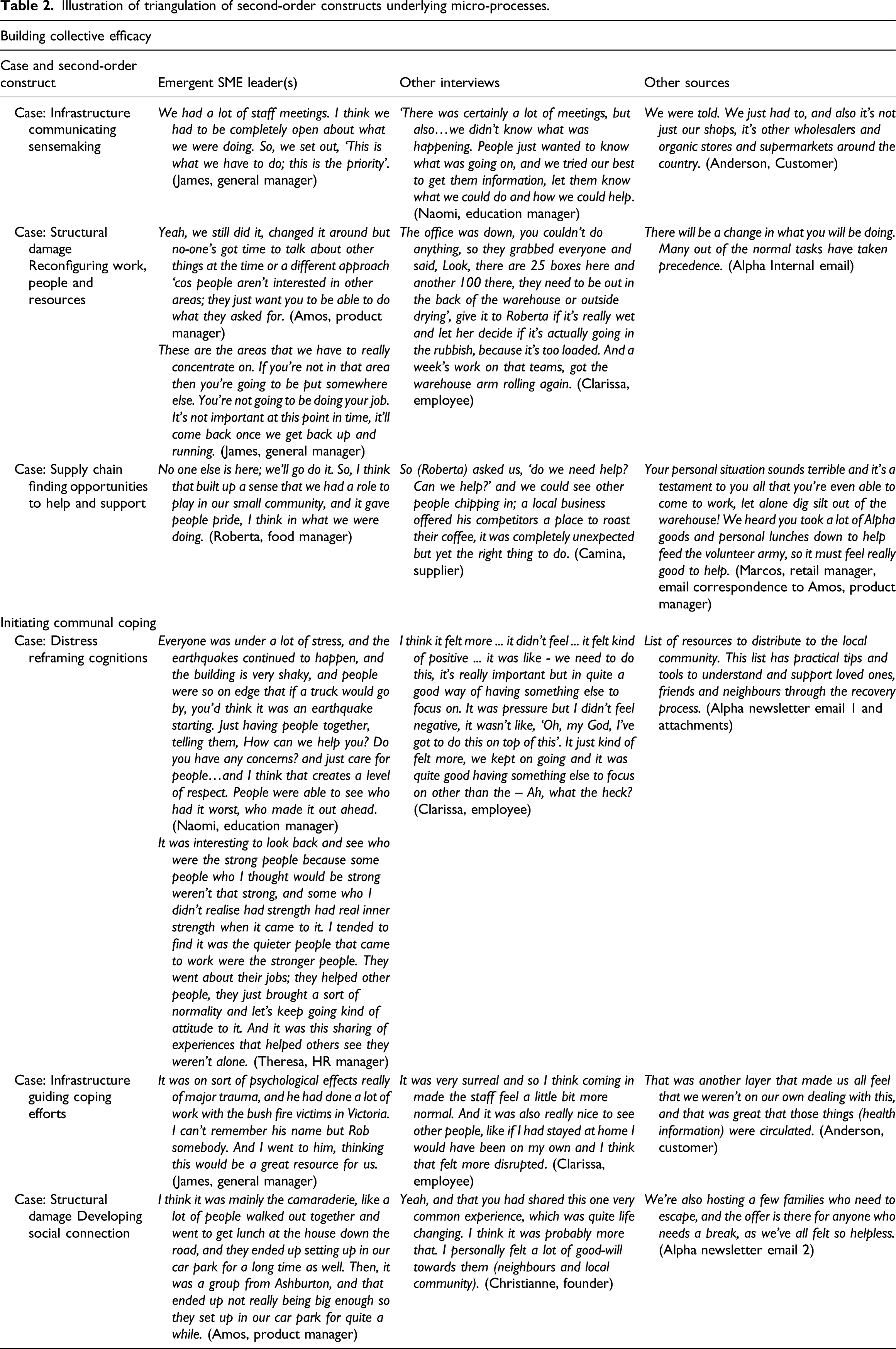
Firstly, we built chronologies from the data gathered to construct individual histories of each case. We validated the histories with informants through follow-up emails and interviews (Santos and Eisenhardt, 2009), and we used archival data to verify or confirm events in these chronologies. Making full use of quotes from the interview transcripts and combining the accounts of multiple informants, we analysed the actions, decisions and behaviours emerging in the ad hoc organising cases. We usually found a strong level of agreement among multiple informants regarding the chronology of events, rationale and actor roles.
Next, we conducted a within-case analysis, guided by the research question, developing preliminary concepts and a rough theoretical explanation for the process. We coded the data separately and then we discussed each case and our interpretations of the ad hoc organising process, frequently referring to the data in cases where we disagreed. Our awareness of the prior literature on collective agency, micro-processes and crisis management guided our examination of the data for the emergence of these constructs; however, we also looked for unexpected decisions, actions and behaviours emerging in each case. Thus, our analytical process involved theory elaboration (Lee, 1999) and theory generation (Eisenhardt, 1989). We added related fields of sociology and communication into our iterations to sharpen our construct definition and enhance theoretical arguments, internal validity and generalisability (Eisenhardt and Graebner, 2007).
Following this, we performed cross-case analysis, matching and comparing all cases to identify consistent patterns (similarities in sequences of events for a phenomenon across different cases), utilising an initial pair of cases before including other cases to develop robust theoretical patterns and mechanisms (Eisenhardt and Graebner, 2007). We described these mechanisms, the forces that underlay and produced the patterns we could see empirically, to derive our theory (Van de Ven, 1992) and test the emergent theory that was developed from individual cases against our other cases (Eisenhardt, 1989). This inductive process included noting agreements and discrepancies in the data and utilising the existing literature to sharpen insights into the ad hoc organising process. Data analysis was a recursive process cycling among the case data, emerging theory and extant literature (Eisenhardt and Graebner, 2007).
Illustration of triangulation of second-order constructs underlying micro-processes.
Findings
Managerial sensemaking, goal orientation and organisational-level changes
We found two overlapping patterns whereby the leaders of Alpha enacted ad hoc organising efforts after the Christchurch earthquake on 22 February 2011: building collective efficacy and initiating communal coping. The qualitative evidence suggested that these two overlapping micro-process patterns enabled collective agency in this disrupted environment. Building collective efficacy involved the mechanisms of communicating sensemaking; reconfiguring work, people and resources; and finding opportunities to alleviate suffering. Initiating communal coping involved reframing cognitions; guiding coping efforts; and developing social connections. The next sections discuss these two micro-process patterns in detail.
Micro-process 1: Building collective efficacy
Micro-process 1 – Building collective efficacy.
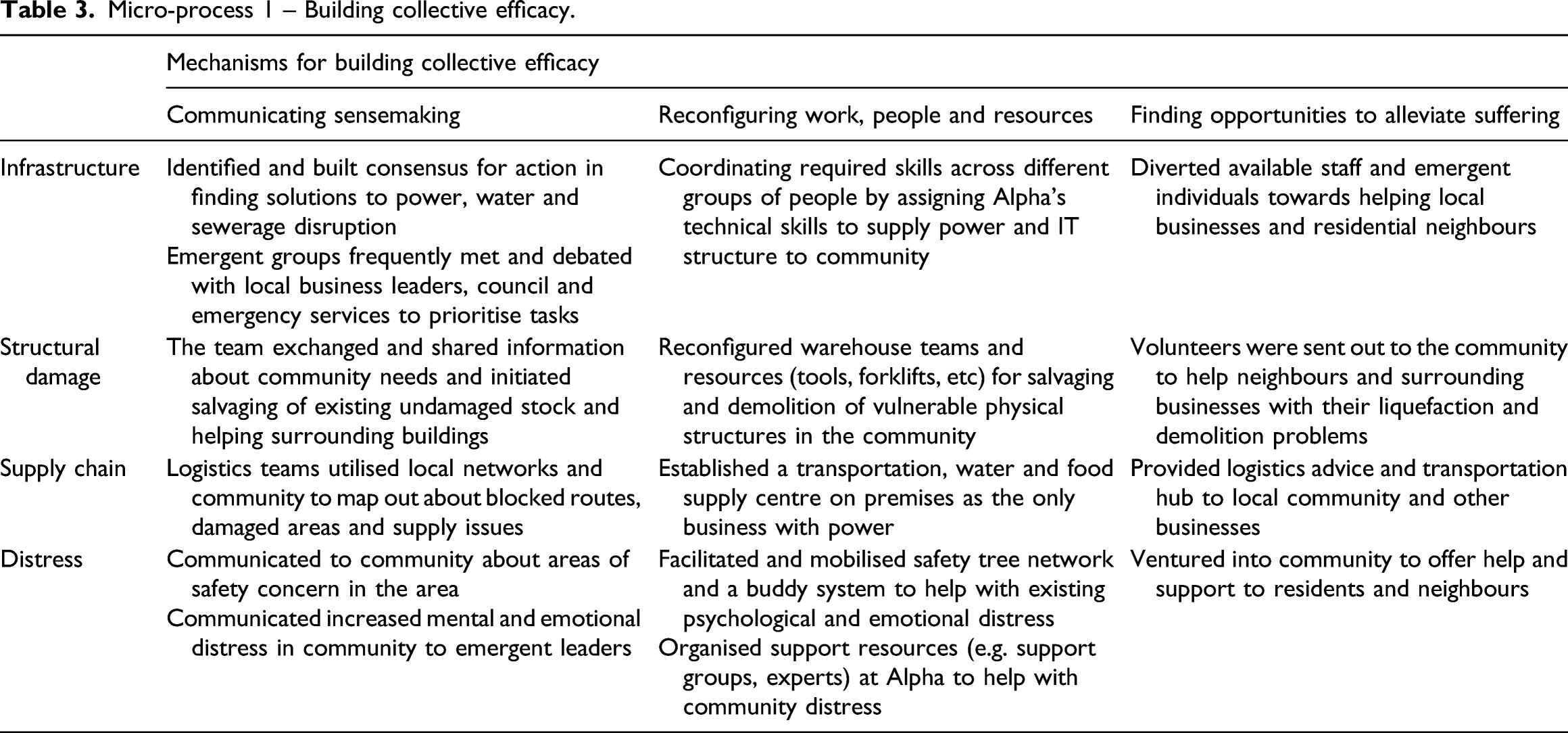
The infrastructure case (see Table 3) is an example of the communicating sensemaking mechanism underlying the building collective efficacy micro-process. Following the earthquake, Alpha’s leadership team convened to decide on critical aspects of the business and James, the general manager, made several significant decisions concerning the company’s overall direction. The leadership team exchanged this information with employees and key stakeholders such as their neighbours, local customers, suppliers and other businesses, to convey the scale of disruption to the business and environment. Communicating information was central to bringing everyone together following the crisis, highlighting the need to centralise sensemaking of the disruptive event. Here, James communicated his sensemaking to individuals and groups to alleviate uncertainty (through sharing information and knowledge) and provide a hub of information for the emergent community. And then when the big earthquake hit here, there were a lot of people that were very traumatised on the day, and [James] absolutely put people first. There was no question. Nobody really knew what was happening, we were just all told, which was so good. (Clarissa, employee)
The second mechanism, reconfiguring work, people and spaces, can be seen in the supply chain case (see Table 3). Due to the collapse of several buildings and widespread liquefaction, parts of the city’s transportation system were closed for safety reasons, including airports, roads and highways. Additionally, Alpha’s suburb was isolated because of the destruction of roads and bridges surrounding the community. Alpha could restore some semblance of operation to the supply chain into and out of the community by reconfiguring work, people and spaces. Roberta, Alpha’s food manager, organised this work by assigning non-critical staff (marketing and education department) and neighbouring businesses to work in new teams to ensure food and other emergency supplies could be transported into the community. This coordination of activities involved emergent groups such as friends, family and neighbours, who arrived with their vehicles to aid in the transportation of resources and supplies. The logistics team then integrated these groups to support the local area by facilitating transportation, supplies and essential services for the surrounding area. Alpha’s premises and facilities became the transportation hub to coordinate the local council, emergency services and local business for food, water and emergency supplies.
The third mechanism, finding opportunities to help and support, could be seen in the leader’s willingness to redirect efforts towards helping and supporting areas as required. They saw this need as evolving. In the infrastructure case, the priority following the February 2011 earthquake was to ensure the infrastructure of power and water was accessible to the local community. Although their work began as a way to make sense of the destruction to the infrastructure in the area, this team also used the opportunity to gather and connect to others to find ways to alleviate suffering. James (general manager) noted the cooperation of the local community: You know, they just set about, and people came to the fore. There were several people that said, ‘Well, I will do this’, and stepped up, and everyone looked to help everyone else. So, people went in to see their neighbours, we had neighbourhood get-togethers, and people wandered round, ‘Does anyone need some help with something?’
Similarly, the structural destruction case shows how this organisation completed warehouse repairs and salvaged their inventory, and then redirected their teams to engage in community efforts to help surrounding businesses by providing equipment, personnel and vehicles. This mechanism created a reciprocal relationship between Alpha and its local community, extending this newfound efficacy into other areas. Naomi, the education manager, noted the following about the supply chain centre: We turned a problem into an opportunity. Just a sense that everybody just had to kind of be super-adaptable. We have to come to work, we have a business to run, and everyone would drop what they are doing to go and help.
These mechanisms were seen to consistently underlie the replication logic in all cases where there was variability of conditions (Eisenhardt et al., 2016). For example, not all cases demonstrated an active search for opportunities to help and support the surrounding community; in the supply chain case, the surrounding community saw the transportation hub’s operation and approached the logistics team regarding their own transportation and emergency supply issues. Similarly, although the structural destruction case integrated new teams consisting of employees from other business areas and emergent volunteers to help with the surrounding destruction, existing work systems such as forklift operators and specialist technicians were used. In the distress case, Naomi (education manager) and Theresa (HR manager) relied less on a central hub for information and utilised their existing communication channels and prior personal and commercial relationships to gather information and deal with trauma in the community.
The micro-process of building collective efficacy could be seen in a pattern of activities that gave rise to ad hoc organising in the community. As Alpha’s leaders made sense of their organisation’s crisis, emergent volunteers such as other community leaders and residents in the area turned to organising groups of people. As the largest group, Alpha had what Quarantelli (1993) describes as the ‘pre-existing structures and functions’ to cope with the emerging context. Alpha’s response was to leverage its organisational functioning in an uncertain environment, to support the community’s welfare: We just said that [our] group will look and the first thing is to deal with the immediate situation, then look at what’s vital, what do we have to keep going, what do we have to do to do that? We had to try and invent a way of working out. So, it was really just on the fly, but we knew that was the most critical thing we had to do. (James, general manager)
Emergent SME leaders can provide direction and motivation in an uncertain environment via their existing knowledge and experience in functional areas (Herbane, 2013). Our cases showed that the emergent crisis leaders built on their existing organisational capabilities to provide direction and help to solve problems after the earthquake. This micro-process illustrated the narrowing of forethought in motivating and guiding communities through a crisis (Bandura, 2018). Additionally, this allowed the emergent groups to organise and execute the courses of collective action required to manage prospective situations (Babcicky and Seebauer, 2020). This micro-process also illuminated the way emergent action can be directed and coordinated in ad hoc organising.
Micro-process 2: Initiating communal coping
Micro-process 2 – Initiating communal coping.
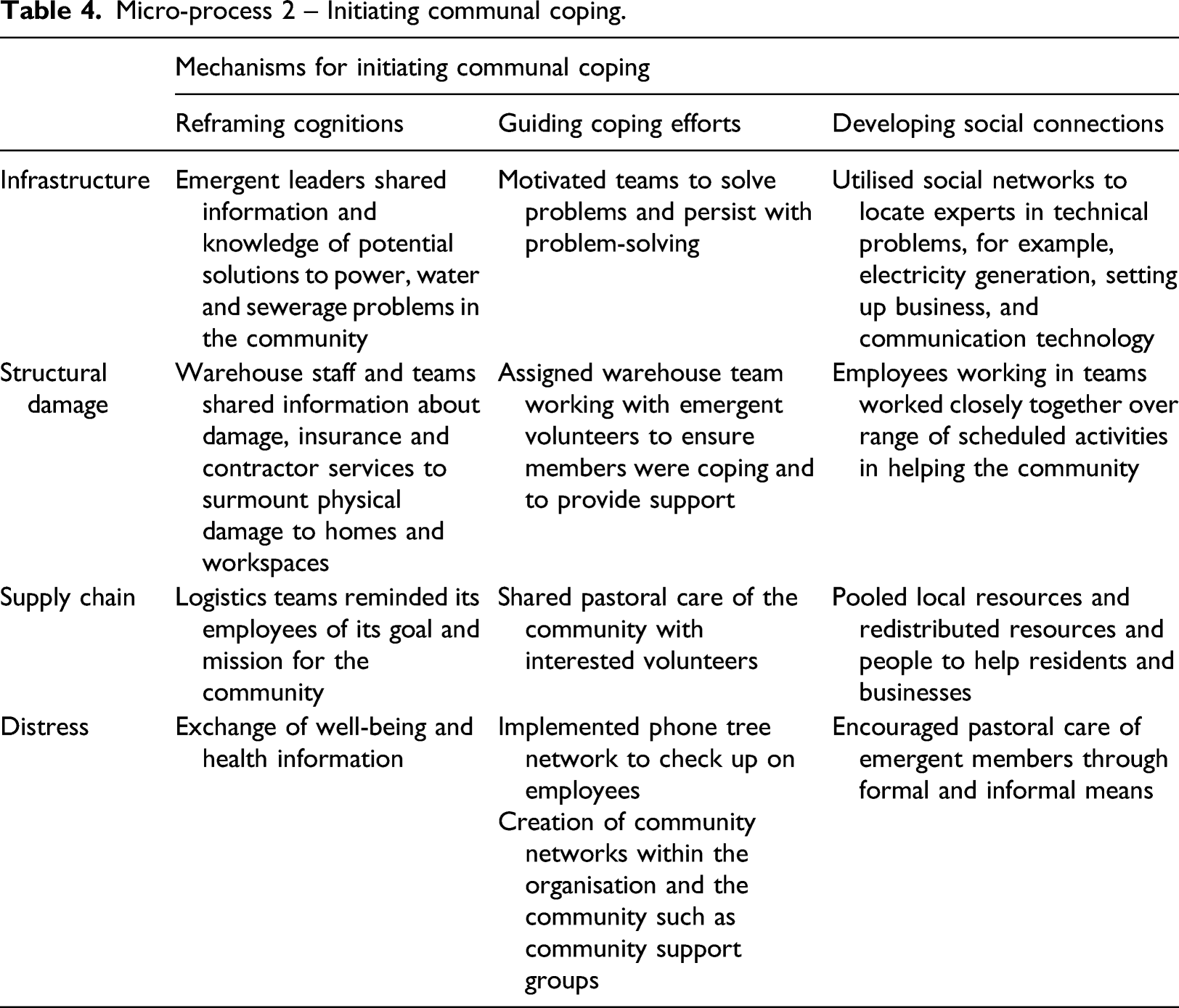
Alpha’s leaders supported community members to reframe their cognitions by actively sharing their perspectives about the earthquake and its impact, not only to alleviate suffering in the uncertainty but also to initiate collective actions towards agency. The organisation of emergent volunteers in the area and Alpha’s teams allowed an exchange of knowledge and perspectives about the people who could support the disrupted community, including information about earthquake relief, insurance advice and government aid. The structural damage case was an example of reframing cognitions. Amos (product manager) showed his understanding of the disruption within the community through his interactions with others, describing his neighbour’s safety concerns regarding their buildings: [We] worked out what you’ve got to do from a health situation and keep people in there healthy, and water and food. And we developed some other small teams and they went about their stuff. I thought we were the ones who had the big problems but we weren’t.
Similarly in the distress case, Naomi (education manager) described how people, ‘just all realised we were all in it together, and the luck of who was affected at home by the earthquake or not–I think everybody soon worked out who had the biggest problems at home’. Clarissa (employee) described the process of Alpha’s leaders reframing their cognitions as giving individuals information to help with their own mental state or the worries they had: Work has been fantastic about that and very supportive. I have tapped into a lot of the guys around here going, ‘What should I do? Am I doing the right thing?’ And they have been really supportive, as much as they can be.
Alpha’s leaders also attended to their employees by engaging in the second mechanism, supporting their coping efforts. In particular, the distress case showed the leader’s focus on community members welfare and emotional distress. Naomi (education manager) and Theresa (HR manager) provided information and direction about health services and volunteers who could provide mental health and health services to those who needed it. This included access to local counsellors or support groups such as for the elderly. She and Theresa encouraged their members to take an active pastoral care role in the community by ‘bringing in food, or help … if they had the energy … little things that made it feel different, because everything was different’.
The last mechanism, developing social connections, involved leveraging and sharing social ties for the collective benefit. The supply chain case showed how this mechanism came to the fore after the earthquake. As emergent groups organised at Alpha’s premises, Roberta (food manager) organised people into teams and units to help and this ‘made people feel a little bit more normal. And it was also really nice to see other people and [it] made other people feel less affected’. In the infrastructure case, James (general manager) said, ‘People just turned up and said, “We’d rather be here doing something together than at home, not.” We organised ourselves, we had a network and we could set things up, work things out’. This case also showed how the emergent group actively sought out expertise regarding restoring infrastructure in the area. James noted how quickly individuals emerged to share their contacts for solving their infrastructure problems, saying, ‘Someone rang me saying, “I’ve heard from [X] that they’ve come through reasonably ok, but they’re trying to get organised and we can get their help as soon as they can get organised”’.
There was some variation in ways of initiating communal coping. In two cases (infrastructure and structural damage), the reframing cognitions mechanism followed a top-down approach, aiming to change people’s perspectives about the earthquake, with the emergent leaders directly reframing cognitions. In contrast, the supply chain case showed that members helped to reframe perspectives through social interactions with each other. Additionally, while three of the cases (infrastructure, supply chain and distress) provided psychological and emotional support to their employees through the guiding coping efforts mechanism, the structural damage case team utilised a more functional approach to their guiding coping efforts by offering physical and technical help. Overall, the micro-process of initiating communal coping focused on the emergent leaders guiding people emotionally to collectively pool their resources to face adversity (Richardson and Maninger, 2016). Initiating communal coping showed the way these emergent leaders in ad hoc organising could create effective agency within the emotional strain of uncertainty and focus on alleviating suffering in this disrupted context (Bandura, 2018), motivating and socially embedding people into a supportive collective.
Discussion
Micro-process generating collective agency and effects
Collective-level effects in ad hoc organising.
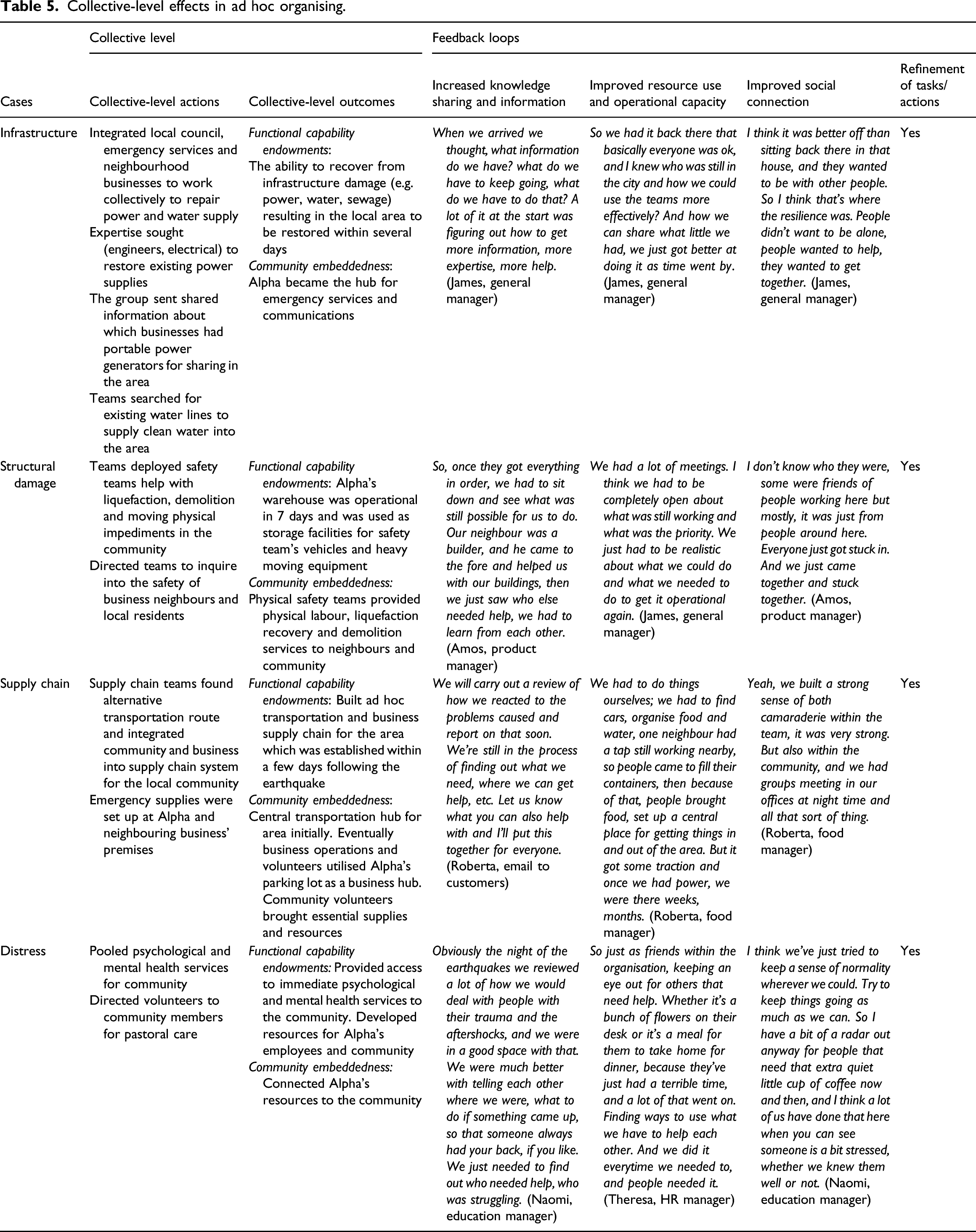
We observed that these emergent effects were achieved because the micro-processes represented the collective agency that translates to effective ad hoc organising. Functional capability endowments are capabilities for utilising emergent resources and people. Capability endowments have been described in the literature as functional endowments for responses, such as financial or cognitive (Boin and Lagadec, 2000); functional capability endowments capture the behavioural repertoires that are embedded in the design of an organisation, in its structure, processes and configurations of activities, that enable responses (through its leadership and employees) and are adapted for disrupted contexts. These capability endowments allow people to adapt to uncertainty and diffuse decision making and action in emergent groups of people (Sutcliffe and Vogus, 2003; Williams et al., 2017).
Additionally, functional capability endowments highlight the properties of flexibility and adaptation. All the cases in this study demonstrated the way Alpha directed collective agency towards the emergent problems in the community by leveraging existing resources and capabilities (see Table 5). Although recovery is a primary aim for SMEs responding to disruptive events (Lacho and Eness, 2011; Runyan, 2006), our study suggested that the ad hoc organising responses tended towards broader collective goals. Each case highlighted the way ad hoc organising built on existing resources or capabilities to drive activities towards community needs. In all cases, Alpha’s leaders emphasised ‘forming small groups who are operational’ (James, general manager), ‘getting it working with the others’ (Roberta, food manager) and ‘finding ways to use what we have’ (Naomi, education manager). For example, in the infrastructure case, collective agency directed the emergent members to restore power and water to the area collectively. This group shared information and deployed teams to search for expertise to repair power lines quickly and locate water supplies in the area.
Our second overlapping collective-level effect relates to community embeddedness (Almandoz, 2012; Marquis and Battilana, 2009). In general, our findings illustrated the ways SMEs could connect more deeply with their communities, as well as draw on and re-deploy community resources through ad hoc organising. While this has been a central feature of previous studies of community-embedded organising (Marquis and Battilana, 2009; Williams and Shepherd, 2020), much of the existing research explains institutional-level processes, with little exploration of the way firms can embed themselves into their communities to cope in disrupted contexts at a micro-process level. Across all the cases in this study, ad hoc organising connected Alpha to its community for the sharing and deployment of resources. For example, the supply chain case demonstrated the way community embeddedness emerged through engagement with more volunteers to help the local area. While Alpha’s supply chain team initially focused on their supply chain routes to service their existing customers, Roberta (food manager) described the way family and friends, and then the local community, began to volunteer their vehicles for moving into and outside the area. A reciprocal relationship developed between Alpha and the surrounding community, where Alpha serviced the community’s transportation and resource supply needs. Additionally, a neighbouring business still had a water supply from which the community could gather water, so the community made that premises the site of emergency services supplying medical and food supplies.
Together, the collective-level effects demonstrated the way Alpha’s leaders achieved collective outcomes for the community in ad hoc organising. Table 5 shows the collective-level outcomes arising from ad hoc organising of collective-level actions. Altogether, the collective agency of ad hoc organising helped to increase information and knowledge sharing in the community and refined these capabilities through repeated application in the community. Table 5 shows the feedback loops whereby increased interactions with the emergent communities led to greater information collection, knowledge sharing and social connection, allowing greater use of limited resources, across all the cases of this study. In each case, the emergent leaders described applying their increased capacity for responses to others. For example, in the structural destruction case the business sent their heavy-equipment teams to different community businesses and residents requiring help; in the distress case the business supported individuals who required different mental health services because of the earthquake. Thus, the micro-process patterns of collective agency wrought collective-level effects, as shown in Figure 1. Micro-processes leading to collective outcomes.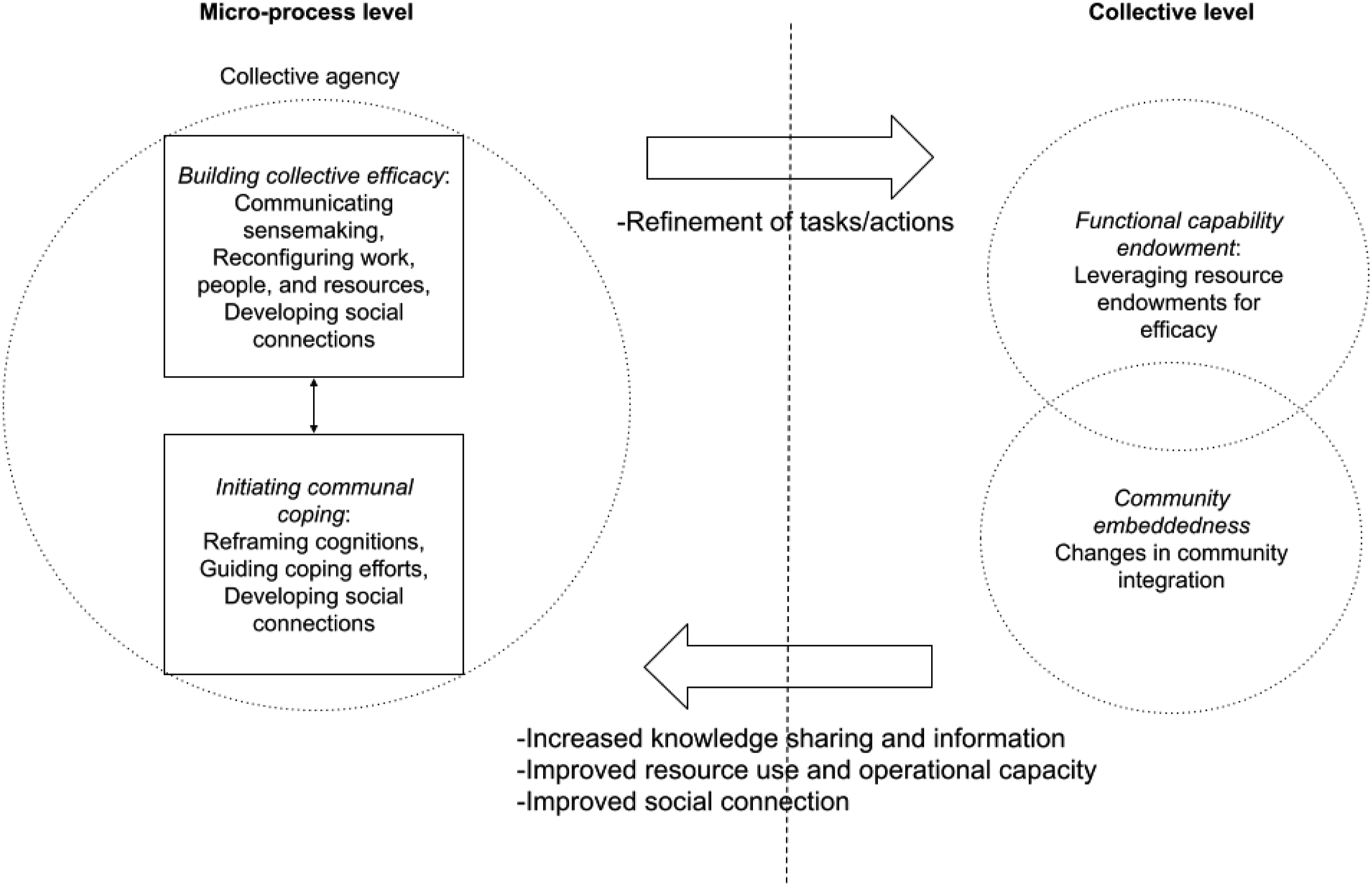
The micro-foundations of ad hoc organising for small and medium-sized enterprises
To date, it has been argued that SMEs can play a critical role in alleviating suffering following disruptive events (Boin and Bynander, 2015; Williams and Shepherd, 2016a). Unfortunately, despite this potential impact, little is known about how SMEs can engage with emergent responses in the community, including how they make sense of the spontaneous convergence and ad hoc organising that follow. Therefore, the purpose of this inductive study was to understand how SMEs, particularly their leaders, could engage and enable collective agency for ad hoc organising after a disruptive event. We theorise that these socio-cognitive decisions, actions and behaviours led to collective motivation and directed members towards collective effort and agency (Bandura, 2000, 2001), essential for rapid action in a disrupted context and for recovery efforts in a community.
One significant contribution to the literature addresses how emergent SME leaders can motivate and coordinate emergent individuals and groups through ad hoc organising. While most of the research in the crisis management and SME literature describes the interplay of emergent groups following a disruptive event (Spillan and Hough, 2003; Williams et al., 2017), our study shed light on the internal dynamics of a particular SME as it engaged in ad hoc organisation with its community. Our findings provided empirical evidence for the way ad hoc organising emerges through leadership and collective effort. The first micro-process, building collective efficacy, suggests that successful collective effort focuses on the emergent group’s collective capabilities. Ad hoc organising requires directing effort and understanding how best to combine resources and capabilities, including the repeated application of these emergent capabilities in diverse areas. The findings from this study are significant because to date, researchers have assumed collective efficacy to be an aggregation or cumulative form of individual self-efficacy (Chen and Bliese, 2002). Our study has increased our understanding of collective efficacy by demonstrating the way the emergent SME leaders quickly built collective capabilities under uncertain conditions. Ad hoc organising can build on an organisation’s existing capabilities to foster responses in the community, an area rarely examined by the existing research (Drabek and McEntire, 2003; Stallings and Quarantelli, 1985). Although ad hoc organising is often described as being ‘emergent’ and ‘spontaneous’, there has been little attention paid to the pre-existing conditions that support mobilisation. Such a perspective paints ad hoc organising as unmanageable and uncontrollable, overlooking the significant embedded structures and interconnections that manifest into capabilities and resources. Our findings established the boundaries for how and when an SME’s participation and agency can lead to effective outcomes in ad hoc organising.
A major contribution of our study to the literature on ad hoc organising is the provision of insights into the socio-cognitive complementarities that can help emergent leaders motivate support under conditions of emotional and social strain. Initiating communal coping reveals the required socio-cognitive imperatives for motivating and directing the collective attention to ad hoc organising. Research into response strategies to crisis suggests that dealing with socio-cognitive dilemmas is a vital precursor to action (Bechky and Okhuysen, 2011; Kwong et al., 2019). We would add that developing the cognitive and social strategies as part of ad hoc organising is critical in building the collective effort for collective agency in a disrupted context. This study’s insight into the way social relationships develop in ad hoc organising’s social environment has implications for crisis management (Bundy and Pfarrer, 2015). A focus on positive emotional states and social connection in a disrupted context aids recovery efforts and builds organisational resilience in firms (Linnenluecke et al., 2012), as well as enlarging the collective agency for crisis management (Williams and Shepherd, 2014). Our study has enabled a greater understanding of these socio-cognitive mechanisms and the ensuing collective agency that can help to enhance coordination efforts (Fay-Ramirez et al., 2015). These micro-processes explain how emergent SME leaders can address their social and ethical obligations while ad hoc organising, through their compassionate signals to emergent individuals and groups (Dutton et al., 2006). This extends existing research by specifying the mechanisms of change and integration, including the moral and normative social obligations towards the community that emergent leaders have (Seeger and Ulmer, 2002; Ulmer, 2001). This fills a gap in the crisis management literature regarding the way coordination and collective agency can emerge in a disrupted context and the role of SMEs in aiding these efforts. Additionally, this expands our understanding of SMEs in disrupted contexts beyond the context of a single entrepreneur or SME owner.
Another significant contribution of this study relates to the way ad hoc organising can increase the viability of SMEs by examining the links to collective outcomes for the community. By casting a light on a specific SME’s participation in ad hoc organising efforts, we have provided evidence of the importance of micro-process mechanisms for functional capabilities and the rapid strengthening of community ties in a disrupted context. These findings explain the way ad hoc organising can produce cross-level effects from collective agency (Kornberger et al., 2019; Pramanik et al., 2015), and the emergent SME leader’s facilitation of collective agency can lead to functional capability endowments and community embeddedness. These facilitated outcomes have several implications for the role that SMEs can play in disrupted contexts. The emphasis on functional capability endowments suggests that SMEs can benefit from recovering and then exercising their capabilities for the benefit of the community. The integration with emergent groups in the community indicates the need to activate collective resources and coordinate people to build on existing but disrupted capabilities. These capabilities signal available underlying expertise, providing a potential solution base for emergent groups. By examining a specific SME’s engagement with ad hoc organising, we have shown how repeated responses to community problems allowed the emergent groups to develop capabilities through this situation, highlighting the basis for rapid learning and practice in disrupted contexts (Carlton and Mills, 2017). By embedding into a community, SMEs can integrate access to, or the use of, resources from socially bound organisations and community members, facilitating information and knowledge exchange (Williams and Shepherd, 2016a). The development of collective agency highlights how the actions of SME leaders can coalesce to enervate their resources and capabilities as a collective throughout ad hoc organising (Williams and Shepherd, 2020; Williams et al., 2017).
By focusing on the emergent SME leaders who led organisational members and emergent groups after the February 2011 earthquake, we also uncovered how leadership could influence collective capability and efficacy in their ad hoc organising efforts. There is recognition that leaders must attend to the detrimental effects of negative affective reactions that accompany uncertain environments, as alleviating these detrimental effects could lead to rapid information exchange under pressure (Netz et al., 2020). The more SMEs are embedded in their communities, the quicker SME leaders can be alerted to danger, access information and gain greater credibility and access to resources. These processes are enhanced if SMEs initiate compassion and communal coping (König et al., 2020). Additionally, this embeddedness allows agency sharing by alleviating strain and anxiety in the community and activating collective resources towards agency (Sanfuentes et al., 2021). However, research suggests that not all SMEs engage in community embeddedness and community-organisation interactions, which indicates an area of resilience building that would be beneficial for SMEs (Williams and Shepherd, 2020).
Practical implications
The findings from this study present several practical implications for SMEs in disrupted contexts. Under certain conditions, SMEs can play a prominent role in disrupted contexts as a source of recovery and potential solutions in a community requiring aid, particularly when external resource providers such as governments and aid organisations cannot respond in the immediate aftermath of a disruptive event. Policymakers and aid organisations should recognise that SMEs that are willing and able to respond could help with ensuring effective coordination and action through their pre-existing community networks, resources and capabilities (Kapucu et al., 2020). Therefore, integrating and strengthening communication with SMEs as part of a formal response network in policies and response emergency management plans could ensure the effective integration of SMEs in disaster preparedness and inter-organisational coordination.
The second practical implication from our findings concerns the micro-processes of emergent leaders within SMEs. As disrupted contexts can produce significant relational disruption, SME leaders need to understand the importance of enacting the socio-cognitive processes necessary to provide certainty and safety for emergent groups. Entrepreneurs and SME owners should be proactive in identifying employees who might be vulnerable or experience heightened distress in a disrupted context and install organisational support systems that limit the adverse impact of disruptive events. For example, they could prepare safety communication channels, individual and group support systems and information hubs for employees in disrupted contexts (Boin and Bynander, 2015; Haq et al., 2020). Additionally, encouraging social support and an increased sense of community are essential for facilitating coping and engaging a collective agency. Studies have shown that attention to these community and social needs have profound implications, such as reducing post-traumatic stress symptoms (Gallagher et al., 2019); shared protective mental health effects (through greater psychosocial resources) (Wind and Komproe, 2012); and ‘a shared “energy field” wherein reactions and efforts of so many people inadvertently rub off on each other’ (Kaniasty, 2020: p. 107). Entrepreneurs and SME owners could provide significant support in their businesses by establishing support groups, pastoral care processes and employee assistance programmes designed to limit the adverse impacts of disruptive events.
Limitations and future research
A possible limitation of this study lies in the use of the retrospective recollections and the timeframe of the data collection. As with all retrospective accounts, these are prone to memory errors (Berney and Blane, 1997; Huber and Power, 1985). However, as noted earlier, using multiple data sources and archival sources may have mitigated these problems. It has been suggested that there may be permanent effects on an SME’s capabilities and community embeddedness from ad hoc organising in a disrupted context (Williams et al., 2017). Although the focus of our study was on how this particular SME engaged in ad hoc organising in a disrupted context, a further step would be to determine whether these actions led to ongoing successful business performance. Another follow-up for this study could be to determine the extent of relational outcomes on organisational and community member well-being and its effect on recovery efforts. The existing research suggests that while emergent social groups promote collective efficacy after disruptive events (Kaniasty and Norris, 1993; Luszczynska et al., 2009), their effectiveness declines over time (Fay-Ramirez et al., 2015). Finally, we note that our study focused on several interviews in one setting. While our aim was to induce phenomenologically rich theory-building insights, these dense descriptions can suffer from locality and researcher-specific limitations. Therefore, future studies could benefit from collecting the experiences of external emergent individuals and groups working with SMEs to understand how their perceptions and experiences mesh with the objectives of the SMEs.
Conclusion
Ad hoc organising is an important emergent phenomenon for SMEs in disrupted contexts. With the increasing occurrence of natural disasters, SMEs face greater challenges in coping with uncertainty and environmental instability. This study has provided initial empirical evidence that ad hoc organising is an important sub-process in the overall response to crisis and disruption, a growing but insufficiently researched area in the entrepreneurship literature (Williams and Shepherd, 2020). In particular, the findings have highlighted the critical socio-cognitive processes that SME leaders engaged in during ad hoc organising, demonstrating the micro-processes through which the leaders could enable collective agency in response to a disruptive event. The findings revealed two specific micro-processes – building collective efficacy and initiating communal coping – that converged to facilitate collective agency for collective action and outcomes simultaneously. This study of an SME’s role, particularly through its leaders participating in an ‘emergent and spontaneous’ response to a disruptive event, has responded to calls for increased attention to ad hoc organising as it highlights the potential empowerment of SMEs in disrupted contexts (Kapucu et al., 2020). Therefore, we encourage scholars, practitioners and policymakers to explore the central role of SMEs, embedded and connected to their communities, in disrupted contexts.
Footnotes
Declaration of conflicting interests
The author(s) declared no potential conflicts of interest with respect to the research, authorship, and/or publication of this article.
Funding
The author(s) received no financial support for the research, authorship, and/or publication of this article.
