







Abstract
Social impact accelerators (SIAs) support disadvantaged entrepreneurs in pursuing business goals. Although prior studies have recognised that SIA managers may interpret identical signals from men- or women-led teams differently during the selection process, the role of institutional contexts in gender disparities remains unclear. Integrating a gender stereotype lens with signalling theory, we contend that gender disparities in signalling effects vary across institutional contexts. Supporting this contention, our analysis of 10,217 startup applications across 232 SIAs in 143 countries (2016–2018) confirms that men-led ventures that secured external equity funding are more likely to be accepted by SIAs, while this effect is insignificant for women-led ventures. This gender disparity in signalling effect is attenuated in nations with higher perceived external equity funding availability and greater gender equality, suggesting that gender stereotyping exerts less influence in these contexts. These findings offer important policy and practical implications for creating a fair market for entrepreneurs.
Introduction
Interest in social enterprises has grown rapidly among academics and practitioners (Lee, 2025; Saebi et al., 2019; Vedula et al., 2022). These ventures blend profit with purpose, generating social value by addressing unmet needs (Thompson and MacMillan, 2010), driving innovation (Chalmers and Balan-Vnuk, 2012) and sparking social change (Short et al., 2009). To fuel their success, social impact accelerators (SIAs) emerged, offering mentorship and education while balancing financial sustainability with broader social, environmental and cultural impact (Audretsch et al., 2011; Cohen, 2014). Despite the compelling empirical and theoretical arguments for the desirability of SIAs, little is known about the gender-related factors that influence admission into SIA programmes. From the limited evidence, Yang et al. (2020) found that men with traditionally masculine achievements, such as securing external funding, have higher SIA acceptance, while women need more social achievements, such as securing philanthropic funding. While these studies have offered important insights into gender disparities in SIA acceptance, they do not consider the context in which the SIA assessment takes place occurs and, thus, do not provide implications for creating a less gender-biased environment. In this article, we integrate a gender stereotype lens with signalling theory to advance the gendered debate on SIA acceptance, as the existing literature, although grounded in signalling theory, has not fully considered how gender stereotypes – shaped by different institutional contexts – affect signal interpretation.
To address this research gap, in this study, we will compare SIA’s interpretation of the identical signal that women and men entrepreneurs send and examine ‘how does institutional context affect the SIA manager’s interpretation of the same signal sent by entrepreneurs of different genders?’. Integrating a gender stereotype lens into signalling theory, we propose that the gender disparity in signalling effect varies across institutional contexts. The literature implies that in the context of SIAs, both men and women jeopardise their chance of acceptance if they send signals that deviate from their socially expected gender roles (agentic and communal, respectively), and women may experience greater disadvantage (Yang et al., 2020). However, we would be remiss if we did not consider the key roles of context in shaping these interactions. As gender stereotyping – a psychological and sociological framework that explains how people form and apply beliefs about gender roles – is influenced by institutional context (Bobbitt-Zeher, 2011), we posit that the gender disparity in signalling effect may vary across different contexts. Exploring this research area not only answers a recent call for the study of the effects of environmental context on signalling (Connelly et al., 2025) but also dovetails with recent work that has highlighted the importance of the institutional environment in improving the capacity of SIAs to select high-growth start-ups (Assenova, 2021).
In this study, the signal being examined is whether the entrepreneur secured external equity funding at the time of SIA application. This metric is widely recognised as a strong indicator of potential business growth (Blaseg et al., 2021). We will investigate how the gender disparity of the effect of this signalling on SIA acceptance varies with two institutional context factors: the availability of national external equity funding and the level of gender equality. We focus on these two factors because they significantly influence the socioeconomic dynamics between gender and external funding in both economic and social aspects. From an economic perspective, the cost of obtaining the signal of external equity funding is a critical institutional factor influencing gender disparity in the signalling effect. According to signalling theory, the credibility of a signal sender is positively associated with the cost of obtaining the signal (Spence, 1973, 2002). In countries with abundant funding opportunities, gender stereotypes tend to be weak, and the low costs and high availability of external funding encourages more women to pursue entrepreneurship (Minniti and Naudé, 2010). This increased representation of women amongst applicants mitigates concerns about signals being considered incongruent with gender stereotypes (Brush et al., 2009). Therefore, the low cost of gaining funding across genders reduces the disparities in how signals are interpreted. From a social perspective, gender equality is amongst the most critical institutional factors influencing entrepreneurial activities. In nations with high levels of gender equality, gender stereotypes are weak (Ridgeway and Correll, 2004), resulting in lower challenges for women in accessing resources. Gender equality also increases women’s self-efficacy and enhances their performance in entrepreneurial endeavours (Hollenbeck and Hall, 2004), which further reduces gender disparities in how signals are interpreted.
To test these hypotheses, we used data from the Aspen Network of Development Entrepreneurs (ANDE) database, supplemented with data from the World Economic Forum (WEF) and the Global Entrepreneurship Monitor (GEM) databases. Our analysis of 10,217 startup applications across 232 SIAs in 143 countries (2016–2018) confirms the current literature that ventures led by men who demonstrated traditionally masculine achievements (i.e. external equity funding) were more likely to be accepted by SIAs, while this effect was insignificant for women-led ventures. More importantly, the results support our hypotheses that increased availability of external equity signals and greater gender equality reduce gender disparity in the signalling effect, emphasising how this effect is highly context dependent. Paradoxically, the results also indicate that while SIAs often support women entrepreneurs, gender stereotypes in certain contexts may distort the interpretation of women’s costly signals, meaning that even hard-earned signals risk being undervalued.
This study makes several important contributions to entrepreneurship research. First, it demonstrates how the value of costly signals is affected by institutional contexts. While extant research has offered extensive insights into how signals influence managerial decision-making, much less effort has been put into the signalling context despite its potential to significantly influence signal interpretation (Connelly et al., 2011, 2025). This is particularly true in gender studies. We enrich this stream of work by offering a novel explanation for why identical signals sent by different genders may exhibit differential effects; our findings reveal that the impact of signals is deeply embedded in both the economic and social dimensions of the institutional context. These factors play crucial roles in the salience of gender stereotypes and, consequently, the interpretation of signals. Meanwhile, the study also extends gender research by demonstrating the importance of considering relevant institutional components in understanding the role gender stereotypes play in business life. We are responding to the latest need to explore women entrepreneurs in leadership as the current state of research lacks influence and output (Aparisi-Torrijo and Ribers-Giner, 2022). Moreover, we contribute to the limited research on SIA acceptance. In particular, we extend Yang et al.’s (2020) work by incorporating the national institutional context into the interpretation of signals sent by nascent ventures. Given the challenges in fairly assessing entrepreneurs, it is important to keep unveiling factors that can help SIA managers make informed decisions and make applicants aware of the possibility of varying outcomes in different contexts. Further, our findings inform practitioners about the unintended drawbacks of supporting underrepresented groups and provide valuable insights for new ventures and entrepreneurial resource providers. Our findings suggest that increasing the supply of nation-level equity funding and promoting gender equality can help reduce gender disparity, creating a fair market for entrepreneurs. In this way, competent women are less likely to be penalised for gaining costly signals, and SIAs are less likely to suffer from gender-biased assessments.
Theoretical development and hypotheses
Social impact accelerators
Accelerators are a recent form of startup assistance organisations (Hallen et al., 2020). They offer experiences with mentorship and educational components culminating in a public pitch or demo (Cohen, 2014). The burgeoning expansion of startups within the social sector has catalysed the emergence of a distinct type of accelerator (SIAs). The difference between typical accelerators and SIAs lies primarily in their goals, target startups and evaluation metrics. While typical ones aim to help startups become profitable and attract investors, SIAs focus on addressing societal challenges such as poverty, inequality, education and climate change. They target startups working in areas like social justice, clean energy, or community development and evaluate success not only by financial metrics (Kher et al., 2023) but also by impact metrics (e.g. the number of lives improved, carbon emissions reduced or communities empowered), implying that their startup selection process balances social welfare with financial gain (Lall et al., 2013; Roberts and Lall, 2018, 2019). Like traditional accelerators, SIAs provide networks (Cohen, 2014), certify the relationship between entrepreneurs and investors (Plummer et al., 2016), and help entrepreneurs receive much-needed financial and non-financial capital, such as employees (Crișan et al., 2019; Radojevich-Kelley and Hoffman, 2012). The numerous benefits of SIAs and the growing number of startups intensify the competition amongst entrepreneurs to enrol in SIA programmes. To theorise acceptance into SIA programmes effectively, it is essential to emphasise their distinctive features ; as they are geared towards social impact in addition to financial goals, they specifically target growth-oriented entrepreneurs and under-privileged startups (Crișan et al., 2019). As women have traditionally been found to face more challenges in resource acquisition (Alsos et al., 2006), SIAs provide a suitable context for studying institutional influences on gender disparity. This framework may extend to other organisations that align with the social responsibility trends by supporting marginalised groups; thus, offering broader implications for similar initiatives.
Gender stereotypes and acceptance of SIAs
Gender stereotyping has long been a focus of research on entrepreneur access to resources in various contexts, such as debt, business angel and venture capital financing (Alsos and Ljunggren, 2017; Dorfleitner et al., 2013; Gupta et al., 2009). Gender stereotypes are a psychological and sociological perspective that explores how individuals develop and use assumptions about gender roles – that is, what traits, behaviours and roles are considered appropriate for men and women. These stereotypes are culturally learned and often deeply embedded, influencing expectations and social behaviour. Studies found that women often experience prejudice due to the incongruity between the stereotypes associated with them and the leadership roles they pursue in startups (Badura et al., 2018; Eagly and Karau, 2002; Newman and Alvarez, 2022).
Entrepreneurship is predominantly considered a male-dominated activity (Alsos et al., 2006), which privileges mainly masculine characteristics (Gupta et al., 2009); thus, women have been traditionally considered less favourably as entrepreneurs (Eddleston et al., 2016; Gupta et al., 2009; Powell and Eddleston, 2013). The stereotype perpetuates expectations of poor performance from women-led ventures (Heilman and Chen, 2003), constraining access to funding and other key resources for women entrepreneurs (Nevi et al., 2025; Robinson and Stubberud, 2009). Moreover, women from cultures that negatively stereotype their abilities may develop low self-esteem; in turn, they either opt out of entrepreneurial activity or perform poorly when they do engage (ThéBaud, 2010), which further decreases their chances of obtaining resources. Although recent studies have shown that women are increasingly accessing nontraditional resources successfully, such as crowdfunding (Wesemann and Wincent, 2021), the trend still aligns with gender stereotyping logic – women are often perceived as more trustworthy, a trait that is crucial for securing low-stakes and high-social types of funding, such as crowdfunding (McGuire, 2019). In recent decades, recognising the constraints of gender stereotypes on various types of social activities, many organisations have started adopting preferential treatment policies to support women (Khadria, 2000). Such policies are often practiced when admission is offered into educational institutions and the labour market, amongst others; their purpose being toequalise opportunities to counteract historical or traditional discrimination against women and other disadvantaged groups (Norris, 2001). By the same token, SIAs publish similar policies to respond to the trends of supporting disadvantaged groups (Certo, 2003).
Given that one of the primary missions of SIAs is to support underrepresented groups, and women often face challenges in accessing external resources, some SIA managers adopt supporting strategies to encourage women’s empowerment and promote equality (Roberts and Lall, 2018). As a result, women are more likely to be accepted to SIA programmes than men (Ermilina et al., 2021), particularly when their ventures emphasise a social mission (Lee and Huang, 2018). Moreover, in alignment with this social motivation, gender parity accelerators, a specialised form of SIA, have been established to support women entrepreneurs and help reduce gender disparity. 1 That aligns with recent findings suggesting that different aspects of entrepreneurial ecosystems – such as culture, community and resources – influence gender inclusion. Factors such as entrepreneurial identity, close networks and strong government support can help women entrepreneurs become more inclusive (Isakova and Stroila, 2025).
Gender disparity in the signalling effect of external equity funding
In addition to social welfare, SIA managers must consider financial returns when selecting startups; as such, we assume SIA managers carefully assess the quality of applicants. One of the most crucial evaluation approaches is relying on specific signals reliably representative of the underlying quality of applicants (Connelly et al., 2011). Much literature applies signalling theory to selection processes (BliegeBird and Smith, 2005); this construct argues that the unobservable qualities of individuals and organisations can be communicated by certified and observable signals (Ahlers et al., 2015). An effective signal must meet general requirements for efficiency, including being observable, difficult to alter, costly to produce and change, difficult to imitate, persistent and reducing information asymmetry between a signal sender and a receiver (Connelly et al., 2011; Gao et al., 2008).
External funding is one of the most commonly employed signals in entrepreneurship literature (Blaseg et al., 2021; Warhuus, et al., 2021). The signal of external equity funding refers to whether entrepreneurs have secured external equity funding when they apply for SIAs. One recent example of external funding is a crowd patronage model (Tan and Reddy, 2023), which offers ongoing financial support by removing two common limitations of traditional crowdfunding: it does not set a fixed timeline or a specific funding target (Seitz, 2018). A venture’s success in accessing external equity funding is a salient signal when SIA managers evaluate the venture for two reasons. First, a track record of obtaining funding suggests that other capital providers see merit in the new venture (Ester, 2017; Reuber and Fischer, 2005). Second, external equity funding can decrease the perceived risk of business failure because obtaining external equity funding indicates a venture’s ability to make interest and dividend payments over time (Bhattacharya, 1979; Ross, 1973). In addition, while equity funding also entails the substantive consequence of risk-sharing between entrepreneurs and investors, this is distinct from its signalling function. Our focus is on the interpretive aspect of signalling, namely, how the presence of equity is evaluated by SIA managers as an indicator of venture quality. Taken together, external equity funding serves as a valuable signal, enhancing the likelihood of SIA acceptance (Gonzalez-Uribe and Leatherbee, 2018). Despite the value of external equity funding, prior research suggests that disparities exist in the perceived merits of this signal across genders. While scholars acknowledge that signal receivers may interpret the same signals differently (Park and Mezias, 2005), little research has explained how these interpretations depend upon the gender of the signal senders. Some notable exceptions include Eddleston et al. (2016) and Yang et al. (2020), who suggest that entrepreneurs experience better outcomes when a startup’s signals are congruent with the stereotypes associated with the lead founder’s gender. In particular, economic signals such as external equity funding are more likely to be positively received when sent by male applicants. Therefore, the effect of existing external equity funding on the chance of SIA acceptance is stronger for men-led ventures than for women-led ventures (Yang et al., 2020). As this hypothesis has been supported by Yang et al. (2020), we do not specify it here. Nevertheless, we will extend their work by investigating the institutional conditions that moderate the gender disparity in the signalling effect.
The role of institutional conditions
Signalling theory suggests that the value of signals depends on how the receiver interprets them (Alsos and Ljunggren, 2017) suggesting. It indicates that the meaning and value of signalling are context dependent. The receiver’s interpretation of a signal is influenced by their cognitive framework (e.g. beliefs, norms and values), which is shaped by various factors, such as prior experiences, biases, and expectations (Drover et al., 2017). These factors emerge from institutional settings that provide a structural backdrop against which their perceptions and interpretations are formed (Berger and Luckmann, 1966). These institutional contexts profoundly influence how individuals process information, make decisions and react to various signals within their milieu (North, 1990). Consider a scenario where a company publicly announces its commitment to sustainability by adopting eco-friendly practices. In a region where environmental regulations are stringent, and sustainability is greatly valued by the public, such announcements will serve as positive signals and thus, enhance the company’s reputation and attract eco-conscious consumers and investors. In contrast, in a setting where environmental accountability is less appreciated, the same signal may be interpreted as mere marketing with minimal impact on business perceptions or stakeholder behaviour. Thus, analysis of the institutional context may help us disentangle the complexities of signal interpretation. We focus on two institutional factors to study their influences on gender disparity in signalling effects – one economic and one social factor that has the potential to change the underlying mechanism of gender-biased decisions regarding external equity funding. Both economic systems and social norms are integral components of the institutional context, collectively shaping the landscape in which entrepreneurial activities occur (North, 1990). By examining these factors, we can gain a more comprehensive understanding of how institutional environments influence the interpretation of signals sent by different genders.
Influence of national equity funding availability
The most relevant economic factor in our research context is national equity funding availability. Signalling theory suggests that the cost of obtaining a signal is a critical factor influencing its effectiveness, with more costly signals generally regarded as more credible (Connelly et al., 2011, 2025). In non-munificent contexts, obtaining external equity funding is especially costly, and so – in principle – a particularly strong and credible signal of venture quality. However, the principle that more costly signals bring higher credibility can be distorted if the interpretation of the signal is influenced by gender stereotypes. When resources are scarce, traditional stereotypes are more salient, reinforcing expectations that men and women should occupy different social roles in order to optimise resource allocation (Inglehart and Norris, 2003). In such contexts, SIA managers may discount the signals of women entrepreneurs, even when these signals are especially costly and therefore, highly credible. By contrast, in nations with abundant funding opportunities, economic development fosters conditions that support entrepreneurial endeavours more equitably (Minniti and Naudé, 2010), reducing the scope for stereotypes to distort signal interpretation.
Empirical studies also show that economic context significantly influences the extent of gender bias. For instance, the GEM reports provide data indicating that greater access to resources is correlated with greater gender parity in entrepreneurship (Allen et al., 2007). In funding-rich countries, more developed institutional infrastructures often exist to support initiatives promoting equal opportunity and diversity (Acemoglu and Robinson, 2012). These environments tend to prioritise innovation and competitiveness, meaning that investors are more likely to evaluate ventures on the basis of potential returns rather than gendered expectations (Porter, 2001). In such contexts, women’s access to external equity funding improves, and evaluators are less likely to interpret their signals as incongruent with gender stereotypes. This meritocratic orientation reduces the likelihood that women entrepreneurs are disadvantaged in the interpretation of costly signals (Brush et al., 2009). Furthermore, abundant funding increases the number of women entrepreneurs who are able to secure external equity funding. A higher representation of women-led ventures with external equity funding amongst applicants helps normalise these signals, mitigating concerns about their incongruence with stereotypical expectations of women’s roles in social impact ventures. In such environments, women entrepreneurs appear more similar to men in terms of access to economic signals, and the disadvantages they otherwise face in the interpretation of these signals are reduced. Greater abundance also allows institutions to challenge the cognitive shortcuts that sustain stereotypes, enabling women to participate more fully in business life and thereby fostering greater representation in entrepreneurial roles. Together, these conditions support a context in which external equity funding is interpreted as an effective and credible signal for women entrepreneurs, just as it does for men.
Influence of national gender equality
The most relevant social factor to our research context is national gender equality (NGE), which can shape and determine the salience of gender stereotypes. Research has long shown heterogeneity in gender bias across nations (World Economic Forum, 2023). Consequently, resource providers do not share identical stereotypes or assumptions. With lower levels of gender bias, gender roles tend to be more equally valued and respected in society. Gender equality is the outcome of institutional attempts to reduce discrimination and close gender gaps (Matland, 1993). It has been linked to a wide range of outcomes, including top management team composition (Russen et al., 2021), student performance (Doost, 2022) and entrepreneurial opportunity (Yang et al., 2020). Gender equality thus, affects both the strength of stereotypes and how signals are interpreted. In countries with higher gender equality, the gap between men and women is narrower and stereotypes are less likely to shape gatekeeper beliefs (Breda et al., 2020; Li and Tong, 2023). As occupational segregation declines, the ‘think entrepreneur–think male’ association weakens (Kobeissi, 2010). This alters the socialisation process, making SIA managers less inclined to assume that women are unsuited for entrepreneurial roles. Consequently, women receive greater access to resources, which in turn encourages more women to pursue entrepreneurial activity. As more women engage in entrepreneurship and assume leadership positions, gatekeeper beliefs in women’s entrepreneurial capabilities are reinforced (Barnes and O’Brien, 2018), further strengthening a virtuous cycle in which women’s signals are more readily acknowledged.
Gender equality also influences women’s self-assessment of their entrepreneurial potential. In nations with higher equality, women are less likely to experience a perceived incongruence between their self-concept and the requirements of leadership or entrepreneurial roles (Eagly and Wood, 2012). Greater self-efficacy improves performance (Hollenbeck and Hall, 2004), which in turn shapes how evaluators interpret signals. Moreover, high representation of successful women increases the likelihood that women will be perceived as consistent with the entrepreneurial role, thereby reducing reliance on stereotypes. Recent evidence suggests that women may also be viewed as more collaborative and community-oriented (Taylor et al., 2025), traits that are attractive to SIAs because of their emphasis on social missions and networking. Together, these institutional conditions foster a context in which the costly signal of external equity funding is interpreted more equitably for women, enabling it to operate as effectively for women entrepreneurs as it does for men. Hence, gender disparity in the signalling effect is attenuated.
Figure 1 illustrates the theoretical framework, demonstrating a positive association between external equity funding and SIA acceptance; however, this relationship is attenuated when the leading founder is a woman entrepreneur. Such gender disparity diminishes under conditions of high national equity funding availability (H1) or high national gender equality (H2).
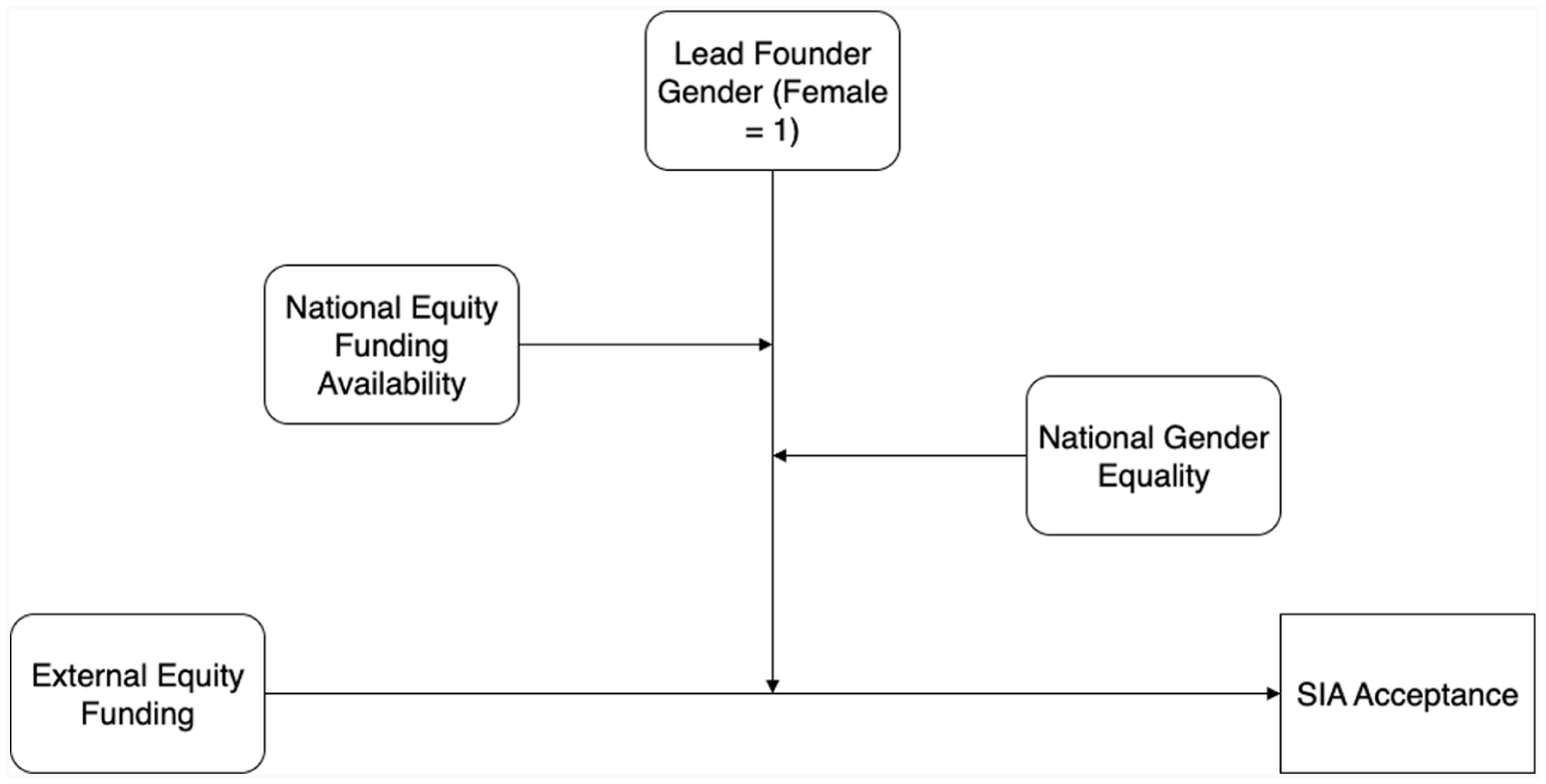
Theoretical framework.
Research methods
Data collection
Our data were extracted from the Global Accelerator Learning Initiative (GALI), a part of the ANDE (ANDE Annual Report, 2018). Applicants hailed from 166 countries and applied to a network consisting of 241 SIAs, which were surveyed from 2016 to 2018. The SIAs have the greatest representation in the United States and Europe. The majority have programmes that last between 3 and 6 months, with a sector focus on Information Technology, Health and Financial Services. We deleted 26 applicants in the two programmes that exclusively admitted women-led teams to rule out the possibility that they do not admit men-led teams in their service scope. After deleting observations with missing data, we were left with 10,217 applicants from 232 SIAs in 143 countries.
In addition, we extracted data from the WEF’s Global Gender Gap Index (GGGI) to operationalise National Gender Equality (NGE) and from the GEM database to obtain the data to measure National Equity Funding Availability (NEFA), the two institutional context moderators.
Variable measurements
Dependent variable
SIA acceptance: This is a dummy variable, with ‘1’ representing acceptance by the SIA and ‘0’ otherwise.
Independent variables
Gender: This dummy variable measures the gender of the lead founder, with ‘1’ assigned to women and ‘0’ to men.
External equity funding: This is a dummy variable, with ‘1’ assigned to firms that had received an equity investment from venture capital, angel investors, government, other firms, or any other sources; ‘0’ otherwise.
National Equity Funding Availability: It is measured by the 5-point Likert scale response to the question ‘In my country, there is sufficient equity funding available for new and growing firms’ in the GEM dataset. A higher value indicates that it is easier for new ventures to access equity funding.
The ANDE database does not contain detailed data on the location of the SIA or the social enterprise. However, since entrepreneurs display a strong tendency to locate their ventures close to home, and since this ‘home proximity’ facilitates resource acquisition (Dahl and Sorenson, 2009), we used the lead founder’s current country of residence as a proxy for the venture and SIA location. Most entrepreneurs in our dataset hailed from their current country of residence. Besides, accelerator efforts are often severely weakened by a lack of geographic proximity, rendering the significance of such efforts relatively negligible (Becker et al., 2024).
National gender equality: Following C. Brush et al. (2017), we used the WEF’s GGGI to measure variations in gender equality between women and men. GGGI is the longest-standing index tracking the progress of multiple efforts towards closing these gaps over time (Global Gender Gap, 2004). 2 GGGI includes four dimensions – Economic Participation and Opportunity, Educational Attainment, Health and Survival and Political Empowerment. In the main tests, we used the Economic Participation and Opportunity dimension, as this dimension best matches the business-related research question of this study. This dimension measures gender similarity using indicators for labour force participation, wages and positional attainment. We applied the composite measurement in the robustness test. A higher value of this measure denotes a smaller gap and thus, higher equality between genders.
Control variables
Following Yang et al. (2020), we control for the effects of several variables on SIA acceptance. Table 1 shows the details of the measurements and rationales.
Instrumental and control variables measurements and rationale.
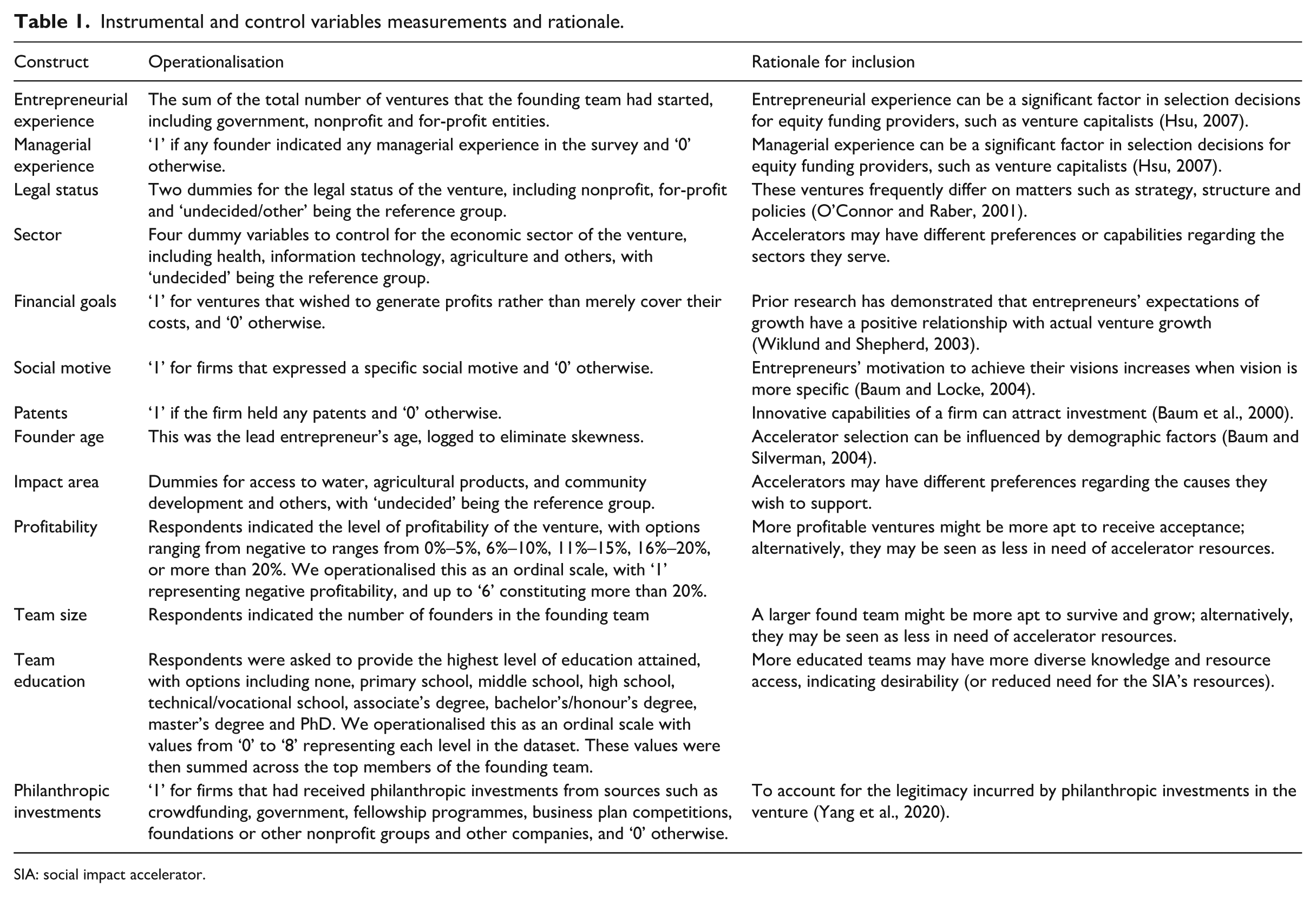
SIA: social impact accelerator.
Model specification
Given that the data are hierarchical with ventures (level 1) nested within SIAs (level 2) and SIAs nested within countries (level 3), multilevel modelling is preferred, as it allows us to control for SIA and country factors. We adopted a mixed-effect Probit model and used the meprobit command in Stata 18.
It can be argued that high-quality ventures are more likely to secure external equity funding and achieve SIA acceptance, suggesting the possibility of endogeneity. To address this concern, we conducted two-stage regressions with instrumental variables to estimate the effect of External equity funding on SIA acceptance. To select appropriate instrumental variables, we analysed the dataset carefully to identify variables associated with obtaining External equity funding but plausibly exogenous to SIA acceptance. Entrepreneurial experience and Managerial experience are potentially valid instruments (Table 1 shows their measurements). First, it is reasonable to believe that external equity funding providers, such as angel investors, are likely to invest in entrepreneurs with strong experience, as such funding providers mainly pursue economic returns. However, this may be different for SIAs. Given their mission of pursuing economic returns, SIAs likely support individuals with strong experience; however, they may also support entrepreneurs with limited experience, given their social mission. The results of our regression of the two variables on SIA acceptance showed that neither variable has a significant impact on SIA acceptance (b = −0.0121; p > 0.10 for Entrepreneurial experience; b = −0.00993, p > 0.10 for Managerial experience in a model with control variables). We then conducted first-stage probit regression on External equity funding, and the results show that Entrepreneurial experience and Managerial experience are positively associated with External equity funding. Moreover, the first-stage F-test shows they are strong instrumental variables, as the F-statistic (=43.6998) is well above the minimum threshold of 10 (Staiger and Stock, 1997). In addition, p < 0.01 for GMM C statistics, suggesting that External equity funding is an endogenous variable. Therefore, we calculated the predicted variable of External equity funding using these two instrumental variables to test all hypotheses using the ivprobit command. In the next section, following Hill et al. (2021), we first present naïve results without correcting for the endogeneity issue, and then we report both the first and second-stage test results from the two-stage regressions.
Results
Table 2 displays descriptive statistics and correlations of the variables. The table shows that overall, the acceptance rate of the SIAs is 20%, 31% of firms are led by women, and 13% of firms reported that they have secured external equity funding. Multicollinearity is not a concern as all variance inflation factors are below 2.89 in the data analysis.
Descriptive statistics and correlation matrix.
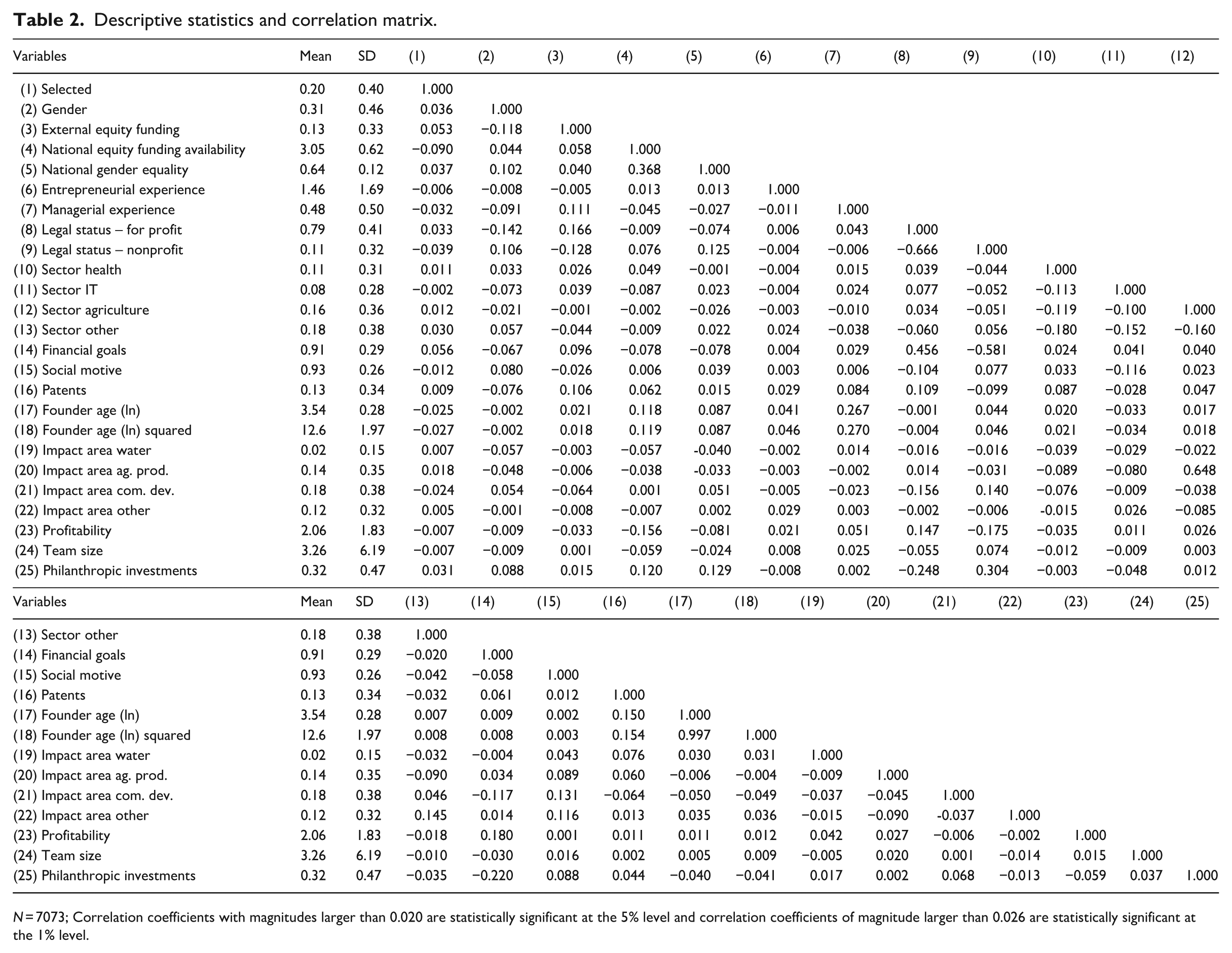
N = 7073; Correlation coefficients with magnitudes larger than 0.020 are statistically significant at the 5% level and correlation coefficients of magnitude larger than 0.026 are statistically significant at the 1% level.
We analysed the sample features. The difference between gender is insignificant in terms of average startup age (2.4–2.8 years), but women-led ventures have fewer employees (2.2 vs 3.5), lower revenue ($59k vs $74k), lower equity financing ($17k vs $64k) and debt borrowed ($12k vs $29k). In terms of geographic origin, our data represent a wide range. Although North America is most well-represented in our dataset (36.55% of observations), there are also ventures located in Africa (27.79%), South America (13.71%), Asia (16.82%), Europe (4.49%) and Australia (0.64%). Although previous studies have leveraged this dataset (Assenova, 2021; Yang et al., 2020), our study’s scope demands a broader geographic footprint. Some models have fewer observations due to subsampling or listwise deletion of missing data.
Table 3a presents the naïve results without correcting for the endogeneity issue. In brief, the positive signs of three-way interaction terms show that both H1 and H2 are supported.
(a) Multi-level probit regressions on SIA acceptance without endogeneity correction.
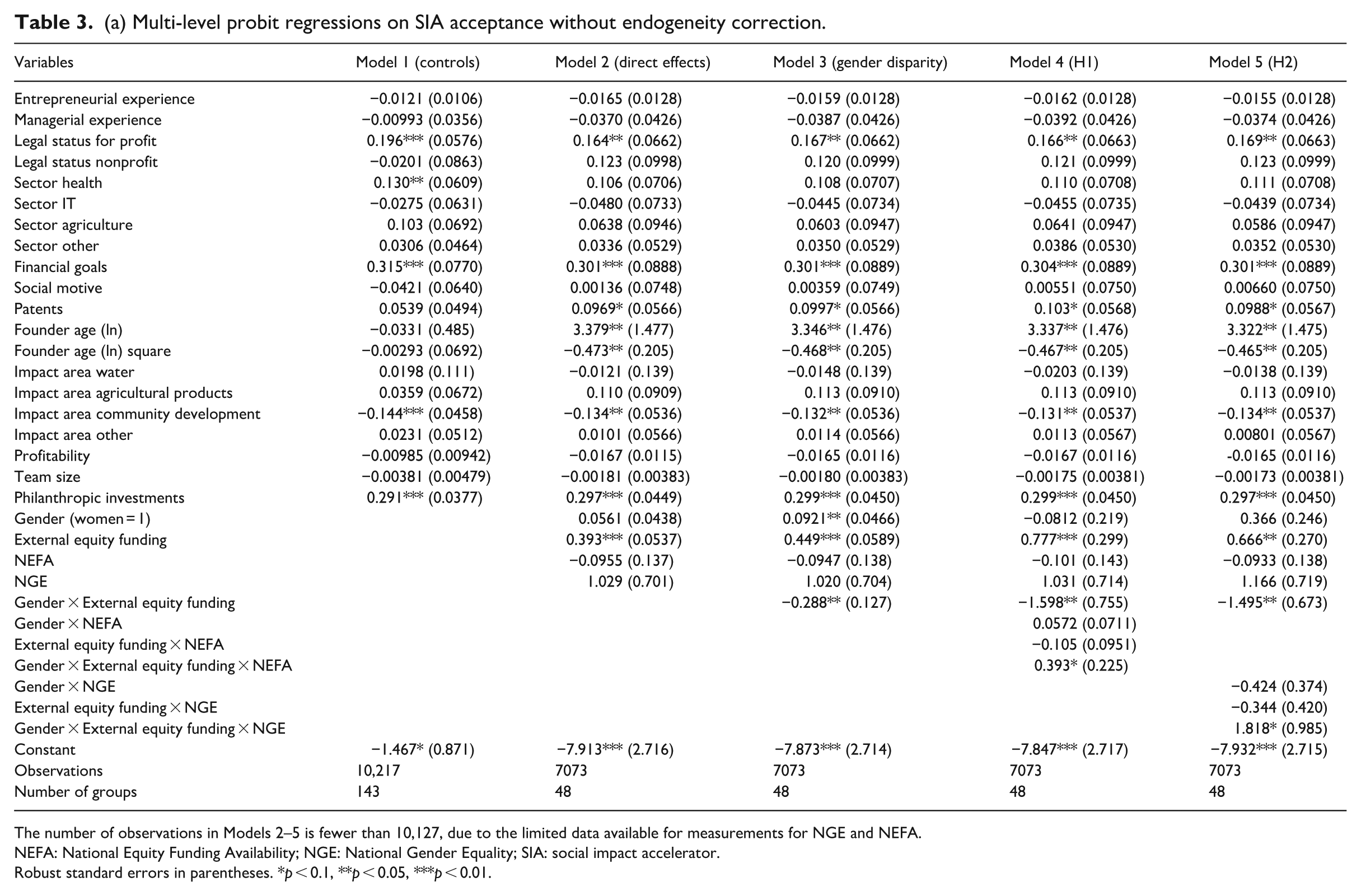
The number of observations in Models 2–5 is fewer than 10,127, due to the limited data available for measurements for NGE and NEFA.
NEFA: National Equity Funding Availability; NGE: National Gender Equality; SIA: social impact accelerator.
Robust standard errors in parentheses. *p < 0.1, **p < 0.05, ***p < 0.01.
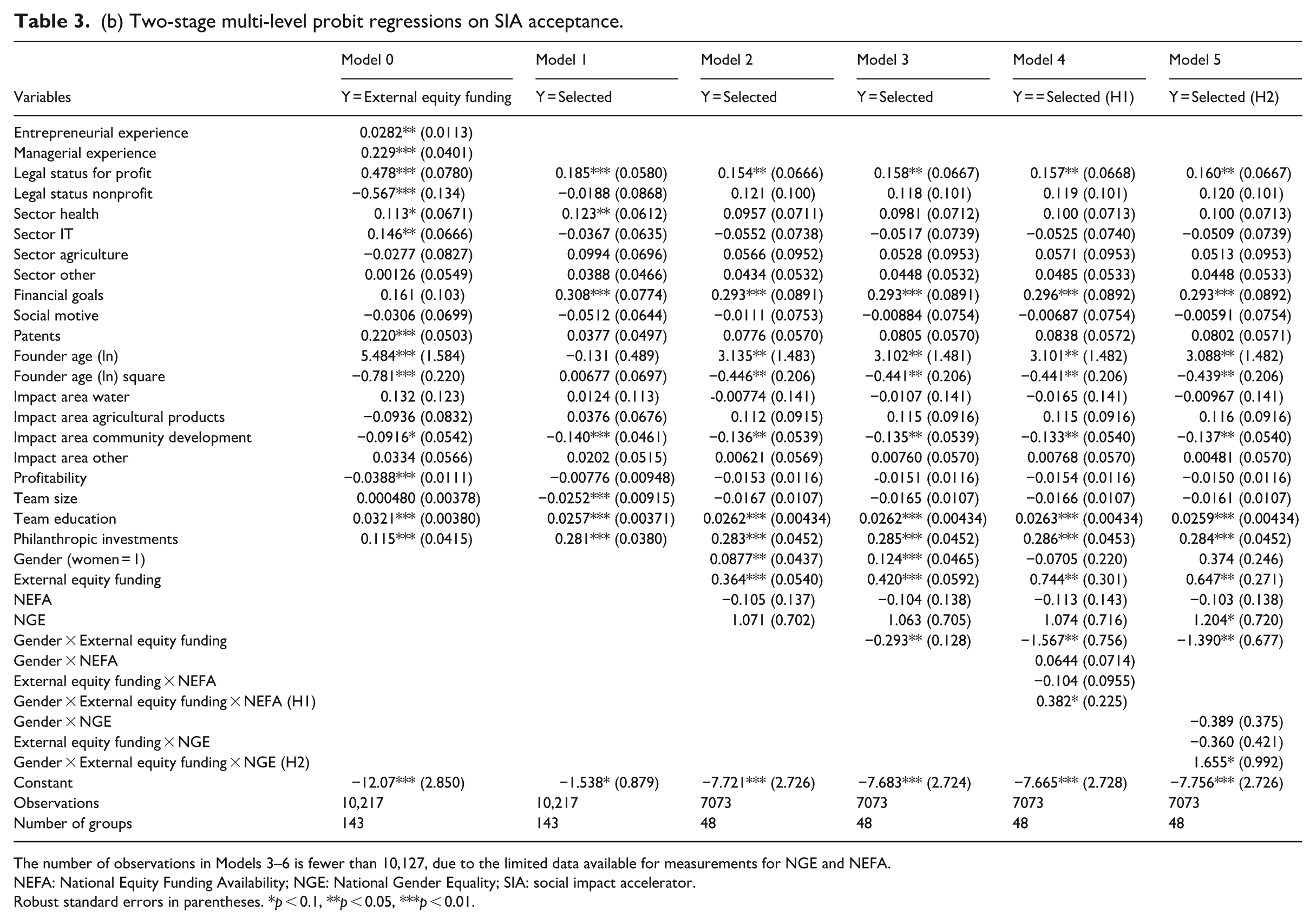
Nevertheless, as our endogeneity tests indicate significant endogeneity in the context of our analysis, the instrumental variable (IV) approach is better for obtaining consistent and unbiased estimates, despite the higher efficiency of the naïve models (Hill et al., 2021). Table 3b presents the results of the hypothesis tests with the IV approach. Model 0 presents the first-stage regressions of two instrumental variables, Entrepreneurial experience and Managerial experience, on External equity funding. The results show the positive relationships between the instrumental variables and the dependent variable. We calculated the predicted value of External equity funding using these two instrumental variables to test the hypotheses. All results shown in Models 1–5 are the second-stage results.
(b) Two-stage multi-level probit regressions on SIA acceptance.
The number of observations in Models 3–6 is fewer than 10,127, due to the limited data available for measurements for NGE and NEFA.
NEFA: National Equity Funding Availability; NGE: National Gender Equality; SIA: social impact accelerator.
Robust standard errors in parentheses. *p < 0.1, **p < 0.05, ***p < 0.01.
We enter control variables in Model 1. To verify that the effect of existing external equity funding on the chance of SIA acceptance is stronger for men-led ventures than for women-led ventures, we add independent variables Gender and External equity funding in Model 2, and both variables and their product Gender × External equity funding in Model 3. Model 4 is to test Hypothesis 1, and Model 5 is to test Hypothesis 2.
Models 1–5 in the table consistently reveal interesting findings regarding the effects of control variables. First, firms with legal status for profit and/or bearing financial goals are more likely to be accepted by SIAs than those lacking these features, thus supporting the study’s precondition that SIAs pursue economic returns. Additionally, firms receiving philanthropic investment are more likely to be accepted. This result aligns with the findings of Yang et al. (2020) and suggests that SIAs assess and recognise both the social and economic impacts of new ventures, thus reaffirming the dual purpose of SIAs.
Model 3 shows the direct and interactive effects of gender and external equity funding. The coefficients for External equity funding were significantly positive (β = 0.364, p < 0.01), indicating that the presence of external equity funding enhances the likelihood of acceptance. The average marginal effects analysis reveals that the acceptance chance is 27.1% for firms with external equity funding, compared to 20.5% for those without the funding, while all other variables are held constant at their mean values.
Before presenting the hypothesis tests on the moderating effects of institutional variables, we verify Yang et al. (2020)’s finding that the effect of external equity funding on SIA acceptance will be stronger for men-led ventures than for women-led ventures. In Model 3, the coefficient of Gender × External equity funding is significantly negative (β = −0.293, p < 0.05), suggesting that the difference between the two gender groups is significant, and the positive effect of external equity funding is weaker for women.
To illustrate the gender disparity of the signalling effect, we calculated the effects of the variables and their interactions by examining the average marginal effects in Model 3 (Hoetker, 2007). We used the Stata margins and marginsplot commands to generate and display these values in Figure 2. The figure illustrates that the average likelihood of SIA acceptance stands at 18% for ventures led by men without external equity funding, which jumps to 29% when external equity funding is present. Conversely, for women-led ventures, the likelihood remains relatively consistent, with values of 22% for those without external equity funding and 25% for those with it. This discovery, coupled with the results of the statistical test in Model 3, suggests that the impact of external equity funding on SIA acceptance is more pronounced for ventures led by men than for those led by women. The result is consistent with Yang et al. (2020).
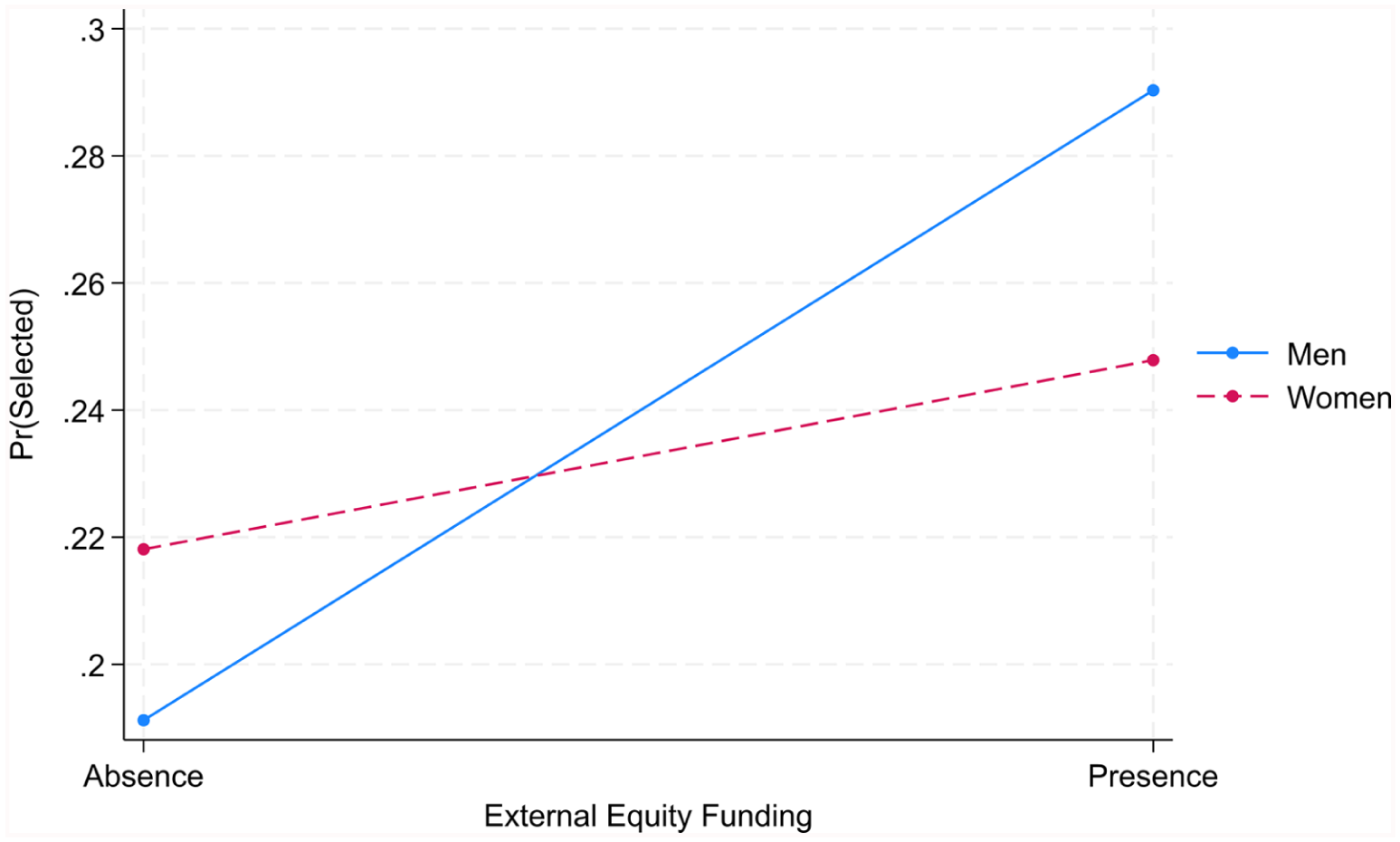
The effects of gender and external equity funding on SIA acceptance.
Hypothesis 1 (H1) predicts that high NEFA will reduce the disparity of SIA acceptance between men- and women-led ventures caused by the existing external equity funding. In Model 4, the coefficient of External equity funding × Gender × NEFA is significantly positive (β = 0.382, p < 0.10), providing support for H1. We used the Stata margins and marginsplot commands to generate and display these values separately for men-led and women-led ventures in Figure 3. The X-axis in Figure 3 represents the degree of NEFA, with a mean value of 3.05. Additionally, one standard deviation below the mean is shown as 2.35, while one standard deviation above the mean is represented as 3.75.
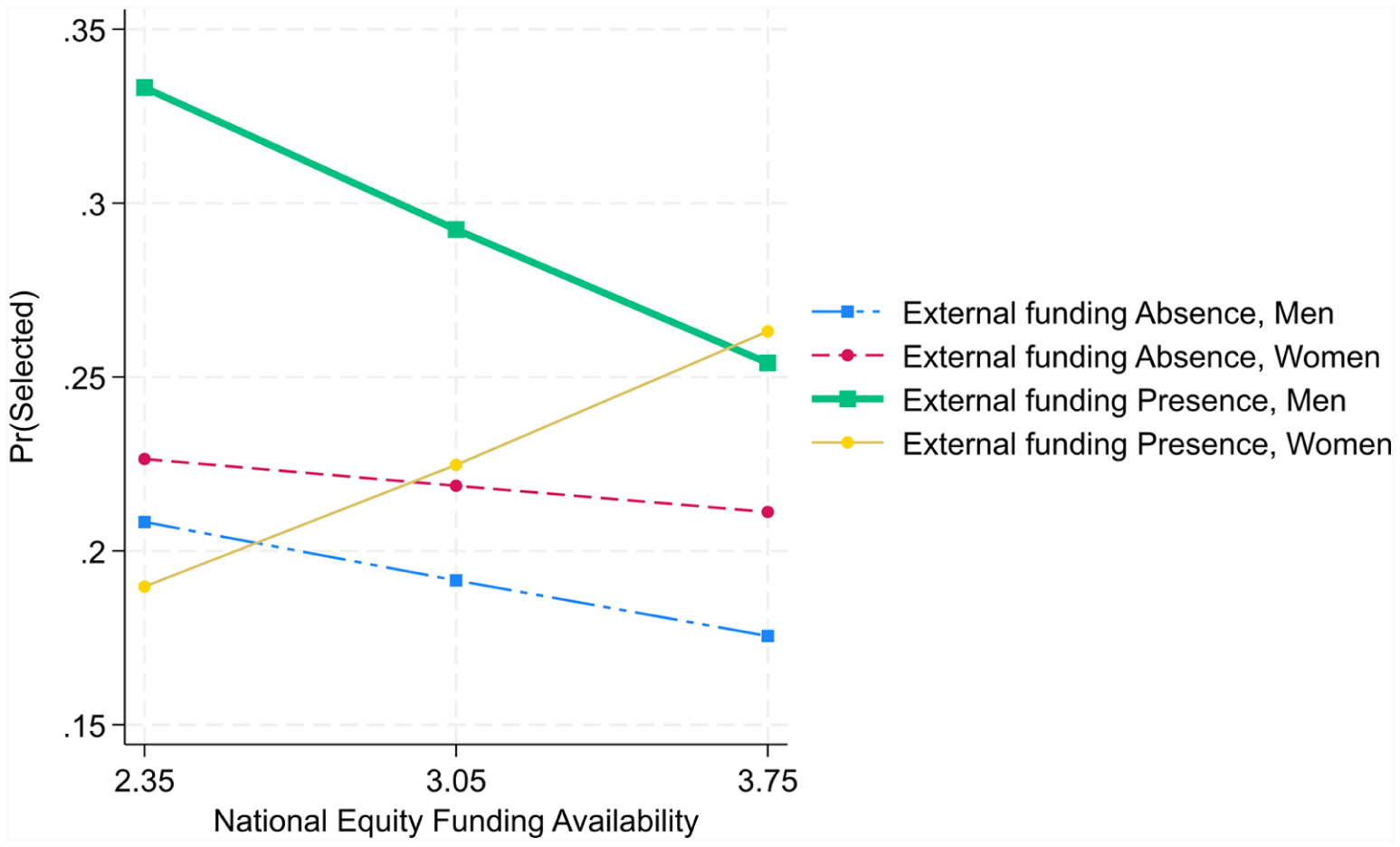
Three-way interaction effects of gender, external equity funding and national equity funding availability on SIA acceptance.
As Figure 3 illustrates, for men-led ventures, having external equity funding is associated with a higher likelihood of acceptance across contexts. The negative slopes of the two lines indicate that the signalling effect of equity funding is stronger in nations where obtaining external investment is more challenging, consistent with the notion that costly signals are more credible. For women-led ventures, the pattern is more nuanced. In countries where it is easier to secure external equity funding (i.e. high NEFA), women with external funding experience a higher probability of acceptance, aligning with the results observed for men. By contrast, in nations where equity funding is scarce, the positive association between equity funding and acceptance is weaker for women-led ventures. This suggests that gender stereotypes may distort how SIAs interpret women’s ability to secure external resources, even though signalling theory would predict that such costly signals should be particularly credible in these contexts. Overall, these findings indicate that higher NEFA reduces the disparity in the interpretation of equity funding signals between men- and women-led ventures.
Hypothesis 2 (H2) predicts that high NGE will reduce the disparity of SIA acceptance between men- and women-led ventures caused by existing external equity funding. In Model 5, the coefficient of External equity funding × Gender × NGE is significant (β = 1.655, p < 0.10), which provides support for H2.
We further plotted the average marginal effects in Figure 4. The X-axis in Figure 4 represents the degree of NGE, with a mean value of 0.645. One standard deviation below the mean is 0.521, and one standard deviation above the mean is 0.769.
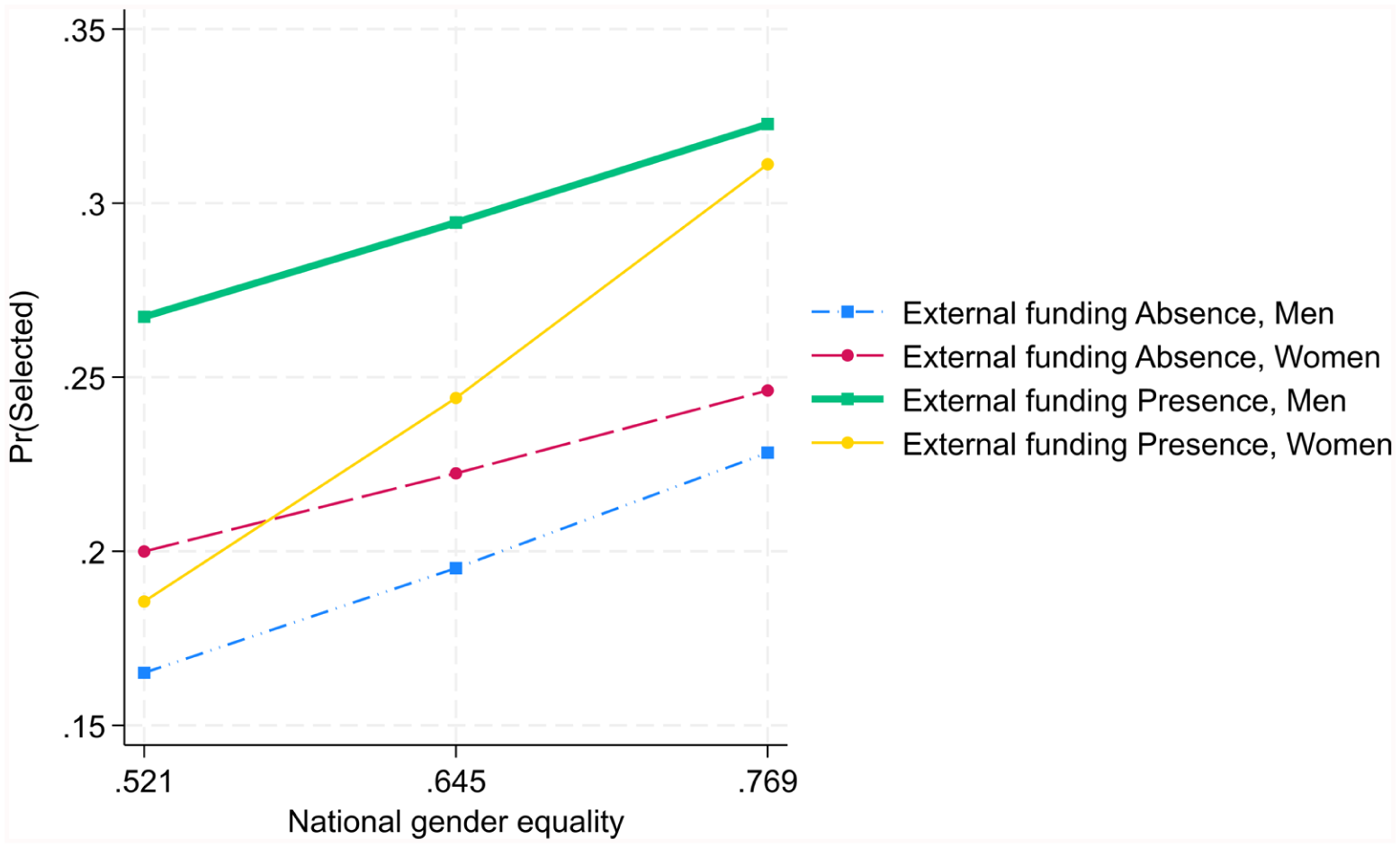
Three-way interaction effects of gender, external equity funding and national gender equality on SIA acceptance.
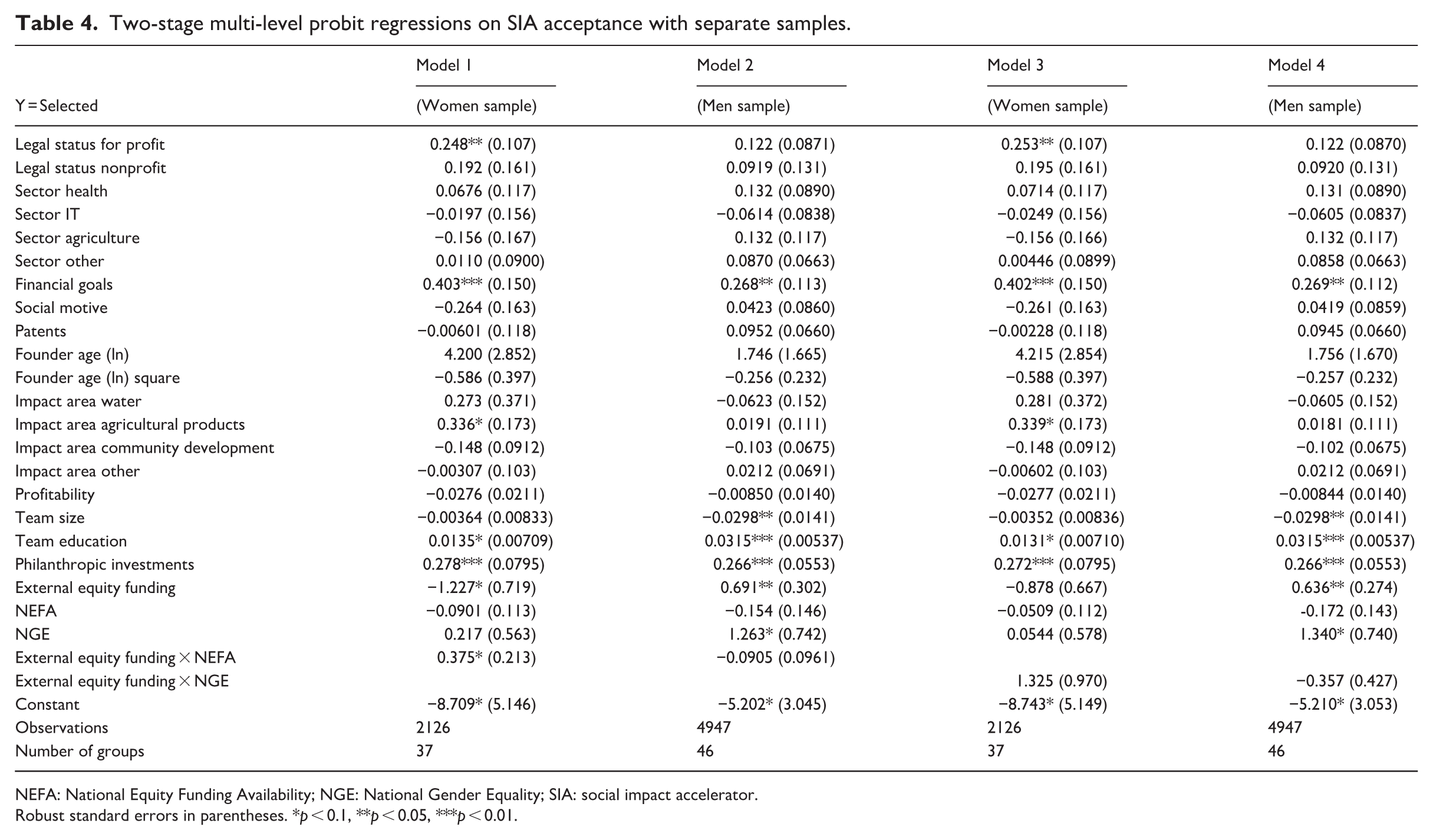
As Figure 4 illustrates, for men, having external equity funding is preferable to not having funding, regardless of their location. The positive slopes of the two lines indicate that the signalling effect of having external equity funding is stronger in nations where NGE is higher. Again, the effects of existing external equity funding are more nuanced for women. In nations with high gender equality, women with external equity funding are more likely to be accepted than their counterparts without funding, mirroring the findings observed for men. By contrast, in nations with low gender equality, the difference in acceptance rates between women with and without funding is smaller, and in some cases, the association is weaker for women who have secured funding. This pattern suggests that gender stereotypes may distort the way SIAs interpret women’s costly signals of external equity funding, even though signalling theory would predict that such signals should be especially credible in these contexts. To further investigate the three-way interaction in H1, we divided the sample into women-led and men-led ventures and calculated the effects of the variables and their interactions (Hoetker, 2007). The results are shown in Models 1 and 2 in Table 4. We also did the same analysis to investigate H2 and show the results in Models 3 and 4 in the table.
Two-stage multi-level probit regressions on SIA acceptance with separate samples.
NEFA: National Equity Funding Availability; NGE: National Gender Equality; SIA: social impact accelerator.
Robust standard errors in parentheses. *p < 0.1, **p < 0.05, ***p < 0.01.
The results generally support H1. It is worth noting that for H2, the significant three-way interaction (Gender × External Equity Funding × NGE) in full Model 5 in Table 3a indicates that the effect of External Equity Funding × NGE on the outcome differs between men and women. However, when analysing the subsamples separately, the interaction terms for both men and women are insignificant in Models 3 and 4 in Table 4, likely due to reduced statistical power (Aiken et al., 1991). This underscores the importance of considering the interaction across the entire sample rather than within isolated subgroups.
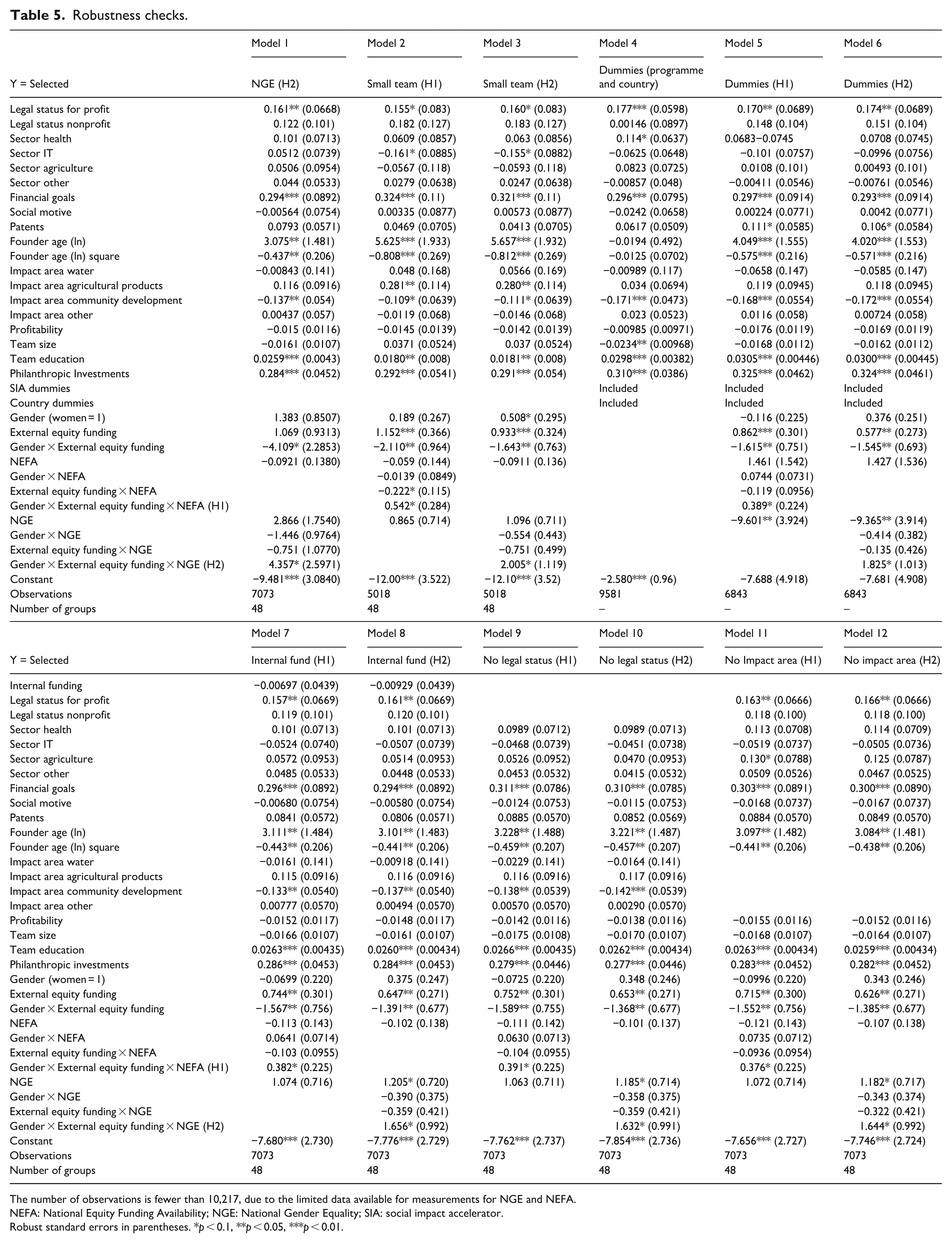
We conducted various robustness tests based on the second-stage model and presented the results in Table 5: (1) Model 1 showed the results of testing H2. The WEF’s GGI includes four dimensions. In the main tests, we utilised the Economic Participation and Opportunity dimension, as it most closely aligns with the business-related research question of this study. In the robustness test, we calculated the average value of the first three dimensions and reanalysed the data. We exclude Political Empowerment as political representation does not directly impact business-related outcomes. (2) In Models 2 and 3, we tested H1 and H2 using ventures with only smaller founder teams than the average size (mean = 3.26). (3) In Models 4–6, we replaced the multi-level probit models with probit models including SIA and country dummies. (4) In Models 7 and 8, we added whether the founding team has ever self-funded the venture. (5) We deleted some control variables, such as legal status (Models 9 and 10) and impact areas (Models 11 and 12). The results remained in all tests.
Robustness checks.
The number of observations is fewer than 10,217, due to the limited data available for measurements for NGE and NEFA.
NEFA: National Equity Funding Availability; NGE: National Gender Equality; SIA: social impact accelerator.
Robust standard errors in parentheses. *p < 0.1, **p < 0.05, ***p < 0.01.
We conducted additional tests to check if the amount of external equity funding influences accelerator acceptance. To measure the amount of external funding, we used the natural logarithm of the amount of equity in year t − 1 or since the founding, the amount of debt in year t − 1 or since founding, and the combined values of equity and debt in year t − 1 or since the founding. The new variables have no direct or joint effects in any of the tests.
Discussion
This research investigates how obtaining external equity funding can serve as an effective signal influencing SIA acceptance, depending not only on the gender of the lead founder but also on the institutional conditions. While the results confirm a positive aspect of supporting disadvantaged groups, such as more women’s acceptance into SIA programmes than men, we also provide evidence that suggests an unintended consequence to it, particularly how it can counter those women entrepreneurs with genuine merits. In this discussion section, unlike previous studies that emphasise the benefits of policies to empower women (Terjesen and Sealy, 2016), we also highlight the potential backlash of preferential treatment policies. In addition, our results suggest that the institutional context plays a crucial role in mitigating this potentially negative nuance. Specifically, two institutional variables analysed in this study – availability of national equity funding and NGE – are shown to reduce gender disparity in the acceptance rate of accelerators with social missions. The result of data analysis first shows that while external equity funding can increase the chances of acceptance to SIAs for men entrepreneurs globally, its effectiveness may be diminished for women-led ventures. This finding suggests that, unlike men, women who attained hard-to-gain funding were undervalued in the competition for SIA acceptance.
In Hypotheses 1 and 2, we posit that this gender disparity of the signalling effect of external equity funding is contingent upon institutional settings, including the availability of national equity funding (an economic factor) and NGE (a social factor). Empirical tests show that both factors reduced the disparity in SIA acceptance between men- and women-led ventures resulting from existing external equity funding. In nations with more funding availability and gender equality, stereotypes are less likely to create barriers for women, allowing external equity funding to work effectively for women-led ventures. However, in nations with less funding availability and lower gender equality, SIAs are less likely to recognise this signal, even though obtaining external equity funding is more challenging. This creates an unintended consequence of public policies that support disadvantaged gender groups, in that women entrepreneurs with genuine merit may not be adequately recognised or rewarded. Our study highlights the critical role of these two institutional factors in fostering a fair market where entrepreneurs, regardless of gender, can benefit from obtaining the costly signal of external equity funding.
Theoretical contributions and implications
We add nuance to signalling theory by integrating it with gender role theory to explain how the interpretation of costly signals may vary across institutional contexts. While signalling theory assumes that harder-to-obtain signals are more credible and valuable to the sender, our findings suggest that gender stereotypes can distort this interpretation, sometimes disadvantaging women entrepreneurs. Our results indicate that while women – due to the general burdens faced by underrepresented groups – must exert more effort to secure external funding, resource providers in certain contexts may interpret this achievement through the lens of gender role expectations. As a result, instead of recognising the costly signal at face value, evaluators may view it as incongruent with prevailing gender norms. By linking signalling theory with gender role theory, we clarify how institutionalised stereotypes shape the interpretation of costly signals.
This theoretical integration highlights that it is not the signal itself that loses credibility, but rather the way in which institutionalised gender roles shape its reception. Thus, our framework highlights the importance of considering how signalling and gender role theories intersect within institutional contexts, such as SIAs, providing a richer conceptual explanation beyond the empirical findings. Furthermore, we enrich this line of inquiry by showing that the interpretation of signals varies by context, and by uncovering how institutional conditions – an often-overlooked source of heterogeneity in signalling research – can influence their effectiveness. We found that institutional factors are crucial in shaping the signalling process. Specifically, factors that lower the cost of obtaining a signal for everyone (e.g. national funding availability) and those that ensure equal access to signals (e.g. NGE) minimise distortion caused by the signal sender’s attributes, such as gender. Under these conditions, signals may effectively convey accurate information about the sender’s true quality. Otherwise, the absence of such factors may diminish a signal’s effectiveness. This view offers valuable insights for management and entrepreneurship scholars who apply signalling theory to study decision-making processes. Incorporating institutional contexts into the research framework can help clarify uncertainties in the foundational concepts of signalling theory (Bafera and Kleinert, 2023). Moreover, by highlighting the interaction between signals and their institutional contexts, we address concerns about the lack of a nuanced perspective on judgement in entrepreneurial resource acquisition for women entrepreneurs (Shepherd et al., 2015). In doing so, it helps develop a more comprehensive theoretical understanding of signal interpretation within an institutional context. Additionally, our theoretical framework integrating the novel aspects of institutional conditions and gender stereotypes with research on resource acquisition offers a theoretically grounded explanation of how the saliency and effectiveness of stereotypes can vary based on the context in which these stereotypes are shaped and adjusted. This is important for gender research because existing literature tends to compare men and women for resource acquisition in a piecemeal fashion with little conceptual grounding of the factors that modify gender stereotypes. Our findings highlight the importance of considering relevant institutional components as explanatory frameworks for understanding the role gender stereotypes play in the heterogeneity in resource acquisition across ventures.
Our research also sheds new light on entrepreneurship studies on programmes with social missions, such as SIAs, by revealing the institutional conditions under which programme managers may overlook the substantial achievement of women-led ventures. More broadly, our finding – in countries where external funding is less available and gender equality is lower, women must exert greater effort and overcome more challenges to obtaining external funding – strengthens the existing understanding that women and men-led ventures are treated differently in regard to resource acquisition. Paradoxically, in these contexts, their hard-to-gain signals are overlooked or undervalued. This oversight occurs because gender stereotypes lower expectations for women entrepreneurs and their ability to secure external funding, causing programmes with social missions to underestimate the accomplishments and disregard the potential of women entrepreneurs. Our study offers a novel perspective on this issue and suggests specific institutional factors that can help mitigate unintended penalties for competent entrepreneurs, thereby enhancing their prospects of gaining support from stakeholders, such as SIAs.
Practical and policy implications
We extend research on startup assistance programmes. Our study offers novel practical implications for both public policymakers and entrepreneurs. Since the lack of external equity funding is a key force driving new ventures to turn to SIA programmes to fill the funding void (Crișan et al., 2019), it becomes problematic that a lack of external equity funding may indicate low capabilities of the entrepreneurs, consequently impeding SIA acceptance and funding. This study presents encouraging findings showing that, on average, women in SIA assessments are less likely to be evaluated based on the signals, such as external funding, that they were historically not expected to obtain. However, unlike conventional wisdom, we also demonstrate that gaining signals that are more difficult for women to obtain may not necessarily increase their chance of acceptance to SIAs. Such evidence reminds SIA managers, especially those in impoverished nations, that they might be oblivious to important and positive signals sent by women entrepreneurs. As such, SIA managers should strive to foster a more affordable financial market for all entrepreneurs by collaborating with resource providers, such as financial institutions, to develop financial markets that improve access to funding and support entrepreneurial growth.
The evidence presented here encourages SIAs to critically examine their programme design and evaluation to ensure signals, such as equity funding, do not inadvertently perpetuate gender biases. Adapting evaluation processes to consider diverse entrepreneurial contexts can help reduce inequities. Next, SIAs can tackle their policy development by promoting environments with greater gender equality and improved access to external equity funding. SIAs can use targeted policies to support women-led ventures and reduce barriers in funding ecosystems. SIA managers might benefit from training programmes that will educate them about the influence of institutional contexts and gender stereotypes in signal evaluation, which in turn should reduce unconscious bias during the selection process. Finally, establishing mentorship and networking programmes designed to empower women entrepreneurs would enable them to navigate institutional biases more effectively. All these measures should encourage broader institutional reforms that would challenge gender stereotypes in entrepreneurship by creating fairer assessments of entrepreneurial potential, creating a more equitable environment.
Limitations and future studies
As in all studies, our work has some limitations that provide avenues for future research. First, the GEM database measures perceived external funding availability instead of actual funding availability. While this measurement is consistent with our theoretical framework, given that both entrepreneurs and SIA managers make decisions based on perceptions, it presents an opportunity for future studies to explore alternative data sources that reflect actual funding availability. Such research could test the robustness of our findings and further illuminate the dynamics between perceived and real funding conditions within entrepreneurial contexts.
Second, the data lacks information about the gender of accelerator officers who evaluate the applications. The literature suggests that an officer’s gender can affect their perception of applicants (Carter et al., 2007). Future studies can address this and extend current research. More broadly, our data suffers from the typical limitations of survey research (Podsakoff et al., 2003).
Third, we focus on accelerator acceptance and do not examine the process through which this happens. Our theoretical model focuses on the perceptions of accelerator gatekeepers; however, we do not directly measure them. Qualitative studies, experimental analysis and perhaps survey-based research that unpacks the black box of how their decisions are made about accepting women entrepreneurs would help substantiate our study. The relatively low significance level for our three-way interactions, although similar to that reported elsewhere (Cowling et al., 2021), suggests that our findings would be bolstered by additional empirical exploration. Finally, future studies can examine how our results are generalisable to other minority groups, such as immigrants, who experience difficulty in gaining resources.
Conclusion
Given the mounting number of organisations interested in social responsibility, this article informs several decision-makers about the beneficial institutional factors that may support social enterprises across genders. It also informs scholarship about some of the darker aspects of supporting under-represented groups, providing valuable insights for both new ventures and resource providers in entrepreneurial contexts. Additionally, we highlight the presence of gender disparities, allowing future research to initiate a conversation about how these gender differences can be mitigated. As demonstrated in recent popular press articles, many businesses face challenges in navigating gender differences, particularly where criteria are focused on capabilities over diversity (Gaudiano, 2024). We hope our research helps accelerators better adapt to recent changes when creating their policies.
Footnotes
Authors’ note
The first author extends gratitude to the Strome College of Business School at Old Dominion University for their support through the Summer Research Grant.

Funding
The authors received no financial support for the research, authorship, and/or publication of this article.