







Abstract
This article examines Instagram as an external enabler of social media entrepreneurship. Adopting a process-oriented lens, we explore how and when enabling mechanisms are activated to enhance outcomes while also causing significant challenges for entrepreneurs. A flexible pattern matching analysis of 15 case studies reveals that while Instagram embodies many of the enabling mechanisms proposed by the external enabler (EE) framework, venture triggering is often unintentional and serendipitous, challenging agent-centric assumptions. We identify ‘market engagement’ and ‘resource collaboration’ as novel emergent mechanisms that shape markets and products while simultaneously creating tensions for entrepreneurs through increased relational and emotional demands, challenges to integrity, and anticipated loss of control over their ventures. This article extends the EE framework by defining these new mechanisms and contributing a process-oriented perspective linking enabling forces directly to the ‘dark side’ of social media entrepreneurship, illustrating how the drivers of success are inextricably linked to detrimental consequences.
Introduction
Digital technologies are a significant source of disruptive change (von Briel et al., 2018), reshaping key processes underpinning entrepreneurial activity (Elia et al., 2020; Park et al., 2021). As a result, research has increasingly focused on forms of entrepreneurship undertaken in the digital rather than physical space (Le Dinh et al., 2018). Internet-based communication technologies enable the creation and exchange of user-generated content (Liang and Turban, 2011) and as a result, new ventures are increasingly fashioned through the use of digital technologies (Secundo et al., 2021).
These developments have led to increased scholarly interest in digital entrepreneurship, defined as entrepreneurial activity that uses digital technologies to create and deliver value (Nambisan, 2017), combining digital infrastructure and entrepreneurial agents (Sussan and Acs, 2017). Within this broad definition, social media entrepreneurship can be viewed as a subset (Secundo et al., 2021) involving the production and delivery of innovative media content on social media platforms (Mei and Genet, 2024). Gustafsson and Khan (2017) further define social media entrepreneurship as a process of opportunity identification, evaluation and exploitation, carried out by stakeholders within social media networks.
Entrepreneurs use social media to achieve personal as well as organisational objectives (Appio et al., 2021; Fischer and Reuber, 2014), enabling the monetisation of digital content through cultivating audience relationships, creating personal brands and community-based exchange (Mei and Genet, 2024; Secundo et al., 2021). In doing so, platforms such as Instagram and X (formerly Twitter) disrupt and subvert traditional academic assumptions around the importance of entrepreneurial intentions as a precursor to venturing activity (Fischer and Reuber, 2011, 2014; Guiñez-Cabrera and Aqueveque, 2021), in turn bringing forth an emergent category of ‘everyday’ digital entrepreneurs, hitherto overlooked in entrepreneurship research in favour of technology giants and leading players of the digital economy (Welter et al., 2017).
Social media have been praised for their emancipatory and creative affordances (Carter et al., 2016; Zagalo and Branco, 2015), enabling an unprecedented level of global collaboration and participation among users. However, this perspective has been criticised for being based on flawed logic (Martinez-Dy et al., 2017, 2018) whereby digital spaces may transform how materiality and agency are combined but cannot remove the structures that impede the accumulation of these resources in the first instance, or the social positionality of individuals that may lead to such impediments. Meanwhile, specific detrimental consequences of social media entrepreneurship have been largely omitted as a focal point for analysis, whether in comprehensive literature reviews (Olanrewaju et al., 2020) or deep qualitative analyses of entrepreneurial journeys (Stephens and Miller, 2024) within this context. Nevertheless, social media has been linked more broadly with a host of risks such as online harassment, low self-esteem and reputational damage (Akram and Kumar, 2017; Krause et al., 2021).
Thus, while the emergent influence of social media on entrepreneurial activity appears clear, the precise nature of its enabling and detrimental effects has received limited empirical attention to date. We aim to address this gap by tackling the real-world challenge of understanding the trade-offs that entrepreneurs face when using social media to enhance entrepreneurial outcomes. In doing so, we acknowledge that the impetus for entrepreneurial activity can often be found through changes occurring in the external environment (Kimjeon and Davidsson, 2022). The external enabler (EE) framework developed by Davidsson et al. (2020) offers a compelling perspective for theorising the partial enablement of entrepreneurial activity by distinguishing between new venture ideas and the potential technological, regulatory, environmental and sociotechnical factors that enable their realisation. Unlike traditional arguments focused on the agent-centric discovery and creation of entrepreneurial opportunities, this construct examines how agents respond to aggregate-level external changes across entrepreneurial ecosystems (Kimjeon and Davidsson, 2022), while allowing for the possibility of unintentional, ‘accidental’ forms of entrepreneurship.
Building on this framework, Von Briel et al. (2018) explore how the particular properties of social media, its low specificity (minimal restrictions on user actions) and high relationality (diverse user connections), enable opportunities for entrepreneurial activity. However, the potential risks faced by social media entrepreneurs through persistent, long-term use of the technology create an important but underexplored tension between enablement and constraint. Through their EE framework, Kimjeon and Davidsson (2022) highlight the need for more process-oriented research, focusing on the higher-order functions of enabling mechanisms across different phases of entrepreneurial development. Furthermore, while the framework acknowledges the potential for the negative as well as positive impacts of EEs on entrepreneurial activity (Kimjeon and Davidsson, 2022), its primary focus on enablement presents a pressing need to explore the tensions and challenges created by social media. To address this gap in the literature, we explore precisely how and when Instagram enables and constrains entrepreneurial activity. This article offers insights into the experiences of individuals who utilise the platform for income generation and the mechanisms through which their ventures operate. As such, it aims to address the following research questions:
By utilising the EE framework as a theoretical lens, our article examines Instagram as an external enabler and specifically, the process-based emergence of entrepreneurial activity through the technology. This is both apt and timely given Instagram’s status as one of the most active and influential platforms for marketing and entrepreneurial activity (Guiñez-Cabrera and Aqueveque, 2021), with various features designed specifically for supporting emergent ventures (Meta, 2020). In this respect, its features and community dynamics serve as mechanisms that enable entrepreneurial activity through triggering, shaping and outcome-enhancing roles (Kimjeon and Davidsson, 2022).
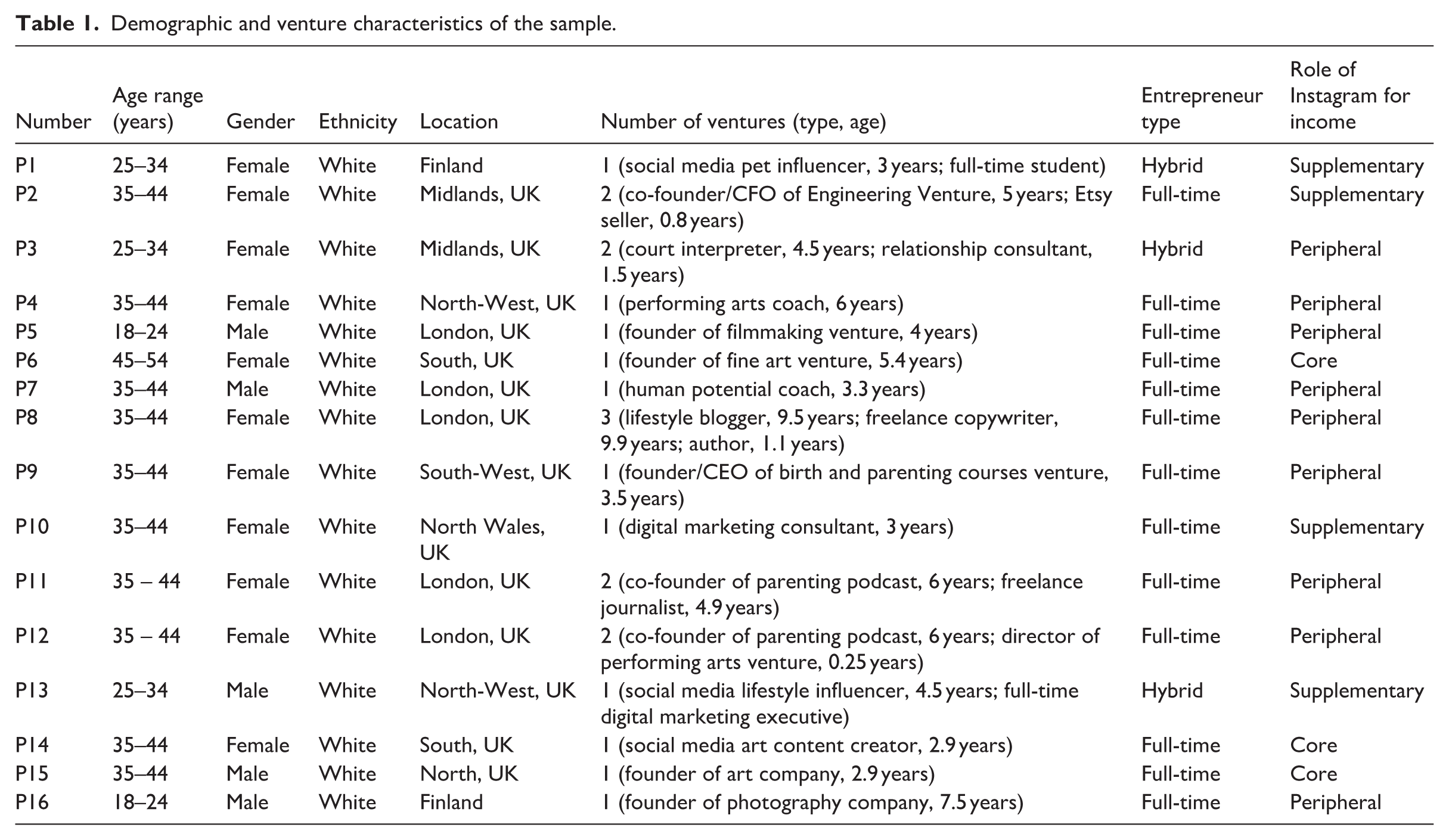
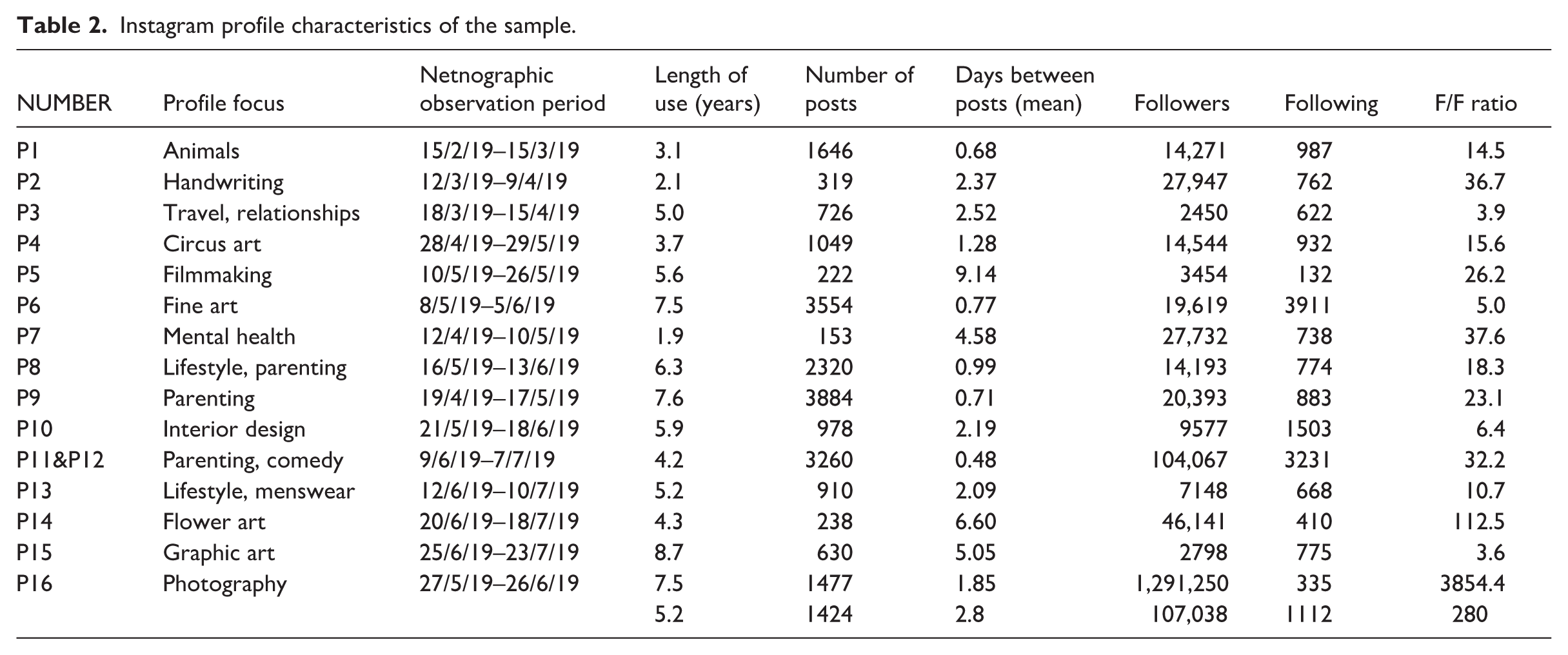
A qualitative research design was used to examine the core research questions. Specifically, a multiple case study (Yin, 2014) approach was adopted, involving 15 cases of Instagram users at different developmental stages of social media entrepreneurship. All derived some level of income from entrepreneurial activity conducted through their use of the platform (see Tables 1 and 2 for an overview). Using the netnographic method of immersion (Kozinets and Gambetti, 2020) in combination with a person-centric approach to social media research ethics (Carter et al., 2016), 15 publicly accessible Instagram profiles were accessed. We utilised the flexible pattern matching approach (Bouncken and Tiberius, 2023; Sinkovics, 2018) to identify observed-expected patterns based upon theoretical application of the EE mechanisms and roles as proposed by Kimjeon and Davidsson (2022), as well as two novel observed-emergent mechanisms and an observed-modified role drawn from the data (see Appendix A for conceptual definitions).
Demographic and venture characteristics of the sample.
Instagram profile characteristics of the sample.
This article makes two significant contributions. First, it extends our understanding of social media entrepreneurship by directly addressing the respective calls of Nambisan (2017) and Kimjeon and Davidsson (2022) for greater process-focused empirical research, by developing new understanding of mechanism activation at different stages of entrepreneurial activity on the platform. Specifically, it provides empirical evidence for the various ways in which Instagram enhances entrepreneurial outcomes for some individuals, while simultaneously posing significant challenges. To date, the EE literature has tended to rely upon conceptual propositions regarding the enabling role of social media, while determining negative or detrimental outcomes as falling outside of the framework’s scope (Kimjeon and Davidsson, 2022; von Briel et al., 2018). Second, we deepen understanding of social media entrepreneurship by developing aspects of the EE framework updated by Kimjeon and Davidsson (2022), that in turn merit future evaluation and validation. Specifically, the article introduces two emergent mechanisms relating to direct, sustained engagement with the market and mutual resource collaboration, while extending conceptual nuance to the role of venture triggering by illustrating the role of unintended, serendipitous enablement.
The article proceeds as follows. An overview is provided of the EE framework and its relevance to understanding Instagram as a social media platform, with reference to EE characteristics, mechanisms and roles (Davidsson et al., 2020). The following section discusses the methodology for the empirical study, including the research design and sample, data collection and coding protocols. The main findings are presented and discussed in relation to the main research questions. The article concludes with an overview of practical implications, limitations and future directions of the research.
Literature review
Instagram as an external enabler
Social media technologies have fundamentally redefined how individuals navigate the social and commercial facets of their everyday lives. Instagram has profoundly transformed millions of lives globally, becoming one of the most popular image-based social media platforms with around 2.99 billion monthly active users reported in 2025 (Statista.com, 2026). With a vast and globally distributed user base, Instagram is now a leading application for brands and entrepreneurs to connect with and create sustainable digital communities of consumers (Casaló et al., 2017). Accordingly, Manninen et al. (2024) characterise the platform as a crux of entrepreneurial activity, creating and attracting a broad range of entrepreneurs to its global community by enabling individuals to create, share and monetise digital content through the emergence of new business models (Elia et al., 2020).
The emergence of these inclusive digital communities has, in turn, created a novel breed of entrepreneurs who engage in entrepreneurial venture creation and deploy new business models on social media platforms (Elia et al., 2020). For instance, Battisti et al. (2022) demonstrated the importance of Twitter for entrepreneurs in creating and disseminating information about equity crowdfunding, while McLaughlin et al. (2022) employed latent class analysis to identify four distinct types of entrepreneurs using social media for business. Meanwhile, Guiñez-Cabrera and Aqueveque (2021) identified the emergent phenomenon of social media influencers (SMIs) as a novel type of digital entrepreneur, underscoring the role of ‘market request’ as a pull motivation. This led Instagram influencers to recognise the entrepreneurial potential of their online presence without prior intention, thus subverting its prevailing role as a core antecedent of entrepreneurial behaviour (Fitzsimmons and Douglas, 2011).
Kimjeon and Davidsson’s (2022) comprehensive review of the extant EE literature reveals increasing academic interest in the application of the framework to research the enabling effects of digital technologies. However, few empirical studies of EE to date have focused on social media. Guiñez-Cabrera and Aqueveque (2021) briefly invoke the EE framework to interpret their core finding of unintended social media entrepreneurship, though the framework is not applied explicitly in their main analysis. Similarly, von Briel et al. (2018) use social media as an ongoing conceptual illustration throughout their discussion of technology-based external enablement, but without direct empirical support.
Defining the key characteristics of an EE, von Briel et al. (2018) propose two fundamental properties: ‘specificity’ and ‘relationality’. Applying them to Instagram provides a useful overview of its capacity as an enabling technology. First, Instagram could be considered as low in ‘specificity’ in that it typically enables a variety of activities; from creating and sharing content to interacting with other users through tagging and following functions, with mostly limited control over specific inputs and outputs. Second, Instagram could be considered as having a high degree of ‘relationality’, given that it enables a large and diverse set of connections to be made with other content-creating users (see Figure 1).
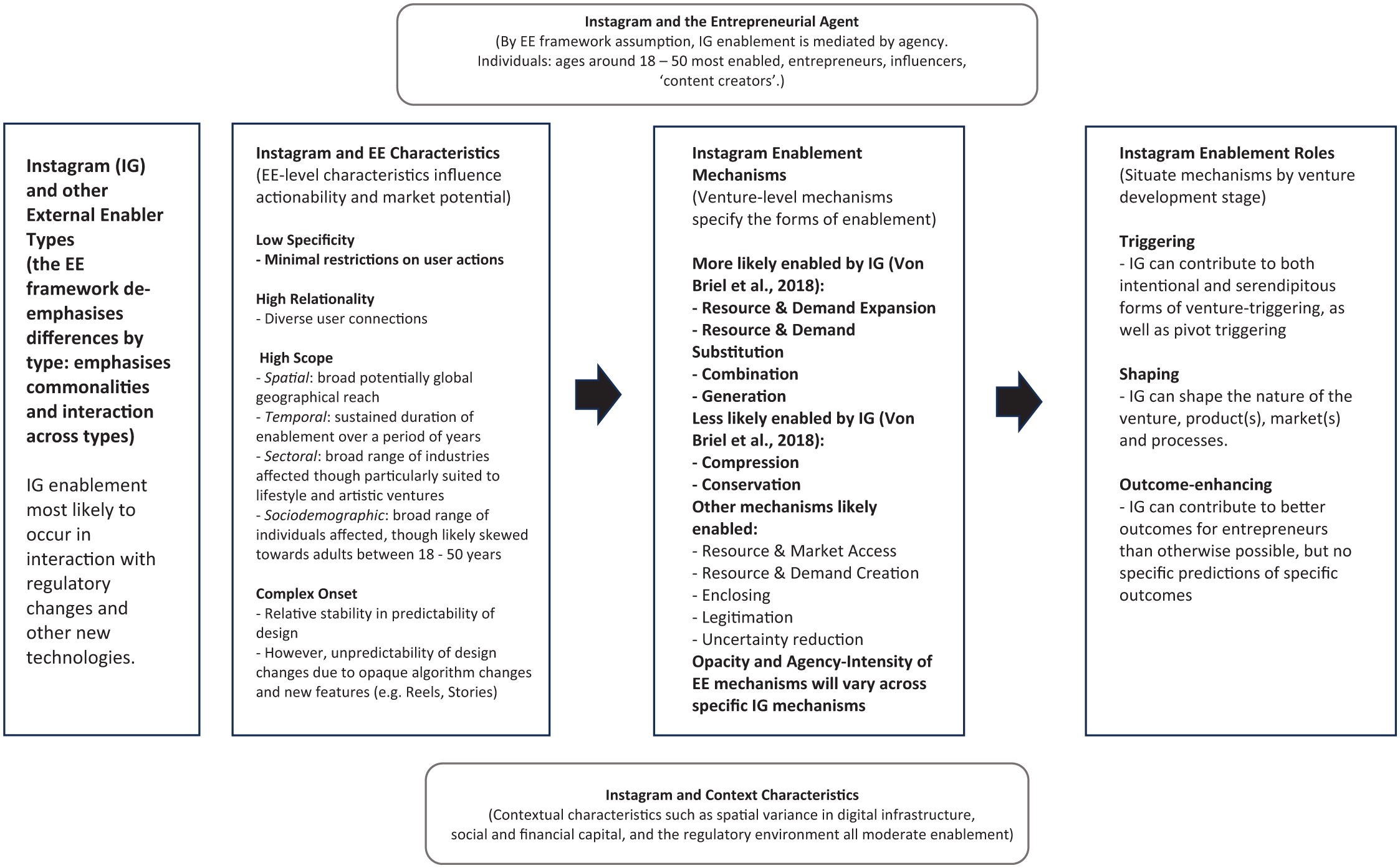
Instagram enablement framework for entrepreneurial actions and success (adapted from Davidsson and Sufyan, 2023).
Building upon von Briel et al.’s (2018) work, Davidsson et al. (2020) and Kimjeon and Davidsson (2022) refer to similar but distinct characteristics: the ‘scope’ and ‘onset’ of EEs. Scope refers to the enabling potential of the EE in relation to its geographical reach (spatial), the duration of its enablement (temporal), the range of industries that it affects (sectoral), and the range of individuals affected by its enablement (sociodemographic). Given the high persistence of social media data (Boyd and Ellison, 2007) and the globally accessible, highly networked character of Instagram, the platform could be deemed to exhibit high spatial, temporal, sectoral and sociodemographic scope (see Figure 1).
External enablers can also be characterised as varying in terms of their suddenness, predictability and evolution; collectively referred to as ‘onset’ characteristics (Kimjeon and Davidsson, 2022). Instagram presents a complex case to define, in that many of its core design features and behavioural affordances since launching in 2010 have remained relatively constant, indicating low suddenness and high predictability. However, new interaction features such as Reels, Stories and IGTV have been introduced since its acquisition by Facebook (now Meta) in 2012. Subsequently, a more moderate assessment on all dimensions may be appropriate given the element of unpredictability in terms of potential future features, platform competitors or even further acquisitions.
External enablers of entrepreneurial activity
Until recently, the dominant theoretical interpretation of entrepreneurial activity has emphasised the role of individuals as either ‘discovering’ pre-existing, actor-independent entrepreneurial opportunities (Shane and Venkataraman, 2000) or ‘creating’ those opportunities through dynamic interactions with resources and other social entities (Alvarez and Barney, 2007; Sarasvathy, 2001). To address some of the conceptual challenges that these interpretations of entrepreneurial opportunity development present, Davidsson (2015) proposed an alternative perspective focusing on external enablers (EEs) of entrepreneurship. These are defined as aggregate-level external circumstances that potentially enable a range of entrepreneurial actions (Davidsson, 2015). In alignment with classical perspectives of entrepreneurship (Schumpeter, 1934), EEs are based on the theoretical assumption that environmental change has a beneficial effect for some prospective entrepreneurs through disequilibrating aspects of the economy (Kimjeon and Davidsson, 2022).
The EE framework builds upon the notion that the external conditions surrounding entrepreneurial activity are just as important as the agency underpinning the action itself (Shane and Venkataraman, 2000). Furthermore, it proposes that actor-independent circumstances, even without the agent’s vision and actions, have the potential to affect entrepreneurial outcomes for some, but not all endeavours. A revised framework proposed by Kimjeon and Davidsson (2022) indicates that EEs are composed of three core elements: EE-level characteristics, venture-level mechanisms and roles. As previously outlined, characteristics of EEs can be divided into scope and onset, with the former relating to the market potential of the venture across sectoral, temporal, spatial and socio-demographic dimensions (Davidsson et al., 2020), and the latter describing the suddenness and predictability of the enabler. Meanwhile, venture-level mechanisms refer to the various functions of the EE and the diverse ways in which they initiate, develop and sustain a new venture (Davidsson et al., 2020; Kimjeon and Davidsson, 2022). The third core element of Kimjeon and Davidsson’s (2022) revised framework describes the roles that EEs can take: triggering, shaping and outcome-enhancing. These refer to the varying stages at which EE mechanisms are deployed by entrepreneurs and thus constitute a vital focus of inquiry with regards to understanding how entrepreneurial activities can emerge.
Venture-level mechanisms and roles of Instagram
Enabling mechanisms can be defined as ‘a relational construct, providing a means to connect external elements and the entrepreneurial agent’ (Davidsson et al., 2020: 317) and as such, are ‘venture-level manifestations of EEs, specifying cause-effect relationships pertaining to what supply-, demand- or value-appropriation improvement an EE offers’ (Kimjeon and Davidsson, 2022: 655). Not only are mechanisms strategically important for enabling entrepreneurial activity, but vary in two important properties (Kimjeon and Davidsson, 2022): ‘opacity’, referring to how difficult the mechanism is to identify; and ‘agency-intensity’, referring to the level of demand required to realise the mechanism.
Additionally, the respective specificity and relationality characteristics of an EE will determine their potential for enabling particular mechanisms (von Briel et al., 2018). Applying these to the case of Instagram based on an assumed character of low specificity and high relationality, von Briel et al. (2018) predict greater potential for enabling expansion, substitution, combination and generation mechanisms, with lesser potential for enabling compression and conservation mechanisms (see Figure 1). However, empirical research examining the presence of these different mechanisms for social media, or more specifically, Instagram, has been limited to date (Kimjeon and Davidsson, 2022).
While examining the enabling mechanisms of Instagram may help to specify the entrepreneurial benefits of using the platform, their higher-order functions at different stages of the entrepreneurial process are also worthy of more attention (Davidsson et al., 2020). Capturing the dynamic and iterative nature of the entrepreneurial process is often at odds with the commonly referenced ‘stages’ or ‘phases’ that depict the process as a set of bounded, self-contained sequential steps (Davidsson and Gruenhagen, 2021). To overcome the various limitations associated with this traditional, static and successive conceptualisation (Davidsson and Gruenhagen, 2021), both von Briel et al. (2018) and Davidsson et al. (2020) draw broad parallels between the EE roles and Bakker and Shepherd’s (2017) three distinct but overlapping stages of the new venture process: prospecting, developing and exploiting.
The process-based perspective challenges future research to consider how different mechanisms may be more-or-less salient at different stages of entrepreneurial development. This is accounted for in the EE framework by considering the non-exclusive roles of mechanisms (Kimjeon and Davidsson, 2022): first, enticing the entrepreneur to initiate entrepreneurial activity (triggering), then shaping the nature of the venture, its product(s) or service(s), served market(s) or creation process (shaping) and ultimately, contributing to better outcomes for the venture than would otherwise be possible (outcome-enhancing). Considering these roles is especially salient in light of Nambisan’s (2017) proposition that researchers should re-interpret the stage-based conceptualisation of entrepreneurship in terms of individual activities, and not just the whole venture. Indeed, entrepreneurial activity consists of multiple elements that gradually materialise overtime (Dimov, 2007), serving to further underline the importance of recognising and understanding the fluidity of these states.
In response to the limited research examining Instagram as an EE of entrepreneurial activity and the need for greater empirical process-oriented work (Kimjeon and Davidsson, 2022), our article explores how and when EE mechanisms are activated by Instagram users in the pursuit of entrepreneurial endeavours, in addition to how and when these create detrimental as well as enabling consequences.
Methodology and Method
Research design and sample
A qualitative multiple case study method (Yin, 2014) was employed in this research, given its utility for producing insights into entrepreneurial behaviour and environmental and processual changes (Kimjeon and Davidsson, 2021). Cases were selected using purposive sampling, whereby participant experience of the phenomenon of interest is paramount (Yin, 2014). Three core sample inclusion criteria were set. First, the entrepreneurs were required to be actively using their Instagram profiles to generate revenue through entrepreneurial activity, whether as ‘bonus’ extra income (‘supplementary’), part of their overall revenue generation but not the most prominent source (‘peripheral’), or their main source of income (‘core’). Second, the entrepreneurs needed to possess at least 2000 followers, so to fall within the minimum designated classification of ‘nano-influencer’ (Campbell and Farrell, 2020). Third, entrepreneurial activities needed to operate across thematically distinct virtual communities, so that the processes across a diverse range of focal areas could be explored.
Sample selection was initiated using a netnographic approach (Kozinets and Gambetti, 2020), whereby researchers may act as observers or participants in an online community (Bowler, 2010). By applying the method of immersion (Kozinets and Gambetti, 2020) in the Instagram communities of mostly UK-based entrepreneurial profiles, an initial search identified 125 profiles that satisfied the inclusion criteria. We adopted a person-centred approach to social media research ethics (Carter et al., 2016), gaining informed consent for research use of publicly accessible online data. In total, 16 entrepreneurs agreed to participate, which yielded 15 case studies in total as participants 11 and 12 co-founded their entrepreneurial endeavour and associated Instagram profile. Contextual information about the demographic and venture characteristics is presented in Table 1, while network characteristics relating to participant use of Instagram is provided in Table 2, with usage and network statistics representative of the profiles at the point of data collection, spanning March to July 2019.
Data collection
Given the geographical dispersion of participants across various regions of the United Kingdom and Finland (see Table 1), semi-structured interviews were conducted online via the Microsoft Teams platform. After receiving informed consent to analyse the publicly accessible data on each of the 15 Instagram profiles, accounts were observed by a member of the research team for a period of 4 weeks leading up to the pre-arranged interviews, conducted between March and July 2019 (see Table 2). Observation periods were staggered based on the interview schedule and justified on the basis that the purpose of the observation was not to track macro-level, simultaneous events but rather, to explore rich insights relating to individuals and their activity leading up to the interview. By focusing on a relatively short window of observation dates, we also sought to limit any substantive changes in the EE characteristics of Instagram.
As part of the immersion process, the team spent a total of 164 hours in the digital communities of the 15 Instagram accounts. This time enabled the researchers to move from data collection to curation (Kozinets and Gambetti, 2020), where 12-page narrative reports were produced for each case, highlighting key insights about each profile. This included details such as follower numbers, likes and comments, type of content typically produced, audience engagement, most popular posts and pace of posting, in addition to brief analytical observations, such as types of engagement which appeared to drive successful engagement and follower retention patterns. These preliminary case reports were useful not only in providing important contextual background to the entrepreneurial basis of the cases but were also included within the semi-structured interview protocols as a means for eliciting discussion and reflection from participants in relation to their entrepreneurial activity on Instagram. This approach also served to limit the occurrence of potentially detrimental social desirability effects amongst interviewees (Bergen and Labonté, 2020) by grounding discussion in verifiable observations of their own public profiles. In doing so, interviewees were encouraged to move beyond idealised narratives and instead reflect on specific examples of entrepreneurial activity enabled by Instagram that had both beneficial and detrimental effects, as per the core research questions.
Prior to the interviews, a comprehensive review of the digital entrepreneurship literature was conducted, with particular emphasis placed on key texts relating to social media entrepreneurship (Fischer and Reuber, 2014; Nambisan, 2017; von Briel et al., 2018). A semi-structured interview protocol was subsequently developed that covered the following core topics: an overview of social media use; initial motivation for using Instagram; perceived factors influencing follower growth and use of strategies for further development; perceived entrepreneurial opportunities presented by using Instagram; goals for entrepreneurial use of the platform; motivations for potential full-time transition to social media entrepreneurship; perceptions of popular content on the platform; perceived status as influencers and/or entrepreneurs on Instagram; and perceived areas for development in exploiting entrepreneurial opportunities via the platform. The final phase of the protocol involved sharing the summary report with the interviewees to elicit further reflection and elaboration on their use of Instagram for entrepreneurial activity. Throughout the protocol, the researchers consciously avoided using specific EE-related terminology so not to inadvertently prompt socially desirable responses, instead focusing questions within a neutral framing of entrepreneurial activities associated with their use of Instagram. By eliciting interviewee perceptions, the research design aimed to isolate this association as much as possible within a qualitative framework.
Coding
All interviews were transcribed verbatim by the researchers, aided by initial automatic transcription produced by the Microsoft Teams software. Transcripts were then imported into the NVivo 14 (Lumivero, 2023) qualitative analysis software, which enabled the research team to produce codes, themes and run coding matrix analysis to understand relationships between the coding of EE mechanisms and roles. The latter process was instrumental in producing the analysis presented in Tables 3 to 6, where coding and case representation figures are illustrated in relation to EE mechanisms and roles, Instagram revenue generation type and types of detrimental effects. Data analysis involved implementing a flexible pattern-matching approach (Bouncken and Tiberius, 2023; Sinkovics, 2018) that followed the three steps outlined by Bouncken and Tiberius (2023): first, literature-based theory deduction (Gioia et al., 2013); second, iterative comparisons of expected patterns within the collected data (Bouncken and Barwinski, 2021); and third, comparison of supported expected patterns with emergent patterns for inductive theorising (Bouncken and Tiberius, 2023).
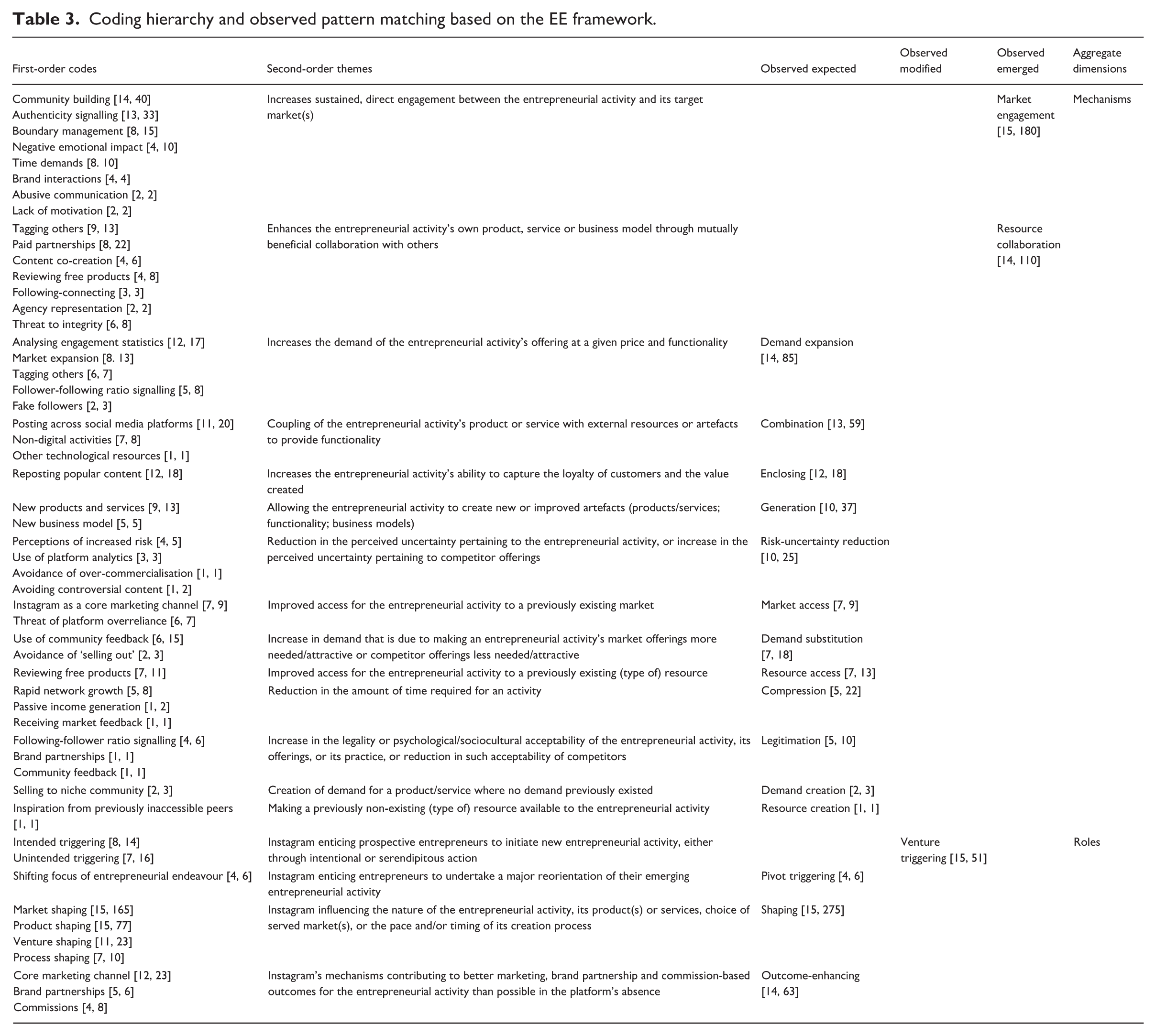
Coding hierarchy and observed pattern matching based on the EE framework.
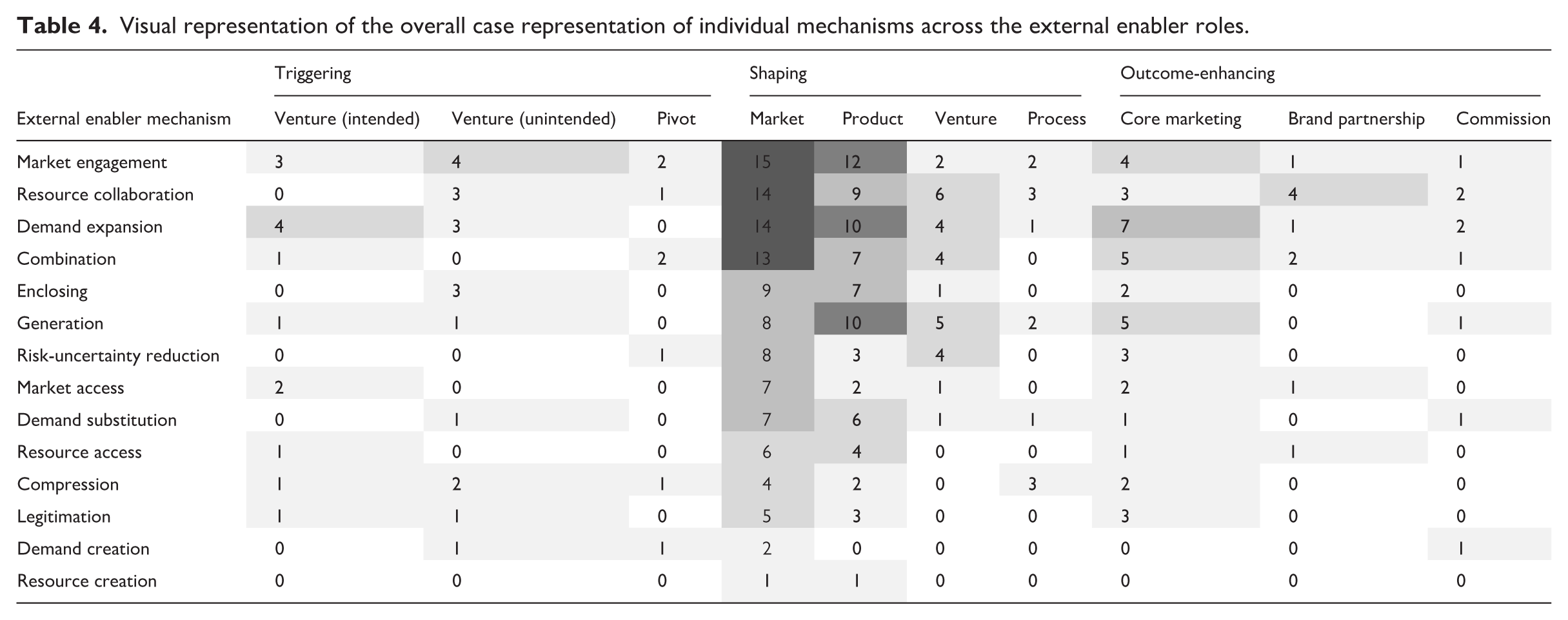
Visual representation of the overall case representation of individual mechanisms across the external enabler roles.
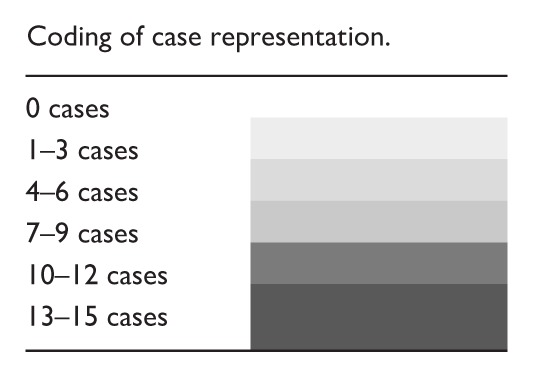
Coding of case representation.
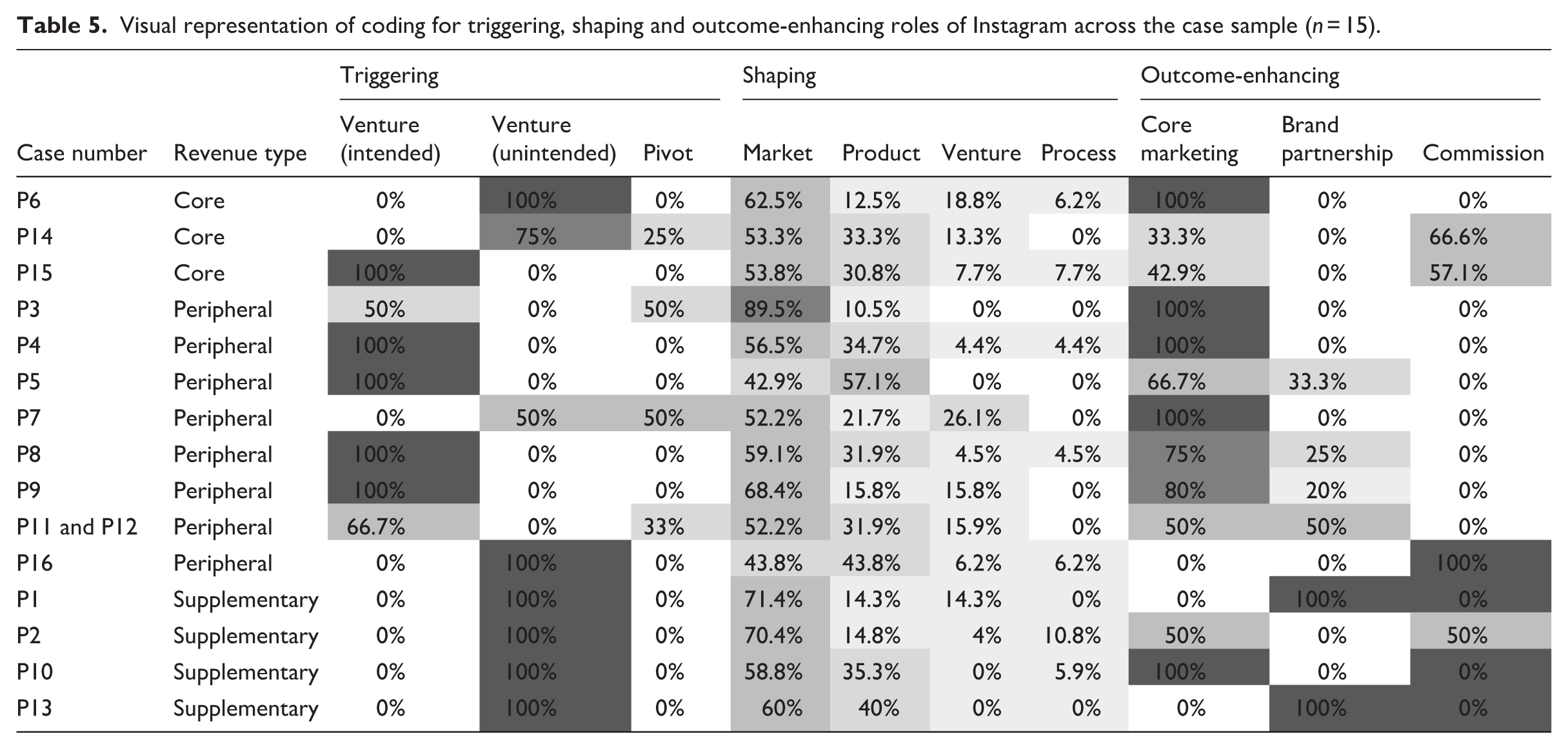
Visual representation of coding for triggering, shaping and outcome-enhancing roles of Instagram across the case sample (n = 15).
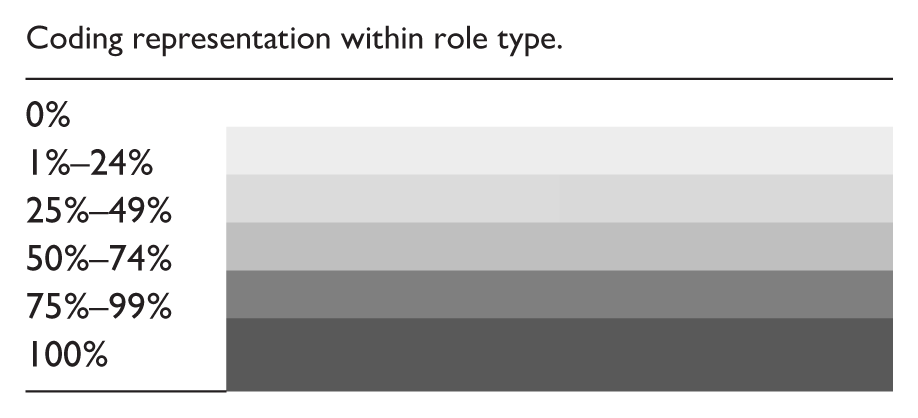
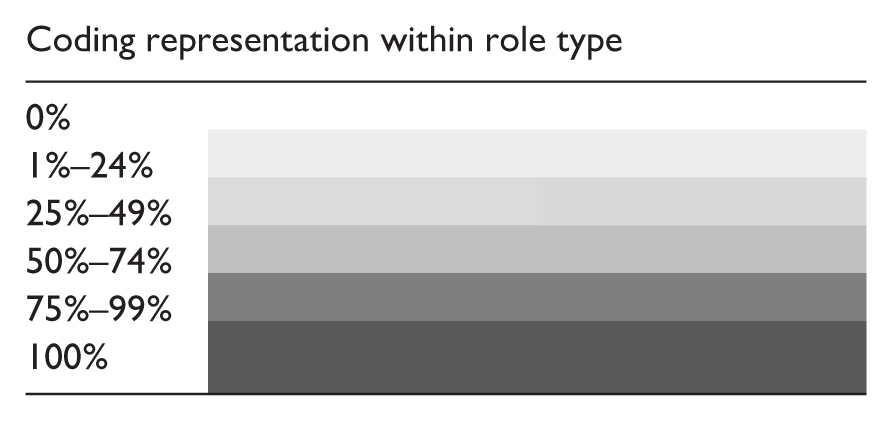
Coding representation within role type.
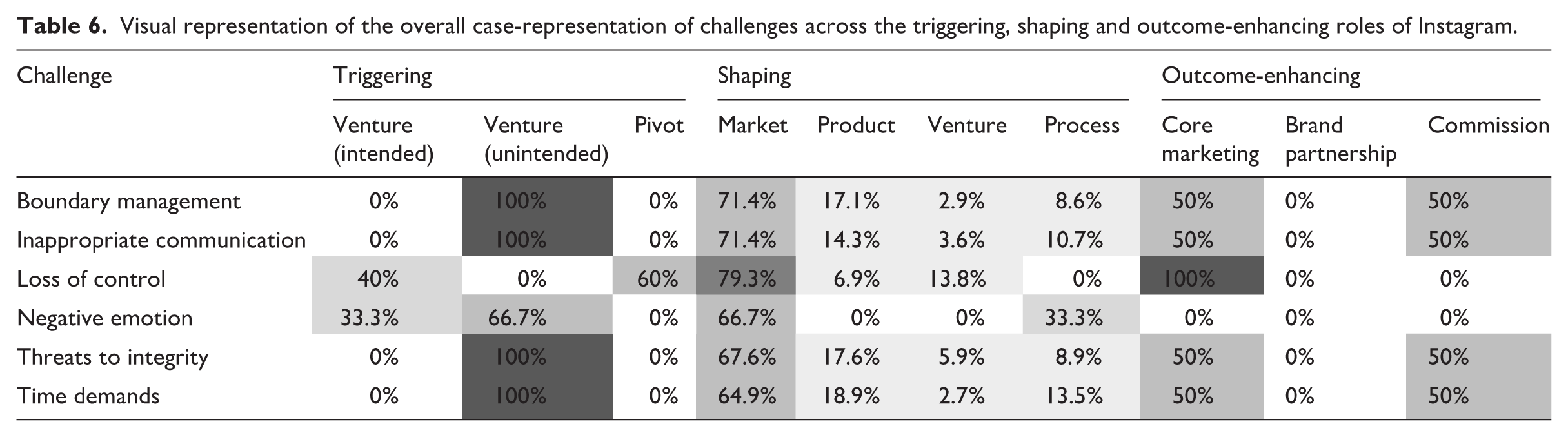
Visual representation of the overall case-representation of challenges across the triggering, shaping and outcome-enhancing roles of Instagram.
Coding representation within role type
As Bouncken and Tiberius (2023) highlight, no one-size-fits-all approach exists, but rather a general logic of flexible pattern matching. Nevertheless, initial pattern identification was informed primarily by the literature pertaining to the EE framework (Davidsson, 2015; von Briel et al., 2018), given that the core focus of the first research question was to examine how and when social media entrepreneurs using Instagram activate enabling mechanisms during the process of entrepreneurial transition. Codes included both positive, enabling effects as well as negative, detrimental effects to address the second research question regarding the challenges associated with EE mechanisms.
Theory deduction based on the EE literature provided us with expected mechanisms and roles taking place at the level of the venture, though with little indication of how and when they would be most prevalent in the process (Kimjeon and Davidsson, 2022). With a continuously evolving EE framework literature (Davidsson et al., 2020; Kimjeon and Davidsson, 2022), these expected patterns were updated to the final version presented in Table 3. The data collected from the semi-structured interviews were then analysed through an iterative process using NVivo, where analysis oscillated between the expected patterns (Table 3) and those drawn from the accounts provided by the interviewees of their entrepreneurial activities on Instagram (Bouncken and Tiberius, 2023). At this stage, the role of Instagram in revenue generation was also coded, categorising interviewee responses to their entrepreneurial use of the platform as either core, peripheral or supplementary to their main source of income (see Table 1). The NVivo software played a vital role in this process of interpretation, enabling multiple codes to be added to singular excerpts of text across the transcripts and to build a rich picture not only of how revenue generation types and EE mechanisms and roles related to one another, but of their respective salience across all cases in the sample.
Finally, iterative pattern comparisons were made to compare how the empirical data corresponded to expected patterns, the extent to which these were supported or partially supported, and whether any novel patterns emerged. This analysis was conducted in relation to both expected mechanisms and roles of Instagram as an EE, yielding two novel mechanisms – ‘Market Engagement’ and ‘Resource Collaboration’ – and an ‘Unintended’ subset of the venture triggering role. The outcome of this final phase of coding is shown in Table 3.
Findings
This section outlines the EE mechanisms and roles identified through the pattern-matching process, providing empirical insights into the core research questions of how and when enabling mechanisms are activated by SMIs, and their relation to detrimental effects. The following sections identify the specific mechanisms linked to entrepreneurial activity on Instagram, how they trigger, shape and enhance outcomes throughout the process, and how the activation of EE mechanisms compares across the core, peripheral and supplementary income role types.
External enabler mechanisms and roles of Instagram
Table 3 presents an overview of the first-order codes (agent interactions) and second-order themes (EE mechanisms and roles) coded across all cases. Case representation and coding references are quantified to provide an illustrative indication of respective salience across the dataset. In total, 12 of the 15 mechanisms from Kimjeon and Davidsson’s (2022) revised EE framework were observed as expected in the interview data, with the three absent mechanisms including conservation, resource expansion and resource substitution. Two emergent themes of market engagement and resource collaboration were identified, which did not closely align with the extant pool of EE mechanisms and are later discussed in more detail. Finally, all expected EE roles were observed, with venture triggering modified to more explicitly acknowledge the role of unintended, serendipitous triggering as well as through correctly anticipated mechanisms. Appendix A provides full definitions and illustrative verbatim examples for all emergent and observed EE mechanisms discussed in the following sections.
Table 4 provides a visual representation of the overall case-representation of individual mechanisms found, in addition to their respective salience across the triggering, shaping and outcome-enhancing roles of the EE framework (Davidsson et al., 2020). This approach emphasises the dynamic nature of the entrepreneurial process and the distinct yet sometimes overlapping ‘higher-order functions of EE mechanisms at different stages of a venture’s development’ (Kimjeon and Davidsson, 2022: 647). The analysis found empirical evidence to support Kimjeon and Davidsson’s (2022) novel pivot triggering and market shaping roles. Specific forms of enhanced outcome were also identified for the context of social media entrepreneurship, including core marketing, brand partnerships and commissions. The following sections elaborate on the patterns for each of the EE roles presented in Table 4, as well as how they compare across the core, peripheral and supplementary revenue types enabled by Instagram (see Table 5).
Venture and pivot triggering
Venture triggering on Instagram was evident across all cases (see Table 3). However, the platform enabled entrepreneurial activity in two distinct ways: first, through intentional, strategic identification of enabling mechanisms, and second, through unintentional, serendipitous interactions which revealed certain entrepreneurially beneficial mechanisms. While the former appears to align most closely with Davidsson et al.’s (2020: 320) focus on agentic ‘anticipation of partial enablement associated with the identification of specific mechanisms’, the latter recalls core elements of Guiñez-Cabrera and Aqueveque’s (2021) ‘market request’ pull motivation for entrepreneurial activity on Instagram, where prior entrepreneurial intention was found not to be necessary for subsequent venturing behaviour.
Intentional and unintentional forms of venture triggering were represented relatively equally across the 15 cases and involved activation of numerous mechanisms (see Tables 3 and 4). For intentional venture triggering, the enabling potential of Instagram was anticipated in the form of improving access to an existing market (market access), increasing demand for their existing product or service (demand expansion) and enabling sustained, direct interactions with customers through community building (market engagement). Supporting von Briel et al.’s (2018) propositions, these mechanisms appeared to leverage the high relationality of networks hosted on Instagram. For instance, P15 (Graphic Art – 46k followers) underscored the value of being able to exhibit artwork and establish himself as an artist: ‘It’s an incredible tool for an artist . . . you can post something and . . . it’s a global audience’. Similarly, the vast connections afforded by Instagram provided valuable feedback for one photography entrepreneur (P16 – 1.29 million followers): ‘[Instagram] was a good place to put my nature photos, and get feedback and criticism about them . . . I wanted to get comments about my photos’.
These same mechanisms also appeared to underpin unintended, serendipitous activation of Instagram’s enabling effects. For instance, handwriting artist, P2 (28k followers) highlighted how the initiation of entrepreneurial activity on her profile was by ‘accident and not intentional’. This resulted from increasing market requests (cf. Guiñez-Cabrera and Aqueveque, 2021) within the community of interest she had developed on the platform (market engagement). These had grown rapidly following a ‘viral’ post that had been shared of her work by another user (compression, demand expansion). For P6 (Fine art – 19.6k followers), the same mechanisms appeared to underpin a serendipitous event in which a ‘massive Instagrammer’ had purchased and shared her artwork upon their profile, leading her to realise the entrepreneurial potential of her platform: ‘That is how I got started. And because [she]’s got 140k followers on Instagram, once I made that connection then everybody wanted to know’.
Such immediate growth in visibility and attention was not always initially perceived as a positive outcome, however. The sudden virality of her Instagram content created anxiety for P2 around what family-related posts her new followers may be able to access, leading her to remove older personal content and temporarily step back from using the platform: ‘I got something like five thousand [followers] in the space of a couple of days, which freaked me out completely, so I just turned off Instagram. Like, no, no, this is too much . . . It was a bit intimidating. It’s nice, but it’s scary that so many people can suddenly see all this stuff about you’. For others, the emotional impact of rapid follower growth lessened gradually with experience but nevertheless, had profound initial effects: ‘When I used to get a lot of followers, it used to give me heart palpitations. It would make me feel really anxious. It’s incredible that [Instagram] has that amount of power. It’s just an app, but it can really affect you’ (P6). Table 6 depicts how many challenges associated with the triggering role of Instagram were clustered around its unintentional form, suggesting that the serendipitous and often sudden onset of increased attention on the platform was often accompanied by a range of negative outcomes.
As illustrated in Table 5, distinct patterns of intentional and unintentional venture triggering occurred across cases depending on whether Instagram represented core, peripheral or supplementary revenue generation for the entrepreneurs. Intentional triggering appeared prevalent across cases where Instagram represented a peripheral enabler of revenue generation, such as using it for marketing the launch of a new book (P3), developing brand partnerships (P4) or promoting entrepreneurial endeavours on other platforms (P8, P9, P11/12). In contrast, unintentional venture triggering appeared prevalent where Instagram was described as providing ‘bonus’, low-level supplementary revenue for the entrepreneur, such as through brand-sponsored posts (P10, P13) and selling artistic prints (P2), but in some cases, bringing core revenue to the venture through the sales of prints and bespoke art commissions (P6, P14).
These findings suggest that some entrepreneurs used Instagram strategically from the outset as an enabler of revenue growth for an existing venture, correctly anticipating and leveraging the market access, market engagement and demand expansion mechanisms of the platform to enhance marketing visibility and reach of their product or service. As noted by P11 and P12 (Parenting/comedy – 104k followers), ‘We had a few people on our podcast who said, “you should be on Instagram – that’s where all the mums are.” So that’s the reason why we went and it escalated quite quickly’. In contrast, unintentional triggering typically stemmed from engagement and connection within communities of interest hosted on Instagram, consisting particularly of fellow enthusiasts passionate about artwork, photography, parenthood and interior design. The dominant mechanisms of market engagement, resource collaboration, demand expansion and enclosing associated with this form of venture triggering underscore the seemingly vital role of the platform in enabling sustained engagement with large communities of loyal fans and mutually beneficial collaborations with other platform users, such as influential users and brands.
While evidence for the pivot venturing role proposed by Kimjeon and Davidsson (2022) was found, this was less prevalent compared to intended and unintended venture triggering. As illustrated in Table 4, various mechanisms were associated with this reorientation of entrepreneurial activity. For instance, P3 (Travel/Relationships – 2.4k followers) shifted the core focus of her Instagram profile from travel photos and videos to relationship and dating coaching for members of her community (market engagement), to align with the publication launch of her first book on the same topic (combination). The same combination mechanism was also evident through P14’s (Flower art – 41.6k followers) decision to engage agency representation for her venture, which enabled a shift from ‘being an influencer’ and sharing content on her own Instagram profile to instead producing it on behalf of brand partners for their respective profiles. This pivot was influenced by P14’s concerns about the opacity of how Instagram would promote assets developed on her own profile in the future: ‘You can’t rely on your content being seen anymore because of the [Instagram] algorithm. I’ve been making my living on the platform up until now and I feel like I can’t put all of my concentration [in it]. I need to broaden out how I market myself’.
Shaping
The role of shaping enables consideration of how, through its various mechanisms, Instagram can be utilised to develop ventures, products/services, served market(s) and the creation process (Kimjeon and Davidsson, 2022). By coding for each of these occurrences, the platform played an especially important role in shaping both markets and the product or services across all 15 cases (see Tables 4 and 5) and were the most dominant shaping roles across core, peripheral and supplementary revenue types (see Table 5). Comparatively less evidence was found for venture (11) and process (7) shaping roles, reflecting the dominant influence of Instagram upon shaping markets and products compared to the structure of the venture itself or pacing of the entrepreneurial process. Each EE shaping role is now discussed in more detail.
Market shaping
Several mechanisms were extensively linked with cases using Instagram to shape their target market (Table 4). The platform appears to afford two particularly common actions: community building and authenticity signalling. For the former, Instagram enabled sustained, direct interactions with other users sharing a common interest (market engagement) and thus, facilitated community growth through increasing follower numbers (demand expansion) and online behaviours such as tagging and use of hashtags (market engagement). This enabled the potential for collaborations with other ventures or content created with community members via the Stories feature of the platform (resource collaboration), which in turn helped to legitimise the venture (legitimation) and provide sustainable and direct access to the emergent target market. Many entrepreneurs described combining the increased demand for their Instagram content with external e-commerce sites (combination), such as Etsy or their own bespoke website, to generate sales revenue. As noted by P9 (Parenting – 20.3k followers): ‘[Instagram] gives us an opportunity to build a community which means we can engage with the people who are buying from the business . . . They love that it’s less “salesy” than an explicit sort of sales post . . .’
While sustained engagement and collaboration with consumers and other social media entrepreneurs across various online platforms yielded significant benefits for many of the cases, over half described the considerable pressures associated with maintaining this approach (see Table 3). More broadly, the market shaping role was most heavily linked with all six core forms of challenge identified across the entrepreneurial cases (see Table 6), from boundary management issues to negative emotions and time demands. As illustrated by P7 (Mental health – 27.7k followers), ‘Every time I share [a post], I share to Twitter and Facebook through Instagram. I find Instagram pretty time consuming on its own, [so] I find that engaging across all platforms is very difficult’. Many interviewees perceived a pressure to ‘up the game a little bit’ (P8) or ‘post a bit more’ (P14), while acknowledging that doing so would only lead to ‘getting yourself more into the whole thing’ (P15). One interviewee (P6) admitted to feeling relieved that her venture was ‘slowing down a little bit’ due to becoming ‘really tired because of the level of communication . . . sometimes people are talking to me on three different platforms and it’s very hard to keep track of all the information that’s coming in, the questions, the lost parcels, and so on’.
Though often utilised as part of a wider portfolio of platforms, interviewees typically emphasised the key role of Instagram – and specifically, the Stories feature – in enabling them to signal authentic aspects of themselves (enclosing), whether in relation to their identity or ‘backstage’ (cf. Goffman, 1959) aspects of their venture, such as mundane activities (P2) or brief glimpses of project progression (P15). For over half of the entrepreneurs, however, this approach necessitated constant monitoring and careful reinforcement of personal-professional boundaries (see Table 6), whether deleting previously shared family images once their network and entrepreneurial activities started to develop on the platform (demand expansion) or creating alternative private accounts. As noted by P10 (Interior design – 9.5k followers), a potential personal and professional cost was associated with sustained activation of the market engagement and demand expansion mechanisms: ‘[It] has come to the point now that people want so much, that you have to give up a lot of your life and your character to do well’. At an extreme, two female interviewees reported receiving inappropriate sexual direct messages (DMs) from male followers, with P3 noting, ‘[men have] sent me all kinds of things but now I’ve learned how to filter those messages and how to not be so sensitive when it comes to it. So, I just delete, delete, delete, delete. That’s it’. This finding appears to echo broader recognition of the problematic abuse of women online (Eckert, 2018; Jane, 2014) and underlines the importance of critiquing the notion of social media as providing neutral, meritocratic spaces for entrepreneurial activity (Martinez-Dy, 2022).
Product shaping
Direct engagement with the market (market engagement) also played a key role in shaping the products and services for most cases (see Table 4). In particular, the communities nurtured in the initial triggering stage of the process provided valuable and timely feedback for further iteration and new ideas (generation). In some cases, feedback was provided directly from followers who shared positive feedback for the content shared by the entrepreneur, whether through comments attached to individual posts, DMs, being tagged in content, or sharing positive reviews or venture-relevant content using the Stories function of Instagram. For P11 and P12 (Parenting/comedy – 104k followers), the rapid expansion of their Instagram network over just 3 years (demand expansion, compression) meant that interactions with their community (market engagement) not only provided a valuable ‘testing ground for material’ that could be used in their comedy performances outside of the platform, but also provided a sense of what content they should avoid sharing at the risk of alienating their target market: ‘We are very conscious of who our followers are. And we’ve said no to a lot of [brand partnership] campaigns, because they don’t fit in within the brand’. Similar sentiment was expressed by P7, who in talking about his rationale for selecting appropriate brand partnerships remarked, ‘you can’t talk about authenticity and then lose yourself’.
Cases illustrated how entrepreneurs would shape their core product or service based on feedback provided, their own intuition of what would increase sales from followers (market engagement, enclosing), or through use of Instagram’s analytical insights platform for business users. This feature represented an important source of information relating to the entrepreneur’s target market, optimal times to post, and what type of content tended to elicit high engagement (market engagement, demand expansion). By reducing the opacity of the core mechanisms, associated with product shaping and the agency intensity, it enabled the entrepreneurs to activate them and engage with fine-level platform analytics. This helped some entrepreneurs to shape vital decisions around their core products: ‘I know that my [customer] age group is from 24 to 44. I suspect that they are people who live, maybe, in rented accommodation, who want to have a picture that they can take with them whenever they go’ (P6).
Instagram also enabled novel opportunities for forging partnerships with brands, from reviewing free products to cross-promoting one another’s ventures (resource collaboration, demand expansion). In cases where the platform provided supplementary income for hybrid entrepreneurs still engaged with full-time employment (Folta et al., 2010), brand partnerships (resource collaboration, generation) appeared to play an influential role in shaping content, from advertising free products sent by brands to tagging paid promotions with the ‘#ad’ disclaimer and agreeing upon the types of post to be shared. Similarly, the tagging functionality played a prominent role in shaping products through the content and audiences of others in the network (market engagement, demand expansion, enclosing), with the Stories feature enabling positive customer reviews to be shared (legitimation) and provide a call-to-action for sales” (P9: ‘I just reshare [Stories] if we’ve been tagged and . . . I use it with the “swipe up” [function] to actually buy the [product]’).
However, interviewees identifed threats to integrity (see Table 6) and the importance of striking a balance between the authentic value of their Instagram accounts and its monetisation. For example, P13 (Lifestyle, menswear – 7.1k followers) noted that, ‘I don’t really like set up photos that are constantly being turned out . . . what is really just a feed full of ads’, while P10 observed how for full-time Instagrammers, ‘it becomes more about business transactions . . . I think that’s not something [that is] great for the soul, so for me it’s a no’. Similarly, P11 and P12 reflected on their cautious approach to sharing content that might suggest a level of wealth and success from their Instagram activity that would likely alienate their followers: ‘We don’t put [home photographs] on Instagram, because people would hate us . . . We are very conscious of who our followers are . . . We don’t want to be a**holes. We could get a f**king new kitchen with some of the payments, but we’re good people’.
Venture shaping
Though less prevalent across the cases compared to market and product shaping roles (see Table 4), Instagram appeared to provide appropriate mechanisms for shaping the overall structure and routines of the ventures and entrepreneurial activities. In particular, the generation mechanism appeared to enable individuals such as P4 (Circus art – 14.5k followers) to utilise the evolving onset characteristic (Kimjeon and Davidsson, 2022) of Instagram to explore the entrepreneurial potential of new features on the platform, such as IGTV. Other cases illustrated how external artefacts could be utilised in tandem with Instagram (combination) to amend their business model, such as securing publishing deals or launching exhibitions based on content shared via the platform (generation).
For some of the more established entrepreneurs, combining their use of Instagram with external resources and collaborating with agency representation meant that they had ‘just one less thing to think about’ (P11 and P12) in relation to making decisions around core aspects of their business, such as setting brand partnership fees, arranging contracts or even exploring other ways of using the platform (P14). Meanwhile, P8 (Lifestyle, parenting – 14.1k followers) noted her decreasing reliance upon Instagram as the sole source of revenue generation. She described how she had diversified the breadth of their entrepreneurial activities across multiple social media sites to account for the low predictability onset characteristics of the platform (Kimjeon and Davidsson, 2022), as ‘with Instagram, you don’t know – [it] might suddenly go bust or they might delete your account. I think it’s way too risky to put everything into a platform that you don’t control’. This strategy reflected a common awareness across cases of the ebb and flow in popularity of social media platforms and that the algorithm modifications determining the visibility of content were typically opaque and difficult to predict. As relayed by P14, ‘The people I speak to are saying that engagement is down and they are losing followers. It’s just a very strange place at the moment, Instagram’.
Process shaping
Instagram also appeared to affect the pace and timing of some new entrepreneurial activities. Specifically, the compression mechanism underpinned how Instagram reduced the amount of time required to build a viable market. For some interviewees, such as P2 and P6, this meant that the time from their initial prospecting of the technology to creating potentially sustainable revenue streams through the platform was relatively short. In both cases, the resource collaboration mechanism appeared to play a role in triggering their entrepreneurial activity, while the compression and demand expansion mechanisms enabled more ‘passive’ forms of income, such as selling prints or handwriting sheets on linked external e-commerce sites. For example, P3 noted how ‘it’s quite nice to be able just put something up there [on Etsy] once, and that’s it. It just ticks over, making money’. However, some interviewees, such as P15, noted how positive perceptions associated with larger follower numbers had led to some opportunistic accounts offering to provide entrepreneurs with ‘fake’ followers. These would look superficially impressive but were often detectable and so posed a significant threat to integrity: ‘I get followed by a lot of artists and sometimes they’ve got tens of thousands of followers but . . . you can smell a rat, you know. You can see that their posts always seem to have a very similar amount of likes – like around 4,000 likes every posts – and it doesn’t seem real. It’s not genuine’.
Outcome-enhancing
The third, and final, observed role for Instagram involved the establishment of more optimised routines exploiting the variety of enabling mechanisms. As illustrated in Table 5, a relatively small number of entrepreneurs discussed using Instagram as their main source of revenue generation (P6, P14 and P15), with the notable commonality that all involved arts-based entrepreneurial activity. These cases typically focused on generating revenue through bespoke commissions or sales of prints generated through Instagram. This was the main entrepreneurial outcome for 4 of the 15 cases, though the platform was typically part of a wider portfolio of channels enabling collaborations to be formed (combination, resource collaboration).
The most prominent outcome-enhancing role for Instagram was serving as a core marketing channel for developing brand presence, publicising new product launches or promoting e-commerce sales on linked digital platforms (see Tables 4 and 5). Key mechanisms underpinning this outcome related to how Instagram enabled the creation and increase in demand for products or services (demand expansion), enhanced direct, sustained engagement with target markets (market engagement), increased collaboration with other platform users (resource collaboration) and the ability to combine products or services with other external artefacts (combination). As noted elsewhere, this form of outcome appeared to be particularly prevalent in cases where Instagram was viewed as peripheral to the venture’s overall revenue generation. For P11 and P12, whose co-created parenting and comedy venture spanned a variety of non-digital and digital outlets, full transition to social media entrepreneurship was viewed as sub-optimal as they had ‘come to Instagram as comedians and creative people, rather than being Instagrammers. So, it’s an addition to what we do’. Similarly, P7 noted how ‘Instagram is a small part of my job, but at the same time it’s a fairly important part . . . it’s where my message is seen’.
Instagram provided a third outcome-enhancing role in the form of brand partnerships. Drawing upon the resource collaboration mechanism in particular, the platform enabled some entrepreneurs to partner with brands and generate revenue through paid sponsorships, reflecting engagement with the type of ‘market request’ drivers described by Guiñez-Cabrera and Aqueveque (2021). For the few entrepreneurs where Instagram provided a ‘supplementary’ income stream alongside full-time work or study (see Table 5), the benefit of partnerships largely involved receiving free products or invites to events that would otherwise have not occurred (P13: ‘Obviously, I wouldn’t get to do any of that if I didn’t have the Instagram profile I have’.). In contrast, brand partnerships represented a core revenue generation stream for more established social media entrepreneurs such as P9, P11 and P12, who described portfolios of paid clients for whom they posted sponsored content (resource collaboration). However, for hybrid entrepreneur counterparts, such as P13, such partnerships could nevertheless be fraught with risk: ‘I couldn’t do it full-time because as easy as it looks, it’s actually a lot of effort sometimes to work with brands. When you’ve got to get every last little thing signed off and they kick you off [the partnership] if you don’t use certain hashtags . . . a lot of it is kind of petty’.
Discussion
Social media platforms play an increasingly important role in shaping various dimensions of contemporary entrepreneurial activity (Guiñez-Cabrera and Aqueveque, 2021; Secundo et al., 2021; Troise et al., 2022). Understanding how social media enables and supports entrepreneurial activity, while also recognising the challenges faced by those using it, remains a crucial area of enquiry (Kimjeon and Davidsson, 2022; Nambisan, 2017). While much of the existing literature has focused on examining a limited set of EE characteristics, mechanisms or roles within individual studies (Kimjeon and Davidsson, 2022), our research takes a broader, more holistic approach that encompasses different stages of the entrepreneurial process. By initially considering all expected mechanisms and roles outlined in the framework, we acknowledge that enablement can take many different forms, occur at various points in the venture creation process, and involve varying levels of entrepreneurial agency (Kimjeon and Davidsson, 2022). Our findings, therefore, contribute to EE scholarship by providing empirically grounded insights into Instagram’s wider role in enabling entrepreneurial activity, while also deepening understanding of the specific mechanisms, roles and challenges that shape this process. We outline key findings in relation to our research questions as follows.
‘How’ and ‘when’ Instagram enables entrepreneurial activity
In addressing our first research question of how and when enabling mechanisms are activated by social media entrepreneurs through their use of Instagram, we note that EE mechanisms represent how enablement occurs, while roles (Triggering, Shaping, Outcome-enhancing) represent when it occurs throughout the development of the venture. We found that nearly half of the cases examined reported initially triggering their ventures on Instagram through unanticipated or serendipitous events, reinforcing the concept of unintentional or ‘accidental’ entrepreneurship. This contrasts with traditional theoretical interpretations of entrepreneurial activity emphasising the role of the agent as either purposefully ‘discovering’ pre-existing opportunities (Shane and Venkataraman, 2000) or ‘creating’ them through dynamic social interactions (Alvarez and Barney, 2007; Sarasvathy, 2001). By extension, this underscores how social media platforms such as Instagram disrupt established academic assumptions around the importance of entrepreneurial intentions as a vital precursor to activity.
This departure from agent-centric perspectives aligns with Guiñez-Cabrera and Aqueveque’s (2021) finding that market pull plays a crucial role in triggering entrepreneurship through social media at its earliest stages (Kimjeon and Davidsson, 2022). As Davidsson et al. (2020) caution, focusing solely on anticipated mechanisms risks overlooking other influential factors that fall outside of strategic deliberation. Indeed, Davidsson et al. (2025: 30) emphasise how the agentic activation of external enablement ‘is not always strategically deliberate; it can be fortuitous’ and as such, challenges the traditionally dominant discourse around entrepreneurial agents as strategically rational, foresightful planners. Our research finds serendipity as one such driver of venture triggering through Instagram, underscoring necessary empirical evidence in support of both intended and unintended forms of entrepreneurial activation.
While serendipitous venture triggering was evident through relatively low agency-intensity on the part of prospective entrepreneurs, sustained entrepreneurial success on the platform required considerable time and intentional effort through market and product shaping activities, such as collaborating with other users, crafting content or building loyal communities of followers (see Table 4). This perhaps explains why unintended venture triggering tended to be associated with cases where Instagram played a limited supplementary role in revenue generation, aside from two cases where art-based entrepreneurs successfully leveraged the low specificity and high relationality characteristics of the platform (von Briel et al., 2018) to access and engage with an unanticipated markets for their hobbyist artwork (see Table 5). In contrast, intentional use of Instagram to enhance revenue generation and entrepreneurial outcomes was notable across cases where it was strategically integrated into a portfolio of digital and non-digital channels, with focus placed upon leveraging its EE characteristics to shape the venture’s market and product.
With regards to how enablement occurs, our research contributes by identifying two emergent candidate external enabler (EE) mechanisms beyond the 12 observed and expected based on Kimjeon and Davidsson’s (2022) revised list. The first, market engagement, is defined as increasing sustained, direct engagement between the entrepreneurial activity and its target market(s). This mechanism was observed empirically through reported patterns of interactions with online followers, with Instagram enabling entrepreneurs to build communities of interest and signal authenticity through their actions. From a theoretical perspective, these findings highlight the limitations in existing EE mechanisms, such as market access, legitimation and enclosing, which capture aspects of these interactions but do not sufficiently theorise the direct and sustained nature of engagement with the market. Instagram presents an adept illustration through its high relationality characteristics (von Briel et al., 2018). Along with the accompanying mechanisms of demand expansion, combination and generation, market engagement was prominent across the core EE roles of triggering, shaping and outcome-enhancing (see Table 4, illustrating these accompanying mechanisms), thus highlighting its importance as an enabler of entrepreneurial activity on Instagram.
The second emergent mechanism identified is termed resource collaboration. Whilst extant mechanisms capture how EEs may enhance resource access, creation, expansion or substitution for a venture (Kimjeon and Davidsson, 2022), theoretically, these do not fully capture the distinct value of mutually beneficial resource collaboration. In the context of Instagram, the mechanism is exemplified by enabling entrepreneurial activity through paid partnerships with brands, co-creating marketing content with community members, reviewing free products and tagging fellow entrepreneurs to raise profile visibility. Focus on the mutually beneficial aspect of collaboratively sharing resources underscores a shift beyond the benefits for the ‘focal venture’, such as receiving free products, monetary compensation or enhanced exposure, to the value of the exchange for the collaborator(s). In this respect, the resource collaboration mechanism may also provide a promising way of exploring brand partnership dynamics for entrepreneurs, such as those identified by Guiñez-Cabrera and Aqueveque (2021). As illustrated by Table 4, the mechanism was prominent across the entire entrepreneurial process, from triggering to shaping and enhancing outcomes for the entrepreneurs.
In discussing these core findings in relation to how and when Instagram enables entrepreneurial activity, we note similarities with other theories beyond the EE framework. For instance, social capital theory highlights the value of social networks and the norms and social trust that facilitate coordination and cooperation for mutual benefit (Putnam, 1995: 67). This links to market engagement, through the development of building social trust within a community that then produces beneficial entrepreneurial outcomes by serving as a potential market. Similarly, resource collaboration illustrates how mutually beneficial collaboration and reciprocity occurs through sharing resources. We note parallels with the concept of network externalities (Liebowitz and Margolis, 1994), particularly in how entrepreneurs may enhance the value of their product or service through increased visibility of and engagement with their content, whether through sustained, direct interactions with their market (market engagement) or increased market size by combining follower numbers with other entrepreneurs or brands (resource collaboration). While the two emergent mechanisms draw upon aspects of social capital and network effects, they remain distinct in that they specify the enabling potential for sustained engagement or resource collaboration, which are agent-independent characteristics of the EE and as such, are selectively enabling for those who opt to trigger them.
Finally, adopting a process-oriented approach to understanding Instagram in terms of its triggering, shaping and outcome-enhancing roles provided a nuanced understanding of how and when entrepreneurial actions are enabled by the platform. In part, this is reflective of how Instagram functions as a network-based platform with high relationality, low specificity, and high spatial, temporal, sectoral and socio-demographic scope (Davidsson et al., 2020; von Briel et al., 2018). By affording both one-to-one and one-to-many interactions, Instagram enables sharing of content, tagging other users and linking to other external resources, such as e-commerce platforms or other social media platforms. Our findings provide empirical support for some of von Briel et al.’s (2018) specific propositions regarding the expected effects of the specificity and relationality characteristics on the prominence of enabling mechanisms (see Figure 1). In line with their hypotheses, expansion and combination mechanisms were expected to be prevalent, while compression and conservation mechanisms were either subdued or mostly absent in the data. Through their focus on the interplay between enabling technologies, individual cognition and institutional environments, recent iterations of affordance theory (Autio et al., 2018; Zhu and Lin, 2025) further illustrate how Instagram’s low specificity and high relationality characteristics translate into entrepreneurial opportunities for some, enabling the combination and demand expansion mechanisms.
How and when Instagram enablement creates detrimental effects
In addressing the second research question of how and when detrimental effects of entrepreneurial enablement through Instagram occur, our analysis sheds light on inherent tensions and constraints that arise from the external enablement of entrepreneurial activity. While prior research has primarily focused on how mechanisms facilitate entrepreneurial activity (Kimjeon and Davidsson, 2022), our research demonstrates that these same mechanisms can also have detrimental effects depending on how and when they are activated (see Table 6). In doing so, we highlight three core issues: perceived pressures and threats to integrity associated with rapidly increasing public visibility; the costs of high relationality resulting from EE mechanisms enabling growth and sustained community interaction; and perceived loss of control due to platform overreliance.
While demand expansion, combination and resource collaboration EE mechanisms appear associated with enhanced outcomes on Instagram such as brand partnerships and commissions, they can also create emotional distress and perceived threats to integrity amongst entrepreneurs. For some, the compression mechanism was represented through the sudden onset of follower growth, which led to anxiety and physiological stress responses. Meanwhile, macro-level perspectives such as institutional theory (Dacin et al., 2002; Thornton et al., 2012) may help to deepen understanding of the processes social media entrepreneurs undertake to strike a balance between authenticity and the monetisation of online content. The normative pressures exerted by their digital communities of interest and regulatory requirements of Instagram in disclosing sponsored content appeared to emphasise the importance of avoiding over-commercialised use of the platform’s features, particularly throughout the market-shaping role of the EE framework.
Our findings also indicate that Instagram offers potential for triggering the type of lifestyle entrepreneurship outlined by Ivanycheva et al. (2023), where ventures emerge from hobbies and other personally rewarding interests. However, sudden onset of increased demand and pressure to maintain the loyalty of longer-term followers created considerable emotional distress for some entrepreneurs, especially when they did not initially intend to use the platform for entrepreneurial purposes. In these cases, the detrimental impact of market engagement was apparent through entrepreneurs struggling to manage personal–professional boundaries and the increased time demands created by constant online communication, as well as sometimes receiving unsolicited, abusive messages. Our empirical findings indicate that the impact may be even more pronounced for women entrepreneurs using Instagram, who typically face disproportionately greater hostile interactions while using social media compared to male counterparts (Eckert, 2018; Jane, 2014; Naslund et al., 2020). This adds further support to Martinez-Dy’s sustained critique of digital entrepreneurship as a panacea for empowering women entrepreneurs (Martinez-Dy et al, 2017, 2018).
Furthermore, our research highlights that the opacity and relative unpredictability of the algorithms underpinning Instagram appeared to create a perceived loss of control and heightened sense of existential risk amongst entrepreneurs. Some described diversifying their social media portfolios to minimise the risk of Meta deleting their account or fundamentally changing the algorithms without warning, while others pivoted their approach and increased content creation for partners rather than upon their own account. While some platform features such as analytical insights helped entrepreneurs to reduce elements of uncertainty around their target market, our findings illustrate how the perceived lack of predictability about Instagram led entrepreneurs to realise that their online communities were fundamentally built upon rented land and at risk of severance at any given moment.
By explicitly integrating these detrimental effects into our application of the EE framework, we offer a more balanced and comprehensive understanding of social media entrepreneurship. Rather than treating these negative and detrimental outcomes as unintended side effects, our findings show how they link to the activation of specific enabling mechanisms. This opens new avenues for theoretical inquiry and future research into the complexities of entrepreneurial activity through platforms such as Instagram. Our findings emphasise the need for further research into serendipitous entrepreneurship, engagement-driven mechanisms and collaborative resource-sharing within the evolving landscape of social media entrepreneurship. We also find tentative evidence that intentionality in using Instagram to trigger entrepreneurial activity may be linked with distinct revenue generation outcomes and broader multi-platform engagement strategies worthy of further longitudinal study.
Practical implications
This article offers a range of implications for social media entrepreneurs, platform designers and entrepreneurship educators. For entrepreneurs, the findings highlight how Instagram can serve as an external enabler, providing opportunities for direct, sustained engagement with communities (market engagement) and communicating authenticity as individuals. However, our research also emphasises the detrimental effect of this in terms of managing time demands, protecting personal boundaries and navigating the opacity of a platform that they perceived themselves to not be fully in control of. Interviewees described the importance of protecting the privacy of their family, handling inappropriate and abusive private messages from followers, attempting to balance increased workload and distributing their entrepreneurial activity across several social media platforms to reduce the risk of their ventures being damaged by opaque changes to platform algorithms or unpredictable evolution of the platform’s features (Kimjeon and Davidsson, 2022; von Briel et al., 2018).
For social media platform designers, in this case, Instagram and its parent company, Meta, there are design enhancements that our findings suggest could better support entrepreneurial activity and enhance market engagement. Features that support community engagement and authenticity signalling could help entrepreneurs to shape their product or service-related content, in addition to tools that would support cross-platform integration, helping to manage workload and prevent the emotional fatigue reported by some interviewees in relation to managing high levels of communication across platforms as a result of their success. We recognise ongoing work by platforms to better protect users, but there nevertheless remains room for improvement. Additional privacy safeguards to address abusive communication, such as improved filtering tools or reporting mechanisms within direct messages (DMs), could help to protect entrepreneurs, particularly women, operating in digital spaces. As platform designers encourage more entrepreneurs to access their platforms for commercial activity, we argue that they have a shared responsibility to seek ways to protect these social media entrepreneurs from harm. Understanding these responsibilities will likely involve addressing how they communicate forthcoming changes or decisions that may influence the core functioning of entrepreneurial activities.
There are additional implications for entrepreneurship educators. By reconciling some of the more philosophically challenging issues found in the traditional discovery and creation perspectives of entrepreneurial opportunity development (Davidsson et al., 2020), the EE framework and its application in understanding the enabling and detrimental aspects of social media entrepreneurship could also lead to important adaptations in how entrepreneurship education is taught. Pedagogical approaches in academia often trail behind practice, creating a dilemma for educators and institutions in how to best prepare and develop entrepreneurship students with the necessary skills and knowledge to successfully create new ventures through prominent technologies such as social media. A synthesised approach thus appears essential; in part, grounded in theory to enable understanding of the interplay between agency and external factors, but also guided by the type of emergent entrepreneurial practice outlined in this article.
Limitations and future research
This research was a qualitative study that relied upon retrospective accounts to infer processual enablement and relationships between mechanisms and entrepreneurial activity on Instagram. Despite the inherent risk of bias in this design, steps were taken to minimise it by providing interviewees with detailed summaries of their Instagram activity. This enabled them to reflect on specific, tangible actions over the entire course of using the platform, whether high engagement posts with hundreds of ‘Likes’ or content that failed to elicit their desired response from followers. Furthermore, the EE framework is not concerned with establishing a direct, deterministic cause-and-effect relationship but rather emphasises partial enablement and the potential for certain mechanisms to facilitate entrepreneurial outcomes. Davidsson et al. (2020) acknowledge that EE studies can be conducted either retrospectively or, preferably, prospectively. Nevertheless, it would be valuable for future research to follow the preferred prospective approach outlined here, even adopting a longitudinal, time-series design to more accurately track and characterise the evolution of mechanism activation across the entrepreneurial process, in addition to measuring objective business outcomes such as revenue generation and customer retention. Inclusion of quantitative outcome metrics such as these may also help to refine the core, peripheral and supplementary revenue roles of Instagram adopted in the current work by more clearly delineating their boundaries in economic terms.
A further consideration is the extent to which these findings may be transferable to other countries or regions, where social media entrepreneurship may operate differently from the United Kingdom or at the very least from Western societies. More broadly, digital entrepreneurship research is a truly global field (Paul et al., 2023) and given the theoretical emphasis placed by the EE framework upon technological, regulatory, environmental and sociotechnical factors (Davidsson et al, 2020), various externalities beyond Instagram as a social media platform exert an influence on the enablement of entrepreneurial activity. Thus, our findings provide rich, context-specific insights into social media entrepreneurship, but it is important to note that the mechanisms and practices observed are shaped by predominantly UK-specific cultural, regulatory and market conditions. This leads to an opportunity for future research to examine how similar enabling mechanisms and challenges emerge in different contexts, helping to bring a more nuanced understanding of how social media platforms function as external enablers across diverse entrepreneurial environments.
This article focuses only on the social media platform of Instagram. In contrast, future research could widen this to be inclusive of entire social media ‘ecologies’ (Carter et al., 2014) or portfolios. Given that many interviewees discussed combining their Instagram use with other platforms to both enhance entrepreneurial outcomes and minimise risk to their venture, this would seem relevant. Such an approach could yield potentially fascinating insights into how mechanisms interact across similar, yet distinct social media platforms, as well as exploring the extent to which social media entrepreneurs utilise different elements of their platform-based portfolio for different enabling roles. It would also provide an interesting opportunity to integrate different theoretical micro-level perspectives that would help to explain how macro-level external enablers are activated in practice. One suggestion could be the application of affordance theory (Gibson, 1977; Leonardi, 2011), which could shed light on how entrepreneurs perceive, interpret and actualise the distinct affordances of the platform, such as the distinct features like ‘Stories’ and ‘Reels’. This would aid a deeper understanding of how social media platforms function as an external enabler across different contexts and individuals. In addition, it would complement the EE framework’s focus on mechanisms by explaining the micro-level cognitive and behavioural processes that lead to their activation.
While all research participants were engaged in some form of entrepreneurial activity through Instagram, relatively few reported making the transition to full-time social media entrepreneurship. One promising avenue for future research could draw upon the EE framework to examine the role of social media in the transitional process undertaken by hybrid entrepreneurs, whereby ‘people do not simply begin as an entrepreneur, but rather, over time, “become one”’ (Carr et al., 2022: 1). The hybrid entrepreneurship literature typically highlights the transitional shift from paid employment to entrepreneurship (Folta et al., 2010). However, with the advent of digital technologies, it has been accompanied by the expansion of non-standard working arrangements that have blurred the comparatively clear-cut boundaries of traditional labour markets (Solesvik, 2017). This may also open the possibility for more identity-focused research, exploring how the management of private and public boundaries on social media impact entrepreneurial outcomes, especially given our core finding of direct, sustained online community engagement creating detrimental consequences for individuals as well as enhancing entrepreneurial outcomes.
Finally, by extending our previous suggestion of adopting a micro-level approach to understand how the macro-level external enablers operate, future work could also draw on institutional theory (Dacin et al., 2002; Thornton et al., 2012). This theoretical perspective would provide a richer understanding of how normative, cognitive and regulatory pressures influence an entrepreneur’s legitimacy-seeking behaviours on social media. It would offer insight into how these influences shape the activation of enabling mechanisms and the ways in which they are enacted. Furthermore, it could deepen understanding of the processes that entrepreneurs undertake to negotiate their authenticity, professionalism and commercialisation within platform-specific institutional logics.
Conclusion
This article examines Instagram as an external enabler (EE) of entrepreneurial activity, focusing on how and when enabling mechanisms are activated by individuals engaging in the entrepreneurial process, and how the detrimental effects they face are related to these mechanisms. While the EE framework has been widely applied to explore external influences on entrepreneurship, empirical studies examining the prominence of mechanisms and roles across different stages of the process remain relatively scarce, and detrimental effects are considered beyond the scope of the framework (Kimjeon and Davidsson, 2022). Despite Instagram’s well-documented role in facilitating social media entrepreneurship (Guiñez-Cabrera and Aqueveque, 2021), how it functions as an EE has largely remained empirically unexplored. Through a rich qualitative case study analysis, our research identifies how various EE mechanisms are activated at distinct points across the entrepreneurial process. Rather than adopting a static one-time view of enablement, our process lens clarifies the transitional dynamics of social media entrepreneurship. It reveals how digital enablement acts as a ‘double-edged sword’ where the same forces driving successful entrepreneurial outcomes are also inextricably linked to detrimental consequences for the entrepreneur.
Our research reinforces the established theoretical foundations of EE mechanisms and roles (Davidsson et al., 2020; Kimjeon and Davidsson, 2022) and advances the framework by conceptualising two novel emergent mechanisms: market engagement and resource collaboration. We argue that the unidirectional nature of extant EE mechanisms such as market and resource access fails to capture the sustained, high relationality demands inherent to social media entrepreneurship. By defining our two novel mechanisms with an emphasis upon direct, sustained community interactions, we provide a timely theoretical update to the framework that more accurately reflects how social media entrepreneurs engage with markets and resources.
Furthermore, this article refines the understanding of venture triggering by presenting empirical evidence of unintended, serendipitous initiation of entrepreneurial activity. Specifically, our findings challenge the traditional, ‘strategically rational’ agent-centric perspective on value creation. In doing so, we illustrate how social media platforms do not merely facilitate existing entrepreneurial intentions but afford entrepreneurial agency where none previously existed through the potential activation of enabling mechanisms. As such, this research presents a more dynamic and holistic approach to understanding both the enabling and detrimental consequences of social media platforms. In conclusion, future research should continue to build upon these process-oriented insights, exploring the evolving role of social media as an external enabler as platform dynamics, affordances and entrepreneurial practices continue to shift.
Footnotes
Appendix A. Conceptual definitions and verbatim examples of observed-emergent external enabler mechanisms
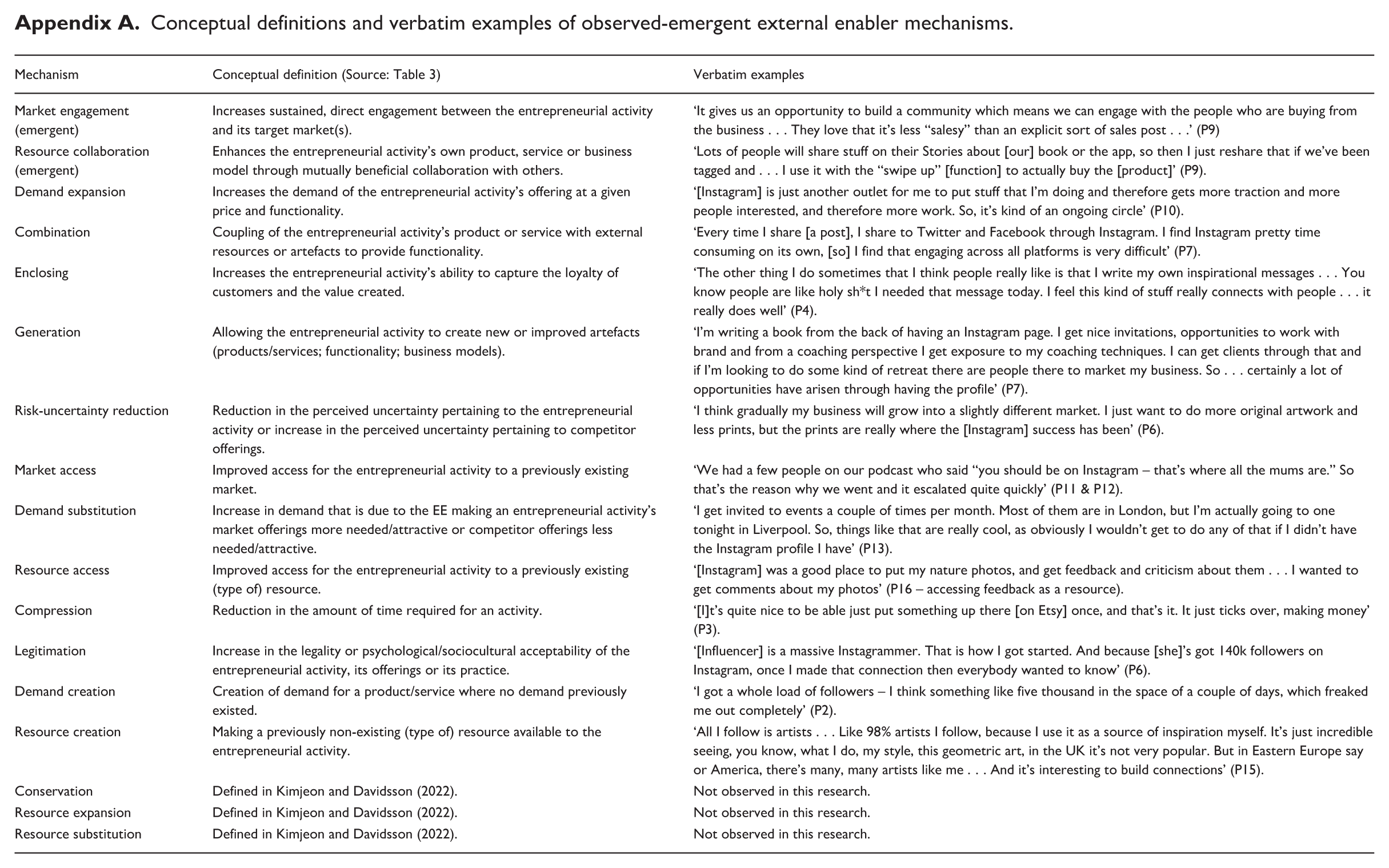
| Mechanism | Conceptual definition (Source: Table 3) | Verbatim examples |
|---|---|---|
| Market engagement (emergent) | Increases sustained, direct engagement between the entrepreneurial activity and its target market(s). | ‘It gives us an opportunity to build a community which means we can engage with the people who are buying from the business . . . They love that it’s less “salesy” than an explicit sort of sales post . . .’ (P9) |
| Resource collaboration (emergent) | Enhances the entrepreneurial activity’s own product, service or business model through mutually beneficial collaboration with others. | ‘Lots of people will share stuff on their Stories about [our] book or the app, so then I just reshare that if we’ve been tagged and . . . I use it with the “swipe up” [function] to actually buy the [product]’ (P9). |
| Demand expansion | Increases the demand of the entrepreneurial activity’s offering at a given price and functionality. | ‘[Instagram] is just another outlet for me to put stuff that I’m doing and therefore gets more traction and more people interested, and therefore more work. So, it’s kind of an ongoing circle’ (P10). |
| Combination | Coupling of the entrepreneurial activity’s product or service with external resources or artefacts to provide functionality. | ‘Every time I share [a post], I share to Twitter and Facebook through Instagram. I find Instagram pretty time consuming on its own, [so] I find that engaging across all platforms is very difficult’ (P7). |
| Enclosing | Increases the entrepreneurial activity’s ability to capture the loyalty of customers and the value created. | ‘The other thing I do sometimes that I think people really like is that I write my own inspirational messages . . . You know people are like holy sh*t I needed that message today. I feel this kind of stuff really connects with people . . . it really does well’ (P4). |
| Generation | Allowing the entrepreneurial activity to create new or improved artefacts (products/services; functionality; business models). | ‘I’m writing a book from the back of having an Instagram page. I get nice invitations, opportunities to work with brand and from a coaching perspective I get exposure to my coaching techniques. I can get clients through that and if I’m looking to do some kind of retreat there are people there to market my business. So . . . certainly a lot of opportunities have arisen through having the profile’ (P7). |
| Risk-uncertainty reduction | Reduction in the perceived uncertainty pertaining to the entrepreneurial activity or increase in the perceived uncertainty pertaining to competitor offerings. | ‘I think gradually my business will grow into a slightly different market. I just want to do more original artwork and less prints, but the prints are really where the [Instagram] success has been’ (P6). |
| Market access | Improved access for the entrepreneurial activity to a previously existing market. | ‘We had a few people on our podcast who said “you should be on Instagram – that’s where all the mums are.” So that’s the reason why we went and it escalated quite quickly’ (P11 & P12). |
| Demand substitution | Increase in demand that is due to the EE making an entrepreneurial activity’s market offerings more needed/attractive or competitor offerings less needed/attractive. | ‘I get invited to events a couple of times per month. Most of them are in London, but I’m actually going to one tonight in Liverpool. So, things like that are really cool, as obviously I wouldn’t get to do any of that if I didn’t have the Instagram profile I have’ (P13). |
| Resource access | Improved access for the entrepreneurial activity to a previously existing (type of) resource. | ‘[Instagram] was a good place to put my nature photos, and get feedback and criticism about them . . . I wanted to get comments about my photos’ (P16 – accessing feedback as a resource). |
| Compression | Reduction in the amount of time required for an activity. | ‘[I]t’s quite nice to be able just put something up there [on Etsy] once, and that’s it. It just ticks over, making money’ (P3). |
| Legitimation | Increase in the legality or psychological/sociocultural acceptability of the entrepreneurial activity, its offerings or its practice. | ‘[Influencer] is a massive Instagrammer. That is how I got started. And because [she]’s got 140k followers on Instagram, once I made that connection then everybody wanted to know’ (P6). |
| Demand creation | Creation of demand for a product/service where no demand previously existed. | ‘I got a whole load of followers – I think something like five thousand in the space of a couple of days, which freaked me out completely’ (P2). |
| Resource creation | Making a previously non-existing (type of) resource available to the entrepreneurial activity. | ‘All I follow is artists . . . Like 98% artists I follow, because I use it as a source of inspiration myself. It’s just incredible seeing, you know, what I do, my style, this geometric art, in the UK it’s not very popular. But in Eastern Europe say or America, there’s many, many artists like me . . . And it’s interesting to build connections’ (P15). |
| Conservation | Defined in Kimjeon and Davidsson (2022). | Not observed in this research. |
| Resource expansion | Defined in Kimjeon and Davidsson (2022). | Not observed in this research. |
| Resource substitution | Defined in Kimjeon and Davidsson (2022). | Not observed in this research. |
Acknowledgements
The authors wish to express their appreciation to research colleagues in the Entrepreneurship, Sustainability and Innovation department at Nottingham University Business School, and to anonymous reviewers at the Academy of Management Annual Meeting 2024 for their insightful feedback and constructive comments on an earlier version of this paper.
Author contributions
All three co-authors made substantial contributions to the paper in the following areas: the conceptual and methodological design of the work; acquisition, analysis and interpretation of the data; drafting and critical review of the work across multiple versions of the manuscript; final approval of the version submitted to the Journal; and agreement of accountability for any questions that may relate to the work. In terms of specific lead areas of contribution, Kadja Manninen led on the acquisition and preliminary analysis of the data, followed by significant contributions to drafting and critical review of the manuscript. Hannah Noke and Chris James Carter co-led on the subsequent in-depth analysis of the data, writing and editing multiple drafts of the manuscript and preparing the document for submission in adherence with the Journal guidelines.
Funding
The authors received no financial support for the research, authorship and/or publication of this article.
Ethical approval and informed consent statements
The Nottingham University Business School Ethics Review Committee at University of Nottingham approved our interviews (approved project title: Unintentional Entrepreneurship: Understanding How Social Media is Changing the Entrepreneurial Process) on 5 March 2019. Respondents gave verbal consent for review before starting interviews.
Consent for publication
Not applicable.

Data availability statement
The data that support the findings of this study are available on request from the corresponding author, Chris James Carter. The data are not currently publicly available due to containing information that could compromise the privacy of research participants.