







Abstract
The challenges and pitfalls of advancement can often hamper information professionals from making a career move. In looking back since a previous article explored the potential demise of the corporate information unit, this article focuses on the changes in economic models, service management and how professionals should approach making a move. In interviews with four senior information professionals based in the UK and informal discussions with several senior professionals in New York, common themes were found. Making a move for the sake of it may not necessarily advance your career. But how can you be successful in taking that next step?
Keywords
Introduction
Since writing an article in 2009 regarding the potential demise of the corporate information unit (Edgar, 2009), change has been prevalent as new economic models have been introduced. So with this background in mind, have information professionals been able to ‘develop’, ‘further’ and ‘advance’ their careers? We are all keen to advance ourselves – to be a better professional, parent, neighbour, friend – but what does advancement mean?
Definition of advancement
The process of promoting a cause or plan.
The promotion of a person in rank or status.
Responding positively to opportunities, whether in or out of work, can help figure out what you want to do ‘when you grow up’. Taking stock of our own skills and competencies can be tough, as none of us likes to expose weakness or promote strengths. There is a fine line between confidence and over confidence and the subtleties of this can often be lost on colleagues or peers seeking guidance as to how they can progress. Essentially, no one else can help you. They can offer advice which you may or may not take, but progressing your career is 100 per cent down to you and you alone.
Lock down
The last few years have been characterized by abundant change and many businesses have initiated radical approaches to the delivery of information services in a commercial environment. In the financial analyses regarding headcount, many units were reduced or closed and, as suggested in the article of 2009, new economic models have come to the fore. Those information professionals who were not affected made either a conscious or subconscious decision to go into ‘lock down’ and self-preservation mode. Many were waiting for what they saw as the inevitable; some decided to take stock of the profession, their careers and futures; and some set sail for new challenges outside of the profession. It became quite clear that for a period of time there would be little movement in the market to enable what would normally be a natural process of advancement.
Over the last few years the pattern has been – a vacancy arises; candidates move into new posts and so a perceived advancement occurs. There were very few ‘new’ roles coming to market and those that did were often ‘replacement’ roles or cover for absences. During this period, managers spent time developing business cases for the vacancies to be filled and, whilst ‘new’ roles may have been discussed, getting senior approval was often fraught with delay, restructuring and a great deal of frustration. Many of the decision makers were not (and still are not) information professionals but managers with little functional expertise who are ‘business managers’. To many of us, it has been clear that some decisions were strategically flawed. However, the reduction of headcount (and thus reduced cost) has seduced businesses into stripping back to less than basic service levels. During the last three years there has been a shift to growth in some instances and also regrowth in others. Replacing staff that leave still requires robust business cases to be presented, but one thing is clear: cuts have been so deep that without replacing staff, services are either collapsing or just impossible to maintain.
Third party economic models
One recurring aspect of service delivery has been the wholesale shift to a third party ‘taking over’ services and staff. In the legal, financial services and professional services sectors many third party providers have pitched and won contracts to take on the management of staff, resources and service delivery. Often, successful bidders do not have a proven track record of managing a corporate research capability across all dimensions. For some, the driver and selling point has been the consolidation of their relationship with an existing client, having previously managed back-office activities. This then becomes the testimonial on which the premise of ‘we can manage your information group’ is based. Some great stories are circulating from this scenario and, as these third parties bed down into the contract, cracks appear when they realize they do not possess the functional know-how and skill to manage information resources for relevance, selection and negotiation through to contract management and deployment. This lack of knowledge can result in real problems in how companies deliver all that was promised in the signed contract. It has also been suggested that when costing out the contract, no account has been taken that resource costs are likely to increase year on year. The ‘user’ of the corporate information service is not interested in this level of detail but on the quality of the end result they receive. It must be noted that some outsourcing companies get it right, or are willing to admit that they are still finding their feet. They too are not immune to staff cuts as they strive to squeeze as much margin out of their existing contracts.
Are we really in a people/knowledge driven sector? Or do we pay lip service to this?
How often has it been documented that as information professionals we work in a knowledge sector? Many of our employers are in the ‘people’ business and their values stress that they are all about people being their biggest asset. ‘Baby – bath water – thrown out’ springs to mind. Institutional and functional knowledge walks out of the door both literally and metaphorically speaking and is associated with a naivety that information professional knowledge can all be picked up easily. Again, I am sure many of you have examples of being asked to précis your career into several A4 pages on ‘how to do your job’! I would suggest that information, knowledge and expertise (and that of other areas of the business) is just not recognized (as much as it should be) as an integral aspect of the overall ‘people asset’ in many organizations. Therefore we can conclude that it is just lip service rather than a real understanding of the value of internal expertise. However, some of the responsibility for visibility does fall at the feet of us all as information professionals.
Is there a light guiding us?
We have seen cuts, redundancies, service closures and confusion as to ‘what next’ over the last three years, but now the market is moving again; some roles and services are being reintroduced with recognition that service levels may have been fatally cut. The pressure then builds if a colleague leaves or has to take a long absence from work, how do we maintain service levels? Many of you will recognize the ‘doing more with less’ scenario as you see colleagues go, their work divided up to those remaining and so it goes on. This constant reduction in resources and its effect on services is not sustainable and it appears that we have reached that ‘tipping’ point.
I would advocate that managing through such change and shifts in the profession strengthens the competencies of managers and colleagues. There is a balance however, between taking on ‘new’ responsibilities and being spread so thin that you cannot perform any of the responsibilities to the level that you would wish – and which you consider your organization needs. How do you then measure your performance as scope creep of your role sits on the shifting sands of your original job specification? Some organizations have blatantly moved (and continue to move) the goal posts when it comes to performance measurement. In these cases, undertaking annual reviews can be demotivating when reviews should be a motivating element for career progression for that individual and indeed the success of service delivery. How do we ‘grab’ at that continually rising bar to keep us on that progression path?
Against this back drop I wanted to explore with some senior information professionals just how they are looking at progression, both for themselves and their colleagues. Hearing individual stories of how professionals started out, learning whether they had a plan and if they did, have they stuck to it and what they plan to do next is extremely insightful.
Four personal stories
Example one – moving towards opportunity
The first senior professional I interviewed did not set out on their career with a plan in mind but reflected that their career direction was developed by what interested them. Early on they identified that they did not want to be a librarian even though the key components of librarianship could and have been deployed in their day to day work. In getting into research roles in professional services firms, in fine tuning their skills and delivering relevant and essential research to their internal users, they realized that to progress they needed exposure to varying situations that would enable more analysis and less of the robotic approach of answering questions and nothing more. In the moves made by this professional it is clear to the onlooker that the moves were strategic in terms of getting more exposure to clients, analytical work and also a sense of how to run a business – which is in fact what information units are. These moves offered more autonomy and also an opportunity to demonstrate skills they had to offer a new employer. Moving into a global role offered scope to plan and develop team dynamics – with the delivery of better services – keeping this professional engaged and interested – and by their own admission they can get restless unless there are challenges on the horizon. One interesting comment that emerged in the interview was that the career moves were not necessarily planned and were made not because they did not like the role/organization, but were towards a role/organization that they liked more, i.e. they moved towards an opportunity rather than away from one. Being relevant at a senior level is vital and so continuous learning is a necessity. With this is mind this professional is not planning ahead for the next move. Operating at a senior level helps you gain the trust of key people and helps you to become politically savvy and sensitive to the organization. This means that you and other senior folk know what you can get from each other and recognize how challenges that appear on the periphery of functional expertise can offer exciting opportunities.
This professional also suggests that it is impossible to plan or keep to a plan. We can never be in complete control of our own destinies and compromise is a constant. We have to be driven by passion, have an ear to the ground and not get distracted when approached to consider a new move. Often the flattery of being approached breeds curiosity. Some key words that bubbled to the surface in the interview were – enjoyment, achievement, relevance, realism. In most organizations at senior level it is imperative that information professionals are political, have a personal brand, are facilitators and continuously evolve.
Example 2 – When you meet brick walls
The next senior professional I interviewed had a plan that they said ‘went horribly wrong’. They had been able to map out how they would like to progress. However, organization structures, redundancies and management hampered their progression. In pursuing the plan, it often felt like they were swimming against the current. One important observation is the risk of following ‘stars’. In joining a new employer it is often the direct line manager that selects you to join their team. As a natural supporter of the hire, success is key to their reputation for bringing in talent that enhances service quality. When this champion leaves, a chasm appears and if you have not been able to get exposure to senior staff (who may not know you), such exposure can be devastating.
This professional is still exploring what ‘advancement’ means to them. They have shown flexibility – often to ensure survival. They have secured new experiences and gone outside their functional expertise by volunteering to display what ‘more’ they offer any new employer. This professional’s approach has been not to say ‘No’ to experiences put their way. Taking opportunities as they arise has been their mantra and they have actively sought them out too. But whilst being open minded and willing goes a long way, they feel that they are treading water in this climate. They have had to take a drop in salary and done so willingly to undertake an ‘interesting’ and ‘challenging’ role. This professional is playing a longer game for career advancement. This may have been a forced strategy but it has enabled them to reaffirm what they want to be, and understand what is of interest to them and what is realistic. They also noted that making your CV as good as it can be is essential and brushing up on interview skills is also important in securing new opportunities.
Example 3 – The danger of cruise mode
Another senior professional talked of a very interesting start in the profession. They were influenced by their first manager who suggested that to progress they needed to move upwards and often! In some roles, for example as a one-person librarian, progression necessitates a move. The journey to their current role demonstrated the influence of external factors and the variety of circumstances that an individual can encounter, such as family needs determining where and what roles were available to them. For some, the relocation of a partner pushes the other to seek jobs in a new town or city that they may not have necessarily considered. However, ‘forced’ changes in circumstance need not hamper ambition and the individual advocated that staying in one place too long can breed complacency, a loss of value, and a reduction in enthusiasm for the role. In this tough economic climate this individual sees themselves staying in their current role for some time. However, they stress the importance of Continuing Professional Development (CPD) and see CPD as critical to keep professionals engaged, motivated and skilled – perhaps gaining knowledge on the periphery of ‘traditional’ functional skills. If the barrier is no funding internally, this professional suggests that you seek it elsewhere, e.g. a professional organization. However, this will require a compelling story to reinforce why you deserve this investment.
This senior professional advises information professionals to: undertake some SWOT analysis on yourself (Figure 1), be prepared, carry out research, be confident, network, get qualifications, do not stay in ‘cruise mode’ roles, get a mentor and seek out opportunities. If you take the wrong job then have the strength to get out of it as soon as you can.
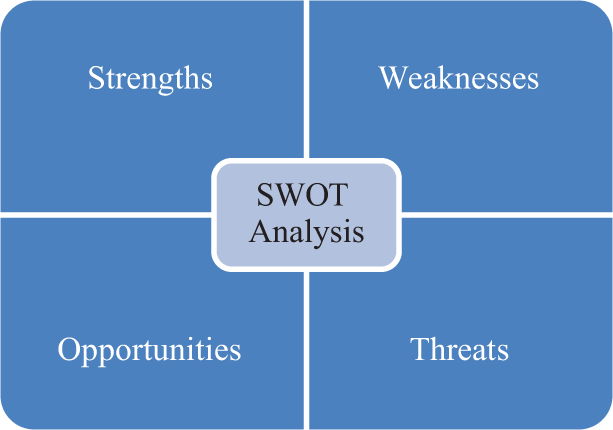
SWOT analysis.
Honesty is re-emerging as the best policy. A senior manager must be able to be honest – with themselves and with their staff. Try to recognize who will or can progress and if the organization is likely to offer them chances to advance or not. Tackle this issue head on – coach where necessary and mentor if you can. If someone in your team wants to leave, seek to understand why. Help them find a path towards opportunities and what is wanted rather than abdicate your management responsibility. Honest discussions are needed and motivators for moving could be financial, family, professional or just a desire to run away and see the world.
Do not be afraid of failure – experiences are cumulative. Attitude and flexibility are key.
Example 4 – do you want a career?
The final senior professional that I interviewed observed that ‘life’ just takes over. Their top line comments were that they had worked hard, tried to impress people, delivered value and had confidence in their skills. Stuff happens along the way, but it is how we deal with it and how adaptable we can be that is important. Some keywords that surfaced as attributes to demonstrate are: be consistently keen, have discipline, be responsible and understand that cultural fit is one of the key hiring criteria. This professional has discovered that even if someone is technically gifted but are not a ‘fit’ with the right mindset, the hirer will sacrifice technical skills. Technical skills can be fine tuned and developed – ‘fit’ cannot.
On leaving college this professional did not have a plan and fell into librarianship by accident. During an internship with a major financial media company, they recognized the potential in business information that was, for them, mind-blowing. They decided to specialize in this type of work and secured the opportunity by being confident and the best they possibly could. One challenging question that this professional posed during our conversation was ‘should we want to progress’? Ultimately the goal is to stay in work – which from a family perspective can be as important as professional satisfaction. Ideally, you would like the two to converge. A career is about delivering value and what impact you make to the organization; progression can be evident in delivering a consistency of value rather than upwards progression.
When considering making a move, it is imperative to do your research and before your interview get familiar with the organization’s business, how they are perceived in their market, and what they say about themselves on their website. Do your homework and be prepared. You may think this is common sense – well of course you do this!! But in meeting many candidates and getting feedback from clients during my employment at Sue Hill Recruitment & Services Ltd, it is obvious that many candidates do not do their homework. At best, the preparation undertaken by candidates can be really good but for most it is woefully cursory. Gone are the days when experiences at blue chip companies are an opening door (and to be honest was it really ever the case?). Now candidates are expected to ‘sell’ themselves – presenting clear arguments as to why they should be hired. As a senior professional looking to develop a plan for progression it is incumbent on you to ask pertinent questions at interview – prepared and insightful questions rather than just a ‘throwaway’ question pulled from somewhere so you can say you asked!
Honesty - what employers want and how candidates can help themselves
When employers start to look for talented candidates what do they look for? Douglas Conant (Conant, 2011) suggests in a blog post that when evaluating candidates face to face, three strong qualities must be evident –
Tenure is not a prerequisite for career enhancement. One aspect of this article rings loud and clear with those senior professionals I interviewed. Look to yourself … be honest about your skills, competencies and feel passionate about what you are doing. A podcast from 2010 hosted by Harvard Business Review (Hamori, 2010) looks at career planning and the contentious aspect of, ‘does job hopping matter’? What message does it send out to potential employers? And can it boost your career? Monika Hamori identifies some fallacies on this issue and, in analyzing the career moves of some 14,000 executives, she found that moving regularly can reap benefits. However, these frequent moves must make sense to the reader when ‘listed’ on a CV. Moving does not always have to be for a promotion and indeed more often, lateral moves enable an individual to gain additional experiences and skills that will then help them move on an upward trajectory. One very interesting fallacy that Monika also explores is that senior staff or as she calls them ‘big fish’ always swim in a big pond. Making a move to another international law firm, consulting company or bank is not necessarily the best strategy. Her research shows that many professionals who leave blue chip companies go to smaller organizations. Another age-old fallacy that many of us have explored is ‘will I be penalized if I move sector?’ Short answer is No! Monika believes that we should not shy away from lateral moves as they can boost your career.
When interviewing senior professionals it is quite clear from their experiences and their aspirations for the future, they do not see themselves moving into a similar environment to do more or less the same role as they are doing now. They feel that challenges are likely within their current organization. Is that really career progression or career status quo? In the current economic climate those professionals who are out of work are taking this opportunity to reassess what they want to do when they ‘grow up’. The pressure of responsibility and day to day economics mean that many just need to get working to pay the bills. One other theme was mentorship. Finding a good mentor helps, whatever stage of your career you are at. There are many initiatives within the profession. However, seek out someone that you respect professionally and that you feel you could learn from. We are never too ‘senior’ to look for approval, advice or just common sense when faced with challenges.
John Baldoni (Baldoni, 2010) suggests that there are five questions to consider when assessing how ‘ready’ are you for that next senior move. Again, these require you to be honest when assessing what you have to offer. By challenging your personal assumptions you can reach a more realistic space from which to launch your job search. What are talents? Are you a good project manager, team leader? What has developed over time and do you have talents that have been evident since youth? What are your skills? Skills are gathered from education and the practicalities of working, life experience in general, and observation of the world. What motivates you to get up on a cold, damp morning and get you through your commute? The idea of working with smart colleagues from whom you learn or the prospect of making a difference to an outcome that will impact either a client’s problem or make a difference to your employer? What challenges have you worked your way through? We will all have had some bumps in the road… we may even have lost our way completely but how do we find a way back? What have you learned throughout your career? Do you know yourself in terms of strengths and weaknesses?
There are clearly opportunities out there for advancement at senior level. However, it does require some soul searching, honesty and passion for the profession to put you in a good space – ready to ‘sell’ yourself as the ideal candidate for the next role on offer.
Do not look back, do not run away, but run forward and Good Luck.