







Abstract

Keywords
Highlights
World economy experiencing fragile growth, but the uncertainty around Brexit means a more cautious and pessimistic UK outlook.
Artificial intelligence (AI) and the data economy is one of the UK Government’s four grand challenges as set out in its industrial strategy whitepaper (HM Government, 2017).
Information teams see their core deliverables as content management, training on information-related databases, and research and analysis.
Information teams in banking and financial organisations indicate they feel they impact business decisions in their organizations more directly than information teams in other sectors.
AI is rapidly impacting the information profession: AI projects described by information teams range from pilot to fully-implemented.
Data quality, and trust and confidence in data, are concerns for information professionals; survey participants are clear that the ability to ensure data is of highest quality and integrity is a critical skill for information professionals.
Information teams are frequently responsible for training and education on GDPR (General Data Protection Regulation) and other data governance legislation. They do assist with some aspects of implementation and application, but Legal, Risk and Compliance teams have the absolute responsibility in the organization.
Information professionals foresee that new technical and AI solutions will mainly require the enhancement of current skills, rather than the acquisition of new ones.
Information professionals see research analysis developing further to include providing implications and deductions; and this will require more confidence.
As new technological solutions, such as AI and machine learning are introduced then there will be an increased importance of digital and information literacy.
Introduction
Welcome to the 2018 Annual BIR Survey, the UK’s longest running information survey of the current activities, business concerns and imminent trends of information professionals working in a wide variety of business sectors. This year the survey has again supplemented the primary telephone interviews with an electronic questionnaire. Unfortunately, this year the electronic survey (e-survey) does not seem to generate as much interest, so there are a smaller pool of respondents (51 vs. 87 in 2017); and in turn the variety of business sectors is not as broad. However, more open questions were asked in the e-survey and some very insightful comments were received, which have been included in the results. The e-survey asked some of the same questions as in 2017, but with some variations. This way it is possible start to build up a picture over time for some questions. The key themes of this year’s survey are data and its role in artificial intelligence (AI); how AI is impacting organizations and in particular information teams and the services and resources they provide.
2017 was a year which saw data, information, the value of information, fact checking and fake news, data privacy and cybersecurity in the news headlines constantly. Early 2018 brought the Cambridge Analytica scandal, where a whistle blower revealed that at least 50 million Facebook profiles were harvested by Cambridge Analytica in a major data breach; the company linked to a former advisor to US President Donald Trump, compiled user data to target American voters in the US election. Since US President Trump came into office, the Russian hacking scandal and cybersecurity have been press and television news staples. In addition, it would have been hard to escape the knowledge that a new European Union (EU) data privacy standard, the General Data Protection Regulation (GDPR), was on the horizon and then came into force at the end of May 2018.
Almost daily, there is a story in the media concerning the development and adoption of new technologies that have the potential to replace humans. Some AI and associated technologies create a persistent fear that millions of jobs will be lost to robots and that unemployment will rise. However, there is much contrary opinion, and others are convinced that these new technologies and developments will lead to the expansion of some jobs and the creation of new ones. It is clear that people will need to learn new skills to adapt, but the picture is one of positive gains rather than losses. Consulting firm McKinsey & Company predicts that investments in technology, including AI and automation, could add 20 million to 50 million jobs globally by 2030 (Hernandez, 2018).
The information professional has to adapt to this fast-paced, ever-changing technological, economic, political and cultural environment. The results of this year’s survey demonstrate that the information profession is meeting those challenges head-on.
Methodology
The 2018 survey is based on a quantitative and qualitative e-survey and qualitative primary interviews (telephone). The 16-question e-survey was distributed via the Business Information Review social media channels; to information management and knowledge management leaders and practitioners; and it was also distributed by the Chartered Institute of Library and Information Professionals (CILIP) to their membership. Fifty-one completed e-surveys were received.
Employing the e-survey enables us to ask more general demographic questions, to gain a sense of overall business direction; information team size versus organization size; budget direction and so on. Using quantitative questions in the survey does allow for more granularity and more insight and lets us compare and contrast a little across different business sectors, for example, legal, financial and pharmaceutical.
The 2018 e-survey looked specifically at what services and resources are most commonly offered by information teams, and how those services and resources are rated by their organization. It also examined whether organizations placed value on the various expertise of their information teams, and which expertise they value most. Also continuing from the 2017 survey, the skills information professionals value most highly were also explored. The 2018 e-survey questions below have been annotated to indicate whether they were repeated from 2017 [Repeat], a variation of a question asked in 2017 [Variation] or completely new for 2018 [New].
2018 e-Survey questions in brief
Q1. In which country/region do you work? [Repeat]. Q2. What industry do you work in? [Repeat]. Q3. What size is your organization? [Repeat]. Q4. Describe the current business climate for your organization? [Repeat]. Q5. Number of permanent employees in your team? [Repeat]. Q6. What staffing solutions do you use to supplement your people resource? [New]. Q7. Which activities fall under your team’s direct responsibilities? [New]. Q8. Has your budget increased, decreased or remained flat in the last 12 months? [Repeat]. Q9. Do you agree or disagree that your team’s activities impact organizational business decisions? [Repeat]. Q10. How do you think your organizations rate the resources and services your team offers? [New]. Q11. How do you think your organization rates the expertise/knowledge your team brings to the organization? [New]. Q12. List three critical data and/or information management skills for information professionals working in business environments currently. [Variation]. Q13. Do C-level or senior managers use your team’s services? [Repeat]. Q14. Relevance and/or importance to your team of data protection, digital delivery, open access, AI, Internet of Things [Variation]. Q15. Two priorities for the next 12 months [Variation]. Q16. General comments on working as an information professional in a business environment? [New].
As in previous years, this report is primarily compiled from the results of 30-minute telephone interviews with information managers, all operating at senior levels in organizations representing finance, legal, pharmaceutical, science and technical, third sector and consultancy.
This year 20 potential interviewees were approached, and 14 were able to participate. Ninety-three per cent of these were previous contributors. Participants this year were wholly based on the UK. The author thanks the participants very much for their collaboration, cooperation and trust. As in previous surveys, all participant responses are anonymous and any comments which may identify them are not included. The names of the participants are known only to the author and not shared. This year interviewees were asked what were the next items on their agenda for the coming 12–18 months, and then more specifically about AI, and what if any impact that was having on their day-to-day activities. Questions on data management, data governance, data quality followed, as well as questions on skill sets and how they might need to adapt with new technologies. As in previous years, the questions were used as a general starting point and conversations were allowed to develop organically.
As ever the discussions were frank and open, and both the e-survey respondents and interviewees have shared thoughtful, intelligent, fascinating, helpful and pertinent insights.
Fragile growth in the world economy, but Brexit means a more cautious UK outlook
Globally there has been a modest pickup economically
According to the latest UN world economic report (UN, 2018), on a global level the past decade has been characterized by fragile growth, high investor uncertainty and periodic spikes in global financial market volatility. In recent times, the world economy has strengthened. Towards the end of 2016, global economic activity began to see a modest pickup, which extended into 2017.
In 2017, global economic growth is estimated to have reached approximately 3 per cent, the highest growth rate since 2011. Currently, all major developed economies are experiencing a synchronized upturn in growth. The improvement is widespread, with roughly two-third of countries worldwide experiencing stronger growth in 2017 than in the previous year. Global growth is expected to remain steady at 3 per cent in 2018 and 2019. The recent pickup in global growth stems predominantly from firmer growth in several developed economies, although East and South Asia remain the world most dynamic regions. Despite the improved short-term outlook, the global economy continues to face risks, including changes in trade policy, a sudden deterioration in global financial conditions and rising geopolitical tensions.
Economic and political uncertainty makes the UK picture less rosy
In contrast, PwC (PwC, 2018) reports that UK economic growth slowed in 2017 as inflation rose sharply, squeezing household spending power. PwC projects UK growth to remain modest at around 1.5 per cent in 2018 and 1.6 per cent in 2019. This is due to continued subdued real consumer spending growth and the drag on business investment from ongoing economic and political uncertainty relating to the outcome of the Brexit negotiations. They believe, however, that the stronger global and Eurozone economies, and the competitive value of the pound particularly against the euro, should also boost exports, however, which will offer some support for overall UK GDP growth. Service sector growth should remain modest but positive in 2018–2019, while manufacturing retains momentum after ending 2017 strongly. However, the construction sector has fallen back due to the weakness of commercial property investment and they predict that is set to continue during 2018. London has outperformed other UK regions for most of the past 20 years, but its growth rate looks set to fall back to close to the UK average in 2018–2019. The North and Midlands are benefiting from stronger manufacturing growth recently.
The UK government recently sets out its industrial strategy (HM Government, 2017) and announced the four grand challenges which would underpin this strategy: 1. AI and the data economy. Putting UK at the forefront of AI and data revolution. 2. Future of mobility. World leader in the way people, goods and services move. 3. Clean growth. Maximizing the advantages for UK industry from the global shift to clean growth. 4. Ageing society. Harnessing the power of innovation to help meet the needs of an ageing society.
General stability for survey participants
Thirty-three per cent of e-survey respondents categorized their business as in a period of change and/or repurposing. Twenty-seven per cent are currently in a stable organization; 22 per cent are in a period of growth and expansion; and for the final, 18 per cent of our respondents their organizations are currently downsizing. It would difficult from the size of the data set to draw any conclusions from this result, but the 2017 survey, with 87 respondents, did have a higher percentage of organizations that were both changing and repurposing (35 per cent) and downsizing (26 per cent), so perhaps there is some small indication of a more stable economic situation in the UK and worldwide. One telephone interviewee did though caution that in conversations with analysts recently they have said it was a question of when, rather than if, the next recession would hit.
Education, legal, banking and financial services largest sector contributors to the 2018 survey
Of the 51 people participating in the e-survey, 89 per cent of respondents were from the UK. There were no respondents from the US or Canada. Consequently, the range of industries covered was not as wide as in 2017 (see Figure 1).
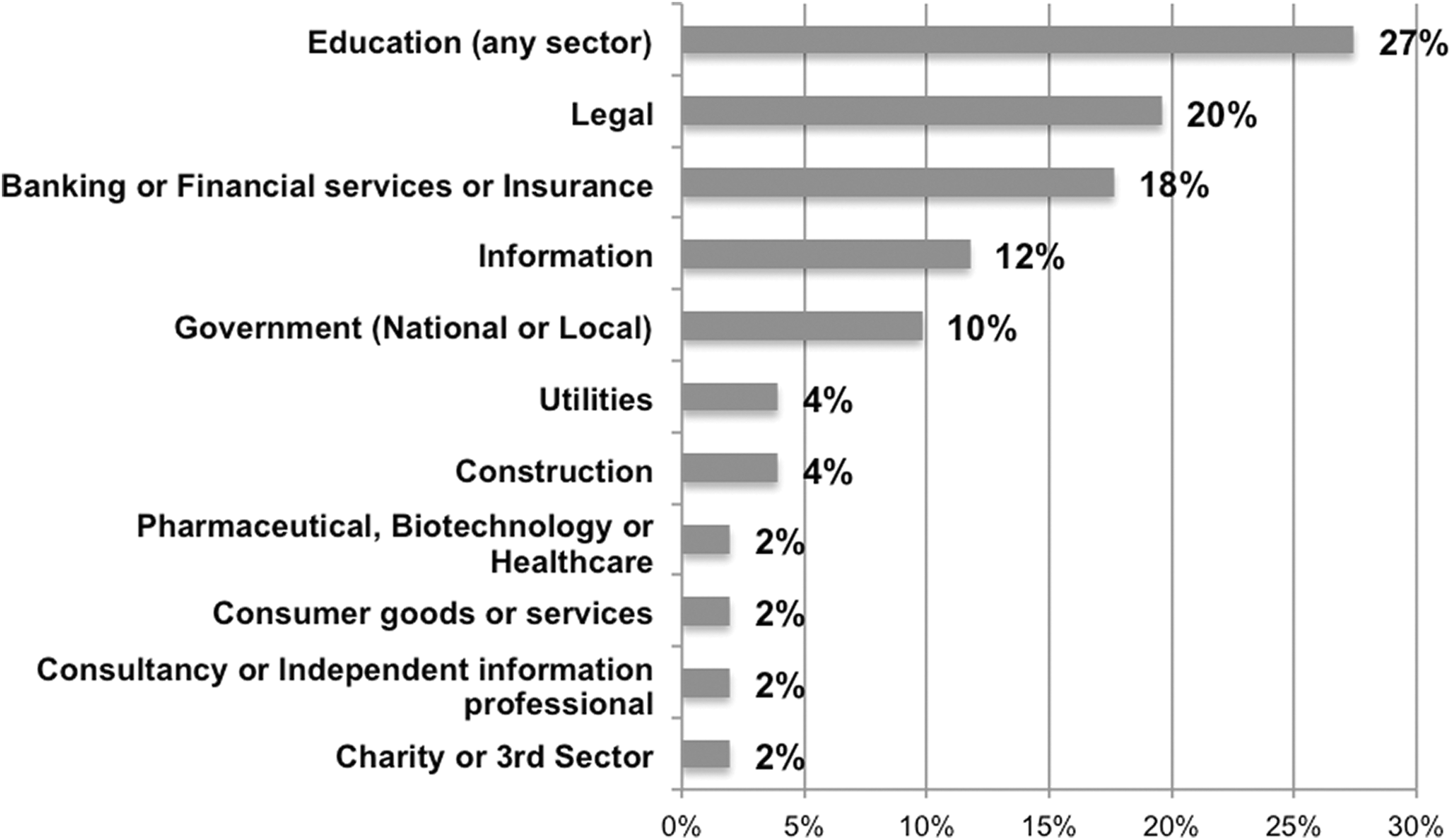
Range of sectors and industries of e-survey respondents.
The telephone interviewees represent the financial, legal, banking, science and technology, pharmaceutical, third sector and consulting industries.
Most e-survey respondents work in medium to large organizations of more than 1000, but less than 5000, employees. There were no respondents who work in small organizations of between 10 and 99 employees (see Figure 2).
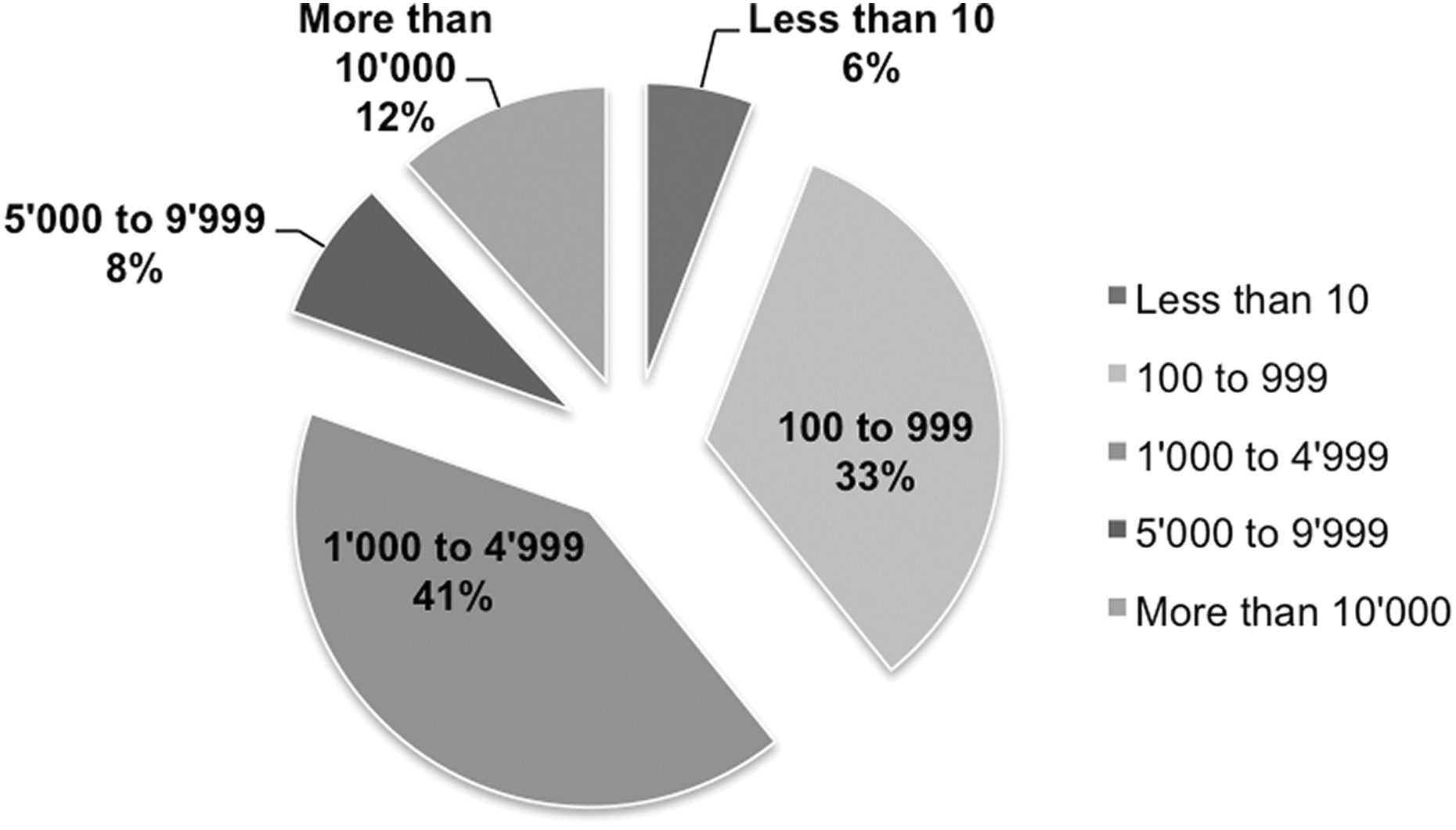
Respective sizes of organization of e-survey respondents.
Team size correlates with organization size on the whole
Respondents work in a variety of team sizes. Thirty-three per cent of e-survey respondents work in teams of 11–25. Team size appears to correlate with organization size. Some primary interviewees indicated that their had been some team reductions in the past year, and one interviewee in particular attributed that to not paying enough attention to managing upward in the organization. Rather they had focused on demonstrating where they fit in all parts of the organization. They felt this had led to the misconception that there were too many of them because they were so present in multiple areas. An e-survey respondent also suggested that making connections at a senior level was critical in maintaining head count, commented: Make connections. Our team has been reduced by 50% headcount because we were not involved in the conversations at a senior leader level. This year I have been making a concentrated effort to show our impact to senior managers, especially when we have stopped activities due to the reduced headcount. It is beginning to filter in that we were an information centre, not just a place to store all the books.
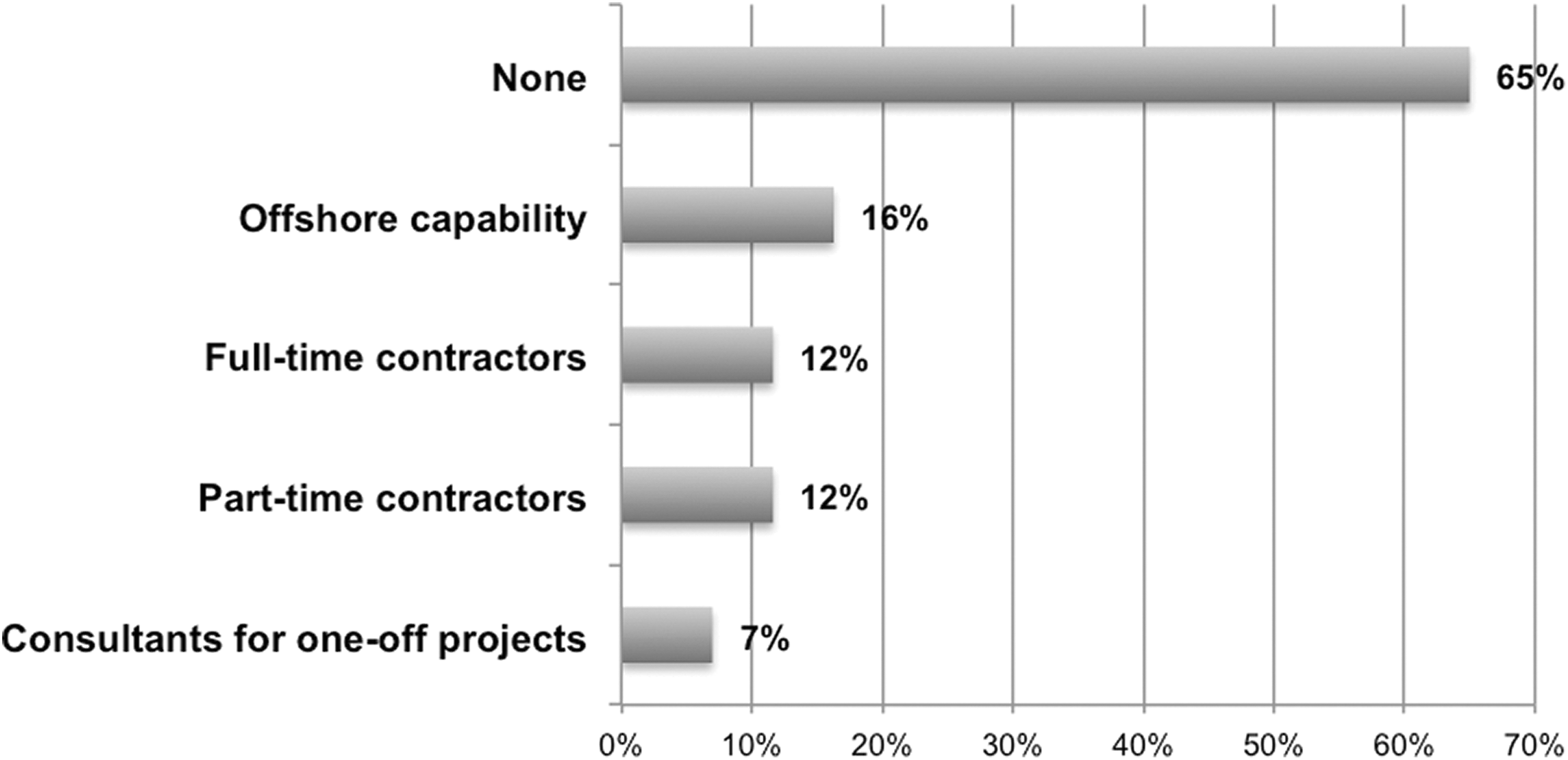
e-Survey results on alternative staffing solutions used as a supplement to permanent staff.
The e-survey also brought up an interesting point regarding information teams and information professionals within organizations, one respondent commenting: One thing that tends to get missed is that we [our organisation] work in quite a different way to information professionals in other sectors. I am the only information professional in my team (in the office even) which makes wider professional knowledge of much more vital importance. Involvement with professional bodies continues to be critical for raising profile and demonstrating value.
Content management, training, and research and analysis are the key deliverables for information teams
Content management (79 per cent), training on information-related databases and tools (74 per cent) and research and analysis (67 per cent) were indicated as the core services provided by the e-survey respondents (see Figure 4).
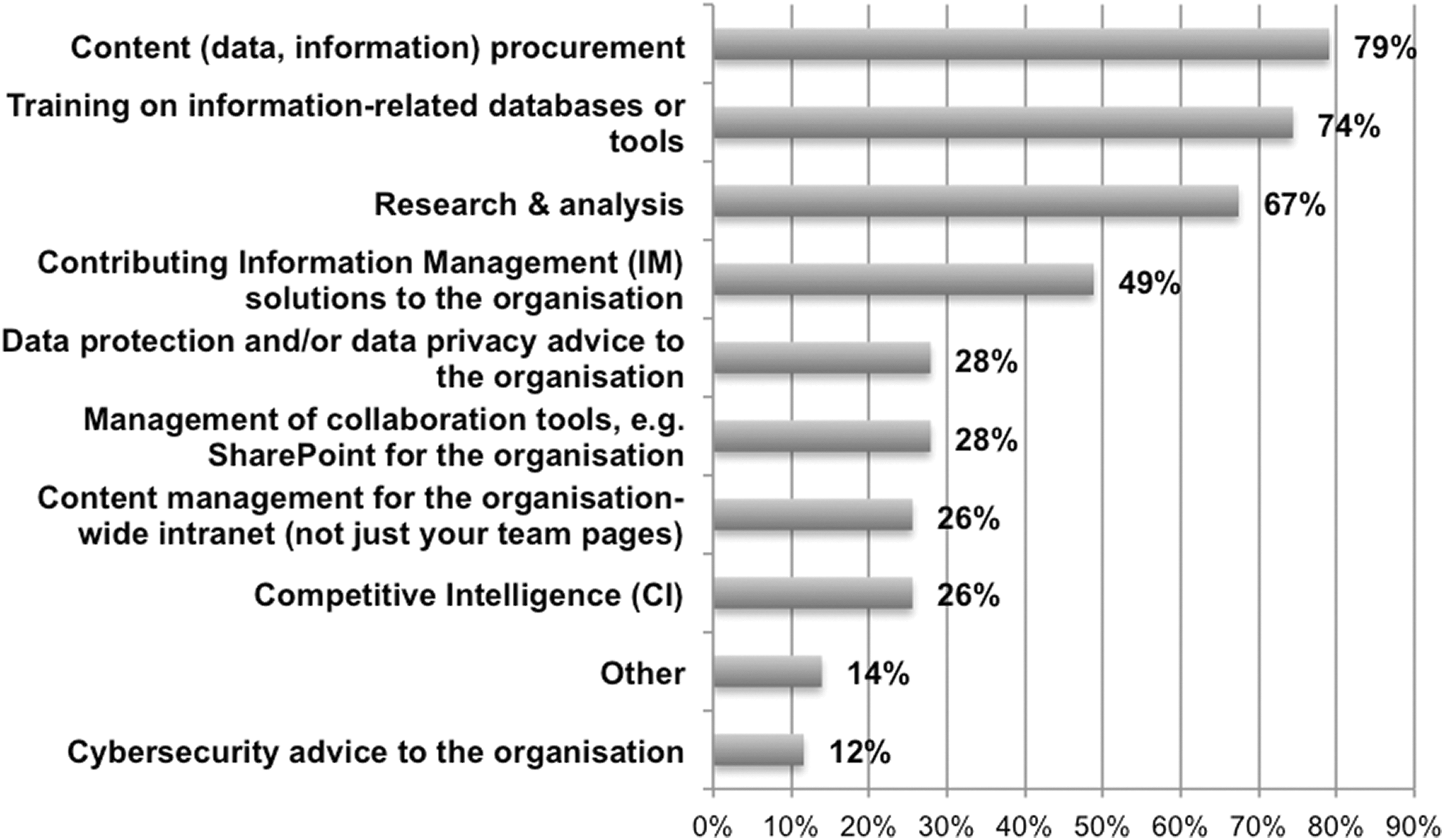
Core services identified by e-survey respondents.
Some respondents named other services that they provide that were missing from this list, such as website proofreading and content writing, commercial assessments and due diligence work and copyright compliance. Data governance activities do not seem to figure highly as core services for most information teams, and this was also identified in a recent CILIP/SLA survey (CILIP, 2018) of corporate information services.
Budgets, as ever, remain flat
As in the 2017 e-survey, the majority of this year e-survey respondents reported that their budgets have remained flat. The 2016 survey explored the issues that flat budgets bring when vendors generally deliver double-digit percentage price increases year on year. Vendor issues are not dealt with in much detail in the 2017 or 2018 surveys and it is very likely this is a topic that in 2019 will be explored more vigorously. Vendors and pricing were raised as a comment by one e-survey respondent: Pricing tools – vendors are reporting use of consultancies and new pricing tools. How do we redress the balance/build relationships?
Info teams in banking and financial organizations indicate they impact business decisions directly
e-Survey respondents were asked again this year how strongly they agreed or disagreed with the statement that ‘Business decisions in my organization are better facilitated/supported as a result of my team’s activities’. Banking and financial organizations were the ones who mostly strongly agreed (although there were a couple of respondents in banking and financial sectors who strongly disagreed), followed by legal, government (national or local) and consumer goods. Overall, 73 per cent did either ‘somewhat agree’, ‘agree’ or ‘strongly agree’ with this statement. This is encouraging and means that for most teams they can see a direct link between their activities and the organizational decisions and strategy. It would be good to find a shift towards more information teams answering ‘strongly agree’.
e-Survey respondents were also asked how they felt valued by the organization and how they perceived that their organizations rated the resources and services offered by their teams. Mirroring the responses to which services were most often offered then content procurement was rated both the most important and most essential service. Research and analysis came second.
Additionally to questions on services and resources, the e-survey asked about organizations valuing the expertise and knowledge of the information teams. Here, information management expertise was rated as the most valued by organizations (see Figure 5).
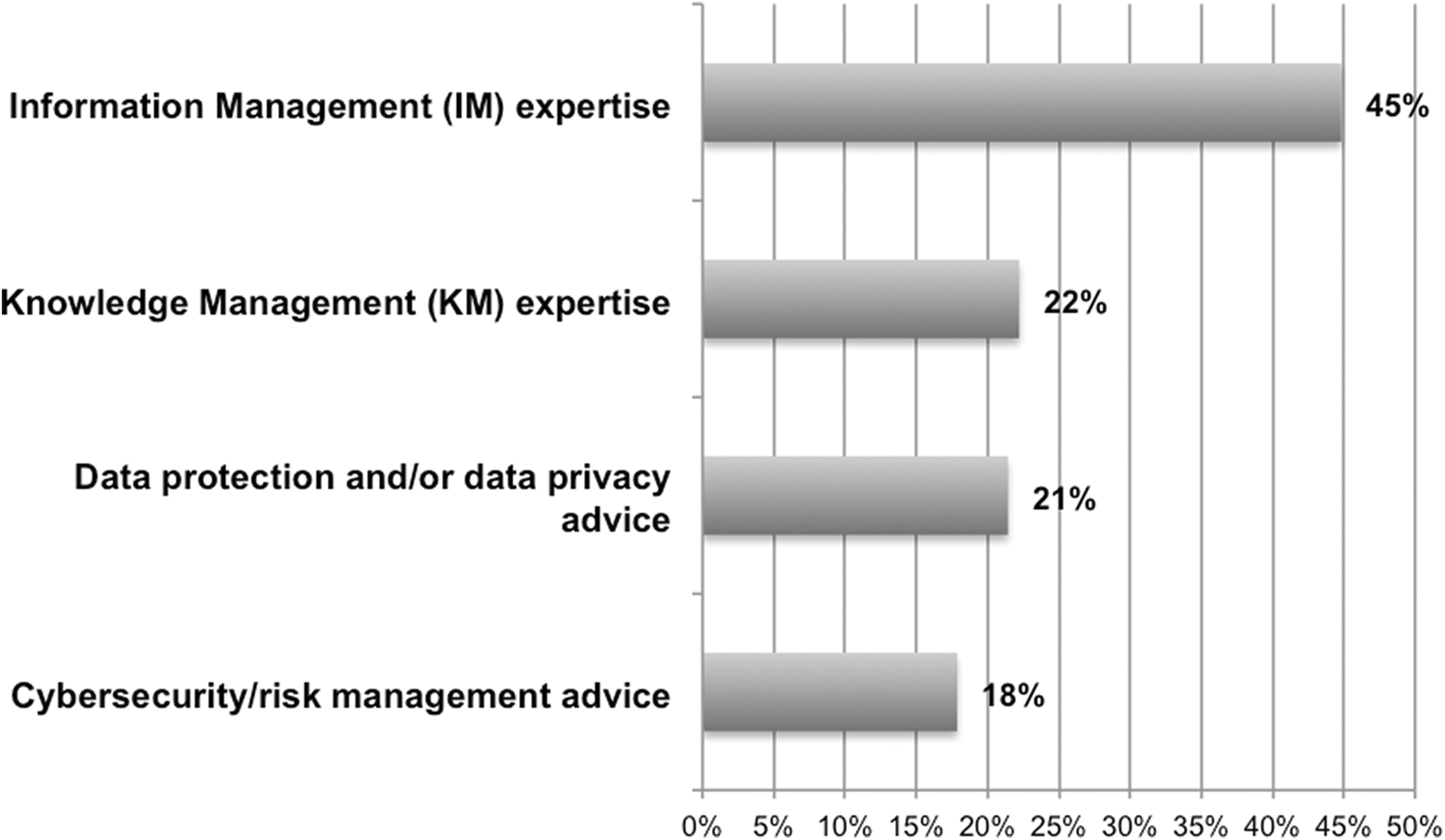
Knowledge/expertise most highly valued by e-survey respondent’s organizations.
The data around whether CEO or equivalent, C-Suite or equivalent and ‘one level down management’ were hard to interpret. What did stand out was that nearly 30 per cent of respondents were unaware if the CEO or equivalent is using their services. Most e-survey respondents felt some members of the C-Suite and managerial level below were using their services but only a small number felt all these individuals are customers.
Digital delivery and data protection are high on the agenda
Digital delivery and data protection, particularly GDPR, which was mentioned in some of the comments, were rated as the topics of most critical importance to e-survey respondents (see Figure 6).
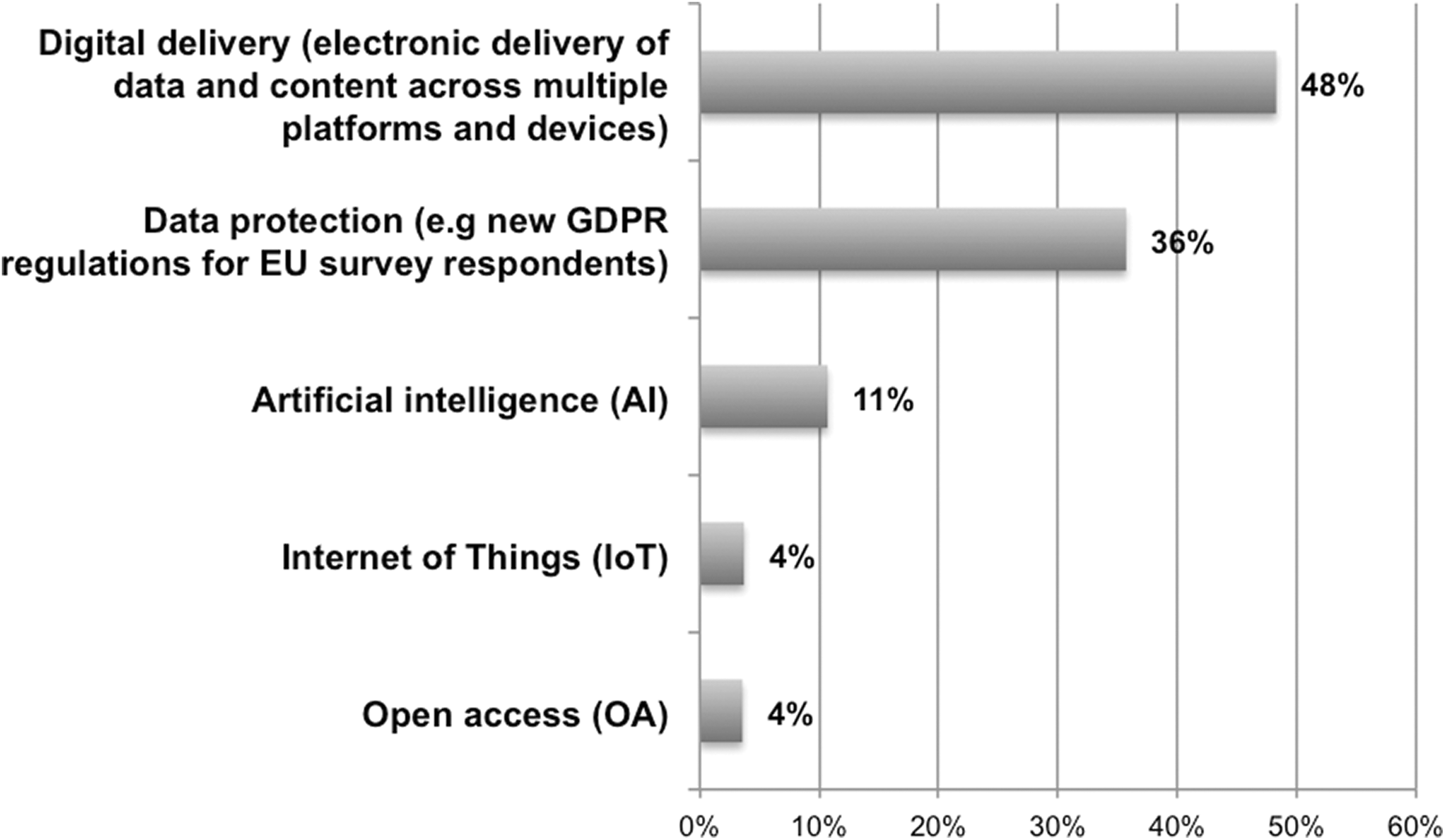
What did e-survey respondents see as critically important in the next 12–18 months?
However, open access, Internet of Things and AI were all rated highly as being ‘of interest’, and AI was seen as not ‘critical’ but ‘important’. One e-survey respondent commenting: The growing importance of AI, and especially machine learning and deep learning technologies, requires detailed knowledge and understanding of the data (usually very large datasets) being used to fuel these AI applications, and the algorithms which act on the data they are given. Some companies seem to think it is more cost-effective to outsource these basic IM competencies than invest in up-skilling their own staff. I’m not convinced this is a sustainable or sensible strategy.
For e-survey respondents, this was an open question, and clearly delivered some very different answers – ‘leaving the country’ and ‘getting a new job’ perhaps reflecting some more personal rather than business objectives!
However, some common themes did emerge and were also shared by the telephone interviewees.
GDPR figured highly. For most, this is a watch and see situation where they are waiting to learn how the new legislation may really impact at a general level as well as their own individual business situation. Compliance and copyright and licensing issues were also mentioned.
All the telephone interviewees were asked about their involvement with the implementation of GDPR within their organization; and what direct impact the new regulation had or will have on their services.
No information team interviewed had been responsible for the implementation of GDPR within their organization; this had been the responsibility of the legal or risk compliance or equivalent department.
Where information teams are involved is as follows: training on GDPR, making sure people in the organization know and understand their responsibilities, ensuring their own mailing lists or any personal data they keep is now in line with the new regulations and training the information teams on GDPR to make sure they can advise other employees correctly and understand their responsibilities.
One unintended consequence that one team has made use of tools that were designed to interrogate databases and alert for non-compliance for GDPR can also be used for general data cleansing and data remediation.
Interviewees also signalled consequences of the introduction of GDPR on their services:
Potential difficulties in doing background research that involves personal data, but will have to wait for the Information Commissioners Office use-case studies to really understand how this will impact. Some vendors are not sharing user statistics because of GDPR. In respect of those sections of the GDPR that allow for local variation, also needed to wait for UK Data Protection Bill to have clarification on what was necessary, for example, scientific research. In one organization, implementation of GDPR has drawn IT resource away so that their projects were moved down in priority, adding a six-month delay.
Another theme for both e-survey respondents and telephone interviewees was assessment and implementation of new technologies, tools and databases. For some, these were linked to starting to use AI and machine learning technologies. These areas will be explored in more detail later in this article. Implementing and increasing the digital delivery of services and resources was a commonly mentioned objective in the next months.
Budget issues, funding, lack of resources, having to do more with less time, less money or less staff were also unsurprising additions to the list.
More unique projects that were mentioned during the telephone interviews included a focus on people practices, with one information team asked to look at the area of corporate social responsibility and how employees of that organization are using their two free ‘volunteer’ days. Another was increasingly involved in writing, particularly providing web content for the organizations web pages, as well as proofreading and editing content.
One telephone interviewee was dealing with their organization’s recent merger and integration with a new company; upskilling that company with local and EU regulations, aligning procurement policies between organizations and moving to a global approach, increasing consistencies in vendor management.
AI is here!
The survey highlighted very clearly how rapidly AI is impacting all the different aspects of information management, from searching and retrieval of data and information to replacing human staff answering frequently-asked-questions. As discussed previously, AI was rated as ‘highly interesting’ but not ‘critical’ among the e-survey respondents. However, it was mentioned (and in most cases before any direct questions on the topic were made) during all the telephone interviews. It’s clearly an area where everyone sees the potential for change and innovation to happen in the very near future. It must be noted though that all the interviewees were acutely conscious of making decisions around where and when to input these technologies based on careful testing, due caution and full assessments and will not be rushed to action by hype and hyperbole.
Organizational cultures were also cited by interviewees as reasons for slow or cautious adoption of new technologies. One spoke of a risk-adverse CEO. Another reluctance by senior management is to spend money, especially on new ideas which might fail.
‘Finding the bandwidth’ was one comment on trying to source new AI solutions. The interviewee’s organization has asked them to look at finding new technical solutions to delivering some of their services, which might help them with resource issues long term, but to find the time to do this thoroughly would mean finding something to let go now.
AI can be used as a catch-all, so how should it be defined?
The term AI means many things to many people and a standard definition is not easy to come by; it is also used to describe many distinct, but related, technologies such as machine learning, natural language processing, robotics, chatbots and more. For the purposes of this survey, the following definitions of AI are used, and the single-term AI as a catch-all, for simplicity.
The UK government in its industrial strategy whitepaper (HM Government, 2017) defines AI as: Technologies with the ability to perform tasks that would otherwise require human intelligence, such as visual perception, speech recognition, and language translation. AI systems today usually have the capacity to learn or adapt to new experiences or stimuli. A digitally connected economy that realises significant value from connected, large-scale data that can be rapidly analysed by technology and generate insights and innovation. cybersecurity, lifescience, construction, manufacturing, energy and agricultural technology.
The government strategy builds on the data gathered for by the House of Lords Select Committee on Artificial Intelligence which concluded that the UK is in a strong position to be among the world leaders in the development of AI during the 21st century (House of Lords, 2018). They feel that the UK already has key elements: leading AI companies; a dynamic academic research culture; a vigorous start-up ecosystem and a constellation of legal, ethical, financial and linguistic strengths located in close proximity to each other that if managed appropriately could be a great opportunity for the British economy.
In addition, they feel that AI presents a significant opportunity to solve complex problems and potentially improve productivity, which the UK would be right to embrace. The Committee recognizes that the last decade of rapid technological advances and the growth in available data enable this technology to be deployed far more extensively. This brings with it a host of opportunities, but also risks and challenges.
Healthcare, lifesciences and legal are sectors which are already implementing AI solutions
Healthcare is often cited as having huge potential to benefit from AI. A recent World Economic Forum article (World Economic Forum, 2018b) highlights the strong evidence pointing to a number of ways in which AI can help tame healthcare costs. The article describes some specific examples:
Guiding treatment choice
As healthcare providers begin to move towards a standardized format for recording patient outcomes, large sets of data will become available for analysis by AI-enabled systems that can track outcome patterns following treatment and identify optimal treatments based on patients’ profiles. In doing so, AI empowers clinical decision-making and ensures the right interventions and treatments are customized to each patient, creating a personalized approach to care. The immediate consequence of this will be a significant improvement in outcomes, which will eliminate costs associated with post-treatment complications, one of the key drivers of cost in most healthcare ecosystems across the world.
More efficient diagnosis
Repetitive, uncomplicated tasks such as the analysis of CT scans and certain tests can be performed more accurately by AI-enabled systems, reducing physician error and enabling early diagnosis and interventions before conditions become critical. For example, in cases such as osteoporosis, which costs the UK’s National Health Service approximately £1.5 billion annually (and that excludes the high costs of social care), the detection of vertebral fractures, an early indicator of impending osteoporosis which is commonly missed by human diagnosis, can substantially reduce the cost of this condition to health services.
Clinical trials optimization and drug development
AI has the potential to enable faster development of life-saving drugs, saving billions in costs that can be transferred to health ecosystems. In clinical trials, AI can optimize drug development using biomarker monitoring platforms, biomarkers allow for gene-level identification of diseases, and millions of patient data points, which can be analysed in seconds from a drop of blood using at-home devices.
Empowering the patient
AI has the potential to truly empower us as individuals to make better decisions regarding our health. Vast numbers of people across the world already use wearable technology to collect everyday information, from their sleep patterns to their heart rate. Applying machine learning to this data could inform people at risk of certain diseases long before that risk becomes critical. Mobile apps are already providing granular-level patient profile information that could help people living with specific chronic conditions to better manage their disease and live healthier lives. All of this can lead to healthier populations and a reduction of the overall cost burden.
A recent survey by The Pistoia Alliance (Proudlock, 2018) found that 44 per cent of life science professionals were already using or experimenting with AI and deep learning. Overall, they found that 94 per cent expect and increase in the use of machine learning within two years, but access to quality data and technical expertise is a barrier to adoption.
The legal sector is another area which has seen early adoption of AI solutions. One example is a recent study released by LawGeex (Futurism, 2018), an AI contract review platform, which demonstrated how their platform outperformed lawyers, in both efficiency and accuracy in reviewing non-disclosure agreements and accurately spotting risks within the legal documentation. It was also pointed out that, during the experiment, lawyers were fully focused on the task, whereas in real life, this task also may have sunk to the bottom of a to-do list, have been rushed through while waiting for a plane, or with one eye on the clock to get out the door to pick up children.
Information teams are currently running AI projects that range from pilot to fully implemented
One interviewee was working on a pilot ‘frequently asked questions’ app which was available on the customer computer terminals in the library. They hadn’t done any specific marketing, but customers who had come into the information department had used the app and been satisfied. They felt though that the customers who used this technology were the customers who already used technical apps, but those people who wouldn’t use technology and would traditionally ask a person, still wanted to do that and didn’t use the app. So its use didn’t drive a behaviour change but it fulfilled its function as a piece of technology.
One organization that was interviewed had gone much further down the route of adopting AI technologies and they were in a period of embedding the new tools into systems and processes. They felt there was a huge service and PR exercise but also opportunity to drive coaching and training, making sure people still knew where to find different data and how to get it. Everyone in the organization is on a learning curve, and they have the full spectrum from early adopter to recalcitrant. That interviewee also spoke about how they had embedded themselves in the DNA of the organization’s information management and had put themselves forward at all opportunities where information was going to be a component. So much so that they are now routinely asked to participate. They, for instance, were directly involved in the creation of their companies data lake (a storage repository that holds a vast amount of raw data in its native format until it is needed).
Interestingly talking to another telephone interviewee whose company had recently moved to using a data lake noted their team had been asked but they didn’t see this as a core area of responsibility for their information team, and they could be better used elsewhere.
One telephone interviewee mentioned using AI solutions to trawl the web for adverse media and monitoring services. They were using this not as a substitute for, but rather as an addition and enhancement of, their current service. Another mentioned currently trialing a specific AI tool and comparing it with humans doing the same task. Their conclusion is that at this moment in time humans are winning on accuracy and price. The same interviewee also mentioned that information professionals add value not only in terms of research and analysis, but also in terms of relationship management with clients and they are not sure that that can be done by AI even in the long term.
As well as projects undertaken by information teams, interviewees also cited examples where their organization is already deploying AI as part of their workflow, such as legal drafting, and legal clause identification tools.
From the industries that dealt with high volumes of data that require searching and some initial processing before being ready to be analysed, it was clear that there was much more interest in, and activity towards implementing AI solutions. Where industries are more focused on knowledge, where they are not buying extensive amounts of external data, but their services are focused on building knowledge bases and utilizing that then the opportunities for AI are much less.
The chatbot and intelligent virtual agents are the area where we will likely see the most development in the near future
One telephone interviewee felt that chatbots, a computer program or AI, which can conduct a conversation via auditory or textual methods, was an area that would see significant expansion. Virtual voice assistants like Apple’s Siri and Amazon’s Alexa are already used widely by people in their non-work lives were probably the area of AI that would see the most development in the near future, and at this year’s Google I/O developer’s conference, Google demonstrated a very natural-sounding Google Assistant making an appointment over the phone – a feature it calls Google Duplex.
Telephone interviewees who either dealt directly with external customers or high volumes of customer requests where there was opportunity for answers to frequently asked questions certainly saw the potential for using greater automation in this area.
New technologies raise new questions in vendor management relationships
Several telephone interviewees raised points about vendors and AI: Some vendors are rebadging existing databases and tools with technologies they were already employing with more current names such as ‘machine-learning’ or ‘natural language processing’ but there is a feeling that much of this is spin, trying to capitalize on current trends and resell older tools and databases as something new. New technologies mean new entrants and there are a mass of start-ups in this area. Only time will tell on which make the grade and which don’t. The implication is that currently the information professional is bombarded with an increasing number of new vendor proposals. Interviewees are looking at new ways to perform current and new tasks and this means they do have to spend time and resources finding and assessing new vendors and new technologies and this is often not easy when their time is already stretched. Pricing was mentioned by more than one person. New technology generally has a high price tag and most interviewees felt that they needed to wait until the prices for some technology became much lower if they would be able to purchase. Several interviewees felt currently that the price of one new, and relatively untested, AI solution is higher than using an offshoring solution to deliver the same result.
New AI solutions raise questions about data quality, data governance and data value
Trust and confidence are key
Trust and the trustworthiness of data, and confidence in results from using data sources, were mentioned by multiple telephone interviewees. How far can we exploit and push the potential of new technologies whilst retaining the trust and confidence of our clients?
Access to large quantities of data is one of the factors fuelling the current AI boom. In compiling their report (House of Lords, 2018), the House of Lords Select Committee collected evidence from multiple stakeholders and interested parties. One overwhelming conclusion reached was that the ways in which data are gathered and accessed needs to change; so that innovative companies, big and small, as well as academia, have fair and reasonable access to data, while citizens and consumers can protect their privacy and personal agency. To do this means not only using established concepts, such as open data and data protection legislation, but also the development of new frameworks and mechanisms, such as data portability and data trusts. Large companies which have control over vast quantities of data must be prevented from becoming overly powerful within this landscape. We [the committee] call on the Government, with the Competition and Markets Authority, to review proactively the use and potential monopolisation of data by big technology companies operating in the UK. Companies and organisations need to improve the intelligibility of their AI systems. Without this, regulators may need to step in and prohibit the use of opaque technology in significant and sensitive areas of life and society. To ensure that our use of AI does not inadvertently prejudice the treatment of particular groups in society, we call for the Government to incentivise the development of new approaches to the auditing of datasets used in AI, and to encourage greater diversity in the training and recruitment of AI specialists.
It was noted that government and other public bodies do have large data sets but there are huge hurdles to overcome, as in many of these bodies much of their data are often still in paper form, which would require a significant resource investment to turn it into machine readable data.
The House of Lords report was written prior to GDPR coming into force. They note that status quo will be disrupted to some extent by GDPR and the new ePrivacy Regulation, which both came into force across the EU from 25 May 2018. With respect to data access, the GDPR’s introduction of a right to data portability is probably the most significant feature. While subject to some restrictions, in many cases this will require companies and organisations to provide a user with their personal data in a structured, commonly used and machine readable form, free of charge. The intention is that consumers will be able to take their personal data from one service and, relatively seamlessly, transfer it to another, helping to prevent the ‘lock in’ effect which can dissuade customers from switching between service providers. protect individual and collective rights and interests; ensure that trade-offs affected by data management and data use are made transparently, accountably and inclusively; seek out good practices and learn from failures; and enhance existing democratic governance.
They also advised that a stewardship body needs to be created, recommending that the functions of successful data governance should be to: anticipate, monitor and evaluate and build practices and set standards.
And that any stewardship body should be: independent, deeply connected to diverse communities, expert across and beyond discipline, tightly coupled to decision processes, durable and visible, and nationally focused but globally relevant.
The report noted that it is increasing complex to govern and manage data. The data lifecycle is no longer clear and distinct but interconnected and interdependent with open networks of data. The report listed the drivers of complexity as: Data capture and processing is increasingly pervasive. Data collection and use are becoming harder to separate. Non-sensitive data can hold sensitive insights. It is becoming more challenging to know where data comes from: access to metadata becomes increasingly critical, data degradation becomes more of an issue, and knowing which data are poor data becomes increasingly difficult.
A recent report on digital attitudes from Doteveryone (2018) explores how the British public thinks and feels about the Internet technologies shaping our world and changing our lives.
The conclusions from the report, which chime with some of the sentiments and reservations of the survey respondents, are as follows: The Internet has had a strongly positive impact on our lives as individuals, but people are less convinced it has been beneficial for society as a whole. Fifty per cent say it has made life a lot better for people like themselves, and only 12 per cent say it’s had a very positive impact on society. There is a major understanding gap around technologies. Only one-third of people are aware that data they have not actively chosen to share has been collected. A quarter have no idea how Internet companies make their money. People feel disempowered by a lack of transparency in how online products and services operate. Eighty-nine per cent want clearer terms and conditions, half would like to know how their data are used but can’t find out. There is a public demand for greater accountability from technology companies. Two-third say government should be helping ensure companies treat their customers, staff and society fairly.
The ability to ensure data is of highest quality and integrity is a critical deliverable for the information professional
The results of the e-survey and the comments from telephone interviewees make it clear that procurement of external insight and intelligence from vendors is a key deliverable. In addition, that it is essential that the information teams are able to ensure that as they curate that information is it is of the highest quality, integrity and provenance and they are not passing on ‘fake news’. This holds true for both internally generated and externally procured data.
One interviewee pointed out that today data often comes cheap is relatively easy to access, but this means the quality of that data cannot always be guaranteed; this is where information professionals need to intervene. Another interviewee mentioned that algorithms are freely available to purchase on the Internet, which raises another set of questions about the integrity of algorithms used on data sets and the resulting output. An additional comment was that ‘processing data is not a skill;’ this interviewee felt that open source data could potentially also present a risk as it relies on people’s ability to use the information effectively.
When does ‘data’ have a value?
This philosophical question was posed to all telephone interviewees. The contributions from those parties interviewed for the House of Lords Select Committee made it clear that the big data warehousers like Amazon, Google and so on put no intrinsic value on data itself, and the only value is in their proprietary algorithms.
Telephone interviewees, not unsurprisingly, had a different view. Their individual responses correlated into three perspectives: ‘Any data, raw and processed – when you can make sense of it, [data] has a value; but it’s value increases as it moves up the chain (data-information-knowledge-wisdom)’. ‘Once metadata has been added’. ‘When [data] has been contextualised (doesn’t yet have to have a specific value to the organisation)’.
Ethics and regulation are works in progress – And perhaps they always need to be so
The giving up of personal data – often a question of convenience versus control.
We have to ask not only who owns the data, but who owns the algorithms.
These were a couple of the comments made by telephone interviewees discussing the issues around ethics and regulation for AI and other technologies.
For our interviewees, who work in highly regulated sectors such as banking, law and finance, they had a consistent response when asked about potential issues around the use of data, particularly for AI or machine learning applications. They all felt the regulation would be automatically in place because any developments in those areas would be done within their own current well-regulated environment and match those regulations. For some, this did lead them to question if this may stifle innovation.
Having clear regulated guidance in place means that those working in highly regulated sectors clearly have a low-risk response to questions regarding data misuse or necessity for additional data regulation. For those working in less-regulated areas then these new technologies pose a higher risk.
One interviewee felt having external professional bodies who have clear ethical guidelines which information professionals could subscribe to, and cite, was very helpful. Particularly, for external consultants, and those not aligned to an organization with a strong ethical position on data or information governance. Also, perhaps if you sit in an organization as a lone information professional. CILIP launched their Ethics Review in 2017 and will publish their new Ethical Framework for information professionals later in 2018.
The ethics around data and data use has been raised at a national level
The UK government has signalled its intention to invest £9 million in a new Centre for Data Ethics and Innovation (HM Government, 2017). They anticipated this as a world-first advisory body that would review the existing governance landscape and advise on how the government on how they can enable and ensure ethical, safe and innovative uses of data (including AI). They have also set out their further intentions to engage with industry to establish data trusts to facilitate the easy and secure sharing of data.
However, prior to this announcement, the Nuffield Foundation had announced that as part of a new focus on the implications of a data-enabled society to establish an independent Convention on Data Ethics. They saw this as a deliberative body bringing together academics, policy makers and public and private sector interests to improve public understanding and to explore solutions for fairer and safer data-use arising from technological innovation, regulation or changes in public behaviour. The Nuffield Foundation (2018) has already pre-empted the proposed government centre and has announced a new £5 million Ada Lovelace Institute to examine profound ethical and social issues arising from the use of data, algorithms and AI and to ensure they are harnessed for social well-being.
The Institute will Convene diverse voices to build a shared understanding of the ethical questions raised by the application of data, algorithms and AI. Initiate research and build the evidence base on how these technologies affect society as a whole and different groups within it. Promote and support ethical practices that are deserving of public trust. The Institute will act as an independent voice, speaking on behalf of the public interest and society, informing thinking of governments, industry, public bodies and civil society organizations, in the UK and internationally.
It will be interesting to see how the two organizations will work together going forward.
At the time of writing, Google has just released its promised AI ethical principles (Pichai, 2018). In their introduction to the code, they state that they: recognize that such powerful technology raises equally powerful questions about its use. How AI is developed and used will have a significant impact on society for many years to come. As a leader in AI, we feel a deep responsibility to get this right. So today, we’re announcing seven principles to guide our work going forward. These are not theoretical concepts; they are concrete standards that will actively govern our research and product development and will impact our business decisions.
They set out the following objectives for AI applications:
[Google] will assess AI applications in view of the following objectives. [Google] believe that AI should: be socially beneficial, avoid creating or reinforcing unfair bias, be built and tested for safety, be accountable to people, incorporate privacy design principles, uphold high standards of scientific excellence, and be made available for uses that accord with these principles.
Google also outlines AI applications that they will not pursue: Technologies that cause or are likely to cause overall harm. Where there is a material risk of harm, we will proceed only where we believe that the benefits substantially outweigh the risks, and we will incorporate appropriate safety constraints. Weapons or other technologies whose principal purpose or implementation is to cause or directly facilitate injury to people. Technologies that gather or use information for surveillance violating internationally accepted norms. Technologies whose purpose contravenes widely accepted principles of international law and human rights.
Regulations need to be flexible to keep up with speed of technological innovations
One current example of that was outlined in a recent World Economic Forum blog (World Economic Forum, 2018a). The blog posed the question of whether GDPR will block blockchain: Blockchain has existed as a concept since 2008 but it has only recently exploded into public consciousness through valuations of cryptocurrencies like Bitcoin. Many technologists believe that blockchain will be more transformational than the internet itself. The global blockchain technology market is predicted to grow to 2.3 billion U.S. dollars by 2021. But whilst many people equate blockchain with Bitcoin and cryptocurrency, they are not the same. ‘Blockchain is a cryptographically-secured transaction record that’s created without a central authority’, explains the World Economic Forum’s Head of Blockchain, Sheila Warren. Blockchain data can’t be deleted. So will its applications be illegal? Because blockchain relies on a distributed ledger system that is decentralized and immutable, it’s intended to be a permanent, tamper-proof record that sits outside the control of any one governing authority. This is what makes it such an attractive and useful technology. But because data stored on the blockchain, including personal data, can’t be deleted, there is no way to exercise the right to erasure that people are granted under GDPR. Blockchain is not designed to be GDPR-compatible. Or rather, GDPR is not blockchain-compatible the way it is written today.
Necessity for skills enhancement more than acquisition of new skills for information professionals to meet the challenges ahead
The e-survey asked respondents to name the top three data and/or information management skills that they believe are critical for an information professional working in a business environment today. The question was open, and clearly, the answers are different and as such not straightforward to categorize. However, it was interesting that general themes emerged for each set of answers, and these do correspond to the priority order in which e-survey respondents rated the activities and deliverables their teams provide to their organizations, that is, research and analysis and content procurement rating at the top.
Skill 1: Here most e-survey respondents cited skills linked to research and analysis, source selection and knowledge, and searching and database knowledge. Business and commercial knowledge was mentioned.
Skill 2: Skills rated most were around using the data and results more effectively and creatively to answer questions, such as data presentation, data visualization, critical data examination, structuring data and focused information delivery, asking the right questions. Customer service, building relationships, and understanding the political environment were also common themes in this set of answers.
Skill 3: Data and information management skills such as database knowledge, negotiating contracts, teaching information literacy, information organization were the most frequently mentioned in this set. Horizon scanning, environment scanning, being up-to-date on issues affecting the business or sector environment were mentioned here.
Information professionals see research analysis developing to also provide implications and deductions
All the telephone interviewees were asked about any skill adaptations or enhancements, or any new skills, they had already needed to make, or were thinking about implementing.
Echoing the 2017 survey, one interviewee spoke about the need to focus much more on managing up and improve their stakeholder management skills. They described needing to find ways to demonstrate to management the quality and usefulness of their strong searching and data presentation skills. The impetus for this was a recent change of direct manager who needed to be convinced on their strengths and their value. This happens frequently in organizations and is an interesting dilemma, because quite often the information unit is extremely well-appreciated and well-used by customers but if these are not senior level people the value statement is harder to prove.
Many felt that the increased adoption and deployment of more AI technologies would impact the ‘heavy-lifting’ side of research, with tools able to shift through vast quantities of data to deliver data sets that were then ready for further analysis and to have insight added to them. This means that information professionals will in the future be working higher and higher up the value chain of information. A decade or so ago saw the shift from information professionals being simply the data providers to providing decision-ready data, but many see this as still evolving further and skills being acquired to be in the position to seek out implications and arrive at deductions. One telephone interviewee talked about this development requiring more creativity and commenting on training needs saying that ‘if you are going to ask people to deduce then you need to give them the confidence to be bolder’.
However, the downside of this is that interviewees felt that this would make recruitment much harder because the set of skills you would be looking for is also more refined and precise and relies on experience as well as learnt skills.
One interviewee also talked about the skill set that is most valued by their clients is the bespoke analysis that they do, and the value-add that you add as a trusted partner in the organization.
Additionally, another interviewee spoke about speed of delivery and their ability to be much quicker than clients even when searching the same tools: ‘We get something done when we say it will be done’. In addition, they talked about the tenacity and persistence of information professionals when interrogating sources, and their willingness (and expertise) to always dig a little bit further into the data to really find the best results.
‘[Information professionals] need to learn to apply skills in different ways’. This was the view of one telephone interviewee who talked about team members who were expert searchers and had the ability to build a perfect search string to interrogate particular databases. However, with the advent of new databases, this particular skill was redundant and newer databases don’t allow this kind of interrogation so they need to learn to apply these skills in a different way.
These new technological advances also increase the importance of digital literacy
Several interviewees mentioned the importance of digital and information literacy as these new technologies are introduced. Witnesses who spoke to The House of Lords Select Committee on AI commented on the critical need to improve data skills and digital understanding and literacy. One witness described data literacy as encompassing how you harness data, how you visualize it and how you model it and understanding bias.
Digital literacy is one strand of information literacy. This year CILIP’s Information Literacy Group (2018) have published an update their definition of information literacy: Information literacy is the ability to think critically and make balanced judgments about any information we find and use. It empowers us as citizens to reach and express informed views and to engage fully with society. Information literacy incorporates a set of skills and abilities which everyone needs to undertake information-related tasks; for instance, how to discover, access, interpret, analyse, manage, create, communicate, store and share information. But it is much more than that: it concerns the application of the competencies, attributes and confidence needed to make the best use of information and to interpret it judiciously. It incorporates critical thinking and awareness, and an understanding of both the ethical and political issues associated with using information. Information literacy relates to information in all its forms: not just print, but also digital content, data, images and the spoken word. Information literacy is associated and overlaps with other literacies, including specifically digital literacy, academic literacy and media literacy. It is not a stand-alone concept, and is aligned with other areas of knowledge and understanding. Information literacy helps to understand the ethical and legal issues associated with the use of information, including privacy, data protection, freedom of information, open access/open data and intellectual property. Importantly, information literacy is empowering and is an important contributor to democratic, inclusive, participatory societies; as interpreted by UNESCO, it is a universal human right.
The group additionally go on to describe various contexts in which information literacy has an impact; Information Literacy and Everyday life; Information Literacy and Citizenship; Information Literacy and education; Information Literacy and Health and Information Literacy and the workplace: In the workplace, information literacy is knowing when and how to use information in order to help achieve organisational aims, and to add value to organisational activities. This applies whatever the scale and location of the workplace, and whether the work environment is in the commercial, public or not-for-profit sector. The exact nature of information literacy is highly dependent on the context of the workplace, and it reflects workplace culture, practices and experiences. As such, it may manifest itself in a multitude of ways, reflecting the rich variety of environments to which it applies. Information Literacy helps to interpret work-related information, share it (within organisations and with external stakeholders, such as clients or customers) and transform it into knowledge. Information Literacy means working ethically, understanding the implications of data protection, intellectual property right, such as copyright. Information Literacy also manifests itself both in terms of the information behaviour of individual workers and in the corporate policies, strategies and activities of organisations. It may be subsumed in other employment-related concepts such as knowledge & information management and data management. It also contributes to employability by underpinning attributes that are well-recognised by recruiters, such as team working, problem-solving and analytical skills.
As already mentioned, many interviewees spoke about the additional training requirements that new AI and other technical solutions necessitated, both for their own teams and for their organizations. It is very clear why training on information-related tools and databases rated as second core service for most information teams regardless of sector.
Conclusions
AI is clearly a reality, but it’s in it’s infancy and what exactly what will work and continue, and what may fail is not yet clear. The survey results indicate that information professionals are already involved and active in this area, but also that they are not led by hype. Data quality, data governance and data ethics are all topics on which the information professional needs to keep updated and if possible help their organizations navigate effectively.
Keeping pace with technological change is critical for every profession and every organization. That the new and current technological changes are information and data-related means that the information profession is impacted very directly. The survey results demonstrate that information professionals, from all sectors, are ready, willing and able to face both the challenges and opportunities that lie ahead.
Footnotes
Declaration of conflicting interests
The author(s) declared no potential conflicts of interest with respect to the research, authorship, and/or publication of this article.
Funding
The author(s) received no financial support for the research, authorship, and/or publication of this article.