







Abstract
This study explores the relationship between digital identity and employability, analysing how human resources departments review the digital profiles of potential candidates on social media platforms. The study created a questionnaire of 17 closed questions using variables, such as, basic demographic data and procedures of the recruitment process (analysis of social networks, use of Big Data and importance of the digital image of candidates). The study concluded that the information future candidates show on social media platforms is very important, even decisive, in recruitment. The study confirms the hypothesis that one’s digital identity on social media networks can negatively influence employment opportunities and even be a reason for the rejection of a candidate. Recruitment experts actively review candidates' presence on social media networks, both professional (LinkedIn) and personal platforms such as Facebook and Instagram.
Keywords
Introduction
In contemporary society the separation between the physical and the virtual has blurred (Ruão and Lopes, 2017; Huvila, 2021). The growing popularity of social media platforms 'has transcended the language barriers and geographical borders, permitting users to interact with an ever-greater number of people, despite physical distance or cultural differences’ (Aguilar and Said, 2010: 191). And 'the younger generation of learners wants frequent and quick interactions with content’ (Szymkowiak et al., 2021). This new reality arises out of the nature of the human individual itself, defined by Bergson (2012) as a social being who must cultivate this self as an obligation both for and to society. We are faced with the need to define what makes up identity. This is found in 'the collection of stories that people tell about themselves, other people tell about a person, or that a third party can tell another person about a subject' (Fan and Lin, 2023).
Within this context, the development of digital technologies has made digital cameras and mobile telephones with built-in cameras increasingly affordable, leading to the exponential growth of the number of personal photos taken and posted online. According to a report by Keypoint Intelligence, it is estimated that 1.4 trillion images were taken in 2021, of which some 90.6% were taken with a smartphone, which enable instant photographs to be taken at no cost and shared beyond the private sphere (Visa Barbosa et al., 2018).
The constant improvement in the quality and specifications of smartphone cameras has contributed decisively to the democratisation of the image (Arriaga, 2017; Chéroux, 2013; Fontcuberta, 2016; Jay, 2008). This fact has revealed the need for greater education in the use and distribution of images in order to raise awareness of what can and should be done with images in the digital sphere (Romero-Rodriguez, et al., 2020; Tilleul, 2022).
Spanish university students make intense use of the internet, especially social media platforms, to search, download or upload content, online shopping, entertainment, banking etc. According to the Study of the Use and Attitudes on the Consumption of Digital Content (ONTSI, 2021), some 61.9% of users view digital images online every day.
The present study is based on the following hypothesis: Spanish internet users post photographs on the internet, especially on social media, which create a digital profile of the user which, if not carefully curated, can lead to problems in the future when seeking to enter the job market.
Our study is focussed on Spanish university students between the ages of 18 and 24. An age group straddling the Millennial and Z generations and which, while having developed different digital habits (Herranz et al., 2019), live immersed in an imminently audio-visual culture (Aguaded-Gómez et al., 2015).
We propose to evaluate whether the digital image of users can help or harm their future employment prospects. For this, we focus on the selection and recruitment process of companies and the importance they give to the image of potential candidates on social media platforms.
The study will also determine if the business sector, number of employees or number of positions being offered influence the responses to the questions or situations presented by the questionnaire.
This research project arises from the need to educate the public, particularly young people, about the correct use of personal images and the possible consequences of their use and dissemination for their future employability.
Frame of reference
For Gündüz (2017), social networks such as Facebook, Twitter and, more recently, Instagram, TikTok or other streaming platforms such as Twitch 'permit the expression, exploitation and experimentation with one’s personal identity; something natural to human experience'. The term ‘digital identity’ refers to 'accumulated electronic data that refers to us as individuals […] the things others say about us and/or the (sub)products of our electronic transactions driven by our man-machine or machine-machine interactions' (Warburton, 2012: 16). For Robinson (2018) 'the digital presentation of the self is carefully managed through the management of the identity and selective presentation processes of the self through digital media', especially on social media platforms (Hogan, 2010).
Our interactions on social media leave their trace, as Mayer-Schoenberger (2007) noted when observing that ‘we have passed from a society that “forgot” to a society that, thanks to advances in technology, remembers forever'. Micheli et al. (2018) define digital footprints as ‘the set of data derived from the digitally traceable online behaviour and presence of an individual'. For these authors, the use of the internet and the resulting digital footprint 'can have beneficial or prejudicial results in the short or long term for individuals and society'. For Castañeda and Camacho (2012), 'this change has impacted our ability to participate freely and this new reality […] has a significant effect on how we relate to others'.
As Platero (2016) notes, the increasing sharing of information also poses a risk to the fundamental rights of individuals, such as personal data protection and the right to privacy. The scientific community has not ignored this phenomenon and numerous studies have been published dealing with the privacy issues associated with the use (and abuse) of social media (Barnes and Barnes, 2009; Lange 2007; Livingstone 2008; Baumgartner et al., 2010; Pensa et al., 2019).
Madden et al. (2007) distinguish two types of digital footprint: active and passive. The active refers to when the user posts information about themselves intentionally in blogs or in comments. A passive footprint refers to the data collected about the activities of the person online through cookies or their search history. In terms of image, the passive digital footprint is particularly important and problematic because social media platforms increasingly include mentions, facial recognition programs (Calderón Gómez, 2010), redirections and other technologies to tag or identify the user.
Kopackova and Spicova (2015) note the problems associated with the digital footprint. Firstly, the 'sensation of anonymity' which leads to the posting of private data (photos, comments, etc.) the dissemination of which can have a significant impact on one’s professional career. The second problem lies in inadequate digital literacy. On many occasions, people do not know how to protect or hide their personal data, either through ignorance or usability problems of the platform. Thirdly, we must consider that digital footprints are very difficult to erase, something many users are unaware of.
A recent study by Feher (2021) concluded that the majority of personal online behaviour and strategies are guided by the conscious decisions of the user. In fact, those interviewed in the study reported being fully conscious of some 70% of their online actions. However, the remaining 30% of their actions are unconscious, and may have minor (as explored in this study) to major consequences for the user, from identity theft to kidnapping.
For these reasons, users must be cautious in the use and handling of their personal data and carefully manage their personal image on social media and online. According to Javier Curtich (2011):
Whether we like it or not, we live in a vast digital showcase in which an effective search engine can provide an instantaneous vision of who we are, what we do, what we think, and let’s not forget, what others think of us. The results of an internet search can be vitally important to our professional career.
This is important not only for one’s social reputation but also so as not to impair one’s opportunities for employment in the future. We have recently turned from the paper CV and personal interview to the search for employment via online portals, applications and online interviews. The methods for the selection and recruitment of personnel have also changed (Davison et al., 2016; Roth et al., 2016; Zhi and Hong, 2017: Woods et al., 2020).
The report 'New forms of Job Seeking in the Digital Era' by BBVA (2015) observes that the online presence of an individual 'may be considered a curriculum in itself'. It goes on to state that, given the fact that social media platforms are a channel for job seeking 'it is fundamental to have a carefully curated personal brand'.
Finding employment requires time and effort, and an individual’s digital profile must be carefully curated, including personal photos that are appropriate for a professional environment. It is also necessary to participate in social media by building and interacting with professional contacts.
The digitalisation of selection and recruitment practices and the search for employment is now a fact. For Jorge Guelbenzu from Infoempleo (2018) 'Be it a revolution or a simple evolution, digital technologies are an inherent part of the recruitment process'. The report 'Connected Talent' by Infoempleo (2018) notes the growing use of people analytics tools to obtain very precise data about potential job candidates. These tools apply the latest technologies, such as VR (Virtual Reality), robotics, Bog Data, etc., in identifying and screening candidates, analysing, for example, how a future employee may respond to different real-life situations.
According to the report 'New Forms of Job Seeking on Social Media' by researchers from the Universidad Rey Juan Carlos, 'the arrival of millennials in the labour market has posed a challenge to organisations in managing intergenerational diversity among their employees […] identifying talent not only in terms of technical skills and competences but also emotional intelligence' (Díaz-Iglesias et al., 2017).
Methodology
The principal aim of the study was to determine if the digital image transmitted by the users of social media platforms is beneficial or prejudicial to their employment prospects. We analysed how human resources departments evaluate and process information that job candidates post on social media.
Secondly, we analysed whether the sector of the company, number of employees or number of job positions offered influence their evaluation of questions about the digital image of candidates raised in the study.
To achieve these objectives, a questionnaire with a series of closed questions was submitted to the heads of the human resources departments of the leading Spanish companies. An accessible, voluntary and non-probabilistic sample was used. The questionnaire was designed by consulting the Annual Study of Social Media 2021 by IAB; studying the socio-demographic profile of Spanish internet users (ONTSI, 2021) and using the Internet Privacy and Security Guide (2019) by the Spanish Data Protection Agency.
The variables analysed in the study are, firstly, basic demographic data about the company (number of employees, business sector and number of jobs offered) and certain practices or procedures of the selection process (review of social media, use of Big Data and the importance of the digital image of the candidate).
In selecting the sample (144 HR directors) the study sought the help of the Spanish Human Resources Association (Asociación Española de Recursos Humanos (AEDRH), one of the most important organisations in the sector with over 720 members including the HR directors of 16 IBEX 35 companies (the benchmark index of the Madrid stock exchange).
The results of the survey were collected using Google Forms. The questionnaire was validated by the 'Talent Commission' of the AEDRH and shared via the mobile application of the association itself in the months of January, February and March 2022.
The results of the survey were processed using Microsoft Excel to create contingency tables.
The data was analysed using SPSS software, with test Chi-squared tests applied to the contingency tables to identify any statistically significant relation between the dependent variables (practices and procedures of the selection process) and the independent variable, the business sector of the company.
Analysis of the results
In this section we analyse the results of the questionnaire completed by a total of 144 directors of human resources of Spanish companies. First, we present the responses to each question as a percentage and, below, the results of the Chi-squared test using the independent variable 'business sector'.
Half of respondents were from companies in the services sector (50%), while 30.6% in companies in industry and construction and 18.1% in other sectors, with only 1.4% of companies were in the agricultural sector.
The responses to each question are presented below along with the results of the Chi-squared test.
Question 1. During the selection and recruitment process is it important to review the social media of potential candidates?
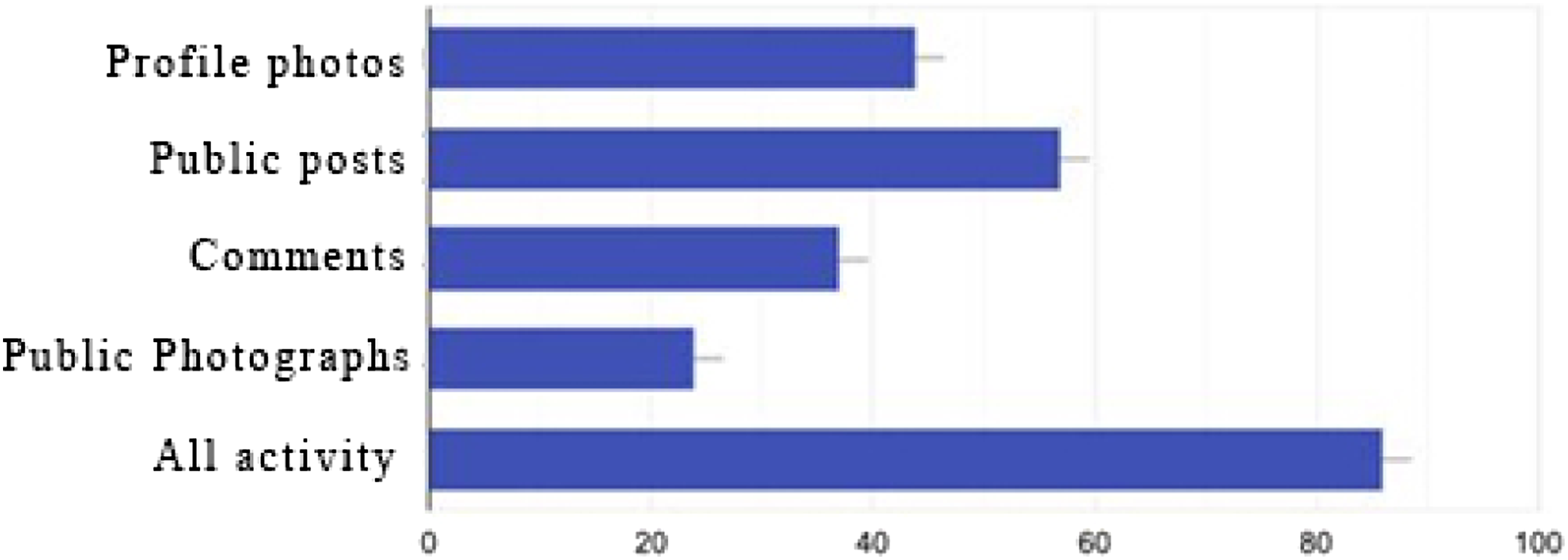
For the question about the importance of reviewing the social media of potential candidates, the large majority of companies strongly agreed (52.8%) or agreed (38.2%) with this affirmation. Thus, a very high percentage of companies (91%) consider it important to review the social media of all potential job candidates (Figures 1–5). Importance of reviewing social medias. Source: The authors. Importance of the information obtained. Source: The authors. Importance of the image in the selection process. Source: The authors. Most reviewed social media platforms. Source: The authors. Aspects of interest. Source: The authors.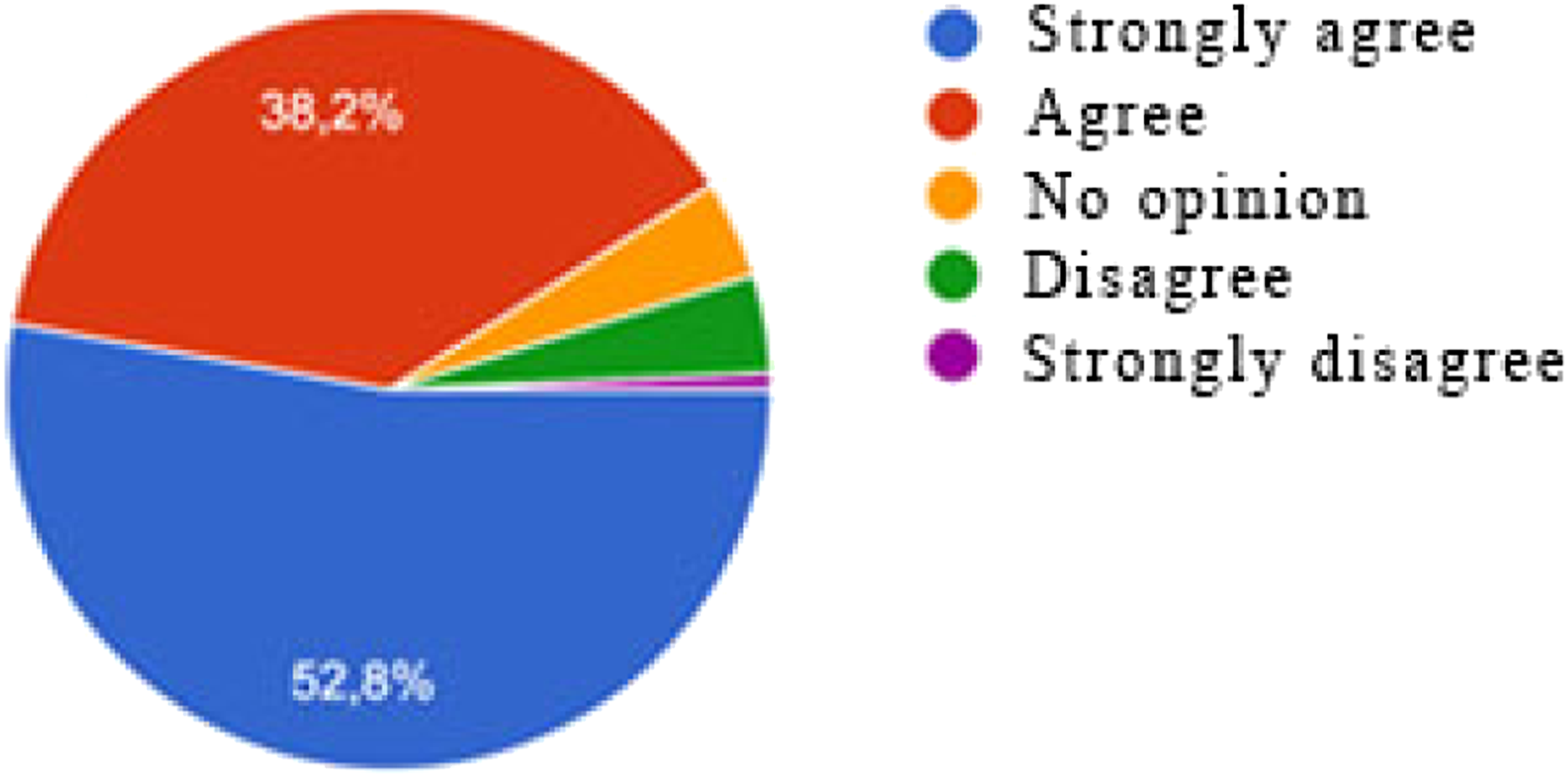
Descriptive statistics:
Chi-squared test.
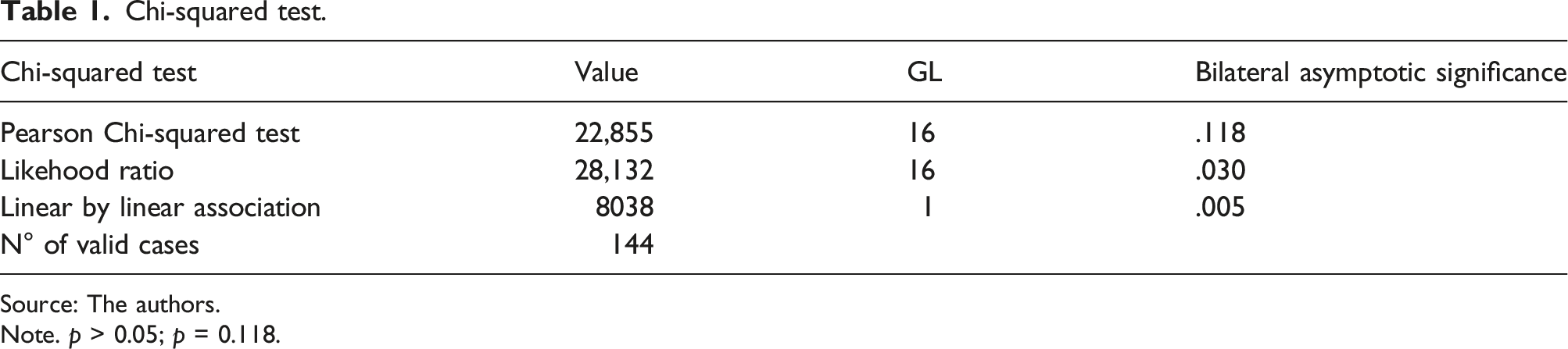
Source: The authors.
Note. p > 0.05; p = 0.118.
Chi-squared test.
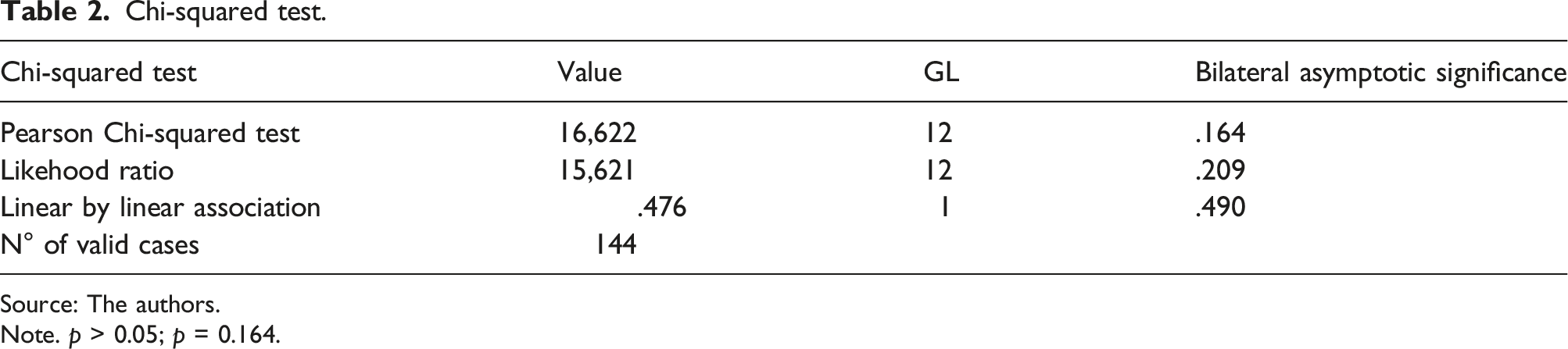
Source: The authors.
Note. p > 0.05; p = 0.164.
Chi-squared test.
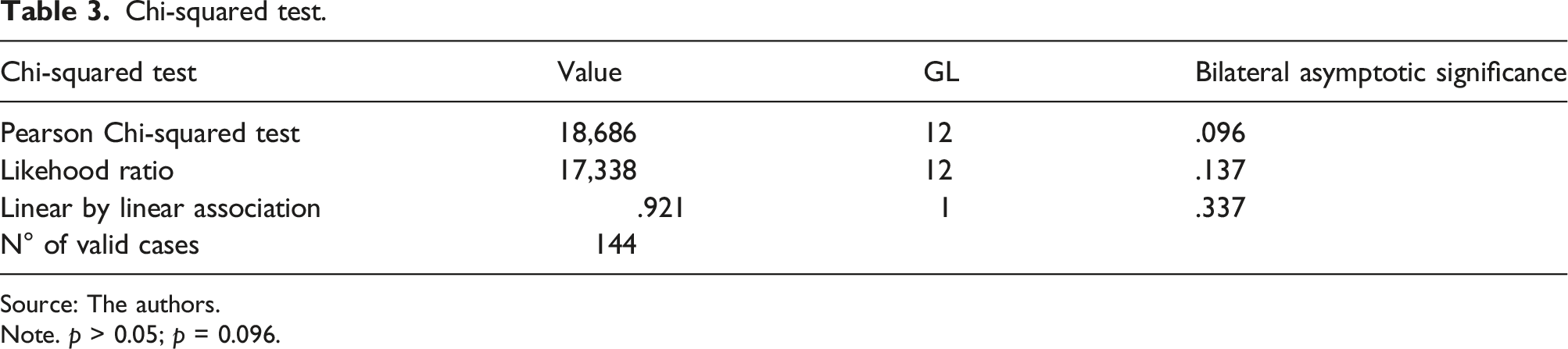
Source: The authors.
Note. p > 0.05; p = 0.096.
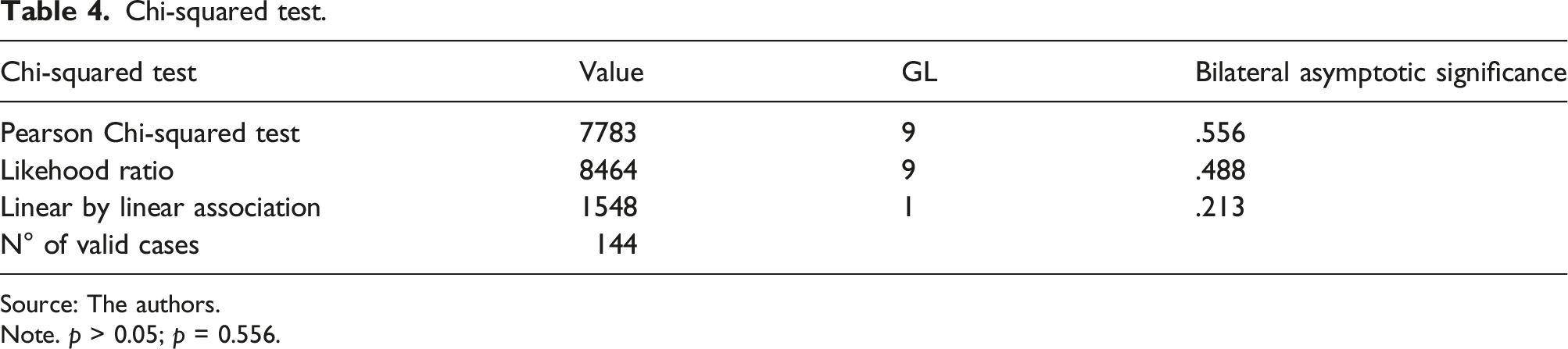
Chi-squared test.
Source: The authors.
Note. p > 0.05; p = 0.556.
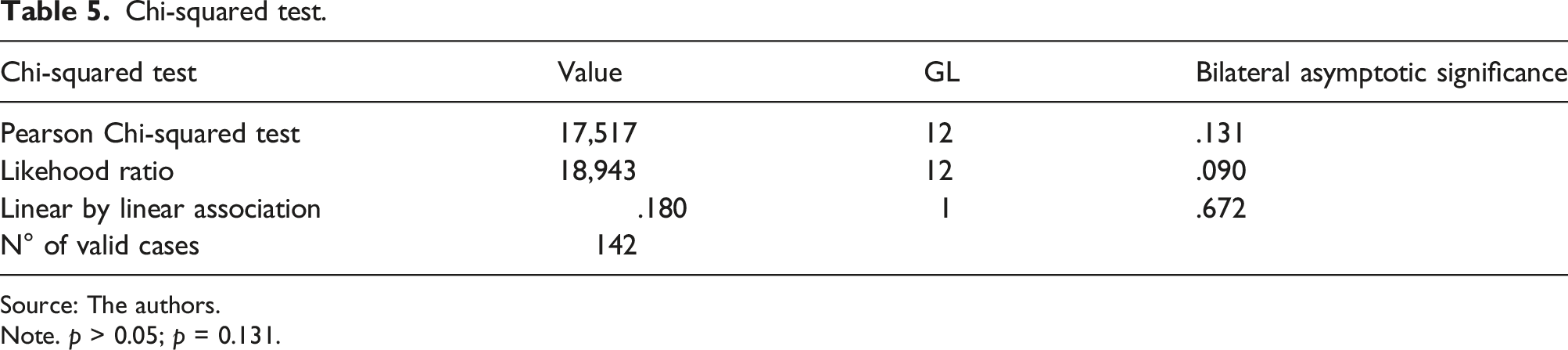
Chi-squared test.
Source: The authors.
Note. p > 0.05; p = 0.131.
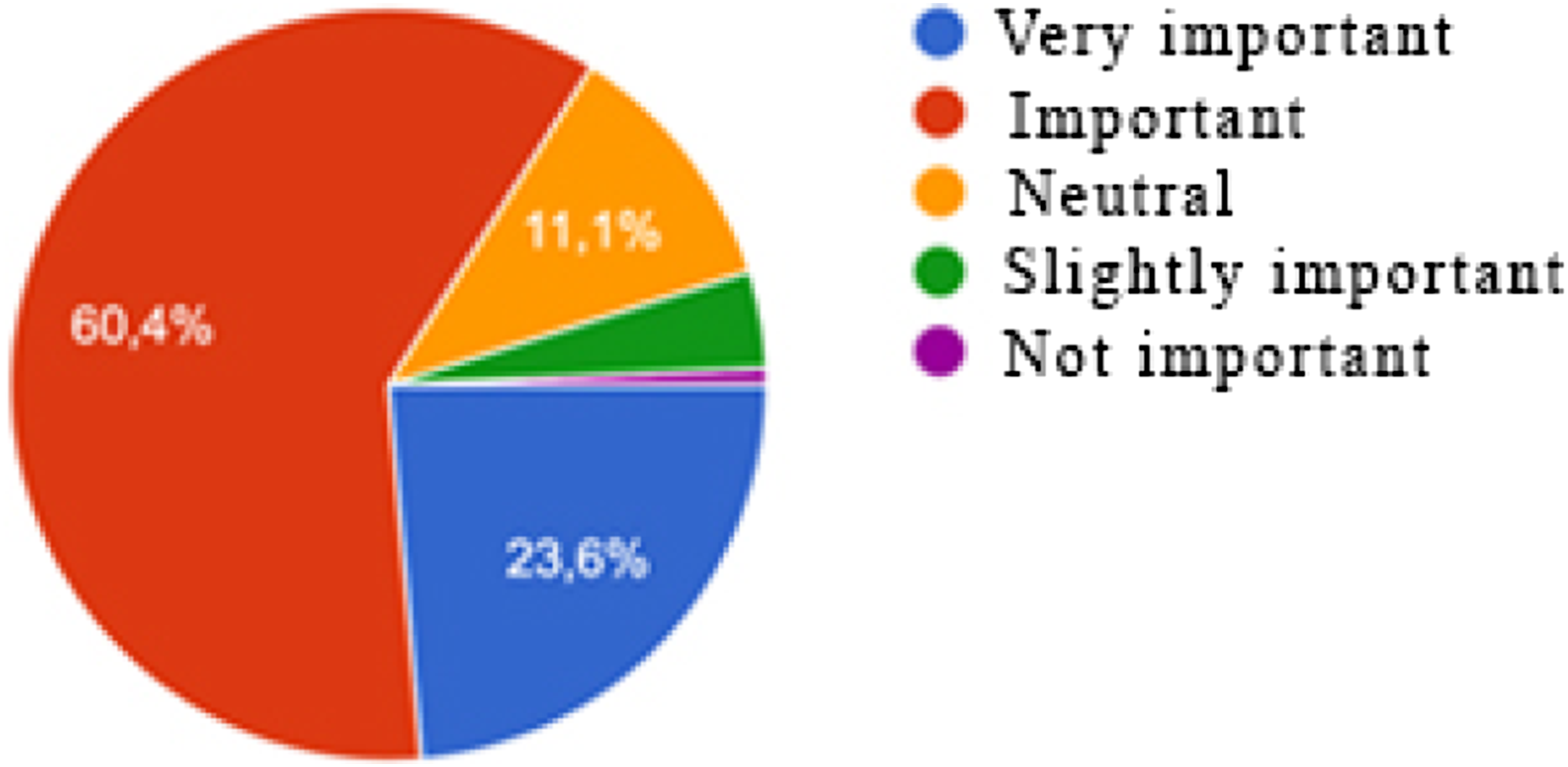
Question 2. How important is the information obtained from the social media of potential candidates?
When asked about the importance of the information obtained about potential candidates on social media, some 60.4% of HR directors considered this information to be important and 23.6% considered it very important. The sum of these responses indicates that over 84% of HR departments give importance to the information obtained about candidates through social media .
The Chi-squared test shows no relation between the business sector and the importance ascribed to the information obtained about candidates on social media.
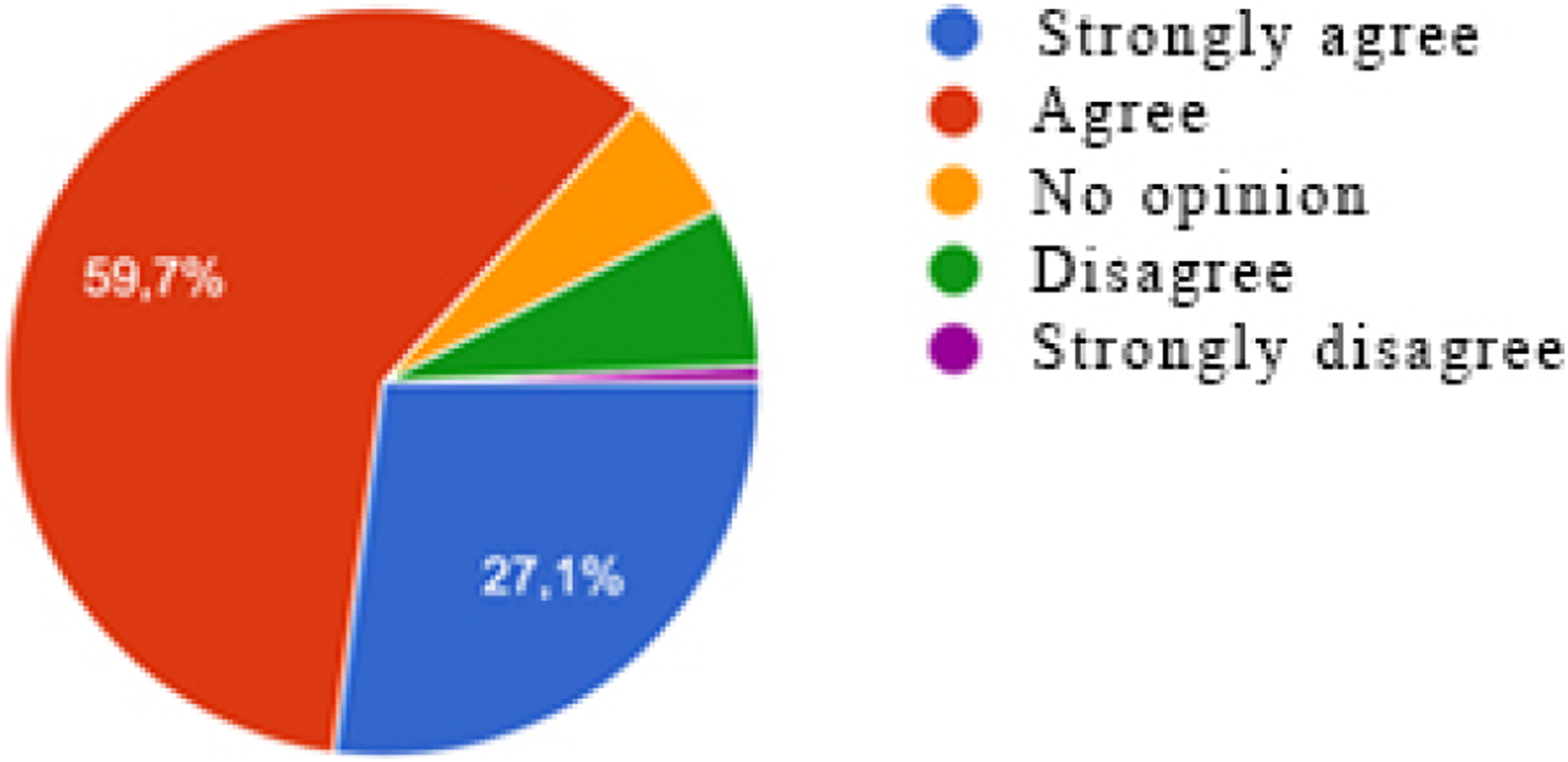
Question 3. The image projected by the candidate on social media can be decisive in the selection process
When asked if the images posted by candidates on their social media were a decisive factor in the selection process, some 59.7% of those surveyed agreed with this affirmation while 27.1% strongly agreed. Only 7.6% of respondents disagreed or strongly disagreed while 5.6% expressed no opinion on this matter.
The Chi-squared test shows no relation between the image transmitted by the candidate on their social media and the sector of the company.
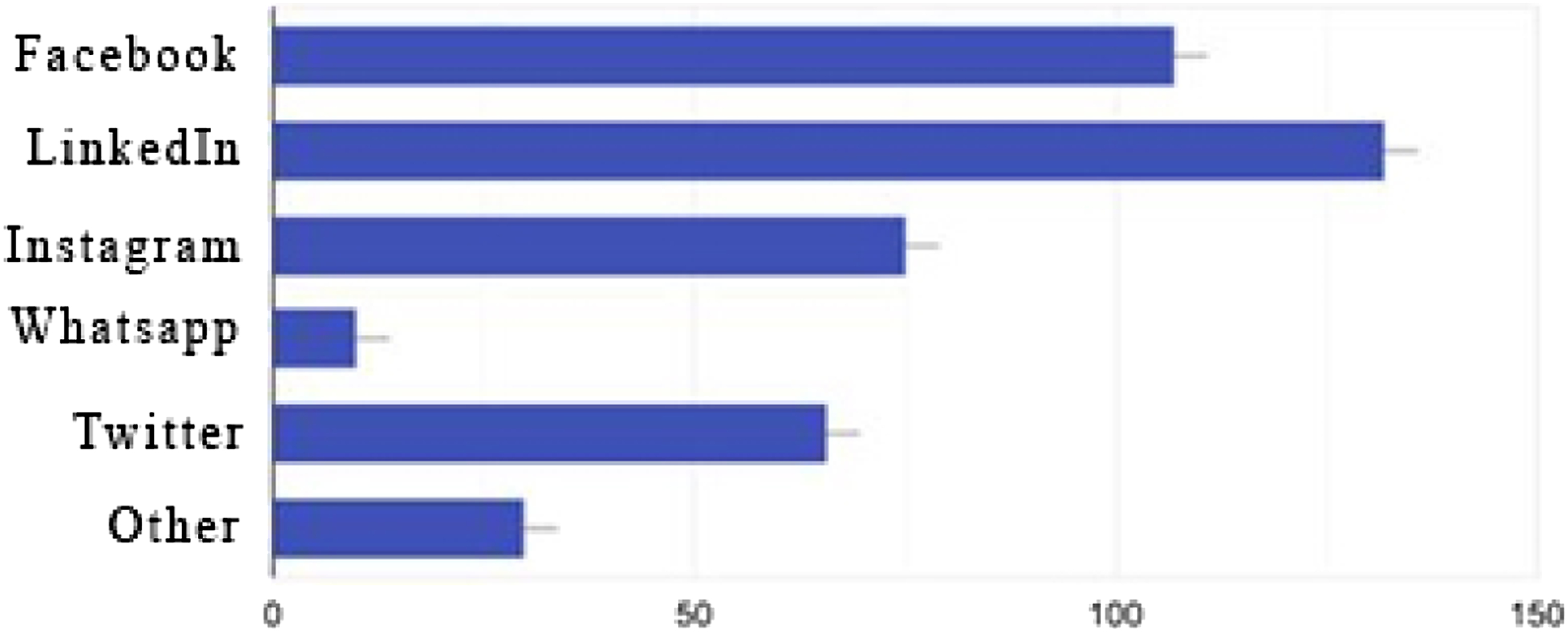
Question 4. What social media platforms do you usually review during the selection process?
Regarding which social media platforms are most often reviewed during selection, some 91.7% of those surveyed confirmed they generally reviewed LinkedIn, while 74.3% confirmed they reviewed Facebook, and 52.1% reviewed Instagram. Only 45.8% of those surveyed reported reviewing Twitter, with very low percentages for those reviewing other platforms such as WhatsApp (6.9%) or others (20.8%). It is interesting to observe how human resources professionals analyse the most commonly used social media platforms in Spain during the selection process (Facebook, LinkedIn and Instagram).
Question 5. When reviewing the social media of potential candidates, what aspects are of the most interest?
Regarding the aspects of social media which are of most interest to potential employers, some 60.1% of those surveyed reported being interested in 'all activities' on social media of the potential candidate. 39.9% affirmed they were interested in postings on social media of the candidate while 30.8% reported reviewing the profile photos. It should be noted that a very higher percentage of companies reported being interested in all social media activities and content of the potential candidate.
Question 6. How much time is dedicated to reviewing the social media profiles of candidates?
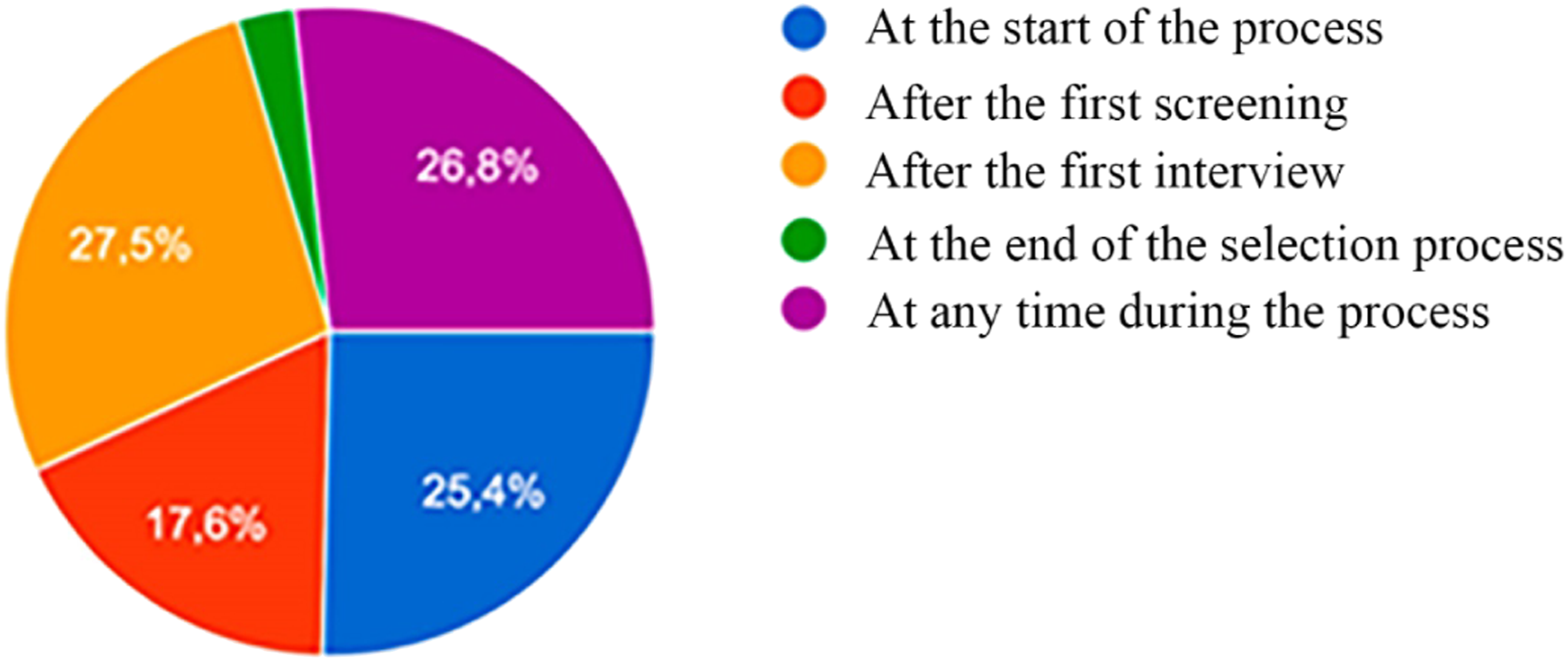
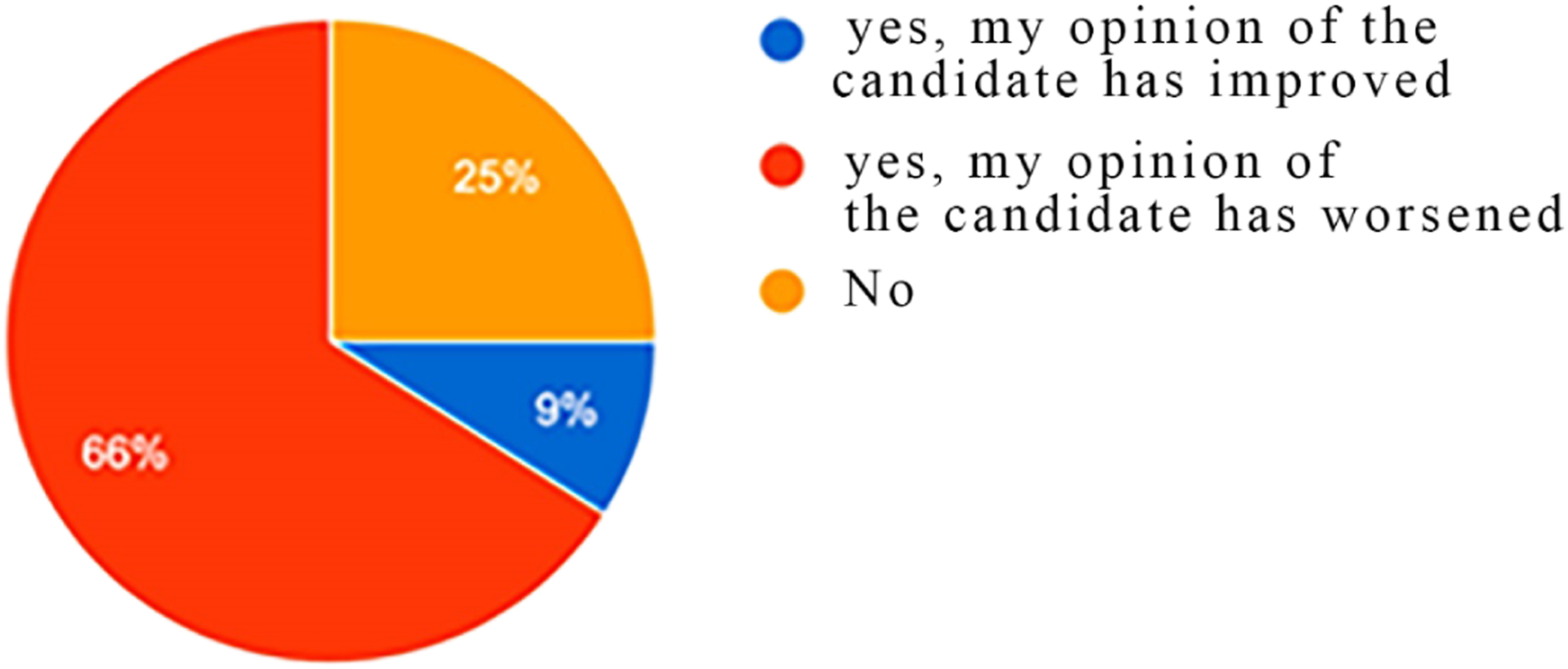
The large percentage of respondents (45.1%) confirmed they dedicated whatever time was necessary to analysing the social media of candidates. Some 25.7% reported spending less than 10 min and 18.1% spent less than 5 min viewing the candidate’s social media (Figures 6–10). Time dedicated to review. Source: The authors. Moment of the selection process to review social media. Source: The authors. Reconsider a candidate. Source: The authors. Rejection of the candidate. Source: The authors. Profile photo is decisive. Source: The authors.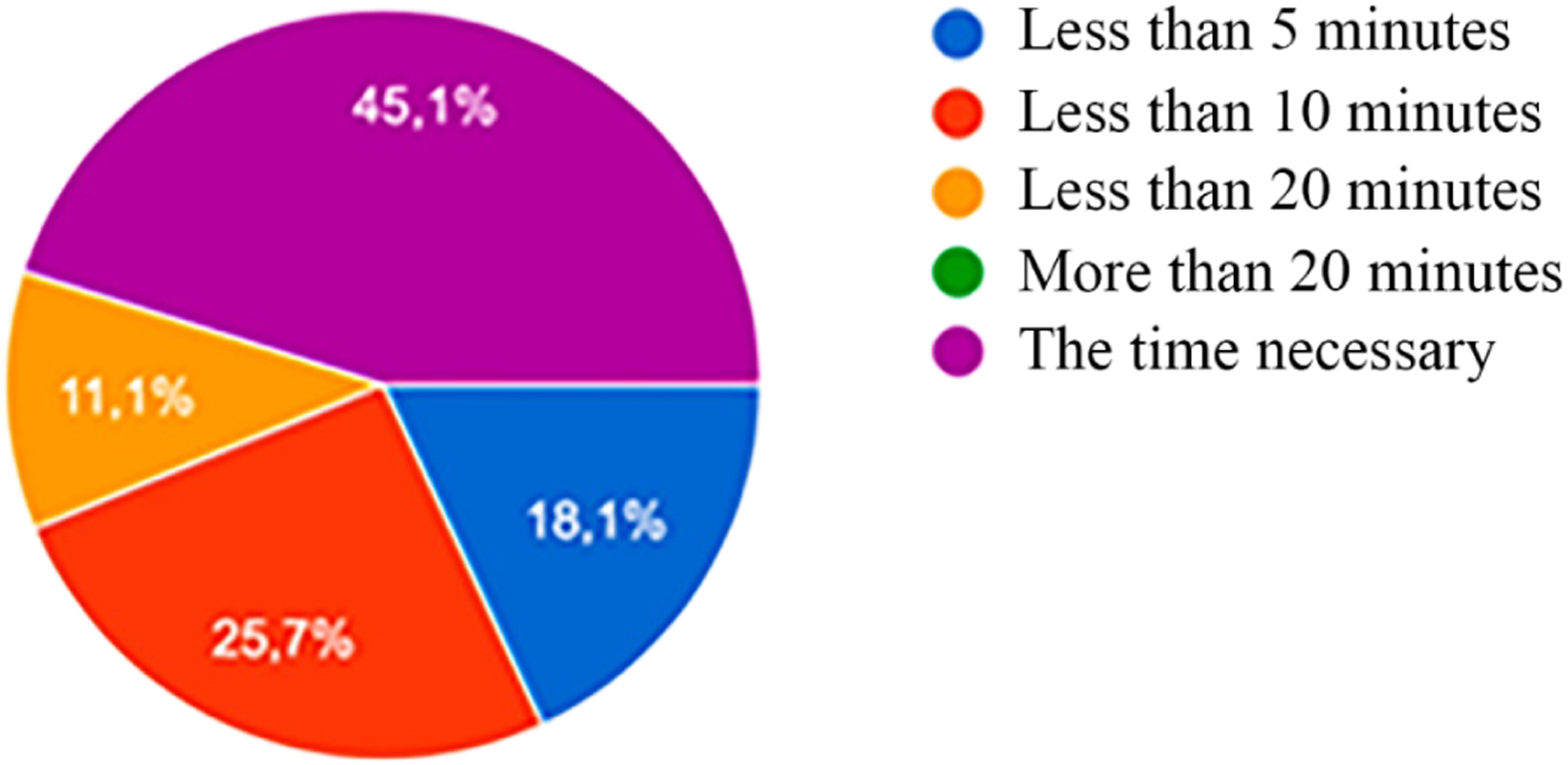
The results of the Chi-squared test indicate that there is no relation between the time spent analysing the social media of potential candidates and the business sector of the company.
Question 7. At what stage of the selection process do you analyse the social media of candidates?
For the question about when companies review the social media content of candidates, some 27.5% of respondents reported they did so after the first interview while 26.8% did so at any moment of the selection process. 25.4% of companies confirmed that the ideal moment to review social media was at the start of the process. It should be noted that 17.6% preferred to conduct a social media review after the first screening and pre-selection stage.
The Chi-squared test of the variables showed no relation between the moment of the selection process when companies review a candidate’s social media and the business sector of the company.
Question 8. Have you reconsidered a candidate after reviewing their social media profile?
Chi-squared test.
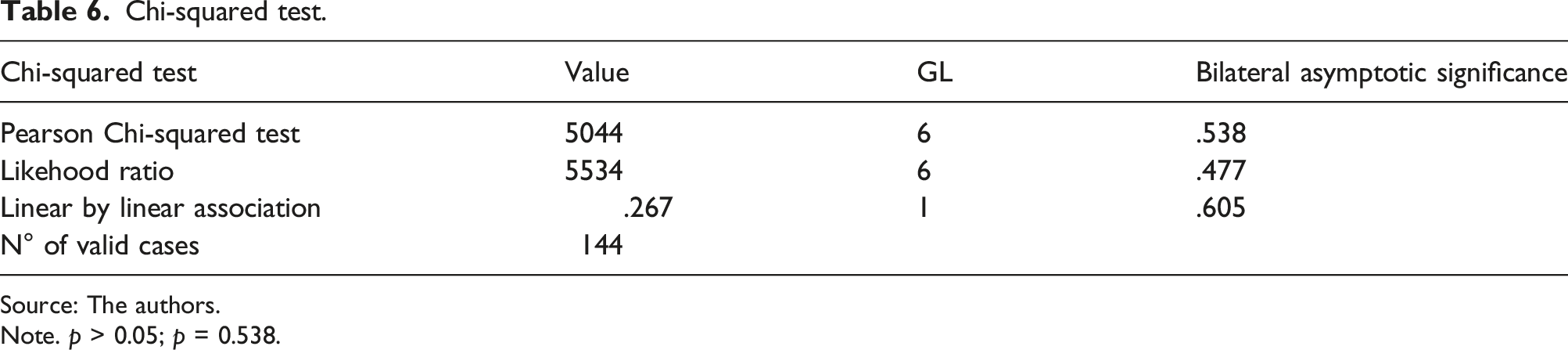
Source: The authors.
Note. p > 0.05; p = 0.538.
Chi-squared test.
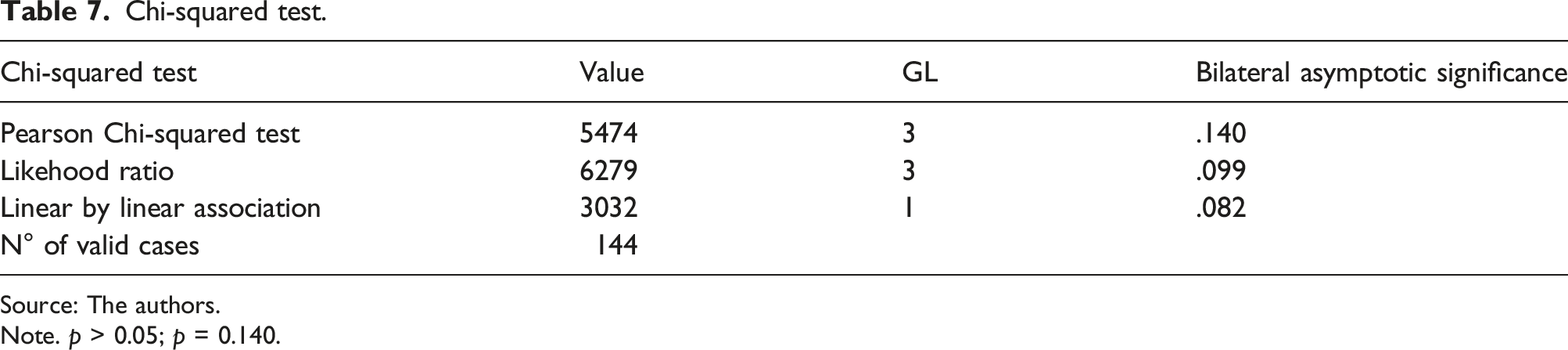
Source: The authors.
Note. p > 0.05; p = 0.140.
Chi-squared test.
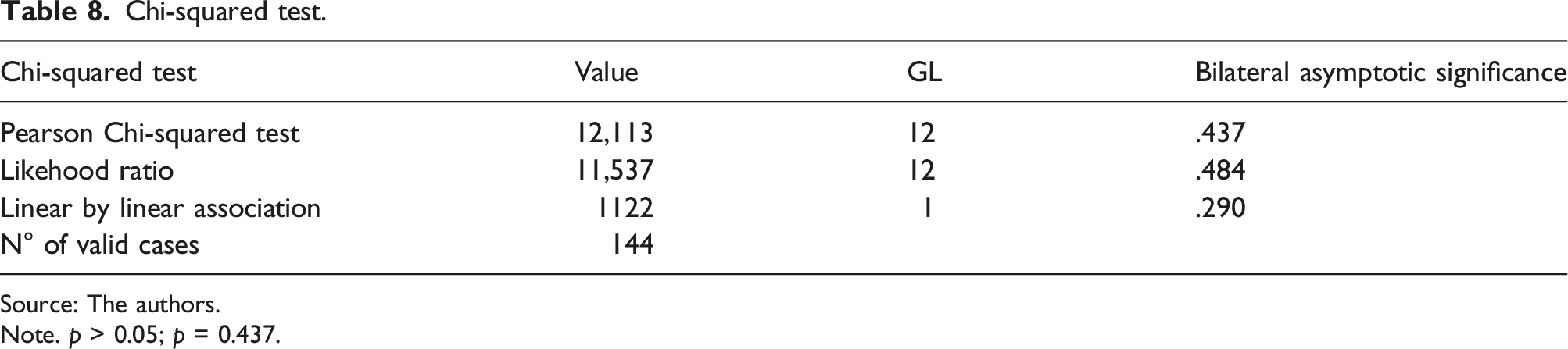
Source: The authors.
Note. p > 0.05; p = 0.437.
Chi-squared test.
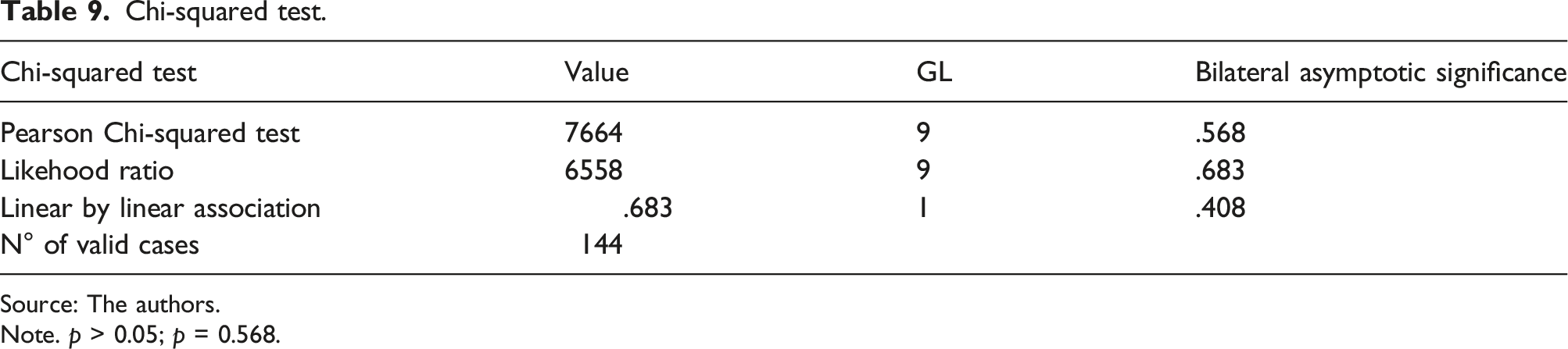
Source: The authors.
Note. p > 0.05; p = 0.568.
Chi-squared test.
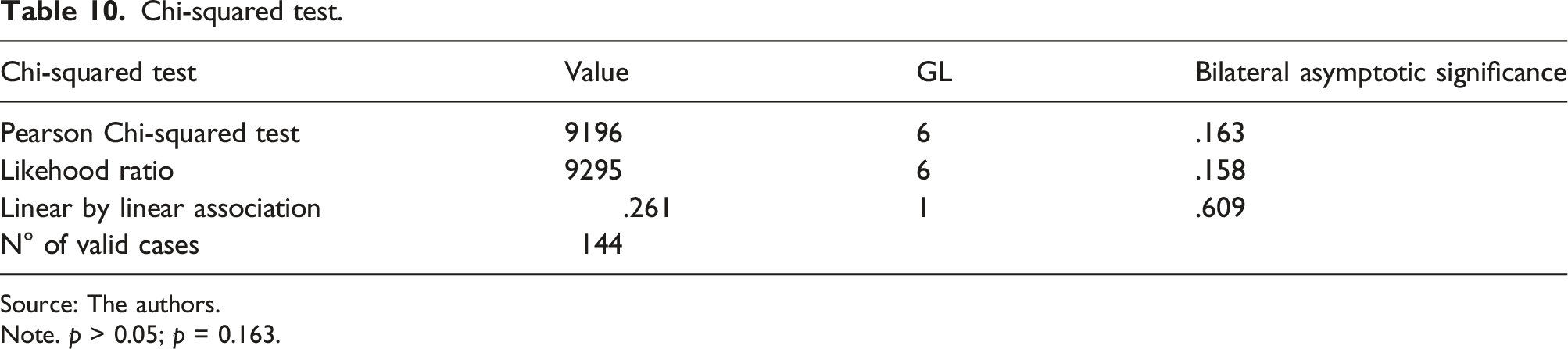
Source: The authors.
Note. p > 0.05; p = 0.163.
Here again the Chi-squared test showed no relation between a reconsideration of a candidate after reviewing their social media and the specific business sector of the company.
Question 9. Have you rejected a candidate because of their activity on social media?
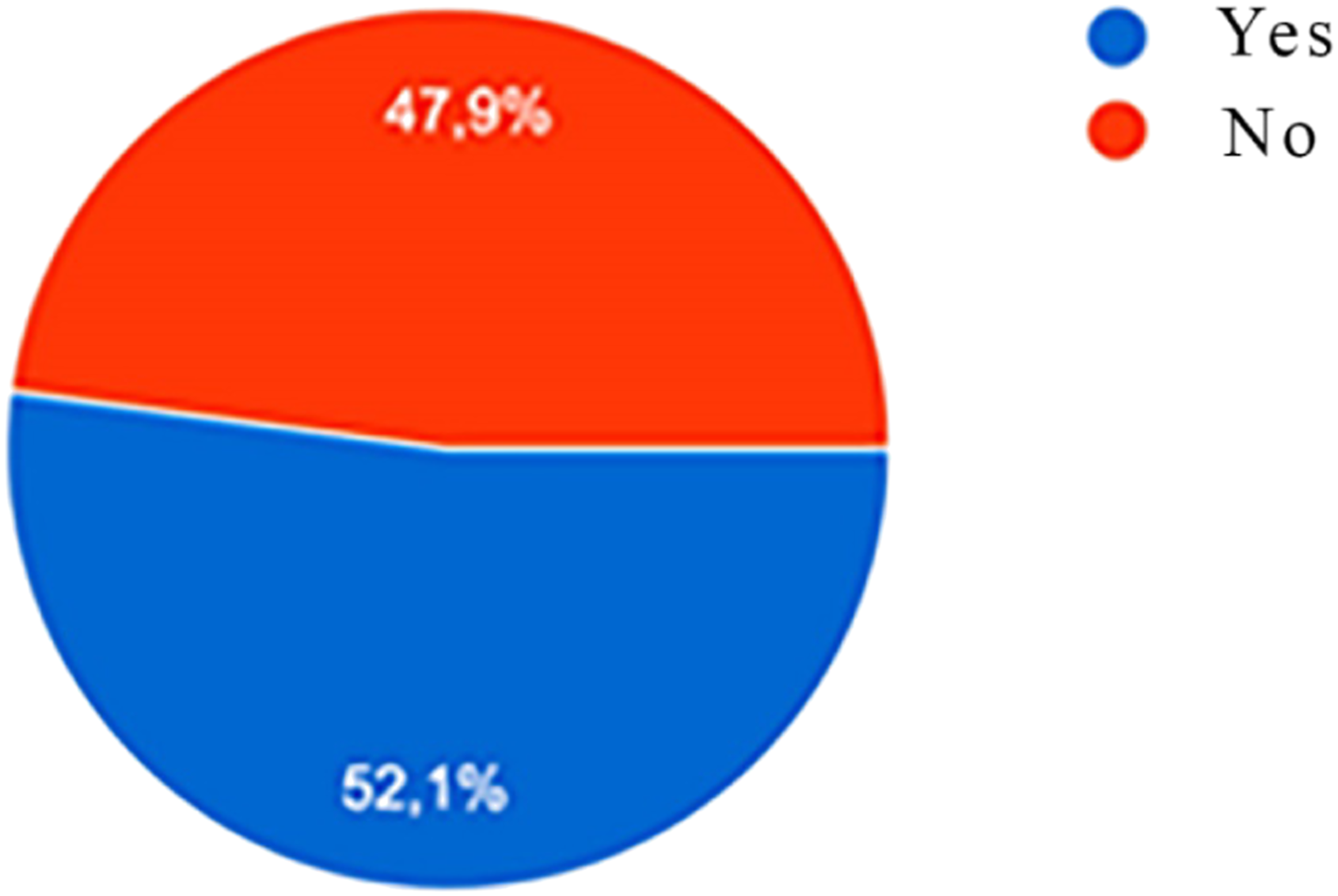
For the question of whether they had rejected a candidate after reviewing their social media activity, some 52.1% of companies responded in the affirmative.
The results of the Chi-squared test show no relation between the rejection of a candidate after reviewing their social media activity and the specific business sector of the company.
Question 10. Profile photos of the candidate on social media can be a decisive factor in the selection process.
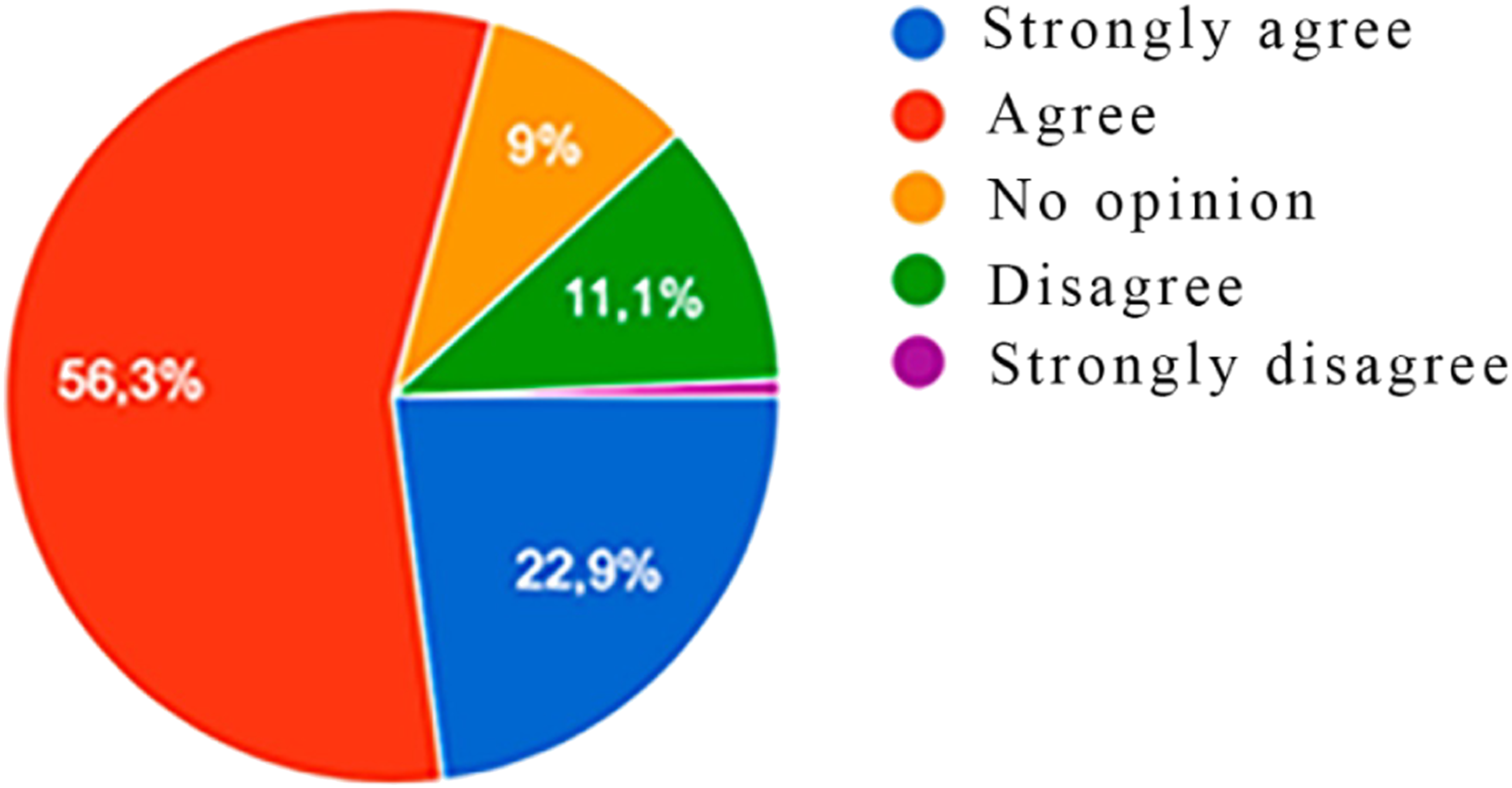
A total of 56.3% confirmed that the profile photos of the candidate on social media can be a decisive factor in the selection process. 22.9% of respondents strongly agreed with this affirmation while 11.1% disagreed and 0.7% strongly disagreed.
The Chi-squared test indicated no relation between this variable and the business sector of the company.
Question 11: Should candidates be carefully curate the images they post on social media?
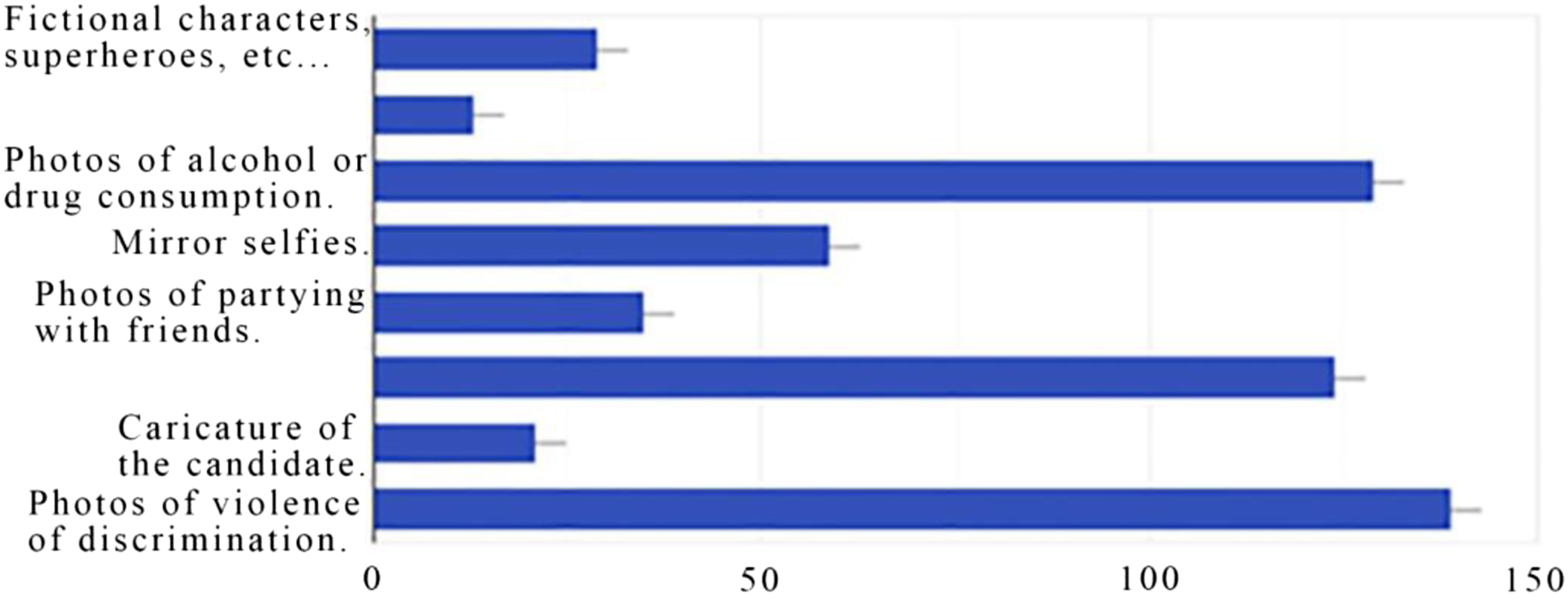
For this question a significant majority strongly agreed (53.5%) and 42.3% agreed. It should be noted that none of the participants strongly disagreed and only 0.7% expressed their disagreement (Figures 11–15). Curate the images posted. Source: The authors. Photos that worsen the perception of the candidate. Source: The authors. Type of photo candidates should have. Source: The authors. Most highly regarded photo. Source: The authors. Photos that may disqualify the candidate. Source: The authors.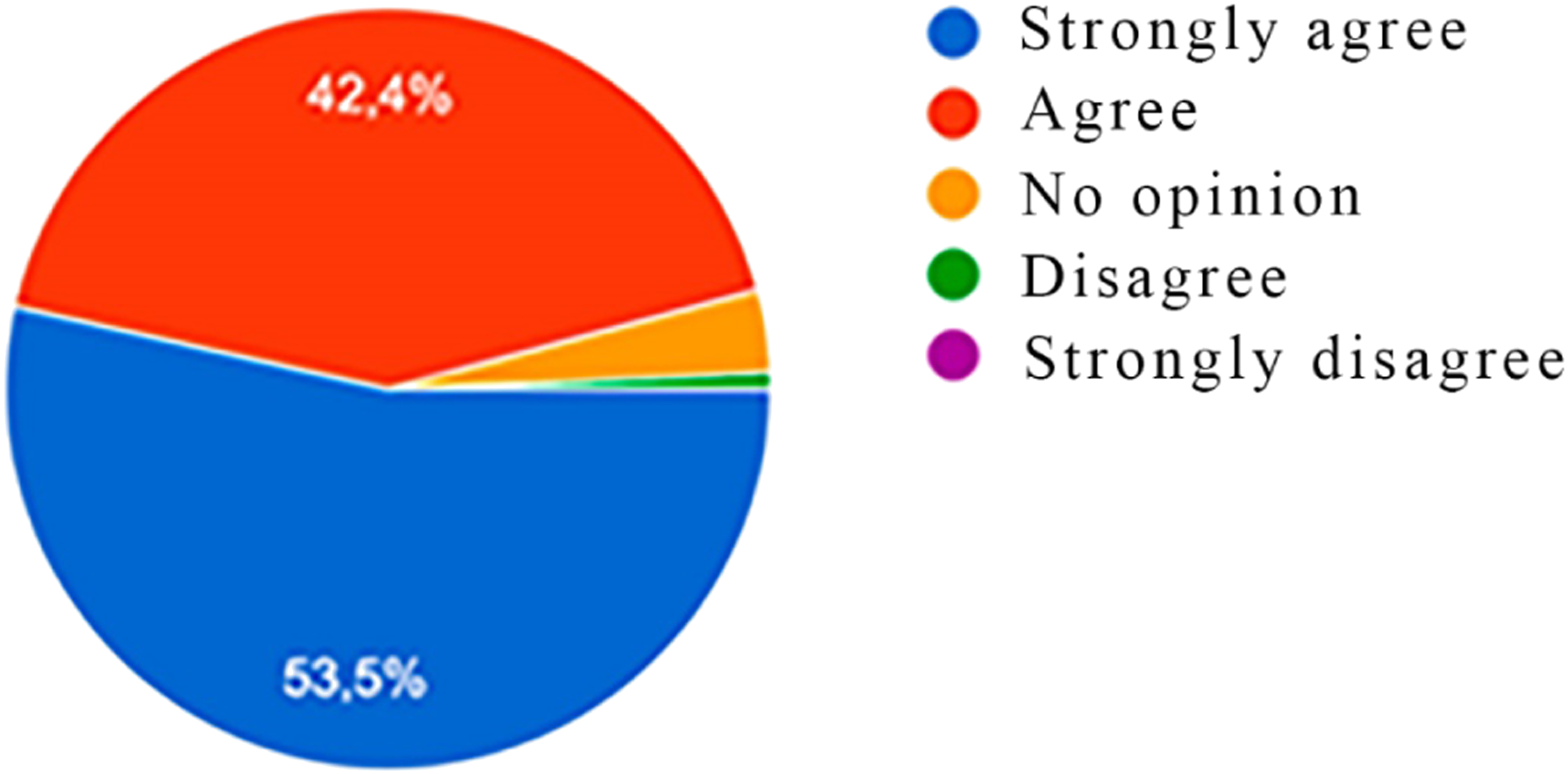
With a p-value higher than 0.05, the Chi-squared test showed no relation between this variable and business sector of the company.
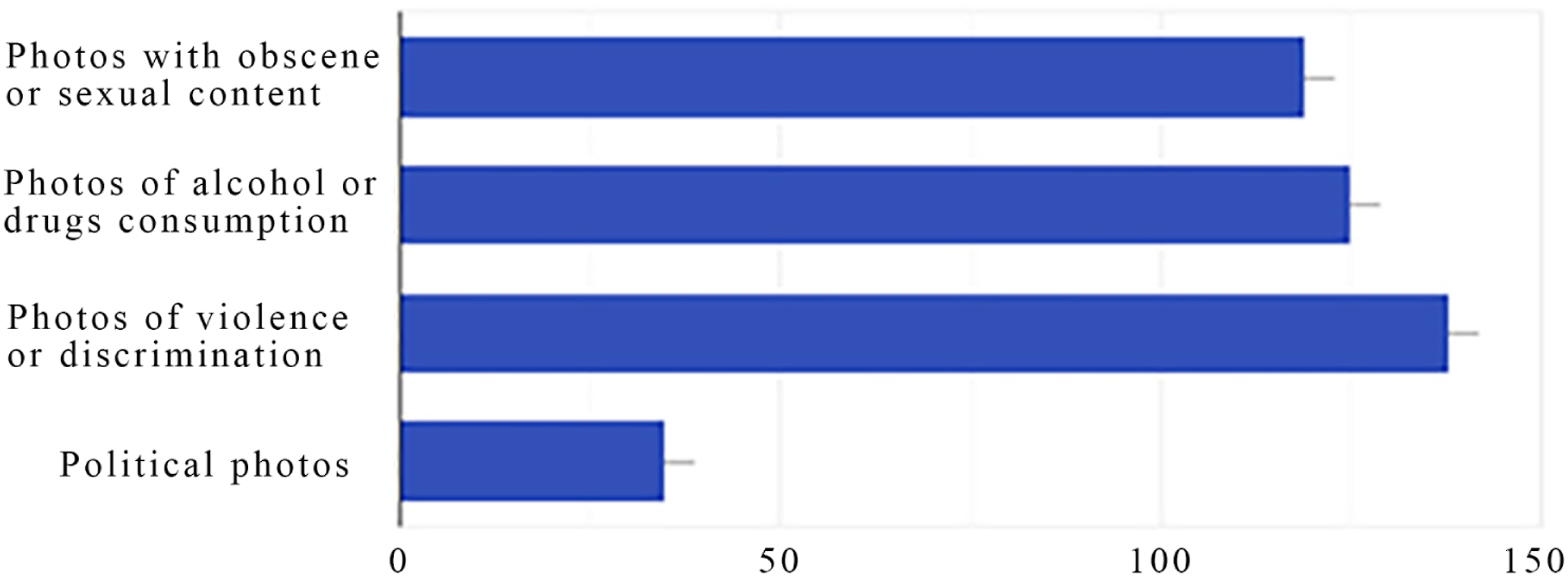
Question 12: For the following types of photos, which worsen the perception of the candidate?
Some 96.5% of those surveyed responded that photos of obscene or sexual content worsen their perception of the candidate. 87.4% reported that photos of violence or discrimination also provoked this reaction while 83.2% affirmed that photos showing the consumption of alcohol or drugs worsened their perception of the candidate. Finally, some 24.5% of respondents indicated that images expressing a particular political ideology negatively affect their perception of the candidate.
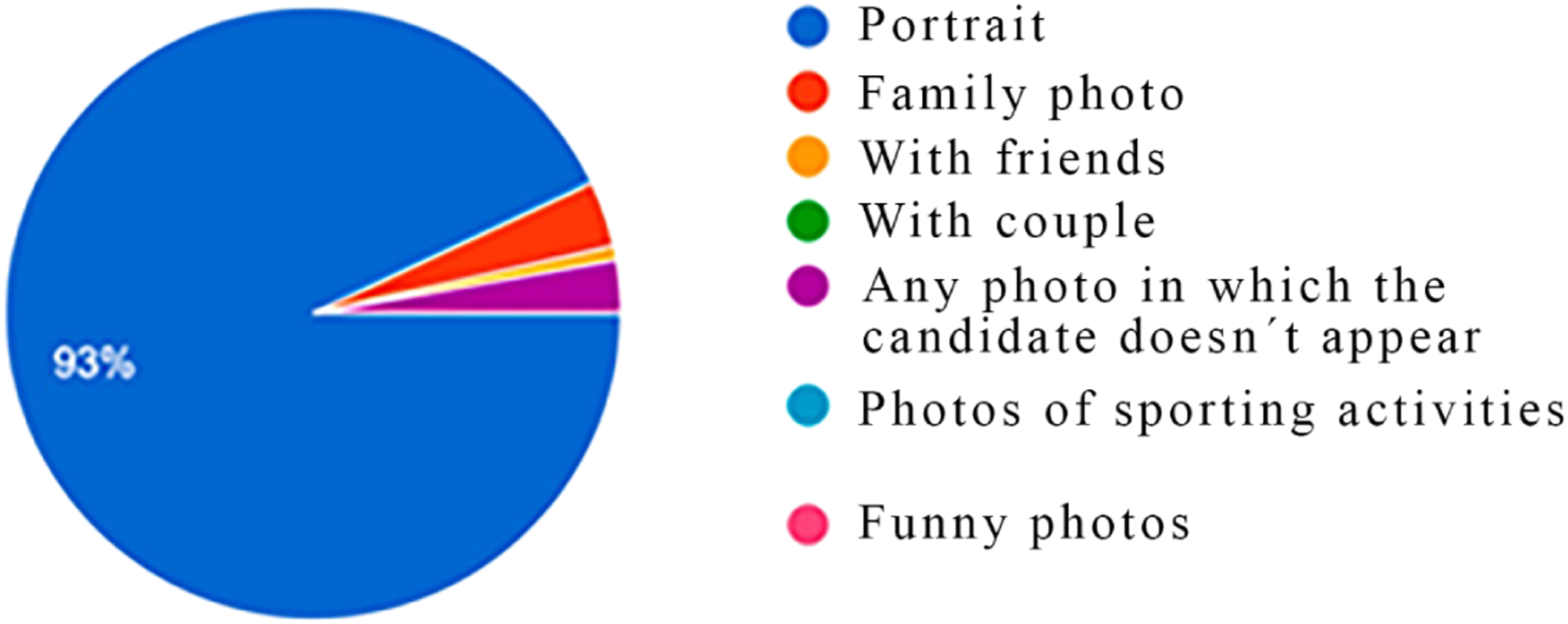
Question 13: What type of photo should candidates have on their social media profiles?
When asked about the type of photos candidates should who on social media, the results were clear: 93% of respondents believe candidates should show a portrait photo of themselves while only 3.5% favour a family photo. Finally, 2.8% believe the candidate should not post a portrait photo.
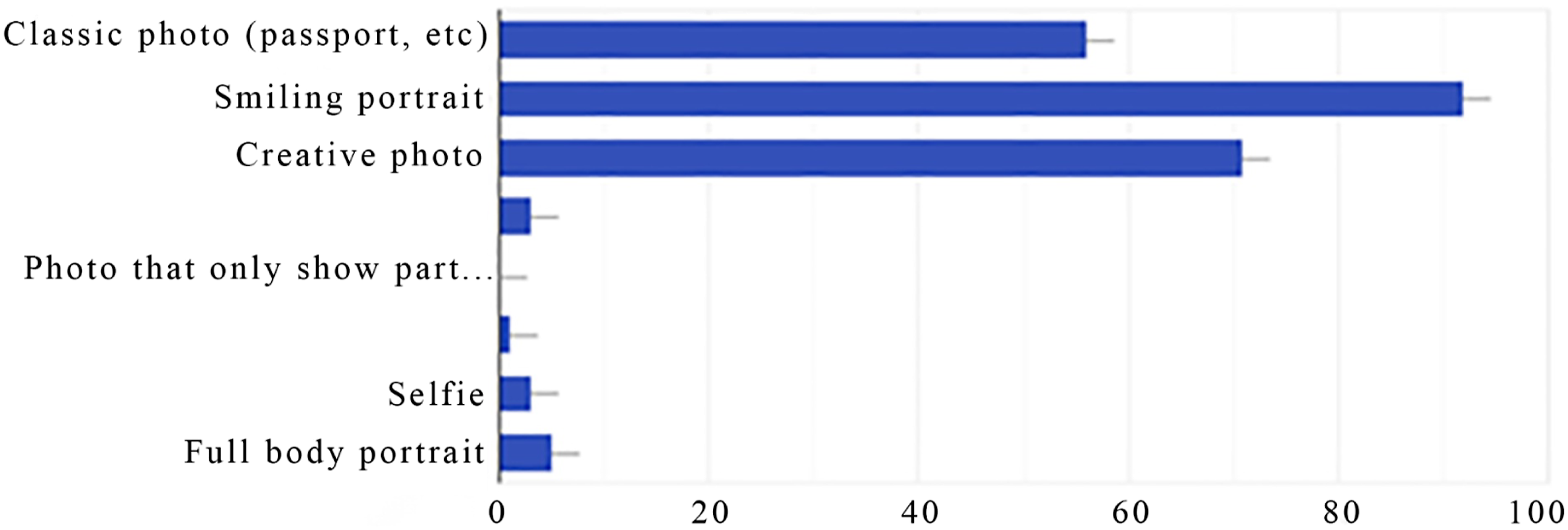
Question 14: What type of portrait photo is most highly regarded in transmitting a positive image of the candidate?
Following on the previous question, and now referring specifically to those who responded a 'portrait photo', 68.7% reported they preferred a smiling portrait photo, 53% a more creative photo and 41.8% opted for a classic portrait photo.
Question 15: What type of profile photo on social media may lead to the rejection of the candidate from the selection process?
Referring to the type of profile photo which may cause a candidate to be rejected, 96.5% responded that images of violence or discrimination would cause a candidate to be ejected from the selection process. 89.6% responded that images of the candidate consuming alcohol or drugs and 89,1% photos of a sexual or obscene nature would be cause for rejection.
Question 16: The profile photo on social media can be decisive in the screening and pre-selection of candidates.
For this question, 52.1% of companies confirmed that with a high number of candidates the profile photo on social media can be decisive in whether candidates pass the first screening and pre-selection process while 29.9% responded that this only happens on occasion. Furthermore, 18.1% of respondents reported that this was not a decisive factor (Figures 16 and 17). Profile photo is decisive in screening and pre-selection. Source: The authors. Awareness of young people of their digital image. Source: The authors.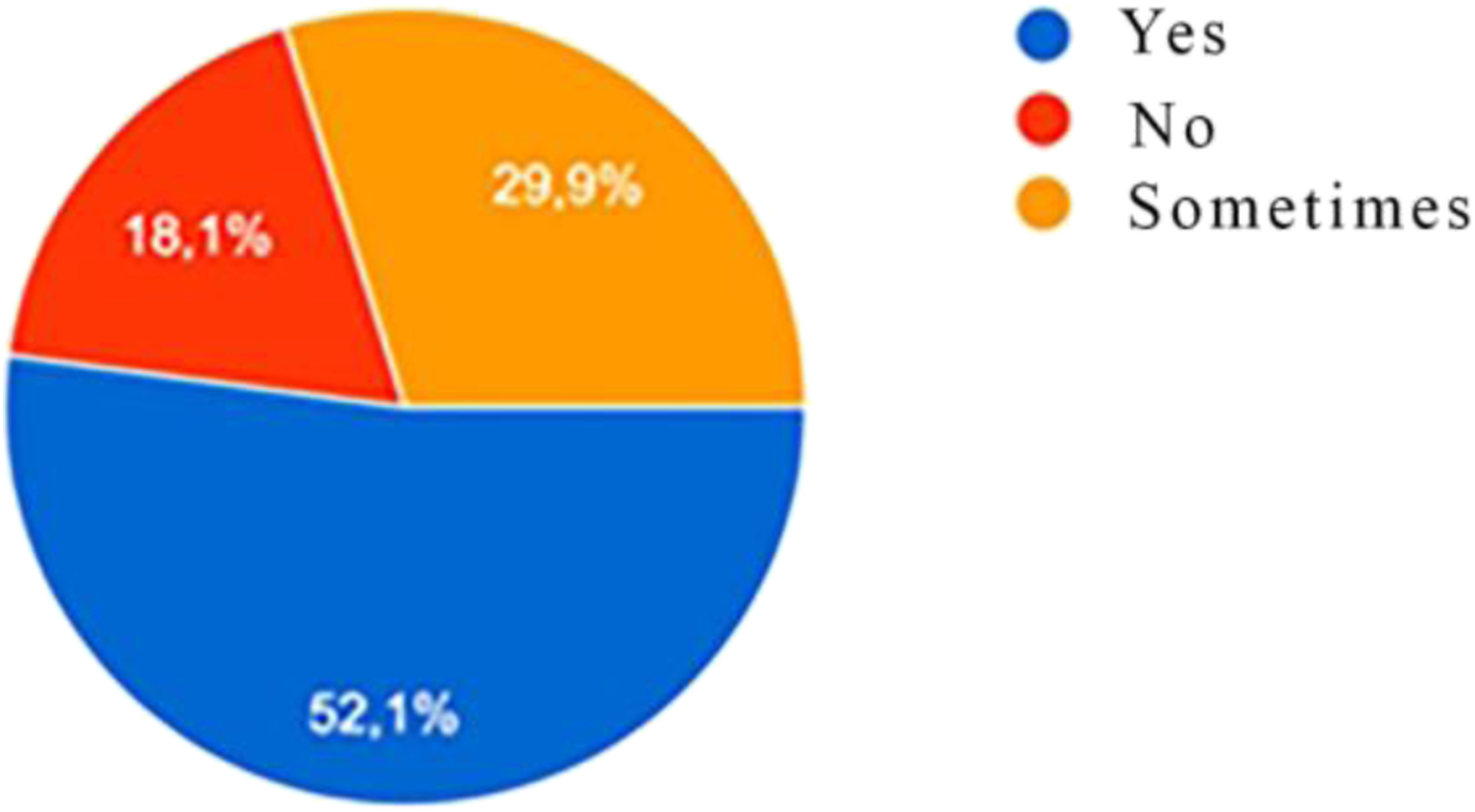
The Chi-squared test shows no relation between the variables, that is, the results do not vary according to the business sector.
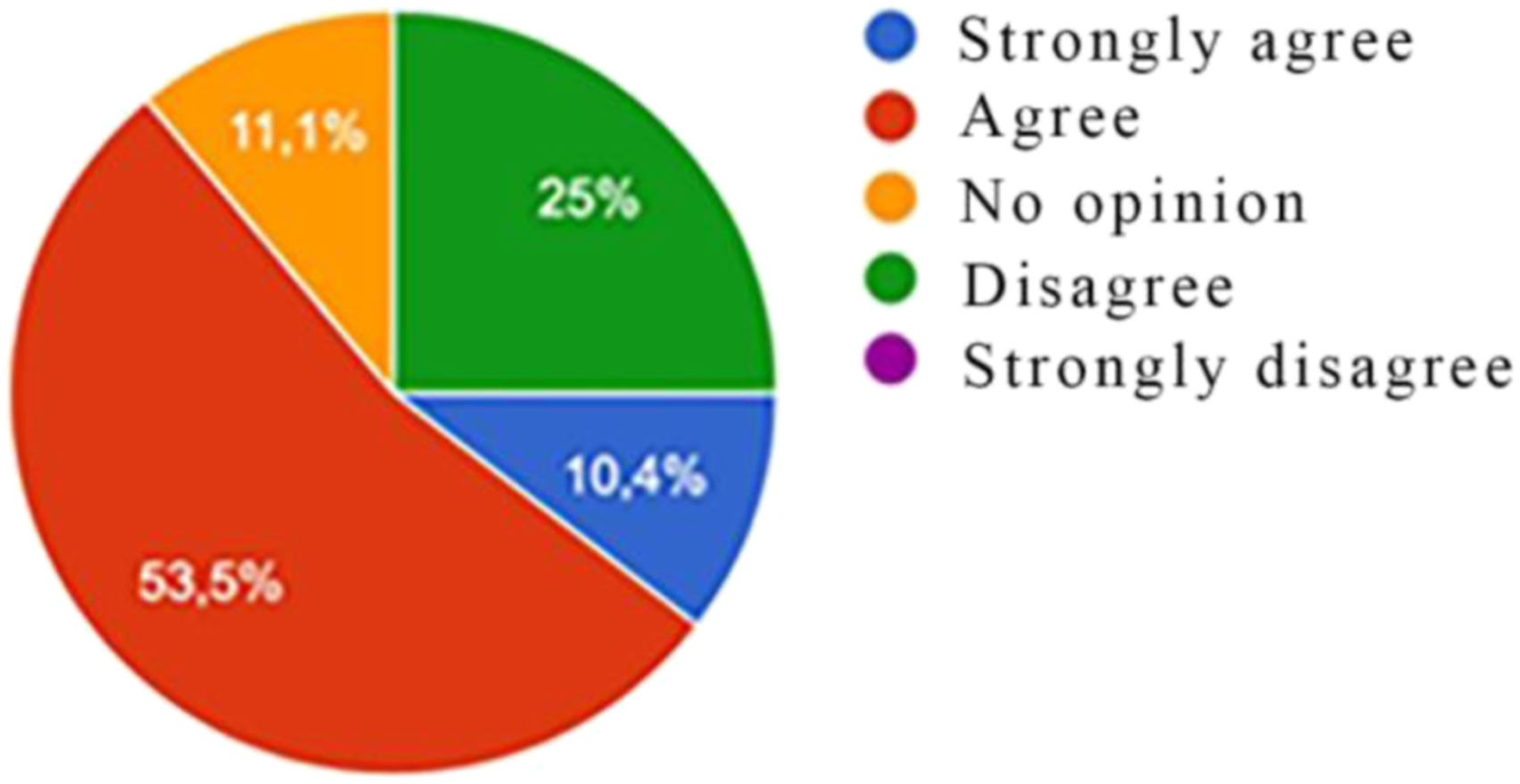
Question 17: Young people are realising that their digital image may limit their employment opportunities.
Some 53.5% of respondents agreed with the affirmation that young people are becoming aware of how their digital image may hinder their employment opportunities. A further 10.4% strongly agreed with this statement while 25% disagreed.
Discussion and conclusions
After an analysis and interpretation of the results of the survey it was concluded that participating HR directors believe that it is highly recommended to conduct a review of the social media activities of a potential candidate.
Some 86.6% of participants affirmed that the digital profile of potential employees is very important, or even decisive, in the selection process.
Thus, it can be confirmed that the digital identity of job seekers on social media platforms can have a negative impact (66%) on their employability or even result in their rejection from selection processes.
Experts in human resources review the social media profiles of potential candidates on professionally oriented platforms such as LinkedIn (91.7%), and as well as on recreational or personal platforms such as Facebook (74.3%) or Instagram (52.1%).
95.4% of HR experts agree or strongly agree with the affirmation that one’s social media profile is a digital letter of introduction of potential candidates.
The information obtained through social media is very important in the selection process, principally the image of the candidate.
The current social media platforms Facebook, LinkedIn, Instagram and Twitter are, in that order, those most frequently reviewed by HR departments. Here, the profile photo is ranked third in importance after the public postings and the option to review the activity of the candidate.
In terms of time, companies most commonly reported spending as much time as considered necessary reviewing social media profiles and that this could take place at any time during the selection process.
The influence of the digital image is such that it can commonly make the difference between being accepted or rejected from the selection process. The photos or images that most commonly lead to the rejection of a candidate are those depicting violence or discrimination, partying, alcohol or drug consumption and sexual or obscene images.
By contrast, the most positively regarded photos by HR departments (over 90%) are profile portraits, and of these particularly a smiling portrait of the candidate followed by more creative type photos.
A global analysis shows that candidates with the best chances of being selected are those who take care of their digital image, showing a smiling portrait and without images of potentially compromising situations, especially on platforms such as Facebook and LinkedIn.
The results of the research confirmed the principal hypothesis. It can thus be affirmed that the digital image and presence on social media platforms can have a significant influence on the job prospects of individuals.
This confirmation of the hypothesis opens a new possible line of research to determine whether, as Kopackova and Spicova (2015) propose, the lack of sufficient digital literacy and, more specifically, a culture of proper use of digital images, makes it necessary to develop initiatives which promote online and digital image literacy.
Regarding the first objective of the study, the results show that over half of human resources directors review the social media profile of potential candidates during some moment of the recruitment process. In fact, a very high percentage report that this review can lead to the rejection of candidates during the process (52.1%).
Additionally, over half of the HR directors surveyed (63.9%) believe that young people are aware of the importance of their image on social media for their future.
The second objective of the study also shows a clear trend. The Chi-squared tests of responses showed no relation between the business sector, number of employees or number of jobs offered. It can therefore be supposed that these variables do not influence the review and analysis of the digital profiles and images of candidates by human resources departments in the recruitment process.
The results of this study invite a reflection on the curating of our online profile and digital image just as we do in the real, physical world; as Ruão and Lopes (2017) note, the line between the real world and the virtual world is increasingly blurred. The use of AI and Big Data in selection and recruitment processes makes the careful curation of this aspect of our personal image essential.
The study reveals how human resources departments have adapted their selection and recruitment processes for candidates who make intensive use of digital media; that is, a new generation who combine their use of digital media, social media platforms and smartphone applications with a residual use of the written word, becoming increasingly accustomed to consuming content in the form of images and videos.
Footnotes
Declaration of conflicting interests
The author(s) declared no potential conflicts of interest with respect to the research, authorship, and/or publication of this article.
Funding
The author(s) received no financial support for the research, authorship, and/or publication of this article.
