







Abstract
This paper proposes an integrated, ontology-based agricultural information system (AIS) to provide all-round and precise information for efficiently guiding farmers and agri-professionals to conduct agricultural processing. Since the existing independent AIS platforms can only offer specific but incomplete agricultural information service, aiming at this issue, the newly proposed AIS system employs ontology techniques, including RDF-based representation and semantic reasoning, to integrate the index information provided by all involved independent agricultural information platforms. As a result, this newly proposed AIS system can provide users with integrated and accurate response information. Through a realistic case study and relevant experiments, it is clear that the accuracy ratio and integrity ratio of response information offered by this ontology-based integrated AIS can be enhanced to a great extent. In summary, not only agri-professionals, but also farmers, who might not understand information retrieval skills, can benefit from this newly proposed AIS to conduct activities in agricultural production life cycle.
Semantic representation can help information integration and support information inference
Introduction
Agricultural Information Systems (AIS) are rich sources of agriculture-related information being created, maintained and published for the benefit of farmers and agri-professionals (Laliwala, 2006). The AIS is typically accessed via web browsers, handheld devices or other special interfaces to obtain desired agricultural information. For providing better access, an agricultural information system has to be built as a single system which offers relevant and contextual information, as well as scientifically correct information regarding agricultural production life cycles.
Being a typical agrarian economy country, China has had agricultural activities for ages; the agricultural system is cyclic in nature and affected by physical, biological and climatic conditions. Agricultural information systems (AIS) are gradually becoming available to farmers in China, covering nearly all aspects of agricultural and farming-related activities for a long time. Especially over the last two decades, remarkable advances have been made in agricultural information systems, which greatly contribute to progress in agricultural achievements in China. In order to provide thorough information to guide farmers or agri-professionals to conduct farming work, many Chinese service providers have built their own AIS platforms to offer plentiful agricultural information, though different platforms might have their own focuses. For example: China Mobile Communication Corporation is maintaining an information system for agriculture known as Agriculture Communication System (2012). This system is an appropriate information service model for the vast rural areas in our country. It provides many services by voice phone, short message service, Internet and so on (Qian, 2010). Currently, this system focuses on information about weather forecasts and guidance on seeding, then provides the information by resorting to simple pathways (Wu, 2010). Calling centers for agriculture, countryside and farmers have been gradually applied and promoted in rural areas to provide agricultural information service (CallingCenter, 2012). Generally, a calling center includes Automatic Call Distribution System (ACD), call Management System (cMS), Interactive Voice Response (IVR) system, Computer Telephone Integration (CTI) system, and Text To Speech system (Trs). Interactive communication is a keystone of this kind of AIS platform, so that it is normally capable of providing detailed information to guide farming activities. An agricultural information platform called ‘YiZhanTong’ (2011) issues supply and demand information of agricultural products and promotes the information on a nationwide scale. Through website access, the users can retrieve multimedia information with texts, figures and even videos to help them perform relevant activities.
Also, substantive websites, such as China agricultural information website (www.agri.gov.cn) and 365 agriculture website (www.ag365.com), are intended to provide detailed information on various aspects of agriculture. Although there are plentiful information resources for directing farming activities, we should note that redundant construction and independent services provided by multiple AIS platforms have caused a lot of waste of resources. Furthermore, these independent systems might adopt different concepts and terms (i.e. vocabulary), that might go against, not only relevant statistics required by the administrative organizations, but also the efficiency and accuracy of desired information. That is because a host AIS platform, which is the target platform for user requests, probably has limited information to meet a specific request, though another platform might have more precise information. For instance, one AIS platform might have information about how to treat the HuangLongBing (HLB) disease of citrus, but the information about how to diagnose that disease might only be available on another AIS platform. Thus, users should retrieve information from both platforms to diagnose the disease and obtain the information about how to handle it. On the other hand, farmers might not have enough knowledge to choose which platform to seek for the desired information if they do not have any specific training (Mahmoodi, 2011; Ozcatalbas, 2004).
Therefore, in view of the problems of a large number of independent AIS platforms but incomplete response information, building an integrated and centralized agricultural information system is highly required. The platform should be able to integrate information resources provided by involved independent platforms and standardize their contents to offer all-round agricultural information for public users such as farmers and agri-professionals. This paper intends to propose an integrated agricultural information system, which utilizes semantic technology to integrate certain relevant AIS platforms and provides a single system for users to request desired information. Moreover, we have conducted a case study and certain experiments to verify the availability and efficiency of this ontology-based integrated AIS platform.
In summary, this proposed system has two main features: Integrating multiple independent AIS platforms and providing a single system image of AIS from the viewpoint of users, with an easy access point. The users can resort to the integrated AIS to obtain desired information for helping them to conduct agricultural activities in the production life cycle. Moreover, all involved independent AIS platforms can also request to this integrated AIS system when they do not have relevant response information for their own user requests. Using semantic technology, i.e. ontology, to organize all index information about the information provided by various AIS platforms. Thus, with a large-scale reasoning engine, more complete and accurate information can be generated and supplied to meet users’ requests within an acceptable time interval.
The following paper is organized as follows: the next section briefly discusses background knowledge and related work; the design and implementation of the integrated, ontology-based agricultural information system are presented in the subsequent section; the evaluation methodology and relevant results are shown in the next; concluding remarks are provided in the final section.
Related work
Agricultural knowledge and expertise are known to be broad and often lacking a universal format to be unambiguously and widely used. Constructing agriculture-related systems (weather information, soil information, pesticide information knowledge systems) could hence be hugely beneficial to improve agricultural practices. Such a system would synthesize collected knowledge to produce useful results; therefore, much current work focuses on information service for agriculture to boost agricultural production. Furthermore, in the research field of agricultural information systems, ontology has been proven to have wide applications in retrieval processes. Efforts to construct specific ontologies are mainly initiated by the Food and Agriculture Organization of the United Nations (FAO), and the first initiative on AGROVOC ontology is one of a few attempts towards the construction of the sophisticated ontology or terminology system in the area of agriculture (FAO, 2011). Also, studies on the construction of information and knowledge databases, as well as the research and development of intelligent search engines, are being conducted by agriculture and computer researchers (Beck, 2005; Haverkort, 2006; Athanasiadis, 2009; Maliappis, 2009; Simperl, 2006).
Wang et al. (2008) have presented an agricultural FAQ retrieval system based on ontology-based automatic classification. Although classification can generate information similarity and yield acceptable response information, it does not employ ontology techniques to integrate related information provided by involved independent platforms. Zheng et al. (2012) have proposed a method for constructing an ontology-based agricultural knowledge management system. In contrast to conventional platforms and websites, this system employs ontology techniques to enhance the levels of intelligence and efficiency, so that it is truly able to support knowledge sharing and knowledge management. Berger et al. (2013) have proposed an information system that adopts a Six Sigma-based dairy management approach to support the most of propositions in precision agriculture.
Regarding integrated agricultural information systems in the real world application context, Kerala@Indian government has developed an integrated, multi-modal delivery agricultural information system called KISSAN (Karshaka Information Systems Services And Networking), which dynamically provides useful information and advisory services for the farming community across Kerala state (KISSAN, 2013). Different from our proposed ontology-based integrated AIS that aims to integrate all information provided by involved independent AIS platforms, KISSAN utilizes a combination of advanced technologies to effectively deliver information and knowledge on demand seamlessly to all involved farmers and agri-professionals.
Design of integrated AIS
In this section, we will first describe the basic framework of our proposed integrated AIS. Then the application layer of the system, which aims to provide an easy access point for using the integrated AIS, will be introduced. After that, the communication mechanism between various existing AIS platforms and our integrated AIS will be discussed. Next, other key components of the integrated AIS, such as its semantic-based inference engine and intelligent decision system, will be presented separately. Finally, the implementation details and a prototype of the implemented agricultural information system will be demonstrated.
Architecture of integrated AIS
Figure 1 shows a big picture of the ontology-based, integrated agricultural information system proposed in this paper. It employs a hierarchical architecture, and communication can only occur between neighbor layers or within the same layer. Let us take the process of handling a user request as an example to illustrate how the proposed system works. First, a user sends a request to the system via certain interfaces; then Application Layer will accept the request and forward it to the Infrastructure Layer for semantic retrieval by using an ontology database and inference engine; finally, Application Layer responds to the user after the required information has been returned by Infrastructure Layer. In order to show the system more clearly, all critical layers and their components will be demonstrated in the following sub-sections.
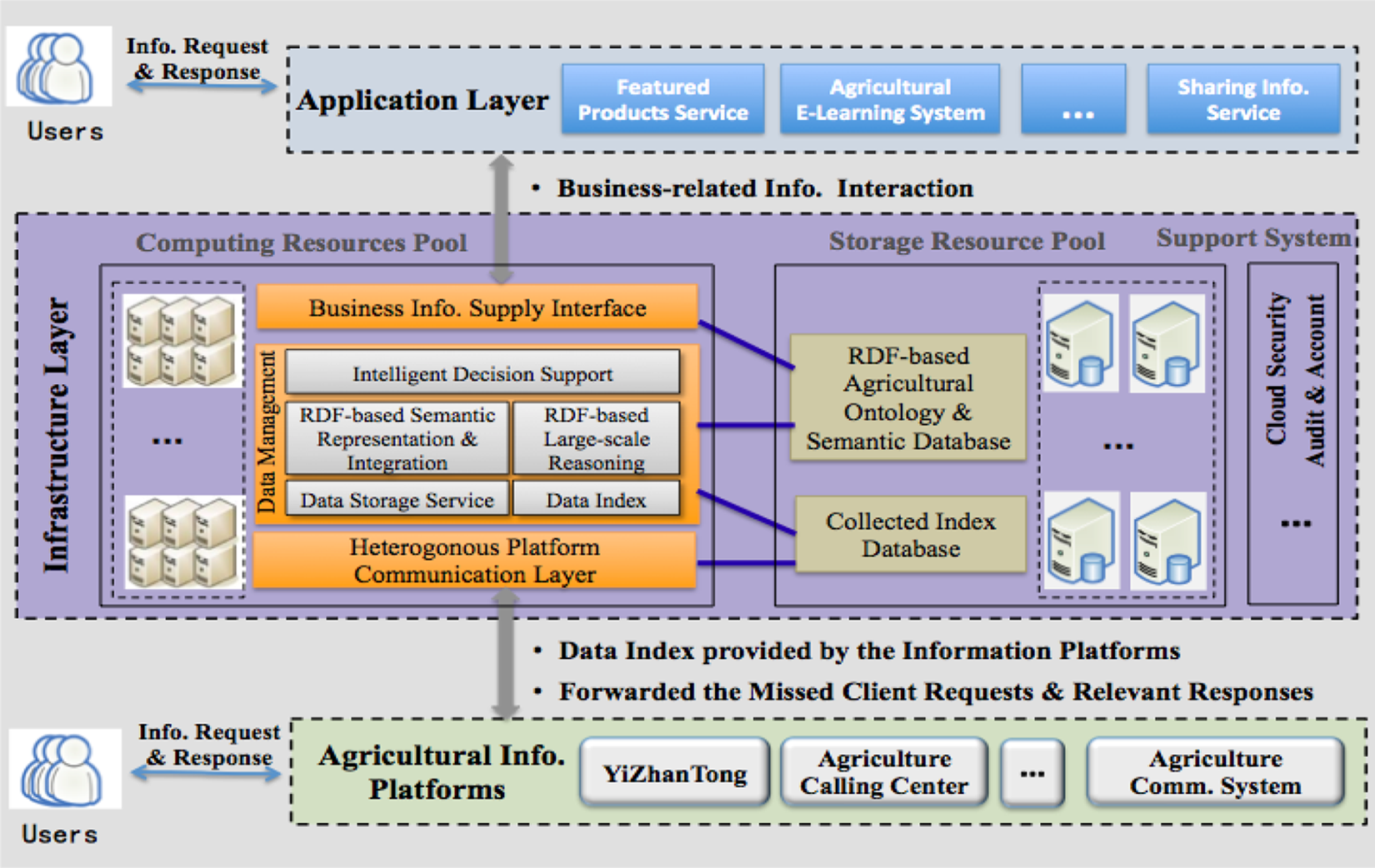
Architecture of ontology-based, integrated AIS.
Application layer
All users can access the integrated AIS through all involved, independent agricultural information systems or a specific interface that is provided by the integrated AIS (i.e. Application Layer shown in Figure 1) to access the requested information. In other words, a user can still resort to existing agricultural information systems, which have been aggregated by the integrated AIS, to obtain desired information. If there is no relevant information on an independent platform, that platform acts as a proxy and forwards the request to the integrated AIS. The process of request redirection is transparent to requesters, and it ensures that users can obtain the desired information even though the information is probably on other platforms. Furthermore, another means of access to the desired information is offered by the integrated AIS, shown as Application Layer in Figure 1 and currently organized as a website. That is to say, a user can also send information requests to the integrated AIS directly via a web page, and the desired information will be shown on a web page after retrieval.
Inter-platform communication mechanism
The integrated AIS aims to integrated all involved independent AIS platforms, so that it has to communicate not only with clients but also with independent AIS platforms. This section will illustrate the communication mechanism between the existing AIS platforms and the integrated AIS, as well as the communication between users and the integrated AIS. Two kinds of data are transferred between independent AIS platforms and the integrated AIS, i.e. information index and redirected requests/responses. The communication scheme used in the integrated AIS aims to achieve semantic integration and agent communication. It has two major components: Information Index Collector and Domain Brokers, both shown in Figure 2.
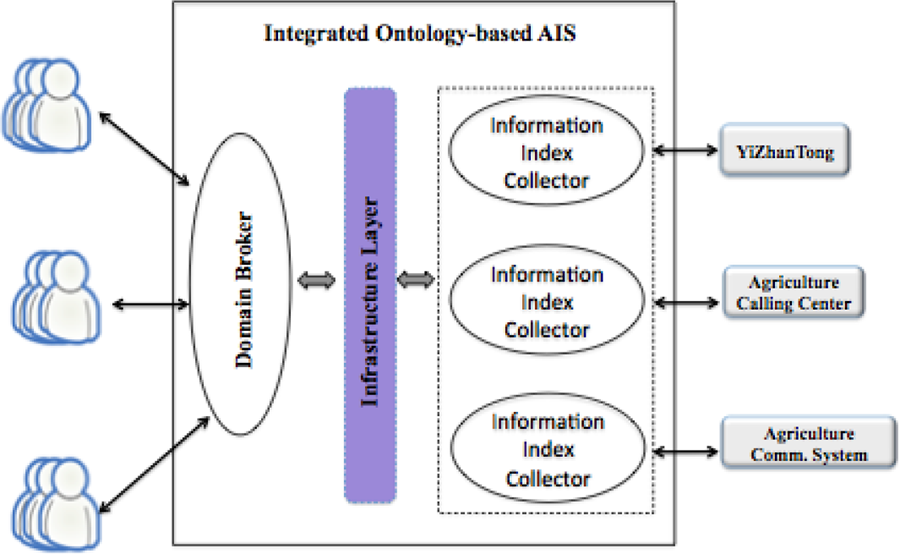
The Inter-Platform Communication Mechanism.
Every independent AIS platform has an associated Information Index Collector to handle all communications between itself and the integrated AIS. In general, the Information Index Collector has three specific tasks: To collect information index from host independent AIS platforms. Since various AIS platforms provide plentiful information with their own characteristics and privacy levels, they might prefer to provide the integrated AIS with relevant information index for constructing corresponding ontologies and achieving semantic integration. To translate index terms used by the independent AIS platforms, to ontological terms used by Infrastructure Layer of the ontology-based integrated AIS. To redirect client requests if the target independent AIS platform does not have corresponding responses, and receive relevant responding information from the integrated AIS.
Another component in the communication mechanism, i.e. Domain Broker, is responsible for client queries, it mainly includes the following features: Accepts queries from users or other applications via the unique interface provided by Application Layer. Conducts preliminary processing, such as partitioning the query into sub-queries with keywords if possible. Forwards sub-queries to Infrastructure Layer of the integrated system for further processing. Transmits responses, which are returned by the integrated AIS after proper semantic retrieval and reasoning process, to the associated requesters.
Infrastructure layer
This layer is the core of the integrated AIS presented in this paper. It organizes the information index sent by independent AIS platforms in the form of ontology, which is “a formal, explicit specification of a shared conceptualization” (Gruber, 1993), and stores all ontology data in a semantic database. Moreover, it supports semantic merging and reasoning functionality to provide a guarantee that quality of inference can be enhanced with a fixed computational overhead. Figure 1 shows that there are basically four components in the Infrastructure Layer:
1. Agricultural ontology
It is well known that database systems are extremely efficient in handling huge amounts of data (i.e. structured items). The state of the art in database systems allows the management of very huge information platforms whose items exhibit their own characteristics. However, an apparent drawback of this approach is due to its “closed world” assumption, so that it is difficult to merge and manage the incomplete information (Colucci, 2006). In addition, when using text retrieval-based techniques, the well-known problems of noise and bad recall have to be taken into account (Blair, 1985). It is not easy to figure out the best match even though certain strategies are used to refine or compose the results, because the system does not present any explanation or inferred information on them.
In order to overcome such limitations, Laliwala et al. (2006) applied a semantic and rule based event-driven SOA (Service Oriented Architecture) information system to illustrate how semantic technology can be employed to deliver common vocabulary, knowledge and automation (Laliwala, 2006). They also illustrated how rules can be used to provide behavioral knowledge, constraints and reaction to agricultural events; thus, it is not difficult to conclude that semantic-based information systems can also benefit agriculture. Moreover, certain ontology-based approaches have been proposed to exploit abductive inference services and belief revision techniques in a description logics-based framework (Colucci, 2004, 2005). An ontology approach aims at capturing domain knowledge in a generic way and affords a commonly agreed understanding in a specific domain (Kapoor, 2012). Ontology is a model of representing organized knowledge in a given domain, in this case, agriculture (FAO, 2011). The idea of ontology is used to describe and standardize basic concepts in a specific domain and the relationships among them. Some researchers therefore combine agricultural information systems with ontology to facilitate seamless information integration and meaningful inter-operation of distributed, heterogeneous agricultural information systems. Consequently, an ontology-based AIS system can deliver personalized recommendation driven by real-time events and user preferences in the agriculture field (Macario, 2009; Nishu, 2011; Zhao, 2009).
Applying ontology technology in agricultural information systems is not a new idea. But, to our knowledge, applying ontology technology to efficiently integrate various AIS platforms for providing farmers or agri-professionals with refined and combined information is not found in the published literature. In essence, like other ontology-based AIS systems, the proposed integrated AIS platform employs a ‘building tool’, which is the world’s most powerful modeling environment, and an integrated development environment) for building semantic applications, i.e. TopBraidComposer (2012), to assist in developing and maintaining agricultural ontologies. Then, we use the tools on AllegroGraph (2012), which is a tool for powerful reasoning and ontology modeling, to construct and consummate our target ontologies, which should contain core terms, definitions and core relationships between these ontologies. In addition, knowledge domains in agriculture will also be used in building and maintaining ontologies. The integrated agricultural information system ought to provide references for all the terminology of agricultural domains.
2. Semantic representation and integration
In general, Resource Description Framework (RDF) and Resource Description Framework Schema (RDFS) are used for the description of all metadata, which can characterize contents of information index. All communication messages between involved independent AIS platforms and the proposed integrated AIS are standardized in RDFS format. With RDFS techniques, related agricultural information provided by independent AIS platforms can be used to construct a corresponding agricultural ontology. Resource Description Framework Schema (RDFS) has proved to be a very useful way to represent arbitrary forms of metadata for integration (Barett, 2002). Because RDFS is able to effectively merge related index information, it has been chosen to represent all schema-level metadata in both domain and infrastructure in the integrated AIS.
AllegroGraph has been leveraged to perform information integration among independent platforms in the integrated AIS. Figure 3 illustrates the approach employed in the proposed system for integrating collected information, which is defined by individual sources (i.e. independent AIS platforms) that provide relevant structure and vocabulary for constructing corresponding agricultural ontologies. Furthermore, domain experts who have intricate knowledge of the structure and semantics of the data sources may evaluate whether the built ontology is acceptable or not, which is helpful for improving the completeness and correctness of the built ontologies.
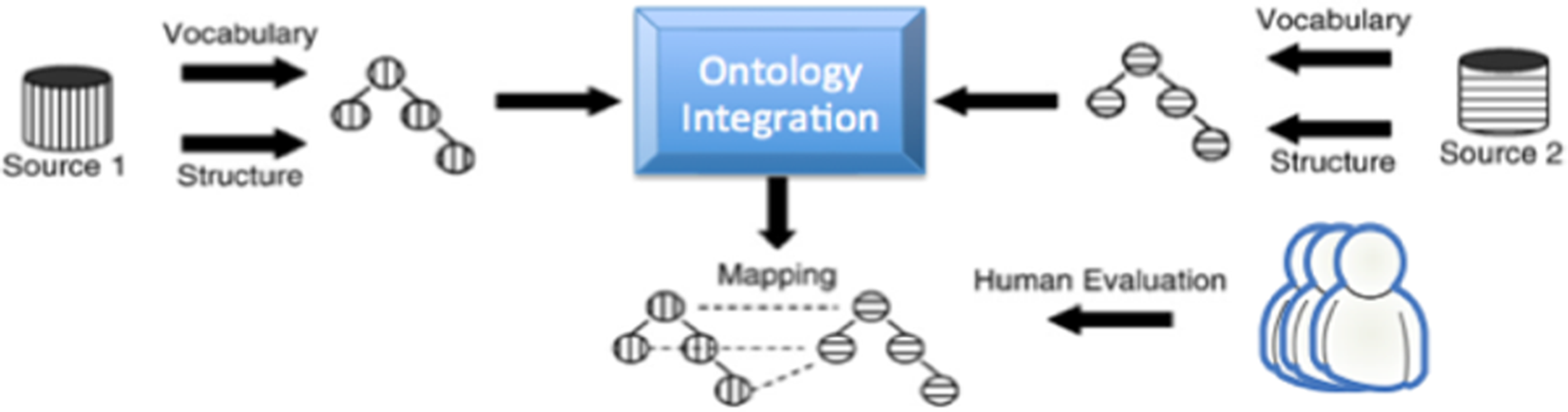
Ontology-based integration design.
3. Large-scale semantic-based inference
Agricultural ontologies can be well established with the proposed system, so that how to use ontology services, i.e. semantic-based inference to generate the requested information according to user requests, is becoming a critical task. Through using the open source Java development package Jena, we built an ontology-driven agricultural search engine for semantic retrieval. With help from AllegroGraph, and then by employing ontology query language, i.e. SPARQL query language, the system can complete the query according to the user’s keywords after semantic expansion. Finally, the precise and complete information will be returned to the requester. The semantic-based inference approach is thus able to provide users with more comprehensive and convenient search services.
When users have submitted query keywords, the search engine performs ontology reasoning by employing AllegroGraph for semantic inference, and creates a list of keywords with expanded semantic information 1 . Based on these induced keywords, the search engine can even guide the user to locate further query needs. The process of information retrieval is intelligent and can effectively improve recall ratio and precision ratio, as well as information completeness.
4. Intelligent decision system
After the process of semantic-based inference, a huge amount of information will be collected by the inference engine. though only a very small percentage of it is meaningful to the user. Therefore, a classification approach based on neural network technology, which is proposed in Wang (2008), is used to sift all collected information and rank the meaningful items. The intelligent decision system uses a neural network-based classification algorithm to determine the relevance of the collected results, and the retrieved results are sorted in a proper order. According to certain conditions, such as personal preferences and seasonal information, it is possible to ensure that users can easily acquire the information that they really need with fairy high precision ratio and completeness ratio.
Implementation and prototype
In this section, we will first present implementation strategies, such the skills for building of agricultural ontology and the instance of a SPARQL query. After that, we will illustrate a prototype of an ontology-based integrated agricultural information system by showing the system’s user interface, i.e. a web interface and a list of sample retrieval results.
Implementation strategies
With the development of the Internet of Things, certain sensors have been installed in modern farms for monitoring various conditions, such as temperature and humidity of farms to guide farmers or agri-professionals to perform farming-related activities.
In order to build an ontology-based integrated AIS system, we should first construct basic ontologies or use standard ontologies provided by authorized organizations. Figure 4 shows part of a citrus ontology built from scratch using Gruff on AllegroGraph, in which all information is described in Chinese. Next, the built basic ontologies can be expanded with information provided by involved independent AIS platforms. For instance, a user may issue a query about suitable fertilizer on the basis of his farm’s conditions (or plant conditions) that consists of relevant sensor data. Finally, decision-making about response information can be assisted by performing a normal SPARQL query, translated from the user’s request, in the proposed integrated agricultural information system. Figure 5 shows a typical case of a SPARQL query in the integrated AIS according to a user’s query for fertilizing guidance on citrus management. After performing this query, a user is able to eventually identify the appropriate fertilizer type and quantity for citrus fertilizing on his farm; moreover, certain additional information like the use of pesticides and irrigation is also provided but with lower rank.
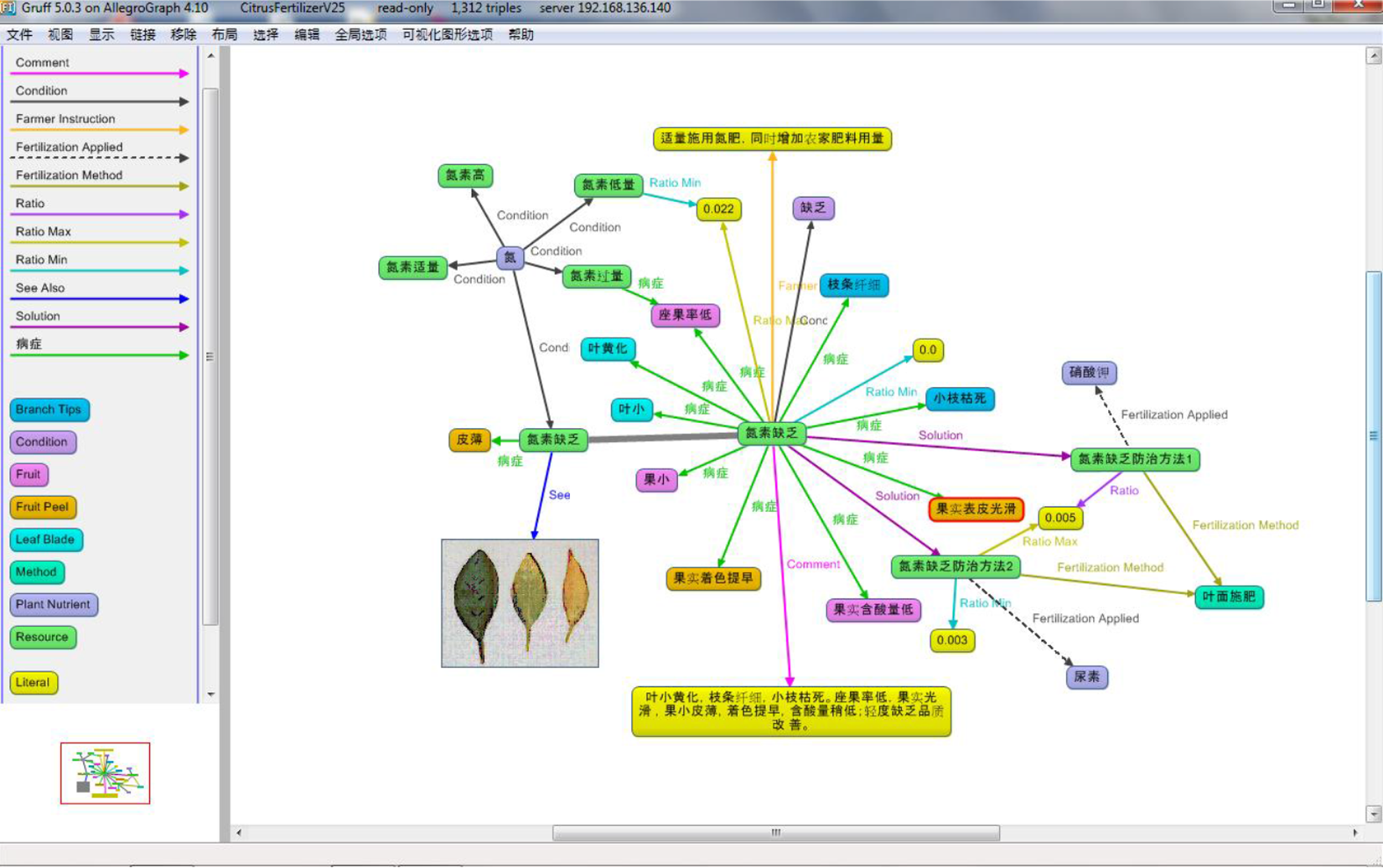
Part of citrus ontology: citrus fertilization (in Chinese).
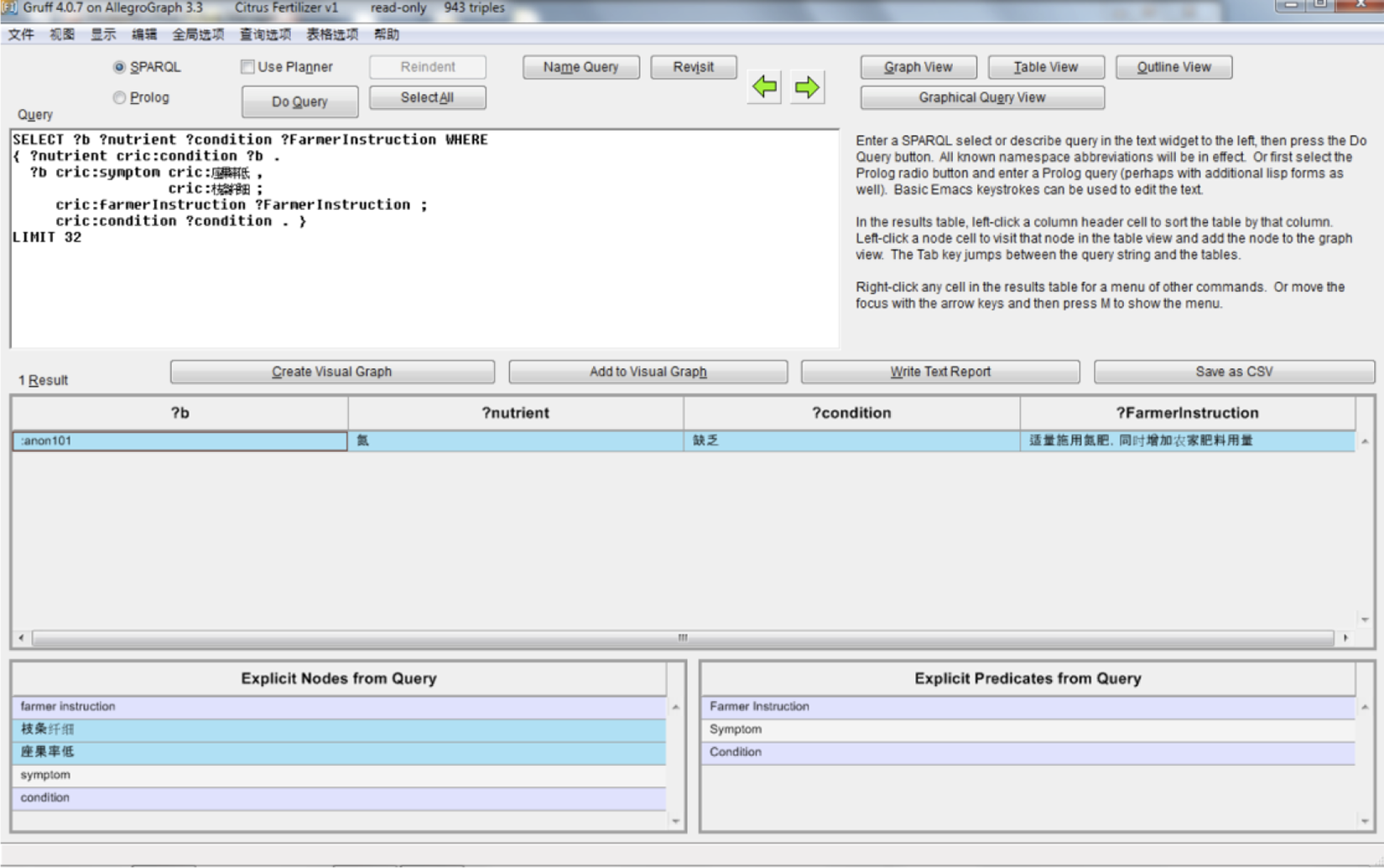
An example of SPARQL query (in Chinese).
Web client for integrated, ontology-based AIS
Depending upon the information provided by the ontology-based integrated AIS, a farmer can make clear decisions to conduct farming activities. Hence, an interface for users to access the integrated AIS is the most important part of the system. Since some users, especially farmers, might not be educated to issue a query with proper keywords or conduct queries for one purpose, a simple interface should be provided. Considering another scenario, in which a user may want to display current monitoring data and relevant alerts of sensors attached to his farm, or to search for sensors satisfying certain criteria, a common approach to exhibit relevant information, i.e. a web browser, is employed.
Figure 6 shows that users can conduct queries simply through a web browser, and then input their keywords to request relevant guidance information. Moreover, the users can also request guidance information via independent agricultural information platforms and existing interfaces. In these cases, the independent AIS platform is able to redirect user requests to the integrated AIS if they do not have satisfactory information. Figure 7 demonstrates a list of sampled response results sorted by the relevance, in which each piece of information might contains associated information provided by several independent agricultural information platforms.
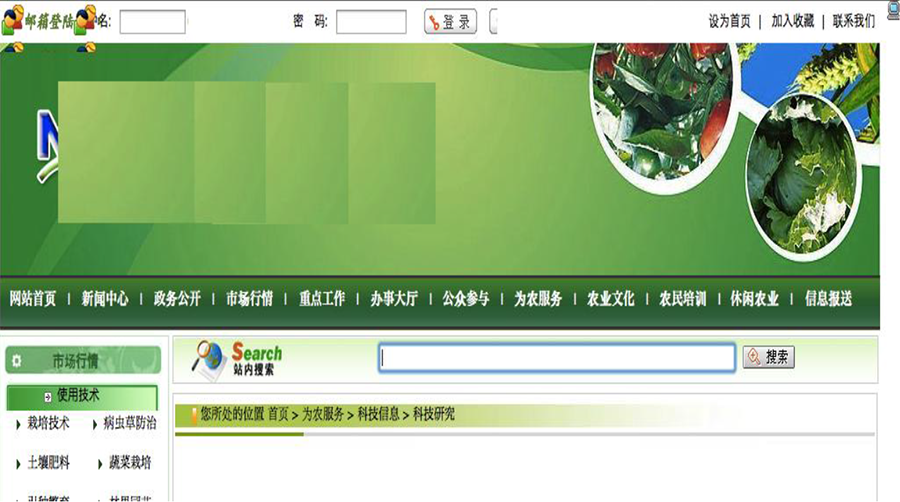
Query interface: Users can search for information by inputting related keywords (in Chinese).
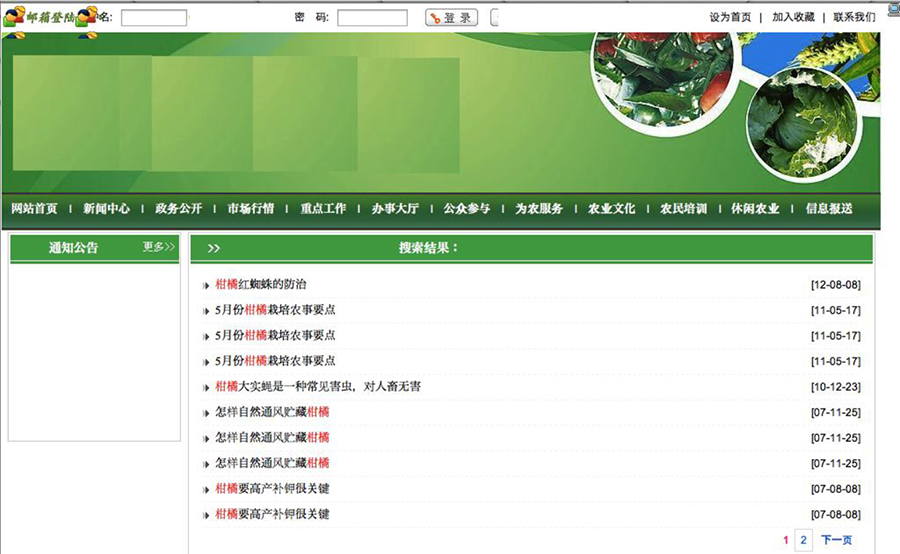
List of searched information: Each piece of information may contain related information provided by different agricultural information platform (in Chinese).
Experiments and evaluation
For illustrating the effectiveness of the proposed integrated agricultural information system, a case study was conducted to roughly show the benefits brought by it for fulfilling relevant client requests. Next some experiments were performed to measure the precision and integrity of the information provided by the following two AIS platforms: The proposed ontology-based AIS (labeled as OIAIS), used to handle information integration among several source AIS platforms. Another benchmark integration system (labeled as GATHER), which simply gathers all information provided by several source AIS platforms. GATHER has been chosen as a comparison baseline in this section.
In the case study and experiments, three independent AIS platforms are emulated to provide agricultural information about citrus planting. The first platform focuses on fertilizer information; the second intends to provide anti-pest information; the third platform aims to show illustrations of different diseases or fertilizer deficiency.
Application case study
In our case study, we first developed a basic citrus-related ontology, and put it into the integrated ontology-based AIS. Then, the integrated AIS manages all index data of related information held by the emulated three independent AIS platforms in the form of semantic representation. In addition, semantic integration and reasoning are supported by the newly proposed system. As a consequence, the citrus ontology can be enriched with the information provided by different platforms. Thus, it is able to provide precise and complete information for all users who resort to agricultural information systems.
Figure 8 shows an example of how a query about “leaves turning yellow” is performed on the normal integrated agricultural platform, that simply puts all information provided by various platforms together, and how the query would be dealt with by the newly proposed integrated agricultural platform. In Figure 8, the normal integrated AIS simply returns the collected information held by different AIS platforms without any classification and inference. On the other hand, the integrated AIS can offer more useful information with classification and certain semantic reasoning. For the most of agricultural information system’s users, i.e. farmers, who probably do not know retrieving skills but really need the relevant information, the later retrieval case performed on the ontology-based integrated AIS is preferred. Therefore, it is not difficult to conclude that our newly proposed integrated information system can undoubtedly benefit the agricultural life cycle.
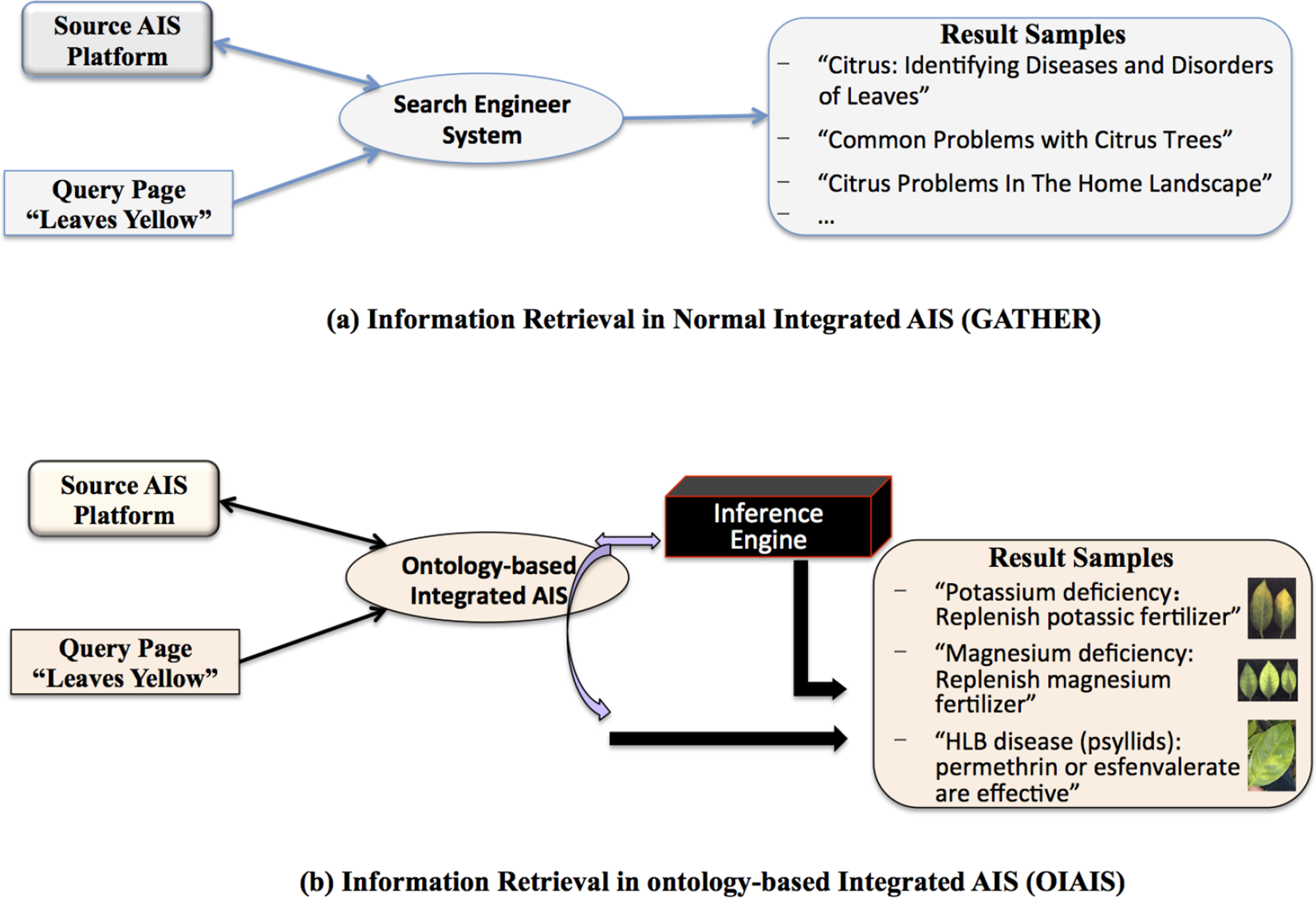
Comparison of searches for required information on both GATHER and OIAIS.
Experiments and evaluation
To demonstrate precision and efficiency of the information provided by the integrated ontology-based AIS, we conducted experiments on both integrated AIS platforms (i.e. OIAIS and GATHER), and recorded related data from the aspects of precision and integrity.
Information precision
To measure the precision of response information, we first collected the top 500 questions about citrus fertilization from Google search engine. Then the answers to some of the questions were constructed, that is to say, there are no answers to some of the questions. Next, the answers were distributed to three independent AIS platforms, and the queries were conducted on both integrated AIS systems. Finally, we checked whether the first item of response information is the answer to that question or not. Two metrics were chosen to evaluate precision rates of both systems (Wang, 2008):

where Numbercorrect is the number of queries correctly returned by the system, Numberall is the total number of user queries. Higher Recall is better.

where Numberrejected is the number of queries for which the system found no correct answer, Numberreal is the number of queries that have no correct answer. Generally speaking, higher Rejection is better from the viewpoint of scientific validity, as responding an item of information when there is no correct answer is not scientifically correct. However, it is better to respond some relevant information even if there is no correct answer, because farmers prefer to obtain something related to the query rather than nothing.
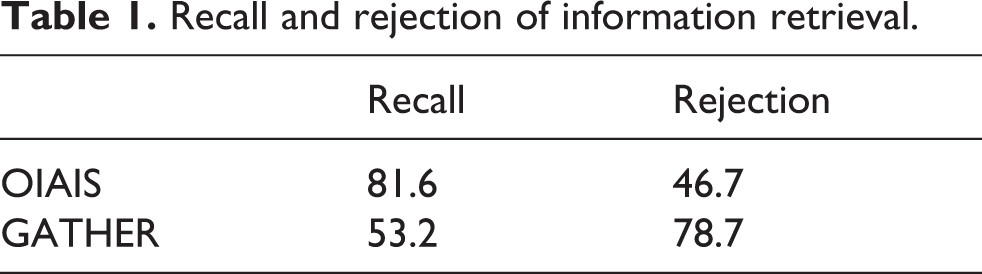
The experimental results are reported in Table 1, and they demonstrate that comparing with the baseline integrated AIS, ourthe ontology-based integrated AIS can effectively improve retrieval performance when there are existing answers for the questions, because compared with GATHER, OIAIS can obtain a higher Recall percentage. On the other hand, OIAIS resulted in less Rejection, which demonstrates that OIAIS prefers to provide an associated answer even though there is no correct response to the request. That is because the ontology-based AIS tries to generate results through semantic inference, even though independent AIS platforms do not have any correct answers. The reason for this situation is that the newly proposed AIS is based on the assumption that semantic-inferred information is better than nothing for system users.
Recall and rejection of information retrieval.
Information integrity
The metric used to evaluate information integrity was provided by a domain expert who has intricate knowledge of the structure and the semantics of data sources. The integration benchmark was identified with help from three citrus experts with over 20 years of citrus planting and management experience in a national scientific research center for citrus fruits in China. First, five hot keywords were selected from statistical data on queries related to citrus planting, which is also recorded by the citrus research institute. Then the three experts were asked to provide complete response information according to the keywords. Next, keyword retrieval was carried out on both integrated AIS platforms, and then checked whether the top 10 ranked messages fulfilled the response information given by the experts or not. If the answer was ”Yes”, the numbers of messages were recorded according to the response information. Different experts gave different response information, so the number of top ranked messages which covered the correct response information, might be different from each other. Thus, for each hot keyword, the average number for each keyword was calculated to show how many top ranked messages listed by both integrated AIS platforms covered the answer. It was assumed that the information provided by the experts was sufficient to guide the farmers to conduct corresponding activities, such as fertilizing and spreading pesticide.
The relevant results are presented in Table 2, where a lower number means a better level of information integrity. From these results, it can be safely concluded that, in contrast to GATHER, the ontology-based integrated AIS can boost information integrity to a great extent. Taking the keyword “Bark Rot and Glue Liquor” as an instance, a user can obtain a satisfactory response by checking 1.3 top rank messages generated by OIAIS, as compared with 3 top rank messages generated by GATHER. In summary, users can simply obtain the desired information by sending queries to the ontology-based integrated agricultural information system; then they need to check fewer top ranked messages to gain the desired information.
Number of messages for required information.
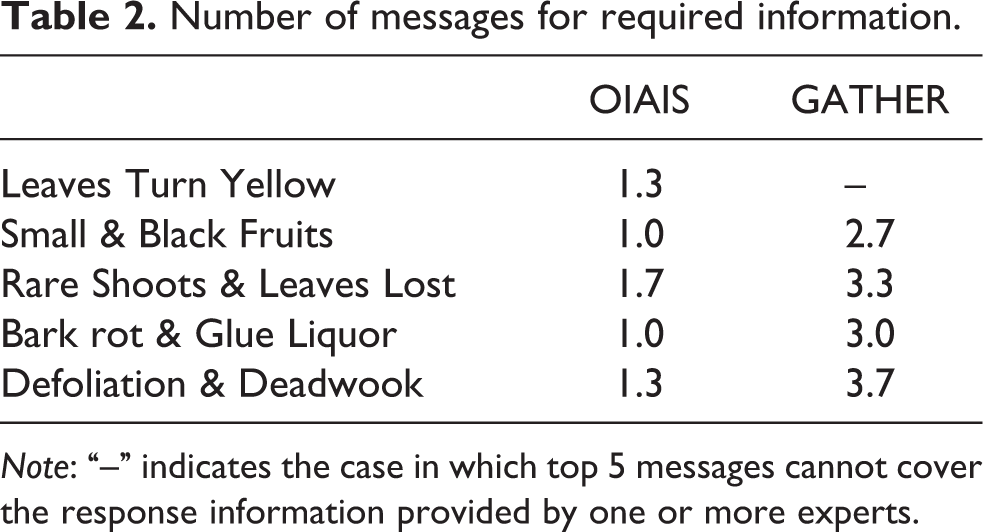
Note: “-” indicates the case in which top 5 messages cannot cover the response information provided by one or more experts.
Concluding remarks
This paper has presented, implemented and evaluated an integrated, ontology-based agricultural information system to integrate relevant agricultural knowledge provided by independent agricultural information platforms. The system can provide users effectively with desired agricultural information by employing ontology techniques to describe information provided by other independent AIS platforms. Semantic representation can help information integration and support information inference. As a consequence, two evaluation metrics, accuracy ratio and integrity ratio of responses to user queries can be enhanced to a great extent. In other words, semantic knowledge expression and an intelligent decision approach can be regulated and then contribute to improving precision rates and information integrity for agricultural information retrieval.
While the current implementation of the ontology-based integrated AIS can achieve semantic-based information integration to a certain degree, the system needs to be developed with a greater degree of integration and to improve the accuracy of information inference in the future.
Footnotes
APPENDIX (Questionnaire and results)
Acknowledgments
This work was supported partially by “Natural Science Foundation Project of CQ CSTC (No. CSTC2013J CYJA40050)”. We would like to thank Yunlong Guo and Feng Tan for their efforts to help us to build citrus ontology.