







Abstract
With the development of mobile technology, mobile advertising has become popular worldwide. It seems that almost every user who owns a mobile device receives mobile advertisements from various service providers. However, most consumers hold negative attitudes towards mobile advertising. This research aims to investigate the factors which influence consumers’ adoption of mobile advertising. Based on a literature review from previous research, a research model is proposed. This research model is empirically evaluated using survey data collected from 302 receivers of mobile advertising in China. Consumers’ attitudes toward mobile advertising and incentives explain about 80 percent of consumers’ intention to receive mobile advertisements. In addition, entertainment, credibility, personalization and irritation all have direct effects on consumers’ attitudes toward mobile advertising; the effect of entertainment is quite strong. Both theoretical and practical implications of this research are discussed.
Keywords
Consumers mainly hold negative attitudes toward mobile advertising.
Introduction
Mobile advertising refers to advertisements sent to and received by mobile devices, i.e., cellular phones, Personal Digital Assistants (PDA), and smartphones (Salo and Tähtinen, 2005).With the development of mobile technology, mobile advertising has become popular worldwide. This new advertising medium has been employed by many multinational companies, such McDonald’s, Microsoft and Google. Nowadays, most people carry their mobile phones all day long, and the mobile phone has become a ubiquitous medium. To maximize their opportunities to communicate with a captive audience, advertisers are beginning to invest money in mobile advertising (Shabelman, 2007).As more and more mobile users access television on their phones, either live or via podcasts, advertisers are closely watching the mobile advertising market (Kennedy, 2006). Mobile phones are being referred to as the “third screen” because of their enormous potential to send targeted and personalized advertisements to consumers on the move (Salo and Tähtinen, 2005).
In China, according to the Ministry of Information Industry, the number of mobile phone subscribers exceeded 1 billion in March 2012 as Chinese people began to consider mobile phones an everyday necessity. However, Gao et al. (2012) found that mainstream usage of mobile phones in China focuses on phone calls, SMS, instant messaging services (e.g., QQ, Wechat), contact services, online dictionary, and purchasing ring tones. SMS was the number one value-added mobile service in the Chinese mobile commerce market in 2012 1 . Although some people own high-end mobile devices (e.g., iPhones, Samsung smartphones, etc.), they often do not use advanced mobile services (i.e., location based services, personalized services) on the device. High-end mobile devices have become a fashion accessory in some market segments, but the number of advanced mobile phone users is still quite low, and few users have started to try advanced mobile services.
In China, 3G and WiFi are the two most common wireless network technologies that provide wireless Internet access and services to users. Some areas in big cities (e.g., Beijing, Shanghai) are even fully covered by WiFi. Unlike the developed countries, mobile commerce hardly reaches the low-income earners who constitute most of the population of China. But many of the younger generation are comfortable with using some existing basic mobile services. This may encourage them to try some advanced mobile services in the future. As mobile communication technology is developing very fast and the mobile commerce market in China is growing, more and more advanced mobile services will be available on the business market. Given that China has the largest number of mobile phone subscribers in the world, it is believed that mobile commerce has a potentially exceptional future in China.
According to our observation in some big cities in China, although most citizens are capable of using mobile services, adoption of mobile services matters most for seniors, far more so than for younger generations. We believe that it is worthwhile to investigate the adoption of mobile advertising in China.
The objective of this paper is to empirically examine the potential factors to explain mobile advertising adoption in China. The research question of this research is: What factors are most predictive of how consumers would respond to mobile advertising in China?
Based on analysis of prior literature on related fields, a research model was developed to investigate the adoption of mobile advertising. The research model contains six factors that affected users’ intention to receive mobile advertisements directly or indirectly, they are: entertainment, credibility, irritation, personalization, incentives and users’ attitudes toward mobile advertising. To operationalize the research model, a measurement instrument was used to measure each of the constructs. The objective of this paper is to empirically examine how well the proposed research model is able to explain mobile advertising adoption in China.
The remainder of this paper is organized as follows: Section 2 discusses the theoretical background of this study. The research model and hypotheses are presented in Section 3. The research method and results of this research are provided in Section 4. This is followed by a discussion of the findings in Section 5. Section 6 concludes this research and suggests directions for future research.
Literature review
Attitude is an important concept in research on both marketing and information systems. Kotler (2009) stated that an attitude is a person’s enduring favorable or unfavorable evaluations, emotional feelings, and action tendencies toward some object or idea. Furthermore, attitude is a critical construct for information systems research as well. For instance, the technology acceptance model introduced by Davis can predict the use of information systems, and it consists of five major constructs: perceived ease of use, perceived usefulness, attitude, intention and use (Davis, 1989). Numerous studies have studied and confirmed the relationships between attitude, intention and behavior.
Attitude towards advertising in general
MacKenzie and Lutz (1989) defined attitude towards advertising as a learnt predisposition to respond in a consistently favorable or unfavorable manner toward advertising in general. It was found that the general attitude towards advertising had changed through time, mainly from positive to negative (Elliot and Speck, 1998; Zanot, 1984). The general attitude towards advertising began to change in the 1960s. Bauer and Greyser (1968) reported that people generally (41 percent of the respondents) had positive attitudes toward advertising in 1964, but the general likeability seemed to decline when compared with the survey results, with more than 70 percent of the respondents showed their favorability towards advertising during the past decades. The attitude towards advertising has become more negative since the 1970s. Zanot (1984) reviewed survey results from the 1930s to the 1970s and concluded that the public’s attitude towards advertising gradually became unfavorable. Further, Elliot and Speck (1998) found that the highest level of advertising-related communication problems such as hindered search and disruption, which were related to more negative attitudes and advertising avoidance, were shown in TV and magazines.
The general attitude towards advertising seems to be different in the Asian region. A study by Zhou et al., (2002) revealed that nearly half of 825 urban Chinese respondents held positive attitudes toward advertising and only 20 percent of them disagreed with it. Another comparative study showed that the Chinese respondents held the most positive attitude towards advertising in general, while the American respondents had the least favorable attitude. In addition, the Chinese respondents held the most favorable attitude towards the social effect of advertising, while the American respondents held the most negative one (Ferle and Lee, 2002).
Attitude towards Internet advertising
Although the Internet has emerged for a relatively short time, its penetration and impact seems to be significant. In comparison to the attitude towards traditional advertising, the attitude towards Internet advertising in general was mixed. Schlosser et al. (1999) found that nearly one-third of their respondents held a positive attitude, one-third held a negative attitude and the remaining one-third held a neutral view towards Internet advertising.
According to Ducoffe (1996), informativeness, entertainment and irritation of advertisements are critical predictors of their value and are important to the effectiveness of Web advertising. These predictors would influence consumers’ attitudes toward Internet advertising. This is consistent with earlier research findings, which indicated that interesting and pleasing advertisements had a positive impact on consumers’ attitudes toward a brand (Mitchell et al., 1981; Shimp, 1981). Schlosser et al. (1999) reported that attitude towards Internet advertising is affected by informativeness, enjoyment and the advertisement’s utility for making behavioral decisions. Bracket and Carr (2001) developed an integrated Web advertising attitude model in order to study how the factors affected consumers’ attitudes toward Internet advertising. As illustrated in Figure 1, this model is based on the premise that the perceived entertainment, informativeness, irritation, and credibility of an advertisement affect the way consumers evaluate it. In addition to these four variables, the model includes relevant demographic variables as well.
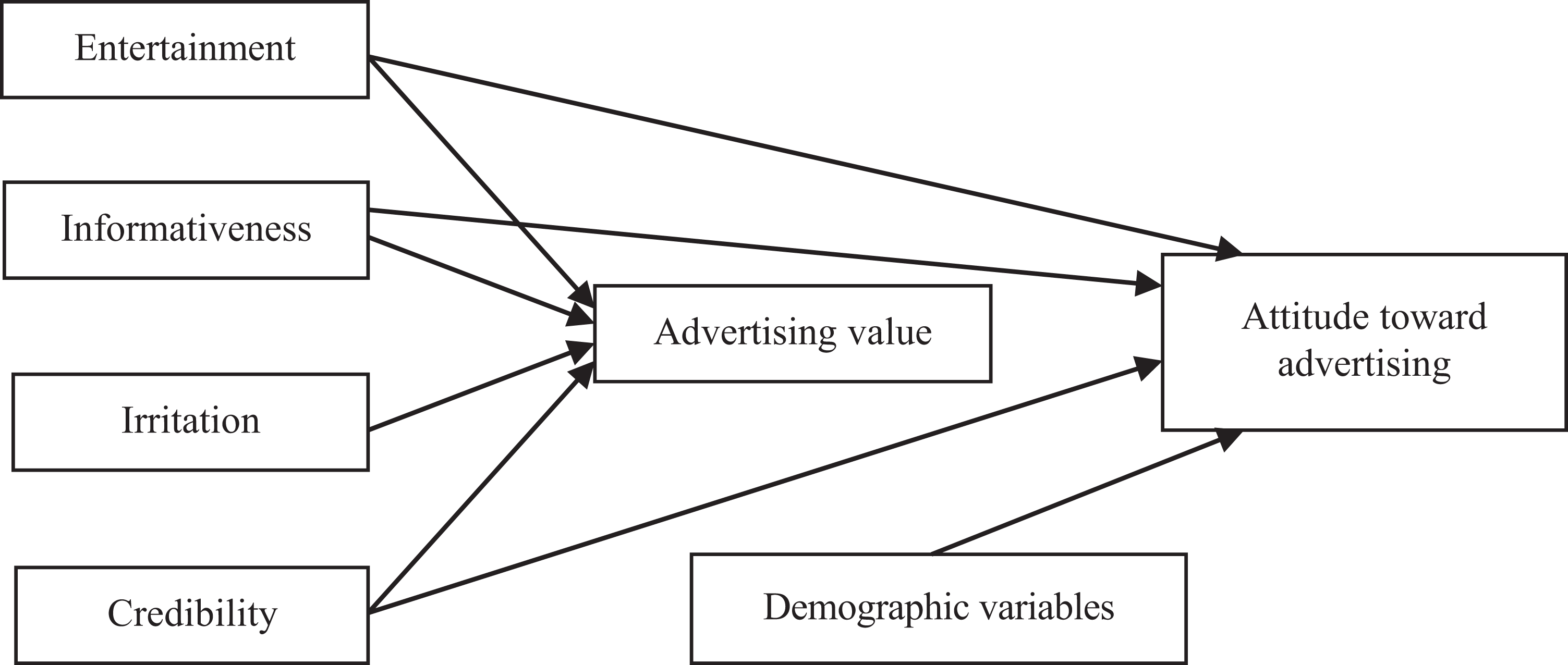
Model of attitudes toward Web advertising.
Mobile advertising
According to De Reyck and Degraeve (2003), mobile advertising is defined as targeting well-identified potential customers with text messages, thereby increasing the response-to-advertisement. In addition, Leppaniemi et al. (2005) defined mobile advertising as the business of encouraging people to buy products and services using the mobile channel as a medium to deliver the advertising message.
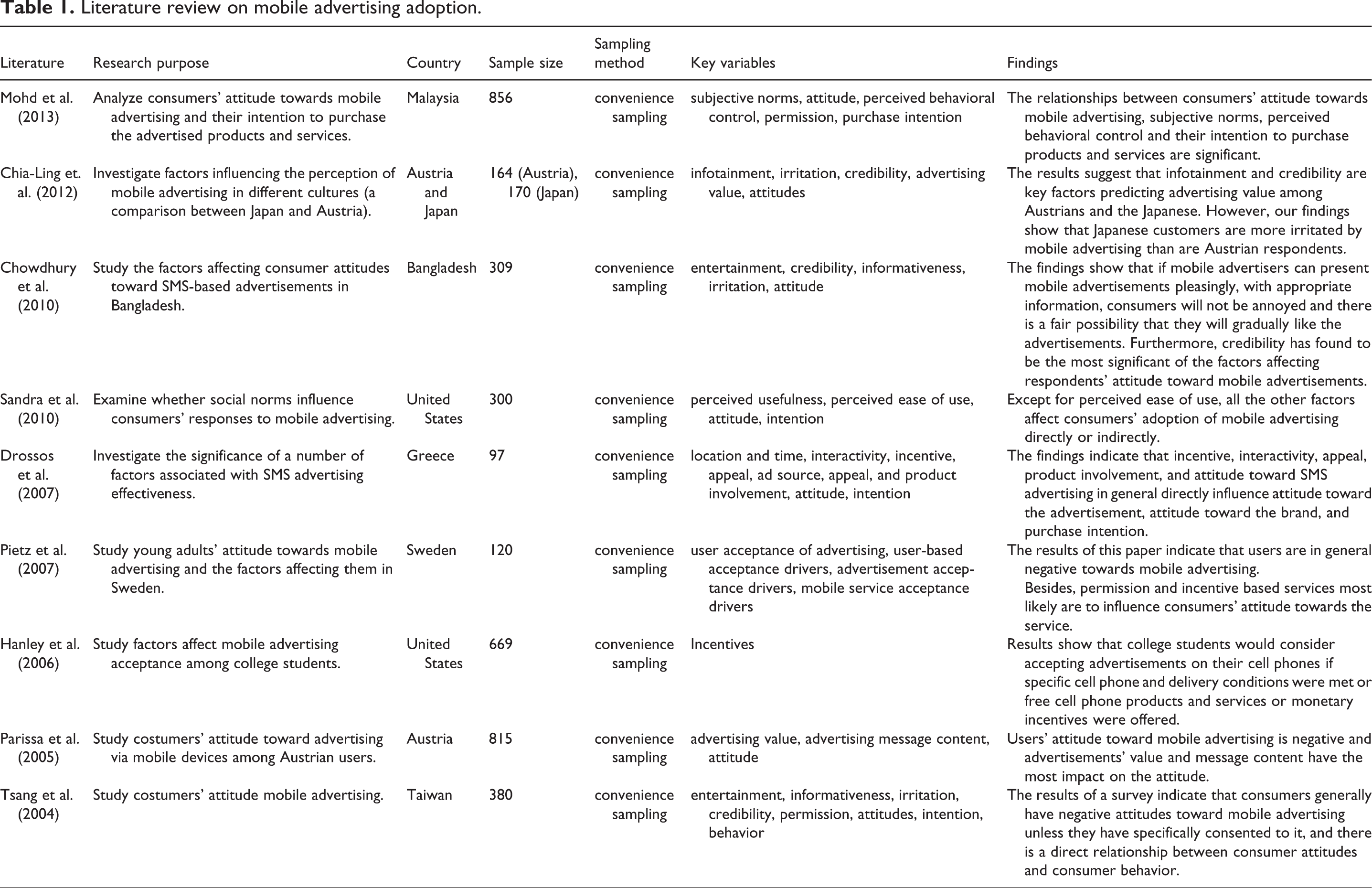
Compared to the rapid development of mobile technology, the research on mobile advertising adoption, particularly on newly developed advanced mobile information services, is still in the infancy stage. It appears that only a few studies about mobile advertising have employed theoretical and methodological approaches when compared with the diffusion research on traditional and Internet advertising. Based on our literature review, some existing research on mobile advertising adoption is summarized in Table 1.
Literature review on mobile advertising adoption.
Compared to advertisements on computers, advertisements on mobile devices have the following constraints: small screen size, limited bandwidth, limited capacities for the visualization of large volumes of information, and so on. In contrast, consumers might prefer to receive simplified and personalized advertisements on their mobile devices. Therefore, we intend to include personalization instead of informativeness into our research model in the next section.
This research aims to complement and extend existing research by focusing on customers’ adoption of mobile advertising in the Chinese context. It is a continuing effort in studying the potential factors affecting the acceptance of mobile advertising.
Research model and hypotheses
Based on the literature review, we proposed a research model illustrated in Figure 2. The model presents four factors that directly affect consumers’ attitudes toward mobile advertising, namely, entertainment, credibility, irritation and personalization. In addition, we propose that both incentives and consumers’ attitudes toward mobile advertising have direct impacts on consumers’ intention to receive mobile advertisements.
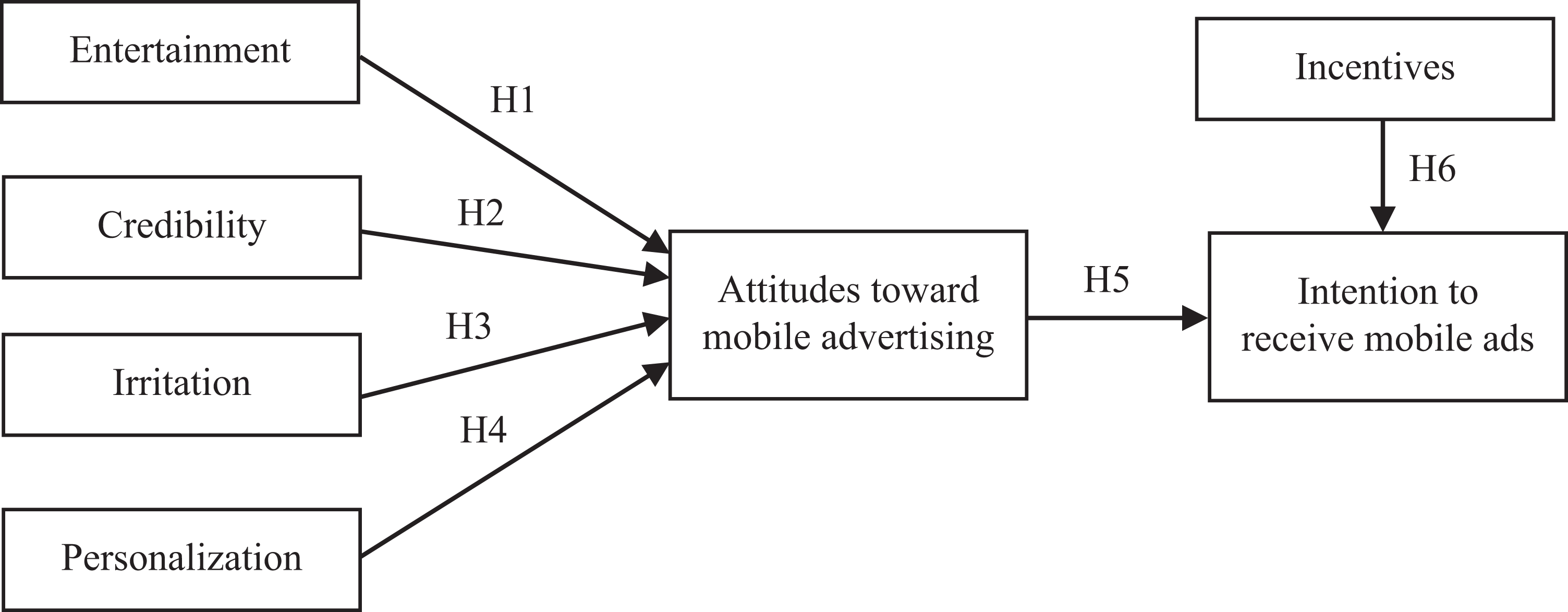
The research model.
Entertainment
The entertainment element in advertising can fulfill consumers’ needs for aesthetic enjoyment and emotional release (Ducoffe, 1996). Customers’ emotion and enjoyment related to advertisements play an important role in accounting for their overall attitudes towards them (Shavitt et al, 1998). Tsang et al. (2004) found that entertainment influences mobile advertising attitudes the most. According to Scharl et al. (2005), advertisements which were funny, entertaining, informative and were targeted to relevant groups, were more likely to increase consumers’ purchasing intentions. Faraz et al. (2011) found that the entertainment of mobile advertising led consumers’ to develop positive attitudes toward mobile advertising. Therefore, we proposed the following hypothesis: H1: The entertainment of mobile advertising has a positive effect on users’ attitudes toward mobile advertising.
Credibility
As defined by McKenzie and Lutz (1989), credibility of advertising is consumers’ perception of the truthfulness and believability of advertising in general. Credibility of an advertisement is influenced by different factors, especially by the company’s credibility. Advertising credibility plays an important role in creating value in web advertising (Brackett and Carr, 2001). In studying a connection between trust in privacy and the laws of mobile advertising, Merisavo et al. (2007) found that credibility positively influenced the adoption of mobile advertising in Finland. Tsang et al. (2004) found that credibility of mobile advertising was the second most important factor positively affecting the attitude towards mobile advertising. On the basis of the former research, the following hypothesis was proposed: H2: The credibility of mobile advertising has a positive effect on users’ attitudes toward mobile advertising.
Irritation
Irritation in advertising can be defined as an advertisement that creates annoyance, unhappiness, and brief intolerance (Aaker and Bruzzone, 1985). According to Ducoffe (1996), when advertising employs techniques that annoy, offend, or are overly manipulative, consumers are likely to perceive it as an unwanted and irritating influence. De Reyck and Degraeve (2003) noted that mobile advertising works only if it is permission-based. In Wong (2008), the author indicated that people react negatively when they perceive that their freedom to choose is threatened. Altuna et al. (2009) found that irritation comprised the only negative dimension of consumer attitudes towards mobile advertising. Therefore, we hypothesized: H3: The irritation of mobile advertising has a negative effect on users’ attitudes toward mobile advertising.
Personalization
Personalization is one of the main features of mobile advertising. There are many scholarly articles about personalization in marketing, but few of them focus on mobile marketing and the consumers’ attitude towards mobile advertising. According to Chellappa and Sin (2005), personalization refers to the ability to proactively tailor products and product purchasing experiences to the tastes of individual consumers based upon their personal and preference information. Robin (2003) found that mobile users prefer advertisements which are customized to their interests and relevant to them. Personalized messages make people think that they are being respected (Xu, 2006). Rao and Minakais (2003) found that personalized advertising would also enhance consumer satisfaction. This indicates that personalization would improve consumers’ attitude towards mobile advertising. Accordingly, the following hypothesis was proposed: H4: The personalization of mobile advertising has a positive effect on users’ attitudes toward mobile advertising.
Attitude
According to the technology acceptance model, the main antecedent and key mediator of the influence of other variables on intention to use is a person’s attitude towards using a technology (Davis, 1989). The relationship between attitude and intention is also supported in the field of mobile marketing. For example, Hsu (2004) demonstrated that the relationship between users’ attitudes and intention to play an online game was positive and significant. Furthermore, Tsang et al. (2004) also found that consumers’ attitudes toward mobile advertising affected their intention to receive mobile advertisements directly. Therefore, we proposed the following hypothesis: H5: Consumers’ attitudes toward mobile advertising have a positive effect on their intention to receive mobile advertisements.
Incentives
Incentive-based advertising is an approach that provides specific financial rewards to consumers who agree to receive advertisements into their mobile phones (Pietz and Storbacka, 2007). For example, mobile phone companies may reward consumers with free connection time for listening to voice advertisements. A mobile coupon is an electronic ticket delivered by mobile phone that can be exchanged for a financial discount or rebate when purchasing a product or service. Advanced mobile technology makes it possible to know the identity of various users. Therefore, the mechanism of providing incentives for consumers is feasible for reading mobile advertising. According to Milne and Gordon (1993), it is possible to create value for mobile advertising messages. People are interested in deriving some monetary benefit from direct marketing programs. Furthermore, an empirical study conducted by Tsang et al. (2004) indicated that consumers’ intention to receive mobile advertisements was affected by incentives directly. Accordingly, the following hypothesis was proposed: H6: Providing incentives for receiving mobile advertisements has a positive effect on consumers’ intention to receive mobile advertisements.
An empirical study
In this empirical test, the proposed research model and hypotheses were examined with subjects in China.
Survey instrument
The survey consisted of two parts. The first part aimed to know the participants’ personal backgrounds. The second part was intended to examine users’ attitudes to the adoption of mobile advertising. Validated instrument measures from previous studies were used as the foundation to create the instrument for this study. Items for entertainment and credibility were derived from Tsang et al. (2004) and Chowdhury et al. (2010) respectively. The irritation scale was based on Xu (2007). Further, the scales used to measure personalization and incentives were derived from Faraz et al. (2011). Lastly, the scales used to measure attitudes and intention to use were also derived from Taylor et al. (1995). In order to ensure that the instrument better fit the context of mobile advertising, some minor changes in wording were made to ensure easy interpretation and comprehension of the questions. A questionnaire was developed first in English and then translated into Chinese. Back-translation was conducted by bilingual third parties to improve the translation accuracy. Before the survey was distributed, a pre-test of the questionnaire with a small group of respondents was conducted to check the content validity of the scales. All the questions were found to be understandable by the respondents.
As a result, 20 measurement items (see Appendix 1) were included in the second part of the survey. A 7-point Likert scale, with 1 being the negative end of the scale (strongly disagree) and 7 being the positive end of the scale (strongly agree), was used to examine participants’ responses to all items in this part. In addition, data were analyzed using structural equation modeling (SEM). Structural equation models are regression equations with less restrictive assumptions that allow measurement error in explanatory as well as the dependent variables Bollen (1989). Compared with Ordinary Least Square (OLS), SEM is a more powerful technique that is able to address the modeling of interactions, correlated independent variables (Garson 2002). Further, SEM can analyze more than one dependent variable at a time.
Sample
The data for this study were collected through self-administered questionnaires in China. The survey was distributed in both paper-based questionnaires and online questionnaires from October 15 to December 15, 2013. Most collected questionnaires were paper-based. Only 20 were online questionnaires. A total of 346 responses were collected both online and offline, while 302 of them were valid. The survey had a response rate of 87.3 percent. The participants were mainly college students. The primary reason of choosing college students as the major participants is that in comparison with other age groups, college students are more likely to use mobile devices frequently, view news and mobile advertisements, and do shopping online. One of the previous studies (Carroll et al., 2007) also demonstrates that college students have been used in various studies because the participants were in the age range of 20–28, reflective of one of the major target groups for mobile advertising. Therefore, we believed that college students could be a representative sample to explore the adoption of mobile advertising in China.
Descriptive Results
The first part of the questionnaire was about the demographic questions. In general, 29.8 percent of the participants were male, and 70.2 percent were female. All the participants were between 18 and 25 years old, and 98.0 percent of them have the bachelor degree at least. All the participants had received mobile advertisements before, and 95.0 percent of them had read mobile advertisements before. Moreover, 48.3 percent of the respondents indicated that they received SMS-based mobile advertisements frequently. Further, 20.9 percent of the participants indicated that they usually received the advertisements via a web browser on their mobile devices, and 29.5 percent usually received advertisements via mobile applications.
The second part of the questionnaire was set to test the hypotheses proposed above. Developed from the literature, the measurement questionnaire consisted of 20 items.
The descriptive results revealed the general effects of demographics on consumers’ attitudes toward mobile advertising. In general, male participants had more positive attitudes toward mobile advertising than female participants. Postgraduate students are more likely to accept mobile advertising than undergraduate students. In addition, the participants with higher disposable income had more positive attitudes toward mobile advertising. In addition, the SMS-based mobile advertisements were more likely to be accepted by the participants. Last but not least, we found that most participants, not surprisingly, had negative attitudes to mobile advertising. This finding was in accordance with the results of some previous research (Tsang et al. 2004) (Drossos et al. 2007) (Pietz et al. 2007), which pointed out that users are in general negative towards mobile advertising.
Measurement model
In this study, we examined goodness-of-fit of the measurement model by using six widely-used fit indices: the chi-square/degrees of freedom (x2/df), the goodness-of-fit index (GFI), the adjusted goodness-of-fit index (AGFI), the comparative fit index (CFI), the normed fit index (NFI), and the root mean square error of approximation (RMSEA).The fitness measures are shown in Table 2.
Fit indices for the measurement model.
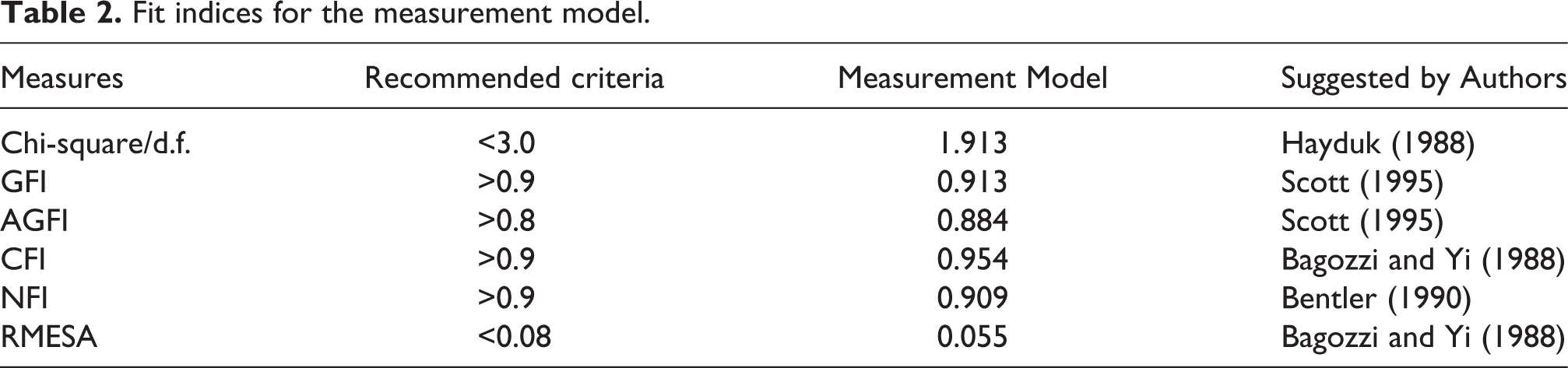
Table 2 illustrates that all the fitness measures are within acceptable ranges. Therefore, we consider the measurement model is acceptable, and the measures indicate that the model fit the data.
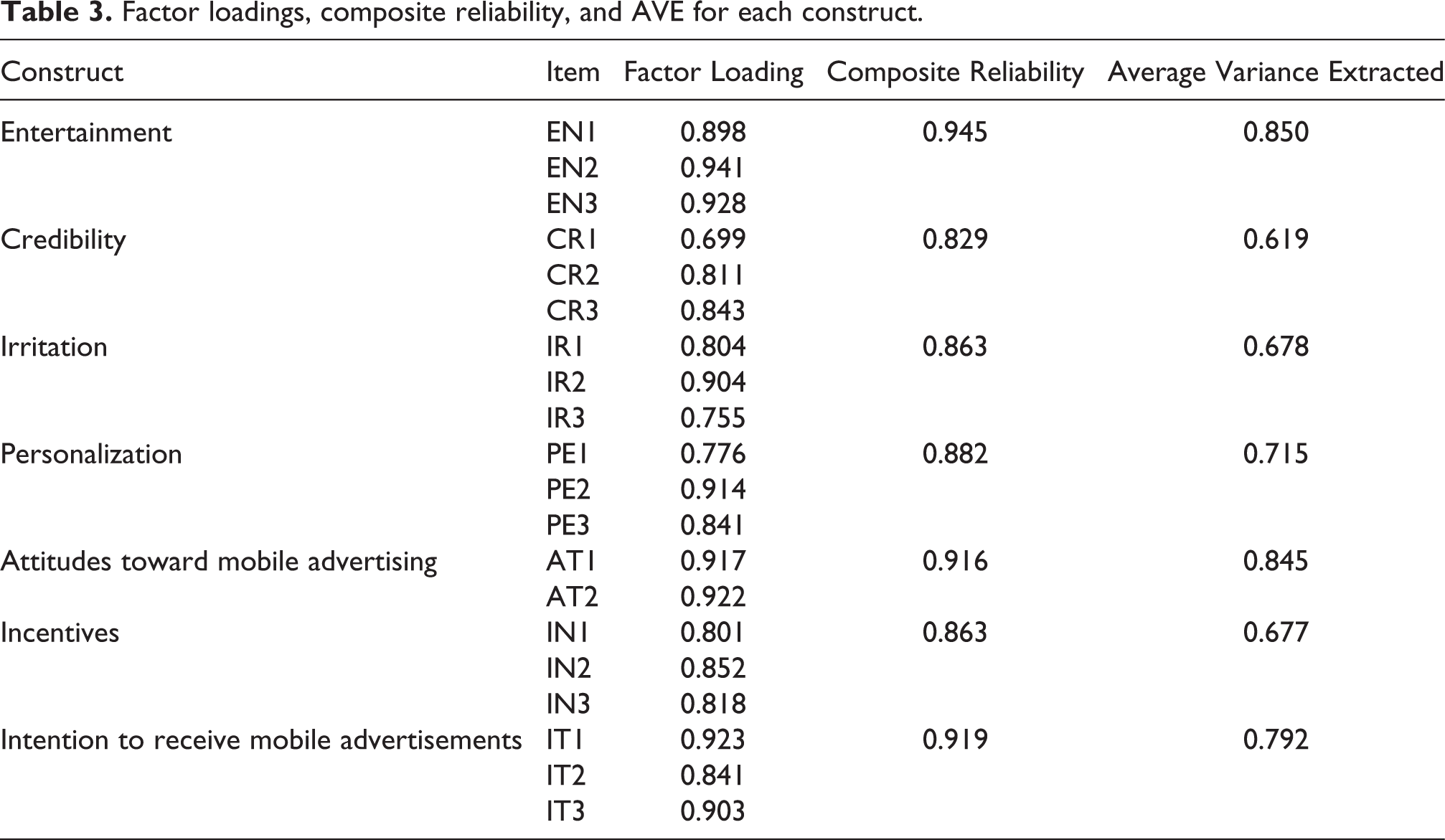
Convergent validity was assessed through composite reliability (CR) and the average variance extracted (AVE).Bagozzi and Yi (2012) proposed the following three measurement criteria: factor loadings for all items should exceed 0.5, the CR should exceed 0.7, and the AVE of each construct should exceed 0.5. As shown in Table 3, the results satisfy all these criteria. The factor loadings range from 0.699 to 0.941, and the CR values range from 0.829 to 0.945. In addition, the AVE of all constructs exceeded 0.5 with the minimum of 0.619. As the three values of reliability are above the recommended values, the scales for measuring these constructs are deemed to exhibit satisfactory convergence reliability.
Factor loadings, composite reliability, and AVE for each construct.
The measurements of discriminant validity are presented in Table 4. It is easy to find that the variances extracted by the constructs are more than the squared correlations among variables. The fact reveals that constructs are empirically distinct. As good results for convergent and discriminant validity are achieved, the test of the measurement model is satisfactory.
Discriminant validity.
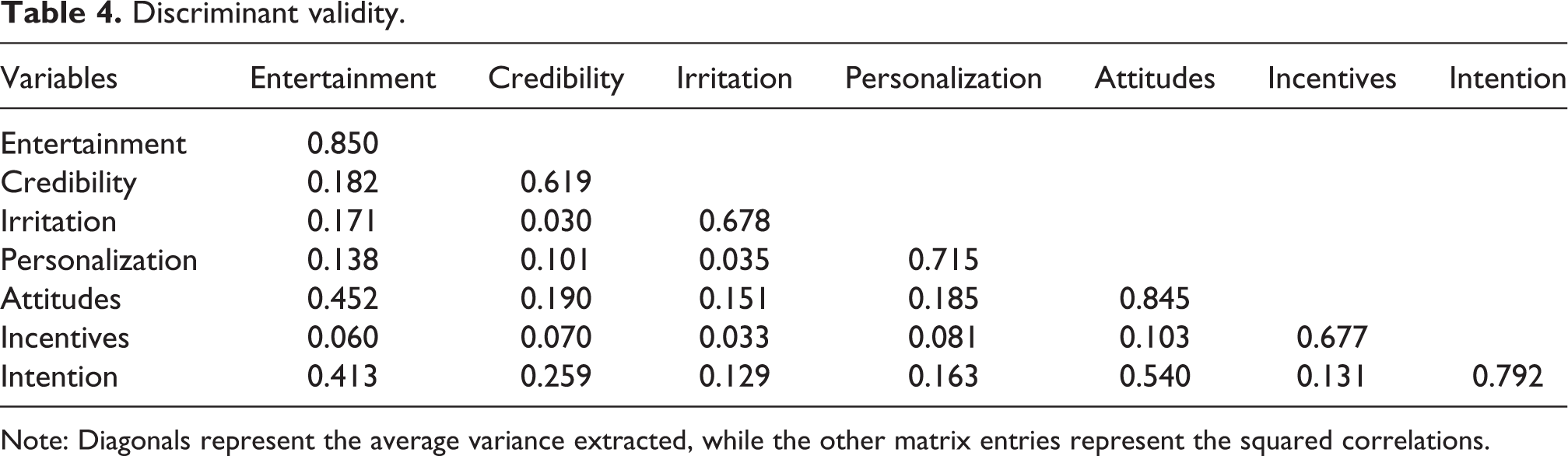
Note: Diagonals represent the average variance extracted, while the other matrix entries represent the squared correlations.
Tests of the structural model
The structural model was tested using Amos 20.0. The results of the structural model are shown in Figure 3.
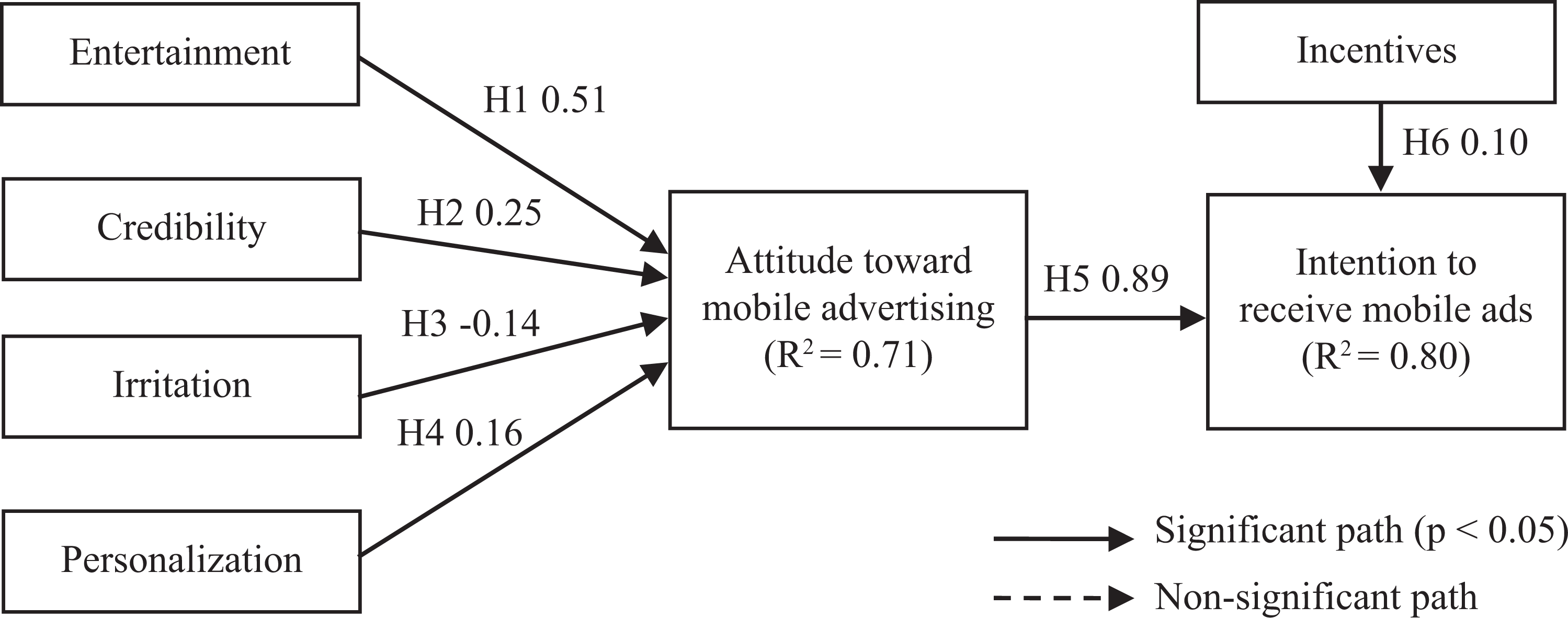
Results of structural modeling analysis.
The R2 in the figure denotes coefficient of determination. It provides a measure of how well future outcomes are likely to be predicted by the model. In our analysis, the R2 coefficient of determination is a statistical measure of how well the regression coefficients approximate the real data point. The standardized path coefficients between constructs are presented, while the dotted lines stand for the non-significant paths. Table 5 shows the path coefficients, which are standardized regression coefficients. As a result, the six hypotheses were supported. In addition, all the hypotheses were statistically significant.
Test of hypotheses based on path coefficient.
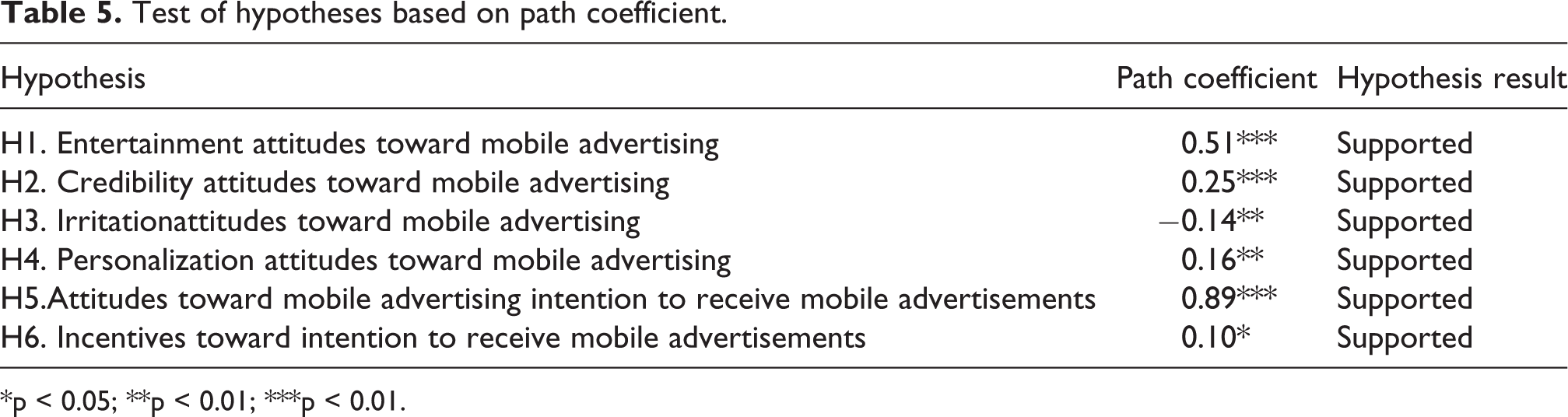
*p < 0.05; **p < 0.01; ***p < 0.01.
The path coefficients from entertainment, credibility, irritation and personalization to consumers’ attitudes toward mobile advertising are all statistically significantly. As shown in Table 5, the positive effects of entertainment and credibility on users’ attitudes were relatively strong. The path coefficients of irritation and personalization were statistically positively significant at P < 0.01. The four factors, including entertainment, credibility, irritation, and personalization, explain 71 percent of the observed variance in users’ attitudes toward mobile advertising. Thus, H1, H2, H3 and H4 were supported. As illustrated by a path coefficient of 0.89 (P < 0.001) in Table 5, the effect of users’ attitudes toward mobile advertising on intention to receive mobile advertisements is quite strong. The other path coefficient from incentives to intention to receive mobile advertisements is statistically significant at P < 0.05. Besides, 80 percent of the observed variance in intention to receive mobile advertisements can be explained by the two paths in the research model. Therefore, H5 and H6 were supported.
Discussion
The findings of this empirical study provide some insights to both researchers and practitioners. On the one hand, from an academic perspective, this study contributed to the literature on mobile services adoption and diffusion by identifying and validating the potential factors affecting the adoption of mobile advertising services. The findings demonstrated the appropriateness of the research model and hypotheses for measuring mobile services adoption. On the other hand, from a business perspective, the statistical results of the research model also provided some insights for practitioners to better provide mobile advertisements with higher user acceptance in China.
In this study, we found that all the six hypotheses were supported. The results indicated that most respondents held negative attitudes about receiving mobile advertisements. The possible reason might be that users found mobile advertisements irritating, given the intimate nature of mobile phones. The results also indicated that it would be favorable if the mobile advertisements were sent to users with their permission.
The results demonstrated that the most important determinant for users’ attitudes to mobile advertising was entertainment. This is consistent with the previous studies. For example, Faraz et al. (2011) found that the entertainment of mobile advertisements was significantly related to consumers’ attitudes toward mobile advertising. The empirical findings indicated that, if mobile advertisements were funny, and contained pictures, sound, video or other forms to attract consumers’ attention, users might be more likely to accept them. The findings also indicated that credibility has a positive attitude impact on users’ attitudes toward mobile advertising. Similar results were found in other studies. For instance, Tsang et al. (2004) found that credibility affected consumers’ attitudes toward mobile advertising directly. It seems that famous and well-known companies have a good chance of making mobile advertising campaigns successfully.
Palka et al. (2009) indicated that it was possible to increase the credibility of mobile advertisements by utilizing mobile viral marketing. This was also confirmed in our study. Our results demonstrated that personalization has positive effects on consumers’ attitudes toward mobile advertising.
Rao and Minakakis (2003) indicated that it was believed that marketing techniques had to be based on knowledge of customer profiles. In comparison to traditional marketing channels, mobile marketing is with an advantage that consumers can be targeted in a direct and personal manner. Nowadays, consumers are more likely to receive personalized mobile advertisements.
Furthermore, consumers’ attitudes toward mobile advertising have significant positive effects on their intention to receive mobile advertisements. Moreover, consumers’ intention to receive mobile advertisements was also affected by the incentives associated with the advertisements. Although consumers might hold negative attitudes toward mobile advertising, sometimes they were willing to accept those advertisements in cases where some incentives were offered. Similar findings were also found in some previous research (e.g., Tsang et al. 2004).
This study also has some practical implications. The results of this empirical test can provide guidelines and suggestions to mobile advertising services providers in offering appropriate services to users. The findings suggest that users would like read mobile advertisements if some incentives were provided. For example, the mobile advertising services can provide complimentary mobile coupons for consumers. Mobile advertising services providers should improve their understanding of trust-related concerns and personal preferences and characteristics of the target users in order to fulfill the users’ expectations. For instance, practitioners can send mobile advertisements with appropriate information at proper times in order to avoid unnecessary interruptions and disturbances to potential consumers. Being aware of the factors affecting mobile advertising adoption proposed in our research model would help to set mobile advertising service providers apart from their competitors in developing mobile advertisements.
However, we are also aware of some limitations of this work. Firstly, the participants of our study were mainly college students. This sample might not be fully representative of the entire population. Secondly, all the data were collected using self-reported scales. This may lead to some caution because common method variance may account for some of the results. This has been cited as one of the stronger criticisms of tests of theories with TAM and TAM-extended research (Malhotra et al. 2006). However, our data analysis with convergent and discriminant validity does not support the presence of a strong common methods factor. Thirdly, the findings of this study may be limited due to the relatively small sample size. Last but not least, there might be other factors which influence the adoption of mobile services.
Conclusion and future study
With the development of mobile technology, mobile advertising appears frequently in people’s daily life, but consumers mainly hold negative attitudes toward mobile advertising. This study examined the factors affect consumers’ adoption of mobile advertising in China. A research model with six research hypotheses was proposed in the study. All the hypotheses were positively significant supported. The results indicated that entertainment, credibility, personalization and irritation affect consumers’ attitudes toward mobile advertising directly. Meanwhile, incentives and consumers’ attitudes toward mobile advertising have positive effects on consumers’ intention to receive mobile advertisements. Thus, practitioners should be concerned with all the factors that affect consumers’ adoption of mobile advertising.
Continuing with this stream of research, we plan to test the research model’s validity in other empirical contexts, such as mobile advertisements on a specific mobile application. Future research is also needed to empirically verify the research model with larger samples in China. We also would like to include some mediating factors (e.g., gender and age) in the research model.
Footnotes
Appendix 1. Measurement items
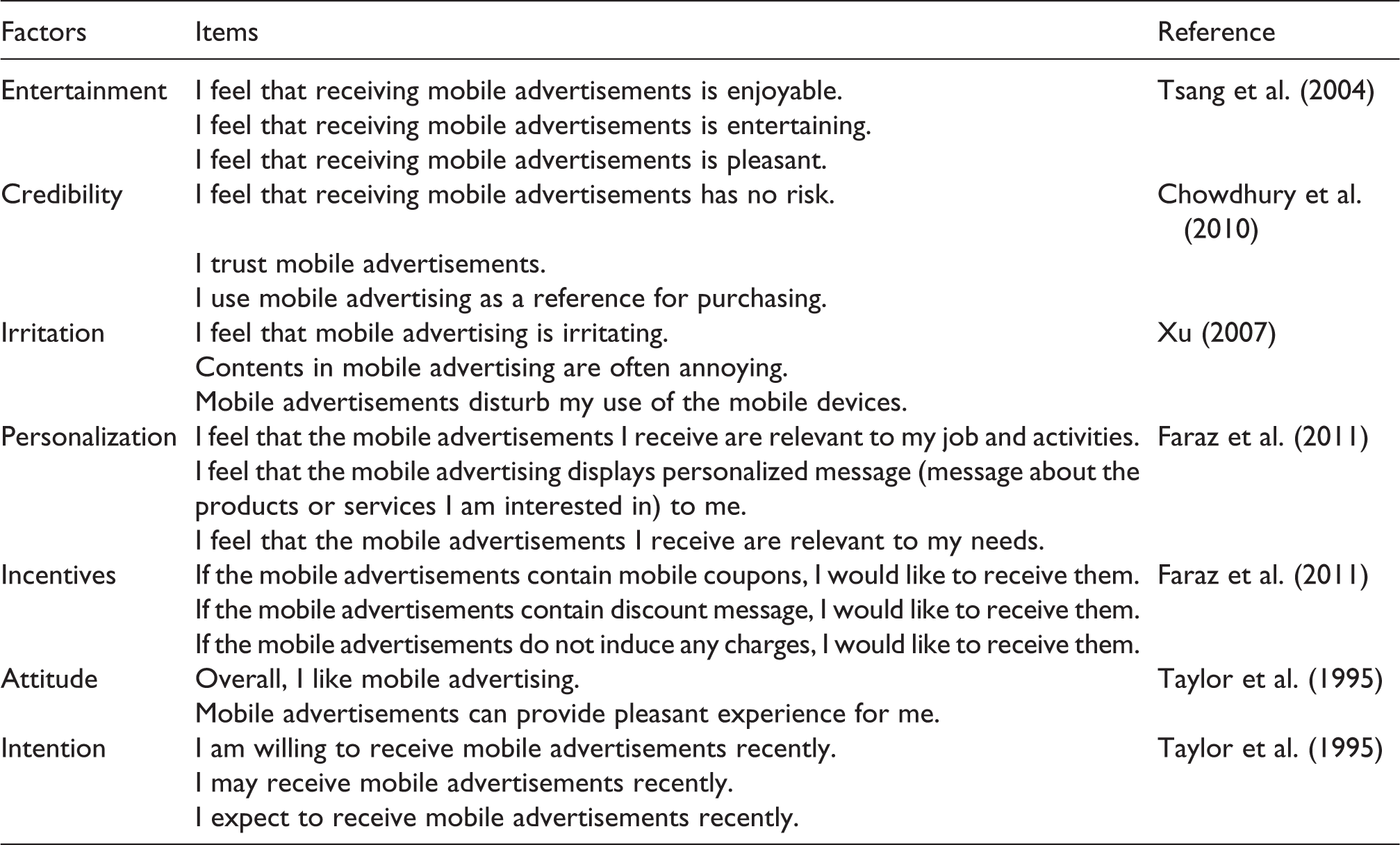
| Factors | Items | Reference |
|---|---|---|
| Entertainment | I feel that receiving mobile advertisements is enjoyable. | Tsang et al. (2004) |
| I feel that receiving mobile advertisements is entertaining. I feel that receiving mobile advertisements is pleasant. | ||
| Credibility | I feel that receiving mobile advertisements has no risk. | Chowdhury et al. (2010) |
| I trust mobile advertisements. | ||
| I use mobile advertising as a reference for purchasing. | ||
| Irritation | I feel that mobile advertising is irritating. Contents in mobile advertising are often annoying. | Xu (2007) |
| Mobile advertisements disturb my use of the mobile devices. | ||
| Personalization | I feel that the mobile advertisements I receive are relevant to my job and activities. I feel that the mobile advertising displays personalized message (message about the products or services I am interested in) to me. I feel that the mobile advertisements I receive are relevant to my needs. | Faraz et al. (2011) |
| Incentives | If the mobile advertisements contain mobile coupons, I would like to receive them. If the mobile advertisements contain discount message, I would like to receive them. | Faraz et al. (2011) |
| If the mobile advertisements do not induce any charges, I would like to receive them. | ||
| Attitude | Overall, I like mobile advertising. | Taylor et al. (1995) |
| Mobile advertisements can provide pleasant experience for me. | ||
| Intention | I am willing to receive mobile advertisements recently. I may receive mobile advertisements recently. I expect to receive mobile advertisements recently. | Taylor et al. (1995) |