







Abstract
The information included in NGOs’ self-regulation mechanisms is crucial for fostering the good behavior and access to information of the sector. This paper reports on a comparative analysis of national self-regulation mechanisms developed in African countries versus initiatives of an international nature. The main findings show that both cases are characterized by initiatives with low levels of control (code of conduct and performance guide). Moreover, significant differences in the information they contain are identified. In this regard, national initiatives mainly present information that reinforces organizational management, while the international initiatives show a greater preference for stressing the need to improve the social mission. The demand for web disclosure is low in both cases with African self-regulations mainly calling for the reactive communication of information concerning organizational strategy. In contrast, international initiatives are more focused on promoting the proactive disclosure of information regarding the organization’s social responsibility and its commitment to improvement.
Self-regulatory NGOs in Africa are assuming a role as agents to prevent corruption and avoid government regulation.
Introduction
One of the major challenges facing African nongovernmental organizations (NGOs) is to communicate the added value they provide to society in order to improve their relations with the government (Gugerty, 2008), with donors and their legitimacy, highly questioned due to the corruption cases detected in recent years (Burger and Owens, 2010). To do so, diverse authors stress the need for improved NGO accountability mechanisms in African countries (Gugerty, 2010).
Due to the non-existence of specific laws that promote African NGO best practice, these entities have to implement voluntary mechanisms of accountability. These mechanisms can be developed by external agents or by the sector itself; thus, in the latter case, the NGOs would be self-regulated. Appropriate self-regulation mechanisms would lay down standards and rules for best management practices within the organization (Gugerty et al., 2011).
These initiatives can present a national or international scope. Those with a national scope are focused on achieving best practices among local NGOs and therefore, tend to reflect the concerns of NGOs belonging to a specific country. Conversely, international initiatives seek to improve the accountability of NGOs in various countries, and thus a global vision of NGO accountability is reached, resulting, in some cases, as a reference for other, self-regulatory NGOs (Obrecht et al. 2012). According to Murtaza (2012), international NGOs perform excellent work in defence of the sector’s interests and also in the learning procedures for improving best practice in the sector.
However, the mere adoption of self-regulation mechanisms does not ensure their positive effect on the organization. In this respect, Kaptein and Schwartz (2008) highlight that the information that contains such mechanisms is crucial to their effectiveness. In addition, authors such as Ebrahim (2010) and Kassen (2014) believe that the implementation of effective information communication systems should be viewed as an integral part of accountability mechanisms. In this vein, the use of websites is considered a strategic tool for proactive information dissemination (Ibrahim et al., 2013).
Prior literature has examined the reasons why NGOs’ self-regulation mechanisms have increased in recent years, not only in developed countries (Bies, 2010), but also in less developed countries from Asia (Sidel, 2010) and Africa (Gugerty, 2010), highlighting that the relationship between the state and the NGO sector, as well as the level of development of obligatory accountability mechanisms, are important aspects to take into account. However, the question concerning the information that contains self-regulation mechanisms has been neglected. In this regard, an important perspective that has been used to shed light on this phenomenon, albeit in the corporate sector, is the difference between national and international self-regulation mechanisms (Kolk et al., 1999). Furthermore, the studies that have paid attention to the extent to which self-regulation mechanisms encourage the use of web pages as an information communication strategy are very limited (Gálvez-Rodríguez et al., 2012), and even more so in the African context.
Based on these precedents, this study performs a comparative analysis between the national self-regulation mechanisms developed by African NGOs and self-regulation mechanisms with an international scope. To do so, we first analyze the themes and structures most frequent in such mechanisms. Secondly, we examine the demand for information disclosure and communication channels.
We believe this study contributes in various ways to the current understanding of these questions. In the first place, by rectifying the shortage of studies focused on the information that contains self-regulation mechanisms in the NGO sector and, especially, from less developed countries, as well as those with an international scope. By doing so, this analysis will also enable a better awareness of the different issues that should be included in accountability mechanisms. Also, it will offer a broad outlook on the different types of self-regulation mechanisms being implemented. Secondly, this study addresses the underexplored question of whether or not web pages are being promoted by self-regulation mechanisms as a key communication channel for improving accountability in the sector. Thirdly, the comparative analysis could improve the development of both national and international initiatives, by identifying not only aspects they have in common but also those which are absent from one or other of the approaches.
African NGOs and self-regulation models
African NGOs are increasingly acquiring greater importance in the sustainable development of their countries. In this regard, their positive contributions to aspects such as poverty eradication, democratization, capacity building and environmental protection should be highlighted (Nikoi, 2008; Moyer et al., 2012).
Regarding the characteristics of the African NGOs, in general terms, the scope of their activities is mainly focused on the beneficiaries from small local areas. In addition, these organizations are small in size due to their limited financial, material and human resources, with volunteers comprising the majority of their staff (Mabawonku, 2001). Nonetheless, it is worth noting that these entities provide services in an affordable and more effective manner than the government (Kemoni and Ngulube, 2008). Moreover, in spite of the prominent role of African NGOs in providing services in grassroots communities, their added value is being overshadowed by their international counterparts, harming the fundraising and evolution of the sector. The main causes of this situation are their lack of institutional and technical capacity in areas such as communication and records management (Kwanya et al., 2014).
In keeping with communication management, Burger and Owens (2010) and Gugerty (2010) argue that the transparency of African NGOs has been questioned mainly due to four main areas. First, their main source of funding is the donations made by developed countries, and the considerable physical distance involved often fosters the existence of information asymmetries between NGOs and their benefactors. Second, the need to obtain funds provokes a high level of competition among these organizations and in consequence coordination and information communication among peer organizations are scant. Third, the lack of personal motivation among some employees has generated a lack of transparency in African NGOs’ management results. Finally, there is a certain tension between governments and the sector, because these NGOs are perceived as a political threat and as competitors for fundraising. Indeed, this hostile relation has encouraged some NGOs to falsify the information provided to public administrations.
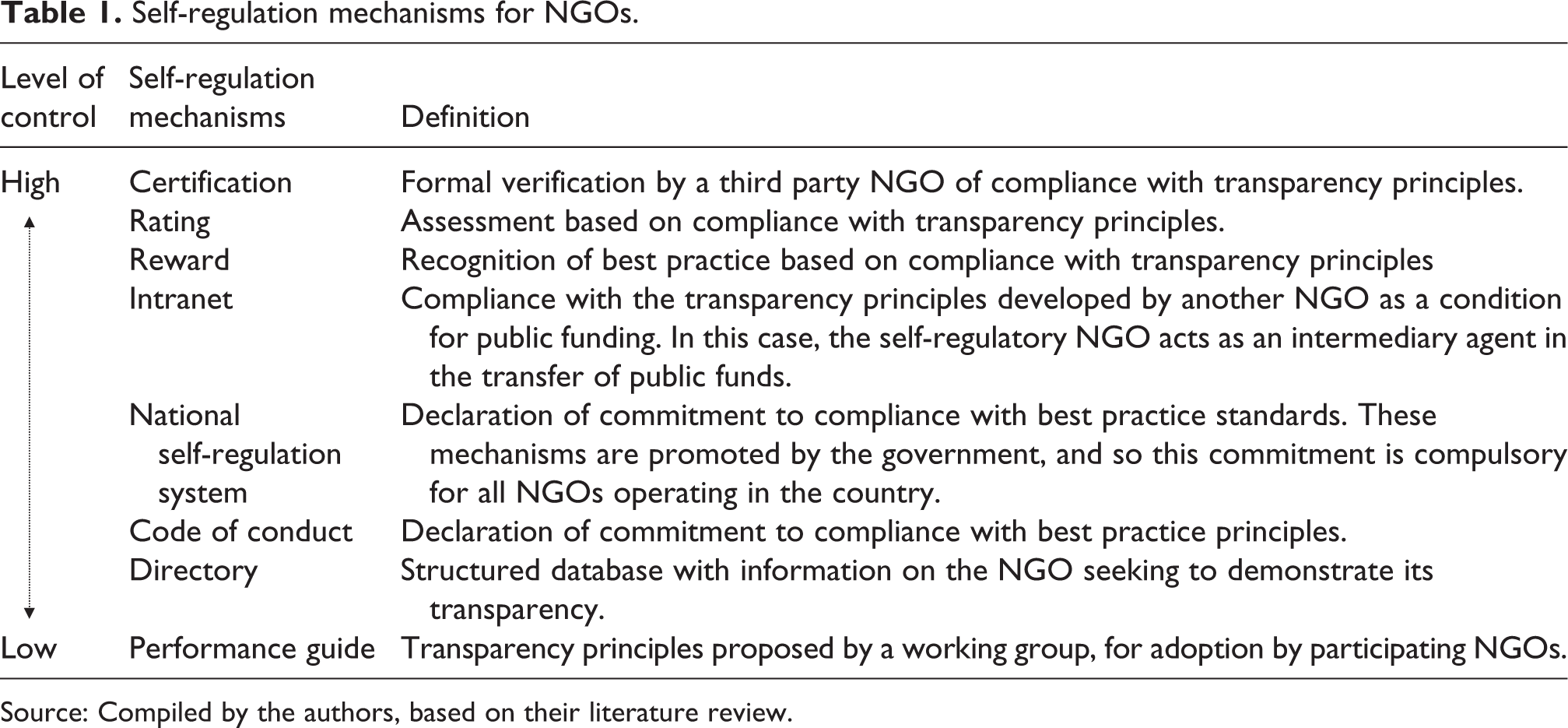
With respect to NGOs’ self-regulation mechanisms and in line with Warren and Lloyd (2009), the self-regulation mechanisms can be classified in six categories: certification, rating, award, code of conduct, directory and performance guide. For the above authors, one of the main differences is their level of control over compliance with the required principles of transparency. Sidel (2010) identified a further category in Asian countries, termed “intranet”. Similarly, Gugerty (2010) referred to “national self-regulatory systems” in African countries, under which the government assigns to a self-regulatory NGO the responsibility of developing accountability mechanisms to be implemented by all NGOs that operate in that country. Although these mechanisms present an interventionist characteristic, their standards are open and there is little control of compliance (see Table 1).
Self-regulation mechanisms for NGOs.
Source: Compiled by the authors, based on their literature review.
Diverse theories explain the adoption of self-regulation mechanisms. According to agency theory (Jensen and Meckling, 1976), a self-regulatory NGO (principal) will control the activities of other NGOs (agency) in order to prevent the existence of information asymmetries among the main stakeholders (Ebrahim, 2003). In this line, Bies (2010) added that this “controlling” purpose is also carried out to supplement deficiencies such as weak governmental regulation. In relation to resource dependence theory (Froelich, 1999), a key aspect of NGOs’ behavior is their need for external funding and volunteers. In this regard, self-regulation mechanisms are implemented to better respond to stakeholder expectations and thus support fundraising and volunteer recruitment (Bies, 2010).
Regarding institutional theory (Meyer and Rowan, 1977) in general, and mimetic isomorphism in particular, NGOs adopt self-regulation mechanisms in order to imitate the accountability patterns that have been successfully implemented in other fields, such as the corporate sector (Bies, 2010). Moreover, in accordance with legitimacy theory (Suchman, 1995), NGOs should also demonstrate their intention to improve (Edwards and Hulme, 1995). Therefore, accountability mechanisms may also constitute a learning tool in the organization’s mission (Ebrahim, 2003).
Literature review
Thematic and structural analysis
In analyzing the content of accountability mechanisms, both thematic and structural aspects should be taken into account (Gaumnitz and Lere, 2004).
With respect to thematic analysis, developing principles that foster behavior that is favourable to the organization and which avoids practices prejudicial to it, is highlighted (Carasco and Singh, 2003). The NGO literature noted the need for principles such as the defence of human rights, professionalism, cooperation, effectiveness, independence, good governance, responsibility, transparency, quality, integrity and legality (Chene, 2009; Obrecht et al., 2012). Other principles such as sustainability consciousness (Unerman and O’Dwyer, 2006) and commitment to learning (O’Dwyer and Unerman, 2007) should also be included in NGO principles of best practices.
In addition to the above, the question of the stakeholder targets, i.e., who do these initiatives address, should be considered (Ebrahim, 2010). In this respect, Murtaza (2012) stated that NGOs should be accountable upwards to donors and governments, inwards to their boards, downwards to communities, staff and partners and sideways to other NGOs.
Finally, it is essential to implement monitoring and evaluation procedures in order to ensure their efficacy. In particular, accountability mechanisms should incorporate control procedures; sanctions to penalise practices prejudicial to the organization (Murtaza, 2012) and complaint mechanisms and channels for suggestions, both to receive feedback and for the sake of setting an example in the sector (Chene, 2009).
The structural analysis should complement the information obtained from the thematic analysis. Among the aspects considered is the titled used (McCraw et al., 2009) and level of detail of each principle stipulated (Gaumnitz and Lere, 2004), whilst the extension of the accountability mechanism is one of the most analyzed (Kaptein, 2004).
Regarding the studies that have examined the content of NGOs’ self-regulation mechanisms, Lloyd and De las Casas, (2006) analyzed 35 codes of conduct and certification schemes from different regions and scope, with only five from African countries. They pointed out that the common concerns of such mechanisms were good governance and transparency. Likewise, they highlighted the low level of interest in addressing the need for beneficiary accountability, as well as in the monitoring and evaluation procedures. Later, Obrecht et al. (2012) carried out a comparative analysis among 16 national self-regulation mechanisms and one international initiative, the INGO Charter. The national self-regulation mechanisms were from all regions, with only two from Africa. As the main convergences, the authors noted the principles related to transparency and good governance. With respect to the major divergences, the authors observed that the INGO Charter was the most concerned with the importance of human rights. Coinciding with Lloyd and De las Casas (2006), the authors posit the greater need for stressing the importance of beneficiary accountability. However, they identified moderate monitoring and evaluation procedures, as in most cases a sanction mechanism was used.
There are no previous studies that focused on the structure of NGOs’ self-regulation mechanisms. However, in the corporate sector, Kaptein (2004) analyzed the codes of conduct of the top 200 largest companies in the world and concluded that the extension or size of the different codes is varied, as it ranges from 1 to 79 pages and from 50 to almost 18,000 words.
Therefore, it is worth noting that the existing literature concerning the content of NGOs’ self-regulation mechanisms does not take into account both thematic and structural aspects; the case for initiatives developed in Africa region is neglected; and the analysis is carried out from a descriptive view rather than from an empirical standpoint. Hence, we argue for the need for an in-depth empirical analysis of the African case and, in particular, to identify to what extent these mechanisms differ from international self-regulation mechanisms.
Information communication and the Internet
Accountability cannot be achieved in an environment where information is not available (Okello-Obura, 2013). In this regard, Darbishire (2010) observed that accountability mechanisms can foster two types of information disclosure policy: reactive and proactive. Reactive disclosure concerns the right to request and receive obligatory information, and so access depends upon a pre-existing request. In proactive disclosure, however, information is published irrespective of whether or not it has been previously requested. To Mchombu (2007), social actors, such as NGOs, should demonstrate best practice via the active communication of information.
With reference to the disclosure policy, the implementation of adequate information communications systems is very important to ensure the free flow of up-to-date information and its availability at any time (Kemoni and Ngulube, 2008). To this end, nowadays web pages are considered as one of the communication channels most suitable to meet stakeholders’ information needs (Ibrahim et al., 2013). Therefore, NGOs should disclose information in a proactive manner via the use of web pages.
The literature concerning the use of web pages as an accountability mechanism in the NGO sector has emphasized the need for disclosure of both nonfinancial and financial information, and particularly that concerning the organizational profile, governance, strategy, social responsibility, financial management and commitment to learning procedures (Ingenhoff and Koelling, 2009; Global Reporting Initiative, 2010; O’Dwyer and Unerman, 2010; Saxton and Guo, 2011; Gandía, 2011; Gálvez-Rodríguez et al., 2012).
Based on these aspects, previous studies have examined the online disclosure of information of NGOs mainly from the United States (Saxton and Guo, 2011) and Europe (Ingenhoff and Koelling, 2009; Gandía, 2011). As the main findings, in all cases the under-utilization of websites to enhance the communication of the sector with their stakeholders is highlighted. However, knowledge regarding whether the self-regulation mechanisms promote the use of this channel of communication is still underdeveloped. In this regard, Gálvez-Rodríguez et al. (2012) have explored the demand for the use of websites in the self-regulation mechanisms from Latin American countries, the United States and Europe. In their study they concluded that, although there is a low requirement in this respect, the initiatives from European countries are those that most demand the use of a website, particularly with regards to the profile of the organization.
In the African context, literature has shown a growing concern for the need to enhance information and communication technologies (ICT) in order to boost the progress of society in such countries (Mchombu, 2007; Kwanya et al., 2014). Regarding the NGO sector, previous studies have examined the advantages that ICT offer to improve aspects such as collaboration, cooperation and knowledge sharing (Batanda, 2004; Kemoni and Ngulube, 2008), as well as for information communication, civil society mobilization, professionalization and the building of networks (Nikoi, 2008; Kurniawan and Rye, 2013). Therefore, we add to this research by exploring the question concerning the role that self-regulation mechanisms from Africa and international initiatives play in promoting the use of webpages as an accountability mechanism.
Methodology
To determine the differences between the information that contains national mechanisms and international self-regulation mechanisms, we conducted a content analysis from two perspectives. First, we compared the themes and structures most frequent in both groups. Secondly, we then compared the demand for the disclosure of information and communication channels.
The type of content analysis implemented is deductive, as we have codified the information into pre-defined categories derived from the literature reviewed according to Berg (2001) and, in particular, into several categories of items which capture the themes that should be included in an adequate accountability mechanism and the information that should be proactively disclosed via web pages. In this regard, our literature review has allowed us to identify three main categories in the thematic analysis with 20 items, while in the structural analysis one item has been considered, resulting in a total of 21 items (see Table 3, first row). For the analysis concerning the disclosure of information and communication channels we have identified six main categories with a total of 31 items (see Table 4, first row). In addition, before coding, a dialogue took place among co-researchers to establish the manner in which the data classification would be carried out, in line with Graneheim and Lundman (2004). It is also worth mentioning that our coding scheme presents a low potential of inter-rater coding errors, as it does not present many sub-categories and there is no independency and interactivity among the categories used (Milne and Adler, 1999).
With respect to the level of analysis, Abbott and Monsen (1979) argue that it depends on the complexity of the research question. In our case, to identify the absence or presence of a theme we used a dichotomous system, the simplest level of analysis. However, to evaluate the demand of information and communication channels, we opted to differentiate three levels. The first level (L1) indicates that information access must be reactive, i.e., information should be provided in response to a prior request. The second level (L2) implies the demand for proactive information disclosure, irrespective of the type of communication channel. The third level (L3) means that there is a requirement for proactive disclosure via web pages (see Table 4). Moreover, it should be noted that this scoring is gradual, which means that if a mechanism demands an online proactive disclosure of the information (level 3), it will also score in levels 1 and 2.
In accordance with Krippendorf (1980), two coders carried out the two analyses in order to minimize possible errors in interpretation. To contrast the reliability of the data collected by the coders we have implemented the coefficient of agreement of Scott’s pi, obtaining an inter-coder range of 0.81 for the thematic and structural analysis content analysis and 0.83 for the content analysis regarding demand in the dissemination of information and communication channels.
Finally, the Mann-Witney U test was applied to identify significant differences, both in the thematic-structural analysis and in the analysis of the demand for information disclosure and communication channels, in line with previous content analysis studies (Criado-Jiménez et al., 2008). This nonparametric technique is the most appropriate for the analysis of two independent samples in which the variables are categorical, i.e., they do not comply with the assumptions of normality and homoscedasticity (Sheskin, 2000).
Sample
To achieve the aims of this study, we reviewed the national self-regulation mechanisms of African countries and those with an international scope. The information used for both groups was obtained from the One World Trust (OWT) database. This organization is a non-profit entity, founded in 1951, which is dedicated to researching and developing recommendations to improve accountability in organizations. According to institutions such as the Instituto de Comunicación y Desarrollo (Communication and Development Institute) and authors such as Arias (2011) OWT provides one of the most complete databases available on NGO self-regulation.
In total, 36 national initiatives and 29 with an international scope were identified. Thirteen mechanisms were removed from the first group, and 8 from the second, because they were still under development or because the information required for this study was not available. Therefore, the final sample consisted of 23 national mechanisms from African countries, and 21 international initiatives. The analysis was carried out in April and May 2014.
Results
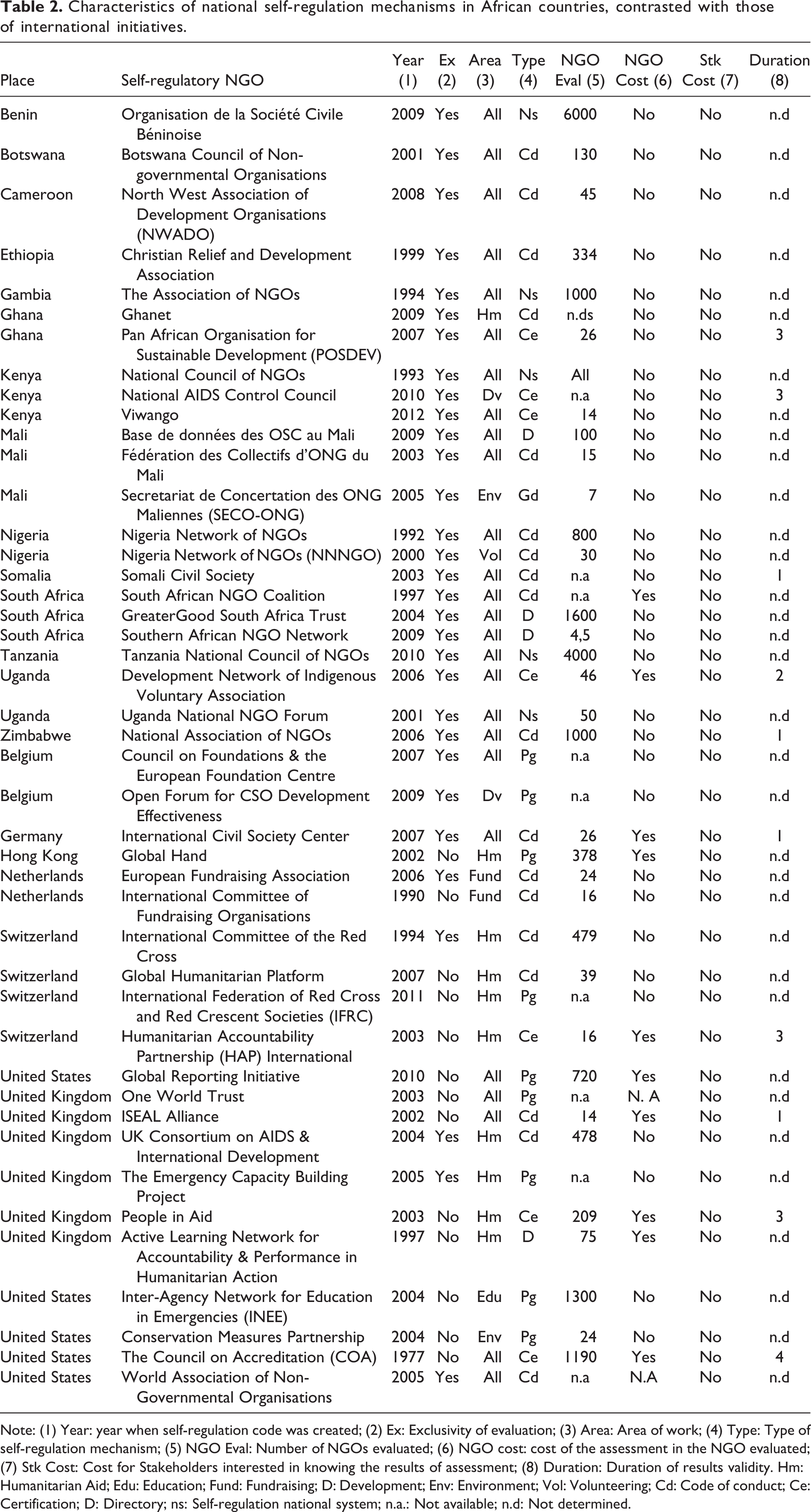
To better understand the functioning of the self-regulation mechanisms analyzed, we believe it is convenient to know their principal characteristics according to Warren and Lloyd (2009). Therefore, as shown in Table 2, the national mechanisms are mainly located in Kenya, Mali and South Africa. With respect to the international mechanisms, it is noteworthy that none of the cases analyzed are located in African countries, being mainly based in Europe. Regarding the year of foundation, in both groups the majority of these self-regulation mechanisms have been created since 2002.
Characteristics of national self-regulation mechanisms in African countries, contrasted with those of international initiatives.
Note: (1) Year: year when self-regulation code was created; (2) Ex: Exclusivity of evaluation; (3) Area: Area of work; (4) Type: Type of self-regulation mechanism; (5) NGO Eval: Number of NGOs evaluated; (6) NGO cost: cost of the assessment in the NGO evaluated; (7) Stk Cost: Cost for Stakeholders interested in knowing the results of assessment; (8) Duration: Duration of results validity. Hm: Humanitarian Aid; Edu: Education; Fund: Fundraising; D: Development; Env: Environment; Vol: Volunteering; Cd: Code of conduct; Ce: Certification; D: Directory; ns: Self-regulation national system; n.a.: Not available; n.d: Not determined.
The national mechanisms established in African countries are exclusively focused on enhancing best practices in the NGO sector. The international mechanisms, however, are centred not only on the NGOs but also on other entities, such as government agencies, academic institutions and consultancies. Furthermore, the national mechanisms are available to any NGO interested in them, independent of its area of work. In contrast to this, the majority of the international mechanisms address a specific field, with humanitarian aid being the area most frequently cited.
The types of self-regulation mechanisms most commonly developed in the national mechanisms are codes of conduct and national self-regulation systems, while in the international mechanisms, those most often implemented are performance guides, followed by codes of conduct. Regarding this data, it is worth noting that they partially coincide with Gugerty (2010) when indicating the predominance of codes of conduct in Africa during 1999-2006. However, it also shows that national self-regulation systems are acquiring greater prominence. Furthermore, these results are in line with the current trend in Latin American initiatives (Gálvez-Rodríguez et al., 2012). Conversely, they do not coincide with the self-regulation mechanisms from European countries and the United States, where certification and rating are very common (Warren and Lloyd, 2009).
In both groups, the number of NGOs assessed is very heterogeneous. Moreover, in the international initiatives the cost of assessment to the NGO evaluated occurs more frequently. In both cases, there is no cost to those stakeholders interested in being informed about the assessment results. In neither case is the duration of self-regulation results limited to any specific number of years.
Results of the thematic and structural analysis
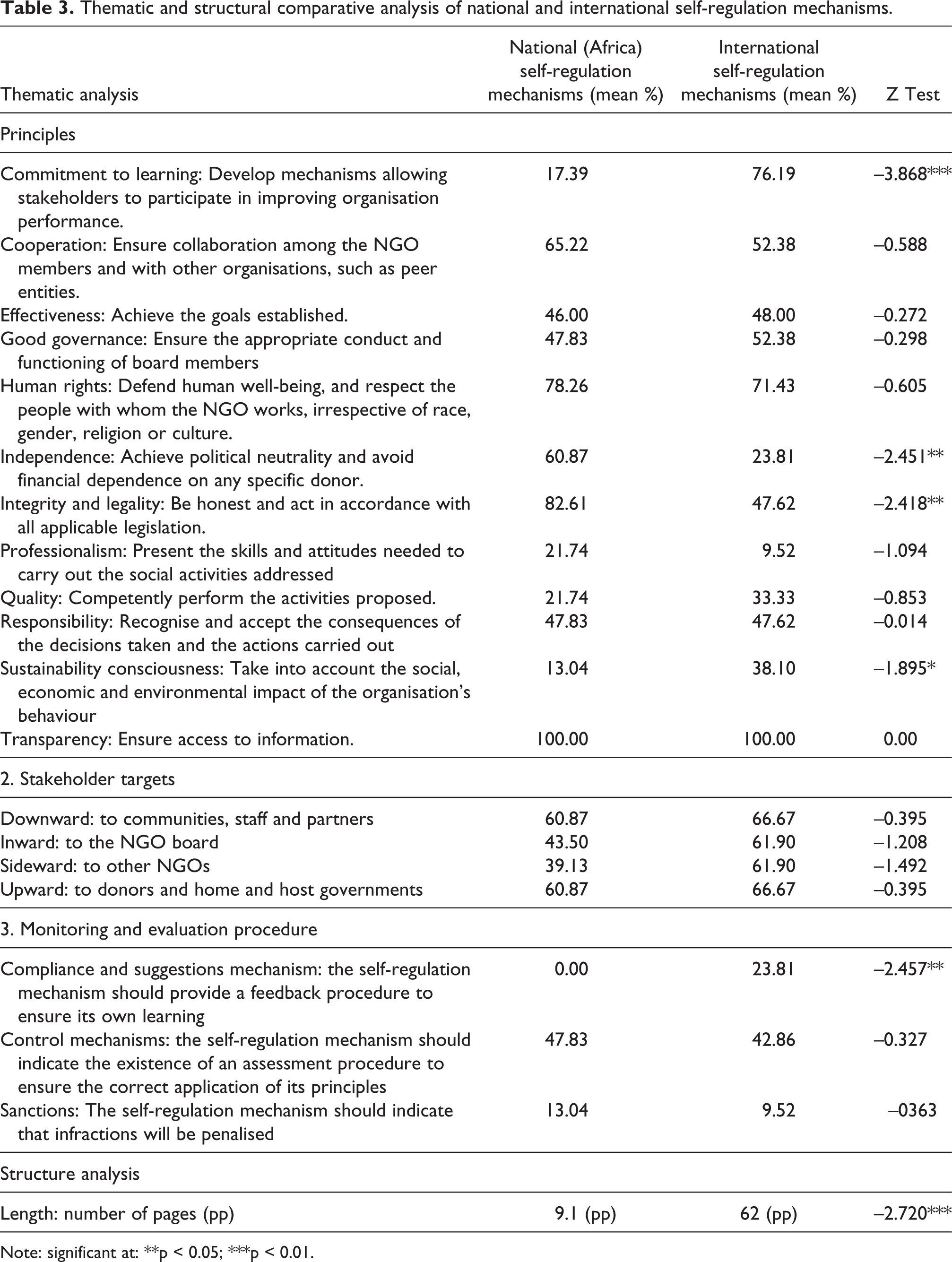
From the thematic analysis performed on the national self-regulation mechanisms from African countries and those with an international scope, we have identified several statistical differences (see Table 3). Regarding the principles demanded by both groups, there were statistically significant differences concerning the principle ‘independence’. In particular, more than half of national mechanisms promoted that principle whereas fewer than 30% of international mechanisms mention it.
Thematic and structural comparative analysis of national and international self-regulation mechanisms.
Note: significant at: **p < 0.05; ***p < 0.01.
Likewise, the majority (82.61%) of the national mechanisms encourage “integrity and legality” while fewer than 50% of the international mechanisms cases analyzed included this principle. The high interest of national mechanisms in fostering this principle coincides with the results obtained by McCraw et al. (2009). Therefore, this data might indicate that national mechanisms considered it to be very necessary to ensure that the members of the organization act honestly and in accordance with all applicable legislation.
The data also reflected statistical divergences concerning ‘sustainability consciousness’ and commitment to learning’, indicating that international mechanisms lend greater importance to respect for the environment, as well as the implementation of learning procedures that fosters improvement of the NGOs’ missions. Hence, the lack of concern in the NGO sector about the need for being responsible for the direct and indirect impacts of their activities (Unerman and O’Dwyer, 2006) could be due to the fact that these aspects are still not fully promoted in all self-regulation mechanisms.
With respect to convergences found in the principles, the need for ‘transparency’ was considered in all cases, in line with the results obtained in previous studies (Lloyd and De las Casas, 2006; Obrecht et al., 2012). Therefore, overall it seems that transparency is one of the priorities when assessing the best practice of the organization. Furthermore, nearly 80% of the national mechanisms and international mechanisms analyzed included the principle of ‘human rights’. These results do not coincide with Obrecht et al. (2012), who identified that only a few national initiatives contemplated this aspect. Taking into account that their study comprises self-regulation mechanisms from Canada, the Unites States and Europe, it would be reasonable to expect that African initiatives, where the level of development is significantly lower, place greater emphasis on the importance of equal opportunities.
Pertaining to ‘stakeholder targets’, no significant statistical differences were found. In this regard, it should be highlighted that contrary to previous studies (Lloyd and De las Casas, 2006) more than half of the cases analyzed mention the importance of inward accountability. Therefore, these results could indicate that self-regulation mechanisms are beginning to progress on this issue.
With regard to the monitoring and evaluation procedure, in both cases (national mechanisms and international mechanisms), fewer than 50% of the mechanisms indicated the need to control compliance with the principles, and in both cases little emphasis was placed on the use of sanctions. This low commitment to evaluating the principles supports the results found in previous studies (Lloyd and De las Casas, 2006); however, it seems African initiatives pay less attention to ‘penalising’ bad practices than other regions (Obrecht et al., 2012). In relation to complaints and suggestions mechanisms, there were statistical differences in the development of feedback and suggestion procedures, with the international mechanisms showing more interest in this respect.
Finally, the results obtained indicate significant differences in the length of the documents in question, with those of the international mechanisms being considerably more substantial than those of the national mechanisms. In general, international mechanisms include information pointing out the importance of accountability and a checklist with items or rhetorical questions in order to help NGOs better understand the self-regulation function.
Results of the demand for information communication and Internet
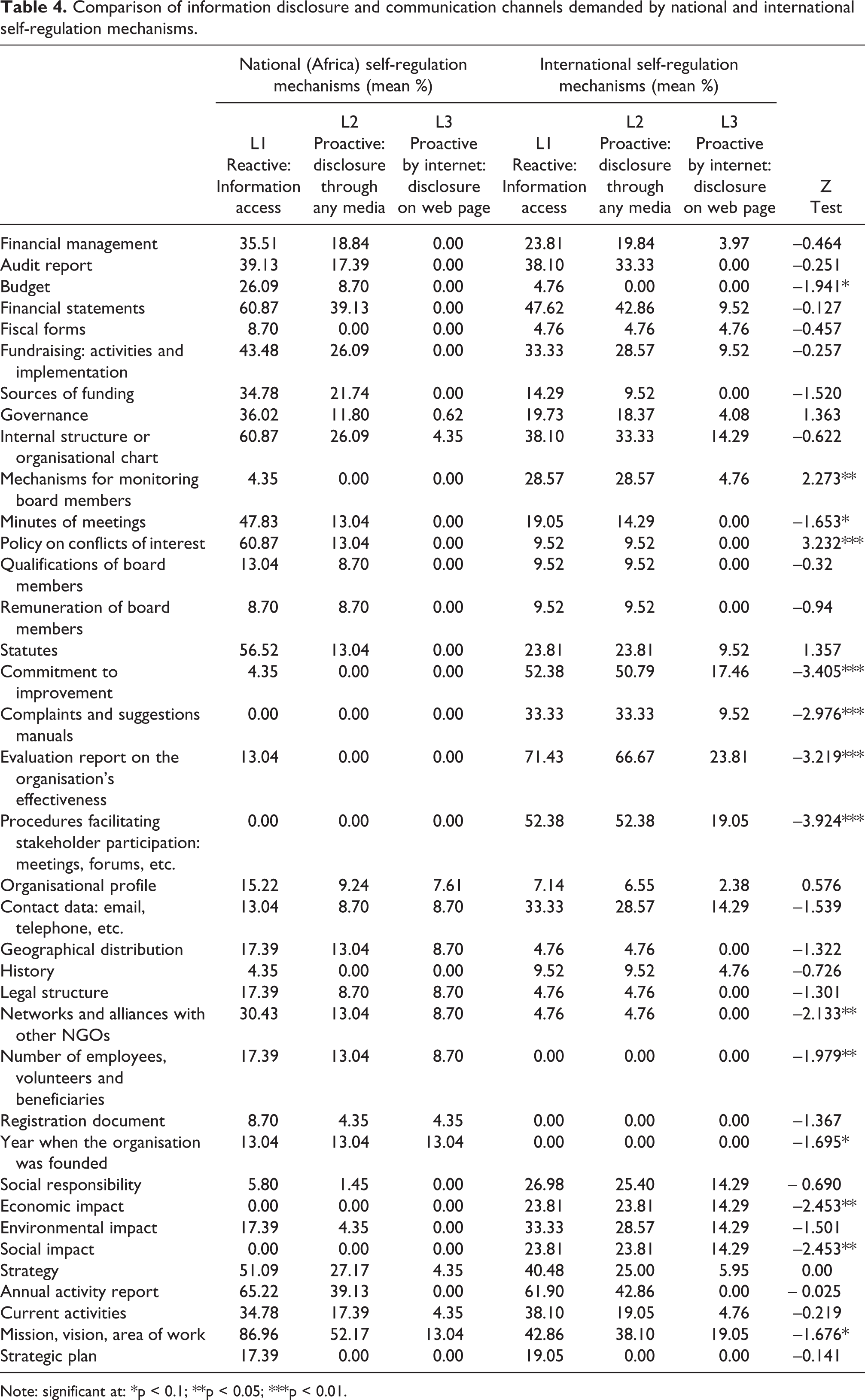
The results concerning the demand for the disclosure of information and the communication channels indicate that reactive disclosure is most commonly required by national mechanisms, whereas proactive disclosure, without specifying the communication channel, is more common among the international mechanisms (see Table 4). Although in general the encouragement of Internet use (L3) as an accountability mechanism is low, it is worth noting that national mechanisms are the most interested in requesting the online disclosure of information regarding the profile and the strategy of the organization. Conversely, the international mechanisms are mainly focused on boosting the online transparency of the social responsibility and improvement commitment of the organization. In this regard, it seems that African initiatives are in line with self-regulation mechanisms from European countries but do not share the priority that Latin American self-regulatory NGOs give to online disclosure of financial management (Gálvez-Rodríguez et al., 2012).
Comparison of information disclosure and communication channels demanded by national and international self-regulation mechanisms.
Note: significant at: *p < 0.1; **p < 0.05; ***p < 0.01.
Focusing on the statistical differences identified in each aspect, in the information related to the organizational profile, the national mechanisms were more likely to require Internet-based disclosure of the year when the organization was created, the number of employees, volunteers and the beneficiaries targeted, as well as, the alliances with other NGOs.
With respect to governance, the national mechanisms demonstrate a greater demand for the information disclosure of minutes of meetings and policies on conflicts than international mechanisms. However, while national mechanisms mainly foster the reactive disclosure of such information (L1), the majority of the international mechanisms required its proactive communication (L2). Although the functioning of the board members is one of the key aspects to demonstrate the ethical behavior of the organization, both initiatives indicate a very low interest in boosting the web governance information, coinciding with the Spanish Development NGOs studied by Gandía (2011).
Regarding the organization’s strategy, while over 86% of the national mechanisms required disclosure of the mission, vision and area of work in a reactive manner, the majority of international mechanisms that examine the information access to these items require their proactive disclosure. Therefore, this result seems to indicate that international initiatives are in line with authors such as Mchombu (2007), who argue that the active communication of NGOs’ missions is fundamental to strengthening the legitimacy of the sector.
The behavior was also heterogeneous as regards the communication of social responsibility. In this vein, the international mechanisms focused on the online disclosure of the economic and social and environmental impact of the NGOs’ activities, whereas neither of these factors was called for by any of the national mechanisms analyzed. In this regard, the international mechanisms could be considered as the only initiatives that emphasize the online proactive disclosure of social responsibility, as the national self-regulation mechanisms from other regions pay little attention to this aspect (Gálvez-Rodríguez et al., 2012).
In financial management, the national mechanisms most often expressed the need to report the organization’s budget, mainly through reactive disclosure. However, in both cases a very low demand for online disclosure concerning financial information is detected, thus supporting previous studies that noted that the sector still underestimates the benefits of financial web disclosure as a control mechanism to avoid embezzlement (Saxton and Guo, 2011).
Finally, in the commitment to improvement, the international mechanisms are those that most demand that aspect and in a proactive manner. To this end, the international mechanisms are in line with Ingenhoff and Koelling (2009), who stressed that the achievement of NGOs’ missions greatly depend on the extent to which such organizations disseminate information that encourages feedback from their stakeholders.
Conclusions
In recent years, civil society increasingly demands a greater level of accountability by NGOs. These entities have developed different self-regulation mechanisms to ensure their legitimacy and survival. Warren and Lloyd (2009) argue that the self-regulation mechanisms differ based on the geographic area in which they have been developed.
For the moment, little is known regarding the level of convergence of the different self-regulation mechanisms, particularly regarding the manner in which they foster good behavior and access to information of the organization. Therefore, taking these considerations into account, the aim of this paper is to carry out a comparative analysis between the national self-regulation mechanisms developed by NGOs from African countries (national mechanisms) and the self-regulation mechanisms with an international scope (international mechanisms).
Regarding the characteristics of these two groups, findings show that in both cases the development of ‘schemes’ that allow a low level of control is very common. However, while international mechanisms tend to be more specialized in the best practices of NGOs from specific area of work, most of the national mechanisms are focused on enhancing the behaviour of all NGOs that work in their country.
From the thematic analysis performed, we can observe that national mechanisms respond mainly to the call for principles that ensure the internal ethical behavior of the organization members (Chene, 2009; Obrecht et al., 2012) while international mechanisms are more interested in fostering the principles that guarantee the adequate impact of their activities, in line with Unerman and O’Dwyer (2006) and O’Dwyer and Unerman (2007). Moreover, from the structural analysis it should be noted that international mechanisms are the most interested in giving information that explains the importance of accountability and how it should be implemented.
Pertaining to the analysis of demand for the disclosure of information and communication channels, in general there are few requirements for web pages to be used as a communication channel. The national mechanisms mainly foster reactive disclosure, with greater emphasis being placed on the information concerning organizational strategy. In contrast, international mechanisms are more focused on the proactive disclosure of information, with the organization’s social responsibility seeming to be a common trend in the self-regulation mechanism from other regions. Surprisingly, the findings show that African initiatives are more in line with the initiatives from European countries than those in Latin America (Gálvez-Rodríguez et al., 2012).
Based on the findings obtained in our study we observe that self-regulatory NGOs in African countries are assuming a role as agents, controlling the sector in order to prevent corruption and avoid greater government regulation, in line with agency theory. On the other hand, bearing in mind that African NGOs are strongly dependent on external funding, this high interest in ensuring the ‘good behavior’ of the sector could be due to the need to demonstrate that local NGOs deserve the support of their external stakeholders, following resource dependence theory. To do so, African self-regulatory NGOs are emulating the accountability mechanisms, such as codes of conduct, that have been previously adopted in other sectors such as corporations, according to institutional theory.
On the contrary, international self-regulatory NGOs seem to be more aware of the need to use accountability as a tool to improve the NGO’s mission, as indicated by legitimacy theory. Therefore, these entities are interested in developing mechanisms that allow NGOs to learn how to better achieve their social goals. To do so, these mechanisms foster the importance of having closer contact with workers, beneficiaries, volunteers, as well as to make these entities much more conscious of the social impact that their activities have in the environment they work in.
Taking into consideration these findings, we make various recommendations to improve the self-regulation mechanisms in African countries. First of all, these initiatives should be addressed to any NGO and include information expressed in a clear and detailed manner. By providing measurable and comprehensive principles, correct understanding and evaluation will be ensured. Secondly, the information given should be accompanied by control procedures in order to achieve one of the main objectives of such mechanisms, i.e., to identify the ‘bad NGOs’. These procedures should be implemented along with incentives that ‘reward’ or ‘penalize’ the behavior of the organization. By doing this, NGOs will avoid stronger regulation and will be better able to respond to the stakeholders’ demands for greater efficacy.
Thirdly, national initiatives should improve communication regarding the need for a commitment to learning as a principle and should also put this principle into practice. In this regard, self-regulatory NGOs should include more information that makes the sector aware on the importance of improving their social mission. In addition, these mechanisms should not be static, they should progress by identifying what should be kept and what should not, in order to improve and respond to the main concerns of the sector.
Fourthly, greater interest in fostering the use of websites as accountability mechanisms should be highlighted, stressing the importance for promoting all transparency dimensions (profile, governance, strategy, social responsibility, financial management and improvement commitment). As a result, African NGOs will be able to meet the informative demands of all their stakeholders (internal and external) and will be better able to communicate the added value they provide to society. In addition, if the benefits of today’s most widely used channel of communication, the Internet, are promoted by the sector itself, the lack of online transparency observed in these organizations could be rectified.