







Abstract
With support from government and business, artificial intelligence is growing quickly in China. However, little is known of how media use shapes the Chinese public’s perception of artificial intelligence. Based on a national online survey (N = 738), this pilot study explored the linkages between media use and people’s risk perception, benefit perception, and policy support of artificial intelligence. Results showed that respondents perceive artificial intelligence as more beneficial than risky. Newspaper use was negatively associated with benefit perception and policy support, whereas television and WeChat use positively predicted both. Analyses of interaction effects showed that personal relevance could partly mitigate the influence of media use.
Introduction
Artificial intelligence (AI) is a fast-growing area of innovation that draws worldwide attention. The Chinese government is able to mobilize resources from multiple sectors for developing latest technologies (Cheng, Liu, Fan, Yan, and Ye, 2019). Having benefited substantially from developing Internet-related technologies, the Chinese government made new commitments to boosting the AI industry. In 2017, the State Council issued an official initiative for China to become the world’s primary AI innovation center by 2030 1 . With enormous government and business investments, China is already among the global leaders in AI research and development (Barton, Woetzel, Seong, and Tian, 2017).
However, while the AI industry can help China acquire international prestige, promote economic growth, and improve people’s quality of life, the technology also carries risks to employment structure, privacy, and social ethics. Though AI’s applied relevance has increased, it is still an ambiguous phenomenon to many. A recent report showed that the Chinese public is mostly optimistic about AI and its potential benefits, but they are also concerned that certain applications might bring risks. 2 A textual analysis of online comments confirms Chinese people’s mixed feelings (e.g., optimism, excitement, worry, anxiety, fear) toward AI (China Institute for Science and Technology Policy, 2018).
Media play a main role in interpreting scientific progress for the public (e.g., Donk, Metag, Kohring, and Marcinkowski, 2012; Ho, Scheufele, and Corley, 2010; Stuart, 2002). Specifically, use of scientific media shapes how the public perceives and evaluates new technologies (e.g., Ho, Brossard, and Scheufele, 2008; Lee and Scheufele, 2006). When a technology involves potential risks, people experience a greater need to seek related media information (Ball-Rokeach and DeFleur, 1976; Yang, Kahlor, and Li, 2014). Thus, it is reasonable to assume media use will influence public perceptions of AI technology.
However, little research has examined the relationship between media use and public’s perceptions of AI. In a high-choice media environment, people have access to a diversity of information based on their own needs. But the increase of information does not necessarily lead to understanding and intelligence. When the amount of information received exceeds the limit of people’s processing capacity, they are likely to have a sense of information overload and find it difficult to utilize the information for problem solving or decision making (Yan, Zha, Yan, and Zhang, 2016). Media information can thus complicate the way people react to innovations and emerging technologies. After getting exposed to relevant information on media, people may develop varying feelings, emotions, and, perceptions about new technologies. In fact, there is interplay between people’s emotional and perceptual reactions to new technologies. For example, research shows that the public’s perceived risks and benefits can influence their support for developing new technologies (Connor and Siegrist, 2010; Lee and Scheufele, 2006; Verdurme and Viaene, 2003). With effective communication of benefits, people’s technology risk perception can be reduced (Frewer, Howard, and Shepherd, 1998). Science communicators and policy makers must understand how media information shapes people’s attitudes toward AI and related polices. To fill the gap, this pilot study explores how Chinese people’s AI risk/benefit perceptions and policy support are linked with cognitive factors (personal relevance, perceived knowledge), affective factors (negative emotions, deference to scientific authority), media factors (i.e., use of traditional and new media), and demographics.
Predicting public perceptions of AI
In this study, risk and benefit perceptions refer to individuals’ subjective evaluation of the level of risk or benefit AI may bring to human society. Policy support speaks to people’s attitudes toward making policies to guide and regulate AI development. Based on the literature, this section will discuss the variables that can influence people’s perceptions and attitudes toward AI. Three groups of factors are included: for cognitive and affective factors, this study examines personal relevance, perceived AI knowledge, deference to scientific authority, and negative emotions toward AI. Communication factors include traditional media (i.e., television and newspaper) and social media use (i.e., Weibo and WeChat 3 ).
Cognitive and affective factors
Personal relevance
Personal relevance refers to the importance of a topic or issue to individuals (Carvalho, Block, Sivaramakrishnan, Manchanda, and Mitakakis, 2008). Previous studies investigated how personal relevance influences people’s risk judgments in various contexts (Carvalho et al., 2008; Ruthman and Schwarz, 1998; So and Nabi, 2013). When a risky event is perceived as highly personally relevant, people tend to feel threatened (Carvalho et al., 2008). As suggested So and Nabi’s (2013) risk convergence model suggested that higher personal relevance was associated with greater risk perception both directly and indirectly by reducing the perceived social distance between the self and another social entity. In the current case, AI as an emerging technology triggers doubts and arouses mixed feelings among people. According to some existing evidence
4
, the Chinese public generally have certain levels of risk perceptions of AI. Therefore, this study proposes that personal relevance may amplify people’s existing risk perception about AI. The first research hypothesis is formulated as follow:
Developing a public dialogue about technology’s risks and benefits is the first step of effective science communication (Frewer, Howard, Hedderley, and Shepherd, 1999). However, most previous literature focused on the relation between personal relevance and the public’s risk perception (Carvalho et al., 2008; Ruthman and Schwarz, 1998; So and Nabi, 2013). Less is known about whether personal relevance influences the public’s benefit perception policy support of emerging technology. A few studies have explored the role of personal relevance in forming benefit perception and supportive attitudes. Frewer et al.’s (1998) study revealed that people tend to evlaute the trade-off between the risks and benefits of a given technology and that people are concerned with the potential benefits to a larger degree than the risks of the technology. In another study focusing on food’s health-related claims, the researchers found that perceived relevance to self and others were positively associated with perceived benefits to self (Dean et al., 2012). Carvalho and colleagues (2008) found that people were more likely to reject risky food products, but this association was not significant in a culturally similar context. To collect evidence regarding AI, this study proposed the following research question:
Perceived knowledge
Perceived knowledge can predict the public’s perception and supportive attitude of emerging technologies. Greater science knowledge helps citizens identify misinformation during scientific controversies (Bodmer, 1985). People with higher science literacy tend to make restrained judgments about science and technology risks, i.e., they assess risks in line with scientists and experts (Nisbet et al., 2002). The more knowledgeable citizens are, the less risk they perceive in technology (Brosssard and Shanahan, 2003). Thus, people confident in their science and technology knowledge associated more benefits with emerging technologies than those less confident (Nisbet et al., 2002; Wildavsky and Dake, 1990).
The civic scientific literacy approach to the public attitude toward science suggested that people with more science knowledge are more likely to support scientific issues (Bodmer, 1985; Lee and Scheufele, 2006), yet the effect was weaker than for factors like moral values and religious beliefs (Allum, Sturgis, Tabourazi, and Brunton-Smith, 2005). Science knowledge has been found positively related to supportive behaviors for research and development and federal funding for science and technology (Miller, Pardo, and Niwa, 1997). Thus, the following research hypotheses were proposed:
Deference to scientific authority
Deference to scientific authority is a value predisposition that guides citizens during technical controversies. People with high deference to scientific authority typically believe science comprises politically neutral truths (Bauer, Petkova, and Boyadjieva, 2000); when science controversies occur, they prefer trusting legitimate scientific authorities over generating independent ideas (Brossard and Shanahan, 2003; Brossard and Nisbet, 2006).
In the US, where citizens learn that scientific inquiry is free from political control, deference to scientific authority plays an important role in predicting the public attitude toward emerging technologies, such as agricultural biotechnology (Brossard and Nisbet, 2007) and nanotechnology (Lee and Scheufele, 2006). The following research questions investigated the role of deference to scientific authority in the Chinese context, where scientists are viewed as public servants subject to state regulations:
Negative emotions
Previous studies investigated the role of emotions in risk communication (Mou and Lin, 2014). Lazarus and Folkman (1984) proposed that emotion-focused coping aimed at managing emotional distress was a major type of coping strategy to environmental stimuli. People generate a general emotional reaction to an event by evaluating the outcome and attributing casual responsibility (Choi and Lin, 2009; Weiner, 1986).
Negative emotions like worry, anger, and fear were found to be associated with risk situations. The public typically felt anger when realizing offenses against them or their well-being (Jin, 2010). People reported more anger in risk situations of high perceived certainty and control (Lerner, Gonzalez, Small, and Fischhoff, 2003). In situations of low certainty and control, e.g., the present study context, people typically felt emotions triggered by fear, such as worry, concern, and stress (Worthington, Berry, and Parrott, 2001).
Previous studies empirically support the positive link between negative emotions and risk perceptions (Lerner and Keltner, 2001; Mou and Lin, 2014). According to the stress-response system/mechanism, negative emotions drives people’s avoidance or withdrawal from threats or risks. If avoidance or withdrawal is impossible, defensive anger occurs, so the individual can fight back (Worthington, Berry, and Parrott, 2001). Therefore, people with negative emotions toward AI may perceive fewer benefits and advise against its development. The following hypotheses explored the relationships between negative emotions on risk perception, benefit perception, and policy support:
Communication factors
In this study, communication factors include media use and interpersonal discussion. Media complexly represents and frames new technologies (Allan, 2002). While professional journalism aims to communicate new technologies accurately and objectively (Dunwoody, 2014), other media—especially television and cinema—have traditionally exaggerated the catastrophic consequences of emerging or imagined technologies as detrimental threats to human society (Allan, 2002; Kirby, 2008). However, the Chinese government is passionately sponsoring AI development, with the technological capital, including top Internet companies like Tencent and Alibaba, investing heavily in AI research. Since news media support China’s main policies, it can be logically assumed that media coverage conveys a generally positive image of AI, with some exceptions. For example, AlphaGo’s overwhelming victories over several Go grandmasters triggered heated media coverage and online discussion on how AI may affect human society in the future. Chinese media also report on Bill Gates’ and Elon Musk’s reflections on the potential danger of AI. We expect the Chinese media portrays a generally positive AI image, but critical reflections on the downsides and risks also exist.
Extant research has demonstrated that use of media channels will impact how people perceive new technologies and controversial scientific issues. For example, it was shown that the fluctuation of public support for nuclear power over time could be linked to the changing media discourse in the US (Gamson and Modigliani, 1989). Research has found that use of scientific news positively related to people’s support for embryonic stem cell research (Ho et al., 2008). Other studies have demonstrated that science media use has both direct and indirect positive effects on people’s attitudes toward nanotechnology (Ho, Scheufele, and Corley, 2013; Lee and Scheufele, 2006). Since both traditional and social media can influence individuals’ perceptions and attitudes about emerging technologies, this study explores the possible interrelationships between communication factors and dependent variables in the following research questions:
Additionally, this study explores the moderation effects between media use and dependent variables. According to the information processing perspective, individuals develop varying levels of motivation when processing media messages, which leads to differential media effects (Eveland, 2001; Petty and Cacioppo, 1986; Wyer and Srull, 1986). Personal relevance usually serves as a direct indicator of individuals’ motivations for systematic information processing (Petty and Briñol, 2009). If one perceives AI as having strong personal relevance, they are more likely to scrutinize media messages about AI and form attitudes based on their evaluation. One possible scenario is that individuals with high perceived personal relevance are more susceptible to media influence, as they engage deeply with media messages. However, it is also possible that individuals with high perceived personal relevance form attitudes based on more diverse information sources, e.g., they may contrast AI media messages with information from other trusted sources such as research institutes, formal education, or interpersonal communication. They may be skeptical of AI media coverage and become resistant to media influence, particularly when media presents mostly weak arguments and peripheral information (Petty and Briñol, 2009). Thus, personal relevance about AI as a motivational factor may moderate (either amplify or mitigate) media’s influence and their AI perceptions. To examine these relationships, the final research question is framed as follows:
Method
Sampling and data
This study obtained data from an online survey conducted through an online research platform (www.sojump.com) that offers sampling and data collection services. Sojump is the most widely recognized online sampling service in mainland China. The platform has extensive collaborations with various research institutes. Social sciences studies using this service for recruitment have been published in prestigious academic journals (e.g., Lien and Cao, 2014; Wang, 2017).
Sojump has a national sampling pool of more than 2.6 million panel members who have a diversity of geographic and occupational backgrounds. These potential participants are invited from multiple sources such as collaborators, search engines, blogs, and BBS recruitments. To ascertain the authenticity, Sojump verified all participants through email accounts and mobile numbers. It is important to note that Sojump’s sampling pool is constituted by people who have access to the Internet. Thus, the sample cannot reflect the situation beyond the Internet population in China. Considering that AI is an emerging technology closely related to computer sciences and the network technology, online surveys targeting on Internet users are suitable for exploring people’s perceptions about AI.
We administered the survey in November 2017. The sampling service randomly recruited participants from the sampling pool until a required number of participants had completed their questionnaires. At last, 746 questionnaires were collected. We dropped invalid cases, yielding a sample size of 738. Respondents were all Mainland Chinese residents from 28 provinces or regions. Descriptive statistics about the sample can be found in the next section.
Measures
Media use
Media use was measured using a five-point scale (1 = never; 5 = very often). Respondents stated the frequency with which they use TV (M = 3.21, SD = .90, r = .66) and newspaper (M = 2.74, SD = 1.04, r = .80) to follow AI-related (a) information and (b) discussions. Respondents stated the frequency with which they use Weibo (M = 3.06, SD = 1.00, α = .93) and WeChat (M = 3.25, SD = .85, α = .90) to follow AI-related (a) information, (b) news, (c) articles, and (d) discussions.
Risk perception
Risk perception was measured using Wang’s (2017) adapted five-point Likert scale (1 = strongly disagree; 5 = strongly agree). Measurements included: (a) AI will affect future generations of mankind; (b) AI will change humans’ standards of living; (c) AI will threaten human society; and (d) AI will challenge the continuity of human society (M = 3.22, SD = .68, α = .71).
Benefit perception
Benefit perception was measured using a five-point Likert scale (1 = strongly disagree; 5 = strongly agree) with four items: (a) AI will make life more convenient; b) AI will lower the cost of living; c) AI will solve the problems facing human society; d) AI’s advantages should not be underestimated (M = 3.90, SD = .56, α = .70).
Policy support
Using Wang’s (2017) adapted scale, respondents indicated how much they agreed with the following statements related to policy support (1 = strongly disagree; 5 = strongly agree): (a) the Chinese government should issue policies to guide AI development; (b) an international treaty should exist to manage AI development; (c) an agreement should exist in the scientific domain to regulate AI research and development; and (d) policies should exist to guide AI’s commercial development (M = 4.01, SD = .56, α = .78).
Personal relevance
On a five-point Likert scale with 1 = “strongly disagree” and 5 = “strongly agree,” respondents stated how much they agreed that AI would affect their (a) personal safety, (b) personal life, and (c) work (M = 3.37, SD = .75, α = .73).
Perceived knowledge
Respondents answered the following question: “how much do you think you know about AI?” Measurements were based on a five-point scale with 1 = “nothing at all” and 5 = “a lot” (M = 2.90, SD = .85).
Deference to scientific authority
Respondents indicated their level of agreement (1 = strongly agree; 5 = strongly disagree) to four statements regarding deference to scientific authority. Measurements were adapted from Brossard and Nisbet (2006): (a) scientists knows best what is good for the public; (b) it is important for scientists to get research done even if they displease people by doing it; (c) scientists should do what they think is best, even if they must persuade people; and (d) scientists should make the decisions about AI scientific research (M = 3.61, SD = .56, α = .68).
Negative emotions
Respondents indicated how much they agreed that “AI technology made me feel concerned, worried, and anxious” (M = 2.70, SD = .87; M = 2.61, SD = .94; M = 2.50, SD = .95, respectively). Respondents also indicated the degree to which “I generally hold negative emotions toward AI” (M = 2.34, SD = .94). The four items construct the present study’s negative emotion scale (M = 2.54, SD = .79, α = .88).
Demographics
Controlled demographical information included gender (male = 44.2%), age (M = 32.87, SD = 8.33, 17 to 69 years old), education (M = 3.85, SD = .64, 3 = senior high school or equivalent), and income per month (M = 4.67, SD = 1.85, 4 = RMB ¥4,001–¥6,000, equivalent to US $640–$950).
Analysis
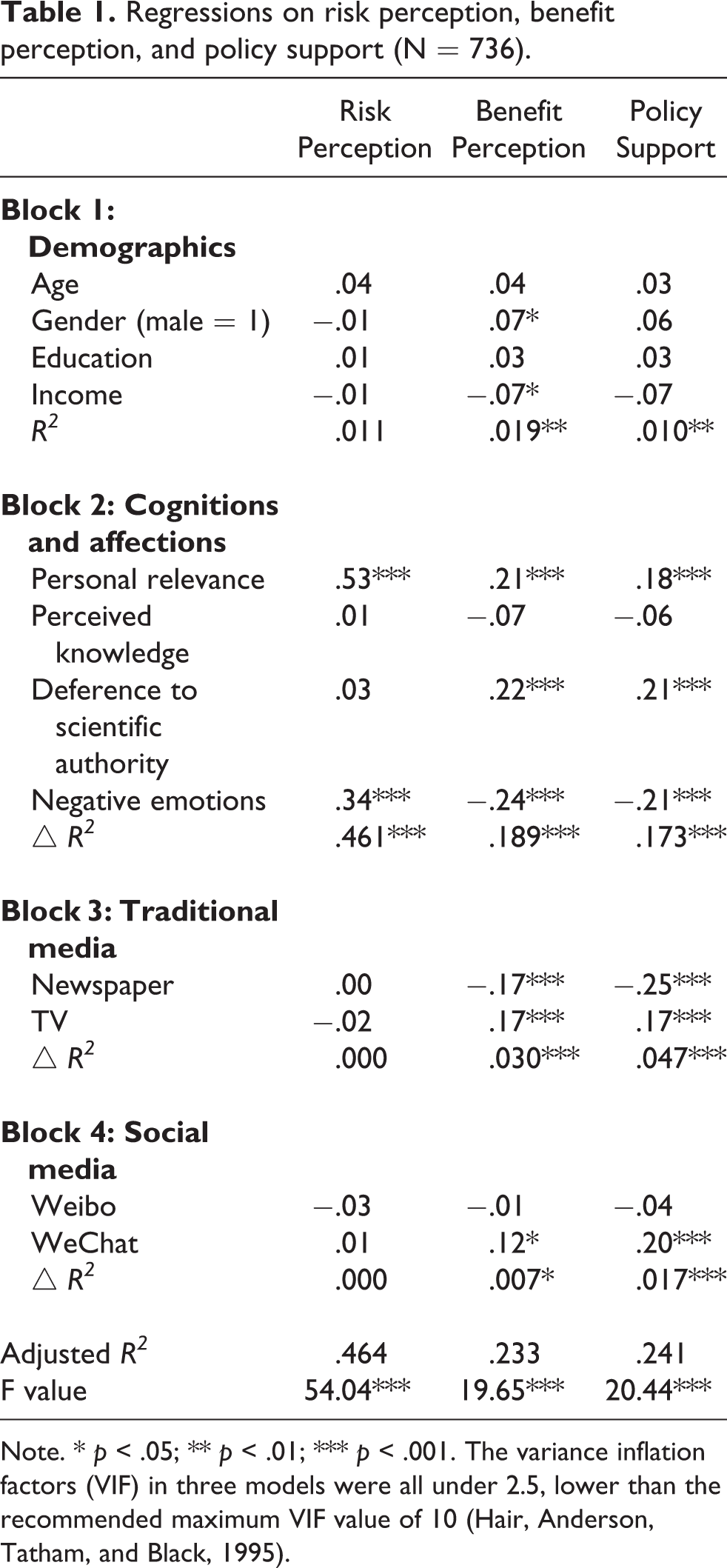
This study uses SPSS 20.0 for statistical analyses. We first conducted exploratory factor analyses to identify the latent structure of cognitive and affective factors and the underlying dimensions of public perceptions of AI. Hierarchical multiple regressions (OLS) were conducted to test the influence of cognitions, affections, and media use on public perceptions of AI (see Table 1). In the regression analyses, cognitions and affections entered the models in one block because those variables were all psychological factors at the individual level. We added traditional media and social media separately to investigate the specific effects of different media types on public perceptions of AI. PROCESS macro for SPSS was used to probe the interaction effects between personal relevance and media use on public perceptions of AI.
Regressions on risk perception, benefit perception, and policy support (N = 736).
Note. * p < .05; ** p < .01; *** p < .001. The variance inflation factors (VIF) in three models were all under 2.5, lower than the recommended maximum VIF value of 10 (Hair, Anderson, Tatham, and Black, 1995).
Results
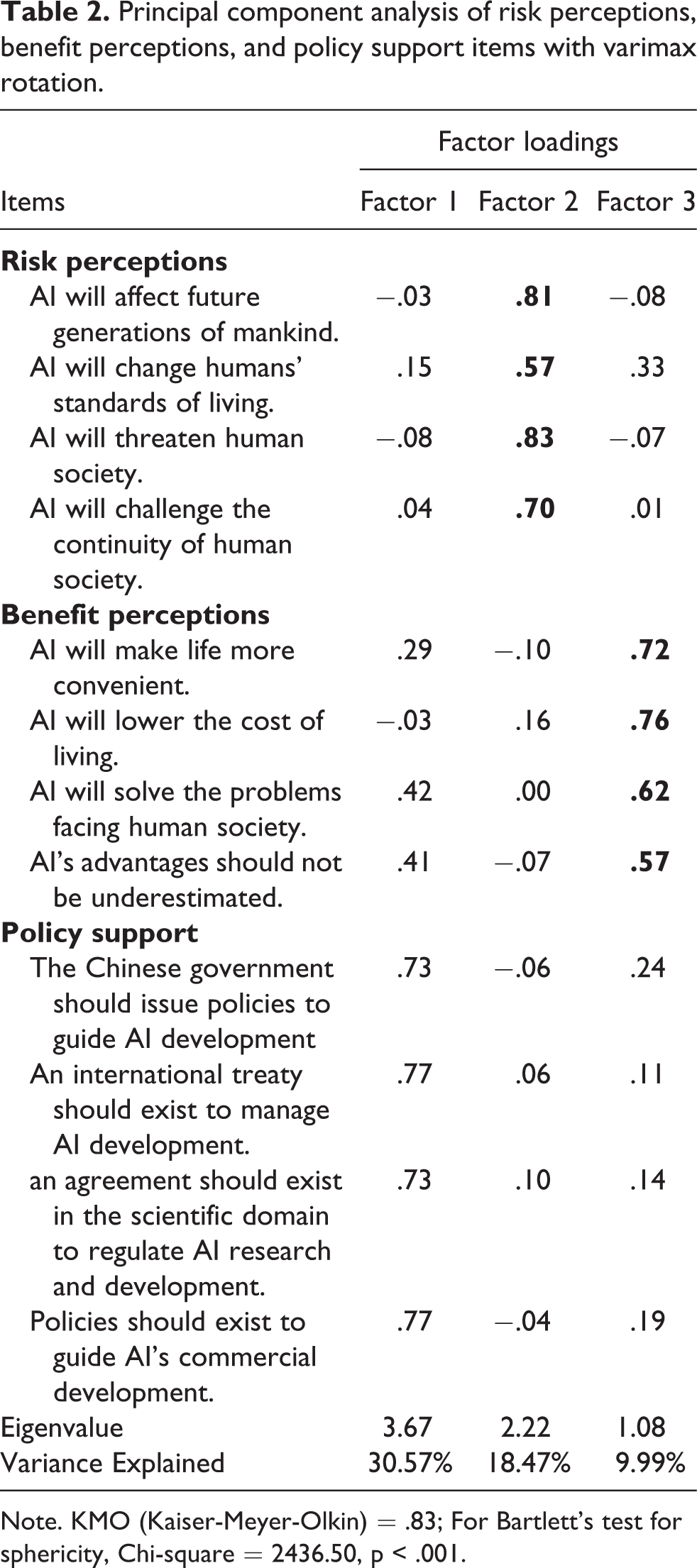
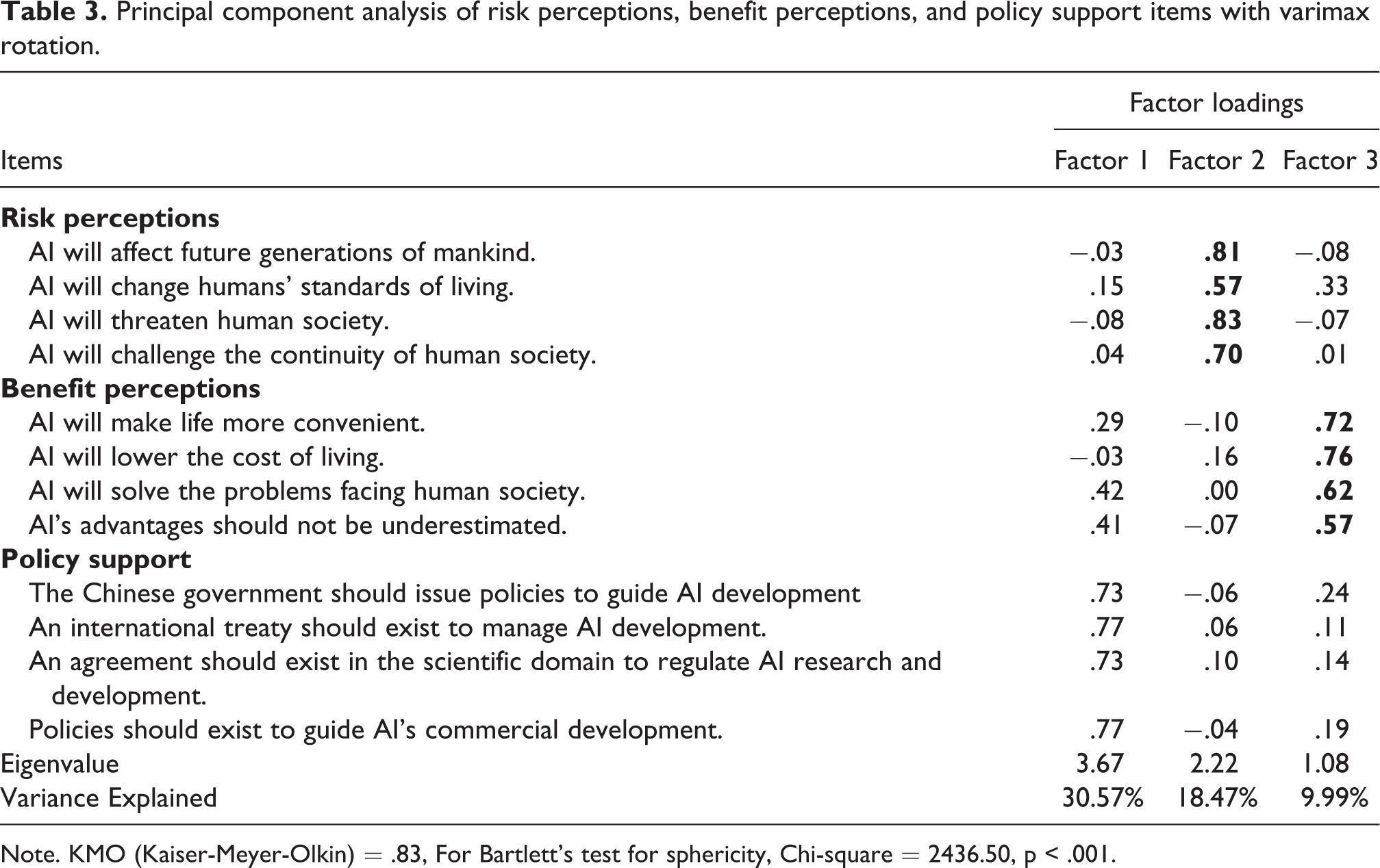
We first factor analyzed the underlying dimensions of the three dependent variables. The results are shown in Table 2. The analysis yielded a clean 4-factor solution. Then we factor analyzed the four cognitive and affective predictors. Perceived knowledge was measured in a single item, but it was still included in the analysis. The results are shown in Table 3. The factor analysis resulted in a clean 4-factor solution. The eigenvalue of the single-item factor just exceeded the threshold of 1.00, suggesting perceived knowledge can be treated as a stand-alone factor in the analysis. The factor analyses show that the measurement in the currents study have achieved construct validity.
Principal component analysis of risk perceptions, benefit perceptions, and policy support items with varimax rotation.
Note. KMO (Kaiser-Meyer-Olkin) = .83; For Bartlett’s test for sphericity, Chi-square = 2436.50, p < .001.
Principal component analysis of risk perceptions, benefit perceptions, and policy support items with varimax rotation.
Note. KMO (Kaiser-Meyer-Olkin) = .83, For Bartlett’s test for sphericity, Chi-square = 2436.50, p < .001.
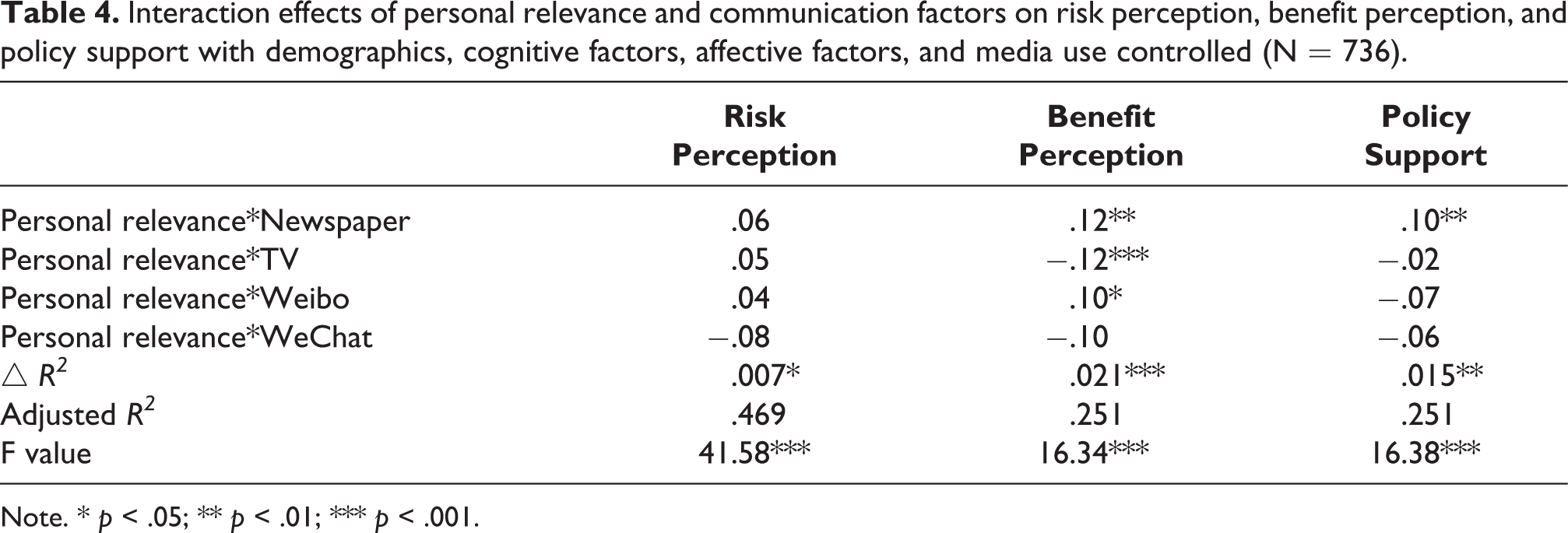
Hypothesis 1 proposed that personal relevance increases the respondents’ AI risk perception. Results in Table 4 indicated that personal relevance positively predicted AI risk perception. (β = .53, p < .001). H1 was supported. RQ1 inquired whether personal relevance predicted the respondents’ AI benefit perception and policy support. Results of regressions (Table 1) demonstrated that personal relevance was a positive predictor of benefit perception (β = .21, p < .001) and policy support (β = .18, p < .001).
Interaction effects of personal relevance and communication factors on risk perception, benefit perception, and policy support with demographics, cognitive factors, affective factors, and media use controlled (N = 736).
Note. * p < .05; ** p < .01; *** p < .001.
H2.1–2.3 presumed that the respondents’ perceived AI knowledge predicts their AI risk perception, benefit perception, and policy support. Results of regressions showed that perceived knowledge did not significantly relate to risk perception (β = .01, p > .05), benefit perception (β = −.07, p > .05), or policy support (β = −.06, p > .05). H2.1–2.3 were not supported.
RQ2 inquired how deference to scientific authority influences risk perception, benefit perception, and policy support. Results of regressions yielded no significant relationship between deference to scientific authority and risk perception (β = .03, p > .05), whereas greater deference to scientific authority increased both the respondents’ benefit perception (β = .22, p < .001) and policy support (β = .21, p < .001).
H3.1–3.3 proposed that negative emotions were positively related to risk perception but negatively related to benefit perception and policy support. Based on results of regressions, negative emotions positively predicted risk perceptions (β = .34, p < .001) but negatively predicted benefit perception (β = −.24, p < .001). Results also indicated that negative emotions were a negative predictor of the respondents’ policy support (β = −.21, p < .001). H3.1– 3.3 were supported.
RQ3 asked whether the respondents’ traditional and social media use predicted their AI risk perception, benefit perception, and policy support. Results indicated that media use offered little additional predictive power on AI risk perception beyond that contributed by personal relevance and negative emotions. Neither traditional nor social media use significantly predicted the respondents’ AI risk perception.
Partialling out the effects of demographics, personal relevance, deference to scientific authority, and negative emotions, media use still accounted for 3.7% of the variance of benefit perception. Traditional media, newspapers (β = −.16, p < .001), and TV (β = .18, p < .001) showed significant but contradictory predictive power on benefit perception. As for social media, WeChat (β = .12, p < .05) was a significant predictor of AI benefit perception, but Weibo (β = .00, p > .05) was not a significant predictor.
In the regression model on policy support, traditional and social media use jointly explained 6.4% of the variance. Participants’ TV (β = .17, p < .001) and WeChat (β = .20, p < .001) use positively predicted their likelihood of policy support, while newspaper use (β = −.25, p < .001) was a negative predictor of policy support.
RQ4 inquiries whether personal relevance moderates the relationship between media use and the respondents’ risk perception, benefit perception, and policy support. Table 4 shows the results of interaction effects with demographics, cognitive factors, affective factors, and media use controlled. These interaction terms were entered into the same regression models as presented in Table 3. To present the results in a clearer fashion, the results regarding proposed interaction terms are presented separately. Figure 1 presents the interaction effects between newspaper use and personal relevance on benefit perception. Among participants experiencing high personal relevance of AI (1 SD above mean), newspaper use had no positive influence on benefit perception (CI = −.10 to .02, p = .196). Participants’ benefit perception scores moved from 4.06 to 3.98 when newspaper use moved from low to high (1 SD below and above mean, respectively). Conversely, newspaper use negatively predicted benefit perception among people experiencing low personal relevance of AI (1 SD below mean, CI = −.22 to −.10, p = .000). Participants’ benefit perception scores decreased from 3.94 to 3.60 when newspaper use moved from low to high.
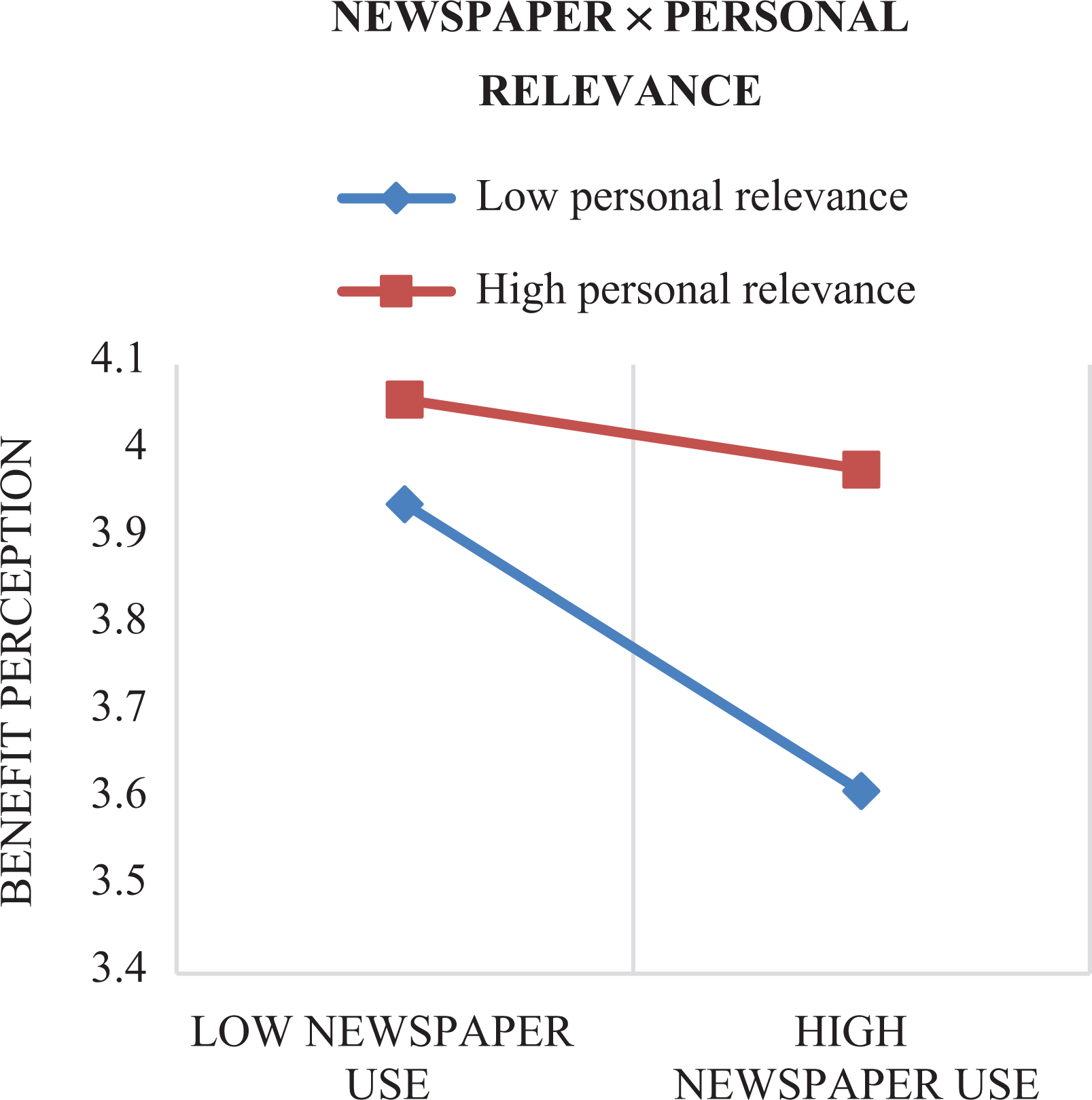
The interaction effects of newspaper use and personal relevance on benefit perception.
Similarly, the interaction effect between newspaper use and policy support was substantially significant among participants experiencing low personal relevance (CI = −.25 to −.13, p = .000) (see Figure 2). Participants’ policy support scores decreased from 4.09 to 3.70 when newspaper use moved from low to high. Among participants experiencing high personal relevance, the relationship between newspaper use and policy support held a lower significance (CI = −.14 to −.02, p = .007). Participants’ policy support scores moved from 4.20 to 4.04 when newspaper use moved from low to high.
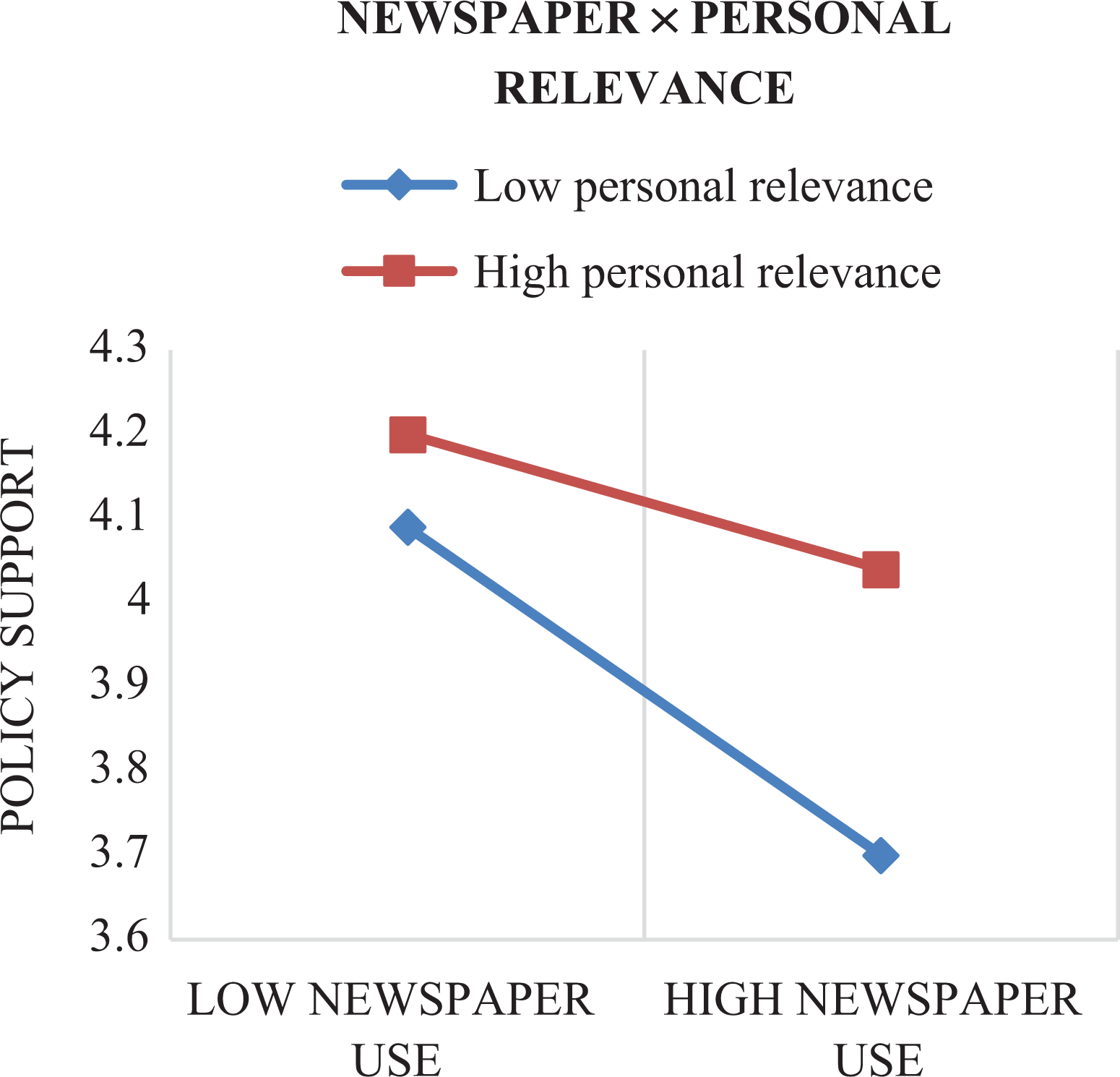
The interaction effects of newspaper use and personal relevance on policy support.
Figure 3 shows that TV use by participants experiencing high personal relevance did not predict their AI benefit perception (CI = −.04 to .10, p = .435). The benefit perception scores moved from 4.00 to 4.05 when TV use moved from low to high (1 SD below and above mean, respectively). TV use had a significantly positive influence on benefit perception among people experiencing low personal relevance (CI = .10 to .24, p = .000). Participants’ benefit perception scores increased from 3.63 to 3.93 when TV use moved from low to high.
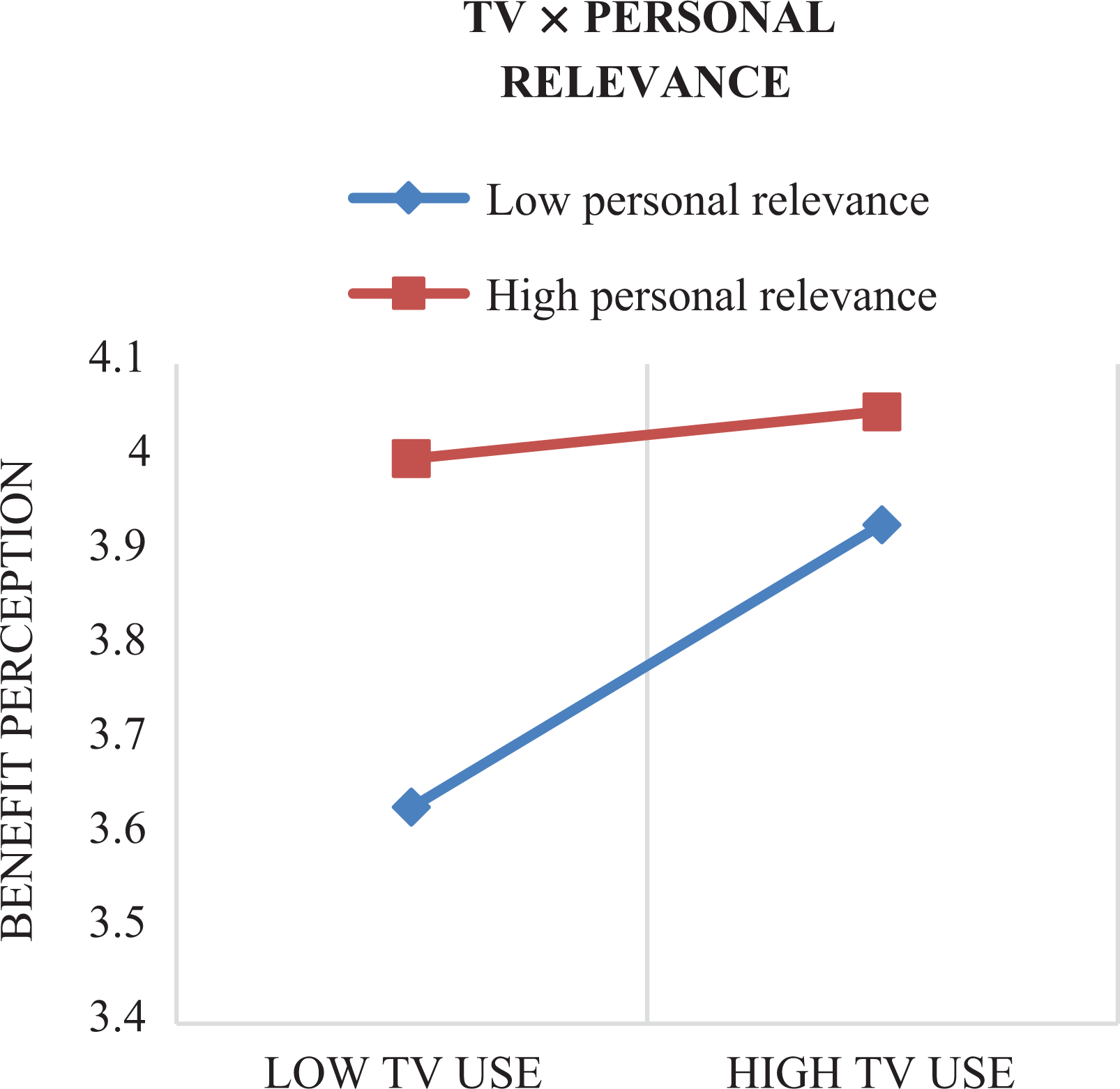
The interaction effects of TV use and personal relevance on benefit perception.
As graphically presented in Figure 4, Weibo’s influence on benefit perception was not significant among participants experiencing high personal relevance. The benefit perception scores only moved from 3.97 to 4.07 when Weibo use moved from low to high (1 SD below and above mean, respectively). In participants experiencing low personal relevance, Weibo use yielded a marginally significant influence on benefit perception. These participants’ benefit perception scores decreased from 3.84 to 3.70 when Weibo use moved from low to high.
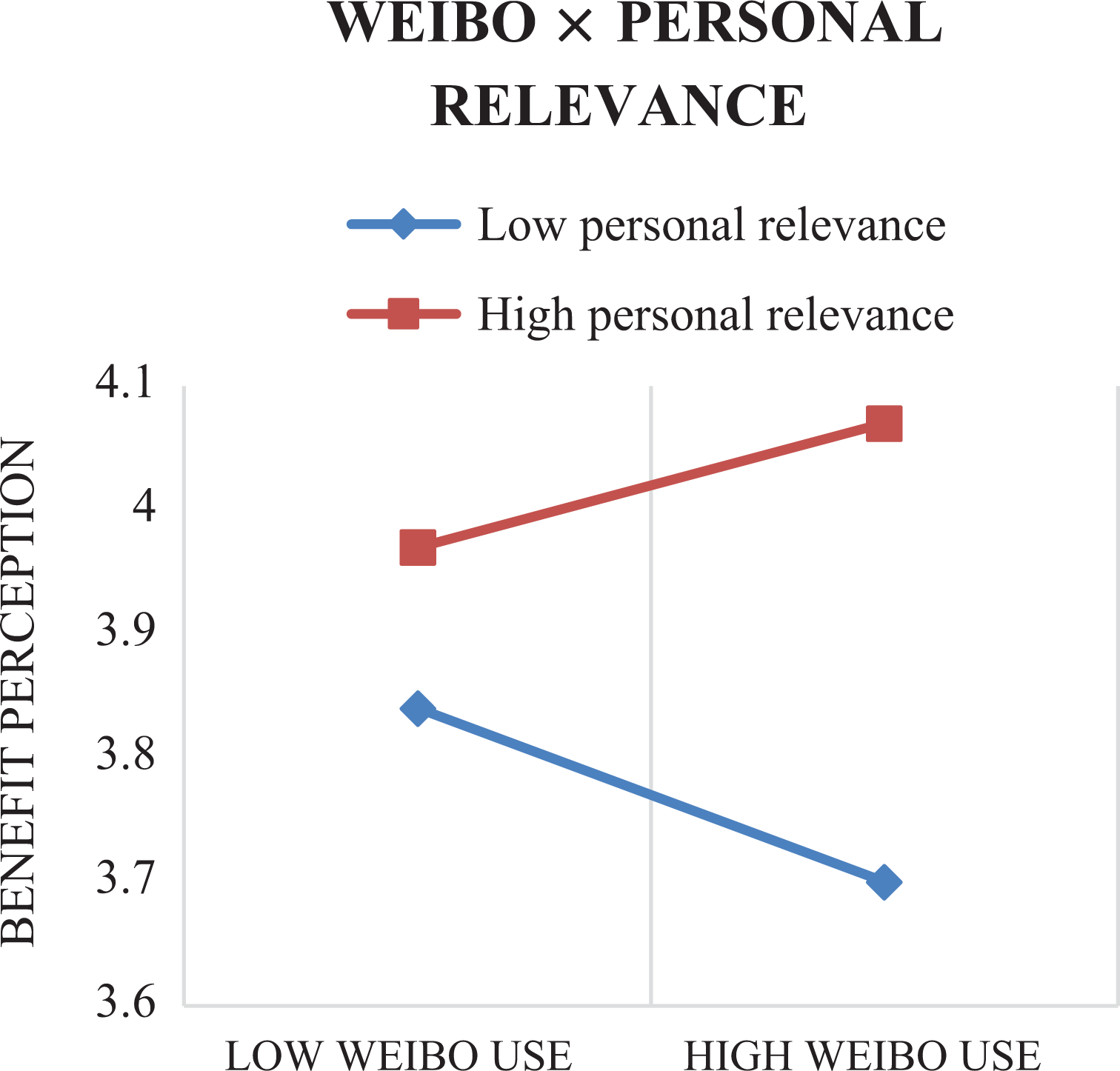
The interaction effects of Weibo use and personal relevance on benefit perception.
Discussion
Though AI has been a prominent area of innovation in recent years, few studies have examined it from a science communication perspective. This pilot study explored the way people’s AI perceptions were related to individual-level factors based on a national survey in China. Overall, respondents’ benefit perception scores are higher than risk perception. Policy support is also high. Similar to existing findings, this study indicates that the Chinese public support AI technology and perceive it as having more benefits than risks.
This study examined the correlates of AI perceptions. Demographic variables have little to no influence on dependent variables. Regarding cognitive factors, personal relevance is a consistent predictor of risk perception, benefit perception, and policy support. Personal relevance is an important motivational factor that shapes information processing and attitude formation at the individual level. Personal relevance indicates the extent to which an individual cognitively get involves in an issue or a topic. When people perceive something to be of high personal relevance, they will be motivated to pay more mental effort to make sense of it. In the current case, people who treat AI to be relevant to their work or life may develop stronger motivations to evaluate all possible consequences of AI. In China, the development of AI receives government support and is framed positively by the media in general. But as a controversial technology, the public image of AI is inevitably associated with risks. As reflected in the public surveys, Chinese people do have worries about the potential negative effects of AI. This means that the more people regard AI to be personally relevant, the more they will think about all possibilities of AI and carefully examine both the upsides and downsides of the technology. As proposed by Frewer et al. (1998), risk and benefit perceptions are not independent of each other. People usually evaluate an emerging technology’s risk and benefit at the same time and see it as a trade-off when forming attitudes. The result here also indicates that personal relevance perceptions may drive people to look into both the risk and benefit of a technology.
Contrary to our expectation, perceived knowledge is not associated with any dependent variables. The dissociation likely results from the measurement. Perceived knowledge is not an accurate reflection of respondents’ actual understanding of AI. Emotional factors have a major impact on dependent variables. Deference to scientific authority can positively predict benefit perception and policy support. Negative emotions toward AI seem to drive people to elaborate more on the technology and therefore increase both risk and benefit perceptions. Overall, emotional factors played a more important role than cognitive factors in shaping respondents’ AI perceptions.
The effects of media use are the focus of this study. Overall, the influences of media use on AI perceptions are complex. First, it is important to note that no media sources are significantly correlated with respondents’ risk perception. Media use is only associated with respondents’ positive AI perceptions. A probable reason is that the government has an overarching influence over China’s media agenda. Both traditional and online media must report major issues in favor of government policies. Since the Chinese government supports AI, the media agenda is likely to portray the technology in a positive light. The positive framing of Chinese media drives respondents to perceive benefits rather than risks of AI technologies.
Second, media channels vary in their effects on benefit perception and policy support. Specifically, use of television and WeChat for information about AI are positively associated with benefit perception and policy support, but the association between newspaper use and these two dependent variables is negative. A plausible explanation is that different media have unique attributes (e.g., structure, textuality, interactivity, and modality) and therefore different effects on audiences (Eveland, 2003). Newspapers present AI mostly in well-polished texts and with limited visual aids, which fosters elaboration and critical thinking in people forming attitudes about AI. Furthermore, newspaper production strictly follows professional standards and procedures such as fact checking and balanced writing. Thus, reading newspapers about AI may help people refrain from overly pessimistic or optimistic perceptions. Resorting to nonlinear combinations of audio and visual materials, television news presents AI in different modalities, which may amplify the effects of their positive AI framing. On WeChat, there are large volumes of news-like content that are popular among users. However, most of such content is not generated by news professionals or produced by news organizations. Many articles tend to be one-sided stories that combines multimedia formats including texts, sound, pictures, gifs, and videos. WeChat’s opinion-oriented and multiformat content may reinforce their positive AI framing and trigger respondents’ benefit perceptions and policy support.
Regarding the interaction effects, a tenable conclusion is that personal relevance moderates the effects of newspaper and television use on benefit perception and the effects of newspaper use on policy support. Those with higher personal relevance show less influence from television and newspaper than respondents with lower personal relevance in their attitude formation. Personal relevance as a cognition-related factor could mitigate the influence of television and newspaper use. This means respondents with higher personal relevance will scrutinize the media content and think more critically about it. They may also turn to more diverse sources for AI-related information. Consequently, the effects of television and newspaper become weaker. Weibo has no main effects on dependent variables, but there is a weak but significant interaction effect. Respondents with higher personal relevance are more prone to being influenced by AI-related information on Weibo. A plausible explanation is that Weibo is a highly interactive platform combining information and opinions from various sources. People who are deeply engaged with the issue may find information they need on the platform and are therefore prone to its influences.
Finally, some limitations of the study and suggestions for future research should be addressed. Though this study obtained data from a large-scale online sampling pool, the sampling frame is still not nationally representative, which limits the findings’ generalizability. Also, some measures were coarse. For example, this study only measured perceived knowledge instead of factual knowledge. Perceived knowledge was measured by only one single item. Future studies could improve these measures. This study focused more on the direct linkages between media use and perceptual variables but failed to investigate the underlying mechanisms. Future studies should explore the indirect linkages between media use and people’s attitudes toward AI.
Footnotes
Acknowledgements
The authors thank the Data and Computational Communication Project funded by Shanghai New Media Center of Fudan University for supporting this research. This study was supported by the 2018 Shanghai Philosophy and Social Science Youth Foundation (No. 2018EXW001).
