







Abstract
Despite widespread adoption of crowdfunding for funding social donation projects, its adoption among start-up entrepreneurs is significantly low, in developing countries in particular. Research has been performed to investigate the crowdfunding adoption intention of start-up entrepreneurs in Bangladesh. This study aimed to identify the motivation behind the intentions of the entrepreneurs to adopt crowdfunding, using the Unified Theory of Acceptance and Use of Technology (UTAUT) model with extensions. Empirical data were collected from 317 respondents and analyzed using Partial Least Squares-based Structural Equation Modeling (PLS-SEM). The results indicate that performance expectancy, effort expectancy, social influence, facilitating conditions and perceived trust mpact significantly ion the entrepreneurs’ behavioral intention to adopt crowdfunding. In contrast, trialability and perceived trust were not found to be significant determinants. However, trialability has a significant positive relation with use behavior or actual use, whereas no significant relationship has been identified between behavioral intention and use behavior.
Introduction
Start-ups are booming all over the world by providing innovative solutions and by introducing many new business models as solutions for social problems. Raising capital is one of the most challenging tasks for start-ups, especially for innovative start-ups (Berger and Black, 2011; Lee and Brown, 2017). Start-ups are not able to access funds from conventional sources like banks and stock markets due to lack of collateral assets and to not having previous credit history (Kim and Lee, 2014). In order to overcome the financing crisis of start-ups, recently some alternative sources have emerged and crowdfunding is one of them (Ahlers et al., 2015; Paschen, 2017). Crowdfunding is a well-suited source of start-up financing because it does not demand any collateral or previous credit records to assess the solvency of fund seekers. An innovative idea with an attractive business model is enough to draw the attention of investors and raise funds in crowdfunding platforms (Stemler, 2013). There are other benefits of using crowdfunding for start-up financing. First, it helps to reduce transaction costs and agency costs of fundraising, eliminating traditional expensive intermediaries. Secondly, it democratizes the fundraising process by getting funds from the crowd and start-ups can also enjoy suggestions and feedback from the crowd. Thirdly, the fundraising process is free of geographical constraints; entrepreneurs in any country can get capital from all over the world. Last, but not least, it provides a fast fundraising platform to raise targeted capital for innovative and appealing business ideas.
In studies of the World Bank (infoDev, 2013; Raymond, 2015), crowdfunding was found to be an emerging capital raising source in the developing countries. Bangladesh is a South Asian developing country with a growing economy, with 7.86 % GDP growth in 2017-2018 and USD 1,751 per capita income (Bangladesh Bureau of Statistics, 2018). A start-up supportive technological infrastructure is being ensured in Bangladesh. Approximately 96,176 of the people of Bangladesh (58 % of total population) are using the Internet (Bangladesh Telecommunications Regulatory Commissions, 2019). The government of Bangladesh is also taking many initiatives to foster start-ups under an iDEA (Innovation, Design & Entrepreneurship Academy) project, which is providing motivation, guidelines and completion-based small-scale funds for start-ups (Startup Bangladesh, 2018). But start-ups in Bangladesh are still facing fund raising problems (Reaz, 2015; Shams, 2017).
Adhikary and Kutsuna (2016) first identified and proposed crowdfunding for small businesses and start-ups in Bangladesh, evaluating all the available conventional funding options such as banks, stock markets and non-government organizations (NGOs) like Grameen Bank. Start-up entrepreneurs face difficulties in accessing funds from international crowdfunding platforms like Kickstarter, Indiegogo and GoFundMe, etc. because of restrictions on inbound-outbound remittance exchange and unavailability of credit transactions. Most of these platforms demand US residency. Oporajoy.org (Islam, 2018) and Projekt.co (Reaz, 2015) are the only two local crowdfunding platforms in Bangladesh. There are also social media-based platforms, specifically Crowdfunding Bangladesh, Crowdfunding Soft and Crowdfunding Association of Bangladesh (CAB), which provides fundraising options for fostering start-ups.
A study by Adhikary et al. (2018) pointed out that only 5% of 270 entrepreneurs have knowledge about crowdfunding, while 84% of them mentioned that they intend to use crowdfunding in future and 7% don’t want to use crowdfunding services for their business. There is no study to identify the factors influencing entrepreneurs to use crowdfunding. It is essential to identify and evaluate why crowdfunding is adopted and to better understand the key factors influencing start-up entrepreneurs’ acceptance and usage of crowdfunding in Bangladesh.
Research background
Crowdfunding is a shared financing concept which has emerged from the ideas of crowdsourcing and microfinance (Morduch, 1999). It is better suited for start-ups trying to convert new innovative ideas to feasible businesses and young businesses trying to grow and make a room in the competitive market (Stemler, 2013). The adoption of crowdfunding by start-ups is needed for their existence and growth in the challenging business market. The better acceptance of any new technology and innovation is influenced by many economic and psychological factors, which should be assessed to better understand the acceptance, nature and success of crowdfunding (Steinberg and DeMaria, 2012). Crowdfunding in developing countries is not well accepted as in the developed countries, which enjoy supportive tools and financial regulations as well as promotional campaigns for crowdfunding (Jegeleviciute and Valenciene, 2015; Turan, 2015). Nevertheless, crowdfunding has high potentiality in the developing nations (infoDev, 2013).
Crowdfunding is considered as a blessing in overcoming scarcity in the early funding of entrepreneurs (Hemer et al., 2011). Some empirical studies have been identified to address the motives and reasons for adopting crowdfunding by entrepreneurs. Conducting a semi-structured interview-based study, Gerber et al. (2012) identified financing, self-affirmation, networking, product awareness and success story replication as the five motivations for using crowdfunding. Entrepreneurs use crowdfunding to get the benefits of flexibility and speed in financing, testing products among consumers, avoid financial and legal obligations, enjoy a positive multiplier effect and ‘wisdom of the crowd’ for business tasks (Hemer et al., 2011; Hienerth and Riar, 2013; Macht and Weatherston, 2014). Fund raising, drawing public attention and receiving feedback on products or services are the main reasons for companies to adopt crowdfunding (Belleflamme et al., 2013). Gleasure (2015) identified risk related to the expected outcomes, or information disclosure and opportunity cost as the factors discouraging entrepreneurs from raising money from crowdfunding.
Although there are lots of studies in the field of crowdfunding, there are only a few in the context of Bangladesh. Adhikary and Kutsuna (2016) first identified crowdfunding as an alternative financing option for small businesses and start-ups in Bangladesh. In 2018, the readiness of Bangladesh for crowdfunding was assessed in terms of economic advances and citizens’ willingness (Adhikary et al., 2018). They found positive economic readiness for crowdfunding in Bangladesh. Hasan et al. (2017) made the first attempt to assess the behavioral and psychological readiness of participants, but considered limited constructs such as perceived expectations, technology awareness, perceived costs, social psychology, availability of resources, and access to other finance options.
Based on the above literature review, we can conclude that most of the crowdfunding research done has focused on backers or investors’ perspectives and no studies had been done on start-up entrepreneurs’ perspective. Most of the previous researches are conducted in the context of developed countries, for example, Australia (Ley and Weaven, 2011), China (Lee, 2016; Ya-Zheng Li, 2018), Korea (Kim and Jeon, 2017; Moon and Hwang, 2018), and Germany (Koch and Siering, 2015). It is important to extend the investigation to developing countries; theories and models developed in the developed nations’ context need to be re-examined in the environment of developing nations (Al-Somali et al., 2011; Hofstede, 1980). There is scarcity of crowdfunding research in developing countries and the pattern of crowdfunding adoption remains unexplored, especially in Bangladesh (Adhikary and Kutsuna, 2016; Hasan et al., 2017). In a World Bank report (infoDev, 2013), cultural and behavioral readiness to adopt crowdfunding should be assessed along with the readiness of technology, capital and regulations before implementing crowdfunding in developing countries. This study aims to fill this research gap. In order to identify the influencing factors for the adoption of crowdfunding by start-up entrepreneurs in Bangladesh and to contribute in technology acceptance research, this study is aimed to investigate the possible factors influencing crowdfunding adoption by start-up entrepreneurs in Bangladesh.
Research model and hypothesis development
Research model
The objective of this study is to examine the motivating factors for start-up entrepreneurs to accept crowdfunding in Bangladesh. The Unified Theory of Acceptance and Use of Technology (UTAUT) model was used for specific reasons. First, it was developed by combining eight previous and renowned technology acceptance models (Venkatesh et al., 2003). Secondly, it is proved to have high explanatory power (R 2 ≥ 70%) compared to nearly 40% of other technology acceptance models (Al-Shafi and Weerakkody, 2009; Venkatesh, Morris et al., 2003). Finally, it is considered as the benchmark among other models for the technology acceptance literature for its realistic and complete explanation of user acceptance (Rosen, 2005). Like other technology acceptance models, the UTAUT model has been modified or adjusted in many earlier studies to improve the explanatory power of the model (Abbas et al., 2018; Aboelmaged and Gebba, 2013; Byun et al., 2018; Moon and Hwang, 2018). Therefore, the research model (Figure 1) is developed based on the UTAUT Model (Venkatesh et al., 2003) with the extension of three other factors.
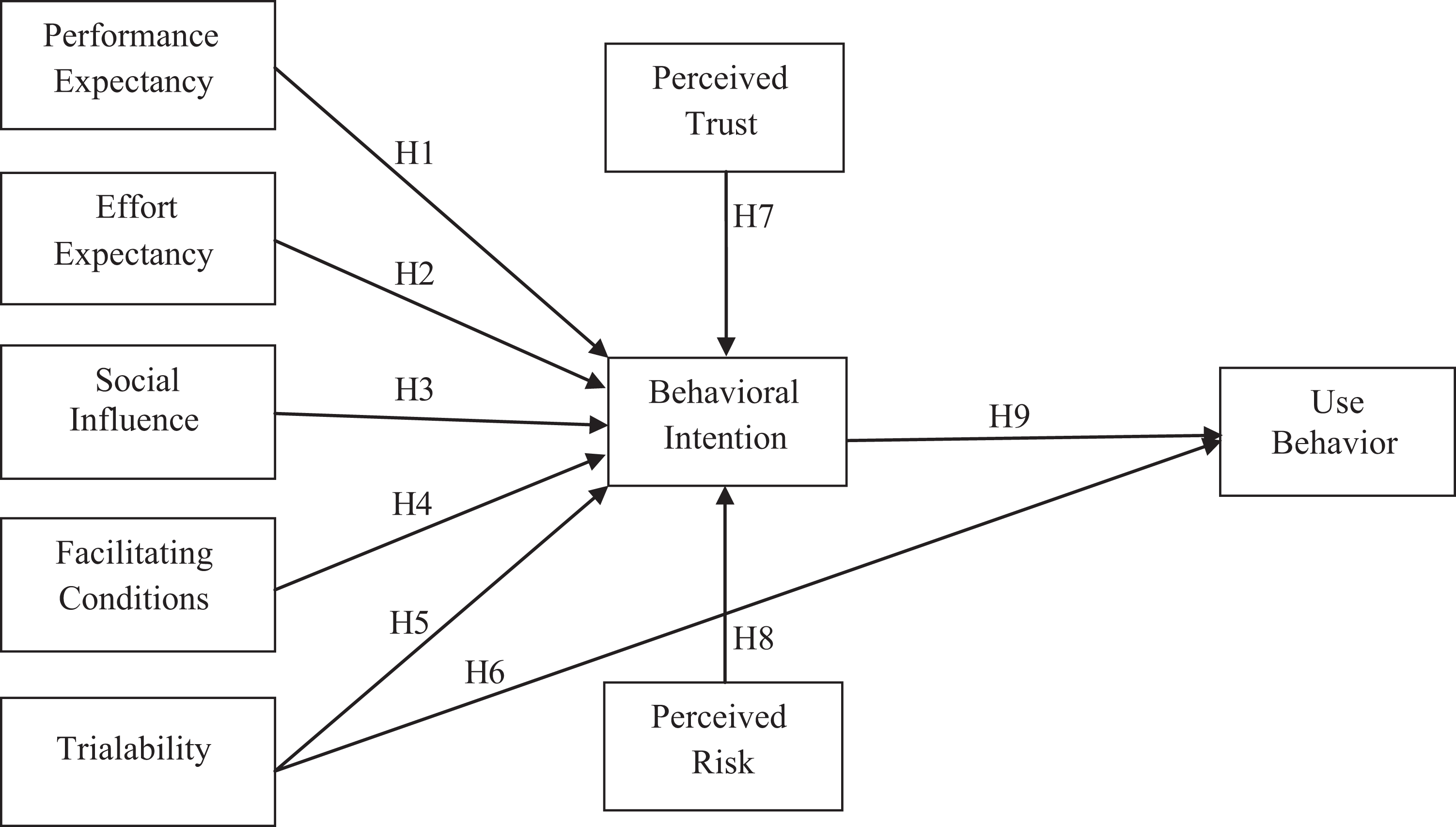
Research model and hypotheses.
One of the added factors is trialability of the Diffusion of Innovation Theory (Rogers, 2003) to examine the opportunities for start-up entrepreneurs to use crowdfunding platforms for fundraising in Bangladesh. Also, trust and risk factors were identified to analyze their influence on start-up entrepreneurs for crowdfunding acceptance decisions. In synopsis, the proposed research model claims that performance expectancy, effort expectancy, social influence, facilitating conditions, trialability and perceived trust positively affect the crowdfunding adoption intention of start-up entrepreneurs. On the other hand, perceived risk negatively affects start-up entrepreneurs’ adoption intention. As a final point, start-up entrepreneurs with the intention to adopt crowdfunding are likely to use crowdfunding for fund raising. It was hypothesized that trialability leads to use behavior or actual use of crowdfunding. Although behavioral intention is the mediator factor in this model, which is similar to the original UTAUT model, moderating factors like age, gender, experience of respondents and voluntariness of use, which are mentioned in original UTAUT model, are discarded in the proposed model for generalability and asymmetrical distribution like the studies of Tan (2013) and Van Schaik (2009).
Hypothesis development
Performance expectancy
Performance expectancy is represented as the first encouraging factor to influence start-up entrepreneurs to use crowdfunding platforms to raise funds for their start-ups. Performance expectancy is formally defined as “the degree to which an individual believes that using the system will help him or her attain gains in job performance” (Venkatesh et al., 2003, p. 447). Venkatesh et al. (2003) found performance expectancy to be the strongest influencing determinant to users’ intention to use any new system or technology. In this study, performance expectancy encompasses the issues of financial performance, quickness of fund raising and usefulness of crowdfunding. In case of crowdfunding platforms, perceived usefulness or benefit is found influential to user intention (Lacan and Desmet, 2017). From the crowdfunding investors or backers’ points of view, performance expectancy was found as a statistically significant motivator in some studies (Kim and Jeon, 2017; Lee et al., 2015; Li et al., 2018), whereas it was found not to be influential in some other studies (Moon and Hwang, 2018). The following hypothesis is proposed based on this discussion:
Effort expectancy
Effort expectancy refers to the degree of ease associated with the use of the system (Venkatesh et al., 2003, p. 450) and it indicates the perceived convenience of using a new information system or technology. Effort expectancy is found as a significant influencing factor of the behavioral intention of users to use information technology (Aggelidis and Chatzoglou, 2009). Effort expectancy is derived from the construct named ‘perceived ease of use’ by Davis (1989) and it was argued by Davis (1989) that use intention is significantly influenced by perceived ease of use through the mechanism of instrumentality and self-efficacy. Perceived less effort expectancy in handling information systems can improve the user performance. On the other hand, the more the systems are perceived easy by users, the greater users’ sense of self-efficacy can be expected (Bandura, 1982). Self-efficacy refers to users’ confidence in their ability to use an information system easily. Perceived easiness, clarity and understandability of instructions for use of crowdfunding are considered as effort expectancy in this study. In earlier crowdfunding acceptance studies, effort expectancy had a positive impact on users’ participation intention (Kim and Jeon, 2017; Moon and Hwang, 2018; Ya-Zheng et al., 2018). Based on this discussion, the researchers propose the following hypothesis for this study:
Social influence
Social Influence refers to the degree to which users think that people important to them advocate the use or adoption of a new information system. The concept of social influence is similar to the concept of subjective norm, which means the extent of important persons’ influence on an individual’s behavior (Venkatesh et al., 2012). In this research, social influence represents the extent of encouragement and influence by entrepreneurs’ reference groups to use crowdfunding to raise funds for start-ups. There is evidence in previous studies that peer effects and social networks play a key role in influencing users to use new information systems at the early stage of adoption (Lu et al., 2005). Interpersonal networks, including acquaintances, friends and family, are important factors for successful usage of crowdfunding (Mollick, 2014). Project proponents such as close friends are considered as key positive factors for using crowdfunding and implementing a project successfully (Ordanini et al., 2011; Colombo et al., 2015). In terms of investors or backers of crowdfunding projects, the peer effect influences backers to invest in crowdfunding and control the investment behavior (Kim and Jeon, 2017; Park and Lee, 2016; Ya-Zheng et al., 2018). Thus, we propose the hypothesis below:
Facilitating conditions
Facilitating conditions represent the degree to which users of information systems perceive that the organization and infrastructure are in place to facilitate the usage of that information system (Venkatesh et al., 2003). In this study, facilitating conditions are defined as the perceived technological and organizational availability of infrastructure to smoothly support the use of crowdfunding platforms. Although feedback channels and technical support of crowdfunding platforms foster the users’ intention, statistical presentation systems and inadequate information about fund raising activities are often considered as hindrances for crowdfunding initiatives (Kwon et al., 2014). Gerber et al. (2012) have shown that alternatives like social media and diverse information sourcing can foster the facilitating conditions of crowdfunding platforms to increase awareness of their use. Howeve, in some studies, facilitating conditions are not found to have significant influence on intention to participate in crowdfunding (e.g. Moon and Hwang, 2018). In consideration of this discussion, the researchers set the hypothesis below:
Trialability
Trialability is defined as “the degree to which an innovation may be experimented with on a limited basis” (Rogers, 2003, p. 16). Crowdfunding is an innovation that helps solve constraints on finance or capital-based or donation-based projects. There is a faster rate of adoption of an innovation if there is more opportunity to try it first (Moore and Benbasat, 1991; Rogers, 2003). In this study, the opportunity to use and ease to become familiar with crowdfunding platforms are considered under trialability. In some earlier researches (Lee, 2004; Sahin and Thompson, 2006), trialability is an important motivating factor for adopting innovations or new information systems. Agarwal and Prasad (1997) found trialability as a significant determinant for actual use, whilst insignificant for behavioral intention to use new information systems. Hence, following hypotheses are proposed by this study:
Perceived trust
Perceived trust represents the subjective belief of start-up entrepreneurs in the reliability, trustworthiness, integrity and technological appropriateness of crowdfunding platforms. In prior studies (Lee et al., 2015; Lee et al., 2016; Moon and Hwang, 2018; Ya-Zheng et al., 2018), trust, in terms of the stability and security of crowdfunding platforms, has been found to be positively influential in users’ participation in crowdfunding. Gerber and Hui (2013) found that trust level and transparency of crowdfunding platforms after posting the fundraising projects by entrepreneurs are the key factors behind the success of crowdfunding, and lack of trust is an obstacle to the use of crowdfunding. On web-based platforms, trust can be ensured by firewalls, by facilitating encrypted financial transactions, by ensuring seals for privacy and by using authentication mechanisms (Benassi, 1999; Bhimani, 1996). So, the following is hypothesized by this study based on prior research:
Perceived risk
Perceived risk refers to “the potential for loss in the pursuit of a desired outcome of using e-services” (Featherman and Pavlou, 2003, p. 454). Previous studies mentioned types of perceived risk such as privacy risk, performance risk, financial risk, time risk and psychological risk (Grewal et al., 1994; Mitchell, 1992). In this study, privacy risk, imitation risk of start-up ideas and monetary transaction information disclosure risk are considered as perceived risk. The outcomes of prior studies in term of the effect of perceived risk on users’ crowdfunding use intention are controversial. Some studies found that users, especially backers or investors, perceptions about risk have direct or indirect negative influence on crowdfunding participation intention (Lee, 2016; Moon and Hwang, 2018). On the other hand, Kim and Jeon (2017) found that perceived risk has no effect on crowdfunding users’ intention to participate, because as investors users need to invest a small amount. But the privacy risks and business idea imitation risks of start-up entrepreneurs may be negatively related with using crowdfunding platforms for fund raising. In this study, researchers thereby have framed the following hypothesis:
Behavioral intention
Behavioral intention refers to the strength of users’ willingness to perform or not to perform a specific behavior (Ajzen, 2002). Behavioral intention has been found to have a positive relation to use behavior or actual use of information systems in previous researches (Ifinedo, 2012; Oliveira et al., 2014). In prior research, behavioral intention was found as a key mediator between predictor variables and the use of information systems. In this study, entrepreneurs’ plans and predictions about their use of crowdfunding in the near future is regarded as behavioral intention. Hence, the following hypothesis is developed:
Research methodology
Sampling and data collection
The target population of this study is the start-up entrepreneurs of Bangladesh. Non-probability purposive sampling technique was followed to include responses only from start-up entrepreneurs. The list of start-ups was carefully developed from different start-up support platforms like startupbangladesh.gov.bd and startupdhaka.org, etc. An online questionnaire was used to collect data. The link to that questionnaire was sent by email to the owners of start-ups together with a formal request to participate. The questionnaire was also sent to the members of different online social media platforms of start-up groups or incubation centers in Bangladesh. In order to increase the number of responses, reminder emails were sent after 3 weeks to the entrepreneurs who did not response within this period. Out of 334 filled received questionnaires, 317 usable responses were identified after missing data treatment and checking outliers. A recommended sample size of 300 is considered good for standard statistical analysis like structural equation modeling (Tabachnick and Fidell, 1996; Field, 2013). Based on previous literature and research examples, the sample of 317 usable responses in this study is considered adequate for structural equation modeling analysis.
Questionnaire development
A self-administered questionnaire survey was used to collect the responses. The questionnaire was structured and divided into two parts, A and B, after mentioning the research objectives, time needed to respond and ethical declaration by the researchers.
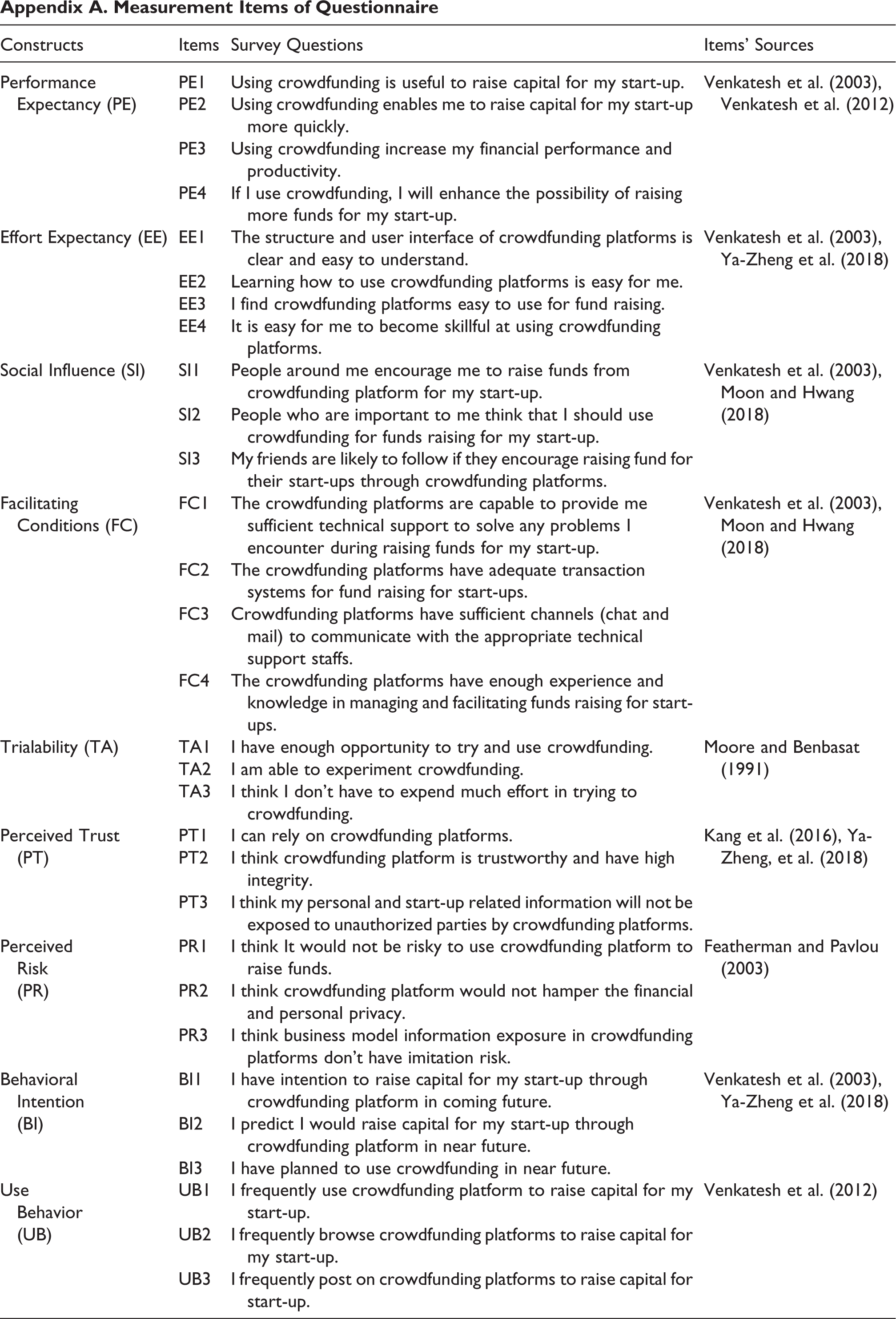
Part A focused on basic information about the start-ups and the demographic information of entrepreneurs. Part B contains questions related to different constructs in the proposed conceptual research model. All items of latent constructs were formulated based on previous literature and modified for use in the context of crowdfunding and start-ups (see Appendix A). A 5-point Likert scale was used to score measurement items coded as 1= strongly disagree, 2= disagree, 3= neutral, 4= agree and 5= strongly agree.
The developed questionnaire was tested by distributing among 20 volunteer respondents including academicians, start-up entrepreneurs and prospective entrepreneurs, for improving the initial questions and testing content clarification or understandability. After doing some minor modifications based on the feedback from the pilot study volunteers, the final version of questionnaire was distributed among the respondents.
Data screening
In order to prepare data for analysis, it is necessary to do data screening before performing data analysis (Pallant, 2005). The raw data was screened to find and avoid the problems of missing data, outliers and common method bias. All the dataset related problems were corrected before statistical analysis because data preparation leads to better prediction (Tabachnick and Fidell, 2007).
Data analysis
Partial Least Square (PLS) focused Structural Equation Modeling (SEM), a second generation multivariate data analysis method, was used in this study because SEM is a path modeling approach to test and validate a proposed research model and the hypothesized relationships among the constructs of that model (StatSoft, 2013). SEM is widely accepted for measuring the validity of theories with empirical data (Gotz et al., 2010) and is popular in social science and information systems research (Williams et al., 2015). SmartPLS 3.0, software for PLS-SEM, was used to analyze the quantitative data (Hair Jr et al., 2014). A two stage methodology (Anderson and Gerbing, 1988) was used to perform data analysis. In the first stage, content, convergent and discriminant validity was tested based on the measurement model, while in the second stage, the hypotheses and structural model was tested. The Statistical Package for the Social Science (SPSS) 25.0 was used for screening and preparation of data and cleaned data was imported to SmartPLS 3.0 for analysis.
Results
Demographic information
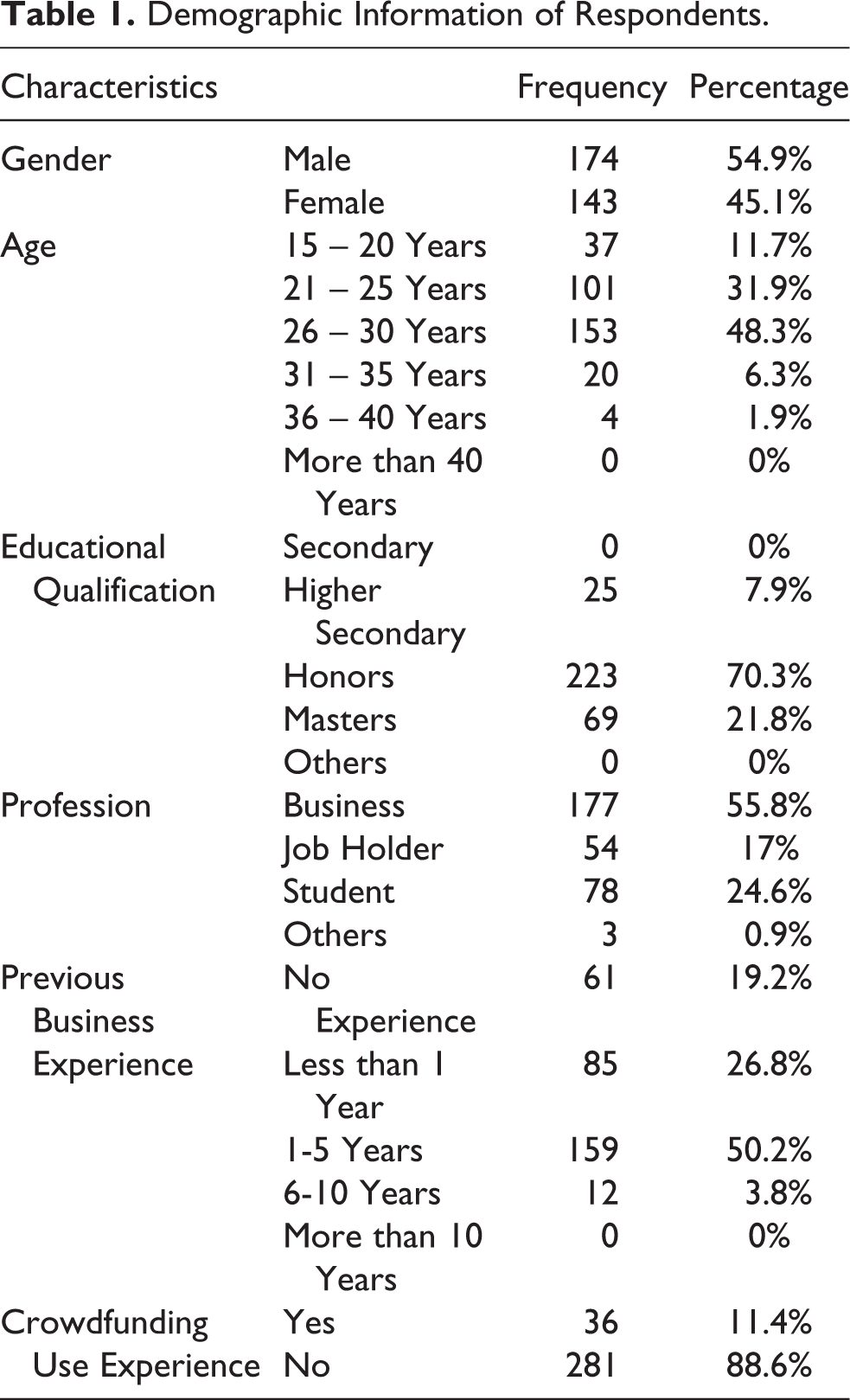
The demographic characteristics of respondents such as gender, age, education, profession and experience are shown in Table 1. 54.9% of the respondents are males compared to 45.1% are females. Only 4 (1.9%) respondents had age more than 36 years, which indicates the majority of young people’s presence in the survey. About 70% of respondents have completed graduate level education and about 22% had a masters’ degree. The responses are dominated by businessmen: 177 (55.8 %) of the respondents mentioned their professions as business, while 54 (17 %) were job holders. About half (159: 50.2%) of the entrepreneurs had 1 to 5 years previous business experience, while nearly 4% had more than 5 years business experience. A substantial number of respondents had business experience of less than 1 year (26.8%) and 61 (19.2%) had no business experience before their attempts at start-ups. A total of 281 (88.6%) survey participants had no crowdfunding experience, whereas 36 (11.4%) mentioned that they had used crowdfunding.
Demographic Information of Respondents.
Measurement model
Both reliability and validity of the constructs were tested to ensure the accuracy of the measurement items. Internal reliability, convergent validity and discriminant validity test criteria were used to assess the measurement model (Hair Jr et al., 2014) before testing the proposed hypotheses (Bagozzi et al., 1991).
Internal reliability
In this study, both Cronbach’s alpha and composite reliability were used to examine internal reliability (Fornell and Larcker, 1981). The values of Cronbach’s alpha and composite reliability should be greater than 0.70 to ensure satisfactory reliability (Hair and Tatham, 2006).
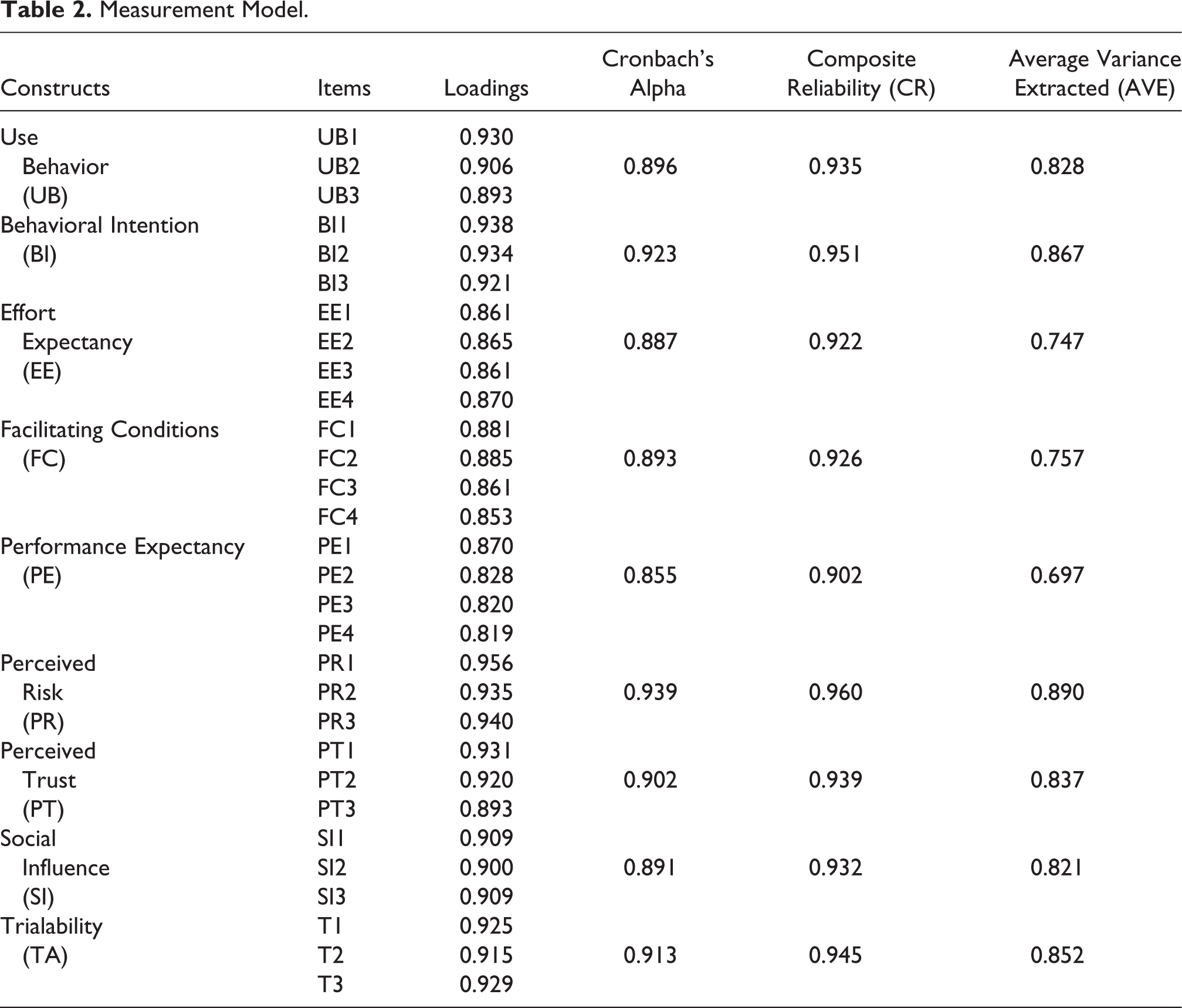
The calculated Cronbach’s alpha and composite reliability for assessing internal reliability is presented in Table 2. The values of Cronbach’s alpha range from 0.855 to 0.939 and the values of composite reliability range from 0.902 to 0.960, which are more than the recommended value of 0.7. Thus, it can be concluded that all the constructs have strong internal reliability.
Measurement Model.
Convergent validity
Convergent validity refers to the degree to which an item of measurement has strong positive correlation with other items of the same construct (Hair Jr et al., 2014). Item loading and average variance extracted (AVE) are used to measure convergent validity (Fornell and Larcker, 1981). Fornell and Larcker (1981) suggested that the acceptable values of items loading and AVE should be at least 0.50 to ensure convergent validity of the construct. Table 2 shows that the values of item loading of all the constructs range from 0.819 to 0.956 and the values of AVE range from 0.697 to 0.890 which are more than the suggested thresholds. Therefore, the convergent validity condition in this study is satisfied.
Discriminant validity
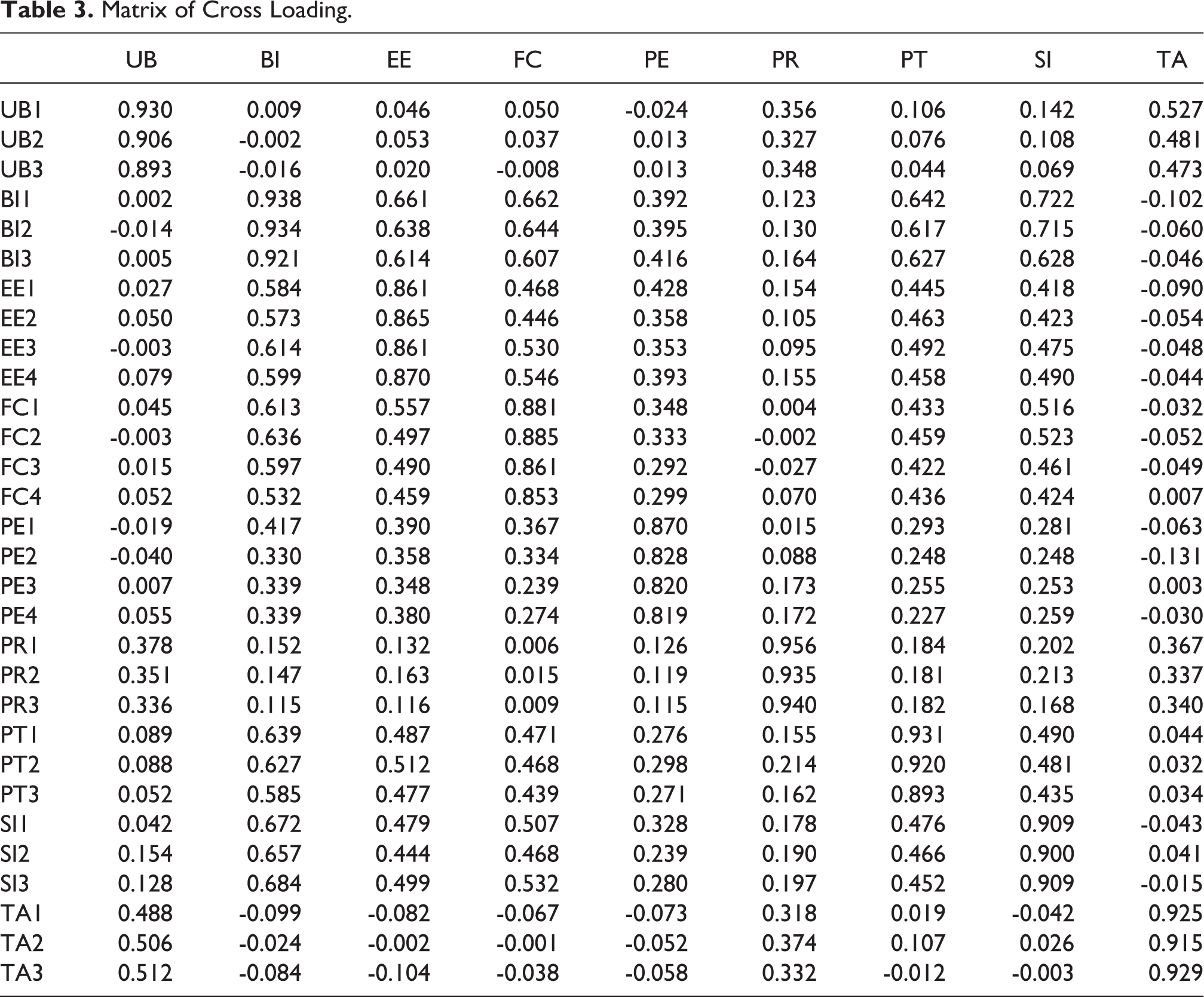
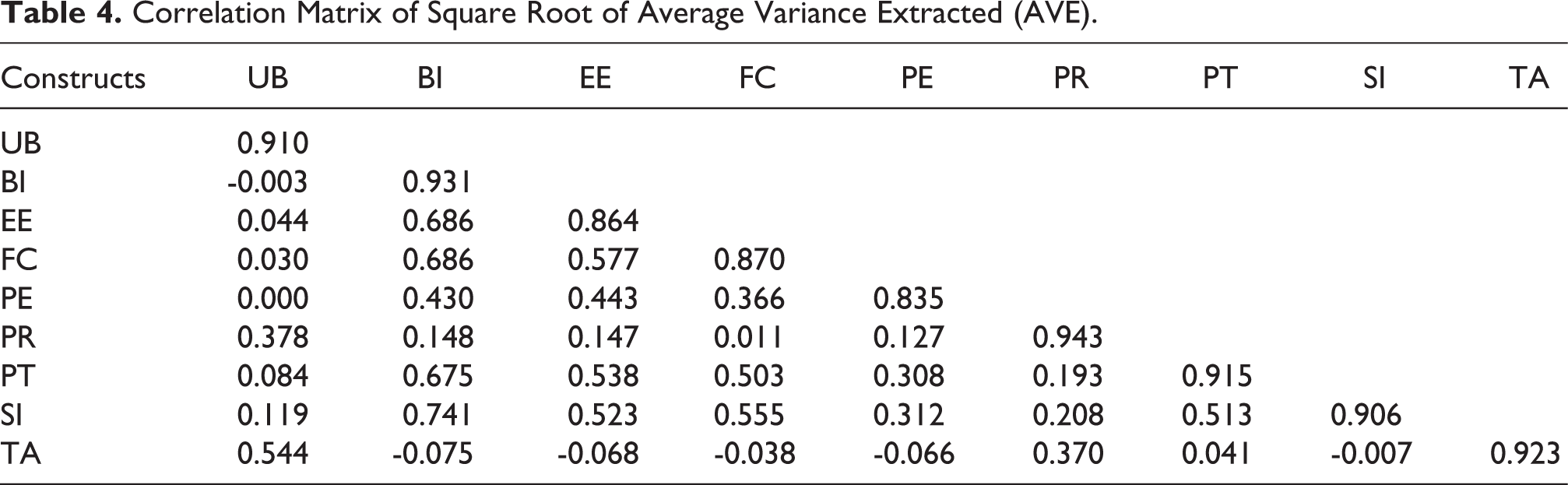
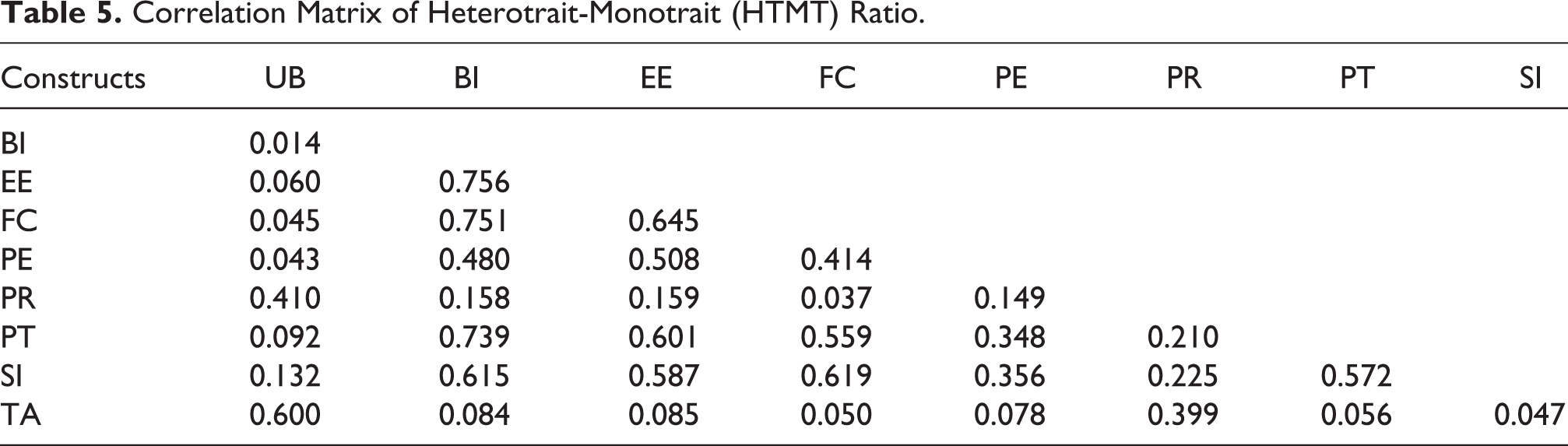
Cross loading and the square root of average variance extracted (AVE) are the measurements of discriminant validity (Barclay et al., 1995). The value of the square root of AVE should be greater than its correlation among other constructs (Henseler et al., 2009). Heterotrait-monotrait (HTMT) ratio is an alternative method of checking discriminant validity and the acceptable ratios of all research constructs are less than 0.85 (Henseler et al., 2016).
The items loading in the cross loading matrix (Table 3) and the calculated values of square root of AVE of all constructs (Table 4) are more than their alternative corresponding correlations with other constructs. Heterotrait-monotrait (HTMT) ratios of all research constructs, presented in Table 5, are lower than the threshold of 0.85. Thus, there is adequate discriminant validity of data.
Matrix of Cross Loading.
Correlation Matrix of Square Root of Average Variance Extracted (AVE).
Correlation Matrix of Heterotrait-Monotrait (HTMT) Ratio.
Structural model
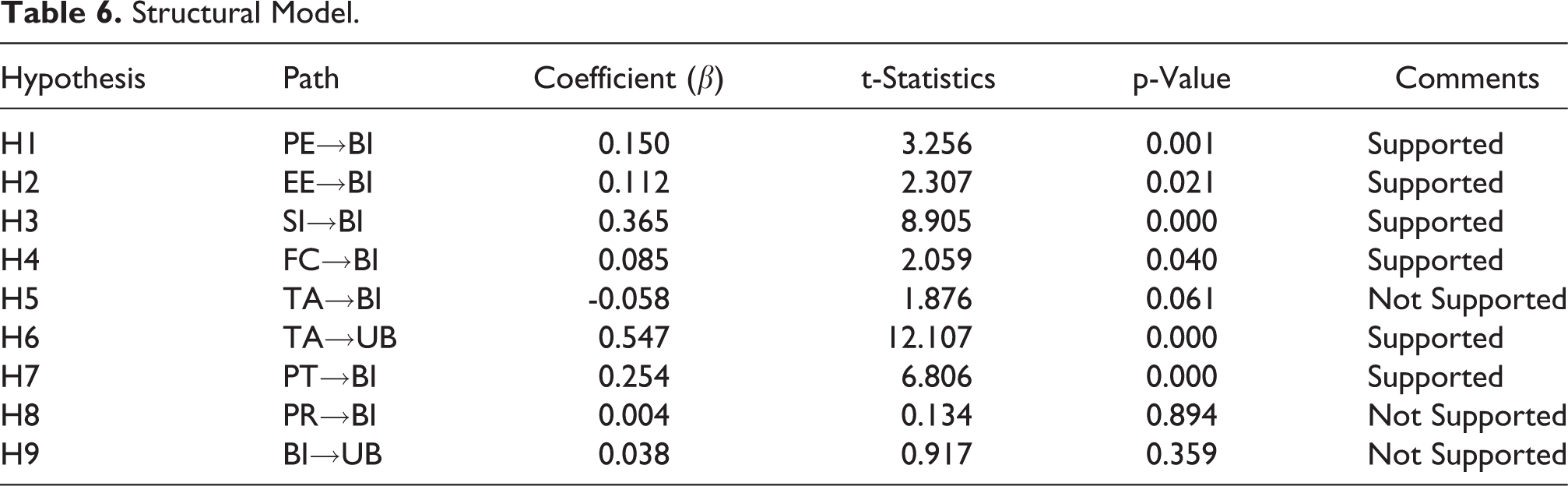
The findings (Table 6) show that performance expectancy, effort expectancy, social influence, facilitating conditions and perceived trust were statistically significant in explaining the behavioral intention of start-up entrepreneurs to use crowdfunding. Trialability is found to affect use behavior of crowdfunding, whilst trialability and perceived risk had no statistically significant effect on behavioral intention to use crowdfunding to raise funds. Behavioral intention does not have a significant impact on actual use behavior of crowdfunding. Therefore, the proposed hypotheses, H1, H2, H3, H4, H6 and H7 were supported. On the other hand, H5, H8 and H9 were found to be not supported.
Structural Model.
The structural model explains 75.9% of the variance in behavioral intention to use crowdfunding and 29.7% of the variance of actual use behavior of crowdfunding (Figure 2). Since the model accounted for more than 10% of variance of endogenous variables, it is a substantive and satisfactory structural model (Falk and Miller, 1992).
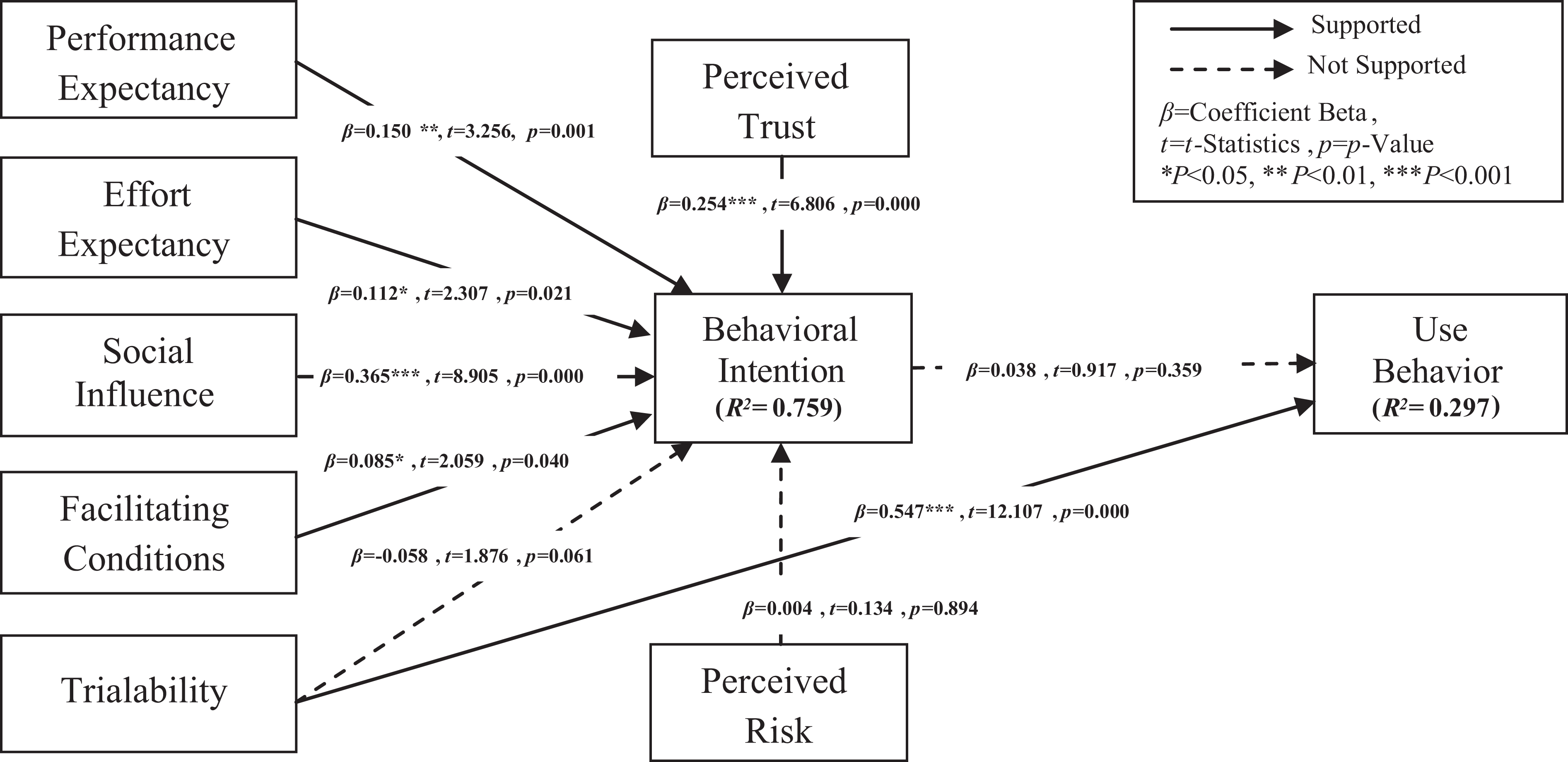
Results of Hypothesis Testing.
Discussion
An extended UTAUT was applied in this study to determine the start-up entrepreneurs’ behavioral intention to adopt crowdfunding for financing in Bangladesh. Overall, the empirical findings of this research provided insight into the constructs such as performance expectancy, effort expectancy, social influence, facilitating conditions and perceived trust in influencing crowdfunding adoption. The majority of constructs and hypothesized relations are supported by empirical findings, which are consistent with the outcomes of previous studies using UTAUT in crowdfunding adoption.
The results indicate that performance expectancy is a significant positive determinant of intention to adopt crowdfunding (H1), supporting previous studies in crowdfunding adoption (Kim and Jeon, 2017; Lacan and Desmet, 2017). As business persons, it is logical for start-up entrepreneurs to express their intentions to use crowdfunding based on cost-benefit analysis. They found crowdfunding to be a useful financing platform to help them access capital quickly and increase their financial performance. Likewise, effort expectancy is identified as a significant contributor in explaining the start-up entrepreneurs’ intention to adopt crowdfunding (H2), which is consistent with many prior studies on users’ crowdfunding adoption (Kim and Jeon, 2017; Moon and Hwang, 2018). The entrepreneurs believe that they needed less effort to raise funds through crowdfunding because most of them have basic computer literacy and Internet use experience. Similarly, the third construct, social influence, is found to have the greatest impact on willingness to adopt crowdfunding (H3) compared to other exogenous variables. The adoption intentions of start-up entrepreneurs are heavily influenced by the opinions and recommendations, as well as the motivations of their reference groups or socially important people, which is also in line with prior studies (Colombo et al., 2015; Mollick, 2014; Ordanini et al., 2011). Facilitating conditions also have a positive effect on crowdfunding intention (H4). Perceived technical support, customer assistance and expertise of crowdfunding platforms motivate entrepreneurs to raise capital through this financing option. This also supports the suggestions for infrastructural development proposed by Kwon et al. (2014), to ensure crowdfunding success.
However, no significant relationship was observed between trialability and behavioral intention (H5). This reflects the lack of local crowdfunding platforms and restricted access to global ones. Consequently, entrepreneurs get little opportunity to experience crowdfunding. In contrast, trialability was found to be a very significant determinant of use behavior or actual use of crowdfunding (H6), which revealed that the crowdfunding experiment opportunity influences start-up entrepreneurs directly for using crowdfunding for fund raising without delay.
The relationship between perceived trust and crowdfunding intention was also investigated in this research (H7) and was found to be significant. The start-up entrepreneurs can rely on this type of online funding because of the trustworthiness, integrity, transparency and security of crowdfunding platforms, which confirms the trust ensuring recommendation for success in crowdfunding by Gerber and Hui (2013). On the other hand, another extended construct to the UTAUT model, perceived risk, is identified as a non-significant factor (H8), consistent with some prior studies in crowdfunding adoption (Kim and Jeon, 2017). The probable reason behind is that entrepreneurs are the receivers of funds from backers or investors in the crowdfunding platform and the information supposed to be provided in the crowdfunding platforms is less risk sensitive for entrepreneurs.
Finally, the association between behavioral intention and use behavior or actual use was examined (H9) and no relationship was identified, which conflicts with previous research in information system or technology acceptance studies (Ifinedo, 2012; Oliveira et al., 2014). This outcome indicates that a notable number of entrepreneurs have the intention to raise funds using crowdfunding, but cannot easily access crowdfunding platforms in or from Bangladesh. If more crowdfunding platforms are available in the future, this relation will be significant.
Implications
Theoretical Implications
This research presents empirical insights into the intention to adopt crowdfunding of start-ups in Bangladesh, which can be generalized for other South Asian developing countries with similar cultural and economic backgrounds. The research first validated the UTAUT framework in a study on start-up entrepreneurs. The UTAUT was extended with three additional constructs, namely, trialability, trust and risk, which is a significant contribution to the literature on crowdfunding and start-up research. The validity of the research model and the outcomes of hypothesis testing confirm that the start-up entrepreneurs’ crowdfunding intention can be predicted by using this model. Finally, the findings can lay the foundations for other researchers to investigate further to obtain more insights of crowdfunding adoption in developing countries.
Practical Implications
The empirical findings of this research have practical implications for crowdfunding platforms, policy makers and incubation centers and universities that are fostering start-ups. Crowdfunding platforms can use the findings in planning, designing and facilitating crowdfunding. In addition, start-up promoting organizations, such as incubation centers, universities and entrepreneur clubs, can design their training programs based on identified behavioral issues to increase the success of start-ups through crowdfunding. Start-up entrepreneurs in Bangladesh have been given the opportunity to view a macro level picture of their perceptions of crowdfunding. Also, considering the identified motivating and demotivating factors as a checklist, policy-making authorities can develop strategies and modify existing policies to foster start-ups as well as crowdfunding in Bangladesh.
Limitations and Future Directions
There are some clear limitations of this study. First, it is a cross-sectional study and cannot provide a comparative scenario of before and after crowdfunding adoption by start-up entrepreneurs. Secondly, the sampling method used in this study might not be representative of the entire population and this could cause sampling bias. Also, the online survey method could not capture the opinions and views of entrepreneurs who are not digitally accessible. Thirdly, the use of a mail based self-administered survey may only collect information from entrepreneurs who are computer literate. Besides, the participants were not provided with clarifications of each question. The participants might have been able to get clarification about any question, if data collection were done through interviews. Fourthly, only the hypothesized factors were tested to identify the motivating factors. This prevented the study from the possibility of enumerating all the underlying motivating factors.
Despite its limitations, this research provides a literature foundation and scope for start-up and crowdfunding researchers for future studies. A further study could be done using longitudinal data to get better insights of causal or over time relationships or changes among factors. The scope of research could be broadened in future by increasing the sample size and study area, specifically in the developing countries. The developed model can be applied for research focusing on other modes of crowdfunding, like donation crowdfunding rather than equity crowdfunding. Lastly, comparative studies with other developed and/or developing countries would be precious research contributions.
Conclusion
Although crowdfunding is a promising financing source for start-ups, its acceptance rate is not satisfactory in Bangladesh. In order to ensure positive social, economical and technological impacts on emerging innovative start-ups, the technical and non-technical challenges towards crowdfunding need to be identified and faced. The success of adoption and diffusion of crowdfunding depends on the engagement and acceptance of end users, both investors and entrepreneurs. This study has revealed the motivational perceptions of start-up entrepreneurs in the setting of a developing country. The extended UTAUT model was validated and confirmed for predicting start-up entrepreneurs’ crowdfunding adoption intention. The findings contribute to crowdfunding and start-up researches incorporating the behavioral intention aspects of start-up entrepreneurs. For practitioners, the identified factors can be helpful in designing, refining and implementing crowdfunding platforms or crowdfunding fostering programs. The government should work in collaboration with the private sector, including financial institutions, educational institutions and incubation centers, to ensure greater adoption of crowdfunding in Bangladesh.
Footnotes

Measurement Items of Questionnaire
| Constructs | Items | Survey Questions | Items’ Sources |
|---|---|---|---|
| Performance Expectancy (PE) | PE1 | Using crowdfunding is useful to raise capital for my start-up. | Venkatesh et al. (2003), Venkatesh et al. (2012) |
| PE2 | Using crowdfunding enables me to raise capital for my start-up more quickly. | ||
| PE3 | Using crowdfunding increase my financial performance and productivity. | ||
| PE4 | If I use crowdfunding, I will enhance the possibility of raising more funds for my start-up. | ||
| Effort Expectancy (EE) | EE1 | The structure and user interface of crowdfunding platforms is clear and easy to understand. | Venkatesh et al. (2003), Ya-Zheng et al. (2018) |
| EE2 | Learning how to use crowdfunding platforms is easy for me. | ||
| EE3 | I find crowdfunding platforms easy to use for fund raising. | ||
| EE4 | It is easy for me to become skillful at using crowdfunding platforms. | ||
| Social Influence (SI) | SI1 | People around me encourage me to raise funds from crowdfunding platform for my start-up. | Venkatesh et al. (2003), Moon and Hwang (2018) |
| SI2 | People who are important to me think that I should use crowdfunding for funds raising for my start-up. | ||
| SI3 | My friends are likely to follow if they encourage raising fund for their start-ups through crowdfunding platforms. | ||
| Facilitating Conditions (FC) |
FC1 | The crowdfunding platforms are capable to provide me sufficient technical support to solve any problems I encounter during raising funds for my start-up. | Venkatesh et al. (2003), Moon and Hwang (2018) |
| FC2 | The crowdfunding platforms have adequate transaction systems for fund raising for start-ups. | ||
| FC3 | Crowdfunding platforms have sufficient channels (chat and mail) to communicate with the appropriate technical support staffs. | ||
| FC4 | The crowdfunding platforms have enough experience and knowledge in managing and facilitating funds raising for start-ups. | ||
| Trialability (TA) | TA1 | I have enough opportunity to try and use crowdfunding. | Moore and Benbasat (1991) |
| TA2 | I am able to experiment crowdfunding. | ||
| TA3 | I think I don’t have to expend much effort in trying to crowdfunding. | ||
| Perceived Trust (PT) |
PT1 | I can rely on crowdfunding platforms. | Kang et al. (2016), Ya-Zheng, et al. (2018) |
| PT2 | I think crowdfunding platform is trustworthy and have high integrity. | ||
| PT3 | I think my personal and start-up related information will not be exposed to unauthorized parties by crowdfunding platforms. | ||
| Perceived Risk (PR) |
PR1 | I think It would not be risky to use crowdfunding platform to raise funds. |
Featherman and Pavlou (2003)
|
| PR2 | I think crowdfunding platform would not hamper the financial and personal privacy. | ||
| PR3 | I think business model information exposure in crowdfunding platforms don’t have imitation risk. | ||
| Behavioral Intention (BI) |
BI1 | I have intention to raise capital for my start-up through crowdfunding platform in coming future. | Venkatesh et al. (2003), Ya-Zheng et al. (2018) |
| BI2 | I predict I would raise capital for my start-up through crowdfunding platform in near future. | ||
| BI3 | I have planned to use crowdfunding in near future. | ||
| Use Behavior (UB) |
UB1 | I frequently use crowdfunding platform to raise capital for my start-up. | Venkatesh et al. (2012) |
| UB2 | I frequently browse crowdfunding platforms to raise capital for my start-up. | ||
| UB3 | I frequently post on crowdfunding platforms to raise capital for start-up. |