







Abstract
This qualitative study provides an understanding about undergraduate students’ information literacy experience during their involvement with distance learning in an Indonesian university. Findings present evidence to inform the development of the distance learning process in Indonesia and informed learning responses that enhance the learning of undergraduate students. A total of 17 undergraduate students were interviewed using a semi-structured interview technique. The data collected were analyzed using thematic analysis, revealing four themes related to students’ information literacy experience during distance learning, namely, understanding distance learning, platform literacy, learning strategy, and learning resources. Findings can inform the development of informed learning responses to enhance the transition of undergraduate students into distance learning during a pandemic situation. These results may also be of benefit to teaching faculties for enhancing teaching and learning activities and to provide support for students.
Introduction
The Indonesian higher education system has changed since March 2020 due to the spread of the coronavirus disease 2019 (COVID-19). The Indonesian government obliged all universities to shift teaching activities from classroom to remote teaching, following the required physical distancing, to reduce the COVID-19 infection. However, previous studies suggest that the distance learning caused by the COVID-19 outbreak has created a significant change to university students psychologically and pedagogically (Amir et al., 2020). It has changed the way students follow lectures and complete assignments. This new situation has provided new and unique experiences for students during their study in higher education.
This research explores the information literacy experience of students during distance learning. Given that distance learning is regulated by Indonesian universities for the first semester of 2021 and that it is possible to be further extended in the future, the current lack of scholarly inquiry about preparing students for distance learning information literacy is noteworthy. The scarcity of research on connections between information literacy and distance learning, especially in this type of pandemic situation where distance learning is not part of the study programs of universities, suggests a significant gap in academic librarians’ understanding of students’ information literacy development during distance learning and an opportunity to gather additional research evidence to inform practice in the area of information literacy (Easter, Bailey, and Klages, 2014). Research exploring the information literacy of students is mainly focused on assessing their use of information resources (Sharun, 2020). However, some information literacy research in the last 10 years had been growing and investigating beyond technical skills and offering new ways on investigating information literacy. These studies focus on how people use information to learn (Bruce and Hughes, 2010; Demasson, 2014; Sayyad Abdi, Partridge, and Bruce, 2016; C. Yates, 2015).
This observation is in line with the recommendation of Bruce that information literacy research must broaden and focus on how students should engage with information to learn (Bruce, 2008). Previous research on this field includes Sayyad Abdi et al. (2016) who identified the experiences of web designers and developers related to information literacy in their day-to-day information practice. Demasson (2014) investigated the information literacy of people who engage in serious leisure activities in the area of heritage. To date, few studies explore the information literacy experience of undergraduate students during distance learning.
This study contributes a further understanding of how students experience information literacy and draws insights from a specific context where this experience occurs. To do so, this research asks: how do undergraduate students in Universitas Diponegoro describe their information practices during distance learning? What can we learn from their descriptions of information practices during their study from home that will help librarians and potentially faculties design information literacy education and incorporate it into the curriculum effectively?
Literature reviews
Distance learning
The distinguishing characteristics of distance learning are the separation between the lecturer and students in space or time; the volitional control of learning by students, rather than the distant lecturer; and the noncontiguous communication between students and the lecturer, all of which are mediated by some form of technology (Perraton, 1988). Distance learning is expected to adopt an instructional model where teaching is not only about the way in which information is communicated to students but also the way in which students make sense and construct new knowledge from the information presented (Sherry, 1995). A distance learning environment should thus enable students to construct knowledge under the guidance of the lecturer, and then report their progress back to the lecturer through a designated distance learning platform. Hence, the basic model of distance learning is to offer distant students an experience similar to the traditional, face-to-face instruction through a two-way audiovisual interaction (Keegan, 1996).
Uncovering students’ distance learning experience can be beneficial for higher education institutions to provide customized support for students as the distance learning that is currently undergoing occurred due to the COVID-19 outbreak. Previous studies report that online learning is an unpleasant experience, and students prefer face-to-face instruction over online teaching (Iglesias-Pradas, Hernández-García, Chaparro-Peláez, and Prieto, 2021; Patricia, 2020). The experience may not be surprising because students are unprepared for distance learning (Daniel, 2020); most students lack previous experience in distance learning (Hodges, Moore, Lockee, Trust, and Bond, 2020). The major challenges are the online environment where students have a difficult time understanding learning materials and the lack of supporting resources (e.g., library resources, availability of lecturers for consultation) to complete their study assignments (Patricia, 2020).
However, employing distance learning is not only about having students deal with technology and technical issues but also, importantly, is about pedagogical challenges and the way they adopt to the online mode (Ali, 2020). To date, few studies investigate how students learn in this online mode. The current research explores student information literacy during distance learning.
Information literacy
Information literacy has been defined in many ways (Machin-Mastromatteo, 2014). The variations in understanding it originate from the different theoretical perspectives that comprise information literacy discussions (Limberg, Sundin, and Talja, 2012), where the objective of investigating information literacy is influenced (Yates, 2013). However, despite the differences in the definitions of information literacy, most researchers and experts agree that information literacy is about problem-solving activities, which involve critical thinking and the ability to use information in daily life (Harding, 2008).
Previous studies on information literacy, in the context of higher education, regard information literacy as an essential skill required to ensure the success of students in their study. Many believe information literacy comprises skills on locating information, evaluating and selecting information, and using information ethically. The concept of information literacy, as a set of skills, is mostly influenced by the behavioral perspective of information literacy that considers it as a skill or an attitude that an individual must acquire (Yates, 2013). However, focusing on skills may only provide us with the description of the technical process of people locating information. The limitation of the behavioral perspective is that it only assesses how competent people find and use information. It fails to reveal the experience of people using information to learn. Information literacy studies, which employ the behavioral perspective, do not reveal what people constitute as information and how they use information to learn.
Bruce (1997) introduced information literacy research that aims to observe the ways people interact with information. Through her phenomenography study, she recommended the concept of information literacy that incorporates the various ways in which people interact with elements of their information world. Bruce (1997) suggested that information literacy can be understood as a concept, rather than as a skill. People who are information literate are the “ones who experience information literacy in various ways and can determine the nature of new experiences by drawing upon them in new situations.” This concept is relevant to the present study. Students who participated in our research face new experiences while studying online. They have never prepared themselves for distance learning. Hence, the experiences of students in distance learning provide new insights for the discourse of information literacy, especially when we investigate what they constitute as information and how the information they use shapes the way they learn.
As a theoretical framework for this study, the relational perspective provides a wide interpretation and offers different insights into information literacy (Bruce and Hughes, 2010). Moreover, this concept emphasizes on how people engage with information to learn, which is then labeled as informed learning that translates the relational perspective of information literacy into learning practice (Bruce et al., 2017).
Yates (2015) employed relational perspective and observed the variations in people’s experiences in using information to learn about health. Andretta (2012) used the same approach to explore the experiences of undergraduate students in information literacy. Sayyad Abdi, Partridge, and Bruce, (2016) researched about the experiences of web designers and developers related to information literacy. Demasson (2014) investigated the information literacy of people who engage in serious leisure activities in the area of heritage.
These previous studies present information literacy experience from different backgrounds and show other ways to approach information literacy and how it is experienced. They open opportunities for us to explore information literacy in different contexts. The present study investigates the information literacy experience of students during their study from home. This research is the first to explore such experiences during the pandemic outbreak by employing the relational approach to information literacy.
Method
This study was designed as a qualitative inquiry that sought to understand how students experience study from home as part of their information literacy. It focused on students from a state university in Mid Java, Indonesia. The university is well-known for being attended by students from major provinces in Indonesia. To invite students to be research participants, the main researcher approached the class coordinators of six faculties and distributed recruitment flyers containing information about the study. The flyers were then distributed to students in each faculty through the WhatsApp platform. In accordance with the aims of the study, a criterion was considered for the recruitment process of the participants. The focus of the recruitment was undergraduate students, who are in their second year of study, with the consideration that they had already completed six months of remote learning during the COVID-19 outbreak. With this criterion, the students are considered to have an extensive experience with remote learning, leading to experience in study from home.
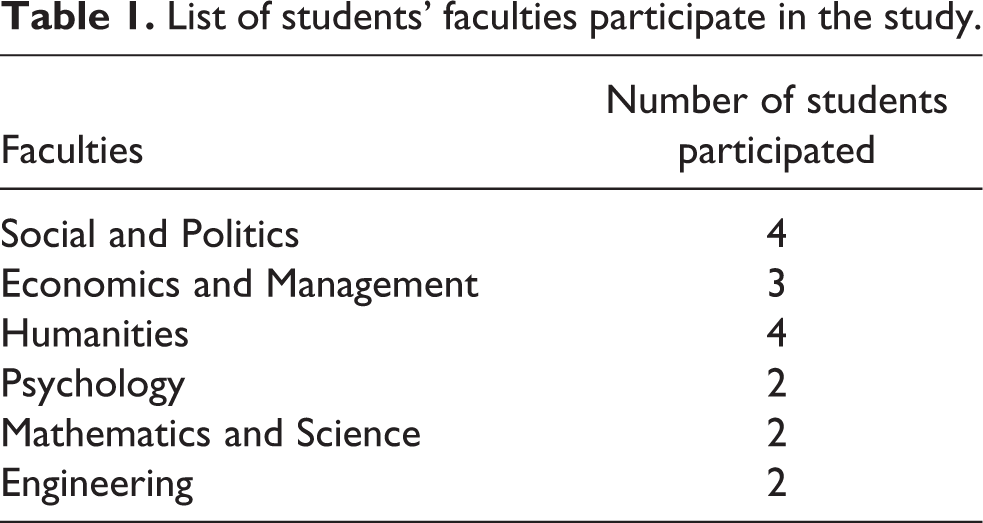
Only two students were willing to participate in the interview at the beginning of the data collection period. According to one of the class coordinators, most students feel uncomfortable to be interviewed by a lecturer, especially if they have to tell stories about their learning experience. In response to this situation, two strategies were applied. First, the flyers were revised mentioning that the privacy of students is respected, and confidentiality is guaranteed and maintained in any stage of the research. The class coordinator was contacted and provided with the revised flyers. Second, a third-year student was recruited as a member of the research team and trained to be an interviewer. The second strategy was taken with the consideration that a student can approach his/her colleagues better and can recruit more participants than a lecturer. The researcher provided the students with training about the semi-structured interview strategy. The training was useful to build students’ interview skills and self-confidence. Finally, 17 students agreed to participate in the interview. The list of faculties where the participants were coming from is listed in the Table 1.
List of students’ faculties participate in the study.
The interviews were transcribed and discussed with all the members of the research team. The small number of participants enabled the researchers to conduct an in-depth investigation exploring the information literacy of students when they study from home. The participants were provided an information sheet, a consent form, and time to ask questions. The information sheet and the consent form allow the participants to understand the parameters of the study (Brinkmann and Kvale, 2015).
In accordance with the established qualitative practice, the collected data were analyzed by employing thematic analysis, which is a data analysis method that can be applied to identify and examine patterns or themes within the data that are considered important for the descriptions of the phenomenon of a study (Heriyanto, 2018). Thematic analysis is used to interpret various aspects from the topic being investigated by “encoding” the obtained qualitative data (Braun and Clarke, 2006).
The analysis process consists of three phases, namely, familiarizing data, generating codes, and identifying themes. In the first phase, the 17 interview recordings were transcribed into interview transcripts, which help the research team familiarize with the data. Most members of the research team read the transcripts two to three times to be thoroughly understood. After each transcript was read, a summary was written to describe the researchers’ reflections on the data. In the second phase, codes were generated and identified as data features that appear relevant to the phenomenon being studied. In the third phase, themes were identified. Themes refer to patterns in data that explain and organize the aspects of the phenomenon derived from the data. The codes generated in the previous phase were reviewed and examined multiple times against the main research question: how do undergraduate students in Universitas Diponegoro describe their information practices during distance learning? The identified themes are explained in the following section.
Findings
Understanding distance learning
Students understand distance learning as lectures without attending class physically. Communication between students and lecturers is conducted through various tools, which are connected via the Internet. For me, distance learning is an online learning without meeting with the lecturer face to face; it is all online; it uses technology that is connected to the Internet; the media can be anything similar to PowerPoint slides, video recordings, and audio recordings (Int. 3).
Hence students feel that distance learning should not discourage them in following lectures. Lecturers are expected to engage with all students and know them well, including their learning behavior. The fact that distance learning is different from face-to-face learning requires lecturers to inclusively accommodate different ways of learning. I think distance learning is inclusive. Lecturers should not pay attention to particular students. I know that only one lecturer is assigned to teach 30 or 40 students, but the lecturer must give attention to all of us (Int. 15).
Platform literacy
Most participants agree that understanding the learning platform is essential for participating in distance learning. They also admit that they are dependent on all kinds of devices when they must join lectures. One thing that is recognized by the participants is that they should be competent to use the learning platform for joining lectures.
However, familiarizing themselves with the platform is also challenging. They feel that they must try all the platform features to determine their functionalities. That way, they identify useful features, such as a recording function for lectures or recording for class discussions. Students also find other features important, such as the button to join a video meeting, the feature to turn on notifications when comments are written or when materials are uploaded by lecturers, and the assignment collection feature.
Although much information must be learned to properly use the platform, most students have no difficulty in using it and joining lectures. Their university provides them with a guideline for using the learning platform, and they find it useful. However, the information technology (IT) staff from the faculty is the most helpful. My faculty is very helpful. One IT staff is always willing to help. Every time I have a problem about the platform or in using MS Word on the platform or whatever it is, he always helps me. I just message him via WhatsApp, and then he guides me through (Int. 11). Being in a team is also an advantage. Even if you have difficulties, friends will help you. Everything is working fine now. Right. I have no problem so far. I have not experienced any difficulties yet (Int. 7).
Learning strategy
Engaging in distance learning without any preparation is a new experience for all the students interviewed in this study. In response, students use various strategies to attend lectures and manage assignments, which they believe they are receiving more than during face-to-face lectures. Therefore, students conveyed that one of the things they realized is that they must be independent learners. The term “independent” refers to being able to manage time for readings, for doing assignments, and for group discussions. With these online lectures, lecturers open many opportunities for students who do not understand learning materials to ask questions. The thing that should be prioritized is that students must study independently (Int. 5).
Over time, students have been able to familiarize themselves with distance learning methods, which are mostly based on online platforms. Students eagerly attempt to find the positive side of distance learning. They start to take full advantage of the platform; for example, when a lecturer delivers a lecture via text chat, students save it and review the chat discussion when the lecture is over. Reviewing lecturer notes is one thing they did not do in normal lectures before the pandemic occurred.
Another student also shared that they are greatly helped by their lecturer who uploads study materials on the platform, including study guides, slides, and reading materials. The availability of study materials is useful for students to do independent study.
Learning resources
The distance learning situation has enforced students to survive. This learning environment is totally different from the face-to-face mode, especially the ways lecturers deliver lectures, group discussions or questions and answers between students and lecturers, and questions and answers among students. Students said accepting lecturers’ explanations through online media is difficult. Moreover, they feel reluctant to ask questions or confirm such explanations. Students prefer to ask classmates after class or listen to lecture recordings.
Realizing the difficulties they are experiencing, most students have a way to further understand lecture materials. One of the information sources they use is text chat written by lecturers on the platform. For students, a text chat containing lecture material is similar to a summary that provides information and course material. When studying online, I immediately copy and paste the chat and share it to the WhatsApp group, so that everybody can read it. For me, I usually take a screenshot of information I regard as important, and then I open the gallery on my phone when I need it (Int. 1). I used YouTube previously to look for materials. I use it more now when studying from home. My current references are YouTube, Google, and Single Sign On (Int. 6). Why? YouTube videos are easy to understand, sir. I can hear the audio and images, which make information easy to understand. Another good thing is that I can find many educational platforms that provide contents on YouTube. So, it is more…it is easier to search for information even though it is written in English (Int. 11).
Discussion
Students understand that they are new to distance learning. This new learning experience develops their self-awareness related to new ways of learning. Their awareness arises as a result of their conception of distance learning and response to this new way of learning. Platform literacy appears as one of the themes, as students reflected that it is the main and fundamental step that is critical to be mastered. Students found that the platform is the main gate to enter the world of information, so that they can join lectures, online discussions, and recorded lectures. Hence, the learning platform is the information source of students with which they engage during their study at home.
Other studies suggest that the learning platform may not have an important influence on distance learning, but it is pedagogical. However, as the current research uses informed learning as a theoretical framework where it emphasizes the way people use information to learn in their new environment, seeing the learning platform as one of the important aspects of students’ distance learning can be logical. Students in this research indicate that the platform is their information gateway during distance learning. This finding confirms those of Patricia (2020) and van Rensburg (2018) that the use of technology plays a significant role in the cognitive engagement and academic performance of students when they study from home.
This finding strengthens the relational concept of information literacy where it is unnecessarily about the technical aspect of students understanding their information need and having the ability to access the needed information. Instead, this finding shows how students demonstrate their cognitive ability to adapt to a new learning environment. Students in this study are not only able to seek for needed information but also able to create a new learning strategy for themselves in response to distance learning. Students identify their strengths and weaknesses during their online interactions with their lecturers and peers. By coping with these barriers, they can make their new environment as their information source, which they can use to learn. Distance learning has brought students into the importance of being independent learners as they realized the minimum supervision of their lecturers and the less physical contact and discussion with their peers. Students’ learning strategy confirms that their information literacy is about their critical thinking to adapt to a new environment (Bruce, 2008).
Students experiencing distance learning include their perspective of what they call as information. Many academics and information experts may see academic databases and academic journals as relevant scholarly information sources for students, but this study reveals what constitutes information for students during their study from home. As previously explained, students acknowledge their limitations, as results of their lack of interest in distance learning, by identifying the number of resources that they consider as their learning resources. They use lecturers’ text chat and recordings not only for their independent study but also for completing assignments.
In addition, many students use YouTube as another medium to further understand the lectures they follow. The use of YouTube videos by students as information sources is also suggested by Kapasia et al. (2020) who revealed that students use various platforms, such as YouTube, for study materials during the lockdown period, even though students have already been using YouTube to supplement college course contents before the COVID-19 outbreak (Burke and Snyder, 2008; Johnston, Barton, Williams-Pritchard, and Todorovic, 2018; Moghavvemi, Sulaiman, Jaafar, and Kasem, 2018).
Conclusion
This paper presented insights concerning students’ information literacy experience within their new environment, that is, the study from home setting as a response to the COVID-19 outbreak. The study drew an intentionally limited focus on a relatively small group of participants at one Indonesian university to understand the lived experiences of undergraduate students. The findings addressed gaps in information literacy research related to distance learning. The four themes related to students’ information literacy experience during distance learning, namely, understanding distance learning, platform literacy, learning strategy, and learning resources can inform the development of informed learning responses to enhance the transition of undergraduate students to distance learning during a pandemic situation. The findings can also inform the development of informed learning responses to enhance the transition of undergraduate students into the new learning mode—distance learning—during a pandemic situation. Strategies are needed to build a resilient teaching model in the state that will ensure to develop the skill for independent learning of the undergraduate students.
The participants of this study are the Indonesian undergraduate students were registered in an Indonesian university. The findings portray the current condition of the participants based on their affiliation with the institution. Other undergraduate students from international settings may provide different perspective and understanding related to the emergency remote teaching context and information literacy.
