







Abstract
This study aims to examine the impact of Internet development on the urban-rural income gap in China. By using a provincial level panel dataset comprising 31 of China’s provinces, it analyzes and compares the effects of the eastern, central, and western regions over the period of 2005–2016. The results show that Internet development aggravates the gap in the central region much more than that in the eastern and western regions. The trade openness expands the urban-rural income gap only in the eastern region. Urbanization reduces the urban-rural income gap in the western region more than that in the eastern and central regions. Additionally, the regional economic development level also reduces the urban-rural income gap in central region more than that in the eastern region. FDI reduces the urban-rural income gap only in the central region. Additionally, while the urban-rural income gap can widen further by Internet development with trade openness, it can be decreased if Internet development is combined with FDI and urbanization. To reduce urban-rural income gap, the government should accelerate the construction of Internet according to regional differences.
Introduction
In the 21st century, Internet technology has witnessed explosive development and popularization in China. As a revolutionary tool, Internet is profoundly changing the productivity and life of human beings. According to the latest statistics, China had 802 million Internet users in the first half of 2018, 3.8 percent more than that at the end of 2017, and the Internet penetration rate reached 57.7 percent. Among the current users, the number of rural Internet users totaled 211 million, accounting for 37.41% of total rural population. The number of urban Internet users totaled 591 million, accounting for 71.09% of the total urban population (China Internet Network Information Center, 2018). In the process of China’s continuous urbanization, the shifting of rural populations to urban areas will also lead to subtle changes in the structure of groups of urban and rural Internet users. It can be seen that there are still large differences in Internet penetration among urban and rural residents in China, and the resulting differences in Internet usage ability and frequency among urban and rural residents may affect the income gap and widen the digital divide. At the same time, such differences may also exist between the eastern, central and western provinces.
From the perspective of the urban-rural income gap, according to China’s national bureau of statistics, the income gap between urban and rural residents was still wide in the first half of 2018. Among the provinces with the largest gap, the per capita disposable income of urban residents was nearly 10 times higher that of the rural residents. Therefore, the Chinese government has implemented a series of solutions to promote the Internet 1 , address the socioeconomic aspects elaborately, and foster sustainable socioeconomic development in the region, such as the ‘broadband China’ strategy, guidelines on actively advancing the ‘Internet plus’ initiative, and taking ‘broadband China’ and ‘Internet plus’ plan as the national strategy. Here, the ‘Internet plus’ refers to the information superhighway and industry 4.0 in China, and it was proposed by China’s Premier Li keqiang in the government work report on March 5, 2015.
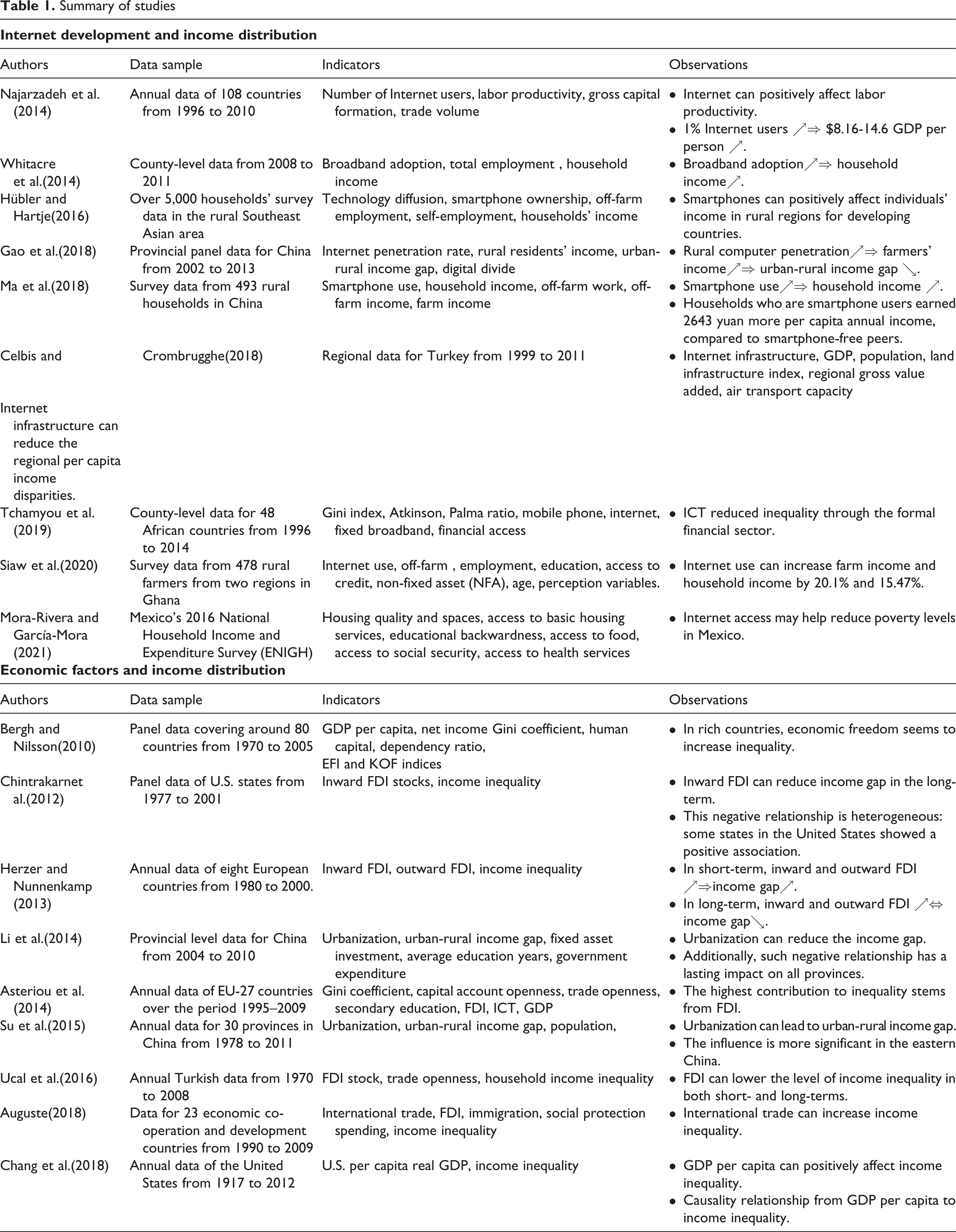
Several academic studies have taken a variety of perspectives on Internet development while analyzing how it influences income distribution (Mack and Faggian, 2013; Najarzadeh et al., 2014; Whitacre et al., 2014; Celbis and Crombrugghe, 2018; Hübler and Hartje, 2016; Whitacre et al., 2018; Gao et al., 2018; Ma et al., 2018; Tchamyou et al., 2019). However, few studies have analyzed the effects of Internet development on the urban-rural income gap in China (Gao et al., 2018, Li et al., 2020, Qiu et al., 2021).
The study aims to analyze whether and how Internet development has affected the urban-rural income gap in China, by comparing the eastern, central, and western regions. Additionally, this study introduces interaction terms of Internet development with foreign direct investment (FDI), urbanization, and trade openness, and explores whether they contribute to narrowing the urban-rural income gap. Furthermore, this study also considers other economic factors that affect the urban-rural income gap, such as trade openness, urbanization, gross regional domestic product (GRDP), and FDI.
The remainder of the paper is organized as follows: the second section reviews the literature, which talks about Internet development, income distribution, and economic factors. The third section explains the current study’s empirical methodology including models, the analysis of the data, and analytical results. The fourth section presents the conclusions of this study and policy implications.
Literature review
Internet development and income distribution
In term of the relationship between Internet and income distribution, the previous studies either analyzed the influence of the Internet on labor productivity, employment and regional economics (Mack and Faggian, 2013; Najarzadeh et al., 2014; Celbis and Crombrugghe, 2018; Whitacre et al., 2018; Tchamyou et al., 2019) or investigated the effects of Internet diffusion on rural developing countries at the level of individuals and households (Whitacre, 2010; Whitacre et al., 2014; Hübler and Hartje, 2016; Gao et al., 2018; Ma et al., 2018). By using a dynamic panel data approach and data from 108 countries from 1995 to 2010, Najarzadeh et al. (2014) reported that a 1% increase in Internet users adds $8.16 to the GDP per person. Concerning the regional economics, Tchamyou et al. (2019) investigated the effects of information and communication technology (ICT) on income inequality in 48 African countries based on the Generalized Method of Moments from 1996 to 2014. It was found that ICT reduced inequality through the formal financial sector. Meanwhile, by using absolute convergence models to research data for Turkey, Celbis and Crombrugghe (2018) found that Internet infrastructure could positively affect the per capita income and reduce the regional per capita income disparities.
At the level of individuals and households, Whitacre et al. (2014) conducted spatial and first differenced regressions and provided evidence of a positive correlation between the level of rural broadband adoption and an increase in the household income. Since computers and mobile phones are terminal devices used to establish a connection with the Internet, some studies examined the effect of computer penetration or the use of smartphone on rural residents’ income. Gao et al. (2018) used a dynamic panel threshold effects model to study provincial data in China from 2002 to 2013, revealing that the penetration of computer can positively affect farmers’ income, which is related to narrowing the urban-rural income gap. Ma et al. (2018) reported that the growth of rural individuals’ income through off-farm work can increase the use of smartphone in rural regions, which, in turn, can increase the income. By using an endogenous switching probit model and samples from 493 rural individuals in China, the study found that the average annual income of households engaged in non-agricultural activities and work related to use of smartphones was 3,430 yuan and 2,643 yuan higher than that of households engaged in full-time farming and those not using smartphones, respectively. Whitacre (2010) used a modified decomposition of the standard Oaxaca-Blinder technique to study the spread of Internet technology to rural areas from 2003 to 2006 and found that although the impact of Internet infrastructure on the income gap is less, the importance is increasing. Moreover, Hübler and Hartje (2016), by using a cross-sectional probit model and cross-sectional model and researching samples from the rural Southeast Asian countries, gave evidence that the impact of smartphones is positively related to individuals’ income in rural regions in developing countries.
Additionally, some studies examined the relationship between Internet and income distribution in cross-country studies. For instance, Zhang (2013) constructed an Internet consumption model to analyze the relationship between digital divide and income disparity among the five economic development country-level groups categorized by The World Bank. However, the result only showed a correlation and not a causal relationship. In contrast, the impact of income distribution on Internet use was also examined in cross-country studies. For example, Močnik and Širec (2010) used factor analysis to report a positive influence of income distribution on Internet use, but the level of this effect differed according to countries’ different income groups. Similarly, studies have shown the negative effects of the digital divide on Internet adoption. Noh and Yoo (2008) constructed a framework of a pure exchange overlapping generations model to discover the impact of Internet adoption and income distribution on economic growth from 1995 to 2002. In high-income countries, the Internet’s implicit effect on the economy is negative and the digital divide has curbed the economic effects of the Internet. Most recently, in terms of the dynamic association, Bauer (2018) explained that the impact level of the digital economy on income inequality is ambiguous and mainly dependent on the specific context and policy selection by using a simplified dynamic model of the interactions between ICTs and income distribution. Considering related specific factors, the relationship could be positive or negative.
Furthermore, the relationship between the rural Internet penetration rate and income distribution has practical significance for promoting rural regional economic development and urban-rural integration. Rural areas have been recognized as being downstream of the supply chain and at a disadvantage in income distribution (Li et al., 2020). With the popularization of the Internet and universality of information technology, it may help farmers to increase their income and reduce the urban-rural income gap (Whitacre and Mills, 2010). Some studies have also confirmed that the digital dividend of the Internet is expanding in rural areas. Siaw et al. (2020) studied survey data from farmers in two regions of Ghana and found that their use of the Internet generated an income increase of 20.1% and 15.4% for farms and families, respectively. Data from Mexico also support this view, with Internet access helping reduce poverty levels in rural regions (Mora-Rivera and García-Mora, 2021). In addition, based on household-level survey data in rural China, Ma et al. (2018) found that the popularization of the Internet and smartphones has helped increase farm income and non-farm income in China by more than 10% and household income by about 14%. Therefore, we can infer that Internet penetration can help rural residents overcome barriers to market entry, reduce logistics costs, and generate income effects (Li et al., 2020). Although rural Internet penetration is rising, the number of users and network speed are nowhere near those in urban areas. The urban-rural income gap is caused by the differences, not only in the Internet penetration rate, but also in network speed, self-efficacy, and learning ability (Whitacre and Mills, 2007; LaRose et al., 2007; Ashmore et al., 2015).
Economic factors and income distribution
First, the study discusses the effect of economic indicators (gross domestic product (GDP), FDI, trade openness, and urbanization) on income distribution. GDP is a useful measure of output and applies to the estimates of productivity as an indicator of economic activity; thus, it was used as a predictor to examine income distribution in previous studies. The effect of economic development on the income gap has been verified in some large cities. Huang et al. (2016) used a series of sustainability indicators to assess the three dimensions of sustainability from 1978 to 2012. It was found that the Gini coefficient and the urban-rural income ratio were expanded, driven by unprecedented economic development. In recent years, the expansion of the income gap in most large cities could be suppressed. The relationship between economic factors and income inequality was also verified in regional studies. Tian et al. (2016) used the logit test to analyze regional income inequality and convergence in China from the perspective of club integration during 1978 to 2013. The results showed that income inequality before the club is related to economic growth, material and human capital, and income inequality within the club is decreasing. But at the same time, income inequality between clubs has deteriorated with economic development. Chang et al. (2018) investigated the interaction between GDP per capita and income inequality by adopting wavelet coherency analysis; they found a positive association between these two variables and provided evidence of a causality relationship from GDP per capita to income inequality.
There are significant cross-country differences in the long-term effects of FDI on income inequality. For some countries, the long-term effects of income inequality remained negative (Chintrakarn et al., 2012; Herzer and Nunnenkamp, 2013; Ucal et al., 2016; Paramati and Nguyen, 2018). Herzer and Nunnenkamp (2013) used panel cointegration techniques as well as unbalanced panel regressions and European data to examine the interaction between these two variables in the short- and long-terms. The results show that the growth of both inward and outward FDI can reduce income gap in the long-run, while the effect was reversed in the short-term. Additionally, it is worth mentioning that they found the causality relationship to be bidirectional in the long-term, which means that a decline in inequality can also contribute to a growth in FDI. Ucal et al. (2016) used the nonlinear auto-regressive distributed lag (ARDL) modelling approach to examine annual Turkish data from 1970 to 2008 and documented that FDI can lower the level of income inequality in both short- and long-terms, but the effect is limited. However, some countries witnessed a positive influence of FDI on income inequality (Lai, 2011; Herzer et al., 2014; Lin et al., 2015; Asteriou et al., 2014). In terms of China, Lai (2011) applied ordinary least-squares (OLS) to examine the micro-level effect of foreign investment firms on domestic wage inequality. They reported that foreign investment contributed to negative spillover effects on the wage level of domestic enterprises, thereby increasing the income inequality between firms significantly. By applying panel cointegration techniques as well as regression and data from Latin American countries, Herzer et al. (2014) also provided evidence of a positive influence of inward FDI on income inequality. In addition, FDI can also find great contributions to income inequality in developed countries. Asteriou et al. (2014) used panel regression models to study income inequality and globalization in EU-27 countries from 1995 to 2009 and found that the greatest contribution to inequality comes from FDI.
Regarding the linkage between trade openness and income inequality, Anderson (2005) highlighted that the growth of trade openness can influence income inequality in developing countries. For instance, greater trade openness can influence the spatial concentration of economic activity, eventually increasing the gap in the real income of fixed factors of production between regions. Many studies reported the effects of trade liberalization and financial globalization on income inequality. Jaumotte and Papageorgiou (2013) used the summary model, full model, and benchmark model to discuss the impact of the rapid development of trade and finance in most countries on income inequality from 1981 to 2003. They found that trade globalization, especially foreign direct investment, is associated with increased inequality. Bergh and Nilsson (2010) by least squares and country fixed effects to check whether the economic freedom index is related to domestic inequality from 1970 to 2005 and found that international trade freedom is closely related to inequality. Lim and McNelis (2016) proposed a small open economy model to study whether the opening of trade and finance can lead to a strong Gini coefficient. The simulation results discussed that once imported intermediate products are used in the production process, trade liberalization could lead to an increase in income and an improvement in inequality.
By using observations from 17 transition countries from 1990 to 2006, Franco and Gerussi (2013) reported that openness (trade and FDI) can affect income inequality. They conducted a deeper analysis on the trade variables and found that, in the short-term, imports from a developed country can increase the income gap, while, in the long-term, the result shows a negative relationship. One possible reason can be attributed to the fact that imports from developed countries can bring in new technology and knowledge, which can be disseminated through the imitation processes, and reduce income inequality. Recently, by using data from 23 economic co-operation and development economies from 1990 to 2009, Auguste (2018) revealed that the impact of international trade can increase income inequality, which is in line with Anderson (2005). Conversely, Darku and Yeboah (2018) applied a dynamic standard endogenous growth model to employ a comparative analysis in regions with different economic growth levels such as high-performing Asian countries, Sub-Saharan Africa, and South East Asia; they found that trade openness can reduce income gap for developing regions like Sub-Saharan Africa and South East Asia, as well as high-performing Asian countries.
The rapid development of urbanization in China gained attention of many researchers. In this context, these researchers explored whether urbanization boosts farmers’ incomes? Li (2014) revealed that urbanization increases farmers’ income; the study also highlighted the gap between the north and the south of China, with the farmers in southern China having a stronger income effect than those in north China. However, the relationship related to the urbanization and rural-urban income gap has also been widely analyzed by region-based studies for China (Yang and Xu, 2010; Cao, 2010; Li et al., 2014; Su et al., 2015; Tian et al. 2016; Wu and Rao, 2017). By studying the regional differences between urbanization and income disparity in China through Granger causality, Su et al. (2015) revealed that urbanization can reduce the income gap. The influence is more significant in the eastern China. Wu and Rao (2017) also reported similar results as that of Su et al. (2015). Recently, Wu and Rao (2017), using provincial panel data from 20 provinces in China, reported an inverted-U structure between these two variables. According to the inverted-U relationship, the urbanization threshold level of about 0.5 is determined. On this basis, the level of inequality may be reduced in provinces with a higher urbanization level. They also found that the income inequality between urban and rural areas in provinces with relatively high per capita GDP (i.e. Beijing, Inner Mongolia, Guangdong) is low and the urban-rural wage gap can significantly contribute to income inequality. Some parts of the western region can also find the role of urbanization in narrowing the income gap. Similarly, Pu and Zhu (2018) used panel data from China from 2002 to 2016 and found an inverted-U relationship, which is in line with Wu and Rao (2017). They explained that urbanization increases the urban-rural income gap at first, and subsequently, reduces the inequality (Table 1).
Summary of studies
Empirical methodology
Models
The current study evaluates the effects of Internet development on urban-rural income gap in China. In addition, we also consider other economic factors that may influence the urban-rural income gap including FDI, trade openness, urbanization, and regional gross domestic product.
The increase of FDI promotes employment, knowledge spillover and local economic growth, thus helping to increase rural household income levels and narrow the urban-rural income gap (Chen, 2016). A higher level of trade openness promotes labor mobility from rural to urban areas, which helps to reduce rural surplus labor and improve the income level of rural residents (Wei et al., 2013). Urbanization may widen or narrow the urban-rural income gap due to factors such as labor mobility, urban bias policies, and differences in urban and rural human capital (Su et al. 2015). Furthermore, income inequality is closely related to the level of economic development (Huang et al., 2020). In regions with higher levels of economic development, local governments have more resources and capacity to focus on social equity and the income distribution gap, thus promoting the reduction of the urban-rural income gap (Ye et al., 2018, Su et al., 2019).
The fixed effect model and random effect model, a popular and useful equation, explain socioeconomic problems. Therefore, we set up two empirical models that take the following forms.
Model I was set up such that the dependent variable represents the urban-rural income gap (GAP). The independent variables were Internet development (Internet), foreign direct invest (FDI), gross regional domestic product (REDL), trade openness (TO), urbanization (URB).

where β is constant; ∊t is the stochastic error term; i is the province and t is time.
Model II was set up such that the dependent variable represents the urban-rural income gap (GAP), while the independent variables were Internet*FDI 2 (IN*FDI), Internet*urbanization 3 (IN*URB), and Internet*openness 4 (IN*TO). Additionally, the development of Internet has contributed toward the technological requirement of many industries; this factor has also played an important role in enabling China to attract FDI. At the same time, the Internet improves the quality of urbanization and expands the opening to external markets. Therefore, this paper studies how the Internet affects the urban-rural income gap through these factors.

where β is constant; ∊t is the stochastic error term; i is the province and t is time.
Variable selection
Urban-rural income gap (GAP). It is a measure of the income gap between urban and rural residents. This study uses the ratio of disposable income of urban residents in Chinese provinces to the disposable income of rural residents as the income gap between urban and rural residents. GAP is the interpreted variable of this study.
Internet development (Internet). It is the indicator of Internet penetration rate. Internet development is the core explanatory variable of this study. According to Romer (1986), Lucas’ (1988) endogenous economic growth theory, the Internet popularizes ways to improve the productivity of the labor force to improve production efficiency and the income of residents increases. In the early days of Internet development, due to the low information acquisition capacity of rural residents, especially in terms of information screening, utilization, and processing, rural residents were in a relatively inferior position. The income effect of Internet popularization on urban residents was higher than that in rural areas. During this period, the income gap between urban and rural residents gradually widened. During the gradual maturity of the Internet, developed information and communication technologies have greatly improved the ability of rural residents to process information and increase their income. At the same time, the Internet promotes the flow of urban and rural production factors and drives the rapid development of the rural industrial chain. The popularity of the Internet to increase the income of rural residents can reduce the income gap between urban and rural residents. This result is consistent with Scheerder et al. (2017). To narrow the urban-rural income gap through Internet use, both urban and rural residents need access to digital networks. Therefore, we measure Internet development using the overall penetration rate of the Internet in China.
Foreign direct investment (FDI). Affected by the bias of dual economic and policy measures, FDI has mostly flowed into high-end industries after entering China, resulting in a growing gap between rich and poor. At the same time, FDI has pushed rural surplus labor and skilled labor from the agricultural sector to the non-agricultural sector. FDI raises the income level of rural surplus labor and narrows the income gap to a certain extent. The trade effects brought about by the surrounding areas effect the income gap (Wu and Rao, 2017; Auguste, 2018).
Regional economic development level (REDL). The level of economic development is an important factor affecting the income gap between urban and rural areas. Kuznets (1955) mentioned in the inverted U-shaped curve hypothesis that income distribution changes with economic development. When the national per capita income is low to medium, the income distribution tends to deteriorate. With the economic development, the distribution situation has gradually improved and the gap has decreased (Celbis and Crombrugghe, 2018).
Trade openness (TO). The degree of trade openness increases the wage income and asset investment income of urban residents through the market price mechanism and the international differences in production factors. At the same time, trade openness will reduce the compensation of rural residents for agricultural work and savings investment. Since such labor factors cannot flow internationally, the income of rural residents is less than that of urban residents, and the income gap is widening. Here, trade openness is measured by the ratio of total imports and exports to GDP in 31 provinces in China (Asteriou et al., 2014).
Urbanization (URB). Urbanization has led to the transfer of a large amount of rural surplus labor to urban areas. With the gradual saturation of the labor market in urban areas, the wage level in the region has gradually declined, and the wage levels in the two regions have finally tended to converge. At this time, urbanization can narrow the income gap and achieve urban-rural integration. URB is measured by the ratio of the urban population in China’s provinces to the total population at the end of the year (Yang and Xu, 2010; Li et al., 2014; Su et al., 2015).
Data
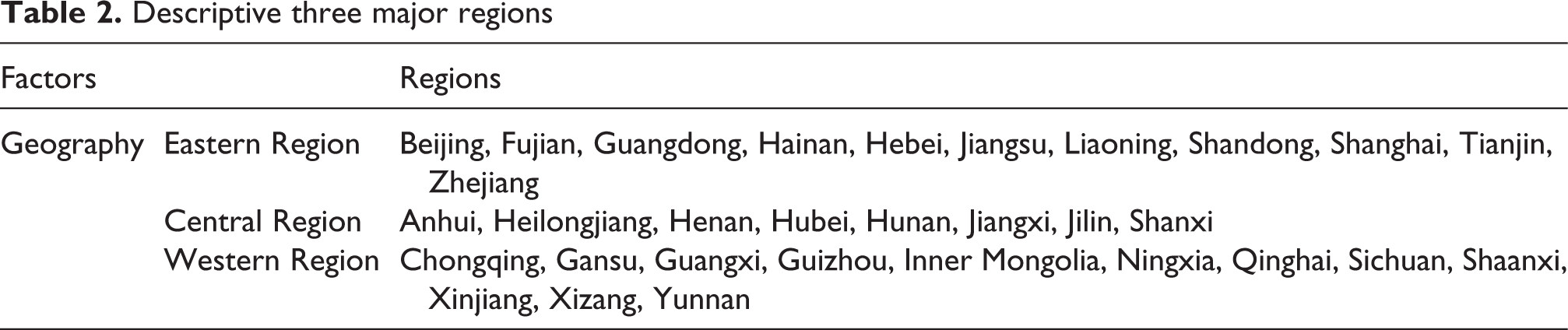
We employed a 12-year panel dataset of 31 Chinese provinces, comprising 11 eastern regions, 8 central regions, and 12 western regions over the 2005–2016 period. These regions are listed elaborately (see Table 2).
Descriptive three major regions
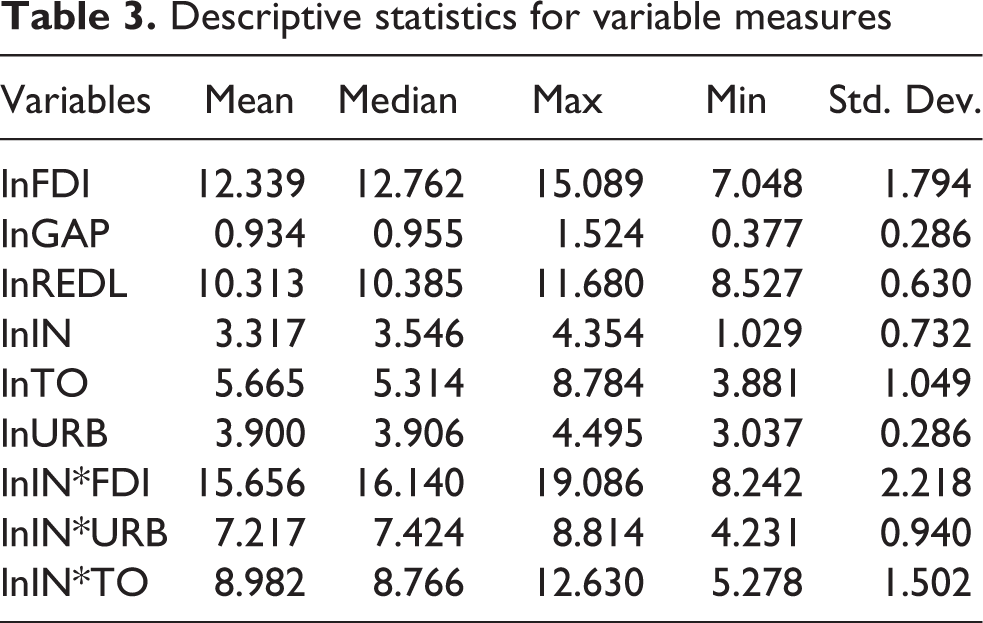
The dependent variable urban-rural income gap is calculated, the relevant income of urban and rural residents were drawn from the statistical yearbooks of 31 provinces. The key components of the independent variable included Internet development. The Internet penetration rate used to represent the Internet development was drawn from the China Internet Network Information Center (CNNIC), which has released a statistical report on the development of Internet in China. Data pertaining to the control variables—such as FDI, regional economic development level and regional economic development level—were drawn from China’s National Bureau of Statistics’ database. Additionally, the urbanization data related to the proportion of urban population data were collected from regional statistical yearbooks. Finally, another key independent variable comprises interactions, which are Internet*FDI, Internet*urbanization, and Internet*trade openness. Table 3 summarizes the descriptive statistics of the variables used in the current study.
Descriptive statistics for variable measures
Result
Unit root test
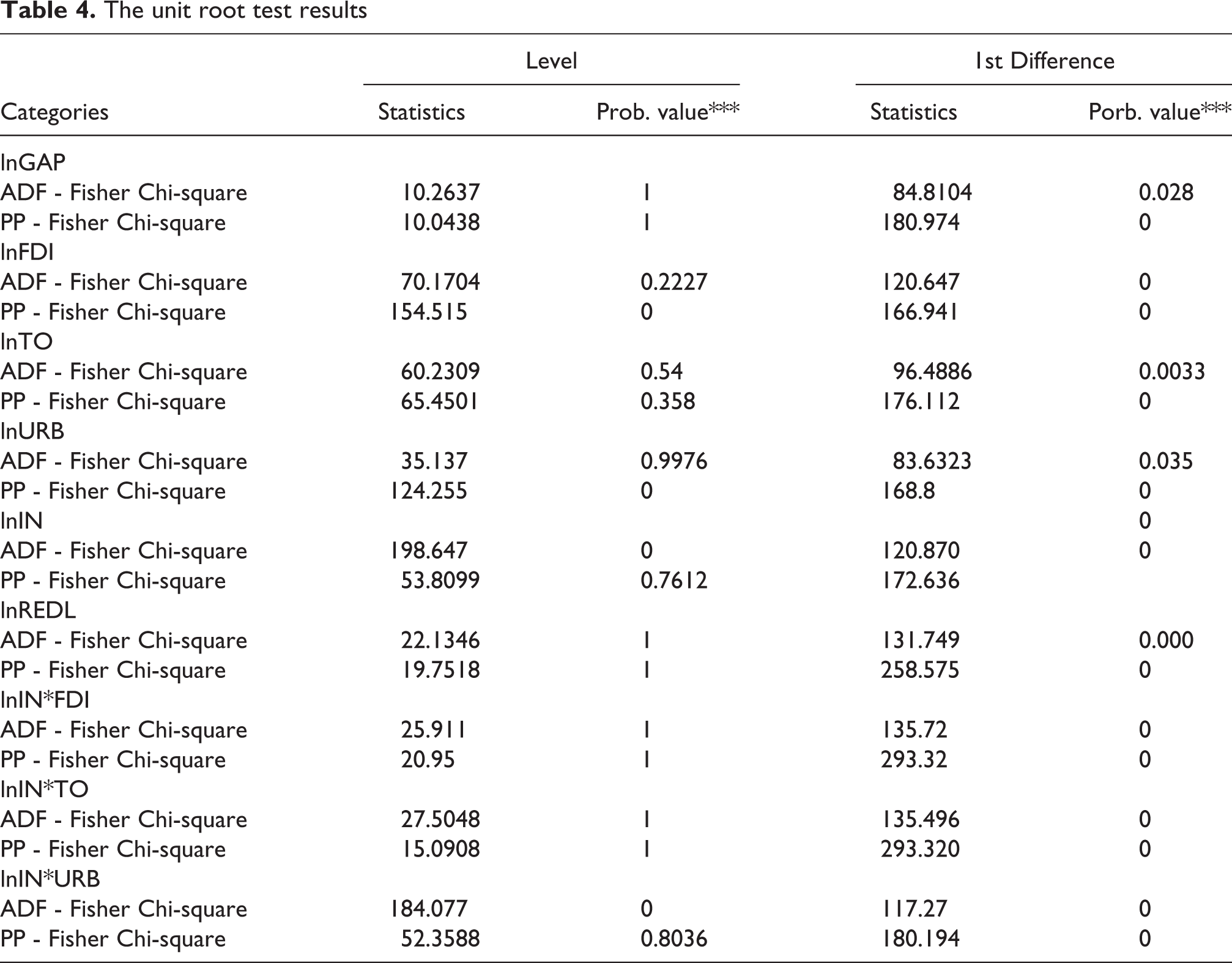
Using provincial panel data to analyze the effects of Internet development—on income gap, the unit root process test is conducted to check whether the data is stable. If there is unit root in the time series, then the process will not be considered stable, which will lead to pseudo regression. The unit root test was conducted on the level to the first difference and all variables were found to be stable. The result of the data stationarity can be shown in the Table 4.
The unit root test results
Results of static panel estimations
To examine the impact of Internet development on the urban-rural income gap in China, we consider static panel estimation techniques—fixed effect and random effect models. We first test Internet development and other economic factors on the urban-rural income gap from the perspective of China as a whole. Second, we divide China into three regions—eastern, central, and western regions—to investigate the transmission mechanism of economic factors affecting the urban-rural income gap through Internet development.
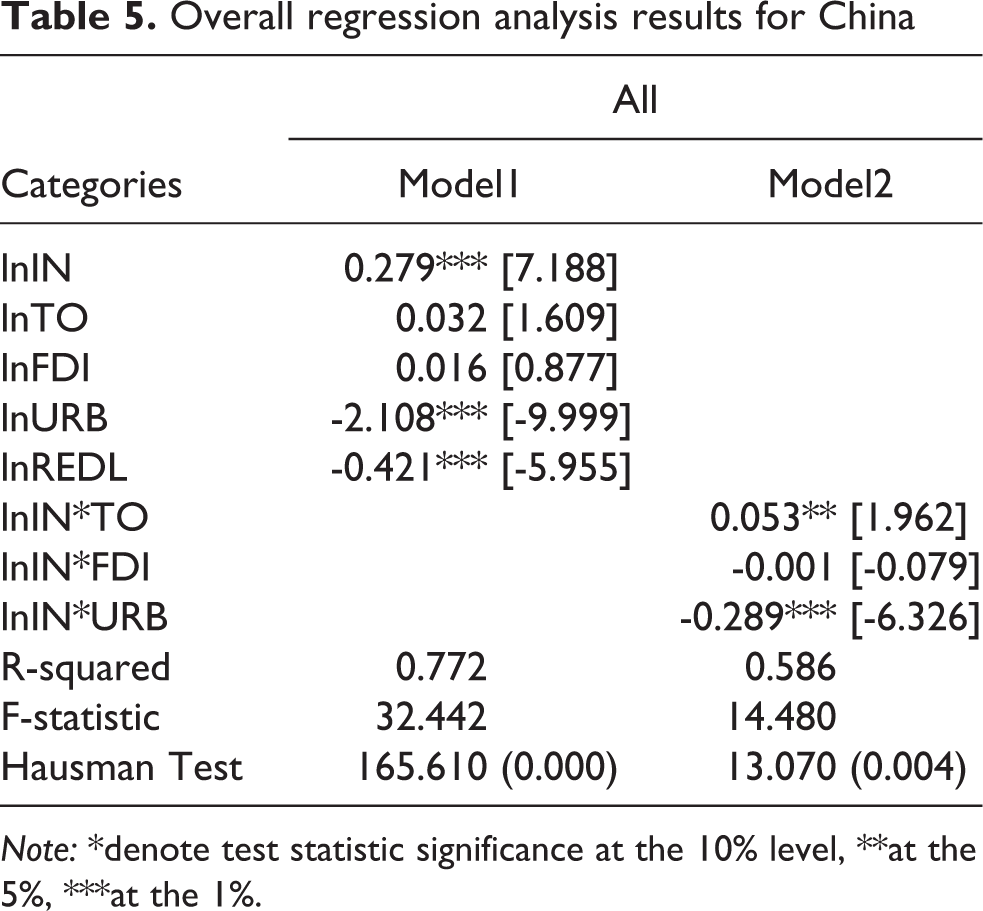
First, from the overall perspective, the fixed effect model is adopted after the Hausman test (see Table 5) and the results show that Internet development has a significant positive effect on the urban-rural income gap (b = 0.279, t = 7.188). It means that a 1% increase in Internet development was found to increase the urban-rural income gap by 0.279%. According to the data of China Statistical Yearbook, the number of Internet broadband access users in China increased by 225 million from 2015 to 2020, including 146.178 million in cities and 77.916 million in rural areas. It shows that the improvement of China’s Internet usage rate depends more on the improvement of urban residents’ usage level, and that the improvement of Internet use level is beneficial to urban residents. Therefore, the uneven development between urban and rural areas, the difference in the ability of urban and rural residents to use the Internet, and the different characteristics of using the Internet to obtain information between urban and rural areas all contribute to the widening of the urban-rural income gap. Trade openness and FDI did not affect the urban-rural income gap (TO: b = 0.032, t = 1.609; FDI: b = 0.016, t = 0.877). However, urbanization has a negative impact on the urban-rural income gap (b = -2.108, t = -9.999). It means that an increase of 1% on urbanization will decrease the urban-rural income gap by 2.108%. This may occur because the acceleration of urbanization can provide more employment opportunities and higher wage levels, and make the surplus agricultural labor force inclined to transfer to urban areas for employment, thus increasing the income of rural residents and narrowing the income gap between urban and rural areas. Additionally, the regional economic development level has a negative impact on the urban-rural income gap (b = -0.421, t = -5.955). It means that an increase of 1% on regional economic development level will decrease urban-rural income gap by 0.421%. This may occur because with the continuous economic growth, more jobs are created in rural areas under the promotion of informatization and local policies, the income level and income structure of farmers have been well optimized, and the income gap between urban and rural sectors will gradually narrow.
When we examined the transmission mechanism, we found that the interaction of Internet development with trade openness was more significant on the urban-rural income gap (b = 0.053, t = 1.962). It means the more the Internet development and trade openness, the more would be the positive impact on the urban-rural income gap in China. In other words, a 1% increase in Internet development with trade openness will increase the urban-rural income gap by 0.053%. This may occur because the Internet development promotes interaction with the outside world, which will increase the number of urban jobs to some extent, thus widening the gap between urban and rural areas. However, the interaction of Internet development with urbanization has a stronger negative effect on the urban-rural income gap (b = -0.289, t = -6.326). It means that a 1% increase in Internet development with urbanization will decrease urban-rural income gap by 0.289%. This result not only supports the above research results, but also shows that the Internet development accelerates urbanization, which further narrows the urban-rural income gap. Additionally, the interaction of Internet development with FDI has no effect on the urban-rural income gap (b = -0.001, t = 0.079).
Overall regression analysis results for China
Note: *denote test statistic significance at the 10% level, **at the 5%, ***at the 1%.
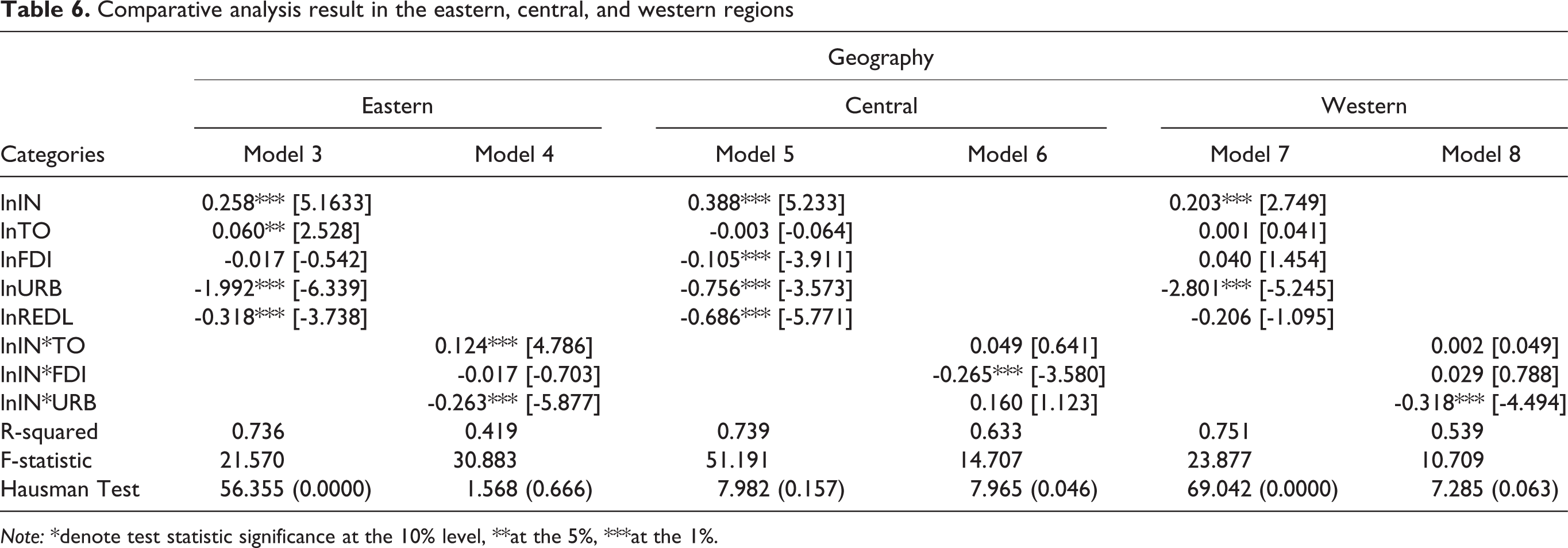
In keeping with the objective of this research, we also estimated the influence of trade openness, Internet development, and other factors on the income gap in each of the eastern, central, and western regions. Models 3, 6, 7, and 8 adopt the fixed effect model, and Models 4 and 5 adopt the random effect model, as explained in the section on methodology. The coefficients are displayed below (see Table 6).
In the eastern region of China, Internet development is estimated to have a significant adverse effect on the urban-rural income gap (b = 0.258, t = 5.1633). The coefficient of Internet development is by 0.258, which means if the Internet development increases by 1%, then the urban-rural income gap will increase by 0.258%. Additionally, trade openness also aggravates the urban-rural income gap (b = 0.060, t = 2.528). It means that an increase of 1% in trade openness will increase the urban-rural income gap by 0.060%. In addition to the fact that FDI has no impact on the urban-rural income gap (b = -0.017, t = -0.542) in eastern China, it must also be noted that urbanization and regional economic development level can fill the urban and rural gap (urbanization: b = -1.992, t = -6.339; GDP: b = -0.318, t = -3.738). It means that an increase of 1% in urbanization and regional economic development level will reduce the urban-rural income gap by 1.992% and 0.318%, respectively.
Moreover, it is worth highlighting that Internet development with trade openness has a positive effect on the urban-rural income gap (b = 0.124, t = 4.786) by the coefficient value 0.124. It implies that a 1% increase in Internet development with trade openness will increase the urban-rural income gap by 0.124%. Additionally, Internet development with FDI did not affect the urban-rural income gap (b = -0.017, t = -0.703). However, Internet development with urbanization has the opposite impact. It has a negative effect on the urban-rural income gap (b = -0.263, t = -5.877). Additionally, it indicates that that a 1% improvement in Internet development with urbanization reduces the urban-rural income gap by 0.263% in eastern region.
In the central region of China, the coefficient of Internet development is positive and significant (b = 0.388, t = 5.233). This implies that a 1% increase in Internet development leads to a 0.388% increase in income gap between urban and rural areas. However, FDI, urbanization, and GDP have negative impacts on the income gap between urban and rural areas. Precisely, a 1% increase in FDI, urbanization, and regional economic development level may reduce the urban-rural income gap by 0.105%, 0.756%, and 0.686%, respectively. Additionally, in terms of transmission mechanisms, only Internet development with FDI is significant, presenting a more significant negative sign in the case of the urban-rural income gap (b = -0.265, t = -3.580). It shows that a 1% increase in Internet development with FDI decreases the urban-rural income gap by 0.265%. In addition, trade openness, Internet development with trade openness, and Internet development with urbanization has no impact on the urban-rural income gap in the central region of China.
In the western region of China, the Internet development is significant, presenting a more significant positive sign on the income gap between urban and rural areas (b = 0.203, t = 2.749). Precisely, a 1% increase in Internet development will increase the urban-rural income gap by 0.203%. Conversely, urbanization plays a negative impact on the urban-rural income gap (b = -2.801, t = -5.245). It means that an increase of 1% on the urbanization will decrease the urban-rural income gap by 2.801%. When Internet development with urbanization increases, the urban-rural income gap will also be narrowed (b = -0.318, t = -4.494). The coefficient of Internet development with urbanization is by 0.318; it means that if Internet development with urbanization increase by 1%, the urban-rural income gap will reduce by 0.318%. Furthermore, the other factors such as trade openness, FDI, GDP, Internet development with trade openness, and Internet development with FDI have no effect on the income gap between urban and rural areas.
According to the above empirical results of eastern, central, and western regions in China, it can be seen that the impact of Internet development on the urban-rural income gap in central China is far greater than that in eastern and western China. In other words, the Internet development will make the urban-rural income gap in central regions wider than that in the eastern and western regions. Additionally, trade openness expands the urban-rural income gap in the eastern region. FDI reduces the urban-rural income gap, but only in the central regions. Urbanization reduces the urban-rural income gap in the western region more than that in the eastern and central regions. Additionally, regional economic development level bridges the urban-rural income gap in central regions more than that in the eastern regions, but it has no effect in western regions.
Comparative analysis result in the eastern, central, and western regions
Note: *denote test statistic significance at the 10% level, **at the 5%, ***at the 1%.
Conclusion
The Internet, as the core productivity of the information age, has gradually become the main way of information dissemination in modern society. It has played a significant role in promoting China’s economic development and is conducive to alleviating the imbalance between urban and rural development in China’s current economic development. However, there are differences in the development of urban and rural areas. The uneven distribution of resources between urban and rural areas also increases the imbalance of regional development to a certain extent and enlarges the discrepancy between urban and rural areas. Moreover, the urban-rural income gap has always been a major problem in China’s economic and social development. There is certain theoretical and practical significance in analyzing the urban-rural income gap from the perspective of Internet development. This study investigated the effects of the Internet development on urban-rural income gap from the perspective of China as a whole, and employed empirical models to analyze and compare the effects of the eastern, central, and western regions using a provincial level panel dataset comprising 31 provinces in China during 2005–2016.
Our findings may be summarized in the following words. The empirical results confirmed that Internet development aggravates the urban-rural income gap in China. Specifically, it affects the central region much more than the eastern and western regions. The trade openness expands the urban-rural income gap in the eastern region. However, urbanization minimizes the urban-rural income gap. A comparative analysis of the eastern, central, and western regions reveals that urbanization reduces the urban-rural income gap in the western region more than that in the eastern and central regions. The regional economic development level also reduces the urban-rural income gap, especially in central region more than that in the eastern region. However, it has no effect on the urban-rural income gap in the western region. Additionally, FDI reduces urban-rural income gap only in the central region.
Additionally, Internet development with trade openness worsens the urban-rural income gap in China, especially in eastern regions. However, urban-rural income gap in the central region can decrease by the contributions of both Internet development with FDI. Meanwhile, Internet development with urbanization can play a key role in decreasing urban-rural income gap in western region more than that in eastern region.
The main policy implications can be showed from our study. First, to further increase the openness of the Internet, strengthening the Internet network construction in rural areas is needed. This will be conducive to the labor market resource allocation function, make full use of network information retrieval, and take advantage of information spread with high efficiency and low cost implementation — thus realizing entrepreneurship, employment in rural areas and the balanced development of a regional economy. This is key to solving the problem of the income gap between urban and rural areas. Second, eastern region with the highest level of economic development and the earliest implementation of the coastal opening-up policies, should give full play to the advantages of the coastal regions, improve trade contacts with other regions, and strengthen the implementation of the policies. Third, FDI in central regions can significantly promote the development of the local rural economy and increase farmers’ income, thus contributing to the narrowing of the urban-rural income gap. Fourth, in China, urbanization is an important way to achieve balanced development between urban and rural areas. In view of the imbalance between urban and rural development and the inadequate development of rural areas, the quality and coordination of regional economic development need more attention. On the one hand, the agricultural transformation and upgrading of rural areas is an opportunity to enhance the internal development of rural power. On the other hand, a new type of urban-rural relationship featuring “promoting rural areas through cities” needs to be built in order to accelerate integrated urban-rural development. Finally, encouraging the eastern region to take the lead in developing and promoting the central region will contribute toward narrowing the urban-rural income gap between the eastern and central regions. Finally, the role of the Internet must be promoted for enhancing trade openness, attracting FDI, enhancing urbanization, strengthening the establishment of the rural information infrastructure, and promoting social harmony.
Footnotes
Notes
Acknowledgements
This work was supported by post-funding of the National Social Science Fund of China, “Research on theoretical framework and empirical issues of high-quality development in China”, [Grant Number: 20FJLB020]; General Project of Philosophy and Social Science Research in Universities of Jiangsu Province [Grant Number: 2020SJA1027].
