






Abstract
The mobile telecommunication (telecom) sector has become the basic source of information nowadays, especially in Cameroon. It is used to transfer and deliver information through voice, video, data, graphics, and more at perpetually increasing speeds. The quality of mobile services does not only impact the attraction of new customers but also to maintain the existing ones. The study uses relationship marketing theory and a quantitative and cross-sectional method with 200 respondents. Information was obtained from users of MTN and Orange mobile telecommunication networks. The analyses were done using SPSS version 20. Tangibility, reliability, and assurance dimensions of staff service quality showed a positive relationship with customer loyalty in mobile telecom companies in Cameroon. The findings also highlight the influence of service quality dimensions on customer loyalty in the mobile telecom companies of the country.
Introduction
The telecommunication sector has a vital and tremendous role in the financial prudence of both advanced nations and developing nations, especially in the case of Cameroon. As in many countries, the government officials of the country in general and the telecommunication industry in particular are striving hard to provide these vital services especially to remote areas as a means to eradicate poverty and increase economic growth (Asongu and Odhiambo, 2020; Palladan, 2017; Tchamyou et al., 2019). The success achieved from telecommunication has increased in Cameroon due to the regulation of the telecommunications sector to achieve multiplier effects on the nation's economy, leading to the expansion of other areas like education (Chidozie et al., 2015). Bhavnani et al. (2008) state that gaining access to vital information is the key to the emergence of knowledge that plays a tremendous part in promoting skills, empowering poor communities, and linking many institutions involved in economic development. Hence, the communication industry can play a vital role in enabling these connections and addressing other developmental challenges if managed properly (Asongu, 2017a, 2017b; Tchamyou, 2017).
Mobile telecommunications are among the fastest-growing in the service industry and most important market for telecommunications companies. Due to their tremendous technological development and the improved number of machine operators in a competitive market, in most nations, both developed and emerging telecommunications have become fundamental in organizational management and economic development. The quality of mobile services is meant to attract new customers alongside retaining the existing ones. Numerous studies have elaborated on the vital importance of service quality (SQ) in acquiring customers, especially through word of mouth (Ifie et al., 2018). The service sector relies on people rather than on technology to deliver appropriate standard services (Gronroos, 1978). The benefits of telecommunications, especially in developing countries, have a very significant impact on the economy of a nation. Mobile telecommunications networks have paved the way for further technical developments and have moved digital boundaries to countless areas of the world as well. While the growing reputation of the telecommunications segment to the economy is so obvious, academic studies focusing on the sector in the developing countries are sparse. In the world as a whole and in Cameroon in particular, the demand for mobile telecommunications has increased particularly around this period when both old and young people leave their families and loved ones for studies abroad, visits, and in search of greener pastures for a better life. Thus, in this highly competitive market, companies that do not increase in quality, with extremely high demands, would fall behind.
Over the past decade, the concept of SQ has received much responsiveness and consideration as a vital planned issue for creation diversity to enhance market share and increase revenues (Buzzell et al., 1987). Furthermore, a considerable attention has been geared toward the above paradigm and its relationship with employee and customer outcomes. For instance, SQ dimensions were confirmed to impact customer satisfaction and loyalty in the banking sector in Mauritius, with the use of data collected from bank customers (Teeroovengadum, 2020), the hotel industry in China (Prentice et al., 2020), and the mobile telecommunication sector in Lagos Nigeria (Chinda, 2020), inter alia. More so, the impact of SQ on customer purchase intentions, positive word of mouth, affective commitments, and trust have also been validated in the hospitality sector in China, in past research according to Chi et al. (2020). From the above discussion, it is clear that the concept of SQ and its impact on customer outcomes has been validated in the Western context. Nevertheless, there is still the need for more research in the African context in general (Palladan and Ahmad, 2019) and a developing economy like Cameroon. Results of this study will have a great impact on extant literature as much about the concept of SQ and its customer outcomes is scarce in Cameroon.
As a result, researchers have based their attention on the method by which customers’ access the quality of service. Users’ anticipations and actual performance received from mobile telecom staff's facilities were established to be the foremost precursors of supposed SQ (Palladan and Ahmad, 2019). Processes of SQ are geared toward a disparity of measurements unlike assurance, reliability, responsiveness, tangibles, and empathy (Parasuraman et al., 1985).
The present study elaborates on SQ measurements on customer loyalty (CL) in the mobile communication industry in Cameroon. Accordingly, the underlying sector has been well known to have played an incredible role in the economic improvement of the country in the recent years (Chidozie et al., 2015). There is a need for more empirical studies on SQ, as it relates to the communication industry in Cameroon due to insufficient literature in the area (Olatokun and Ojo, 2014).
The study also aims to measure the results of SQ's five dimensions, namely, tangibility, efficiency, empathy, assurance, and responsiveness from the point of view of the consumer, from the two largest mobile telecommunications companies in Cameroon, MTN and Orange, as well as the consistency of their customer service satisfaction and loyalty. In the light of the above, the study thus intends to address these dominant research questions, how will SQ dimensions affect CL from the context of business-to-consumer (B2C) e-commerce? Furthermore, there is more evidence mainly in favor of B2C studies (Naumann et al., 2009), as the study deals with business to customers.
The important characteristics of many successful business organizations are the continuous expansion and delivery of quality services to meet the expectations of customers, which is an utmost priority to organizations in maintaining CL (Jasinskas et al., 2016). CL has been demonstrated in past studies, to be a major determinant of business organizations’ long-term financial performance (Jones and Sasser, 1995). Extant studies have suggested that the quality of services offered by an organization to their users has a direct impact on customer's future decision to re-patronize the organization (Dhar, 2015).
Furthermore, adding up to the study, relationship marketing theory (RMT) was used to predict individual behavior as the case of CL in the current context. Moreover, RMT has the prospective to increase one's understanding of many characteristics of business strategy, which is also an “addition” to the extant telecommunication literature in Cameroon.
The fluctuating pattern of business has led to a high competition in the provision of good quality services by organizations. For this reason, delivering quality services has been a top priority in their service activities. In line with above statement, strategies have been more customer-focused as a means of gaining competitive advantage and survival for organizations in the business milieu (Santouridis and Trivellas, 2010). The present-day competitive atmosphere brought by the improvements in information technology (IT) and globalization have mandated companies to pay more emphasis on managing and improving good relationships with customers, and in particular customer's loyalty to efficiently maximize revenue (Onigbinde and Odunlami, 2014; Osotimehin et al., 2015).
Many studies on SQ have been examined on the mobile telecommunication segment in many advanced and emerging parts of the world such as Asia and Africa. Some studies have focused on mobile SQ perspective in Taiwan (Wang et al., 2019), CL in the mobile network service in Cambodia (Seng and Jarinto, 2017), and SQ and CL in the telecom industry in Nigeria (Palladan and Ahmad, 2019). Accordingly, CL has been extensively observed as a significant determining factor of businesses’ sustainable success and feasibility. Moreover, SQ has been considered as a loyalty predictor (Rizomyliotis et al., 2020). CL can be described as the customer's expression of deep commitment to re-patronize a chosen product or service steadily, regardless of situational effects and marketing struggles that have the probability to cause customers to switch to competing providers (Santouridis and Trivellas, 2010). Loyalty describes the inclination to reuse a company's goods or services over a long period of time on a repeated basis and also the intended recommendation of the firms’ products or services to friends and associates (Lovelock and Gummesson, 2004). Organizations and businesses focus on creating and sustaining long-term relations with clients (Roos et al., 2009). Studies on CL have engrossed principally on product-related or brand loyalty, whereas trustworthiness to service organizations has continued to remain underexposed (Jiang et al., 2016).
Drawing from above explanations, this study seeks to address five research questions that double as objectives.
Do tangible features of SQ affect CL? Do responsiveness aspects of SQ influence CL? Do reliability features of SQ impact CL? Do empathy features of SQ affect CL? Do assurance features of SQ affect CL?
Mobile telecommunication companies in Cameroon
MTN is the most used telecommunication company in the country as compared to Orange, with the highest number of subscribers and net profit. As from 2019, Orange's net profit was approximately 28.94 billion CFA Franc. The company had 7.9 million subscribers with a market share of 33.2% while MTN had 9 million subscribers, representing 47.20% of the market share and a corresponding turnover of about 212 billion CFA Franc as of the time of data collection (Khan, 2019). Presently, about 95% of all electronic money transactions are carried out through the mobile-money services operated by MTN Cameroon and Orange Cameroon. Orange is one of the principal providers of global IT and communication facilities to international corporations under the brand “Orange services” (Lancaster, 2020) Since the establishment of MTN, Cameroon has devoted her efforts heavily in the construction of 2G, 3G, 4G, and 4.5G telecommunication networks, which are now the most concrete and generally spread within the country, if not in the entire Central African sub-region. The possibility of this network enables MTN to provide services to virtually 97% of Cameroon's population and to be present in more than 7400 towns and villages in the country. This network has been frequently seen as the best and wildest in the country by world class agencies (Ookla and Schwarz, 2019). MTN Cameroon was able to recruit approximately 800,000 new subscribers and recorded a close to 2% increase in turnover over the same period, being its best quarterly performance in the last four years (MTN official website, posted November 2019). Orange telecom has 135,619 employees across the world. Orange telecom provides services such as mobile offers, Internet, Orange fiber, and devices (Orange official website).
MTN is the most used telecommunication provider in the country as seen from the above statistics. MTN provides services such as MTN cloud backups, cloud video conferencing webEX, MTN cloud security, fast Internet services devices, good customer service, many options to choose from, low calling rates, and better communication networks as compared with other telecom companies.
Literature review and theoretical background
RMT
RMT is an exceptional area of study. RMT can take many forms, and as a result, it has the potential to increase understanding of many aspects of business strategy (Rese, 2006). When it comes to RMT, many service organizations, unlike Orange and MTN telecommunications in Cameroon, devote most of their resources in attracting novel customers, and much effort is being dedicated to retaining existing ones by establishing relationships with them. This can be achieved through excellent CS, SQ, and CL (Teye et al., 2020)
As a vital perception in marketing studies, CL has been critically examined, using the RMT (Ball et al., 2004). This study uses the RMT since it has been found that SQ can affect CL (Raza et al., 2020). In accordance with the study, the aim of the RMT is to fascinate, retain, and improve customer relations (Berry, 1995). It is seen that the satisfaction of customer and SQ can enhance and retain loyal customers (Alam and Al-amri, 2020). Relationship marketing posits that customers engage in relational exchanges with businesses when the exchange permits customization that will lead to better satisfying the customer's needs, wants, perceptions, and choice. RMT entitles clients to get into social interactions with business when they realize that the potential aids from each personal exchange surpass the cost. It will also occur when the affiliating organization shares values with the consumer. When the customer acknowledges reductions in search costs, it is also apparent to the customer that the risk related with the market offering is narrowed and the exchange is constant with ethical commitment (Shelby, 2010). Linking the theory to the present study, it has been observed that all the above components are characteristics that will lead to CL, which is the main subject of the study, linking to the five SQ dimensions.
SQ model
SQ can be explained as a basis of variances among anticipation and capability alongside the significant value measurements. Parasuraman et al. (1988) projected a SQ scale (SERVQUAL), as a basic device that carries five measurements of SQ: reliability, responsiveness, assurance, empathy, and tangibles. These variables are seen to exhibit high interconnections among each other. The SERVQUAL model is a common analytical device that has been used to measure the services of customers as well as the satisfaction they perceived. Reliability is the company's ability to distribute products and services in a timely manner. It also explained that services, promises, inter alia, done on time can improve CL. This study concentrates on five aspects that could envisage the quality of the package delivered, by investigating communication service suppliers in Cameroon. Responsiveness is the level to which clients observe service suppliers’ willingness to assist them punctually. Assurance is the amount of politeness of service suppliers’ staffs and their capability to interconnect the subject of trust to clients. Empathy is the attention or caution and significance the service supplier gives to a separate customer, and the extent to which the customer needs details and preferences of the product and services can be comprehended and expressed. Lastly, tangibility is the sign of amenities, employees, and message resources used by the establishment while proposing services to clients (Hernon and Nitecki, 2001). Tangibles are also the physical amenities, paraphernalia, and presence of personnel. Consumers frequently trust the noticeable indication that surrounds the service since there is no touchable element to be evaluated in services (Jiang et al., 2002).
The key impression in this model is that SQ is an objective of the various cuts or breaks between possibilities and outcomes, and SERVQUAL provides the basic structure that is critical for SQ. This background can be adjusted or accompanied to match the faces of the different research of a particular organization, and context-precise objects can be used to increase SQ. The SERVQUAL approach for measuring SQ in service industries has been widely recognized; it enables real SQ measurement (Ala’a and Ahmad, 2012). The quality of service directly increases the company's profitability and the growth of market share to capture and retain the target market (Teck-Hong and Yong-Kean, 2012). In reference to RMT, SQ is a perception that reflects customer insights of service assurance, responsiveness, and reliability (Zhou, 2013). Providing and sustaining high-quality services allow customers to experience the feelings that their needs are being given attention and that the service provider is capable of satisfying their needs, giving them a sense of belonging to the organization or company.
The vital objective of a successful business institute is continuous improvement and offering of qualitative amenities to their clients. The vital idea of this study is grounded on the fact that SQ is essential in bringing many clients, keeping the current ones, and establishing reliability and consistency among consumers to establishments. Tweneboah-koduah et al. (2016) suggested that in the service literature, SQ is often measured using many dimensional concepts unlike the SQ model proposed by Parasuraman et al. in 2005. The current study uses the five measurements of SQ model suggested by Parasuraman et al. (2005) to assess customers’ loyalty in the Cameroon telecommunication industry. Each of these dimensions has its unique functions leading all to positive CL.
CL
There has been a huge interest on the perception of CL from scholars, and as such, a loyal customer base was found to be of great benefit to businesses and institutions (Ajao et al., 2012). When a client is pleased with a product or package after having used it, there is a propensity of increase in repeat purchase. The intents to repeatedly buy a merchandise or package heavily depend on the satisfaction of the customer (Taylor and Baker, 1994). A number of previous loyalty works theorized loyalty behavior as a method of recurrence purchase of a specific product or service over time. Yoo and Bai (2013) argued that two main factors that influenced CL are internal factors and external features. The internal issues comprise merchandises (brand), SQ, advancement mix, and costs (Tweneboah-koduah et al., 2016), while the external factors that influence customers’ loyalty are swapping prices, situational elements, professed price, satisfaction, and obligation, as well as trust (Yoo and Bai, 2013). Establishing RMT through loyal customers, a telecommunications company can improve its profitability and achieve long-term success (Ram and Wu, 2016). Izogo (2017) expressed that a nurturing relationship with the customer is essential in creating a loyal customer.
In previous literature, consumer commitment has also been analyzed from a behavioral point of view by calculating items such as the amount of recurrent transactions, “wallet share,” and the occurrence of purchases (Li et al., 2019). CL describes the unknown number of recurring purchases by individual consumers over a definite period of time (Egan, 2004). According to Oliver (1999), CL is a strong commitment to periodically re-buy or use a favorite product or kit, allowing the same brand to be replicated, regardless of circumstances, influences, and marketing efforts that trigger switching actions. The compensations of retaining customers have been widely recognized in extant literature (Arrivabene et al., 2019; Chen and Hu, 2010). Researchers have confirmed that trustworthy clients will improve productivity through auctions or deals. CL definition based exclusively on rebuying behavior does not offer an all-inclusive opinion of this multifaceted notion, obliging scholars to suggest substitutes and more inclusive meanings. Dick and Basu (1994) suggest that customer devotion has both attitudinal and interactive fundamentals and is based on the fact that it is firmed by the strength of the connection between a virtual approach and continued support. Despite the numerous dissimilar methods that seek to describe and conceptualize consumer loyalty, there is a general view that it is important to include both social and attitudinal features. Sivadass and Baker-Prewitt (2000) posit that CL is the essential goal of customer gratification. It is considered to be a significant part of the long-term feasibility of a product (Krishnamurthi and Raj, 1991).
SQ and CL
SQ and CL has been observed and widely studied, together with others (Boulding et al., 1993). Cronin and Taylor (1992) paid more attention not only to repurchase intentions but focused on the elements of repurchasing and willingness to recommend.
SQ is an idea that replicates the client observations of service assurance, responsiveness, and reliability (Zhou, 2013). Giving and keeping a maximum standard of SQ allows clients to believe that their needs are being taken into consideration and that the service supplier is able to satisfy their needs and is thus enhancing CL. This eventually leads clients to establish better confidence in both the service supplier and the degree of services provided.
Understanding the perception of CL is very important to ensure customer retention. There has been a high concentration on the notion of CL from both scholars and practitioners, and as such, a loyal customer base was found to be of great benefit to organizations (Ajao et al., 2012). Consumer contentment is the complete fulfillment of client's expectations. When a client is contented with a purchase or package after having used it, there is propensity to repeat purchases.
SQ has been effectively used by communication services such as MTN and Orange to better comprehend customer feelings and create long-lasting relationships. High-quality collaborative commitment between service customers and service suppliers has the tendency to lessen the perceived ambiguity of customers and consequently to stimulate customer confidence in service suppliers (Aladwani and Dwivedi, 2018). Collaboration between a client and the mobile service supplier during the process of service delivery plays a very vital part in influencing the level of SQ and thus retention. The interaction quality of service will affect consumer trust and perceived empathy and reliability of service providers, and thus is vital in SQ assessment, and reliability which is “the ability of the service provider to perform the promised services exactly and constantly” (Parasuraman et al., 2005: 23). In the context of mobile telecommunications in Cameroon, there should be stability in offering high standard services to customers (Pakdil et al., 2012), services should be free from mistakes, and accuracy in offering guaranteed services is warranted (Saccani et al., 2014) to inspire clients to stay with service suppliers, thus enhancing CL. Reliability is also an important issue in the telecom industry, which effects clients’ relationship with suppliers (Blut et al., 2014). On time business processing and a good promoting system are the crucial successful elements of increasing CL, which add up to retained clients in this area.
Customers expect business (telecom) to be helpful and kind to them. Tangibles are the facilities that the telecom sector offers to customers. The tangibles involve the firms’ representatives, physical facilities, materials, and equipment as well as communication materials. Achyar and Oktora (2014) summarized that tangibles like the physical confirmation of service will lead to CL. MTN and Orange telecom providers often place high priority on the quality of services provided to their customers and CL, because it has been seen as a requirement for customer retention. As a positive outcome of marketing activities, high CL leads to frequent visits to stores, frequent buying of merchandise, and word-of-mouth advertising to friends and relatives (Anderson EW et al., 1994; Bloemer and Kasper, 1995), while low CL has been linked with complaining behavior (Zeithaml et al., 1996). In accordance with RMT, a loyal customer often stays loyal longer and is likely to patronize and give feedback to the organization in future (Kotler, 2006).
Finally, in this study, responsiveness is the readiness of telecom to provide services at a specific period as well as punctual services as perceived by customers. Later, CL improves the level of customers’ gratification, which leads to loyalty (Ngo and Nguyen, 2016).
Many studies have shown a substantial relationship between SQ and CL on the basis of the related literature and the relationship between SQ and CL, although some have proven contrary. The findings of this study add their portion to SQ scholarship on the retention of customers in mobile telecommunications in developed nations such as Cameroon. We suggest the following hypotheses based on this:
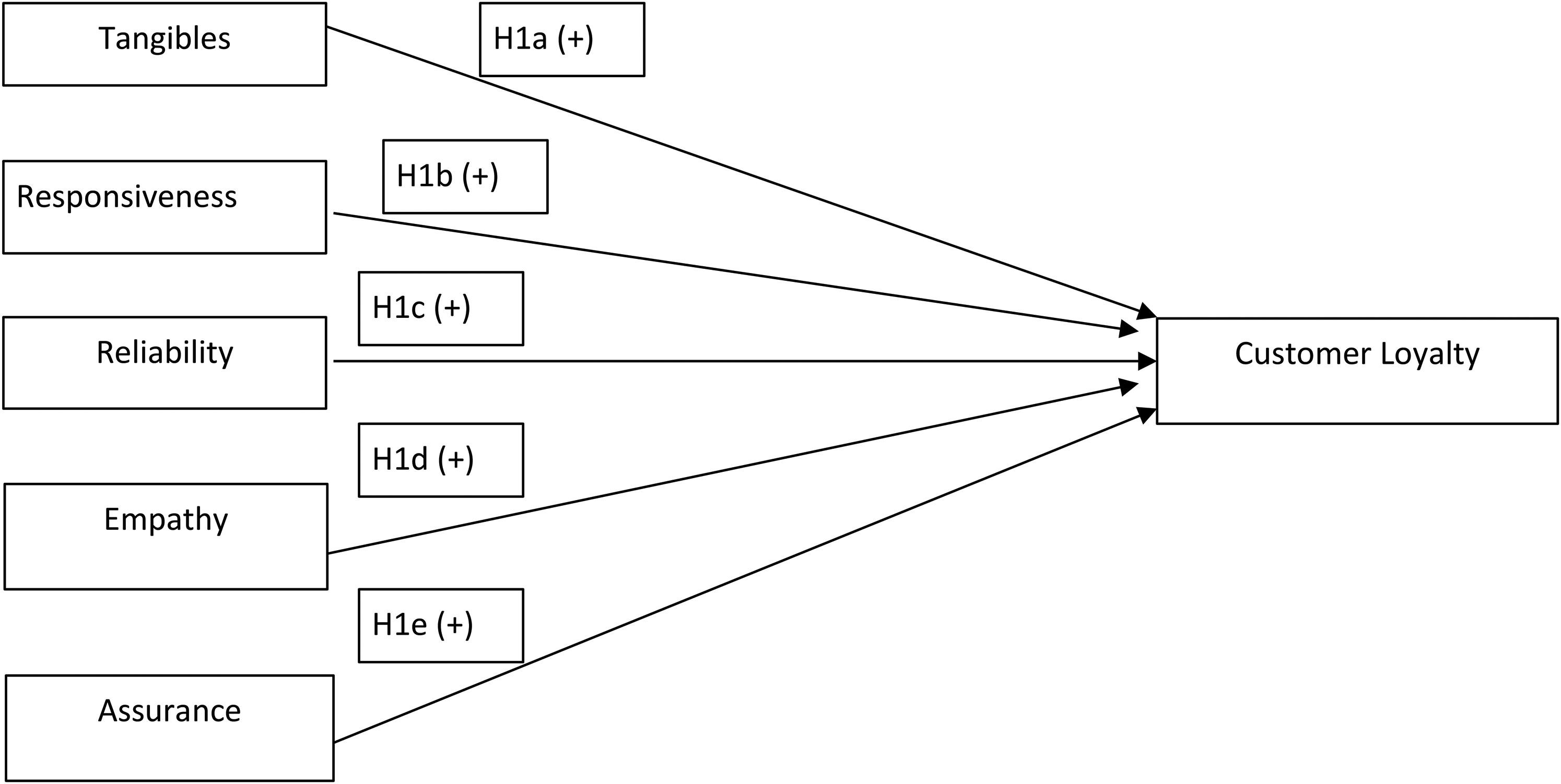
Research model.
Methodology
Sample population and method
The data for this study were obtained in the cities of Yaoundé and Douala of Cameroon from employees of state-owned and private institutions, and students of universities and vocational colleges. These groups have been selected because of their experience. They are also more conscious of developments in the mobile telecommunication industry. Secondary and high school students were not included in this survey because students in Cameroon are not allowed to own cell phones, particularly below university level, because both teachers and parents consider them a disruption to their studies. Although they can use mobile phones, they are not allowed to own them because of this. This narrowed the population frame, and hence the sample size for this study. Douala has one university owned by the government, and Yaoundé has two. There are several government and private technical institutions in both cities. In Yaoundé and Douala, 250 questionnaires were distributed. Respondents were chosen by convenience and the questions were self-administered. The survey items were constructed in English, translated to French, and later back-translated (Brislin, 1986) to English by an innate translator to maintain the meaning and accuracy.
Research design
Our study assumed a quantitative cross-sectional and conclusive method of analysis in which numerical data was obtained and analyzed using statistics (Muijs, 2004). In this analysis, a cross-sectional design method involving a single set of data from a given population sample was used (Malhotra et al., 2004).
Questionnaire administration
A sample of 40 respondents was used for the pilot survey. This pre-survey was to confirm that the questionnaires were well organized for easy interpretation by the respondents and also to ensure that they were accurate. The questionnaires were self-administered directly to consumers who were using these mobile operators on a one-on-one basis.
Data collection procedure and tools
The surveys used for this study were split into three components: demographics, quality of service, and consumer loyalty. Part one were the products from SERVQUAL (Lee et al., 2001) that were updated to suit the mobile telecommunications business, and part two were items for CL. Measures used for CL were adopted and later modified from Salanova et al. (2005). The SERVQUAL consists of 20 items each with four indicators for tangibility, reliability assurance, responsiveness, and empathy. CL consists of five items. On a 5-point Likert scale, all variables were measured with 5 as strongly agreed and 1 as strongly disagreed.
Validity and reliability
After the pilot survey, the reliability and validity of questionnaires were checked to ensure that they were on target. Using Cronbach's alpha, the reliability was checked and a value above 0.7 suggested reliability.
Data analysis
The data was analyzed using SPSS version 22. Exploratory factor analysis using Varimax rotation was used to measure all 20 indicators that calculated the workers’ expectations and perceptions of their quality of service. Descriptive statistics were later employed to evaluate the expectation and perception of mobile telecommunication workers. To test for the substantial difference between the two methods of beliefs and perceptions, paired t-tests were performed. Finally, to illustrate the relationship between the dimensions of SQ and overall satisfaction and behavioral intentions, several regressions were applied.
The findings were obtained from questionnaire responses provided by customers of the two mobile telecom companies under study. Of the 250 distributed questionnaires, a total of 210 were retrieved. Ten questionnaires were discarded due to incompletion, giving an 80% answer rate.
Result
Demographic results
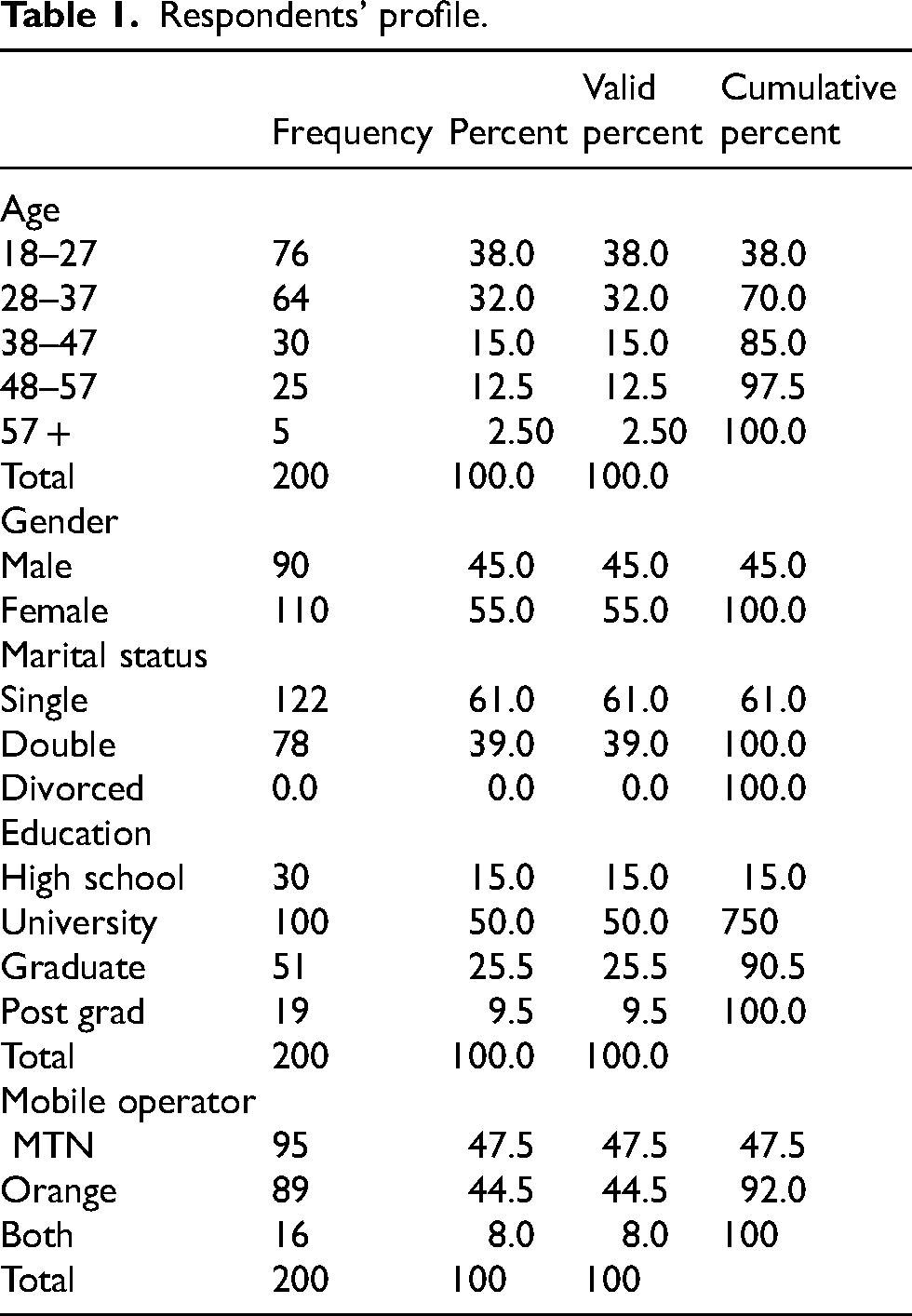
Results displayed in Table 1 show that the majority of the respondents were single (61%) and fell within the age range of 18–27 (38%). More than half of the respondents were female (55%). Of all the respondents, 95 (47.5%) of them subscribed to MTN, 89 (44.5) subscribed to Orange, and 16 of them used both suppliers. Since MTN is more popular than Orange and cheaper, most individuals use MTN. Those using both operators have two telephones and are mainly business individuals from several firms.
Respondents’ profile.
Exploratory factor A
Table 2 shows the results of exploratory factor analysis. All items of SQ were subjected to factor analysis using a Varimax rotation. All items loaded on three factors as follows. Tangibles, responsiveness, assurance, and empathy loaded on factor. Reliability loaded on factor 2, and CL loaded on factor 3. As it can be clearly seen in the results, one item was dropped from each SQ dimension. Tangible item 1, responsiveness item 3, assurance item 2, empathy item 3 and reliability item 2 were removed due to cross-loading. Cronbach's alpha for all the 20 items of the SQ and five items for CL questionnaires was 0.92 and 0.89, respectively. All values for the Cronbach alpha were above the lower limit value 0.7 (Nunnally, 1980), which designates a high reliability.
Result of the factor analysis.
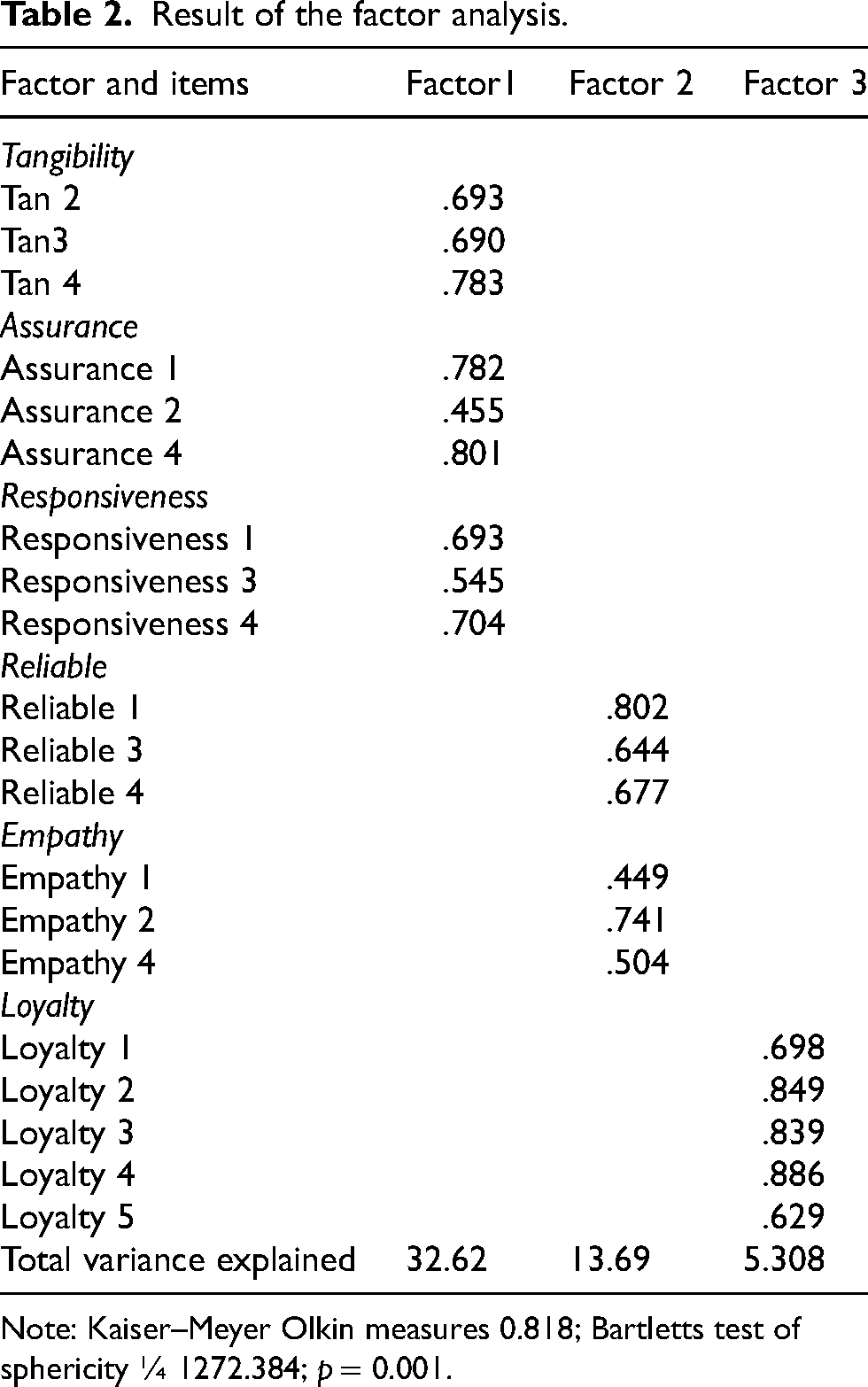
Note: Kaiser–Meyer Olkin measures 0.818; Bartletts test of sphericity ¼ 1272.384; p = 0.001.
Correlation analysis
Based on the correlation displayed on Table 3, there was a significant p value of 0.05 and 0.01, representing 95% and 99% confidence intervals, respectively. The results demonstrated negative correlations between SQ dimensions and CL: tangible (–.261**), empathy (–.124), responsiveness (–.077), assurance (–.223*), and reliability (–.187*).
Correlation of the study.
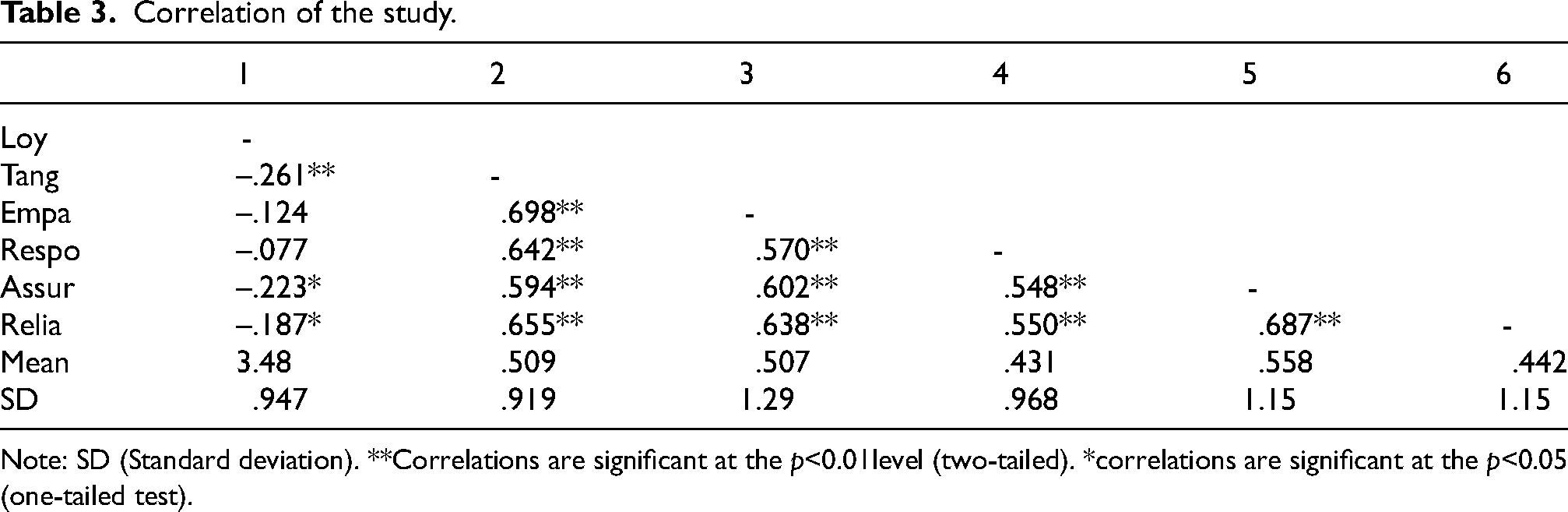
Note: SD (Standard deviation). **Correlations are significant at the p<0.01level (two-tailed). *correlations are significant at the p<0.05 (one-tailed test).
Tangibles was significant to CL at the 99% confidence interval, while assurance (–.223*) and reliability (–.187*) were significant at the 95% confidence interval. Empathy and responsiveness showed no significance to CL.
Gap analysis
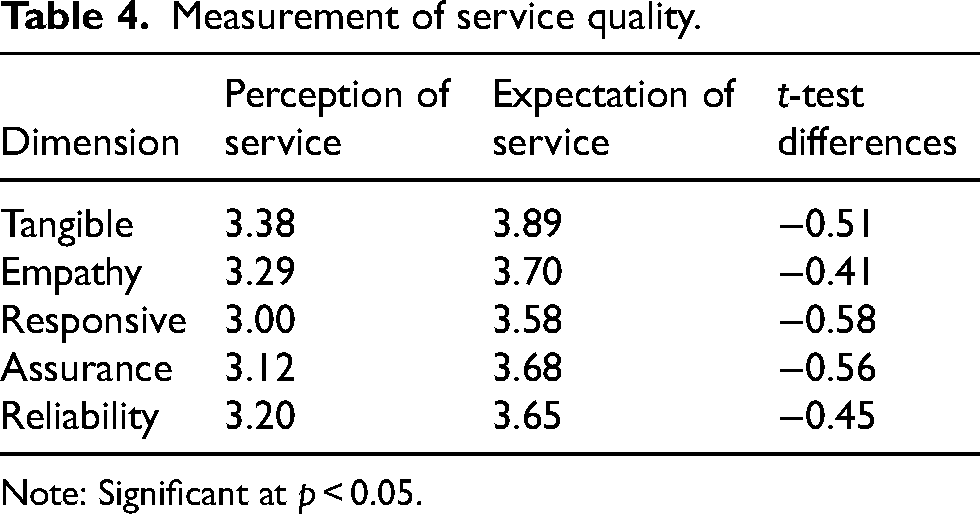
As shown in Table 4, gaps were calculated to enable the understanding of the difference expectation and perception in SQ, thus demonstrating the gaps in the existing theory. Based on t-test performance, the contrast between expectations and perceptions rated by participants on all five dimensions of SQ (tangibility, reliability, responsiveness, assurance, and empathy) distributed by these two mobile service providers indicated a significant gap (p < 0.05). The t-test values of the individual dimensions are responsive (4.710**), assurance (5.147**), tangibles (5.861**), reliability (4.077**). and empathy (4.128**).
Measurement of service quality.
Note: Significant at p < 0.05.
Negative scores indicated a deficit in the perception as compared to the expectations. The gap scores for all five dimensions of SQ were negative. This is an indication that the actual expectations of customers with respect to the quality of services offered by the mobile telecommunication companies were not met (Loke et al., 2011).
The experimental gap scores from highest to lowest are responsive (–0.58), assurance (–0.56), tangibles (–0.51), reliability (–0.45), and empathy (–0.41). The gap scores indicated that the overall SQ with respect to each dimension fell below the customers’ expectations, disclosing that the internal standards of service were below the requirements of the employees. Thus, the front employees of these mobile telecommunication companies could not deliver the required quality of service to their customers. Our results also showed in agreement with prior studies (Ahuja et al., 2011; Randheer et al., 2011). Responsiveness followed by assurance has the two biggest differences between expectation and perception. Since responsiveness was conceptualized as the readiness of employees to promptly assist customers, and assurance was conceptualized as the awareness and courtesy of employees and their ability to inspire confidence and trust, such a finding suggested that the perception dropped below expectations and also affected the ability of employees to communicate trust and assurance to provide customers with prompt services.
Discussion
Cameroon's analysis of mobile communication firms shows that Cameroon Telecommunications (CAMTEL) was mostly used by government and private offices in the early 1970s. Orange and MTN came into being in 2000 and subsequently joined the NEXTEL team in early 2014. Almost every adult in Cameroon currently owns a cell phone. According to the findings of the study, the results of the correlation displayed in Table 3 showed that all the dimensions of SQ for the two mobile companies have negative correlations with CL. These results are contrary to the theory of relationship marketing on which the present research is anchored. This means that, based on the customers’ view, the services offered by the employees of the mobile operator were below expectation and very poor. As a result, these services were not enough to keep current customers. Customers did not respect the mobile operators’ tangibles, which are evidence of the company's equipment, staff, and contact materials used in supplying customers with services. Customers have often perceived a lack of empathy, which is the significance provided to an individual customer by the service provider. Furthermore, customers realized that service providers were not prompt in service assistance as expected; the degree of knowledge and courtesy and the ability to inspire trust and confidence were low and in addition, the promises of delivering services right on time were not satisfactory.
Based on the correlation results, tangibles at 0.05 significant levels and assurance and reliability at 0.01 significant levels were significant to CL. Based on RMT as the conceptual framework, tangibles, reliability, and assurance have significant correlations with loyalty. Tangible was significant at the p value of 0.01, while reliability and assurance were at the significant level of 0.05. This implies that 99% of the correlation between tangibility and loyalty is not explained by chance; hence, the null hypothesis is rejected and the proposed hypothesis is accepted, giving support for H1a. Furthermore, the correlation between reliability and assurance on loyalty has only 5% of the result explained by chance. As a result, H1c and H1e are supported. This means that customers appreciate the appearance of the physical facilities in the offices of these mobile operators, the way they react to the customer's problems the first time, and the confidence they receive from these mobile operators (AL-Nawafleh et al., 2019). Against this backdrop, and concurrent with preceding researches carried out in well-developed economies (Cronin et al., 2000), perceived SQ, which is the difference between expectation and perception, was confirmed to be strong antecedents of CL in the mobile telecommunication companies (Palladan and Ahmad, 2019; Rizomyliotis et al., 2020).
In contrast to RMT, empathy and responsiveness did not show any significant influence on CL, hence non-support for H1b and H1d. The findings have also shown that empathy and responsiveness have not had a positive effect on customer satisfaction, suggesting that MTN and Orange workers do not show much love and consideration for customer needs. According to reports by Ameen and Willis (2016) and Serben (2014), a larger part of usage choices by consumers is determined by general feelings and desires and from the influence of other users. The responsiveness of mobile telecom staff does not influence CL, meaning mobile operators do not perform services to customers promptly. They are slow to respond to customer needs. The findings examined also indicate that workers have faith in the staff.
A brief overview of the telecoms industry and existing communication techniques has also been presented in this paper. This study is mainly focused on the telecommunications industry's SQ and also on literature that has existed in this area. In Cameroon, telecommunications have the ability to increase economic growth. In order for telecommunications to work entirely, a more liberal approach needs to be considered in terms of promoting new services and goods in the market and growing competition. In addition, telecommunications workers should ensure that telecommunications and mobile enterprises, alongside other sectors such as banking, tourism, agriculture, etc., are essential sources of productivity growth.
Conclusions, limitations and future directions, and implications
Conclusions
To conclude, the two mobile operators impact CL by their physical appearance, the first-time service delivery to their customers, and the confidence they instill in their customers through the assurance of SQ. On the other hand, they have to improve their reliability and promptness to ensure quality and gain more loyal customers. CL is and will remain the basis for business profitability, productivity, and turnover.
Limitations and future directions
The research was carried out in only two of the 10 regions in Cameroon, Yaoundé and Douala. Future research should cover half of the population territory or at least five of the regions. Two hundred and fifty questionnaires were distributed but only 200 were retrieved and properly completed, which implies that 50 were either lost or incomplete. Future research should increase the response rate by distributing more questionnaires and follow-up of respondents. Furthermore, precautions should be taken to make sure the questionnaires are correctly completed by double-checking before retrieval.
Transportation played a vital role in hindering this study in that the roads were in bad condition with too much mud because of rain and a lot of traffic congestion due to the poor road network. These affected the response rate as meetings with respondents were strenuous and time-consuming. Future research should be carried out in the dry season when movement is easy and less stressful.
Some respondents had to be contacted via email and telephone, but due to the weak and restricted telephone network, researchers were unable to get through to them. The response rate was influenced by this factor.
Implications
The findings in the current study suggest that there is room for improvement in the quality of service offered by mobile telecommunication companies in Cameroon. Today's mobile phone customers have well-defined requests. Mobile service suppliers should desist from anything that will make their customers switch to other providers, since the cost of keeping a customer is far less than the cost of getting a new customer. This could be done by providing services that are based on service assurance. In addition to assurance, empathy, responsiveness, and tangibility should also be taken into awareness because they are also very important constituents of SQ (Ali and Raza, 2015), and they played indispensable roles that provide quality services that guarantee customers loyalty.
From our study, the responsiveness variable has shown an insignificant relationship with customer's loyalty. This might not be unrelated to the attitude of some telecommunication company staff since in Cameroon context reports suggested that there are numerous unpleasant remarks about mobile telecom companies for being unresponsive to customer dilemmas. Thus, the firms should do whatever it will take to grow this important variable due to its positive impact on CL.
The communication company Orange can focus on tactics that will keep its clients, such as providing deals and discounts, as well as raising awareness of new goods on the market. Customers of MTN and Orange complain about poor network connectivity, particularly those who try to call their families in villages and remote areas. Both businesses should be prepared to address these challenges and be able to retain their customers. Unlike any other business that wishes to enhance SQ and customer satisfaction, empathy, responsiveness, and assurance were negligible. MTN and Orange should express concerns and affection for the needs of customers. Workers should be prepared to talk respectfully and kindly to customers and also promise that their desires will always be met. Most of the customers complain about “unnecessary billing.” Customers should be charged only for the services that they have used, and not one that they have not used. Telecom businesses should also emphasize providing good quality services by giving satisfactory responses to the needs of their customers. Issues like staff appearance, fast services, especially in the 4G networks data upgrade undertaken by the telecom companies, alongside others, should be improved to ensure customer retention through CL
Footnotes
Declaration of conflicting interests
The author(s) declared no potential conflicts of interest with respect to the research, authorship, and/or publication of this article.
Funding
The author(s) received no financial support for the research, authorship, and/or publication of this article.

Supplemental material
Supplemental material for this article is available online.
About the authors
Professor