







Abstract
Although green product consumption is increasing globally, the predictors of this behaviour remain unclear, especially in developing countries where green products are not widely produced or consumed. This study examines the influence of information factors on consumer empowerment and green consumer behaviour. A quantitative approach was adopted, and data were collected by surveying 301 green product consumers residing in Baghdad, the capital of Iraq. The data were analysed by structural equation modelling using Smart-PLS version 4. The results confirm that both the central and peripheral routes of the elaboration likelihood model (ELM) guide consumers’ buying decisions about green products. Furthermore, the study revealed that consumer empowerment increases green consumer behaviour and information overload moderates the influence of information credibility on consumer empowerment. The present study contributes to the consumer behaviour literature by re-examining ELM within the context of green consumption, thereby broadening the understanding of the influence of information factors on consumers. Marketers can use the findings to develop targeted strategies for their products.
Introduction
Public recognition of the environmental impacts of consumption and lifestyle is increasing interest in sustainable living, green consumption and products manufactured using green methods, which are considered healthy and eco-friendly (Gasper et al., 2019; Narula and Desore, 2016). This recognition is echoed in the 2020 Sustainable Development Agenda of the United Nations. The goals laid out in this agenda provide a promising sustainable roadmap for promoting a healthy lifestyle and encouraging green consumption (UN, 2015). Green consumer behaviour (GCB) is a complex phenomenon that is driven by multidimensional variables (Jaiswal and Singh, 2018; Sharma et al., 2022; Tan et al., 2019). Studies have examined the psychological antecedents (Sharma and Lal, 2020), personal drivers (Alagarsamy et al., 2021; Papista et al., 2018) and social derivatives (Sangroya and Nayak, 2017) of GCB or tried to link GCB to intrinsic and extrinsic motivations (Gilal et al., 2020). However, empirical studies of GCB through the lens of information dimensions are scarce. Moreover, little is known about green consumption in developing countries because most studies have been conducted in developed countries (Narula and Desore, 2016).
Iraq is a Middle Eastern country with large crude petroleum reserves (Eia, 2021). With the recovery of crude petroleum prices after the COVID-19 pandemic, the country's economy and revenues are improving (Iraq Economic Monitor, 2022). As a result, GDP per capita has risen, and many Iraqi consumers are now considering high quality as a criterion in purchase decisions and showing more interest in locally produced green products (Radhi et al., 2020). Moreover, international reports indicate that the prevalence of overweight is increasing among both male and female Iraqi adults and children, raising concerns about the population's general health and nutrition habits (Global Nutrition Report, 2021). Studies of campaigns by retailers to spread awareness of health and the importance of green consumption have revealed a lack of understanding of the lifestyles of those who have poor health (Sharma and Lal, 2020). The current study seeks to examine the antecedents of GCB in the Iraqi context to provide a foundation for promoting a healthier and more sustainable society.
This study argues that individuals need to be equipped with information to empower them to make rational decisions, follow a healthier lifestyle and embrace more eco-friendly choices. This is illustrated by the notion of consumer empowerment (CEM), which posits that individuals integrate their knowledge and capabilities to reach rational judgments that fulfil their own aspirations and interests (Mishra et al., 2021). CEM can instil positive attitudes towards GCB (Nam, 2020; Tajurahim et al., 2020). The pivotal role of CEM in GCB is not surprising because information is the foundation of any purchase decision (Luo et al., 2013). Wiederhold and Martinez (2018) concluded that a lack of information about green products leads to scepticism and discourages loyal customers from switching from familiar brands to more sustainable ones.
The proliferation of new technologies has led to exponential growth in information about green products. Due to the wide range of buying decisions, consumers face confusion and uncertainty and may perceive the flood of information as a marketing ploy or justification for higher prices of green products (Bray et al., 2011). Darnall et al. (2018) found that the wide diffusion of ecolabels decreases consumers’ certainty about sustainable brands. Another source of uncertainty is social media platforms, where users can share their opinions to gain emotional support and social recognition regardless of message content or credibility (Shahab et al., 2021).
However, manufacturers attempting to portray their products as green and sustainable without making genuine improvements to the product or the manufacturing process itself may be impeding the widespread adoption of green products. Excessive and misleading information like this could undermine prospective customers’ green purchasing behavior (Khan et al., 2021; Marcatajo, 2021).
The main goal of this study is to discover the influence of information on green consumers’ consumption behavior. It addresses a gap in the literature by exploring information dimensions and incorporating information overload as a moderator, utilizing the ELM model.
The elaboration likelihood model (ELM) is adopted as the theoretical foundation for elucidating the relationships between information factors and GCB. Other theories that have been used to investigate predictors of GCB include the theory of planned behaviour (TPB) (Alagarsamy et al., 2021; Chaudhary and Bisai, 2018), the norm activation model (Sharma et al., 2022), self-determination theory (Gilal et al., 2020) and social cognitive theory (Khan et al., 2020). Despite the ability of ELM to explain the effects of new information and technological advancements on consumer attitudes and behaviour, it has received scarce attention in the literature on green consumption (Shahab et al., 2021). Studies of GCB are summarized in Table 1.
Summary of previous studies of green consumer behaviour.
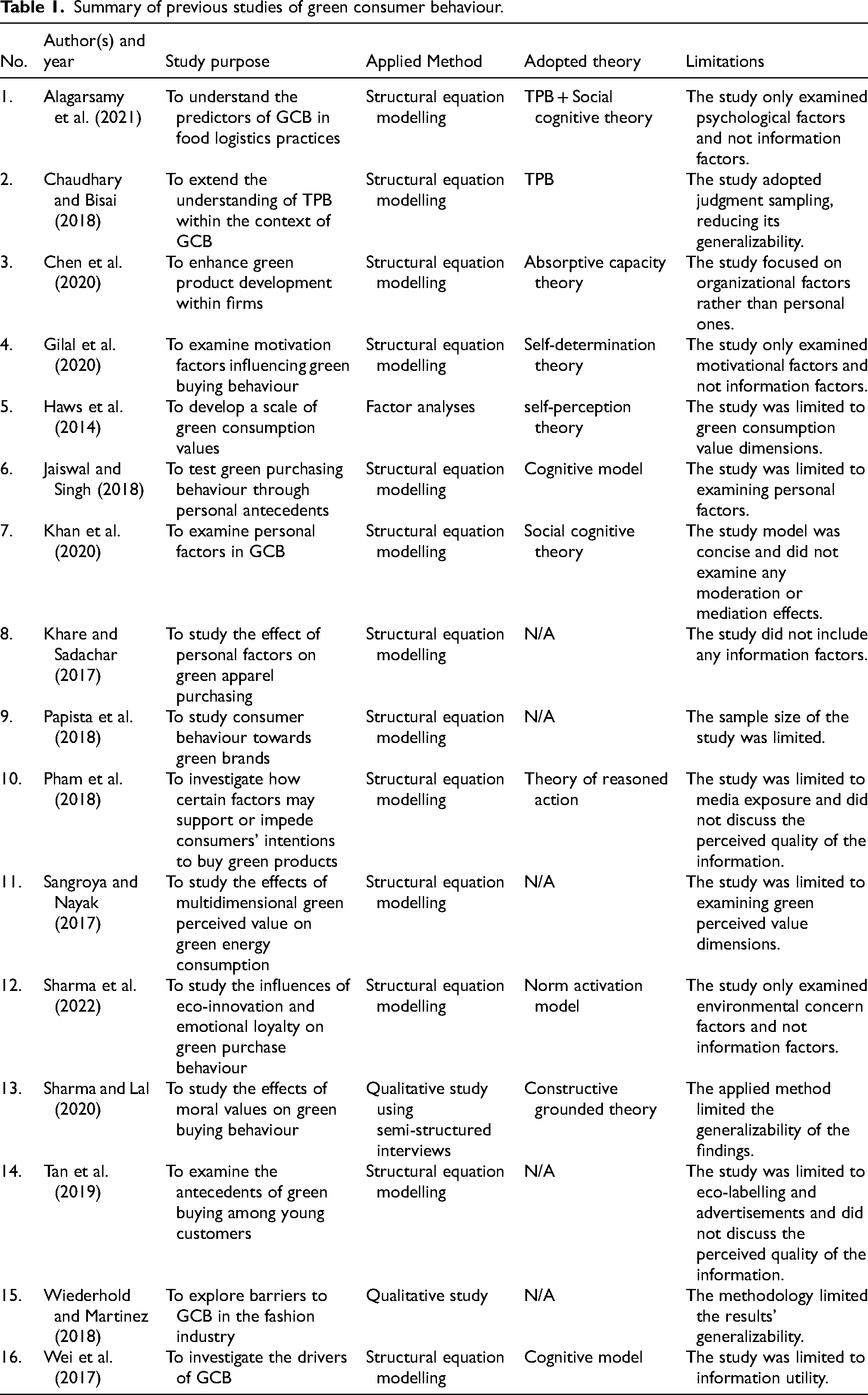
The informational factors targeted in this study address the green products themselves rather than market information or any other aspects. Thus, this study aims to advance the green consumption literature by answering the following research questions:
The remainder of this study is structured as follows. Section 2 discusses the theoretical foundation and hypothesis development, and Section 3 describes the research methodology. Section 4 provides the data analysis and results. Section 5 offers a discussion and conclusions. Research implications are presented in Section 6. Finally, Section 7 presents limitations and directions for future research.
Theoretical foundation and hypothesis development
Elaboration likelihood model
ELM is a dual process theory that illustrates the mechanism of information processing. ELM states that cognitive activity comprises two main routes: central and peripheral (Petty and Cacioppo, 1983). The central route involves a thorough inspection of the information; in this process, a high percentage of an individual's concentration is allocated to processing the information content, evaluating the entire situation and ultimately reaching an optimal decision (Luo et al., 2013; Petty and Cacioppo, 1986). The central route is dominant in motivated individuals who have the cognitive ability to analyse messages (i.e., information) thoroughly. As a result, the individual will form an attitude based on credible information and strong beliefs, and this attitude will probably translate to consistent and persistent actions (e.g., buying behaviour) (Petty and Cacioppo, 1986). When individuals (i.e., consumers) share persuasive and complete information regarding products and services, their main cognition processes are fostered, and they will feel more capable and empowered to form more positive attitudes, adapt their consumption behaviours and make more eco-friendly decisions (Nam, 2020). Empowered consumers have the confidence to change their buying behaviour based on their beliefs, skills and supportive information (Tajurahim et al., 2020).
The peripheral route is allocated less cognitive power by the individual. The peripheral route focuses on less significant information that could be irrelevant, massive or indirectly related to the situation at hand (Algarni, 2019; Petty and Cacioppo, 1986). Individuals influenced by this route have low information-processing ability or a lack of motivation to search; they will dedicate less cognitive power to processing information. For these individuals, the affective influences and visual attractions that shape the peripheral route will be more salient, and new technologies such as social media are the best communication media (Hussain et al., 2017; Yee et al., 2022). Although plentiful information can markedly improve decision quality, massive information can confuse consumers by exceeding their processing capabilities, thereby hampering their purchase decisions (Fu et al., 2020; Zhang et al., 2022).
Studies have used ELM as the theoretical basis for explaining people's attitudes and how they shape conclusions within different contexts, such as technology adoption (Bhattacherjee and Sanford, 2006), online discussions (Luo et al., 2013), mobile application usage (Gu et al., 2017), healthy diets (Boyce and Kuijer, 2014) and online healthcare services (Li et al., 2021). Some of these studies argue that one route of the ELM (i.e., the central or peripheral) is dominant while the other is minor, whereas others suggest that the two routes complement each other during attitude formation (Algarni, 2019; Coulter and Assistant, 2004; Petty et al., 1987). These discrepancies reflect the fact that different people from diverse communities have different motivations, perceptions and abilities when making decisions (Shahab et al., 2021). These variations can lead to fluctuations in the central and peripheral routes even within the same society (Algarni, 2019). Researchers have asserted that reimplementing ELM in new contexts could offer interesting insights (Luo et al., 2013), particularly given the pervasiveness of new technologies and communication platforms (Shahab et al., 2021). This study builds on these previous arguments by re-examining ELM within the context of GCB. The results will enlighten marketers and decision-makers on the influence of information factors on consumers and help them design targeted strategies for their products that increase not only profit but also environmental sustainability (Gilal et al., 2020; Jaiswal and Singh, 2018; Narula and Desore, 2016).
Hypothesis development
The relationship between information persuasiveness and consumer empowerment
In the face of growing competition in the retail sector, marketers are adopting different techniques to attract consumers and increase their purchase volume, including altering the business environment to foster consumer empowerment (CEM) (Zhou et al., 2017).
CEM refers to individuals’ perceived sense of control and comfort, which helps them to make satisfactory purchase decisions (Nam, 2020). These decisions are based on better information and understanding, which reduce consumers’ anxiety and stress when selecting a product from a wide range of similar choices, particularly in virtual environments (Wisker et al., 2019). Social media platforms help consumers by providing supportive information (Watson et al., 2018), reinforcing their knowledge, improving their awareness and fostering the product's trustworthiness (Xu et al., 2022). Information persuasiveness (IP) describes the ability of information to convince individuals to agree with a certain point of view (Micu and Chowdhury, 2010). IP is influenced markedly by the information source (Chakraborty and Bhat, 2018), which can range from informal, such as word of mouth (WOM), reviews, narrative information (Xu et al., 2022) and social media content (Hayes and Carr, 2015), to formal, such as nutritional facts on product labels or green labelling in the fashion industry (Khare and Sadachar, 2017; Wiederhold and Martinez, 2018).
IP is salient not only for consumer behaviour but also for attitude. Several studies have asserted that IP and peer views can prompt individuals to change their behaviour (Bhattacherjee and Sanford, 2006; Xu and Warkentin, 2020). Zhou et al. (2017) found that regular and informative posts by retailers can increase individuals’ certainty about a product and create an engaging experience that fosters their purchasing behaviour. Because green products are novel, the role of information in persuading consumers is more important than it is for conventional products (Lee and Hwang, 2016). That is, a lack of information may be a barrier to adopting GCB (Yu et al., 2022). A well-planned, informative advertising strategy is essential to mitigate consumers’ scepticism, overcome their buying barriers and motivate them to make more sustainable purchase decisions (Testa et al., 2020). Otherwise, unpersuasive and dispersed information will distract consumers and lead them to pursue conventional and less expensive choices (Yu et al., 2022). Thus, the current study postulates the following:
The relationship between information credibility and consumer empowerment
As environmental and health awareness grow, consumers are increasingly choosing green products with good reputations for safety and demanding reliable information (Chakraborty and Bhat, 2018). Changes in consumption decisions depend on the extent to which consumers perceive information as logical, accurate and reliable (Lee et al., 2011). Therefore, businesses must respect consumers’ rights by providing credible information that allows consumers to make well-informed buying decisions (Yu et al., 2022).
Information credibility (ICR) can be established based on the information source. For example, information that originates from experts and credentialed people is more credible than information from laypersons (Dou et al., 2012). Recommendations from relatives also have higher ICR, as individuals tend to believe and trust their friends and family members more than unknown reviewers in virtual environments (Xu and Warkentin, 2020). Likewise, information that is supported by national standards or the government can increase consumers’ confidence in purchasing certain products (Yu et al., 2022). Thus, ICR is considered a salient antecedent of a sustainable product's reputation and GCB (Chang et al., 2020). However, consumers are also exposed to the pressure of scepticism fostered by reviews and recommendations from unknown peers on online social platforms (Luo et al., 2013). In particular, ideas and judgments posted by laypersons in online communities may increase the influence of bias and preconceptions on opinions (Huang and Sundar, 2022). Furthermore, imitating peers and influencers (i.e., herd mentality) regardless of the credibility of their choices can negatively affect CEM (Wiederhold and Martinez, 2018). Thus, the current study hypothesizes the following:
The relationship between information completeness and consumer empowerment
Consumers have a persistent need to evaluate the quality of information. This need is particularly evident when consumers are exposed to the flood of information and reviews on social media platforms and have to make rapid decisions regarding green products (Shawky et al., 2019). Information completeness (ICO) refers to the degree to which individuals perceive that information about a product is comprehensive and thorough and thus can aid the decision-making process (Huang and Sundar, 2022; Xu et al., 2022). Studies have suggested that the collective nature of online platforms requires marketers to provide complete information about their products and services through online communities to create brand engagement with their customers (Cheng, Ouyang, et al., 2020). When consumers are exposed to incomplete information, they will either follow the peripheral route and react positively without thoroughly processing the information or follow the central route and react negatively because they perceive the information as lacking and insufficient (Wisker et al., 2019). In summary, the effects of ICO are unclear; one study found no significant effect of ICO on individuals’ opinions within an online consumer community (Luo et al., 2013). Thus, the current study hypothesizes the following:
The relationship between consumer empowerment and green consumer behaviour
Categories of green products include eco-friendly products, such as remanufactured and recycled products (Alagarsamy et al., 2021; Chaudhary and Bisai, 2018); sustainable products, such as renewable energy resources (Khan et al., 2020; Sangroya and Nayak, 2017); and organic products (Khare and Sadachar, 2017; Kushwah et al., 2019). The current study conceptualizes a green product as any product that consumes less natural resources, produces less polluting materials, and is manufactured using renewable energy resources and without harmful chemical or synthetic materials.
Maintaining a green, healthy lifestyle and encouraging people to embrace GCB is a challenging task, and many efforts and initiatives have aimed to raise awareness of this important issue and foster more sustainable behaviour (Khan et al., 2020; Narula and Desore, 2016). GCB is a complex phenomenon that is affected by numerous factors. Marketers must persuade and empower consumers to move from traditional consumption habits to more sustainable ones (Narula and Desore, 2016; Tan et al., 2019). Several factors can contribute to CEM in decision-making tasks by simplifying or magnifying the difficulty of the task. For example, when consumers are equipped with comparison tools or criteria, they can exclude undesirable products more easily and select preferred products. Furthermore, peer recommendations can reduce search efforts and empower consumers to make purchase decisions (Broniarczyk and Griffin, 2014). CEM is fundamentally elevated by increasing awareness of environmental issues, providing adequate information and spreading sustainability knowledge through online communities and social platforms (Chaudhary and Bisai, 2018; Hu and Krishen, 2019). Thus, the current study hypothesizes the following:
The relationship between information overload and consumer empowerment
Consumers are increasingly turning to social media platforms as a quick and ready source of all kinds of information. Consumers feel supported, informed and empowered by other peers’ opinions, responses and shared experiences (Shahab et al., 2021). However, the extent to which consumers depend on comments and reviews on online platforms to make purchase decisions remains controversial, as the lack of credibility of online platform content or the subjectivity of digital reviews could be compensated by the substantial size of such content (Han and Broniarczyk, 2022).
Some studies have found that the information benefits of digital platforms outweigh their drawbacks because customers are constantly using smart devices and social media platforms (Shahab et al., 2021). The vast information generated by digital platforms can positively influence consumers’ perceptions by decreasing perceived product uncertainty and result in more empowered purchase decisions (Han and Broniarczyk, 2022). Other studies have declared that CEM tools can overwhelm individuals with information overload (IO) beyond their processing capabilities, which makes decision-making more complicated and less satisfactory (Hu and Krishen, 2019). Additionally, time pressure and information fatigue are direct effects of IO that may foster an attitude of information avoidance (Guo et al., 2020) or even a loss of users due to the large amount of irrelevant content on social media platforms (Fu et al., 2020; Zhang et al., 2022). Consequently, the current study hypothesizes the following:
The relationship between information overload and green consumer behaviour
Marketers are leveraging their customer base via social media platforms and virtual communities due to ease of access and proliferation (Yee et al., 2022). These platforms constitute a technological framework for global communication that actively contributes to building individuals’ lifestyle perceptions and attitudes. Social media platforms generate an endless flow of information that may exceed users’ cognitive abilities to process, resulting in IO (Fu et al., 2020; Shawky et al., 2019). The role of information is more important for green products than for traditional products because consumers are expected to pay more for the former; thus, they need to be convinced of the proclaimed qualities and benefits of green products (Lee and Hwang, 2016; Wiederhold and Martinez, 2018).
In this regard, social media platforms are a key player in spreading green awareness and fostering a culture of green consumption (Yee et al., 2022), especially in developing countries, where green consumption awareness is less mature than in Western and developed countries (Narula and Desore, 2016). Although digital platforms are the main source of information for consumers seeking to reduce their uncertainty about products and make informed buying decisions (Han and Broniarczyk, 2022; Hussain et al., 2017), overloading consumers with repetitive and excessive information can have a negative impact on purchasing decisions (Guo et al., 2020; Hu and Krishen, 2019). Furthermore, considering that individuals differ in their cognitive and information processing capabilities (Broniarczyk and Griffin, 2014), IO could distract and hinder the green decision-making process (Cheng, Wu, et al., 2020). Building on previous arguments, the current study hypothesizes the following:
Moderating role of information overload
Social media platforms provide huge benefits, such as overcoming barriers of time and place, enriching dialogue among individuals, and providing substantial information about places, things and products in a way that familiarizes and persuades individuals of the value of a certain product, simplifying their decision-making process (Shawky et al., 2019; Yee et al., 2022). However, the continuous massive waves of online information may interfere with cognitive capacity and negatively impact decision-making (Fu et al., 2020). Some studies have found that highly unpersuasive information and conflicting reviews discourage consumers and decrease their purchase intentions towards certain products (Yu et al., 2022). Other studies have reported that massive information, even when it is relevant to a certain product, can lead to information fatigue and result in additional adverse effects, such as abandoning the online platform itself (Zhang et al., 2022). Thus, the current study hypothesizes the following:
Individuals tend to use online platforms to gather information and read reviews to shape their opinions and certainty about certain products (Chang et al., 2020; Watson et al., 2018). Shared experiences about a product can help build a credible image of the product and promote positive attitudes among prospective buyers (Luo et al., 2013). However, when individuals face huge amounts of information beyond their filtering capabilities, their trust is reduced, and buying decisions are delayed (Stanton and Guion, 2015). Testa et al. (2020) concluded that the proliferation of eco-friendly labels on numerous products and brands can frustrate consumers and decrease the credibility of green labels. Moreover, the high IO on social media platforms necessitates further verification of ICR, which is a difficult and time-consuming task (Broniarczyk and Griffin, 2014). Thus, the current study hypothesizes the following:
Social media platforms have become a globally popular means by which individuals endorse their favourite brands and express themselves; for example, more than 50% of online platform users subscribe to their preferred brands, and approximately one-third of those users follow recent trends (Yee et al., 2022). When information is credible, individuals can construct a better understanding and are more capable of making health-related decisions (Huang and Sundar, 2022). However, the high levels of incomplete and irrelevant information on social media platforms may induce stress and information fatigue, leading individuals to discontinue the use of virtual platforms or switch to other platforms (Fu et al., 2020; Guo et al., 2020). Thus, the current study hypothesizes the following:
A lack of information can be a barrier to decision-making (Kushwah et al., 2019). By providing free and direct access to large numbers of product ratings from other consumers, social media platforms contribute to CEM (Tajurahim et al., 2020). To reduce the risk of information asymmetry, consumers tend to rely more on product information posted by their peers; thus, their confidence in a product may depend on their confidence in the comments of others (Wheeler et al., 2019). The main obstacle to green buying is a lack of required knowledge, which increases consumers’ doubts and obstructs decision-making (Tariq et al., 2020). That is, CEM may differ depending on consumers’ knowledge, skills and other characteristics. For example, individuals with higher levels of information searching and use are more uncertain about their green product preferences. In other words, the more individuals feel the stress resulting from IO, the more they sense doubt and risk, resulting in less empowerment to make health-related decisions (Aljanabi, 2021). Thus, the current study hypothesizes the following:
Figure 1 summarizes the ten hypotheses in a proposed model of the effects of information factors on GCB.
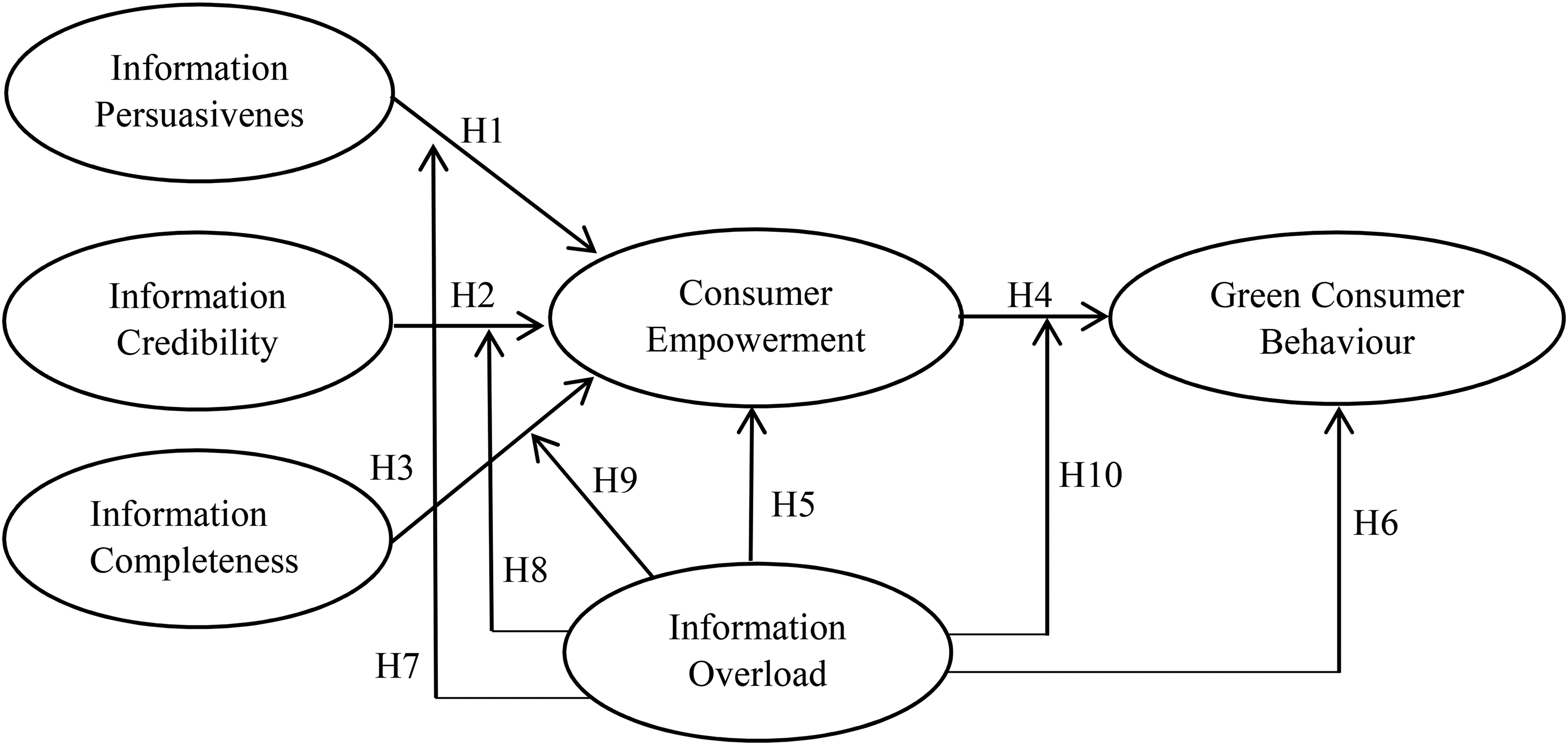
Research framework.
Methodology
Data collection
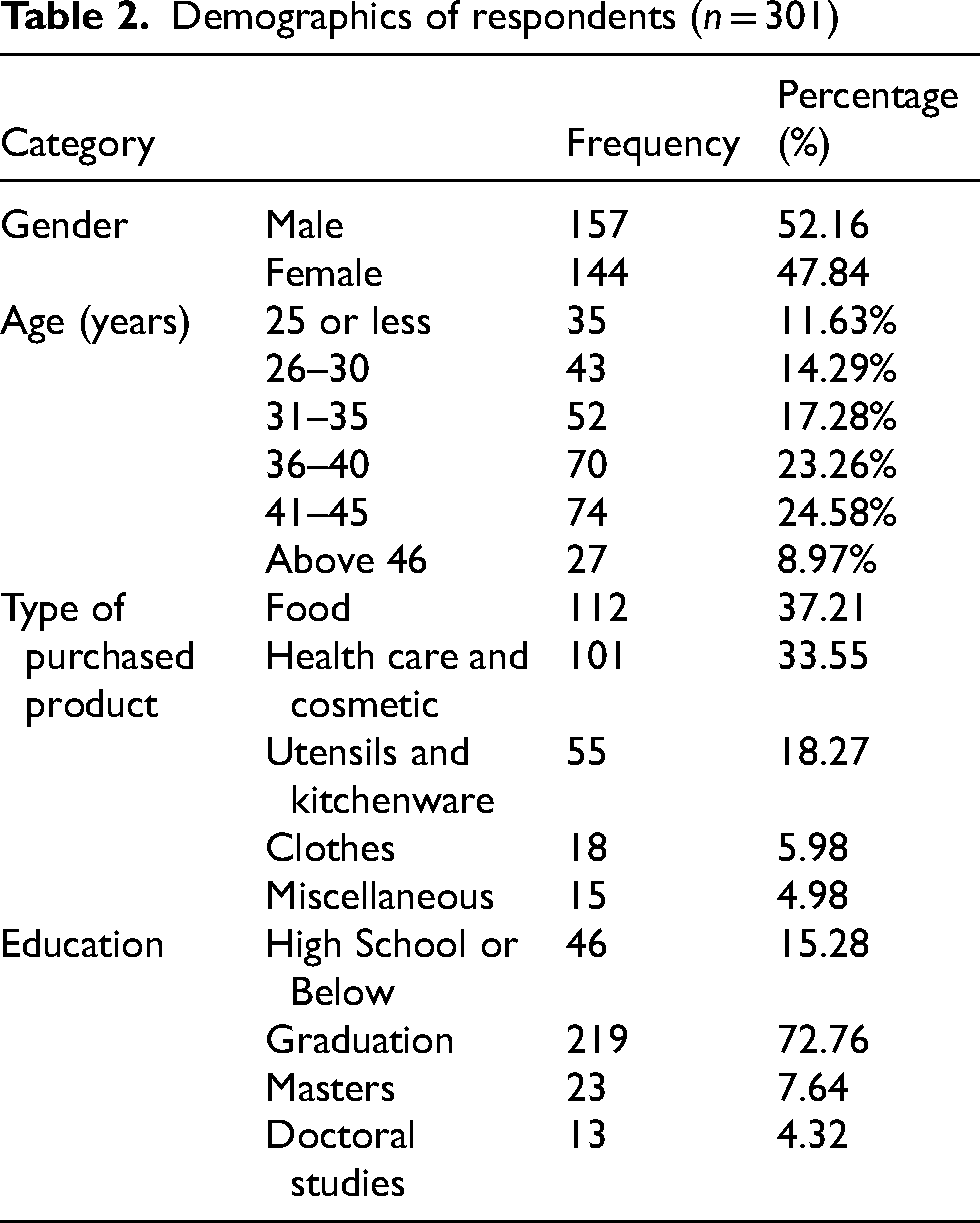
A quantitative approach was adopted to verify the proposed model and evaluate the relationships among the investigated variables. The data were collected from regular consumers of green products via a self-administered questionnaire. The questionnaire contained a filter question to differentiate consumers who purchase green products from those who do not. To reach appropriate respondents, the questionnaires were distributed to customers of organic stores in Baghdad, the capital of Iraq, from August 2022 until the end of November 2022. A simple random sampling method was used, and the sample frame was obtained from the customer lists of shopping stores. The sample size determination table indicated that a sample size of 384 was appropriate for a population of more than one million (Krejcie and Morgan, 1970). In addition, a sample size of 384 exceeds the ratio of sample size to number of questionnaire items of 5:1 (i.e., 155 for 31 items) suggested by Hair et al. (2014). Studies of GCB have reported response rates of 29.2% to 72.9% (Chen et al., 2020; Tariq et al., 2020). Accordingly, the sample size in the current study was doubled to 768 to ensure a representative sample. After excluding questionnaires with missing values or illogical answers (e.g., providing the same answer for all items), a total of 301 valid questionnaires were obtained and used for the statistical analysis, corresponding to a response rate of 39.19%. Detailed information on the respondents’ demographics is shown in Table 2. Approximately half of the respondents (52.16%) were males, and the largest share of the sample was between 41 and 45 years old (24.58%); 72.76% of the respondents reported that they had a bachelor's degree.
Demographics of respondents (n = 301)
Measurements
All measures used in this study were adapted from previous studies for the context of purchase decisions. GCB was measured using the scale of Alagarsamy et al. (2021). IP, ICO and ICR were measured using the scale developed by Luo et al. (2013). CEM items were adapted from Mishra et al. (2021). IO was measured using the scale of Cheng et al. (2020b). The responses were recorded on a 7-point Likert-type scale ranging from 1 for “strongly disagree” to 7 for “strongly agree”, as shown in Appendix A. The questionnaire items were primarily developed in English and later translated into Arabic following the back-translation method (Brislin, 1970).
Results
The data were analysed by structural equation modelling (SEM) using the software Smart-PLS 4.0. SEM is useful for evaluating multiple relationships between variables (Hair et al., 2011). As recommended by Hair et al. (2014), the measurement or “outer” model was analysed first, followed by the analysis of the structural or “inner” model.
Analysis of the measurement “outer” model
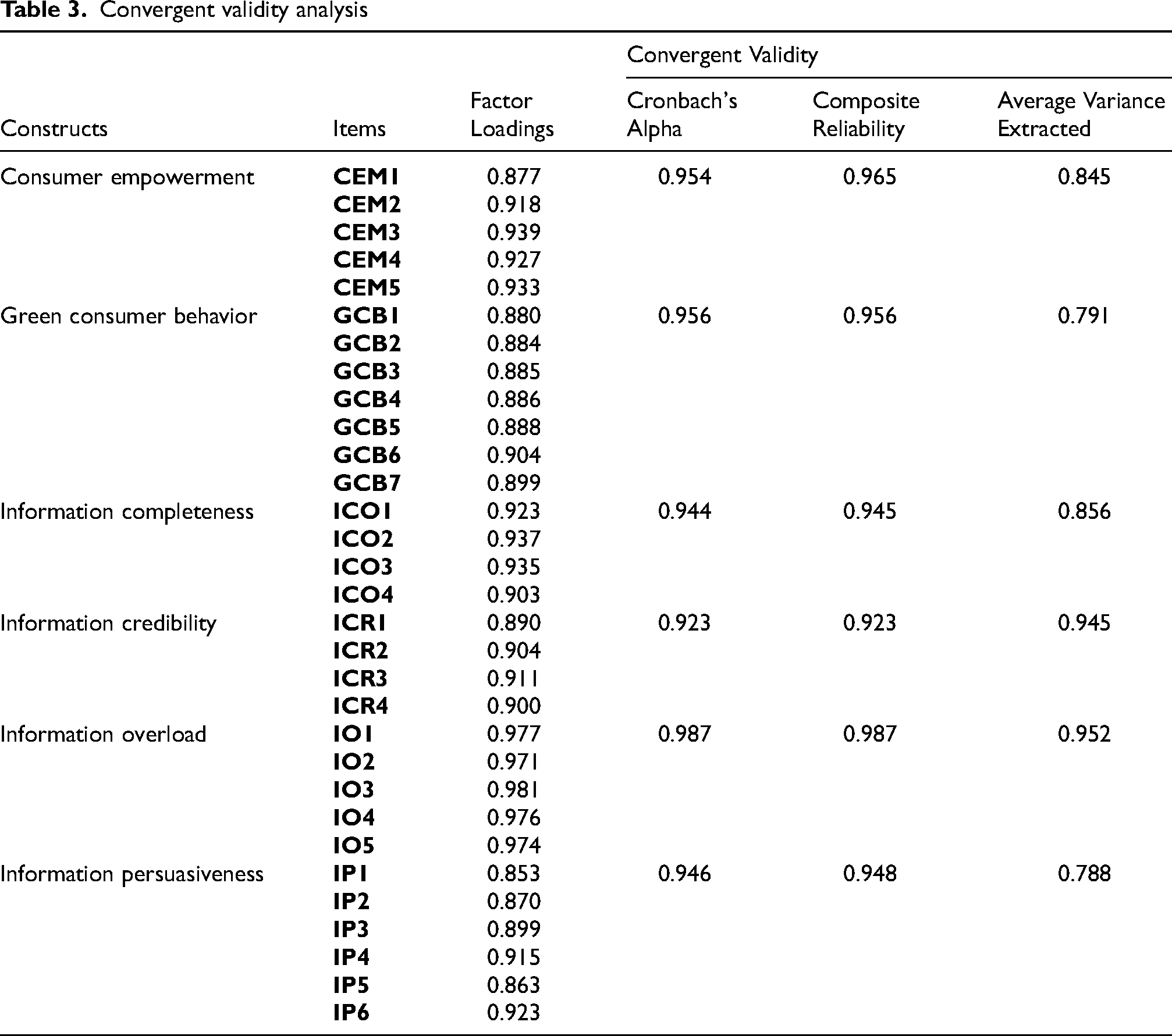
To estimate the appropriateness of the measurement model, Hair et al. (2011) proposed using Cronbach's alpha test to determine internal consistency and reliability. Factor loadings and composite reliability (CR) values >0.7 and average variance extracted (AVE) values >0.5 indicate convergent validity and discriminant validity, respectively.
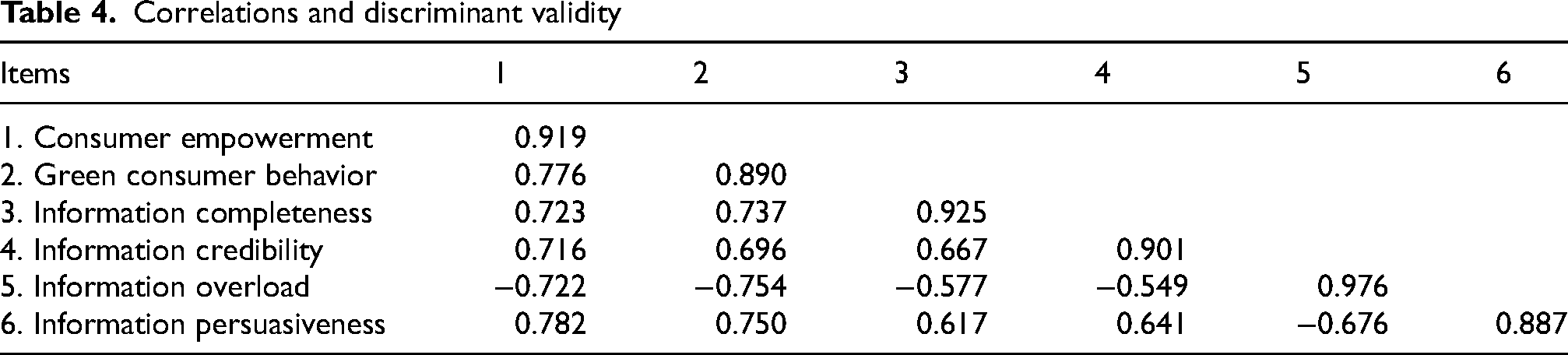
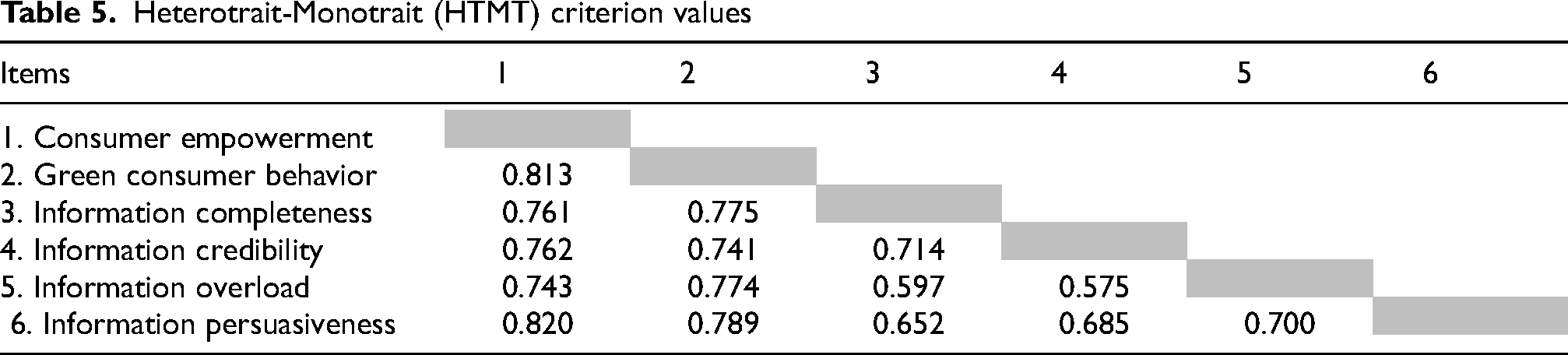
As shown in Table 3 and Figure 2, the factor loadings ranged from 0.981 to 0.853 for all items. The CR values ranged from 0.987 to 0.923, and the AVE values ranged from 0.791 to 0.952. These results demonstrate the convergent validity of the model constructs. Discriminant validity was assessed by the method of Fornell and Larcker (1981) and by the heterotrait-monotrait (HTMT) method suggested by Henseler et al. (2015); the results of these two methods are shown in Tables 4 and 5, respectively. In Table 4, the square roots of the AVE values, which appear on the diagonal, are higher than the corresponding horizontal and vertical values. All HTMT ratio values were lower than the suggested maximum of 0.85. Thus, both methods indicated acceptable discriminant validity of all constructs.
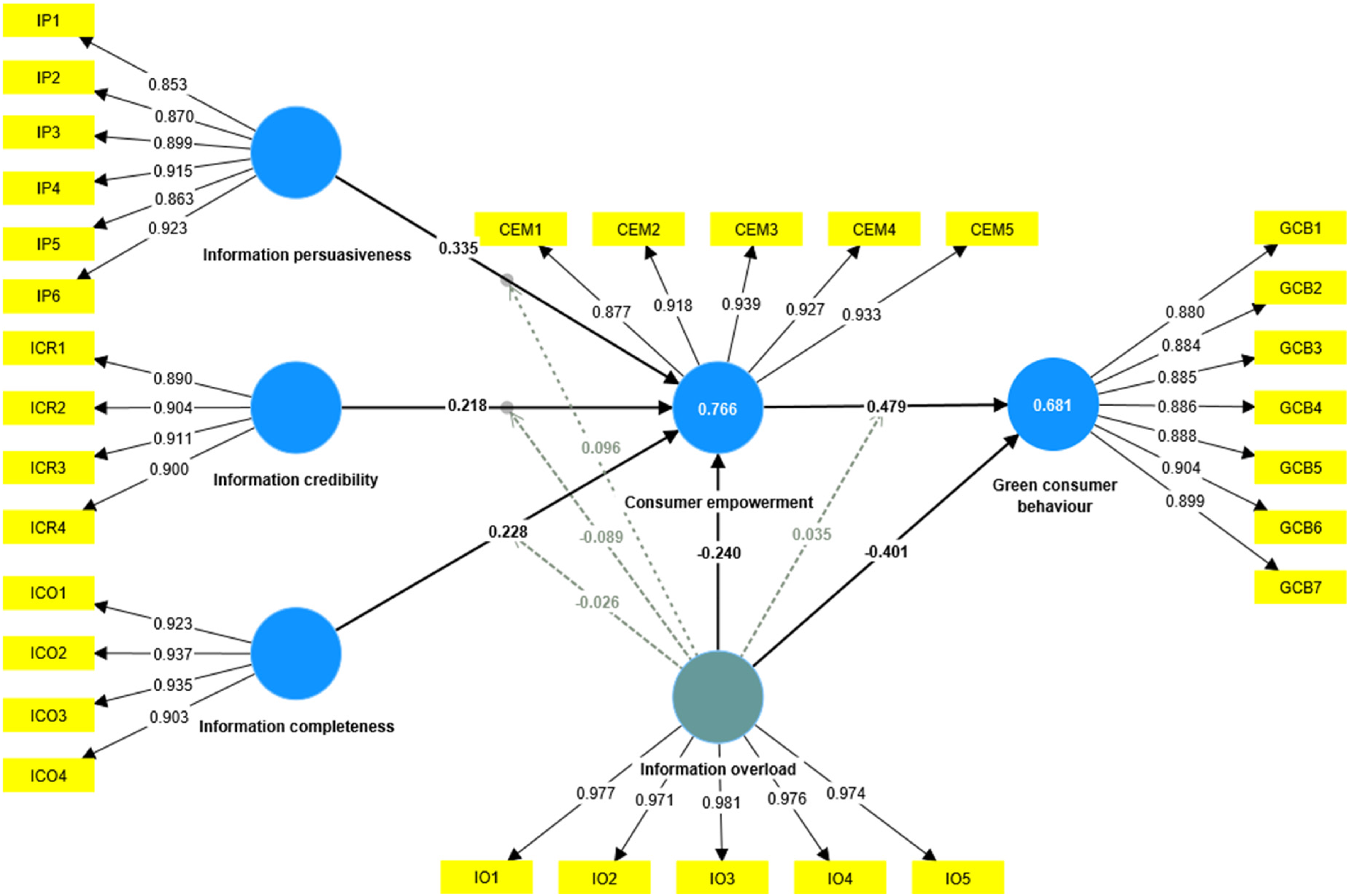
Measurement model.
Convergent validity analysis
Correlations and discriminant validity
Heterotrait-Monotrait (HTMT) criterion values
Structural “inner” model analyses
The structural model was assessed by calculating the coefficients of R2 and the significance of path coefficients as suggested by Hair et al. (2014). The R2 values of both dependent constructs ranged from 0.681 and 0.766, indicating sufficient explanatory power of the proposed model (Hair et al., 2014).
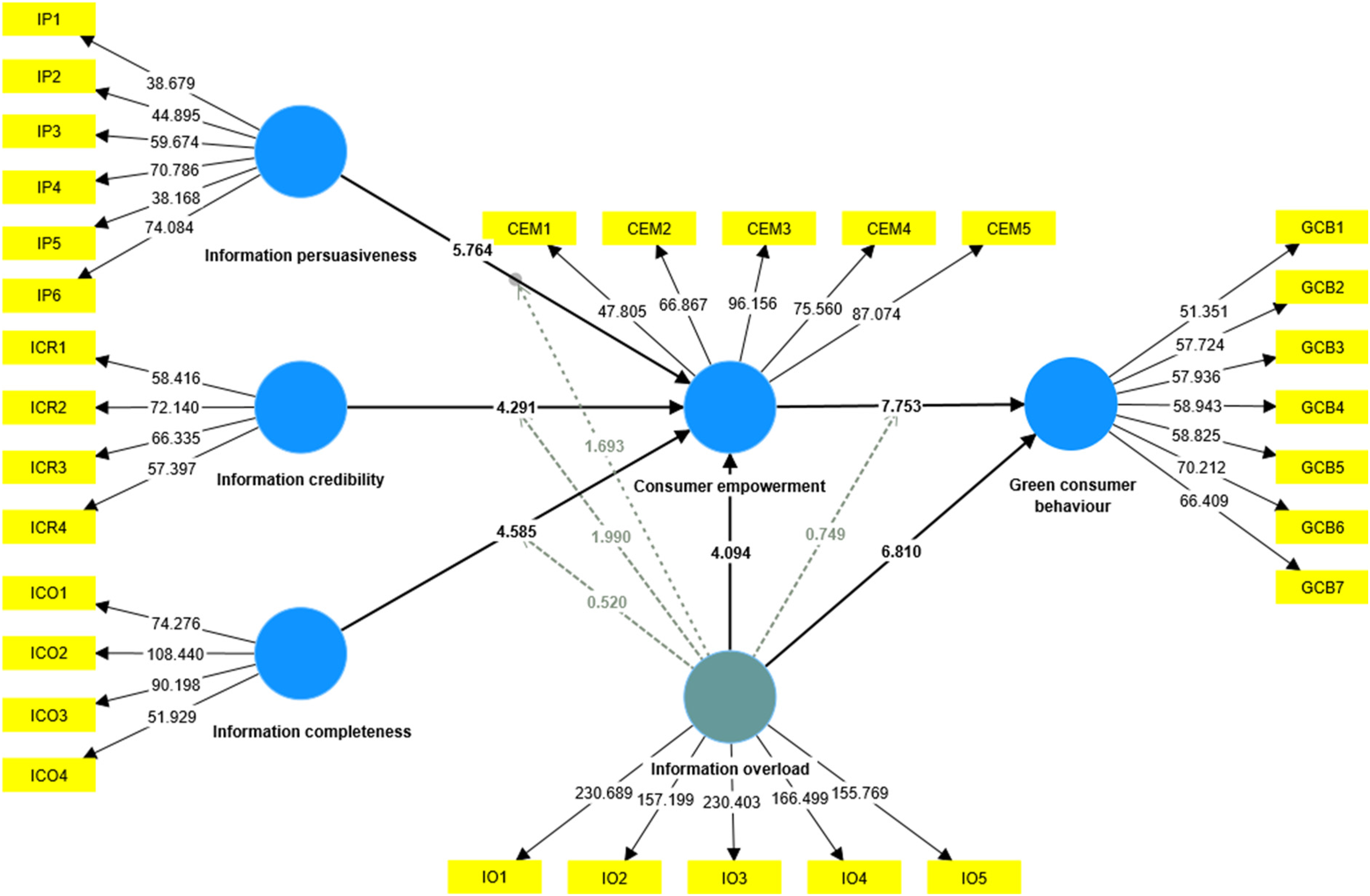
The hypothesized relationships were tested by running a bootstrapping procedure with resampling of 500 samples to estimate the path coefficients’ significance. As shown in Table 6 and Figure 3, CEM was positively and significantly influenced by IP (β=0.341, t = 5.764, p < 0.000), ICR (β=0.215, t = 4.291, p < 0.000) and ICO (β=0.230, t = 4.585, p < 0.000). These results support H1, H2 and H3 respectively. Consistent with H4, CEM had a significant and positive influence on GCB (β=0.479, t = 7.753, p < 0.000). IO was negatively and significantly associated with CEM (β=-0.236, t = 4.094, p < 0.000) and GCB (β=-0.401, t = 6.810, p < 0.000), supporting H5 and H6, respectively.
Structural “inner” model.
Results of the structural “inner” model
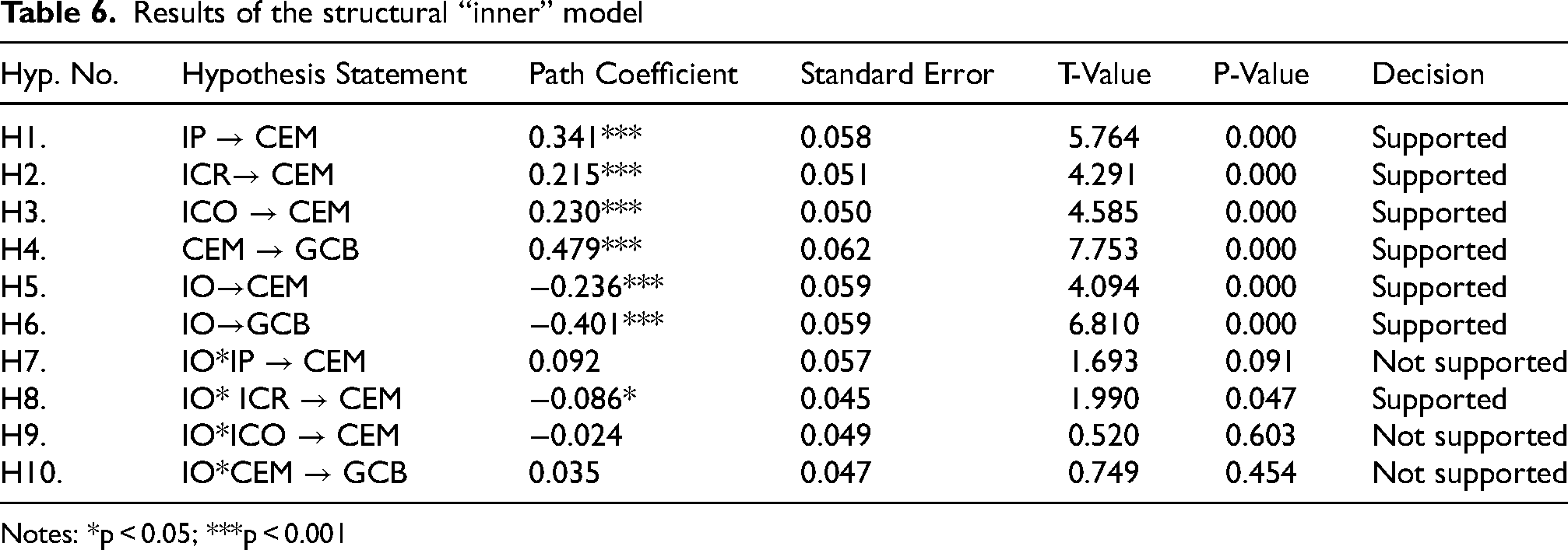
Notes: *p < 0.05; ***p < 0.001
Moderation model
IO significantly moderated the association between ICR and CEM (β=-0.086, t = 1.990, p < 0.05), as shown in Table 6, thus providing support for H8. However, IO did not moderate the associations of IP and ICO with CEM (p > 0.05). In addition, IO did not moderate the association between CEM and GCB (p > 0.05). Thus, H7, H9, and H10 were not supported. To indicate the moderating effects of high and low levels of IO on the association between ICR and CEM, the simple slope of IO was plotted with the standard deviation (+1SD/-1SD), as shown in Figure 4.
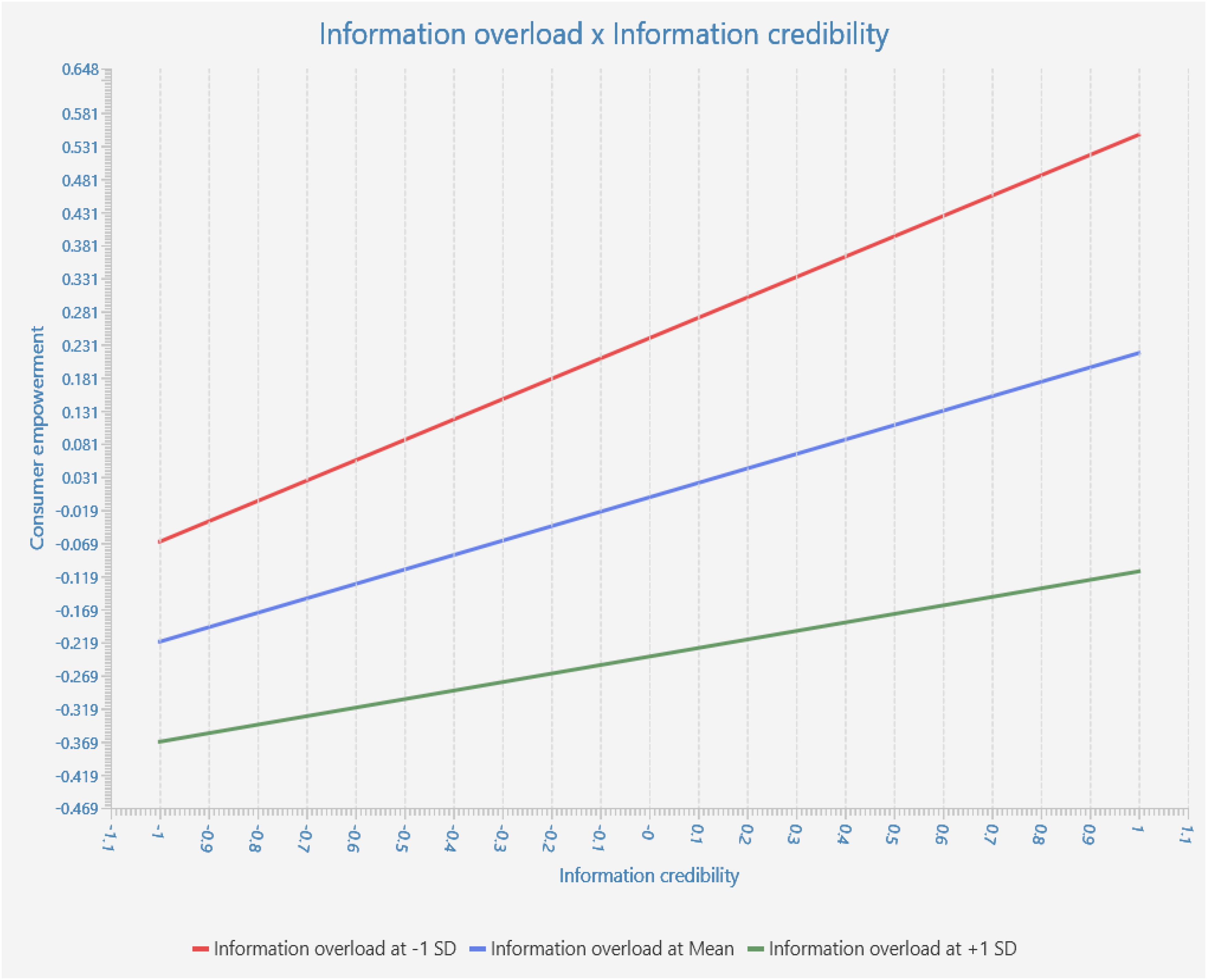
Interaction effects of information overload and information credibility on consumer empowerment.
Control variables
Previous studies have indicated that the inclusion of control variables can produce more precise and reliable estimations of relationships between underlying variables of interest. This study included consumer age and gender as control variables, but neither influenced the endogenous variables (age - GCB, ß = 0.023, t = 0.486, p > 0.05; age - CEM, ß = 0.001, t = 0.017, p > 0.05; gender - GCB, ß = - 0.120, t = 0.778, p > 0.05; gender - CEM, ß = -0.082, t = 0.619, p > 0.05) as shown in Figure 5. These results suggest that age and gender do not significantly confound the study variables.
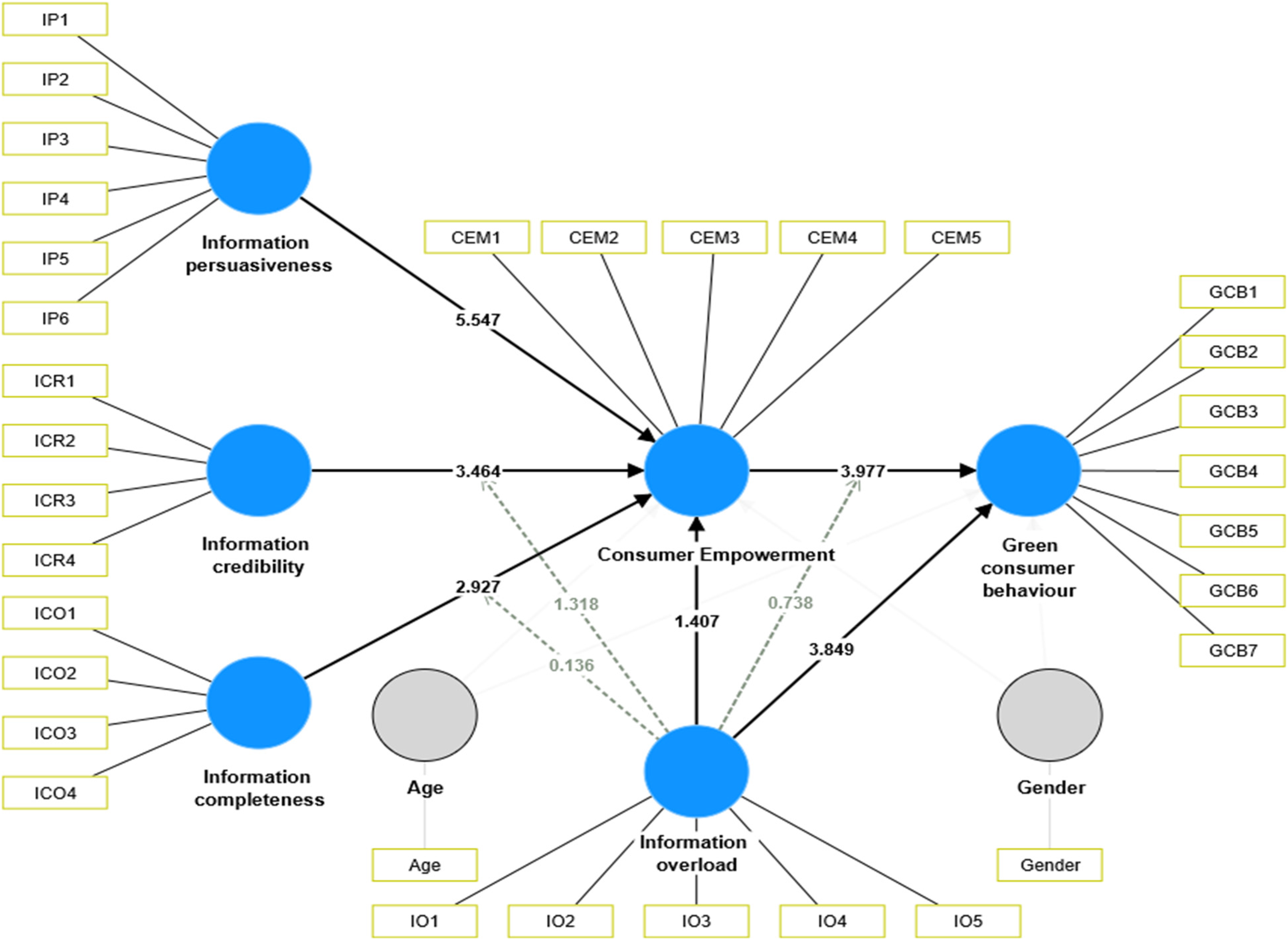
Controls
Discussion
Drawing on ELM, a model of persuasion, this study argues that GCB is affected by how consumers process certain information and how this processing improves their awareness. The results confirm the role of information characteristics in enhancing CEM and increasing consumers’ confidence and satisfaction with their green product purchase decisions.
With respect to RQ1, all information factors evaluated in this study were found to influence CEM in the context of green products, consistent with prior findings on the need to evaluate information quality (Cheng et al., 2020a; Huang and Sundar, 2022; Yu et al., 2022). This result suggests that high-knowledge consumers are better able to process information thoroughly when the central route is more prominent and can subsequently form positive attitudes towards green products based on credible information and strong belief.
For RQ2, the results revealed that CEM enhances GCB. Empowered customers have the quality and volume of information they need to make decisions about green products that best match their needs. Some studies have reported that reviewers’ ratings are subject to social dynamics and that initial comments may influence subsequent reviewer comments (Broniarczyk and Griffin, 2014). Consumers often seek advice from friends and family members rather than unknown reviewers to reduce the risk of information asymmetry.
With respect to RQ3, the results showed that IO negatively influences both CEM and GCB, contradicting previous studies that have found that branding and reviewer ratings enhance consumer decisions (Xu and Gutsche, 2021; Zhang et al., 2022). These results suggest that IO increases decision complexity for consumers, despite regular supportive information posts by retailers. In addition, the negative influence of IO on GCB indicates that the perceived burdens encountered throughout the decision process ultimately determine a consumer's judgment of a product. These conclusions are consistent with the frequently observed negative relationship between IO and the decision-making process (Hu and Krishen, 2019).
RQ4 was addressed by estimating the moderating effects of IO on the relationships in the proposed model. The results confirmed the moderating effect of IO on the association between ICR and CEM (H8). As IO increases, the positive effect of ICR on CEM decreases. In any communication process, many factors may disturb the quality of communication and interfere with the transmission of messages. IO tends to reduce consumers’ ability to recognize credible information about green products. However, consumers who experience IO may reduce this uncertainty by searching for more reliable information to help them make the right buying decision.
H7, H9, and H10 were not supported. A possible explanation for these results is that consumers try to make sense of massive information to guide their behaviour and decide whether to buy a product. Whereas many studies have proposed a negative role of IO, Han and Broniarczyk (2022) argued that the vast information generated by digital platforms can enhance consumers’ perceptions by decreasing perceived product uncertainty and result in more empowered purchase decisions. The results of the moderation effect reflect the standpoints of the respondents and it shows that IO had a salient effect on ICR but not IP or ICO. This finding suggests that the credibility of green products is a primary barrier limiting the adoption of such products (Wiederhold and Martinez, 2018). Furthermore, the green statements made by manufacturers about their products are often subject to uncertainty (Marcatajo, 2021); It appears that Information Overload (IO) amplifies customers’ sense of skepticism and complicates the decision-making process (Guo et al., 2020; Hu and Krishen, 2019). On the other hand, it seems that the study respondents already have sufficient information and convictions about the green brands and products they are willing to purchase; that's why the IO had no moderating influence on their buying behavior. This suggests that a certain level of information can effectively stimulate cognitive processes to influence people's behaviour in a particular direction, especially behaviours that involve cost, such as buying decisions.
Implications
This study contributes to the literature on green consumption in three ways. First, this study is among the few studies to extend the applicability of ELM to GCB. Most previous studies have adopted TPB, social cognitive theory, or self-perception theory. The findings show that ELM provides a better description of GCB, consistent with Shahab et al. (2021), who applied ELM to consumer behaviour and showed that individuals with high elaboration likelihood follow the central route and change their attitudes as a result of analysing specific information using a cognitive/rational approach.
Second, in line with studies that have shown a strong link between CEM and involvement in green purchasing (Nam, 2020), the current study finds that CEM is an important catalyst of GCB. However, the results also show that this relationship is affected by many antecedents that may change consumers’ attitudes toward green products.
Third, the findings confirm the vital role of the peripheral route suggested by ELM theory. The literature has rarely considered the influence of IO on GCB. Although previous studies have suggested mediating effects of IO in decision-making contexts (Hu and Krishen, 2019), this study is the first to investigate the moderating role of IO in the relationship between CEM and GCB.
The results of this study also have practical implications. Marketers can capitalize on the findings by empowering both current and potential customers and serving as a dependable source of information on all matters relating to green consumption. CEM depends primarily on the information provided by green marketers. Government accreditation of certain products or eco-labels granted by a third-party institution might convince target customers to adopt certain products. Therefore, green product information such as labelling and advertising should be persuasive and not exaggerated. This pivotal role of information is not surprising because information is the cornerstone of any decision-making process. One key recommendation of this study is the establishment of national regulations and standards by government and policymakers for green and sustainable products. All manufacturers should adhere to these unified regulations and policies, rather than each having their individual policies. What is noteworthy, however, is that information about green products must describe the expected value of these products realistically. The provided information must be understood by all categories of consumers without requiring a specialized vocabulary or decoding process. To mitigate the impact of massive information and achieve success in the marketplace, marketers should promote environmental concerns and deliver trustworthy information.
Limitations and directions for future research
This study is subject to limitations. First, although previous research on green consumption and pro-environmental behaviour has used cross-sectional sampling, this technique may not reflect consumers’ adoption of a green lifestyle. Longitudinal studies that systematically track the attitudes of consumers and the influence of information quality over time should be considered in future work. Second, the influences of different information sources vary, and it would be interesting to investigate the influences of these sources on GCB. Finally, to propose a more thorough model, other potential moderating factors should be investigated, such as trust in the retailer, past behaviour and future orientation.
Footnotes
Data availability
The datasets generated by the survey research during and/or analyzed during the current study are available in the Dataverse repository.
Declaration of competing interest
The authors declare that they have no known competing financial interests or personal relationships that could have appeared to influence the work reported in this paper.

About the authors
Appendix A: The questionnaire items
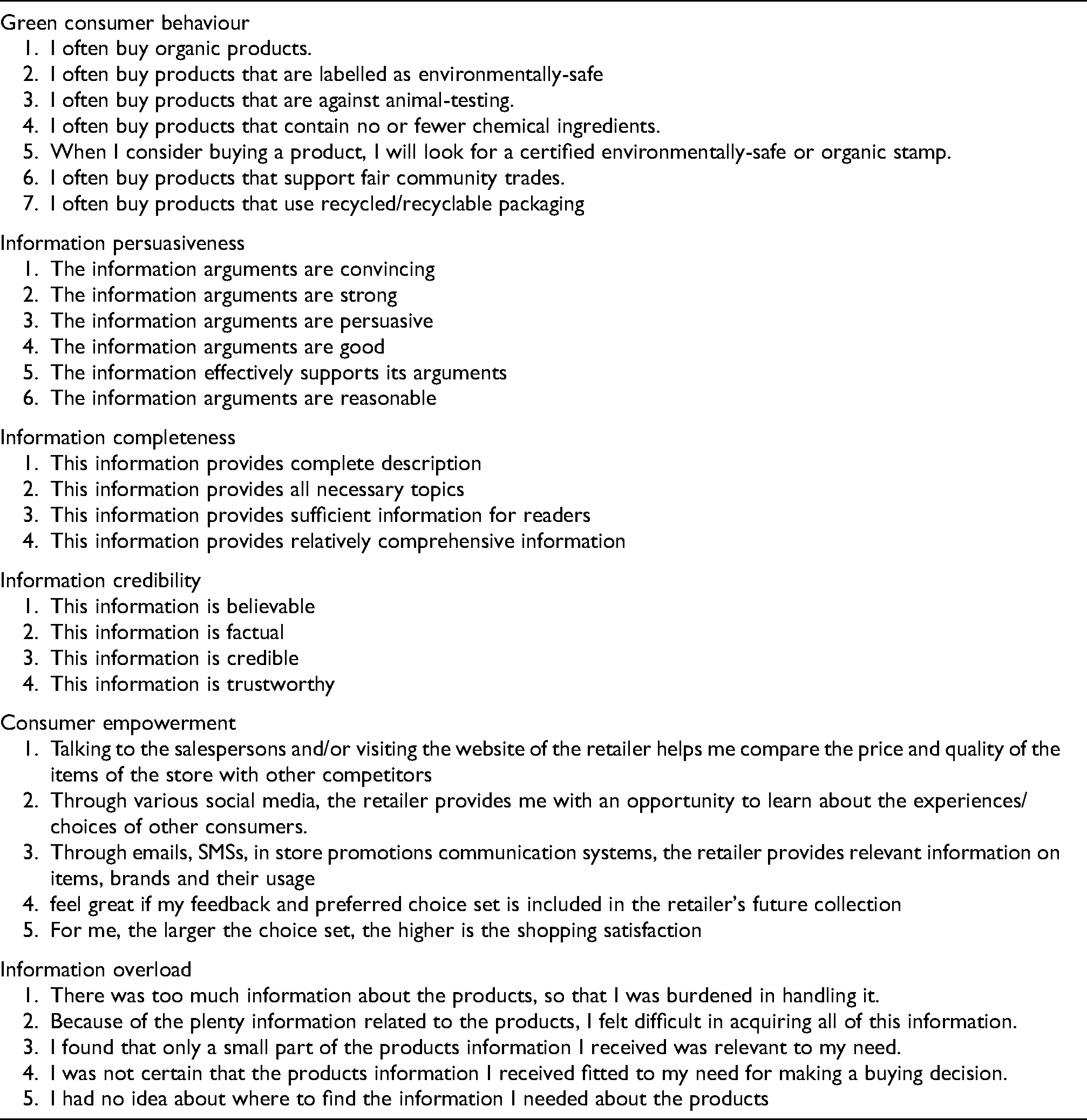
| Green consumer behaviour |
| 1. I often buy organic products. |
| 2. I often buy products that are labelled as environmentally-safe |
| 3. I often buy products that are against animal-testing. |
| 4. I often buy products that contain no or fewer chemical ingredients. |
| 5. When I consider buying a product, I will look for a certified environmentally-safe or organic stamp. |
| 6. I often buy products that support fair community trades. |
| 7. I often buy products that use recycled/recyclable packaging |
| Information persuasiveness |
| 1. The information arguments are convincing |
| 2. The information arguments are strong |
| 3. The information arguments are persuasive |
| 4. The information arguments are good |
| 5. The information effectively supports its arguments |
| 6. The information arguments are reasonable |
| Information completeness |
| 1. This information provides complete description |
| 2. This information provides all necessary topics |
| 3. This information provides sufficient information for readers |
| 4. This information provides relatively comprehensive information |
| Information credibility |
| 1. This information is believable |
| 2. This information is factual |
| 3. This information is credible |
| 4. This information is trustworthy |
| Consumer empowerment |
| 1. Talking to the salespersons and/or visiting the website of the retailer helps me compare the price and quality of the items of the store with other competitors |
| 2. Through various social media, the retailer provides me with an opportunity to learn about the experiences/choices of other consumers. |
| 3. Through emails, SMSs, in store promotions communication systems, the retailer provides relevant information on items, brands and their usage |
| 4. feel great if my feedback and preferred choice set is included in the retailer's future collection |
| 5. For me, the larger the choice set, the higher is the shopping satisfaction |
| Information overload |
| 1. There was too much information about the products, so that I was burdened in handling it. |
| 2. Because of the plenty information related to the products, I felt difficult in acquiring all of this information. |
| 3. I found that only a small part of the products information I received was relevant to my need. |
| 4. I was not certain that the products information I received fitted to my need for making a buying decision. |
| 5. I had no idea about where to find the information I needed about the products |