







Abstract
The unfamiliar and unusual stressful conditions due to COVID-19 have motivated employees to excessively use smartphones for non-work-related activities to alleviate the negative feelings associated with these stressful conditions. To conceptualize our research model, we employed the Compensatory Internet Use Theory (CIUT), which is associated with problematic technology usage. The proposed model investigates the influence of the following negative factors that emerged because of COVID-19 as the determinants of problematic smartphone use (PSU): remote work arrangement (RWA), intolerance of uncertainty (IU), COVID-19 anxiety (CA), and social isolation (ISO). In addition, we suggest that, although employees tend to use smartphones excessively to alleviate stressful life conditions, these conditions (RWA, IU, CA, and ISO) will lead to emotional exhaustion (EE), which will consequently result in the excessive use of smartphones. Furthermore, we are investigating the influence of PSU on employee work productivity. Finally, we are also interested in exploring the moderating role of gender in the relationships within our model. The results have shown that all hypotheses are supported, except for the influence of RWA on EE and PSU, and the influence of CA on PSU. We believe that our findings will provide researchers and businesses with a deeper understanding of this critical issue, especially in the context of smartphone usage at work.
Keywords
Introduction
The continuous advancement of information technology (IT) and the Internet have enabled smartphones to become a crucial part of individuals’ day-to-day lives. Smartphones have allowed users to perform many online activities quickly and efficiently, such as conducting online transactions, socializing on different social networks, and participating in different entertainment activities. Despite their advantages, smartphone use is threatened to be a problematic concern due to excessive use, which has negatively affected individuals’ daily performance (Horwood and Anglim, 2019). Researchers have conceptualized the abusive and compulsive behavior of smartphones as problematic smartphone use (PSU), which can result in a negative impact on users’ social relationships, work, and academic performance and can lead to various sociological and psychological disorders (Qiu et al., 2022).
The COVID-19 outbreak has compelled governments worldwide to implement stringent quarantine measures to mitigate the spread of this pandemic, including restrictions on individuals’ movement and instructing them to stay at home to limit social contact whenever possible (Anderson et al., 2020). Organizations have complied with government regulations by modifying employees’ work activities to lessen physical contact among them. However, these unfamiliar and unusual stressful conditions due to COVID-19 have had a detrimental impact on employees, affecting them both socially and psychologically. Employees have turned to using smartphones excessively for non-work-related activities to alleviate the negative feelings associated with these stressful conditions. The issue of PSU has made organizations more concerned about their employees’ productivity, resulting in a recent interest among researchers and general health practitioners who aim to identify the factors contributing to PSU to assist in developing strategies to prevent this behavior. In their recent review of PSU research, Busch and McCarthy (2021) indicated that research in the field of PSU is still considered relatively new and not yet firmly established. Additionally, it's worth noting that most studies relied solely on samples of students or adolescents (Winkler et al., 2020), as demonstrated in the studies of Elhai et al. (2018) and Wang et al. (2015). To further expand upon the growing yet somewhat narrowly focused research on PSU and to address gaps in our understanding of its determinants and consequences, this study examines the factors influencing PSU among employees compelled to work under challenging conditions due to the COVID-19 pandemic. Additionally, it examines the impact of PSU on their work productivity.
To conceptualize our research model, we employed the Compensatory Internet Use Theory (CIUT - Kardefelt-Winther, 2014a) which is associated with problematic technology use. The theory assumes that individuals may attempt to engage in excessive Internet use to regulate their stressful and negative emotions resulting from stressful life events. “Compensatory use” elucidates the motivation to use the Internet to avoid real-life difficulties and responsibilities, and/or elude negative feelings (Kardefelt-Winther, 2014a). Within our research context, we believe that CIUT is suitable for our study since excessive use of smartphones is considered a compensatory behavior to cope with negative emotions among employees working in stressful conditions due to COVID-19. It is, therefore, of critical importance that the negative emotions that have led to PSU be investigated to help organizations develop intervention and prevention strategies for their employees. Hence, this study investigates the influence of the following negative factors which have emerged because of COVID-19 as the determinants of PSU: remote work arrangement (RWA), intolerance of uncertainty (IU), COVID-19 anxiety, and social isolation (ISO). In addition, we suggest that while employees tend to use smartphones excessively to alleviate stressful life conditions, these conditions (remote work arrangement, uncertainty intolerance, COVID-19 anxiety, and social isolation) will lead to emotional exhaustion (EE), which will consequently result in excessive use of smartphones. Furthermore, we investigate the influence of PSU on employee work productivity. Finally, we are also interested in investigating the moderating role of gender in the relationships among the proposed negative factors on PSU, emotional exhaustion, and their influence on employee work productivity.
The proposed determinants and outcomes of PSU were chosen for the following main reasons. First, the proposed predictors of PSU align well with the stressful life conditions employees are living in due to COVID-19. Second, the factors are also linked to the new working conditions in which employees are compelled to operate, where they must adapt their typical office working habits to remote work from home. Therefore, we propose that remote work arrangements, intolerance of uncertainty, COVID-19 anxiety, and social isolation will drive employees to engage in excessive smartphone usage to alleviate their emotional discomfort stemming from COVID-19. Third, only a few studies have explored the negative consequences of PSU (Yang et al., 2019; Wang et al., 2019). To address this research gap, this study examines employees’ work productivity as an important consequence of PSU which is of great interest to organizations.
This study has several objectives: (1) to recommend a research model based on the CIUT to explain how certain factors can motivate employees to use smartphones excessively due to COVID-19, (2) to empirically examine the suggested model using data collected from employees during the post-COVID phase, (3) to understand the role of gender as a moderator between the proposed relationships in the proposed model, and (4) to provide organizations and practitioners better insights about PSU among employees during the post-COVID phase, and its implications with a focus on investigating the moderating role of gender in the relationships of the proposed model.
The remaining parts of this study are organized as follows: In part 2, we present the theoretical background of our research. In part 3, we propose our research model and hypotheses. In part 4, we discuss the methodology. In part 5, we analyze the data. In part 6, we explain the results. In part 7, we discuss the implications and future research.
Theoretical background
Problematic smartphone usage (PSU)
Smartphones have become a part of individuals’ lives because of their ease of use and availability at any time. As a result, users will develop different habits, such as frequently checking their mobile phones without any specific goal, which can rapidly lead to problematic use (Kim et al., 2015). PSU is considered a potential behavioral addiction that represents an individual behavior that considers digital technology to be the focus of excessive use (Winkler et al., 2020). Although it is suggested that PSU is considered an addictive behavior, empirical evidence to support or reject this suggestion is still scarce (Billieux et al., 2015). In the context of our study, we propose that, due to hectic and demanding life responsibilities, many individuals might attempt to reduce their negative and stressful emotions by engaging in excessive use of smartphones.
The literature review has revealed that most research has focused on investigating the determinants of PSU. For instance, Fu et al. (2020) examined the relationship between emotion regulation difficulty and adolescent PSU, the role of depression as a mediator between emotion regulation difficulty and PSU, and the role of perceived social support as a moderator between emotion regulation difficulty and PSU. Emirtekin et al. (2019) investigated the direct and indirect association between body image dissatisfaction, social anxiety, depression, emotional abuse and neglect, and PSU. Jin et al. (2021) explored the association between depression and anxiety symptoms, resilience, perceived social support, the sense of school belonging, and PSU.
Few studies have focused on examining the outcomes of PSU. For example, Yang et al. (2019) examined the influence of PSU on academic anxiety, academic procrastination, and life satisfaction. Arrivillaga et al. (2020) analyzed the relationship between PSU and suicidal ideation and investigated the possible moderating effect of emotional intelligence in the association between PSU and the notion of suicide among Spanish adolescents. Wang et al. (2019) investigated the mediating role of procrastination and perceived social support between PSU and adolescent depression.
Several theories have been employed to study PSU. Some studies are grounded in a single theory, while others have integrated multiple theories into their research. For example, Gentina and Rowe (2020) adopted the Uses and Gratifications Theory (UGT) and the I-PACE framework to examine the relationship between youth materialism and problematic smartphone dependency via process-oriented and social-oriented smartphone use among French late adolescents. Elhai et al. (2018) applied UGT and CIUT to investigate the relationship between depression severity, social interaction, social anxiety severity, ruminative, smartphone use frequency, and PSU. Wang et al. (2015) applied the UGT and CIUT to analyze the relationship between entertainment or escapism motivation and PSU, considering the moderating role of perceived stress. Wolniewicz et al. (2020) applied the CIUT and the I-PACE model to examine the mediating role of boredom proneness and fear of missing out (FOMO) in the relationship between depression, anxiety and PSU.
Compensatory Internet Use Theory (CIUT)
CIUT postulates that individuals use technology excessively to relieve and regulate negative emotions and feelings (Kardefelt-Winther, 2014a). The theory focuses on the excessive use of digital technology, such as smartphones, as a compensatory strategy to cope with real-life difficulties, which do not necessarily have to be considered an addictive behavior (Rozgonjuk et al., 2019). Prior studies have employed the CIUT to hypothesize systems of depression as determinants of excessive use of the Internet/technology, such as excessive online gaming (Kardefelt-Winther, 2014b; 2014c), and excessive Internet use (Kardefelt-Winther, 2014a), problematic social networking site use (Zsido et al., 2020). Recently, researchers have shown interest in applying CIUT to examine the severe use of smartphones as a means to cope with life problems (Wang et al., 2015). Research on PSU has confirmed that the CIUT could be useful in explaining PSU, as demonstrated by Rozgonjuk et al. (2019), Elhai et al. (2018), Elhai et al. (2020), and Yuan et al. (2021).
Based on CIUT, this study conceptualizes that employees experiencing affective psychopathology symptoms, such as remote work arrangements, COVID-19 anxiety, social isolation, intolerance of uncertainty, and emotional exhaustion, may excessively increase smartphone use to relieve their stress and regulate negative emotions. We propose that increased smartphone usage can be suggested as a coping strategy to compensate for and alleviate negative emotions. Hence, we suggest that employees may use smartphones excessively to help them cope with the remote working arrangements imposed on them due to COVID-19. They may also experience symptoms of PSU due to their feeling of intolerance of uncertainty, COVID-19 anxiety, social isolation, and emotional exhaustion. Although prior studies have tested different factors that influence PSU using the CIUT, our study is unique since it addresses determinants that are specific to employees working remotely within the COVID-19 context.
Hypothesis development
The conceptual model that we have developed is shown in Fig. 1. In summary, our hypothesis posits that remote work arrangement, COVID-19 anxiety, social isolation, and emotional exhaustion will result in more problematic smartphone dependency. In addition, we suggest that remote work arrangements, intolerance of uncertainty, COVID-19 anxiety, and social isolation will cause employees emotional exhaustion. Furthermore, our model also suggests that the outcome of PSU will impact the work productivity of employees. Finally, we aim to investigate the role of gender as a moderator in all the proposed relationships.
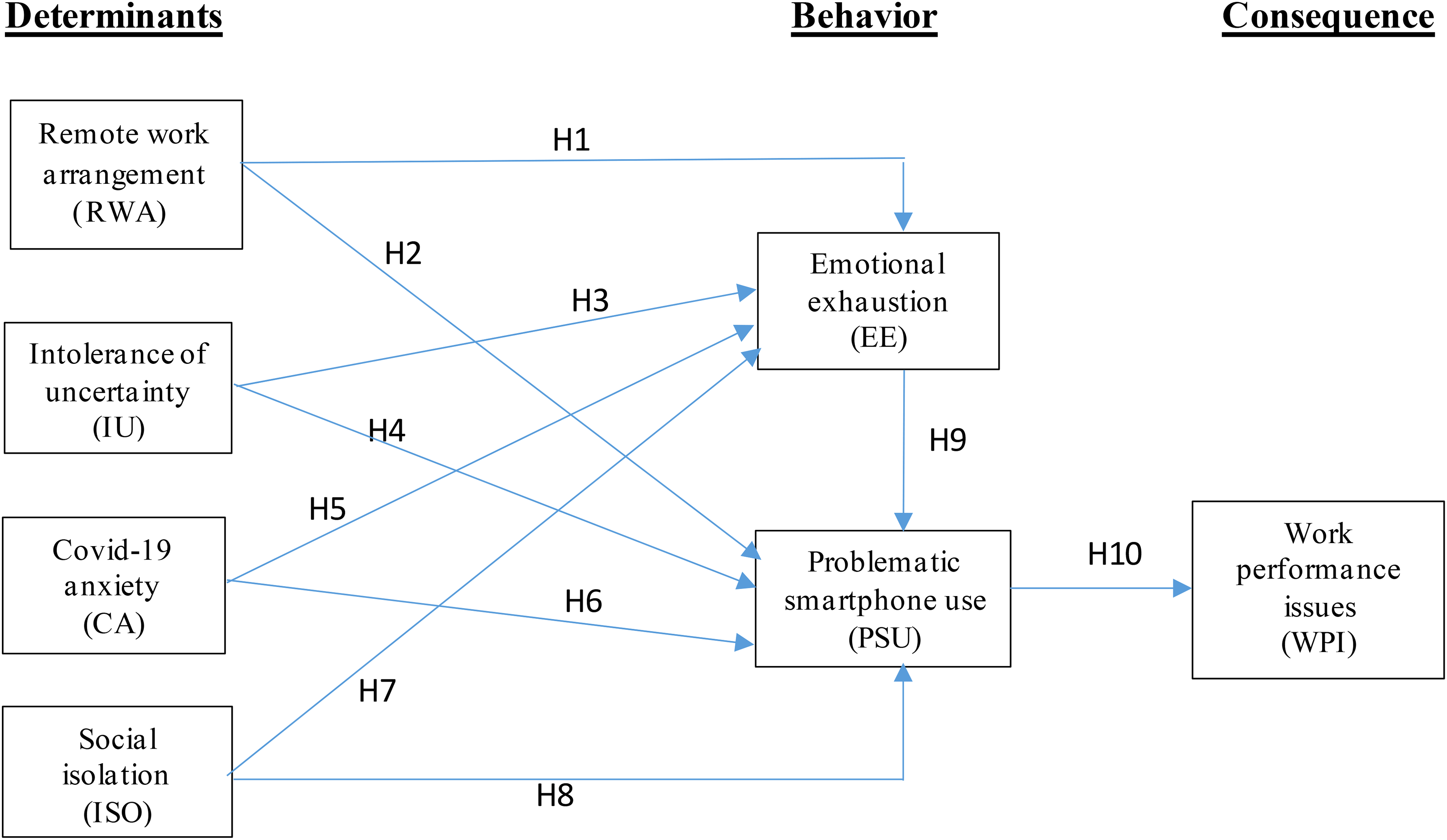
Proposed research model. Note - H11: Gender differences have moderating effects on all the proposed relationships in our model.
Remote work arrangement (RWA)
Governments have implemented numerous measures to reduce the spread of COVID-19, including keeping social distance among individuals. Organizations have adhered to government regulations regarding social distance by enabling employees to work remotely (Belzunegui-Eraso and Erro-Garcés, 2020). RWA is a working arrangement in which employees do not go to their company offices (Bellmann and Hübler, 2020). RWA can be synonymous with terms such as work-from-home, teleworking, virtual work, or telecommuting (Raffaele and Connell, 2016). However, RWA has several disadvantages, such as the absence of supervision, the inability to separate between work time and personal time, and the creation of a monotonous working environment (Susilo, 2020). Prior studies have examined the influence of RWA on different aspects of an employee's life. For example, Chadee et al. (2021) found that within the hospitality management context, employees’ use of digital technologies while working remotely due to COVID-19 can result in self-control depletion, which, in turn, may be linked to their disengagement from work. Malti (2020) reported that based on workers’ experience in South Africa, RWA can lead to work overload and pressures to perform job tasks. Furthermore, the lack of physical interaction due to RWA can adversely affect the workers’ health and general well-being. RWA can be exhausting because of its impact on the physical and psychological environment of individuals (Perry et al., 2018), who often feel pressured to manage work-related and non-work-related tasks and responsibilities simultaneously (Perry et al., 2018). Following this line of research, we propose that RWA can drive employees to misuse smartphones to alleviate the negative emotions brought on by COVID-19. In addition, we suggest that while PSU can alleviate employees’ feelings regarding remote working, it can also lead to emotional exhaustion among employees. Hence, we propose the following:
H1: RWA is positively related to EE. H2: RWA is positively related to PSU.
Intolerance of uncertainty (IU)
Intolerance of uncertainty is considered a risk factor related to anxiety and depression (Carleton et al., 2012; McEvoy and Mahoney, 2012). Individuals who struggle with uncertainty may also find it difficult to cope with the accompanying emotions and physical sensations, such as grief and sorrow (Hillen et al., 2017). IU is defined as the “dispositional fear underlying emotional difficulties and resulting in anxiety in cases where the unknown is perceived intensely” (Fergus, 2013). It entails a negative response, irrespective of the rational possibility of an event occurring in the face of uncertainty (Hong and Lee, 2015). IU may increase the effect of post-traumatic stress disorder and anxiety disorder (Morriss et al. 2016; Hollingsworth et al. 2018). Recent studies have reported different negative influences of IU on individuals’ mental health in the context of COVID-19. For instance, Satici et al. (2020) reported that IU significantly influences the mental well-being of Turkish individuals during COVID-19.
In this study, we propose that IU will lead to excessive usage among employees as a means to alleviate their anxiety in the post-COVID-19 phase. Furthermore, we suggest that UI will lead to emotional exhaustion for employees, given the uncertainty they experience in their lives and work. Hence, we postulate that:
H3: IU is positively related to EE. H4: IU is positively related to PSU.
COVID-19 anxiety (ca)
The COVID-19 pandemic has triggered global anxiety and heightened stress levels among individuals (Garfin et al. 2020). For instance, the growing number of illness and mortality rates related to COVID-19, the ongoing emergence of new COVID-19 symptoms, and the extensive media coverage of the virus have intensified individuals’ anxiety and emotional distress, stemming from their concerns about their health and the well-being of their loved ones (Fiorillo and Gorwood, 2020; Asmundson and Taylor, 2020). Prior studies have demonstrated elevated rates of anxiety because of COVID-19 (McKay et al., 2020; Huang and Zhao, 2020; Lee et al., 2020; Swami et al., 2021). Jungmann & Witthöft (2020) found that health anxiety is related to COVID-19 anxiety and cyberchondria, which involves frequently searching for health-related information on the Internet in search of comfort or to reduce health-related anxiety. Chen and Eyoun (2021) reported that restaurant frontline employees’ fear of COVID-19 is positively associated with their emotional exhaustion.
In this study, we propose that the persistent anxiety caused by COVID-19 will emotionally drain individuals due to their constant fear and stress about their own health and the health of their family members. Moreover, we suggest that employees may resort to excessive smartphone use as a means of mitigating their COVID-19 anxiety by constantly checking for the latest information on the pandemic. Hence, our proposed hypotheses are as follows:
H5: COVID-19 anxiety is positively related to EE. H6: COVID-19 anxiety is positively related to PSU.
Social isolation (ISO)
In response to the COVID-19 pandemic, governments around the world have enforced social distancing and isolation among their citizens (Anderson et al., 2020). Social distancing aims to restrict face-to-face contact between individuals, which has resulted in social isolation around the world (Wilder-Smith and Freedman, 2020). Social isolation is defined as “an individual's absence or the low number of meaningful ties with other people, thus making them socially isolated” (De Jong Gierveld et al., 2006). In this study, we propose that people may turn to excessive smartphone usage to compensate for the lack of socializing with others due to COVID-19. Consequently, we propose that socially isolated employees will be more inclined to abuse smartphone use to stay socially connected with their friends and colleagues. Additionally, we suggest that social isolation will lead to emotional exhaustion. Hence, we hypothesize that:
H7: ISO is positively related to EE. H8: ISO is positively related to PSU.
Emotional exhaustion (ee)
Emotional exhaustion, an essential element of the burnout concept, refers to “feelings of being emotionally overextended and depleted of one's emotional resources” (Maslach, 1993, pp. 20-21). Individuals may feel that they cannot achieve personal goals because of the loss of emotional and physical energy (Schaufeli et al., 2001). Employees who believe they lack adequate resources to handle challenging work-related tasks are more likely to experience emotional exhaustion (Wu et al., 2012). They may feel powerless in controlling life events and trapped in their positions (Lim et al., 2021). Koay's (2018) study found a positive relationship between emotional exhaustion and employees’ engagement in non-job-related internet activities. Thus, this study proposes that employees might turn to excessive smartphone use to relieve their emotional exhaustion in the workplace. Considering this, we propose that:
H9: EE is positively related to PSU.
Work performance issues (WPI)
Workforce performance is an essential factor that can significantly enhance and improve the organization's overall performance (Mohammad et al., 2019). Worker productivity is defined as “the degree to which an individual performs in the workplace concerning attendance, quality of work, performance capacity, and person factors” (Coker, 2011). New technologies, such as smartphones, have enabled employees to integrate personal activities with work-related tasks due to their ease of accessibility, potentially affecting their work productivity. Prior studies have reported that employee misuse of the company's Internet resources can distract them from their work duties, ultimately reducing the organization's productivity (Jiang, 2014; Huma et al., 2017). Employees frequently utilize various technological devices, such as smartphones, to take breaks or “escape” from their work responsibilities to engage in non-work-related tasks (Mercado et al., 2017). In the context of this study, we propose that excessive smartphone use by employees during working hours will influence their work productivity. Thus, we propose the following hypothesis:
H10: PSU is positively related to WPI.
Gender role
Countries all over the world have issued lockdowns to control the COVID-19 pandemic (Kraemer et al., 2020; Maier and Brockmann, 2020). Consequently, working individuals were ordered to work from home, except for a small percentage of employees who worked in essential services (e.g., food, healthcare, delivery). In addition, children moved to study online because most or all schools and childcare facilities were closed. As a result, professional parents working from home would also have to take care of their children during working hours. Gender has played an important role in smartphone usage research either as a control variable (e.g., Rozgonjuk et al., 2019) or as a moderator (e.g., Gentina and Rowe, 2020). For example, in their study on PSU among teenagers, Gentina and Rowe (2020) found that gender moderates the path between materialism and PSU. In their recent study, Aydın and Aydın (2022) identified gender as a significant moderating variable in both the direct relationship between PSU and procrastination, as well as the indirect relationship from PSU to psychological flexibility. Recently, Liu et al. (2023) reported that females demonstrated significantly higher PSU levels compared to males. However, in males, neuroticism had a direct and singular impact on PSU. These results offer valuable insights supporting our proposition of the moderating role of gender between the drivers and outcomes of PSU to handle stressful life events due to COVID-19. Therefore, we hypothesize that:
H11: Gender differences have moderating effects on all the proposed relationships in our proposed model.
Methodology
Measurements
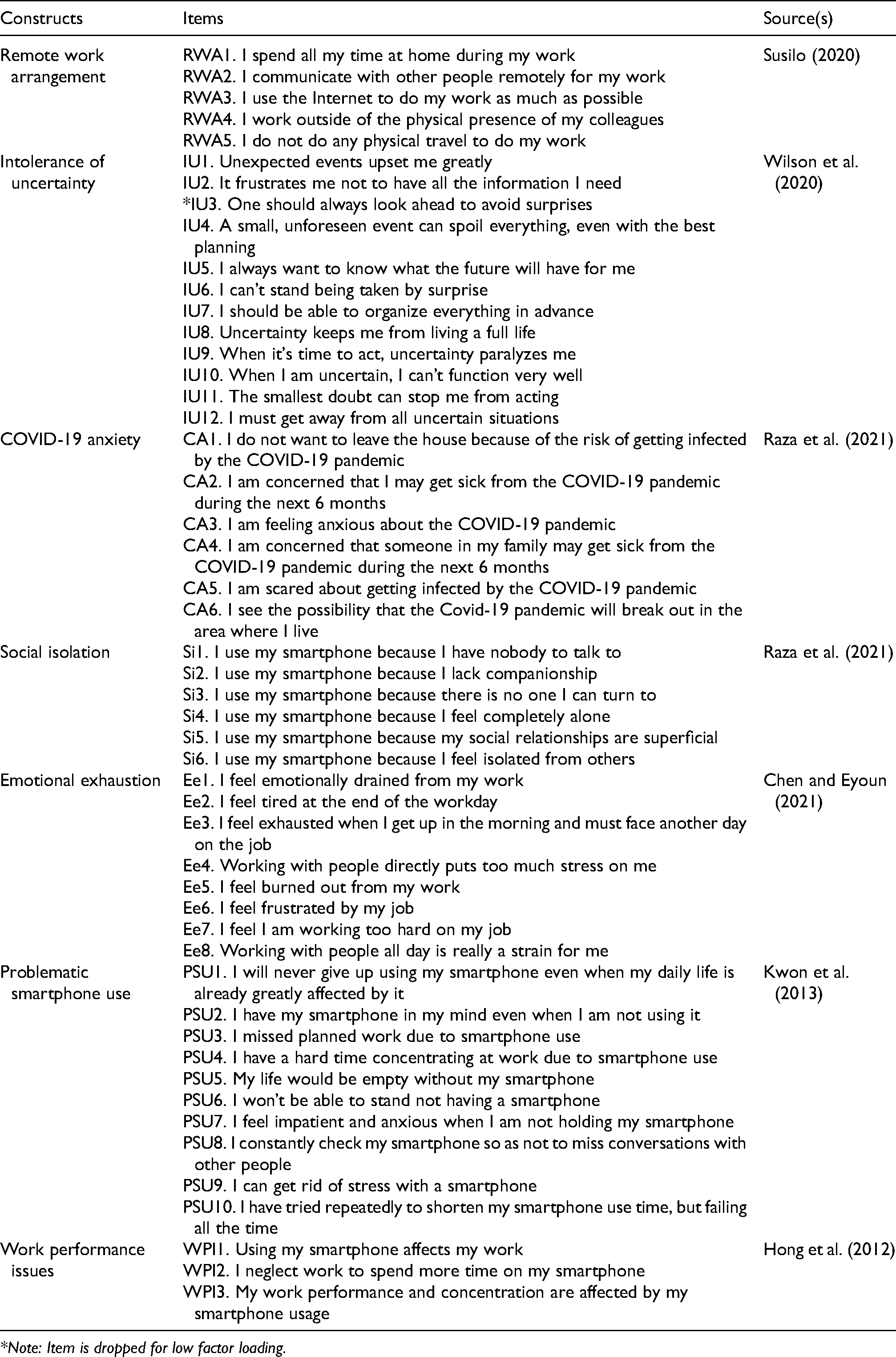
The items in this study were adapted from previously validated variables after applying certain wording changes to fit the context of problematic smartphone use. The items of remote work arrangement were adapted from Susilo (2020). The items of intolerance of uncertainty were drawn from Wilson et al. (2020). The items of COVID-19 anxiety and social isolation were derived from Raza et al. (2021). The items of emotional exhaustion were utilized from Chen and Eyoun (2021). The items of problematic smartphone use were adopted from Kwon et al. (2013). Finally, the items of work performance were adapted from the study of Hong et al. (2012). All the items were measured on a 6-point Likert scale ranging from 1(strongly disagree) to 6 (strongly agree). The 6-point scale has been employed in prior PSU research (e.g., Elhai et al., 2016; Wei et al., 2023). A scale with even response options, like a 6-point scale helps minimize central tendency bias as it discourages respondents from choosing the middle option as a default or “safe” choice (Álvarez-Hernández et al., 2022; Ritter et al., 2015). Appendix A lists the constructs of the proposed model, their items and their sources.
Data collection and sample profile
The research utilized a quantitative causal approach to assess the influence and significance of independent constructs on dependent constructs. A pilot test focused on questionnaire clarity, question-wording, and applicability was introduced before mass distribution. Moreover, a common-sense item was incorporated to check whether it was taken seriously. While the PLS-SEM approach can achieve adequate statistical power with smaller sample sizes compared to other SEM methods (Hair et al., 2017), we determined the required sample size using the “G*Power 3” software (Verma and Verma, 2020). This software employs F-test options for a fixed linear multiple regression model, considering factors such as R-squared deviation from zero, α level, statistical power, and effect size values. In the context of business research, a statistical power of at least 0.80 at an α level of 0.05 is generally deemed acceptable (Mouakket and Aboelmaged (2021). The test revealed that for our research model, a minimum sample size of 103 was necessary. However, we targeted a total of 500 questionnaires using a convenience sample of employees in organizations based in the UAE. Researchers argue that using a convenience sampling approach enhances sample diversity, making it a suitable choice for research aimed at generalizing theory to the broader population rather than emphasizing specific sample characteristics (Norton et al., 2017; Rehman et al., 2023; Sekaran and Bougie, 2016). CRIF Gulf DWC LLC, an expert firm in the field of business decision data and analytics, was commissioned to handle the distribution, collection, and coding of the questionnaires. The questionnaire was delivered to the company as a Word document, and the distribution process took place from May to June 2022. Impressively, the questionnaire managed to garner 386 responses, yielding a satisfactory response rate of 77.2%. Following a thorough screening process that eliminated invalid and incomplete responses, we were left with a robust dataset of 375 valid and dependable responses, which were subsequently subjected to in-depth analysis.
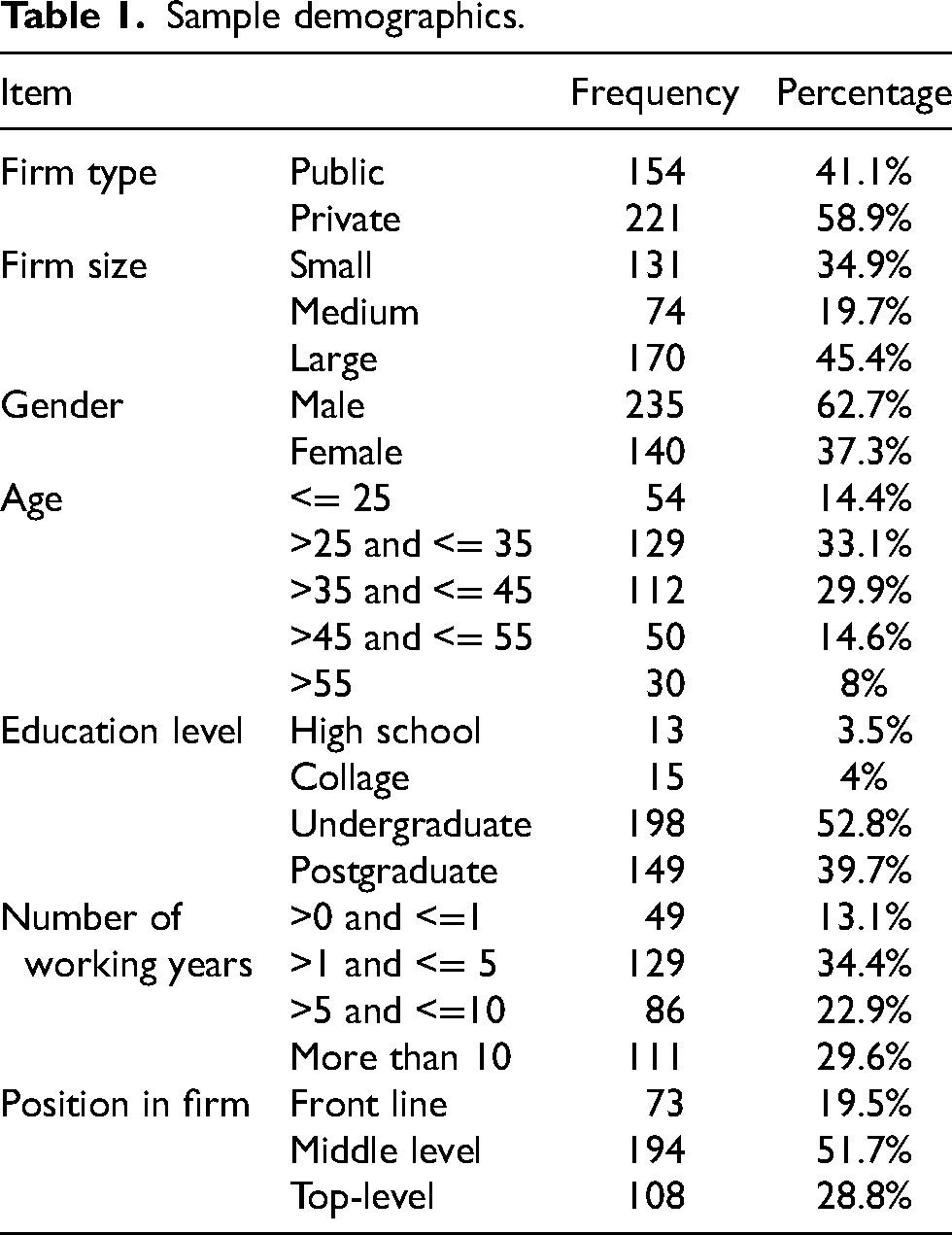
As indicated in Table 1, the analysis of demographic data for the respondents revealed that a majority were male (62.7%). Furthermore, approximately 77.4% of the respondents were aged 44 or younger. In terms of employment, more than half of the respondents were employed in private organizations (58.9%). Of those, 45.4% were affiliated with large organizations boasting over 500 employees, while 19.7% worked in medium-sized organizations, and 34.9% were associated with small organizations. A significant portion of the respondents (92.5%) held at least a bachelor's degree. Regarding their positions within the organizations, the respondents were distributed as follows: front-line level (19.5%), middle level (51.75%), or top-level (28.8%). Additionally, more than half of the respondents (52.5%) had accumulated more than five years of experience with their current organizations. To control the potential effect of “common method variance” (CMV), remedies suggested by Rodríguez-Ardura and Meseguer-Artola (2020) and Podsakoff et al. (2012) were followed and applied throughout the research process. While ex-ante remedies were maintained during the research design and administration phase, ex-post remedies, using Harman's test, were used to estimate the presence of CMV. The findings revealed that only 34% of the total variance could be attributed to the primary factor, which was less than the critical threshold of 50%. Thus, CMV was not a critical issue to confound the research findings. Moreover, the potential of non-response bias was also limited as the difference between the early 50% of responses and the late responses regarding key variables was insignificant (p > 0.5) using a two-tailed t-test (Dirsehan & Cankat, 2021).
Sample demographics.
Results
Measurement model
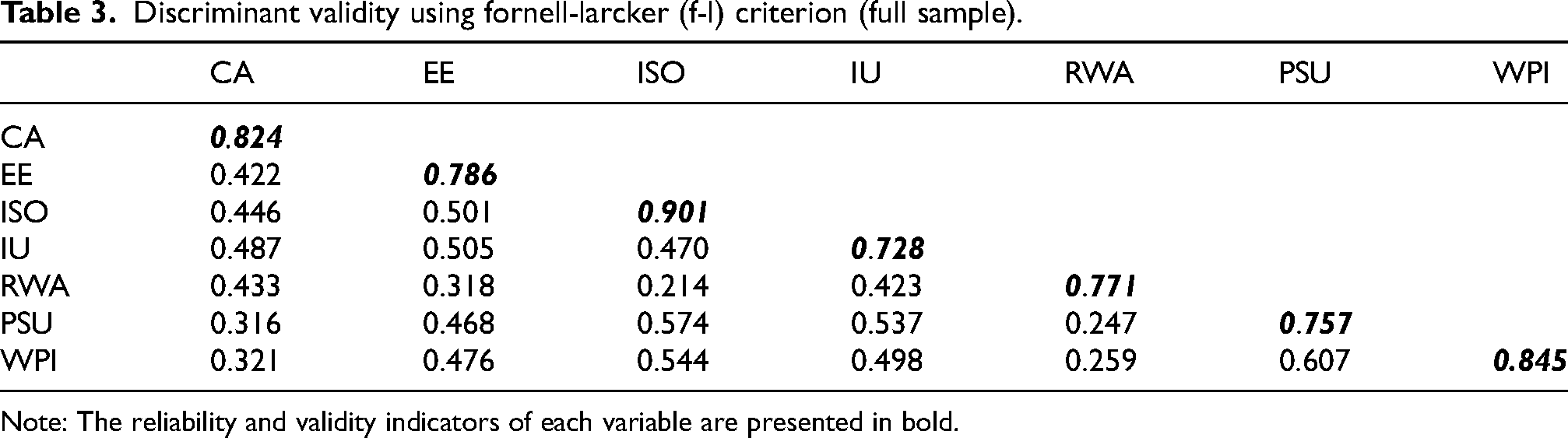
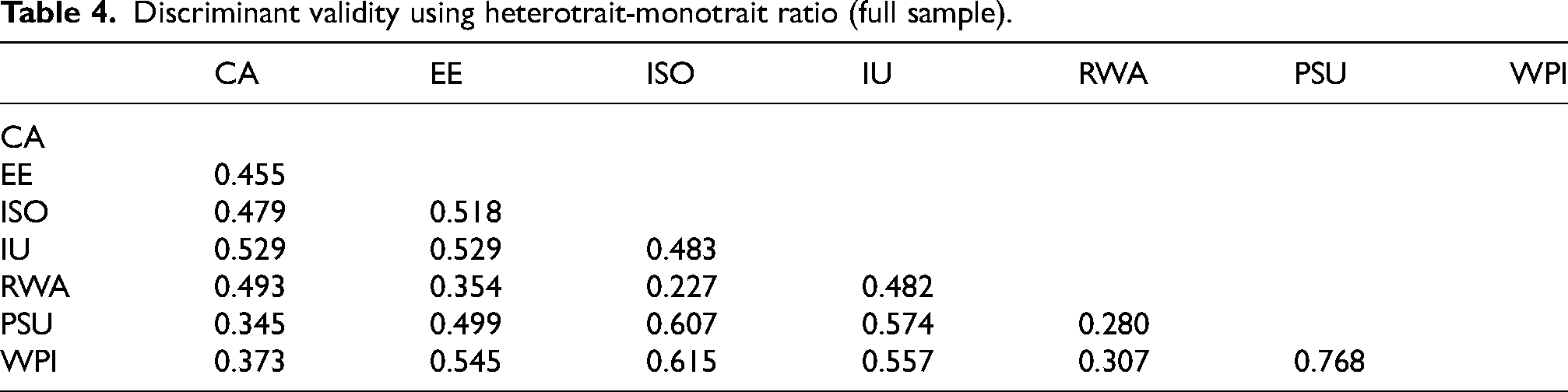
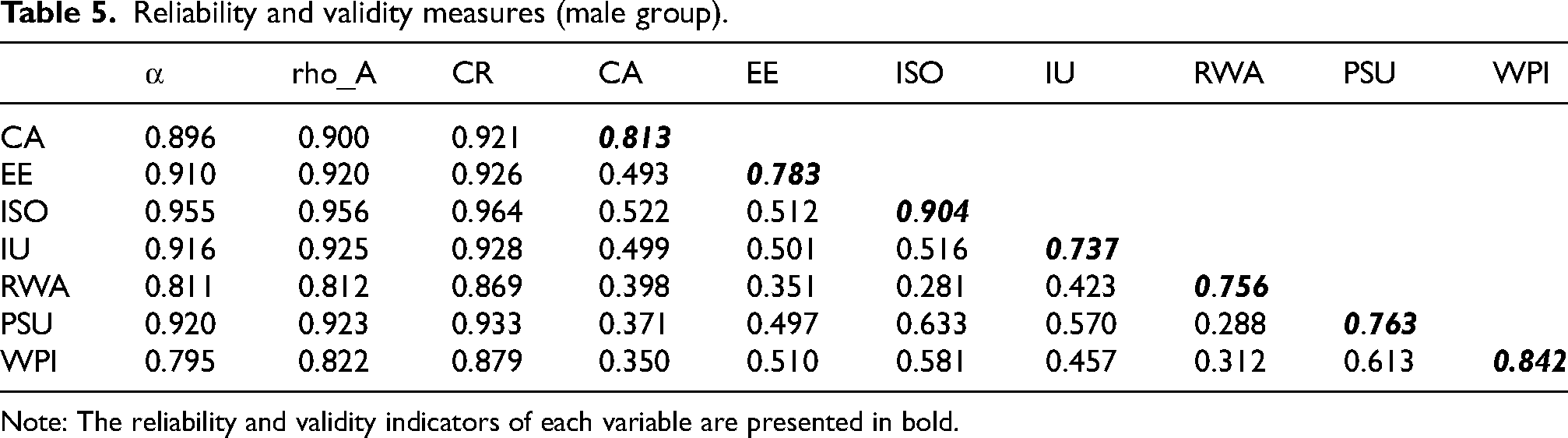
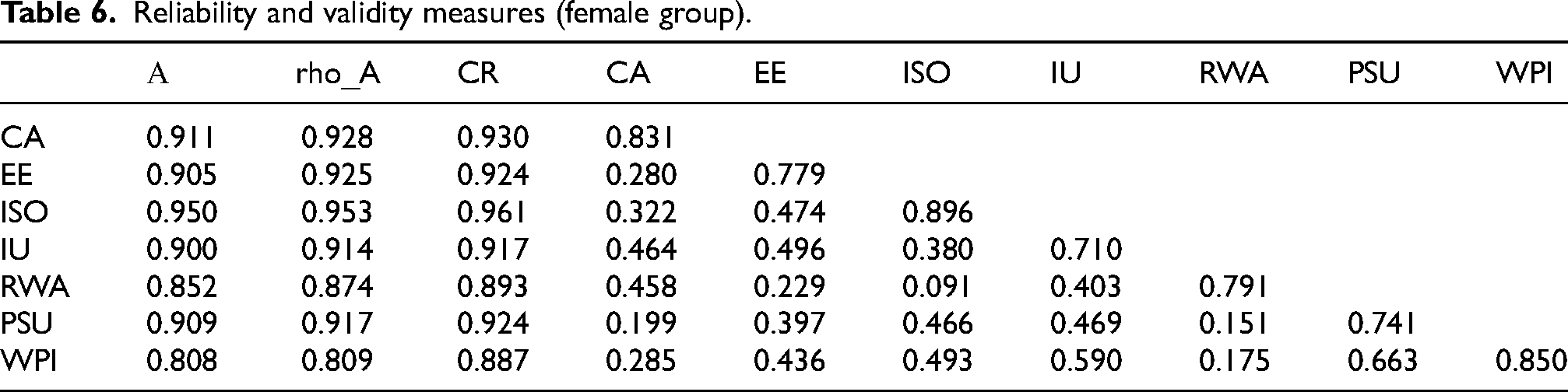
The “Partial Least Squares Structural Equation Modeling” (PLS-SEM) approach was applied to analyze the survey data via the bootstrapping method, which assesses multiple generated models. The measurement model was examined using the “confirmatory factor analysis” (CFA). Figure 2 shows that convergent validity was maintained, with most outer weights surpassing 0.70, and all item loadings were above the threshold value of 0.50 (p < 0.001) (Hair et al., 2010), except for one item from the IU construct which fell below the threshold. As shown in Table 2, construct reliability and validity measures, including “Cronbach's Alpha” (α), rho_A, and “Composite Reliability” (CR) values were above 0.70, and the “average variance extracted” (AVE) values were above 0.50. Regarding the multicollinearity issue, the values of skewness and kurtosis measures ranged from −1 and +1 and the variance inflation factor (VIF) values ranged between 0.2 and 3, indicating a low likelihood of multicollinearity risk (Henseler et al., 2014). Discriminant validity was assessed using the “Fornell-Larcker (F-L) criterion” and “Heterotrait-Monotrait Ratio” (refer to Tables 3 and 4). Table 3 shows that the minimum square root value of the AVE along the diagonal line exceeded the maximum correlation value between latent constructs. The inter-item correlations for the constructs ranged from 0.214 to 0.607, and their squared correlations were all below 0.8, thus meeting the scale criteria (Aboelmaged et al., 2021; Nunnally and Bernstein, 1994). Besides, the sub-models for male and female groups were also assessed (refer to Tables 5 and 6), wherein factor loadings and measures of reliability and validity in both models adequately met the cutoff values mentioned above.
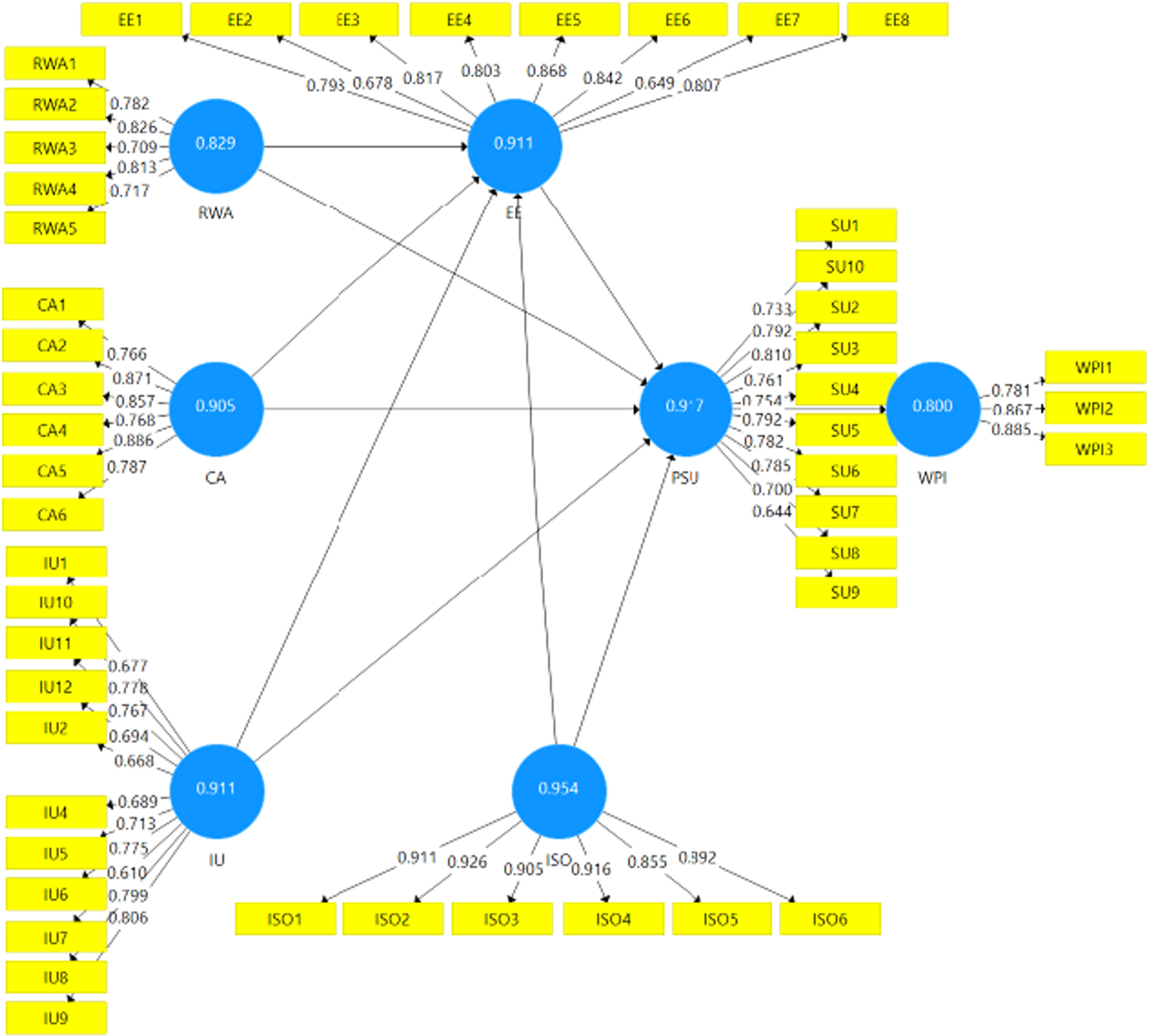
Standardized outer weights (full sample).
Reliability and validity indicators of the full sample.
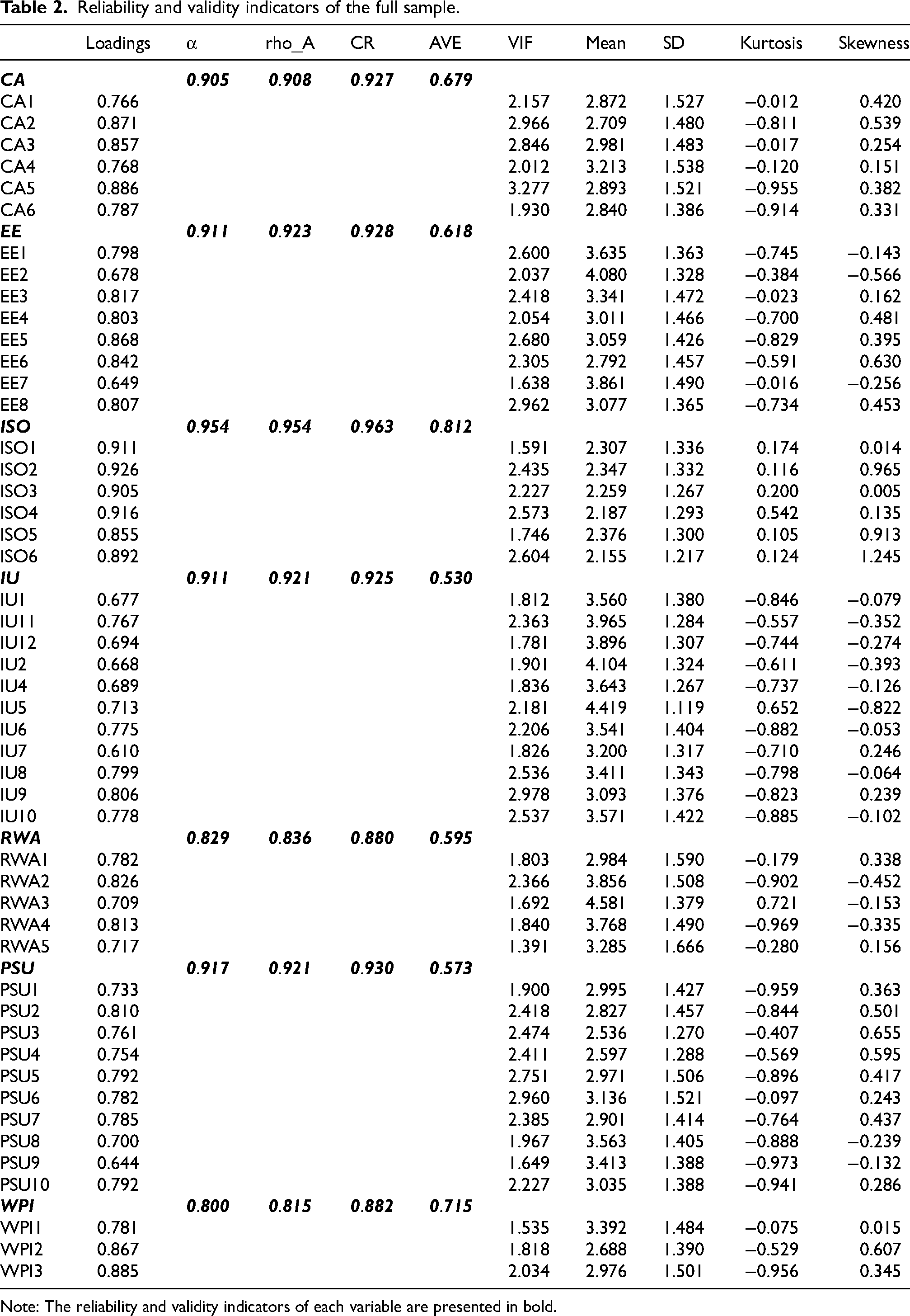
Note: The reliability and validity indicators of each variable are presented in bold.
Discriminant validity using fornell-larcker (f-l) criterion (full sample).
Note: The reliability and validity indicators of each variable are presented in bold.
Discriminant validity using heterotrait-monotrait ratio (full sample).
Reliability and validity measures (male group).
Note: The reliability and validity indicators of each variable are presented in bold.
Reliability and validity measures (female group).
The structural model
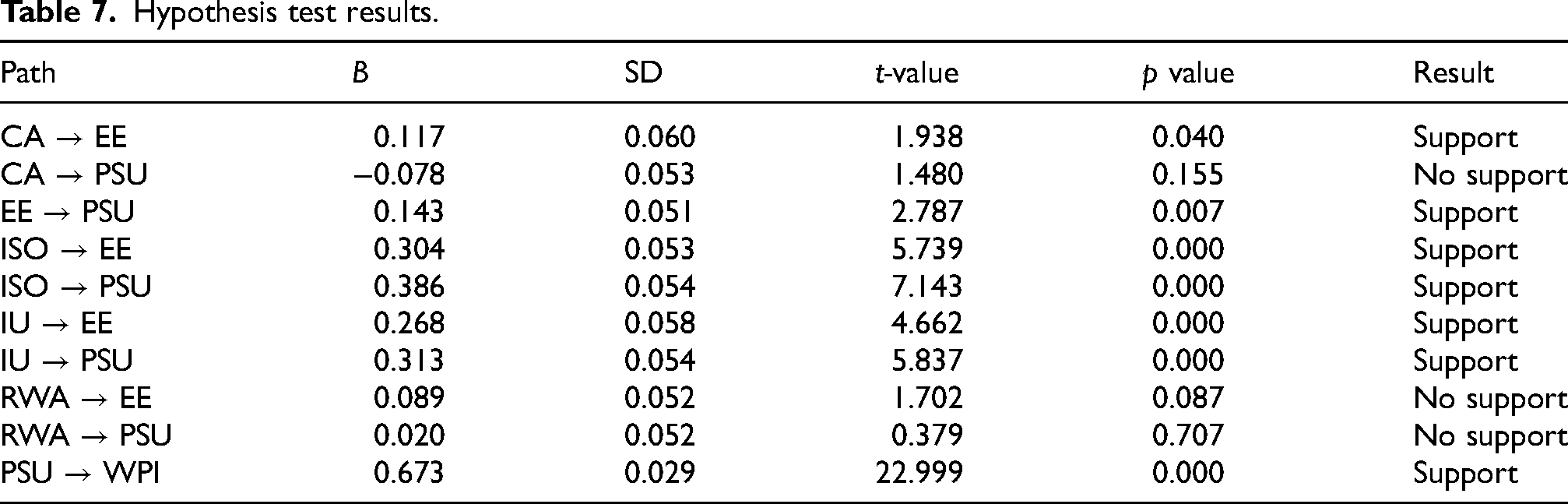
The structural model was constructed by assessing the significance of path coefficients and their predicting power using the bootstrap feature with 1000 generated subsamples in the SmartPLS v3. The results revealed that the model demonstrated an acceptable goodness-of-fit for the hypothesized relationships. Specifically, the estimated value of the SRMR was below 0.08 (0.068), while dULS and dG parameters were below the threshold value of 0.95 (0.926 and 0.902, respectively). the NFI index was closer to 0.90 (Henseler et al., 2014), and the saturated value of χ2 aligned closely with the estimated model, indicating well-fitted model indices (Iacobucci, 2010). Figure 3 shows that PSU exerted a strong and significant influence on WPI and stimulated about 45.2% of its variance (ΔR2), demonstrating support for hypothesis 10. The significant influence of ISO on PSU appeared to be greater than that of EE and both explained about 43.7% of PSU variance, rendering support for hypotheses H8 and H9. The constructive role of ISO in stimulating EE tended to be significant, so hypothesis H7 is supported. Concerning the role of exogenous variables, CA is found to positively lead to EE, hence hypothesis H5 is supported, but CA has not resulted in PSU, which does not support our hypothesis H6. Both EE and PSU appeared to be positively influenced by IU, depicting support for hypotheses H3 and H4. Surprisingly, the expected impact of RWA on both EE and ISO was not significant, hence hypotheses H1 and H2 are not supported. Table 7 presents the hypotheses test results by showing the t-value and the p-value.
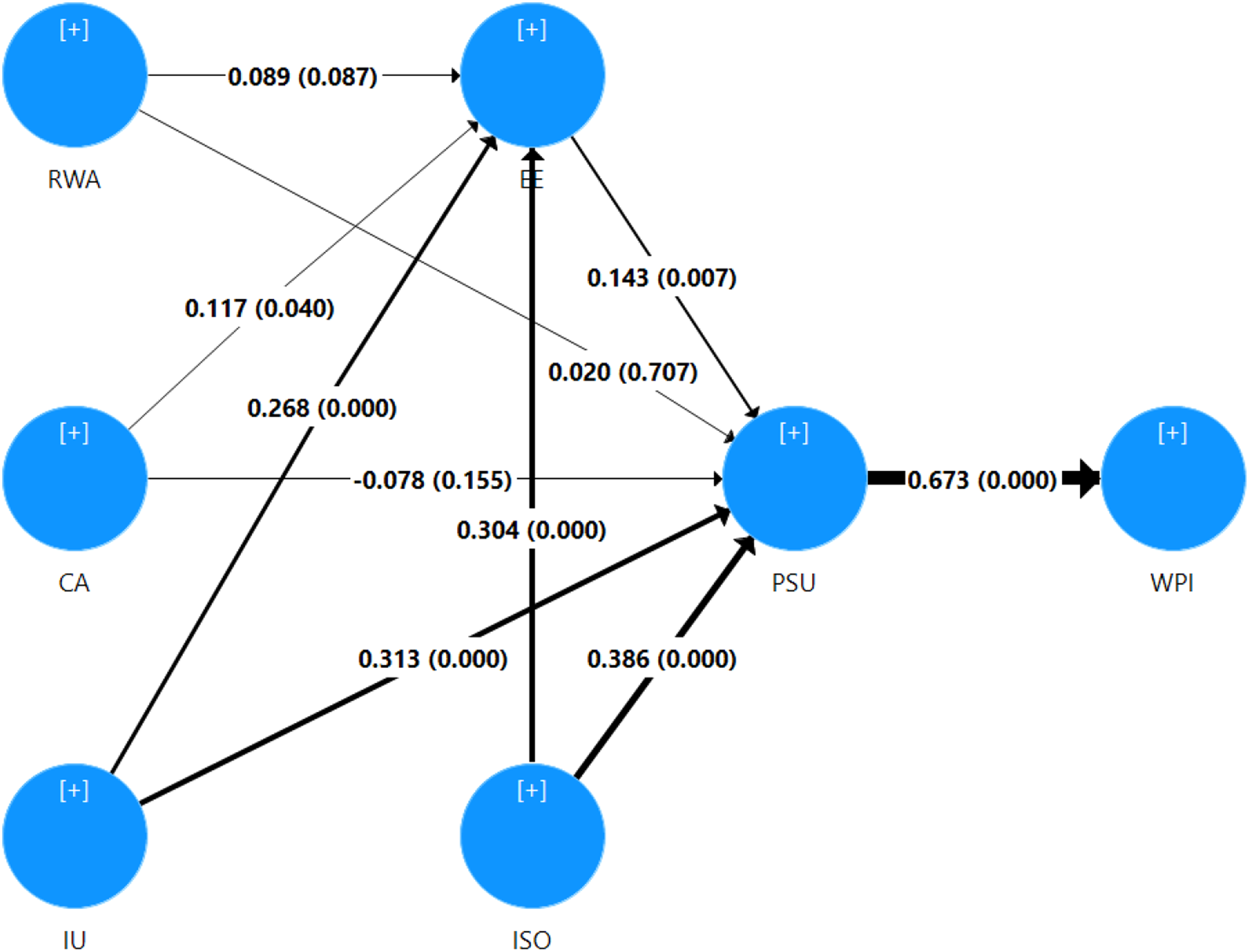
Path coefficients and p-values (full sample).
Hypothesis test results.
The moderating role of gender
The moderating role of gender was assessed by comparing the path estimates of the male sample with the female sample using the “multi-group analysis” method in SmartPLS (Shiau et al. 2019). Figure 4 and Figure 5 show the path coefficients and p-values for male and female groups. Further analysis of the differences using a parametric test, as shown in Table 8, indicated that both groups shared most effects in the structured model except for the influence of CA on EE and EE on SU which appeared to be only significant in the male group (β = 0. 0.206, p < 0.05; β = 0. 0.162, p < 0.01, respectively). However, the results revealed that differences between male and female groups were surprisingly insignificant for all paths in the structured model, rendering no support for hypothesis 11. This result suggests that both females and males use smartphones excessively to reduce the feeling of being socially isolated, not being able to tolerate the uncertainty in their lives and feeling emotionally exhausted in life and at work in an equal manner.
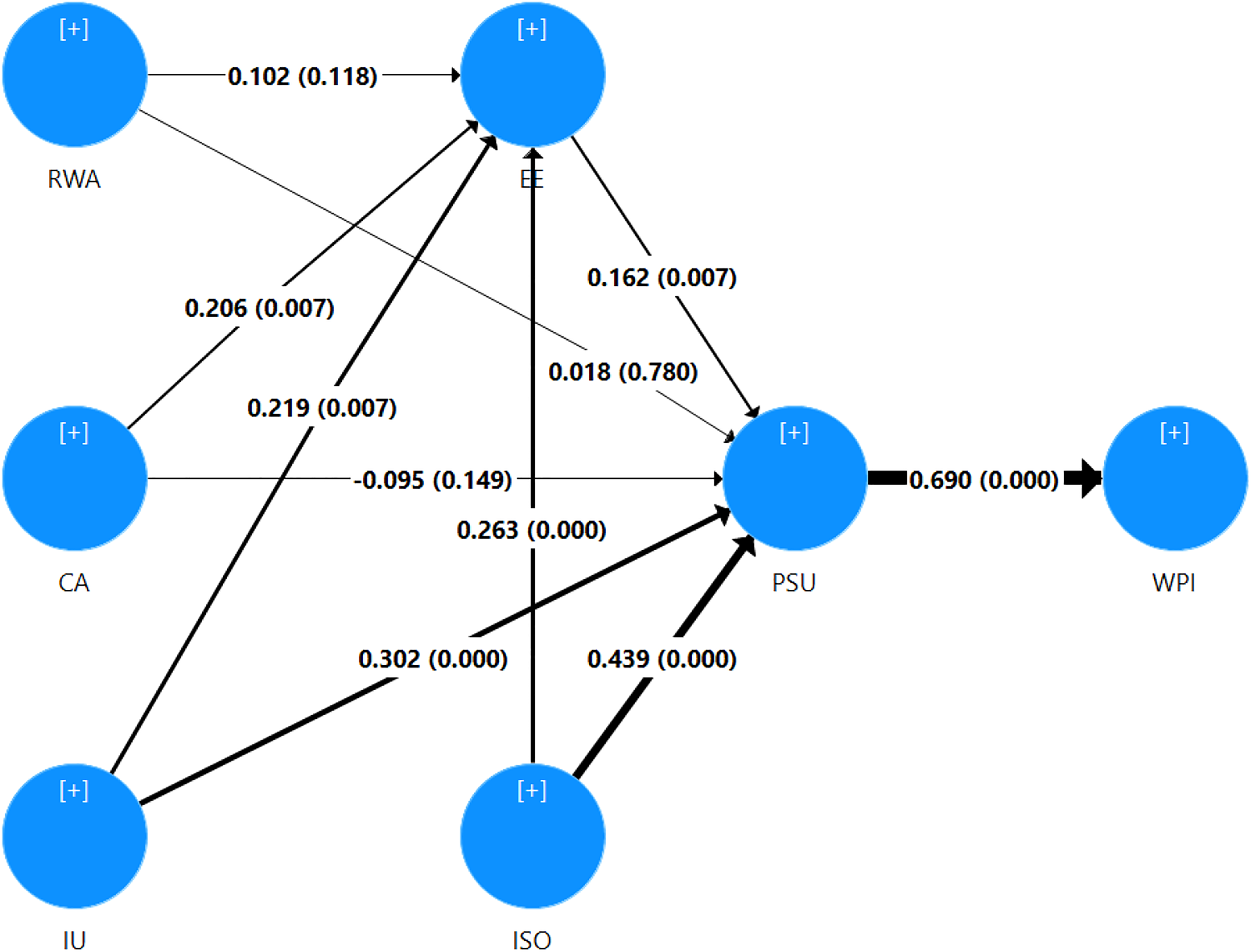
Path coefficients and p-values (male group).
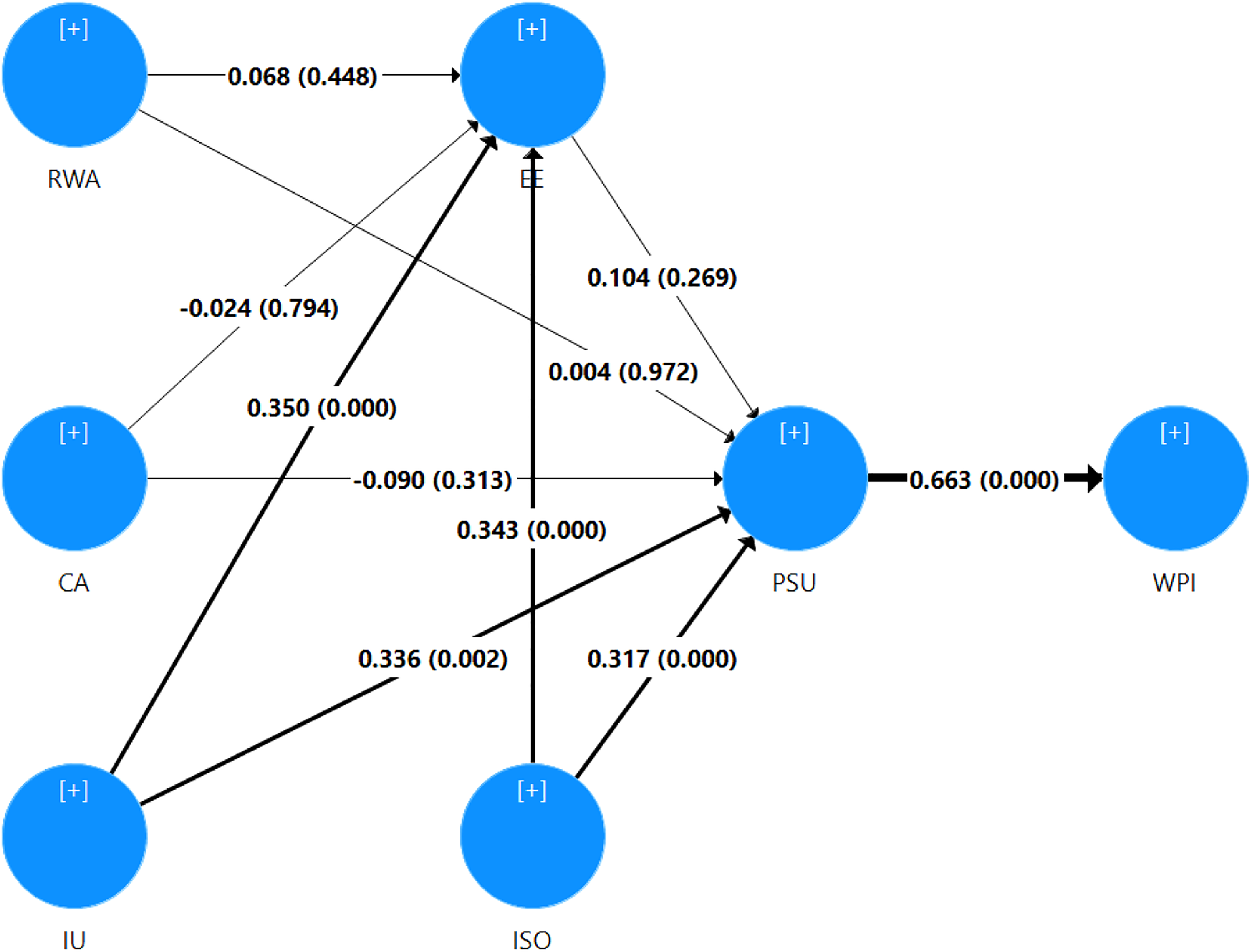
Path coefficients and p-values (female group).
Results of differences between male and female groups.
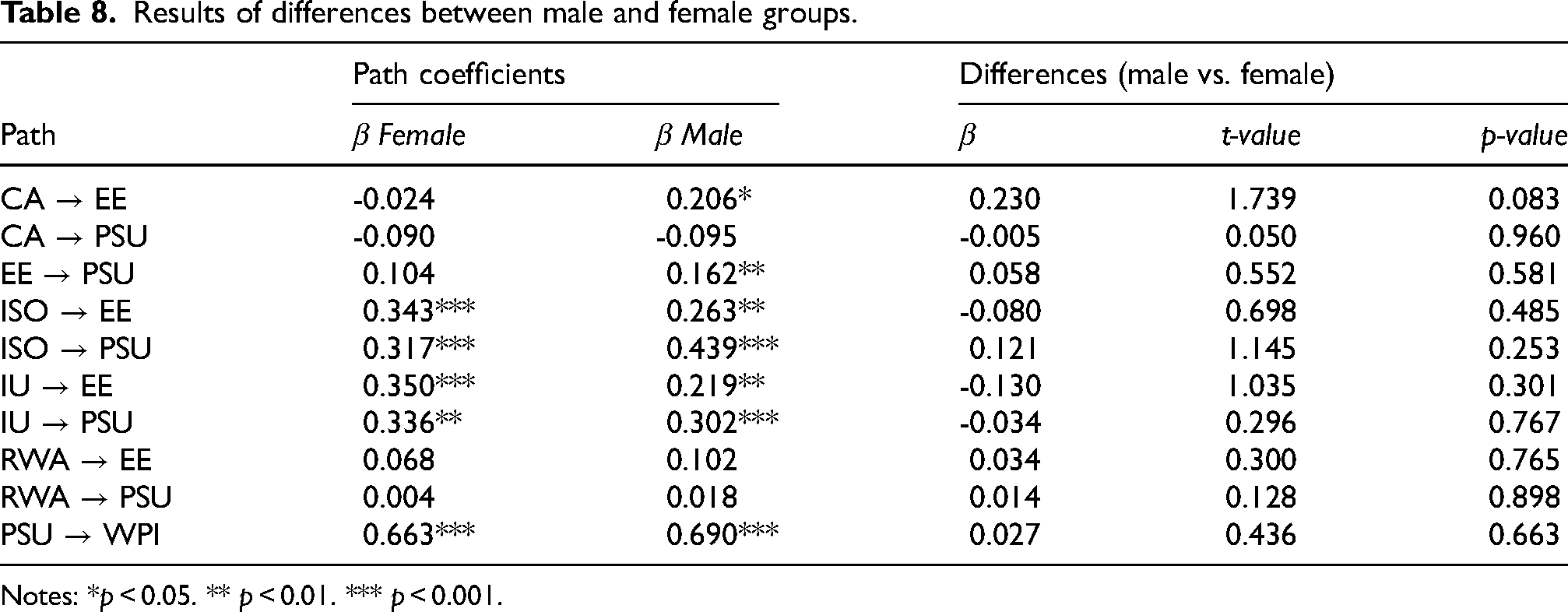
Notes: *p < 0.05. ** p < 0.01. *** p < 0.001.
Discussion
Our study builds on the Compensatory Internet Use Theory, which postulates that individuals can abuse the use of smartphones as a way to cope with real-life difficulties. Hence this study suggests that employees tend to abuse the use of smartphones to help them cope with working remotely, COVID anxiety, uncertainty intolerance, social isolation, and emotional exhaustion. In addition, it also proposes that emotional exhaustion is influenced by working remotely, COVID-19 anxiety, social isolation, and uncertainty intolerance. Finally, we propose that problematic smartphones will affect employees’ work performance. Several of our hypotheses were supported, demonstrating the influence of COVID anxiety, uncertainty intolerance, and social isolation on these relationships.
First, our findings show that remote work arrangement does not have a significant influence on employees’ feelings of emotional exhaustion; thus, H1 is not supported. Also, remote work arrangement has not led to an excessive use of smartphones; thus, H2 is not supported. One plausible explanation for these results is that employees were able to cope with and adapt to working remotely in an easy manner. Working from home has provided many employees with a sense of freedom, reduced their feeling of being constantly monitored by their supervisors, and minimized the stress associated with commuting in traffic. Second, our findings have revealed that excessive smartphone usage is considered a way for employees to alleviate their feelings of uncertainty tolerance and emotional exhaustion, supporting H3 and H4. This result suggests that employees are experiencing emotional difficulties associated with fear of the unknown following the COVID-19 pandemic. This fear prompts them to turn to their smartphones excessively in an attempt to reduce these negative emotions.
Third, our findings have revealed that COVID-19 anxiety positively influences emotional exhaustion but does not result in employees’ excessive smartphone use. Thus, H5 is supported, while H6 is not supported. These findings provide evidence that employees continue to experience emotional exhaustion even as government regulations and procedures ease.
Fourth, our results indicate that social isolation is another factor contributing to emotional exhaustion and excessive smartphone use, supporting hypotheses H7 and H8. These results may be attributed to governments’ restrictions on citizens’ movements as a means of controlling the pandemic during and after COVID-19. Our findings are consistent with prior research which has reported the impact of COVID-19 on the psychological and physical health of individuals (Zhan et al., 2021; Wu et al. 2023). From its inception until 2022, the spread of COVID-19 and its variants have caused an abrupt change in an individual's daily life, resulting in increased levels of mental health problems associated with anxiety, depression, and fear of the unknown.
Fifth, our study has reported that emotional exhaustion contributes to excessive smartphone usage among employees, thereby supporting hypothesis H9. This result aligns with previous studies, which have reported that feeling emotionally drained and lacking energy can lead employees to engage in various online non-work-related activities (Aghaz and Sheikh, 2016; Koay, 2018). Employees are still experiencing the lingering effects of the post-COVID period, which can manifest as emotional exhaustion. Consequently, excessive smartphone use can be seen as a coping mechanism for employees dealing with emotional exhaustion at work.
Sixth, our finding has found that PSU significantly affects employees’ work performance; thus, hypothesis H10 is supported. This finding suggests that, even though employees abuse smartphones to cope with various life issues, it still has a detrimental effect on their work performance. Similarly, Jiang (2014) reported that Internet addiction among young people in China has a significant influence on their academic performance. In a similar vein, Huma et al. (2017) argued that employees using the Internet for non-work activities during work hours negatively affects the overall organization's performance due to decreased productivity. Hence, this study corroborates previous research by providing evidence that PSU has a significant effect on employees’ work performance. In fact, the relationship between these two factors is considered the strongest (β=0.673, see Table 7), underscoring the severity of employees’ behavior and its impact on their work performance.
Finally, this study has also examined the moderating role of gender and discovered that the differences between male and female groups were surprisingly insignificant for all paths in the structured model. Hence, hypothesis H11 is not supported. This result could be attributed to the fact that the COVID-19 pandemic had a similar influence on both male and female employees since both genders have faced the same circumstances. Hence, we can conclude that both females and males perceive the use of PSU as a means to alleviate feeling of social isolation, intolerance of uncertainty, and emotional exhaustion. In addition, our results indicate that PSU affects the work performance of both genders, suggesting that PSU is a common issue among females and males that organizations need to address. Similar results have been reported by Onuoha (2019), who found that gender did not significantly affect PSU use among university students in Nigeria. Chen et al. (2017) also reported that there are no significant gender differences in the popularity of smartphone addiction among medical college students.
Implications and directions for future research
This study offers several significant contributions to both theory and practice. From a theoretical perspective, our research is among the first to investigate the excessive use of smartphones as a coping strategy for various challenges in employees’ lives during the post-COVID phase and its subsequent impact on their work performance. This study has expanded our perspective of human–smartphone interaction by highlighting the profound influence of smartphones on people's daily lives. Furthermore, our research has improved the limited existing knowledge on the role of PSU as a coping mechanism in employee's work life, thereby advancing the field of PSU. The study has also identified the antecedents of PSU, including uncertainty tolerance, emotional exhaustion, social isolation, and examined their consequences on work performance. In the future, researchers can build upon our model to explore other factors, such as boredom and depression, which may be associated with smartphone use as a means to mitigate these negative emotions.
The results of this study provide several practical implications for both employees and their organizations in the post-COVID-19 era. Our findings shed light on the reasons why employees abuse the use of smartphones in the workplace.
First, our study has demonstrated that intolerance of uncertainty and social isolation lead to emotional exhaustion among employees. Given that these negative feelings may have been intensified by the COVID-19 pandemic and continue into the post-COVID-19 era, it is essential for organizations to take action to eliminate these emotions among their employees. Management can organize social activities designed to alleviate workplace tension and uplift the spirits of their employees. These activities can target various stressors in the workplace, ultimately enhancing both the mental and physical well-being of employees while reducing negative emotions. Additionally, they can also address the issue of excessive smartphone use during work hours, thus motivating employees to remain focused and productive.
Second, managers should consider allowing their employees to use their smartphones for non-work-related activities when employees have a heavy workload during specific periods. The negative emotions that arise during work can lead employees to resort to excessive smartphone usage as a coping strategy, which may ultimately enhance their work performance in future tasks. Since completely eliminating excessive smartphone use for non-work-related activities is practically unmanageable, organizations must strike a balance between employees’ personal needs and work productivity. Thus, organizations can permit their employees to use their smartphones under certain conditions to prevent their misuse of this freedom (Glassman et al., 2015). A study by Coker (2011) found that leisure browsing on the Internet in the workplace can have a positive effect on worker productivity, as long as it does not exceed more than 12% of work time. Similarly, the study of Andel et al. (2019) demonstrated that employees who engage in non-work-related Internet activities can use this as a coping mechanism to address stressful working conditions. Thus, organizations may consider allowing employees to engage in non-work related activities for short periods as micro-breaks to combat emotional exhaustion, which would be a more effective strategy (Koay and Soh, 2018).
Third, organizations should always ensure that their employees work in a healthy environment, particularly during the post-COVID-19 era. Therefore, it is recommended to hire a counselor or a psychotherapist to assist employees who feel isolated, have trouble handling uncertainty, or are emotionally exhausted. A therapist can help employees alleviate negative feelings and behaviors ultimately reducing their excessive use of smartphones and, consequently, improving their work performance.
Fourth, organizations could organize social support groups for their employees as a form of psychological treatment to help them cope with various stressful conditions in both work and life. Employees engaging in PSU may benefit from these support groups to manage their constant smartphone dependency.
While this study has extended the limited research on PSU among employees during the post-COVID-19 period, it has several limitations that should be considered. First, our study focused on employees working in one country, namely the UAE. Future studies may apply this model to other countries with different cultures to allow for a better generalization of the findings. Second, our sample targeted working individuals, hence, future research may target other populations, such as university students, which may yield different results. Finally, this study examined the role of smartphones as a coping mechanism for emotional exhaustion, social isolation, and intolerance of uncertainty. Further research could investigate additional factors, such as escapism and depression.
Footnotes
Appendix A - The research constructs and their items.
| Constructs | Items | Source(s) |
|---|---|---|
| Remote work arrangement | RWA1. I spend all my time at home during my work | Susilo (2020) |
| RWA2. I communicate with other people remotely for my work | ||
| RWA3. I use the Internet to do my work as much as possible | ||
| RWA4. I work outside of the physical presence of my colleagues | ||
| RWA5. I do not do any physical travel to do my work | ||
| Intolerance of uncertainty | IU1. Unexpected events upset me greatly | Wilson et al. (2020) |
| IU2. It frustrates me not to have all the information I need | ||
| *IU3. One should always look ahead to avoid surprises | ||
| IU4. A small, unforeseen event can spoil everything, even with the best planning | ||
| IU5. I always want to know what the future will have for me | ||
| IU6. I can’t stand being taken by surprise | ||
| IU7. I should be able to organize everything in advance | ||
| IU8. Uncertainty keeps me from living a full life | ||
| IU9. When it's time to act, uncertainty paralyzes me | ||
| IU10. When I am uncertain, I can’t function very well | ||
| IU11. The smallest doubt can stop me from acting | ||
| IU12. I must get away from all uncertain situations | ||
| COVID-19 anxiety | CA1. I do not want to leave the house because of the risk of getting infected by the COVID-19 pandemic | Raza et al. (2021) |
| CA2. I am concerned that I may get sick from the COVID-19 pandemic during the next 6 months | ||
| CA3. I am feeling anxious about the COVID-19 pandemic | ||
| CA4. I am concerned that someone in my family may get sick from the COVID-19 pandemic during the next 6 months | ||
| CA5. I am scared about getting infected by the COVID-19 pandemic | ||
| CA6. I see the possibility that the Covid-19 pandemic will break out in the area where I live | ||
| Social isolation | Si1. I use my smartphone because I have nobody to talk to | Raza et al. (2021) |
| Si2. I use my smartphone because I lack companionship | ||
| Si3. I use my smartphone because there is no one I can turn to | ||
| Si4. I use my smartphone because I feel completely alone | ||
| Si5. I use my smartphone because my social relationships are superficial | ||
| Si6. I use my smartphone because I feel isolated from others | ||
| Emotional exhaustion | Ee1. I feel emotionally drained from my work | Chen and Eyoun (2021) |
| Ee2. I feel tired at the end of the workday | ||
| Ee3. I feel exhausted when I get up in the morning and must face another day on the job | ||
| Ee4. Working with people directly puts too much stress on me | ||
| Ee5. I feel burned out from my work | ||
| Ee6. I feel frustrated by my job | ||
| Ee7. I feel I am working too hard on my job | ||
| Ee8. Working with people all day is really a strain for me | ||
| Problematic smartphone use | PSU1. I will never give up using my smartphone even when my daily life is already greatly affected by it | Kwon et al. (2013) |
| PSU2. I have my smartphone in my mind even when I am not using it | ||
| PSU3. I missed planned work due to smartphone use | ||
| PSU4. I have a hard time concentrating at work due to smartphone use | ||
| PSU5. My life would be empty without my smartphone | ||
| PSU6. I won’t be able to stand not having a smartphone | ||
| PSU7. I feel impatient and anxious when I am not holding my smartphone | ||
| PSU8. I constantly check my smartphone so as not to miss conversations with other people | ||
| PSU9. I can get rid of stress with a smartphone | ||
| PSU10. I have tried repeatedly to shorten my smartphone use time, but failing all the time | ||
| Work performance issues | WPI1. Using my smartphone affects my work | Hong et al. (2012) |
| WPI2. I neglect work to spend more time on my smartphone | ||
| WPI3. My work performance and concentration are affected by my smartphone usage |
*Note: Item is dropped for low factor loading.
Acknowledgment
This research was funded by a competitive research grant (No. 2202150319) from the University of Sharjah, United Arab Emirates.
Declaration of conflicting interests
The author(s) declared no potential conflicts of interest with respect to the research, authorship, and/or publication of this article.
