







Abstract
Social media addiction has become alarmingly serious among numerous users and led to considerable psychological and behavioral issues. This study examines the formation of addiction, with a particular focus on university students, to gain a great understanding of how social media addiction works. Based on a socio-technical systems framework, this study develops a model to explore how social and technical factors influence social media addiction. A survey involving 265 participants was conducted to examine our research model. Findings indicate that perceived irreplaceability has a good explanation and predictive power for social media addiction. However, the relationship between functional dependence and social relationship is not significant. Additionally, social factors (i.e., fear of missing out and sense of belonging) influence perceived irreplaceability, whereas technical factors (i.e., utilitarian, social, and hedonic values) affect functional dependence. Theoretical and practical implications of preventing social media addiction are also discussed in this study.
Keywords
Introduction
Social media provides users with a variety of functions, not only for social interaction but also for entertainment and work (Andreassen et al., 2016; Allahverdi, 2022). Social media includes technologies that help users interact and collaborate with others and overcome the constraints of space and time (Farshid et al., 2011; Liu and Ma, 2020a). Such technologies are mobile tools and applications that allow users to selectively create or consume content that interests them, according to their wishes and purposes. Kaplan and Haenlein (2010) argued that social media involves three different components: the concept, media, and social interface. The above definition implies that social media can be referred to as social technology. Many psychological and behavioral problems, including social media addiction, are certainly rooted in unregulated social media use.
From an individual perspective, previous research has elucidated the relationship among social anxiety, problematic Internet use, and loneliness (Caplan, 2006; Huang et al., 2023; Liu and Ma, 2020a, 2020b). Individuals indulged in social media may experience a decline in productivity and negative emotions, such as anxiety or depressive feelings. This argument is consistent with other research that examined the connection between social networking sites (SNSs) and depression (Błachnio et al., 2015). Moreno et al. (2011) reported that college students with depressive symptoms actively participate in Facebook and share their personal issues with others. Moreover, symptoms of underlying psychiatric disorders are revealed to be related to social networking addiction (Andreassen et al., 2016; Acar et al., 2022). Therefore, factors that cause social media addiction and the methods to quit this problematic behavior should be identified.
Scholars and practitioners have paid increasing attention to the dark side of social media (Cao et al., 2018; Nusrat et al., 2021; Saleem, Feng and Luqman, 2021). However, only a few scholars have discovered its exact underlying formation mechanism (Demircioğlu and Köse,, 2021). Personality factors have been suggested to be related to individuals’ addiction to SNSs (Wang et al., 2012). Tang et al. (2016) noted that people's personalities and how they treat online interpersonal relationships may accurately predict whether they will become addicted to Facebook. However, the existing literature mainly focused on the consequences and effects of social media addiction and paid less attention to the formation of social media addiction (Turel, 2015; Moqbel and Kock, 2018; Xue et al., 2018). We should make additional efforts to elucidate the underlying mechanisms of social media addiction to greatly utilize the benefits of social media and avoid its negative effects. Therefore, this study aims to address the following research question: What are the causes of social media addiction? Based on the socio-technical systems framework, this study develops a holistic model to examine the effects of social and technical factors on the development of social media addiction.
From a social perspective, perceived irreplaceability arises from the perceived unique benefits of addictive behaviors (Wang et al., 2015). Previous studies showed that the relationship between fear of missing out and addictive mobile phone use is the strongest (Wolniewicz et al., 2018). Furthermore, sense of belonging reflects individuals’ perception of positive membership in a virtual community, whereas Facebook utilization is motivated by the need to belong (Nadkarni and Hofmann, 2012). We hypothesize that perceived irreplaceability has a positive effect on social media addiction and explore the effect of fear of missing out and sense of belonging on social media addiction by influencing perceived irreplaceability.
From a technical perspective, the technical factor used to describe the level or extent of interdependence between users and social media platforms is functional dependence on social media platforms (Wan et al., 2017). In this study, we hypothesize that functional dependence is positively related to the development of social media addiction. The relationship between utilitarian, social, and hedonic values and addictive behavior is theorized by influencing functional dependence on social media.
Currently, Gong et al. (2020) explored the causes of social media addiction from the perspective of the cognitive-behavioral model. Brand et al. (2019) provided a theoretical basis for the generation and clinical practice of addictive behavior from an individual's perspective. This study provides a different entry point to the study of social media addiction from a socio-technical systems perspective, enriching previous research.
Theoretical background
Social media addiction
Schou Andreassen and Pallesen (2014) defined social media addiction as the uncontrollable urge to log in and use social media and to invest so much energy in social networks where real relationships are neglected and mental health is reduced. Social media addiction involves the vital components of addiction, which consist mainly of seven parts: salience, mood, modification, tolerance, withdrawal, conflict, and relapse (Griffiths, 2005). To escape the pressures of real life or to release their subconscious personalities (Rheingold, 1993), individuals may choose to escape reality by immersing themselves in personal networks of relationships formed in online spaces such as virtual communities, leading to social media addiction (Young, 1998). Gong et al. (2020) found that sense of belonging and habit positively influence social and hedonic benefits, which further leads to addictive behavior. Moreover, social media addiction can be associated with social media disorder, which is different from excessive usage. Specifically, excessive usage is perhaps only derived from deficient self-regulation. On this basis, previous research suggested that behavioral patterns, called media addictions, are initially derived from deficient regulated media behavior, which evolves gradually from normally impulsive media usage types into compulsive media consumption (LaRose et al., 2003). In other words, social media addiction is considerably related to psychological and emotional dependence (Turel et al.,, 2011).
In the present study, we introduce socio-technical systems as a framework in our research model to explain the underlying mechanism of social media addiction given the socio-technical information system nature of social media. This study can advance our understanding of the development of social media addiction behaviors from the social and technical aspects of social media (Wan et al., 2017).
Socio-technical systems theory
The theoretical base of the hypothesized model is the socio-technical systems theory, which is initially described as understanding an organization from the interrelatedness of social and technical subsystems (Trist and Bamforth, 1951; Pasmore et al., 1982). Socio-technical systems posit that organizations consist of people and technology, and they affect each other in producing products or services and operating a business (Pasmore et al., 1982). Particularly, the social system emphasizes the relationships between people and their attributes, including attitudes, expectations, and skills, whereas the technical system is comprised of tools, techniques, procedures, knowledge, and devices to accomplish tasks (Trist and Bamforth, 1951; Pasmore et al., 1982). Generally, social and technical sides are separated from each other but interdependent in the need to improve synchronously two sides to acquire the best performance (Trist, 1981). Dabhilkar and Åhlström (2013) assumed that the two sides may have a positive interaction, thereby obtaining great outcomes.
As a useful framework, socio-technical systems have been widely employed in prior literature to understand various technology usage behaviors of users. For example, Kwahk and Ahn (2010) investigated the effects of attitude toward change and computer self-efficacy as socio-technical factors on users’ enterprise resource planning system adoption. Chai and Kim (2012) explored the knowledge contribution behavior of online social networking website users from social and technical factors. Wang, Kang and Fu (2013) examined the roles of technical and network effect factors in determining microblog users’ acceptance behavior by extending the motivational model with socio-technical theory. Wan et al. (2017) applied the socio-technical systems framework to investigate the effects of social and technical factors on social media users’ donation behavior.
With the rapid development of mobile information technology and smartphones, people become increasingly dependent on social media, and the level of use has been increasing over time, from acceptance to post-adoption usage including continued, excessive, and even addictive use (Zhou, 2011; Zhu and Chang, 2014; Li and Lin, 2018; Masood et al., 2020). Regardless of the development of usage behavior, the essential factors that influence people's social media usage behavior still originate from people and technology. For instance, Masood et al. (2020) confirmed four technology characteristics as determinants of excessive SNS use. Gong, Yu and Luqman (2020) noted that individuals’ sense of belonging and habit could trigger mobile SNS addiction through their perceived benefits. Therefore, socio-technical systems theory can be applied to explain negative social media use behaviors, such as social media addiction. Specifically, in this study, we examine the influences of social (i.e., fear of missing out and sense of belonging) and technical (i.e., utilitarian, social, and hedonic values) factors on social media addiction through perceived irreplaceability and functional dependence.
Research model and hypotheses
Our research model is presented in Figure 1 based on the socio-technical framework.
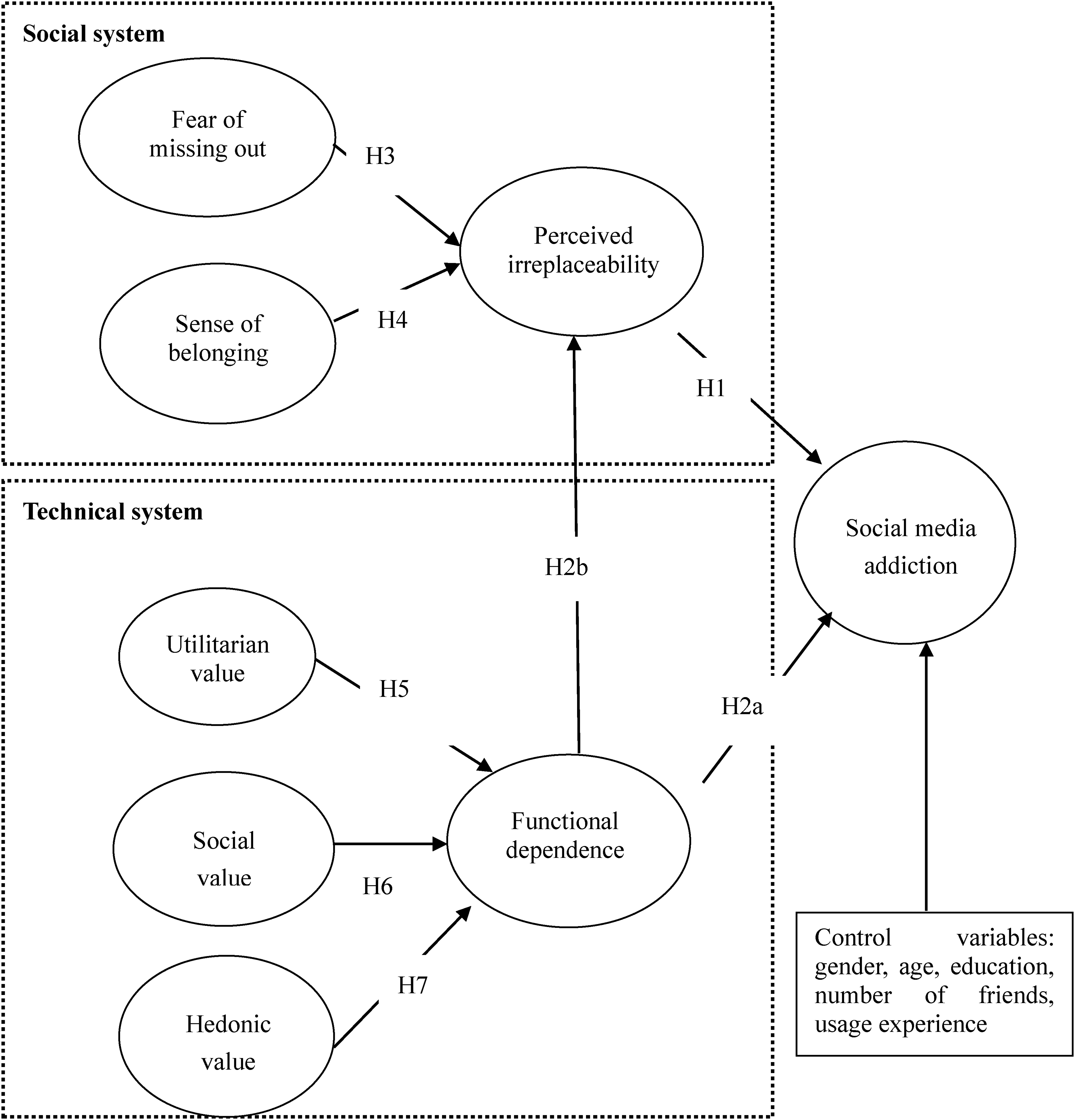
Research model.
Perceived irreplaceability
In consumer behavior literature, perceived irreplaceability focuses on a symbolic meaning that exists in a unique product for which no alternative choice exists (Schifferstein and Zwartkruis-Pelgrim, 2008). The sustainable consumption of consumers can be predicted when consumers perceive the irreplaceability of the product owing to psychological dependence. This result reflects the enjoyment of the benefits obtained from the product and the desire to retain it for as long as possible (Gong et al., 2019). In this context, consumers will not readily acknowledge other similar products of less importance.
Applied to the social media context, perceived irreplaceability refers to the psychological hook of attributing unique benefits or values to addictive behaviors (Wang, Lee and Hua, 2015) and is positively associated with psychological dependence. Among these, perceived benefits are an important factor in perceived irreplaceability in online communities. Perceived benefits include two different forms, hedonic and utilitarian values, where both are powerful determinants that promote the maintenance of user relationships (Scarpi, 2012). Scholars have demonstrated a positive relationship between perceived irreplaceability and perceived usefulness. Perceived usefulness is defined as the degree or extent to which users perceive that a particular social media can improve their performance (Davis, 1989), which creates conditions for users’ social media addiction. Correspondingly, Liu et al. (2014) suggested that perceived irreplaceability has a significant positive effect on the intention to continue using. Therefore, perceived irreplaceability may shape the propensity for social media addiction. Many studies have confirmed that perceived irreplaceability is an indicator of psychological dependence or intention to continue using (Wang, Lee and Hua, 2015; Liu et al., 2014). From the perspective of addicts, when they are prevented from using social media, adverse outcomes ensue, and withdrawal symptoms occur. This belief exacerbates the level of perceived irreplaceability, causing them to continue engaging in social media and eventually develop addictive tendencies. Therefore, we propose the following hypothesis:
Perceived irreplaceability is positively related to social media addiction.
Functional dependence
In the existing literature, functional dependence is defined as the degree to which an environment and condition support the achievement of goals (Jackson et al., 1996; Trauer and Ryan, 2005), whereas the degree of dependence greatly influences the work styles and attitudes of organizational members (Morris and Steers, 1980). Wan et al. (2017) considered functional dependence in social media as a technical factor describing the degree of interaction between users and social media platforms. As a platform for the online environment, social media constantly introduces new features to meet user needs and supports the achievement of user goals. In the social media context, the higher the degree of functional dependence, the greater the likelihood that users will become attached to it. When users stop using social media, they are likely to anticipate the bad outcomes of non-use before taking action. “I would be frustrated if I could not use SNS services” and “My social relationships would be ruined if I stopped using SNS” (Baek et al., 2013). This expectation exacerbates users’ functional dependence on social media, leading to repetitive and problematic social media use. Furthermore, Internet or social media addiction continues to grow as individuals become highly reliant on technology (Longstreet and Brooks, 2017). Functional dependence may contribute to social media addiction. Users gain job satisfaction (Hanna et al., 2017) or life satisfaction (Hawi and Samaha, 2017) through the repeated use of social media, which affects the perceived value or benefits of social media. In this case, users are likely to attribute value or benefits to the addictive use of social media. Therefore, the following hypotheses are proposed:
Functional dependence is positively related to social media addiction.
Functional dependence is positively related to perceived irreplaceability.
Social system
A social system involves people and relationships among them, along with their related attributes such as attitudes, expectations, and skills (Trist and Bamforth, 1951; Pasmore et al., 1982). In the context of this study, we identify two constructs, namely, fear of missing out and sense of belonging, as characteristics of the social system. In particular, fear of missing out is related to one's perception of fear of falling behind (Pirkkalainen et al., 2022), and its nature is a social comparison with others. Sense of belonging involves a feeling of belief and expectation that one fits in a social group or community and has a place there (Ali et al., 2020). Sense of belonging measures one's involvement in a social media service and reflects an intrinsic relationship between people and the group to which they belong (Chai and Kim, 2012; Wang et al., 2013).
Fear of missing out
Fear of missing out refers to a pervasive concern of being absent from a particular affair while other people acquire rewarding experiences; it is characterized that a person who suffers from fear of missing out tends to constantly pay close attention to others’ behaviors (Przybylski et al., 2013). In other words, a person can feel uneasy and all-consuming when missing out on what peers are doing or possessing less or something worse than peers (Abel et al., 2016). A growing consensus among scholars states that fear of missing out is positively associated with problematic use and addiction to social media (Oberst et al., 2017; Rozgonjuk et al., 2020). Beyens et al. (2016) indicated that increased stress related to Facebook use may lead to increased fear of missing out. In other words, the higher the fear of missing out, the more stress the users will suffer.
In the social media context, users who experience fear of missing out are inclined to spend time and energy engaging in social media to fulfill their social needs. Beyens et al. (2016) indicated that fear of missing out is positively relevant to the need for popularity among peers. This need for popularity may induce users to feel that social media is the only place where they feel cared for or are concerned, thereby gradually resulting in a psychological hook. Hence, we hypothesize the following:
Fear of missing out is positively related to perceived irreplaceability.
Sense of belonging
As another social factor in our model, sense of belonging refers to the experiences that a person is involved in a system or environment, wherein individuals consider themselves as an indispensable component of that system or environment (Hagerty et al., 1996). Research showed that several members identify with a community to feel a sense of belonging (Alexander Hars, 2002; Ali et al., 2020). Virtual communities are considered groups of consumers of different sizes who meet and interact online to achieve common goals for their members (Dholakia et al., 2004). Therefore, we consider that social media users who identify with a virtual community develop a sense of belonging, which still has social attributes even when social media platforms are used as the context for the study. Sense of belonging can be met through social media platforms, which may affect the frequency of social media use. Individuals are likely to be obsessed with addictive Facebook use owing to the need for social assertion, which is characterized as the need to depend on someone else for association and friendship to feel connected (Lee-Won et al., 2015).
In the social media context, the need for belonging and social assurance may drive users to a great possibility of becoming addicted to social media, perceiving social media as a place where they can sustain affiliation and companionship. Hence, we presume that a sense of belonging created by social media will induce users to perceive that its unique values cannot be replaced by other activities. Accordingly, we hypothesize the following:
Sense of belonging is positively related to perceived irreplaceability.
Technical system
In this study, we identify three constructs, namely, utilitarian, social, and hedonic values, as characteristics of the technical system. As suggested in previous research, the perception of social media value primarily determines social media usage (Ali-Hassan et al., 2015; Chung and Koo, 2015).
Utilitarian value
Utilitarian value refers to users’ cognitive evaluation, which is generated after users make comments on the utility of a social virtual world service concerning goal accomplishment and trouble to settle. Utilitarian value can be purposively task-oriented and fulfill needs (Adomaviciute, 2013). From the perspective of fulfilling needs, users who share the problems they are dealing with are likely to receive immediate responses and effective solutions, thereby making them feel the utilitarian value provided by social media forms. Furthermore, as suggested in previous studies, hedonic and utilitarian values positively affect continuance intention to social media (Ashraf et al., 2019). SNS adoption is determined by hedonic and utilitarian motivations (Ernst et al., 2013). In other words, the hedonic and utilitarian values of social media exert significant influence on users’ behaviors.
In the social media context, users obtain a cognitive evaluation of the utility of social media after purpose fulfillment and problem-solving. The more perceived the utilitarian value is, the more satisfied the users will be with the utility of social media, thereby leading to functional dependence on social media. Hence, the following hypothesis is proposed:
Users’ perceived utilitarian value is positively related to functional dependence.
Social value
Social value is defined as the judgment of benefits arising from accomplishing communicative purposes and social networking or keeping in touch and sharing with others (Zhou et al., 2014). Social value is derived from relationships and can be characterized as building relationships with the person that people want to connect with. The features and capabilities of social media make finding like-minded people or communities easy, which people may have neglected before, thereby extending interpersonal networking. They can also make people enjoy the pleasure of making friends and communicating with others. Users relying heavily on social media for social needs are inclined to be obsessed with the high-level use of social media.
Moreover, users can acquire social support from remote friends or strangers through social media, which is positively related to the social compensation (e.g., recognition gaining and relationship maintenance) motive for Internet use (Leung, 2006). Therefore, the more perceived the social value is, the greater the possibility of developing dependence will be. Hence, the following hypothesis is proposed:
Users’ perceived social value is positively related to functional dependence.
Hedonic value
Hedonic value emerges when users are in affirmative feelings or emotional states (e.g., entertaining and playfulness), originating from the admiration of an experience only in essence. Previous studies suggested that hedonic value has a positive association with users’ continuance use intention (Hsiao et al., 2016) or purchase intention in the social commerce context (Gan and Wang, 2017). In addition, as a typical hedonic value, enjoyment is related to not only mobile SNS addiction but also high engagement in mobile SNS (Yang et al., 2016b). In other words, the more perceived the hedonic value is, the more users will immerse themselves in the process of social media usage and will have a great possibility of developing functional dependence. Therefore, we hypothesize that:
Users’ perceived hedonic value is positively related to functional dependence.
Methods
Measurement and data collection
We modified items from the earlier literature to fit the specific research context of our study to measure the constructs used in the proposed model. Items for social media addiction, perceived irreplaceability, functional dependence, fear of missing out, sense of belonging, utilitarian and hedonic values, and social value were adapted from Turel and Serenko (2012), Subramani (2004), Antioco et al. (2008), Przybylski et al. (2013), Koh et al. (2003), Griffin et al. (2000), and Zhou et al. (2014), respectively. All items were graded on a five-point Likert scale that ranged from strongly disagree (1) to strongly agree (5). Gender, age, education, number of friends, and usage experience were included as control variables in our research model.
We used a back-translation process to translate the original items into Chinese because they were written in English. Based on inputs from multiple researchers and social media users, we have made changes to the Chinese questionnaire. In addition, before the formal large-scale survey, we conducted a pilot study with 25 respondents to ensure the scale's reliability and validity. According to the study results, the values of Cronbach's alpha were all above 0.7, suggesting strong internal consistency. We also modified the questionnaire phrasing based on feedback from the pilot study participants. The final scales are presented in Appendix A.
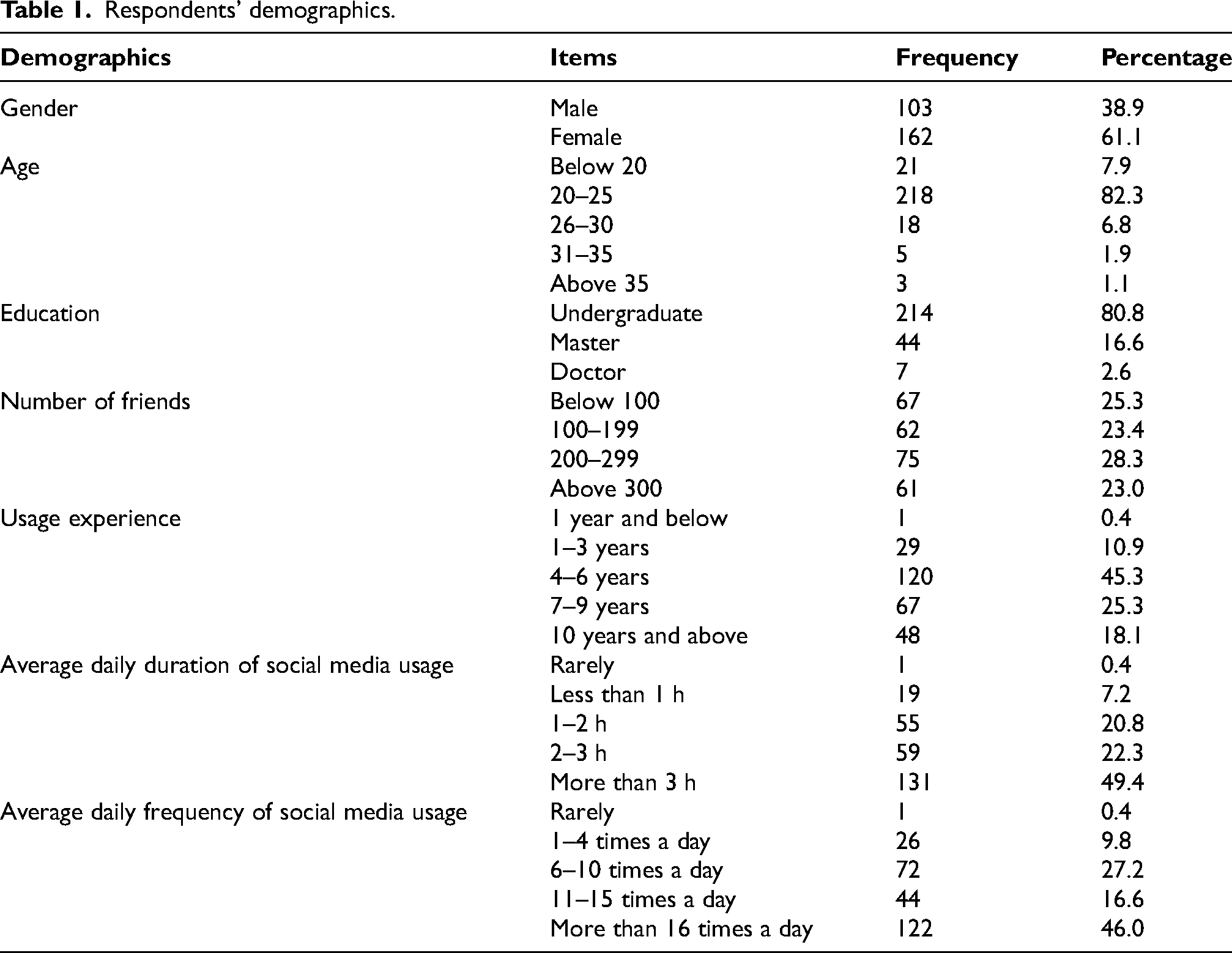
Social media users in China were selected as the subjects of this study. Target social media services included SNSs (e.g., Qzone and Renren), IM (e.g., WeChat and QQ), microblogs (e.g., Sina Weibo), online encyclopedias (e.g., Baidu Encyclopedia and Wikipedia), and online communities (e.g., Douban and Zhihu). We recruited Wenjuanxing (wjx.cn), the leading online survey service company in China with 2.6 million registered members, to dispense our surveys online. The participants who completed the questionnaire received a monetary reward via a lucky draw. The collection of data took three weeks to complete from September 2019 to October 2019. We eliminated 28 responses from social media users who submitted incomplete questionnaires, finished responses in a too short time, and answered all questions with the same choice. We were left with 265 valid responses for the final data analysis. Non-response bias was tested by comparing the means of all variables and demographics for early and late respondents. The t-test results showed no significant differences between the two groups of samples. Table 1 describes the demographic details of the respondents. The sample included approximately 61% female and 39% male respondents. The majority of the individuals were between the ages of 20 and 25 years, having either a bachelor's or a master's degree.
Respondents’ demographics.
Reliability and validity
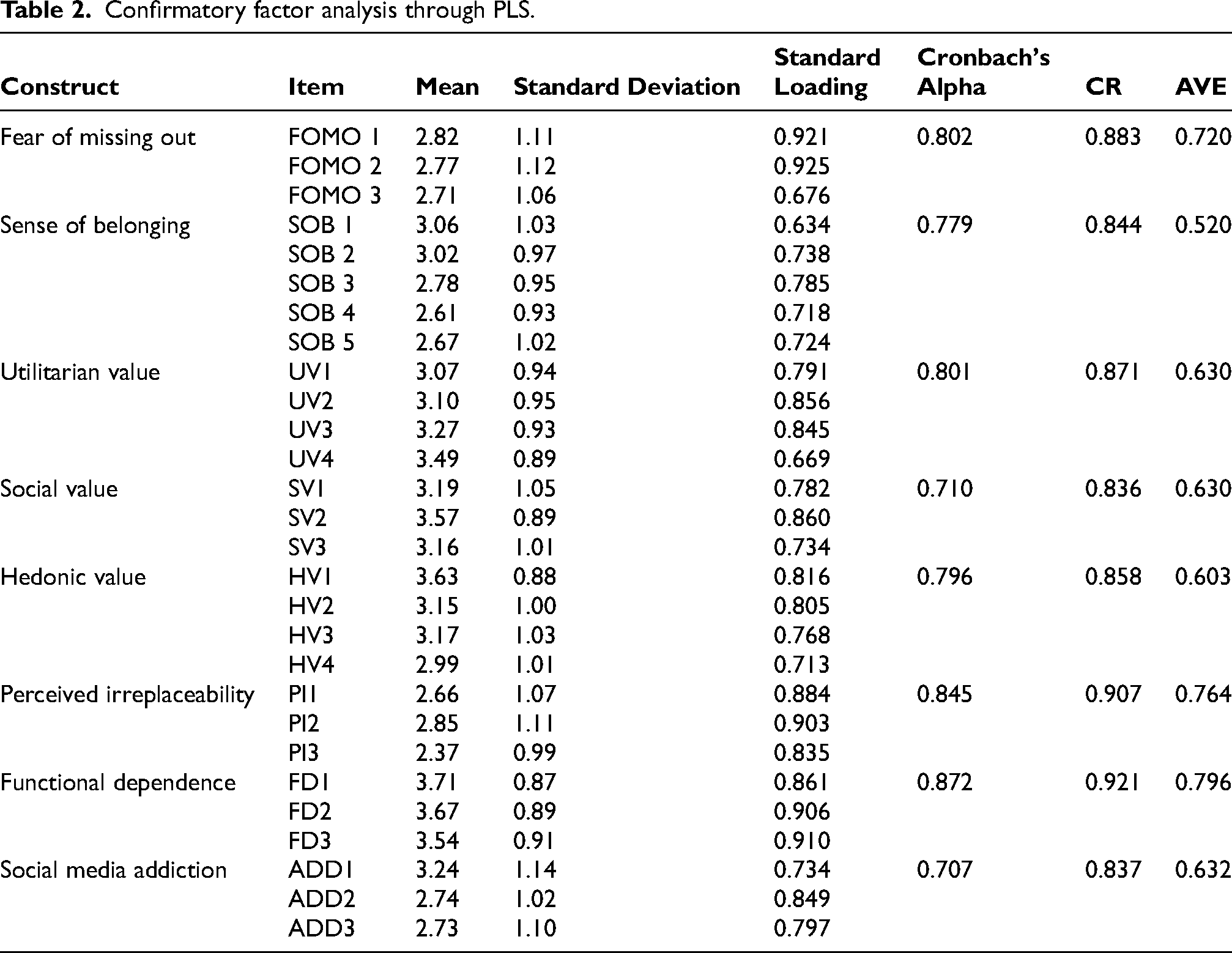
The factorial validity for constructs was assessed using a principal component factor analysis, which showed eight factors with eigenvalues above 1. With 68.8% of the total variance explained, these factors were identified. No significant cross-loadings existed (e.g., cases where an item loads higher on the other factor than the anticipated one), and all item loadings on the expected factors were greater than 0.5, suggesting strong convergent and discriminant validity. All Cronbach's alpha values were greater than 0.7, indicating that the scales were extremely reliable. The uniform loading of items ranged from 0.634 to 0.921, according to confirmatory factor analysis tests (Table 2). Each construct's average variance extracted (AVE) was greater than 0.5, suggesting that the scales had strong convergent validity. All of the composite reliabilities (CRs) were greater than 0.7, meaning that the scales were extremely reliable.
Confirmatory factor analysis through PLS.
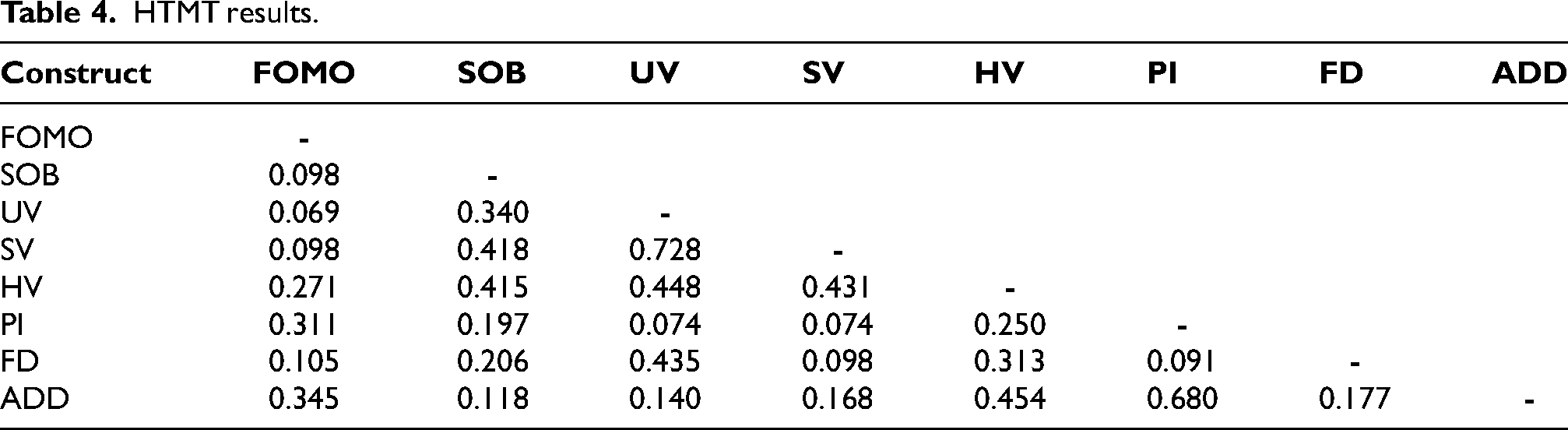
The square roots of the AVEs of each construct are represented in the diagonal elements of Table 3, which shows the correlations among the latent constructs. The diagonal elements all had higher values than their corresponding correlation coefficients with other constructs. In addition, as shown in Table 4, the values of the Heterotrait-monotrait (HTMT) were lower than the threshold of 0.85 (Henseler et al., 2015). These results indicated that the scales have a high level of discriminant validity. Given that the data were self-reported from a single source, common method bias (CMB) could occur. First, we used Harman's one-factor test to determine this bias. A total of 68.8% of the variance was clarified by multiple factors. The first variable compensated for only 20.8% of the overall variance, implying that no single factor was responsible for the majority of the variation. Second, we conducted a method factor in the model by using the approach developed by Liang et al. (2007). The results showed that the substantive factors explain 65.9% of the overall variance, whereas the method factor only explains 0.8% of the overall variance, demonstrating no CMB in this study. Thus, CMB would not be a serious risk to the validity of this study.
Correlation coefficient matrix.
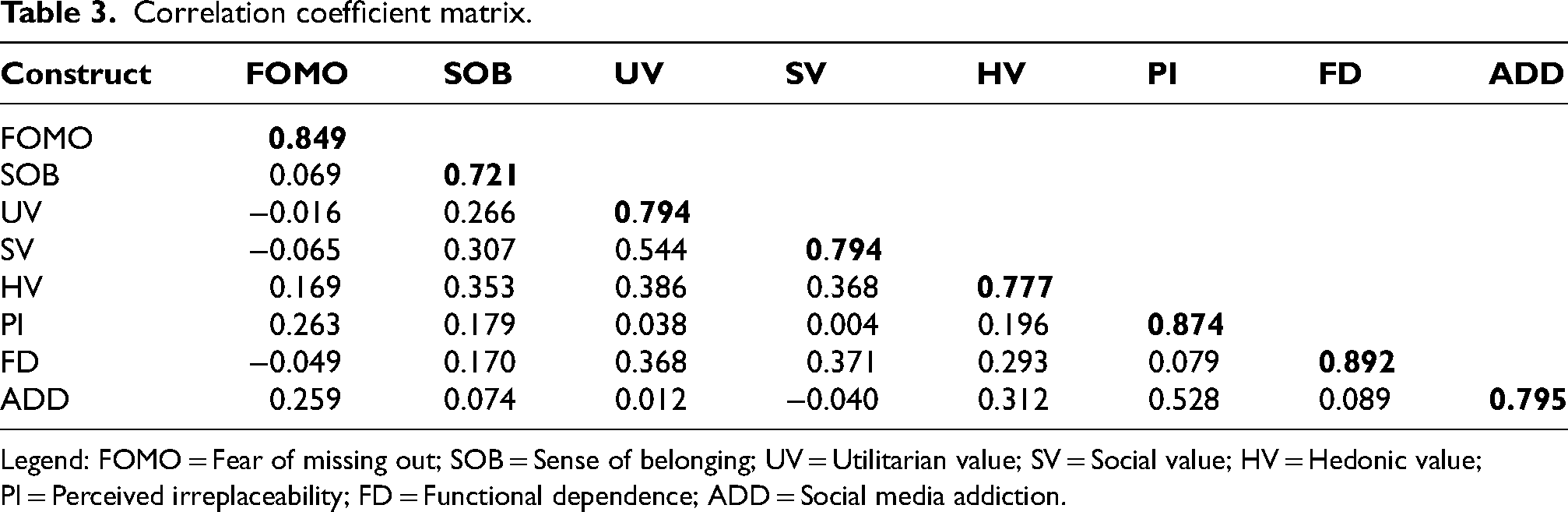
Legend: FOMO = Fear of missing out; SOB = Sense of belonging; UV = Utilitarian value; SV = Social value; HV = Hedonic value; PI = Perceived irreplaceability; FD = Functional dependence; ADD = Social media addiction.
HTMT results.
Hypothesis tests
The standardized coefficients and their significance for each hypothesis are shown in Figure 2. A significant amount (30.3%) of the variation in social media addiction was explained by the proposed model. Specifically, perceived irreplaceability (β = 0.509, p < 0.001) exerted a significant effect on social media addiction. Thus, H1 was supported. The positive effect of functional dependence on social media addiction and perceived irreplaceability was insignificant. Thus, H2a and H2b were not supported. In addition, fear of missing out (β = 0.256, p < 0.001) and sense of belonging (β = 0.150, p < 0.001) exerted significant effects on perceived irreplaceability. Thus, H3 and H4 were supported. Finally, the three types of perceived value on social media (i.e., utilitarian value [β = 0.200, p < 0.01], social value [β = 0.211, p < 0.01], and hedonic value [β = 0.138, p < 0.05]) exerted positive effects on functional dependence. Thus, H5, H6, and H7 were supported. In terms of control variables, only gender was significantly positively related to social media addiction. Other control variables had no significant effect on social media addiction.
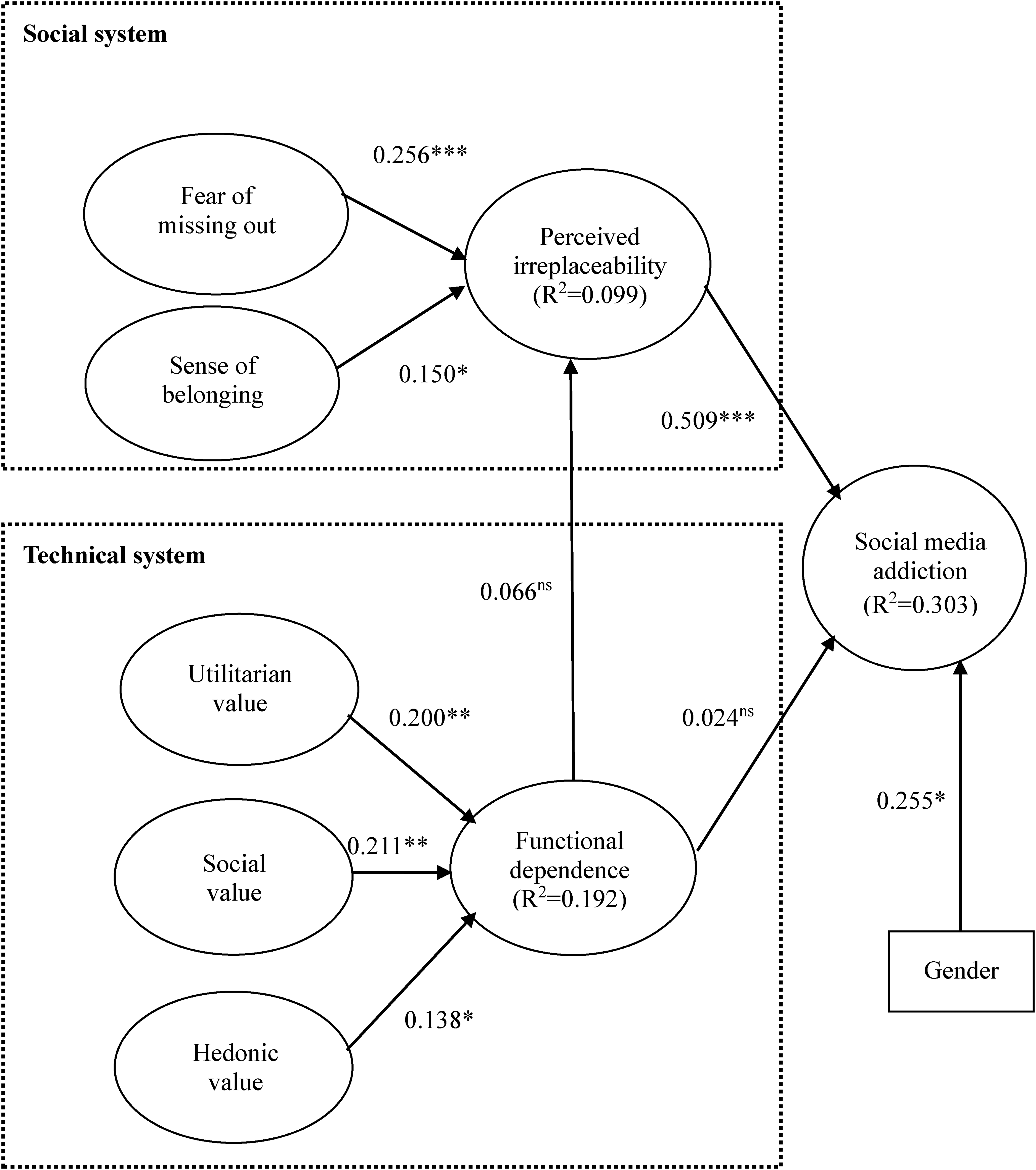
Results of hypotheses tests.
Discussion and implications
Key findings
This study aims to examine the formation mechanism of social media addiction from the perspective of socio-technical systems. The data collected from the sample largely support the research model, partially answering the research question, What are the causes of social media addiction? The results reveal key findings as follows.
We find that fear osf missing out and sense of belonging can act as social media addiction distal contributors, leading to addictive behavior by positively influencing perceived irreplaceability. This finding suggests that fear of missing out and sense of belonging can enable users to derive pleasure from using social media and thus engage in persistent behavior toward the platform. The ease of access to social media can satisfy many types of user needs, which further stimulates addictive behavior. In particular, fear of missing out causes individuals to constantly pay attention to social media information to keep up with their peers, maximize their self-worth, and obtain achievement motivation, which then pushes the use of social media to its limits (Pirkkalainen et al., 2022). Additionally, sense of belonging is associated with online sustained participation behavior (Zhao et al., 2012; Lin et al., 2014), which is the premise of addiction behavior. Therefore, the more users see themselves as members of a particular virtual online community, the more inclined they are to use SNSs over time (Zhou, 2019).
Moreover, our study shows that utilitarian, social, and hedonic values directly influence functional dependence. However, the relationships between functional dependence and perceived irreplaceability and between functional dependence and social media addiction are not significant. According to cognitive-behavioral theory, which has been widely used to investigate pathological use behavior, perceived values and benefits can trigger addiction behavior when they develop into maladaptive cognitions such as perceived irreplaceability (Wang et al., 2015; Gong et al., 2020). In the context of this study, as the technical system provided by social media, three types of values can lead to functional dependence owing to their usefulness and ease of use. However, these technical values are not irreplaceable. Before the emergence of social media, many technical tools (e.g., telephone and email) could also provide these values. In addition, functional dependence does not necessarily result in addiction, which is pathological and has many negative consequences. Functional dependence can lead to active usage, which is non-pathological and has positive aspects (Wan et al., 2017; Wu et al., 2017).
Theoretical implications
This study enriches the existing literature related to the dark side of social media use.
First, the use of a socio-technical perspective provides a theoretical framework for studying the dark side of social media. By identifying mediating effects, our study suggests mechanisms of interaction and association among these dark side variables.
Second, our findings advance the understanding of perceived irreplaceability and functional dependence. In past research, many scholars perceived the important role of irreplaceability in users’ participation in online communities. For example, Jiang (2016) empirically investigated the determinants of perceived irreplaceability in terms of investment and returns, and Liu et al. (2022) argued that perceived irreplaceability enhances the problematic use of mobile SNAs. The present study empirically investigates the determinants and consequences of perceived irreplaceability from a social system perspective. The study finds that functional dependence has a small effect on perceived irreplaceability. This finding provides a new line of research for subsequent studies to explore whether a third variable between the two has a potential influence.
Third, our study confirms a positive association between fear of missing out and sense of belonging and social media addiction. These findings may be context-specific and therefore require further theoretical research into the phenomenon of social media addiction. For example, the mechanisms underlying the formation of addiction can be further explored using social aspects theory (Ngai et al., 2015), and problem behavior theory (Jessor and Jessor, 1977) could enhance the understanding of social media addiction.
Practical implications
Our study has implications for users and service providers of social media. The key finding is that perceived irreplaceability actively contributes to addictive behavior. Social media users should actively manage their behavior to reduce the perception of irreplaceability. For example, they can control the frequency of use and develop alternative methods (e.g., face-to-face communication) (Yang et al., 2016a) to decrease dependence on social media and the likelihood of addiction. From another aspect, users can actively utilize social media's features to facilitate life and work. However, they should be mindful of the extent of their use and avoid excessive consumption that may lead to addiction. Users can enhance self-regulation to control their social media use effectively (Zheng and Lee, 2016). They can reduce unnecessary social activities and limit social media usage time to improve focus on work or life and minimize distractions.
This research may also help social media operators in comprehending the underlying mechanisms of addiction. Consequently, operators should implement measures to mitigate and prevent potential user harm, while pursing healthy and sustainable growth to facilitate user attraction and retention. For instance, social media providers can offer filtering mechanisms that allow users to find interesting and relevant content. Additionally, they can provide optional features to limit communication requests at specific times. Entertainment software can incorporate a compelled exit function to prompt users to take breaks when they have continuously utilized the platform for an extended period.
Limitations and future research
Several limitations in the current study are listed as follows. First, the data collected from our online questionnaire survey are mainly from Chinese university students, which creates a barrier to broader regional and national coverage. Therefore, we should augment the sample size by involving other populations from different cultures and regions to verify the proposed model in the future. Second, a longitudinal analysis should be performed for an ideal research design in different stages. However, we failed to make temporal analyses with the cross-sectional data we collected. Hence, we can carry out a longitudinal study protocol to test the causation of our proposed model. Third, the precise explanation for our unsupported hypotheses is unclear, which requires us to make further investigation and provide a direction for our follow-up study.
Footnotes
Declaration of conflicting interests
The author(s) declared no potential conflicts of interest with respect to the research, authorship, and/or publication of this article.
Funding
The author(s) declared receipt of the following financial support for the research, authorship, and/or publication of this article: The authors gratefully acknowledge the financial support by the Shanghai University Sailing Program and the National Natural Science Foundation of China (No. 72371093).
