







Abstract
The purpose of this study is to reveal the current situation of research data management (RDM) services within the framework of data management responsibilities, policies, budget and resource competencies in libraries at research universities in Türkiye. The study also aims to present the potential of researchers from research universities to store and share their research data in data archives.
Within the scope of the research, interviews were conducted with 15 participants who are responsible or have the potential to be responsible for the processes related to the RDM. In addition, the records of researchers, who are members of research universities, transferred to Zenodo and Aperta were examined within the scope of the study. According to the results, the amount of shared data sets in Zenodo and Aperta was quite small. However, almost all of the data transferred to these data archives is open access. Findings based on participant opinions showed that tools and techniques such as cloud storage, modern techniques, devices, and service providers, as well as resources such as budget, infrastructure and personnel for RDM are not sufficient at research universities in Türkiye. It is thought that this study will draw attention to the benefits of RDM services for universities by revealing what kind of roles the libraries affiliated with research universities play in the process of RDM.
Keywords
Introduction
Today, a growing number of researchers are producing and taking advantage of large data in the course of their research due to widespread use of high-performance computing technology among different disciplines (Cox and Pinfield, 2013). The Organization for Economic Co-operation and Development (OECD, 2007: 13) defines data as “records (digital records, text records, images and sounds) that are the source of scientific research and are also necessary to verify research findings. Borgman (2015: 52) emphasized the importance of data in terms of research and stated that data is the “lifeblood of research”.
The process of accessing, using, organizing, protecting and reusing research data is explained by the concept of RDM (Ashiq et al., 2020). Whyte and Tedds (2011) explain the management of research data as the organization of data, from its introduction into the research cycle through to dissemination and archiving of important results. Management of research data contributes to the conduct of research in a shorter time, in more economical ways and in a more systematic manner, thus providing to the accurate and rapid progress of science (Tonta, 2015). The RDM also affects the scientific productivity of universities. It is seen that some of the universities (Emory, Iowa, Southampton and Nottingham), which have gained an important place with the data management process, contribute to the RDM process with various practices (Gibbs, 2009; Parsons et al., 2013; Akers and Doty, 2013; Rolando et al., 2013).
Undoubtedly, this process has also affected libraries in universities and research institutions, which have started to manage research data as well as research outputs (Cox et al., 2019; Marlina and Purwandari, 2019). Libraries are also expected to provide new tools and methods for processes such as data collection and analysis so that researchers can use data appropriately. Corrall (2012) claim that librarians are “moving towards higher levels of professional research support,” identifying the needs of researchers, and more comprehensive adoption of new service models. Of course, the effective provision of this service depends on the fulfilment of a number of requirements such as having the appropriate technical infrastructure, working with qualified librarians, having an appropriate budget, and encouraging researchers to share their research data. In this study, the current status of RDM services in libraries at research universities in Turkey will be revealed within the framework of data management responsibilities, policies, budget and resource adequacy.
Literature review
According to Aktan (2018: 1), the size, diversity and production speed of the world's data continues to increase at a pace unprecedented in human history. In this increase, in which network-based technologies play a major role, people have become able to produce data at any time. Compared to the past, technological tools used today produce data through sensors. The production of data from different sources has gradually led to the emergence of the concept of big data. Some information published by the Statista platform (Statista, 2022) predicts that by 2025, 463 exabytes of data based on 500 million tweets, approximately 294 billion e-mails, and 5 billion searches on search engines will be produced every day around the world. 95 million photos and videos have been shared on Instagram. It is said that this expression means the same as filling 212,765,957 DVDs every day (Kara, 2019). In fact, these predictions and possibilities point to the concern about how to manage security and storage elements with increasing data. “Revolutionary changes thanks to digital technology” (Carlson, 2006) also lead to differentiation of research processes. While these developments in technology have caused a change in the approach to data, they have also caused concepts such as “data deluge” and “data revolution” to become widespread. The data-intensive research process has been called the “fourth paradigm” of scientific research (Gray et al., 2005; Hey et al., 2009; Tenopir et al., 2011). The paradigm in question is defined as obtaining data through other means and/or producing data through simulations through machines, without being processed by software, and storing the resulting information in the machines (Hey et al., 2009). The fourth paradigm, also called the last paradigm or the e-science process (Hey and Trefethen, 2003: 809; Briney, 2015: 13–14), has made it possible to share increasing amounts of data in practical ways and access the data in question online. “Extremely large and complex” generated data are being accessed, analyzed, and used with comprehensive and innovative attention at an unprecedented pace, providing researchers with new perspectives (National Science Board, 2011: 9). Hanson et al. (2011) argue that in such an environment, everyone should accept the view that “science is data, and data is science.”
Tenopir et al. (2012) argue that as science develops, researchers are turning to more collaborative, data-intensive and computational research, and researchers are faced with various data management requirements. Although managing research data is considered mandatory for researchers, it is claimed that many scientists do not have sufficient knowledge or time to fulfill these requirements (Der, 2015; Federer et al., 2015; Sandve et al., 2013). In some studies (Carlson, 2011; Chowdhury et al., 2017; Kennan and Markauskaite, 2015; Wallis et al., 2013), researchers mostly focus on backing up their data. However, they are not interested in protecting their data in the long term.
Kroll and Forsman (2010: 5) point out that researchers fail to store and manage rapidly increasing documents and data sets. On the other hand, in various studies (Tenopir et al., 2011; Scaramozzino et al., 2012: 359–360; Stamatoplos et al., 2016: 157; Aydinoglu et al., 2017: 278), it has been revealed that researchers have a positive view on sharing their data in any way. All this suggests that although researchers are willing to share data, the majority of researchers have deficiencies in data management and curation, and considering the increasing amount of research data, they will need more training and support to manage their data (Carlson, 2011; Chowdhury et al., 2017; Tenopir et al., 2015; Ünal et al., 2019; Wallis et al., 2013). Undoubtedly, there are different interests or lack of interest in the management of research data according to disciplines. For example, Mosconi et al. (2019) emphasize that data activities and policies are far from some disciplines such as humanities and social sciences.
RDM also affects universities, which are one of the important stakeholders of the process with their contributions to scientific knowledge production (Hickson et al., 2016: 255). In the study conducted by Cox et al. (2019) in university libraries in Australia, Canada, Germany, Ireland, the Netherlands, New Zealand and the United Kingdom, it is emphasized that libraries play a leadership role in developing policies regarding the management of research data. In recent years, many universities have been creating data management policies and data archives that include principles and rules on how to manage scientific research produced within their own institutions (Doğan et al., 2021). Leading examples include the Queensland University of Technology's RDM Policy, which was approved by the university board in 2010, the RDM Policy created by the University of Edinburgh in 2011, the University of Southampton's RDM Policy, which has been in existence since 2012, and the Oxford University's Data Management Policy that Supports Research Outputs. (QUT Manual of Policies and Procedures, 2015; The University of Edinburgh Information Services, 2018; University of Southampton, 2019; University of Oxford, 2023). It seems that some universities (University of Emory, University of Lowa, University of Southampton, University of Nottingham) contribute to the process with a sustainable RDM approach. Relevant universities emphasized that they adopted data management practices and identified researchers’ perspectives on data management in the process (Gibbs, 2009; Parsons et al., 2013; Akers and Doty, 2013; Rolando et al., 2013; Parham, 2013).
RDM is also a very popular topic for institutions/organizations that fund research. Since 2016, the European Commission has been attaching great importance to the issue of “Open Research Data” as well as “RDM”. In light of these developments, as of 2017, it has been made mandatory that the data used in all Horizon 2020 projects funded through the European Commission be open (European Commission, 2016). Although leading research funding organizations such as the National Institute of Health (NIH), the Royal Society, and the Welcome Trust have policies regarding the management of research data in the projects they fund, these policies emphasize that “the data produced within the scope of publicly funded research is in the public domain” (University of Cambridge, 2019).
In Türkiye, there is no legal sanction for making publicly funded research data available. It has been stated that in Türkiye, research data created by projects funded by The Scientific and Technological Research Council of Türkiye (TÜBİTAK), data on publications supported by Incentive Program for International Scientific Publications (UBYT), and data on publications produced by TÜBİTAK and its subunits should also be included in the open archive; however, no obligation has been introduced regarding this (Aperta, 2018). One of the reasons why research funding agencies in Turkey have not taken a dominant stance on legal regulation may be the general behaviour of researchers regarding data management. Tavluoğlu (2022) aimed to determine the practices, behaviors and attitudes of researchers involved in TÜBİTAK-supported research projects towards the management and sharing of research data, with the participation of 408 researchers from 73 different universities. According to the findings; it has been revealed that researchers do not work with big data and they do not have a data management plan. They also store their data mostly on their personal computers, and do not prepare their data for long-term protection. While this study clarifies of the policy documents expected to be prepared at the national and institutional level in the management of research data, it also reveals the expected roles of relevant institutions, organizations and individuals in Türkiye.
On the other hand, it is possible to give a good example at the organizational level. The RDM directive, prepared in 2022 by the Izmir Institute of Technology (IZTECH) based on international standards, is the first directive approved in Türkiye on the management of research data and prepared in accordance with international standards. This directive prepared to facilitate the organization and management of research data at IZTECH and to prepare research data in accordance with FAIR (Findability, Accessibility, Interoperability and Reusability) principles (IZTECH, 2022). As emphasized by relevant studies, among all stakeholders, institutions such as universities and research centers have a growing obligation to manage and share research data.
Methodology
The main purpose of the research is to reveal the current situation of RDM services within the framework of data management responsibilities, policies, budget and resource competencies in academic libraries which affiliated with research universities. The study also aims to present the potential of researchers from research universities to store and share their research data in data archives.
This research was conducted in accordance with the mixed method structure in which quantitative and qualitative research methods are used together. Creswell (2014) defines mixed method as the integration of quantitative data (closed-ended) and qualitative data (open-ended) and then using the advantages of these two data sets to reach some conclusions. In the qualitative dimension of the study, the interview was conducted with 15 librarians (identified with the guidance of institutional administrators) representing the libraries of research and candidate research universities, who are responsible or have the potential to be responsible for the processes related to the RDM. The interview technique is a data collection tool that reveals what people's feelings, attitudes and emotions about a situation are; what they think, why they think and the factors that guide their behavior (Ekiz, 2015: 62). The research data were analysed by thematic content analysis method. In content analysis, research data are analysed and coded under the concepts that explain them. The coding process can be done with concepts that are predetermined or revealed from the collected data (Yıldırım and Şimşek, 2000).
Within the scope of the quantitative dimension of the research, the data of researchers who are members of research and candidate research universities on the Zenodo platform were analysed. Zenodo is a general-purpose open access repository developed by Europe within the scope of OpenAIRE and run by CERN (Conseil Européen pour la Recherche Nucléaire) and is also defined as a general-use archive (TÜBİTAK, 2017). The records on Zenodo were obtained between 20–26 April 2023. In the following stage, the records stored in Zenodo were presented with relevant numerical data. The reason why Zenodo was preferred within the scope of the study is that the data files and metadata stored in Zenodo are stored simultaneously in multiple areas, especially in the CERN Data Centre. In this respect, Zenodo, which represents a reassuring entity, offers the CERN commitment that the data it stores will be protected even in the event of termination of its activity (Zenodo, 2020).
In the other quantitative dimension of the research, the records of researchers from research and candidate research universities in the Aperta (Türkiye Open Archive) were analysed. The records in Aperta were examined on −3 May 2023. In the following stage, the records stored in Aperta were presented with relevant numerical data. One of the reasons for choosing Aperta, which is Türkiye's data archive, is that research data belonging to projects funded by TÜBİTAK, data belonging to publications incentivised within the scope of the UBYT, data belonging to publications produced by TÜBİTAK and its subunits, and data belonging to articles published in TÜBİTAK academic journals (although no obligation is imposed) are stored on this platform (Aperta, 2018).
The scope of the research consists of research universities, which are defined as universities with a research culture that play an important role in the advancement and development of science, focus on cooperation with the public and industry (Bilgiç and Erkip, 2022; UFUK, 2020 National Project and Management and Consultancy, 2020). As of 9 November 2020, there are 16 libraries in Türkiye, which are affiliated to research and candidate research universities (Ankara, Boğaziçi, Çukurova, Erciyes, Gebze, Hacettepe, İstanbul, İstanbul Technical Universities, İzmir Institute of Technology, Middle East Technical University, Selçuk, Uludağ and Yıldız Technical Universities). However, Ege University Library and Documentation Department declined to participate because of not a RDM service they offer.
In order to conduct the research, ethics committee permission was obtained on 20 December 2021 under the name of Hacettepe University Institute of Social Sciences Ethics Committee Commission. In this part of the research, which is based on qualitative method, data were collected by interview technique based on semi-structured questions. Face-to-face, online and telephone interviews were conducted between 1 January 2022 and 10 February 2022. The research sample was determined by criterion sampling technique, one of the purposeful sampling methods. Purposive sampling is defined as the selection of more comprehensive situations in terms of information within the scope of the purpose of the research (Büyüköztürk et al., 2023). In this framework, libraries affiliated with research and candidate research universities, which were determined among universities with high research performance within the framework of the criteria determined by the “Monitoring and Evaluation Commission” established within the Higher Education Council, were included in the sample. Criterion sampling, which is one of the purposive sampling methods, is the sampling of people, events, objects that have qualities suitable for the predetermined criteria related to the research problem.
Although there are limited regulations on how to manage research data in academic libraries in Türkiye, there isn’t any study that reveals the role of academic libraries affiliated with research universities in data management process. Both the gaps in the literature and the limited mention of the subject in higher education regulations have raised the question of what roles research university libraries play in the process of RDM and what is the potential of researchers to store and share their data in a data archive. In this context, the questions (Q) to be answered in the research as follows: Q1: What is the current situation of RDM services within the framework of data management responsibilities, policies, budget and resource competencies in libraries which affiliated with research universities in Türkiye? Q2: What type of data do researchers generate at research universities in Türkiye? Q3: “What are the activities of libraries affiliated with research universities in Türkiye to promote open access to research data?” Q4: What is the amount of data transferred to Zenodo and Aperta at research universities in Türkiye and how much of these data is open access?
Results
Within the scope of the research, interviews (face to face, online and by phone) were held with 15 participants (determined with the guidance of institutional administrators) who were responsible or had the potential to be responsible for the RDM process. Questions were posed to the participants were to be answered regarding the library they worked in. In the presentation of the findings, categories and sub-categories related to the themes were considered.
Findings related to interview data
Under this heading, the themes and categories related to the participant views were evaluated. The detailed content analysis of the themes is analysed through the figures in the following headings. The line thicknesses in the figures reflect the code frequencies. More precisely, the line thicknesses contain the most frequently mentioned expressions according to the answers given by the participants.
When the data types related to the first theme are analysed, 7 categories come to the fore (see Figure 1). As can be seen, the types of data generated by research universities are simulation-based data, interview data, modelling-based data, experiment data, observation data, survey data and data related to research outputs.
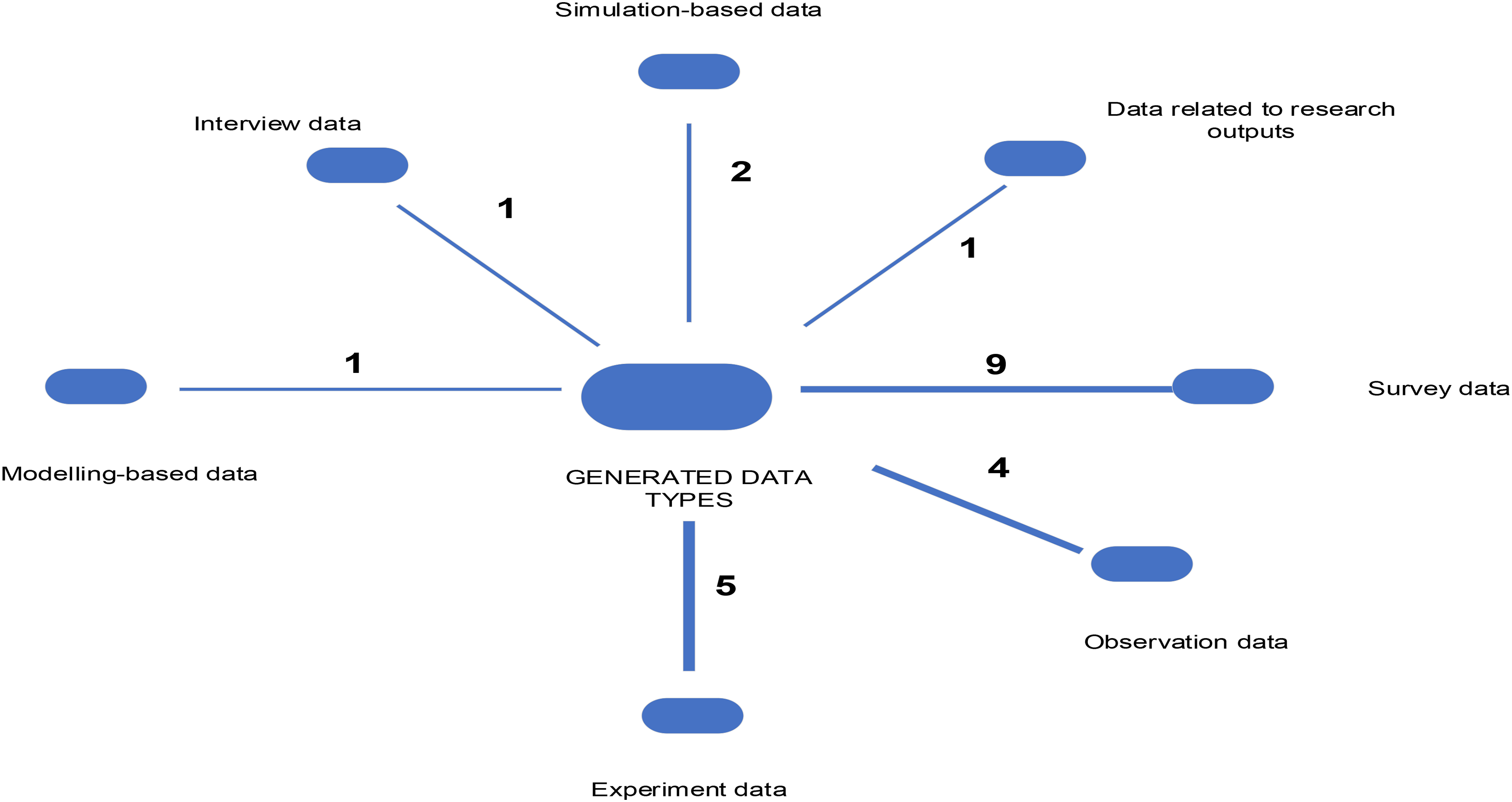
Categories of generated data types (MAXQDA code-subcodes-segments model).
Based on the participant views, it can be said that research universities generate data based on surveys, observations and experiments. Some of the participant views on this are as follows: “Experiments, observations, data based on simulations and survey data are produced. As a result, quantitative and qualitative data types are produced” (U1). “In our university, data types are produced by data collection methods such as experiment, observation, interview, questionnaire” (U2). “Experimental data, observation data and data based on modelling are produced at our university” (U7). “Our university is a research university. It has a very wide research area. A wide range of data (survey data, observation data, experiment data, simulation-based data and data based on research outputs) are produced” (U4). “Teaching and research activities are carried out in almost all branches of science at our university. It is a natural consequence of this that many different data types and groups are used in different fields of science. However, we have no idea what these data types are” (U12).
Organizations/institutions supporting in data management theme consists of 4 top categories and 9 subcategories. As can be seen in Figure 2, these top categories are communities, private companies, national organisations/training programmes and international organisations/training programmes.
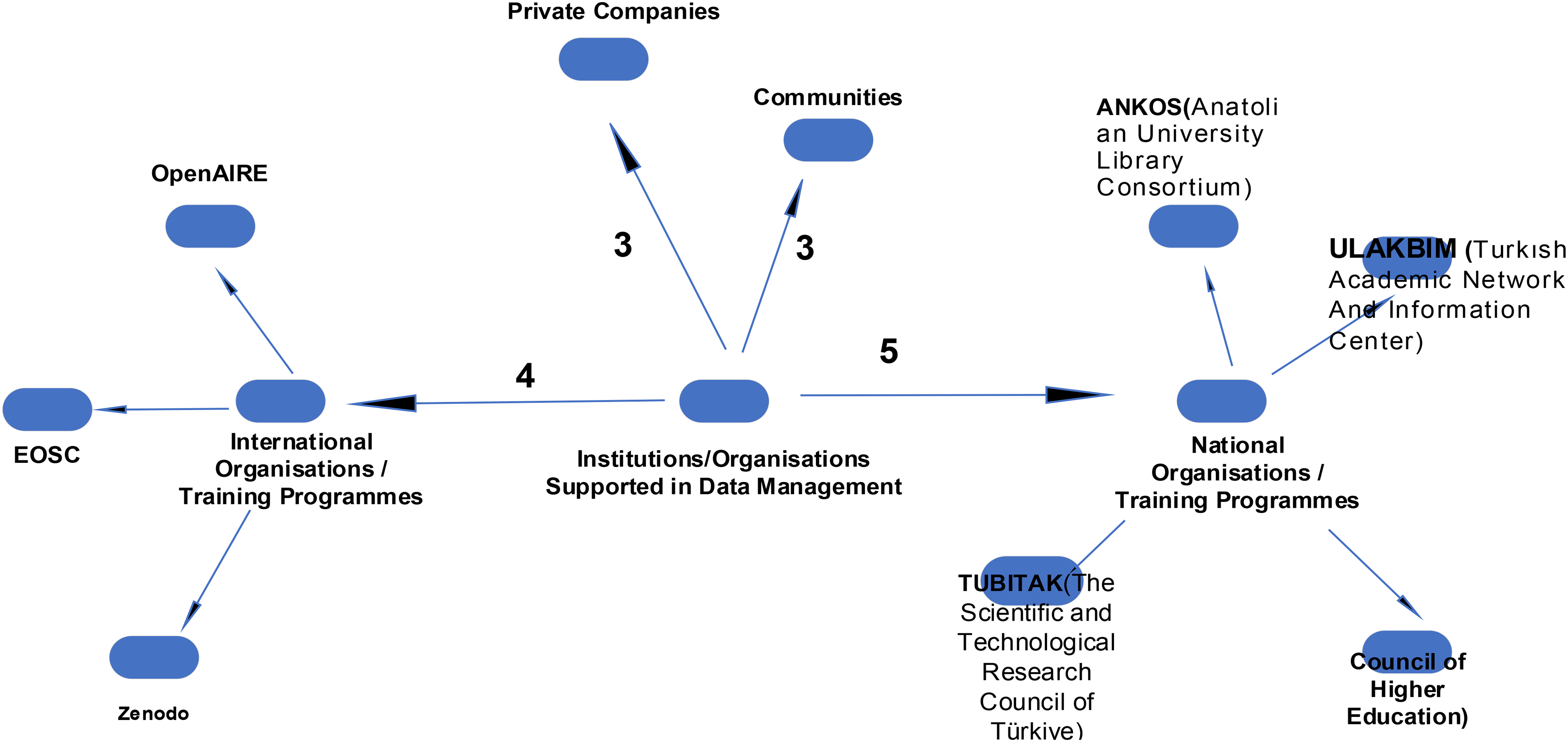
Institutions/organisations supporting in RDM.
In line with the participant views on the institutions/organisations that support data management, libraries affiliated with research universities mostly benefit from national organisations/training programmes and international organisations/training programmes. Some of the participant views that support these statements are as follows: “Yes, we are aware of it. First of all, we follow TÜBİTAK's shares on this subject, as well as the studies carried out in our country (especially IZTECH), institutions such as Open Research Calendar, the European Union's European Open Science Cloud (EOSC) project, and OpenAIRE” (U7). “We closely follow the studies carried out in our country and abroad on RDM and take part in these studies. We are a board member of OpenAIRE Association. At the same time, we also work as a member of the RDM working group. In addition, studies are carried out in cooperation with universities in Türkiye and abroad and data managers working in this field. The National Research Data Symposium, hosted by Izmir Institute of Technology in cooperation with TÜBİTAK, Hacettepe University and Koç University, was held on 25-26 May 2021 on 25-26 May 2021 (https://acikveri.org/ulusal-arastirma-verileri-sempozyumu/). In addition, OpenAire, EOSC and TÜBİTAK studies are closely followed” (U10). “We closely follow institutions and organisations such as Aperta, Zenodo, OpenAIRE, Harvard, TÜBİTAK and Council of Higher Education (YÖK)” (U12).
The budget and resources theme consist of 3 categories. The categories are inadequacy due to staff quality, inadequacy due to staff quantity, budget inadequacy (see Figure 3). Therefore, the theme of budget and resources was evaluated by the participants mainly in terms of budget and personnel.
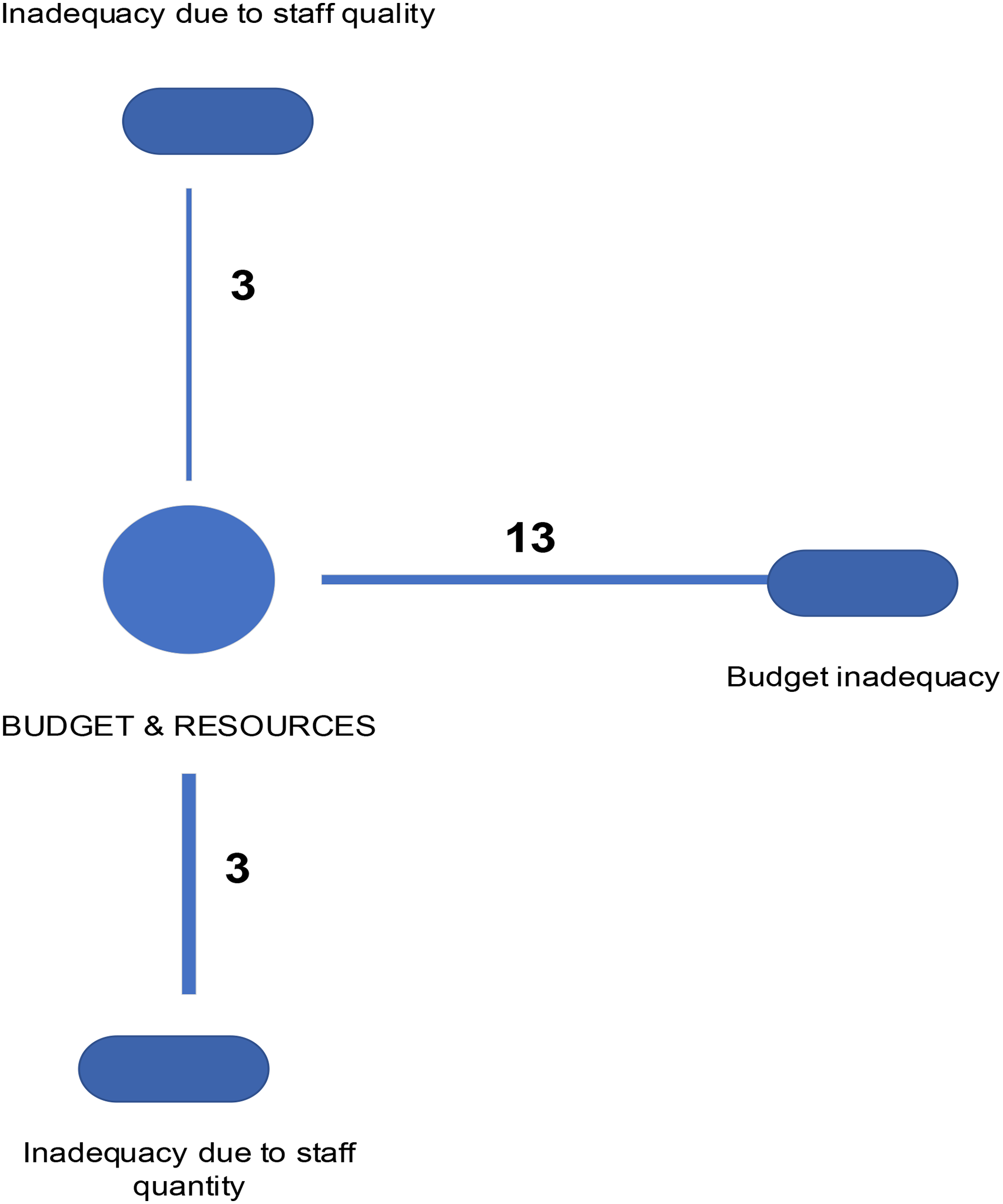
Categories related to budget and resources.
In line with the statements used by the participants regarding the adequacy of the budget and resources allocated to the management of research data, the view that the budget and personnel are insufficient comes to the fore. Some of the participant views related to this are as follows: “I think the budget is not sufficient” (U13). “Staff and budget for these services is a national problem and these resources are insufficient” (U5). “We definitely have insufficient personnel and resources in quality and quantity to provide RDM services” (U8). “Staff and budget are not sufficient. However, efforts are being made to provide services at the best possible standards with the available resources. We have both quantitative and qualitative staff shortages to provide RDM services” (U10). “We always have insufficient staff. The technological requirements we need are met by the university. I think the budget is also sufficient” (U4).
The theme of data management process of libraries consists of 9 meta-categories and 2 subcategories (see Figure 4). The categories are data management, data management guidance, data storage, providing access to data, managing data collections, preparing statistical data, collaborating with stakeholders, uploading data to the institutional academic archive, and providing trainings on data management. When the sub-categories related to the top category of providing training on data management are analysed, it is seen that the category of data management training and the creation/development of related applications are at the forefront.
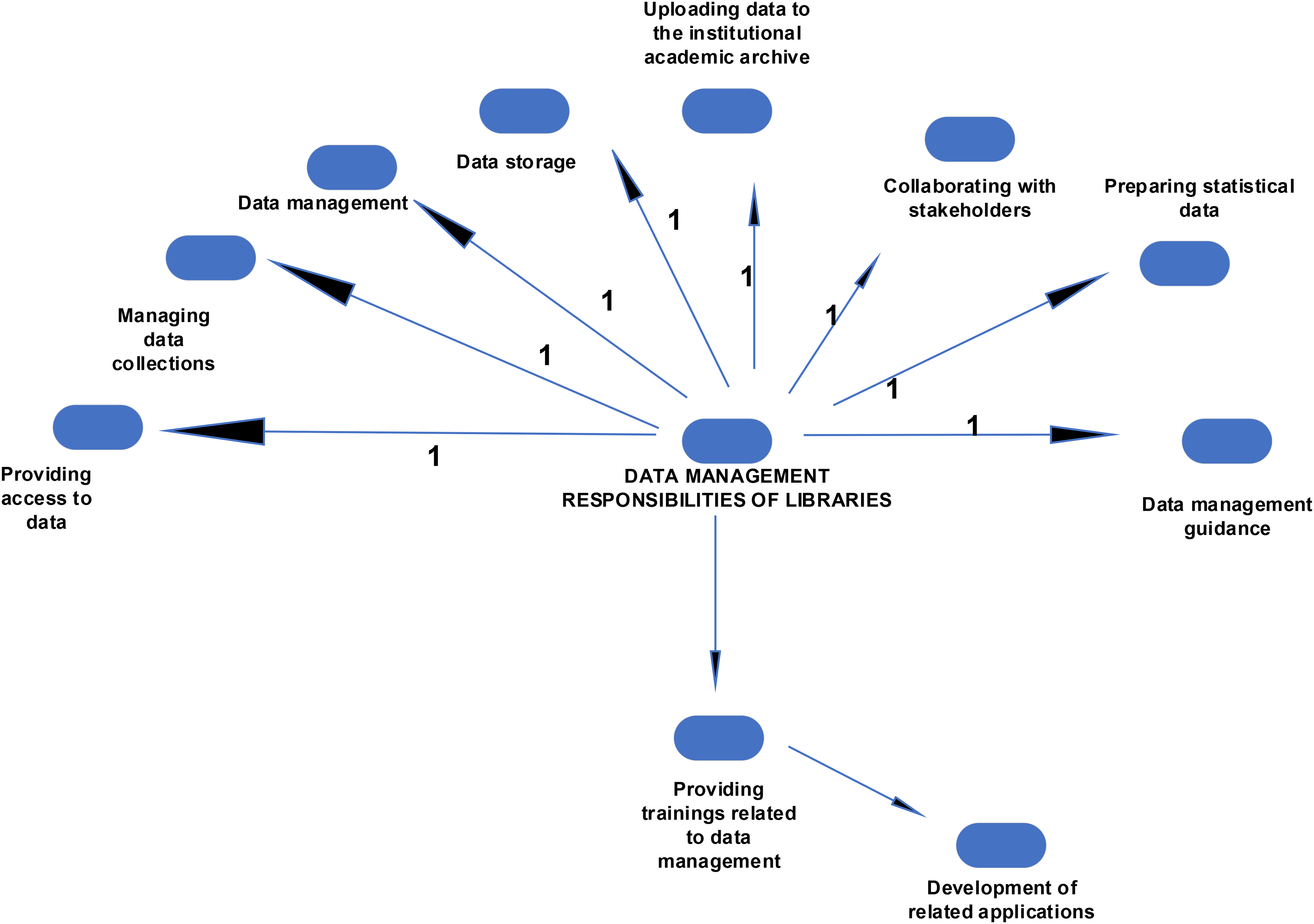
Data management process of libraries.
Before the interview, information was given to participants about the processes of analysing data (data interpretation, transforming data into scholarly communication output, preparing data for preservation), data protection (bringing data into the most appropriate format, backup and storage methods, data ownership and provenance), providing access to data (access control, intellectual property rights, data disclosure and data citation) and data reuse.
Regarding the responsibilities of libraries in relation to data management services, 9 participants stated that they don’t feel responsible for applying all data management services. Therefore, this statement is not included in the figure. There was only one library that implemented all of the data management service processes (data organisation, data processing, data analysis, data storage, data backup, data security, data access, and data reuse). In service process, the provision of training on data management is at the forefront. The views of some participants who have responsibility for data management are as follows: “Our library is responsible for supporting the development, review and implementation of the data management guidelines; raising awareness and explaining the added value of good data management to researchers; assisting researchers in planning RDM processes in research projects, from data collection to publication, and liaising with other stakeholders (Legal Counselling, IT Department, etc.) when necessary; assisting researchers in writing data management plans for grant applications and budgeting for RDM costs; developing and conducting training activities tailored to the needs of researchers. In addition, a Scientific Communication Unit was established within our library in 2021. A data management office was established under this unit and a staff member was hired to work as a data manager for the first time in Türkiye. In this context, our institution provides professional service in the management of research data” (U10). “Our library provides support especially in the formulation of plans for the management of research data requested in funding applications. In addition, the library is aware of its role in the storage and open access of research data and there are people responsible for these activities in our library” (U7).
Participant U6, who stated that data management services have been started recently, detailed the existing services as follows: “Data management service studies have been initiated recently. These services are; providing access to data, applications that encourage open access in the management of research data, and managing data collections” (U6). “There is no one-to-one service related to RDM in the library. In order to encourage open access, the institutional archive is introduced and it is announced that resources can be uploaded to the system. Afterwards, researchers upload their publications to the institutional academic archive system” (U5).
Participant U12 stated that there are no services, but they are in the planning stage, and participant U9 stated that he did not assume any responsibility: “Data management services are planned. Before the pandemic, we organised about 15 open science awareness trainings, and as part of this, the issue of research data was also discussed in these trainings. We are planning our work on open data such as open access publications by increasing awareness on this issue. It is also important to create a data pool for non-open data” (U12).
“The library has not taken responsibility for this issue and there is no responsible person” (U1).
“We do not have a formally defined responsibility” (U9).
The theme of the main challenges that can be encountered in the process of RDM, briefly referred to as the main challenges, consists of 8 categories (see Figure 5). The categories are lack of qualified personnel, lack of awareness, lack of infrastructure, lack of resources, lack of coordination between senior management and the library, lack of data management knowledge, deficiencies based on legal regulations, and resistant attitudes of researchers. In this theme, the categories containing the most frequently used expressions of the participants are lack of qualified personnel, lack of awareness and lack of infrastructure.
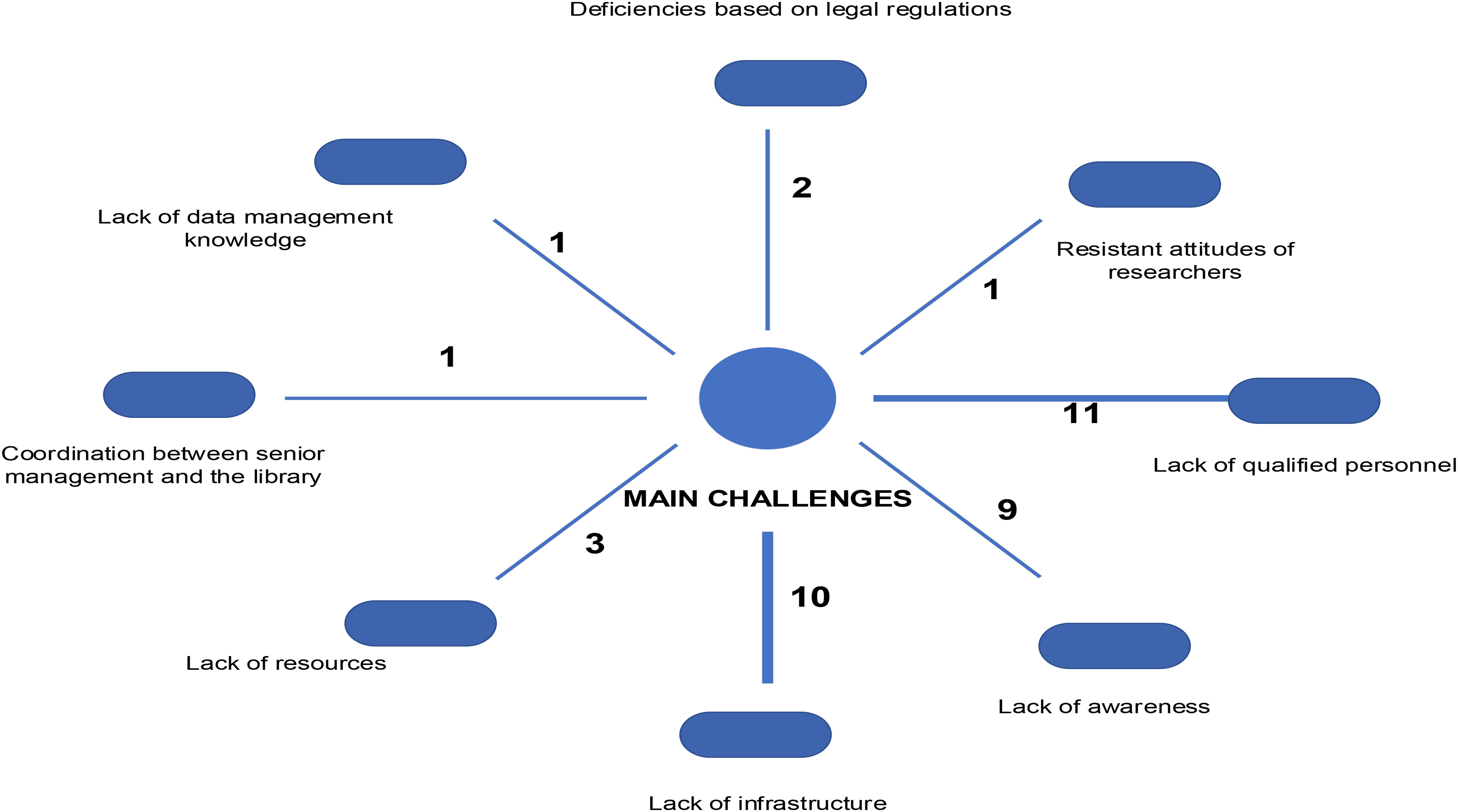
Categories related to main challenges.
In line with the participant views on the main difficulties that may be encountered in the process of RDM in libraries affiliated with research universities; it is seen that the lack of qualified personnel, lack of awareness and lack of infrastructure come to the fore. Some of the participant views on this issue are as follows: “The biggest challenge is the lack of coordination between university administrative units. The role and policy of the library in RDM should be well defined. The information to be given to the researchers, the requests of the funding organisations and all the processes in this process should be carried out within the knowledge of the librarians without any disconnection” (U7). “While the lack of sufficient budget for access to resources and insufficient staff are the main problems of libraries, the lack of technical knowledge of librarians in the process of RDM and the narrow areas where they can receive training or support for this can be said to be the main problems” (U5). “We have difficulties in this regard in terms of legal regulations, lack of awareness and insufficient qualified personnel” (U3). “They may have problems depending on the resource used. Problems may arise due to lack of infrastructure and training” (U4). “I think having to provide services with limited resources can be seen as a fundamental difficulty. The resistant attitudes of users and infrastructure and technical problems can be added to this” (U10). “Lack of technical software and hardware, lack of knowledge of the staff and insufficient number of staffs can be shown among the difficulties” (U12).
The theme of technologies needed in data management consists of 5 categories. As seen in Figure 6, these categories are electronic resources, publication analysis tools, cloud storage, service servers and the use of modern techniques and devices.
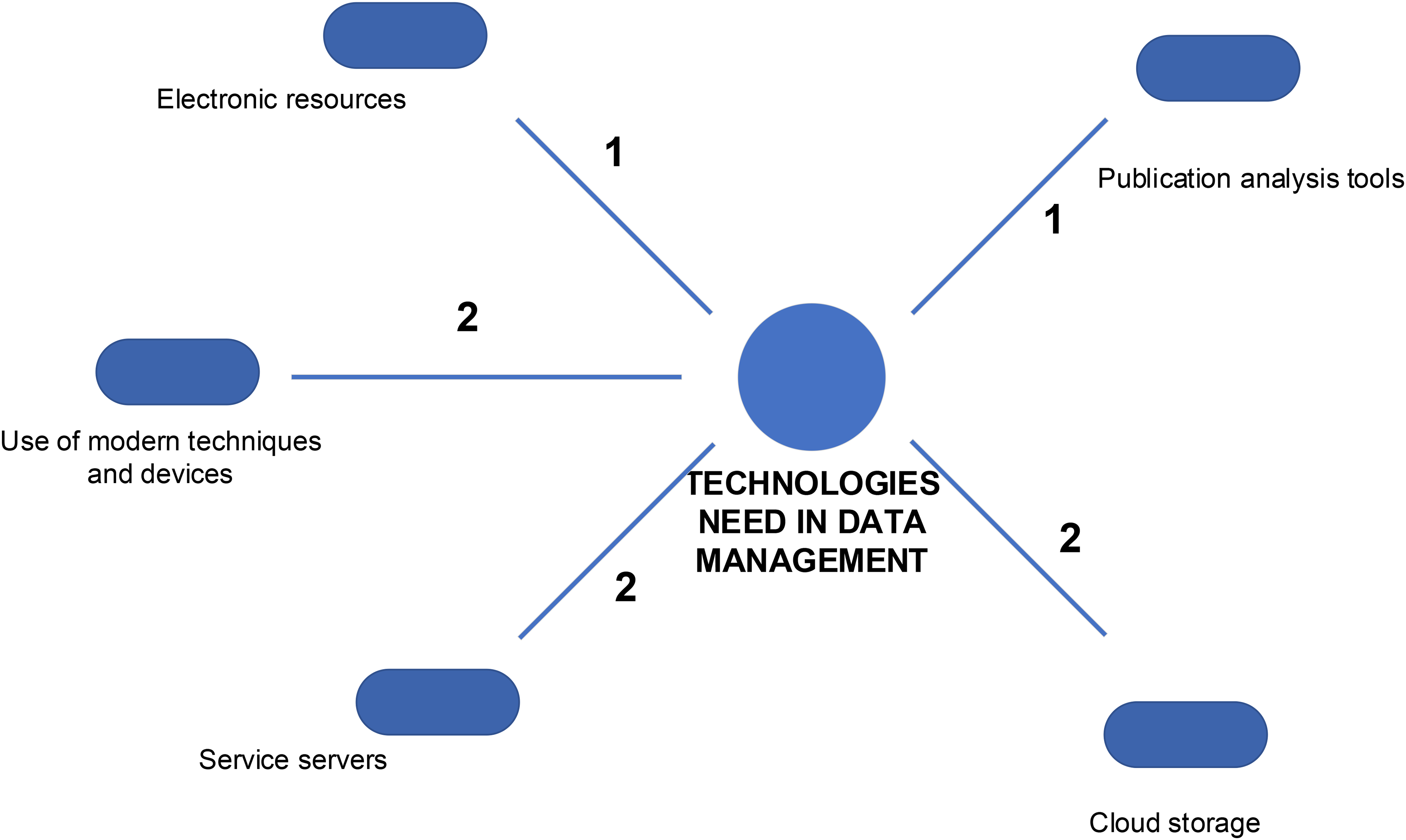
Categories related to technologies needed in data management.
In line with the techniques and tools needed in the management of research data in libraries affiliated with research universities participating in the research, the responses of the participants are as follows: “Reliable physical and cloud storage areas can be created to create a data pool. Sample practices and techniques of organisations working on these can be taken as a guide” (U5). “Yes, service providers should be increased, especially with the support of the Department of Information Technologies” (U7). “In order to create such data pools within the university, it is necessary to have competent personnel and servers that can handle this data pool infrastructure” (U3). “There is a need for computer and external disc equipment such as Dropbox and Google Drive” (U15). “Server and storage support are frequently needed” (U4).
This theme, which is briefly defined as data management policy/plan, consists of 6 categories. These categories consist of Scientific Research and Publication Ethics Directive, data management plan, data management policy, Institutional Open Archive Directive, Open Science Policy and Institutional Data Management and Analytics Directive. When the categories containing the most frequently used statements of the participants are analysed, data management policy and data management plan are at the forefront (see Figure 7). In fact, as can be understood from these category names, it is seen that most of the participants know that plans and policies should be used for data management, but the deficiency is due to the lack of knowledge of the names of the policies and plans used.
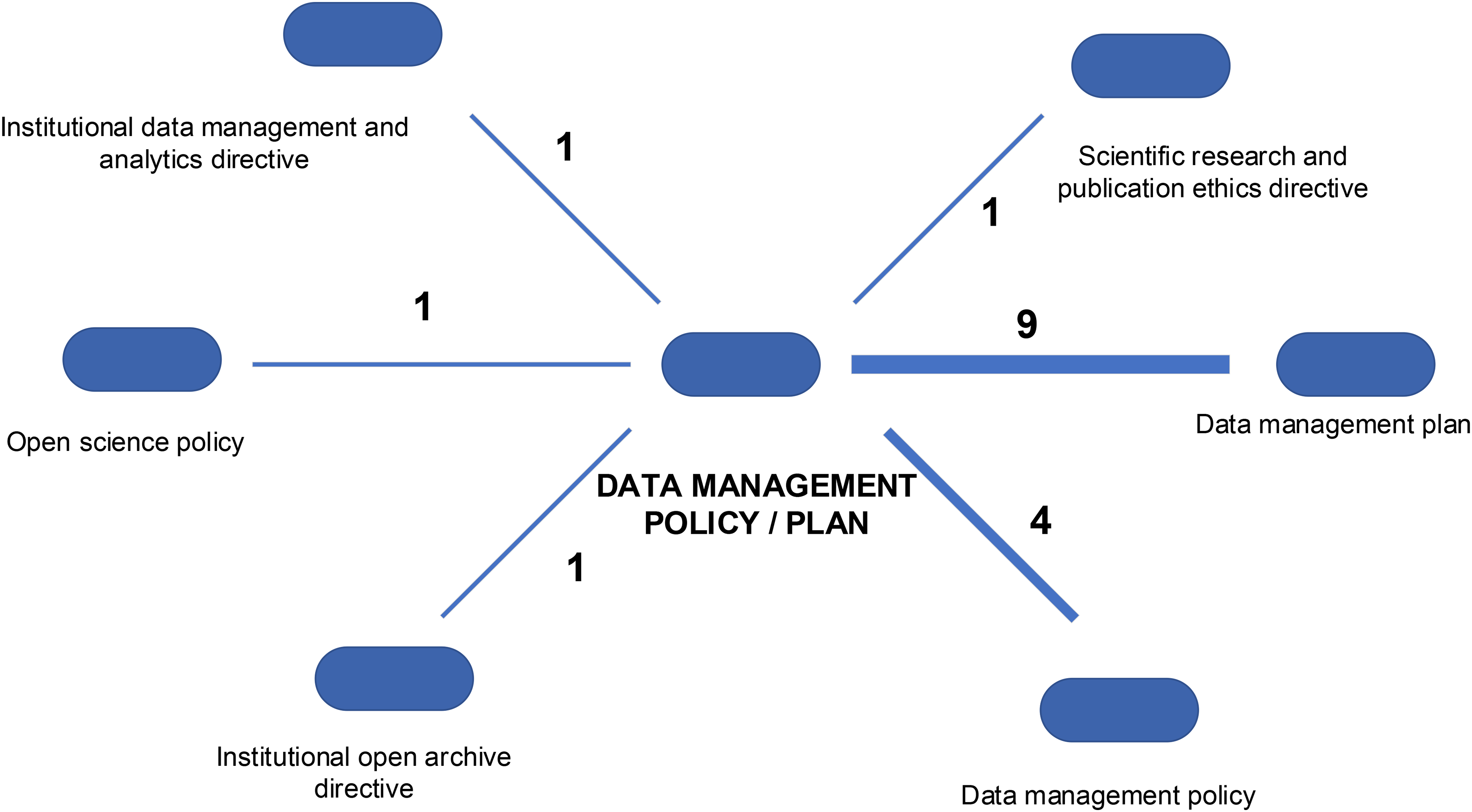
Categories related to data management policy/plan.
When the participant views on the plans and policies to regulate the management of research data in libraries affiliated with research universities participating in the research are evaluated, it is seen that data management policy and data management plan come to the fore. Some of the participant views regarding this finding are as follows: “We are currently in the process of preparing the directive on the management of research data” (U10). “We have an open science policy and there are also data management plan studies” (U12). “Our university has “Scientific Research Projects Implementation Directive”, “Institutional Open Archive Directive”, “Institutional Data Management and Analytics Coordinatorship Directive” and “Scientific Research and Publication Ethics Directive"” (U2). “The scope of RDM is mentioned in our open science policy. The term research data is mentioned here, but not in great detail. There is no policy specifically for the management of research data. Since there is no demand for a separate policy yet, we do not have an initiative. We need legal texts” (U9).
The theme of librarian training support in data management consists of 5 categories. The categories are participation in professional meetings, staff co-operation, participation in scientific events, participation in database and open access trainings, and participation in Open Science Train the Trainer Bootcamp (see Figure 8).
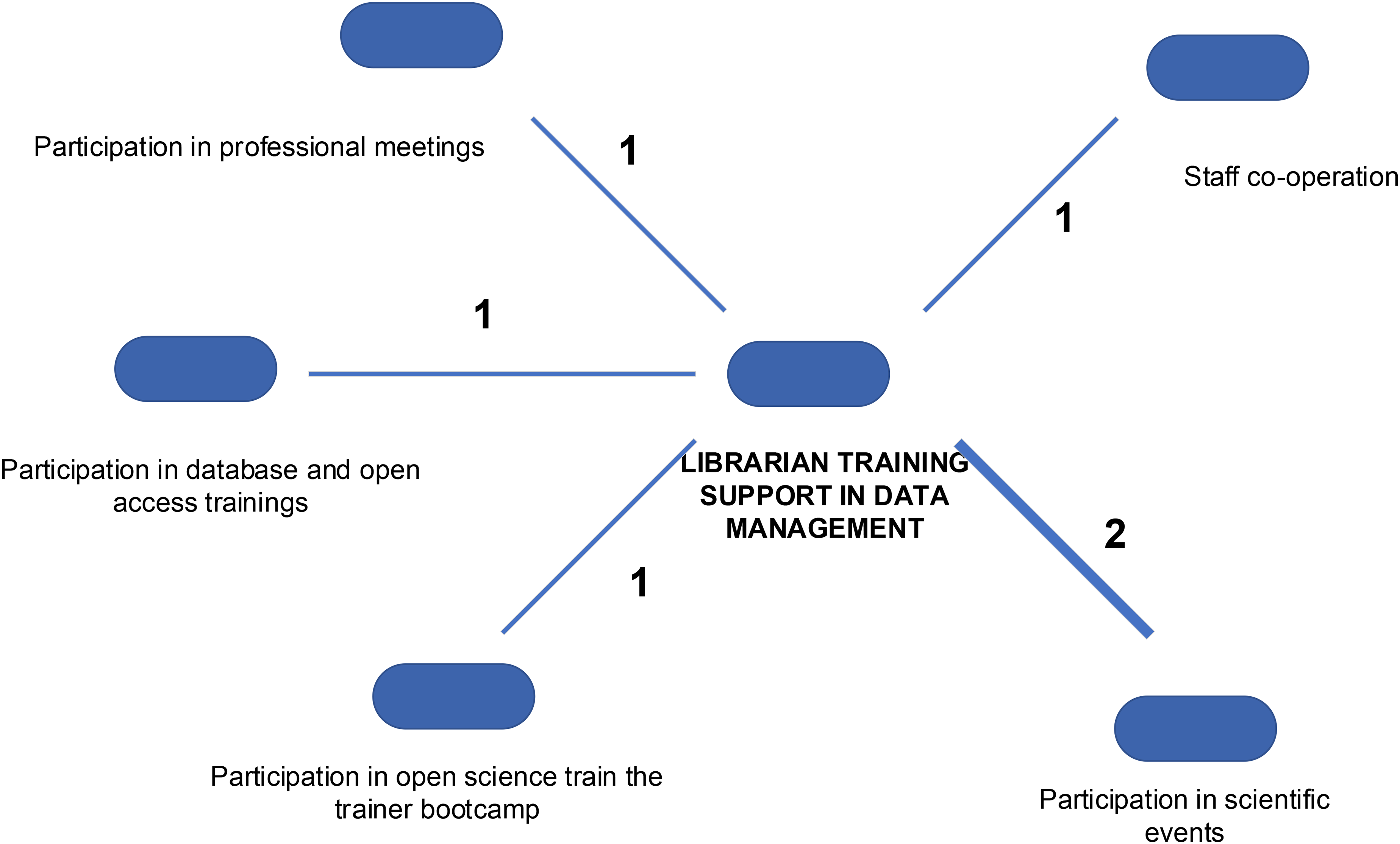
Categories related to training support for data management.
When the participants view regarding the training support provided to librarians are analyzed, it is seen that participation in scholarly meetings is come to the fore. The opinions of the participants who were provided with training support regarding the training in question are as follows: “We participate in scholarly meetings such as conference, seminar, symposium on data management” (U14). “Professional meetings are attended” (U2). “Staff are supported and encouraged to attend all trainings and events on RDM. A total of 30 participants from different countries were accepted to the “Open Science Train the Trainer BootCamp”, which was held for the first time on 6–10 June 2022 by the OpenAire association, and the person responsible for the subject participated in the training and was awarded a certificate” (U10). Based on the views of the participants regarding the training support provided to librarians, it is understood that the participants’ training needs related to data management processes mostly arise within the framework of preparing data management plans, defining data sets and data life cycle. The views of the participants who need training support regarding the training in question are as follows: “No educational support is provided. We need training. Training support should be provided on data types, data management, data management plan preparation and data life cycle processes within the scope of defining data sets” (U6). “Training support is not provided. We especially need training support on data life cycle processes, data management plan preparation and data classification” (U5).
The theme of library staff competences consists of 12 categories. The categories are knowledge of data types, reference management, data analysis competence, data interpretation, data classification, data storage and preservation, data access, management and organisational skills, knowledge of copyright, information and document management training, knowledge of research methods and computer skills (see Figure 9). The categories containing the most frequently used expressions of the participants are knowledge of data types, reference management and data analysis competence.
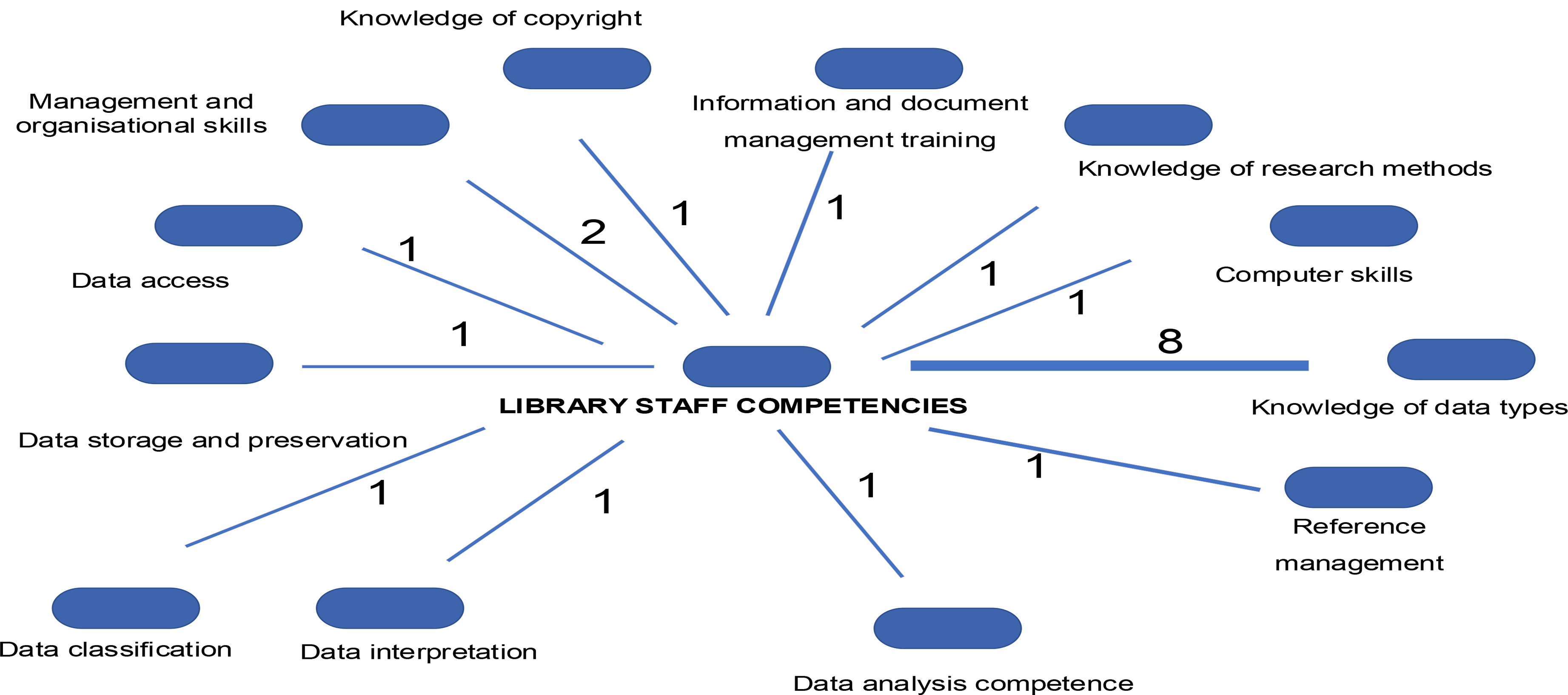
Categories related to library staff competencies.
In line with the statements used by the participants regarding the competences that library staff should have, the competence that the participants emphasise is concentrated on knowledge of data types. Some of the participant views based on this finding are as follows: “They should be knowledgeable about data, especially the management of research data, and should have technical knowledge about the presentation, management and sharing of data. In addition, they should also have competence in copyright” (U12). “They should have knowledge about data types and data management” (U13). “They should have competence in data types and management. It should be possible to provide training on these issues” (U6). “Library staff should have a good command of data analysis, classification, data storage-protection methods. They should know the necessary steps in accessing research data, the conditions of utilisation, and be solution-oriented in the service to be provided to the researcher” (U5). “I think that library staff should have a good command of scientific literature on research data and have knowledge about open access systems” (U15). “Must follow the studies and current developments related to the subject. Have a good command of data types. Participate in international trainings and workshops. Be aware of the websites, programmes and all kinds of applications related to the subject” (U7).
The theme of practices encouraging open access of research data consists of 9 categories. The categories are information, awareness trainings, accessibility, electronic information, guidelines, increasing research activities, database trainings, legislation and publication support for open access (see Figure 10). In this theme, the categories containing the most frequently used expressions of the participants are information transfer for open access, awareness trainings and accessibility.
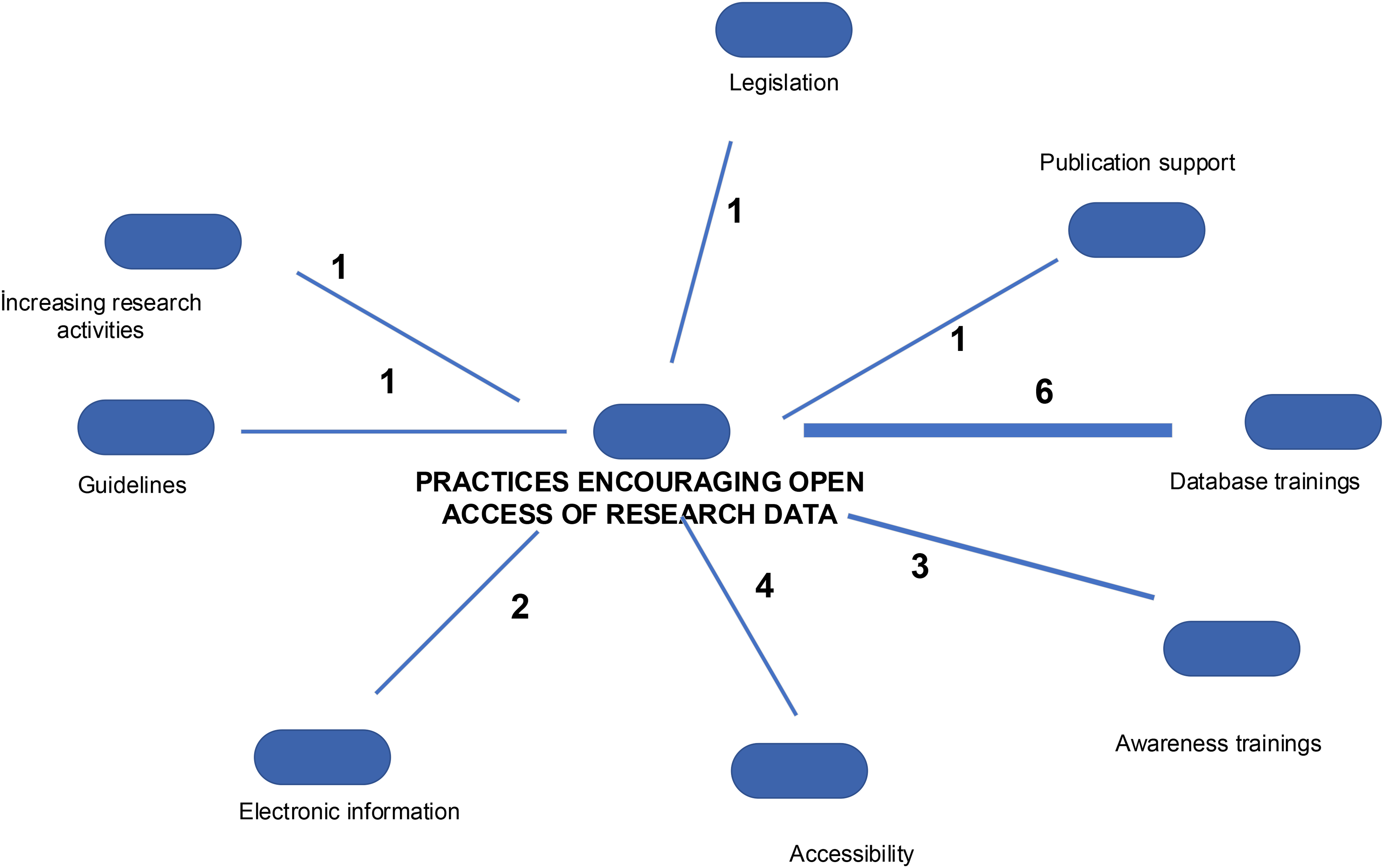
Categories related to encouraging open access to research data.
When the views of the participants regarding the practices that encourage researchers for making their data open are analyzed, it is seen that enlightenment activities on the transfer of publications to open access are frequently emphasised. On the other hand, training for accessibility of research data and trainings for rising awareness about RDM are among the prominent results. Some of the participant views on this issue are as follows: “Trainings are organized to raise awareness and explain the benefits of open access to research data. “Trainings are organized especially on visibility, accessibility and increasing research impact (U6)”. “At the academic archive meeting, which we opened in 2019, recommendations were made to researchers to share their research outputs and data sets of research outputs in the archive or other open access platforms” (U9). “Researchers are informed about open access to publications for sharing research data. In order to encourage the sharing of research data, the importance of open access, open science and data management should be explained to researchers and awareness should be raised. Our library informs both internal and external researchers on these issues through events and trainings. In addition, institutional requirements are determined and implemented through policy documents such as the open science policy and the RDM directive being prepared. Information and training meetings are organised by establishing one-to-one communication with users” (U10). “Researchers are informed about open access publishing, legislative requirements and reuse of research data” (U14).
The qualitative findings of the research can be summarised as follows:
In Türkiye, research universities generate more survey data, experimental data and observation data. In Türkiye, libraries affiliated with research universities get support from national organisations/training programmes and international organisations/training programmes in RDM processes. In Türkiye, libraries affiliated with research universities consider the provided budget and resources insufficient in terms of data management services. In Türkiye, libraries affiliated with research universities do not recognise the provision of training for data management as their responsibility. In Türkiye, libraries affiliated with research universities argue that the main challenges they face are lack of qualified staff, lack of awareness and lack of infrastructure. In Türkiye, libraries affiliated with research universities need cloud storage, service servers and modern techniques and devices in data management processes. In Türkiye, libraries affiliated with research universities are more likely to consider a data management policy and plan as the plan and policy to organise the RDM. In Türkiye, libraries affiliated with research universities get support from national organisations/training programmes and international organisations/training programmes in RDM processes. In Türkiye, libraries affiliated with research universities consider the provided budget and resources insufficient in terms of data management services. In Türkiye, libraries affiliated with research universities do not recognise the provision of training for data management as their responsibility. In Türkiye, libraries affiliated with research universities argue that the main challenges they face are lack of qualified staff, lack of awareness and lack of infrastructure. In Türkiye, libraries affiliated with research universities need cloud storage, service servers and modern techniques and devices in data management processes. In Türkiye, libraries affiliated with research universities are more likely to consider a data management policy and plan as the plan and policy to organise the RDM. Participants in libraries affiliated with research universities in Türkiye are more likely to participate in scholarly meetings such as conference, seminar, symposium. However, participants who deprived from training support was provided stated that they needed training support. Participants in libraries affiliated with research universities in Türkiye considered knowledge of data types to be the most important qualification they should possess. Among the practices that encourage open access to research data, participants reported that librarians informed researchers about the open access of publications was provided.
The views of the participants regarding the management of research data are explained within the framework of the themes presented above. In order to manage research data, it is of great importance that it is shared by researchers and stored in data archives. Accordingly, the potential of researchers at research universities in Türkiye to share their data in data archives and make them accessible aroused curiosity. In this context, the amount of data transferred to Zenodo and Aperta from research universities and how much of these data is open access were determined.
Findings related to research data in Zenodo and Aperta
Table 1 shows the number of research data uploaded to Zenodo by researchers at research universities.
Research data in Zenodo.
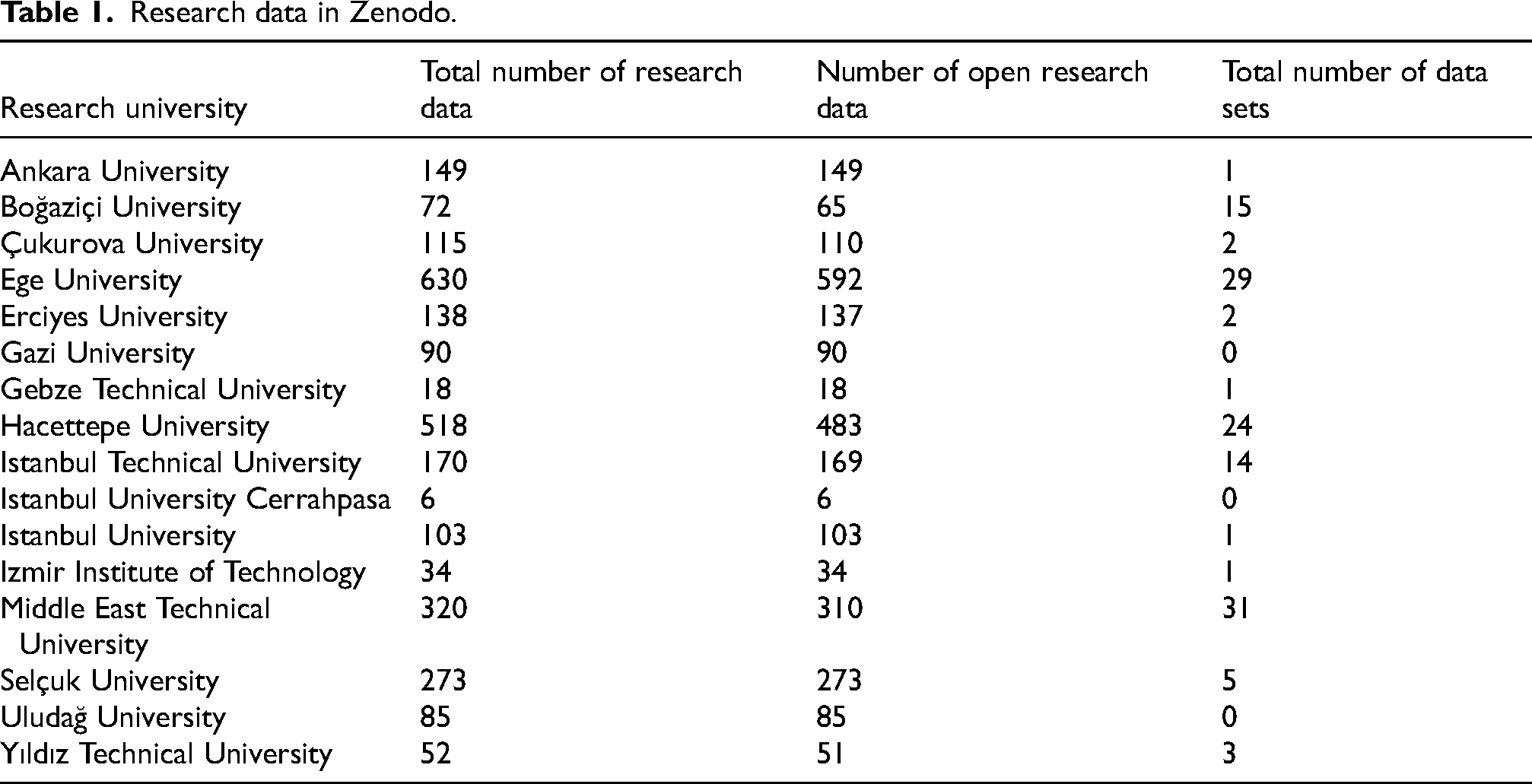
Zenodo has 2773 records from research universities in Türkiye. The most records were uploaded from Ege University (630), Hacettepe University (518) and Middle East Technical University (320). The lowest number of records were uploaded from Istanbul University Cerrahpaşa (6), Gebze Technical University (18) and Izmir Institute of Technology (34).
Zenodo has 2, 675 open research data from research universities in Türkiye. This shows that 96% of the data transferred to Zenodo from the research universities in Türkiye is open access. The universities with the most open access records on Zenodo are Ege University (592), Hacettepe University (483) and Middle East Technical University (310). The universities with the lowest number of records are Istanbul University Cerrahpaşa (6), Gebze Technical University (18) and Izmir Institute of Technology (34).
When the data in Table 1 are analysed, only 129 data sets transferred to Zenodo by research universities in Türkiye. This situation shows that approximately 5% of the data transferred to Zenodo contains datasets. The universities which have data set in Zenodo are Ankara University (1), Istanbul Technical University (14), Istanbul University (1), Yıldız Technical University (3), and Ege University (29).
After the evaluations made within the framework of Zenodo, the records transferred to national data archives aroused curiosity. In this context, Aperta, Türkiye's first national research data archive, was analysed. The number of research data uploaded to Aperta presented in Table 2 (see Table 2).
Research data in Aperta.
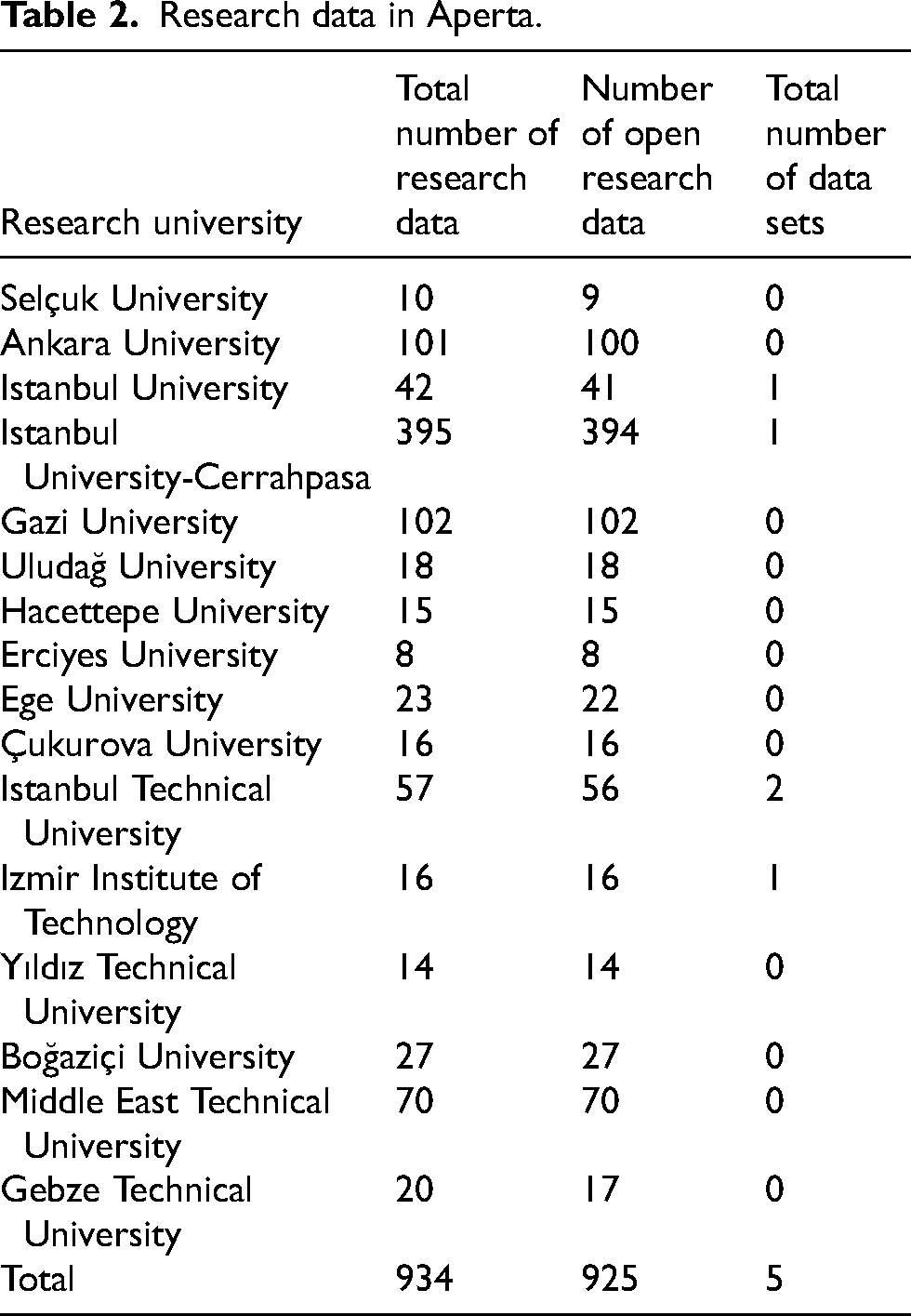
When the amount of data transferred to Aperta from the research universities in Türkiye is examined, 934 records were found in Aperta. Almost all of the data (99%) transferred to Aperta from the research universities in Türkiye is open access. It was observed that the highest number of records (395) belonged to İstanbul University-Cerrahpaşa. It was also understood that a significant amount of research data was transferred by Gazi University (102) and Ankara University (101). Although limited in number, it is noteworthy that Aperta has datasets submitted by Izmir Institute of Technology (1), Istanbul Technical University (2), Istanbul University (1) and Istanbul University-Cerrahpaşa (1).
Results
The results of the research are as follows:
Nearly half of the participants are working as librarians. The highest number of participants were those with 21 years of experience or more. In line with the participant views, the number of staffs who can play an active role in the RDM process in the libraries affiliated with research universities is low. However, there is a widespread view that the staff who can take part in RDM processes should be improved qualitatively. Participants pointed out that the main challenges they faced in RDM process on the lack of qualified staff, lack of awareness and lack of infrastructure. In line with the participant views, it was determined that the libraries affiliated with research universities have insufficient budget and resources. On the other hand, librarians are quite strong related to metadata, digital preservation, curation, copyright and publication skills, while more than half of the librarians do not have the sufficient data management skills. The study reveals that most of the libraries participated in the study do not offer a holistic service for RDM. It was found that only one library had a full range of professional data management services. However, very few libraries were found to offer data access, data storage, data collection management and data analysis services. There are some participants who felt that they were responsible for the service related to data management such as providing data management training, managing academic archives, open access to data, storing data and preparing statistical data. On the other hand, most of the participants do not feel responsible for the applying all data management process. In contrast, Marlina and Purwandari (2019: 6) state that the library is seen as a sub-organisation responsible for RDM among higher education and research institutions. The opinions of the participants reflect that the libraries participated in the study do not have any modern techniques to support scientific research. In libraries with limited modern techniques and devices, databases, reference managers, electronic resources, shelf-check devices, and remote access systems (off-campus access) are used with limited facilities. The majority of respondents stated that although they have an institutional archive, they do not offer data storage facilities in this archive. Most respondents indicated that their library would need more equipment such as service servers, storage areas, and publication analysis tools in the process of RDM. These findings are supported by Cox et al. (2019). They conducted an international study of RDM activities, services and capabilities in higher education libraries in Australia, Canada, Germany, Ireland, the Netherlands, New Zealand and the UK. This study state that in RDM process, libraries skills have some challenges including lack of and other challenges including limited resources, absence of collaboration with other support services. Based on the participant views, it was found that almost all of the libraries affiliated with research universities do not have policies, plans or guidelines for data management. Only one academic library has an RDM directive. In studies conducted through libraries (Gibbs, 2009; Parsons et al., 2013; Akers and Doty, 2013; Rolando et al., 2013), the main purpose is to reveal researchers’ data practices and their perspectives on data. In addition, these studies also include findings on existing services, the infrastructure of the organisation and the improvement of legal regulations. As a matter of fact, with the contribution of these studies, it can be said that the policies and legal regulations established within the scope of RDM will be more effective. According to the results obtained from the participants’ opinions, it was determined that librarians were not provided with training support on RDM in half of the libraries. In addition, participants stated that the training needed in the context of RDM is mostly related within the scope of processes such as data organisation and data reuse. These findings are thought to answer the question (Q1) “What is the current situation of RDM services within the framework of data management responsibilities, policies, budget and resource competencies in libraries which affiliated with research universities in Türkiye?”. As a matter of fact, with the contribution of these studies, it can be said that the policies and legal regulations established within the scope of RDM will be more effective. According to participants, it can be said that research universities generate data based on surveys, observations and experiments. This finding is similar to the result of the study conducted by Aydinoglu et al. (2017). According to the findings of their study, researchers mostly use eperimental data, text data and survey data. These findings are thought to answer the question (Q2) “What type of data do researchers generate at research universities in Türkiye?” According to the participant views, libraries have responsibilities in the process of RDM by providing information on data organisation, data processing, data analysis, data storage, access to data, ensuring data security and creating a data management plan through various training activities. The most intensive activities to promote open access to research data are trainings for raising awareness of researchers, sharing information on accessibility and transfer of research data to open access. Through these findings, the question (Q3) “What are the activities of libraries affiliated with research universities in Türkiye to promote open access to research data?” was answered. When the amount of data transferred from research universities in Turkey to Zenodo and Aperta was examined, 2773 records were found in Zenodo and 934 records in Aperta. Almost all of the data transferred to these data archives is open access. In addition, it was found that the amount of shared data sets was quite small (129 data sets from Zenodo, 5 data sets from Aperta). These findings are thought to answer the question (Q4) “What is the amount of data transferred to Zenodo and Aperta at research universities in Türkiye and how much of these data is open access?” Since the sharing of research data in data archives such as Zenodo and Aperta occurs by researchers working at research universities, this finding is also insightful about the potential of researchers to share their research data in data archives. In the libraries at research universities in Türkiye, the tools and techniques for the RDM are inadequate and do not meet the needs. Accordingly, the equipment and techniques provided to the library by each institution should be redefined in line with the needs. According to the libraries at research universities in Türkiye, the tools and techniques that should be used for data storage to realise the reuse of research data are cloud storage and service servers. The institutional storage areas and servers provided in this regard should be improved. In addition, researchers can be guided to transfer their data to institutional archives, subject archives and open access repositories used as data storage areas. It was found that information professionals working in libraries at research universities in Türkiye need training in data types, data management and data analysis related to RDM. In this case, librarians should be provided with informative training on data types, data management and data analysis in libraries affiliated with research universities. Libraries at research universities can serve as a guide for researchers on data access, data reuse, data storage, data preservation, and the overall data management process. First of all, librarians should be provided with the necessary training support on these issues and universities should act as a bridge in the communication of librarians with researchers. Although all data records of researchers are open access in Zenodo, it has been determined that very few data sets are stored in these open access records. The level of knowledge and awareness of researchers should be increased that not only research outputs but also data sets can be stored in Zenodo, which is an open access repository that offers a CERN commitment and is also run through CERN. In addition, it is seen as another issue that needs to be mentioned that the scientific outputs created by researchers will be verifiable and falsifiable thanks to the data sets they share. The support should be provided by universities and libraries to enable researchers to upload their datasets, including research outputs, to large open access platforms such as Zenodo, especially the archive of their own institutions.
Based on the results obtained in the research, it is possible to make the following suggestions:
Discussion
The study reveals that very few libraries offer RDM services. Most of the research libraries needs to education on how to manage research data. In RDM activities, researchers should work in co-operation with the library to store research outputs and datasets in data archives. Sharing and reusing research data requires effective data management plans as well as appropriate infrastructure and competent equipment. The findings of this research will lead to an understanding of the current situation regarding factors such as personnel, infrastructure, and equipment in the libraries of research universities in the process of RDM and will contribute to the effective execution of services. When international studies are considered, it is understood that librarians working in university libraries are seen as the primary responsible for the subject. Librarians are expected to be in a guiding position for researchers in all stages of services based on RDM. The inclusion of the data produced together with the research outputs in the archive of the institution is possible with the co-operation between librarians and researchers. The co-operation expected to be provided in this regard is expected to be realised with the support of the university administration. It is especially important to employ librarians who have a good command of the subject. In cooperation with YÖK-TÜBİTAK, training support can be organised for librarians by people who have a good command of the subject. Researchers in Türkiye should be encouraged to share their research data on TÜBİTAK -funded projects, research data on UBYT-funded publications and research data on journals published by TÜBİTAK on Aperta.
The findings of this research will lead to an understanding of the current situation regarding factors such as personnel, infrastructure, and equipment in the libraries of research universities in the process of RDM and will contribute to the effective execution of services.
