







Abstract
Due to the rise of digital transformations, the integration of advanced technologies in law courts globally is accelerating. This technological adoption enhances the efficiency and reach of justice administration, encompassing case registration, decision-making, and execution. This study investigates the acceptance and usage of e-court systems by regional governments in developing countries, utilizing the technology acceptance model (TAM) as the evaluative framework. As e-court systems become increasingly crucial in enhancing the efficiency and transparency of judicial proceedings, understanding their acceptance within developing countries becomes significant. It examines the role of perceived usefulness (PU) and perceived ease of use (PEOU) in shaping attitudes toward using (ATU) in these systems, ultimately influencing the behavioral intention to use (BIU). Primary data collected from several regional governments employing e-court systems are analyzed. The findings indicate varying acceptance levels, predominantly influenced by the perceived usefulness of the systems in streamlining court processes. However, the perceived ease of use is less influential, indicating a potential area of improvement for system developers. This research contributes to the discourse on the digital transformation of judicial systems in developing regions, providing insights that could guide effective policy formulation and implementation.
Keywords
Introduction
The international judicial landscape is undergoing a significant transformation as court systems globally harness technology to bolster efficiency, transparency, and accessibility. In Japan, courts have integrated artificial intelligence (AI) tools for expedited judgment processes (Hayashi et al., 2019). Xu (2017) highlights a remote intelligent court system in China, streamlining court processes. In Asia, countries like Malaysia and India have witnessed advancements in e-court systems, effectively mitigating case delays and litigation costs (Hassan et al., 2016; Satirah Wan Mohd Saman and Haider, 2013; Shankar and Ahmad, 2021). Features such as remote access for document management and data sharing enhance system security and convenience (Singh et al., 2018). In Pakistan, tech-based elements, like electronic registers, promote transparency (Rahman et al., 2014). Indonesia's e-court system has focused on cost-effective civil case registration, positively impacting its judiciary (Pratiwi et al., 2020; Santiadi, 2019; Zulaeha, 2023). The Western Hemisphere also has embraced digital transitions. The U.S. and Latin American court procedures emphasize electronic notifications in e-filing systems, and the deployment of decision support systems improves efficiency and public trust (Brinkema and Greenwood, 2015; Gorham, 2012; Pérez-Ramírez, 2023). Courts in Los Angeles have adopted distributed case management systems for enhanced case disposition (Elliott and King, 2005). Electronic notifications are prominent in Argentina's judicial system (Arias and Maçada, 2021), while Brazil utilizes AI for case distribution and decision document generation (Chada et al., 2015; De Sousa et al., 2022). E-court systems in Ukraine and Greece prioritize transparency and public trust (Kitsios et al., 2019; Zghama et al., 2019). Europe's Italian and French courts have transitioned to digital platforms, emphasizing electronic case registration and secure remote access (Agrifoglio et al., 2016; Fabri, 2009; Velicogna and Ng, 2006; Velicogna et al., 2011). Moreover, the justice systems in England, Wales, and Australia underscore digital justice systems for decision document generation and evidence presentation (Donoghue, 2017; Yavuz et al., 2022). This global backdrop sets the context for the detailed exploration of e-court systems, which represent a vast array of capabilities and services. From electronic filing to advanced case management systems, these tools simplify legal processes (Ahmed et al., 2021; Lupo and Bailey, 2014; Rosa et al., 2013). Online dispute resolution mechanisms and the accessibility of online court records further enhance transparency and access to legal information (Labanieh et al., 2021; Nakad-Weststrate et al., 2015). Such digital innovations, especially in developing countries, address challenges such as case backlogs, prolonged procedures, and limited justice access (Kharlie and Cholil, 2020; Susanto and Supriyatna, 2020). Regional governments and affiliated judicial departments play a pivotal role in deploying and managing these systems, underlining their importance in digital acceptance (Oktal et al., 2016; Saeed et al., 2016). Their adoption and continuous use of these systems are vital for the technology's long-term viability and the overall enhancement of the judicial process (Verma, 2018). E-court systems, bridging law and technology, offer transformative potential in the global judicial landscape. They digitize traditional court processes, emphasizing efficiency, transparency, and justice access. Their attributes, from automating administrative tasks to enhancing transparency and improving justice access in developing countries, emphasize their relevance and importance in contemporary times.
The digital revolution, characterized by rapid advancements in information and communication technology (ICT), has affected virtually every aspect of human life, including the judicial sector. Notably, e-court systems have emerged as key components of this revolution, transforming the judicial process from a paper-based system to a more accessible, transparent, and efficient electronic system (Ahmed et al., 2021; Prescott, 2017). These systems are becoming increasingly important, particularly in developing countries where enhancing access to justice and improving judicial efficiency are critical (Bakon et al., 2020). In contrast, establishing a comprehensive, long-term strategy for ICT plays a pivotal role in steering a nation toward sustainable development (Bonina and Cordella, 2008; Hochstetter et al., 2023). It sets the direction and outlines the actions needed to harness ICT effectively and responsively. Such a strategy focuses on infrastructure development and encompasses policies to enhance digital literacy, promote inclusive access, and ensure data privacy and security (Ahmed et al., 2020; Sabani et al., 2023). It lays the groundwork for digital transformation across sectors, from education and healthcare to governance and commerce. An insightful, forward-thinking ICT strategy can catalyze economic growth, social inclusion, and environmental sustainability (Chang et al., 2023; Gyamfi et al., 2023).
The technology acceptance model (TAM), initially developed by Fred Davis in 1986, has been widely employed to understand user acceptance and adoption of new technologies (Davis, 1985; Venkatesh and Bala, 2008). TAM posits that perceived usefulness and perceived ease of use influence an individual's attitude toward using technology, influencing the behavioral intention to use it. Given its robust and broad-based empirical support across numerous contexts and technologies, TAM provides a relevant framework to understand and predict the acceptance and usage of e-court systems in regional governments in developing countries (Soong et al., 2020; Xu et al., 2022). Despite the significant potential of e-court systems in enhancing judicial efficiency and the growing body of literature on TAM, little research has focused on evaluating the acceptance of these systems in the context of regional governments in developing countries. This study aims to fill this gap by applying TAM to understand the factors influencing the acceptance and usage of e-court systems among regional governments in developing countries. The regional governments are chosen as the unit of analysis because of their crucial role in implementing and using e-court systems in developing countries. Typically, these governments provide public services, including judicial services, to the citizens in their respective jurisdictions. In addition, regional disparities in the acceptance and usage of e-court systems can have implications for equitable access to justice. Thus, understanding the factors influencing the acceptance and usage of e-court systems at the regional government level can provide valuable policy formulation and implementation insights.
This research attempts to analyze and evaluate the factors influencing the efficient, effective, and successful implementation of the e-court system in the Sulaymaniyah appellate court. This e-court system is crucial to operations across all courts within Sulaymaniyah's civil and criminal jurisdiction. The study initially delves into a comprehensive exploration of existing literature, followed by primary research within the court's premises. Then, this study tests the TAM to evaluate users’ acceptance of the e-court system. Perceived ease of use (PEOU) and perceived usefulness (PU) are the two main constructs into which the TAM model separates the variables impacting individual behavioral attitudes that affect the adoption of recent technology. In light of this background information, the present investigation intends to address the two primary research questions:
The rest of the paper is structured as follows: The next section reviews the relevant literature on e-court systems and TAM, followed by a detailed explanation of the TAM framework and how it can be applied to the context of e-court systems. The paper then presents the study's methodology, including the research design, data collection, and analysis methods. The presentation and discussion of the findings follow this. The paper concludes with a discussion of the implications of the findings for policy and practice and recommendations for future research. This study hopes to contribute to the broader discourse on the digital transformation of judicial systems by providing an in-depth analysis of the acceptance and usage of e-court systems among regional governments in developing countries. The insights from this study could be valuable for policymakers and practitioners involved in implementing e-court systems and researchers interested in the intersection of technology acceptance and judicial system reform in developing countries.
Methodology
E-court systems represent the intersection of law and technology, digitizing traditional court processes to foster increased efficiency, transparency, and access to justice. They can handle tasks ranging from electronic filing and case management to online dispute resolution and provide real-time updates on case status, leading to improved tracking and scheduling. This section describes the study area, research methodology, technology acceptance model, and the development of hypotheses.
Description of study area
The autonomous Northern Iraq region, positioned strategically between Syria, Turkey, Iran, and central Iraq, encompasses four core Kurdish governorates: Dohuk, Erbil, Halabja, and Sulaymaniyah, as shown in Figure 1. With a population of approximately 6.25 million (Osman, 2021), the region presents a rich tapestry of cultural and linguistic diversity, predominantly influenced by Islam and the Kurdish language, with its two primary dialects, Sorani and Kurmanji (Osman, 2021; Tar and Lawrence, 2011). Historically, Northern Iraq's narrative has been marred by prolonged internal conflicts, especially during Saddam Hussein's regime, which led to substantial economic underdevelopment and digital marginalization (Ahmed and Campbell, 2015). This backdrop offers a compelling landscape to study the challenges faced by regional governments in developing countries. Post-2003, following Saddam Hussein's ouster, Northern Iraq embarked on a pivotal journey of socioeconomic revival, setting it apart from other regions (Khayyat and Heshmati, 2012). Despite being constitutionally recognized and having its independent governance infrastructure, including a president, parliament, and cabinet, Northern Iraq's leap into ICT remains in its formative phase. This unique combination of historical challenges, recent resurgence, and the ongoing digital evolution makes Northern Iraq a particularly apt representation of regional governments in developing countries. It provides a microcosm of the struggles and aspirations of such regions, striving for modernity while grappling with their past. By examining the e-court systems in this context, it is possible to draw insights that hold broader implications for similar regions worldwide. The selection of Northern Iraq, therefore, is not merely for its intrinsic value but for its potential to highlight on the larger narrative of digital transformation in developing regional governments.
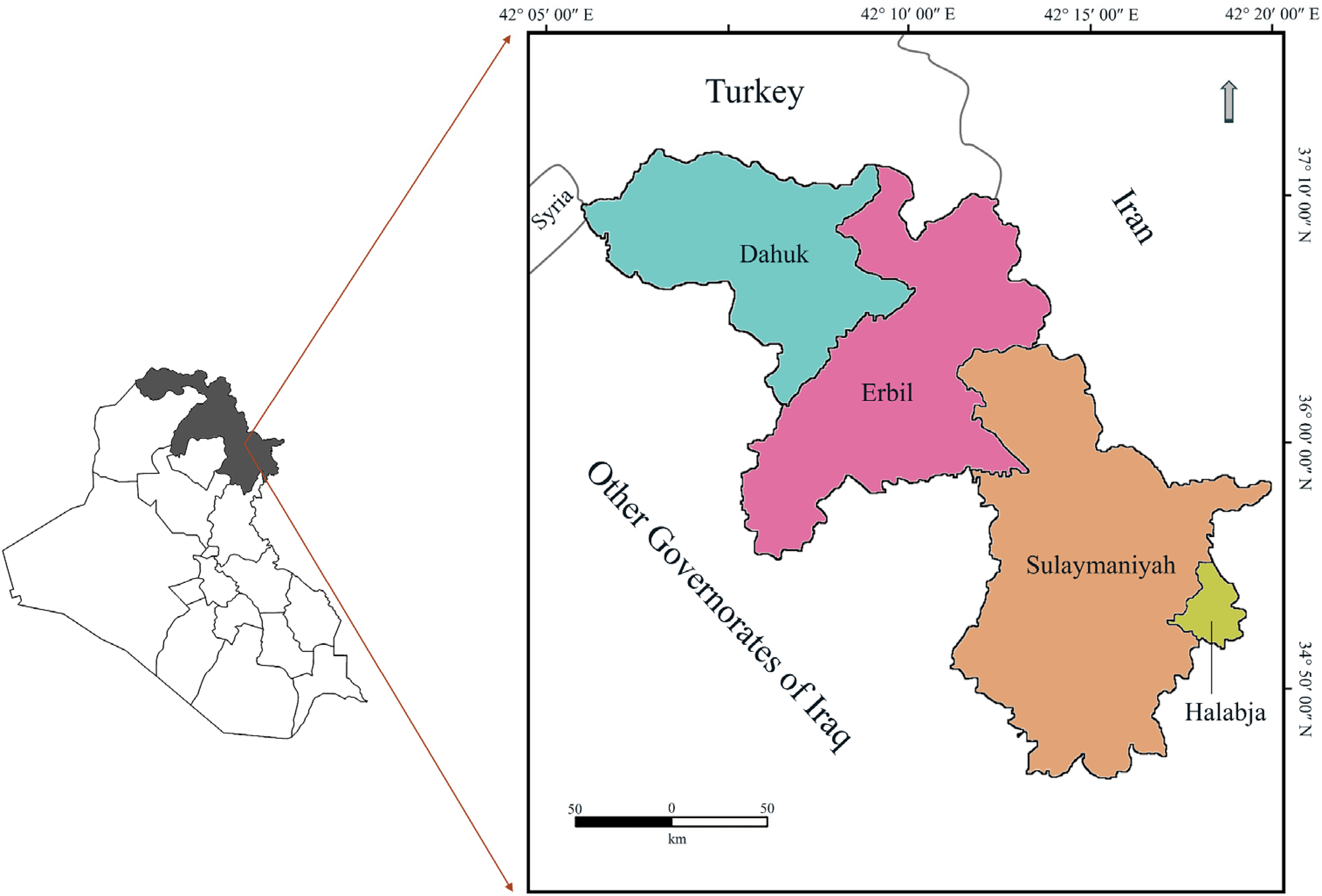
Location map of the study area.
E-court system in northern Iraq
E-court systems, a vital component of e-government services, are designed to bolster the judicial system's efficiency and user-friendliness by integrating modern technology. However, implementing such systems, particularly in developing regions grappling with socio-political complexities, can be challenging yet rewarding. The process of digitizing the judiciary involves more than merely introducing the e-court system; it requires a comprehensive understanding and reformation of conventional practices. Legal practitioners used to traditional, paper-based proceedings might need to acclimate to a new digital landscape. Nonetheless, the effectiveness of e-court systems extends beyond the scope of technology alone. Multiple aspects play substantial roles, such as the judiciary's historical roles, socio-cultural factors, and individual readiness for adjustment to these novel systems. Socio-cultural elements encapsulate a society's traditional norms, values, and behaviors, which can considerably influence public acceptance of digitized public services. For instance, engagement with e-court systems can be shaped by socio-cultural norms such as gender, race, and ethnicity. The responsibility lies with the stakeholders to design and implement these systems in a way that meets public expectations while respecting the socio-cultural dynamics of society. Through careful planning and continuous adaptation, e-court systems can play a crucial role in making justice more accessible and efficient.
Northern Iraq includes three appellate courts, each strategically located in the major cities of Erbil, Sulaymaniyah, and Duhok (Figure 2). The Sulaymaniyah Appellate Court stands out for its pioneering adoption of the latest version of the electronic court system. This initiative is funded by the Sulaymaniyah governorate and executed in collaboration with Aktors, an Estonian tech company. Additionally, the Sulaymaniyah Governorate IT Board oversees the operations of this digital platform. The primary objective of the e-court system is to revolutionize the delivery of court services to the citizens of Sulaymaniyah. The intent is to foster an efficient, effective, and receptive legal environment tailored to meet the evolving needs of the populace. The system is expected to drive service improvement and amplify the transparency of judicial procedures, offering a blueprint for a more ambitious plan that envisages unifying all appellate courts in the region under this digital framework. This move marks a critical stride toward digital inclusivity, propelling the growth of a sustainable e-government system that encompasses the entire region. The e-court system has now become integral to the operations of all types of courts under the jurisdiction of the Sulaymaniyah appellate court, spanning both civil and criminal realms. It includes comprehensive features designed to streamline everyday court procedures and offers users access to electronic registries to simplify case data management. It also maintains crucial certifications at various courts, including the Personal Status Court, the Civil Primary Court, and the Personal Items Court, all of which fall under the purview of the Civil Court.
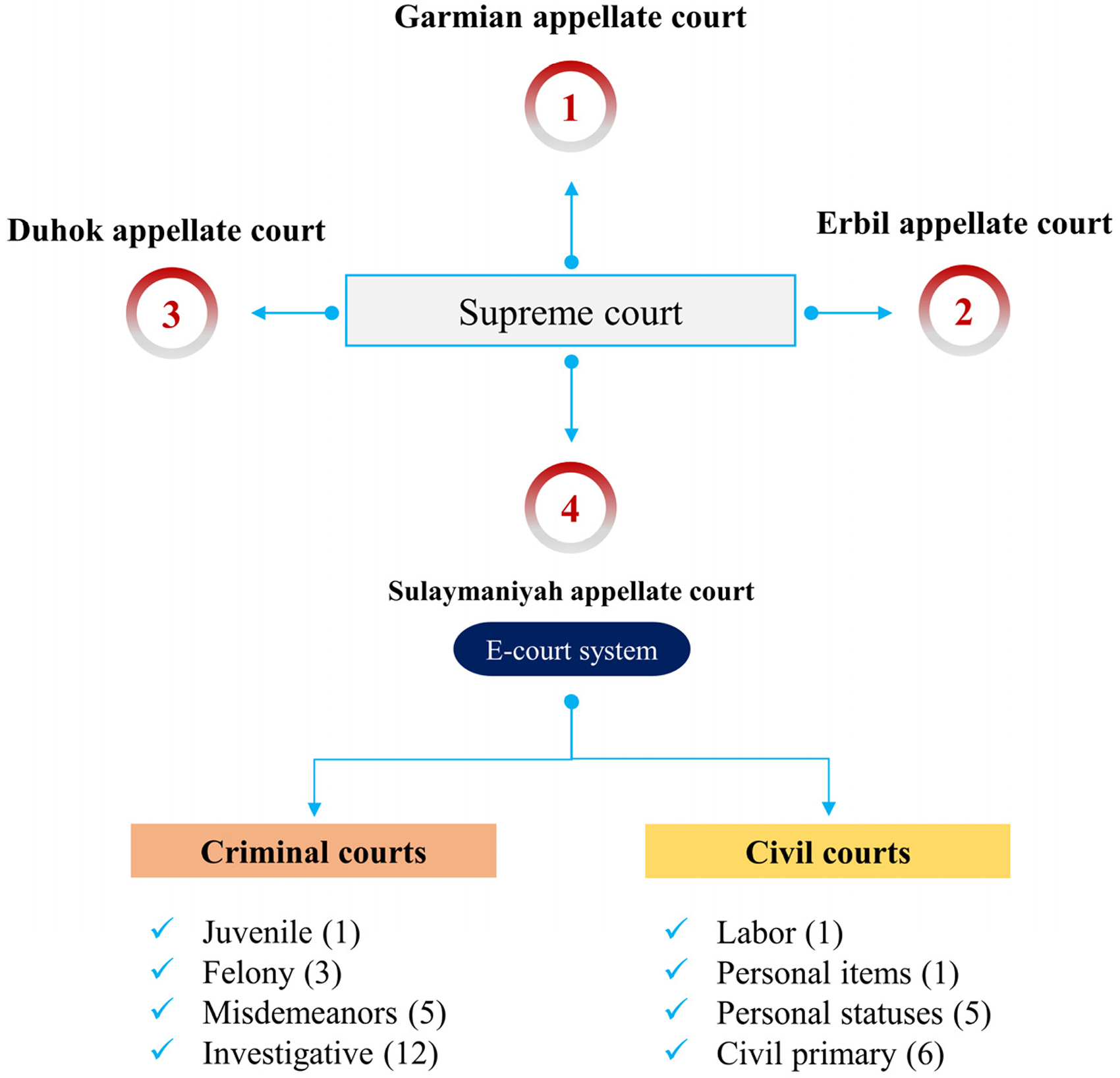
Structure of courts in Northern Iraq.
The e-court system in the Sulaymaniyah appellate court was introduced in 2018 as a pilot and then underwent consistent improvements and functional modifications until its final version in 2021. Today, it serves as a working model in Northern Iraq, with expansion plans for other appellate courts on the horizon. This dynamic system offers comprehensive reporting capabilities, catering to the courts’ diverse judicial reference needs. It allows for effective performance assessment of courts and judges by presenting a transparent view of work completed within a given time frame and the courts’ stress levels. Such insights empower the administrative department to make informed decisions for optimal court management. The e-court system offers significant advantages, including ensuring information integrity by consolidating case records in a central database and reinforcing accuracy and consistency across all linked registers. Robust security measures protect court case data through multi-layered authentication and user-specific access privileges based on role and tasks. Case data confidentiality is maintained by restricting access to authorized personnel only.
Technology acceptance model
The TAM is an influential theoretical framework to understand and predict user behavior toward technology (Marangunić and Granić, 2015). Developed by Fred Davis in 1986, it seeks to explain why users accept or reject technology by identifying factors influencing their decision-making process (Davis, 1985). The primary constructs of TAM (Figure 3) are PU and PEOU, where PU refers to the degree to which a user believes using a particular system would enhance their job performance. At the same time, PEOU pertains to the extent to which a user anticipates the system to be free of effort. These constructs are believed to directly impact a user's attitude towards using a technology (ATU), subsequently influencing their behavioral intention to use (BIU) and actual system use. The chosen variables collectively establish the TAM are comprehensively defined and depicted in Figure 3.
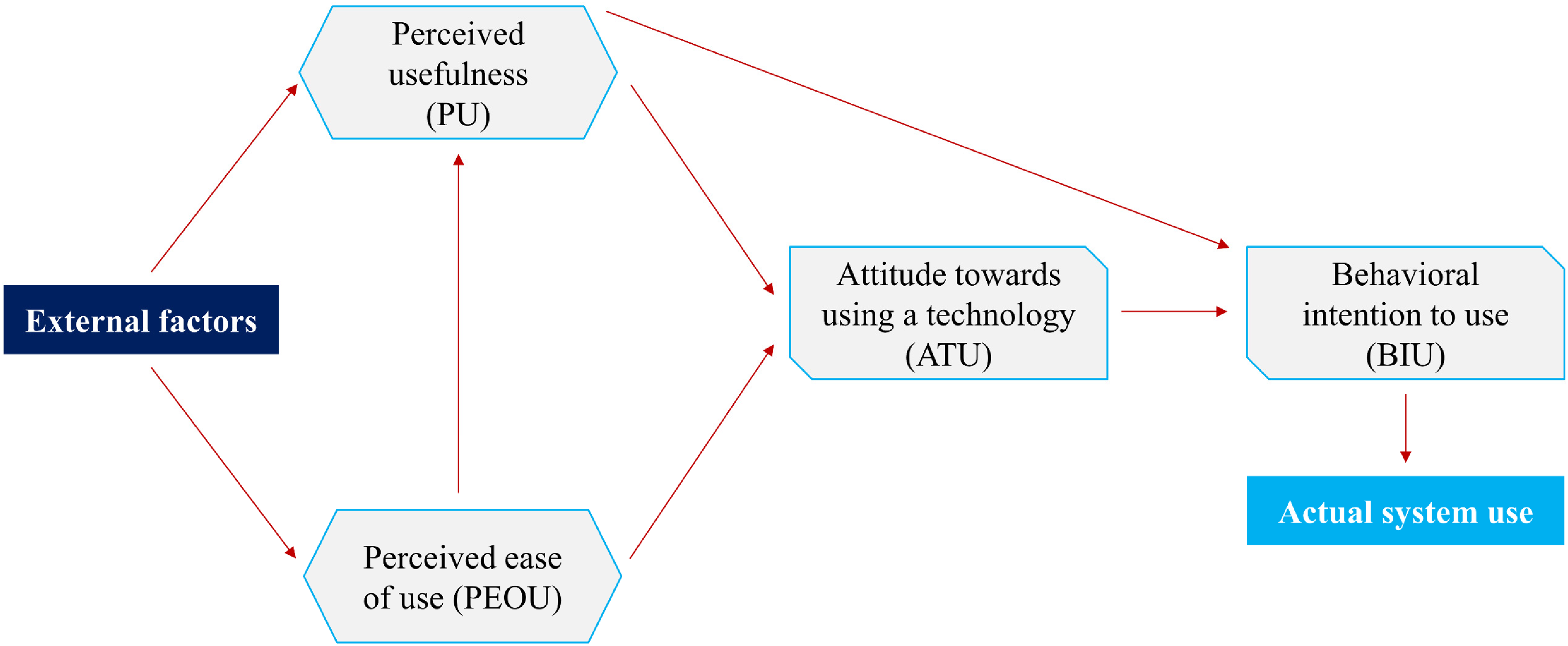
Illustrations of the technology acceptance model (reproduced from Miller and Khera, 2010).
In the e-court system, TAM employs several key constructs to understand user behavior toward technology. The first construct, PU, gauges the extent to which users feel that using the e-court system would enhance their job performance or efficiency in legal procedures. This can be measured by asking users to rate the system's impact on their work efficiency, time management, productivity, and quality. PEOU is the second construct, quantifying how effortless users interact with the e-court system. It assesses the perceived simplicity of the system by asking about users’ experiences in learning to operate the system, their understanding of the system, their ability to control the system, and the system's user-friendliness. The third construct, ATU, captures users’ feelings about the system and its usage in their work. Questions under this construct can probe users’ opinions on using the e-court system, whether it makes work more interesting, whether they look forward to using it, and how they feel about its impact on their daily work. The fourth construct is BIU, which measures users’ readiness to utilize the e-court system. This can be evaluated by assessing the likelihood of the users’ future use of the system and their preferences when choosing between the e-court system and traditional methods. Lastly, the Actual System Use construct reflects the degree of real application of the e-court system by users. This can be determined by asking users to rate their usage, the frequency of use, dependence on the system, and how frequently they use the e-court system compared to other systems. These constructs and their associated measures help paint a comprehensive picture of users’ reception of interaction with and reliance on the e-court system. This, allows for improved understanding and enhancement of the system based on user feedback and experience.
Research methodology
This research employs a mixed-methods approach to evaluate the implementation of e-court systems in regional governments in developing countries using the TAM. A sequential explanatory design was adopted for this study. The research commenced with a quantitative investigation to examine the relationships between the key constructs of TAM: perceived usefulness, perceived ease of use, and the intention to use the e-court system. This was followed by qualitative interviews to explore these relationships in-depth and gain insights into any additional factors that might influence the acceptance and usage of the e-court system. A structured questionnaire was used to collect quantitative data. The items in the questionnaire were adapted from validated measures used in previous TAM studies. Participants were asked to rate their agreement with each statement on a five-point Likert scale, ranging from “Strongly Disagree” (1) to “Strongly Agree” (5). The questionnaire was distributed to a sample of judges, lawyers, court clerks, and other relevant personnel within the Sulaymaniyah appellate court who had used the e-court system. For the qualitative phase, semi-structured interviews were conducted with a subset of questionnaire respondents. The interview questions were designed to elicit detailed responses about participants’ experiences with the e-court system, focusing on their perceptions of its usefulness and ease of use.
Purposive sampling was utilized to select participants for the questionnaire and the interviews. The inclusion criteria were being an employee of the Sulaymaniyah appellate court and having used the e-court system in the past six months. The quantitative data were analyzed using Structural Equation Modeling (SEM) in SPSS AMOS. This technique was utilized to test the relationships between the constructs of TAM. Descriptive statistics were also used for each item on the questionnaire. The qualitative data from the interviews were transcribed verbatim and analyzed using thematic analysis in NVivo. This approach enabled the identification of common themes in the participants’ responses, which provided a richer understanding of their experiences with the e-court system. All participants were informed about the purpose of the study and assured of their confidentiality, and participation was voluntary, and they could withdraw from the study at any time. Figure 4 briefly depicts a comprehensive overview of the research methodology implemented in this study, providing all the significant stages and processes in a systematic and organized method.
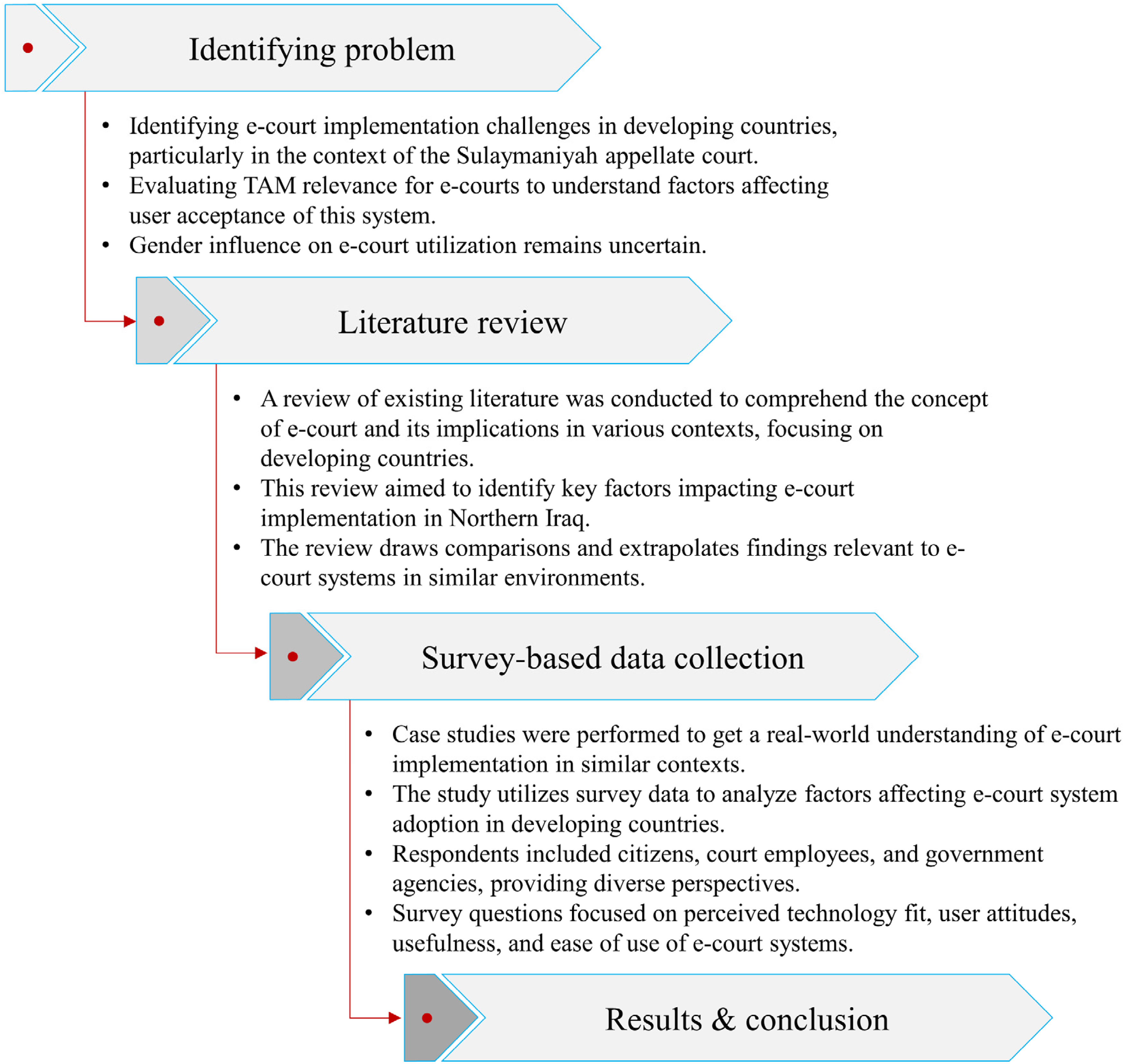
Schematic diagram of the applied research methodology.
Hypotheses development
The development of research hypotheses for this investigation is grounded in the key principles of the TAM, namely PEOU, PU, PTF, UA, and BIU. These variables collectively shape the users’ perception of, and satisfaction with, the e-court system. In addition, the conceptual framework encapsulates all facets of TAM: PEU, PU, and BIU, along with the actual use of the e-court system, visually illustrated in Figure 5.
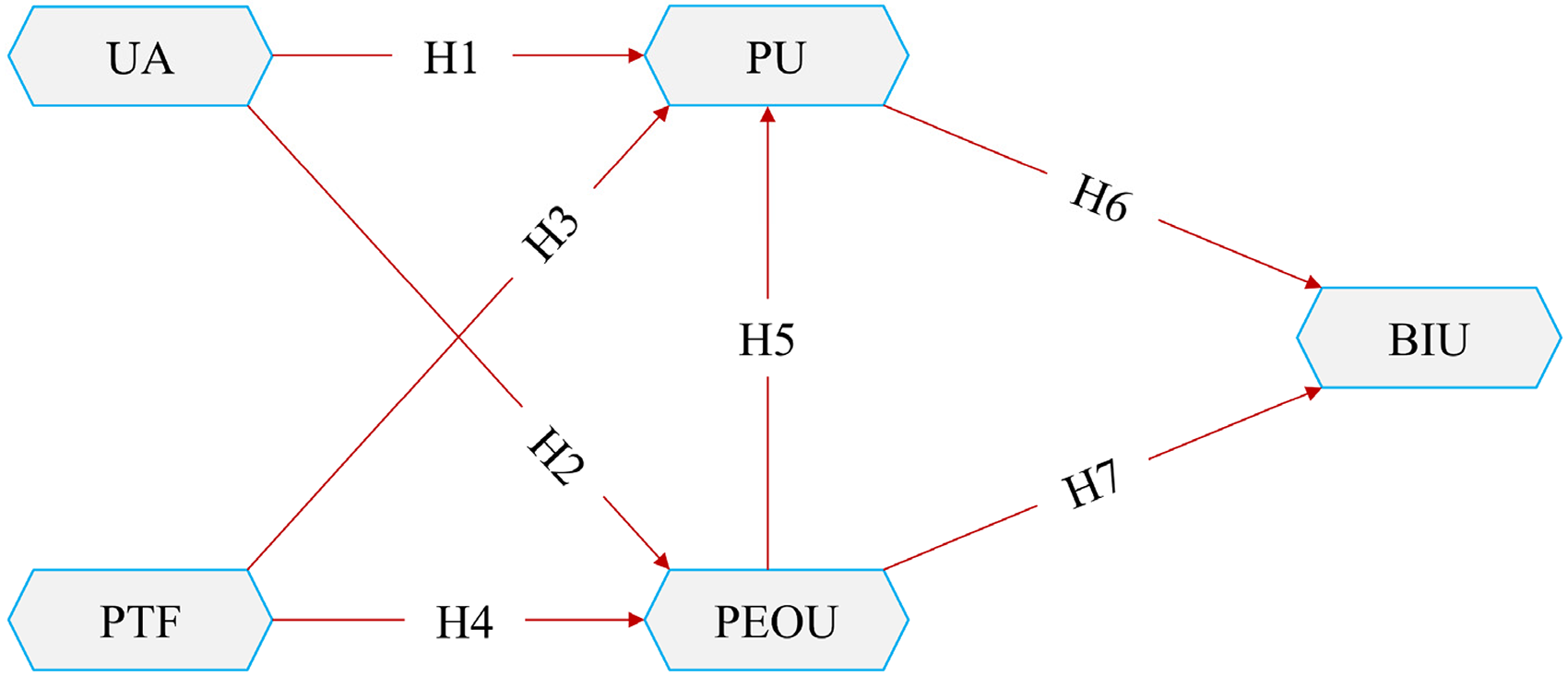
The proposed research model.
User attitudes encompass subjective evaluations and personal preferences regarding a specific topic or system. Attitudes often shape behavioral intentions, reflecting the individual's propensity to engage in a specific activity. In technology adoption, positive attitudes towards new technologies often serve as precursors to the intention to utilize these systems. The employee's perspectives on implementing the e-court system in legal proceedings are investigated.
Perceived technology fit reflects how well a system can support various activities. Previous research supports a strong correlation between perceived technology fit, intention to use, and actual system utilization. This study will further explore this relationship in the context of the e-court system. It will examine the relationship between perceived technology fit and the intention to use the e-court system continuously.
The TAM model highlights the critical role of PU in technology adoption. It refers to the extent to which the utilization of technology is believed to enhance overall work productivity. Various empirical studies demonstrate the significant impact of PU on the intention to use a system. This study hypothesizes a positive relationship between PU and the intention to use the e-court system, as supported by prior research.
Perceived ease of use represents the degree of effort an individual believes is necessary to use technology. A direct correlation exists between PEOU, user comfort, and their willingness to learn about a system. This research postulates a connection between PEOU and the behavioral intention to use the e-court system.
Behavioral intention to use reflects an individual's plan to start or continue using a technology. According to TAM, perceived usefulness and perceived ease of use mediate the impact of external factors on use intention. These beliefs shape a user's willingness to engage with technology and indicate technology acceptability. Gender can potentially affect an individual's intention to use a system. Gender-based differences can shape attitudes, preferences, and behaviors. However, the influence of gender can vary depending on the type of service, cultural norms, and personal experiences. In contrast, gender can shape individual behavior, one of many factors influencing the intention to use.
Results and discussion
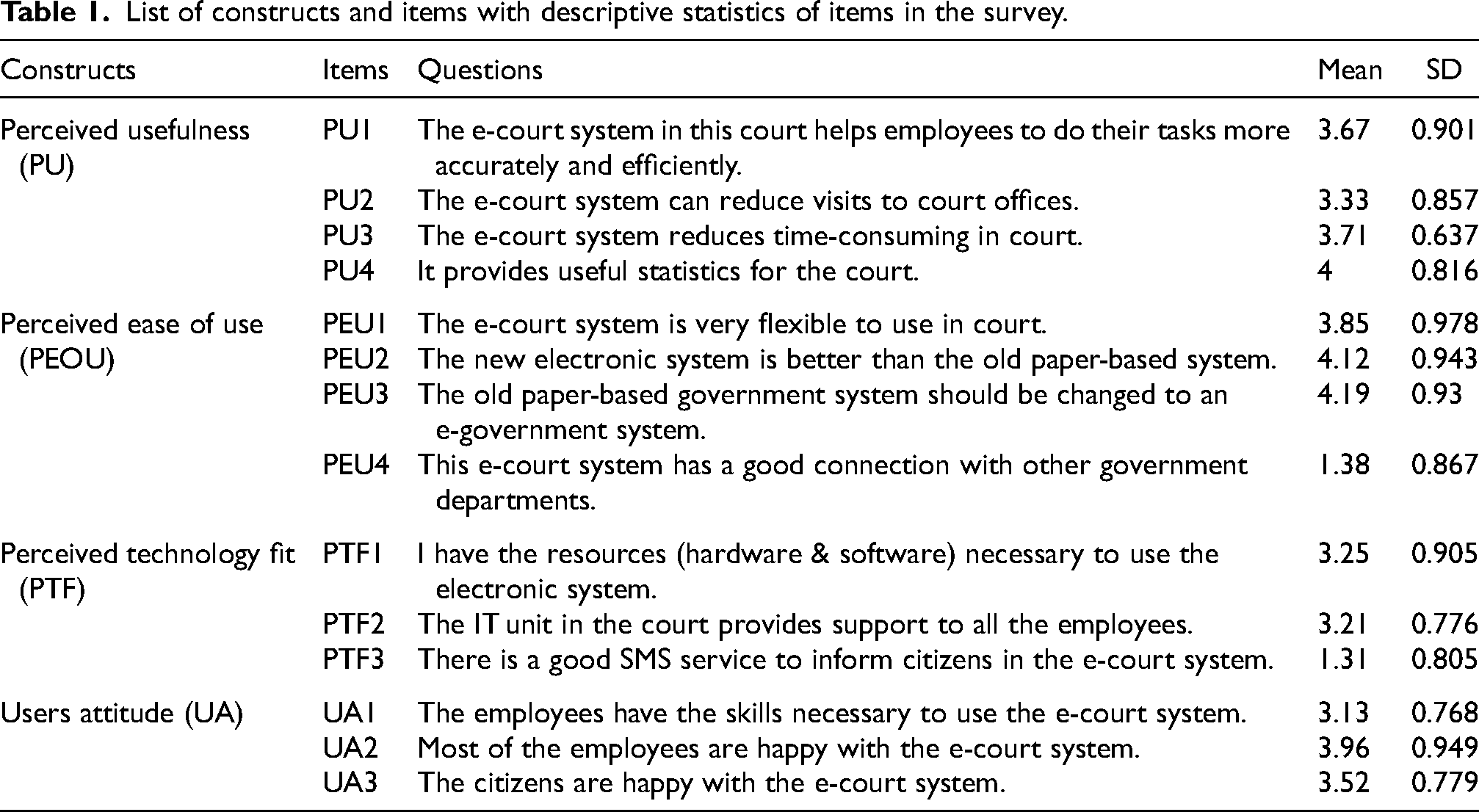
Table 1 outlines an exhaustive list of constructs, their corresponding items, and their respective descriptive statistics collected from a survey exploring the TAM factors. This table is a systematic and structured representation of the essential constructs integral to the TAM, each accompanied by multiple items for a detailed examination. The constructs are fundamental characteristics of the TAM model identified as critical to understanding the user's behavioral intention toward technology adoption, including PEOU, PU, PTF, and UA. Alongside each construct and item pair, descriptive statistics are presented. These statistics include measures such as mean, standard deviation, and other relevant numerical data that provide a comprehensive view of each item's performance in the survey. This detailed data analysis aids in further understanding the nuances and complexities of user acceptance and behavior toward technology in the e-court system.
List of constructs and items with descriptive statistics of items in the survey.
In the study of the e-court system in northern Iraq, a total of 52 individuals participated in the initial survey. Given the fairly new adoption of the e-court system in this region, securing a larger sample size posed challenges due to the limited number of people actively involved in the system at this stage. Out of these 52 participants, 25 were selected for in-depth interviews. This selection represents nearly half of the initial participants, ensuring a comprehensive representation of perspectives. This number aligns with qualitative research guidelines, where the objective is often to achieve data saturation. Given the specialized nature of the topic and the limited pool of involved individuals, the chosen sample size for survey and interviews is justified and practical. Based on the data presented in Table 2, a slightly higher percentage of female respondents (53.8%) participated in the survey than males (46.2%). While this observation could hint at a potential trend, it's crucial to avoid overgeneralizing this observation without further exploration. The age distribution of participants indicates a significant representation of older age groups, with 47.2% being above 40 years old. The lower age brackets are less represented, with only 1.9% between 20 to 24 years old, and the age groups of 25–29 and 30–34 accounting for 11.3% and 17%, respectively. The 35 to 39 age bracket constitutes 20.8% of the respondents. Looking at participants’ education levels, it is evident that the majority (86.8%) hold a bachelor's degree. Individuals with a high school degree, master's degree, and doctorate are all equally represented at 3.8%. Regarding professional roles, most participants (66%) are employees, with lawyers the next largest group at 22.6%. Judges represent 7.5% of the respondents, while managers constitute the smallest group at 1.2%.
Demographic information.
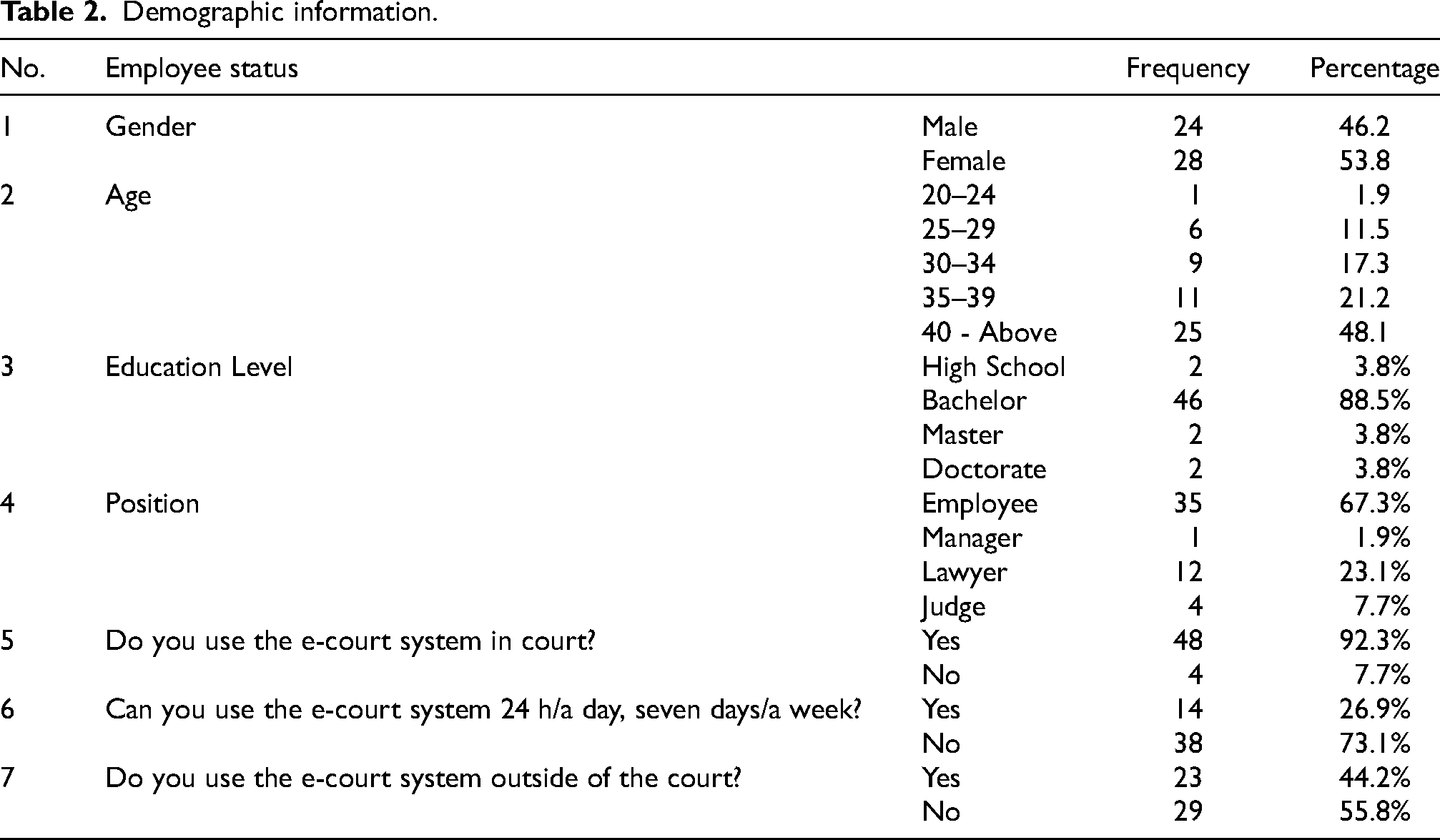
Regarding the utilization of the e-court system, a notable 92.3% of respondents affirmed using the system, whereas a minority of 7.7% claimed not to use it. However, when asked about the 24-h usage of the system, the majority (73.1%) revealed that they use it only during standard working hours, with only 26.9% utilizing it around the clock. Finally, using the e-court system outside the court premises seemed less common, with 55.8% of respondents indicating they do not use the system outside of court. Conversely, 44.2% reported they do engage with the system from locations other than the court.
A measurement model (MM) was utilized to examine the loading of observable variables (items) over latent variables (factors/constructs). The MM procedure was conducted with both reliability and discriminant validity. In this context, reliability refers to the degree that the measurement findings are consistent or stable, indicating the reliability of the questionnaire questions [35,19]. This study used composite reliability (CR) and Cronbach's alpha to determine whether the data have internal consistency. Table 3 demonstrates that each factor's composite reliability is greater than 0.7, which is greater than the cut-off value of 0.7, which defines the level of reliability. In addition, values for factor loading and average variance extraction (AVE) are reported, with values higher than the threshold values indicated by 0.7 and 0.5, respectively. Therefore, the AVE values of the sample must be more than 0.5, and the loadings of the measurable variable need to be greater than 0.7 to meet the requirements. In addition, Fornell and Larcker (Fornell and Larcker, 1981) recommend that the CR of the sample be more than 0.7, which must be followed.
Construct reliability and convergent validity.
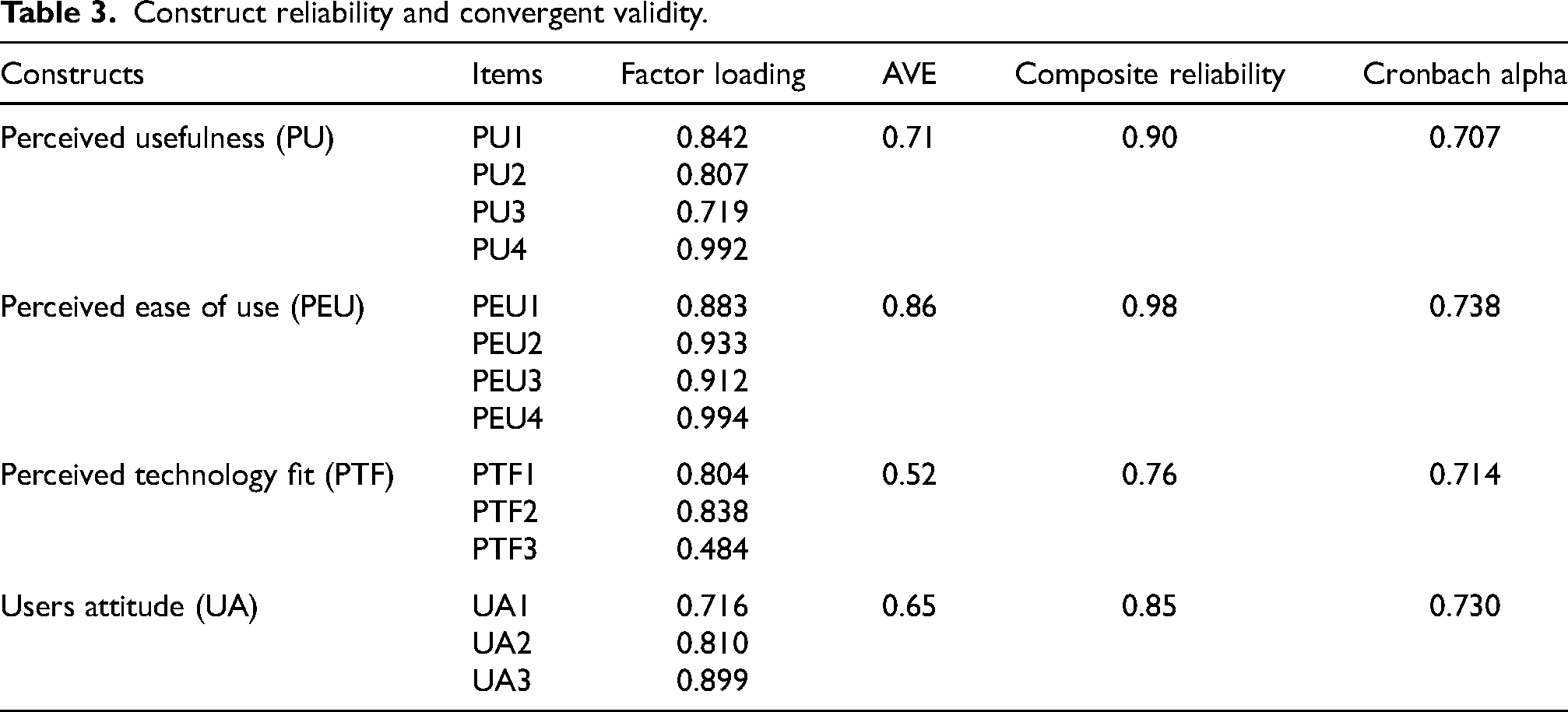
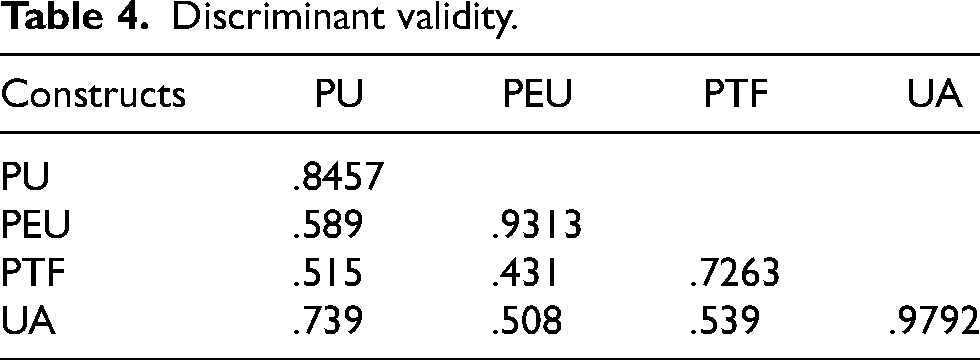
Validity pertains to the extent the model aligns with survey results, incorporating concepts like convergent and discriminant validity. Convergent validity evaluates the correlation among various indicators for a variable, measured through the average variance extracted (AVE), correlation ratio (CR), and the loading of relevant measurable variables. In essence, it quantifies the interrelatedness of multiple variable indicators. On the other hand, discriminant validity is the capacity of a concept and its markers to distinguish themselves from another idea. The assessment of both convergent and discriminant validity relies on comparing the covariance and variance between linked and latent variables within the evaluation items. Acceptable values for discriminant validity, presented in Table 3, confirm that each variable's measurements are distinct from the others, which is a prerequisite for discriminant validity. Discriminant validity is also affirmed when the AVE surpasses the square of the interscale correlation within the model. As Table 4 shows, the AVE consistently exceeded the squared interscale correlation, signifying the satisfactory discriminant validity of each variable. This statistical portrayal of data using the MM method underscores the model's accurate data representation.
Discriminant validity.
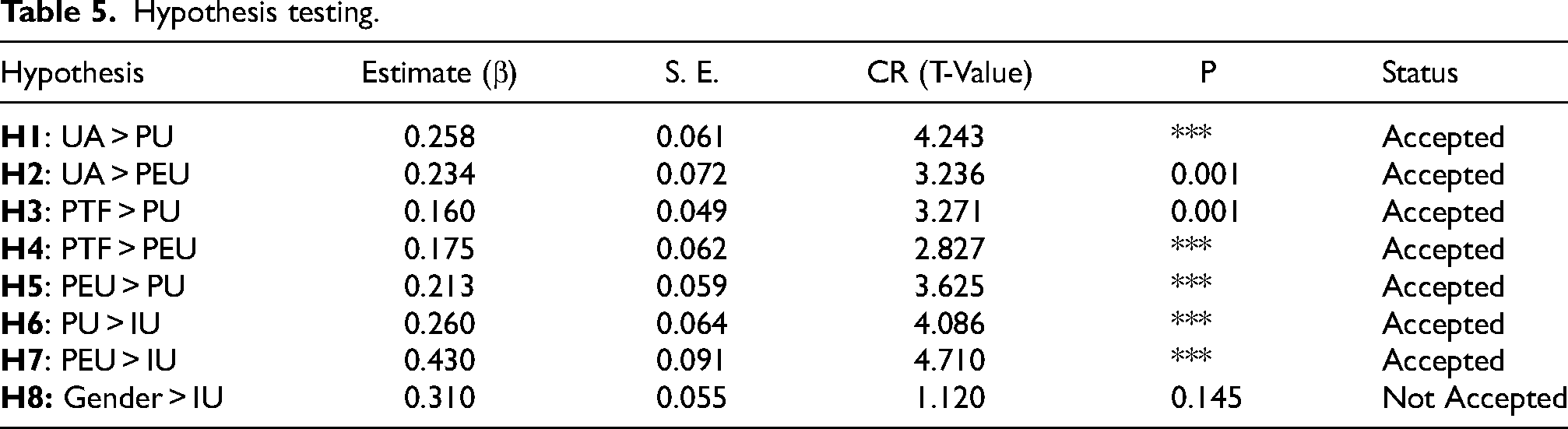
Hypothesis testing.
A survey was conducted in the Sulaymaniyah court to evaluate the efficacy of the e-court system as perceived by the staff and employees. The acquired data was analyzed using quantitative methods, and the results are presented herein. The questionnaire is bifurcated into two segments: the first covers demographic information, and the second assesses the court personnel's appraisal of the e-court system. The survey data were subjected to an in-depth analysis using descriptive statistics and the SPSS with SPSS AMOS tools. The primary focus was to explore the key factors driving the willingness of citizens to use the e-court system. Based on the TAM and the concept of computer self-efficacy, two key elements, PEOU and PU, were identified as significant.
The causal relations between these variables were investigated using the Structural Model (SM) in SPSS AMOS. The power of the constructs was estimated using the coefficient of determination (R2), while the path coefficient supported the proposed hypothesis. Table 4 presents the results of SM's fit indices and the cut-off value, providing an image of the model's statistical acceptability. The findings from the SM analysis (detailed in Table 4) suggest causal links between the hypothesized model's elements. Figure 6 displays the statistical significance of all paths ranging between 0.001 and 0.05. Based on these results, it was found that all behavior intent variables towards using the e-court system have been favorably accepted. The UA was found to impact both PU and PEOU directly. Similarly, the PTF influences both PU and PEOU. Lastly, the core TAM constructs (PEOU and PU) impact the behavioral intention toward using the e-court system. This data reveals a powerful influence of all variables involved in the study, as demonstrated by the AMOS findings.
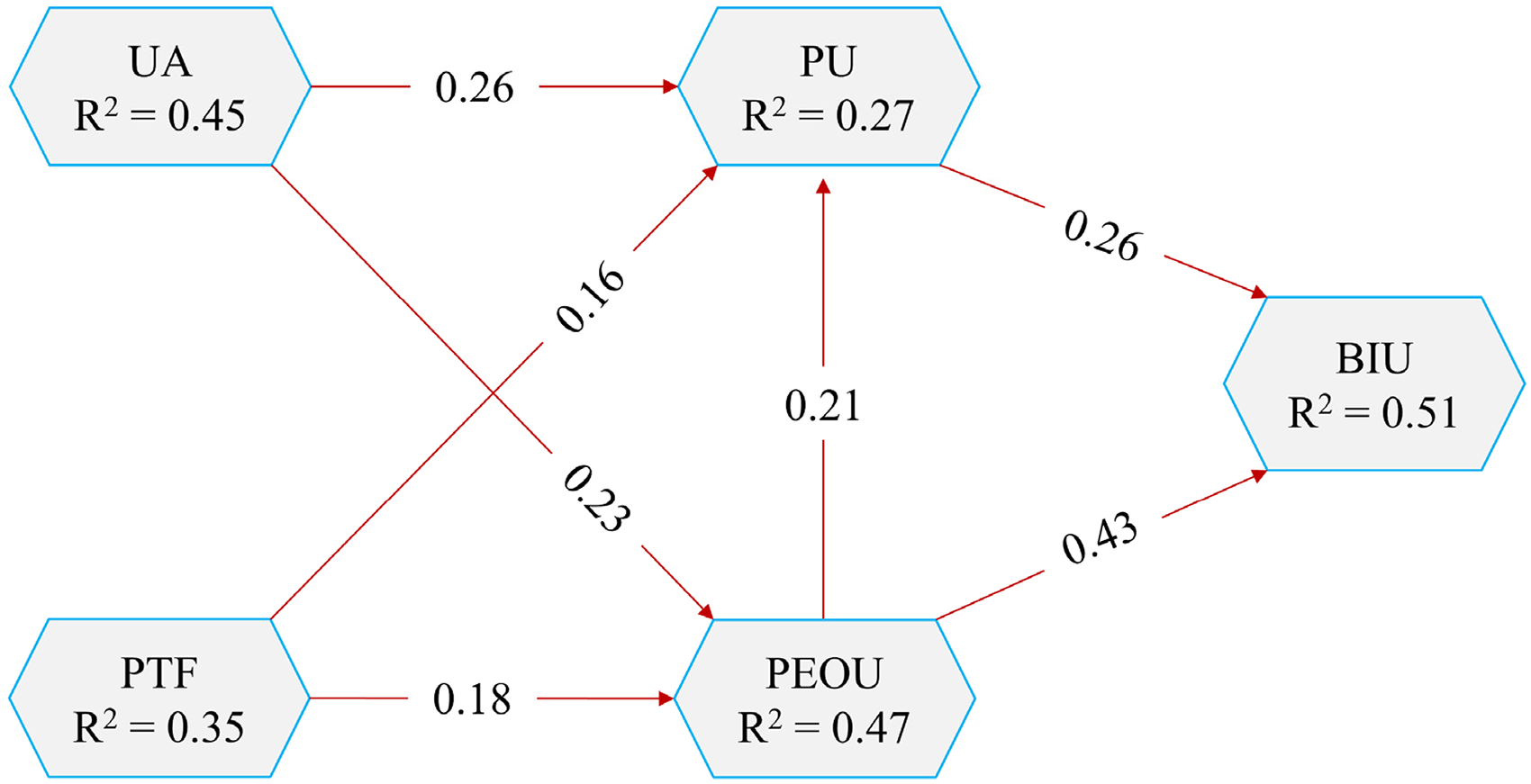
Results of the analysis.
Users’ attitude substantially positively influences PU (H1: = 0.258, P < 0.001). Then, UA positively influences PEOU (H2: β = 0.234, P < 0.005). On the other hand, PTF has a positive influence on Perceived Usefulness (PU) (H3: β = 0.160, P < 0.005). Then, PTF positively impacts PEOU (H4: β = 0.175, P < 0.001). Also, PEOU positively affects PU (H5: β = 0.213, P < 0.001). At the same time, PU positively influences the BIU (H6: β = 0.260, P < 0.001). Then, PEOU positively impacts BIU (H7: β = 0.430, P < 0.001). However, gender did not positively influence the IU (H8: β = 0310, P > 0.001).
The remainder of the section will go through the results of the suggested hypothesis (Table 5) separately. The following are all the hypotheses:
The first hypothesis is accepted; based on estimates results, the results support hypothesis 1 with the values (β = 0.258, CR = 4.243, and P < 0.001), showing that UA toward the use of an e-court system has a positive significant effect on the PU of the e-court system in the court. The new outcome is consistent with previous research (Lau and Woods, 2008; Sun and Mouakket, 2015). It demonstrates that users’ attitudes regarding using the e-court system are regarded as useful and beneficial for managing court.
The second hypothesis is accepted; based on estimates results, the results support hypothesis 2 with the values (β = 0.234, CR = 3.236, and P < 0.001), showing that the UA toward the use of an e-court system has a positive significant effect on the PEOU of the system in the court. It demonstrates that users’ opinions regarding using the e-court system are viewed as simple to use for managing court. The latest result is consistent with prior, completed studies (Venkatesh et al., 2012).
The third hypothesis is accepted; based on estimates results, the results support hypothesis 3 with the values (β = 0.160, CR = 3.271, and P <= 0.001), showing that PTF toward the use of an e-court system has a positive significant effect on the PU of the system in the court. It demonstrates that technologies are suitable for using the e-court system, indicating that it helps manage courts. In conclusion, the acquired results are consistent with the findings of other research studies (Lau and Woods, 2008).
The fourth hypothesis is accepted; based on estimates results, the results support hypothesis 4 with the values (β = 0.175, CR = 2.827, and P < 0.001), showing that the PTF toward the use of an e-court system has a substantial positive significant influence on the PEOU of the system in the court. It demonstrates that technologies are suitable for using the e-court system since it is regarded as simple to use for the management of the court. The results agreed with previous research projects’ conclusions (Lau and Woods, 2008).
The fifth hypothesis is accepted; based on estimates results, the results support hypothesis 5 with the values (β = 0.213, CR = 3.625, and P < 0.001), showing that the PEOU toward the use of an e-court system has a positive significant effect on the PU of the system in the court. It demonstrates that the usefulness of the e-court system can be inferred from the fact that it can be navigated with relative ease. The vital research conclusion from the present study validates the work already done (Jeong, 2011).
The sixth hypothesis is accepted; based on estimates results, the results support hypothesis 6 with the values (β = 0.260, CR = 4.086, and P < 0.001), showing that the PU toward the use of an e-court system has a positive significant effect on the BIU of the system in the court. It shows that the system attracts the intention of users to use the system in the court, and the users’ behaviors toward the system are positive, and they feel that the system is useful. Significant research findings from the present study support prior studies (Sun and Mouakket, 2015).
The seventh hypothesis is accepted; based on estimates results, the results support hypothesis 7 with the values (β = 0.430, CR = 4.710, and P < 0.001), showing that the PEOU toward the use of an e-court system has a positive significant effect on the BIU of the system in the court. It shows that the system is easy to use to attract the intention of users to use the system in the court, and the users’ behaviors on the system are positive. This study validates previous work with notable findings (Jeong, 2011).
The eighth hypothesis is not accepted. The estimated result does not support hypothesis 8 with the values (β = 0.310, CR = 1.120, and P > 0.001). It shows no significant differences between males and females in affecting BIU of the e-court system. It means that the intention to use an e-court system for both is equal, then males and females use the system with no differences.
The questionnaire's second section (Table 6), which contains 14 items for evaluating the e-court system, shows that most participants (61.5%) agree with the system's flexibility. Approximately half of the respondents (48.1%) acknowledge the electronic system's superiority over the old paper-based system, and a similar proportion support the transition to an electronic system. Notably, more than half (52%) agree that the e-court system can enable tasks to be executed more accurately and efficiently. However, concerning the reduction in office visits, nearly half (46.2%) remain neutral, indicating no noticeable decrease in visits to the court offices. Regarding resources and skills, about half (48.8%) of the participants are neutral about having sufficient computer resources, suggesting a need for more. Similarly, a majority (63.5%) remain neutral about staff skills, implying a need for enhanced computer and technological training. Regarding IT support, more than half (53.8%) of respondents are neutral, suggesting room for improvement in the IT unit's support.
Evaluation of the e-court system.
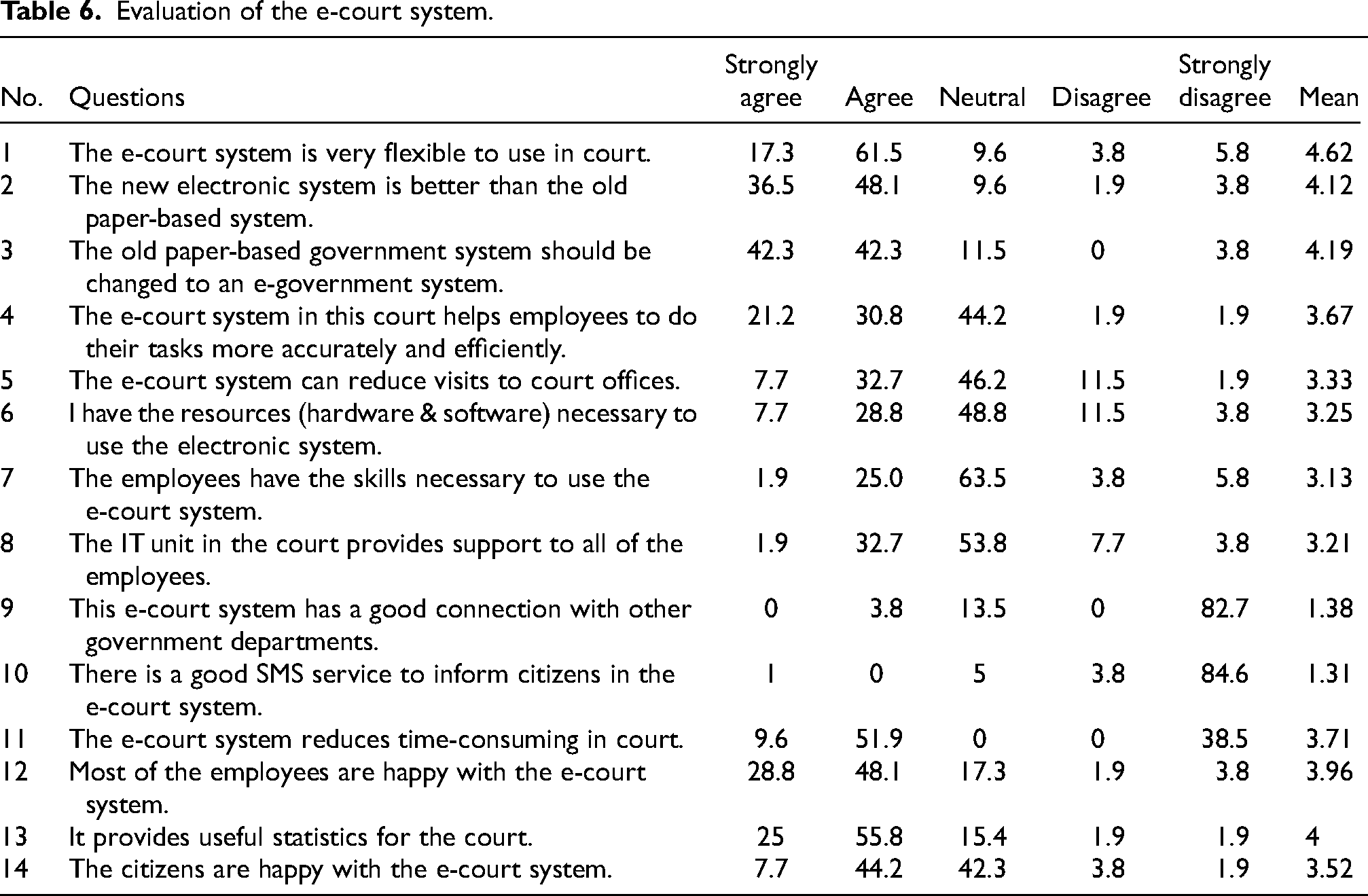
Regarding the system's connectivity with other government departments, an overwhelming majority (82.7%) strongly disagree, indicating a lack of inter-departmental integration. In addition, most participants (84.6%) strongly disagree about the system's SMS capabilities, pointing to a lack of such functionality. On a positive note, over half (51.9%) agree that the e-court system can reduce court time, and around half (48.1%) agree that most employees are content with the system. More than half (55.8%) agree that the e-court system can provide valuable statistical data for court administration, and a significant portion (44.2%) agree that most citizens are satisfied with the system. The varying mean scores reflect differing levels of agreement with the statements, from strong agreement (scores above 4) to neutrality (scores around 3) and strong disagreement (scores between 1 and 2). The responses underscore the strengths and areas for improvement in the e-court system.
This discussion revolves around the role and impact of e-court systems underpinned by technological advances, which have revolutionized traditional paper-based court procedures. The Sulaymaniyah appellate court's incorporation of an e-court system signifies a major shift towards a more efficient justice delivery system, illustrating the potential benefits for similar courts in developing countries. However, considerable obstacles, such as the lack of legal frameworks and limited financial, technological, and human resources, can hinder successful implementation. The TAM emerged as an appropriate lens to study the use of ICT in governmental institutions of developing countries. It highlighted the essential factors, namely UA, PTF, PU, and PEOU, in determining citizen intention to use the e-court system. Gender, however, was not a significant determinant in this context. Evidence from the study reinforces all the hypotheses developed around the TAM model. PU and PEOU are directly associated with the behavioral intention to use the e-court system, a finding that correlates with previous research. Notably, PTF also substantially impacts PEU and PU, suggesting that the perceived fit of the technology greatly influences how easily and effectively it is utilized. However, despite the many advantages, the study flagged issues with system utilization and indicated a need for enhancing staff skills through comprehensive training and IT support. The lack of connectivity between departments and available SMS service is also identified as an area needing improvement. However, the consensus amongst staff was that the e-court system has the potential to save time and streamline court procedures.
Conclusion
This study provides valuable insights into the factors influencing the successful implementation of e-court systems in regional governments within developing countries. Drawing on the TAM, the study investigates these systems’ PU, PEOU, and UA. It also analyzes the role of PTF and the effects of gender on the intention to use the e-court system.
In addressing the first research question, “What constructs have the most influence on e-government behavioral intentions to use the e-court system?”: It emerged from the results that PU and PEOU are critical constructs influencing behavioral intentions to adopt the e-court system. Both constructs were significantly associated with UA and the intention to use the system. The findings underscore the importance of ensuring that users find the system both useful and easy to operate. Moreover, PTF also significantly impacts both PU and PEOU, emphasizing that the technological aspects of the system should align with the users’ needs for maximum acceptance.
Concerning the second research question, “How is the sustainable implementation of the e-court system in regional government in developing countries?": The successful implementation of the e-court system in the Sulaymaniyah appellate court showcases a model that other regional governments in developing nations can emulate. While there are evident advantages, challenges such as the need for enhanced training, lack of system connectivity with other departments, and the need for an SMS service were identified. Addressing these challenges is vital for sustainable implementation, ensuring that the system remains beneficial and efficient in the long run.
The outcomes indicated that citizens’ satisfaction levels and the response of government entities and court employees serve as vital indicators to gauge the successful adaptation of court services in meeting the needs of both citizens and employees. Interestingly, the study unveiled that gender does not significantly influence the acceptance and usage of the e-court system. This research enriches understanding of the dynamics involved by focusing on technology adoption in the judiciary, particularly within developing countries. It suggests that for effective and sustainable e-court implementation, there is a need to amplify the system's usefulness, simplify its operation, and align its design with user-specific needs (technology fit). In contrast, this study provides noteworthy insights, and there is room for future exploration of other potential factors affecting e-court adoption, such as cultural, societal, and institutional elements. Additionally, longitudinal studies can present a more in-depth understanding of the long-term acceptance and usage trends of the e-court system and the evolution of these factors over time.
Finally, while the study primarily draws upon survey questionnaires to assess individual attitudes toward the e-court system, it is recognized that such responses inherently contain subjectivity. Future studies are recommended to incorporate a diverse range of data sources, including interviews, observational data, and secondary data analysis, to enhance the objectivity and depth of the findings.
Footnotes

Correction (March 2024):
The article has been updated to include Tugberk Kaya as corresponding author.