







Abstract
Artificial intelligence (AI) has been applied to mobile fitness applications (MFAs) to improve users’ continuance usage intention. Most of the literature has considered the adoption factors of MFA but has ignored the impact of AI effectiveness. To address this research gap, we develop a research model by integrating AI service quality and the theory of consumption value (TCV) to explore users’ continuance intention. Using a survey approach, a total of 416 valid questionnaires were collected in China, and the model was tested using partial least squares structural equation modeling (PLS-SEM). The results show that functional, emotional, social, epistemic, and conditional values partially mediate the relationships between AI service quality and the continuance usage intention of AI-enabled MFAs. This study contributes to the literature by considering and examining the effect of AI service quality on users’ assessment of different consumption values, which advances the understanding of the AI service quality function in AI-enabled MFAs.
Keywords
Introduction
The popularity of mobile terminals and the development of artificial intelligence (AI) have brought mobile fitness applications (MFAs) driven by AI into people's lives, and the market share of these applications has increased significantly worldwide (Vinnikova et al., 2020). An MFA is a mobile system that combines sports, exercise, and fitness functions to assist users in realizing their expected fitness objectives (Chakraborty et al., 2023; Lee and Lin, 2023). With the development of AI technology, the emergence of AI-enabled MFAs, such as Keep, in China's consumer market is of great significance to users. Compared with traditional MFAs, AI-enabled MFAs use voice, image, and video recognition technologies to provide users with more intelligent and personalized fitness services (Lee and Lin, 2023). The use of AI can improve and enhance MFA functions and help people effectively meet their fitness needs. In the post-COVID-19 pandemic era, people have realized the importance of exercise, attention to their health (Madhumitha and Lekshmi, 2022), fitness, and maintaining a healthy life; these issues have become global trends and consensuses.
Herrmann and Kim (2017) showed that the user retention rate of MFAs drops sharply within five months of installation. In recent years, although MFAs have been utilized for their ability to improve users’ fitness and health, users’ behavior is often short term (Teng and Bao, 2022). From the perspective of MFA users, a lack of long-term continuous use is not conducive to monitoring and evaluating their exercise performance, which may have a negative impact on their health or fitness activities. For application developers, it may be difficult to benefit from ads or in-app purchases (Chiu et al., 2020; Higgins, 2016). Moreover, reducing user feedback is not conducive to improving MFA services. Accordingly, it is important to understand the factors that influence users’ continuous use of MFAs. The current research on MFAs mainly analyzes the continuous use of MFAs from a technical function viewpoint. Most of the literature has utilized the technology acceptance model (TAM) (Beldad and Hegner, 2018; Cho et al., 2020; Huang and Ren, 2020; Madhumitha and Lekshmi, 2022), the unified theory of acceptance and use of technology model (UTAUT) (Li et al., 2019; Vinnikova et al., 2020; Wei et al., 2021; Yuan et al., 2015), and the expectation confirmation model (ECM) (Chiu et al., 2020) to explore the drivers of users’ continuous use intention or behavior regarding MFAs.
In reviewing the literature on MFAs, two significant research gaps are evident. First, although the majority of MFA studies predominantly utilize theories such as TAM and UTAUT to predict the user continuance intentions of MFAs, there is a noticeable oversight in addressing the perceived value of MFAs and how it impacts their continued use. The theory of consumption value (TCV) posits that the different consumption values of a product or service significantly influence not only consumers’ decisions to purchase or use it (Brandtzaeg and Følstad, 2017; Garrouch and Ghali, 2023; Sheth and Gross, 1991) but also their behaviors regarding sustainable consumption (Biswas and Roy, 2015). In particular, the consumption values in TCV reflect the five distinct consumption values of a product or service perceived by users, namely, functional, emotional, social, epistemic, and conditional values (Chakraborty et al., 2023; Sheth and Gross, 1991; Tavitiyaman et al., 2024). These consumption values represent various user perceptions that can result in different responses from users when interacting with AI-enabled MFAs. This oversight in the literature highlights a primary research gap and leads to the formulation of the following research question:
Noor et al. (2022) and Yang (2023) emphasized that the service quality of AI technology is a crucial factor that influences users’ decisions to embrace and continue using AI-powered technologies or services. As AI technology has been integrated into MFAs, it is critical to comprehensively explore how the service quality of AI technology impacts users’ perceptions of consumption values associated with AI-enabled MFAs (Lee and Lin, 2023). Understanding how AI service quality influences the five distinct consumption values—functional, emotional, social, epistemic, and conditional—is essential for examining the continued usage of these technologies. However, research has not sufficiently explored how AI service quality affects the ongoing use of AI-enabled MFAs through these consumption values. This research gap leads to the following research question:
To address these questions, this study primarily adopts TCV (Sheth and Gross, 1991) as the theoretical basis for integrating AI service quality and consumption values to develop a research model and corresponding hypotheses to explore users’ continuous adoption of AI-enabled MFAs. The research objectives of this study are to examine how AI service quality affects users’ valuation across different value dimensions, which ultimately influences their continuous use of AI-driven MFAs. This study employs a questionnaire method to collect 416 AI-enabled users to validate the model with a partial least squares structural equation modeling (PLS-SEM) approach. The first research question explores the role of consumption value in influencing continuous adoption decisions of AI-enabled MFAs. By applying TCV specifically to AI-enabled MFAs, this study enriches the literature on the development of AI systems by highlighting the multiplicity of the value dimensions—functional, emotional, social, epistemic, and conditional—that these users evaluate in their decision-making process. The findings of this study move beyond traditional models such as TAM and UTAUT and provides a deeper understanding of the various value-based drivers that sustain continuous user adoption of AI-enabled MFAs. The second research question focuses on the specific impact of AI service quality on perceived consumption values and continuous users’ usage of AI-enabled MFAs. This study is pioneering because it systematically examines how the service quality of AI technology in MFAs affects users’ perceptions of functional, emotional, social, epistemic, and conditional values and, consequently, their continuous usage behavior. By linking AI service quality to consumption values, this research provides more detailed causal pathways through which AI service quality influences these five different values in the context of the continuous adoption of AI-enabled MFAs. For practical significance, development teams can use the findings of this study to design MFA function modules that align more closely with the varied needs and values of users. By focusing on enhancing the functional, emotional, social, epistemic, and conditional aspects, these improvements can lead users to continue using the MFA. The structure of this study is as follows. In the next section, we review the MFAs, AI service quality, and TCV literature. The third section proposes the model and its corresponding hypotheses. The fourth section presents the research method and the research sample. The fifth section includes the statistical analysis of the data to examine the model and hypotheses. The results and contributions of this study are examined in the sixth section. The limitations of this study and future research are discussed in the seventh section.
Literature review
Theory of consumption value
The theory of consumption value (TCV) focuses on predicting, describing, and explaining consumers’ behaviors or intentions based on their perceptions of various consumption values (Karjaluoto et al., 2021; Meier et al., 2024; Sheth and Gross, 1991; Tavitiyaman et al., 2024). Within TCV, five specific consumption values are identified as influencing consumer behavior: functional, emotional, social, epistemic, and conditional values (Sheth and Gross, 1991). Specifically, functional value relates to the material attributes of a product or service that fulfill the substantial needs and material purposes of consumers, arising from the perceived utility in a choice situation. It is typically associated with the quality and price of a product or service (Chakraborty et al., 2023; Mantymaki et al., 2020) and involves aspects such as reliability (Ray et al., 2021), usefulness (Malodia et al., 2022), and personalization (Zhu et al., 2022). Emotional value reflects an individual's emotional response to a product or the experience of using it and is linked to feelings of love, pleasure, and comfort (Sheth and Gross, 1991). Emotional value also encompasses the enjoyment and pleasure derived from the product (Chakraborty et al., 2023; Mantymaki et al., 2020) and product recognition (Jiang et al., 2022).
Social value pertains to how a product can boost a consumer's self-esteem or foster a favorable social image, essentially reflecting a sense of belonging (Sheth and Gross, 1991). Consumers often make purchases to gain social group recognition, establish a positive image, and adhere to social norms (Sheth and Gross, 1991; Talwar et al., 2020). Epistemic value is driven by an individual's curiosity and a desire to acquire new knowledge (Sheth and Gross, 1991). This value may arise from innovative features on a platform (Ray et al., 2021), the availability of information (Talwar et al., 2024), and the novelty of content (Chakraborty et al., 2023). Finally, conditional value refers to the perceived utility of a product or service that consumers experience in specific situations, locations, or times. This value highlights the role of context or environment in consumer choices (Sheth and Gross, 1991) and often relates to factors such as user preferences (Talwar et al., 2020), adaptability (Hsu et al., 2021), and the availability of discounts and promotional offers (Chakraborty et al., 2023).
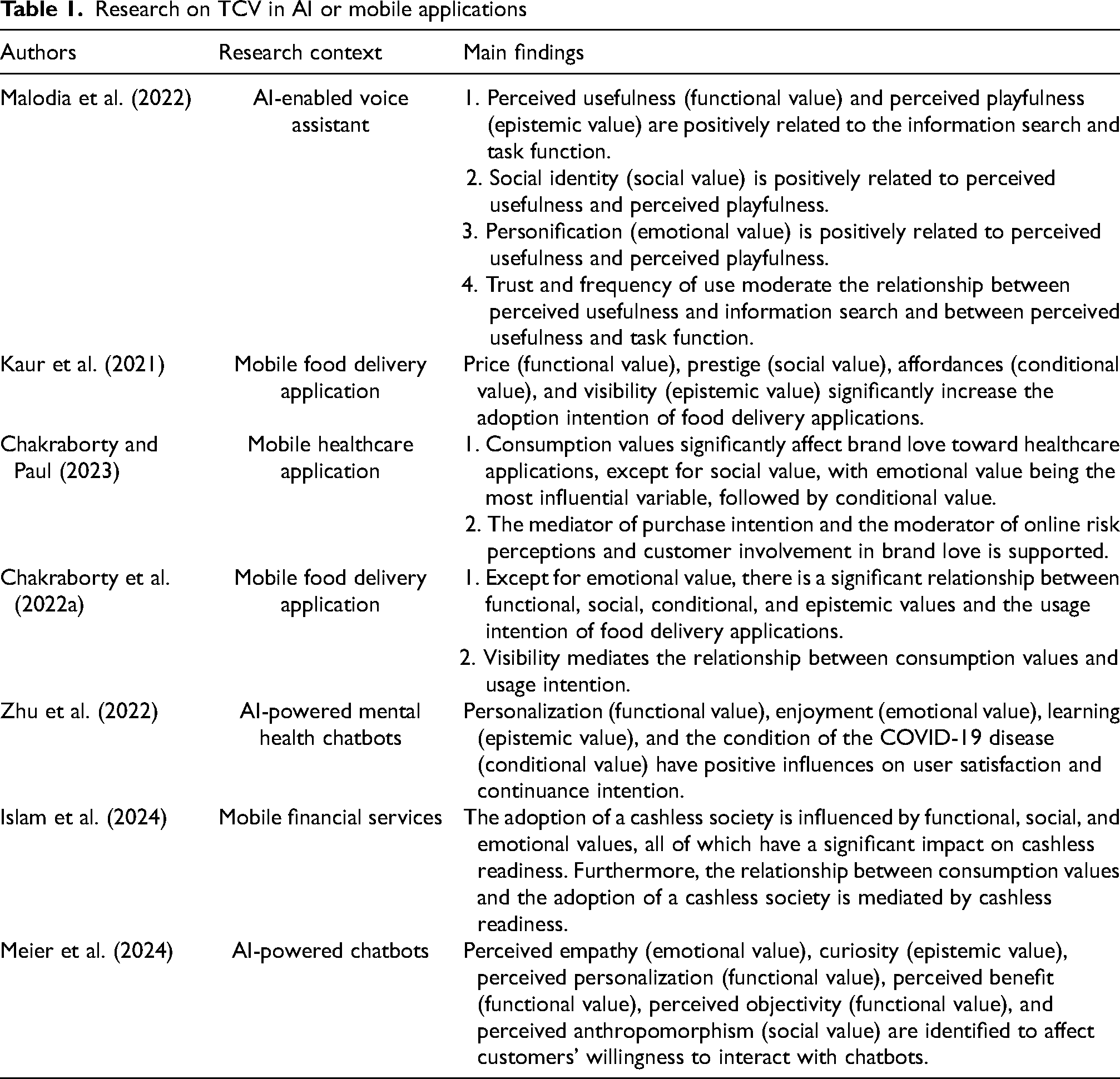
TCV includes functional, social, emotional, conditional, and epistemic values, all of which may influence consumer decision-making. This multidimensional approach to value analysis provides a thorough understanding of the diverse expectations and needs that consumers have regarding the adoption and use of technology (Chakraborty and Paul, 2023; Malodia et al., 2022; Meier et al., 2024). Table 1 summarizes the research that uses TCV to explore user behaviors in AI and mobile applications. Consequently, we employ TCV as the overarching theoretical framework to investigate users’ continuous intention to utilize MFAs. The literature has applied TCV to predict and explain user behavior, but these studies primarily focus on how consumption values influence consumer behavior or intentions, and they often overlook the precursor variables that shape these values. Moreover, AI technology has been incorporated into MFAs to offer users innovative, AI-powered fitness services that enhance their usage experience (Lee and Lin, 2023). Despite these advancements, there is a gap in the literature regarding how AI service quality impacts users’ evaluations of consumption values and, subsequently, their continuous adoption of MFAs. This gap highlights the need for further investigation into these relationships.
Research on TCV in AI or mobile applications
Mobile fitness applications (MFAs)
Mobile fitness applications (MFAs) integrate sports and fitness and offer features such as exercise guidance and supervision to help users achieve their health or fitness goals; they are recognized as effective tools for facilitating exercise guidance (Higgins, 2016; Molina and Myrick, 2020; Yeoh et al., 2024). Recently, the functionality and utility of MFAs have been significantly enhanced by AI technology (Lee and Lin, 2023; Molina and Myrick, 2020). This includes using natural language processing to provide timely, personalized solutions tailored to individual user needs (Yang et al., 2020) and maintaining interactions with users through human-like behaviors (Farrokhi et al., 2021). For users, AI-enhanced MFAs offer a broad range of services, such as action recognition and analysis, injury recovery, and training plans. These services support users in performing physical activities more scientifically and efficiently.
Existing research has employed various theories to analyze the continuous use of MFAs, including TAM (Beldad and Hegner, 2018; Cho et al., 2020; Huang and Ren, 2020; Madhumitha and Lekshmi, 2022), UTAUT (Li et al., 2019; Vinnikova et al., 2020; Wei et al., 2021; Yuan et al., 2015), ECM (Chiu et al., 2020), information systems continuance model (Yan et al., 2021), status quo bias theory (Li et al., 2021), self-efficacy theory (Vinnikova et al., 2020), postacceptance model of information systems continuance (Cai et al., 2022), theory of planned behavior (TPB) (Yeoh et al., 2024), stimulus‒organism‒response theory (Elsotouhy et al., 2024; Teng and Bao, 2022), health belief model (Wei et al., 2021), and goal-setting theory (Lee and Lin, 2023; Li et al., 2021; Li et al., 2024). Currently, AI technology enhances MFAs by refining their functionalities to meet diverse personal fitness needs and improve user experiences (Lee and Lin, 2023; Malodia et al., 2022). Research has demonstrated that the service quality of AI technology significantly influences individuals’ reactions to and usage of technology (Chen et al., 2023; Noor et al., 2022; Yang, 2023). However, there has been little exploration into how AI service quality affects users’ perceptions of value and users’ ongoing intentions to use AI-powered MFAs. This area requires more in-depth study. Consequently, based on TCV, this research explores the impact of AI service quality on users’ assessment of consumption value and their continuous intention to use AI-powered MFAs. In this way, this study addresses the research gaps highlighted in the introduction by enhancing our understanding of the critical factors driving sustained user engagement with AI-enhanced MFAs.
AI service quality
AI is defined as a system or machine that can competently perform tasks that usually require human intelligence, using the acquired information to achieve optimal results (Russell and Norvig, 2018). Noor et al. (2022) developed and operationalized the service quality of AI technology as a reflective second-order construct based on six dimensions: efficiency, security, availability, enjoyment, contact, and anthropomorphism. Efficiency refers to the perceived ease with which AI completes tasks (Davenport et al., 2020). Security measures the level of privacy protection and the risk associated with using AI, such as the potential misuse of personal information (He et al., 2017; Noor et al., 2022). Availability assesses how readily AI can be used at any time and place (Dabholkar, 1996) and reflects the responsiveness of AI-enabled applications to user needs (Noor et al., 2022). Enjoyment describes the pleasure that users derive from using AI, highlighting the emotional experience beyond practical needs (Lin and Hsieh, 2011). Contact gauges the extent of human assistance provided through AI, including the availability of human-like follow-up customer service if necessary (Noor et al., 2022). Finally, anthropomorphism refers to the human-like characteristics or emotions exhibited by AI (Lee and Chen, 2022).
Users’ perceptions of service quality significantly influence their decision-making processes and their satisfaction with and loyalty to the service (Javed et al., 2022; Prentice et al., 2020; Zeithaml et al., 1996). Chen et al. (2023) suggested that AI service quality is a subjective judgment by users about the quality of the service provided. High AI service quality can enhance perceived benefits and effectiveness while reducing costs. For instance, a greater availability of AI services reduces the time and energy that users spend seeking services, thereby enhancing their perceived functional value. Brandtzaeg and Følstad (2017) argued that higher AI service quality improves the ability of AI services to generate and enhance pleasure, thereby strengthening users’ perception of value. Additionally, Zhao et al. (2022) indicated that improvements in AI customer service can enhance user experiences in terms of efficiency and the emotional dimensions of enjoyment and anthropomorphism. Accordingly, although existing studies have established the impact of service quality on users’ value judgments, there remains a need to further investigate how AI service quality affects users’ perceptions of the five types of consumption values in AI-powered MFAs.
Research gap in AI-enabled MFAs
Based on these descriptions, the literature on MFAs reveals two primary research gaps. First, most studies have focused on theories such as TAM and UTAUT to assess users’ continued usage of MFAs. However, the influences of the five types of consumption values—functional, emotional, social, epistemic, and conditional—on the ongoing usage of AI-enabled MFAs remain unknown. These consumption values reflect diverse user perceptions and can lead to varied reactions among users when they engage with AI-enabled MFAs. Second, there is insufficient detail in the existing research on how the service quality of AI technology affects users’ sustained usage of AI-enabled MFAs through the lens of consumption values. Research emphasizes the critical role of AI service quality in the adoption of AI technologies (Noor et al., 2022; Yang, 2023). As AI becomes more integrated into MFAs and offers more innovative AI-powered fitness services, it is essential to analyze how AI service quality impacts user perceptions across the five types of consumption values. Understanding this impact is crucial for determining users’ ongoing usage of AI-enabled MFAs. To address these gaps, this study utilizes TCV as a theoretical foundation to explore how AI service quality influences users’ valuations across functional, emotional, social, epistemic, and conditional values, ultimately impacting their continued use of AI-driven MFAs.
Development of the research model and hypotheses
We explore and analyze how AI service quality affects users’ consumption value (function, social, emotional, epistemic, and condition values), which ultimately affects their willingness to continuously use AI-driven MFAs. The model and corresponding hypotheses are shown in Figure 1 and are discussed below.
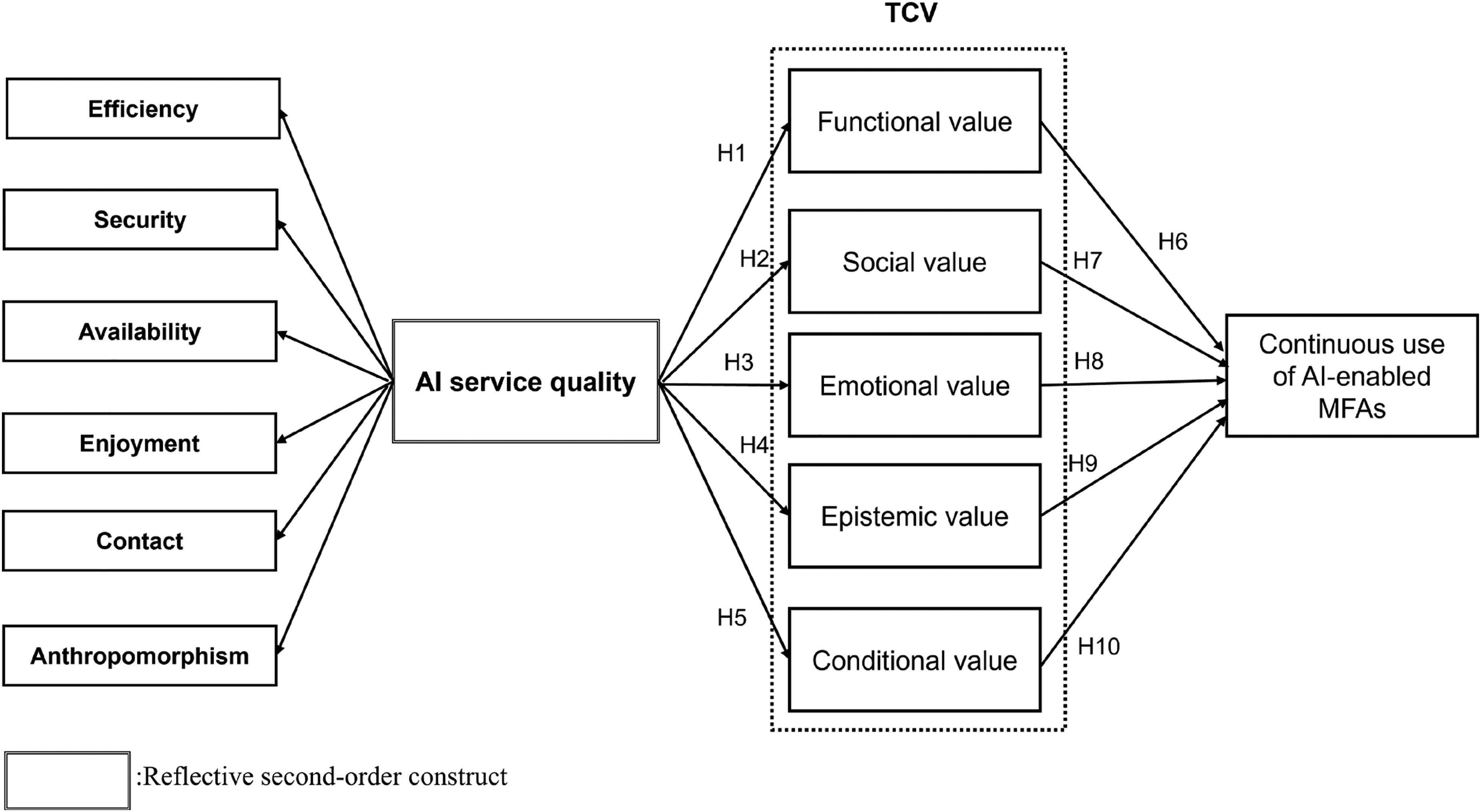
Research model.
AI service quality and consumption value
Users’ perceptions of AI service quality can be measured by the efficiency dimension, that is, the ease of use or convenience of AI services (Davenport and Ronanki, 2018). In the fitness context, AI-enabled MFAs can provide more personalized and timely fitness services for users based on their fitness goals and plans (Lee and Lin, 2023; West et al., 2018). With the support of AI vision algorithms, AI-enabled MFAs can provide not only intelligent virtual coaches to identify and guide users’ fitness actions but also real-time feedback to correct users’ incorrect movements to efficiently help users complete their fitness tasks and reach their exercise goals (Lee and Lin, 2023). This allows users to experience and perceive the functional value offered by AI-enabled MFAs. Therefore, we hypothesize the following:
Studies have shown that high-quality AI services can help users gain a social identity and establish a positive social image (Chen et al., 2023; Kaur et al., 2021). Because AI technology can enable and evolve MFAs, high-quality AI-enabled MFAs can access and analyze users’ online search and behavior data and capture users’ fitness preferences in real time. Analyzing user fitness preferences and interests through AI technology can help users find fitness circles that match their fitness preferences and interests. This further enhances the communication and interaction between users in these circles and develops users’ identities to improve the social value of AI-enabled MFAs. Thus, we hypothesize the following:
Noor et al. (2022) noted that with high-quality AI services, the process of using AI services is pleasant without considering the use of expectations. AI-enabled MFAs can collect and analyze user-input information, perceive users’ fitness status, and use natural language to provide care and encouragement (Lee and Lin, 2023). In this interactive process, individuals’ perception of the service creates the pleasure of emotions being understood (Chen et al., 2023). A service experience of this kind can make users feel warmth and trust, thus narrowing the distance between them and the AI services. Therefore, we hypothesize the following:
Epistemic value is related to novelty and curiosity (Sheth and Gross, 1991). AI services can process historical information and improve and promote social interaction with users (Noor et al., 2022). AI-enabled MFAs can be updated and upgraded depending on users’ fitness interests and preferences over time. The upgrading of AI-enabled MFAs is often accompanied by an increase or decrease in fitness items, interface replacement, and the intelligent upgrading of functions, which can continuously provide new fitness service experiences to users and increase their perception of epistemic value (Lee and Lin, 2023). Therefore, we hypothesize the following:
AI services are targeted. High-quality AI services can help users efficiently solve problems in various service contexts and conditions (Noor et al., 2022). AI-enabled MFAs offer users solutions that meet their various personal fitness needs, create conditions for the realization of personalized fitness results, and accurately and efficiently respond to users’ fitness needs (Lee and Lin, 2023). For example, AI-enabled MFAs can reduce users’ fitness spending by providing them with virtual fitness coaches and professional guidance through these coaches. By using AI algorithms to analyze user data, AI-enabled MFAs can provide training or fitness courses that are suitable for different fitness types and user competences. In addition, AI-enabled MFAs can help users exercise more efficiently anytime and anywhere, overcoming the limits of fitness venues and time (Lee and Lin, 2023). Therefore, we hypothesize the following:
Consumption value and continuous use intention
Functional value is measured by product attributes (Sheth and Gross, 1991). Perceived utility is obtained by users from product function, practicality, price, and other aspects, such as perceived convenience and perceived benefits. With the assistance of AI algorithms, AI-enabled MFAs can provide personalized and professional guidance and suggestions in line with the exercise objectives set by users and give feedback on phased results (Lee and Lin, 2023). These functions can meet users’ needs for professional guidance, stage assessment, and fitness effectiveness. AI-enabled MFAs can make personalized fitness training plans for users, provide effective supervision, identify nonstandard movements, and offer voice prompts and corrections. AI-enabled systems can facilitate users to perceive actual results, meet their expectations, and encourage users to continue to use AI-enabled MFAs for exercise. Consistent with previous findings, perceived benefits affect users’ intention to use mobile services (Xu and Gupta, 2009). Therefore, we hypothesize the following:
Under the influence of social value, the user's intention to continue using AI-enabled MFAs depends on whether the use of the application can improve the user's social status, shape his or her social image, or meet the user's internal needs (Chakraborty et al., 2022b). By utilizing AI-enabled MFAs, users can effectively interact with the fitness community. For example, MFAs can help users find other users who have common fitness goals and enable supportive comments, encouragement, and other interactions among users. Accordingly, users can share their fitness experiences, plans, and results. Based on this interaction, users can obtain a sense of belonging and identity in the community and build good social relationships, which make them more willing to use MFAs. The creation and maintenance of social relationships is the embodiment of social value. Thus, we hypothesize the following:
Emotional value has been found to be a factor in consumer decision-making (Wang et al., 2013). Compared with traditional applications, MFAs powered by AI have greater artificial humanity; that is, the application system has certain unique human characteristics that can show unique human behaviors and emotions. Anthropomorphism is considered one of the key features of AI. In the context of AI-enabled MFAs, the user's fitness process is accompanied by timely voice encouragement and action correction, and its tone is endowed with human-like emotion. This meets the emotional needs of users who may be tired or frustrated during the fitness process and provides them with psychological and technical support (Epley et al., 2007), which can effectively motivate users to adhere to their fitness behavior and continuously use AI-enabled MFAs. Therefore, the following hypothesis is proposed:
AI-enabled MFAs are considered to have epistemic value when users can experience wonder and novelty or satisfy their desire to acquire knowledge. AI-enabled MFAs have a human-like nature that can present human-like behaviors and respond to users’ fitness needs through natural language. This intelligent interaction process can stimulate users’ curiosity (Hoffman et al., 2023). Compared with traditional applications, AI-enabled MFAs update more frequently and more rapidly, and users can find and learn many novel features. For example, according to individual fitness plans and objectives, the MFAs driven by AI can set a personal fitness plan or upgrade through user action recognition and human key point monitoring to provide more professional guidance and scientific plans. Users constantly have new use experiences that enhance their perception of novelty, which also enhances their continued use intentions. Therefore, we hypothesize the following:
In AI-enabled MFAs, conditional value is related to users’ attention to their own health, which emphasizes the importance of the specific situation (Liu et al., 2021). When users give more attention to their health and body status, the personalized and professional fitness guidance provided by AI-enabled MFAs can meet their fitness and exercise needs. This provides high conditional value and helps to promote users’ continuous adoption. Generally, when the conditional value is more significant, the user's continuous adoption is stronger. We therefore hypothesize the following:
Research method
Data collection and sample
We examine the model and hypotheses using a questionnaire approach. The target samples are Chinese users who have experienced AI-enabled MFA usage. These users actually experienced the benefits stemming from the use of AI-enabled MFAs. Based on a survey of experienced users, we can precisely obtain these users’ evaluation of consumption value when using AI-enabled MFAs. To develop the questionnaire, we adopted a back-translation method (Brislin, 1970) to translate the original English instrument into Chinese. In the pilot test, three experts—two university professors and one MFA practitioner—were invited to participate in developing the questionnaire to ensure that it met the face and content validity requirements (Lee and Chen, 2024). Including multiple experts from both universities and the MFA industry significantly enhances the questionnaire's quality by incorporating diverse experiences and expertise from academic and practical perspectives. This approach helps ensure that the questionnaire is clear, complete, relevant, and understandable, which ultimately leads to more reliable and valid research outcomes. Next, to ensure that the questionnaire was clear and aligned with the language habits of the respondents, we sent it to multiple users of AI-enabled MFAs for pretesting. The final version of the questionnaire was refined based on their feedback and suggestions. Notably, we consulted Lee and Xiong's (2023) questionnaire design practices. At the beginning of the formal questionnaire, we introduced and provided several AI-enabled MFA examples (e.g., Keep) for respondents to understand the AI-enabled functions and elements in MFAs. We then designed several questions to determine whether the respondents had usage experience with AI-enabled MFAs to complete the questionnaire. These practices allowed us to qualify and obtain suitable respondents for this investigation.
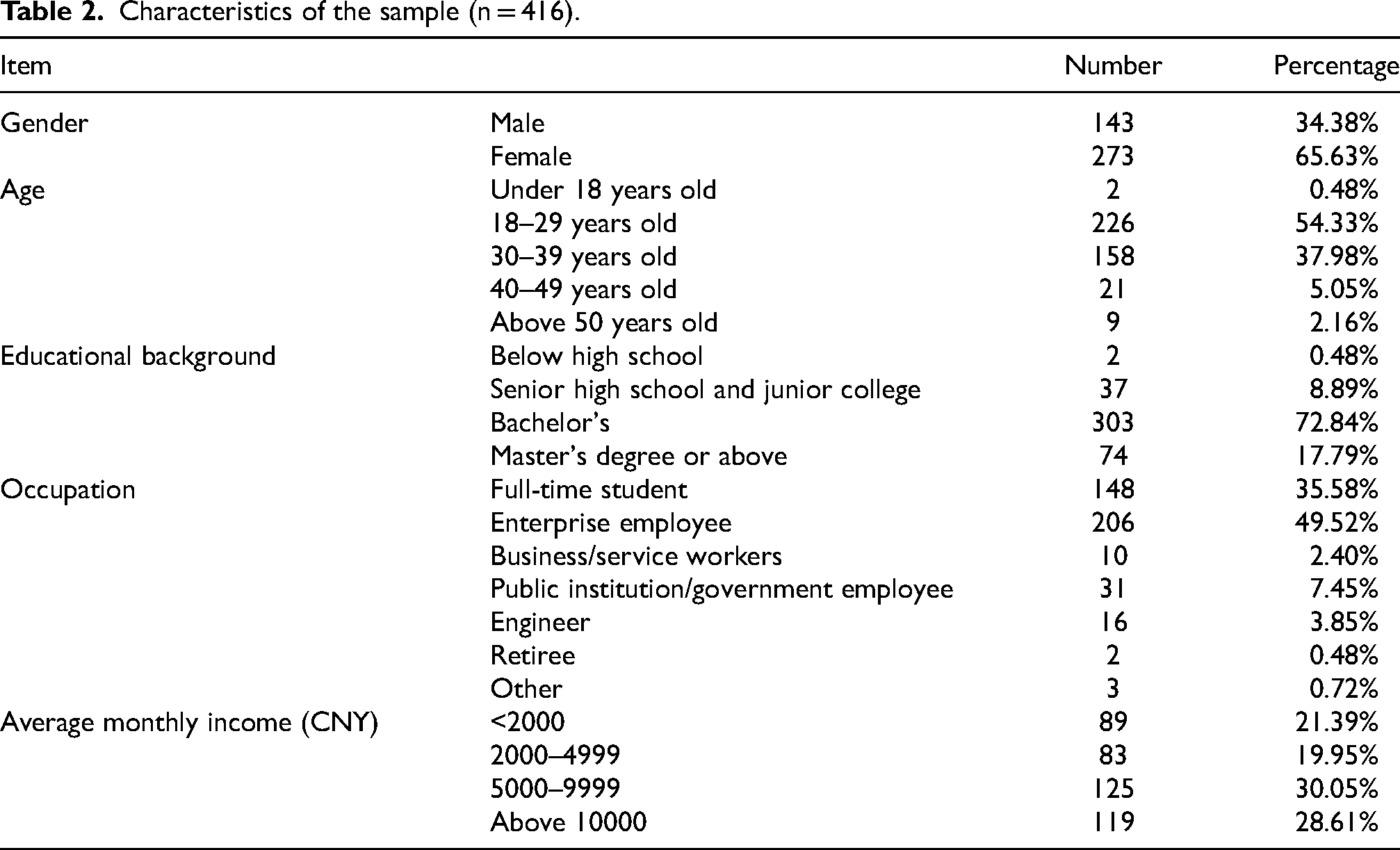
Moreover, following the guidance of other studies (Ashour, 2024; Campanelli et al., 2018; Lee et al., 2021; Lee and Chen, 2024), we used G*Power software (Faul et al., 2009) to calculate the required sample size for PLS-SEM to validate our proposed model. Following Campanelli et al. (2018), we set the software parameters to an effect size of 0.15 (average value), a power level of 0.95, and a maximum allowed error of 0.05. The maximum number of predictors in the model is five, all indicating the “continuous use of AI-enabled MFAs” construct. Based on these settings, the software recommended a minimum sample size of 138 (see Figure 2). We gathered the formal questionnaires using Credamo, a professional paid survey platform (www.credamo.com). The platform has strict audit procedures for user registration (such as online identity verification) and restricts each internet address (IP) to a single response to avoid repeated answers by users (He et al., 2023). Additionally, the platform has a large sample database that can facilitate the collection of samples via random sampling rather than convenience sampling. With the support of the platform, we can effectively gather higher-quality samples. Through random sampling afforded by the platform, a total of 425 samples were collected; however, nine incomplete samples (i.e., the participants who failed to pass the attention check questions) were eliminated to ensure the quality of the samples. Ultimately, 416 responses that exceeded the minimum sample size were included in the data analysis. Moreover, we conducted a nonresponse bias test using an extrapolation method suggested by Armstrong and Overton (1977) to examine the sample's representativeness of the population. This method assumes that participants who respond later are more likely to be nonrespondents. There is no significant difference between the earliest 25% of the responses and the last 25% of the responses, implying that nonresponse bias is an insignificant concern, and our sample is representative of the population. The demographic information of the participants is shown in Table 2.
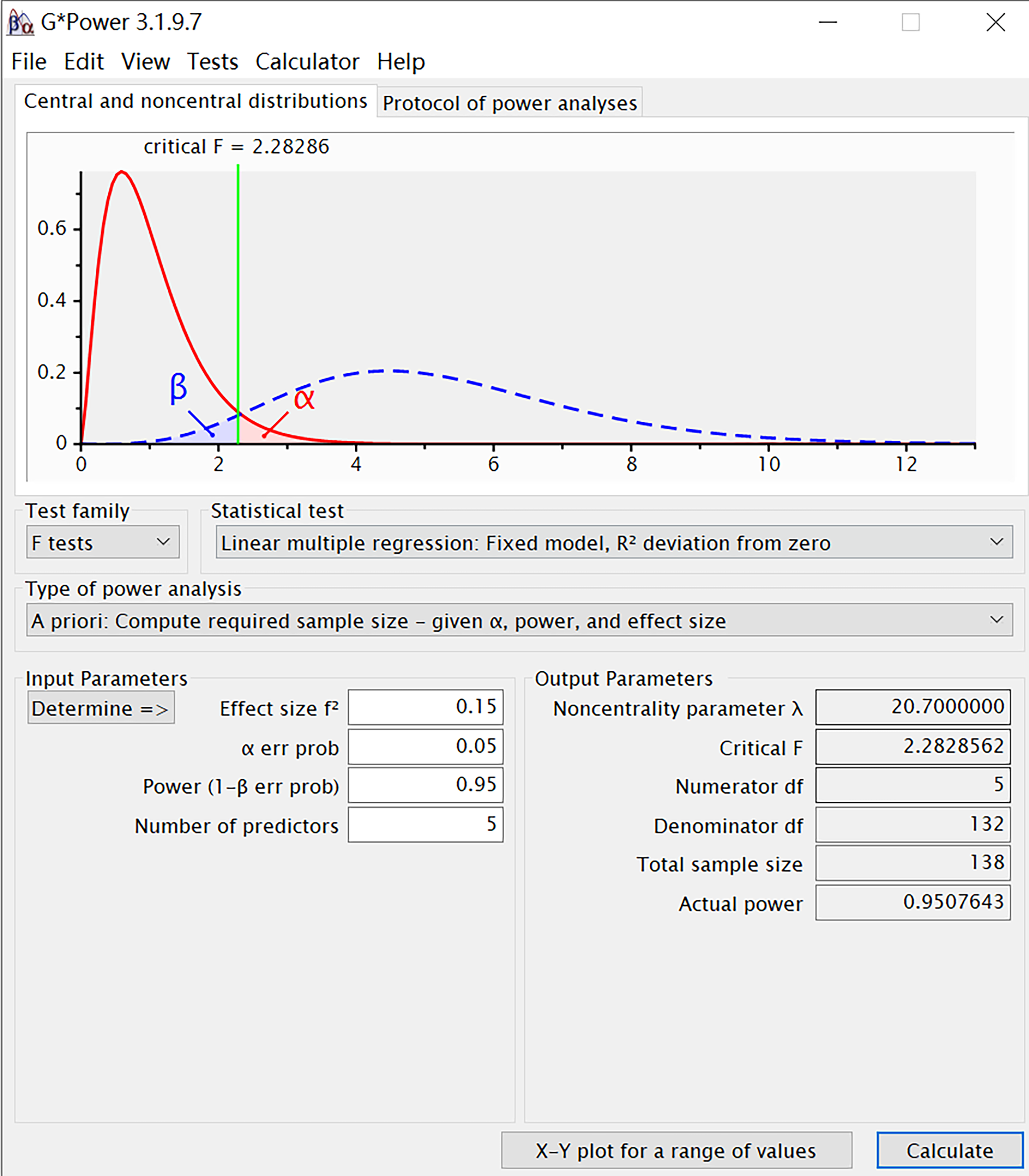
The minimum sample size was calculated using G*Power software.
Characteristics of the sample (n = 416).
Measurement
The proposed variables of this study and their corresponding measurement scales were adapted from existing validated studies and tailored to the AI-enabled MFA context (see Table 3). We adopted a seven-point Likert scale to assess all of the survey items, ranging from ‘strongly disagree = 1’ to strongly agree = 7’. Specifically, we used Noor et al.'s (2022) research to operationalize the AI service quality variable as a second-order reflective construct with efficiency (3-item scale), security (4-item scale), availability (3-item scale), enjoyment (4-item scale), contact (5-item scale), and anthropomorphism (6-item scale). The consumption value measures of the function value, emotional value, epistemic value, and social value depend on four items adapted from Chakraborty and Paul (2023). Conditional value was assessed by the 3-item scale adapted from Kaur et al. (2021). Finally, the continuance intention adoption of AI-enabled MFAs relies on three items adapted from Chakraborty and Paul (2023). The Cronbach's alpha was evaluated with SPSS to confirm the reliability of the variables. The Cronbach's alpha values were as follows: anthropomorphism = 0.894, availability = 0.781, continuance intention = 0.713, contact = 0.918, conditional value = 0.759, efficiency = 0.704, enjoyment = 0.786, epistemic value = 0.756, emotional value = 0.817, function value = 0.766, security = 0.906, and social value = 0.764. All of the variables’ Cronbach's alpha values are greater than 0.70, implying that the scale is reliable.
Survey instrument items.
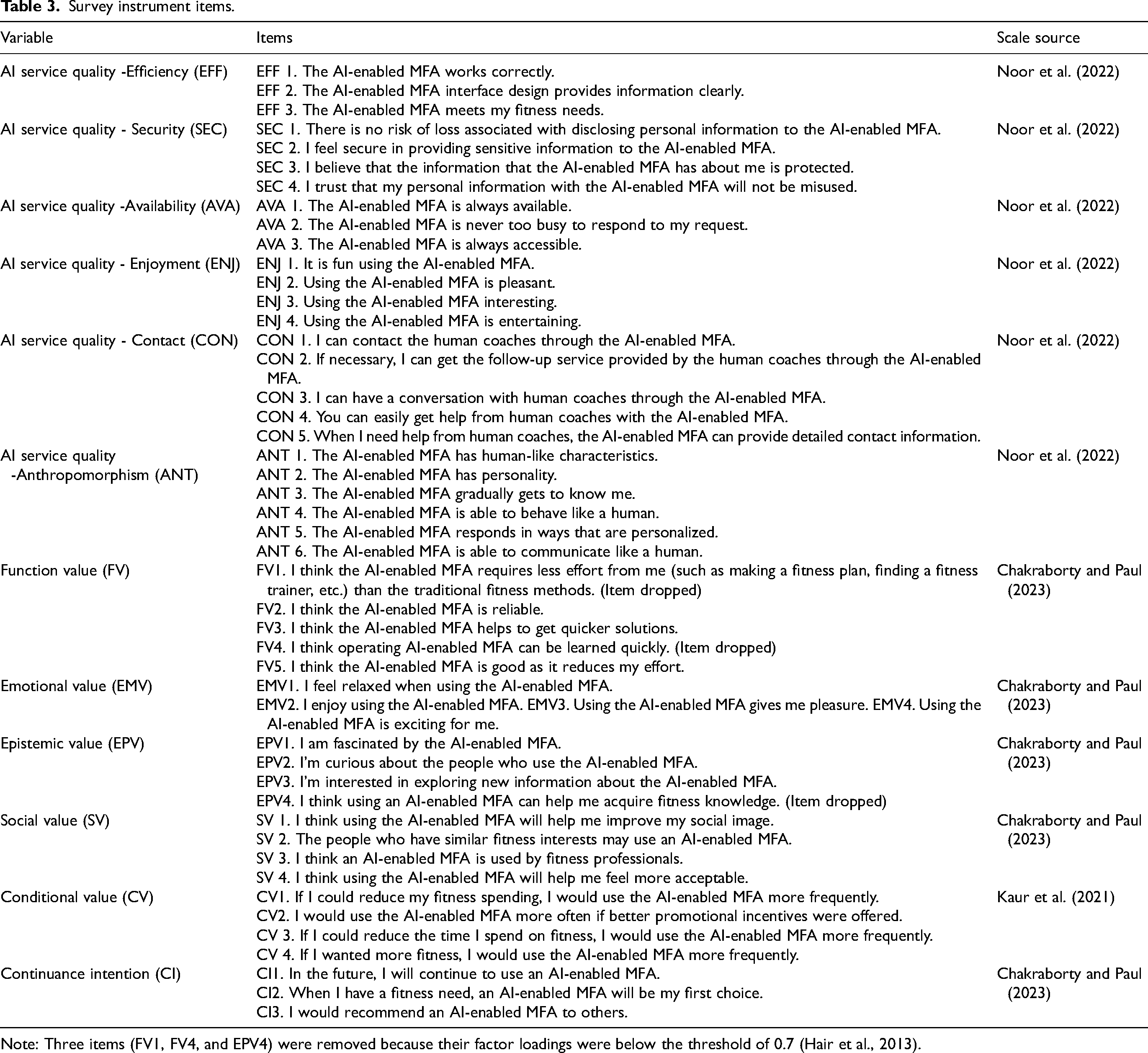
Note: Three items (FV1, FV4, and EPV4) were removed because their factor loadings were below the threshold of 0.7 (Hair et al., 2013).
Common method bias
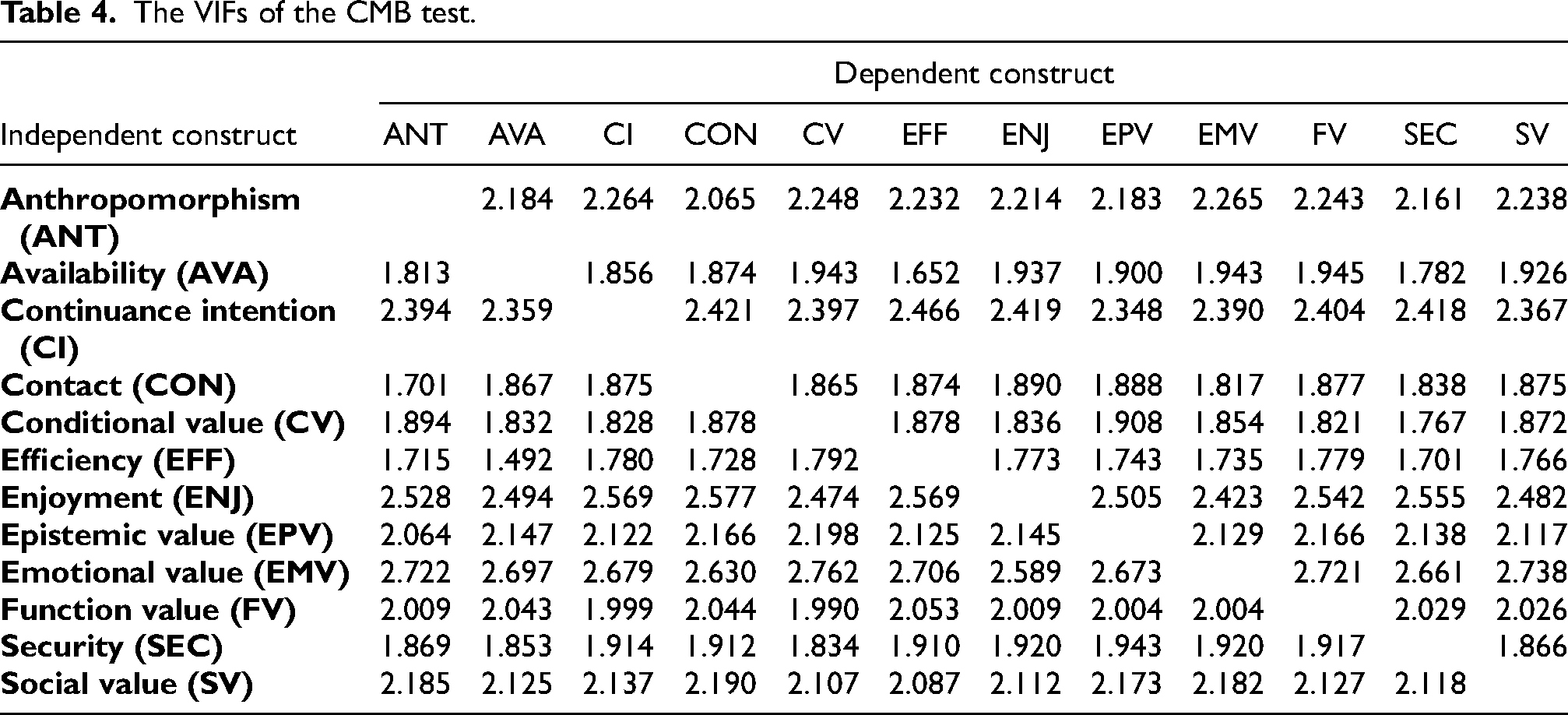
We adopted two approaches (i.e., Harman's single-factor test and a full collinearity test) to check the effect of common method bias (CMB) on the investigation. First, Harman's test showed that the first factor accounted for only 34.5% of the variance without explaining more than 50% of the total variance. The results demonstrated that CMB is not a significant factor (Harman, 1976). In addition, the full collinearity test showed that all of the variance inflation factors (VIFs) were less than the suggested threshold of 3.3 (Lee et al., 2021; Lin and Lee, 2024) (see Table 4). Overall, CMB did not threaten our investigation.
The VIFs of the CMB test.
Data analysis
The analytical results of the PLS-SEM technique are not severely biased by model complexity, nonnormal distributions, multicollinearity problems, or small sample data (Hair et al., 2013; Lee and Chen, 2022; Sarstedt et al., 2022). The literature recommends that PLS-SEM is appropriate for verifying models that include higher-order constructs (Lee et al., 2021; Sarstedt et al., 2022). Because reflective second-order constructs (i.e., AI service quality) exist in the model, the PLS-SEM technique with SmartPLS 3 software (Ringle et al., 2015) was employed for data analysis. PLS-SEM analysis involves two stages: the first stage assesses the measurement model, and the second stage evaluates the structural model.
Measurement model
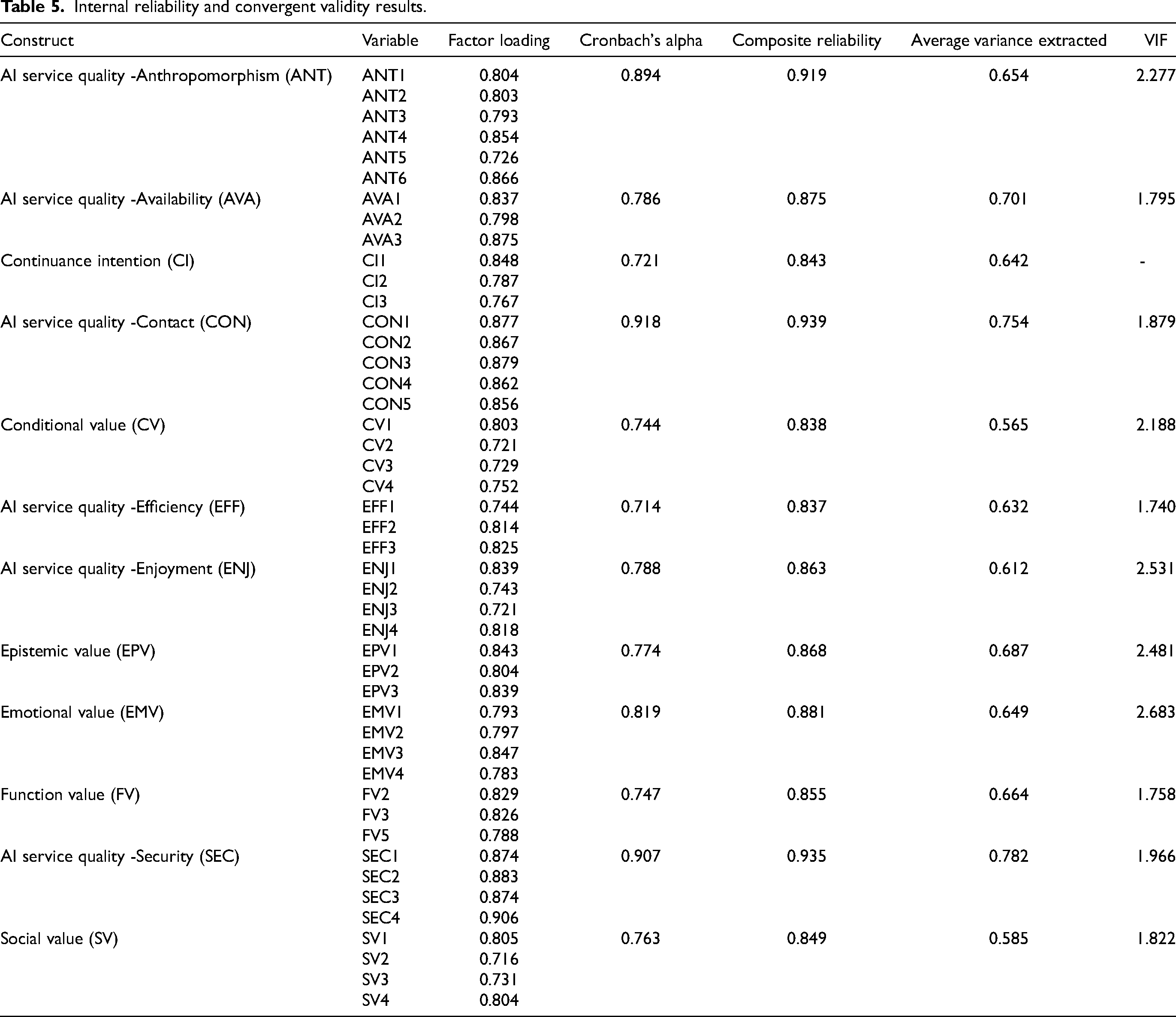
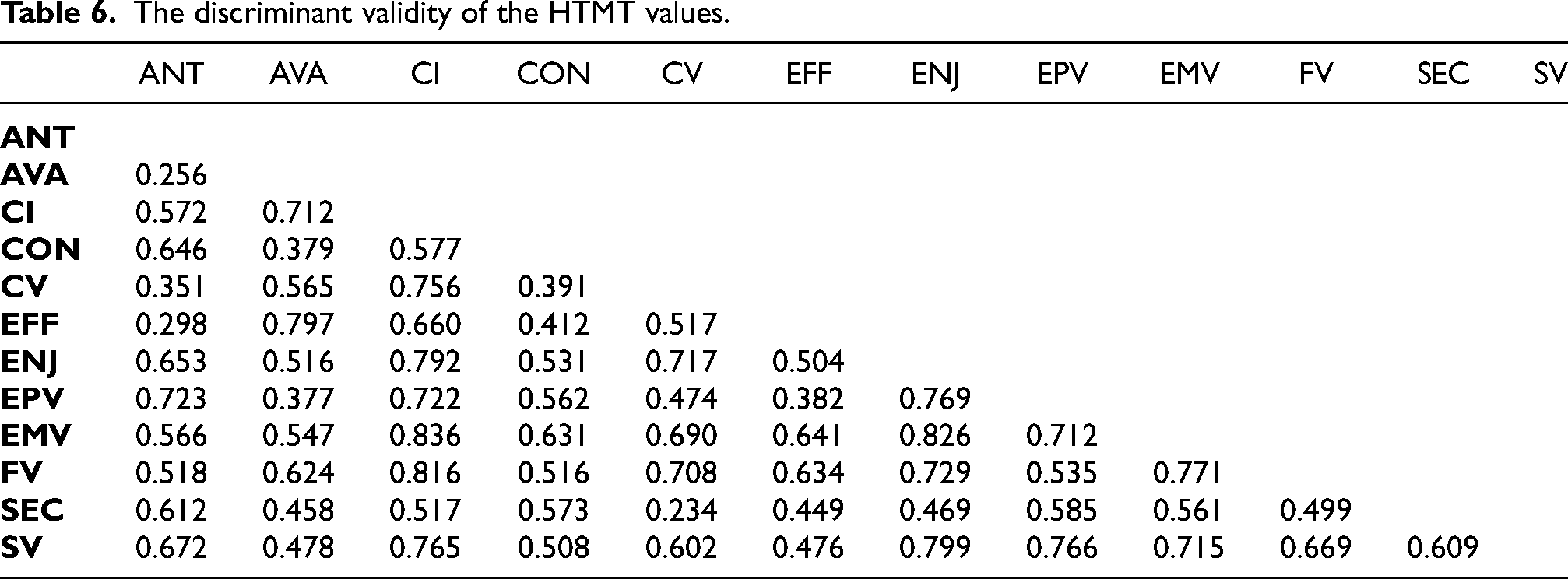
The measurement model mainly involves computing the internal reliability and validity of the variables. Cronbach's alpha and composite reliability were utilized to examine the reliability (Hair et al., 2013). Among these tests, the threshold value of both the Cronbach's α value and composite reliability is 0.7 (Hair et al., 2013). According to the results (see Table 4), the Cronbach's α value of each variable exceeds 0.7 (ranging from 0.721 to 0.918), and the composite reliability of the variables is greater than 0.7 (ranging from 0.837 to 0.939). Hence, the reliability of the variables in this study is acceptable. In terms of validity, we examined convergent validity and discriminant validity (Hair et al., 2013). Convergent validity is used to test whether the measurement item is related to its facet. The measurement of convergent validity was based on the factor loading value and average variance extracted (AVE). If a variable's AVE value was greater than 0.5 and its corresponding factor loading values exceeded 0.7, then its convergent validity could be confirmed (Hair et al., 2013). According to Table 5, all variables in this study satisfied the requirements of convergent validity. In addition, we adopted a heterotrait–monotrait (HTMT) ratio correlation approach to test discriminant validity. The HTMT value should be less than the threshold of 0.85, as recommended by Henseler et al. (2016a). As shown in Table 6, we found that all HTMT values were below the threshold of 0.85, supporting discriminant validity. Moreover, we used SPSS software to check for multicollinearity in our sample. All VIF scores for the independent variables were within the suggested range of less than 3, indicating that multicollinearity was not an issue in our sample (see Table 5).
Internal reliability and convergent validity results.
The discriminant validity of the HTMT values.
Structural model and mediation analysis
Structural model analysis includes the path coefficient (β) and R2 value to estimate the model. The path coefficient reflects the strength of the correlation between the variables (Hair et al., 2013). The R² value refers to the degree to which the independent variable interprets the dependent variable, which reflects the explanatory power of the model (Hair et al., 2013). In the PLS-SEM analysis, a bootstrap resampling method (10,000 resamples) was employed to calculate the path coefficient of the hypotheses and R2 values of the variables (Hair et al., 2013). Figure 3 and Table 7 display the results. We found that AI service quality can increase functional, emotional, social, epistemic, and conditional values, supporting H1-H5, respectively. The five distinct consumption values can foster users’ continuous adoption of AI-enabled MFAs, supporting H6-H10. Additionally, the R2 values of the functional, emotional, social, epistemic, and conditional values and continuance intention are 0.382, 0.442, 0.503, 0.449, 0.222 and 0.558, respectively.
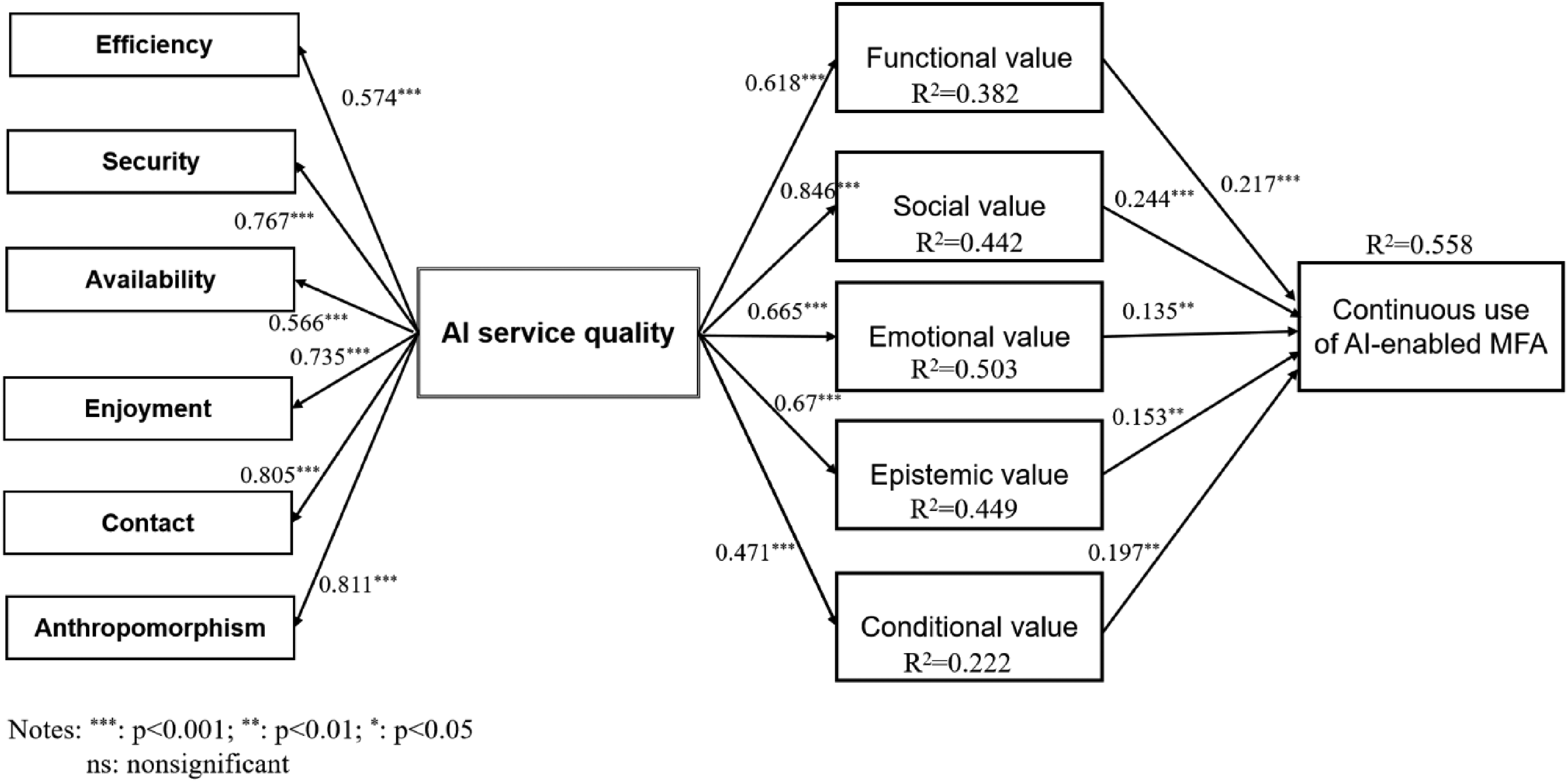
Results of the model analysis.
Results of the structural model.
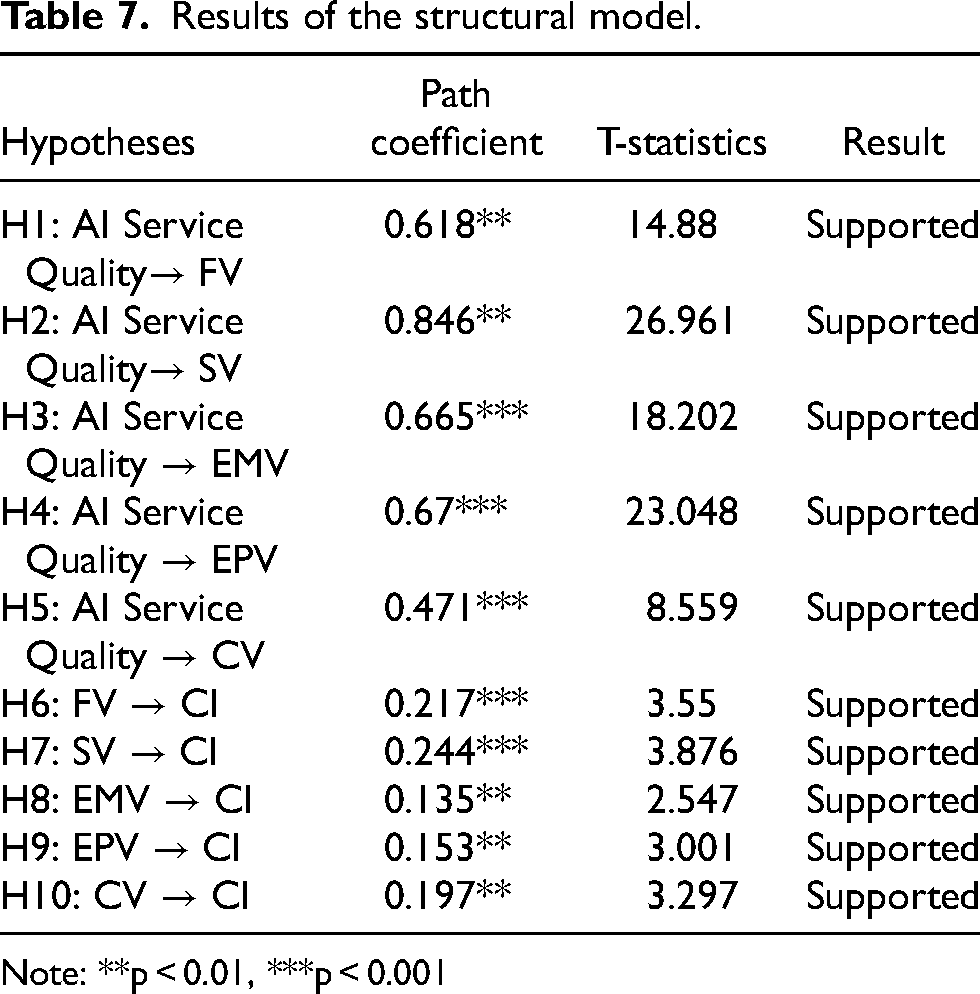
Note: **p < 0.01, ***p < 0.001
Moreover, we conducted a mediation analysis based on Zhao et al.'s (2010) approach. Specifically, when assessing a mediation effect, if neither the direct effects nor the indirect effects are significant, then there is no mediation (Lee and Chen, 2022, 645). If both direct effects and indirect effects are significant and the product of the two effects is positive (or negative), then there is complementary mediation (or competitive mediation) (Lee and Chen, 2022, 645). Paths with significant indirect effects and nonsignificant direct effects represent indirect-only mediation (Zhao et al., 2010). We found that all mediations (paths 1–5) are complementary mediations (see Table 8). Functional value, emotional value, social value, epistemic value, and conditional value act as partial mediators between AI service quality and continuance intention. A discussion of the mediation results is presented in Section 6.1.
Analysis of the mediating effects.
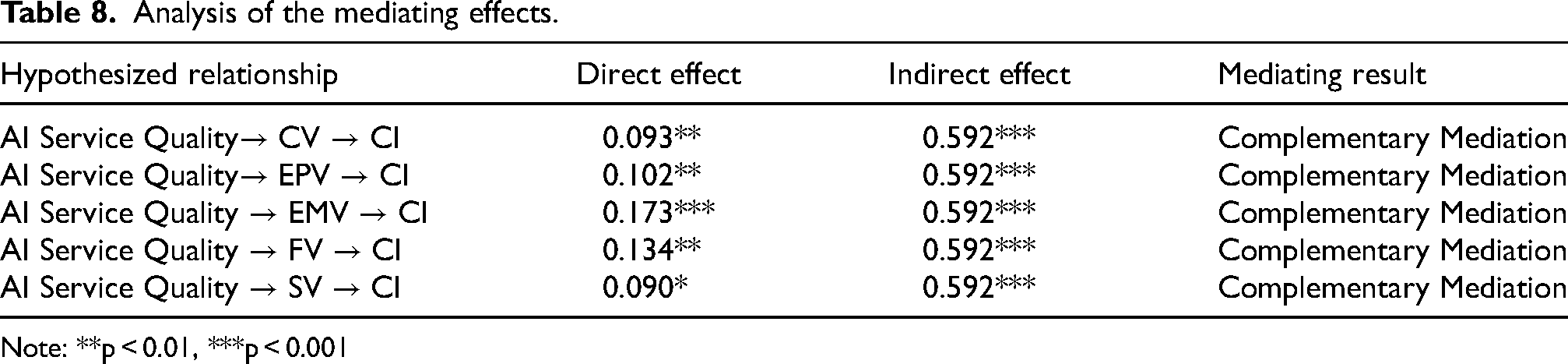
Note: **p < 0.01, ***p < 0.001
Multisample analysis
Researchers have indicated that sex and age are likely to impact user AI-powered technology adoption intentions and behaviors (Belanche et al., 2019; Lee and Chen, 2022). Understanding the distinctions in terms of sex and age allows us to better personalize and offer targeted solutions to increase users’ motivation to continuously use AI-enabled MFAs. To further understand the impacts of sex and age on the model, we performed a multisample analysis after passing the measurement invariance of composite models (MICOM) procedure, as suggested by Henseler et al. (2016b). This analysis facilitates a determination of the differences between the same model estimated by different respondent groups (Hair et al., 2013). According to the results for the male group (143 samples) and the female group (273 samples) (see Table 9), there were no significant differences between these two groups in terms of the hypotheses, which is consistent with previous findings of AI-powered technology adoption (e.g., Belanche et al., 2019; Lee and Chen, 2022). The findings suggest that AI service quality has a similar effect on user consumption value and the continuous usage of AI-enabled MFAs by both males and females. In addition, this study divided the samples into two groups (a young group (228 samples) and a middle-aged and elderly group (188 samples)) by age 30. According to Table 10, one hypothesis (i.e., H7: SV → CI) significantly differed between the two groups. The middle-aged and elderly groups exerted a stronger SV → CI effect than the young group exerted. Specifically, the continuous use of AI-enabled MFAs by middle-aged and elderly people was more affected by social value than that of young people. Overall, the multisample analysis revealed that sex did not affect the model, but age contextually influenced the relationship between social value and continuous AI-enabled MFA usage.
Multisample analysis of sex.
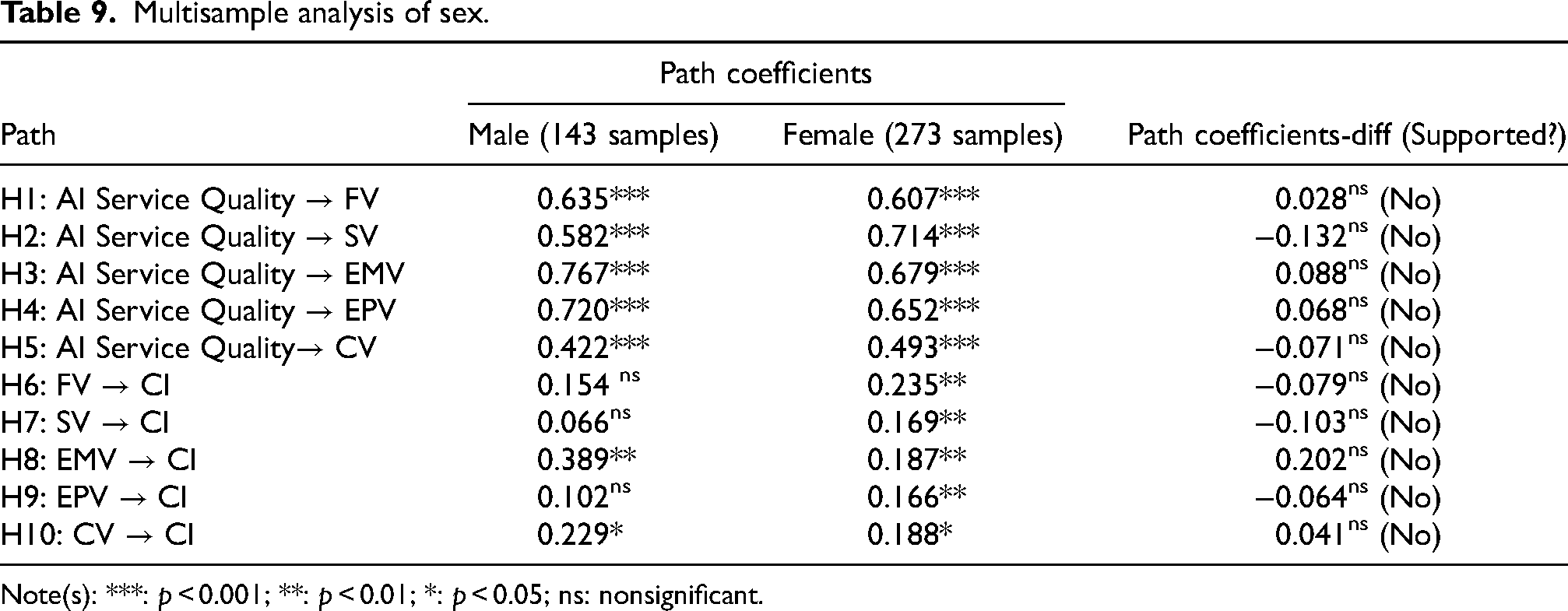
Note(s): ***: p < 0.001; **: p < 0.01; *: p < 0.05; ns: nonsignificant.
Multisample analysis of age.
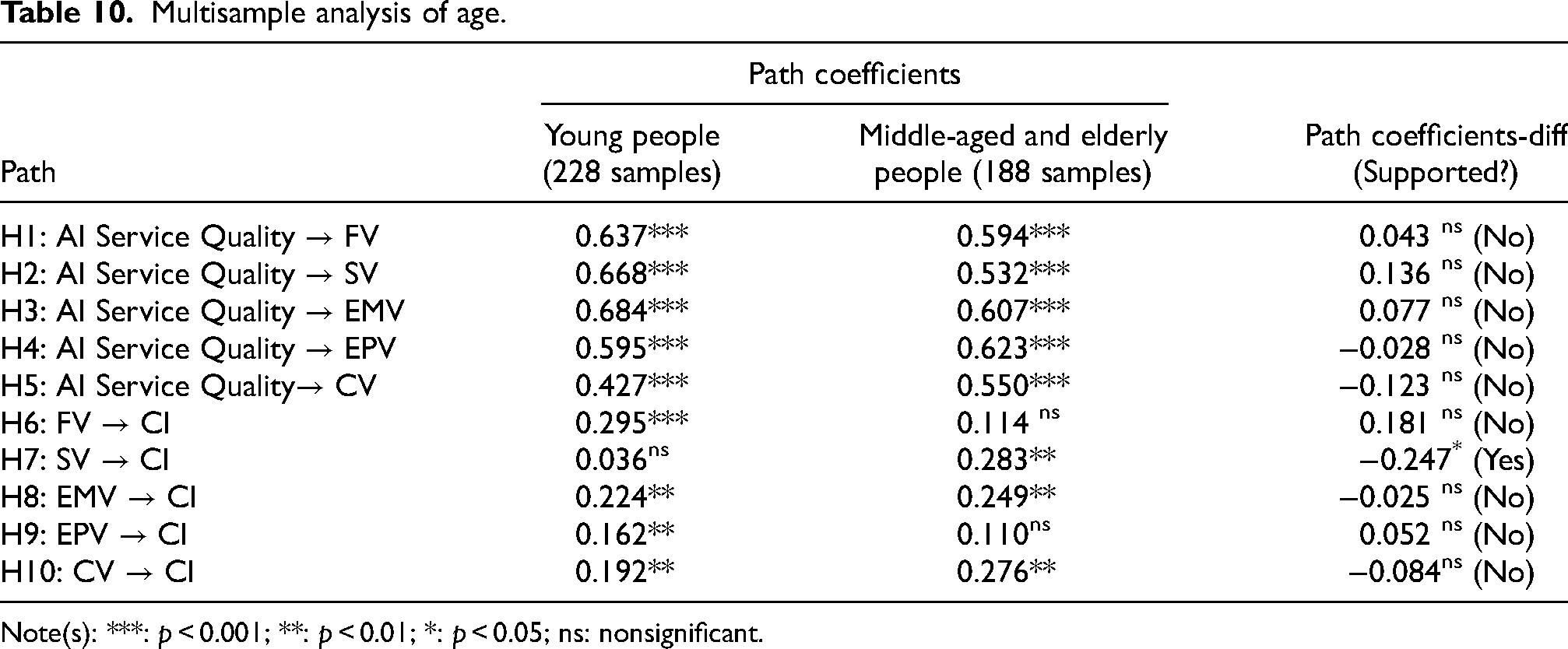
Note(s): ***: p < 0.001; **: p < 0.01; *: p < 0.05; ns: nonsignificant.
Discussion and contributions
Discussion of the results
AI technology has empowered MFAs (Molina and Myrick, 2020), but the effects of the service quality of AI technology on users’ evaluations and their ongoing usage intentions of AI-enabled MFAs remain unclear. By utilizing TCV, this study investigates how AI service quality impacts users’ perceived values (functional, emotional, social, epistemic, and conditional), which, in turn, influences their continuous adoption of these applications. The extant literature has overlooked the pivotal role of AI service quality as a precursor and has not thoroughly examined its synergistic effects with TCV. This study deepens our understanding of how AI service quality drives continuance intentions toward AI-enabled MFAs by exploring this topic through the lens of consumption value.
All of the hypotheses proposed were supported. Specifically, AI service quality can increase the functional value perceived by mobile fitness users, supporting H1. The higher service quality of AI-enabled MFAs boosts their functional value by enabling users to perform exercise and fitness activities more effectively, fulfilling their personalized fitness needs. Additionally, the study revealed that AI service quality increases social value by helping users strengthen their identities and images within their fitness communities, supporting H2. AI service quality also boosts emotional value (supporting H3) by enabling AI-enabled MFAs to interact with users in a manner similar to that of real fitness instructors and partners, enhancing users’ enjoyment during the usage process. Moreover, AI service quality increases the epistemic value perceived by users, confirming H4. By incessantly updating functions according to users’ preferences, AI-enabled MFAs offer users new and refined experiences, thereby increasing their epistemic value. AI service quality also enhances users’ perception of conditional value, confirming H5. Higher service quality AI enables MFAs to deliver low-cost, high-quality professional guidance from virtual fitness coaches tailored to the specific fitness needs and goals of users. These findings resonate with those of Noor et al.'s (2022) study, which identified AI service quality as a dominant antecedent affecting people's perceived value of AI technology or services.
Furthermore, our findings indicate that functional, emotional, social, epistemic, and conditional values all contribute to increasing users’ intent to continuously adopt AI-enabled MFAs. Specifically, regarding functional value, we observed that when users find the fitness services provided by AI-enabled MFAs to be more convenient and effective, these services meet their fitness expectations more. This, in turn, encourages users to continue using AI-enabled MFAs for their exercise routines, supporting H6. Regarding social value, AI-enabled MFAs effectively help users achieve their fitness goals, which enhances their social identity and status within their fitness communities. This improvement motivates them to consistently use AI-enabled MFAs, supporting H7. For emotional value, AI-enabled MFAs feature anthropomorphic fitness coaches that support and encourage users, increasing their enjoyment during workouts. This increased pleasure motivates users to continue using the applications to achieve their fitness goals, supporting H8. In terms of epistemic value, AI-enabled MFAs intelligently update to satisfy individual fitness needs, which enhances the novelty of the user experience. This increased novelty attracts users to continuously explore and use these applications, supporting H9. Finally, AI-enabled MFAs effectively address and enrich users’ perceptions of conditional value, which reflects users’ focus on their health and body shape, by better meeting their fitness needs than traditional fitness methods. This effectiveness encourages their continued use of the applications. These findings are consistent with previous research that shows a link between increased consumption value and higher adoption rates of mobile or AI applications (Jiang et al., 2022; Kaur et al., 2021; Zhu et al., 2022).
In terms of the mediation test, we found that all mediations in the model are complementary mediations. Specifically, functional, emotional, social, epistemic, and conditional values act as partial mediators in the relationship between AI service quality and users’ continuance intention. This means that AI service quality not only directly boosts users’ intention to continuously use AI-enabled MFAs but also indirectly enhances their continuance intention by improving their perceived functional, emotional, social, epistemic, and conditional values. AI service quality plays a dual role as both a direct facilitator and an indirect enabler, increasing users’ continuous adoption of AI-enabled MFAs through consumption value. The results provide a more detailed understanding of how AI service quality and consumption value together influence users’ intentions to continue using AI-enabled MFAs.
Theoretical contributions
This study makes several theoretical contributions to the literature on AI system development and services. First, the research on MFAs has predominantly utilized conventional technology acceptance theories such as TAM (Beldad and Hegner, 2018; Madhumitha and Lekshmi, 2022) and UTAUT (Li et al., 2019; Vinnikova et al., 2020; Wei et al., 2021; Yuan et al., 2015) to explore MFA adoption. This study introduces a fresh perspective by investigating the continuous adoption of AI-enabled MFAs through the lens of TCV. We extend the TCV framework to the domain of AI-enabled MFA continuous adoption by addressing the first research gap and question in the MFA literature. Our findings reveal how AI service quality affects users’ perceptions of functional, emotional, social, epistemic, and conditional values, which ultimately influences their continued intention to use AI-enabled MFAs. Second, although AI technology has been integrated into MFAs, previous studies have focused primarily on the adoption factors of MFAs without considering the impact of AI (e.g., Angosto et al., 2020; Beldad and Hegner, 2018; Madhumitha and Lekshmi, 2022; Wei et al., 2021; Xu et al., 2023; Yan et al., 2021; Zhu et al., 2023). In this study, to the best of our knowledge, AI service quality is used for the first time as an antecedent to explore and validate its effect on users’ assessments of consumption value. This approach advances our understanding of how AI service quality functions in the continuous use of AI-enabled MFAs. This theoretical contribution addresses the second research gap and question identified in the introduction section concerning the literature.
Third, this study echoes Tanrikulu's (2021) and Mason et al.'s (2023) systematic review papers on TCV in which TCV could be used for different research situations (i.e., the AI-enabled MFA context in this study) to help increase the understanding of TCV. In addition, Malodia et al. (2022) and Zhu et al. (2022) utilized TCV in AI technology adoption contexts, that is, AI-enabled voice assistants and AI-powered mental health chatbots, respectively. However, they did not consider AI constructs incorporated with TCV in their investigations of AI technology adoption. Lee and Chen (2022) indicated that when investigating user reactions or behaviors affected by AI technology, AI constructs should be included in models to accurately understand users’ evaluations of AI-enabled technology. In this regard, we contribute to the TCV literature by further revealing the substantial determinants of TCV in the AI-enabled MFA context, that is, AI service quality, which helps magnify the applicability and explanatory power of TCV by focusing on the effect of AI service quality on five types of consumption values. This contribution also provides a significant clue for follow-up researchers to further explore and examine the possible antecedents affecting TCV in an AI-relevant research context.
Fourth, in Noor et al.'s (2022) study, the authors confirmed the positive relationship between AI service quality and perceived value in an AI service agent adoption context. However, when people use a product or service, they may perceive different types of value (Chakraborty et al., 2023; Sheth and Gross, 1991; Tavitiyaman et al., 2024). These values have distinct effects on and contributions to different usage situations (Mason et al., 2023). To further understand the disparities in these values in the AI-enabled MFA context, this study adopts TCV, which mirrors five distinct and independent consumption values of AI-enabled MFA services perceived by users. According to the path coefficients of AI service quality → consumption values (see Figure 2), differences were found in the impacts of AI service quality on the five consumption values in the AI-enabled MFA continuous usage context. Specifically, AI service quality exerted the strongest effect on social value (0.846), followed by epistemic value (0.67), emotional value (0.665), functional value (0.618), and conditional value (0.471). Among the five consumption values, AI service quality has the greatest influence on social value. The findings contribute to the literature by revealing and clarifying the strength of AI service quality on the functional, emotional, social, epistemic, and conditional values perceived by users in the continuous use of AI-enabled MFAs.
Finally, through a multisample analysis of sex and age, we found that only age had a significant impact on the model (see Tables 7 and 8). Middle-aged and elderly people's constant adoption of AI-enabled technology was shaped more by social value than that of young people. This study is the first attempt to explain the effects of sex and age on the relationships among AI service quality, consumption value, and the continuous use of AI-enabled MFAs. This study contributes to the literature by offering an advanced understanding of how age influences users’ evaluations of the effect of AI service quality on consumption value in the context of the continuous adoption of AI-enabled MFA.
Practical implications
This study provides practical reference value for an AI-enabled MFA development team and the managers of MFA firms. We found that functional value strengthens users’ willingness to continually adopt AI-enabled MFAs. Thus, we suggest that the development team exploit AI technology to precisely help analyze users’ physical condition and fitness goals through AI algorithms, thereby appropriately offering proper fitness courses and exercise programs to meet users’ health and fitness needs. This study suggests that developers strengthen the utility and effectiveness of virtual fitness coaches to provide users with accurate exercise ability predictions and fitness growth paths. Emotional value also drives the continuous use of AI-enabled MFAs. Therefore, AI-enabled development should also offer users a sense of pleasure during the fitness process. The development team should give attention to the anthropomorphic design of AI-enabled MFAs. When users encounter difficulties in fitness training, virtual fitness coaches should provide real-time care and encouragement, soothe users’ anxious emotions, and help them solve problems and overcome difficulties through human-like interactions, increasing the pleasure of the fitness experience.
In addition, epistemic value was found to increase users’ continuous adoption of AI-enabled MFAs. Therefore, the development team needs to ensure that AI-enabled MFAs are up-to-date with respect to users’ intelligence, fitness coverage, and fitness knowledge requirements. By using AI algorithms to regularly analyze fitness programs, the development team can understand how to update AI-enabled MFAs to ensure that they are responsive to users’ fitness interests and needs. Social value is a facilitator of users’ intentions to continue using AI-enabled MFAs. This study suggests that managers of MFAs seek out opinion leaders in the fitness field to endorse their apps, which helps enhance the professional image of MFAs and attract more users to adopt the apps. This can facilitate the creation of a stronger fitness community, increase social acceptance, and enhance user retention. Finally, conditional value enhances users’ intent to sustainably utilize AI-enabled MFAs. Fitness-conscious consumers potentially utilize apps that can help them spend less on fitness, reduce the time spent planning fitness programs, and motivate them to work out in the long term. In this case, the development team should fully exploit the value of massive amounts of data under AI and improve the app's deep learning capabilities so that it can predict user behavior and make personalized exercise recommendations based on users’ exercise habits, location, and the day's weather, thereby effectively reducing users’ decision-making time during fitness and exercise.
Limitations and future research
This study has several limitations, which provide directions and possibilities for subsequent investigations. First, the survey was conducted only in China, so it is difficult to generalize the results and findings to other countries and regions. In this regard, we suggest that future research extend the investigation scope to other countries and regions to increase the generalizability of the proposed model and findings of this investigation. Second, this study utilized cross-sectional data (surveys) to explore individuals’ continuous use of AI-enabled MFAs due to a lack of long-term observational evidence. Subsequent research should gather longitudinal data to further ensure the causality of the proposed variables, thereby consolidating the results and findings. Finally, based on the development of AI in MFAs, this study focused only on the role of AI service quality to discuss the influence of AI service quality on users’ consumption value, which, in turn, affects their intention to continue using MFAs. Future research can attempt to introduce different AI-related variables, such as AI features (i.e., intelligence and anthropomorphism) (Lee and Chen, 2022), to explore how AI-enabled intelligence and anthropomorphism affect users’ consumption value and subsequent adoption of AI-enabled MFAs.
Footnotes
Declaration of conflicting interests
The authors declared no potential conflicts of interest with respect to the research, authorship, and/or publication of this article.
Funding
The authors received no financial support for the research, authorship, and/or publication of this article.
