







Abstract
Purpose
The need to implement innovative smart services in libraries is becoming more widely recognized. This paper investigates the current status of innovation in smart library services, how university librarians can support innovation in library services through their capacities and dynamic strategies, the implications that innovative initiatives have on overall effectiveness, and the challenges that university librarians perceive.
Methodology
A mixed-method approach was employed in this study. In the qualitative method, in-depth interviews were conducted with 10 chief librarians of university libraries and 150 university library professionals made up the sample for the quantitative investigation from throughout Pakistan.
Findings
The provision of smart services is clearly in the plans for the growth of university libraries in Pakistan, and the majority of university librarians also discuss the challenges in implementing innovations and provide solutions to these problems. The study uncovers significant barriers to adopting innovative library services, such as the fear of job displacement due to technology and financial constraints. However, it underscores the potential of focused training, AI, and IoT technologies to enhance library services.
Originality
These advancements can boost user engagement and operational efficiency and are crucial for aligning library services with global educational and sustainability goals. The research stresses the need for strategic planning and investment in financing and infrastructure, advocating that these measures can enhance educational outcomes and reduce information access disparities, thereby benefiting the entire community.
Keywords
Introduction
In recent years, technological advances and an increasing focus on innovation have brought about a revolutionary change in library services. The technological advances in librarianship are drastically changing the function and approach of librarians (Khan et al., 2023). Traditional systems of communicating human knowledge and experiences can be converted into digital forms with the help of digital technology. Digital libraries offer tailored and organized digital resources for access to knowledge and engage experts to offer assistance in access (Ahammad, 2019; Anser et al., 2023). With the advancement of smart technology, several libraries have discovered “smart” methods to provide their services to patrons.
The term “smart library” was originally coined by Markus Aittola in 2003, who defined it as a prominent, space-limited mobile library service (Aittola et al., 2003). The term “smart library” has been debated widely under several titles and in various situations. Because of this, a variety of conceptual variations arise when the word “smart” is substituted with other terms like “digital, “integrated” and “intelligent.” A Smart Library is dynamic, innovative, and interconnected, providing services that meet the changing needs of its users (Gul and Bano, 2019). Smart libraries prioritize user experience and technological advancements, updating classic services with RFID technology, blockchain technology, IoT gadgets, digital catalogs, visualization techniques, and cloud-based resources to optimize workflows (Vijayalatha, 2023; King, 2020; Khan et al., 2022b). A “smart library” is a library that integrates computer networks, technology for communication, sensor monitoring, and building equipment to make it as smart as possible (Yuan and Yang, 2024; Li and Dong, 2016; Owolabi et al., 2022). Smartness in this context refers to the library’s ability to recognize user requirements automatically and provide the materials and services necessary to satisfy those needs. In the context of technology, smartness refers to autonomous computing concepts including self-configuration and self-optimization Spangler et al. (2010), for almost a decade, Chatbots have been suggested as a beneficial tool for library work Cox (2023); similar claims are also being made about voice assistants that may be tailored for use in university library settings (Adetayo et al., 2023). Hussain (2023) A further facet of artificial intelligence for libraries is the concept of the “smart library,” which is an environment within a library managed by sensor data and the Internet of Things. Wang et al. (2023) discussed that library professionals deal with text and data mining. Further, information literacy is still necessary even with AI-supported search (Hamad et al., 2023b; Tinmaz et al., 2023). University libraries rely heavily on technology, and the introduction of new technologies frequently leads to the development of new professional practices in university libraries.
University libraries are vital in the dynamic academic landscape, with technological advancements significantly influencing their role in information dissemination. The use of smart technology in library services such as internet of things Norouzi et al. (2023), artificial intelligence Harisanty et al. (2023), robotics De Sarkar (2023), radio frequency identification Bi et al. (2023), cloud computing Pillen and Eckard (2023), virtualization Jinendran Jain and Kumar Behera (2023), data mining, information literacy, and research support services (Ali et al., 2022) etc. is a paradigm shift that provides creative answers to the changing requirements of patrons. The integration of the Internet, cloud computing, big data, and Internet of Things technologies has been extensively debated and integrated into daily life, including academic libraries (Yoon et al., 2022; Asim and Arif, 2023).
This study intends to shed light on the value of smart library services in Pakistani academic institutions, as well as the special difficulties and innovative solutions faced by university librarians. This will empower stakeholders to build smart library services in the future and shape academic information transmission in Pakistan.
Significance of the study
In the Pakistani scenario, few studies have been conducted on innovative technologies and the current library services to see the needs of university users. Information service providers can efficiently evaluate products and services, making smart decisions about improving library infrastructure through the use of electronic records of library users (Ahmad et al., 2020). Big data-enabled libraries can enhance their service framework by optimizing resources, enhancing user experience, making informed decisions, and utilizing advanced infrastructure (Hamad, 2020). A research was conducted by Asim et al. (2023) and the purpose of this research was to investigate AI applications in Pakistani university libraries. Additionally, Hussain and Ibrahim (2020) suggested Radio Frequency Identification technology for Pakistan’s academic libraries’ content security. Further research is needed to support smart library services, analyze the empowered capabilities of library professionals, and enhance dynamic strategies for innovative library services in Pakistan.
Statement of the problem
In the digital era, the proficiency of librarians in digital technologies is key to meeting the needs of university stakeholders: faculty, researchers, and students. Smart library services are becoming essential in academic libraries to provide advanced resources and services. As technology evolves, libraries must autonomously identify and fulfill the changing needs of their patrons (Cao et al., 2018). While this trend is global, there is a pressing need for comprehensive research on the capabilities and strategies of academic librarians in Pakistan to foster innovation in smart library services. The lack of detailed studies addressing the strategies, challenges, and outcomes of such innovation in the Pakistani academic context leaves a significant gap. This research aims to conduct an in-depth analysis of innovation in smart library services, focusing on the empowered capabilities and dynamic strategies within Pakistani university libraries. It seeks to offer actionable insights and recommendations for professionals to enhance library services smartly.
Objectives
To fulfill the stated purpose of the study, the following four study objectives have been identified:
To investigate the current status of innovation in smart library services within university libraries in Pakistan. To identify the capabilities and dynamic strategies employed by university librarians to foster innovation in providing smart library services. To analyze the influence of innovative initiatives on the overall effectiveness of university libraries. To explore and understand the perspectives of university librarians on the challenges encountered while implementing innovative strategies for smart library services in university libraries.
Literature review
Smart libraries recognize the crucial role of users in shaping a thriving smart library culture. By offering a platform that combines smart infrastructure and work practices, these libraries cater to user needs and build a smart environment to support essential services. Libraries are introducing smart services, utilizing digital technology to provide faster, better, and more intelligent services to customers through multiple applications via the internet (Padhi and Nahak, 2019).
Smart library services through the internet of things
Emerging IoT technologies hold the potential to significantly improve library efficiency by automating and simplifying daily tasks. The Internet of Things (Miikkulainen et al., 2024) empowers libraries to collect and transmit data from Internet-connected devices, enhancing efficiency and opening new possibilities for library management (Igwe and Sulyman, 2022). Integrating IoT with a library app provides users with comprehensive information about services, improving their overall library experience (Ramkumar et al., 2020). An IoT-enabled library app provides users with detailed information about materials, maps their location within the library, and guides them to their desired items (Khan et al., 2022a).
Cloud-based resources
Cloud computing provides on-demand access to computing services, including servers, software, and storage, through a network of data centers accessible over the internet, offering benefits like faster innovation, and flexible resources (Shaw and De Sarkar, 2021). Cloud computing offers hardware and software resources as a service to users, emerging from advances in technologies like hardware virtualization and networked computing (Kutty, 2019). It supports various library administration tasks, including linking, acquisitions, and circulation (Kudirova, 2024). Libraries implement cloud computing through web hosting and federated searches via the Online Public Access Catalogue, enhancing their digital services (Adejo, 2024). Embracing cloud computing helps libraries meet their patrons’ technical needs, offering cost savings, flexibility, and improved data management (Panda et al., 2024).
Radio frequency identification (RFID)
RFID is a wireless technology that automatically identifies and tracks objects and people using radio waves (Arfan, 2024). RFID technology facilitates self-service check-in and check-out for library books, using tags attached to both books and student IDs (Tang, 2024). Libraries are leveraging RFID technology to enhance security and offer new and improved services to patrons. RFID chips allow for remote access to stored information, enabling data retrieval and transfer using specialized equipment for diverse applications (Viji et al., 2024). Rahman and Islam (2019) concluded that RFID is utilized in university libraries to encourage self-check-in and check-out activities, facilitate circulation, track and find things faster, and minimize staff stress. It was observed that the integration of the RFID system with Koha ILMS has improved the library’s ability to serve its patrons (Hazarika and Ravikumar, 2019). Libraries are embracing smart services like IoT, cloud computing, big data, AI, RFID, and virtual reality due to the technological revolution’s impact (Yu et al., 2019).
Data mining techniques
Data mining is an essential process in information retrieval, involving the examination of vast databases to uncover potentially useful information. As stated by Tsui et al. (2023); CheshmehSohrabi and Mashhadi (2023) data mining is the use of algorithms and machine learning to extract hidden information from large data sets, identifying novel patterns. Data mining is utilized in smart libraries due to increasing data volume, human analysis limitations, machine learning's cost, information explosion, global business environment, and global system software accessibility (Tu et al., 2021). Data mining in libraries goes beyond intelligent decision-making, offering consumers recommendation services related to the library’s collection. (Gul and Bano, 2019).
Artificial intelligence (AI)
AI’s impact extends across all aspects of life, including libraries, where it has fundamentally reshaped systems and service delivery. The transformation of library systems and services is providing users with access to information through smart methods of AI (Shahzad et al., 2024). Cloud computing, virtualization, data mining, and AI technologies are utilized in libraries as smart library services. (Berek, 2021). Artificial intelligence (AI), also known as machine intelligence, refers to the intelligence exhibited by machines, as opposed to the natural intelligence displayed by humans (Bi et al., 2022). AI’s predictive capabilities, coupled with its ability to adapt, learn, and make decisions autonomously, make it a powerful tool for motion and perception (Okunlaya et al., 2022). These qualities of AI make it a powerful tool for creating smart library services. Chat GPT could revolutionize library services by taking on tasks like answering quick questions, suggesting great reads, and helping people find the information they need (Mali and Deshmukh, 2023). ChatGPT holds immense potential for transforming how academic libraries manage and retrieve information, paving the way for more personalized and intuitive experiences for users (Yamson, 2023). Using artificial intelligence (AI), chatbots, large language models, AI assistants, and technologies like ChatGPT, library staff may enhance their ability to provide excellent services, stay updated with technological trends, and adapt to the ever-changing digital world (Wani and Astunkar, 2024). ChatGPT can propose books, or other resources depending on the user’s past borrowing choices, or areas of interest in the study (Thaliyan et al., 2024).
Empowered capabilities of university librarians
Library professionals are now information navigators, beyond physical collections, they are responsible for managing a wide range of digital resources, including e-books, online databases, and multimedia materials (Diseiye et al., 2024). A key capability for librarians is the ability to provide assistance and guidance to users navigating digital information, often through virtual reference services (Shah et al., 2024). As libraries increasingly move towards digital platforms, librarians must have a strong foundation in digital literacy (Martzoukou, 2021). Digital Information Literacy (Badillo et al., 2020) is a crucial skill in librarianship and represents a multifaceted ability to effectively locate, interpret, and evaluate digital information (Khan, 2020; McGuinness and Fulton, 2019). Librarians should have the competency to use data visualization tools because they provide an easy way to see trends and patterns in data through visual components, saving space and aiding researchers in finding correlations.(Batt et al., 2020; Hernandez-Olivan and Beltran, 2023). A significant change in academic libraries over the past ten years has been the realization of the importance of fostering research support and research data management services. Research Data Management (RDM) services have significantly improved academic library services, reducing researcher and organization burdens and contributing to the field of research data management (Pryor et al., 2013; Brown et al., 2015).
Challenges for smart library services
Some librarians might be hesitant to embrace new digital strategies and technologies, as they might not be familiar with or comfortable with them (Hussain and Ahmad, 2021). The rapid evolution of the digital landscape, marked by the constant emergence of new tools, platforms, and software, presents a significant challenge for librarians seeking to remain current (Hamad et al., 2023a). The lack of resources, especially in underfunded or underserved communities, makes it difficult for librarians to access training programs and digital tools, hindering their ability to fully utilize digital resources and services (Gul and Bano, 2019). Cybersecurity and privacy are crucial in today’s digital environment, and librarians need to be well-versed in these areas to protect patrons’ data and digital assets (Yuan and Yang, 2024). Resource limitations, particularly in terms of budget and staffing, can impede the allocation of dedicated personnel for digital training programs and professional development within libraries (Adigun and Igboechesi, 2024).
Research gap
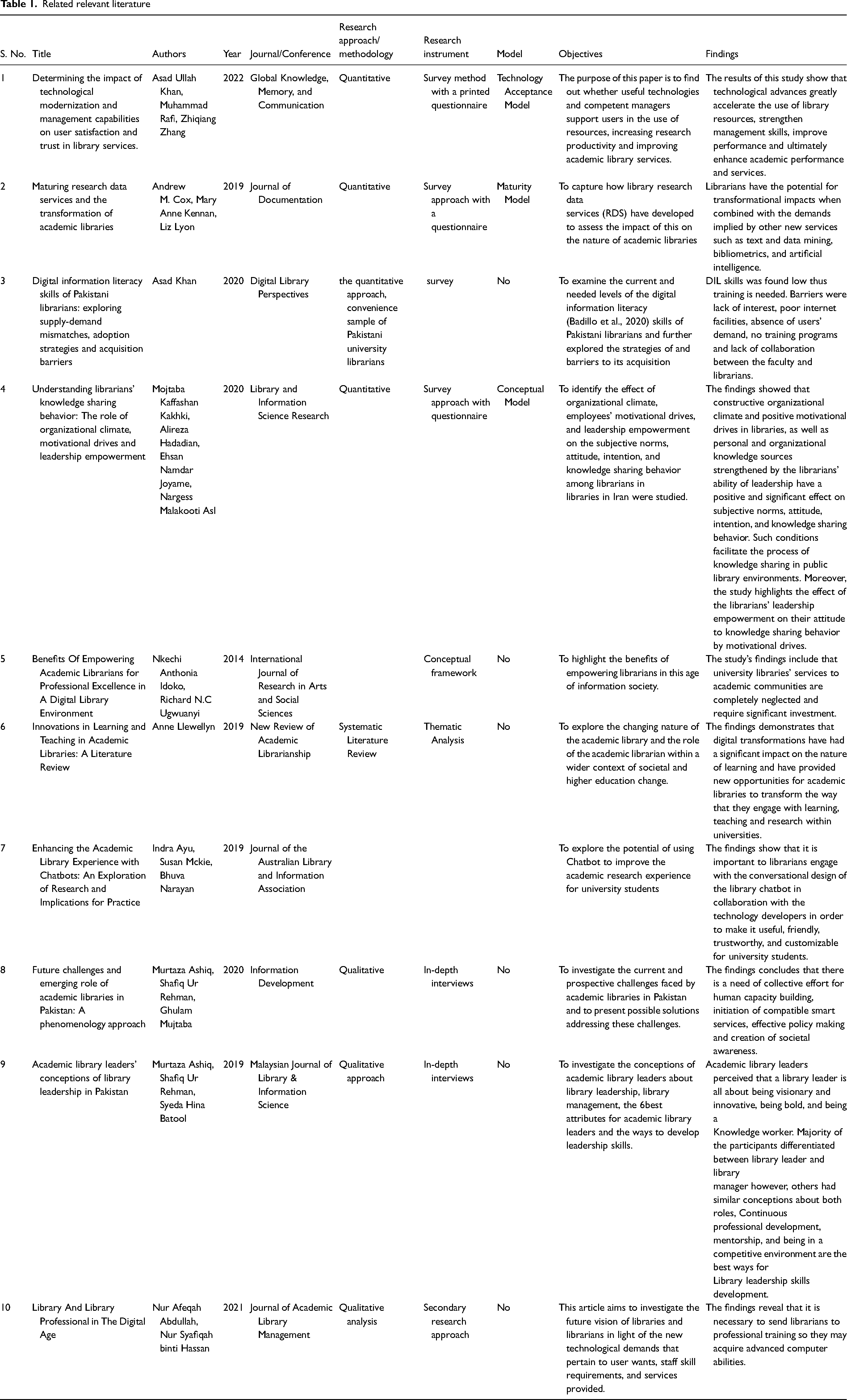
Related relevant literature
Methodology
Research design
In this investigation, a mixed methods strategy is used and the study is conducted in two phases to identify the smart services among university libraries in Pakistan. The mixed-method approach to research helps to avoid the inconsistent study results by focusing on both qualitative and quantitative analytic methods (Woodside, 2016). Moreover, the mixed approach has several advantages, including the following, it may answer both confirmatory and explanatory research questions and clarifies complementary and divergent points of view which aids in obtaining more reliable interpretations than a single strategy (Figure 1).
Mixed method research design.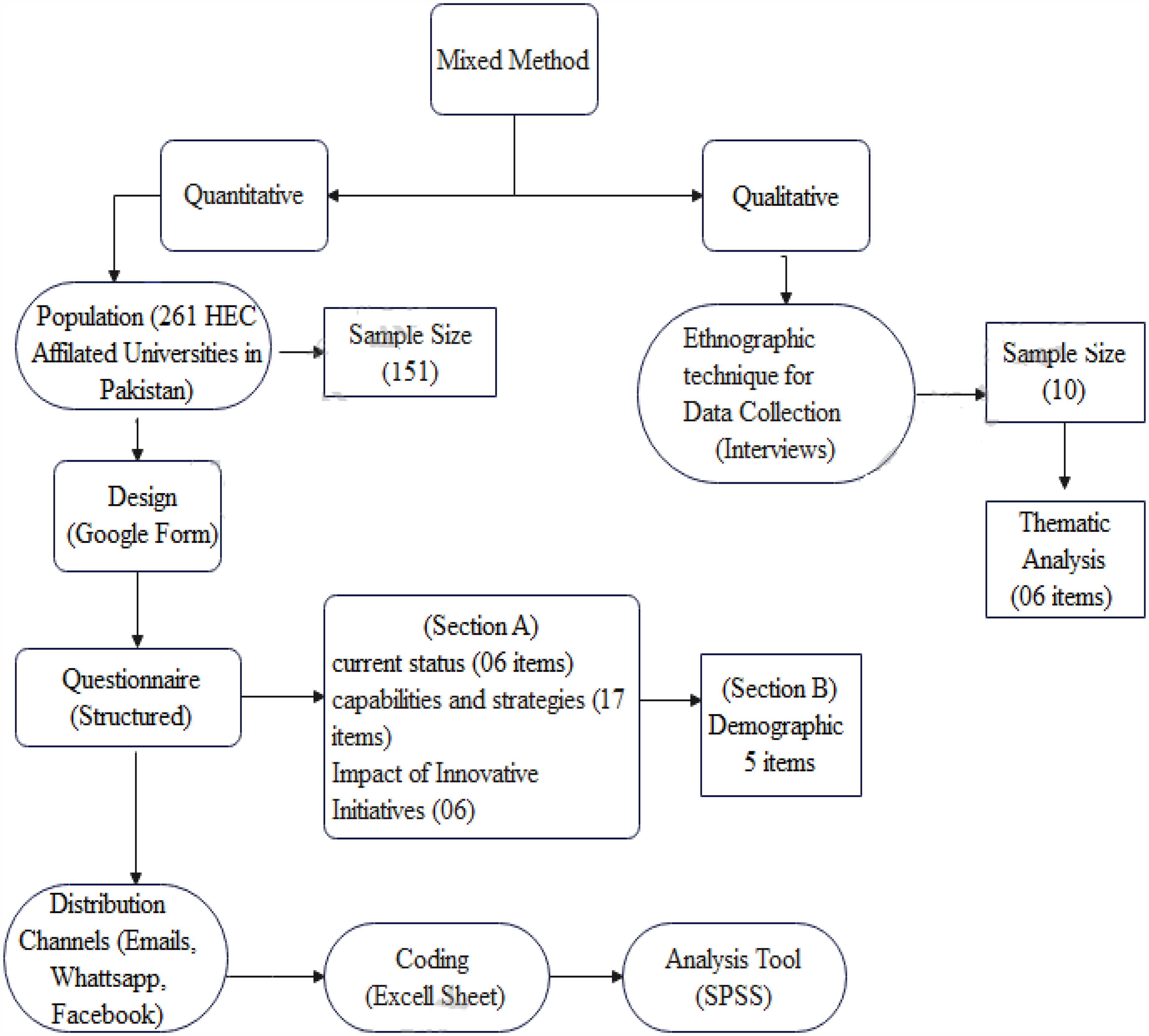
Quantitative method
In the quantitative phase, a two-section questionnaire was designed as an instrument to conduct the survey, using the Likert scale. The first section was divided into three parts, 1) the first was based on the current status of innovation in university libraries, 2) the second was on capabilities and strategies among university librarians in Pakistan, and 3) the last part consisted of the Impact of Innovative Initiatives in university libraries of Pakistan. The second section was based on demographic information. Many scholars (Mishra, 2019; Mansour, 2017; Noh, 2017; Aslam et al., 2021) have developed survey approaches that are helpful for the study of perception, patterns, trends, status, and primary data gathering on any operations in an organization.
Population
The population of the study is 261 HEC-affiliated universities. University libraries were chosen because they serve as a representation of higher education institutions (Feng and Zhao, 2015). The study utilized a purposive sampling method. Purposive sampling is a non-probability sampling technique that relies only on an individual’s judgment and enables the selection of those with distinctive qualities from the population (Wildemuth, 2016). Data was collected from various sources including WhatsApp and Facebook librarians’ groups, emails, and direct approaches to librarians. The survey was conducted among librarians with a professional library science degree, such as an MLIS, who worked on BS 16 or above. The sample size of this study was 150 library professionals from all over Pakistan.
Validity and reliability
Assuring the correctness and credibility of findings requires a thorough approach to the study that emphasizes validity and reliability. I thoroughly reviewed the literature, consulted with subject-matter experts, and confirmed the validity of the survey instrument. This survey ensured that the inquiries precisely assessed the desired ideas and matched the research goals. A pilot study was conducted with a group of participants to verify the questionnaire’s reliability. Internal consistency and comments on clarity and relevance were evaluated at this phase. The dependability of the instrument was proven by the results of the pilot research.
Data analysis
A quantitative study was conducted using a Google Form and 150 respondents provided data over a month. After receiving the data, it was coded in an Excel sheet and exported to SPSS for analysis. SPSS is a useful tool used in this research as it improved the efficiency, reliability, and clarity of research findings in this quantitative analysis phase.
Qualitative method
The second phase included in-depth interviews, and the objective was to obtain comprehensive insights using a qualitative research technique in order to investigate the challenges that arise while implementing novel strategies for smart library services in university libraries. This approach was determined to be the most suitable and it enables a thorough comprehension of the viewpoints and experiences from significant stakeholders.
Interviews
The following were the main questions of the in-depth interviews: a) From your experience, what are the most significant barriers or challenges that you encounter when trying to introduce innovative technologies and services in university libraries? b) How do you stay updated with the latest trends and technologies in the field, when implementing innovative strategies? c) How do university librarians collaborate and form partnerships to address challenges and exchange best practices in implementing smart library services? d) Which steps, in your opinion, could be taken to enhance the technological resources available for smart library initiatives? The top 10 university libraries that offer advanced services were chosen for data collection. One was the Regional Director of Libraries, and the other 9 were chief librarians with knowledge of smart services.
Data collection procedures
Selected university librarians were ten who actively participate in providing and overseeing smart library services as a purposeful sample for this aim. The study’s data was comprehensive and pertinent, these participants were selected based on their roles in delivering smart library services as well as their knowledge with smart library technologies.Professionals from public and private universities who work as chief librarians, deputy librarians, or assistant librarians and who are providing smart library services and possess a minimum professional certification such as an MLIS or BS were called and interviewed. The interviews were conducted via phone or recorded, lasting 30 min, with participants providing their consent over the phone. Each recorded interview was properly transcribed and professionally code-analyzed. The triangulation of proof and the multiple validation of outcomes are made possible by the mixed-methods approach’s use of many sources (Shen, 2019).
Data analysis
In the qualitative approach, the researcher analyzes participant data, identifying common thoughts and using content analysis to identify primary categories and themes.
Results
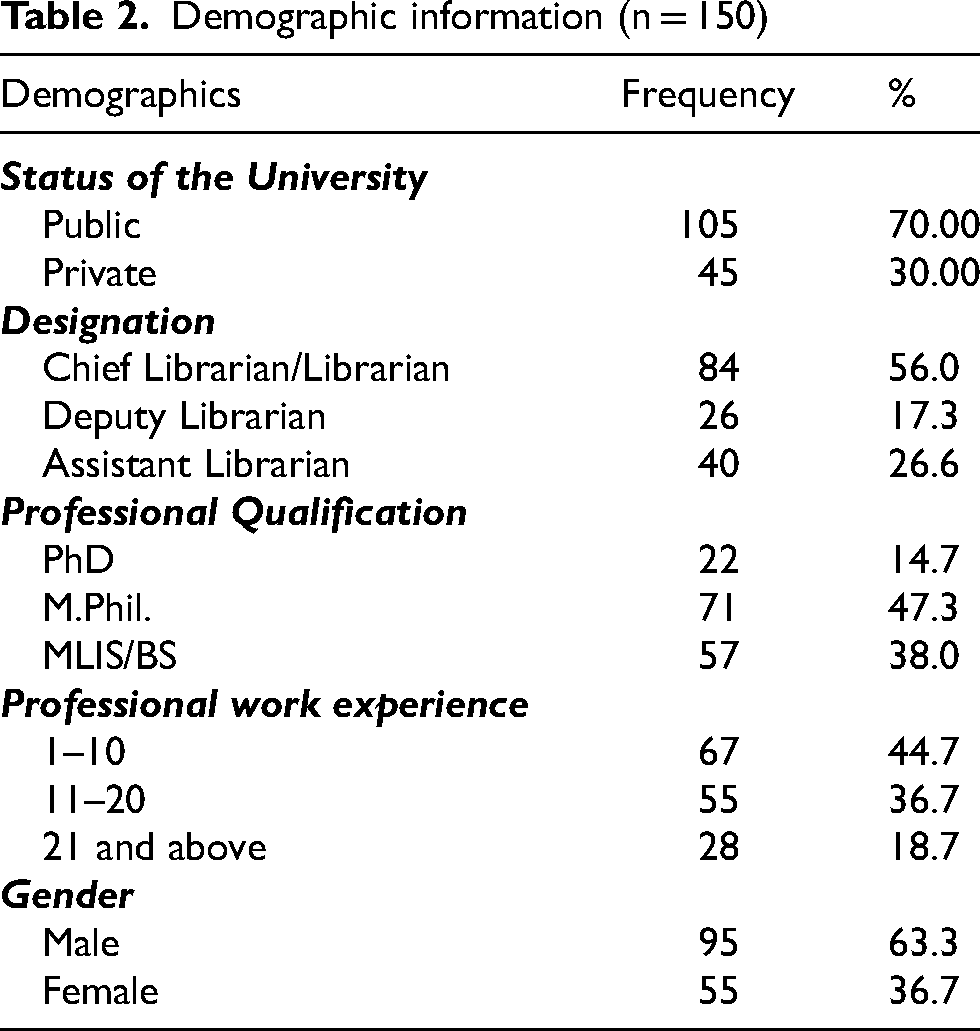
According to the study’s demographic profile in Table 2, the status of university data shows that public universities had the highest involvement (70.0%, n = 105). Moreover, 84 (56.0%) of the respondents were librarians/ chief librarians, followed by assistant librarians (26.6%, n = 40), and deputy librarians (17.3%, n = 26). However, a big portion of responders (47.3%, n = 71) had M.Phil degrees, followed by BS/MLIS (38.0%, n = 58) and PhD (14.7%, n = 22). According to the findings, a significant portion of the respondents’ experience (44.7%, n = 67) had one to ten years of experience, similarly (36.7%, n = 55) of respondents said they had eleven to twenty years of experience and the lowest experience is twenty-one and above (18.7%, n = 28). The results show male respondents made up the majority of participants (63.3%, n = 95) as compared to females 36.7%, n = 55).
Demographic information (n = 150)
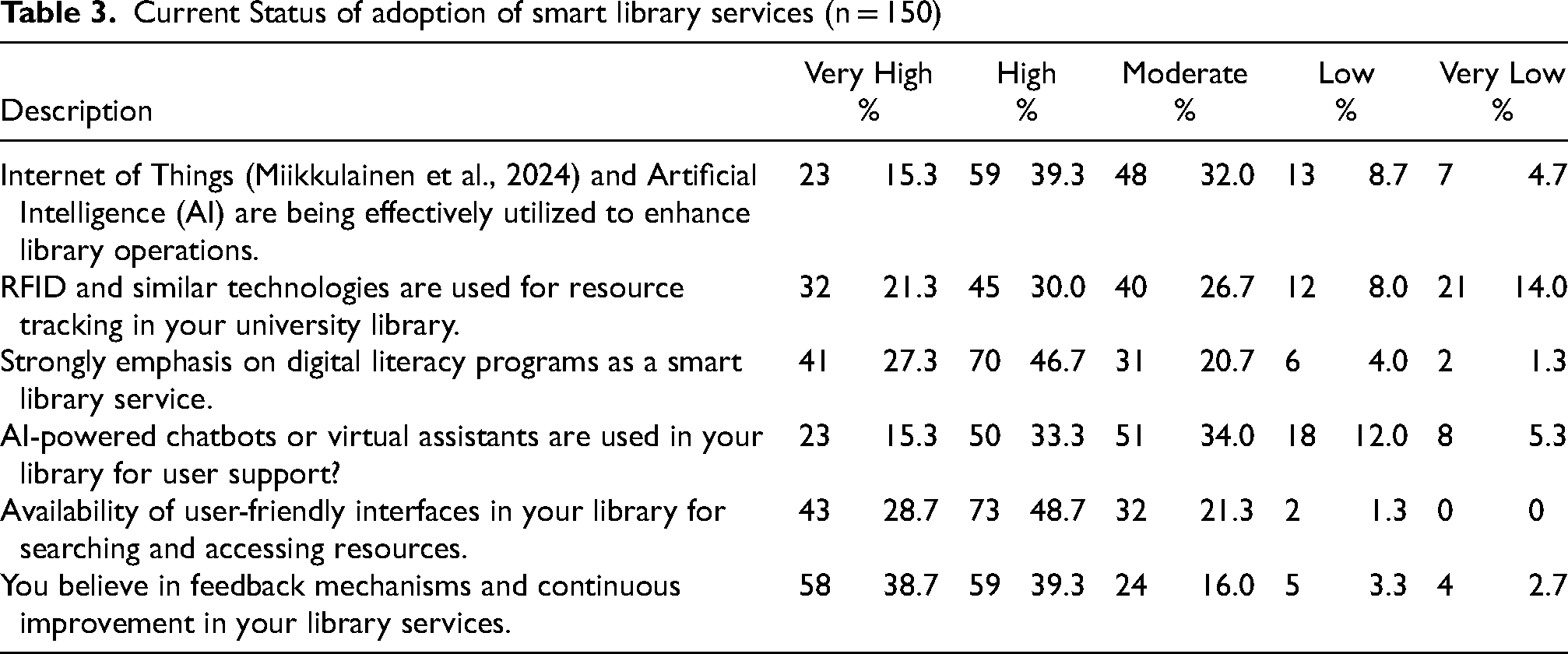
To fulfill the study's first objective, a measurement scale consisting of many elements categorized into a Likert scale of five categories was created to determine the current status of smart library services. Percentage-wise results are shown in Table 3, using five-point Likert scales that are anchored as 1-very high to 5-very low. The results showed that librarians significantly emphasized the user-friendly interfaces that are available in libraries for searching and accessing resources 73 (48.7%). Digital literacy programs as a smart library service in second number with high acceptance (70% n = 46.7), followed by 59(39.3%) the Internet of Things (Miikkulainen et al., 2024) and artificial intelligence (AI), for continuous service improvement, are all seen as useful tools for status improving library operations respectively. The results of Table 3 conclude the current status of the adoption of smart library services and meet the research objective. Now university libraries are focusing on providing services for searching and accessing digital resources through user-friendly interfaces. Further digital literacy facilities, technology related to the Internet of Things and artificial intelligence, are introduced for the facilitation of users. It shows that university libraries have a positive approach in the adoption of smart library services and they are enabling users to obtain information with ease via smart library services.
Current Status of adoption of smart library services (n = 150)
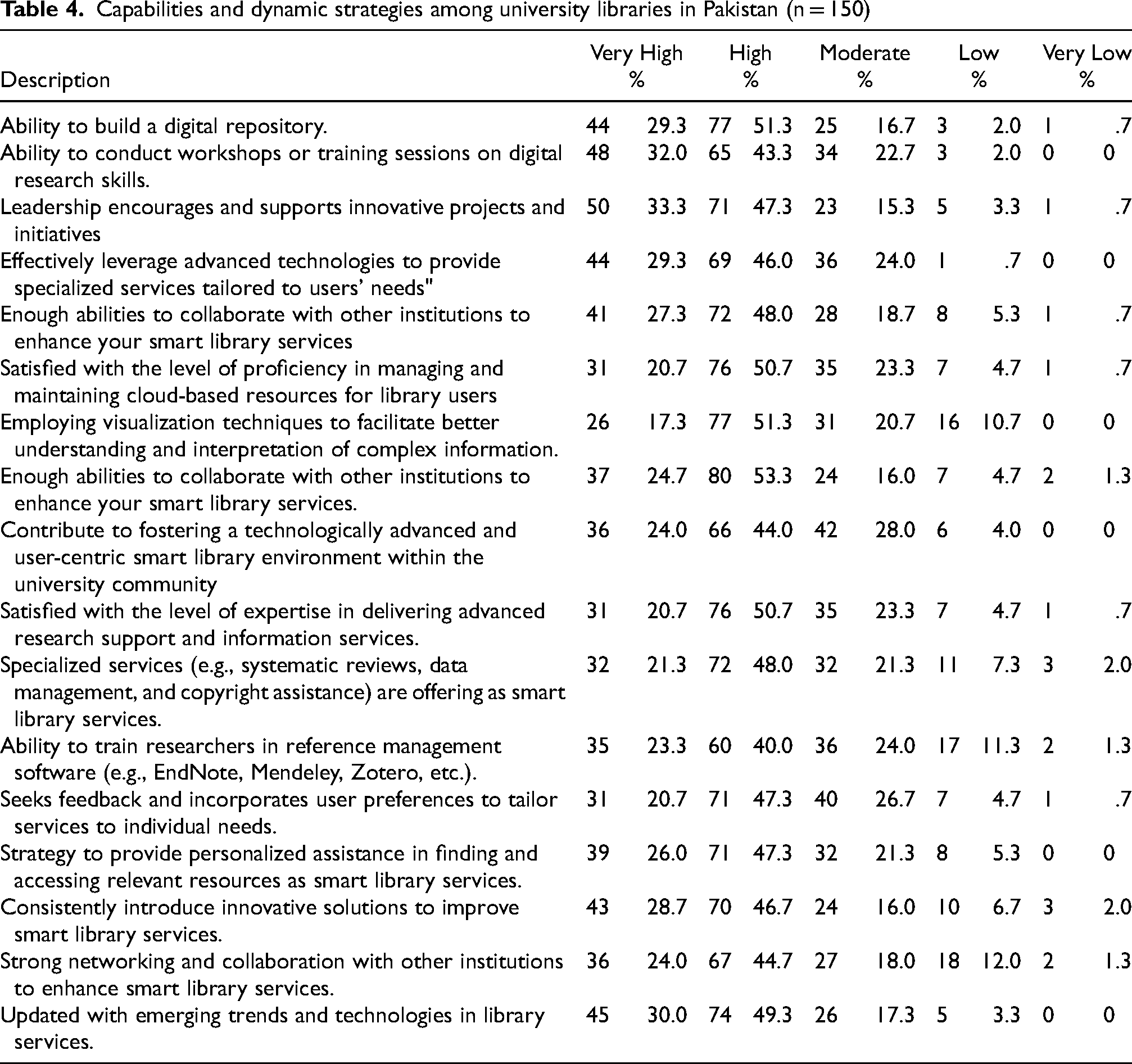
Descriptive statistics were used to assess the capabilities and dynamic strategies of Pakistani university libraries. According to the analysis in Table 4, a substantial percentage of 80 (53.3%) believed that they had the skills to work with other organizations to improve the services offered by smart libraries. Respectively, the capacity to create digital repositories and use visualization techniques to aid in the better comprehension and interpretation of complex data was highlighted by 77 (51.3%). To address the changing demands of researchers, staff, and students, university libraries in Pakistan are progressively using dynamic tactics and positive capabilities. Universities are spending money on digitization projects so that users may access a variety of electronic resources, such as databases, online repositories, e-books, and e-journals. However, on the third high scale, 76 (50.7%) respondents agreed that they were happy with the degree of competence in providing advanced research support and information services, as well as the level of competence in administering and maintaining cloud-based resources for library users. A variety of research support services are provided by university libraries, such as help with literature reviews, citation management tools, research data management, and support for scholarly publishing. With the help of these services, researchers may carry out excellent studies and successfully communicate their conclusions.
Capabilities and dynamic strategies among university libraries in Pakistan (n = 150)
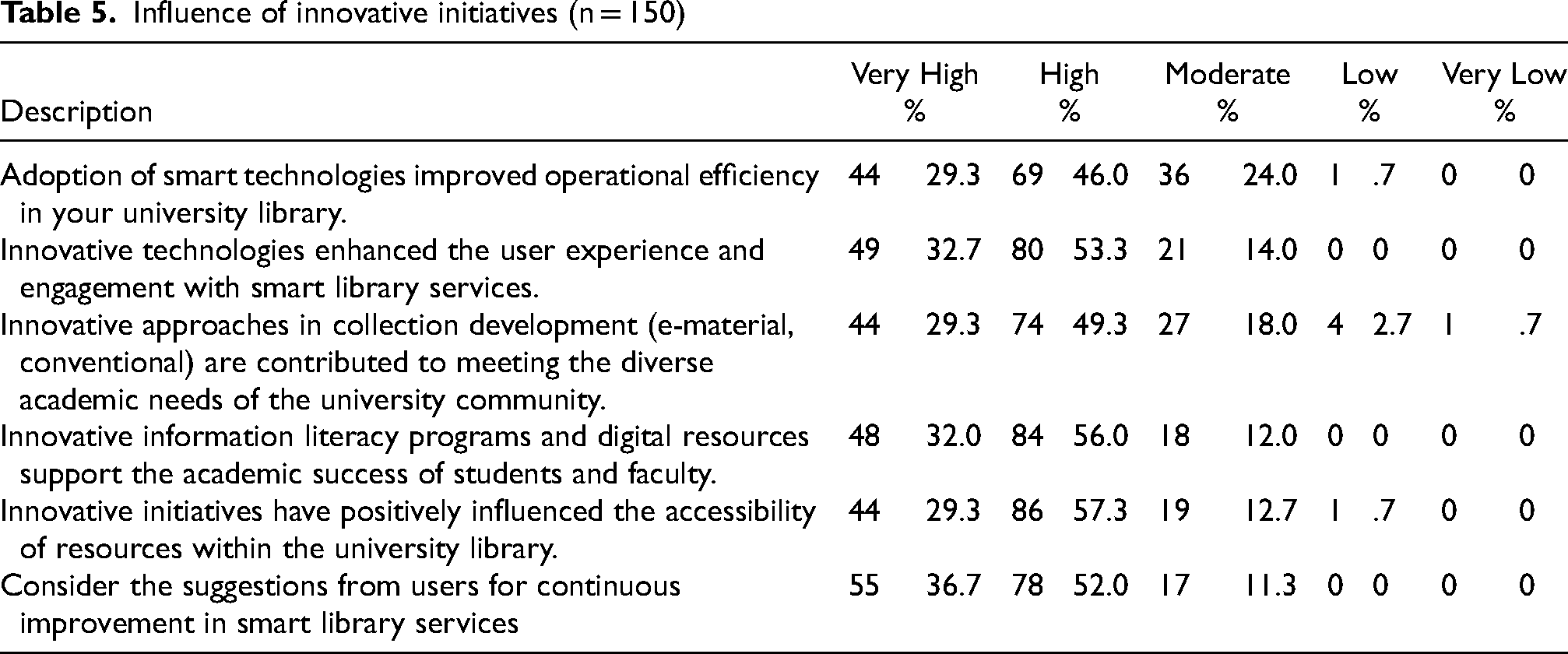
Additionally, the impact of innovative initiatives was a question posed to the responders. According to the results in Table 5, innovative initiatives have made a positive impact on how easily accessible resources are within the university library, with 86 (57.3%) demonstrating this high level of useful impact. Innovative information literacy programs and digital resources also support faculty and student academic success, with 84 (56.0%) demonstrating this respectively. Finally, innovative technologies have improved user experience and engagement with smart library services, in the high statement, 80 (53.3%) were on the third level. Table 5 concludes the picture of statements that Innovative initiatives in Pakistani university libraries, like easily accessible resources and information literacy sessions, can have some positive effects. For example, these initiatives can help students develop critical research skills like evaluating sources, synthesizing information, and correctly citing references.
Influence of innovative initiatives (n = 150)
Qualitative analysis
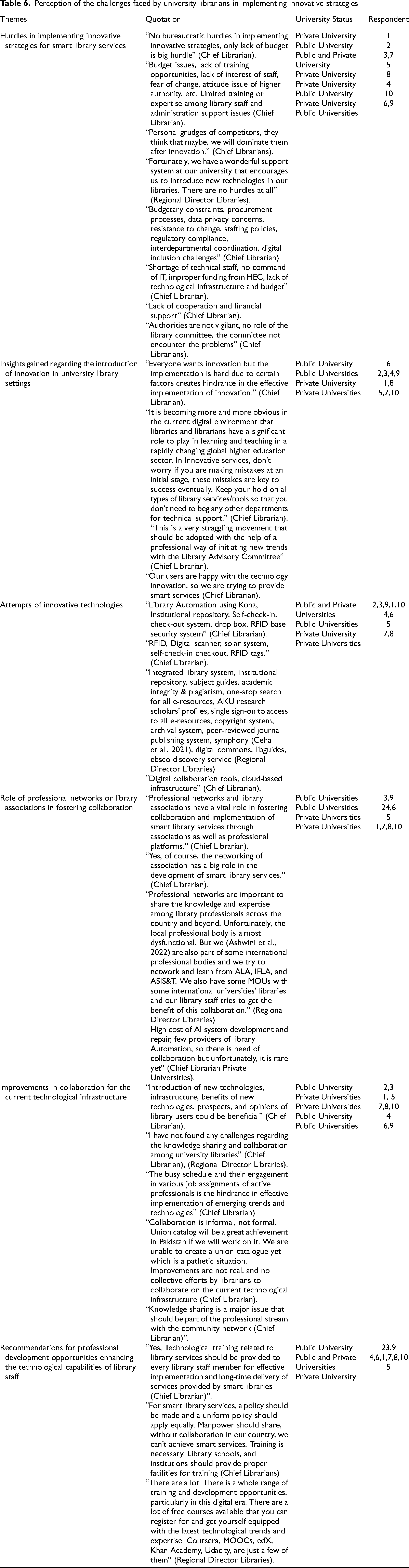
This qualitative portion of the study was based on the ten interviews with chief librarians of advance university libraries in Pakistan. Various themes were developed for data analysis and the findings of thematic data analysis highlighted in Table 6.
Hurdles in implementing innovative strategies for smart library services
The internet revolution will be the next stage, and there will be several obstacles to innovative service in academic libraries (Mani and Chouk, 2018). During the interviews, questions concerning any institutional regulations or bureaucratic barriers that prevent the use of creative approaches in library services were asked. Mostly answers were yes, that barriers make it difficult for libraries to implement new initiatives. The common hurdles such as concerns about the budget, a lack of training opportunities, a lack of staff interest, and a fear of change, etc. The development of libraries and smart services is aided by budget. Librarians create policies and discuss technical advancements in libraries, such as self-check-in and self-check-out systems, security systems, RFID tags, monitoring, regulating, digitization, desktop access, etc. but higher authorities don’t take it on a serious note. There was only one answer which was the opposite of the other ones, who said that there were not any obstacles at all. They are fortunate to have an excellent support network at their university library that motivates them to implement new technology in the university library. Several respondents differed in their assessment of the obstacles. Despite having different opinions, nine university librarians emphasize the budget as a key concern, with one saying that there was no issue in his university.
Perception of the challenges faced by university librarians in implementing innovative strategies
Insights gained regarding the introduction of innovation in university library settings
The purpose of this interview question was to gain insights regarding the introduction of innovation in university library settings. Mostly librarians answered that they are happy with innovation in university library settings. Everyone is in favor of innovation, but putting it into practice can be challenging because of many issues that make it difficult. One answered that the Library Advisory Committee should support this highly straggling movement by helping to start new trends professionally in university libraries because it is not hectic to implement. One said that retain exposure to all library resources so you won’t have to ask other departments for help with technological issues. All chief librarians were on one page that we should introduce innovative library services and remove all the hurdles regarding this.
Attempts of innovative technologies
A question was asked that identify specific examples of innovative technologies or services, librarians attempted to introduce in university. Various innovative library services were introduced by chief librarians which they are applying in university libraries such as library automation using Koha, institutional repository, self-check-in, check-out system, and RFID base security system. One chief librarian of a public university said that Our PC 1 cost was 13 crores and they introduced new services like RFID, digital scanner, solar system, self-check-in check-out, and RFID tags. Koha was already applied there and customization work in Koha is done regularly. A digital repository for e-books is maintained in D Space but in the thesis case, we are just providing services of abstracts and similarly provide SMS service for any news or reminder, chat service for communication facilitation, etc. One chief librarian introduced the new attempted services as innovative technologies/services: integrated library system, institutional repository, subject guides, academic Integrity & plagiarism, One-stop search for all e-resources, university research Scholars’ profiles, single sign-on to access to all e-resources, copyright system, archival system, peer-reviewed Journal publishing system, symphony (Ceha et al., 2021), digital commons, libguides, EBSCO discovery service (EDS), etc. Another librarian introduced unique attempted services such as digital collaboration tools, and cloud-based infrastructure. The findings show that chief librarians are working to introduce innovative services, especially at the university level where research is on priority.
Role of professional networks or library associations in fostering collaboration
A question was asked whether university librarians can work together to establish smart library services by participating in professional networks or library associations. The majority of the answers were positive that professional networks and library associations have a vital role in fostering collaboration and implementation of smart library services through associations as well as professional platforms. There were 9 librarians who had the same views but one answer was unique professional networks are important to share the knowledge and expertise among library professionals across the country and beyond. Unfortunately, the local professional body is almost dysfunctional. But we are also part of some international professional bodies and we try to network and learn from ALA, IFLA, and ASIS&T. We also have some MOUs with some international universities’ libraries and our library staff tries to benefit from this collaboration.
Improvements in collaboration for the current technological infrastructure
Improvement is constantly required in the provision of smart library services. Now it is the librarian who does it, adapts it and takes the responsibility to see the user’s needs. A question was asked which specific improvements they believe are necessary in the current technological infrastructure to better support smart library initiatives. A librarian recommends new technologies and infrastructure, highlighting the benefits, prospects, and opinions of library users. Mostly said, smart services are increasingly preferred by users due to their preference for electronic devices, and the development of technological infrastructure to meet their full consumer needs. One suggests that library employees should stay informed about the latest technology advancements in libraries. One said that collaboration is informal, and efforts are needed to produce a Union Catalogue in Pakistan, despite the lack of technical infrastructure and collaboration among librarians. So, librarians must adapt to the new technology trends otherwise traditional librarianship will not survive in the future so individuals will take up the position.
Recommendations for professional development opportunities enhancing the technological capabilities of library staff
The purpose of this question was to get suggestions from chief librarians regarding the hurdles and one chief librarian suggested professional development opportunities for library staff to enhance technical capabilities, ensuring successful adoption and long-term provision of smart library services through relevant technological training. One suggested a policy should be created specifically for smart library services, and it should be applied uniformly. Sharing manpower is important because, without cooperation, our libraries cannot provide smart services in university libraries. One has an exclusive statement that actually, there are a lot of opportunities for training, particularly in this digital era such as a lot of free courses available that you can register in and get yourself equipped with the latest technological trends and expertise. Coursera, MOOCs, edX, Khan Academy, and Udacity, are just a few of them. In a nutshell, all library schools and associations for libraries should take the lead in providing training, seminars, and workshops, as well as a common forum for library employees.
Discussion
The research explored the fostering innovation in smart library services, in-depth exploration of empowered capabilities, and dynamic strategies among university librarians in Pakistan and met the objectives of the study.
Current status of innovation in smart library services
This study ascertained the use of smart library services in Pakistani university libraries. It was requested by the library experts to highlight the current status of innovation in smart library services. According to the data analysis, librarians strongly valued the user-friendly interfaces that libraries offer for searching data. The results of this study highlight the essential value that librarians place on a user-friendly interface for data search in library systems. The focus on user experience is considerable, which aligns with the larger academic discussion about libraries’ constant adaptation to their users’ changing requirements and expectations. This suggests that university libraries consider the preferences of their patrons and adjust their source-search interface accordingly. Cao et al. (2018) support these findings and note that libraries are always changing to meet the demands of their users. As evidenced by this publication, libraries are dynamic organizations that are always changing to meet the needs of their patrons. The continuous connection between user-centric design and libraries’ capacity for adaptation emphasizes how important it is for library services to innovate and adapt continuously. These findings underline the necessity of continuously evolving and adapting library environments to achieve the best possible user engagement and happiness, in addition to emphasizing the importance of giving attention to user-friendly interfaces. As a result, they develop smart services for patrons in response to the changing information access practices. Similarly, digital literacy programs are highly accepted as a smart library service and the outcomes of this study confirmed the ongoing efforts libraries make to improve customer service and improve the accuracy and efficiency of their operations with the provision of smart library services. Third high response on agreeing that Artificial intelligence (AI) and the Internet of Things (Miikkulainen et al., 2024) are also viewed as valuable tools for improving library operations and providing ongoing support. To retrieve and share information for learning and study, AI can support intelligent decision-making (Okunlaya et al., 2022). The study’s findings support the widely held belief among librarians that artificial intelligence (AI) and Internet of Things (Miikkulainen et al., 2024) technologies have a substantial positive impact on library operations. The input received from librarians makes it abundantly evident that they strongly recognize the potential of AI and IoT to completely transform current library procedures. This opinion is strengthened by a study by another author, whose conclusions correlate with ours and highlight the effectiveness of AI in improving information retrieval procedures in library environments. Respondents place a high priority on digital literacy initiatives and use chatbots or virtual assistants driven by AI to serve patrons as a smart library service. These findings show that while a sizable majority of respondents see the value of smart library services, their actual implementation of these services has been less successful. University libraries were well-agreed to put all of the smart library service strategies into effect. These results provide compelling evidence for the claim that university libraries should concentrate more on providing smart services according to the needs of users.
Capabilities and dynamic strategies employed by university librarians to foster innovation
The findings indicate that university librarians’ capabilities and dynamic tactics are very high in ratings. A significant number of people thought they could collaborate with various organizations to enhance the offerings that smart libraries provide. The respondents’ opinions about their abilities are divided, more than half assessed their capabilities as very high, while the other minimum range of people ranked them as very low. They are highly confident in their ability to train researchers in reference management software (e.g., endnote, Mendeley, Zotero, etc.) and similarly, satisfied with the level of proficiency in managing and maintaining cloud-based resources for library users. Based on the study’s findings, there is a good trend showing that librarians actively keep up with the most recent developments in the field of library science. It was discovered through surveys and interviews that a significant portion of the librarian community is dedicated to lifelong learning and adaptability to new technology and approaches. Overall, they strongly believe that they are updated according to the trends for library services. The present findings support the results of a study conducted by Baro et al. (2018), which revealed that academic librarians in Africa are aware of research repositories, research gate, Mendeley, personal websites, and technology trends. Our findings are supported by a study carried out by a different author, whose work highlights librarians’ understanding and use of research repositories, Mendeley, and a general cognizance of technology changes. The correlation seen between our study and previous studies highlights the proactive stance used by librarians to adapt to changing circumstances and maintain their relevance in the constantly changing information environment. It also highlights how essential it is for members of the library community to continue their professional development and work together to successfully navigate and capitalize on new trends and technology for the good of stakeholders and library patrons.
Influence of innovative initiatives on the overall effectiveness of university libraries
The use of smart technology increases the university library’s operating effectiveness and a high range of respondents agree that innovative technology has improved user interaction and utilization of smart library services. Teachers and students may succeed academically with the help of innovative digital resources and digital literacy initiatives and the university library’s resource accessibility has been enhanced via creative efforts. The investigation’s findings show a direct link between innovative library activities and improved user engagement, which is ultimately advantageous for library users. Surveys and feedback systems made it clear that efforts like digital literacy programs, collaborative learning spaces, and interactive seminars made an enormous impact in increasing user satisfaction and engagement. A study by Baro et al. (2019) supports the findings that the majority of respondents mentioned attending workshops or seminars is useful to gain digital literacy abilities. These findings provide insights into how librarians obtain digital literacy skills. These results are further supported by research by another author that highlights how workshops and seminars are useful tools for giving librarians the knowledge and skills they need to effectively serve their communities. The connection between our research and the supporting studies emphasizes how important it is to take proactive steps and provide chances for ongoing learning to promote meaningful user interactions and cater to the changing demands of library users. To create a dynamic and adaptable library environment that successfully satisfies the wide range of requirements of its patrons, this emphasizes the significance of continuing investment in creative programming and professional development programs. Thus, library schools ought to give their students sufficient instruction regarding innovative initiatives to prepare them for this digital age and serve as smart librarians with smart library services. This makes it necessary for university libraries in Pakistan and other developing nations to have contemporary equipment, and it also means that librarians must receive ongoing training to keep up with the latest technological advancements.
Challenges encountered while implementing innovative strategies for smart library services
The respondents’ primary problem was, predictably, the library staff’s unwillingness to accept change easily. This may have to do with the widespread belief that technology will eventually replace people. The study’s conclusions highlight a common worry among librarians: the possibility that technology may eventually take the place of people in library settings, posing a serious threat to their line of work. Interviews revealed that many librarians are concerned about the growing automation and digitalization of library services, believing that these developments would eventually reduce the need for human skills. One of the biggest obstacles libraries confront in their digital transformation, according to (Adetayo et al., 2021) is accepting change. Additionally, adopting new technology requires librarians to pick up new skills that may not align with their jobs in a library setting, leaving them less time to learn. Using smart technology requires expertise and confidence, which is naturally impacted by a lack of training and abilities. This study supports this attitude by showing that librarians frequently show resistance and reluctance to technological change. The findings indicate a complex interaction between workforce dynamics and technological innovation in the library profession. Adetayo et al. (2021); Padhi and Nahak (2019) all agree with these conclusions, emphasizing the necessity for librarians to advance their technological expertise and skill sets. Smart service provisioning in libraries is hampered by several factors, including inadequate funding for library personnel training, the inability to purchase smart apps, and a lack of resources to pay the cost of digital convergence. Based on the responses provided, this might also account for the inexperience of librarians. Another research finding also supports this study that financial difficulties are another significant obstacle that may prevent the development and transformation of smart services to get all the equipment required for execution (Padhi and Nahak, 2019). The lack of training offered to library employees may harm their self-assurance in their capacity to manage the new library services. This will cause resistance to accepting the change. This confirms the findings of Gireesh Kumar (2013), who said that inadequate training is the main issue impeding the provision of smart library services. The majority of the problems are directly tied to financial problems resulting from inadequate infrastructure to enable the creation of smart services as well as from training and skill-building for librarians (see Table 5). To ensure an effective integration of technology and human expertise in the ever-evolving library landscape, it is crucial to address these concerns through targeted training, communication, and strategic planning.
Theoretical and practical implications and future recommendations
The study’s findings on fostering innovation in smart library services among University librarians in Pakistan have several theoretical and practical implications. The current study enhances the theoretical knowledge of smart and innovative library services in university libraries, especially concerning Pakistan. This study significantly contributes to the larger body of literature on technological advancement, knowledge management, and managing changes in libraries in smart form by analyzing the empowered capacities and dynamic methods employed by university librarians. According to the findings, human resources such as the abilities, adaptability, and innovative attitudes of librarians play a significant role in fostering innovative approaches to smart library services. Furthermore, the study focuses on how librarians see and adjust to these changes as well as how new practices and technology spread throughout the library setting. This study also contributes to the increasing body of knowledge about the challenges that librarians have while embracing new technology, which broadens our comprehension of innovative capability and adaptability in the library field.
Practically, this study offers useful information to library administrators, legislators, and university administration. Initially, it identifies the particular abilities and proficiencies needed by librarians to encourage invention in smart library services, recommending areas for focused training and professional development initiatives. The study can result in the creation of more intelligent library services, which will eventually improve the experience of using the resources for both teachers and students, and knowledge about librarians’ empowered capabilities may be used to modify innovation tactics to meet the unique requirements and difficulties in Pakistani libraries experience, resulting in more long-lasting and efficient solutions. This study contributes to the body of knowledge on smart libraries by offering an in-depth investigation of the current state, capabilities, tactics, and difficulties faced by Pakistan’s university libraries. The study might provide the basis for more research, promoting more in-depth research of certain facets of innovative tactics and smart library services. The focus of the research on innovation is consistent with the proposed effects on improving education, developing policies regarding the syllabus, and advancing research. By exploring these implications, the study guarantees a thorough comprehension of the function and possibilities of smart library services in Pakistan’s university libraries. Employing the research’s findings, universities and library administration could provide funding for training and capacity-building initiatives that equip librarians with the know-how and abilities to promote innovation in library services. Another aspect is that policymakers may use the research findings to create policies that support and encourage innovation in library services, therefore creating an environment where academic libraries in Pakistan are committed to ongoing development. Global innovation in library services may be promoted by adapting and scaling up the effective solutions found in Pakistani university libraries to other areas facing comparable difficulties. The study’s problems and solutions shed light on the universal features of adopting smart library services, advancing our understanding of international best practices. The same initiatives in other poor countries might be encouraged by the tactics used by university libraries in Pakistan to promote innovation despite possible resource restrictions, therefore providing equal access to modern library services globally.
Further, following are the several suggestions for fostering innovation in smart library services and enhancing their capabilities, especially for Pakistani university librarians: Universities should invest in librarians’ professional development programs to enhance their knowledge of innovative technologies like AI, and IoT, which will increase user experience and operational effectiveness. To improve their capacity to provide smart services, librarians should encourage cooperation with other departments. This will allow them to share ideas, innovations, and information. Further, it is needed to promote digital literacy initiatives to help users and librarians, get smart technologies and digital resources, and improve accessibility in the digital learning environment. It is also needed to boost efforts to create digital archives and open-access digital repositories to improve knowledge accessibility and foster a culture of open knowledge sharing.
Conclusion
Stimulating innovation in the form of improved library services, is made possible in a significant way by libraries. In the knowledge society, innovation and creative thinking are becoming increasingly essential components of competitiveness and valuable resources. A library is essential to the advancement of a civilization. Within this framework, libraries experienced development phases that included offering “online or in physical form information about the library, as well as “virtual libraries” and advanced library services. In the current era of knowledge, university libraries must implement novel strategies and technologies, such as web 2.0 technologies, to make it easier to create new knowledge and provide information services. Library stakeholders take an interest in innovative services so the library services should constantly be revised and reevaluated to better serve. The study highlights the current trends of innovation in smart library services, empowered capabilities, and dynamic strategies of university librarians in Pakistan to see the needs of university library users in the current knowledge-based society.
The findings of this study not only provide insights into the status and strategies for fostering innovation in smart library services among university librarians in Pakistan but also highlight significant challenges that are reflective of global issues. Resistance to technological change, financial constraints, and the need for user-friendly interfaces and advanced technologies are universal challenges. Addressing these issues through strategic investment in training and infrastructure can greatly enhance the effectiveness and inclusivity of library services. Such improvements are crucial for supporting global educational goals, reducing inequalities, and promoting sustainable development. By aligning our local findings with global challenges, this study underscores the potential for broader impacts and the importance of continued innovation and adaptation in the library sector.
The study’s findings reveal several evidence-based challenges that align with global challenges. One prominent challenge is the resistance to change among library staff, driven by the fear that technology might replace human roles. This resistance is a common issue worldwide, reflecting a broader concern about the impact of automation on employment (Adetayo et al., 2021). However, the study also highlights the empowering role of targeted training and continuous professional development in addressing this challenge. Such initiatives can enhance librarians’ confidence and skills, improving their adaptability and ensuring a harmonious integration of technology and human expertise. Additionally, the study highlights financial constraints as a significant barrier, which mirrors the global struggle for adequate funding in the educational and library sectors (Padhi & Nahak, 2019). More resources are needed for training and purchasing necessary innovative technologies to limit the innovation potential. By securing funding and investing in the necessary infrastructure, libraries can improve their services, enhancing educational outcomes and reducing inequalities in access to information.
Furthermore, the findings underscore the importance of user-friendly interfaces and the adoption of AI and IoT technologies, which have the potential to significantly transform library environments. These technologies are crucial for enhancing user engagement and operational efficiency. Their adoption can make library services more responsive to users’ evolving needs, thus supporting the global agenda of quality education and sustainable development. Addressing these challenges through strategic planning and investment can lead to more effective and inclusive library services, benefiting students, researchers, and the broader community.
Footnotes
Declaration of conflicting interests
The authors declared no potential conflicts of interest with respect to the research, authorship, and/or publication of this article.
Funding
The authors received no financial support for the research, authorship, and/or publication of this article.
