







Abstract
The study develops a 33 items Influencer Following Motives Scale for analyzing why people follow social media influencers. The study unfolds in four stages: initial item formation through interviews and literature review, item refinement via exploratory factor analysis, validation of the scale through confirmatory factor analysis, and final validation using the Multi-Trait Multi-Method Matrix. The scale identifies eleven motivational dimensions: Beauty, Authenticity, Learning, Boredom, Expertise, Entertainment, Aesthetics, Curiosity, Sharing, Similarity, and Information. The developed measurement scale aids in understanding follower motivations, offering insights for influencers and content creators to engage their audience more effectively.
Introduction
Social media has changed the way we communicate, connect, and influence others (Ryu & Park, 2020). People share their thoughts and feelings, produce and build up online content such as live stream videos, status updates, and posts, and even create a unique image on social media (Labrecque, 2014). The images and content created by some content creators are admired by others, earning many followers. They are thus able to influence their followers, and known as social media influencers (Ki & Kim, 2019). Social media provides opportunities for two-way communication between influencers and their followers, enabling message replies and interaction with each other, and is significantly different from the one-way communication that holds between traditional media celebrities and their audience (Yuan & Lou, 2020). As a result, a parasocial relationship is established between the social media influencers and their followers.
Social media influencers have gained significant popularity, leading to increased research interest in understanding why people follow them. While several studies have explored the motives for following social media influencers(Quan-Haase & Young, 2010; Papacharissi & Mendelson, 2011; Sheldon & Bryant, 2016; Phua et al., 2017; Croes & Bartels, 2021; Lee et al., 2022), there are considerable overlaps between the proposed motives.
Prior studies have revealed considerable overlaps in motivational dimensions. For instance, Croes and Bartels (2021) proposed six motivational dimensions while Morton (2020) identified five dimensions, with both frameworks sharing common elements such as “information” and “entertainment.” Both of them lack visual elements such as Aesthetics and Beauty. Similarly, Ki et al. (2020) presented six motivational dimensions that intersect with Lee et al. (2022) four dimensions, particularly in aspects of “informativeness” and “expertise.” Both of them did not cover Boredom and Curiosity discussions (Ki et al., 2020; Lee et al., 2022). While Romero Saletti et al. (2023) emphasized social seeking and information seeking, Masciantonio and Bourguignon (2023) focused on self-enhancement and instrumental use While instrumental use is often associated with information seeking, this study did not explicitly consider “information” itself as an independent motivational factor. This suggests that the study may have overlooked the direct need for people to use social media to obtain information. These variations demonstrate that existing research has predominantly adopted singular theoretical perspectives, lacking a unified theoretical framework. Furthermore, most studies have concentrated on single social media platforms, neglecting cross-platform analysis of influencer following motivations. Therefore, this study argues for the necessity of developing a comprehensive measurement scale applicable across different social media platforms.
Motives for following social media influencers refer to why followers subscribe/follow to the channels/accounts of influencers. Understanding such motives will help influencers produce suitable content for their followers, help marketing practitioners select appropriate influencers as product endorsers, and help academics understand subscriber behaviors on social media and video-sharing platforms.
In light of these research gaps, this study aims to develop and validate a comprehensive scale for measuring motives for following social media influencers, encompassing 11 major dimensions that capture the diverse motivations of fans. By addressing these research gaps, this holistic measurement tool will enable a deeper and more systematic understanding of the complex influencer-follower relationship. The scale integrates multiple motivational dimensions into a unified framework, allowing for a more comprehensive analysis of the driving factors behind follower behavior.
By utilizing this scale, researchers and marketers will be able to more accurately assess the impact of different motives on follower behavior, leading to a better understanding of how influencer-follower relationships are formed and maintained. This, in turn, will facilitate more precise market segmentation and positioning strategies. Marketers can use the scale to gain a more accurate understanding of their target audience's following motivations, enabling marketers to develop more targeted influencer marketing strategies and improve marketing effectiveness. The developed scale can enhance our understanding of consumer preferences and needs, ultimately improving the effectiveness of influencer marketing by enabling more precise market segmentation and better-aligned marketing objectives.
The process for scale development usually consists of four stages: Theoretical analysis, questionnaire generation, testing of reliability and validity, and convergent validation(Churchill, 1979; Clark & Watson, 2016; DeVellis & Thorpe, 2021). This study thus first reviewed the literature on users’ behaviors in subscribing to and following influencers. Then, we generated questionnaires through interviews with respondents and tested the reliability and validity through questionnaires and statistical methods. Finally, we used the multitrait-multimethod (MTMM) method to check convergent validation to validate the scale's consistency and discriminability. We also verify the criterion-related validity of the scale by checking users’ motives and the type of social media influencers they followed.
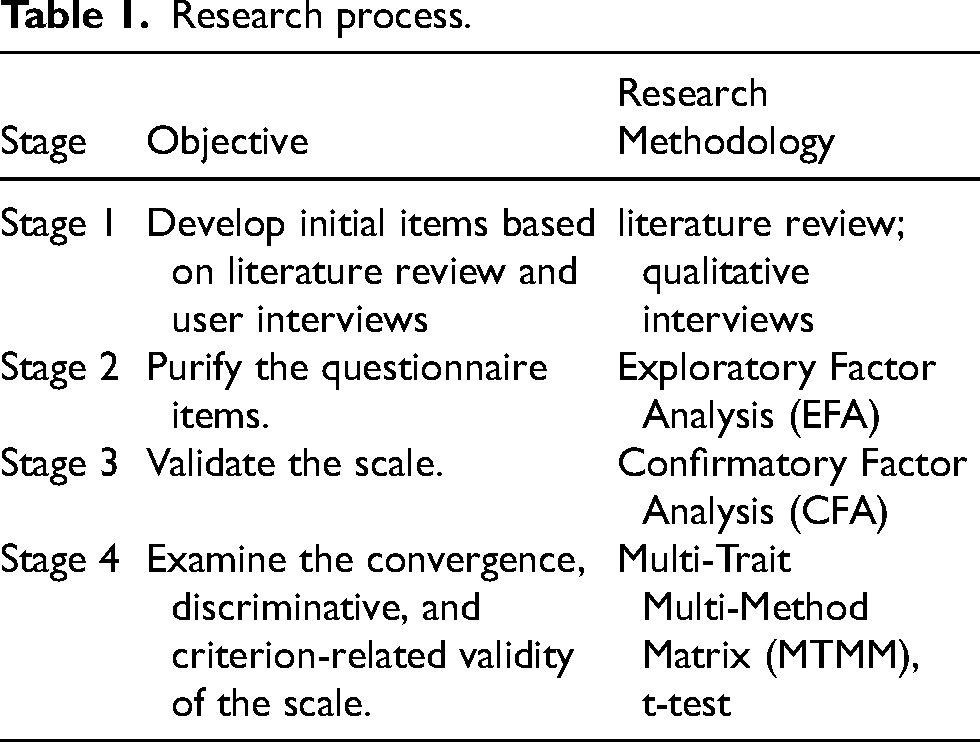
The research process is shown in Table 1. Based on the research steps proposed by Churchill (1979) and DeVellis and Thorpe (2021), this study used four stages to develop and validate the scale. In Stage 1, we collated information on motives for following influencers through a literature review, and then we interviewed social media influencer followers to develop a preliminary set of questionnaire items. In Stage 2, we conducted an online questionnaire survey using the initial measurement items developed in Stage 1, then purified the data through exploratory factor analysis (EFA). In Stage 3, we conducted another online questionnaire survey based on the items developed in Stage 2 and used confirmatory factor analysis (CFA) to evaluate the convergent and discriminant validity of the scale. In Stage 4, we verified the convergence, discriminative, and criterion-related validity of the scale using MMTM and t-test.
Research process.
Literature review
Social media influencers
Social media have caused a transformation of the business landscape (Yang & Sulaiman, 2022). Cost-effectiveness and widespread adoption of social media are altering global market dynamics (Abdullah et al., 2023). Social media influencers refer to people who have influence in social media (Chang et al., 2020) and significantly influence vast numbers of followers. Social media platforms allow influencers to interact directly with their followers and establish relationships of closeness and trust, increasing followers’ willingness to purchase products recommended by these influencers. These relationships are built on influencers’ human brands and images, their social media presences, and their insights into and values in life (Dhanesh & Duthler, 2019). Social media influencer marketing has become a successful strategy for brands to engage with customers with the help of influencers (Tafesse & Wood, 2021).
Social media influencers rely on the support of their followers to sustain their growth and achieve success, while followers benefit from valuable content and meaningful engagement provided by influencers. Therefore, to maintain follower loyalty and increase their impact, influencers must consistently produce engaging content and actively engage with their audience. They must understand their followers’ needs and preferences and actively engage with them to cultivate stronger and enduring relationships.
Parasocial interaction
Horton and Richard Wohl (1956) introduced the concept of “parasocial interaction” (PSI) to describe socio-emotional connections between media personalities and their audiences. It is a form of imaginary interaction between all types of media personalities and their audiences (Dibble et al., 2016). Social media creates opportunities for interaction and communication between influencers and followers, forming parasocial relationships (Boerman & Van Reijmersdal, 2020). Such relationships benefit influencers and brands, as the relationships can change followers’ attitudes and behaviors (Reinikainen et al., 2020; Aw & Chuah, 2021). Studies by Masuda et al. (2022) and Leite and Baptista (2022) showed that PSI between influencers and their followers significantly affects purchase intention.
Uses and gratifications theory
Uses and Gratifications Theory (UGT) was initially developed to understand why people use media. It has been applied to social media platforms, including Facebook (Raacke & Bonds-Raacke, 2008), YouTube (Khan, 2017), and Instagram (Sheldon & Bryant, 2016). Satisfaction with the use of social media platforms varies by platform and mode of use. For example, the most important motives for Instagram use are to follow other users, to document, to stay calm and trendy, and to be creative (Sheldon & Bryant, 2016). Motives for viewing and liking YouTube videos are relaxation and entertainment, and making comments and uploading videos as social interaction (Khan, 2017). People may also follow influencers to gain specialized knowledge about a particular product or service (Djafarova & Rushworth, 2017).
UGT provides a practical framework to explain why people follow social media influencers and helps us understand people's needs and satisfaction as they use social media platforms.
Motives for following social media influencers
Social media users follow influencers for different reasons, and some previous studies had discussed such motives. For example, Lee et al. (2022) summarized reasons for following social media influencers using open-ended questions and came up with four motives for following influencers on Instagram: Authenticity, Consumerism, Creative inspiration, and Envy. Charles (2023) argued that followers might feel envy or jealousy toward the influencer lifestyle because it offers many advantages or opportunities that followers themselves lack. Croes and Bartels (2021) applied motives for using Facebook (Quan-Haase & Young, 2010; Papacharissi & Mendelson, 2011), Instagram (Sheldon & Bryant, 2016), and other social media (Phua et al., 2017) in prior literature as their questionnaire items, proposing six motives that cause young people to follow influencers. These motives are: (1) Information-seeking, (2) information sharing, (3) cool and new trends, (4) relaxing entertainment, (5) companionship, and (6) boredom. The target population was young people aged 16 to 25 years old. Morton (2020) used semi-structured interviews to summarize five motives that cause young people to follow influencers: (1) Information, (2) communication, (3) entertainment, (4) inspiration, and (5) surveillance. The target population was young people aged 20 to 25 years old. Ki et al. (2020) proposed six motives for following social media influencers: (1) inspiration, (2) visual aesthetics, (3) enjoyability, (4) similarity, (5) informativeness, and (6) expertise. Heiss and Rudolph (2022), revealed the motives for social media users to follow influencers diagnosed with cancer include information, interaction, and expression. Their study focused on cancer patient influencers.
The motives mentioned above can be divided into four categories: motives related to the follower, motives related to the influencer, motives related to the content, and motives related to social purposes.
Motives related to the followers
Literature revealed some motives to satisfy the follower's own needs, such as entertainment, boredom/passing the time, and expanding horizons. Some users follow social media influencers for entertainment purposes, such as watching humorous content. Prior studies (Barta et al., 2023; Charles, 2023) suggest that entertainment is a crucial motive. Croes and Bartels (2021) argued that entertainment is the essential motive for following influencers, as entertaining videos attract users’ attention and affect their willingness to continue watching. Both Morton (2020) and Alhothali and Aljefree (2023) revealed that users were motivated by entertainment when being bored and wanted to pass the time. Lou et al. (2023) also provide six follower motivations, entertainment is one of them.
Some users follow social media influencers because of boredom. Croes and Bartels (2021) interpreted this motive as users wanting to pass the time when they sometimes have nothing to do and are bored and mentioned that the motive to pass the time is similar to that of entertainment. Brailovskaia et al. (2020) revealed that one reason that people use social media is to pass the time, such as while waiting for a train or before going to bed.
Another motive for people to follow social media influencers is to expand their horizons. For example, influencers ignite followers’ interest in new ideas, expand their horizons, and encourage them to discover new things (Ki et al., 2020). Followers gain inspiration and motivation from influencers, which may include the pursuit of personal growth, self-improvement, and achieving their ideal life(Alhothali & Aljefree, 2023). The popularization of the Internet and the development of social media has meant that people have easy access to different cultures, concepts, and values. Social media enrich users’ desire to try out new ideas and new experiences. Influencers’ popularity gives them opportunities to share ideas and experiences that their followers may not have been exposed to before. By following influencers, people can gain new ideas about different cultures, food, travel experiences, social issues, and many others. These new ideas and experiences help expand followers’ horizons and make them more open to understanding different cultures and perspectives.
Motives related to social media influencers
Literature also revealed some motives related to the influencers, such as authenticity, approachability, curiosity about influencers’ lives, expertise, and similarity. Users follow social media influencers for their authenticity. People regard social media influencers that cultivate authentic personas as confidants, leading people to sense similar and trust towards these influencers compared to conventional celebrities (Lee et al., 2022). Lee and Eastin (2021) identified the authenticity of influencers in five dimensions: Social media influencers are perceived as enthusiastic by consumers (sincerity); are intrinsically motivated to participate in brand endorsement (truthful endorsement); reveal personal information (visibility); have expertise in a specific field (expertise); and are different from other influencers (uniqueness). Lou et al. (2023) further indicated that authenticity, similarity, and parasocial relations with followers not only strengthen the awareness and persuasive ability. Followers are often attracted to influencers who appear authentic, have expertise, are trustworthy, and are physically attractive (Malik et al., 2023). These qualities help increase an influencer's appeal and influence.
Some people follow social media influencers because influencers are approachable, easy-going, down-to-earth, and likable (Lee et al., 2022). An approachable social media influencer gives their followers the impression that they are no longer a passive audience, but rather that they have built a close relationship with the influencer. Such a relationship encourages followers to be more involved in the content and activities of the influencer and further deepen their appreciation and support. The approachability of an influencer will help their followers develop a deeper level of empathy and psychological projection toward them, thereby motivating people to follow them.
Followers may follow influencers because of envy and curiosity. For example, followers envy the lives of influencers (Lee et al., 2022) and are curious about their lives (Morton, 2020). Morton (2020) claimed that one reason people follow influencers is to watch how they live their life. Influencers often share their daily life, activities, and travel experiences on social media, bringing new experiences and perspectives to viewers. Therefore, following influencers for a peek into their lives is a way to have fun and satisfy their curiosity.
People may also follow social media influencers because they appreciate their expertise. For example, followers may see an influencer as an competent and knowledgeable expert in the field (Ki et al., 2020). If people consider a social media influencer as an expert, they may expect a high level of expertise displayed in the shared content and deem such content to be worth learning and following. Some professional influencers are with capacity to convert complex knowledge into easy-to-understand and exciting content, which is critical in attracting viewers. Furthermore, Kehr et al. (2023) suggested that the effectiveness of leadership (TL) depends on whether the exhibited transformational leadership behaviors align with the followers’ motives. As a result, followers’ motivational preferences influence their preferences for specific leadership behaviors.
Many people follow social media influencers for the similarities they perceive between themselves and the influencers. For example, followers and influencers may share similar tastes and hobbies and have much in common (Ki et al., 2020). Nevertheless, similarity can take many different forms: Interests, preferences, values, personality, etc. When viewers find similarities between themselves and a social media influencer, they may be more likely to develop a sense of intimacy and feel more empathy and emotional connection when viewing their content
Motives related to content
Literature proposed some motives related to the content, including information-seeking, gaining encouragement, and visual aesthetics. Some users follow social media influencers to seek information, such as being informed of products, food, and attractions recommended by influencers. Literature suggested that information-seeking is a significant motive for people to follow influencers. Heiss and Rudolph (2022) state that influencers have become one of the channels for users to obtain information. Croes and Bartels (2021) find that people follow influencers to gain knowledge and expert and practical information about products and services. Morton (2020) suggests that people follow influencers because they share information on topics that are of interest to users, such as fashion trends, new products, recommended attractions, and practical lifestyle tips (e.g., makeup tutorials and fashion tips). Lee et al. (2022) point out that the motive of information-seeking is derived from the ease of finding new products to purchase and discovering new brands. Jhawar et al. (2023) indicated that entertainment, engagement, and information needs were fit for followers need. Al-Hasan (2024) argued that creating engaging content, particularly personalized and educational content, can effectively enhance interaction and engagement. Nwagwu and Akintoye (2024) noted that emerging musicians attract audiences by sharing music, videos, and other captivating content.
Some users follow social media influencers because of the positive energy they spread through their content. Morton (2020) provided examples of influencers sharing their life journeys, encouraging their followers to exercise, and encouraging them from failures to regaining self-confidence.
There are some users who follow social media influencers to satisfy their desire for visual aesthetics. Lou et al. (2023) provided six follower motivations, esthetics is one of them. Ki et al. (2020) provided examples in their study that many followers found the content created by influencers not only pleasing to the eye but also highly visually appealing. This content may include cooking, fashionable outfits, travel photography, etc., which are presented in a way that meets the viewers’ aesthetic preferences and arouses an emotional resonance and psychological projection.
Motives related to social purposes
Some users follow social media influencers for social purposes, such as social interaction/communication and information sharing/expression. Some users follow influencers for social interaction/communication, such as interacting with influencers or discussing influencers’ posts with other social media users. Past research also suggests that social interaction/communication is a significant motive. Heiss and Rudolph (2022) point out that parasocial interactions between users can lead to a sense of social connectedness. Saldanha et al. (2023) pointed out that social media influencers have become an important way for consumers to reduce loneliness and anxiety during the pandemic. Croes and Bartels (2021) suggest that the motive of social interaction/communication makes users feel less alone. Chae (2018) argued that young people consider influencers to be friends.
Information sharing/expression motive refers to sharing information that one has gathered (Croes & Bartels, 2021), such as sharing personal experiences and personal information and expressing one's thoughts. Heiss and Rudolph (2022) revealed that expression can be a way of constructing an identity and that authentic self-expression on social media helps enhance self-esteem and well-being.
Although literature have proposed variety of motives for following social media influence, overlaps occur between these proposed motives. Thus, there is a need to develop a comprehensive scale to include major motives for following social media influencers.
Materials and methods
We established the scale through empirical studies of four stages. Stage 1 used user interviews and literature reviews to form preliminary items. Stage 2 refined these items through a questionnaire survey. Stage 3 further validated the convergence and discrimination validity. Stage 4 employed the convergence, discriminative, and criterion-related validity.
Stage 1: initial item generation
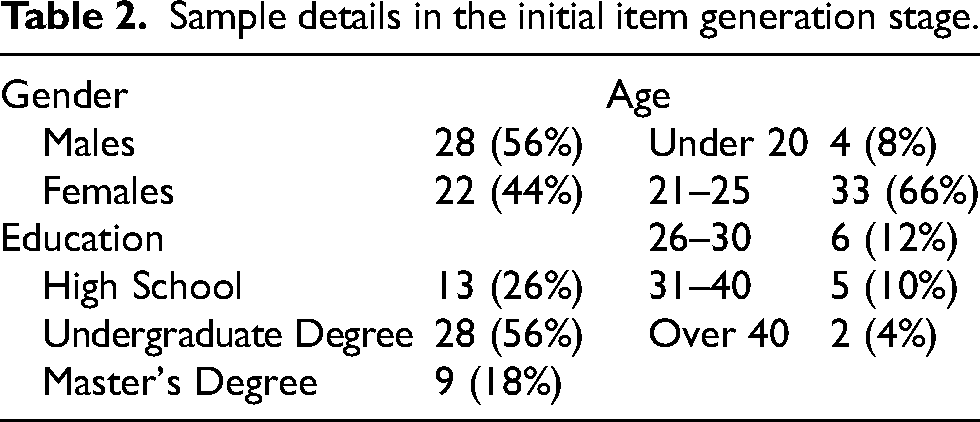
In stage 1, with reference to the methodology adopted by Walsh and Beatty (2007) and the qualitative exploratory research methodology of Kapuscinski and Masters (2010), we conducted interviews with subscribers of social media influencers to understand the reasons for following. We employed convenience sampling, recruiting volunteers through public posts on the Zuvio, which is the largest interactive platform for university teachers and students in Taiwan. This sampling method is suitable for initial exploratory research, allowing rapid access to the target population. A total of 50 participants were involved in this study, comprising 28 males and 22 females, with ages ranging from 19 to 34 years, more details showed in Table 2. Due to time and resource constraints, we conducted public recruitment on the platform for one month from November 9, 2022, to December 14, 2022. Interviews were conducted via one-on-one video calls to ensure the privacy of conversations. To further protect participant privacy, webcams were not activated during the interviews. Verbal consent was obtained from each participant prior to the interview. The interview guide primarily consisted of three core questions: 1) “Which social media influencers are you currently following?”; 2) “What are your motivations for following these influencers?”; and 3) “What reasons keep you continuing to follow these influencers?”. These open-ended questions were designed to gain an in-depth understanding of participants’ motivations for following and continuing to follow social media influencers.
Sample details in the initial item generation stage.
We implemented several approaches to protect participants’ privacy and anonymity, including using codes instead of real names and removing potentially identifying information during transcription and analysis. Following the interviews, we employed thematic analysis to analyze the transcribed content. Three researchers independently coded the data and then engaged in discussions to reach a consensus, ensuring the reliability and validity of the analysis.
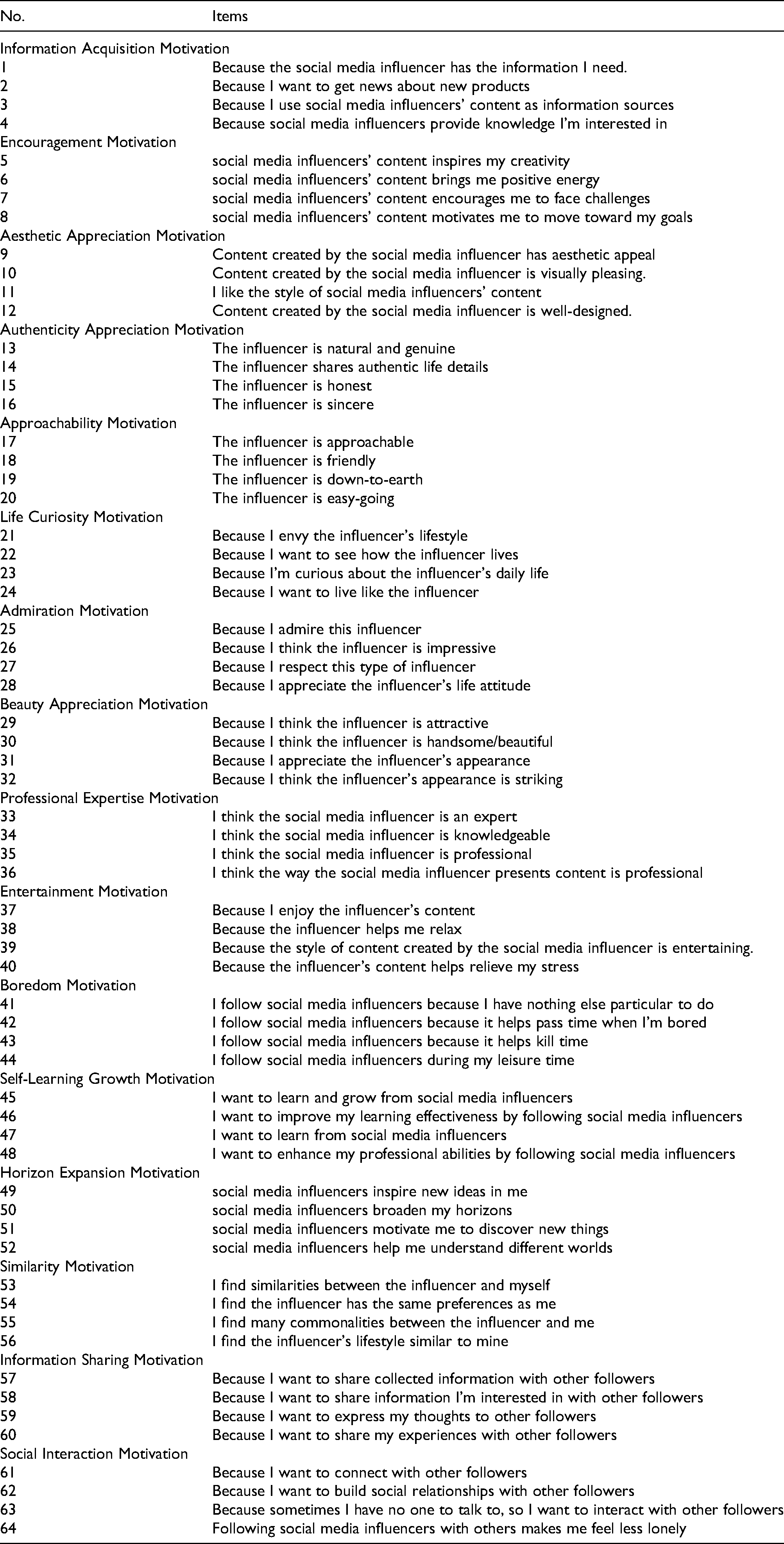
The interview results were used to develop a preliminary scale of 64 question items, with reference to the literature review results, and based on the principles of simplicity, clarity, and specificity, as suggested by DeVellis and Thorpe (2021). Additionally, the surface validity and content validity of each item were assessed in accordance with Rossiter (2002) criteria. These 64 items were presented using a 5-point Likert scale ranging from “strongly agree” to “strongly disagree.” The 64 items are listed in the Appendix 2.
Stage 2: Purification
The second stage of the study was based on the 64 items developed in the first stage and conducted through an online survey on many social platforms. This stage employed exploratory factor analysis with the aim of refining and reducing the 64 items. The sample was obtained through convenience sampling, with the questionnaire distributed across various social media platforms, including Facebook and Instagram. The survey, which had been disseminated over a three-week period from February 7 to February 28, 2023, was promoted through advertisements on social platforms to increase its reach. Convenience store cash vouchers were offered as a lottery to encourage responses.
A total of 722 responses were initially collected. The study excluded 50 duplicate submissions, 25 samples with unreasonable completion times (less than 100 s), and 21 samples who scored same scores for all motivation items, considering these as invalid responses. Additionally, this stage incorporated a validation question: “What are your reasons for subscribing to and following social media influencers? Because I think they are losers.” We assumed that most influencers are not losers, and very few, if any, would subscribe to their channels because they view them as such. Following influencers because they are losers is a very special motive which related to another research field of anti-fans. This is a completely different research topic, so these samples are not included in this study. Responses of “strongly agree,” “agree,” or “neutral” to this question were likely indicative of respondents not carefully reading the questionnaire and were thus classified as low-quality samples. A total of 141 such samples were excluded from the study.
The survey utilized a five-point Likert scale. After the screening process, 485 valid samples were retained for analysis, yielding an effective response rate of 67.17%, which falls within an acceptable range.
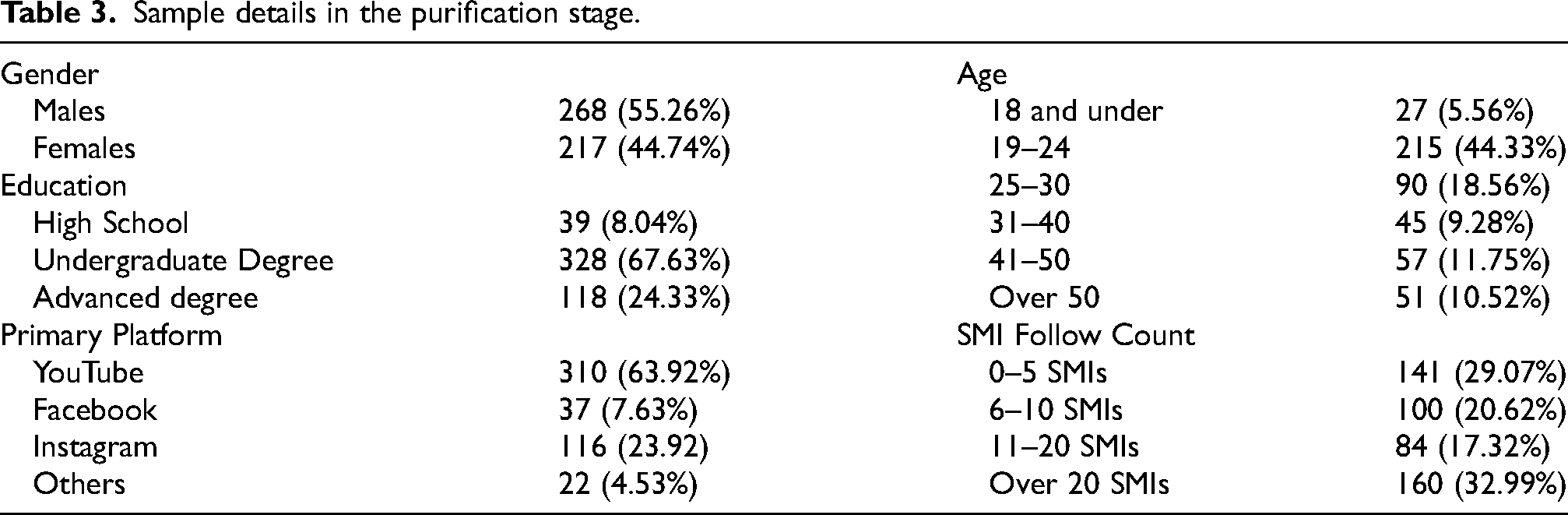
The sample in this stage comprised 55.26% females (268 individuals) and 44.74% males (217 individuals). The age distribution was primarily concentrated in the 19–24 year (44.33%, 215 individuals) and the 25–30 year (18.56%, 90 individuals). Regarding educational attainment, 67.63% (328 individuals) held a bachelor's or associate degree, while 24.33% (118 individuals) possessed a master's or PhD degree. In terms of platform usage, YouTube was the most prevalent, accounting for 63.92% (310 individuals), followed by Instagram (23.92%, 116 individuals) and Facebook (7.63%, 37 individuals). Additionally, this study also asked, “How many social media influencers do you follow?”. The research sample showed a diverse range in the number of social media influencers (SMIs) followed: 29.07% (141 individuals) followed 0–5 SMIs, 20.62% (100 individuals) followed 6–10 SMIs, 17.32% (84 individuals) followed 11–20 SMIs, and 32.99% (160 individuals) followed over 20 SMIs. Detailed sample data are presented in Table 3.
Sample details in the purification stage.
We eliminated ten motive items with an average score below 3.0, as this indicated that most of the participants did not consider these motives as their motives to follow social media influencers. An Exploratory Factor Analysis (EFA) was conducted using the varimax rotation method and an eigenvalue threshold of 1 to analyze the 54 chosen items. Items were excluded if their factor loadings were below 0.5 and if they exhibited cross-loading. To effectively eliminate duplicate and redundant items, we retain only three items for each factor in case there are more than three items in the dimensions. After undergoing the purification process using EFA, a total of 29 questions were selected and retained across 11 dimensions. The purification process is shown in Table 4.
Purification process.
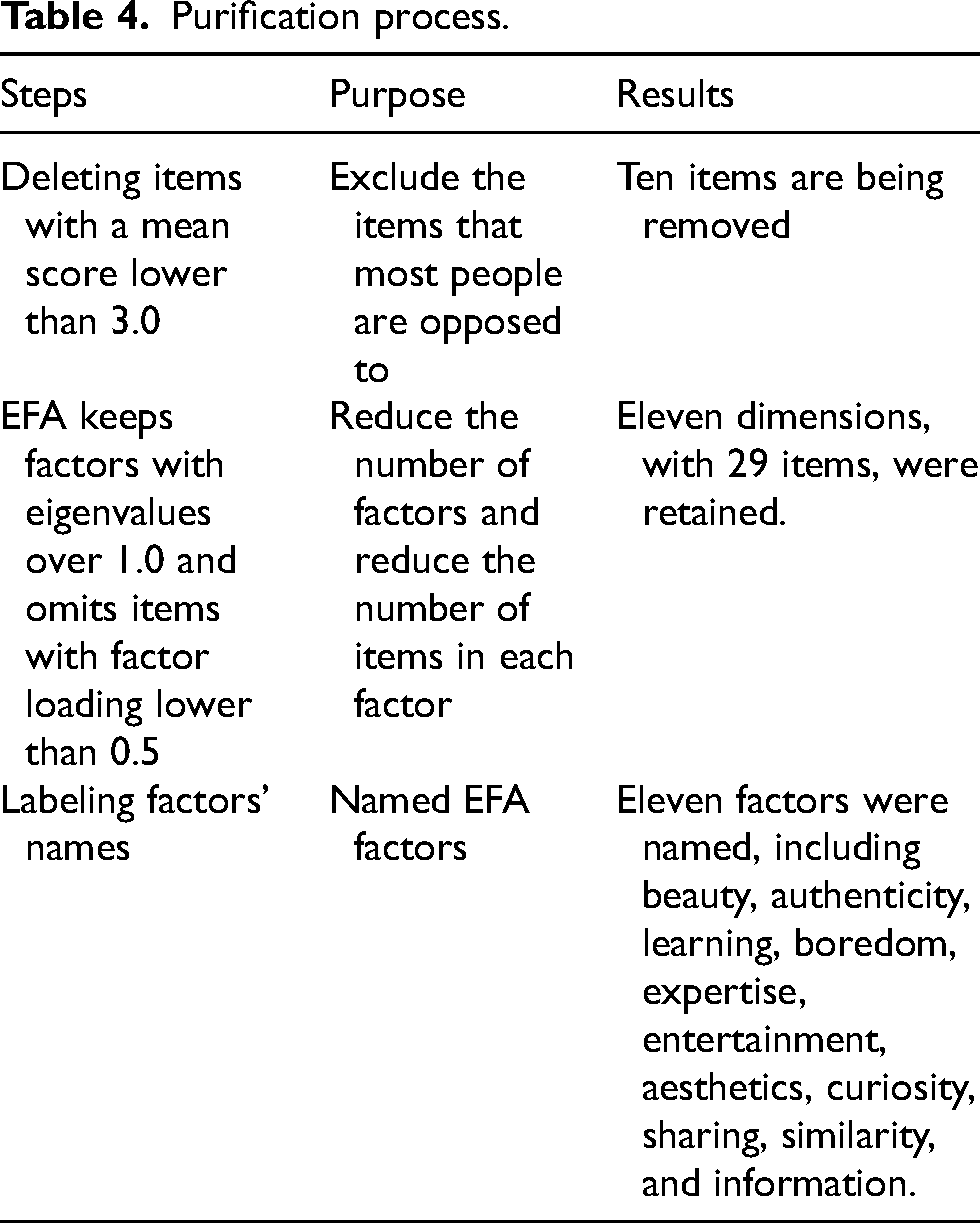
The 11 dimensions were designated according to the significance of the elements; the wording was primarily derived from the labels employed in previous literature to the greatest extent feasible. The eleven dimensions are Beauty, Authenticity, Learning, Boredom, Expertise, Entertainment, Aesthetics, Curiosity, Sharing, Similarity, and Information.
In addition, this study adjusted the wording of five items to enhance clarity and eliminate any potential ambiguity. Furthermore, following the EFA, there were merely two items in each of the four categories of Curiosity, Sharing, Similarity, and Information. This study supplemented the existing dimensions of Curiosity, Sharing, Similarity, and Information with four additional items, resulting in each dimension having a total of three items.
Stage 3: Validation
Following the purification conducted in Stage 2, this study proceeded with another online survey on social platforms to validate the scale. The measurement scale comprised 33 items rated on a 5-point Likert scale, with 1 indicating strong disagreement and 5 indicating strong agreement. The participants were recruited from social media platforms between June 9, 2023, and July 11, 2023, and the distribution process for the Stage 3 survey was the same as that of Stage 2. The distribution process for the third stage was also promoted through advertisements on social platforms to increase its reach, and an incentive was provided in the form of a cash lottery to encourage participation.
Out of the initial 531 responses, 64 were eliminated due to duplicate responses, 29 were eliminated due to a completion time of less than 100 s, 59 were eliminated for failing the validation question, and 31 were eliminated because the respondents provided similar responses for almost all measurement items. A total of 348 samples were considered valid.
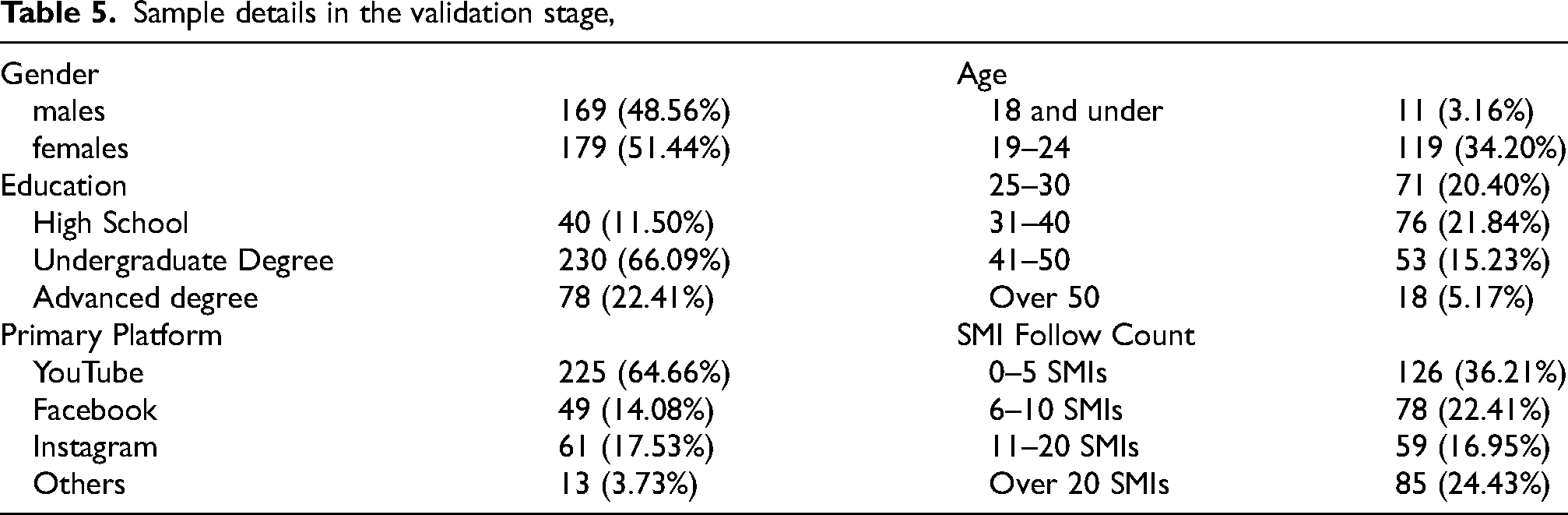
Among the valid samples, 169 were female (48.56%) and 179 were male (51.44%). Most respondents (119, 34.2%) were 19–24 years old, followed by 31–40 years (76 respondents, 21.84%), 25–30 years (71 respondents, 20.40%), 41–50 years (53 respondents, 15.23%), and 51 + years (18 respondents, 5.17%). Most of the participants were young individuals. However, over half of them did not fall within the conventional age bracket of undergraduate and graduate students. Thus, this study's participants were representative for online users. 230 respondents (66.09%) had college/junior college degrees, while 73 (20.97%) had master's degrees. Most respondents (225) used YouTube (64.66%). Instagram followed with 61 (17.53%) and Facebook with 49 (14.08%). Detailed sample data are presented in Table 5.
Sample details in the validation stage,
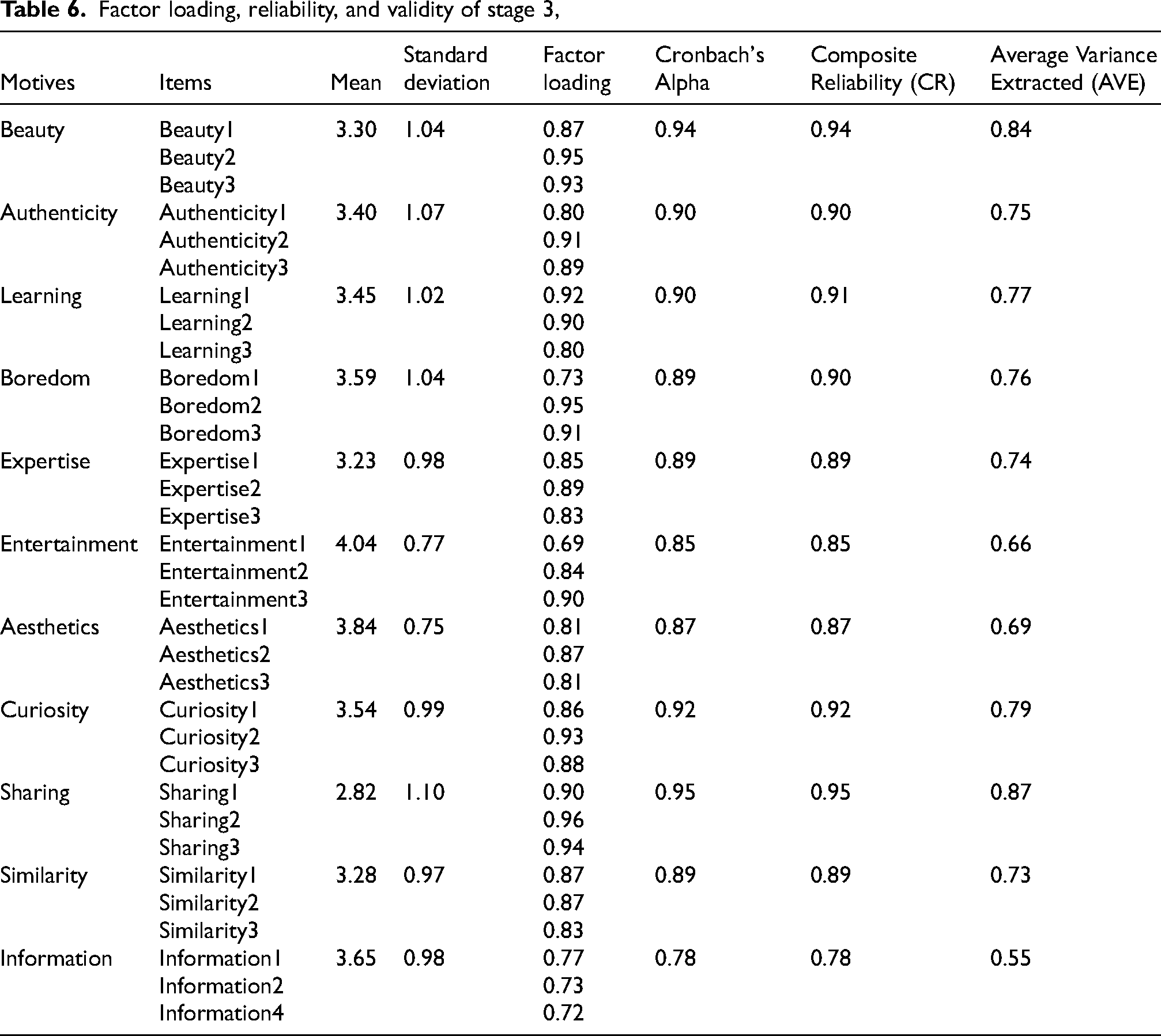
Stage 3 used the confirmatory factor analysis (CFA) to examine the validity of measurement items. The CFA model shows acceptable model fitness. The GFI is 0.98, the root mean square error of approximation (RMSEA) is 0.04, the NNFI is 0.96, and the IFI is 0.97. The ratio of chi-square to degrees of freedom was 1.69 (chi-square = 745.21, degrees of freedom = 440). All the model fitness indices are within the acceptable range.
Table 6 displays the factor loading, reliability, and validity coefficients. The measurement items exhibit Cronbach's alpha values ranging from 0.78 to 0.95, surpassing the threshold of 0.7 recommended by Fornell and Larcker (1981). The Composite Reliability (CR) values vary between 0.78 and 0.95, while the Average Variance Extracted (AVE) values exceed 0.5. The data presented above demonstrates that the scale exhibits strong reliability and convergent validity.
Factor loading, reliability, and validity of stage 3,
The discriminant validity of each dimension is shown in Table 7. The correlation coefficient between any two dimensions is less than the square root of the AVE for all dimensions, as suggested by Fornell and Larcker (1981) and Straub et al. (2004), demonstrating that this study has good discriminant validity.
Correlation and discriminant validity of stage 3.
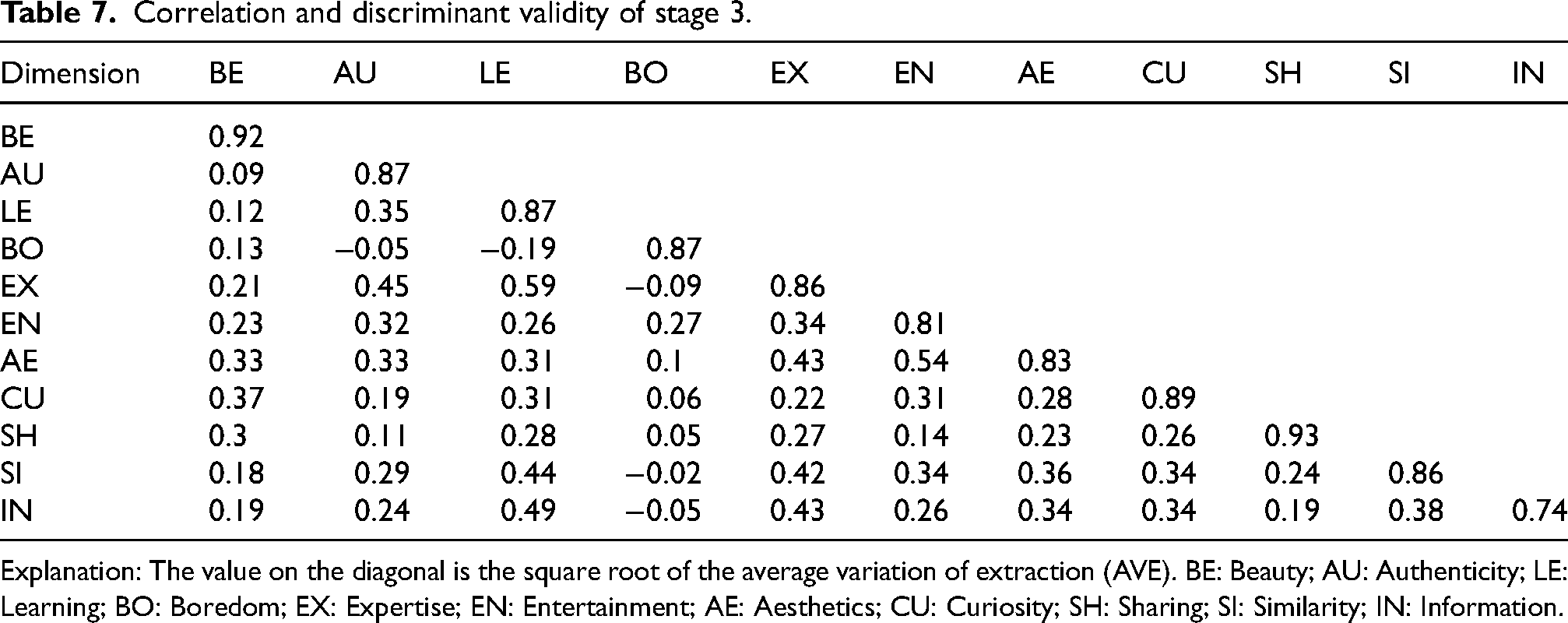
Explanation: The value on the diagonal is the square root of the average variation of extraction (AVE). BE: Beauty; AU: Authenticity; LE: Learning; BO: Boredom; EX: Expertise; EN: Entertainment; AE: Aesthetics; CU: Curiosity; SH: Sharing; SI: Similarity; IN: Information.
Stage 4: Construct validity verify
Stage 4 adopted CFA (confirmatory factor analysis) and multitrait-multimethod matrix (MTMM) to assess the scale's convergence and discrimination validity. The MTMM, initially introduced by Campbell and Fiske (1959) and used by Ong et al. (2015), was employed to investigate two traits utilizing two measures. The two variables (traits) employed in empirical Stage 4 were “motivations for following social media influencers” and the “big five personality traits.” The two techniques (measures) employed were the Likert five-point scale and the forced ranking method.
The other variables utilized in the MTMM method necessitate a significantly low correlation with the variables to be constructed. Given the established validity of the big five personality traits (Barrick & Mount, 1991) across different cultures and its ability to account for intricate personality characteristics through its five-factor model, it was decided to utilize it in this study. The five components of personality encompass extraversion, openness to experience, emotional stability, conscientiousness, and agreeableness.
The Stage 4 questionnaire had six sections, starting with demographic data. The second section consisted of a Chinese adaptation of the Big Five Personality Inventory, as proposed by Teng et al. (2011), and assessed using the Likert scale. To optimize space utilization in the questionnaire and minimize the time required for respondents, we employed a single item for each personality dimension. The third section entailed the implementation of the forced ranking technique in the Chinese adaptation of the Big Five Personality Inventory. Participants had to rank the five personality traits from 1 to 5 based on their level of similarity. The fourth section assessed Motives for Following Social Media Influencers with 33 Likert-type items. In the fifth section, respondents ranked the eleven motives for following social media Influencers by importance. A forced ranking method was used, with 11 representing the most important motive and 1 the least important. The sixth section required subjects to list their social media influencers. We recruited subjects through online advertisements. Stage 4 of this study was also conducted through an online survey, recruiting respondents via questionnaire groups on Facebook and Instagram, as well as through social media platform advertisements. The survey was distributed between September 18, 2023, and October 22, 2023. Convenience store cash vouchers were offered as a lottery to encourage responses.
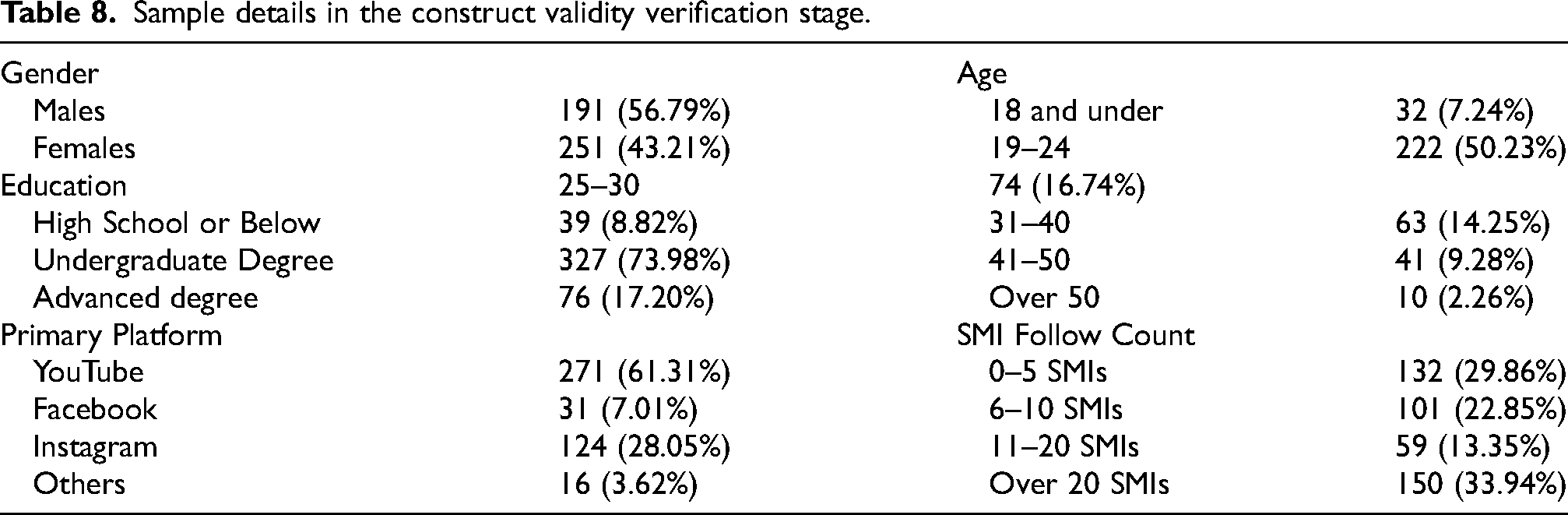
Of the initial 596 samples, 81 were duplicates, 45 failed the two validation questions, and 28 were excluded because respondents answered almost all measurement items similarly. 154 samples were excluded, leaving 442 valid samples. The sample had 251 female respondents (56.79%) and 191 male respondents (43.21%). Most respondents, 222 (50.2%), were 19–24 years old. The participants included 237 (53.62%) students, 167 (37.78%) employed, 33 (7.47%) unemployed, and 5 (1.13%) retired. Most users (271, 61.31%) consumed influencer content on YouTube, with 230, 52.36%) spending 0.5 to 2 h per day. The sample Details showed in Table 8.
Sample details in the construct validity verification stage.
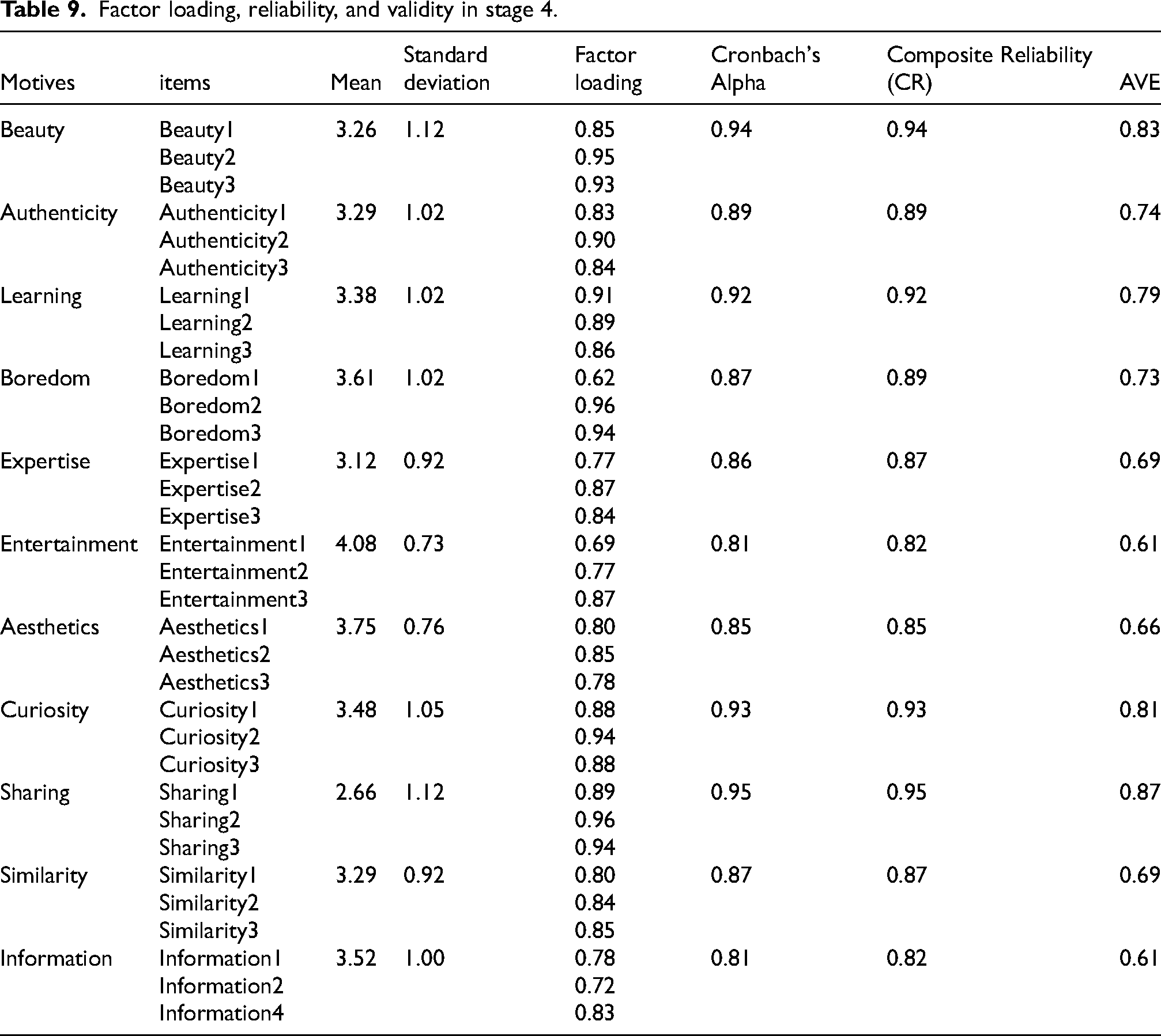
The CFA factor loadings, reliability, and validity check results are shown in Table 9; all standardized factor loadings range from 0.62 to 0.96. Cronbach's alpha, CR, and AVE were employed to analyze the reliability and validity of the questionnaire. Cronbach's alpha values range from 0.81 to 0.95, greater than 0.7, as suggested by Fornell and Larcker (1981). The CR values are greater than 0.6, and the AVE values are greater than 0.5, which are greater than the values suggested by Fornell and Larcker (1981). The above data indicates that the scale has good reliability and validity.
Factor loading, reliability, and validity in stage 4.
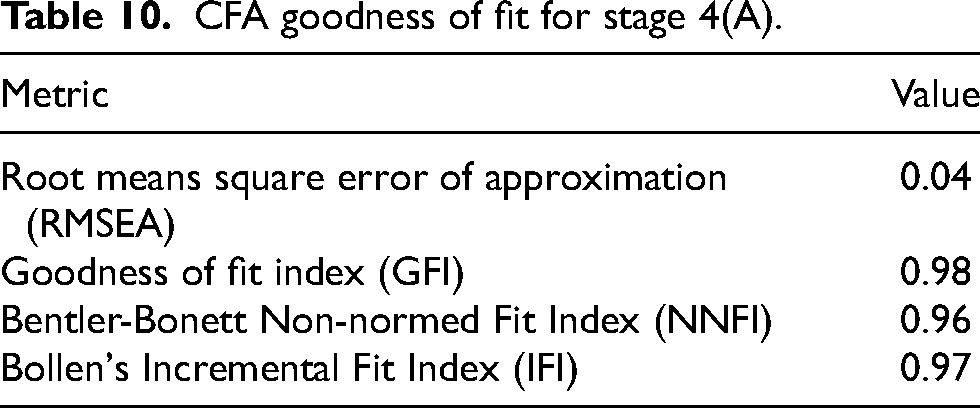
The goodness of fit indices of CFA are shown in Table 10. The ratio of chi-square to degrees of freedom was 1.74 (chi-square = 764.82, degrees of freedom = 440), which is less than three and conforms to the criterion suggested by Hair et al. (1998). The RMSEA was 0.04, which is less than 0.05, thus conforming to the criterion suggested by McDonald and Ho (2002) and indicating an acceptable model fit. The GFI was 0.98, which is greater than 0.90, indicating an acceptable model fit (Hu & Bentler, 1999). The NNFI was 0.96, which is greater than the standard of 0.90 (Bentler & Bonett, 1980). The Incremental Fit Index (IFI) was 0.97, which is greater than the standard of 0.90 (Bollen, 1989).
CFA goodness of fit for stage 4(A).
The discriminant validity of each dimension is shown in Table 11. The correlation coefficient between any two dimensions is less than the square root of the AVE for all dimensions, demonstrating that this study has good discriminant validity, as suggested by Fornell and Larcker (1981).
Correlation coefficient and discriminant validity.
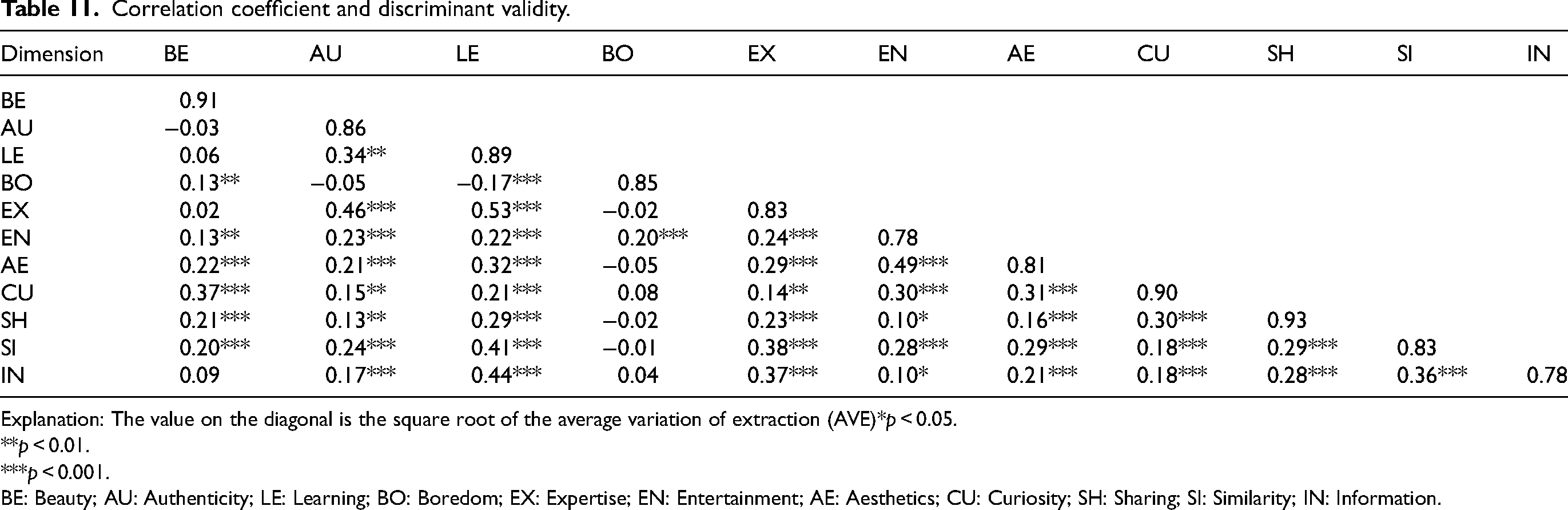
Explanation: The value on the diagonal is the square root of the average variation of extraction (AVE)*p < 0.05.
**p < 0.01.
***p < 0.001.
BE: Beauty; AU: Authenticity; LE: Learning; BO: Boredom; EX: Expertise; EN: Entertainment; AE: Aesthetics; CU: Curiosity; SH: Sharing; SI: Similarity; IN: Information.
The MTMM is based on correlation coefficients, and the results of the MTMM are shown in Figure 1. The motive scores were computed by taking the average of the scores for all items belonging to the same motive on the Likert scale. The MTMM matrix assessed two distinct traits (influencer motives and Big Five Personality Traits) utilizing two distinct methodologies (Likert scale and forced ranking method), resulting in a 16*16 lower triangular matrix. The values displayed in the table indicate the correlation coefficients. The Cronbach's alpha coefficients, which measure the reliability of the Likert scale motive dimensions, are entered on the diagonal of each dimension. Since only one item was used for each dimension of the Big Five Personality Traits on the Likert Scale, it is not feasible to calculate a reliability coefficient for this scale, as well as for the forced ranking method scale.
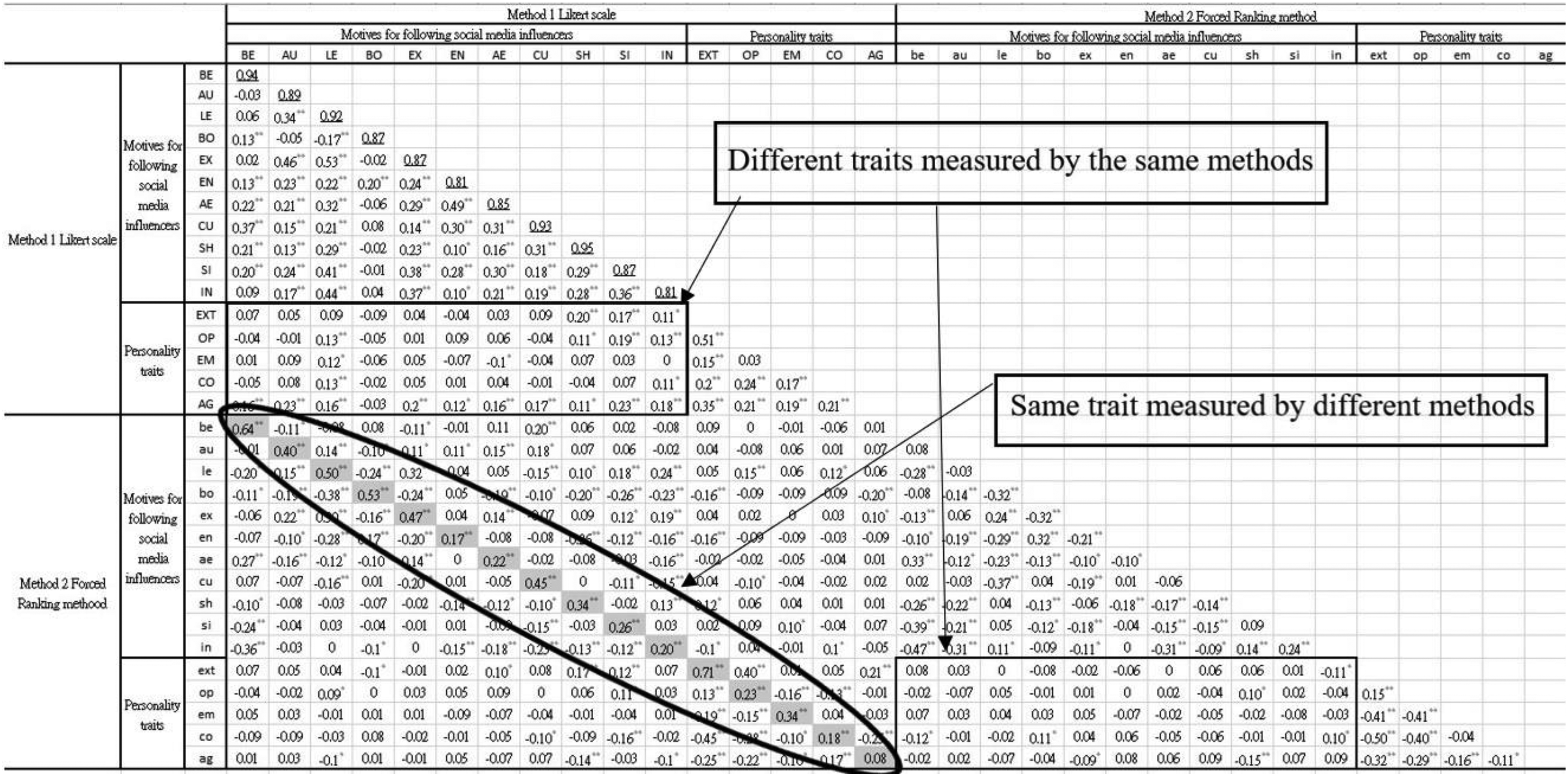
MMTM matrix.
As presented in Figure 1, the correlation coefficients of the same trait measured by different methods are marked in grey; they correspond to the convergent validity of the scale, with higher correlation coefficients indicating better convergent validity. The other correlation coefficients (different traits measured by the same and different methods) should be relatively balanced, as this would mean the test discriminates between different traits. The mean of the correlation coefficients for the same trait measured by different methods was 0.36, which is greater than both the mean of the correlation coefficients for different traits measured by the Likert scale of 0.06 and by the forced ranking method of 0.00. Based on this result, the MTMM method revealed that the Scale of Motives for Following Social Media Influencers possesses good convergent and discriminant validity when using motive for following influencers and personality traits as a contrasting pair to examine correlations between variables.
Criterion-related validity verifies the degree of consistency (i.e., the degree of correlation) between an instrument (i.e., the Scale on Motives for Following Social Media Influencers) and other scales or criteria that measure the same or similar concepts. During stage 4, we requested participants to list the social media influencers whom they followed. Respondents who followed a particular type of influencer are anticipated to exhibit greater specific motives compared to other respondents. The motives scale can be utilized to differentiate between respondents who follow specific-type influencers and those who do not. Under those circumstances, the scale demonstrates criterion-related validity.
We requested respondents to list the social media influencers they were currently following. They listed one or multiple social media influencers. 44 undergraduates volunteered to help code the influencers into three groups: beauty type, knowledge type, and entertainment type. A minimum of three raters evaluated each respondent's social media influencers. If any influencer listed by a respondent falls into the category of a beauty type, then label them as following beauty-type influencers; otherwise, label them as not following beauty-type influencers. The knowledge- and entertainment-types shared the same coding method as the beauty-type. If most of the raters determined that a particular respondent was adhering to a specific type of influencer, the respondent was classified as following that type of influencer. The three types of social media influencers are defined as follows:
Beauty Influencers: These people, who might be models or fashionistas, draw subscribers in with their looks. Their content might consist of reviews of beauty products, stylish looks, and makeup techniques. Knowledge Influencers: Well-known for their in-depth knowledge, instructive materials, or skill demonstrations. Education, science communication, teaching skills, teaching languages, sports, cooking, etc. are some examples of their content. Entertainment Influencers: These influencers, who could be actors, singers, or creators of humorous videos, primarily want to amuse their followers. With amusing, calming, and entertaining elements, their content typically relates to life, travel, parody, comedy, parent-child, pets, and gaming.
The beauty motive is one of the eleven reasons for following social media influencers, and it is specifically related to whether one follows influencers who focus on beauty-related content. Consequently, we performed a t-test to examine the beauty motivation of participants who either follow or do not follow beauty-type influencers, details showed in Table 12. The t-test results indicate that respondents who follow beauty-type influencers had a significantly higher beauty motive for following social media influencers compared to those who did not follow (t = 4.09, p < .01).
Independent samples t-test results for motive to follow beauty-type influencers.

Learning, expertise, and information motives are three motives that relate to whether to follow knowledge-type influencers. We compute the average score for learning, expertise, and information motives. We performed a t-test to examine the learning, expertise, and information motives of participants who either follow or do not follow knowledge-type influencers, details showed in Table 13. The t-test results indicate that respondents who follow knowledge-type influencers had a significantly higher learning, expertise, and information motive for following social media influencers compared to those who did not follow (t = 2.56, p = .01).
Independent samples t-test results for motive to follow knowledge-type influencers.

The entertainment motive is related to whether one follows influencers who focus on entertainment-type content. Consequently, we performed a t-test to examine the entertainment motivation of participants who either follow or do not follow entertainment-type influencers, details showed in Table 14. The t-test results indicate that respondents who follow entertainment-type influencers had a significantly higher entertainment motive for following social media influencers compared to those who did not follow (t = 2.52, p = .01).
Independent samples t-test results for motive to follow entertainment-type influencers.

Based on the t-test results mentioned above, we found that respondents who followed beauty-type social media influencers had higher scores in beauty motive. Respondents who followed knowledge-type social media influencers were with higher scores in learning, expertise, and information motives. Respondents who followed entertainment-type influencers had higher scores in entertainment motives. Criterion-related validity assesses whether different instruments produce similar results when measuring similar concepts. The developed scale has criterion-related validity since the measured motive scores are relative to the influencer types that respondents followed.
Conclusions and discussion
Conclusions
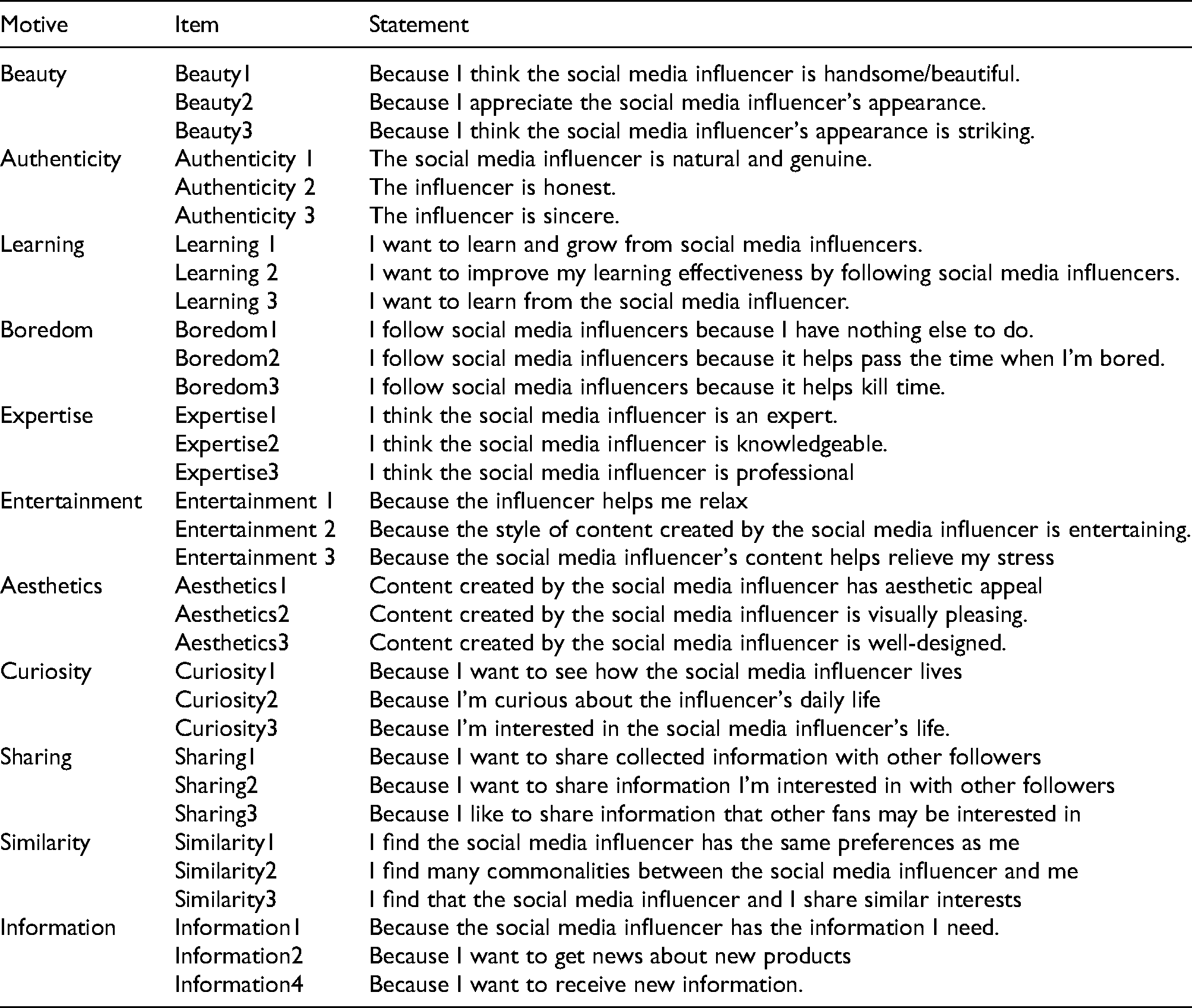
The current study advocates that followers may follow social media influencers because of motives of beauty, authenticity, learning, boredom, expertise, entertainment, aesthetics, curiosity, sharing, similarity, and information. The final version of the measurement scale is in Appendix 1. These eleven motives can be divided into four categories: motives related to the followers, motives related to the influencer, motives related to the content, and motives related to social purposes, see Figure 2. Motives related to the followers are the motives derived from the subscribers themselves, not the influencers, and exist regardless of which influencer they follow. Motives related to the influencer are linked to the persona characteristics of the influencers they follow; different types of influencers satisfy different subscriber motives. Motives related to the content are connected to the content created by influencers; different types of content can satisfy different subscriber motives. Motives related to social purposes are linked to audiences’ ability to achieve social purposes by following influencers.
Motives for following social media influencer.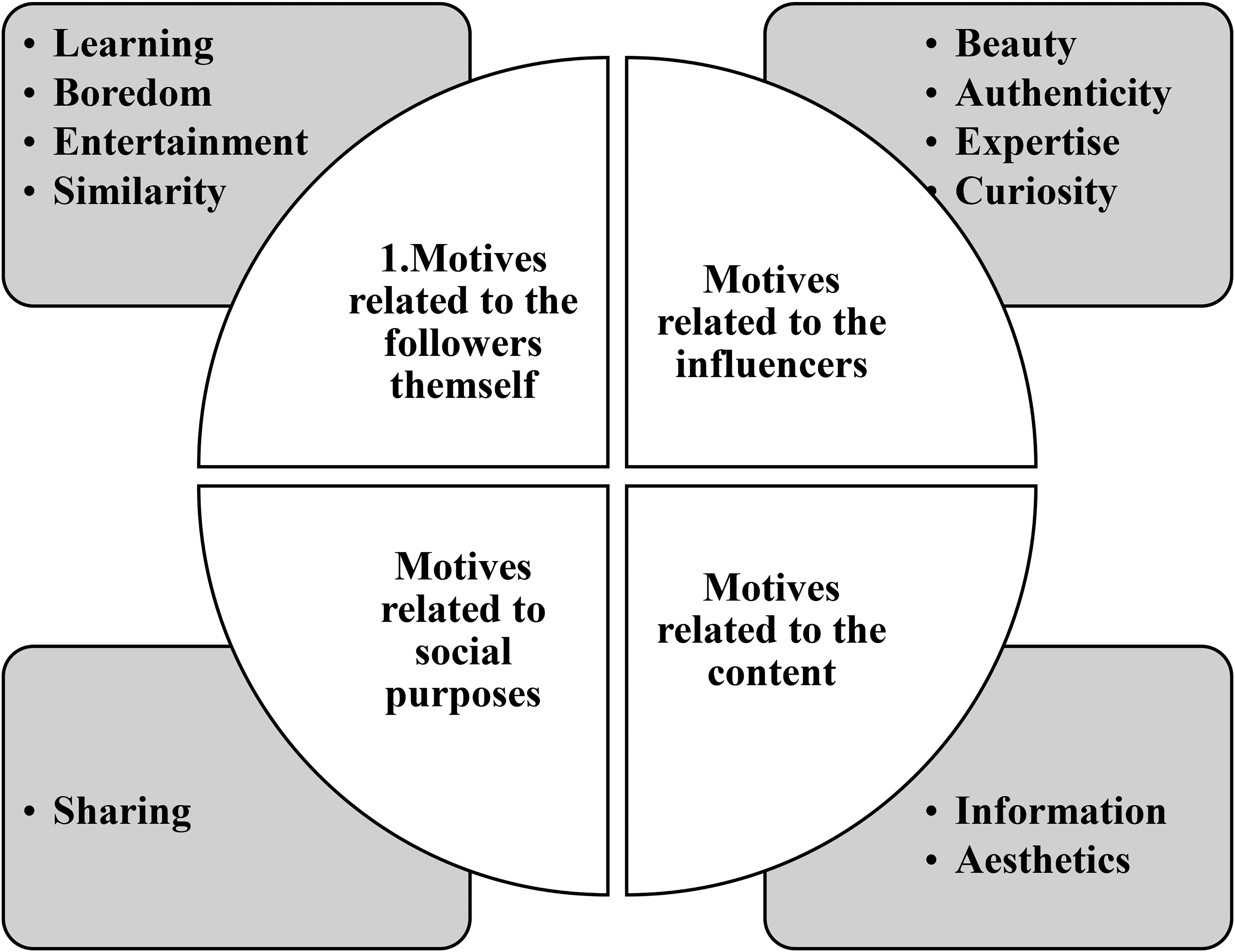
Motives related to the followers
Motives related to the follower include learning, boredom, entertainment, and similarity. The motive of learning reflects the viewer's demand for educational content, which has led to the emergence of knowledge-type influencers (Gil-Quintana et al., 2022). Boredom is also a significant motive, suggesting that some people follow influencers to pass the time, which is consistent with the findings of Gülnar et al. (2010). Entertainment as a motive reflects that people in modern society relieve stress from their busy lifestyles by following entertainment-type influencers (Ki et al., 2020). The motive of similarity represents the importance of shared attitudes, values, and cultural backgrounds between followers and influencers. Many people follow an influencer because they perceive similarities between themselves and the influencer. For example, followers and influencers may share similar tastes and hobbies and have much in common (Ki et al., 2020). Sokolova and Kefi (2020) study states that followers tend to follow influencers with whom they have something in common, as this similarity enhances trust and closeness.
Motives related to the influencer
Motives related to the influencer include beauty, authenticity, expertise, and curiosity. The motive of beauty refers to followers being attracted to the influencer's appearance. According to Ohanian (1990), physical attractiveness is an antecedent of trust building and interest arousal, which is especially important in the visually rich environment of social media. authenticity focuses on the sincerity and naturalness of a social media influencer. Lee and Eastin (2021) emphasize the importance of such authenticity in building followers’ trust and increasing purchase intentions. The motive of expertise involves subscriber recognition of influencers’ professional knowledge and experience in their field, which plays an important role in increasing brand awareness and promoting products (Lou & Yuan, 2019). Curiosity reveals the subscribers’ interest in the influencer's lifestyles and daily activities.
Motives related to the content
Motives related to the content include information and aesthetics. Information as a motive reflects that some subscribers follow an influencer to seek valuable information, such as product recommendations and brand introductions. In an era of information overload, social media influencers have become an important source of information. The motive of aesthetics emphasizes the importance of visual aesthetics and design in influencer-created content on visually oriented social media platforms such as Instagram, TikTok, and YouTube.
Motives related to social purposes
The motive of sharing encompasses the interaction and social sharing among followers, which includes personal experiences, feelings, and perceptions of content created by social media influencers (Croes & Bartels, 2021).
Influencers play multiple roles in modern social media. They are content creators and a key source of learning, entertainment, social interaction, and information for their subscribers. The motives for following social media influencers reflect how influencers fulfill the diverse needs of their viewers and play an important role in the social media landscape.
Theoretical and practical implications
The developed scale of the current research is the first comprehensive scale to measure motivations for following social media influencers. The eleven dimensions represent an innovative theoretical framework that bridges the gap between functional motivations (e.g., information, expertise) and emotional connections (e.g., authenticity, similarity). Through the integration of multiple theoretical perspectives, we establish a hierarchical relationship model of motivational dimensions, categorizing them into four distinct groups: motives related to the influencers, motives related to the followers themselves, motives related to social purposes, and motives related to the content.
The theoretical distinctiveness of dimensions is established through a clear hierarchical categorization framework. The dimensions are systematically organized into different motivational categories: Learning is classified under “Motives related to the followers themselves,” representing followers’ active pursuit of knowledge, while Expertise falls under “Motives related to the influencers,” reflecting the perceived professional competency and authority of content creators. Similarly, Beauty belongs to influencer-related motives, focusing on physical attractiveness, whereas Aesthetics is categorized under content-related motives, emphasizing artistic presentation.
Although these dimensions may exhibit correlations due to the interconnected nature of influencer-follower relationships, they represent conceptually distinct constructs. This theoretical distinction is empirically supported by rigorous statistical validation. The Fornell-Larcker criterion demonstrates adequate discriminant validity between dimensions, while Multi-Trait Multi-Method (MTMM) matrix analysis provides additional confirmation of dimensional distinctiveness. The scale's robustness is further reinforced through a comprehensive development process, incorporating multiple validation stages including Exploratory Factor Analysis (EFA) and Confirmatory Factor Analysis (CFA). The resulting 33-item scale represents a thoroughly refined measurement tool, emerging from systematic statistical testing and theoretical refinement.
By identifying these 11 motivational dimensions, this research deepens our understanding of the complex relationships between social media influencers and their followers. For instance, the appreciation of influencers’ authenticity and similarity dimensions reveal the psychological connection between followers and influencers, while the learning and information dimensions highlight the importance of influencers as knowledge sources. The curiosity about influencers’ lives motive highlights the voyeuristic culture on social media, while the motive of information sharing with other followers emphasizes the importance of user interaction in social media.
The findings of this study also support and extend the Uses and Gratifications Theory. For example, the boredom and entertainment dimensions align with the theory's entertainment needs, while the information and learning dimensions correspond to information needs. Simultaneously, this research challenges traditional social influence theory, as the authenticity motive suggests that authenticity may be more influential in social media environments than traditional authority or expertise.
This study provides clearer conceptual definitions for seemingly similar dimensions. For instance, we distinguish between Beauty and Aesthetics as independent constructs, where Beauty focuses on physical appearance while Aesthetics emphasizes content presentation. Fourth, we theoretically differentiate Learning from Information seeking, where Learning represents active knowledge acquisition while Information seeking represents passive content consumption. A theoretical distinction between the dimensions of Learning and Expertise is also provided. Expertise reflects the influencer's professional capabilities and authority in specific domains, categorized under “Motives related to the influencers,” while Learning falls under “Motives related to the followers themselves”.
Regarding cross-platform applicability, our scale establishes a theoretical framework applicable across different social media platforms, contributing to a more unified understanding of follower motivations. The robustness of this theoretical framework is demonstrated through validation across multiple platforms, including YouTube, Instagram, and Facebook. These dimensions integrate past research and provide new insights into understanding the complex nature of influencer-follower relationships. This comprehensive framework advances our theoretical understanding of social media influencer following motivations while providing practical implications for both researchers and practitioners in the field of social media marketing.
This scale can help influencers better understand and meet their followers’ needs. From an industry perspective, the scale offers specific applications across different sectors. In the beauty and fashion industry, the Beauty and Aesthetics dimensions can be utilized to evaluate beauty KOLs’ influence, while the Authenticity dimension helps identify genuine beauty influencers, and the Learning dimension guides the development of beauty tutorial content strategies. For the education and training sector, the Expertise and Learning dimensions serve to assess educational influencers’ professional competency, while the Entertainment dimension optimizes educational content engagement, and the Information dimension shapes knowledge delivery formats. In the lifestyle and consumer goods industry, the Curiosity and Sharing dimensions inform product unboxing content design, while the Similarity dimension aids in selecting influencers with high audience relevance, and the Boredom dimension guides content scheduling.
Regarding content production and application, the scale provides targeted recommendations for different content types. For professional knowledge content creators, the combination of Expertise and Information dimensions guides professional content development, while the Learning dimension evaluates educational value, and the Entertainment dimension enhances content engagement. Lifestyle content creators can leverage the Authenticity and Similarity dimensions to strengthen content authenticity, utilize Beauty and Aesthetics dimensions to enhance visual appeal, and employ the Sharing dimension to boost follower engagement. For entertainment content, creators can combine Entertainment and Boredom dimensions to plan content pacing, use the Curiosity dimension to design attention-grabbing content, and apply the Aesthetics dimension to improve production quality. These specific recommendations enable various industries and content creators to optimize their influencer marketing strategies effectively.
For example, music influencers can assess their followers’ perceived beauty and physical attractiveness through the Beauty dimension, while the Aesthetics dimension reflects followers’ appreciation of the artistic qualities in musical works. In terms of interaction, Authenticity is manifested in musicians’ genuine creative processes and daily life sharing, while Sharing and Similarity dimensions are reflected in the resonance of musical tastes and exchange of common topics. At the learning level, followers acquire music-related knowledge through the Learning dimension and stay informed about music industry dynamics through the Information dimension. Additionally, Curiosity drives followers to pay attention to musicians’ lives and creative processes, while Boredom may motivate some followers to listen to music during leisure time. These dimensions are inherently interconnected, collectively forming a complex motivational system that underlies followers’ engagement with music influencers.
Brands can also use this scale to select appropriate influencer partners. By aligning the brand's image and target audience with influencers who score highly in relevant motivational dimensions, brands can enhance the credibility of their marketing messages and improve the effectiveness of their influencer collaborations.
Understanding followers’ motives for following influencers is the key to success in becoming a social media influencer. Additionally, an in-depth understanding of such motives enables branding and marketing professionals to create more engaging content, enhancing the social media influencers’ influence. Understanding such motives is also conducive to categorizing followers into groups, i.e., user segmentation. Such segmentation enables marketing practitioners to recognize followers’ motives for following influencers in different segments, which allows them to achieve their marketing objectives by targeting specific audiences more accurately. Furthermore, by identifying followers’ motives in each segment, branding practitioners can effectively select their target markets and focus their resources on the most promising consumers. Finally, by understanding such motives, influencers can determine their market positions more accurately and accommodate the motives of their followers with their image and content for a deeper connection. This deeper understanding is critical to building an influential and solid influencer marketing.
Limitation and future research
In developing the scale for measuring motivations to follow social media influencers, this study primarily focused on positive or neutral motivations. While this approach allowed for an in-depth understanding of mainstream following behaviors, it may have overlooked potential negative motivations. For instance, in screening the questionnaires, we eliminated responses that considered influencers as “losers.” Although this method helped ensure data quality, it might have excluded some valuable insights.
Future research could consider a more comprehensive exploration of the range of motivations for following influencers, including those that might be perceived as negative. For example, morbid curiosity, interest in opposing viewpoints, or even academic or scientific interest in controversial influencer groups are motivations worth further exploration. Such research could reveal more complex patterns of following behavior and provide a more comprehensive theoretical framework.
The study mainly focused on common positive following motivations. While these motivations may be more prevalent, it neglected some potentially negative or neutral motivations. Future studies could consider designing more inclusive and diverse scales to capture a broader spectrum of following motivations.
Furthermore, future research could consider expanding the sample range to include participants from different age groups, cultural backgrounds, and socioeconomic statuses, thereby increasing the representativeness and generalizability of the research findings.
Lastly, given the rapid evolution of social media and influencer culture, it is recommended that future research regularly update and revise this scale to ensure it accurately reflects the current social media ecosystem and user behavior.
Despite these limitations, the scale developed in this study still provides valuable insights into understanding the motivations for following social media influencers. We hope this scale can serve as a foundation for future research and promote a deeper understanding of this increasingly important social media phenomenon.
Footnotes
Author contributions
The research idea and research design came from the second author(Shu-Chen Chang) and the first author (Chih-Chien Wang). Data was collected by the third author (I-Hsin Hsieh), the second author (Shu-Chen Chang), and the first author (Chih-Chien Wang). This work is a part of the master thesis of the third author (I-Hsin Hsieh). The first author (Chih-Chien Wang) and the second author (Shu-Chen Chang) were the advisors of the third author’s master thesis. The third author (I-Hsin Hsieh) wrote the drift manuscript. The first author (Chih-Chien Wang) and second author (Shu-Chen Chang) rewrote the whole manuscript (abstract, introduction, literature review, methodology, data analysis, conclusions, and discussion). All authors have read and agreed to the published version of the manuscript.
Declaration of conflicting interests
The authors declared no potential conflicts of interest with respect to the research, authorship, and/or publication of this article.
Funding
The authors received no financial support for the research, authorship, and/or publication of this article.

About the authors
Appendix 1: Influencer Following Motives Scale (33 items)
| Motive | Item | Statement |
|---|---|---|
| Beauty | Beauty1 | Because I think the social media influencer is handsome/beautiful. |
| Beauty2 | Because I appreciate the social media influencer's appearance. | |
| Beauty3 | Because I think the social media influencer's appearance is striking. | |
| Authenticity | Authenticity 1 | The social media influencer is natural and genuine. |
| Authenticity 2 | The influencer is honest. | |
| Authenticity 3 | The influencer is sincere. | |
| Learning | Learning 1 | I want to learn and grow from social media influencers. |
| Learning 2 | I want to improve my learning effectiveness by following social media influencers. | |
| Learning 3 | I want to learn from the social media influencer. | |
| Boredom | Boredom1 | I follow social media influencers because I have nothing else to do. |
| Boredom2 | I follow social media influencers because it helps pass the time when I'm bored. | |
| Boredom3 | I follow social media influencers because it helps kill time. | |
| Expertise | Expertise1 | I think the social media influencer is an expert. |
| Expertise2 | I think the social media influencer is knowledgeable. | |
| Expertise3 | I think the social media influencer is professional | |
| Entertainment | Entertainment 1 | Because the influencer helps me relax |
| Entertainment 2 | Because the style of content created by the social media influencer is entertaining. | |
| Entertainment 3 | Because the social media influencer's content helps relieve my stress | |
| Aesthetics | Aesthetics1 | Content created by the social media influencer has aesthetic appeal |
| Aesthetics2 | Content created by the social media influencer is visually pleasing. | |
| Aesthetics3 | Content created by the social media influencer is well-designed. | |
| Curiosity | Curiosity1 | Because I want to see how the social media influencer lives |
| Curiosity2 | Because I'm curious about the influencer's daily life | |
| Curiosity3 | Because I’m interested in the social media influencer's life. | |
| Sharing | Sharing1 | Because I want to share collected information with other followers |
| Sharing2 | Because I want to share information I'm interested in with other followers | |
| Sharing3 | Because I like to share information that other fans may be interested in | |
| Similarity | Similarity1 | I find the social media influencer has the same preferences as me |
| Similarity2 | I find many commonalities between the social media influencer and me | |
| Similarity3 | I find that the social media influencer and I share similar interests | |
| Information | Information1 | Because the social media influencer has the information I need. |
| Information2 | Because I want to get news about new products | |
| Information4 | Because I want to receive new information. |
Appendix 2: Initial items (64 items)
| No. | Items |
| Information Acquisition Motivation | |
| 1 | Because the social media influencer has the information I need. |
| 2 | Because I want to get news about new products |
| 3 | Because I use social media influencers’ content as information sources |
| 4 | Because social media influencers provide knowledge I'm interested in |
| Encouragement Motivation | |
| 5 | social media influencers’ content inspires my creativity |
| 6 | social media influencers’ content brings me positive energy |
| 7 | social media influencers’ content encourages me to face challenges |
| 8 | social media influencers’ content motivates me to move toward my goals |
| Aesthetic Appreciation Motivation | |
| 9 | Content created by the social media influencer has aesthetic appeal |
| 10 | Content created by the social media influencer is visually pleasing. |
| 11 | I like the style of social media influencers’ content |
| 12 | Content created by the social media influencer is well-designed. |
| Authenticity Appreciation Motivation | |
| 13 | The influencer is natural and genuine |
| 14 | The influencer shares authentic life details |
| 15 | The influencer is honest |
| 16 | The influencer is sincere |
| Approachability Motivation | |
| 17 | The influencer is approachable |
| 18 | The influencer is friendly |
| 19 | The influencer is down-to-earth |
| 20 | The influencer is easy-going |
| Life Curiosity Motivation | |
| 21 | Because I envy the influencer's lifestyle |
| 22 | Because I want to see how the influencer lives |
| 23 | Because I'm curious about the influencer's daily life |
| 24 | Because I want to live like the influencer |
| Admiration Motivation | |
| 25 | Because I admire this influencer |
| 26 | Because I think the influencer is impressive |
| 27 | Because I respect this type of influencer |
| 28 | Because I appreciate the influencer's life attitude |
| Beauty Appreciation Motivation | |
| 29 | Because I think the influencer is attractive |
| 30 | Because I think the influencer is handsome/beautiful |
| 31 | Because I appreciate the influencer's appearance |
| 32 | Because I think the influencer's appearance is striking |
| Professional Expertise Motivation | |
| 33 | I think the social media influencer is an expert |
| 34 | I think the social media influencer is knowledgeable |
| 35 | I think the social media influencer is professional |
| 36 | I think the way the social media influencer presents content is professional |
| Entertainment Motivation | |
| 37 | Because I enjoy the influencer's content |
| 38 | Because the influencer helps me relax |
| 39 | Because the style of content created by the social media influencer is entertaining. |
| 40 | Because the influencer's content helps relieve my stress |
| Boredom Motivation | |
| 41 | I follow social media influencers because I have nothing else particular to do |
| 42 | I follow social media influencers because it helps pass time when I'm bored |
| 43 | I follow social media influencers because it helps kill time |
| 44 | I follow social media influencers during my leisure time |
| Self-Learning Growth Motivation | |
| 45 | I want to learn and grow from social media influencers |
| 46 | I want to improve my learning effectiveness by following social media influencers |
| 47 | I want to learn from social media influencers |
| 48 | I want to enhance my professional abilities by following social media influencers |
| Horizon Expansion Motivation | |
| 49 | social media influencers inspire new ideas in me |
| 50 | social media influencers broaden my horizons |
| 51 | social media influencers motivate me to discover new things |
| 52 | social media influencers help me understand different worlds |
| Similarity Motivation | |
| 53 | I find similarities between the influencer and myself |
| 54 | I find the influencer has the same preferences as me |
| 55 | I find many commonalities between the influencer and me |
| 56 | I find the influencer's lifestyle similar to mine |
| Information Sharing Motivation | |
| 57 | Because I want to share collected information with other followers |
| 58 | Because I want to share information I'm interested in with other followers |
| 59 | Because I want to express my thoughts to other followers |
| 60 | Because I want to share my experiences with other followers |
| Social Interaction Motivation | |
| 61 | Because I want to connect with other followers |
| 62 | Because I want to build social relationships with other followers |
| 63 | Because sometimes I have no one to talk to, so I want to interact with other followers |
| 64 | Following social media influencers with others makes me feel less lonely |