







Abstract
The concept of Enterprise Digital Transformation (EDT) is increasingly capturing the attention of both academic and business communities. Through a critical examination of the burgeoning body of literature on EDT, this paper aims to unearth and delineate future research avenues critical for the advancement of understanding in this domain. Utilizing organizational and social theories as lenses, we systematically categorize and dissect the extant research literature pertaining to the digital transformation process. This approach enables us to comprehensively understand the current landscape of EDT research, thereby uncovering potential research opportunities and directions. Following a contextual discussion on digital transformation, we methodically review recent literature on EDT from a theoretical standpoint. Our analysis particularly focuses on the current research state regarding the drivers of digital transformation, specific practices employed by enterprises during such transformations, and the subsequent performance outcomes of EDT initiatives. Within this review framework, we also spotlight pertinent research questions related to digital transformation that merit further exploration. Furthermore, we illuminate additional theoretical frameworks that hold promise for future inquiries into digital transformation, thus offering a succinct summary of our review.
Keywords
Introduction
In the contemporary era of digitization, “Digital Transformation” (DT) has emerged as a critical trend pursued by leading enterprises across various industries. Even previously lagging companies are discarding their traditional management and operational models to actively embrace the waves of digital transformation. Senior management is increasingly integrating digital technologies into the core segments of organizational production and business operations (Bickauske et al., 2020; Medini et al., 2021; Samosudov and Bagrin, 2022), fostering innovative business models that fundamentally impact the commercial value of enterprises (Magadán-Díaz and Rivas-García, 2018; Do Vale et al., 2021). For instance, digital technologies have facilitated interactions between businesses and consumers through convenient transaction (Verhoef et al., 2021), while the digital realm has opened vast opportunities for the positive development of enterprise-customer relationships (Mulhern, 2009; Chaparro-Peláez et al., 2020). To effectively seize the opportunities and competitive advantages brought by digital transformation, organizations are increasingly adopting data governance strategies to promote data-driven innovation (Lis et al., 2022). Additionally, the application of digital technology enhances the connectivity among all stakeholders and strengthens collaboration within organizational teams (Zulu et al., 2023).
In recent years, Enterprise Digital Transformation (EDT) has received widespread attention from academia and industry as an interdisciplinary research field. The importance of this field is reflected in the increasing number of special issues in leading journals of operations management. Management and business disciplines have gradually explored the application of organizational theory to operations management and marketing, focusing on corporate performance and strategic management (Bătae et al., 2021; De Luca et al., 2021; Nayal et al., 2022). Nevertheless, existing research still focuses mainly on narrower topics such as technology adoption or organizational readiness, which has certain limitations in terms of research methods and perspectives (Li et al., 2022; Wu et al., 2023). For example, some scholars focus only on the digital transformation strategies of a single type or size of enterprise (Llopis-Albert et al., 2021); other studies tend to focus on large enterprises, while ignoring the unique challenges faced by small organizations or non-profit organizations in the DT process (Truant et al., 2021; Huang et al., 2023; Liu et al., 2023).
Based on previous research (Tian and Ou, 2024), EDT can be divided into three stages, and different industries and enterprises face unique influencing factors at each stage. From a stage perspective, existing EDT research mainly focuses on the following three aspects: First, it explores the antecedents of enterprise digital transformation, such as the analysis of driving factors. Winkelhake (2019) found through case studies that the availability of digital infrastructure, customer demand, and the demand of the innovation industry are key factors driving digital transformation in the automotive industry. Second, it analyses the impact of digital transformation on enterprise performance. For example, Soto et al. (2023) found through configuration theory that the adoption of digital technologies can promote corporate innovation activities and ultimately improve corporate performance (Peng and Tao, 2022; Li and Fei, 2023). Finally, the implementation path of digital transformation is studied from a process perspective, including the resources and capabilities required for transformation and the selection of management measures (Fromhold-Eisebith et al., 2021). In this process, the sequential theory of institutional communication can be used to explore how new technologies (such as digital tools and practices) can transcend traditional industry boundaries and have a profound impact on organizational work arrangements (Van de Ven et al., 2013). However, although some studies have adopted a process perspective, they are often limited to a single digitalization strategy for a specific type or size of enterprise, lacking systematic theoretical integration. In addition, there is no theoretical consensus on the dynamic relationship between drivers, practices, and performance outcomes.
To fill these research gaps, this paper systematically studies the key mechanisms in EDT from an organizational theory perspective, with a particular focus on the interactions between drivers, practices, and performance outcomes. Through a critical analysis of the theoretical applications in the existing EDT literature, this study explores the implementation process of digital transformation and its impact on business performance. Specifically, this paper first outlines the historical development and research background of EDT, then defines the core organizational theory concepts, further analyses the key elements of EDT, and finally proposes a method for integrating other organizational theories into EDT research. In the process, this paper provides a new theoretical perspective in the field of enterprise digital transformation and points the way for future research.
Enterprise digital transformation and organization theory
Defining Enterprise Digital Transformation (EDT)
Enterprise Digital Transformation (EDT) revolves around fundamentally reshaping business operations and processes through the rapid advancement of digital technologies. Originally introduced by IBM in 2012 and further elaborated by Vial (2019), this concept encompasses enterprises’ recognition of market shifts and the application of digital technologies to optimize business processes, enhance customer experiences, and strengthen competitiveness. EDT research encompasses the impact of digital technology on organizational performance (Zhu et al., 2006; Bertani et al., 2020; Wang et al., 2022) and organizations’ adaptability to technological changes (Ainin et al., 2015; Drewel et al., 2021), aiming to provide a comprehensive understanding framework for business management practices.
Literature review of enterprise digital transformation
Scholarship on EDT unfolds across three critical stages: the drivers of transformation, its practical applications, and the resulting performance metrics (Tian and Ou, 2024).
The drivers are pivotal strategic elements that catalyze digital transformation within organizations, highlighted by seminal works (Morakanyane et al., 2017; Mergel et al., 2019). Practical applications encompass strategic initiatives undertaken by businesses to harness technology in enhancing services, products, and customer experiences, notably through the adoption of big data, cloud computing, and artificial intelligence (Jiang et al., 2023). The spectrum of performance is broad, including environmental, financial, and operational outcomes (Kouhizadeh et al., 2021; Mubarak et al., 2021; Akbari and Hopkins, 2022).
Initial research efforts have concentrated on identifying the factors influencing EDT, such as technology adoption (Wang et al., 2023), the disruptive impacts of emerging technologies on sales environments (Llopis-Albert et al., 2021), and the effects of technological deployment on productivity and cost efficiency (Bhattacharya and Momaya, 2021; Criado-Perez et al., 2022). Concurrently, competitive pressure acts as a significant impetus for digital transformation, propelling businesses towards innovation and the adoption of digital processes (Bhattacharya and Momaya, 2021; Zhou et al., 2022), thus offering insightful perspectives on how businesses embark on and progress through the digital transformation journey. Organizational agility is the ability of an organization to quickly adapt to changes in the environment and is a key capability in the context of EDT. It plays a crucial role in the relationship between digital transformation practices and organizational performance.
Organizational agility is the ability of an organization to quickly adapt to changes in the environment and is a key capability in the context of EDT. It plays a crucial role in the relationship between digital transformation practices and organizational performance. Agile organizations are better able to leverage digital technologies to respond quickly to market changes, customer needs, and technological innovations. They continually evolve their strategies and structures to adapt to the rapidly changing digital environment, thereby contributing to the success of digital transformation. Some scholars have argued that digital transformation can significantly improve organizational performance by reducing costs, increasing efficiency, and fostering innovation (Peng and Tao, 2022; Zhai et al., 2022). However, other studies have shown that the link between digital transformation and organizational performance is unclear, suggesting that an overemphasis on digital transformation may unintentionally undermine long-term success (Curran, 2018; Guo et al., 2023). While digital technologies are the foundation of EDT, a few digital innovations alone are not enough to drive transformation (Bouncken et al., 2021). Organizations must also adapt other digital practices to their unique circumstances, making EDT practices an important benchmark for assessing transformation progress.
Nevertheless, the discourse on the impact of digital transformation on business performance is polarized (Guo et al., 2023). Some researchers argue that digital transformation substantially improves business performance through cost reduction, efficiency gains, and fostering innovation (Peng and Tao, 2022; Zhai et al., 2022). In contrast, other studies present a nebulous connection between digital transformation and organizational performance, suggesting that an overemphasis on digital transformation could inadvertently undermine long-term success (Curran, 2018; Guo et al., 2023). While digital technologies are foundational to EDT, relying solely on a few digital innovations is insufficient for achieving transformation (Bouncken et al., 2021). Businesses must also adapt other digital practices tailored to their unique circumstances, thereby making EDT practices a benchmark for assessing whether a transformation is underway.
The influence of organizational practices on operational performance has been thoroughly investigated. Manresa et al. (2021) perceive operational performance as a synthesis of quality and high-performance work practices, whereas Belekoukias et al. (2014) regard it as a melding of flexibility and quality improvement. Rocha-Lona et al. (2013) underscore the importance of organizational practices in elevating operational performance, though not necessarily translating to financial gains. Oubrahim et al. (2023) observe that enhancing performance remains a paramount objective for businesses, with digital transformation amplifying operational performance in dynamic settings through improved customer engagement, robust process management, and leveraging big data and artificial intelligence (Helfat et al., 2009; Wamba and Queiroz, 2022). In summary, operational performance, financial performance, and environmental performance constitute the primary dimensions for evaluating the extent of EDT, collectively referred to as Enterprise Digital Transformation Performance (EDT Performance).In further research, building upon the discussed facets of EDT, we delve into the theoretical underpinnings of DT drivers, EDT practices, and EDT Performance.
Methodology for screening organizational theory in the context of enterprise digital transformation
This study employs a meticulous literature review strategy conducted within the Web of Science database, aiming to pinpoint and dissect studies on the digital transformation of enterprises influenced by organizational theory. The search strategy was meticulously designed around key phrases such as “digital* transform*”, “digitalize”, “digitize”, “digitization”, “digitalization”, and “digital transformation”, among other pertinent keywords. To uphold the research's integrity and relevance, the search parameters were confined to articles published in English within the Social Sciences Citation Index (SSCI) and the Science Citation Index Expanded (SCI-EXPANDED). The timeframe spanned from January 1, 2000, to March 26, 2023, yielding a total of 10,932 pertinent publications.
In the ensuing phase, articles were rigorously evaluated for their contribution to the discourse on digital transformation within the framework of organizational theory. This assessment particularly focused on works that could be distinctly classified under organizational theory, employing the classification methodologies established by Colquitt and Zapata-Phelan (2007), Todaro et al. (2020), and Time et al. (2024). This scrutiny homed in on studies addressing the critical aspects of digital transformation in organizations: the driving factors, practices, and performance metrics, with a particular emphasis on theories marked by a significant frequency of citations.
The culmination of this process involved discerning theories through their prevalence of citations within the collected literature, an approach aimed at highlighting theoretical frameworks of paramount relevance in the realm of digital transformation research. Through this refined selection process, 12 theories emerged as particularly influential, as evidenced by their prominent citation count in the literature on EDT. These theories, delineated in Table 1, are recognized for their profound theoretical contribution towards elucidating and scrutinizing the dynamic interplay between organizational behaviors and strategies throughout the digital transformation journey.
Most common organisational theories in EDT research.
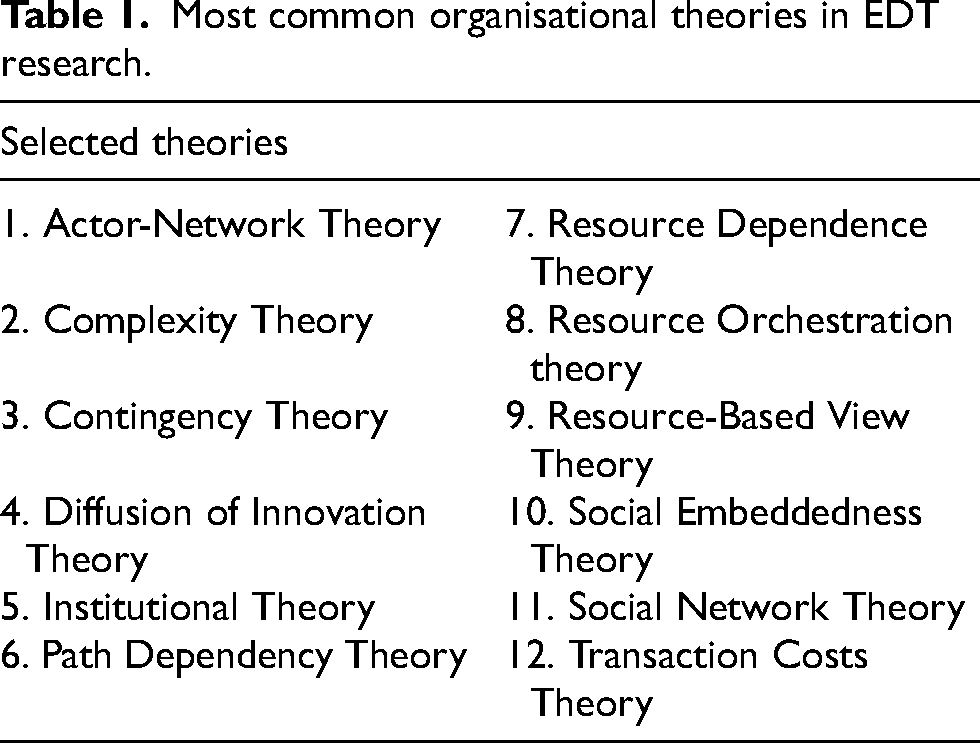
Most common organisational theories in EDT research.
DT drivers and institutional theory
Institutional Theory (IT) scrutinizes the impact of external pressures on organizations, compelling them to adopt certain organizational behaviours (Adjei et al., 2021). Institutional Theory identifies three forms of isomorphic pressures: coercive, normative, and imitative (DiMaggio and Powell, 1983; Kropp and Totzek, 2020; Lopez-Morales et al., 2023). These pressures elucidate changes in consumer consumption patterns, competitive dynamics, and the business environment as organizations embark on digital transformation (Fauzi and Sheng, 2022). Coercive pressures encompass regulatory mandates, supplier demands, consumer expectations, and other stakeholder influences. Institutional Theory highlights how organizations navigate digital technology challenges under consumer-driven coercive pressures, thereby playing a significant role in explicating digital transformation practices (Hamari et al., 2016; Pandey and Gupta, 2017). Normative pressures drive compliance with regulations to attain legitimacy in organizational operations, with social norms influencing business behaviours and motivating alignment with prevailing practices. Additionally, competitive environments create imitative pressures, urging firms to adopt digital strategies for operational continuity (Ball and Craig, 2010; Fauzi and Sheng, 2022).
Coercive pressure is instrumental in driving DT, with governmental roles in advocating voluntary digitalization practices being notably significant (Jiao et al., 2022; Lopez-Morales et al., 2023). Institutional theory delineates the structures and regulations influencing technology adoption, showing that coercive pressures from laws and regulations enhance awareness and promote IT adoption (Zhao et al., 2007; Zhu et al., 2022) .Initiatives like “Made in China 2025” and tightened digital environmental regulations in developing countries exemplify systemic pressures for comprehensive digital transformation (Lin et al., 2018; Lutfi, 2020).
Market and customer demand for digital services constitute normative pressures, compelling companies to implement digital transformation. The desire for seamless physical-digital customer interactions, predictive maintenance services, and diverse product offerings highlight evolving consumer demands (Lanzolla et al., 2010; Llopis-Albert et al., 2021). Firms adopt prevalent practices to maintain legitimacy, spurred by consumer diversity and product innovation (Kropp and Totzek, 2020), as seen in the digital transformation of shipping services advocated by professional associations (e.g., IACS, IAPH, BIMCO) (Kuo et al., 2022).
Organizations may emulate successful competitors, a behaviour often categorized as competitive benchmarking (Zhu et al., 2012). DiMaggio and Powell (1983) observed that successful practices encourage imitation to achieve similar outcomes. Imitating pioneers minimizes costs while promoting business dynamism and consistency (Muhammaditya et al., 2021).Institutional theory elucidates how external drivers influence digital transformation practices. Nonetheless, several questions remain unaddressed. First, while institutional pressures influence firms’ digital embeddedness and the interplay between external drivers and internal resource allocation drives digital transformation practices (Bajpai and Misra, 2023), the synergistic effect of external and internal factors on digital transformation practices warrants further investigation. Second, governmental regulatory interventions and financial investments in digital infrastructure are pivotal (Guo et al., 2023), yet identifying benchmark firms across industries and establishing mechanisms to incentivize these firms require more research. Third, while studies in developed countries highlight normative pressures’ role in raising digital transformation awareness, there is a call for new institutional theories to address the lack of long-term cooperation and underinvestment in technological infrastructures, alongside concerns over high transformation costs (Llopis-Albert et al., 2021; Paolucci et al., 2021). Lastly, as global supply chains evolve, imitative pressures offer collaboration opportunities across international firms within the same supply chain, yet the diffusion variables and stages differ from one country to another (Wamba and Queiroz, 2022), necessitating further exploration of diffusion mechanisms for such collaborations.
Stakeholder theory
Stakeholder Theory (ST) posits that stakeholders, defined as groups or individuals who can affect or are affected by the achievement of organizational objectives. Freeman (2010) play a pivotal role in organizational decision-making. This theory underscores the importance of considering stakeholder perspectives in shaping organizational strategies, acknowledging that firms’ actions have wide-ranging impacts on both internal and external stakeholders. These impacts often motivate stakeholders to exert influence on organizations, urging them to adopt strategies that enhance positive outcomes and mitigate negative ones.
Stakeholders can be categorized as primary and secondary. Primary stakeholders, such as employees, customers, and suppliers, directly contribute to the survival and functioning of the organization, while secondary stakeholders, including the media and interest groups, indirectly shape public perceptions and influence strategic decisions (Clarkson, 1995; Ibeku et al. 2024). For example, employees are critical to digital transformation efforts through their engagement, support, and adaptation to new technologies (Hassan et al., 2024; Tian and Ou, 2024). Evolving customer preferences, on the other hand, drive organizations to adopt innovative digital solutions to meet market demands (Lin et al., 2018; Berlak et al., 2021). Ignoring the needs of primary stakeholders may jeopardize organizational survival, while neglecting secondary stakeholders can adversely impact reputation and growth.
Stakeholder influence is determined by their power, legitimacy, and urgency (Mitchell et al., 1997), which align with broader social and institutional norms. At the micro level, stakeholders such as employees and customers directly shape digital transformation outcomes through their interactions and feedback (Lin et al., 2018; Hassan et al., 2024). For example, employees’ engagement and adaptation to digital technologies ensure effective implementation, while customers’ evolving expectations demand continuous digital innovation. At the miso level, suppliers, investors, and business partners shape collaborative frameworks and resource allocation strategies, ensuring alignment within the organizational ecosystem (Moro Visconti and Morea, 2020; Sengupta et al., 2021). For instance, investors often push for digital investments to enhance profitability, while suppliers contribute critical resources for transformation initiatives. At the macro level, external stakeholders, such as government agencies, regulatory bodies, and media, impose compliance standards and societal pressures that guide organizational strategies and DT trajectories (Clarkson, 1995; George and Schillebeeckx, 2022). These macro-level forces often establish industry norms and influence corporate governance structures to promote sustainable digitalization.
Moreover, stakeholders play a crucial role in determining the allocation of resources for digital transformation, including financial investments and the management of digital infrastructures (Moro Visconti and Morea, 2020; Bătae et al., 2021; Sengupta et al., 2021). Employees, as key stakeholders, significantly impact the success of digital transformation efforts. Their engagement, support, and adaptation to digital changes within the organization are essential (Hassan et al., 2024; Tian and Ou, 2024). Effective communication and change management strategies are imperative to mitigate resistance and encourage collaborative efforts.
Stakeholder Theory further highlights the importance of collaboration in DT. Effective stakeholder engagement can reduce costs, risks, and uncertainties while providing access to resources and knowledge otherwise unavailable (Ray and Ray, 2011; He et al., 2020). However, despite its applicability, the exploration of Stakeholder Theory in the context of emerging digital technologies remains nascent. Future research should examine how stakeholder dynamics operate across varying organizational and cultural contexts, particularly in the globalized digital economy. Such studies could provide insights into stakeholder-driven innovation and the diffusion of digital technologies, contributing to the broader understanding of digital transformation.
Complexity theory
Complexity Theory (CT), originating from systems theory, addresses the non-linear and heterogeneous nature of interactions and feedback within dynamic networks, crucial for driving change in continuous systems (Delgosha et al., 2021).In the context of organizations, complexity encompasses the diversity and heterogeneity of environmental factors, including customer demographics, supplier relationships, government regulations, and technological (Turner and Baker, 2019). As complexity escalates, organizations encounter amplified challenges in strategizing and forecasting their actions, notably in the realm of implementing enterprise digital transformation (Brunswicker et al., 2019). This theory posits that organizations operate within a system where order and chaos are intertwined, with the system's performance outcomes being a product of the interplay among its constituents (Park and Saraf, 2016).
Digital transformation is inherently complex, necessitating organizational sensitivity and responsiveness to a multitude of factors such as infrastructure, capabilities, usage patterns, and evolutionary changes (Hanna, 2016). This complexity presents a significant challenge for managers, as forecasting the performance outcomes of EDT activities with accuracy becomes increasingly arduous. To grasp the full contributions of system participants, researchers must account for a broad spectrum of complex factors, including environmental, economic, regulatory, social, and political influences, alongside the interactions among a diverse array of stakeholders (Misangyi et al., 2017; Delgosha et al., 2021). The growing complexity of digitalization, aimed at enhancing business competitiveness, complicates the prediction of system behaviour and the estimation of interaction outcomes. Modern practice often deals with complex systems characterized by unpredictable, large-scale, and seemingly uncontrollable behaviours, challenging conventional models of policy formulation and necessitating more sophisticated analytical tools (Rhodes and Dowling, 2018).
For policymakers, a nuanced comprehension of digital factors and their inherent complexity can facilitate governance by elucidating the complex interactions and causal relationships pivotal for sustainable development (Meng et al., 2022). Further, existing research underscores the importance of considering the complexity of digital transformation within corporate governance frameworks (Sama et al., 2022). Understanding the intricate interplay and causal configurations of digital factors is essential for achieving sustainable competitiveness across varying digitization levels, contingent on an organization's digital strategy and the cognitive orientation of its executives (Delgosha et al., 2021; Zhu et al., 2022). This complexity highlights the need for multi-scalar stakeholder engagement strategies to address diverse needs and align organizational objectives with stakeholder expectations.
Building on these findings, it is proposed that future research on the linkage between digital transformation antecedents and performance outcomes, based on Complexity Theory, could be enriched by integrating Upper Echelon Theory (UET). This approach would address the research gap related to the influence of top executive team attributes on enterprise digital transformation. Additionally, Complexity Theory's relevance to EDT manifests in the myriad activities within a firm, such as stakeholders’ investment decisions and consumers’ purchase intentions across different policy landscapes, entailing a dynamic network of interrelations within the system. Thus, formulating policies grounded in Complexity Theory can mitigate uncertainties during EDT implementation and offer enhanced guidance for internal resource allocation.
Chapter summary
This chapter examines foundational theories–Complexity Theory, Institutional Theory, and Stakeholder Theory–that elucidate the antecedents driving an organization's digital transformation. These theories collectively provide insights into the interplay of environmental, institutional, and stakeholder-driven factors influencing transformation trajectories, as illustrated in Figure 1.
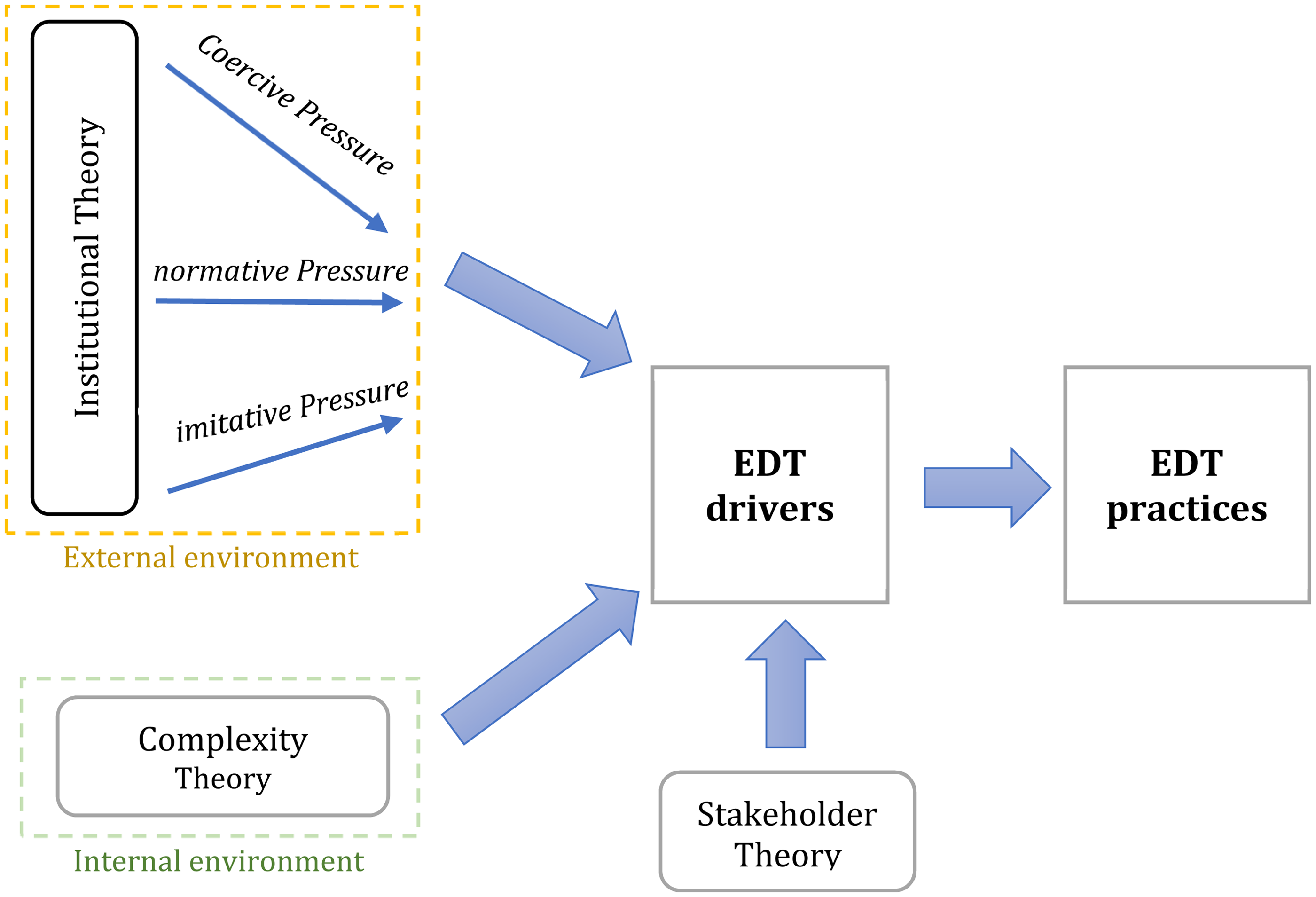
Digital transformation drivers’ antecedents and related theories.
Complexity Theory, rooted in Systems Theory, emphasizes the interconnectedness of organizational components and the challenges of managing non-linear dynamics in increasingly complex digital environments. It highlights the role of internal systems–such as technology, processes, personnel, and culture–in shaping transformation outcomes. This perspective underscores the need for organizations to adopt holistic approaches to navigating digital intricacies.
Institutional Theory focuses on external pressures–coercive (e.g., regulatory mandates), normative (e.g., societal expectations), and mimetic (e.g., benchmarking against successful peers)—that compel organizations to adopt digital technologies. These forces emphasize not just efficiency but alignment with broader institutional norms and expectations. Stakeholder Theory underscores the critical role of engaging primary and secondary stakeholders in resource allocation and decision-making processes. By addressing diverse stakeholder needs, organizations can align transformation initiatives with long-term success and sustainability, particularly in environments with resource constraints, such as SMEs and non-profits.
The chapter also explores the synergies among these theories in shaping digital transformation drivers. Institutional Theory offers a lens for understanding external pressures, while Complexity Theory highlights internal dynamics. Together, they provide a framework for analysing how organizations adapt to digital technologies across industries. Stakeholder Theory complements this by focusing on the human element, guiding organizations to balance diverse stakeholder interests and priorities during transformation efforts.
In conclusion, the integration of these theories furnishes a holistic framework for understanding the dynamic interplay of environmental complexity, institutional pressures, and stakeholder dynamics in digital transformation. This approach offers practical insights for navigating the intricate demands of modern digital ecosystems and provides a foundation for future research exploring how these theories can inform tailored strategies for resource-constrained organizations..
DT practices and contingency theory
Contingency Theory, also known as Situational Theory, initially emerged to assess the effectiveness of organizational leadership, proposing that leadership success hinges not on specific leader traits but on the interplay of three variables: the leader, the followers, and environmental factors (Otley, 2016). The development of Contingency Leadership Theory has yielded several models, including Fiedler's Contingency Model, and Robert House's Path-Goal Theory. These models collectively assert that organizational strategy and change are significantly influenced by the external environment, offering a valuable lens for examining organizational innovation and change dynamics.
Since the 1940s, Contingency Theory has been a pivotal framework in management and organizational studies (Melander and Alkhadra, 2022), advocating that organizational behaviour is shaped by the capacity to adapt to external environments. This theory posits that organizational complexity is a function of employee responses to the organization's intricacies (Goodhue and Thompson, 1995), with technological complexity identified as a key dimension of organizational complexity, denoting the challenges in transforming technological inputs into outputs (Crișan and Stanca, 2021).
Contingency Theory examines both inherent organizational complexity and that arising from technological advancements, emphasizing that organizational performance is contingent upon the alignment between an entity's external environment and its internal structural configurations (Van de Ven et al., 2013; He et al., 2020). Digital transformation aligns with this integrative approach, driven by external market demands and necessitating coordination within the organizational framework (Melander and Alkhadra, 2022).
Digital transformation is perceived as an ongoing process requiring organizations to embrace adaptable structures that resonate with the digital ecosystem (Chanias et al., 2019; Crișan and Stanca, 2021). Entities engaged in value creation and capture must adjust their strategies in response to external catalysts, a dynamic captured effectively by Contingency Theory (Sabaruddin et al., 2023). This theory underscores the symbiotic relationship between the external environment and organizational structure as critical for achieving superior performance (Drazin and Van de Ven, 1985).
Contingency Theory's dynamic perspective suggests that the interplay among the environment, internal capabilities, and managerial perceptions significantly influences organizational structure and strategy, which, in turn, shapes the response to external and internal factors (Drazin and Van de Ven, 1985; Crișan and Stanca, 2021). Digital transformation emerges from a balanced interaction between the business environment and the organization, underscoring the importance of adapting to both internal and external circumstances.
Future research on EDT through the lens of Contingency Theory could beneficially integrate with dynamic capabilities and the resource-based view (RBV) to delve deeper into the drivers and barriers of digital transformation. Moreover, incorporating Stakeholder Theory can further enrich the exploration of digital transformation in enterprises, extending into areas like green innovation performance and corporate financial outcomes.
Actor-network theory
Several scholars have underscored the significance of ANT in shedding light on the multifaceted interactions among technologies, individuals, and organizations across various sectors This approach reflects the complexity inherent in the EDT process, where intricate relationships unfold. Moreover, ANT-based exploration has examined the relationships between different stakeholders within and outside the organization (Kolloch and Dellermann, 2018), offering insights into the collaborative essence of digital transformation and highlighting the pivotal role of digital technologies in these interactions
Actor-Network Theory (ANT), rooted in the study of socio-technical systems, highlights the dynamic interplay among human (organizational) and non-human (technological) actors within innovation ecosystems (Bruni and Teli, 2007). This framework provides a nuanced lens for examining how complex interactions among actors shape and influence digital transformation processes. ANT delves into the intricate web of relationships that unfold in organizational innovation, offering a comprehensive understanding of the socio-technical dynamics underlying enterprise digital transformation (EDT).
Several scholars have emphasized ANT's relevance in capturing the multifaceted interactions among technologies, individuals, and organizations across diverse sectors (Cresswell et al., 2010; Kolloch and Dellermann, 2018; Voronov and Weber, 2020).For instance, ANT-based analyses have explored the collaborative essence of digital transformation by examining stakeholder relationships within and beyond organizational boundaries (Wehrle et al., 2020; Madsen, 2021).Such studies underscore the pivotal role of digital technologies as mediators in these interactions, shaping both organizational strategies and innovation trajectories.
Building on this foundation, ANT's application extends into the domain of market interactions by incorporating insights from consumer culture theory. Research by Ruckenstein and Granroth (2020) and Beauvisage and Mellet (2020) explores how expansive digital market infrastructures shape consumer behaviors, emphasizing device-mediated relationships. Further, Petersson McIntyre (2020) unveils the social and cultural dimensions embedded in digital marketplaces, while Arriagada and Concha (2020) examine the interconnectedness of digital infrastructure and consumer engagement.
To deepen the understanding of EDT, ANT has been integrated with complementary frameworks such as absorptive capacity theory and the Technology Acceptance Model (TAM). Absorptive capacity theory examines an organization's ability to recognize, assimilate, and apply external knowledge for innovation (Cohen and Levinthal, 1990). By contrast, TAM provides insights into the micro-level dynamics of individual acceptance and use of new technologies (Davis, 1989; Venkatesh and Bala, 2008). While TAM primarily focuses on individual-level behavior, its principles can inform corporate-level strategies to facilitate technology adoption. This interdisciplinary integration of ANT, absorptive capacity, and TAM underscores the necessity for organizations to develop internal knowledge capabilities while navigating complex external stakeholder relationships, thereby leveraging digital technologies for sustained competitive advantage (Helfat et al., 2009). Future research can further enhance the interdisciplinary application of ANT by integrating it with stakeholder theory and consumer culture theory. Such a multidisciplinary approach can illuminate the intricate network of relationships underpinning EDT. It also offers a pathway for exploring strategies that enhance collaboration, optimize innovation outcomes, and advance theoretical understanding of digital transformation in complex ecosystems.
Social network theory
Social Network Theory (SNT) is instrumental in elucidating how digital transformation within organizations fosters competitive advantages and innovative business models (Wang and Zhang, 2023). Central to SNT is the notion that organizational outcomes emerge from complex social relationships among individuals, whether within a single organization or spanning multiple entities (Kilduff and Brass, 2010).This theory underscores that organizational decisions are informed by the information and influences circulating through social networks (Wuyts et al., 2004). Additionally, SNT explores network structures and their significance in managing communication practices, highlighting how bridging structural voids within an organization's social network can confer strategic benefits (Freeman, 2002).
SNT delineates three fundamental concepts: Centrality, Cohesion, and Structural Equivalence (Freeman et al., 1979). Centrality evaluates a network node's significance and its strategic position, affecting processes such as information dissemination or goods circulation (Borgatti, 2005). Network cohesion, an essential structural aspect, moderates the impact of interpersonal networks, with studies showing that more cohesive social networks wield greater influence (Friedkin, 1993). Structural equivalence, meanwhile, pertains to nodes sharing similar connectivity patterns within the broader network (Liu et al., 2017).
Despite its potential, the application of SNT within Enterprise Digital Transformation (EDT) research remains underexplored. Nonetheless, SNT offers a valuable perspective for dissecting buyer-supplier dynamics in the context of EDT. One-dimension concerns digital services in buyer-supplier interactions, especially within public services and fintech sectors (Winkelhake, 2019; Filotto et al., 2021), encompassing digital procurement, employee digital skills training, operations management, and production oversight, all underpinned by digital policy initiatives (Lin et al., 2018). Aligning consumer needs with SNT principles, particularly in digital services, can spur customer-centric innovation and encourage firms to refine their digital operational networks (Harrington and Voehl, 2011).
A second dimension highlights the importance of digital information sharing in organizational practices, notably in new product development (Birkel and Müller, 2022). Here, SNT is invaluable for interpreting information flow dynamics and their effects within the EDT business landscape. The third dimension focuses on collaboration, such as co-developing digital products and platforms (Gleiss et al., 2021), which is paramount in digital web technologies, where firms often collaborate with suppliers. This dimension underlines the intricate nature of organizational social networks, bridging firms with customers and suppliers.
As Rajković et al. (2021) suggested, this multidimensional approach holds significant promise for achieving sustainable growth and success in the digital era. In sum, while SNT's integration into digital transformation research is nascent, this discussion identifies three critical dimensions of buyer-supplier relationships enriched by SNT insights. Investigating these areas can deepen our comprehension of the complex, dynamic interrelations within the EDT sphere, thereby contributing to the evolving discourse on digital transformation.
Resource-based view theory
The Resource-Based View (RBV) Theory posits a foundational perspective in strategic management, contending that a firm's sustainable competitive advantage is derived from its capacity to harness valuable, rare, inimitable, and well-organized resources (Barney, 1991).This encompasses not only tangible assets but extends to encompass digital assets, knowledge capital, human resources, and organizational capabilities. In the era of digital transformation, companies are compelled to re-evaluate their customer value propositions, necessitating the cultivation or acquisition of novel digital competencies. This alignment of intrinsic resources with digital sterilization processes is pivotal for securing a competitive edge, underscoring the necessity for businesses to adaptively reorient their resource base towards exploiting emerging digital opportunities and optimizing service delivery mechanisms (Paiola et al., 2013; Lenka et al., 2018; Pousttchi and Dehnert, 2018; Cette et al., 2022). Further, the RBV framework is extended by theories such as dynamic capabilities, which emphasize an organization's agility in navigating volatile environments through strategic resource realignment (Kohtamäki et al., 2019), and natural resource management, focusing on leveraging environmental sustainability as a competitive lever (Hart, 1995; Bendig et al., 2023). This symbiosis of RBV with dynamic capabilities underscores the transformative potential of digital technologies in mitigating external disruptions, propelling innovative business models, and streamlining operational efficiencies (Vrontis et al., 2022).
Digital transformation, guided by the strategic direction of resource utilization, not only fosters process and capability enhancement for value creation but also reflects significantly on organizational performance metrics and environmental stewardship (Rupeika-Apoga et al., 2022). The digital orientation of a company–encompassing its digital value proposition, capabilities, and structural configuration–acts as a strategic catalyst in this regard, embodying the core RBV attributes of resource value, scarcity, inimitability, and non-substitutability (Carter et al., 2000; Kindermann et al., 2021; Bendig et al., 2023).
Emerging research underscores the strategic significance of digital platforms, agility, and networking capabilities as critical resources. These elements enable firms to leverage technological advancements for market expansion and competitive superiority (Škare and Soriano, 2021; Li et al., 2022), underscoring the indispensability of digital proficiency for contemporary business sustainability (Warner and Wäger, 2019). The robust application of RBV in delineating digital platform capabilities highlights the integral role of technological innovation in driving enterprise-level technological advancements (Liu et al., 2023).
The prospective trajectory for RBV theory could be enriched by integrating insights from knowledge management and learning theories, emphasizing the value of inter-organizational learning and collaborative knowledge sharing. Additionally, the development of quantitative measures for assessing competitive resource dimensions could facilitate a more nuanced evaluation of organizational digital transformation readiness. Furthermore, exploring the intersections of RBV with other organizational theories presents a fertile avenue for expanding the theoretical landscape of strategic management in the digital era.
Resource dependence theory
Resource Dependence Theory (RDT), formulated by Salancik and Pfeffer (1978), offers strategic insights for organizations navigating external pressures and delineates a firm's capacity for resource control (Hillman et al., 2009). This theory positions the firm as an open system that is intricately tied to its external milieu, underscoring the importance of understanding the firm's ecological context to grasp organizational behaviour fully. RDT highlights the significance of external factors, including the essentiality of interactions between firms to foster a competitive business landscape (Salancik and Pfeffer, 1978; Tehseen et al., 2021).
A foundational premise of RDT is the interdependence between firms and their external environment, particularly concerning critical strategic resources. Firms are depicted as reliant on external resources for maintaining competitiveness and necessitate collaborative engagements with external entities to ensure sustainable growth (Heide, 1994; Zhang et al., 2022). Achieving a balanced reliance on external resources is imperative for the optimal utilization of available resources, enhancing DT initiatives. The integration of RDT with institutional and stakeholder theories explores the political and social dimensions necessary for forming strategic alliances, providing a holistic understanding of the strategic resource management landscape (Paloviita and Luoma-aho, 2010; He et al., 2020).
In the realm of digital transformation, essential resources such as IT infrastructure, management capabilities, and environmental support (e.g., government backing and partnerships) are identified as collaborative essentials for bolstering performance (Hanelt et al., 2017; Awan et al., 2021; Zhang et al., 2022). These resources, akin to transaction cost economics assets, enable cooperating firms to secure a competitive edge. Consequently, controlling or accessing vital resources like digital strategy and skills training is crucial for the effective execution of DT practices and maximizing potential gains (Weber-Lewerenz, 2021). Furthermore, the criticality of inter-organizational connections necessitates internal and external coordination for successful digital transformation (Oubrahim et al., 2023; Yu et al., 2023), with collaborative coordination and resource sharing among partners being key to enriching the digital ecosystem and boosting productivity.
Despite the advantages, scholars have noted potential pitfalls in the digital transformation journey, such as inadvertent centralization of power and resource control, which could lead to conflicts within the organization and impede value creation (Scholz et al., 2018; Martínez-Caro et al., 2020). Thus, while RDT offers a valuable perspective on enhancing the resource acquisition process and navigating interdependencies within the industry, further investigation is necessary to fully unravel the dynamics between RDT and digital transformation mechanisms, ensuring firms can strategically manage their resources amidst the complexities of digital advancement.
Resource orchestration theory
Resource Orchestration Theory (ROT), as introduced by Sirmon et al. (2011), represents a pivotal framework in strategic management for correlating resources with performance. This theory evolves from the foundational concepts of the resource management model (Sirmon et al., 2007) and the asset orchestration model (Helfat et al., 2009), focusing on three analytical dimensions: structuring, bundling, and leveraging of resources. Structuring pertains to the formation of resource portfolios; bundling transforms these portfolios into competencies; and leveraging involves utilizing these competencies to generate value. At its core, ROT highlights the strategic management of resources–their allocation, integration, and leveraging–underscoring the significant role of an organization's resources and capabilities in cultivating a competitive advantage (Sirmon et al., 2011). It accentuates the critical nature of organizational decisions and processes that align with both internal and external competitive environments to maintain and create customer value (Gao et al., 2022; Jiang et al., 2023). ROT offers insights into how engagement in digital initiatives, such as digital platforms, can spur innovation and growth, particularly for SMEs grappling with limited resources (Jiang et al., 2023). It underscores the intricate interplay and dependencies among various organizational facets–culture, policy, structure–to attain superior firm performance. Through Resource Orchestration Theory, firms gain a comprehensive understanding of how to adeptly manoeuvre their resources and capabilities to secure a sustained competitive edge in a dynamically competitive landscape.
From the lens of ROT, the intricacies of successful digital transformation are attributed not solely to a firm's resources and capabilities but are also deeply intertwined with managerial decisions, collectively shaping the firm's competitive stance both internally and externally (Liu et al., 2016). ROT envisages an integrative approach, merging organizational resources, capabilities, and managerial actions to elevate firm performance by mediating the resources-performance linkage (Al-Omari et al., 2022). Rooted in the Resource-Based View (RBV) and Organizational Configuration Theory, ROT addresses RBV's inherent limitations, presenting a nuanced view of the resource-performance relationship within firms as a complex network of multi-directional interactions and complementary organizational elements–culture, policies, rules, structures, and capabilities .This perspective is instrumental in enhancing market responsiveness, agility, and adaptability through the identification, enrichment, collaboration, extension, and orchestration of resources to support digital transformation initiatives (Cui et al., 2021). Recent studies have spotlighted resource-centric actions in transformation efforts. Uhlenbruck et al. (2003) explored diverse resource acquisition strategies to mitigate resource scarcities in transformation processes. Cao et al. (2022) investigated the critical role of resource integration and allocation in digital transformation, while Liu et al. (2016) highlighted how supply chain integration and IT capabilities in digital transformation practices could jointly influence firm performance.
We posit that integrating Resource Orchestration Theory with other theories, such as Dynamic Capabilities Theory and Resource Dependence Theory, could illuminate pathways for firms to rebuild digital capabilities and generate value, especially in the aftermath of transformative events like the COVID-19 pandemic. The exploration of how enterprise transformation strategies guide resource orchestration represents a promising research avenue for future scholars.
Chapter summary
This chapter explores the theoretical frameworks that elucidate the strategies organizations employ to navigate the complexities of DT. Contingency Theory and Actor-Network Theory (ANT) jointly offer a comprehensive perspective on the multifaceted nature of DT. Contingency Theory emphasizes the critical role of aligning organizational practices with both external market demands and internal capabilities to ensure transformation success. ANT complements this by examining the dynamic interactions between human and non-human actors within socio-technical ecosystems, shedding light on the innovation processes that drive DT.
Social Network Theory (SNT) further enriches this discourse by highlighting the strategic value of social relationships and network structures in achieving organizational outcomes. It emphasizes how navigating complex networks in the digital era creates opportunities for collaboration and innovation. Meanwhile, Resource-Based View (RBV) and Resource Dependence Theory (RDT) focus on internal capabilities and external resource interdependencies, respectively. These theories underscore the significance of leveraging unique resources and managing dependencies to maintain competitive advantage. Resource Orchestration Theory (ROT) bridges these perspectives by advocating for the strategic structuring, bundling, and leveraging of resources to achieve sustainable success in the digital landscape. The integration of RBV, RDT, and ROT is particularly valuable in understanding the sequential phases of DT. RBV identifies essential resources that drive the antecedent phase of transformation. RDT becomes critical during the practice phase, where external dependencies, such as technological ecosystems and regulatory factors, shape transformation strategies. ROT unifies these perspectives by examining how internal resources and external dependencies interact during the performance phase to deliver sustainable DT outcomes. The integration of RBV, RDT, and ROT provides a dynamic framework for understanding EDT across different stages. RBV focuses on identifying internal resources and capabilities essential for initiating digital transformation. RDT extends this understanding by emphasizing the importance of managing external resource dependencies, particularly during implementation, where collaboration with external stakeholders plays a critical role. Finally, ROT synthesizes these perspectives, enabling organizations to structure, bundle, and leverage resources dynamically to adapt to the evolving digital landscape and achieve sustainable performance. This integrated perspective bridges theoretical gaps and enhances the explanatory power of these frameworks in addressing the complexities of EDT.
As illustrated in Fig. 2, the interplay between DT practices and theoretical frameworks underscores the nuanced interactions among internal capabilities, external pressures, and strategic resource orchestration. These integrated perspectives enrich the theoretical understanding of DT and highlight the importance of leveraging diverse frameworks to address its multifaceted challenges. Future research can build on these foundations by exploring how these theories can be further integrated to provide a more comprehensive lens for analysing enterprise success in the digital frontier.
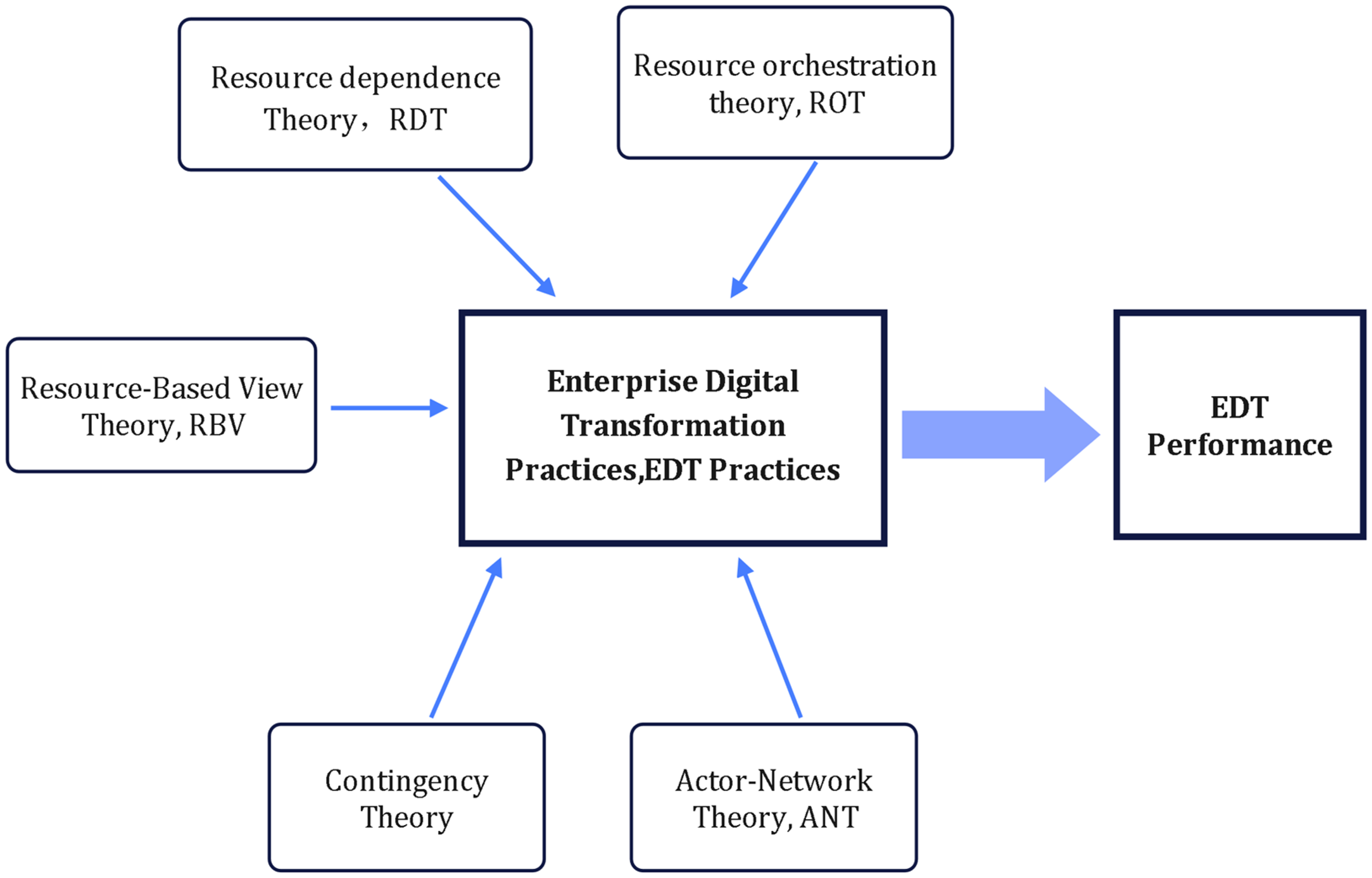
Digital transformation practices and related theories.
Although many other theories exist, we have identified several theories that hold promise to help further understand and explain the digital transformation performance of firms, and we conduct further research into the applicability of these theories. The four social organisational and economic theories presented in this chapter include (1) Social embeddedness theory; (2) Transaction costs theory; (3) Diffusion of innovation theory; and (4) Path dependency theory. we only briefly describe potential issues that can be investigated using these theories in EDT.
Social embeddedness theory
Social Embeddedness Theory (SET) articulates that enterprises are enmeshed within dense networks of social relationships, offering a lens through which cooperative firms might deftly manoeuvre through the ST landscape across sectors. This theory characterizes social embeddedness as the degree to which individuals partake in consistent, deep, and multifaceted social interactions, underscoring the role of such networks in fostering organizational identification and bridging individual-organizational gaps (Podolny and Baron, 1997; Hayton et al., 2012). At its core, social embeddedness accentuates collaborative endeavours in addressing complex tasks and the integration of individuals within organizational fabrics, emphasizing the necessity for firms to nurture identity and allegiance among members.
Furthermore, social embeddedness delineates micro-elements influencing organizational processes and structures. Digitally enhanced processes, for instance, allow for the formation of dynamic teams, bolster organizational agility in confronting novel challenges, and encourage cooperation based on reciprocal support (Kohnke, 2017). These digital advancements enable expansive cross-functional communication, thereby circumventing potential constraints imposed by hierarchical organizational designs (Hanelt et al., 2021). Additionally, research by Annosi et al. (2023) illuminates managerial practices within the DT realm, identifying digital proficiency, social embeddedness, the amalgamation of diverse models, and complexity management as pivotal themes. Notably, managers from Generations X and Y exhibit distinct yet converging views within these domains, with intergenerational managerial interactions mitigating arising tensions. Here, managers championing digital transformation initiatives act as intergenerational facilitators, thus smoothing the resolution of such tensions.
In essence, the fruition of digital transformation efforts in the workplace is contingent upon enhanced digital literacy, deeper social integration at a personal level, the seamless integration of various modalities, and adept complexity management. Future research could delve into the interplay among these themes across different sectors through comprehensive corporate case studies, further enriching our understanding of social embeddedness in the digital era.
Transaction costs theory
Transaction Cost Economics (TCE) offers a robust framework for analysing the expenditures and efforts incurred by parties in an economic exchange (Aubert et al., 1996). Central to TCE is the notion that opportunism, bounded rationality, environmental uncertainty, relationship-specific investments, and transaction volumes critically influence decision-making processes. High uncertainty, significant bespoke investments, and large transaction volumes elevate transaction costs, negating the benefits of market-based production efficiencies. Consequently, firms may Favor internal production to avoid the escalated costs associated with market transactions under these conditions. TCE posits that firms operate more efficiently as cohesive units than through market coordination due to lower internal coordination costs, guiding decisions on outsourcing versus internalization and defining organizational boundaries (Foss and Foss, 2004).
Digital transformation intersects with TCE by potentially diminishing transactional inefficiencies. It can alleviate informational asymmetries, streamline contracting, reduce external transaction costs, enhance internal communications, optimize structures, and refine governance, collectively lowering both external and internal organizational costs (Dana and Orlov, 2014; Kellogg et al., 2020).
Exploring TCE within digital transformation presents uncharted research avenues. Studies could examine transactional cost implications across various digital service models, contributing insights into cost optimization strategies. For instance, Kerner and Kitsing (2023) shed light on digital service trade patterns, assisting stakeholders in formulating evidence-based digital strategies. Similarly, Tu and He (2023) explore digital transformation's impact on mergers and acquisitions, demonstrating its role in facilitating M&A activities by reducing organizational costs. Magadán-Díaz and Rivas-García (2021) investigate the dynamics of collaborations in knowledge-intensive business services (KIBS) within the Spanish publishing industry through a TCE lens.
This burgeoning area of research underscores the need for empirical studies on digital transformation's effect on transaction costs, particularly within sterilization and digital sterilizing contexts, where the influence of digitization on transaction costs remains underexplored. Further investigation is required to understand how digitization reshapes collaborations within sterilization ecosystems and to determine effective governance structures for managing transaction costs in ecosystems of autonomous intelligent solutions.
Diffusion of innovation theory
The Diffusion of Innovation Theory (DIT), as articulated by Rogers (2003), provides a robust framework for understanding how innovations disseminate across social systems over time via distinct communication channels. Kraatz and Zajac (1996) emphasize that such innovations typically arise in response to pressing organizational or technological predicaments, prompting organizations facing such pressures to adopt novel solutions for mitigation. In the realm of DT, the surge of digital technological innovations represents a transformative wave impacting industries universally. Iyanna et al. (2022) highlight the profound influence of these innovations in the healthcare sector, extending beyond diagnostic and medical apparatus into the realms of management, administration, and healthcare delivery.
In the construction industry, DT initiatives focus on enhancing productivity through workflow optimization via digital technology adoption. Ottinger et al. (2010) note these innovations centralize and integrate data from diverse stakeholders, thereby elevating construction efficiency, safety, and risk management (Bajpai and Misra, 2023). Furthermore, DIT serves as an insightful lens for examining the catalysts and barriers to organizational digital transformation (Steiber et al., 2021). This entails a dual focus on the uptake of technology and organizational innovation, urging an in-depth investigation into the digital transformation process's dynamics at various developmental phases.
Technological innovation efficiency plays a pivotal role in the diffusion of innovation within organizations, as it determines the speed and effectiveness with which new technologies are adopted and scaled. Efficient technological innovation enables firms to shorten the time-to-market for digital solutions, optimize resource allocation, and enhance collaboration across departments (Zhang and Hao, 2024). For example, leveraging efficient innovation processes can reduce operational costs while fostering adaptability to dynamic market conditions (Lee et al., 2024). Furthermore, innovation efficiency facilitates the adoption of cutting-edge technologies, such as artificial intelligence and blockchain, which hold transformative potential for reshaping organizational practices (Mathauer and Hofmann, 2019).
Future research could investigate how technological innovation efficiency influences the success of digital transformation across diverse industries, particularly in resource-constrained settings such as SMEs. This theoretical perspective invites further scholarly inquiry into how digital technology innovations proliferate within firms at disparate stages of their growth trajectory. Such research is critical for determining if early adopters or firms at the vanguard of their industries can harness the superior performance benefits posited by the theory, thereby securing a sustainable competitive edge in an ever-evolving market landscape. By expanding the application of DIT to include a detailed analysis of digital transformation's multifaceted stages, researchers can contribute significantly to a nuanced understanding of how innovations diffuse within and across sectors. This offers valuable insights for firms striving to navigate the complexities of digital transformation successfully.
Path dependency theory
Path Dependency Theory (PDT) emphasizes how historical decisions, established routines, and legacy systems significantly influence an organization's digital transformation trajectory (Hunter, 2007; Chen et al., 2016). Entrenched practices often create structural and cognitive barriers that impede organizations from fully leveraging digital opportunities . These barriers are particularly pronounced in industries with a long history of standardized processes or resource-intensive infrastructures (Djelic and Quack, 2007; Sydow et al., 2020). For instance, firms heavily reliant on legacy IT systems may struggle to adopt agile digital strategies, while organizations bound by institutionalized norms may resist disruptive innovations (Chang et al., 2024).
However, PDT also provides a framework for exploring how organizations can overcome these constraints. Recent studies have highlighted strategies such as phased digital adoption, the introduction of dual operating systems, and fostering an innovation-oriented culture to break free from path dependencies (Sydow et al., 2009; Apajalahti and Kungl, 2022; Valentine, 2024). By understanding the mechanisms through which path dependencies are reinforced, researchers can develop targeted interventions to enhance organizational agility in EDT.
Future research can deepen the application of PDT by examining how digital transformation strategies vary across industries and enterprise types. For example, SMEs often face unique path dependencies tied to resource limitations, whereas multinational corporations may encounter more institutionalized inertia. Additionally, the interplay between PDT and other theories, such as Resource-Based View (RBV), could yield insights into how historical resources contribute to or hinder innovation in EDT. By integrating these perspectives, PDT can be expanded to provide a richer understanding of the challenges and opportunities within contemporary digital ecosystems.
Chapter summary
This chapter delves into the dynamics of DT within businesses through the lens of four principal theoretical perspectives: social embeddedness theory, transaction cost theory, diffusion of innovation theory, and path dependency theory. Together, these frameworks offer a comprehensive understanding of DT from both social and economic dimensions.
Social embeddedness theory highlights the intricate web of social relationships that businesses navigate, emphasizing the critical role of social interactions and cohesion in driving DT efforts. In contrast, transaction cost theory adopts an economic perspective, proposing that DT enhances firm performance by reducing external transaction costs and internal organizational inefficiencies. Diffusion of innovation theory provides an evolutionary lens, illustrating how digital innovations disseminate across social systems over time, granting early adopters competitive advantages. Meanwhile, path dependency theory draws attention to the historical decisions that shape current DT trajectories, underscoring the challenges organizations face in overcoming entrenched practices.
Figure 3 illustrates the interplay between these theoretical frameworks and DT's impact on three critical performance dimensions: environmental, financial, and operational. This mapping connects abstract theoretical constructs with tangible business realities, offering a structured approach to analysing DT's multifaceted implications.
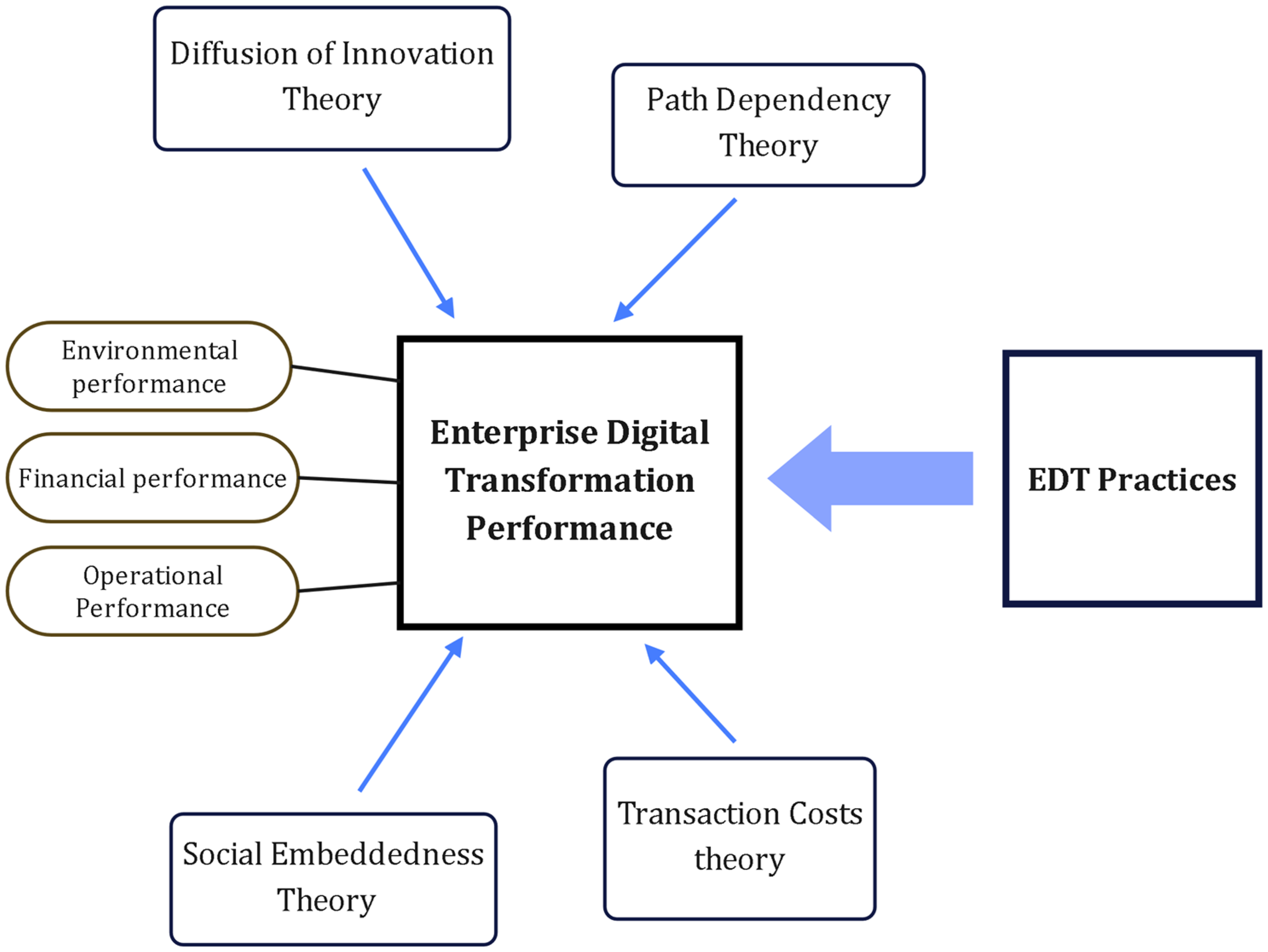
Digital transformation performance and related theoretical studies.
Building on these frameworks, this chapter further addresses the growing prominence of environmental performance as a key outcome of DT. By integrating Dynamic Capability Theory and Knowledge-Based View (KBV), the discussion explores how knowledge-driven innovation bolsters organizational competitiveness, particularly in rapidly evolving technological environments. Adaptive Structuration Theory (AST) is also introduced as a promising framework for future research, especially when combined with resource-oriented perspectives, to investigate how technology adoption reshapes organizational structures and performance outcomes across enterprises of different sizes.
Anchoring these performance dimensions to the theoretical frameworks, this chapter posits that these theories provide a robust foundation for comprehending the diverse and interrelated effects of DT on organizational performance. The integration of these perspectives offers valuable insights for advancing both theoretical applications and practical strategies in the digital era.
This study conducts a systematic review of the literature on EDT, analysing key organizational theories that underpin the drivers, practices, and performance outcomes of digital transformation. By synthesizing diverse theoretical perspectives, this research contributes to a deeper understanding of EDT and highlights the potential for theoretical integration to address the complexities of digital transformation.
The review reveals that organizational theories offer significant explanatory power in understanding EDT processes. The integration of Contingency Theory and Actor-Network Theory, for instance, provides insights into how organizations adapt to dynamic environments and manage socio-technical interactions. Similarly, Stakeholder Theory emphasizes the roles of diverse stakeholders across micro, miso, and macro levels, while Resource-Based View and Resource Orchestration Theory highlight the strategic importance of leveraging and structuring resources to achieve sustainable outcomes. These theoretical lenses collectively underscore the importance of aligning internal capabilities, external pressures, and stakeholder expectations to navigate digital transformation successfully.
Moreover, the study identifies key areas for future exploration. Institutional Theory, which has shown relevance in understanding regulatory and cultural pressures, could benefit from comparative analyses across diverse contexts, particularly in regions where government interventions heavily influence enterprise strategies. Complexity Theory provides a valuable framework for addressing the nonlinear dynamics of EDT, particularly in understanding how digital ecosystems evolve in response to technological disruptions and stakeholder interactions. These theoretical applications demonstrate the potential for cross-disciplinary research to generate more comprehensive insights into EDT.
The practical implications of this study are equally noteworthy. Enterprises can draw on Stakeholder Theory to align digital transformation initiatives with stakeholder priorities, ensuring broader acceptance and sustained engagement. Complexity Theory offers guidance for navigating uncertainty, emphasizing adaptive strategies that enable organizations to respond to rapid technological advancements. Resource-Oriented Perspectives, such as RDT and ROT, provide actionable strategies for managing resource dependencies and orchestrating internal capabilities to achieve competitive advantage. These practical insights bridge the gap between theoretical exploration and real-world applications, offering a roadmap for enterprises to thrive in the digital era.
Despite its contributions, this study acknowledges several limitations. The integration of theory and practice in EDT research remains at an early stage, highlighting the need for tailored methodologies that address specific industry contexts and organizational characteristics. Furthermore, exploring emerging theories and their intersection with digital transformation processes offers fertile ground for scholarly innovation. Future research should focus on developing dynamic frameworks that capture the interplay between EDT drivers, practices, and outcomes, thereby enriching both theoretical insights and practical applications.
While this study examines EDT through the lens of organizational theory, it does not fully differentiate the unique motivations, practices, and performance goals of diverse types of firms, such as for-profits, non-profits, and SMEs. For instance, SMEs often face resource constraints that limit their ability to adopt high-cost digital solutions, whereas non-profits may prioritize social impact over financial returns. These differences underscore the importance of contextualizing organizational theories to better address the diverse needs and dynamics of enterprises. Future research should explore how organizational types shape the interplay between EDT drivers, practices, and performance to offer a more nuanced understanding of EDT processes and outcomes.
In conclusion, this study lays a robust foundation for advancing EDT research through cross-theoretical integration and contextual applications. By bridging organizational theories with actionable strategies, it contributes to the growing body of knowledge on EDT while offering practical guidance for enterprises navigating the complexities of digital transformation. These contributions hold substantial promise for fostering innovation, shaping enterprise strategies, and informing future research directions.
Footnotes
Declaration of conflicting interests
The authors declared no potential conflicts of interest with respect to the research, authorship, and/or publication of this article.
Funding
The authors received no financial support for the research, authorship, and/or publication of this article.
