







Abstract
Blended learning has sharply increased in Bangladesh due to the COVID-19 pandemic. In blended learning, attaining the expected effectiveness is challenging and necessitates the identification of the factors that affect its efficiency. Therefore, the objective of this study is to identify the significant factors in effective blended learning in Bangladesh. After thoroughly examining existing literature, this paper introduces a new theoretical model to facilitate effective blended learning. The data were gathered from 303 university students in Bangladesh. We used random sampling for data collection and the structural equation modeling (SEM) for data analysis. The study identifies that students’ motivation, satisfaction, knowledge construction, and performance directly influence the effectiveness of blended learning. Besides, it reveals the significant but indirect association of attitude, computer self-efficacy, social support, interaction, and technology quality with the efficacy of blended learning. We suggest that using good technological tools and providing social support can enhance students’ motivation, satisfaction, and knowledge construction. The findings are valuable to achieving Sustainable Development Goals 4, 12 and 13.
Introduction
Since the onset of the COVID-19 pandemic in 2019, the need for access to digital resources and supportive environments for learning has been realized more than ever before. During the first 12 months, 1.5 billion students in 188 countries could not attend educational institutions in person due to lockdowns (Adhikary et al., 2023). The COVID-19 pandemic was extremely contagious in many countries, making it necessary to close face-to-face learning at universities until the situation improves. This situation has significantly impacted education, as students of all ages have been forced to learn remotely. About 147 million youngsters missed half of their in-person classes during this period. Such unforeseen conditions have subsequently brought the necessity to learn from the experiences of the pandemic and develop new ways of teaching and learning that are more resilient to future disruptions (Haningsih & Rohmi, 2022).
The COVID-19 has led to an increase in blended learning and provides a greater opportunity for flexible learning. While this approach provides more flexibility and scope of pursuing education in a pandemic, the country is not prepared enough to facilitate it (Shakeel et al., 2023). The government of Bangladesh is determined to implement a ‘blended education’ approach to avoid future learning gaps due to the pandemic in future. For that reason, the University Grants Commission (UGC) of Bangladesh has focused on the readiness and infrastructure challenges related to implementing blended learning across all the education institutes in the county. As a result, a “Blended Learning for Bangladesh” policy has been developed, which is aligned with the “Strategic Plan for Higher Education in Bangladesh: 2018-2030 objective”.
Previous studies suggest that Bangladesh can attain significant gains in the quality, accessibility, and cost-effectiveness of education by adopting blended learning, especially in higher education institutions (Chowdhury, 2019). When investigating the challenges for effective blended learning in Bangladesh, the study reports that internet connection is the main challenge, including the issue of lack of motivation, lack of interaction between teacher and students, and shifting students’ mindset from traditional to blended learning (Al-Amin et al., 2021). However, the study lacks a presentation of its findings based on any theoretical framework specific to blended learning.
Once the implementation challenges of blended learning are addressed, ensuring its effectiveness for fulfilling course outcomes is essential. Several significant studies examined the success of blended learning. For instance, Ma & Lee (2021) applied a motivational design model and followed a randomized controlled trial to test the blended learning effectiveness. Similarly, Ayob et al. (2021) conducted a quasi-experiment to compare the effectiveness of blended learning. Means et al. (2013) examined the empirical literature to contrast the outcome of blended learning with other traditional methods.
On the other hand, when it comes to finding the factors that influence the blended learning effectiveness, the study by Anthony et al. (2022) investigated the significant factors in effective blended learning by developing a modified theoretical framework based on Ozkan and Koseler’s Hexagonal Model and Khan’s Octagonal Framework (Bokolo et al., 2021). Likewise, Liu et al. (2016) conducted a meta-analysis to study the effectiveness of blended learning. Anaraki (2018) conducted a case study to explore the usefulness of blended learning. Additionally, Kintu et al. (2017) explored the effect of student characteristics, contents, design features, and learning outcomes on the outcome of blended learning.
The government has reemphasized embracing ICT-based teaching, such as blended learning, following the “Strategic Plan for Higher Education” (UGC, 2022). Knowing that blended learning will not be diminished and can be a new normal for effective learning (Al-Amin et al., 2021), educationists in Bangladesh have suggested a general policy framework for effective blended learning. However, the country is not prepared enough for the wide-scale adoption of blended learning. The theoretical underpinning of blended learning in Bangladesh has yet to be studied, even though it is significant for achieving the anticipated effectiveness in blended learning. When investigating blended learning in Bangladesh, prior studies (Chandha & Chowdury, 2023; Islam & Akter, 2023; Rabbi et al., 2024; Shakeel et al., 2023) have primarily utilized ad hoc approaches or established theoretical models that lack the important dimensions of effective blended learning, such as design and learners’ characteristics (Kintu et al., 2017).
Therefore, the existing research gap in investigating blended learning within the Bangladeshi context, coupled with the limitations of existing theoretical frameworks in fully explaining its effectiveness, necessitates the development of a new theoretical model to specifically explain the efficacy of blended learning in the educational landscape of Bangladesh. Accordingly, to find the enabling factors in blended learning that exist and affect effective blended learning in Bangladesh, this study seeks to answer the following:
- What are the enabling factors that affect the effectiveness of blended learning in Bangladesh?
This study entails empirically developing a conceptual model to identify its significant enabling factors. This study will not only help the policymakers and government in taking necessary steps to guarantee a new teaching-learning system but also positively impact students’ learning and strengthen the country's education institutions disrupted by the pandemic. Blended learning also has the potential to encourage lifelong education and support sustainable development by providing quality, inclusive, and flexible learning opportunities (Chen, 2022). The study of blended learning can contribute to sustainable development by promoting adult education development and reducing gender inequality. It can increase opportunities for women in rural areas and decrease carbon consumption by reducing traffic congestion (Yao, 2019), which can contribute to SDG 12 and SDG 13. Also, the study by Caird & Roy (2019) highlights that blended learning can promote social sustainability by providing inclusive, quality, and lifelong education for all, which is aligned with SDG 4.
The originality of this study is that no studies have identified the enabling factors that are significant for effective blended learning, particularly by developing a theoretical framework that is contextually suitable for Bangladesh. Hence, the current study contributes to the contemporary blended learning literature by identifying a research and theoretical gap in the field of blended learning in Bangladesh and developing an integrative theoretical framework model based on the Value flow model by Kintu et al. (2017).
Theoretical background
Researchers used different theoretical frameworks and models to identify the significant factors related to blended learning. For instance, Anthony et al. (2021) used an integrated version of the Unified Theory of Acceptance and Use of Technology (UTAUT) and the Technological, Pedagogical and Content Knowledge (TPACK) models. Their conceptual framework includes several significant factors: the user's effort expectancy, performance expectancy, social influence and facilitating conditions and the user's pedagogical, technological and content knowledge which can influence behavioral intention and actual use of blended learning at higher education. However, their study does not measure the effect of blended learning on students’ learning outcomes and satisfaction, which are important indicators of the blended learning effectiveness.
Ballouk et al. (2022) used Self-regulated learning (SRL) theory, which is based on the idea that learners are active participants in their learning process and can use different strategies to monitor and control their learning. SRL theory allows for finding the factors and barriers students experience while interacting in a blended learning environment, influencing their SRL skills and outcomes. They also use the cognitive apprenticeship model to understand how SRL can be supported by the guidance and feedback of educators, which is a key feature of the effectiveness of blended learning. Heo et al. (2022) also used SRL theory to examine how depression and self-efficacy affect learning engagement in blended learning during COVID-19.
Wei & Chou (2020) applied self-determination theory (SDT), focusing on psychological needs such as autonomy, competence and relatedness. They used SDT to understand learners’ perceptions and motivational factors for online learning. Mbarek & Zaddem (2013) used Social cognitive theory, technology acceptance theory (TAM) and Media richness theory to explain how different factors, such as computer self-efficacy, perceived ease of use, perceived usefulness, interaction and social presence, influence e-learning effectiveness. Chen (2022) and Bamoallem and Altarteer (2022) used the Community of Inquiry (CoI) theoretical framework to examine the process's effectiveness of blended learning in terms of peer cooperation, pedagogical design and critical thinking.
Raes (2022) used the Activity-Centred Analysis and Design (ACAD) framework, which allows for a comprehensive analysis of the design and the user experience of the blended learning approach regarding both the student and the teacher’s perspective. Capone (2022) used a constructive alignment framework that allows the integration of different teaching methods, such as peer-led team learning (PLTL) and Just-in-time teaching (JiTT), as well as ensures that the learning is student-centered, active, and collaborative. Bizami et al. (2023) discussed the immersive, blended learning pedagogical framework to provide systematic guidance for designing and implementing a blended learning environment that facilitates the digital transformation and fourth industrial revolution agenda as creativity, ability to work with others, self-determination and critical thinking.
Millikanian (2022) used the Theory of characterizing variables to evaluate the systemic and contextual factors that affect the design's success in practice. Jerry & Yunus (2021) used the TAM to examine the teachers’ perceptions, factors, and challenges of blended learning implementation. Shakeel et al. (2023) used the Blended learning readiness scale (BLRS), which consists of 24 items and five dimensions, to measure the student's preparedness for engaging in a blended learning environment. Iqbal et al. (2022) used the Theory of student involvement to explore how emotional intelligence, a key factor of psychological well-being, influences study habits and cognitive engagement in blended learning environments during COVID-19.
Besides, Kintu et al. (2017) used the Value flow model to examine the relationship between design features, learner characteristics and learning outcomes in blended learning. Lastly, the review study by Anthony et al. (2022) reported that researchers predominantly employ ad hoc approaches, respectively followed by the Diffusion of Innovations (DOI) theory, Information System Success Model (ISSM), TAM and UTAUT to investigate blended learning adoption.
Hypothesis development
To investigate the enabling factors in blended learning in Bangladesh, the authors develop hypotheses based on the Value flow model used in the study by Kintu et al. (2017). Unlike TAM, ISSM, UTAUT and DOI theory, the value flow model emphasizes the value creation process of blended learning, rather than the acceptance or adoption of technology. It incorporates the contextual and situational factors that affect blended learning, such as the learning environment and learner characteristics. Hence, this model is suitable for application in different contexts and settings, such as developing countries like Bangladesh. Also, none of the previous studies in the context of Bangladesh has used the Value flow model to consider how design features and learner characteristics influence the effectiveness of blended learning.
The Value flow model consists of the factors related to the blended learning design features, learners’ characteristics, and effectiveness indicators (Figure 1). According to the model, the factors of design features and learners’ characteristics are the predictors of effectiveness indicators. Figure 1 shows that the factors of design features are Online Tools (OT), Technology Quality (TQ), and Interaction (INT). In contrast, the factors of learners’ characteristics are Social Support (SS), Attitude (ATT), and Computer self-efficacy (CS). On the other hand, factors of effectiveness indicators include Motivation (MO), Satisfaction (ST), Knowledge Construction (KC), and Performance (PE). The definitions of the factors in Figure 1 and related hypotheses based on the Value flow model are presented below.
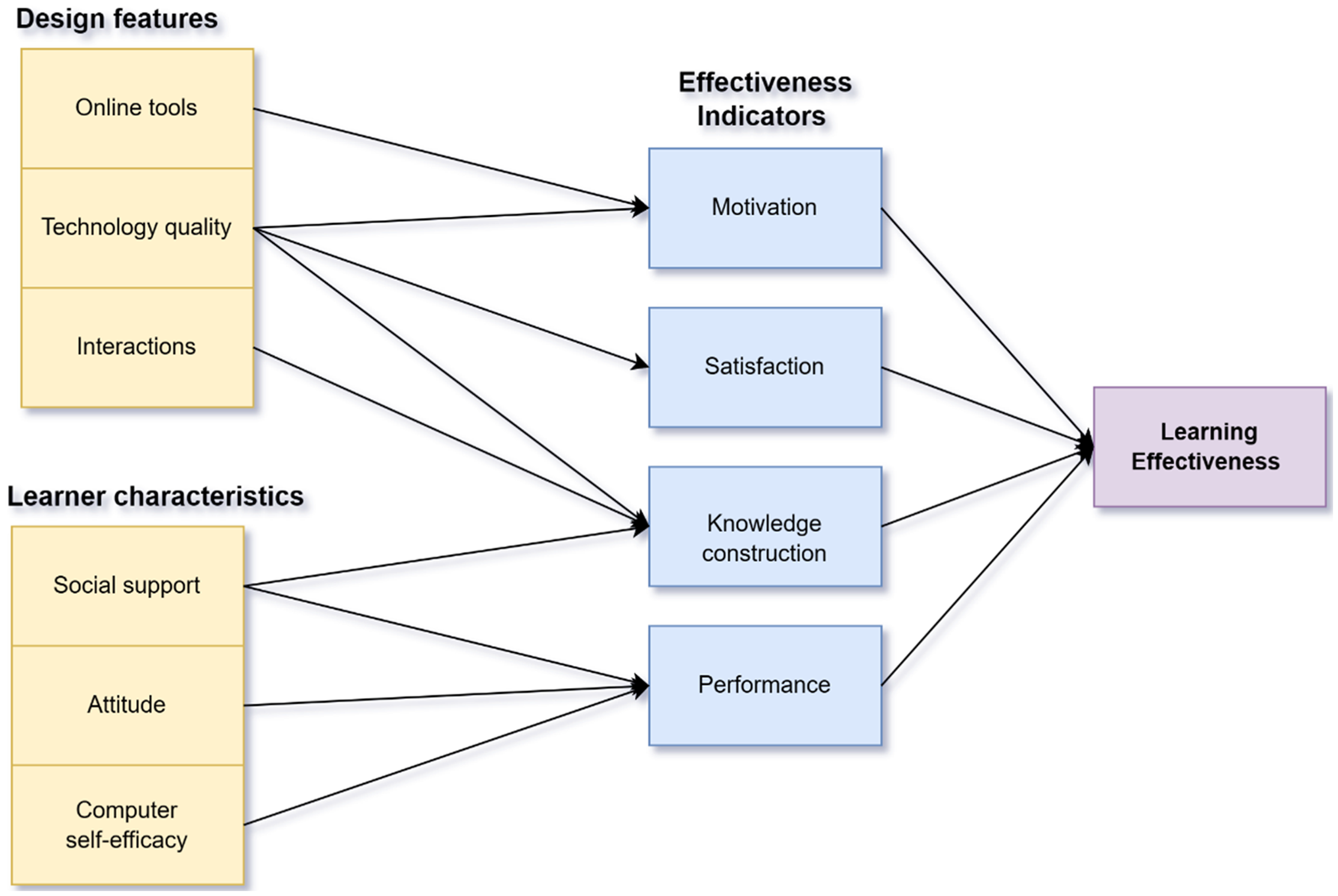
A conceptual model based on the Value flow model by Kintu et al. (2017).
Motivation (MO)
Motivation causes us to persistently act, initiate, and guide our behavior to achieve goals (Hartnett & Hartnett, 2016). A learner’s characteristics are essential for the effectiveness of online learning because they influence the learner’s engagement, persistence, and academic performance (Kintu et al., 2017). The study by Ferrer et al. (2020) shows that different types of motivation, such as intrinsic, extrinsic, and self-determination, affect online learners’ engagement and experiences. Student motivation is regarded as essential factor for success in online learning and positively influences the effectiveness of online learning (Hongsuchon et al., 2022). Chiu et al. (2021) highlight the challenges and opportunities of motivating online learners to enhance effectiveness and suggest designing effective online tasks to motivate students in online learning constantly. Therefore, the hypothesis regarding Motivation as an indicator of learning effectiveness is as follows:
Satisfaction (ST)
Satisfaction is a subjective fulfilment that an individual experiences when comparing the anticipated benefit with the observed effect of a service like an online learning platform (Bai et al., 2022; Budur et al., 2019). It is important for the effectiveness of online learning. Students’ satisfaction is an main indicator of education quality regarding learning outcomes (Doménech-Betoret et al., 2017). When studying the performance of students’ online learning during the COVID-19, student satisfaction positively influences students’ performance (Gopal et al., 2021). Further, students’ performance is strongly influenced by satisfaction with online learning (Keržič et al., 2021). Therefore, the hypothesis regarding Satisfaction as an indicator of learning effectiveness is as follows:
Knowledge Construction (KC)
Knowledge construction, an indicator of effective learning, is a cognitive process of higher-order thinking that allows the creation of new knowledge from existing information to improve learning gains (Galikyan & Admiraal, 2019). It has significant role in effective learning (Rahman et al., 2011) and emphasized should be given when designing an online learning environment (Korhonen et al., 2019). Hence, it is essential to foster knowledge construction to enable an online learning that supports student engagement and interactions. Another study finds that online discussions support knowledge construction is important for effective learning (Koh et al., 2010). Therefore, the hypothesis regarding Knowledge Construction as an indicator of learning effectiveness is as follows:
Performance (PE)
In an online context, learning performance measures the outcome of how well learners achieve the learning objectives in an online environment. Learning performance considers the quality of the learning process and the impact of online learning on the learners’ knowledge (Koh et al., 2010). Previous studies show that learning performance improves online learning outcomes (Kintu et al., 2017). Furthermore, research investigating students’ performance in online learning environments has revealed that students’ performance enhances their learning outcomes (AlMahdawi et al., 2021). The study of Giovannella et al. (2013) also shows that performance is a key indicator of students’ active involvement that improves learning effectiveness. Therefore, the hypothesis regarding Performance as an indicator of learning effectiveness is as follows:
Online Tools (OT)
Online tools like Learning management systems (LMS) are web-based online applications that allow one to plan, implement, and evaluate the learning process. In online learning, online tools allow students to use interactive features such as threaded discussions in forums, gamification tools, feedback tools, and video conferencing. Previous studies show that online tools like LMS motivate online learners by increasing their engagement and interaction and supporting self-regulated learning (Mustapha et al., 2023). Also, the study by Giovannella et al. (2013) reported that LMS affects undergraduate students’ motivation and self-regulated learning in a blended learning environment. The study by Khiat & Vogel (2022) also confirms that LMS tools facilitate students’ self-regulated learning behaviors, influencing learning motivation. Therefore, the proposed hypothesis regarding Online Tools is:
Technology Quality (TQ)
In online learning, technology quality refers to the reliability, accessibility, and usability of the online learning platform and tools to meet the learners’ expectations in achieving learning objectives. While the previous study by Kintu et al. (2017) shows that technology quality can influence the learners’ motivation to participate in online learning activities by ensuring a seamless learning experience, the influence of technology quality of a system on online learner satisfaction is also reported by Jiménez-Bucarey et al. (2021). The quality of technological tools can be enhanced by designing engaging digital environments and incorporating gamification features (Bovermann & Bastiaens, 2020), which can foster a positive learning experience and directly impact learners’ motivation in online learning settings. Likewise, implementing high-quality technology can significantly increase learner satisfaction by enabling smooth access to course materials, assessments, and communication tools (Yekefallah et al., 2021). On the other hand, Zhang et al. (2008) suggested improving technology quality to facilitate learners’ cognitive processes, which is essential in knowledge construction. Previous studies reported that online learning platforms with high-quality technology facilitate learners’ cognitive engagement for knowledge construction by having good system quality and interactive features (Kintu et al., 2017). Therefore, the proposed hypotheses regarding Technology Quality are:
Interaction (INT)
Interaction during participation in online learning is the process of exchanging information, feedback, and support among learners and instructors using various online tools. The study of Kintu et al. (2017) found that interaction is important for knowledge construction in blended learning because it can facilitate the development of higher-order thinking skills. Wang et al. (2009) found that interactivity is a key construct in online learning context and impacts knowledge construction in terms of cognitive presence. On the other hand, Lucas et al. (2014) used the Interaction Analysis Model (IAM) to assess knowledge construction, implying that interaction may influence knowledge construction. Therefore, the proposed hypothesis regarding is:
Social Support (SS)
Social support, which is essential for the effectiveness of online learning, is the experience of being cared for, valued, and connected to instructors and peers through an online learning platform (Kintu et al., 2017). Previous studies show that social support from teachers and peers positively influences students’ attitudes and sense of competence, significantly contributing to academic performance (Rice et al., 2013). Also, social support negatively correlates with anxiety in an online learning context (Basilio et al., 2022), which is favorable for learning performance. On the other hand, social support directly impacts performance and cognitive engagement, a process in knowledge construction (Huang et al., 2023). Therefore, the hypotheses regarding Social Support are:
Attitude (ATT)
In online learning, attitude is the degree of positive or negative feelings a learner has towards the online learning environment and activities. A positive attitude towards online learning can enhance the learner's interest and self-efficacy, which leads to better learning outcomes (Kintu et al., 2017). Further, previous studies showed that learners’ attitude toward the online learning context influences their learning performance (X. Liu et al., 2022; ShuPeng & Saibon, 2022). Therefore, the proposed hypothesis regarding Attitude is:
Computer self-efficacy (CS)
Computer self-efficacy in online learning is a learner’s ability to use the online platform effectively. It is a foundation of performance in online learning (Hodges, 2008). Kuo et al. (2014) mentioned that self-efficacy can enhance performance in online learning. Besides, another study shows that learners with higher self-efficacy outperform those with lower self-efficacy (Chang et al., 2014). On the other hand, Martin et al. (2010) and Chen (2017) found that computer self-efficacy significantly affects students’ learning outcomes. Therefore, the proposed hypothesis regarding Computer self-efficacy is as follows:
Methodology
This study used a cross-sectional survey design and a quantitative research approach to test the abovementioned hypotheses. For that, the researchers collected data using a structured questionnaire. Then, the structural equation modeling (SEM), a widely used statistical analytical tool, was employed to test the relationships among the variables in the conceptual model shown in Figure 1 (Mueller & Hancock, 2018). The SEM combines factor analysis and multiple regression analysis, which allows examining the relationship between latent constructs and measured variables (Williams et al., 2009). Hence, the researchers used SEM to examine how different dependent and independent variables influence each other in the model. In this study, Smart-PLS 3.2.8 software was used to perform two-stage PLS-SEM data analysis (Measurement Model Assessment and Structural Model Assessment).
Following the conceptual model (Figure 1), the questionnaire was developed based on the 5-Likert scale, which allows for seeking responses from the respondents ranging from 1 to 5, where 1 means ‘strongly disagree’ and 5 means ‘strongly agree.’ The items of the constructs used in the questionnaire were adopted from the study of Kintu et al. (2017). After collecting data, the validity and reliability of the measurements was tested. The data were gathered from 314 students of the University of Dhaka in Bangladesh. While a simple random sampling technique was followed to approach the respondents, to be a respondent, the students must have the experience of completing at least one course in the blended learning environment to achieve the representativeness of the sample and ensure the respondents’ relevance to the study's focus.
The data was collected by a questionnaire from July 1, 2023, to July 20, 2023. Data collection was achieved by administering questionnaires to the survey respondents. A group of field researchers pre-tested the questionnaire in a pilot test to collect feedback from the 15 respondents regarding the clarity, flow of questions, and content validity. During the data cleaning, 11 questionnaires were not included for data analysis due to incomplete answers. Lastly, 303 questionnaires were eligible for analysis.
Data analysis
Demographic information
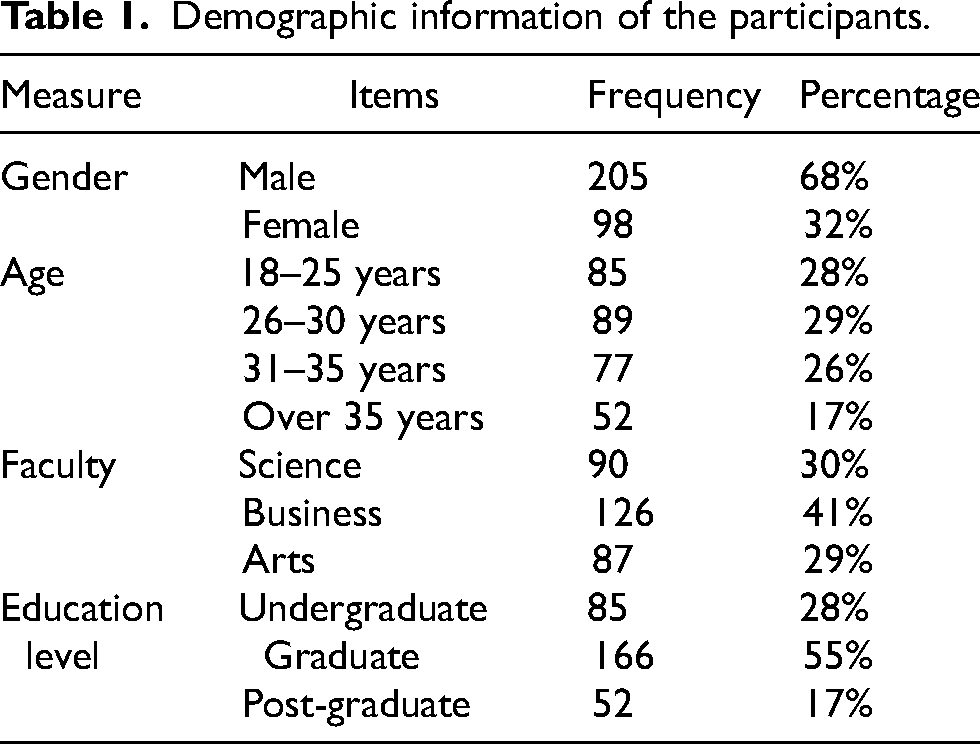
The demographic analysis in Table 1 shows that the participants have diverse backgrounds in gender, age, faculty, and education levels. The male (68%) participants outnumbered the female (32%) respondents. Moreover, the respondents aged between 18 and 25 years, between 26 and 30 years, and between 31 and 35 years were 28%, 29%, and 26%, respectively, and most of the respondents were from the business faculties. Also, most of the participants had Graduate degrees (55%).
Demographic information of the participants.
Measurement model assessment
The measurement model assessment, which is the first stage of PLS-SEM analysis, entails the evaluation of internal reliability, convergent validity and discriminant validity for each construct to test if the items in the questionnaire are consistent, reliable, and valid in measuring the respective constructs in a conceptual model. The values of Cronbach’s alpha and composite reliability were observed when looking for satisfactory internal reliability. Table 2 shows that the values of Cronbach’s alpha and composite reliability are above the recommended value of 0.70 (Ghorbanzadeh et al., 2023), which indicates that all the constructs have internal reliability.
The Measurement model.
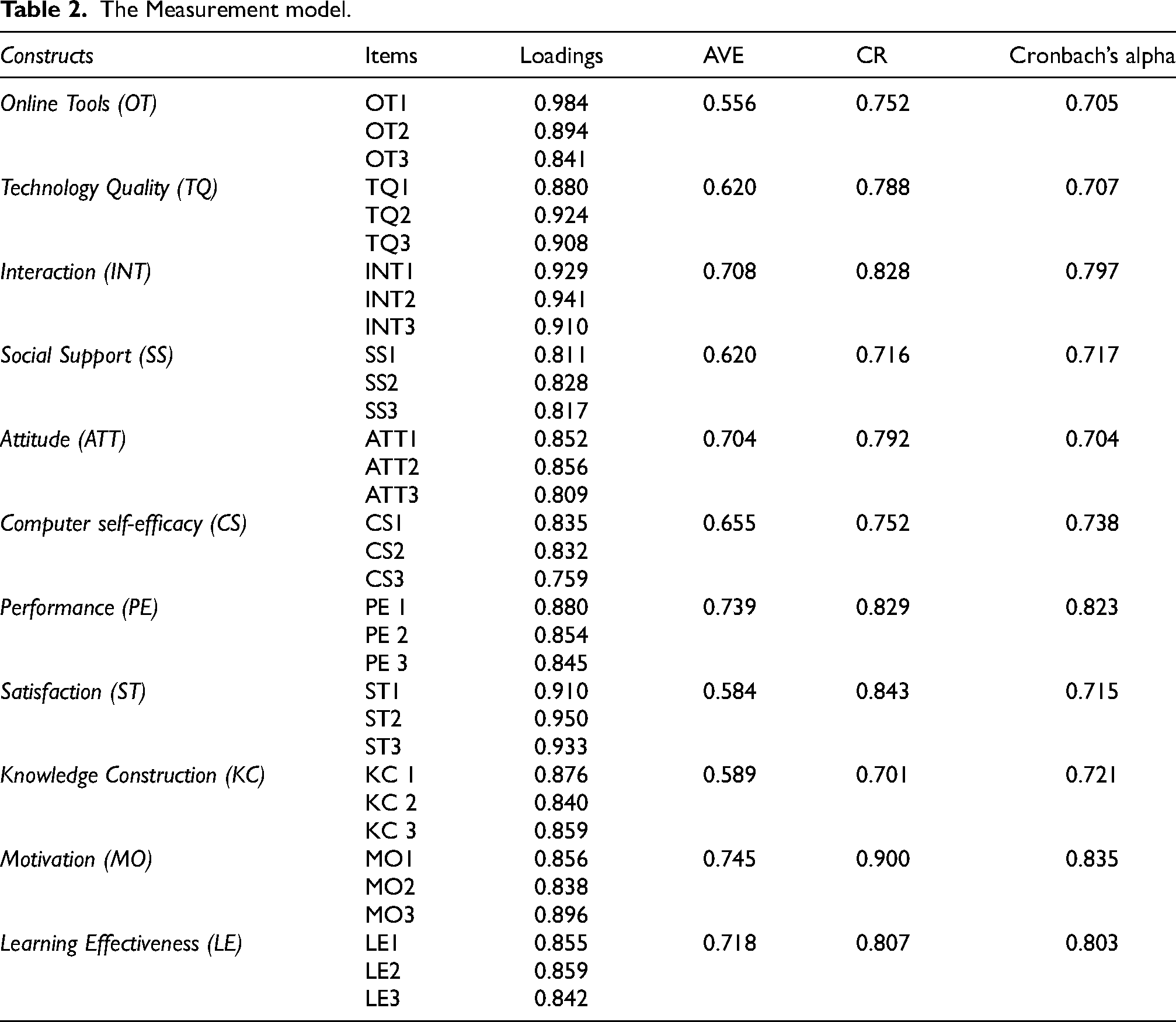
On the other hand, the concurrent validity analysis of the constructs consists of observing factor loadings and average variance extracted (AVE) values (Table 2). For factor loadings, a value above 0.7 indicates strong relationships between each variable and the construct (Ardiansah et al., 2019). Figure 2 shows the distribution of factor loading values in different variables (Ajagbe et al., 2022; Mazi et al., 2024). As shown in Table 2 and Figure 2, none of the factor loading was below 0.7, which indicates that the indicators are valid in measuring the respective constructs. Then, it is recommended that the AVE values should be greater than 0.50 to achieve adequate convergent validity, which was also true for each construct, as Table 2 shows (Ardiansah et al., 2019). The value of 0.50 for AVE indicates that a construct can explain at least 50 per cent of the variance in the items.
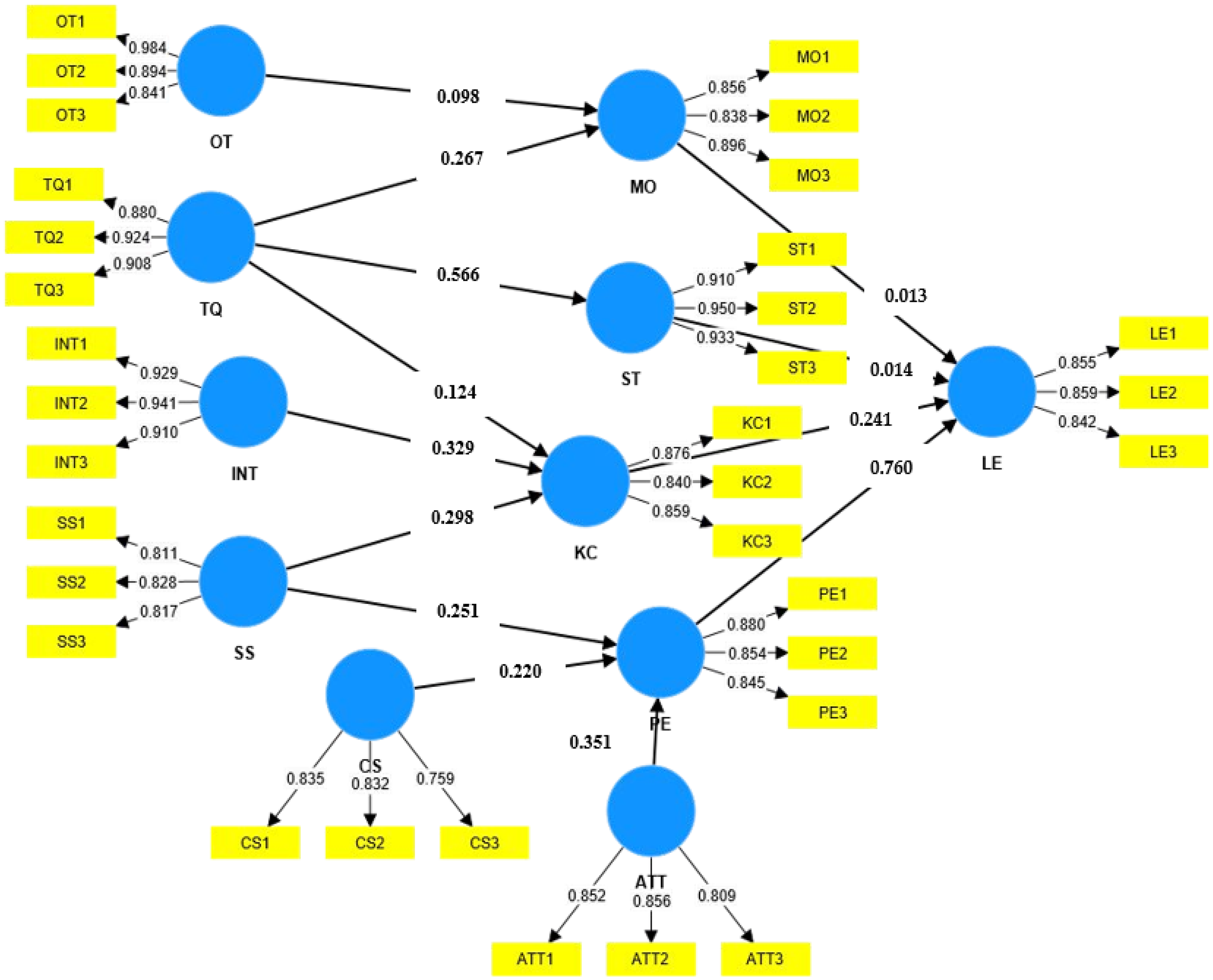
Measurement model.
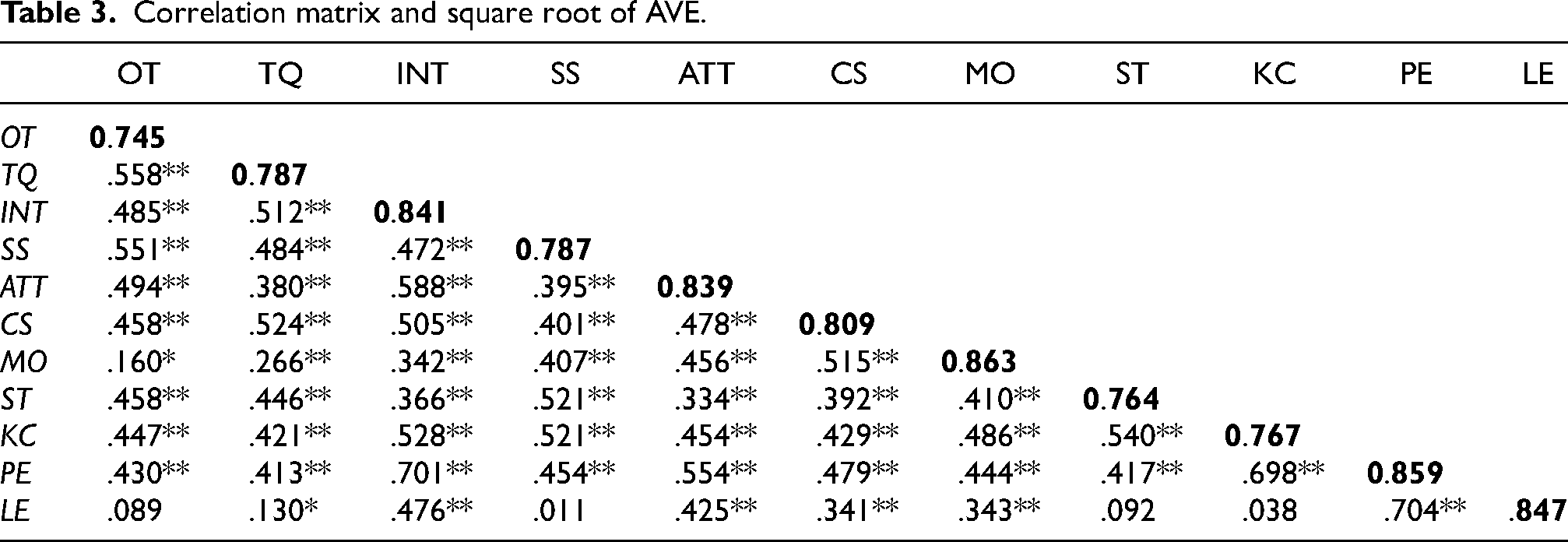
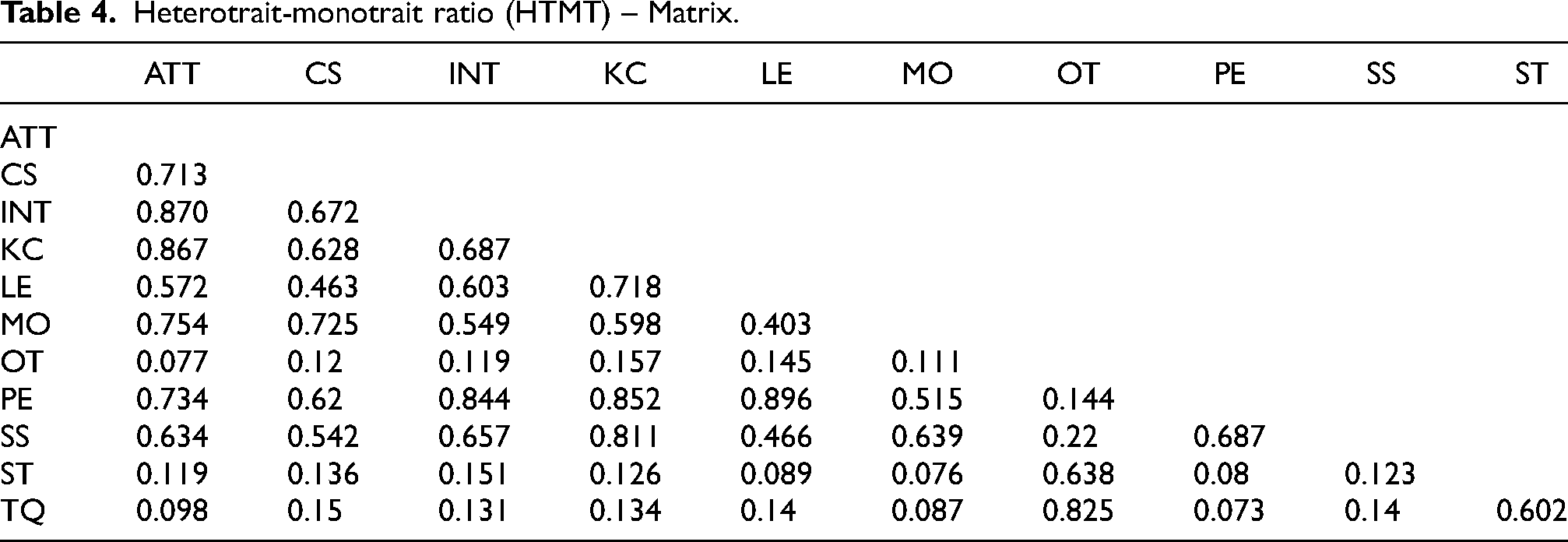
Besides, discriminant validity, the degree of discrimination the items have between different constructs, is also achieved for each item in this study. According to Fornell & Larcker (1981), the square root of the AVE value of each construct (diagonal) is greater than the respective correlation coefficients (off-diagonal) (Table 3). Further, Heterotrait–Monotrait Ratio (HTMT) is calculated to test whether the constructs are distinct in a conceptual model. It is suggested that the HTMT ratio should be less than 0.9 (Ardiansah et al., 2019), as achieved in this study, as Table 4 shows.
Correlation matrix and square root of AVE.
Heterotrait-monotrait ratio (HTMT) – Matrix.
Structural model assessment
The structural model assessment allows the evaluation of the relationships and effects observed among the constructs in the conceptual model. The analysis looked for the Path coefficient (β), T-statistics, and P-values to determine if the proposed hypotheses are supported (Table 5). Table 5 shows that the hypotheses that Online Tools (OT) influence Motivation (MO) (β = 0.098; p-value = 0.430) and Technology Quality (TQ) influence Knowledge Construction (KC) (β = 0.124; p-value = 0.054) are not supported because of having P-value greater than 0.05.
Summary of structural model path coefficients.
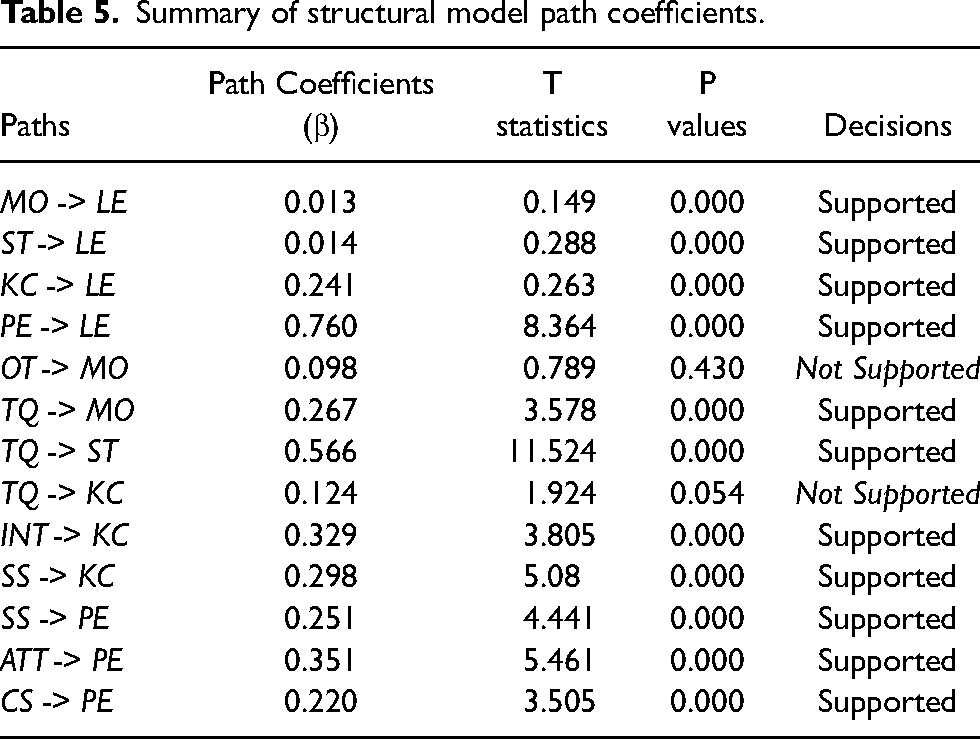
Table 5, however, shows that all other hypotheses are supported because a P-value smaller than 0.05 indicates a significant influence on the dependent variable. Therefore, the hypotheses that Attitude (ATT) influences Performance (PE) (β = 0.351; p-value = 0.000), Computer self-efficacy (CS) influences Performance (PE) (β = 0.220; p-value = 0.000), Interaction (INT) influences Knowledge Construction (KC) (β = 0.329; p-value = 0.000), Social Support (SS) influences Knowledge Construction (KC) (β = 0.298; p-value = 0.000), Social Support (SS) influences Performance (PE) (β = 0.251; p-value = 0.000), Technology Quality (TQ) influences Motivation (MO) (β = 0.267; p-value = 0.000), and Technology Quality (TQ) influences Satisfaction (ST) (β = 0.566; p-value = 0.000) are supported. Further, Motivation (MO) (β = 0.013; p-value = 0.000), Satisfaction (ST) (β = 0.014; p-value = 0.000), Knowledge Construction (KC) (β = 0.241; p-value = 0.000), and Performance (PE) (β = 0.760; p-value = 0.000) individually influence Learning Effectiveness (LE) are supported.
Besides, the comparison of the relationship strengths among variables shows that the strength of the relationship between performance and learning effectiveness is the strongest (
On the other hand, when examining the R2 values to determine the explanatory power of the model, the value 0.63 for Learning Effectiveness (LE) (endogenous variable) indicates that 63 per cent of the variance in Learning Effectiveness (LE) is explained by Performance (PE), Satisfaction (ST), Knowledge Construction (KC), Motivation (MO) combined. R2 value above 0.67 is considered substantial, whereas above 0.33 and 0.19 are considered moderate and weak explanatory power, respectively (Purwanto, 2021). Further, the researchers measured the Q2 value to determine the predictive relevance of the model on new data, which should be greater than 0 (Ghorbanzadeh et al., 2023). The findings show that Q2 values for all the endogenous variables in the model are above 0; hence, the model is adequately predictively relevant.
Result and discussion
In this study, the researchers reviewed the literature on blended learning to evaluate several theoretical models used to develop a conceptual model that would allow them to find the enablers of blended learning in the local context of Bangladesh. After critically evaluating different models, the researchers proposed a theoretical model based on the Value flow model. They defined blended learning effectiveness as the relationship between student characteristics, design features and learning effectiveness. The conceptual model (Figure 1) incorporates the factors related to learners’ characteristics, blended learning design features and effectiveness.
The data analysis reveals that the proposed learning effectiveness indicators, namely, satisfaction, motivation, knowledge construction, and performance, significantly influence learning effectiveness. The finding regarding motivation aligns with previous study findings, showing motivation is a significant factor in learning effectiveness in online settings (Hongsuchon et al., 2022). Highly motivated students engage with course materials deeply by actively participating in online discussions and show determination to face the challenges in effective learning (Zhu et al., 2022). Hence, considering both intrinsic and extrinsic motivational factors is crucial for students’ learning effectiveness.
A previous study by Rajabalee & Santally (2021) also supports the findings that satisfaction significantly influences effective learning performance. As learner satisfaction and cognitive engagement are closely associated, satisfied learners are likely to invest significant effort and spend sufficient time on their studies, leading to improved academic performance (Rajabalee & Santally, 2021). On the other hand, low levels of satisfaction and a propensity to withdraw from the learning experience are due to lower levels of disengagement and motivation among learners. Therefore, to students’ satisfaction, it is necessary to retain the students’ interest, confidence, or commitment to enhance learning outcomes.
Similarly, the significant influence of knowledge construction found in this study is confirmed by the studies by Kocaturk (2017), who shows that knowledge construction enables effective utilization of blended learning. Well-designed online learning platforms can facilitate positive interaction between learners and the content, their peers, and instructors, contributing significantly to knowledge construction and leading learners to achieve their learning goals (Chang Zhu, 2012). Then, the finding that performance significantly influences effective learning aligns with the study by Anthony et al. (2019). Since learner’s performance is an indicator of learning effectiveness that is measured through assessments, assignments, and participation of the students, carefully designed blended courses that integrate interactive elements, diverse assessment methods, and personalized feedback can enhance learning performance (Kapo et al., 2023).
Further, the acceptance of hypotheses that technology quality influences motivation and satisfaction aligns with previous findings by Bekele (2010), who reported that technology attributes support motivation and satisfaction in online learning. High-quality, reliable, and user-friendly learning technologies equipped with intuitive interfaces and responsive design can improve learners’ satisfaction and motivation, whereas poor technology quality can lead to frustration, decreased motivation and satisfaction (Bolliger & Martin, 2018; Rahmani et al., 2024). Therefore, it would be necessary to ensure higher technology quality to sustain learners’ satisfaction and motivation in online learning environments.
In contrast, the data analysis in this study shows that technology quality does not significantly affect knowledge construction, which is the opposite of the finding by Kintu et al. (2017). A possible explanation for that can be that technology quality only provides the infrastructure and environment for the cognitive processes involved in knowledge construction but does not directly affect the cognitive processes. Likewise, this study does not support the hypothesis that online tools significantly affect motivation, which is also the opposite of the findings by Kintu et al. (2017). This can be because online tools available to learners are not designed in a way that is aligned with their needs and preferences.
Again, the significant influence of social support on performance found in this study is confirmed by Kintu & Zhu (2016), whereas the positive impact of social support on knowledge construction found in this study is supported by the study by Guo et al. (2022). As social support is positively related to cognitive engagement, online learning settings that facilitate social interaction and social presence can enhance academic performance (Huang et al., 2023) and improve knowledge construction (Liu et al., 2023) through cognitive engagement. These factors are crucial for effective knowledge construction and application in online contexts (Baanqud et al., 2020). This study also proposed and found that learner interaction, using various online tools, significantly influences knowledge construction, which is confirmed by Guo et al. (2022) and (Lucas & Moreira, 2010). Learner interactions in online learning through active engagement of learners for collaborative discussion and feedback exchange can foster critical thinking and the synthesis of ideas, leading to the co-construction of knowledge (Baanqud et al., 2020).
On the other hand, the hypothesis that attitude affects performance is supported in this study, which is contrary to the finding by Derraco (2022) but supported by Liu et al. (2022). A positive mindset toward online learning empowers learners to make the most of available online resources and be persistent when facing challenges in online participation and engagement (Baanqud et al., 2020). Lastly, this study confirmed that computer self-efficacy impacts performance, which was also reported by Nurhikmah et al. (2021) and Chen (2017). Proficient use of technology equips learners to access course materials easily, participate in discussions, submit assignments, troubleshoot technical issues, and explore additional learning materials (Wolverton et al., 2020). As a result, enhancing the computer self-efficacy of the learners through specific interventions can make a big difference in shaping students’ online learning outcomes.
Theoretical Implications
The empirical evidence in this study not only substantiates the existing Value flow model by Kintu et al. (2017), which emphasizes the value creation process of blended learning in terms of learning effectiveness but also offers a theoretical verification of the roles of the learning platform design features and learner characteristics as the significant factors incorporated in the new proposed theoretical model based on Value flow model. The existing technology acceptance models, like the TAM, ISSM, and UTAUT, mainly focus on user technology adoption rather than the outcome of the use of technology. This study addresses this theoretical gap and extends the focus beyond technology acceptance. The theoretical understanding of the complex interplay of the factors identified in this study contributes to the effectiveness of blended learning, which contributes to the study of the systems theory approach, where multiple interconnected factors collectively influence an outcome, such as blended learning effectiveness.
Practical implications
The study shows that technology quality impacts student motivation and satisfaction, which indicates the necessity of providing resourceful, high-quality, and interactive platforms for facilitating blended learning effectiveness. On the other hand, as social support affects students’ knowledge construction and performance, educators in developing countries like Bangladesh should improve the design features to enhance social support features such as online peer discussion and feedback. Additionally, the significant but indirect impact of attitude, computer self-efficacy, social support, interaction, and technology quality on blended learning effectiveness revealed in this study implies that educators and policymakers should work together to improve learners’ digital literacy and confidence to enhance their computer self-efficacy and attitude. The apt policies developed based on the findings in this study would enhance students’ satisfaction, motivation, knowledge construction, and performance in pursuing blended learning and contribute to the building of sustainable education systems and progress according to the SDGs about education.
Conclusion
Unlike previous studies, this study is unique as it develops a new theoretical model based on the Value flow model by Kintu et al. (2017) by incorporating the factors related to system design features and learners’ characteristics. Subsequently, the study establishes empirical evidence on new relationships between factors like social support, interaction, and technology quality with blended learning effectiveness indicators. The model explains 63% of the variance in learning effectiveness, indicating substantial explanatory power, unlike the original Value flow model.
This study has filled a research gap in blended learning in higher education, especially in Bangladesh. The study has identified the enabling factors that influence blended learning effectiveness. The study reveals that students’ motivation, knowledge construction, satisfaction, and performance significantly influence effective blended learning. The study has also identified the independent factors that attitude, computer self-efficacy, and social support influence learners’ performance, whereas interaction and social support influence knowledge construction. In addition, the significant influence of technology quality on the motivation and satisfaction of the learners is also revealed in this study.
The impact of this research is significant for both theory and practice. Theoretically, the study has contributed to the current literature on blended learning by providing empirical evidence from a developing country perspective; specifically, using the Value flow model is new in this context. Practically, the findings of this study present valuable insights for teachers, learners, and policymakers. The findings suggest that teachers should design blended learning platforms and activities that increase students’ motivation, knowledge construction, satisfaction, and performance up to the expected level to achieve expected effective learning. They facilitate adequate social support to enhance students’ knowledge construction and performance. Also, the learners need positive attitudes and computer self-efficacy to interact with the learning platform, increase their learning performance, and maximize their knowledge construction to avail themselves of the expected benefits from blended learning. In addition to seeking social support when needed, learners should actively participate in online interactions through various online activities. Policymakers should also continuously monitor and assess the effectiveness of blended learning initiatives to contribute to Sustainable Development Goals 12, 13, and 4.
Study limitations
Primarily, the most important limitation is that the data was collected from a single university in Bangladesh, which restricts the generalizability of the findings. Secondly, the items in the questionnaire were directly adopted from the study of Kintu et al. (2017), which may not align perfectly with the specific nuances of the present research setting. Thirdly, the study's cross-sectional design ignores the long-term impact of the identified factors. For instance, the longitudinal studies could provide a deeper understanding of how long-term improvements in technology quality, social support, and training for increasing computer self-efficacy affect the effectiveness of blended learning. This study ignored several variables, such as perceived fear and retention intention. However, previous studies showed these two factors could significantly determine the learning outcome (Bai et al., 2022).
Future study scopes
In the future, longitudinal cross-country studies might provide new insightful findings regarding the global applicability of blended learning strategies. Also, future studies could use qualitative methods to understand what factors affect students’ experiences of effective blended learning. Further, future studies could examine the roles of student-centred approaches (e.g., personalization), emerging technologies (e.g., virtual reality) and engagement techniques (e.g., gamification) in enhancing the effectiveness of blended learning and increasing the explanatory power of the model used in this study.
Footnotes
Acknowledgements
The authors gratefully acknowledge the technical and financial support by University of Dhaka, Bangladesh.