







Abstract
This study explores the interplay between research excellence, career advancement, and the “publish or perish” culture among faculty in private Indian universities. Using data from 252 respondents, it examines how demographic variables such as age, education, position, experience, and research engagement shape perceptions of research expectations. Factor analysis revealed three key themes: research excellence, academic success and career advancement, and pressure to publish, collectively explaining 71.007% of the total variance in perceptions. The findings indicate that university support and faculty qualifications positively influence research excellence and career growth. However, a persistent “publish or perish” culture exerts significant pressure on faculty, often prioritizing quantity over quality of outputs. This study underscores the importance of institutional strategies in fostering a balanced research environment, providing insights for policy-making in private Indian universities.
Keywords
Introduction
In academia, the pursuit of research excellence is significant in shaping the academic journey of individuals and influence the overall trajectory of educational institutions (Bello et al., 2023). Pursuing excellence in research has been a cornerstone of academic success for years. However, this pursuit has taken on new dimensions with the rise of the ‘publish or perish’ culture. In this phenomenon, academicians face increasing pressure to publish research outputs regularly to maintain professional relevance and career advancement (Rawat and Meena, 2014). Nowhere is this interplay more nuanced than in the private universities of India, where faculty members navigate the delicate balance between achieving research excellence and succumbing to the pressures of prolific publishing. The unique context of private universities in India adds layers to this dynamic. As researchers engage in cutting-edge research to elevate their academic standing, they grapple with the ever-present demand to publish prolifically. While research excellence is unanimously considered crucial for academic success and career advancement, concerns loom large regarding the impact of the relentless ‘publish or perish’ culture on the quality of research, personal well-being, and the delicate balance between professional and personal life (Shimray, 2023).
To address these concerns and enhance the academic landscape, this study recommends fostering a supportive research culture, diversifying evaluation metrics, and promoting interdisciplinary research. The significance of these recommendations becomes evident against the backdrop of a rapidly evolving academic environment where traditional success metrics are being reexamined.
Beyond a mere academic exercise, this study serves as a compass, guiding institutions and researchers toward a balanced coexistence where the pursuit of research excellence aligns seamlessly with the holistic development of academia. This study aims to dissect the multifaceted dimensions of these challenges and opportunities, shedding light on private university researchers’ perceptions, experiences, and attitudes.
Background and rationale for the study
The educational landscape in India has undergone a remarkable transformation, with private universities emerging as prominent players in shaping higher education (Kasinathan and Asokan, 2023). These institutions, often characterized by better resources and infrastructure, compete globally, driving a distinctive research culture. However, this culture is also deeply influenced by the “publish or perish” phenomenon. To address these challenges, the study investigates how faculty members perceive institutional support, research expectations, and the implications of academic pressure on their professional growth.
The reason for choosing the private sector for our cross-sectional study is based on the evidence that private colleges have better resources than the public (Hoque and Islam, 2020). While research has traditionally held a central place in academia, the increasing emphasis on research excellence has added a layer of complexity to the career paths of researchers (Wilkins and Annabi, 2023). As per the webometrics, Indian colleges have only 5% of citations (6 million) compared to the USA, which has 95% of citations. On the contrary, China has 35 million citations, with just half the number of universities in the country compared to India (Webometrics, 2024). Against this backdrop, it becomes imperative to unravel the intricate relationship between research excellence and career advancement within the unique context of private universities (Angervall and Hammarfelt, 2024). The significance of research excellence can be summarised as the data gathered from bibliometrics and other parameters such as the h-index and i10-index. The faculty research metrics fuel institutional development, enhance global recognition, and advance societal progress (Zhu et al., 2023).
In Indian context, where private universities are budding and competing globally, the ability to produce high-quality research is closely linked to these institutions’ overall reputation and impact (Chakraborty, 2021). Research active faculty members catalyze intellectual growth, innovation, and knowledge dissemination. Therefore, comprehending the nuances of research excellence is paramount for private universities seeking to establish themselves as centers of academic excellence.
The ‘publish or perish’ culture has become synonymous with the contemporary academic environment (Bello et al., 2023). This culture forces the academicians to generate steady research outputs to secure funding, promotions, and institutional recognition (Niemczyk and Rónay, 2023). While this culture increases publication, it can inadvertently compromise the depth and rigor of scholarly work (Xu et al., 2021). Moreover, the reliance on quantitative publication metrics for career advancement can lead to skewed research priorities and disregard for interdisciplinary and innovative research endeavors. The culture of “publish or perish “indirectly affects the academician's career (Zhao et al., 2024).
Research gap and unique contribution
The “publish or perish” culture and its impact on research excellence and academic advancement have been widely studied in academia; however, there remains a significant research gap in understanding this phenomenon within the context of private Indian universities. Existing literature, such as Kumar and Israel (2013), focuses primarily on business school faculty or specific disciplines, offering limited insights into the broader, multidisciplinary academic landscape of private institutions in India. Furthermore, these studies often overlook the interplay of demographic factors, such as academic position, years of experience, and field of study, with faculty perceptions of research and career advancement.
Private Indian universities operate within a distinct environment shaped by global ranking systems (e.g., QS and NIRF), institutional policies, and socio-economic priorities unique to the Indian higher education sector. Unlike their counterparts in other regions, these universities face dual pressures of achieving global recognition while catering to local and national educational goals. Despite these distinct challenges, there has been little empirical research examining how faculty in private universities perceive and navigate the pressures of research productivity and academic success.
Moreover, while global studies have addressed the broader impacts of publication pressure, few have investigated its psycho-social effects or its influence on research quality within the Indian private sector. The overemphasis on quantitative publication metrics, such as the h-index and i10-index, exacerbates this pressure, often prioritizing output volume over meaningful contributions. This raises critical questions about how institutional policies and support mechanisms affect faculty well-being, research integrity, and academic advancement.
This study addresses these gaps by focusing on the multidisciplinary experiences of faculty from ten private Indian universities. Through a survey of 252 respondents, the research identifies key factors influencing perceptions of research excellence, career advancement, and the pressure to publish. Unlike earlier studies, this research provides a comprehensive, empirically driven analysis highlighting the role of institutional support and faculty demographics in shaping academic success. The findings contribute to theoretical discussions on research productivity and offer practical recommendations for creating balanced and supportive academic environments in private Indian universities.
Review of literature
Importance of research excellence
Research excellence is debatable and the definition of excellence varies between researchers and policymakers. Research excellence is often subjective and can differ widely based on institutional goals, disciplinary standards, and national research policies (Manville et al., 2021; O’Connor and O’Hagan, 2016). Research excellence is a superior standard of research that can be measured in various ways regarding quality, quantity, and sustainability (Tijssen, 2003). Research excellence refers to the consistently high quality, significance, and impact of research activities conducted by individuals, groups, or institutions. It involves the production of original, innovative, and influential contributions to a particular field of study. Research excellence is often measured by criteria such as the rigor of the research methodology, the novelty of findings, the potential for practical applications, and the overall impact on advancing knowledge within the relevant discipline (Pinar and Horne, 2022; Pyke, 2014; Thompson and McKenna, 2022).
Moreover, research excellence is often linked to its broader impact on society, including policy influence, technological advancements, and contributions to solving global challenges (Onyancha, 2024). In this context, research excellence enhances personal and institutional reputations, secures competitive funding, and fosters international collaborations. The criteria for research excellence depend on the policies used for its evaluation. One such example is the design and structure of the Joint Research Centre of the European Commission and the Research Excellence Science and Technology indicator (RESandT) used by the European Commission (Ferretti et al., 2018).
Research excellence is based on quality and quantity verifications (Sahel, 2011). Research excellence indicators include bibliometrics through research publications, citations, and research grants. Well-done research with quality, as reflected in the directives of the National Science Foundation, can contribute to society, advance education, and enhance the foundational infrastructure for future investigations. Beyond expanding knowledge, research serves as a conduit through which humanity unearths remedies to prevailing challenges and supplements the reservoir of existing wisdom, thereby mitigating redundancy (Sarewitz, 2011). Promoting research excellence requires a balanced approach that encourages innovation, supports collaboration, and recognizes researchers’ multifaceted contributions to academic and societal progress.
The “Publish or Perish” phenomenon in academic institutions
The “Publish or Perish” belief has firmly taken root in institutions that gauge faculty performance through publication quantity and quality. Across numerous academic establishments, publications serve as pivotal metrics for hiring, promotion, and recognition (Helmer et al., 2020). This system has led to a surge in academic productivity; however, it has also raised concerns about the quality of publications and the ethical practices surrounding research (Uwizeye et al., 2022).
Recent literature highlights the challenges faced in different geographical and institutional contexts. Amutuhaire (2022) notes that this paradigm poses distinct challenges in Africa, where local researchers often struggle to meet the publishing standards set by Western counterparts. This has resulted in growing dependence on open-access platforms, some of which lack rigorous peer review, further complicating the issue of academic integrity. In light of these challenges, Amutuhaire (2022) advocates for establishing alternative evaluation criteria tailored to African contexts, emphasizing societal relevance over bibliometric indices.
In Kenya, Kwanya (2020) found that 22.4% of information science academics had not published any scholarly work, while 42% of published papers remained uncited. Heavy teaching workloads, insufficient research funding, and limited access to scholarly resources were identified as significant barriers. These challenges have led to reliance on predatory journals, which, while offering an outlet for publication, compromise academic credibility and integrity. Kwanya (2020) stresses the need for enhanced scholarly communication training, stronger research collaborations, and increased funding to mitigate these issues.
Similarly, Zimbabwe faces challenges in scholarly publishing due to limited infrastructure and reliance on traditional publishing models, which have proven insufficient to meet modern demands. Chirisa and Ngoepe (2024) discuss innovative models like open-access and collaborative publishing that could alleviate the constraints imposed by the “publish or perish” culture in African academia. However, they caution that these models require substantial institutional support and policy changes to be effectively implemented.
Globally, the pressure to publish frequently has led to the proliferation of predatory journals—low-quality publications that exploit the academic community for profit (Bohannon, 2013). This trend is particularly pronounced in developing countries, where access to high-quality journals is often restricted due to financial and infrastructural limitations (Eshchanov et al., 2021). Kumar (2022) critiques this system for raising a “publish under pressure” culture, which prioritizes quantity over the substantive contribution of research.
Another critical issue is the undervaluation of peer reviewers within the academic publishing ecosystem. According to Ramos-Remusa and Barajas-Ochoa (2025), reviewers play an indispensable role in safeguarding scientific integrity by assessing manuscripts’ validity, relevance, and quality. Despite this, peer reviewers often remain unrecognized and unrewarded, even as their work demands significant time and expertise. The systemic undervaluation of reviewers, coupled with growing demands for rapid reviews, has led to burnout and an ongoing shortage of active reviewers. These challenges highlight the need for systemic reforms in peer review processes to maintain scientific rigor without overburdening the contributorsr, the interplay of sociopolitical, economic, and cultural factors deeply influences the academic publishing field. Padmalochanan (2025) employs Bourdieu’s theories of field, capital, and habitus to illustrate how the “publish or perish” culture intersects with broader institutional and societal dynamics. Academic publishing, shaped by neoliberal governance, is often driven by the pursuit of symbolic and cultural capital, while institutional policies prioritize metrics over meaningful contributions. This underscores the need for a paradigm shift to integrate social and ethical considerations within academic publishing frameworks.
Moreover, the “Publish or Perish” culture often disregards the value of teaching and community engagement, leading to a disparity in how academic roles are valued (Bello et al., 2023). This approach has been criticized for creating a narrow view of academic excellence that may exclude significant contributions to education and societal development (Madikizela-Madiya, 2023). To address these challenges, scholars advocate for a more balanced approach that includes ethical research practices and aligns evaluation systems with societal impact (Elbanna and Child, 2023).
Jacob and Hellström (2024) emphasize the importance of sustainable funding models and long-term institutional support to maintain high standards of research excellence. They argue that funding agencies and universities must work collaboratively to reduce the undue pressures on researchers and create environments that promote both innovation and integrity.
Factors considered for evaluating research excellence
Research excellence is a multifaceted concept, and the scholarly discourse underscores the adoption of composite indicators within science and technology assessment (Grupp and Mogee, 2004). These composite indicators integrate multiple metrics to provide a holistic view of research quality and impact. Pursuing research excellence contributes to advancing scientific knowledge, and prominently cited papers are integral to this pursuit (Commission of the European Communities and European Commission, 2001).
The literature consistently suggests that a singular parameter is inadequate for evaluating the multifaceted nature of excellence, prompting a probe of the established European criteria. Their analysis revealed three coherent frameworks for assessing research excellence. These frameworks encompass excellence in public research with six indicators, interactions and collaborations with four indicators, and excellence within industrial spheres with three indicators (Vertesy and Tarantola, 2012). Past studies conducted a comprehensive review of assorted publications and concluded that the inception of research excellence policies only sometimes guarantees the emergence of high-quality publications (Carli et al., 2019).
Multifaceted factors, such as financial backing and global collaboration, influence the achievement of quality in research excellence. Research grants, advanced technology resources, and proper data collection support advanced research excellence (Jacob and Meek, 2013). The preceding study observed academic liberty and the dissemination of research outcomes positively influence research excellence (Watermeyer and Chubb, 2019). Their findings also suggested a limited lasting impact of research endeavors once funding has concluded (Watermeyer and Chubb, 2019).
Beyond the act of publication, the influence of citations and the intricate impact of authorship play crucial roles in discerning research excellence (Życzkowski, 2010). Many universities offer grants to researchers for obtaining a high h-index that may produce research with quantity over quality. The indicator for using the h-index of researchers in enhancing the university's ranking, promotions, and improved job security may eventually lead to increased research paper retractions and stress for individual researchers to meet the target (Guraya et al., 2016).
Job performance depends on factors such as workload, compensation, and psychological recognition from supervisors (Rubio-Valdehita et al., 2023). Hence, institutions that create a good working environment can bolster organizational and individual performance (Inayat and Jahanzeb Khan, 2021). A balance between teaching, service, and research must be maintained within medical academia to ensure student satisfaction and individual faculty performance.
Research excellence evaluates the quality of time the academician invests in research, the amount of their research work published, and their efforts in collaborative research. High-quality research work gets cited more; hence, the number of citations per publication contributes to advancing knowledge, influencing policy, and shaping future research directions (Jamali, 2024; Kousha and Thelwall, 2024). The impact of research on societal issues and policy-making is increasingly being recognized as a key component of research excellence (Boswell and Smith, 2017; Sørensen et al., 2016)
The evaluation criteria also consider which journal publishes the research. Well-established research is published in PubMed and Scopus journals as it maintains excellent credibility and trustworthiness backed by evidence. The evaluation criteria demonstrate that each piece of published data is screened for rigorous methodologies and sound analysis. These publications are peer-recognized and serve as a benchmark for research excellence (Gusenbauer and Haddaway, 2020). Research publications allow other researchers to continue more research in the same field without repetition. High-impact journals are often preferred to ensure the research reaches a broad and influential audience. A track record of evidenced-based publications enhances career prospects and opportunities for global collaborations. Publications are evidence for scientific research that gathers, analyses and interprets data, making it a mark of research excellence. The results indicate advanced knowledge, gaining recognition within the academic community, and promoting meaningful contributions to the community (Huang et al., 2024; Tyagi, 2022).
Methodology
This section elaborates on the research methodology, providing a detailed overview of the study design, data collection approach, participant selection criteria, validation techniques, and ethical considerations employed throughout the research.
Study objectives
The primary aim of this study is to investigate the complex interplay between research excellence and the “publish or perish” culture among faculty members at private universities in India. Specifically, the study seeks to achieve two key objectives: first, to identify and analyze the critical factors contributing to the “publish or perish” culture, and second, to explore how demographic variables influence perceptions of research excellence, academic success, career advancement, and publication pressure. These objectives are designed to address gaps in existing literature and provide actionable strategies to balance institutional goals with faculty well-being.
Research design and data collection
A structured quantitative research design was adopted to systematically explore the relationships among research excellence, academic success, and publication pressure within the target population. The study utilized a comprehensive survey instrument containing 33 items, designed to capture intricate insights into faculty perceptions and experiences. The instrument underwent rigorous expert reviews, pilot testing, and iterative refinements to ensure its validity, reliability, and alignment with the study objectives. This design enabled the collection of robust data, facilitating an in-depth analysis of the factors influencing faculty perceptions across a diverse academic landscape.
Sampling and participant selection
The study employed a purposive sampling strategy to target participants with significant research experience, ensuring the inclusion of diverse and informed perspectives. Ten private universities were selected based on their presence in QS and NIRF rankings, which signify institutional emphasis on research excellence and academic performance. Additional selection criteria included the adoption of faculty incentive policies and the availability of comprehensive research resources. To address concerns about generalizability, the methodology acknowledges that these selected universities represent institutions with significant publication pressures but may not fully encompass the broader academic landscape of private universities in India. Participants were drawn from various disciplines across these institutions. Contact details were obtained from Scopus and institutional directories, resulting in an initial pool of 1,366 potential participants. After verifying the validity of 1,122 email addresses, the study achieved a final response rate of 22.45%, with 252 complete responses. This selection process ensured a credible and representative dataset.
Data collection procedure
Data collection was conducted through an online survey, administered between June 30, 2023, and September 15, 2023. Invitations to participate included detailed information on the study’s purpose, confidentiality measures, and the voluntary nature of participation. Participants were required to provide informed consent before accessing the survey. To maximize response rates, follow-up reminders were sent at regular intervals. The survey platform ensured secure data handling and anonymity, reinforcing ethical research practices and promoting candid participation. The inclusion of a full questionnaire in the appendix enhances the study’s transparency and allows readers to evaluate the methodological framework.
Data analysis
The collected data were analyzed using the Statistical Package for the Social Sciences (SPSS) Version 23, leveraging its capabilities for both descriptive and inferential statistical analysis. Descriptive statistics provided a summary of demographic data and Likert-scale responses, while measures such as mean and standard deviation were used to clarify response patterns. Given the cross-sectional nature of the study, the findings were reframed as perceived associations rather than causal relationships, explicitly acknowledging the limitations in establishing causal pathways. Factor analysis was utilized to identify underlying themes influencing participant perceptions, offering a structured and data-driven approach to the study’s core questions. Additional analyses, including t-tests and ANOVA, explored demographic differences and their statistical significance in shaping perceptions.
Factor analysis
The factor analysis revealed three primary themes, collectively accounting for 71.007% of the total variance in participant responses. The first theme, Research Excellence, explained 52.206% of the variance and encompassed aspects such as institutional support, access to resources, and collaboration opportunities. The second theme, Academic Success and Career Advancement, accounted for 10.652% of the variance, emphasizing the alignment of research excellence with career growth and institutional reputation. The final theme, Pressure to Publish, contributed 8.149% of the variance and highlighted the pervasive influence of the “publish or perish” culture on faculty experiences and professional trajectories. These themes provide a delicate understanding of the factors shaping academic perceptions and practices while addressing the reviewer’s concerns about insufficient descriptive depth.
Statistical testing
To deepen the analysis, additional statistical tests, including t-tests and ANOVA, were employed to identify significant demographic differences in perceptions. For instance, ANOVA results demonstrated that participants’ educational levels and years of teaching experience significantly influenced their perceptions of research excellence. In contrast, t-tests revealed no statistically significant gender-based differences. These findings underscore the importance of advanced qualifications and professional experience in shaping academic priorities and attitudes toward research excellence. Results tables were revised for clarity and detail to align with the reviewer’s comments on methodological rigor.
Results
The study results are presented in detailed tables that summarize demographic characteristics, factor analysis outcomes, and statistical test findings. These tables provide insights into the diversity of the participant pool, encompassing variations in age, gender, academic rank, and professional experience. Key relationships between demographic variables and perceptions of research excellence, career advancement, and publication pressure are outlined, offering a comprehensive understanding of the academic dynamics within private Indian universities. The findings address identified methodological limitations, such as disciplinary imbalances, and highlight the need for broader representation in future research.
Findings
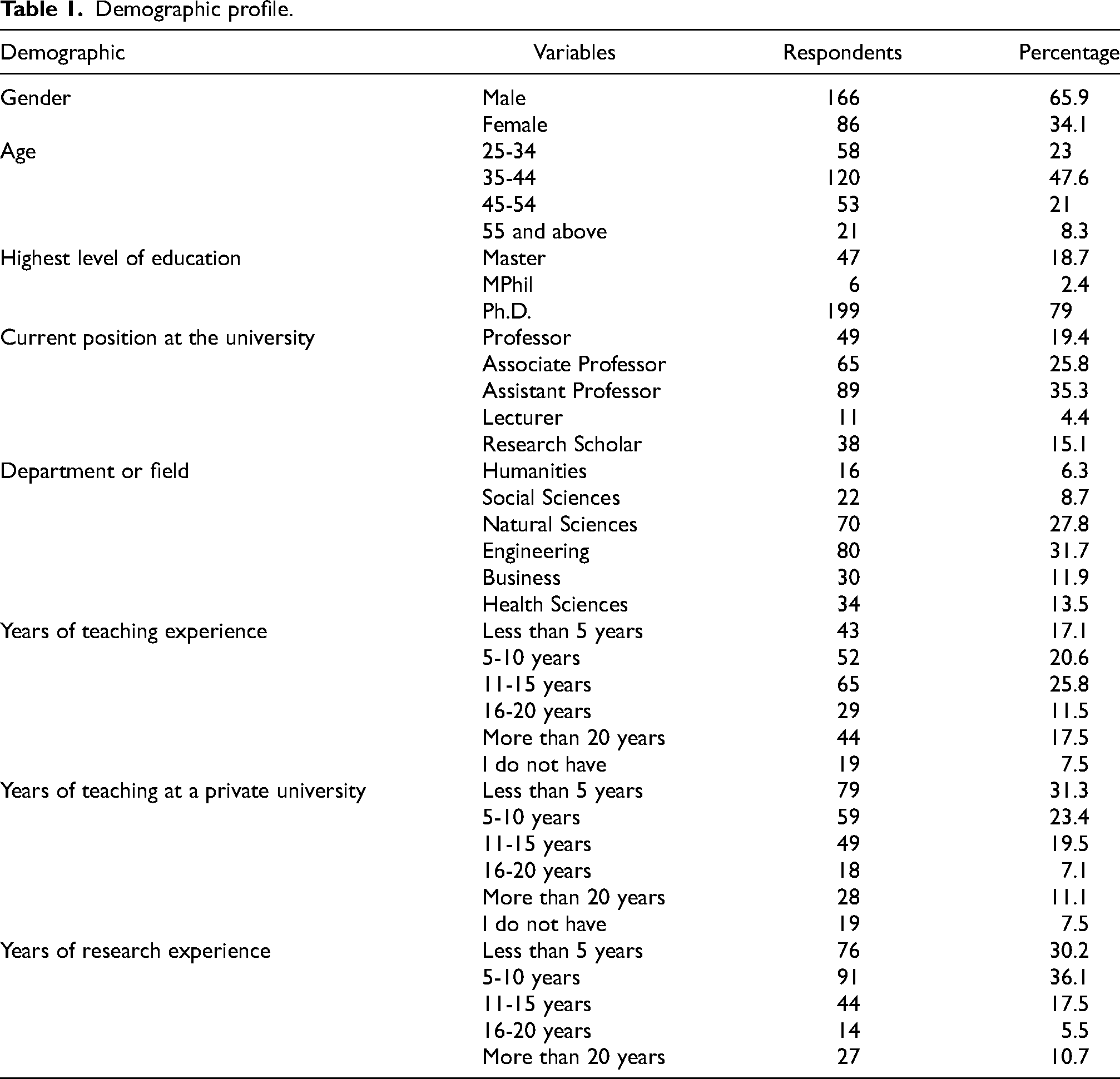
The demographic data revealed a predominantly male participant pool (65.9%), with the majority in the 35–44 age range (47.6%). Participants primarily held Ph.D. qualifications (79%) and occupied positions as Assistant Professors (35.3%) or Associate Professors (25.8%). This profile reflects a diverse yet experienced group of academics with substantial exposure to teaching and research in private Indian universities. The variation in teaching experience and research engagement highlights the heterogeneity of academic backgrounds and professional trajectories.
Figure 1 highlights respondents’ perspectives on the essential factors for academic success. Among the respondents, 84.5% identified research excellence as a crucial factor, followed closely by teaching effectiveness at 80.6%. Collaborative work with colleagues was considered important by 68.7% of respondents, while publication record was cited by 63.9%. Lastly, student evaluations were regarded as essential by 50.4%, making it the least emphasized factor. This data indicates that research and teaching are prioritized in the academic sphere, with collaboration and publications also holding significant weight, whereas student evaluations receive relatively less emphasis.
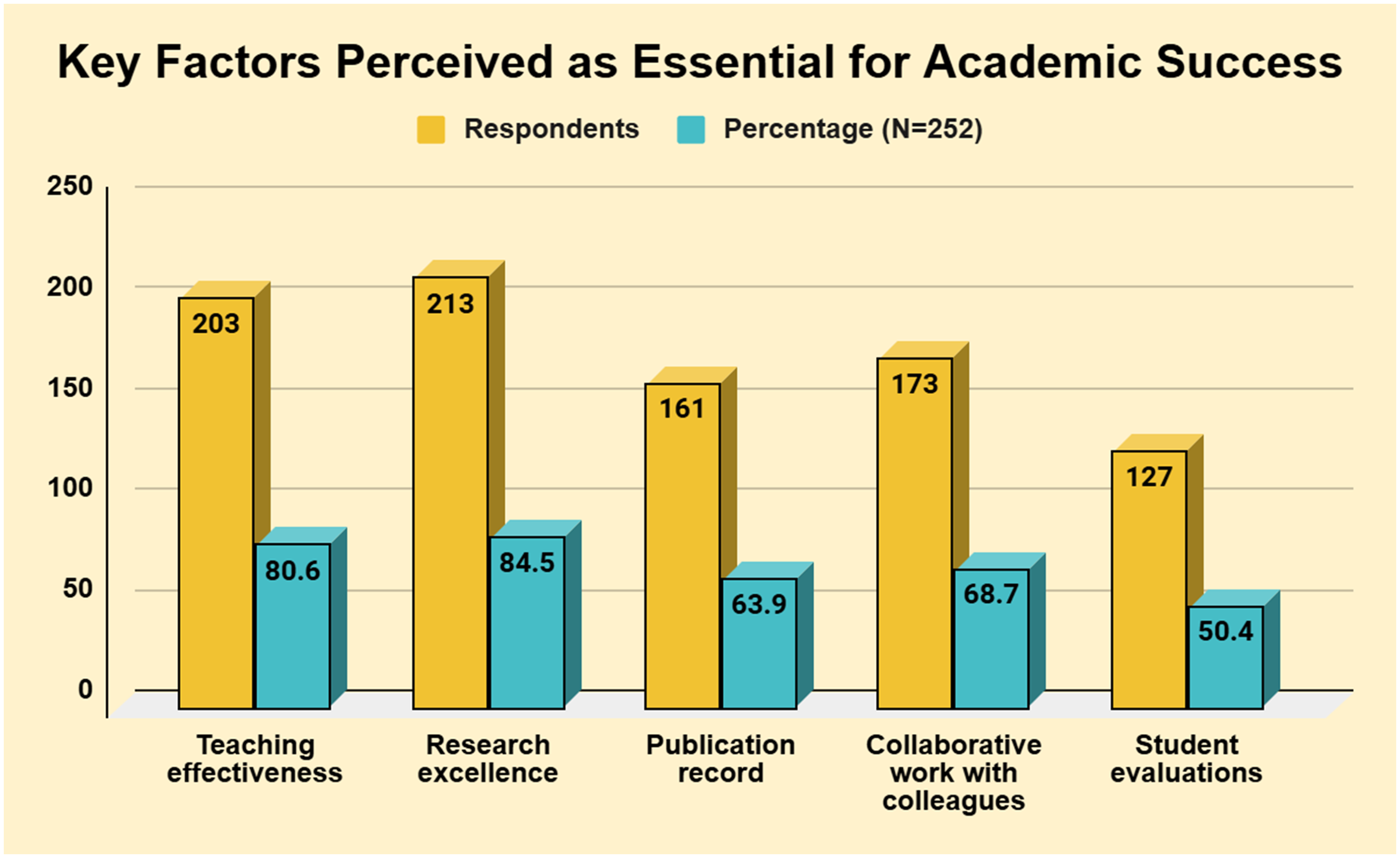
Key factors for academic success: Respondent perspectives.
Figure 2 shows the frequency of engagement in research-related activities among 252 respondents. Over half (51.2%) engage daily, while 21.8% engage weekly, 15.1% monthly, and 11.9% occasionally. This indicates a high level of engagement in research activities, with daily engagement being the most common.
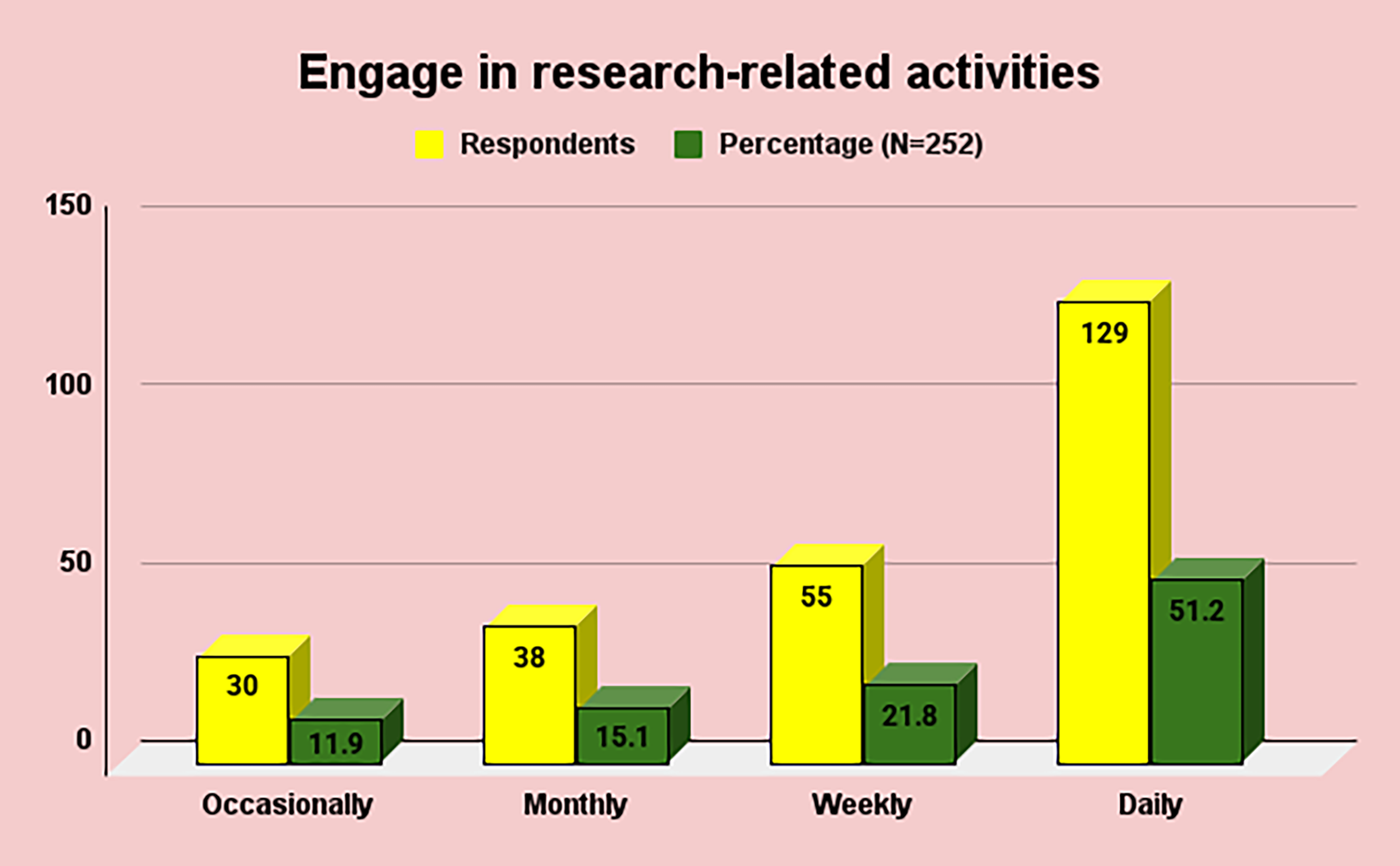
Frequency of engagement in research-related activities.
Demographic profile.
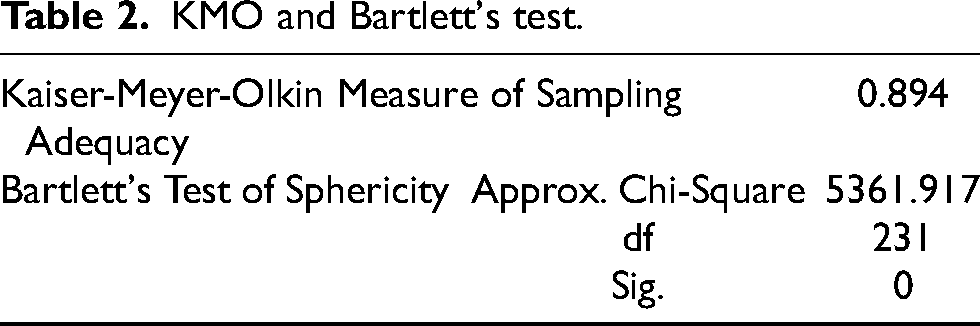
KMO and Bartlett's test.
Factor analysis on perceptions publish or perish.
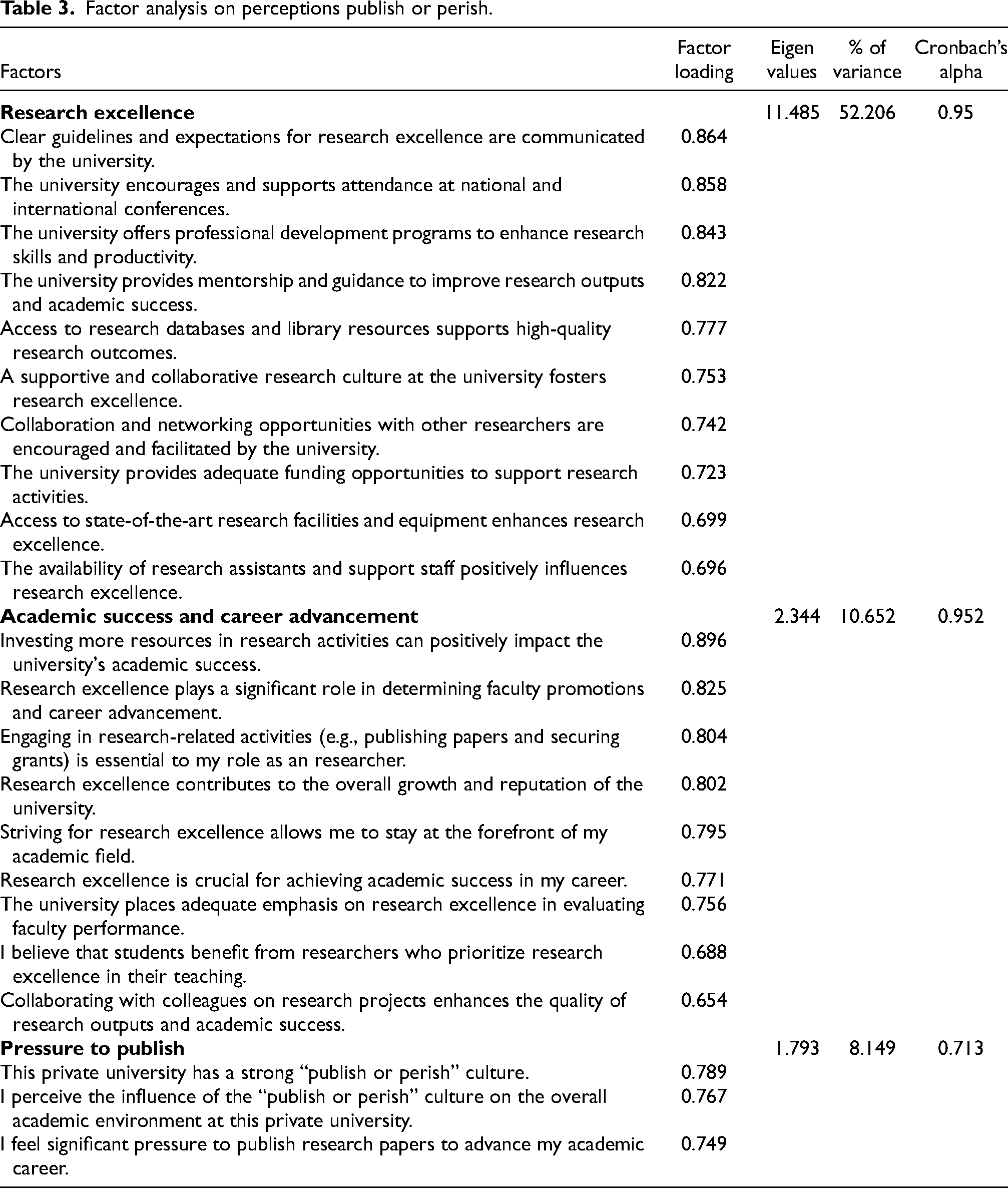
Three primary themes emerged from the factor analysis, accounting for 71.007% of the variance:
1. Institutional support mechanisms—such as access to resources, funding, mentorship, and collaborative opportunities—were identified as critical enablers of research excellence. Respondents highlighted the importance of clear guidelines and adequate funding for enhancing research productivity. These findings underscore the need for universities to invest in supportive infrastructure and encourage a culture of collaboration and innovation to enhance research outputs. 2. Research excellence was strongly associated with career growth, promotions, and institutional reputation. Faculty recognized the alignment between active research engagement and professional milestones, reinforcing the importance of scholarly contributions in achieving academic success. Respondents also emphasized the broader benefits of research for institutional growth, signaling a collective responsibility to enhance academic standards. 3. The pervasive “publish or perish” culture was a significant stressor for faculty, compelling them to maintain high publication rates to secure career advancements. This pressure reflects the academic sector’s focus on quantifiable outputs, often at the expense of research quality. The findings highlight a critical need for balancing expectations to prioritize impactful and meaningful scholarship.
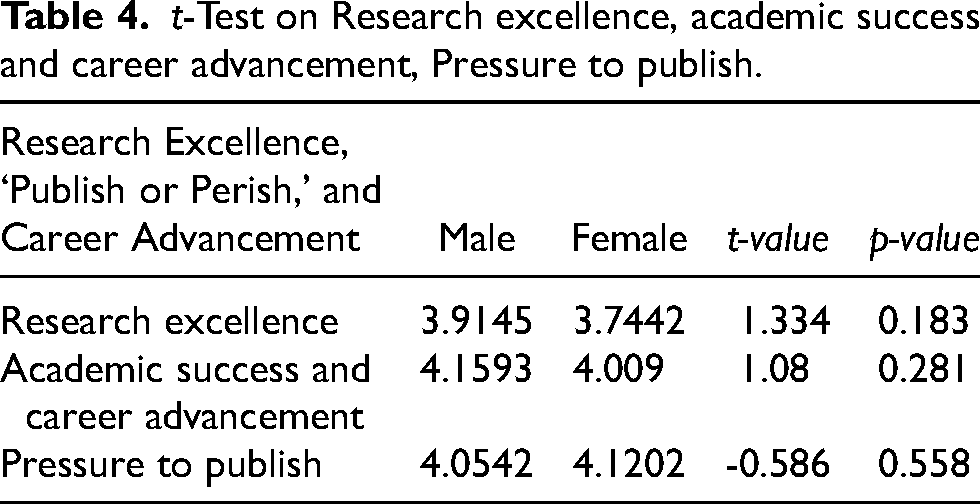
Gender-based analysis (Table 4), no significant gender-based differences were observed in perceptions of research excellence, academic success, or the pressure to publish. This uniformity indicates that male and female faculty experience similar challenges and priorities within the academic landscape. These findings suggest a relatively equitable distribution of academic pressures, though additional investigations could explore nuanced experiences related to work-life balance and institutional support.
Table 5 ANOVA analysis revealed that while age did not significantly affect perceptions of research excellence (F = 1.857, p = 0.137), older faculty members (55 and above) tended to report slightly higher scores, suggesting a possible link between professional maturity and a stronger emphasis on research excellence. The highest level of education emerged as a significant factor (F = 5.481, p = 0.005), with MPhil and Ph.D. holders reporting higher mean scores compared to those with a Master’s degree. This underscores the importance of advanced academic training in promoting research engagement.
t-Test on Research excellence, academic success and career advancement, Pressure to publish.
ANOVA test on research excellence.
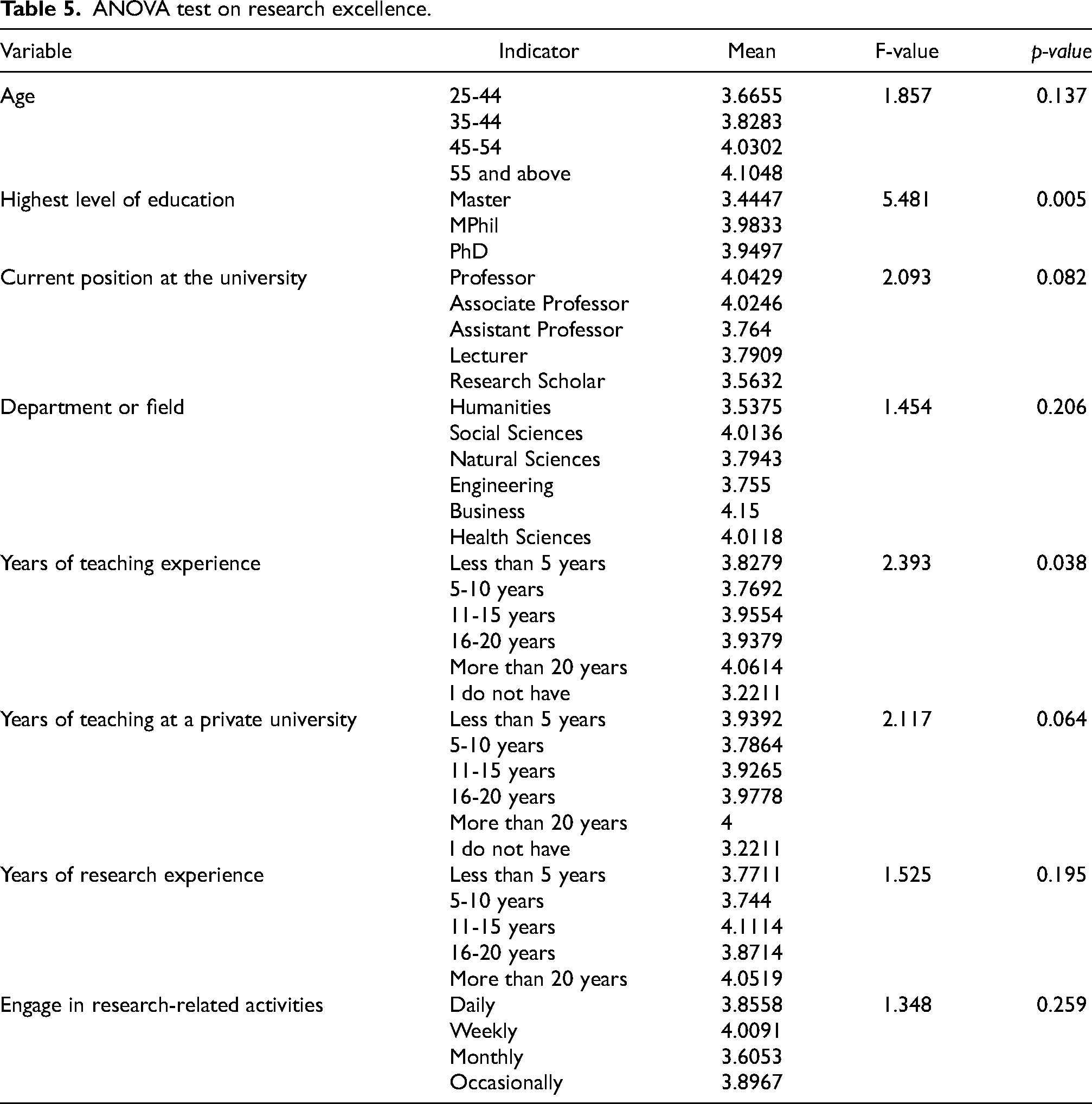
Current positions within the university approached not significance (F = 2.093, p = 0.082), with professors and associate professors reporting higher levels of research excellence compared to assistant professors and research scholars. This trend highlights the potential influence of seniority and institutional roles on research outcomes. Similarly, years of teaching experience had a significant impact (F = 2.393, p = 0.038), with faculty members boasting over 20 years of experience perceiving greater research excellence. This could be attributed to the cumulative benefits of extended teaching and research involvement. Other factors, such as department/field, years of teaching at a private university, and years of research experience, did not significantly influence perceptions of research excellence.
The ANOVA analysis in Table 6 explores the effects of demographic variables on Academic Success and Career Advancement. For academic success and career advancement, age was not a significant determinant (F = 0.974, p = 0.406), though older respondents (55 and above) had slightly higher scores, suggesting that experience and career progression may enhance perceptions of academic success. The level of education significantly impacted this outcome (F = 3.733, p = 0.025), with Ph.D. holders reporting notably higher scores than their Master’s or MPhil counterparts. This indicates that advanced qualifications are closely tied to perceptions of academic growth and success.
ANOVA test on academic success and career advancement.
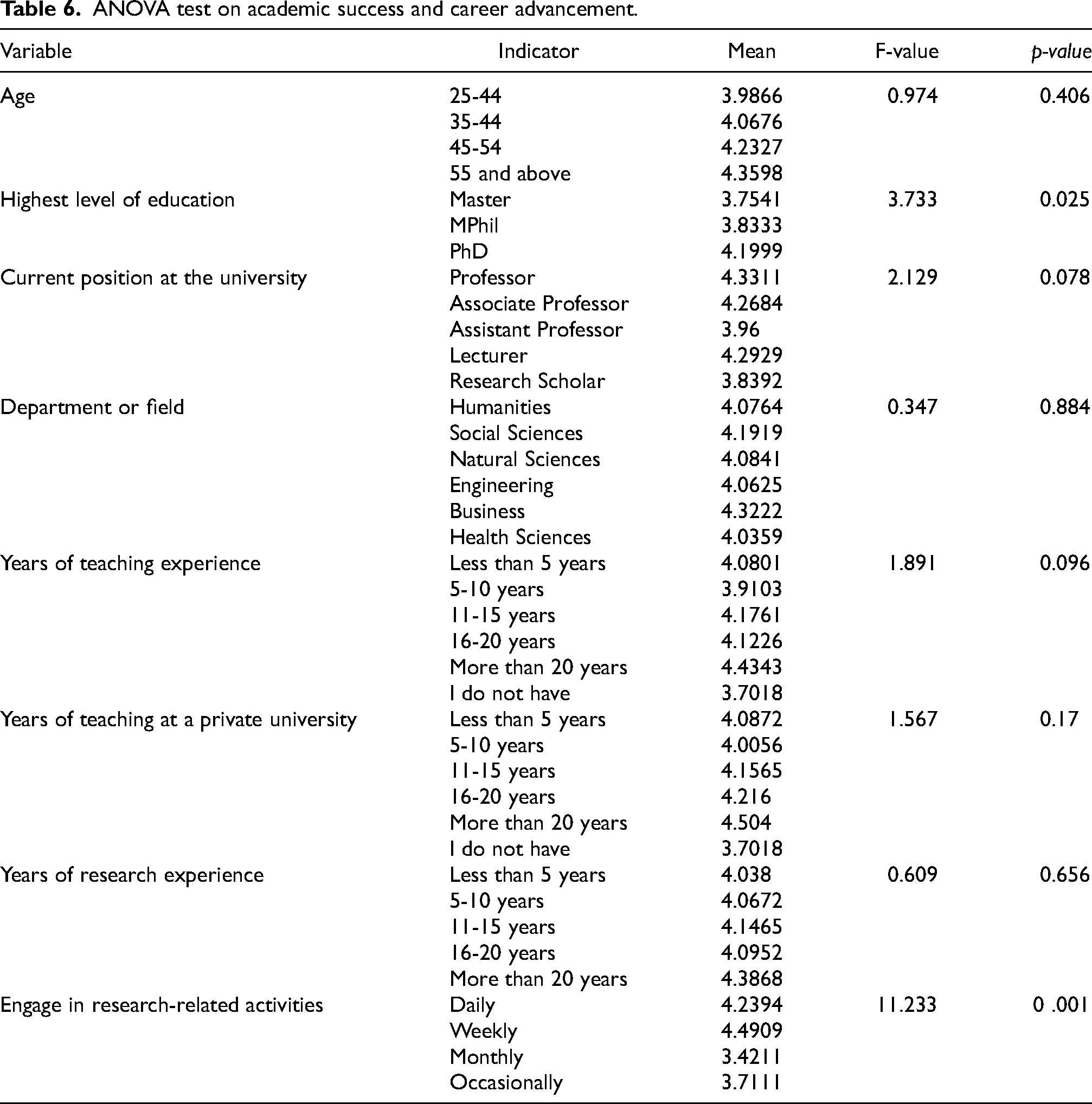
Position within the university approached not significance (F = 2.129, p = 0.078), with professors and lecturers demonstrating higher mean scores compared to assistant professors and research scholars. Years of teaching experience, while not statistically significant (F = 1.891, p = 0.096), showed a positive trend, with more experienced faculty reporting higher scores. Engagement in research activities had a significant impact (F = 11.233, p = 0.001), with daily and weekly engagement strongly correlating with higher perceptions of academic success, further emphasizing the role of consistent research efforts in professional development.
The ANOVA analysis in Table 7 investigates the factors influencing Pressure to Publish among faculty members. The pressure to publish appeared to be uniformly experienced across demographic groups, with no significant differences based on age (F = 0.499, p = 0.684), education level (F = 0.258, p = 0.773), or position at the university (F = 0.106, p = 0.98). This suggests that the “publish or perish” culture is pervasive and impacts all faculty members similarly, regardless of their background or institutional role. Similarly, no significant differences were found for department/field (F = 0.583, p = 0.713), years of teaching experience (F = 0.869, p = 0.502), or years of research experience (F = 0.835, p = 0.504).
ANOVA test on pressure to publish.
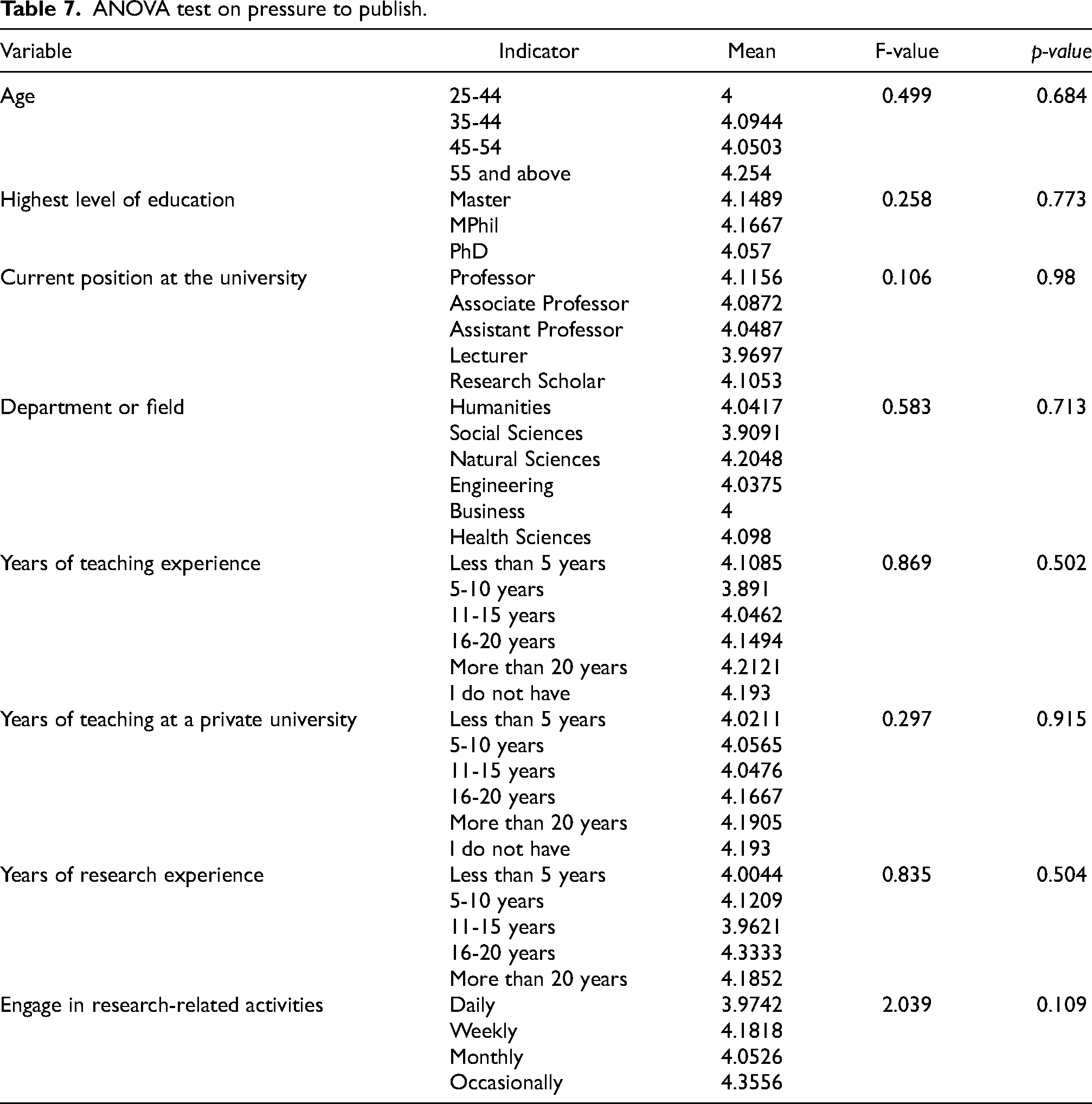
However, engagement in research activities approached significance (F = 2.039, p = 0.109), with faculty who occasionally participated in research reporting slightly higher pressure levels. This finding suggests that irregular research engagement may exacerbate stress related to publication expectations. While statistical significance was not achieved, the data highlights the need for institutions to address the underlying factors contributing to the widespread perception of pressure.
The study indicates an association between the ‘psycho-social work environment’ and future research performance, highlighting its potential influence on publication quality”. Key factors contributing to strong performance include equitable leadership and a nurturing social atmosphere. Enhancing the psycho-social work environment at universities could be an effective strategy for boosting research performance (Jensen et al., 2021).
Addressing research excellence and academic success
The results highlight that faculty qualifications, institutional support, and years of teaching experience significantly influence perceptions of research excellence. Faculty with advanced qualifications, particularly Ph.D. holders, reported higher engagement in research activities, consistent with prior studies emphasizing the role of expertise and specialization in encourage academic success (Pinar and Horne, 2022; Tijssen, 2003). Moreover, institutional support, including access to resources, mentorship, and funding, emerged as a key enabler of research productivity, reinforcing the findings of Ferretti et al. (2018).
Senior faculty with extensive teaching and research experience demonstrated stronger perceptions of research excellence, reflecting the cumulative benefits of professional maturity and institutional knowledge (Watermeyer and Chubb, 2019). However, early-career faculty and research scholars, despite their enthusiasm, often struggled with the dual pressures of meeting institutional expectations and maintaining research quality (Xu et al., 2021).
The pervasive “Publish or Perish” culture
The study underscores the profound influence of the “publish or perish” culture on faculty experiences, aligning with global critiques of this phenomenon (Rawat and Meena, 2014; Bello et al., 2023). The pressure to publish was strongly linked to career advancement, emphasizing quantity over quality of outputs. This aligns with the observations of Guraya et al. (2016), who highlighted the risks of over-reliance on bibliometric indicators like the h-index and i10-index in evaluating faculty performance. Such metrics, while promoting productivity, may compromise scholarly rigor and ethical research practices.
Interestingly, while gender-based differences in perceptions were statistically insignificant, variations across academic positions and research engagement were pronounced. Faculty in senior roles expressed concerns about maintaining publication rates, while early-career researchers emphasized challenges in securing institutional recognition. These findings resonate with Niemczyk and Rónay's (2023) observations on the evolving academic expectations across career stages.
Theoretical and practical implications
Theoretically, this study contributes to understanding the intersection of research excellence and academic pressure within the unique context of private Indian universities. It highlights the importance of a balanced evaluation framework that integrates quantitative metrics with qualitative measures, such as societal impact and interdisciplinary collaboration (Sørensen et al., 2016; Zhu et al., 2023).
This study provides critical insights into the intricate dynamics between research excellence, academic advancement, and the “publish or perish” culture within private Indian universities. It highlights the pivotal role of institutional support mechanisms—such as mentorship, access to resources, and professional development opportunities—in fostering research excellence. These findings reinforce established theories advocating for a multidimensional framework that integrates individual faculty efforts with robust organizational backing. Furthermore, the study underscores the dual-edged nature of the “publish or perish” phenomenon, which, while driving research output, often emphasizes quantity over quality. This culture risks undermining scholarly integrity and long-term academic contributions. The findings align with global discourse advocating for more balanced evaluation frameworks that prioritize research quality, societal relevance, and interdisciplinary innovation over merely quantitative metrics.
The study also offers practical recommendations to address these challenges and enhance the academic environment in private Indian universities. It emphasizes the need for institutions to implement comprehensive policies that promote sustainable research cultures. Universities must adopt balanced performance evaluation systems that consider qualitative aspects of research, such as its societal impact, interdisciplinary contributions, and methodological rigor, alongside traditional quantitative metrics. Additionally, enhancing institutional support through increased funding, mentorship programs, and access to cutting-edge resources is vital for enabling meaningful and impactful research outcomes. Addressing faculty well-being is equally essential; policies that promote work-life balance, alleviate the pressures of publication requirements, and recognize contributions beyond research—such as excellence in teaching and administrative roles—are crucial in creating a healthier academic ecosystem. Lastly, promoting a collaborative environment by encouraging cross-disciplinary research and global partnerships, supported by financial incentives and institutional backing, can enhance the quality and reach of academic contributions.
By adopting these strategies, private Indian universities can navigate the pressures of a competitive academic landscape while ensuring that research excellence aligns with faculty well-being and broader societal impact. These findings advocate for a transformative approach to academic evaluation and support, enabling private institutions to emerge as sustainable hubs of innovation and knowledge dissemination.
Conclusion
This study illuminates the intricate dynamics of balancing research excellence with the pervasive “publish or perish” culture in private Indian universities. While institutional support, qualifications, and faculty experience are vital enablers of research excellence, the relentless emphasis on publication quantity over quality presents a formidable challenge to sustainable academic growth. The findings emphasize the dual-edged nature of the “publish or perish” phenomenon, which, while driving academic output, risks compromising scholarly integrity and faculty well-being.
To mitigate these challenges, private universities must adopt comprehensive, inclusive strategies. This involves moving beyond a reliance on bibliometric indicators to evaluate research excellence, instead embracing a holistic framework that values societal impact, interdisciplinary innovation, and research quality. Institutions must invest in professional development programs, provide robust mentorship opportunities, and enhance access to state-of-the-art research resources to foster a supportive environment for meaningful scholarship. Simultaneously, policies should prioritize work-life balance and recognize contributions beyond publications, such as teaching effectiveness and administrative roles.
Addressing methodological limitations, this study relied on cross-sectional self-reported data, which, while insightful, cannot establish causal relationships. Future research should employ longitudinal designs to better understand the evolving interplay of institutional policies, demographic factors, and academic success. Expanding the scope to include a more diverse range of private institutions, especially those outside elite rankings, would enhance the generalizability of the findings.
Moreover, future investigations should delve deeper into the psychosocial implications of the “publish or perish” culture, exploring its impact on faculty well-being, research quality, and gender equity. Addressing these gaps will contribute to developing a more inclusive and equitable academic landscape.
Private Indian universities are at a crossroads where the pressures of global competitiveness intersect with the need for sustainable academic ecosystems. By reimagining research policies and promoting supportive environments, these institutions can ensure that research excellence aligns with faculty well-being and broader societal contributions. This transformative approach will not only enhance academic outcomes but also solidify the role of private universities as dynamic hubs of knowledge and innovation.
Footnotes
Acknowledgement
Naved Ahmad would like to thank AlMaarefa University, Riyadh, Saudi Arabia, for supporting this research.
Funding
This research did not receive any specific grant from funding agencies in the public, commercial, or not-for-profit sectors.
Author agreement/declaration
This is a statement to certify that all authors have seen and approved the final version of the manuscript being submitted. This manuscript has not received prior publication and is not under consideration for publication elsewhere.
Data availability
Data is available on reasonable request from the corresponding author.
Declaration of conflicting interests
The authors declared no potential conflicts of interest with respect to the research, authorship, and/or publication of this article.

About the authors
Appendix
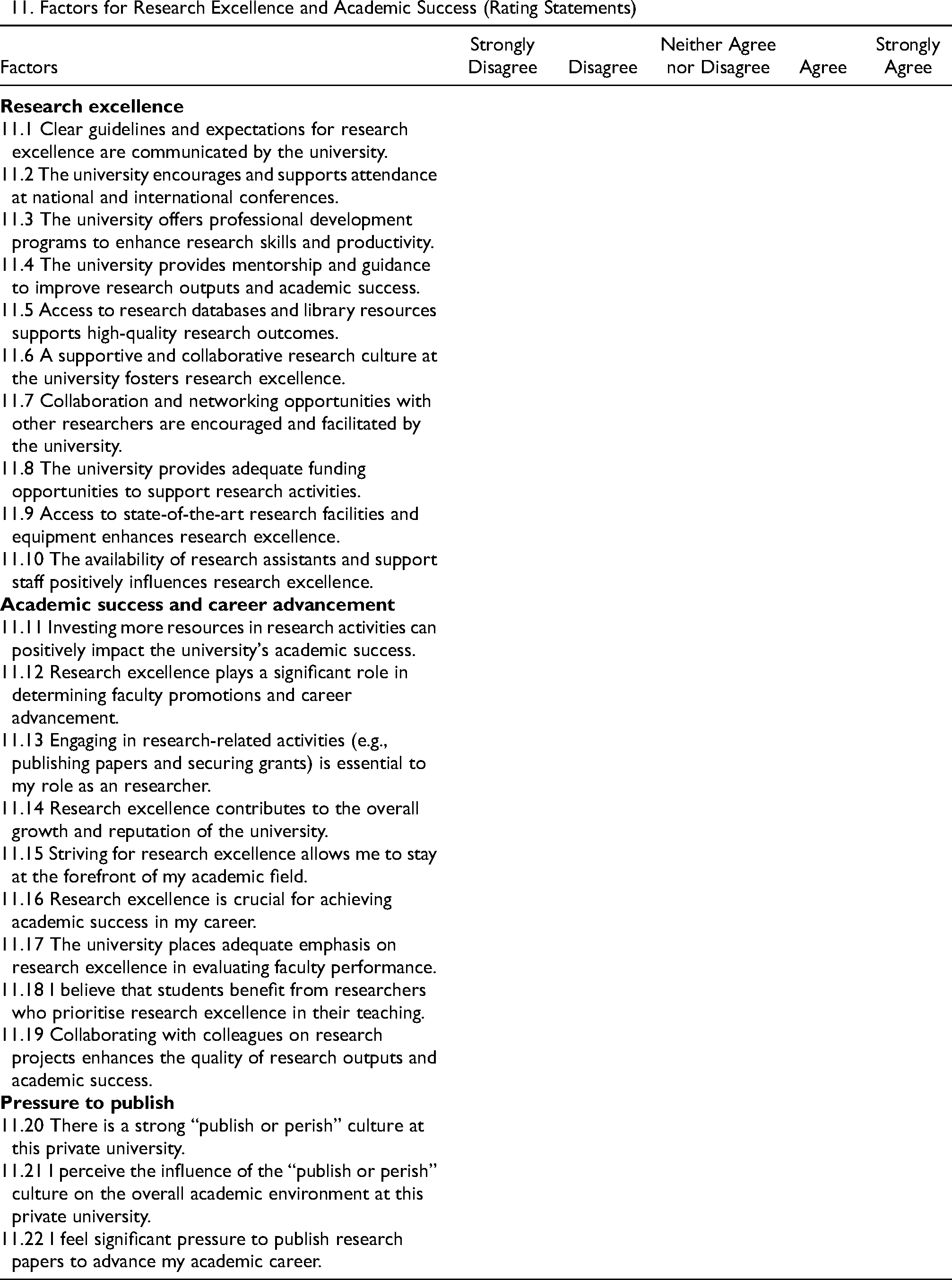
11. Factors for Research Excellence and Academic Success (Rating Statements)
| Factors | Strongly Disagree | Disagree | Neither Agree nor Disagree | Agree | Strongly Agree |
|---|---|---|---|---|---|
|
|
|||||
| 11.1 Clear guidelines and expectations for research excellence are communicated by the university. | |||||
| 11.2 The university encourages and supports attendance at national and international conferences. | |||||
| 11.3 The university offers professional development programs to enhance research skills and productivity. | |||||
| 11.4 The university provides mentorship and guidance to improve research outputs and academic success. | |||||
| 11.5 Access to research databases and library resources supports high-quality research outcomes. | |||||
| 11.6 A supportive and collaborative research culture at the university fosters research excellence. | |||||
| 11.7 Collaboration and networking opportunities with other researchers are encouraged and facilitated by the university. | |||||
| 11.8 The university provides adequate funding opportunities to support research activities. | |||||
| 11.9 Access to state-of-the-art research facilities and equipment enhances research excellence. | |||||
| 11.10 The availability of research assistants and support staff positively influences research excellence. | |||||
|
|
|||||
| 11.11 Investing more resources in research activities can positively impact the university's academic success. | |||||
| 11.12 Research excellence plays a significant role in determining faculty promotions and career advancement. | |||||
| 11.13 Engaging in research-related activities (e.g., publishing papers and securing grants) is essential to my role as an researcher. | |||||
| 11.14 Research excellence contributes to the overall growth and reputation of the university. | |||||
| 11.15 Striving for research excellence allows me to stay at the forefront of my academic field. | |||||
| 11.16 Research excellence is crucial for achieving academic success in my career. | |||||
| 11.17 The university places adequate emphasis on research excellence in evaluating faculty performance. | |||||
| 11.18 I believe that students benefit from researchers who prioritise research excellence in their teaching. | |||||
| 11.19 Collaborating with colleagues on research projects enhances the quality of research outputs and academic success. | |||||
|
|
|||||
| 11.20 There is a strong “publish or perish” culture at this private university. | |||||
| 11.21 I perceive the influence of the “publish or perish” culture on the overall academic environment at this private university. | |||||
| 11.22 I feel significant pressure to publish research papers to advance my academic career. | |||||