







Abstract
This study examines the influence of organizational culture on job satisfaction among library personnel in research institutes’ libraries in South-West Nigeria. Using a mixed-method approach, data were collected through structured questionnaires and interviews from 241 library personnel across 25 research institutes. The study identified key elements of organizational culture such as collaboration, teamwork, and adaptability, which positively impacted job satisfaction. Findings indicated that while most library personnel demonstrated high levels of satisfaction with their work environment, recognition systems, and promotion opportunities, there were areas for improvement, including communication transparency and resource modernization. A significant positive correlation was found between organizational culture and job satisfaction, suggesting that stronger cultural practices enhance employee satisfaction. The study concludes that fostering a positive organizational culture, improving communication, and updating resources are critical for maintaining high job satisfaction levels. The study recommends that library management focus on creating a positive work environment with consistent recognition practices and improved compensation structures; and library management should work on enhancing communication strategies and reducing hierarchical barriers to foster a more inclusive organisational culture that supports job satisfaction.
Introduction
In the ever-evolving global market, an organisation's potential for maintaining a competitive edge and securing long-term success is intricately tied to the level of job satisfaction within its workforce. Recognising human capital as a critical asset underscores the understanding that employees’ skills, knowledge, and collective expertise contribute significantly to organisational success and competitiveness. Individuals satisfied with their work environment and possessing high job satisfaction tend to exhibit enhanced productivity and performance. Nikita et al (2023) defined job satisfaction as the degree to which an individual expresses positive feeling towards his/her employment. Within research institutes and special libraries, Akhter and Naveed (2023) defined job happiness as the subjective evaluation of an individual's career or certain facets of their job that have the potential to influence organisational productivity and job performance. Expanding this perspective, Weiss (2002) and Woods et al. (2023), described career satisfaction as the cognitive assessment individuals make regarding their employment, underscoring the significance of understanding and enhancing job satisfaction among librarians in special libraries. Job satisfaction is a crucial element within a work environment, as it significantly influences the behavioural tendencies exhibited by employees. In essence, job satisfaction plays a crucial role in determining the contentment level experienced by librarians in research institutes and special libraries.
Job satisfaction in Nigerian research institutes libraries refers to the level of excitement demonstrated in fulfilling their duties. It is noteworthy that the effective management of special libraries in research institutes includes various factors that contribute to the well-being of librarians and other library staff. These factors include recognition of achievements, effective leadership in research institutes, opportunities for career development, conducive work environments, and competitive remuneration (Zen et al., 2023). On the contrary, empirical evidence suggests that the level of job satisfaction among librarians and other library personnel in the majority of Nigerian research institutes is likely to be significantly lower when compared to their counterparts in other academic faculties within the same educational sector (Yaya, 2019; Idiegbeyan-Ose et al., 2019; Shafagatova et al., 2023; Akinola & Alonge, 2023; Akosah et al., 2023). Dodanwala et al. (2023) posit that job satisfaction significantly contributes to organisational success and diminishes employee turnover intentions across diverse industries. This is particularly relevant in the context of libraries and information centres, where librarians’ job satisfaction significantly contributes to their overall happiness and contentment.
Organisational culture in libraries is a comprehensive framework guiding the conduct and activities of librarians, reflecting a distinct and ingrained pattern of behaviour with significant influence over librarians’ actions and the library's overall outcomes. It encompasses foundational values, beliefs, and ideas shaping all operational practices. Organisational culture establishes fundamental beliefs within the library, imparted to new members as guiding principles for perception, thought, emotions, and tasks (Kroon & Reif, 2023). Scholarly sources (Alshuhumi et al., 2023; Yoon & Park, 2023) suggest that organisational culture significantly impacts librarians’ dispositions and overall library success, influencing job satisfaction. In libraries, organisational culture dictates norms and values, forming the basis for appropriate conduct, is deeply interconnected with librarians’ job satisfaction (Sudarmaji et al., 2023).
The impact of organisational culture on enhancing the efficacy of organisational performance is significant as argued by Malik (2023), who suggests that organisational culture serves as a key determinant of organisational performance, as it fosters a sense of dedication towards realising the organisational vision, cultivating customer loyalty, outperforming competitors, and enhancing overall corporate resilience. The support of company change is most effectively facilitated by organisational culture. The conventional and traditional manner of conducting activities is embraced to varying extents by all individuals, and new members must acquire and partially embrace it to be accepted for the organisation's services (Ml et al., 2023). The determination of organisational culture is contingent upon various factors, including but not limited to collaboration dynamics, leadership styles, organisational attributes, and relevant administrative procedures. Organisational culture acts as a cohesive influence, minimising conflicts, and motivating employees to fulfil their responsibilities effectively (Madi Odeh et al., 2023), this significantly shapes organisational decisions and actions. Ultimately, it is uncertain that organisational culture, motivation and employee engagement collectively shape librarians’ job satisfaction in research institutes, hence, it is against this backdrop that the aim of this study was carried out.
Statement of the problem
The success of an organisation is heavily influenced by its human capital, with dissatisfied employees often leading to decreased productivity, increased turnover, and potential threats to overall functioning. This concern is particularly relevant in research institutes’ libraries in Nigeria, where understanding the dynamics of organisational culture, and job satisfaction is crucial. These factors directly impact the efficiency and effectiveness of library services, affecting researchers and the academic community at large. Research institutes’ libraries face unique challenges, such as resource constraints, evolving technologies, and changing scholarly demands. However, there is a notable lack of comprehensive studies addressing these factors in Nigerian research institutes’ libraries, hindering the development of tailored strategies for optimising performance and employee satisfaction. A thorough investigation into the relationships between organisational culture, and job satisfaction is needed to provide insights that can inform evidence-based management practices and interventions.
Previous research, including studies by Idiegbeyan-Ose et al. (2019), Shafagatova et al. (2023), and Akosah et al. (2023), has focused on job satisfaction among university library staff. Still, there is extant literature specifically examining organisational culture in the context of research institutes. These institutes are crucial for national development and rely on the performance and engagement of their employees, including librarians (Olasehinde et al., 2020). Despite the vital role of libraries in supporting research, scant research exists on organisational culture, and job satisfaction within Nigerian research institutes’ libraries (Kavita, 2016). Addressing this gap is essential for understanding how organisational culture influences job satisfaction and improving the effectiveness and service quality in these libraries. The findings from the study will inform the development of management practices and policies aimed at enhancing employee satisfaction, operational efficiency, and the quality of services provided to the academic community.
Objectives of the study
The study investigated the influence of organisational culture, and job satisfaction among library personnel in research institutes, in South-West, Nigeria. The specific objectives were to:
investigate the level of job satisfaction of library personnel in research institutes’ libraries in South-West, Nigeria; examine the organisational culture of library personnel in research institutes’ libraries in South-West, Nigeria.
Literature review
Level of job satisfaction of library personnel
The level of job satisfaction experienced by individuals can be influenced by a range of variables, as stated by Prasetya et al (2023). Several factors contribute to employee job satisfaction, including compensation and benefits, perceptions of promotion fairness, recognition, pleasant working circumstances, and the inherent characteristics of the job (Hastriana & Sa’diyah 2023; Qaralleh et al., 2023). In another study conducted by Rotimi et al. (2023), it was found that the level of job satisfaction experienced by individuals is influenced by the economic, social, and cultural factors prevalent in their respective societies. Insufficient remuneration to fulfil essential familial needs might lead to challenges and discontentment for an employee. Insufficient remuneration, unfavourable economic conditions, and the absence of social safeguards significantly influence individuals’ motivation and job satisfaction.
Job satisfaction is associated with various positive outcomes in the workplace, including enhanced job performance, the presence of constructive work, heightened levels of employee motivation, as well as reduced absenteeism, turnover, and burnout rates. Given that the primary objective of individuals who orchestrate and oversee others is to foster dissatisfaction, managers must prioritise the assessment of employee satisfaction levels (Oladejo, 2023). In a study conducted by Üstgörül and Popescu (2023), the concept of job satisfaction was examined and compared to another significant factor of life pleasure, namely marriage. Divorce is a common occurrence when individuals experience dissatisfaction inside their marital relationship, mirroring the dynamics observed in the employer-employee relationship. By the perspectives put forth by Karneli (2023) and Memon et al. (2023), it can be concluded that job satisfaction plays a crucial role in enhancing management effectiveness and attaining a competitive edge in the dynamic contemporary business landscape. Moreover, indicators such as reduced job turnover, absenteeism, and sick leave are indicative of elevated levels of job satisfaction. According to Adanlawo and Nkomo (2023), individuals perceive their salary as indicative of their level of contribution to the company. The study conducted by Emmideme (2023) examined the level of job satisfaction among teachers at public senior high schools in Ghana. The researcher found that external elements, such as salary, incentives, working conditions, and benefits (such as medical allowances and future pension benefits), have a positive impact on employee motivation and contribute to the attainment of job satisfaction efficiently. Kawiana et al. (2023) underscored the correlation between employee job satisfaction and performance. The behaviour exhibited by employees is indicative of the overall morale of the organisation. The role of contented employees in customer service and sales is of considerable importance, given their daily interactions with customers.
Uwatt et al. (2023) believe that there exists a clear relationship between a favourable and agreeable working environment and the retention of employees, as well as fostering a sense of value and attentiveness towards employees. Employees may hold the belief that inadequate working conditions can lead to a decline in their performance, as a result of the emotional and physical challenges associated with their job responsibilities. Rahman et al. (2024) conducted a study on the pharmaceutical business in Bangladesh and discovered that the working environment exerted a substantial impact on employee job satisfaction.
Organisational culture of library personnel
Previous research has shown that the performance of an organisation is influenced by its organisational culture (Mansaray, 2019; Berraies et al., 2019; Tannady & Budi 2023; and Jamaludin and Subiyanto, 2023). According to Palumbo (2023), the provision of library services is influenced by the organisational culture. This assertion holds for the library as well. Furthermore, it was observed that libraries are commonly believed to possess a distinct dominant or robust culture. Furthermore, it has been asserted that the management of organisational culture in libraries should be approached in a manner consistent with other resources. This is due to its role in fostering collective perceptions, facilitating the coordination of diverse activities such as decision-making, and promoting a harmonious equilibrium between individual and organisational interests. Khaksar et al. (2023) concurred with Palumbo (2023) that the presence of an organisational culture inside libraries plays a crucial role in enabling transformation and effectively addressing various difficulties. Each organisation possesses a distinct culture characterised by its core values, beliefs, and practices. Khaksar et al. (2023) posited that the impact of organisational culture extends to both individual and organisational productivity, serving as a powerful tool for elucidating the multifaceted dimensions of an organisation and assessing its operational efficacy.
The existing body of literature indicates a scarcity of research on the topic of organisational culture within Nigerian libraries. Nevertheless, drawing from the conceptualisations of culture in organisations, it is evident that library culture encompasses various aspects such as operating hours, staff-client interactions, staff interactions, library attire, behaviour, arrangement of resources and furniture, as well as rules and regulations, among other factors. All these factors exhibit similarities throughout Nigerian academic libraries, although they also possess unique characteristics within each Nigerian academic library. The existing body of literature indicates that specific academic libraries in Nigeria exhibit deficiencies in their organisational culture within certain domains. McMenemy et al. (2023) provided evidence indicating a decline in library expenditures, however, Stephen and Makoji-Stephen (2023) presented findings suggesting that the allocation of funds by the Federal Government of Nigeria for education is not noteworthy. The data indicate that there was a prevalent lack of financial resources allocated to education, which likely contributed to the prevalence of outdated information resources in certain academic libraries in Nigeria. Stephen and Makoji-Stephen (2023) and Akinsuroju et al. (2023) have examined the issue of insufficient financial resources allocated to the development and implementation of novel technologies.
Furthermore, it is worth noting that the research libraries in Nigeria exhibited a deficient culture in terms of training and retraining initiatives. Consequently, a significant number of senior librarians lacked the necessary technical expertise in emerging technologies (Oladokun and Mooko, 2023). Lund et al. (2023) identified several challenges, including limited financial resources, inadequate support from leadership, and insufficient provision of electricity. Hasan et al. (2023) claim that the substandard organisational culture prevalent in many Nigerian academic libraries could potentially impact the professional efficacy of librarians employed inside these institutions. Organisational culture can be defined as the underlying set of core values that shape the operational practises and behavioural norms within a corporation. It exerts a substantial impact on the decisions and activities of organisations. According to Silalahi (2023), it encompasses the entirety of the assumptions, values, norms, symbols, technologies, and behaviours exhibited by the members of an organisation. According to Vem et al. (2023), the concept of organisational culture encompasses a collection of ideas, norms, and values that exert an impact on the cognitive processes and actions of individuals employed inside the organisation. Furthermore, Okure (2023) observed that the organisational culture of a particular entity is influenced by various factors, such as the organisation's founder, selection criteria, senior management, and socialisation. As per the authors’ assertions, these components of the organisation collaborate harmoniously to establish a unique organisational ethos within the entity. Makaryan (2023) proposes that there exist four distinct sorts of organisational cultures that can be adopted by any given organisation. The concepts of Cultures of Collaboration (Clan), Creativity (Adhocracy), Control (Hierarchy), and Competition (Market) are expounded upon.
Organisational culture and job satisfaction of library personnel
The behaviour and satisfaction of librarians are influenced by the corporate culture, which can have both direct and indirect effects. There is a substantial body of research that establishes a strong correlation between organisational culture and employees’ job satisfaction. The study conducted by Alvi et al (2014) examined the impact of organisational culture on both organisational loyalty and job satisfaction, one of the primary objectives of the research was to apply a questionnaire as a means of data collecting to examine the correlation between organisational culture and employee job satisfaction within the fertilisers industry of Pakistan. One of the results drawn from their study is that the organisational culture exerts a substantial influence on the level of job satisfaction experienced by employees. In the study, Tayebi (2021) employed a descriptive and correlational survey design, utilising a questionnaire as the primary data collection instrument. Their research aimed to investigate the association between organisational culture and job satisfaction among staff and experts working in physical education offices within the Mazandaran province. The research conducted revealed that the organisational culture exerts a significant influence on the level of job satisfaction experienced by employees. The data for a separate study conducted by Mesfin et al. (2020) on the perceived organisational culture and its relationship with job satisfaction in primary hospitals of Jimma zone and Jimma town administration, a correlational study in Ethiopia was obtained through the administration of a questionnaire to 383 health workers from Jimma zone and Jimma town in Ethiopia. The research discovered a positive and statistically significant correlation between the organisational culture and job satisfaction of health workers.
Samuel (2017) conducted a study that examined the relationship between organisational commitment and employee job satisfaction among Nigerian industrial workers. The researcher found that corporate culture exerted a significant influence on both organisational commitment and job satisfaction, among other factors. In a study conducted by Rafique et al. (2020) examining the interplay of leadership style, culture, and commitment, it was found that a noteworthy association exists between the cultural context, job satisfaction, and level of dedication among librarians in Pakistan. Bhardwaj et al. (2023) conducted a study that investigated the relationship between organisational culture, teamwork, and job satisfaction among interpersonal teams. The researchers made the finding that the level of employee work satisfaction was influenced by the prevailing organisational culture.
The research specifically focused on examining the relationship between management style and job pleasure among library staff. In a study conducted by Onuoha et al. (2020) and Akinlade et al. (2020), it was shown that the level of job satisfaction among library professionals is mostly influenced by the characteristics of their work environments, rather than their gender, the specific type of library they are employed in, or their professional aspirations. A study was undertaken by Khan and Ahmed (2013) to examine the job satisfaction of librarians working at universities located in Khyber Pakhtunkhwa, Pakistan. The findings revealed that although the librarians expressed a moderate level of happiness with the nature of their employment, they reported dissatisfaction with their supervisors, benefits, and prospects for career progression (Hussain & Ameen, 2023). The poll on job satisfaction among Greek academic librarians revealed that the job itself, supervision, and working circumstances were the aspects that garnered the highest levels of satisfaction (Togia et al., 2004). Conversely, the aspects of salary and advancement were identified as the areas where Greek academic librarians expressed the least happiness (Togia et al., 2004).
The correlation between employee job satisfaction and productivity as well as job performance has been extensively established in organisational settings (Gumasing & Ilo, 2023). In their study, Somvir and Sudha (2012) investigated the traits that exhibit a significant link with job satisfaction among library staff. A sample group consisting of 100 library professionals from private engineering and management colleges in the state of Haryana was utilised for data collecting. Based on the findings of the data analysis, it can be concluded that job satisfaction among library professionals is significantly associated with the characteristics of their work environment, rather than being influenced by factors such as gender, the specific type of library they are employed in, or their career aspirations (Marasinghe & Wijayaratne, 2018). The level of employee satisfaction is contingent upon the interaction between an individual's characteristics and the prevailing organisational culture (Batool et al., 2023). This suggests that when the characteristics of an organisation are in line with an employee's aspirations, they have the potential to collaborate efficiently. Jabeen and Isakovic (2018) conducted a study which found that clan culture significantly contributes to employee satisfaction.
In a study conducted by Yadav and Sinha (2020), the researchers examined the various factors that influence the job satisfaction of professionals in the field of Library and Information Science (LIS). The study incorporated three distinct categories of factors, namely organisational, employment-related, and individual. Additionally, the study emphasized the correlation between the job satisfaction of experts in the field of Library and Information Science (LIS) and the enhancement of service quality as well as personal contentment. The study concluded that organizational challenges are the primary determinant of staff job satisfaction within any given firm. Multiple research projects have been conducted to establish a correlation between organisational culture and job satisfaction among employees, particularly those in the field of librarianship (Tran, 2023). The influence of corporate culture on employees can have varying effects, either positive or negative, contingent upon cultural norms and employee attitudes. These effects manifest in the form of job satisfaction or discontent. The level of happiness experienced by librarians in their work has the potential to significantly impact their professional fulfillment and contribute to the improvement of service quality (Ali & Fatima, 2021).
Extensive literature exists on the relationship between organizational culture and job satisfaction within the field of Library and Information Science (LIS). Numerous studies have explored how different organizational culture types (e.g., hierarchical, clan, market, and adhocracy) impact employee engagement, motivation, and satisfaction in academic and public libraries globally (e.g., Rafique et al., 2020; Togia et al., 2004; Hussain & Ameen, 2023). However, while these studies provide valuable insights into how organizational culture influences job satisfaction in various institutional settings worldwide, there remains a notable lack of empirical studies specifically addressing research institute libraries in Nigeria and other developing countries.
In Nigeria’s research institute libraries, organizational culture is shaped by unique socio-cultural, economic, and administrative factors that differ from those observed in libraries of more developed nations. The highly bureaucratic structures, funding limitations, and slow career advancement opportunities that characterize many public sector libraries in Nigeria make it necessary to examine organizational culture’s role within this specific context.
Although studies have explored job satisfaction in academic libraries and other public service institutions in Nigeria, research specifically focusing on the intersection of organizational culture and job satisfaction in research institute libraries remains scarce.
This study fills this regional research gap by investigating how different cultural elements within research institute libraries in South-West Nigeria influence job satisfaction.
Theoretical framework
This study is anchored on Schein’s Model of Organizational Culture which was propounded by Edgar Schein in 1985 as a framework for understanding how culture operates within organizations. Schein’s model is widely recognized for its comprehensive approach to analyzing cultural elements that influence organizational behavior and employee attitudes. The model comprises three distinct levels: artifacts, espoused values, and basic underlying assumptions. These levels explain how organizational culture manifests, ranging from observable behaviors to deeply embedded beliefs that shape decision-making and employee interactions. At the first level—artifacts, culture is expressed in visible elements such as organizational structure, policies, office layout, dress codes, and formal communication channels. These artifacts are the tangible manifestations of culture that can be seen and experienced by employees and visitors. In the context of Nigerian research institute libraries, artifacts include strict hierarchical reporting structures, formalized job roles, and bureaucratic decision-making. These structural elements significantly impact job satisfaction by determining how employees interact with leadership and engage in workplace decision-making.
The second level—espoused values—refers to the explicitly stated principles, norms, and ethical codes that an organization claims to uphold. These values often appear in mission statements, employee handbooks, and official policies. They represent the desired culture and guide employee behavior. However, there is often a gap between what an organization claims as its values and how these values are enacted in practice. For instance, Nigerian research libraries might promote collaboration, inclusivity, and professional development in their official policies, but the actual workplace experience may reveal constraints such as limited autonomy, inadequate training opportunities, and slow career progression. This misalignment between espoused values and actual practices can contribute to dissatisfaction among library personnel.
The third level—basic underlying assumptions—consists of deeply ingrained beliefs and unconscious perceptions that drive behaviors within an organization. These assumptions are rarely questioned and often shape long-term cultural patterns. In many Nigerian research institute libraries, there is a deep-seated assumption that hierarchy must be preserved to maintain order and efficiency. This belief influences leadership styles, communication practices, and staff empowerment. Employees may hesitate to voice concerns or propose innovative solutions due to the assumption that authority should not be challenged. As a result, this restrictive culture can stifle creativity and contribute to lower job satisfaction levels among library personnel.
Schein’s model is particularly relevant to this study as it provides a structured framework for analyzing the impact of organizational culture on job satisfaction. The model helps in identifying specific cultural barriers and enablers within research institute libraries. The findings of this study align with Schein’s theory, demonstrating that a rigid hierarchical culture (artifacts), conflicting institutional values (espoused values), and deep-seated authority structures (underlying assumptions) significantly influence job satisfaction among library personnel. Furthermore, Schein’s model is crucial for formulating strategies to improve job satisfaction. Understanding that culture is multi-layered allows policymakers and library administrators to intervene at different levels. For example, modernizing workspaces and adopting flexible work policies (artifacts), aligning leadership practices with stated institutional values (espoused values), and shifting deeply embedded beliefs about hierarchy to encourage innovation and inclusivity (underlying assumptions) can foster a healthier work environment.
Hypotheses
The following null hypothesis was tested at a 0.05 level of significance:
Methodology
The descriptive survey design was employed for the study. A mixed-method approach was employed to provide a comprehensive understanding of the organisational culture and job satisfaction among library personnel in research institutes in Nigeria. The mixed methods approach involved both quantitative and qualitative data collection and analysis. Quantitative data were collected using a structured questionnaire designed to assess variables such as organisational culture and job satisfaction. The questionnaire employed closed-ended questions and Likert-scale items, enabling the collection of numerical data suitable for statistical analysis. Descriptive statistics (means, standard deviations) and inferential statistics (regression analysis) were used to identify trends, relationships, and patterns in the data, while Qualitative data will be collected through semi-structured interviews with a purposive sample of participants. These interviews aim to provide deeper insights into participants’ perceptions and experiences related to the key variables. Thematic analysis was employed to identify recurring themes, sub-themes, and patterns, offering a nuanced understanding of the underlying dynamics that influence the variables. The population of the study consisted of all the 278 professional and para-professional library personnel in twenty-five research institutes in Southwest, Nigeria. There are Two Hundred and Seventy-Eight (278) library personnel in these research institutes’ libraries as of October 2023. The study focused on research institutes under the supervision of the federal government of Nigeria in the South-West. The total enumeration method was adopted for the study because of the manageable size of the population which is Two Hundred and Seventy-Eight (278). This aligns with the perspective of Farooq (2013), who asserted that the use of the entire enumeration approach becomes necessary when the study's respondents are not excessively numerous.
The study adopted a questionnaire and interview as instruments for data collection. The study adapted questionnaire items from previous related studies. The interview was used as It helped the researcher to have a dialogue with the head of each research institute library to harvest their opinions towards job satisfaction in libraries. The questionnaire was divided into three sections to cover the socio-demographic information of the respondents as well as information on each of the variables under study. The instrument is sectioned into A, B, and C.
✓ ✓ ✓ All interviews were audio-recorded (with participants’ consent) to ensure accuracy. The recordings were transcribed verbatim to create comprehensive textual data for analysis. The transcribed data were analyzed using thematic analysis, a systematic approach to identifying, analyzing, and reporting patterns (themes) within the data. This process involves Familiarization in which the researchers read and re-read the transcripts to gain a thorough understanding of the content, and Theme Development which involves developing themes that reflect the underlying patterns in the data, with particular attention to themes related to organisational culture and job satisfaction. Themes were reviewed to ensure they accurately represent the data and provide meaningful insights into the research questions. Finally, the qualitative findings were triangulated with the quantitative results to validate and enrich the interpretations. The themes derived from the interviews were compared against statistical trends to identify alignments or discrepancies.
In addition to the use of the questionnaire, an interview was conducted to gather additional detailed and in-depth information from the twenty-five (25) Library heads/Directors only. The qualitative component of this study involved semi-structured interviews with library heads and directors from selected research institute libraries. The rationale for selecting library heads/directors, despite the quantitative data predominantly involving junior-ranked professionals (e.g., library assistants and officers), was based on their strategic role in shaping organizational culture, policy implementation, and employee job satisfaction. While junior-ranked professionals experience organizational culture firsthand, library heads/directors play a pivotal role in shaping and enforcing policies that influence workplace conditions, leadership styles, and recognition practices. Their perspectives provide a managerial-level insight into the institutional practices that impact employee motivation, professional development opportunities, and job satisfaction. This dual-level analysis (junior professionals via surveys and senior management via interviews) ensures a holistic understanding of the relationship between organizational culture and job satisfaction. To bridge the gap between employee experiences and managerial policies, the study triangulated responses from library heads with quantitative findings from lower-ranked employees, allowing for a comparative analysis of perspectives across hierarchical levels. Thereafter, the responses and results of the interview were reported using thematic analysis. To analyze the qualitative data, the following tools and processes were employed:
Going further, the researchers subjected the instruments to face and content validity. First, the instruments were assessed by experts in the field of Library and Information Science. Their observations, corrections, and suggestions were determined, corrected, and implemented before the administration of the instruments. As a means of ensuring the reliability of the questionnaire, a pre-test was carried out among library personnel outside the study area. 30 copies of the questionnaire were administered to library personnel at the Nigerian Stored Products Research Institute (NSPRI), Ilorin, Kwara State (10 copies); Agricultural and Rural Management Training Institute, Ilorin, Kwara State (10 copies); and National Centre for Agricultural Mechanization, Ilorin, Kwara State (10 copies). The reliability of each of the section instruments was ascertained using Cronbach Alpha to determine the internal consistency of the measuring items. The overall reliability of the measurement instruments, with a composite Cronbach's Alpha of 0.789, supports the credibility and consistency of the data collected which aligns with Bougie and Sekaran (2019). The data collected was analysed using descriptive and inferential statistics. Descriptive statistics such as frequency count, percentage, mean, and standard deviation were used to analyse research questions 1 to 2. Hypothesis 1 was tested using linear regression at a 0.05 level of significance. The interview response was analysed thematically using content analysis.
Results
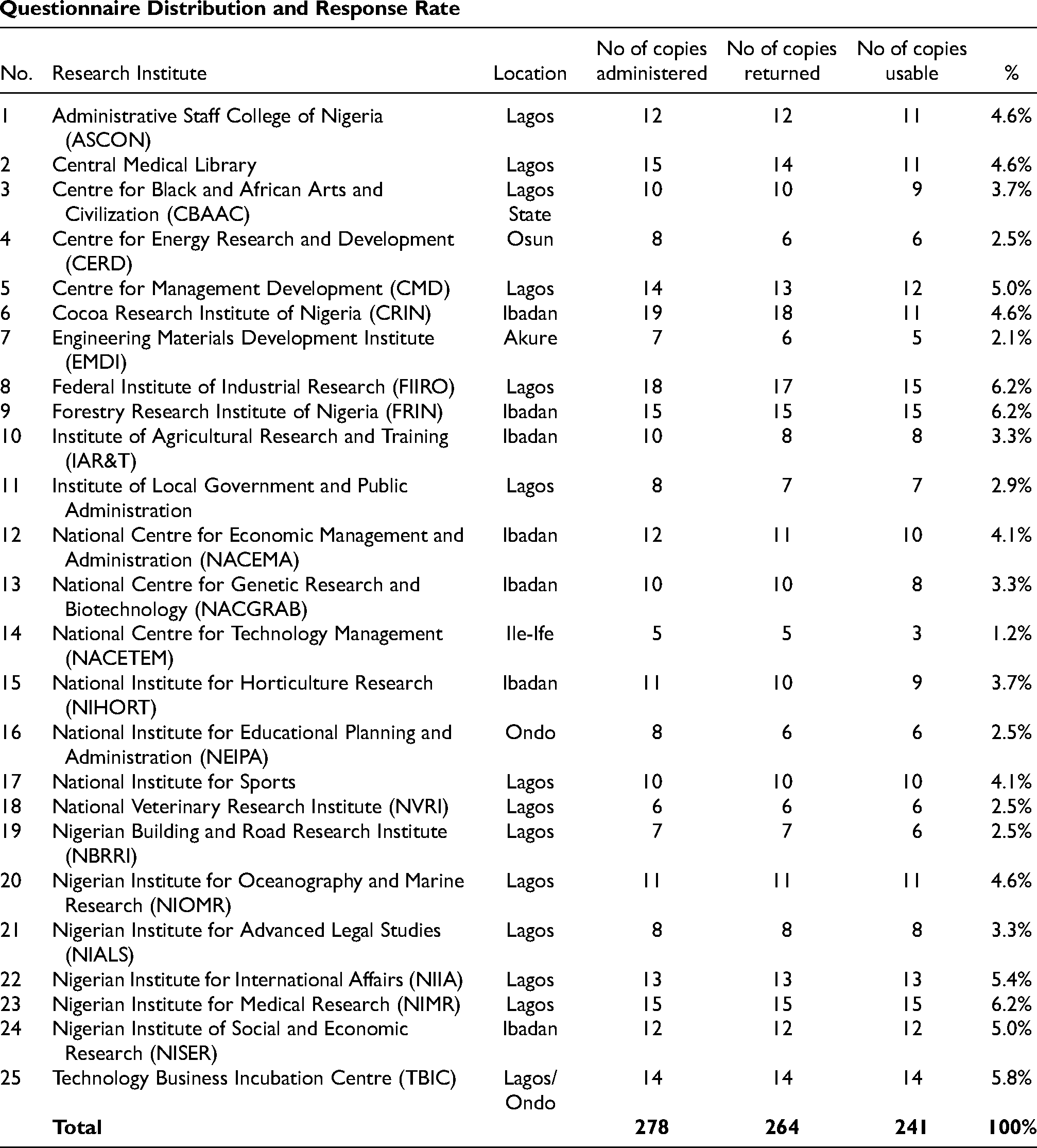
The study collected data from library personnel drawn from twenty-five (25) research institute libraries in South-West, Nigeria. In so doing
Notably, administrative staff from these institutes showed a strong interest in participating, as evidenced by the high response rates observed. Upon closer examination, it was clear that while the overall response rate is high, there are variations in participation levels among different institutes. Some, like the National Veterinary Research Institute and the Nigerian Institute for Advanced Legal Studies, had full participation, while others had lower response rates, suggesting areas for further investigation into factors affecting engagement. The data revealed significant differences in response rates based on geographical location. Institutes in Lagos, a prominent academic and economic centre, had higher participation rates compared to those in other regions like Osun and Ondo. This underscores the complex relationship of contextual factors influencing research participation within Nigeria's diverse academic landscape.
The results presented in Table 1 revealed the demographic characteristics of respondents. 115 of the respondents constituting 47.7% are males, and 126 females, making up 52.3% are females. The largest proportion falls within the 31-40 age bracket (52.3%), individuals above 60 years being the smallest group (0.8%). Educational qualifications vary, with ND/HND being the most common (45.6%), and PhD (7.5%) being the lowest. Data also indicates that library Officers are the most prevalent (36.1%), while Assistant Directors and Directors are the least represented (0.8% and 0.4% respectively).
Demographic Characteristics of the Respondents.
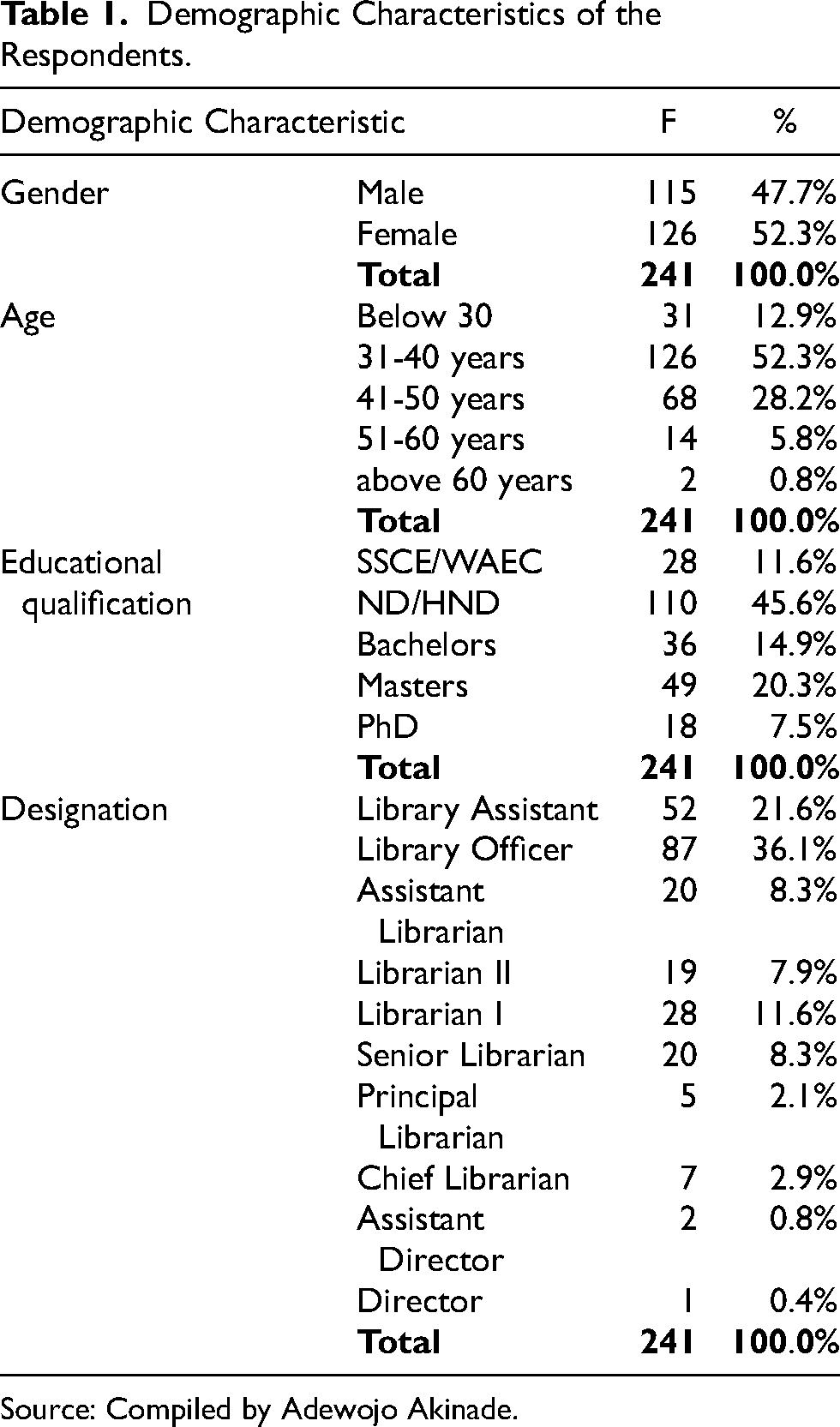
Source: Compiled by Adewojo Akinade.
The quanititave analysis of job satisfaction within the study area as presented in Table 2 revealed a positive outlook across various dimensions, considering the decision rule provided. Mean scores, ranging from
Level of Job Satisfaction among library personnel in research institutes’ libraries.
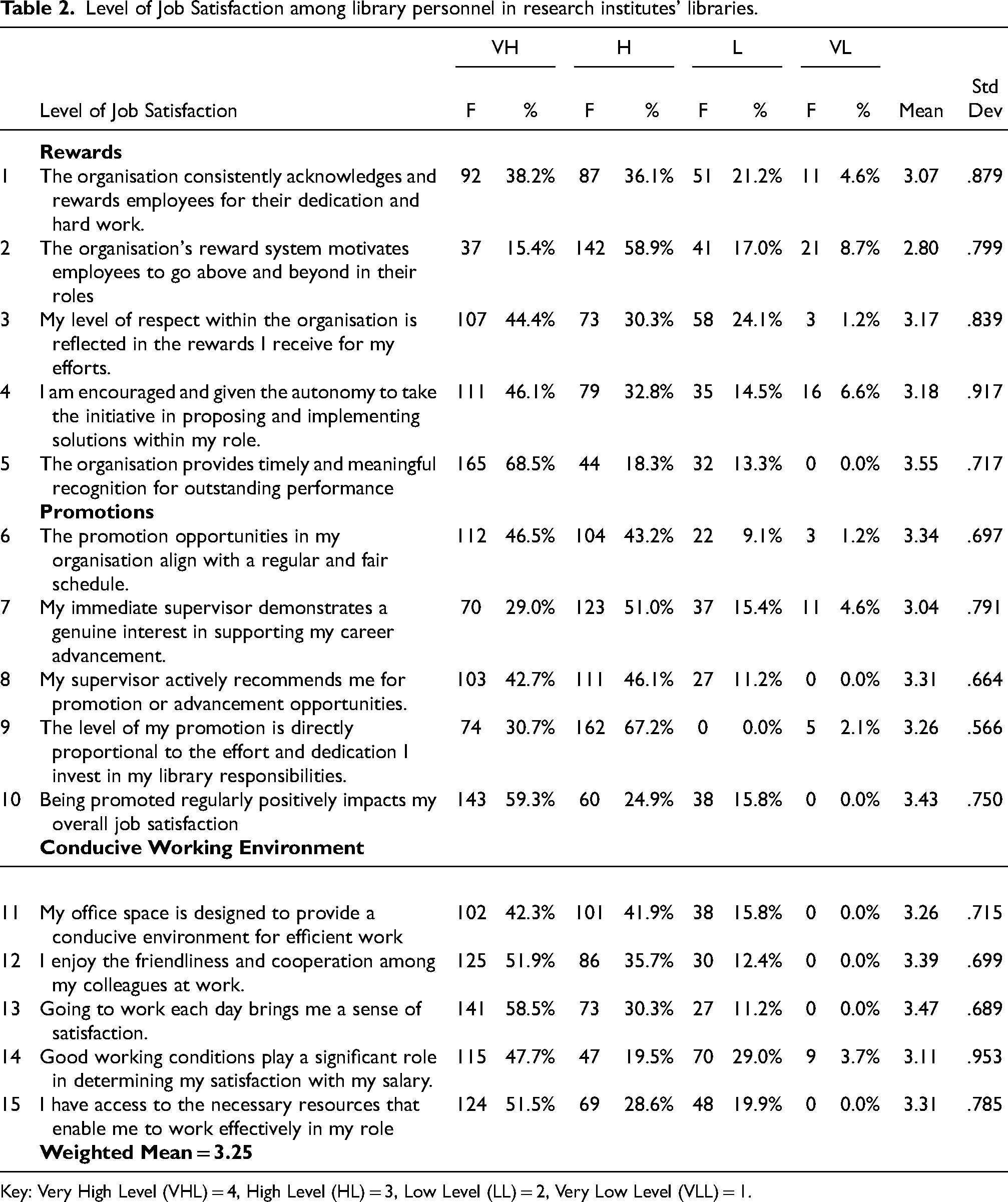
Key: Very High Level (VHL) = 4, High Level (HL) = 3, Low Level (LL) = 2, Very Low Level (VLL) = 1.
For the qualitative data, the interview conducted revealed that R3 reported that they felt valued in their role and appreciated the opportunities for professional development. They added that the work environment is generally positive, but it would be great if more room existed for career advancement, while R24 added “regular recognition for my contributions makes me feel valued and satisfied with my role”. R1 mentioned that the job is rewarding, particularly when they help researchers find the necessary information. However, they noted that the compensation could be better, considering the level of expertise required for the position.
R12 highlighted that they enjoy their work but often feel overwhelmed with the workload. They indicated that more staff support would significantly improve my job satisfaction. A different perspective came from R9 who appreciated the supportive team environment and sense of camaraderie. However, they pointed out that we lack modern resources. This makes our work challenging at times. R16 valued the flexibility in their work schedule, citing it as a key factor in their high job satisfaction. One remarked that this allows me to maintain a good work-life balance. R17 mentioned that they find their job fulfilling, but expressed a desire for more training opportunities and clearer career advancement paths within the institute. They stated, I find my job fulfilling, but I wish there were more opportunities for training and career advancement within the institute.
R5 highlighted the stress and pressure associated with their work environment. One shared that the work environment is stressful, with constant pressure to meet deadlines. This affects my overall job satisfaction. Despite some negative aspects, R7 noted that they felt their job satisfaction was high because they were making a difference in the research community. They praised the institute's leadership, mentioning that the institute's leadership is supportive and encourages innovation. More so R18 indicated that they enjoy their work but suggested that the institute could do more to recognise and reward their contributions. They commented that a clearer career path would be beneficial. R13 shared that they had a positive workplace culture and a good relationship with colleagues but raised concerns about outdated facilities. They noted that the library facilities need upgrading to keep up with the latest research trends.
Thematic analysis
offset by a lack of modern resources, which made the work challenging. Flexibility in scheduling emerged as a key factor contributing to job satisfaction, with some staff members emphasising that this helped them maintain a good work-life balance.
deadlines, negatively impacting their job satisfaction.
noted that recognition of their contributions was lacking and suggested that more acknowledgement and rewards could improve job satisfaction.
Triangulation and integration
Rewards and recognition
The mean score for “timely and meaningful recognition for outstanding performance” was high (3.55), indicating employees generally feel acknowledged for their hard work. However, the mean for “the organisation's reward system motivates employees to go above and beyond” was
lower (2.80), suggesting that while recognition exists, it might not always drive additional effort.
further boost job satisfaction and motivation.
Promotions and career advancement
Conducive working environment
environment is generally positive, there are areas where improvements could be made.
Table 3 resented a comprehensive analysis of organisational culture across various dimensions, revealing employees’ perceptions and experiences within the organisation. Mean scores ranging from
Organisational Culture among library personnel in research institutes’ libraries.
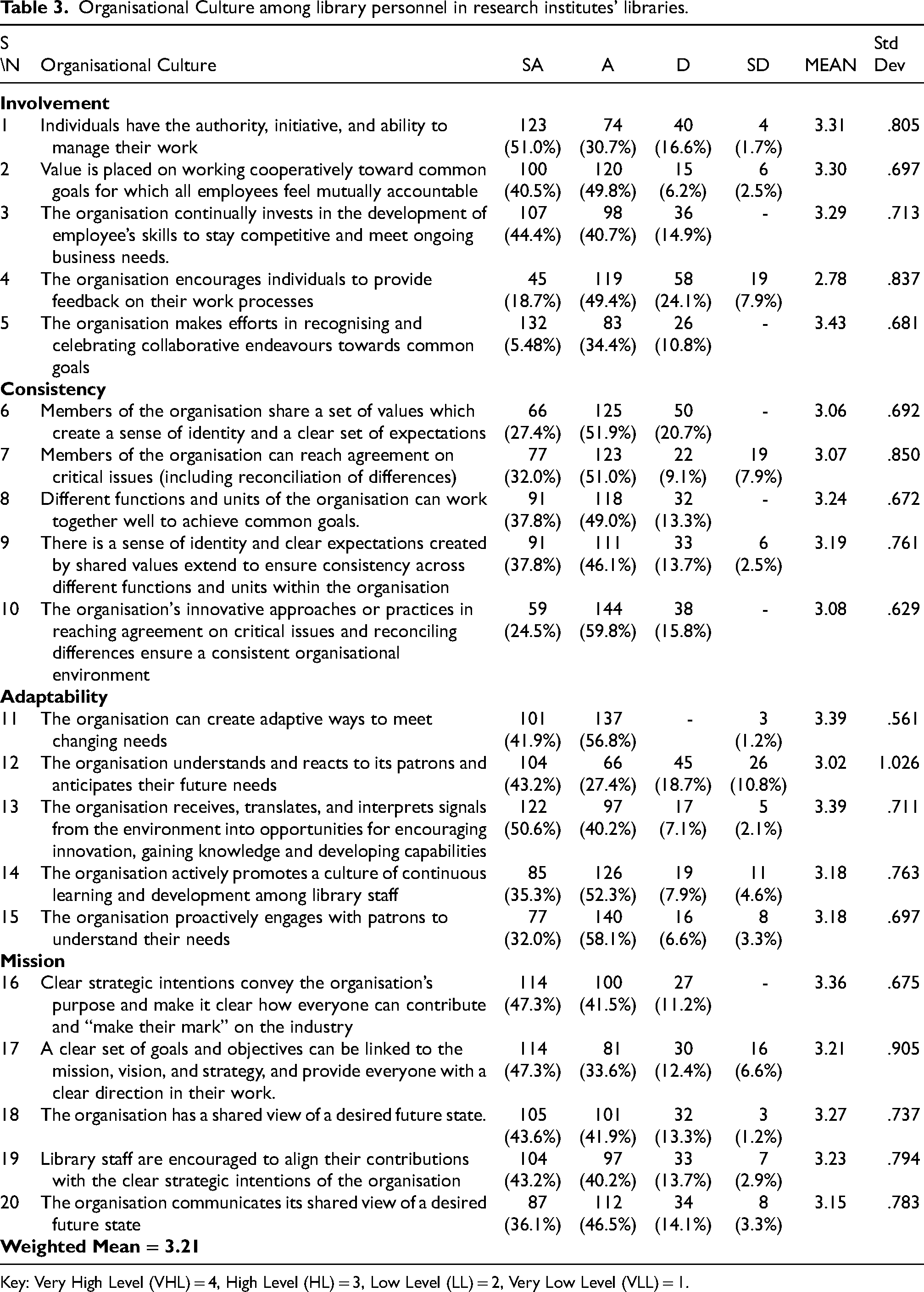
Key: Very High Level (VHL) = 4, High Level (HL) = 3, Low Level (LL) = 2, Very Low Level (VLL) = 1.
From the interview, data indicated that R4 highlighted the collaborative environment in their library, noting that “we often work together on projects, and there's a strong sense of teamwork.” More so, R8 expressed concern about the hierarchy within the institute, mentioning that “there's a noticeable hierarchy, which sometimes makes it difficult to share ideas or challenge decisions from the top. It can be a bit stifling at times.” and R23 said “when I am given opportunities to actively participate in decision-making, it greatly improves my engagement and job satisfaction”. It was, however, noted that R15 mentioned that the library encourages innovation, stating that “we're always looking for new ways to improve our services, and the management is open to creative solutions.”
Communication was identified as a challenge by R6 who said, “It feels like there's a lack of transparency between different departments, which can lead to confusion.” However, R19 noted the library's culture of continuous learning, observing that “we regularly have training sessions and workshops to keep our skills sharp and stay updated with the latest trends.”
Competitiveness was mentioned by R22 who noted that “the work environment is quite competitive, which can be motivating, but it also leads to a lot of stress. There's a sense of constant pressure to outperform.” Going further, inclusivity and diversity were emphasised by R10 who mentioned that “we have a diverse staff, and there's a genuine effort to create an inclusive environment where everyone feels valued.” An emphasis on results was pointed out R11, stating that “our organisational culture is heavily focused on results. There's a lot of emphasis on meeting targets and deadlines, sometimes at the expense of work-life balance.”
Leadership was seen as approachable and supportive by one R14, who remarked that “the leadership in our institute is approachable and supportive. They listen to our concerns and are open to suggestions for improvement.” A strong sense of community was noted by R2 who highlighted that “we often have social events and team-building activities that help strengthen our bonds.” More so, a traditional culture was described by R21who said that “many of our processes are quite rigid, and change is often slow to come by.” Finally, customer service was underscored by R25 who stated that “we pride ourselves on providing excellent service to our patrons and always go the extra mile to ensure their satisfaction.
Thematic analysis
the organisational culture. They reported a strong sense of teamwork and often worked together
on projects, fostering a spirit of cooperation. Staff noted that collaboration extended to cross-functional teams, encouraging broad participation in decision-making.
Additionally, a lack of transparency and communication between different departments was a
common challenge, resulting in confusion.
in the library. Staff indicated that the management was open to creative solutions, with a culture
that supported flexibility and adaptation. The dynamic environment encouraged exploring new
technologies and methodologies to improve services.
noted, with some staff reporting it as motivating but also a source of stress. The emphasis on competition created a sense of constant pressure to outperform, affecting work-life balance.
Triangulation
Involvement
Consistency
departmental consistency.
Adaptability
Mission
The triangulation between quantitative and qualitative analyses provides a comprehensive view of organisational culture in research institutes’ libraries in South-West Nigeria. While the quantitative data suggest high levels of satisfaction across involvement, consistency, adaptability, and mission, the qualitative insights reveal underlying challenges in communication, hierarchy, and stress from results orientation. Understanding these divergences is crucial for developing targeted strategies to improve organisational culture and overall employee satisfaction.
Test of hypotheses
Table 4 confirmed the influence of organisational culture on job satisfaction in research institutes’ libraries in South-West, Nigeria. The analysis revealed a significant coefficient (r = .223) while the degree of freedom is 239 and the P-value is .000, which is less than the often represented 0.05 p-value of organisational culture on job satisfaction, this suggests that as organisational culture strengthens, there is a corresponding increase in job satisfaction among library personnel in research institutes’ libraries in South-West, Nigeria. Hence, the null hypothesis is rejected and the alternative hypothesis is accepted. These findings suggest that cultivating a positive organisational culture influence higher levels of job satisfaction among library personnel, which could have implications for organisational performance and employee retention.
Influence of Organisational Culture on Job Satisfaction of Library Personnel in Research Institutes’ Libraries in South-West, Nigeria.

Discussion of the findings
Level of job satisfaction among library personnel in research institutes’ libraries
The findings from the study on job satisfaction of library personnel among library personnel in research institutes’ libraries in South-West Nigeria align with existing literature on the factors influencing job satisfaction, motivation, and organisational culture. The high levels of satisfaction observed in this study, with a weighted mean of x̅ = 3.25, are consistent with the notion that motivated employees tend to experience greater job satisfaction (Ofobruku, 2023). The study’s results showing high satisfaction with the organisation's recognition and rewards system, especially regarding timely acknowledgment of outstanding performance, support the work of Ismail and Abd Razak (2023), who found a significant correlation between compensation management and employee job satisfaction. However, the qualitative insights indicating that recognition could be more consistent, and compensation structures could be improved, resonate with the findings of Johan et al. (2023), who identified that key factors affecting job satisfaction among librarians encompass both financial incentives and non-financial incentives, such as a conducive work atmosphere and acknowledgment. The need for more robust reward systems and a focus on employee satisfaction is also supported by the work of Claponea and Iorga (2023) and Koekemoer and Masenge (2023), suggesting that a balanced approach to incentives and recognition is crucial for maintaining job satisfaction.
Quantitative analysis indicating a conducive work environment, with positive feedback on office space design and resource accessibility, aligns with the findings of Alkandi et al. (2023), who emphasised the role of a supportive work atmosphere in promoting job satisfaction. However, the qualitative data raising concerns about outdated facilities and inadequate resources point to the need for modernisation, which is echoed in studies by Üçok and Torlak (2023) and Johan et al. (2023), who suggested that outdated resources can impact job satisfaction. The qualitative feedback highlighting significant stress and pressure due to constant deadlines reflects the findings of Bashir et al. (2020), indicating that excessive stress can lead to decreased motivation and job satisfaction. This underscores the need for stress management programs and workload reduction strategies to prevent burnout. Also, the study's finding that flexibility contributes to job satisfaction aligns with Alkandi et al. (2023), suggesting that intrinsic motivational elements like flexible work schedules can enhance job satisfaction. The strong sense of camaraderie and teamwork observed in the study aligns with previous research by Badawo (2008) and Widarko and Anwarodin (2022), who highlighted the importance of positive interpersonal relationships and teamwork in enhancing job satisfaction.
Organisational culture among library personnel in research institutes’ libraries
The findings on organisational culture in research institute libraries in South-West Nigeria suggest a balance of strengths and areas for improvement, consistent with broader trends in management literature. The observed strengths in collaboration, teamwork, and adaptability reflect the principles of a cooperative corporate culture, as discussed by Alvil et al. (2014), who demonstrated a significant link between organisational culture and job satisfaction in the context of a fertiliser company in Pakistan. The emphasis on teamwork and a sense of authority to manage work, with a mean score of 3.31, aligns with Carvajal et al. (2023), who suggest that a culture fostering continuous learning and collaboration enhances employee development and well-being, contributing to higher job satisfaction.
However, the findings indicate that the presence of a hierarchical structure can impact full participation and feedback mechanisms, consistent with the conclusions of Alkhodary (2023), who identified hierarchy as a significant determinant of diminished job satisfaction. The relatively low score (mean = 2.78) for encouraging feedback on work processes and the qualitative feedback suggesting that hierarchical structures can stifle innovation point to a centralised decision-making approach. This aligns with the study by Rafique et al. (2020), which found that leadership style and organisational culture are associated with the cultural context, job satisfaction, and level of dedication among employees. The study's findings on the organisation's ability to maintain consistency across different functions, with a score of 3.07 for reaching agreements on critical issues, suggest moderate agreement. This outcome parallels the observations by Mesfin et al. (2020), who noted that clear communication and consistent practices are critical for maintaining organisational cohesion. However, the qualitative feedback indicating communication challenges and hierarchical obstacles echoes the research by Togia et al. (2004), where discrepancies in supervision and working conditions contributed to job dissatisfaction among Greek academic librarians.
Regarding adaptability, the quantitative data indicating a high degree of adaptability (mean = 3.39) aligns with Nair and Varghese (2023), who found that a clan culture with a focus on adaptability and innovation positively influences job satisfaction. However, the traditional culture in certain areas, noted by qualitative feedback, aligns with Dubey et al. (2023), suggesting that rigidity and slow changes due to established processes can hinder flexibility. This divergence between adaptability and rigidity indicates a need to promote innovative practices and prevent rigid structures from stifling creativity. The mission's quantitative analysis indicating a clear strategic intention (mean = 3.36), with lower scores for goals linked to the mission (mean = 3.21), reflects the findings of Lin and Huang (2021), suggesting that job satisfaction plays a mediating role in the associations between organisational culture, employee intention to remain, and job performance. The observed focus on results, which can impact work-life balance and cause stress, resonates with Wang et al. (2020), indicating that an overly results-oriented culture can lead to pressure and reduced morale.
The findings on organisational culture in research institutes’ libraries in South-West Nigeria suggest a culture that balances collaboration and adaptability with a need for improved communication and flexibility. The hierarchical structure and communication challenges identified in the study align with existing literature, reinforcing the importance of fostering a culture that promotes consistent practices, open communication, and innovation to enhance job satisfaction and employee engagement.
Influence of organisational culture on job satisfaction of library personnel in research institutes’ libraries
The study sought to determine whether there is a significant influence of organisational culture of job satisfaction in research institutes’ libraries in South-West Nigeria. The results in the indicate a moderate positive correlation between the two variables, with a correlation coefficient of 0.223 and a significance level of 0.05. This implies that there is a statistically significant relationship between organisational culture and job satisfaction, hence, the null hypothesis is rejected. A correlation coefficient of 0.223 indicates a moderate positive relationship, suggesting that as organisational culture improves, job satisfaction tends to increase. The statistical significance at the 0.05 level implies that this relationship is unlikely to have occurred by chance, reinforcing the validity of the observed association. This finding has several implications for organisational behaviour and human resource management within research institutes’ libraries. The results suggest that organisational culture has a meaningful impact on job satisfaction. This outcome is consistent with the findings of Alvil et al. (2014), who demonstrated that a positive organisational culture leads to increased job satisfaction and loyalty. Their study, which used a questionnaire to examine organisational culture in the fertiliser industry of Pakistan, found a substantial influence of culture on employee job satisfaction. A positive organisational culture characterised by supportive leadership, effective communication, collaboration, innovation, and recognition can foster higher job satisfaction among employees. This finding aligns with broader organisational research indicating that employees are more satisfied when they work in environments that are supportive, inclusive, and engaging.
Findings indicate that
Conclusion
The study established that organisational culture is essential in fostering job satisfaction among library personnel in selected research institutes. The high level of job satisfaction of library personnel in research institutes’ libraries in South-West Nigeria is essential to fostering a productive and efficient workforce. The study's findings indicate that employees generally exhibit high job satisfaction, yet there are areas requiring attention, such as recognition consistency and compensation structures. Organisational culture plays a crucial role in shaping job satisfaction, with collaboration, teamwork, and adaptability being key strengths. However, challenges related to communication and hierarchy need addressing to ensure consistent participation. Moreover, there is a statistically significant relationship between organisational culture and job satisfaction. Given these findings, it is crucial for research institutes’ libraries to focus on enhancing communication, reducing workplace stress, and providing clear career advancement paths.
Recommendations
Based on the findings of this study, the following recommendations are made:
The findings from the study revealed that employees in research institutes’ libraries in South-West Nigeria generally exhibit high levels of job satisfaction. To maintain and further enhance this, the study recommends that library management focus on creating a positive work environment with consistent recognition practices and improved compensation structures. This can help employees feel valued and content with their roles. The study showed that organisational culture in research institutes’ libraries in South-West Nigeria is characterised by strengths in collaboration and teamwork, but communication challenges and hierarchical structures can impact consistency and participation. Library management should work on enhancing communication strategies and reducing hierarchical barriers to foster a more inclusive organisational culture that supports job satisfaction. The study indicates that while the workplace culture is generally positive, outdated resources and facilities can impact the environment. Management of research institutes should invest in modernizing infrastructure and updating resources to ensure a conducive workspace that promotes job satisfaction and productivity.
Implications of the study
The findings of this study have far-reaching implications for understanding the relationship between organizational culture and job satisfaction in research institute libraries. These implications are categorized into theoretical, practical, and policy dimensions.
Theoretically, this study contributes to organizational culture and job satisfaction theories within Library and Information Science (LIS) by applying Schein’s (1985) Three-Level Model of Organizational Culture to the context of Nigerian research institute libraries. The findings reinforce the importance of cultural artifacts (hierarchical structures, recognition systems), espoused values (teamwork, collaboration), and underlying assumptions (authority structures, professional identity) in shaping employee satisfaction and retention. Furthermore, the study expands existing LIS literature by demonstrating how different organizational culture types—hierarchical, clan, market, and adhocracy—manifest in research institute libraries. It highlights that while hierarchical cultures are predominant in Nigerian libraries, elements of clan culture (teamwork and mentorship) contribute positively to job satisfaction. This research therefore bridges a regional gap by offering empirical evidence from a developing country, enriching global discussions on how organizational culture influences job satisfaction in underfunded and bureaucratic library settings.
In terms of practice, the study provides practical insights that library administrators, human resource managers, and policymakers can apply to foster a more inclusive, motivating, and employee-centric organizational culture. The findings suggest that improving communication channels, recognition systems, and career advancement opportunities can lead to higher job satisfaction, reduced staff turnover, and increased productivity among library personnel. Specifically, the results indicate that rigid hierarchical structures limit employee engagement and innovation, emphasizing the need for a shift toward more participatory leadership models. Library administrators should implement open-door policies, mentorship programs, and structured recognition systems to enhance job satisfaction. Additionally, investment in modern library infrastructure, digital tools, and continuous professional development will ensure a more conducive and rewarding work environment for librarians.
At a policy level, the study highlights the need for government and institutional policymakers to re-evaluate existing organizational structures in research institute libraries to enhance job satisfaction and retention. Key policy recommendations include:
Government agencies and research institutions should develop standardized promotion policies that reward performance and experience rather than rigid tenure-based advancement. Improved compensation packages will help attract and retain skilled library professionals. Policymakers should institutionalize training programs that expose library personnel to new technologies, digital resource management, and leadership skills. Continuous learning policies will improve job satisfaction by ensuring that employees see clear career growth paths. Research institutions should establish periodic organizational culture assessments to identify and address employee concerns. Government bodies overseeing library services should create guidelines for best practices in staff engagement, leadership development, and workplace inclusivity.
Limitations of the study
The study's findings on job satisfaction, and organizational culture in research institutes’ libraries in South-West Nigeria have several limitations that may affect the generalisability and scope of its findings. The study focused on research institutes’ libraries, limiting their applicability to other types of libraries. The study found it difficult to collect data in some research institutes as it took a lengthy process to acquire data. Additionally, the researcher found it difficult to get in touch with some of the heads of the libraries as they were either too busy or unavailable when the study was conducted. Also, the study provides a snapshot in time, without longitudinal data to track changes or trends over a longer period, potentially overlooking the impact of evolving conditions or interventions.
Footnotes
Declaration of conflicting interest
The author(s) declared no potential conflicts of interest with respect to the research, authorship, and/or publication of this article.
Funding
The author(s) received no financial support for the research, authorship, and/or publication of this article.

About the authors
Appendix 1
| No. | Research Institute | Location | No of copies administered | No of copies returned | No of copies usable | % |
|---|---|---|---|---|---|---|
| 1 | Administrative Staff College of Nigeria (ASCON) | Lagos | 12 | 12 | 11 | 4.6% |
| 2 | Central Medical Library | Lagos | 15 | 14 | 11 | 4.6% |
| 3 | Centre for Black and African Arts and Civilization (CBAAC) | Lagos State | 10 | 10 | 9 | 3.7% |
| 4 | Centre for Energy Research and Development (CERD) | Osun | 8 | 6 | 6 | 2.5% |
| 5 | Centre for Management Development (CMD) | Lagos | 14 | 13 | 12 | 5.0% |
| 6 | Cocoa Research Institute of Nigeria (CRIN) | Ibadan | 19 | 18 | 11 | 4.6% |
| 7 | Engineering Materials Development Institute (EMDI) | Akure | 7 | 6 | 5 | 2.1% |
| 8 | Federal Institute of Industrial Research (FIIRO) | Lagos | 18 | 17 | 15 | 6.2% |
| 9 | Forestry Research Institute of Nigeria (FRIN) | Ibadan | 15 | 15 | 15 | 6.2% |
| 10 | Institute of Agricultural Research and Training (IAR&T) | Ibadan | 10 | 8 | 8 | 3.3% |
| 11 | Institute of Local Government and Public Administration | Lagos | 8 | 7 | 7 | 2.9% |
| 12 | National Centre for Economic Management and Administration (NACEMA) | Ibadan | 12 | 11 | 10 | 4.1% |
| 13 | National Centre for Genetic Research and Biotechnology (NACGRAB) | Ibadan | 10 | 10 | 8 | 3.3% |
| 14 | National Centre for Technology Management (NACETEM) | Ile-Ife | 5 | 5 | 3 | 1.2% |
| 15 | National Institute for Horticulture Research (NIHORT) | Ibadan | 11 | 10 | 9 | 3.7% |
| 16 | National Institute for Educational Planning and Administration (NEIPA) | Ondo | 8 | 6 | 6 | 2.5% |
| 17 | National Institute for Sports | Lagos | 10 | 10 | 10 | 4.1% |
| 18 | National Veterinary Research Institute (NVRI) | Lagos | 6 | 6 | 6 | 2.5% |
| 19 | Nigerian Building and Road Research Institute (NBRRI) | Lagos | 7 | 7 | 6 | 2.5% |
| 20 | Nigerian Institute for Oceanography and Marine Research (NIOMR) | Lagos | 11 | 11 | 11 | 4.6% |
| 21 | Nigerian Institute for Advanced Legal Studies (NIALS) | Lagos | 8 | 8 | 8 | 3.3% |
| 22 | Nigerian Institute for International Affairs (NIIA) | Lagos | 13 | 13 | 13 | 5.4% |
| 23 | Nigerian Institute for Medical Research (NIMR) | Lagos | 15 | 15 | 15 | 6.2% |
| 24 | Nigerian Institute of Social and Economic Research (NISER) | Ibadan | 12 | 12 | 12 | 5.0% |
| 25 | Technology Business Incubation Centre (TBIC) | Lagos/ Ondo | 14 | 14 | 14 | 5.8% |
|
|
|
|
|
|