







Abstract
This study investigated social influence, facilitating conditions and online information resources (OIRs) use by library and information science students of federal polytechnics in north-west Nigeria. The study was anchored on the Unified Theory of Acceptance and Use of Technology. It relied on the data collected from 529 students through an online Google form. A survey research design with a quantitative approach was adopted. After employing a questionnaire, the data collected were analyzed using descriptive statistics (frequency counts, percentages, mean and standard deviation) and inferential statistics (Pearson Product Moment Correlation and multiple regression). The study revealed a high frequency of OIRs use among LIS students. In addition, there was a high level of social influence and facilitating conditions affecting the students. The findings also established the significant impact of social influence, particularly subjective norms on OIRs use, and for facilitating conditions, access and technical infrastructure were identified as key determinants of OIRs use. This study concludes that, although OIRs are beneficial and embraced by students and polytechnics; their maximum acceptance and benefits will be impossible with diminishing social norms. Hence, polytechnics must consciously improve social norms through planned activities involving lecturers.
Keywords
Introduction
Scholars, researchers and students now have unprecedented access to various scholarly articles, research papers, books and multimedia content from across the globe through online information resources (OIRs). OIRs refer to digital information-bearing materials available on the Internet, which can be accessed by patrons to support information needs, learning and research (Ihekwoaba, 2022). Joo and Choi (2016) synonymously viewed online library resources as OIRs. They were considered a digital form of library collections accessed through websites remotely comprising course reserves, digital archives, e-journals, e-books, e-theses, and online magazines, among others. OIRs provide patrons with scholarly, educational and authoritative information (Ndagi & Madu, 2018). They have become indispensable in seeking academic knowledge due to their overwhelming advantages such as ease of accessibility (even remote access), flexibility, real-time delivery, and rich content. The emergence of OIRs has democratized the availability of information and assisted in bridging geographical barriers. Access to OIRs has significantly enhanced the speed and efficiency of information retrieval, enabling individuals to conduct research and acquire knowledge in an efficient and far-reaching way (Alhassan & Macaulay, 2015).
Libraries often invest in OIRs to supplement their physical collections and the general electronic information resources (EIRs). OIRs offer broader and more diverse content to meet the evolving information needs of modern-day patrons. The transition from the print to the electronic medium apart from causing a growth of electronic information has provided users with new tools and applications for information seeking and retrieval (Emojorho et al., 2022; Ugwulebo & Okuonghae, 2021). Beyond the provision of EIRs is the availability of OIRs in academic libraries which is critical in the utilization of resources by patrons, particularly students. Arguably, it has emerged from empirical studies that the OIRs are not being maximally used by students in tertiary institutions of learning in Nigeria (Adedokun & Fawole, 2018; Osimetha, 2019; Muhammad, 2020; Nwosu & Asuzu, 2021; Okogwu, 2020; Ugwu & Orsu, 2017). All these authors have underlined factors such as inadequate provision because of poor funding, dissatisfaction, and lukewarm attitude, among others. The continuation of this trend portends great danger to the value attached and perception of funders about OIRs. Therefore, the investments in procuring OIRs must be justified by sufficient usage, since the effort will be a waste if the resources are not well utilized. This situation can also affect the image of the entire library and cause people to begin to question the overall importance of OIRs in the library collection. Therefore, the use of OIRs must be taken seriously by academic libraries.
Individuals tend to change their behavior based on those around them because they have a stronger influence than those further away (Williams, 2022). Besides, for students to efficiently use OIRs, certain facilitating conditions are expected to be in place. Extant studies have not sufficiently investigated the social influence and facilitating conditions that affect OIRs use by polytechnic students. From the study’s standpoint, social influence refers to the impact that other people have on an individual's information-seeking behavior, decision-making process and attitudes towards using OIRs. It is how students are influenced by peers, educators, family members, and broader social networks about how they seek, evaluate, and trust OIRs. Facilitating conditions refer to the degree to which a person believes existing organizational and technical infrastructure can support technological product use like OIRs. It is related to the availability of sufficient resources and support for individuals to use technology (Ambarwati et al., 2020). The lack of assistance, timely support, and complete information can prevent individuals from accepting web-based technologies (Kamaghe et al., 2020). Regarding OIRs’ use among students, facilitating conditions are also the components that support and enable students to access and utilize OIRs effectively.
Studies on the use of OIRs in Nigeria such as Alhassan and Macaulay (2015), Muhammad (2020), Osimetha (2019), and Ugwu and Orsu (2017) are predominantly university-based and minimal attention has been given to polytechnics in Nigeria. Unarguably, technical education is the key to the technological growth and development of any country, be it developed, developing or underdeveloped, and polytechnics in Nigeria apart from technical colleges are important because they offer hands-on, practical education. While there is widespread agreement concerning the obstacles to the use of OIRs in higher institutions, there have not been any studies that demonstrate how polytechnics can overcome these impediments in developing countries. This study tries to bridge this gap by examining the impact of social influence and facilitating conditions on the use of OIRs engaging Library and Information Science (LIS) students of federal polytechnics in north-west Nigeria. Northern Nigeria Polytechnics’ studies are critical because of the concern of provision of OIRs and the Internet for information resources utilization for technical education advancement in this geo-political zone. Most of the states in this region are classified as educationally less developed. One of the researchers worked in a polytechnic library in this region and with a great interest in offering a way forward to the region’s underdevelopment.
To the best of the researchers’ knowledge, it is the first-ever study attempting to measure self-reported OIR use employing social influence and facilitating conditions variables among polytechnic LIS students in Nigeria. Despite that the variables look basic––they have not been studied in the literature regarding OIR use by polytechnic students in Nigeria. The study was done at the largest polytechnic library schools in north-west Nigeria. The findings represent the suggestions of polytechnic LIS students in a developing country. It can help the LIS schools in Nigeria and other developing countries to identify elements that can boost the use of OIRs helping with positive outcomes regarding learning and research. While studying online information resources use among students from other majors can be valuable, focusing on LIS students offers a unique perspective on the information behaviors and needs of future information professionals. Further to what has just been mentioned, LIS students’ expertise in information literacy and their professional responsibilities make their online information resource use particularly relevant to the development of effective information services. The study will also appraise support for north-west region federal polytechnics after ICT infrastructure funding by central and private bodies for the possible use of OIRs.
Review of related literature
Theoretical model
The study’s design was inspired by the Unified Technology Acceptance and Use of Technology Theory [UTAUT] by Venkatesh and his colleagues in 2003. They attempted to concentrate greatly on the interrelationships among concepts that aid in understanding and predicting user acceptance and adoption of technology. The UTAUT is a comprehensive theory that integrates elements from previous technology acceptance models and theories, namely the Motivational Model, Personal Computer Usage Model, Technology Acceptance Model, Combined Technology Acceptance Model-Theory of Planned Behavior, Innovation Diffusion Theory, Social Cognitive Theory, Theory of Reasoned Action, and Theory of Planned Behavior. Despite having extant studies with evolving models and theories, these studies have not extensively empirically compared models and theories like the UTAUT (Wong et al., 2013).
The UTAUT has also been used to study resource usage variables (Lin, 2019; Mashaba & Pretorius, 2019; Olawale, 2019) and the evaluation of information systems and information technology (Ayaz & Yanartas, 2020; Zainab et al., 2018). UTAUT studies are user-centered and underline the significance of understanding users’ needs, preferences, and contexts. The theory comprises four main factors. These are performance expectancy, social influence, effort expectancy and facilitating conditions. The theory further includes four moderators of the key theory relationships comprising gender, age, experience and voluntariness of use. They predict the relationship between primary factors and behavioral intention and use behavior. According to Venkatesh et al. (2003), the determining factors that directly affect intention or use are performance expectancy, social influence, effort expectancy and facilitating conditions. However, this paper considers only social influence and facilitating conditions. Also, the study did not examine the effect of the moderators. Regarding the unstudied UTAUT variables and moderators, the researchers justify that:
Since the study did not involve the implementation of web-based platforms for real-time monitoring and tracking of outcomes from students, performance expectancy was exempted. Given that the simplifying of technology interfaces and providing user-friendly training materials were not part of the study, effort expectancy was exempted. The moderators of age, gender, experience and voluntariness of use were also not researched. This was because all students irrespective of social, biological and experiential categorizations were expected to use the OIRs. Social influence was studied because it examines the impact of external factors on an individual’s decision to adopt technology including support from fellow students and lecturers. Facilitating conditions were studied because they relate to the availability of resources, support, and infrastructure necessary for technology adoption and usage as provided by an institution. Facilitating conditions include access to reliable internet, library training programs, and technical support.
Concerning the variables of UTAUT that were studied, the paper posited that:
The UTAUT makes it possible to picture the study’s conceptual model. The conceptual model includes three relevant factors: social influence, facilitating conditions, and OIRs’ use. These factors are shown in Figure 1. The model provides the basis for investigating social influence from the subjective and social norms of the theory of planned behavior. Further, the model suggests that facilitating conditions may be influenced by access and technological infrastructure. OIRs’ use was measured by the frequency of use. The model assumes the possibility of a joint influence of social influence and facilitating conditions on OIRs’ usage. It also assumes that either social influence or facilitating conditions may have a positive influence on OIRs’ usage.
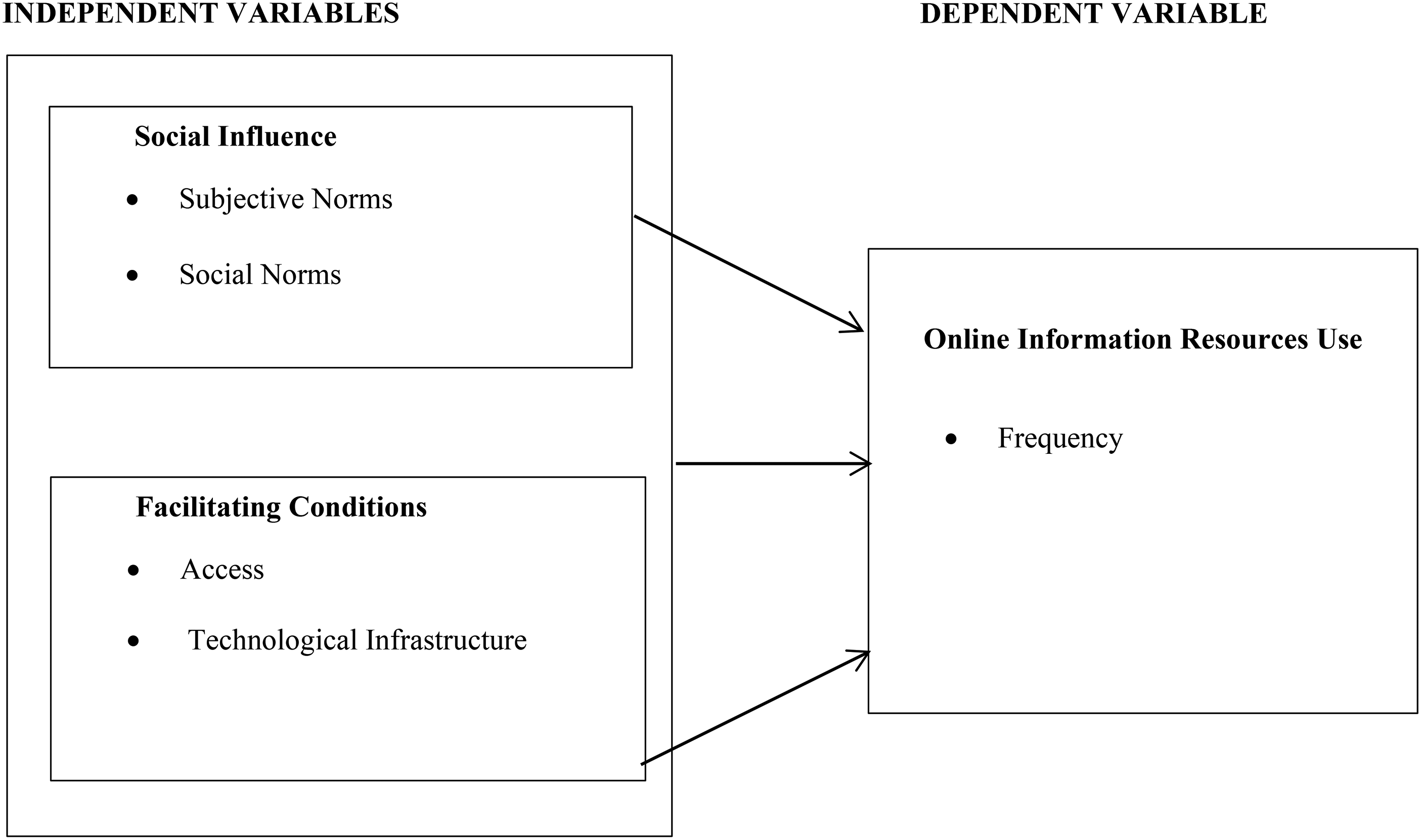
Social influence, facilitating conditions and online information resources use.
OIRs’ potential significance and challenges
During the 1990s and moving forward, rapid advances involving the Internet and digital technologies provided researchers and students with considerable alternatives to obtain critical academic information (Prasenjit, 2024; Selwyn, 2021; Yang & Li, 2016). Some students prefer to surf and use the Internet to get information resources to attend to their diverse information needs (Yebowaah & Plockey, 2017). Students can find information themselves to a larger extent than before using resources on the Internet (Chen, 2015; Hoque et al., 2024; Mole, 2017; Ogunbodede & Sawyerr-George, 2023; Seen et al., 2024; Ugwu & Orsu, 2017). With the Internet, OIRs have also evolved incorporating resources that are getting popular among Internet users, including academicians, researchers and students (Tariq, 2016). Although it could be that OIRs have many similarities with Electronic Information Resources (EIRs), Emojorho et al. (2022) clarified that EIR is a broader term that encapsulates all information resources in digital formats, accessible via electronic devices whether online or offline. However, current literature has shown deficiencies concerning EIRs – especially obsolescence and lack of continuity in subscription (Nworie et al., 2023; Oseghale, 2023; Tella et al., 2018), slowness of the use of EIRs compared to the investment made (Sa’ad, 2023), and mainly, lowness in the extent of EIRs usage in north-west region universities in Nigeria due to inadequate investment in non-maintainable databases and poor offering of customized support services (Yusuf & Ahmed, 2024). Therefore, the potential importance of OIRs becomes discernible. OIRs facilitate an effective provision of information to all calibers of users remotely and promote collaborative efforts in research using communication network tools that encourage the generation and dissemination of knowledge (Salman et al., 2020).
Despite the overwhelming advantages of OIRs from the literature, several challenges have been identified to impede their usage. Information security challenges, socio-technical problems, information pollution, and poor ICT management are constraints to utilizing OIRs (Eserada & Okolo, 2019). Further among the challenges are filtering of search results, download delay, lack of knowledge, access cost, and resource inaccessibility and navigation difficulties as identified by Adeniran (2013) and Omosekejimi et al. (2015). Insufficient bandwidth, blockage of websites and internet connectivity costs associated with ICT infrastructure were identified as challenges by Igbo and Imo (2014), Omeluzor (2015) and Sohail and Ahmad (2017). The challenges with OIRs were grouped into direct and indirect factors by Ugwu and Orsu (2017). The direct and indirect factors were also associated with ICT facilities. However, indirect factors were linked with the absence of online assignments and lack of motivation. The unlimited availability of information due to advances in digital technologies creates information anxiety and new behavioral patterns (Alon & Nachmias, 2020). These challenges indicate that efforts such as conformity, persuasion, peer pressure, normative influence, informational influence, or imitation have not been sufficiently explored (Roguska, 2023). These factors are social-influence related. Social influence could have behavioral pattern implication and promote the use of OIRs among students. Different studies such as Dahunsi et al. (2020), Jordan and Lloyd (2017), Madu (2019), Omeluzor (2017), Patel and Bhatt (2017), Salman et al. (2020), and Thanuskodi, (2016) have also pointed to infrastructural facilities (especially IT infrastructure), and OIRs’ availability and accessibility as associated facilitating conditions that can influence OIRs’ use.
Social influence and facilitating conditions and related factors influencing OIRs’ usage
Scholars have conducted a series of research to understand the effect of social influence on students. Training and support by library staff can change students’ negative perceptions towards e-books (Chang et al., 2023). In a mixed-methods study survey of undergraduates in three rounds (pre-course, post-course, and follow-up), the significance of training students to use e-resources in academic libraries was underlined (Chen, 2015). The encouragement given by the virtual community and the ability of the members of the virtual community to use information shape the students’ ongoing use of e-resources (Noh, 2016). A university study showed that social influence had a significant relationship with and facilitated the perceived usefulness of e-resources (Izuagbe & Popoola, 2017). In a Tanzanian study, the subjective norm was the strongest predictor of the intention to use open-access journals (Massoro & Adewale, 2019). Professors and library staff were found to be the major motivators enhancing the use of e-resources by students (Mani et al., 2019). The study also established that the mediation of motivation increased e-resource use in various ways. A positive or significant relationship or both relationships were found between social influence and behavioral intention to use a system or technology (Moorthy et al., 2019). In a Jordanian study, subjective norms towards e-textbooks positively influenced behavioral intention towards using e-textbooks (Masa’deh et al., 2022). In the narration of social norms, Heitmayer and Schimmelpfennig (2024) mention digital social norms––divided into descriptive and injunctive norms. Descriptive norms are perceived standard behavior seen in what most people around us do (Bicchieri, 2017; Linek & Ostermaier-Grabow, 2018). However, injunctive norms concern behaviors expected of individuals in a given situation (Chung & Rimal, 2016). Irrespective of any context and situation, Heitmayer and Schimmelpfennig (2024) maintain that both types of norms support the formation of behavior. Joo and Choi (2016) revealed that confirmation associated with social influence had a positive direct and indirect influence on continuance intention. Social influence had a significant impact on behavioral intention, and behavioral intention had a significant impact on use behavior (Chang et al., 2023).
Facilitating conditions were found not to have a significant influence on behavioral intention (Chang et al., 2023). Social influence and facilitating conditions had a positive and significant association with behavioral intention to adopt a digital library (Moorthy et al. 2019). In a study to uncover the factors influencing undergraduate use of e-books, Potnis et al. (2018) revealed that the IT environment, external locus of control, subjective norm and IT features played a significant role in influencing the intention of students to use e-books. The study by Matusiak (2012) identified the infrastructure for enhanced library services which included internet browsing facilities, computers, OPAC terminals, and library software. Matusiak further observed that the availability of adequate and functional computers, OPAC terminals and relevant software facilitated students’ use of library OIRs. In connection to facilitating conditions, five resource quality constructs – accessibility, credibility, coverage, currency, and format were revealed as the determinants of online library resource use intention (Joo & Choi, 2015). The effect of accessibility was the strongest while that of credibility was the weakest.
Research questions
The study’s main question we sought to address was how social influence and facilitating conditions influence online information resources (OIRs) use by library and information science students of federal polytechnics in north-west Nigeria. Drawing on the UTAUT, this study addresses the following specific research questions:
What is the frequency of OIRs use by LIS students in federal polytechnics in north-west Nigeria? What is the degree of social influence regarding LIS students and the facilitating conditions levels of federal polytechnics in north-west Nigeria? Is there a significant influence of social influence or facilitating conditions or a significant joint influence of social influence and facilitating conditions on OIRs use by LIS students in federal polytechnics in north-west Nigeria?
Methodology
Research design
This study adopted the survey research design with a quantitative approach. This design helps to gather data from members of a population to determine their current state regarding one or more variables. It is not concerned with individuals as entities but with the generalized statistics that emanate when data is abstracted from several individual cases. The design was appropriate because it helped the researchers describe the relevant aspects of the phenomena of interest.
Population of the study
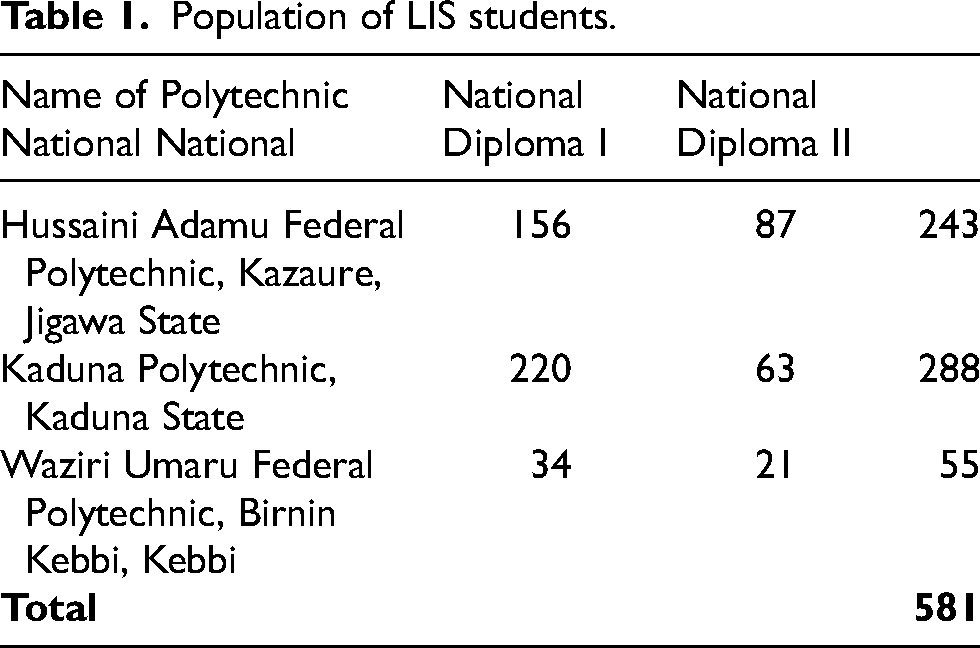
The target population comprised all the LIS students in the six federal polytechnics in the north-west geo-political zone of Nigeria. Only three of the six federal polytechnics had an LIS department at the time of this study. However, only The Kaduna Polytechnic out of the selected three polytechnics had an enrolment of students for the Higher National Diploma (HND) level. Hence, the population was limited to the National Diploma (ND) students. Consequently, the study population comprised ND I and ND II students of federal polytechnics in north-west Nigeria on the LIS program in the 2023/2024 academic session. The distribution of the population of LIS students is presented in Table 1.
Population of LIS students.
Sample size and sampling technique
A total enumeration method was employed because the study population was a manageable size. It covered all the ND I and ND II LIS students [totaling 581] in the three federal polytechnics offering the LIS program in the north-west geo-political zone of Nigeria.
Research instrument
The instrument used in collecting data was a structured questionnaire with sub-scales to measure the study’s constructs. The questionnaire can be found at https://www.dropbox.com/scl/fi/ovcu00xyy02imag3199y3/SI-FC-and-UOIR-QUESTIONNAIRE.docx?rlkey = jub02n7mbcsnqwc8yhxroso45&st = vrp6rd0s&dl = 0. The choice of a questionnaire as the research instrument was because it could reach large number of respondents and elicit relevant data easily and economically. The questionnaire was divided into four sections [A, B, C and D]. Section A contained four items on socio-demographic characteristics of the respondents with both open and closed-ended questions which included the names of study polytechnics, gender, level and age bracket. Section B covered questions on the frequency of OIRs use. This was measured using an adapted scale from the work of Alasa and Quadri (2022). This scale mostly comprised EIRs having 10 items to measure the frequency of use of electronic resources. This study found the scale helpful but insufficient. The EIRs were further unbundled and renamed as online versions of EIRs. The items totaled 13 using a four-point Likert scale of Always = 4, Often = 3, rarely = 2, and Never = 1. Section C covered questions on social influence. It was measured using a scale adapted from the work of Nwone and Mutula (2019). Nwone and Mutula extracted two variables from the items that measured social influence. These two variables were subjective-norm and social-norm-inclined. Our study expanded the indicators of these two variables to measure social influence effectively. The indicators of the current study (1) deeply explained the belief that important entities (lecturers, classmates, family and friends) might approve and support OIRs use (subjective norms) and (2) perceived informal and mostly unwritten rules describe appropriate and acceptable actions on OIRs use (social norms). Eventually, our scale comprised eight items on subjective norms and seven items on social norms using a four-point Likert scale of “To a High Extent = 4, To a Moderate Extent = 3, To a Low Extent = 2 and Not at All = 1”. Section D elicited questions on facilitating conditions. These were measured using a scale developed by the researchers after the review of the literature (e.g., Eserada & Okolo, 2019; Igbo & Imo, 2014; Omeluzor, 2015; Salman et al., 2020; Sohail & Ahmad, 2017; Yusuf & Ahmed, 2024) and experiences with students. The construct of facilitating conditions was divided into the sub-constructs of access and technological infrastructure as two essential subjects derived from the literature. Finally, the indicators for the subjects comprised 11 items, five for access and six for technology infrastructure using a four-point Likert scale of “To a High Extent = 4, To a Moderate Extent = 3, To a Low Extent = 2 and Not at All = 1”.
Validity and reliability
The study instrument underwent face validity as it was presented to scholars and experts in the subject matter for critical analysis of the items and arrangement. All modifications, corrections and feedback were incorporated. The Cronbach's alpha test (pre-test) was used to determine the instrument’s reliability using 40 LIS students from the following polytechnics: The Akanu Ibiam Federal Polytechnic, Unwana, Ebonyi State (south-east); The Federal Polytechnic, Bida, Niger State (north-central); The Federal Polytechnic Ede, Osun State (south-west); The Federal Polytechnic Kaltungo, Gombe State (north-east); and Federal Polytechnic, Orogun, Delta State (south-south). These polytechnics are not located in the study’s geo-political zone and are selected as the foremost polytechnics in the five other regions of Nigeria. The choice of Cronbach's alpha was based on its wide statistical application in measuring the internal consistency of scales. The result of Cronbach’s alpha yielded an overall reliability coefficient of 0.766. Further, the reliability coefficients of the sub-scales were as follows: frequency of use = 0.811, social influence = 0.752 and facilitating conditions = 0.784. The high scores implied that the instrument was reliable and could be replicated by other studies.
Method of data collection and analysis
A letter of introduction was obtained from the Department of Library and Information Science, Adeleke University Ede, Osun State. The letter was presented to the Heads of LIS Departments of the three polytechnics as a means of identification to grant the researchers permission to administer the questionnaire to the respondents. Permission was granted after due approval. The Google form questionnaire was designed and the link was shared through students’ WhatsApp groups. The Google form was used because of the insurgency in the north-west region of Nigeria. The data collected were coded and analyzed using descriptive and inferential statistics with the aid of SPSS version 21. Descriptive statistics (frequency counts, percentages, mean and standard deviation) and inferential statistics (Pearson Product Moment Correlation and multiple linear regression) were used to analyze the research questions.
Ethical considerations
This research was approved by the Adeleke University Research and Ethics Committee. The researchers ensured that all information disclosed by the respondents was treated with utmost confidentiality. The research instrument was designed so that the data could not be traced by any person or group of persons. The researchers did not coerce the respondents to take part in the study.
Findings
Demographic characteristics of the respondents
The respondents’ demographic information such as the names of the polytechnics, gender, level and age range were analyzed using descriptive statistics of frequency counts and percentages. The highest number of respondents was from Kaduna Polytechnic (48.6; 48.6%). The gender distribution indicated that male LIS students constituted the majority (55.0%). There was adequate gender representation because both genders had more than 40% representation in the study. The respondents’ distribution based on the study level showed that LIS students in ND I were the majority (375; 70.9%). The age distribution indicated that the highest number of respondents was found in the age bracket of 18-22 years (251; 35.7%).
Answers to the research questions
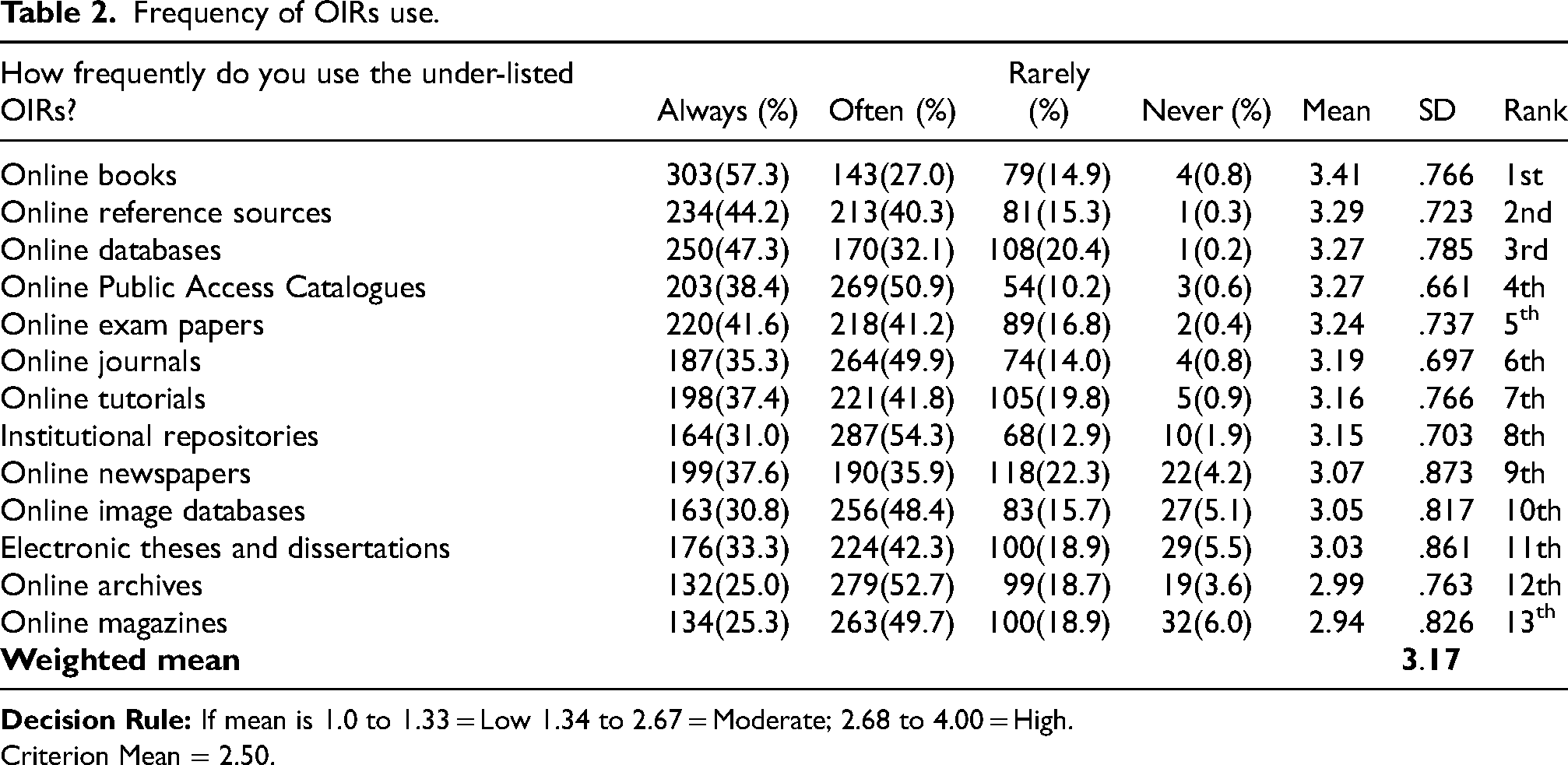
The results of the frequency of OIRs use by LIS students in the federal polytechnics in north-west Nigeria are presented in Table 2.
Frequency of OIRs use.
Criterion Mean = 2.50.
The results in Table 2 showed that the majority of the respondents affirmed that the most frequently used OIR was online books (
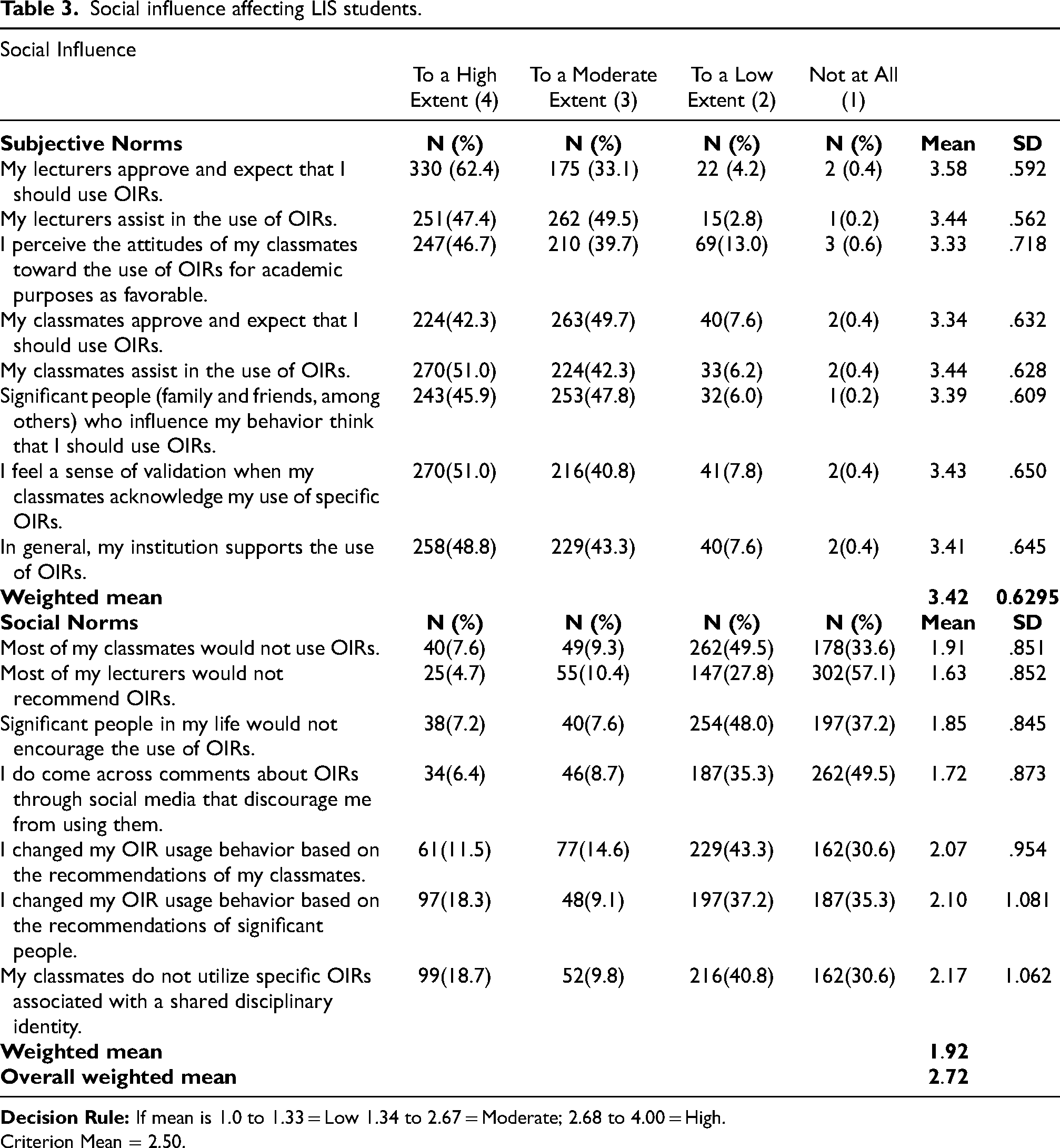
Table 3 presents the result of the level of social influence in federal polytechnics in north-west Nigeria. Social influence was measured using two indicators (subjective and social norms). The result showed that for subjective norms, the weighted mean was 3.42. This was far above the criterion mean of 2.50. This suggested that the level of subjective norms was high. Specifically, the majority of the respondents affirmed that: lecturers approved and expected that they should use OIRs (
Social influence affecting LIS students.
Criterion Mean = 2.50.
The result of social norms indicated a weighted mean of 1.92. This was below the criterion mean of 2.5. This implied a moderate level. This showed an average result - not as much as desired. Specifically, for instance, regarding social norms, the respondents affirmed that most of their classmates would not use OIRs (
Finally, to determine the level of social influence affecting the respondents, a test norm was adopted. Results in Table 3 revealed that the weighted mean was 2.72 which fell within the high range. Hence, the level of social influence affecting LIS students was high, especially with the subjective norms indices.
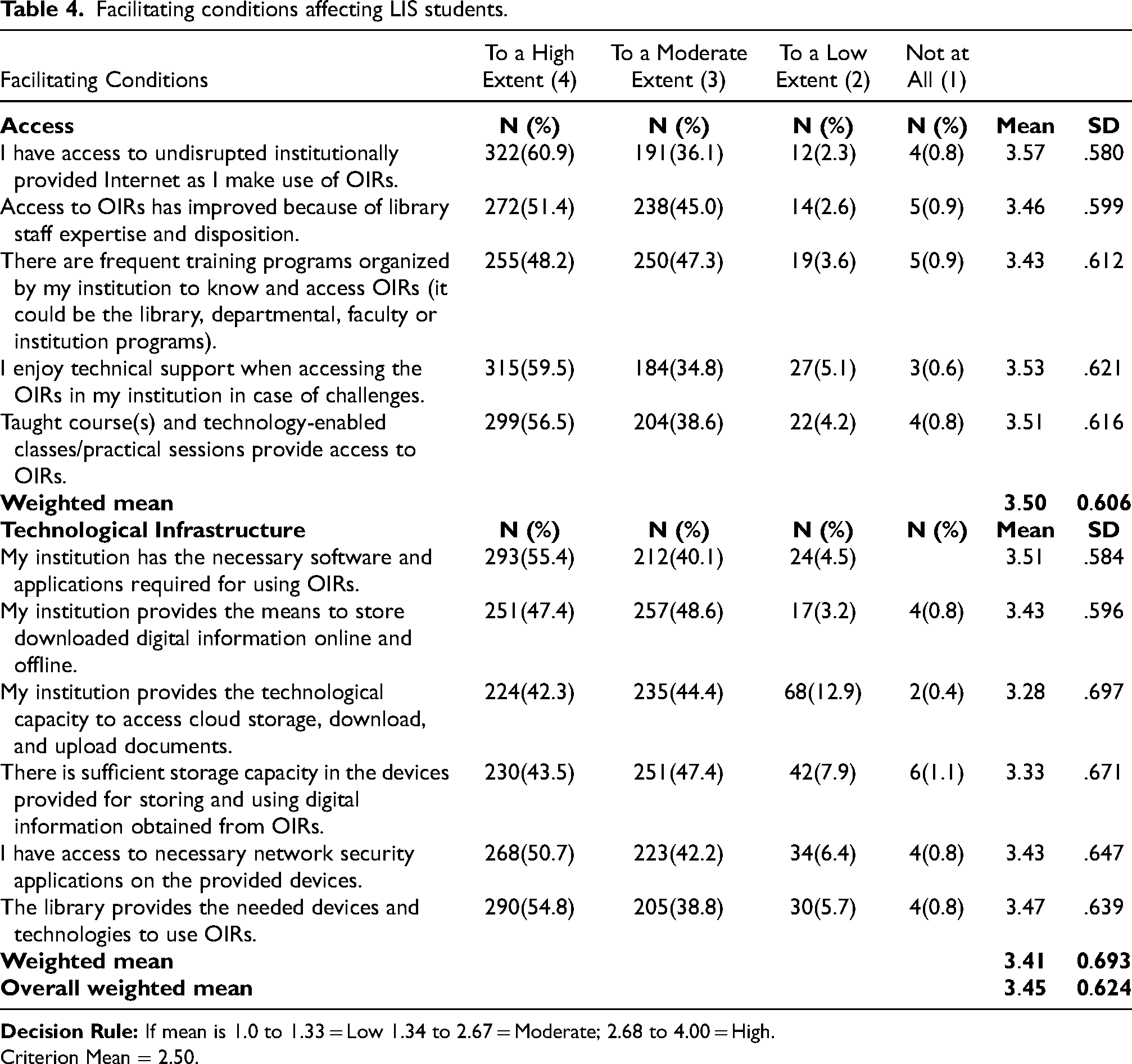
The results of the facilitating conditions that could affect OIRs use by LIS students in federal polytechnics in north-west Nigeria are presented in Table 4.
Facilitating conditions affecting LIS students.
Criterion Mean = 2.50.
Facilitating conditions were studied using two indicators of access and technological infrastructure. On access, the result showed that the weighted mean was 3.50. This was far above the criterion mean of 2.50. This suggested that the level of access as a form of facilitating conditions was high. Specifically, the majority of the respondents affirmed that they had access to undisrupted institutionally provided Internet as they made use of OIRs (
The results of technological infrastructure indicated a weighted mean of 3.41. This was above the criterion mean showing a high level. The majority of the respondents affirmed most of the statements under the technological infrastructure. For instance, the majority of the respondents posited that their institutions had the necessary software and applications required for using OIRs (
Finally, to determine the level of facilitating conditions affecting the respondents, the test norm was adopted. From the results in Table 4, the weighted mean was 3.45 which fell within the high range. Therefore, the federal polytechnics’ facilitating conditions in north-west Nigeria were high, including access and technical infrastructure.
The result in Table 5 revealed a weak positive correlation between social influence and OIRs use by LIS students in the federal polytechnics in north-west Nigeria (r = 0.217, p < 0.05). Since the significant p-value was less than 0.05, the relationship between the two variables was statistically significant.
Significant influence of social influence on OIRs use.

In other words, there was a significant but weak relationship between social influence and OIRs use by LIS students in the federal polytechnics in north-west Nigeria.
The result in Table 6 revealed a strong positive correlation between facilitating conditions and OIRs use by LIS students in federal polytechnics in north-west, Nigeria (r = 0.623, p < 0.05).
Significant influence of facilitating conditions on OIRs use.

Since the p-value was less than 0.05, it showed that the relationship between the two variables was statistically significant. In other words, there was a strong significant relationship between facilitating conditions and OIRs use by LIS students in federal polytechnics in north-west Nigeria.
The results in Table 7 revealed that the joint influence of social influence and facilitating conditions on OIRs use by LIS students in federal polytechnics in north-west Nigeria was significant (F(2, 526) = 83.005; p < 0.05). This showed that the analysis of variance (ANOVA) for the regression yielded an F-value of 83.005 (significant at a 0.05 level). This meant that the joint influence of the independent variables (social influence and facilitating conditions) on the dependent variable (use of OIRs) was statistically significant. This implied a significant joint influence of social influence and facilitating conditions on OIRs use by LIS students in the federal polytechnics in north-west Nigeria.
Significant joint influence of social influence and facilitating conditions on OIRs use.
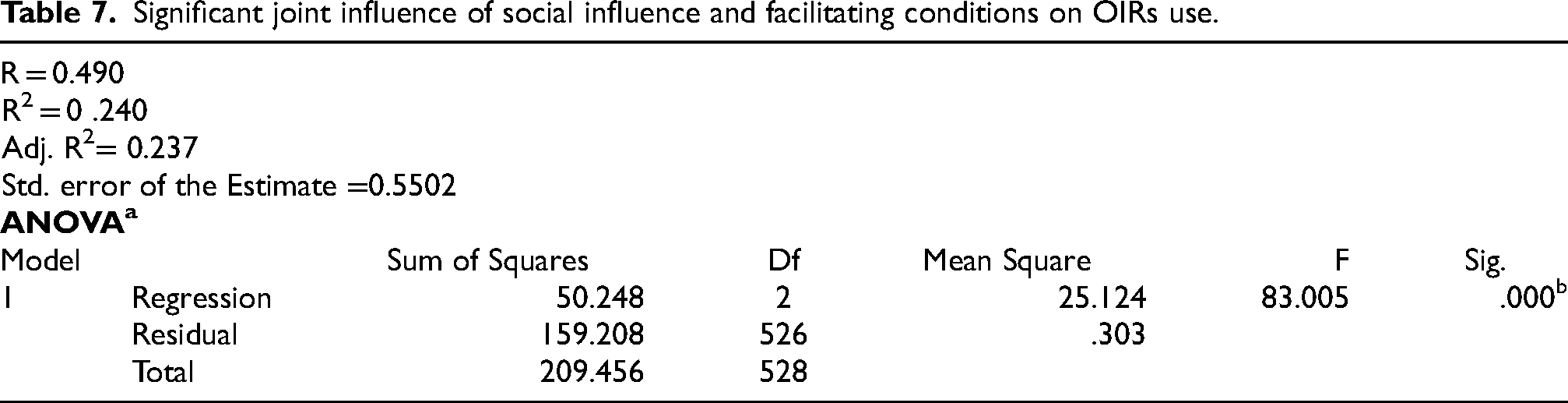
Additionally, Table 7 revealed that the coefficient of multiple correlation R = 0.490, coefficient of multiple determination (R2) = 0.240, and Adjusted R2 = 0.237 were significant (p < 0.05). This suggested that social influence and facilitating conditions jointly accounted for 23.7% variance in OIRs use and that the remaining variance may be due to other variables not included in the model for this study.
Further analysis was done to determine the individual contribution of each variable to the joint prediction. The result is presented in Table 8.
Relative influence of social influence and facilitating conditions on OIRs use.
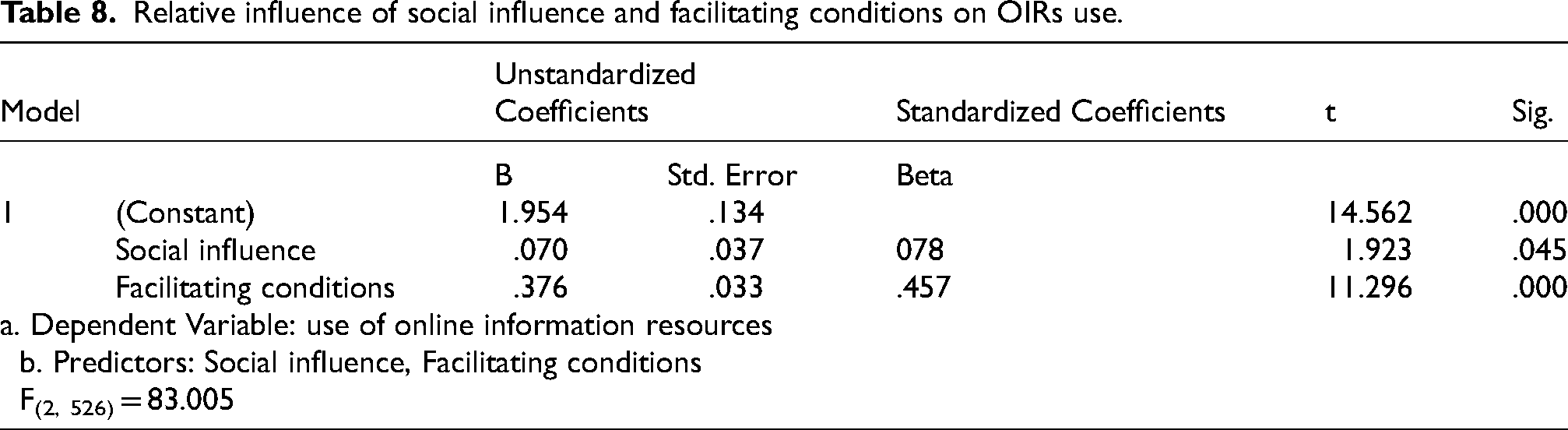
Table 8 indicates that social influence (β=0.070, p < 0.05) had a positive, insignificant and weak influence on OIRs use while facilitating conditions (β=0.376, p < 0.05) had a strong positive influence on OIRs use by LIS students in the federal polytechnics in north-west Nigeria. Although, both independent variables had a significant relative influence on OIRs use facilitating conditions had a higher influence on OIRs use by LIS students than social influence. By implication, favorable facilitating conditions would result in a higher level of use of OIRs by the LIS students. Further analysis was done to examine the influence of each indicator of the independent variables on the dependent variable. The results are presented in Table 9.
Multiple linear regression showing the relative influence of social influence and facilitating conditions on OIRs use.
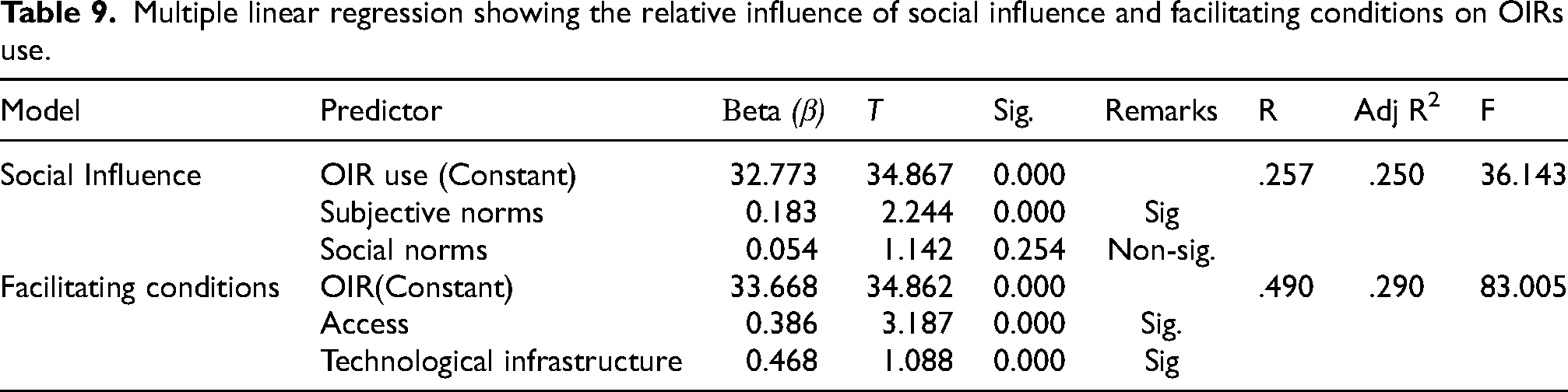
The results in Table 9 showed a relative contribution of social influence indicators (subjective and social norms) on OIRs use using multiple regression analysis. Table 9 presents the standardized coefficient, the t-ratio and the level at which the t-ratio was significant. As indicated in Table 9, subjective norms (ß=0.183, t = 2.244, p < 0.05), access (ß=0.386, t = 3.187, p < 0.05) and technological infrastructure (ß=.129, t = 2.372, p < 0.05) had a significant relative influence on OIRs use by LIS students. However, social norms had no significant contribution to OIRs use by the LIS students (ß=.054, t = 0.254, p > 0.05). Meanwhile, technological infrastructure was found to have the highest influence (ß=.468).
Discussion and conclusions
The study’s findings showed that different types of OIRs (13 in all) were used by a greater number of Library and Information Science (LIS) students in federal polytechnics in north-west Nigeria. The OIRs were also used at a high level (weighted mean = 3.17). This is in agreement with what was discovered during the preliminary stage of the study when one of the authors confirmed the provision of diverse OIRs by the studied polytechnics in their various academic libraries. The polytechnics’ websites also validate the availability and access to the distinct OIRs. This manifestation substantiates the OIRs’ high level of use which could have been due to the awareness and employment of these provided OIRs by the respondents in their various academic endeavors. However, online books, online reference sources, online databases, OPACs, and online examination papers were the first five dominant types. The findings revealed a diverse array of OIRs utilized by the LIS students in the federal polytechnics. This underscores the students’ engagement with a wide range of digital content, highlighting the importance of access to varied OIRs to cater for students’ information needs. We can assume that the students have convincingly identified these OIRs. This action commends institutional and government fund investments in students’ OIR quest and utilization to acquire new knowledge for different functions such as academics, research and recreation. The findings underscore the integral role of OIRs in supporting students’ learning and information-seeking activities, emphasizing the need for continued investment in digital infrastructure and resources to sustain this high level of engagement. This finding supports Emojorho et al. (2022), Prasenjit (2024), Selwyn (2021), Ugwulebo and Okuonghae (2021) and Yang and Li (2016) who observed that the advent of ICT has made various OIRs available providing valuable options for students to get desired information. Similarly, the finding corroborates Madu (2019) who stated that a significant transformation has been noticed in collection development policies and practices of most academic libraries as the print medium is progressively giving way to electronic and online information resources. The finding also affirms the position of Yebowaah and Plockey (2017) that students browse and use internet facilities to attend to information needs. This result is suggestive that most students of this era are digital natives and their information-finding behavior is inclined towards the Internet and other OIRs to get information (Chen, 2015; Hoque et al., 2024; Mole, 2017; Ogunbodede & Sawyerr-George, 2023; Seen et al., 2024; Ugwu & Orsu, 2017).
The study indicated a high level of social influence, particularly subjective norms affecting LIS students’ utilization of OIRs. This result agrees with Massoro and Adewale (2019) that observed subjective norm was the strongest predictor of open access journal use intention even over individual information-finding traits. This suggests that students’ OIRs use behaviors are impacted by external factors such as perceptions of social expectations and norms within students’ academic and social circles. The study stresses the need for facilitations to nurture a motivational and supportive social environment (lecturers-classmates-individuals) that encourages and reinforces positive attitudes and behaviors towards OIRs use by LIS students (Mani et al., 2019). The study further buttresses the relevance of the strong influence of institutions, family and friends in determining the beneficial information-seeking behavior of students. This result is consistent with the findings of Izuagbe and Popoola (2017) that the opinions of important referents about OIRs will have a captivating and positive influence on students’ use of OIRs. Currently, few studies have detailed how social norms as an element of social influence measure OIRs use in polytechnics. Therefore, this study identifies the attributes of polytechnics providing OIRs.
A major revelation of the study is that most social norms questions are the reverse of subjective norms questions, however, the weighted mean for subjective norms was high whereas that of social norms was moderate. This is contradictory. This suggests a mixed behavioral tendency of the students towards OIRs use. A result in the study that could partially account for this occurrence is the weak positive correlation between social influence and OIRs’ use (r = 0.217, p < 0.05). While social norms can influence behavior in the online social world, their impact on online information resources use is not just straightforward. Our study demonstrates that if there is a connection between others’ behaviors and respondents’ behaviors, the polytechnic administrators, information professionals and lecturers must make a conscious effort to enhance respondents’ descriptive and injunctive norms characteristics (Bicchieri, 2017; Chung & Rimal, 2016; Linek & Ostermaier-Grabow, 2018). The study advocates for written policies that will inspire satisfactory activities and behavior that intensify OIRs use social norms. This can be through practical sessions for taught courses, a rejuvenated library course and hands-on practical periods in libraries where students observe and do just as medical students do in teaching hospitals. This will further enhance OIRs use. Nonetheless, this discovery requires further research and contextual viewpoints.
The level of institutional facilitating conditions affecting LIS students in federal polytechnics in north-west Nigeria was high. The study highlights the significant impact of facilitating conditions, including access and technical infrastructure on LIS students OIRs use. This emphasizes the critical role of institutional support and resources in enabling students to access and utilize OIRs effectively. The findings further underline the importance of investing in digital infrastructure and support services to ensure equitable access to OIRs for all students regardless of their socio-economic background or geographical location. The finding aligns with Madu (2019) who submitted that accessibility to digital resources is what entices patrons to the library. Libraries (with the support of the management of academic institutions), therefore, owe patrons a fundamental responsibility to provide easy access to OIRs, especially students. Provision of access will allow students to have close contact with OIRs promoting effective utilization.
Our finding shows a significant but weak relationship between social influence and OIRs use by LIS students. This implies that an improvement in the level of social influence would lead to a corresponding improvement in OIRs’ use by LIS students. This finding disagrees with Izuagbe and Popoola (2017) on social influence having a significant relationship with and facilitating the perceived usefulness of digital resources. This suggests the need for further research to explore the complex interplay between social factors, individual characteristics, and contextual influences on OIRs use among LIS students. There is a strong significant relationship between facilitating conditions and OIRs use by LIS students. This implies that an improvement in the level of facilitating conditions would lead to a significant improvement in OIRs use by LIS students. The findings highlight the strong and significant influence of facilitating conditions, particularly access and technical infrastructure on LIS students OIRs use. This underscores the importance of ensuring adequate resources and support services to enable students to access and utilize OIRs effectively. The study emphasizes the need for educational institutions to prioritize investments in digital infrastructure and support services.
The study’s finding indicates a significant joint influence of social influence and facilitating conditions on OIRs use by the LIS students. It was also established that the coefficients of multiple correlation (R) = 0.490 and Adjusted R2 = 0.237 were significant (p < 0.05). This implies that social influence and facilitating conditions jointly accounted for 23.7% variance in OIRs use and that the remaining variance may be due to other variables not included in the model for this study. Furthermore, subjective norms, access and technological infrastructure have a significant relative influence on OIRs use by LIS students. However, social norms have no significant contribution to OIRs use. This result partially agrees with the earlier low mean values recorded for social norms. Technological infrastructure has the highest influence. This finding is comparable to Matusiak (2012) who stressed institutional IT facilities as enablers of students’ OIR usage and Joo and Choi (2015) who underlined accessibility as the strongest contributing factor to online library resources use intention. The study also reveals a significant joint influence of social influence and facilitating conditions on LIS students OIRs use. Social influence (particularly subjective norms) and facilitating conditions play a role in shaping students OIRs use behaviors. The latter has a greater impact on OIRs use. This underscores the importance of addressing infrastructural barriers and ensuring equitable access to OIRs to promote digital literacy and information access among LIS students.
This paper attempts to investigate how social influence and facilitating conditions influence online information resources (OIRs) use by library and information science students of federal polytechnics in north-west Nigeria. To realize this objective, descriptive and inferential statistics were used to analyze data collected from all the ND I and ND II LIS students in the three federal polytechnics offering the LIS program in the north-west geo-political zone of Nigeria. Results obtained show that there is a significant joint influence of facilitating conditions (including access and technological infrastructure) and social influence on OIRs use by the LIS students. Moreover, the respondents who are influenced by their classmates, significant people, and lecturers are more likely to have a positive attitude towards using online information resources. Overall, the study highlights the importance of facilitating conditions and social influence in promoting LIS students’ online information resources use, and provides insights for librarians, lecturers, and institutions to support the development of LIS students’ information literacy skills and behavior.
Study implications
The Unified Theory of Acceptance and Use of Technology (UTAUT) provides a theoretical framework for understanding the factors that influence individuals’ acceptance and use of technology. In the context of Library and Information Science (LIS) students’ online information resources use, the UTAUT suggests that facilitating conditions (including access and technological infrastructure) and social influence have a significant impact on their library resources use behavior.
Theoretical implications
The theoretical implications include:
Facilitating Conditions: The UTAUT emphasizes the importance of facilitating conditions, such as access and technological infrastructure, in influencing LIS students’ online information resources use. This suggests that libraries and institutions should prioritize providing reliable and efficient technological infrastructure to support students’ online learning activities. Social Influence: Social influence, including classmates’, significant people, and lecturers’ influences could play a significant role in shaping LIS students’ attitudes towards using online information resources. This implies that libraries and institutions should foster a culture that promotes the use of online information resources, and that lecturers, significant people, and classmates can serve as influential role models in encouraging students to adopt these resources. Interplay between Facilitating Conditions and Social Influence: The UTAUT suggests that facilitating conditions and social influence interact to influence LIS students’ online information resources use. This means that libraries and institutions should consider access, technological infrastructure, and social environment when designing interventions to promote the use of online information resources. User-Centered Approach: The UTAUT accentuates the importance of understanding users’ needs, attitudes, and behaviors when designing technology-based interventions. This suggests that libraries and institutions should adopt a user-centered approach when developing online information resources and services, taking into account the specific needs and preferences of LIS students.
Implications for practice
The implications for practice encompass:
Investing in Technology Infrastructure: Libraries and institutions should invest in reliable and efficient technology infrastructure to support LIS students’ online learning activities. Fostering a Supportive Culture: Libraries and institutions should foster a culture that promotes the use of online information resources, and that encourages lecturers, significant people and classmates to serve as influential role models. Designing User-Centered Interventions: Libraries and institutions should adopt a user-centered approach when developing online information resources and services, taking into account the specific needs and preferences of LIS students. Providing Training and Support: Libraries and institutions should provide training and support to help LIS students develop the skills and confidence they need to use online information resources effectively.
With respect to the study’s implication, although OIRs are beneficial and embraced by the studied students and polytechnics; their maximum acceptance and benefits will be impossible with diminishing social norms. Thus, polytechnic and government OIR policies and support programs should be advanced in this direction to support scholarship and further promote northern Nigeria’s technical education through research. The study’s limitations include funding, time constraints and the lack of data on how socio-economic gaps impact student access and use of OIRs.
Footnotes
Declaration of conflicting interest
The author(s) declared no potential conflicts of interest with respect to the research, authorship, and/or publication of this article.
Funding
The author(s) received no financial support for the research, authorship, and/or publication of this article.
