







Abstract
The study assessed the status of promotional activities in the university libraries of Khyber Pakhtunkhwa. The specific objectives were to know the role of library heads in the promotional activities, the methods used to promote resources and services, and the barriers faced in the promotional activities. The quantitative approach was used, and survey was conducted, and data was collected through questionnaire from the library heads of the central libraries of the university. The study found that library heads are crucial in promoting library services through various tasks such as staff training, formal publication methods, user-friendly services, and face-to-face discussions. They use various tools to promote resources but have identified significant problems such as inadequate funds, facilities, lack of marketing policy, and staff lack of professional training in marketing. It is recommended that public awareness campaigns, modern communication channels, including marketing as a central subject in curriculums, the allocation of marketing funds, and training programs be implemented to enhance resource utilization.
Keywords
Introduction
A library is a social institution that serves society to satisfy the information needs of the people (Bahader et al., 2021). It procures information resources and offers services to the users (Sumadevi, 2014). These can be used effectively if the library staff attracts users and promotes resources and services (Rahmani et al., 2012). Promotion of library products is a process of selecting the right technique to introduce products to the customer in such a way that instigates them to either request the product itself or ask for more information about it (Veeramani and Vinayagamoorthy, 2010). It is a communication activity with library users to encourage them to utilize its informational resources and services. It is a technique used in a library to inform patrons about the services and resources offered by the library. These include techniques like email, digital signage, screen savers, alerts, bookmarks, pamphlets, booklets, mailouts, website notifications, and giveaway products (Malekani and Benard, 2018). The main objective of the promotional activities is to inform the users about library activities, resources, services, and events to satisfy their needs and solve their problems (Shah and Ahmad, 2016).
Promotional activities in librarianship can be carried out through formal and informal methods. These methods and techniques include “advertising, direct communication, public relations, e-mail, electronic board, online discussion groups, telephone, publications, newsletters, internet, chatting, brochures, exhibitions and events, seminars, conferences and orientation programs” (Awan et al., 2022; Shah, 2016). According to Holley (2020); Torabi (2011), formal methods are structured, planned, and professionally executed strategies to promote library resources and services. Typically, these methods are consistent, documented, and designed to reach a wide audience. Formal methods include publications, such as flyers, brochures and newsletters; advertisements, such as paid promotions through newspapers, magazines or online platforms; and Web 2.0 tools, such as websites, social media blogs, and YouTube channels. Ross (2013); Torabi (2011) state that informal methods are casual, spontaneous, and personal ways of promoting library services. As mentioned by Jiang et al. (2021), examples of informal methods are personal conversations, which include verbal recommendations by librarians to patrons; telephonic communication, which provides for answering enquiries and promoting services during phone calls; and Online chats, which involve direct interaction with users via chat support systems or direct messages on social media platforms. Face-to-face communication involves engaging with users during library visits, while Word of Mouth motivates them to spread their positive experiences to others.
Allison (2013); Mallon (2013) believed that librarians’ active involvement in promoting library services is essential and a testament to their value in understanding and fulfilling users’ needs. This role is integral to maintaining the library's relevance and securing the necessary funding. Additionally, as Norris (2019) expressed, library staff should build patron loyalty and effectively communicate its value to its users. Libraries can advertise their services and resources using channels like print materials, such as flyers, brochures, and giveaways; events, such as orientation tours and workshops; and other channels, such as library publications, competitions, direct mail, and Web 2.0 applications, respectively (Ahire, 2018; Bhardwaj and Jain, 2016; Reddy and Aswath, 2018). A user-friendly website facilitates the innovative combination of resources and services to create a direct relationship between the library's services and its target audiences. It also acts as a means of communication with potential customers (Yi, 2016). The library can promote its services with the help of traditional tools, such as posters, leaflets, brochures and newsletters (Dooley et al., 2011; Kho, 2011). Email lists and the Internet can easily and effectively target specific audiences (Halevi and O’Hanlon, 2017). In addition to these, a range of promotional tactics, including one-on-one conversations, circulars, memos, phone calls, meetings, direct mail, exhibits, lectures, newsletters, library tours, and booklets, were regularly employed in libraries for marketing (Shad and Idress, 2002). Librarians leverage various technologies, including blogs, wikis, podcasts, media-sharing platforms (e.g., YouTube, Flickr), and social media services (e.g., Twitter, Facebook, Instagram, TikTok), to stay updated with evolving information technologies (Birkovych and Morozova, 2024; Rahmawati, 2021).
The researchers discovered several Pakistani studies that looked at different facets of library marketing and promotion when doing the literature study. These studies offer insightful information about the viewpoints and procedures of regional libraries. These are summarized to contextualize the research within the local framework. Ameen and Warraich (2007) realized the importance of marketing and promotion strategies in libraries; therefore, they suggested that marketing should be taught in the schools of library and information science. Idrees and Rehman (2009) said that librarians should know the users’ demands and work to fulfill them. We must act as they want, and our opinion is like their opinion. We must keep in mind that the library is service oriented organization. Soroya (2017) found that most university librarians know basic marketing and promotion techniques. Therefore, they suggested applying these techniques to promote library resources and services. Mairaj and El-Hadi (2012) stated that libraries should adopt the interactive technologies of Web 2.0 and Library 2.0 to market their resources and services and communicate with users. Khan and Bhatti (2012) proposed that libraries must utilize social networking platforms to develop professional relationships, share library events, promote services and collections, and communicate with users. Shah (2016) implied that promotional activities could raise users’ awareness of sources and services and justify the budget spent on procuring information resources. Soroya and Ameen (2017) studied marketing applications in academic libraries and highlighted some methods and channels used by the surveyed libraries to promote library resources and services. Moreover, verbal communication, new arrivals, written communication, and lectures were the most used promotional channels in the libraries under study. It was suggested that a specific fund be allocated to promote library resources and services. Iqbal (2018) examined the use of social media applications in university libraries. The most used social media tools were Facebook, Blogs, Flicker, Vimeo, Google + RSS, etc. It was proposed that professionals should receive training in promoting libraries using social media to their maximum potential. The LIS Schools must take an active part in encouraging LIS professionals to use social media applications. Methods of promoting resources and services.
Numerous studies have explored the role of social media applications in promoting library resources and services, some of which are highlighted here. According to AIAwadhi and Al-Daihani (2019); Avhad (2023), social media platforms significantly enhance awareness of library resources and services. Goedert (2021) asserted that libraries might engage in collaborative initiatives to promote their collections and to improve user engagement. According to Cheng et al. (2020); Kirita and Mwantimwa (2021) libraries can engage with their communities and share information and updates through platforms like WhatsApp and Facebook. Additionally, libraries can reach a wider audience through platforms like Instagram and Twitter, which increases awareness of their resources and services (Kumar et al., 2024). According to Madhusudhan and Soni (2024), libraries can provide user-attractive material, including virtual tours, book suggestions, and event announcements. The multimedia content found on sites like YouTube and TikTok, according to Byrkovych and Morozova (2024), has the potential to increase the accessibility of library materials, especially for younger users. Prokopovych and Веремчyк (2024) maintained that these technologies enable users to provide real-time feedback and interaction, thereby enhancing the quality of service. Kirita and Mwantimwa (2021); Kumar et al. (2024); Kuri et al. (2023) observed that libraries encounter barriers, including inadequate infrastructure, low user engagement, and a lack of management support, despite the potential benefits.
Statement of the problem
The university library must define its goals, users, and their needs and then offer such services that help achieve the stated goals. The university libraries are now user-centered hubs in which every operation aims to satisfy the users’ needs, help create awareness among users and know their needs and demands. Contrary to an ideal situation and despite the proven importance of marketing and promotional activities in increasing the effectiveness and efficiency of information resources and the overall image of libraries. Library promotional activities increase the use of resources and services (Irawan, 2023; Nooshi et al., 2018), demonstrate the value of libraries to parent organizations and justify their budgets, which can lead to sustained or increased funding (Shah and Idrees, 2021; Smith, 2011) and improve the library's image in the community (Lafazan and Kiebler, 2017; Nurhidayah and Hanum, 2022). Promotional activities through digital media can reach a wider audience (Milenia et al., 2024; Oktavia and Marlini, 2020); feedback from promotional activities helps libraries refine their strategies and meet user needs (Bahader et al., 2018) and post-event promotions can increase engagement and demonstrate the library's outreach value (Lafazan and Kiebler, 2017).
Relevant promotional activities include community engagement programs, which may involve hosting events, workshops, and reading clubs to attract community members and foster a culture of reading and learning. Additionally, digital literacy training, such as sessions on using digital resources and technology, can enhance the accessibility and utilization of library resources Furthermore, marketing and outreach efforts, including social media and local media, can help promote library services and events, reaching a broader audience and encouraging library visits (Khan and Bhatti, 2024; Rafi et al., 2021). The absence of targeted promotional activities in KP libraries contributes to decreased library usage, resource underutilization, and limited community engagement (Rafi et al., 2021). It is unknown whether the university libraries of Khyber Pakhtunkhwa (KP) are doing such activities. Hence, it is essential to conduct a study that examines the status of practicing such activities, the awareness and usage of relevant tools, and their impact. This study will explore the promotional activities in the university libraries of KP. It will also highlight the difficulties faced by the library personnel while promoting information resources and services.
Literature review
This section is structured around the key themes identified in the study. Many databases have been consulted to ensure comprehensive coverage of relevant literature. Efforts were made to include diverse sources, including peer-reviewed journals, books, conference proceedings, and reports, to provide a well-rounded understanding of the subject matter. The review process involved critically analyzing historical and contemporary studies to capture evolving perspectives and trends related to the research focus.
Role of librarians and library staff in promotional activities and tools used for promotion
The library workforce, which encompasses librarians and staff, is critical and prominent in promoting resources and services to university users. Librarians and information professionals must grasp the ideas underpinning library service promotion and marketing to use their resources better. The foundation behind library service promotion could be of great importance for librarians and information professionals to boost the usage of their resources. In the current ICT and digital environment, a significant paradigm shift in how library and information services are delivered has occurred, moving from strictly traditional and physical manipulation of information resources to technology management and electronic library and information service delivery. This shift keeps library professionals, non-professionals, and semi-professionals informed and up-to-date on promoting services and resources.
Adegoke (2015) proposed that librarians should devote more time and effort to promoting library products and services through various methods such as advertisements, publicity, exhibitions, displays, and customer relations with users. The study also advocated for a continuous user orientation program for all users. Yi (2016) reported that some librarians promoted library resources and services using various methods, including marketing, making materials and services accessible via the library website, in-person events, social media, workshops, and publishing guides. Malekani and Benard (2018) highlighted the effectiveness of marketing techniques used by library professionals in promoting library resources and services. These techniques have proven successful, such as advertisements, websites, library catalogues, face-to-face interactions, brochures, display materials, and training sessions. The study suggested that increasing marketing through social media, pamphlets, brochures, new arrivals email alerts, and an ongoing user training program would further amplify their effectiveness. Khalid (2019) revealed that libraries must be paramount in promoting resources and services. The study confirmed that library professionals at the University of Malaya promoted library resources and services by engaging users through various effective promotion strategies such as displays, exhibitions, booklets, and face-to-face discussions. The study suggested creating a marketing plan with a yearly budget to use the library's documents. The study also recommended that librarians promote marketing techniques for their resources and services via various marketing methods such as advertisement, publicity, exhibition, and public relations activities.
Kumar and Singh (2015) concluded that technology has enabled access to a wide range of library resources, and librarians should have better knowledge to connect with users, which will help library professionals survive in this digital environment. They proposed that library heads adopt social media tools and techniques for marketing their sources and services. Oyinloye and Dangwaran (2018) revealed that orientation and library tours were the best methods, while a website was the best tool for promoting library resources and services at Nigeria's academic libraries. Adekunmisi (2013) believes that libraries are distinctive in their access and services; therefore, librarians must promote their services and products to enhance the perception and image of their libraries and themselves. He also emphasized the need for libraries to collaborate and constantly connect with their users to deliver library information because libraries depend on user support to survive. Bakare (2018) revealed that librarians can use social media platforms to advertise library services. It is also recommended that libraries have adequate technology and infrastructure to use social media platforms effectively for library resources and services. Kari and Oyeniran (2019) found that social media was used infrequently to promote library resources and services. According to the study's findings, social media should be fully utilized to promote library services, and it also revealed that using social media could improve the library's image. According to Akporhonor and Olise (2015), librarians in Nigerian universities are not yet fully leveraging the potential of social media to promote library resources. Omini and Osuolale (2019) found that Facebook and blogs are the most popular platforms for this purpose. The use of social media, however, goes beyond promotion. It has the potential to enhance two-way communication significantly, and, importantly, it encourages interactive collaboration. This collaborative aspect can make library users feel involved and part of a community, thereby improving the use of libraries.
Khan and Bhatti (2012) studied social applications in marking library services. They opined that applications like YouTube, wiki, Instant Messaging, blogs, Twitter, and Facebook could be used to share information about conferences, workshops, library events, advertising services, collections, events, and resources. According to Patil and Pradhan (2014), library staff must communicate with users and promote the library's services to attract more patrons. By offering information appended in many sources available in the library, the promotion's primary objective is to inform users on how to use the library and its resources and to keep customers informed. There are several ways librarians can draw people into their libraries, such as outreach programs and various forms of advertising. This can be done by employing marketing strategies like producing materials for libraries, holding events, putting on library displays and exhibitions, using social media, and more (Agboke and Effiong, 2020). Libraries could frequently utilize marketing strategies to increase outreach, including the library website, emails, bookmarks, posters, leaflets, table tents, and social media (Park and Dantus, 2018). Similarly, Yi (2016) found that newsletters can introduce new advancements, while flyers, brochures, and posters can be utilized to advertise events and programs.
Shah and Idrees (2013) recommended that libraries should enhance the promotion of library information services and resources. The library staff should compile and distribute brochures, bulletins, and new arrival lists among the users. There should be orientation programs for new users to give them the latest and current knowledge they need. Baber et al. (2020) highlighted that university library websites can provide numerous marketing features. These include direct links to the library from the main university page, information on library programs and exhibitions, photographs of events, online bulletins, and updates on new library collections such as books, journals, and databases. Additionally, these websites can offer links to the Higher Education Commission Digital Library, newspapers, contact information, and the library’s mission statement. Igwebuike and Agbo (2017) argued that organizing seminars and workshops would improve the utilization of library resources. They also recommended that the authorities ensure an uninterrupted power supply, more space, sufficient and up-to-date textbooks and journals, and hire more skilled staff. As Kumar (2017) suggested, several cost-effective methods can be employed to reduce the cost of promoting library resources and services. These methods, which require minimal resources, are designed to engage with the target audience directly, making them feel connected and involved. They include utilizing internet marketing and social networking sites like Facebook, Twitter, Flickr, YouTube, blogs, wikis, and RSS feeds. Traditional print media also plays a significant role, with booklets, flyers, banners/posters, bookmarks, newspaper alerts, and newsletters being valuable tools. Other print materials, such as usage statistics, library materials, annual calendars, feedback forms, postcards/letters, and surveys, are also beneficial. Organizing events and activities is another excellent way to directly engage the community and promote library services. These cost-effective methods ensure a broad reach to the intended audience, enhancing the visibility and utilization of library resources and services. Asghar and Bhatti (2014) believed that marketing in libraries is necessary for maximizing library use and ensuring its survival. They advocated for using new information delivery channels to ensure the timely delivery of services and products. Adegoke (2015) highlighted the most common tools and methods libraries use to promote library products. These included presentations, direct marketing, advocacy, bulletins, newsletters, reader awareness training, display strategy, library web pages, lectures, library tours, and Web 2.0 tools.
Problems in the promotion of library resources and services
Malekani and Benard (2018) said that library professionals should use techniques such as catalogs, print advertisements, displays, emails, workshops, phones, leaflets, and face-to-face events, websites, etc., to promote their information resources. They also identified that academic librarians faced various barriers, including a limited budget, a lack of staff, and increased users. Khan and Bhatti (2012) highlighted the problems faced by library staff while using social media for marketing purposes, including a lack of time, privacy and identity theft, a lack of knowledge of too many social tools, a slow internet connection, a lack of resources, both financial and human, and a lack of training opportunities. Oyinloye and Dangwaran (2018) explored that the universities faced various challenges in promoting library resources and services, including a small budget, a staff with insufficient skills, an unfavorable work environment, and a lack of library resources and services. The study has recommended increasing the funds provided to the library, training personnel to meet customer demands, creating a welcoming environment, and expanding the library's collection of resources. Igwebuike and Agbo (2017) revealed that the most significant challenges faced by the libraries included the need to learn how to use the resources, lack of library staff, lack of enough power, and lack of money. Similar problems were also identified by Kari and Oyeniran (2019), faced by the libraries during the social media era, including a shortage of skilled personnel, a lack of modern, suitable tools, adequate staff, and an unfavorable work atmosphere.
Akporhonor and Olise (2015); Omini and Osuolale (2019) discovered that university libraries in Nigeria encounter privacy concerns and a poor network while promoting library products and services via social media platforms. A study by Osinulu et al. (2018) assessed the marketing tactics utilized by librarians and found that inconsistent internet access, a lack of funds, and a lack of ICT skills and marketing knowledge among the staff are obstacles to successfully marketing library resources and services. In the North-West region of Nigeria, Aderibigbe and Farouk (2017) investigated the challenges associated with disseminating information resources and services within federal university libraries. The study involved the participation of heads of reader services from five federal university libraries. Their findings revealed that insufficient funding allocated to essential resources stands out as a significant barrier hindering the effective marketing of information resources and services by these libraries. In a similar vein, Osinulu et al. (2018) identified unreliable Internet connectivity and insufficient financial resources as primary impediments to effectively promoting library services and offerings. Opeyemi et al. (2014) conducted a study on academic libraries in southwest Nigeria, determining a need for enhanced skills among information professionals. Their findings suggest the imperative for academic libraries to adopt diverse marketing tactics to bolster service provision comprehensively. Additionally, they advocate for information and communication technology proficiency among library and information professionals to adeptly utilize these strategies.
Agbo and Eyinnah (2023) posited that there is often inadequate communication between librarians and users, leading to a lack of awareness about available resources and services. Moreover, many libraries struggle with insufficient funds to support library promotional activities. Similarly, the absence of adequate facilities and poor access to information technology can impede the marketing of library services, especially in the digital age. Oladotun et al. (2023); Horsfall (2020) believe that there is often a staff shortage with the necessary skills and competencies to promote library services effectively. This includes a lack of training and retraining opportunities for library staff. As Chegwe and Anaehobi (2015) conceived, some librarians may have a limited understanding of marketing, viewing it merely as selling rather than a comprehensive strategy to engage users and meet their needs. Moreover, the rapid evolution of technology and the need for ICT infrastructure pose significant challenges, as many libraries lack the tools to reach users effectively through digital platforms.
Literature gap
The researchers reviewed the literature published by Pakistani researchers in national and international journals. The review concludes that various studies on general marketing perspectives have been conducted, covering different dimensions and victorious “Marketing Mix” variables. Some studies in Pakistani libraries have covered specific marketing elements, such as using social media in library marketing, employees’ perceptions of library marketing, marketing tools and methods, communication channels with library users, and using university websites for user communication and marketing. However, the literature starkly reveals a lack of systematic and thorough research encompassing all library resource and service promotion components. Despite a few general marketing studies, there needs to be more comprehensive research on promoting library resources and services in Pakistan, particularly in the university libraries of Khyber Pakhtunkhwa. This gap highlights the critical need for such a study.
The literature gap in Pakistani university libraries, especially in Khyber Pakhtunkhwa, has been addressed by highlighting the importance of research in addressing challenges such as limited resources, inadequate infrastructure, and low user awareness of library services. Promotional activities are needed to enhance user awareness, improve access to scholarly materials, and align with global trends. This research underscores the need for a focus on library promotion in KP. University libraries in Khyber Pakhtunkhwa have the potential to significantly enhance their resource and service usage, increase their value to the organization, educate users, change perceptions, tailor services, increase accessibility, and improve their library image. The researcher identifies a significant need in library and information science literature for a comprehensive study on promoting library services and resources in the university libraries of Khyber Pakhtunkhwa, which has the potential to bring about substantial positive changes.
In today's digital age, users expect libraries to evolve and meet their contemporary needs through effective promotional strategies. This research highlights the importance of adapting to user behavior by utilizing social media, virtual platforms, and personalized outreach. With increasing competition from online databases and commercial search engines, university libraries must emphasize their unique offerings, such as access to curated resources and research support, to remain relevant. Additionally, the study addresses the specific needs of Khyber Pakhtunkhwa's public sector university libraries, ensuring that the findings are locally applicable while providing a framework that can benefit other regions.
This research is noteworthy because it thoroughly comprehends the promotional initiatives of public sector university libraries in Khyber Pakhtunkhwa. University libraries are the foundation of academic and research institutions, providing various resources and services for developing and acquiring knowledge. As a result of the absence of effective promotional strategies, these resources are frequently underutilized, which restricts their influence on the academic community.
This study illuminates the practices that improve the visibility and utilization of resources by analyzing the current state of promotional activities. It examines the role of librarians and library staff in leading promotional initiatives, underscoring the necessity of active engagement and leadership in increasing user awareness. The study also offers practical insights that can be replicated and adapted in similar contexts by identifying the methods employed by library staff to promote resources and services. In addition, the research highlights the obstacles to effective promotion so administrators, and librarians can tackle these issues with well-informed decisions and resources. The results contribute to the existing literature by providing valuable insights for optimizing library outreach, enhancing user satisfaction, and maximizing the return on investment in library resources and services.
Objectives of the study
The study aimed to investigate the promotion of Information Resources and Services in the libraries of Khyber Pakhtunkhwa. The specific objectives of the study were
To study the status of promotional activities in the university libraries of Khyber Pakhtunkhwa To know the role of librarians/libraries heads in the promotional activities of library resources and services. To identify the methods used by the library staff for the promotion of resources and services. To find barriers faced by the library heads in the promotional activities of library resources and services.
Research methodology
A Quantitative approach and a survey method were adopted to achieve the research objectives. A review of the pertinent literature reveals that the survey method and quantitative research strategy were successfully applied in several prior studies to achieve the goals (Bahader et al., 2021; Khalıd, 2019; Shah and Idrees, 2021; Soroya and Ameen, 2017; Uwandu and Osuji, 2022). A total of 35 university libraries in Khyber Pakhtunkhwa were included in the population; 27 of these libraries were public, and eight (8) were private (Higher Education Commission, 2022). The core libraries of public institutions were chosen as the study's sample due to their homogeneity. Additionally, information was gathered from these universities’ librarians, library heads, and the library in charge (Higher Education Commission, 2022). Considering their homogeneity, the central libraries of public-sector universities were considered the study's sample. Moreover, data was collected from the librarians/library in charge/library heads of these universities.
As it was a quantitative study, a questionnaire was used to collect the data from the sample. According to the study's aims, the researchers have adjusted Shah's (2016) questionnaire. The questionnaire was chosen as the data collection tool because it successfully satisfies the study's goals and makes it possible to get pertinent and targeted data. Additionally, it was chosen due to its practicality in reaching a geographically dispersed sample, ensuring that data could be collected efficiently and uniformly across multiple locations. The structured nature of the questionnaire allows for standardized responses, facilitating comparative analysis. Furthermore, it is a cost-effective and time-efficient tool that suits the study's scope and resource constraints. The initial draft of the tool was discussed with professional colleagues and experts in the field. Their recommendation and suggestions were considered to increase the validity of the instrument. The Respondents’ responses were collected using a variety of scales such as dichotomous scales (yes, no) and Likert scale.
The questionnaire comprised five sections to gather specific information related to the study objectives. The focus of the first section was on the demographic characteristics of the respondents, providing essential contextual data. Section two explored the status of promotional activities within libraries. In the third section, the role of library staff in executing and managing promotional efforts was examined. Tools employed for promotional activities were addressed in the fourth section, while the challenges encountered in implementing these activities were the focus of the fifth section. Additionally, the questionnaire included basic questions about the respondents’ exposure to promotion and marketing concepts, such as whether they had studied these topics or received relevant training.
Data was collected mainly from field surveys through questionnaires and sent to all public sector university chief / in-charge / head librarians through the mail, social media groups, WhatsApp, etc. Researchers made telephone calls and sent reminders through email, WhatsApp, and personal visits to increase the response rate. A total of 27 questionnaires were distributed among respondents to collect data for the study; by employing all the efforts, the researcher received all the filled questionnaires with a response rate of 100%.
The questionnaires were organized by allotting a numerical identification number to each and then defining the variables in the Statistical Package for Social Sciences (SPSS). Responses were recorded for each variable to facilitate analysis. Considering the study objectives, descriptive statistics such as frequencies, parentage, and mean standard deviation were used to draw conclusions. Moreover, Microsoft Excel 365 was also used to create charts and graphs. The results are presented in tables and charts/graphs and then interpreted to draw insights from the data.
Data analysis
Demographic information of the respondents
The data in Table 1 demonstrates that of the 27 respondents, 81.5% were male and 18.5% were female librarians. Males comprised most respondents, compared to females. The data also shows that the heads of 11.1% of libraries were chief librarians, 33.3% were deputy librarians, 40.7% were assistant librarians, and 14.8% were in-charge libraries. This data reveals that most of the surveyed libraries were headed by the assistant librarians, and the posts of chief librarian and deputy librarian are still vacant. However, filling these vacant positions also presents an opportunity for improvement.
Designation of respondents (n = 27).
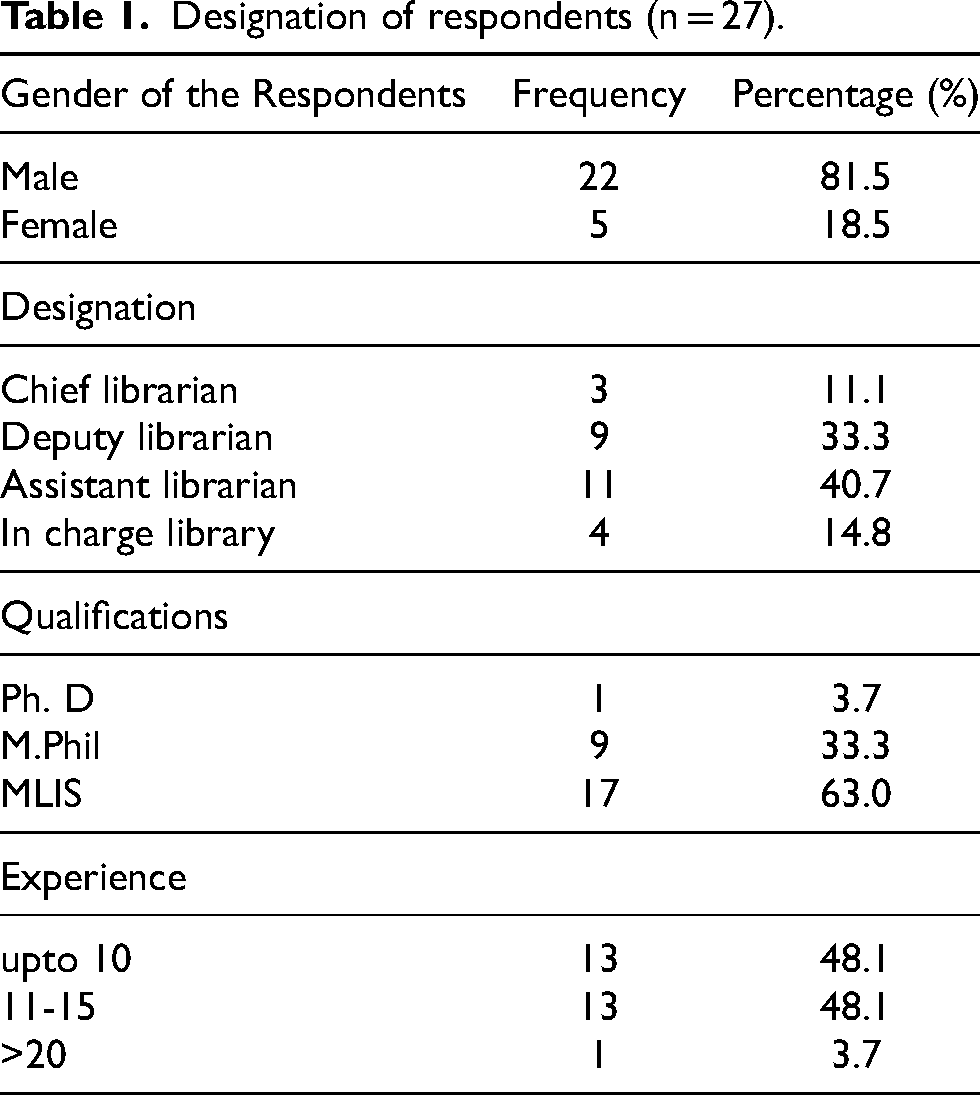
Most of the respondents’ academic qualifications were sixteen years of education (BS/MLS/MLIS; 63%), followed by those with a M.Phil. degree (33.3%) while only one respondent had PhD in library and information science. The professional experience of the respondents was analyzed, and it was found that 48.1% (13 respondents) had up to 10 years of experience, while an equal proportion (48.1%, 13 respondents) reported having 11–15 years of experience. Notably, only 3.7% of the respondents reported a professional experience surpassing 20 years.
Basic information about marketing
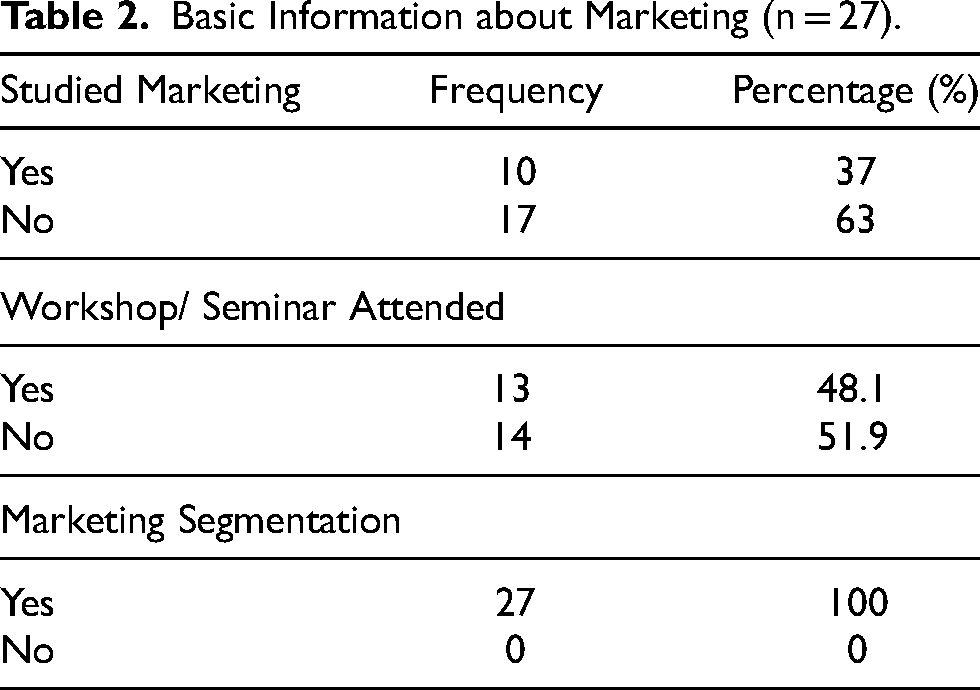
The respondents were asked some basic questions about marketing, such as whether they had ever studied marketing as a subject or course during their education, whether they had ever attended a workshop or seminar on marketing, and whether they had made user segmentation. According to the findings in Table 2, most respondents, 17 (63%), had not studied marketing as part of their formal education, whereas 10 (37%) of respondents had. The data also illustrated in Table 2 that most respondents, 14 (51.9%), had yet to attend any workshop/seminar on the library's marketing, whereas 13 (48.1%) respondents attended such a seminar or workshop. It was also deduced from the data that respondents (100%) divided clients into groups based on specific characteristics.
Basic Information about Marketing (n = 27).
Status of promotional activities
It was observed that most of the libraries did not have any formal programs and activities to promote library resources and services. However, most respondents opined that they perform some activities rather than regularly to promote library resources and services. The activities mentioned by the respondents include an orientation program, book exhibitions, seminars, lectures and a display of a list of the new arrivals. It was also found that most university libraries did not arrange formal user education/ information literacy programs for information services.
Role of librarian /library staff in the promotional activities
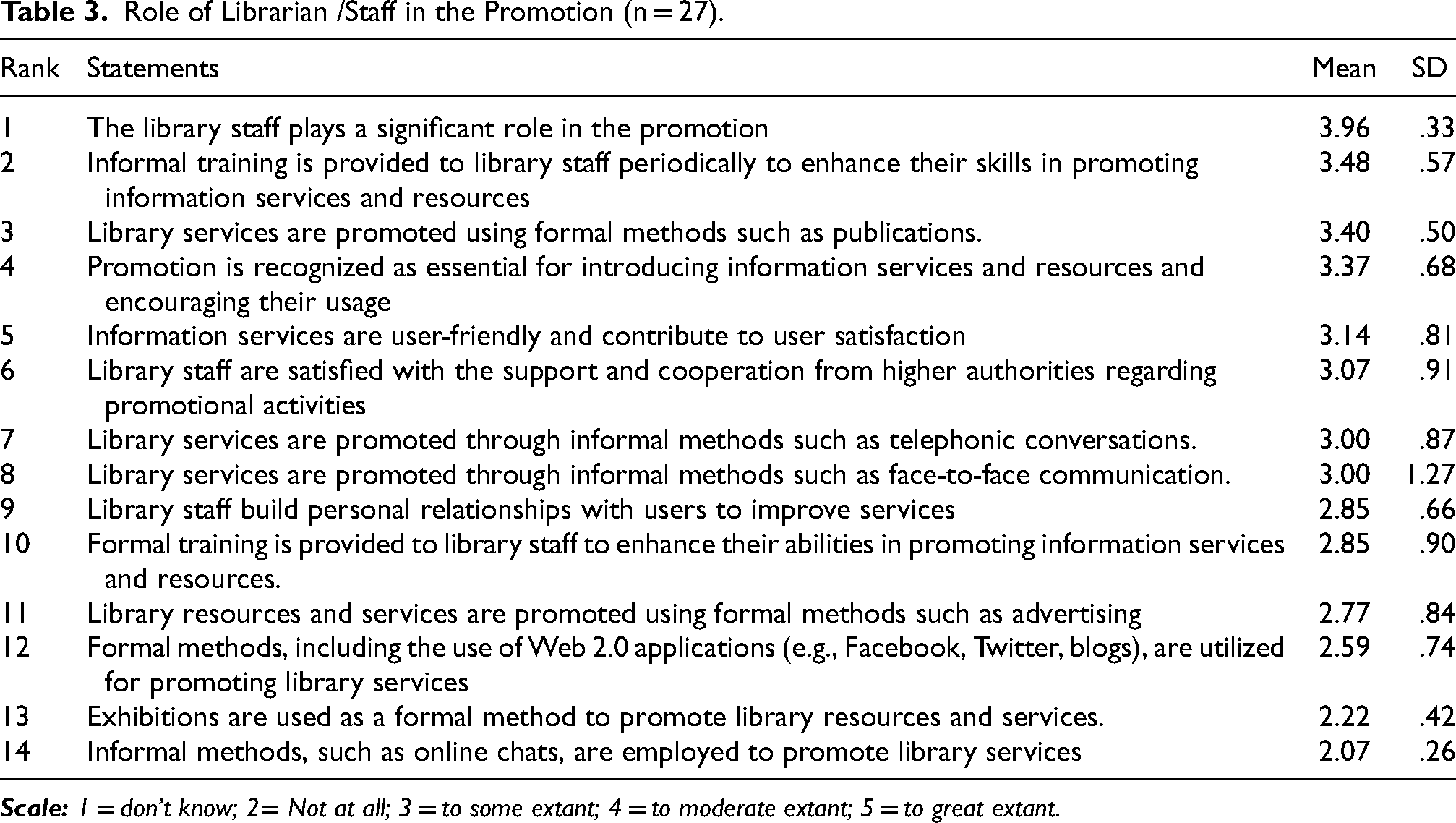
A five-point Likert scale was used to assess the role of library heads in promoting library resources and services. The data in Table 3 indicates that most statements received higher mean values, suggesting that the library staff actively promoted their information resources and services. Highly rated statements by the library heads included playing an active role in promotional activities (Mean = 3.96), providing periodic informal training to the library staff (Mean = 3.48), utilizing formal methods of publications (Mean =3.40), offering user-friendly services that lead to customer satisfaction (Mean =3.14), using informal methods such as telephonic conversations (Mean = 3.00) and engaging in face-to-face discussions to promote library resources and services (Mean = 3.00)
Role of Librarian /Staff in the Promotion (n = 27).
Specific budget for promotional activities
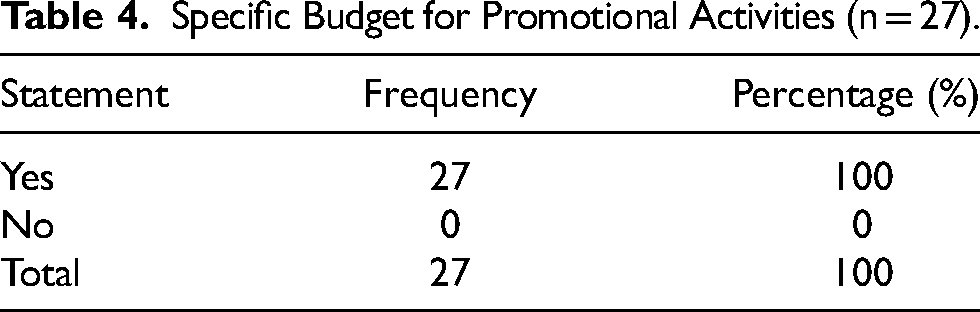
The library heads were asked whether there was a specific budget for the libraries’ marketing or promotional activities. Their responses are listed in Table 4, which indicates that no library sets aside a particular amount of money for marketing initiatives. As a result, every respondent demanded a budget for library promotion.
Specific Budget for Promotional Activities (n = 27).
Tools/Methods used for the awareness of users
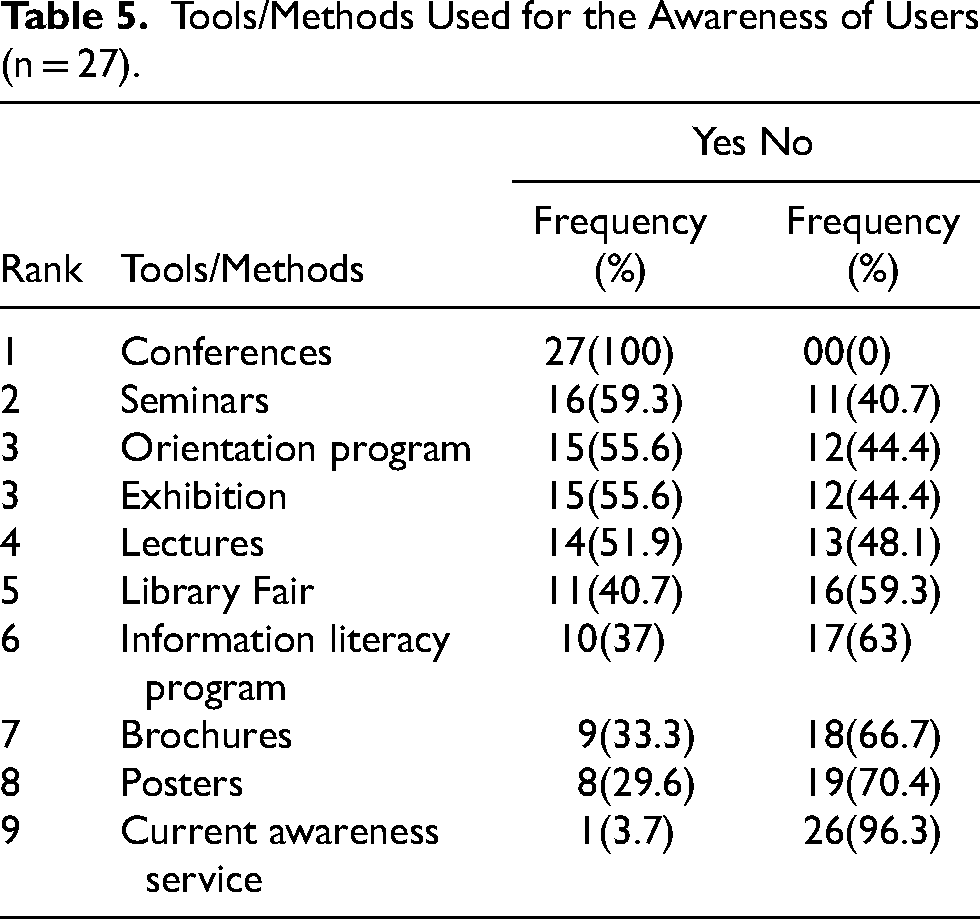
The study's respondents were asked to mention tools/methods used to be aware of the library's resources and services and recent developments and activities. Dichotomous scales comprising yes/no were used to gain their responses. The data in Table 5 stipulates that the most used tools/methods used by the library staff to inform library users about library resources and services were conferences (100%), seminars (59.3%), orientation programs (55.6%), exhibitions (55.6%), and lectures (51.9%). There were also tools used by a significant number of libraries, including library fairs (40.7%), information literacy programs (37.0%), and brochures (33.3%). In comparison, posters (29.6%) and current awareness services (3.7%) were the tools that were used less by the respondents.
Tools/Methods Used for the Awareness of Users (n = 27).
Barriers to the promotion of library resources and services
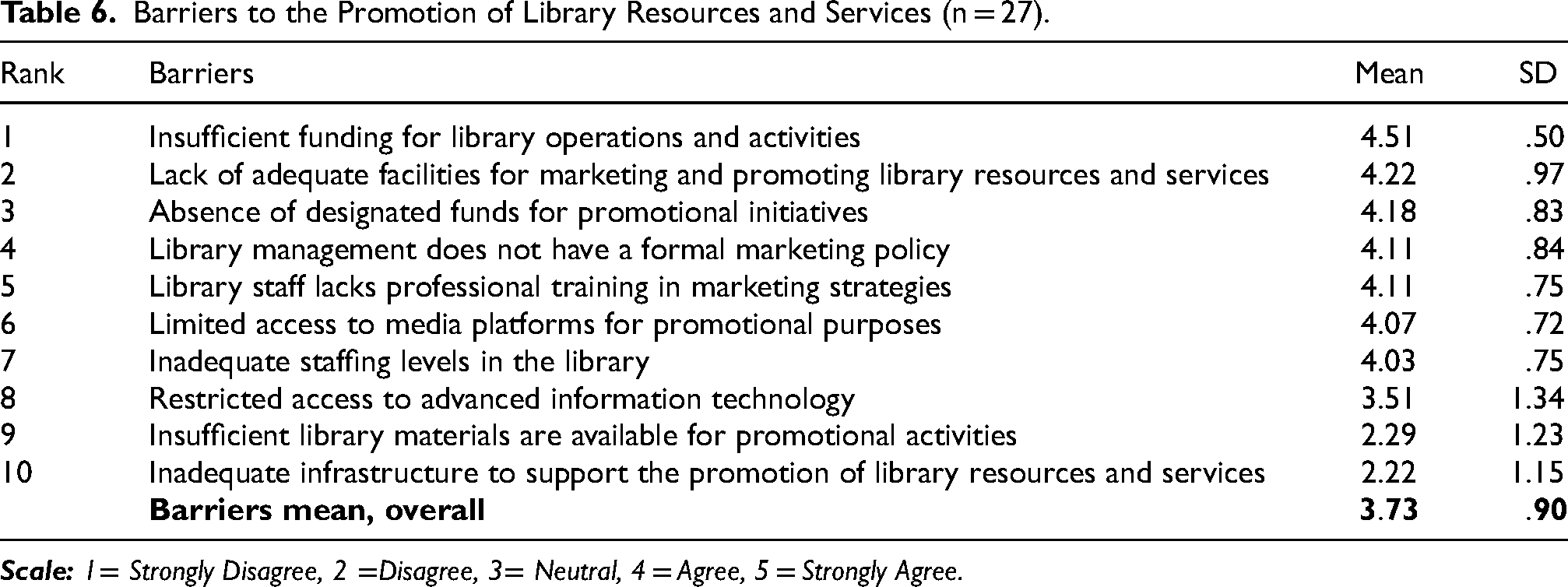
The survey instrument comprised several statements regarding the challenges library staff encountered in promoting their resources and services. Respondents evaluated each statement based on their judgment, using a 5-point Likert scale that ranged from strongly disagree to strongly agree. Table 6 shows that the most significant barriers to promoting library services and resources were inadequate funding (Mean = 4.51), lack of facilities to promote resources and services (Mean = 4.22), allocation of funds for promotional activities ((Mean = 4.18), library management does not have marketing policy (Mean = 4.11), and the available staff lacks professional training in marketing (Mean = 4.11). The other barriers were limited media access (Mean = 4.07), limited staff in the library (Mean = 4.03), and poor access to information technology (Mean = 3.51). The overall mean score of barriers to promoting library resources and services is (Mean = 3.73), which lies at the fourth value of the scale. It shows that all the respondents agree that university libraries in KP face barriers in marketing library services.
Barriers to the Promotion of Library Resources and Services (n = 27).
User education/ information literacy program
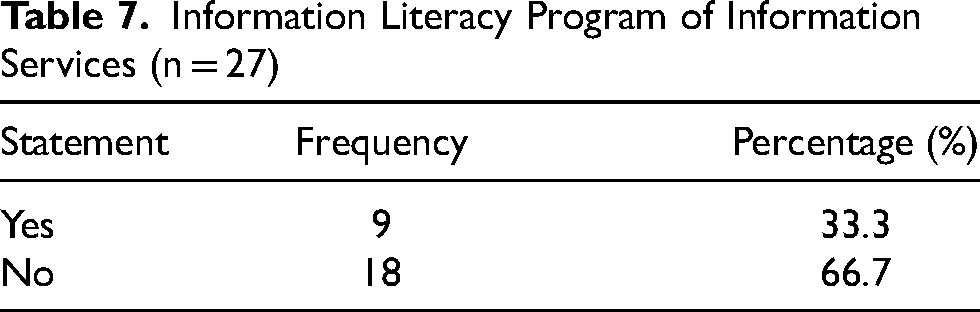
The survey participants were asked whether their libraries provided formal user education or Information Literacy Programs (ILPs) using a binary Yes/No scale. The data presented in Table 7 reveals that only 33.3% of libraries offered ILPs, while the majority, 66.7%, did not provide such services. This represents a significant issue, as the lack of formal promotion methods hinders users from fully understanding and utilizing the library’s resources and services. Several factors contribute to this shortfall, including limited funding, inadequate staffing, lack of professional training in user education, negligence by library staff, insufficient institutional support, and a lack of prioritization of library promotion by higher authorities. Additionally, cultural and administrative barriers and the absence of clear policies and strategies for user engagement exacerbate the problem.
Information Literacy Program of Information Services (n = 27)
Discussions
In today's digital and information age, marketing library resources and services is essential, especially in the university community. Marketing in libraries assesses customer needs and popularizes library resources and services to maximize their use (Deshpande, 2019). Library marketing is a dynamic system of economic activities in which the library examines users’ actual and projected needs and responds to them, influencing market searches and predisposing readers to library resources and services (Yankora, 2013). Due to technology's significant impact on people's lifestyles and work environments, as well as the changing proportions of the world's population by age group, library marketing is changing. As technology advances, library operations and marketing tactics evolve (Natarajan et al., 2016). Employing marketing methods is critical to increasing the capabilities of a library's resources and services to achieve user satisfaction. According to the market philosophy, library management must also focus on identifying user wants rather than needs (Potter, 2012).
The use of digital tools has opened new possibilities for increasing the exposure of library materials and services. Compared to more conventional approaches, these tools allow libraries to advertise their resources and services more effectively while reaching a wider audience at a lower cost. Libraries could use social media sites like Facebook, Twitter, and LinkedIn to interact with users and promote their resources and services. These platforms facilitate real-time communication and content sharing, boosting user engagement and visibility (Horsfall, 2020; Reddy and Aswath, 2018). Email is also a valuable tool for libraries to reach patrons; it can be used to help Users stay informed and engaged by receiving library newsletters and information on new resources, events, and services (Rykhtorova, 2020; Sonawane and Thirunnavukkarasu, 2023). Libraries can raise their online presence by improving their websites for search engines and facilitating user access to their resources and services (Sonawane and Thirunnavukkarasu, 2023). Web 2.0 tools such as WhatsApp, YouTube, and blogs enable libraries to create and share multimedia content that is more engaging than traditional text-based communication (Horsfall, 2020).
Marketing has been an integral part of librarianship, and the library staff uses various strategies and tools to promote their resources and services (Eda and Ukubeyinje, 2019). Librarians and library staff play vital roles in promoting library resources and services. They are expected to plan marketing strategies and programs and should know the importance of marketing processes and activities. The study’s findings revealed that the library heads played a key role in promoting library services. These results align with the studies of Yi (2016), who found that some librarians promoted library services and resources through various marketing techniques. Bakare (2018) discovered that librarians could use social media platforms to promote library services; Malekani and Benard (2018) also reported that librarians used marketing techniques such as advertisements, websites, library catalogues, face-to-face interactions, brochures, display materials, and training sessions. The study's findings are also consistent with those identified by Kari and Oyeniran (2019); Khalid (2019), who stated that library employees are influential in promoting library services.
The results show that library heads actively participated in the library's promotional activities. They performed various tasks, including providing periodic informal training to the library staff, utilizing formal methods of publication, offering user-friendly services, using informal methods such as telephone conversations, and engaging in face-to-face discussions with users to inform them about library activities. These findings are like those identified by Malekani and Benard (2018); Oyinloye and Dangwaran (2018); who reported that librarians and staff have a direct relationship with using library sources and services. Similarly, Bakare (2018); Khalid (2019) opined that librarians should use formal and informal methods to market their resources. Moreover, the study of Akporhonor and Olise (2015) suggested the use of social media to attract users to the library and enhance the use of information resources.
The library heads used various tools to promote library resources and services, including conferences, seminars, orientation sessions, exhibitions and lectures. These results are supported by those identified by Agboke and Effiong (2020); Kutu and Olajide (2018). These findings align with those identified by Uwandu and Osuji (2022), who found that university libraries use exhibition and display of new arrivals, user orientation programs, social media, Current Awareness services, flyers and posters, conferences, seminars, and workshops are strategies used for marketing information resources and services. The findings of Adegoke (2015) show that in addition to the traditional strategies, the university libraries in Nigeria used some new strategies for the marketing of resources and services, such as bulletin boards, complaints/suggestion boxes, users’ education courses, electronic billboards, audio-visual services and online dissemination of information. Edewor et al. (2016) reported that the university libraries of Africa used tools like library publications (memos, bulletins, and newsletters), orientation programs, websites, flyers, and posters for marketing library services. In European nations and other advanced countries, libraries employ various tools and methods to promote their resources effectively. They enhance user experience and accessibility by updating their websites with social media integrations and banner advertisements (Mikhalchuk, 2021; Rykhtorova, 2020). Libraries actively use platforms such as Twitter and Facebook to facilitate real-time interactions, allowing them to share resources, promote events, and engage users through discussions and contests (Nedoshytko et al., 2023; Sakas and Sarlis, 2016;). Additionally, libraries leverage website analytics to identify effective promotional strategies, focusing on user retention and high click-through rates (Udartseva and Rykhtorova, 2018).
The library heads also identified the problems and challenges faced by the library staff and library while promoting the library resources and services. The most significant issues were inadequate funds, lack of facilities, lack of allocation of funds, lack of marketing policy, and lack of professional training in marketing among the staff. This financial shortfall limits investment in promotional tools and technologies, resulting in inadequate facilities that fail to create an inviting environment for users. Additionally, inconsistent cash allocations for promotional activities hinder basic marketing needs, while a clear marketing policy leaves libraries without strategic direction. Many library professionals also lack expertise in marketing techniques, which restricts the effectiveness of promotional efforts and stifles innovative outreach approaches. These challenges highlight a systemic issue within the library ecosystem, where promotion is often undervalued despite its importance for user engagement and resource visibility. The responses underscore the need for comprehensive strategies addressing funding, infrastructure, policy development, and staff training to overcome these barriers effectively.
Anwar and Zhewei (2022); Khan and Bhatti (2012) identified the critical problems university libraries face while promoting library resources. These include a lack of time, knowledge, funds, and staff and inadequate training opportunities. Furthermore, Asghar and Bhatti (2014) thought that the lack of precise techniques to assess users
Most libraries did not implement a formal user education or information literacy (IL) program for their information services. These findings align with those investigated by Agboke and Effiong (2020); Igwebuike and Agbo (2017) who reported that most libraries did not have formal user literacy programs or instructions. Therefore, Adegoke (2015); Kumar (2017) recommended that libraries have formal IR programs that guide the concerned authorities to organize seminars, workshops, and various activities to educate the users. Matteson and Gersch (2020) explored that public libraries in Ohio often offered information literacy (IL) instruction through individual interactions with patrons. According to Aharony et al. (2019); Julien et al. (2018), academic libraries in Israel and the United States contained a variety of ILPs, such as client groups, instructional approaches, and the incorporation of the Framework for Information Literacy for Higher Education.
Recommendations
The following are some recommendations for improving and properly executing marketing and promotional strategies in the university libraries.
A public awareness campaign, a crucial step, must be initiated to educate all library professionals about the significance of marketing in libraries. This campaign, designed with their needs in mind, will not only enhance their understanding but also make them feel valued and integral to the library's operations. In conjunction with this campaign, conferences and seminars should also be planned to create awareness among users about library resources and services. Libraries should leverage the power of modern communication channels, including social media, electronic media, and print media, to not just market their resources and services, but also to foster and maintain close relationships with their users. This approach will ensure that libraries stay relevant and accessible in the digital age. The library professionals can be provided with short, focused training sessions to enhance their understanding of marketing strategies. Universities can effectively promote library services by equipping current staff with the necessary skills and knowledge through workshops. This approach leverages existing expertise while fostering professional growth among library staff. By incorporating marketing as a core subject in the curriculum, library schools can equip students with essential marketing concepts and their practical applications in a library context. This addition not only enhances their academic knowledge but also prepares them for the evolving needs of the library profession. The university management should allocate a separate fund for the marketing and promotion of library activities. This strategic investment would enhance the library's outreach and empower the staff to play a pivotal role in promoting the library's resources and services. The Pakistan Library Association (PLA) and other library organizations must launch training programs, a valuable opportunity, so library professionals may receive library marketing training. This training, designed to enhance their skills and knowledge, will inspire and excite them about their potential growth in the field.
Conclusion
This study evaluated the status of promotional activities in the university libraries of Khyber Pakhtunkhwa, Pakistan. Most respondents were male librarians, while females represented a smaller portion. Regarding library leadership, most libraries were headed by assistant librarians, with fewer positions occupied by chief and deputy librarians, highlighting a potential area for improvement in staffing. Regarding academic qualifications, most respondents had completed sixteen years of education, with a smaller number holding M.Phil degrees.
Most libraries lacked formal programs and activities to promote their resources and services. While respondents indicated they engage in some promotional activities, these are not conducted regularly. Activities mentioned include orientation programs, book exhibitions, seminars, lectures, and displaying new arrivals. Many university libraries did not offer formal user education or information literacy programs. The library staff actively participated in promotional activities. Key actions highlighted by library heads include engaging in promotional activities, providing informal training to staff, utilizing formal publications, offering user-friendly services, and using informal communication methods and face-to-face discussions to enhance promotion efforts. The commonly used methods to inform users about resources and services were conferences, seminars, orientation programs, exhibitions, and lectures. Library staff identified inadequate funding, lack of promotional facilities, and absence of a marketing policy as significant barriers to promoting services, indicating a consensus on challenges university libraries face in KP. No library allocated a particular amount of money for marketing initiatives. As a result, every respondent demanded a budget for library promotion.
This study focuses on the current promotional strategies of university libraries in KP and identifies areas for improvement and innovation. It emphasizes the need for proactive efforts taken by library directors and staff to effectively market library items and services, which can boost user engagement and satisfaction. The findings, which outline the promotion tactics used, can assist in implementing best practices and more innovative, user-centered approaches to library marketing. Furthermore, understanding the limits that library directors face during promotional efforts allows legislators, university administrations, and library professionals to develop targeted strategies and provide resources to address these issues. Finally, the study emphasizes the relevance of professional development programs in equipping library staff with the skills and knowledge required for effective digital and traditional marketing of library services.
It is also worth noting that the study also has some limitations. It is limited to the public sector universities in KP, which may not fully represent the promotional activities of private universities of the province. Thus, the findings are limited in applicability. Furthermore, the study only considered the central libraries of the universities, while departmental libraries attached to various academic departments in these universities were not included in the study.
This study should be replicated in other provinces and regions of Pakistan. Moreover, such studies can also be conducted in other types of libraries, including public libraries, private universities’ libraries, and special libraries. This broader approach would provide a more comprehensive understanding of promotional activities across various educational settings and regions. A comprehensive study on the digital marketing of library materials and services across Pakistani libraries is required to investigate the present methods and techniques used to promote these offerings. This study would pinpoint how libraries use digital platforms to boost accessibility, user engagement, and knowledge of their resources and offerings.
Footnotes
Acknowledgments
We are grateful to the individuals who contributed to this research endeavor. Special thanks to Dr. Shohail Khaider and Dr. Namatullah Shah for their invaluable assistance in proofreading and refining the article. Their expertise greatly enhanced the quality of our work.
Funding
This research received no specific grant from funding agencies in the public, commercial, or not-for-profit sectors.
Data Availability Statement
Due to [ethical/legal] restrictions, the data supporting this study are not publicly available. However, the corresponding author can provide them upon reasonable request.
Declaration of Conflicting Interest
The authors declare no conflicts of interest regarding this research. This study was conducted objectively and unbiasedly, and the authors have no financial or personal relationships that could influence the outcomes or interpretation of the findings presented in this manuscript.
Ethical Approval and Informed Consent
This study followed proper ethical guidelines, and informed consent was obtained from all participants before data collection.
