







Abstract
This paper examined the adoption of e-commerce systems in Ghana under the influence of integrated UTAUT and TOE frameworks. The paper bridges gaps in the literature in the context of understanding how TOE framework constructs moderate the influence of core constructs of UTAUT on the adoption of EC systems among SMEs. The data generated (362) via an online questionnaire from a cross-section of Ghanaian SMEs was analyzed with Smart PLS using the structural equation model methods. The results demonstrate that both performance and effort expectancy of EC systems drive the intention of Ghanaian SMEs to use e-commerce systems. Behavioral intention to use was found to be significant in influencing the adoption behavior of EC systems. However, organizational factors failed to significantly influence the intent to use EC systems. Additionally, the moderating results demonstrated the importance of technological aspects in reducing the impact of performance and effort expectancy on the intention to utilize. Also, environmental factors were substantial in moderating the impact of intention to use on the adoption behavior of EC systems. The implications of these results including both theoretical and managerial are discussed thoroughly to aid both researchers and policymakers when it comes to understanding EC adoption among SMEs.
Introduction
In the modern global landscape, the emergence and increase of electronic commerce (e-commerce) have transformed the dynamics of business operations, particularly for Small and Medium-sized Enterprises (SMEs) (Chaffey and Ellis-Chadwick, 2019). Understanding the dynamics influencing the adoption of e-commerce among SMEs in Ghana is vital for comprehending the complexities of technological acceptance within this specific context (Amoako-Gyampah et al., 2020). The advent of e-commerce has revolutionized traditional business practices by leveraging digital platforms to facilitate commercial transactions (Afuah and Tucci, 2001; Chen et al., 2019). E-commerce covers a broad field of activity, including online retailing, electronic payments, digital marketing, and supply chain management, thereby reshaping the landscape of commerce on a global scale (Chaffey and Ellis-Chadwick, 2019). E-commerce has expanded outside national borders due to the exponential development of internet usage and technological advancements, allowing companies to access a larger customer base and optimize operations (Chaffey and Ellis-Chadwick, 2019). The significance of e-commerce rises above mere commercial transactions; it catalyzes economic growth, innovation, and competitiveness (UNCTAD, 2019). E-commerce empowers SMEs by reducing barriers to entry, enabling them to compete in the global marketplace alongside larger enterprises (UNCTAD, 2019). Moreover, e-commerce fosters job creation enhances market efficiency, and promotes inclusive economic development by providing opportunities for marginalized communities to participate in the digital economy (Ahi et al., 2023; UNCTAD, 2019; WorldBank, 2019).
E-commerce is important for promoting sustainable growth and economic development in developing countries. (WorldBank, 2020). Within the framework of an emerging market characterized by a growing entrepreneurial landscape, the acceptance of e-commerce practices amongst SMEs presents substantial opportunities for advancement (Parvin et al., 2022; WorldBank, 2020). The amalgamation of digital technologies into commercial operations not only intensifies productivity and extends market reach but also encourages an environment conducive to innovation, which aligns with the socioeconomic progress objectives of Ghana as an emerging market (Hu et al., 2024; Parvin et al., 2022; WorldBank, 2020). Moreover, e-commerce serves as an enabler of trade integration, augments access to financial resources, and catalyzes investment inflows, thereby enhancing Ghana's global economic positioning (UNCTAD, 2019; Worldbank, 2022).
Ghana, located in Western Africa, has a population of approximately 30.8 million, with agriculture historically being a primary source of employment and GDP contribution (MOFA, 2021; Statista, 2024). The economy has expanded, with agriculture, industry, and services contributing to the GDP (Statista, 2024). The government has been preemptive in promoting digital transformation, investing in infrastructure, enhancing internet access, and developing legislative agendas to standardize e-commerce (Deloitte, 2021; OFFICE, 2023). Ghanaian SMEs’ e-commerce has grown in popularity as part of the worldwide conversation about sustainability and reducing poverty. (Iddris, 2012; Kwadwo et al., 2016). According to Cordes and Marinova (2023), e-commerce can significantly improve Sub-Saharan Africa's economic situation and is in line with international drifts that support sustainable development. The Ghanaian government has launched initiatives to promote digital technologies, invest in infrastructure, enhance internet access, and develop legislative frameworks for e-commerce (Agyemang, 2022; Worldbank, 2022).
Despite early challenges in the by-law, e-commerce in Ghana saw significant growth, fueled by increasing internet penetration and the entry of major players like Jumia and Tonaton.com (ECDB, 2022; Statista, 2023). Improvements in mobile technology and payment systems further accelerated e-commerce development, although challenges remain, particularly in logistics and delivery infrastructure (Apiors and Suzuki, 2023; Cag, 2021; Ibrahim et al., 2022). Nevertheless, the sector shows substantial potential, with predictions indicating significant growth in online retail transactions by 2025 (Sarfo and Song, 2021; Statista, 2023).
This paper aims to investigate the adoption of e-commerce (EC) among SMEs in Ghana by integrating two widely recognized models: the Unified Theory of Acceptance and Use of Technology (UTAUT) and the Technology-Organization-Environment (TOE) framework. Combining these frameworks offers a more comprehensive understanding of the key factors influencing the adoption and utilization of EC systems within the Ghanaian context. Especially, when it comes to understanding the impact of technological, organizational, and environmental factors on the development, adoption, and diffusion of e-commerce systems from a developing country perspective. Studies from the Ghanaian context have utilized the UTAUT framework to explore the adoption of e-commerce systems (Amofah and Chai, 2022; Pobee, 2021; Shi et al., 2024). However, limited studies in the context of Ghana have integrated UTAUT along with TOE frameworks to understand the adoption of e-commerce from the perspective of these two unique models: this is the first identified gap in the literature. Also, while recognizing that studies such as (Mensah et al., 2023; Salimon et al., 2023) have combined the UTAUT and TOE to explore e-commerce adoption from their country angle, the nature of the integrations of these models (UTAUT and TOE) applied in the context of this current study are quite different and effectively contributes to the literature: This is the identified second research gap in the literature. To effectively tackle these identified gaps in the literature, this study integrates UTAUT and TOE frameworks to form an extended and modified research model for validation.
By filling in these research gaps, this study aims to identify unique characteristics influencing Ghanaian SMEs’ adoption of e-commerce. The socio-economic, cultural, and technological peculiarities of Ghana may make these aspects inapplicable non other areas. Also, insights derived from these gaps can guide policymakers and business sector leaders in Ghana in identifying the barriers and facilitators to e-commerce adoption among SMEs. This understanding can help in crafting specific strategies and policies that encourage e-commerce growth, a vital component of economic development. Furthermore, as the global e-commerce landscape expands, this study aims to highlight how addressing existing gaps can enhance Ghana's competitiveness within the digital economy through the adoption of e-commerce. This can motivate local businesses in Ghana, such as SMEs, to utilize e-commerce as a means to access new markets and enhance their operational efficiency. Overall, addressing these research gaps is essential for advancing theoretical knowledge and practical applications, which could yield significant benefits for SMEs, policymakers, and the wider economy in Ghana.
UTAUT focuses on individual-level factors that influence technology adoption, such as performance expectancy, effort expectancy, social influence, and facilitating conditions (Venkatesh et al., 2003). On the other hand, TOE examines organizational and environmental factors, including technology, organization, and the external environment (Tornatzky and Fleischer, 1990). By combining these frameworks, this study captures both individual and organizational factors (Subedi et al., 2022), offering a full view of e-commerce acceptance in the Ghanaian context. The major reasons for the integrations (UTAUT and TOE) are: 1) the integration facilitates the examination of synergistic interactions between individual and contextual elements. For instance, a person's intention to utilize technology, as outlined in the UTAUT framework, may be shaped not only by their perceptions but also by the level of organizational support and the prevailing competitive environment, as emphasized by the TOE model. 2) Merging these frameworks has the potential to yield stronger models that enhance the prediction of technology acceptance and usage outcomes specific to the Ghanaian environment. 3) Organizations regularly confront a variety of intricate challenges that involve not only the perspectives of individual users but also the broader strategic objectives of the organization. By combining the UTAUT and TOE frameworks, organizations can establish a holistic approach to address these challenges, which includes user training, resource alignment, and responsiveness to external factors. 4) Organizations can craft more specific strategies that integrate user-oriented initiatives, including training and support, with organizational policies such as resource allocation and environmental scanning. This comprehensive approach is likely to facilitate more effective technology adoption among SMEs.
Ultimately this all-purpose approach via these integrations ensures robust predictive powers and practical relevance of the model investigated in this paper. This study aims to contribute to the literature by bridging the above-identified gaps in terms of first discussing how core concepts of UTAUT (performance expectancy and effort expectancy) along with organizational factors drive the adoption intention of e-commerce systems among SMEs in Ghana. Second, discusses how technological factors moderate the influence of both performance and effort expectancy on the plan to use e-commerce. Thirdly, discuss how behavioral adoption influences the adoption of e-commerce and how such a relationship is moderated by environmental factors. Consequently, the research questions for investigation are: 1) to what extent do the performance and effort expectancy beside organizational factors influence the behavioral intention to adopt e-commerce systems? By exploring how performance expectancy influences behavioral intention, this research question can provide insights into the importance of demonstrating value and ROI (return on investment) in SMEs’ e-commerce initiatives. Also, investigating how effort expectancy impacts adoption intentions can help SMEs identify usability issues and improve user experience, thereby increasing the likelihood of successful implementation. Again, the organizational factors (support from top management, resources available for training and implementation, etc.) along with PE and PE can offer a more broad understanding of the e-commerce adoption landscape among SMEs. The incorporation of organizational factors empowers this research question to contribute to existing theories related to technology adoption i.e. UTATU by expanding this theory to better reflect real-world situations and complexities. This research question fills the gap in the studies of (Amofah and Chai, 2022; Taskin et al., 2025). 2) To what extent do technological factors positively moderate the impact of performance and effort expectancy on the behavioral intention to adopt e-commerce systems? By focusing on the moderating role of technological factors, the research can identify specific conditions under which performance and effort expectancy have a more substantial influence on e-commerce systems adoption. This can lead to a better understanding of how technology characteristics (e.g., usability, reliability, features) can enhance or diminish users’ perceptions. Furthermore, this research question contributes to the theoretical frameworks underpinning technology adoption, particularly in the perspective of e-commerce; it refines existing models (UTATU integrated with TOE) to better capture the complexities of SME behaviors in e-commerce adoption. The moderating effects of technological factors fill the gaps concerning these research works (Jais et al., 2024; Bouteraa, 2024) 3) To what extent do environmental factors positively moderate the influence of behavioral intention on the SMEs’ adoption of e-commerce technologies? The integration of environmental factors, such as regulatory frameworks, market conditions, technological infrastructure, and societal attitudes, offers a comprehensive view of the external influences on SMEs. Understanding how these factors moderate behavioral intention can help identify contexts where e-commerce adoption is more likely to succeed. This research question contributes to literature on SMEs’ adoption of e-commerce systems and thus provides a theoretical framework that enhances existing models (UTAUT/TOE) of technology acceptance and diffusion. Consequently, this research question fills the gap in respect of these studies (Loo et al., 2024; Salah and Ayyash, 2024).
This is how the remainder of the paper is structured: Section 2 provides a full discussion of the research frameworks and hypotheses development, detailing the constructs derived from UTAUT and TOE and their roles in shaping behavioral intentions and adoption behaviors. Also, section 2 captures the research hypothesis developed in this study. Section 3 illustrates the research model. Section 4 explains the methodology, including data collection, sampling, and analysis techniques used to validate the research model. In Section 5, we present the results of the empirical analysis, exploring both direct and moderating effects. Section 6 discusses the theoretical and managerial implications of the findings, focusing on practical insights for SMEs, policymakers, and researchers. Finally, Sections 7 and 8 conclude the paper, highlighting key findings, limitations, and directions for future research.
Literature review on research frameworks and hypothesis development
Theoretical frameworks
In recent years, SMEs’ adoption of e-commerce has drawn considerable interest because of its potential to improve business competitiveness and drive growth. Examining the factors that impact e-commerce adoption is vital for policymakers, researchers, and industry professionals. Two evident frameworks frequently utilized in studying technology adoption are the UTAUT and the TOE frameworks. SMEs encounter distinct challenges and opportunities when it comes to embracing e-commerce. The UTAUT framework serves as a valuable tool for comprehending employees’ perceptions and attitudes regarding e-commerce technology (Sadiq et al., 2024). Meanwhile, the TOE framework facilitates an examination of the impact of organizational resources, management support, competitive dynamics, industry characteristics, and the regulatory environment on the adoption process (Loo et al., 2024; Shin et al., 2025). The integration of these frameworks enables a more comprehensive analysis of adoption behaviors. This influenced the combination of UTAUT and TOE for this study.
Unified theory of acceptance and use of technology (UTAUT)
In order to forecast and explain user intentions and behavior with regard to technology adoption, Venkatesh et al. (2003) developed the UTAUT model, which incorporates eight components from several theories of technology acceptance. Behavioral intention, social influence, performance expectancy, effort expectancy, and facilitating conditions are some of these constructs. According to UTAUT, these constructs have an impact on users’ behavioral intentions and eventual use of technology (Venkatesh et al., 2003). The model has been widely applied and validated across different circumstances, including e-commerce adoption among SMEs (Ganoune, 2024; Soong, 2025). For instance, an Indian study used the UTAUT3 model to investigate determinants of e-governance service adoption, identifying Performance Expectancy and Facilitating Conditions as significant factors in adoption intentions, which suggests that strategic implementation could improve e-governance accessibility and service quality (Wang et al., 2024). Similarly, research on smart cities in China found that advanced information and communication technologies (ICTs) like IoT and AI positively influence e-governance services, underscoring the role of technological advancements in enhancing public service delivery and societal welfare (Gupta et al., 2024).
In the sphere of e-commerce, studies demonstrate the UTAUT model's predictive value in understanding online shopping behaviors, particularly during the COVID-19 pandemic. Factors such as Performance Expectancy and Effort Expectancy were crucial in driving consumer adoption of online shopping, reflecting UTAUT's relevance in analyzing consumer shifts toward digital solutions (Albugami and Zaheer, 2023). In FinTech, the model’s constructs have been extended to encompass privacy concerns, as seen in a Saudi Arabian study on FinTech adoption, where Privacy Enablers and Facilitating Conditions were shown to build trust and influence consumer intentions. This extension underscores the model's flexibility in addressing privacy and security concerns in digital financial services (Bajunaied et al., 2023). Another study in green FinTech highlighted the impact of social responsibility and long-term orientation on sustainable consumer engagement, showcasing UTAUT's utility in exploring values-driven adoption behaviors (Lin and Lee, 2024).
In the context of SMEs, a study on Zambian SMEs in the tourism sector revealed a strong positive relationship between UTAUT constructs and e-marketing usage, suggesting that the model's core constructs support digital competitiveness in SMEs (Chicha and Phiri, 2023). A systematic review in Malaysia also applied UTAUT to examine adoption barriers among MSMEs, providing valuable insights for policymakers to enhance innovation and competitiveness among small businesses (Loo et al., 2023). These examples highlight UTAUT's flexibility across domains and its capacity to inform strategic approaches tailored to different technological, cultural, and operational needs.
Technology-organization-environment (TOE) framework
The TOE framework, developed by (Tomatzky & Fleischer, 1990), focuses on the relationship between technological, organizational, and environmental factors in influencing technology adoption decisions within organizations. Technological factors refer to characteristics of the innovation itself, organizational factors relate to internal organizational backgrounds, and environmental factors include external influences such as market dynamics and regulatory environments (Tornatzky and Fleischer, 1990). To expatiate further technological factors pertains to the inherent features of the technology itself, such as its perceived benefits, complexity, compatibility with existing systems, and user-friendliness (Rogers Everett, 2003). These attributes play a crucial role in determining how appealing the technology is to organizations, particularly in terms of its potential to enhance business operations. In other words for SMEs, SMEs depend heavily on e-commerce technology’ usability and compatibility with their current infrastructure. When e-commerce solutions are perceived as user-friendly and capable of improving business efficiency, SMEs are more inclined to adopt them (Oliveira and Martins, 2011).
Also, organizational factors are considered as internal aspects such as the organization's size, resource availability, management support, and overall preparedness to embrace technological innovation(Baker, 2012). These elements influence an SME's ability to successfully implement and sustain e-commerce solutions. Asare et al. (2015) showed that SMEs with greater financial resources, skilled labor, and strong managerial backing are better equipped to adopt and integrate e-commerce technologies effectively; hence Organizational readiness plays a crucial role in ensuring smooth integration of new technologies. Additionally, environmental factors cover external influences such as market conditions, competition, consumer demand, and regulatory pressures (Kulviwat et al., 2009). These factors shape an organization’s decision to adopt new technologies, often driven by external challenges or opportunities. In highly competitive markets, SMEs are more prone to adopt e-commerce to maintain a competitive edge and fulfill customer demands (Zhu et al., 2006). Additionally, regulatory requirements and prevailing industry trends motivate the adoption of e-commerce to comply with standards and remain relevant in the market.
The TOE framework provides a complete lens for understanding the complex determinants of technology adoption in organizations (Awa et al., 2017; Hradecky et al., 2022). For instance, Qatawneh (2024) examined the adoption of cloud computing in Jordanian government organizations using the TOE framework, revealing that technological factors such as complexity, compatibility and security play an instrumental role in decision-making processes. This study further highlighted the importance of organizational factors like top management support and cost considerations, alongside environmental factors such as government regulations and competitive pressures, all of which significantly influenced cloud computing adoption in Jordan’s e-government systems. Qatawneh’s findings underscore the necessity for IT knowledge among decision-makers, suggesting that these insights are vital for organizations considering investments in cloud-based services, especially within the public sector where regulatory and security concerns are prominent.
Similarly, Alfiani et al. (2024) employed the TOE framework, along with the The Unified Theory of Acceptance and Use of Technology (UTAUT) is used to examine the difficulties associated with e-government in developing countries. This study identified that infrastructural limitations notably inconsistent internet access and organizational barriers like limited awareness and inadequate management support, present significant hurdles to e-government implementation. Findings from Alfiani et al. emphasize the importance of clear regulatory guidelines and robust management backing, supporting the view that technology adoption success often depends on the synergy among technological, organizational, and environmental factors.
In the context of e-commerce adoption, Bening et al. (2023) applied the TOE framework in conjunction with the Diffusion of Innovation (DOI) theory to investigate e-commerce uptake among Indonesian retail SMEs. This research identified critical determinants such as decision makers’ IT familiarity, innovativeness, and the complexity of e-commerce solutions. Bening et al. further recommended developing or training information technology and e-commerce skills as a viable strategy to increase adoption. Another study by Muafi et al. (2024) centered on Indonesian SMEs’ embrace of green e-commerce, which reveals that factors like perceived usefulness, organizational support, and competitive and customer-driven pressures were crucial in encouraging green e-commerce adoption. This study provides valuable perspective for stakeholders aiming to boost green e-commerce practices and foster digital transformation in line with environmental sustainability. Furthermore, The TOE framework has also proven relevant in FinTech adoption studies. Martino (2023) investigated the adoption of point of sale (POS) systems by SMEs in South Africa, where technological readiness and an enabling organizational structure were found to facilitate POS adoption, while controlling complexity and infrastructural issues, such as unreliable power supply, were significant challenges. Similarly, Oates et al. (2024) explored blockchain adoption in developing countries’ banking sectors, highlighting a range of influential factors like technological perceptions, organizational readiness, and the need for educational initiatives to counter negative associations with FinTech and Bitcoin.
In the broader context of SME technology adoption, TOE has been applied to studies on cloud computing and ICT. For instance, Amini and Jahanbakhsh Javid (2023) used the TOE framework to examine cloud computing adoption for supply chain management among SMEs, identifying relative advantages, security concerns, and regulatory support as key factors influencing adoption. Shahadat et al. (2023) analyzed ICT adoption in Bangladeshi SMEs, finding that factors such as perceived cost, top management support, and government assistance significantly impact ICT adoption. These studies illustrate the TOE framework’s adaptability across varied industries, providing a reliable structure for exploring diverse adoption challenges and strategies.
Theoretical justification of the merging of UTAUT and TOE models
The unification of UTAUT and TOE frameworks permits this study to examine how e-commerce platforms are being adopted, as referenced by Subedi et al. (2022) through the lenses of individual (UTAUT) and organizational (TOE) factors. Also, relying on a single theoretical framework does not adequately encompass the perspectives of both individuals and organizations in the background of technology adoption (Subedi et al., 2022), it makes the incorporation of these integrated theories in this study enhance their relevance. It has been proposed that a more effective assessment of the acceptance of IT systems, such as e-commerce technologies, can be achieved by integrating multiple theoretical models (Subedi et al., 2022). This approach is recommended because current information systems (IS) model theories tend to be broad in their application to technology adoption. As indicated by Evwiekpaefe et al. (2018) the integration of two theories can produce improved results since the integrated models ensure better results as compared to single-theory studies. Furthermore, the major reason for the integration of UTAUT in this study is the fact that it has been well validated model, explaining about 70% of the variance towards adoption intention which was considered a better enhancement over other models (Subedi et al., 2022; Venkatesh et al., 2003). Also, the TOE selection justification is that it has been adequately validated in numerous studies (Alfiani et al., 2024; Muafi et al., 2024) making it a strong and robust model which can guarantee reliable and valid results. This advantage allows for a more effective anticipation and assessment of technology implementation and adoption at the firm level, especially regarding small and medium-sized businesses’ (SMEs) adoption of e-commerce technologies.
Hypothesis development
Performance expectancy
Performance expectancy is the words used to describe how people expect a technology to be useful and beneficial (Davis, 1989; Venkatesh et al., 2003). In the background of this study, performance expectancy pertains to users’ preference for adopting e-commerce platforms due to their perceived advantages, such as streamlining business processes, improving productivity, and overall effectiveness in accomplishing tasks. Studies conducted in the context of SMEs have demonstrated that behavioral intentions to adopt EC can be strongly influenced by a favorable perception of the benefit of EC, such as expanded market reach, improved customer engagement, and transaction efficiency (Agyapong, 2010; Penney et al., 2021). The usability and practical benefits of e-commerce platforms strongly influence SMEs’ intentions to integrate them into their operations. Consequently, a hypothesis is proposed that performance expectancy has a beneficial impact on SMEs’ behavioral intention to adopt e-commerce. Thus, we propose H1.
Effort expectancy
Effort expectancy is explained as perceived ease of use and simplicity related to using a certain technology (Venkatesh et al., 2003). It has to do with the effort that users have to use when they engage in the use of e-commerce systems. It thus follows that when e-commerce technologies are designed to accommodate user-friendly features and characteristics, it will encourage its adoption. Earlier studies have established that the level of effort expectancy that comes with new technological systems drives their adoption (Abdulhakeem et al., 2017; Zamani, 2022). Thus, we propose H2.
Behavioral intention
Behavioral intention, as defined by the Unified Theory of Acceptance and Use of Technology (UTAUT), reflects the willingness of individuals or organizations to adopt and use a particular technology (Venkatesh et al., 2003). In the context of e-commerce adoption, it represents their readiness to integrate e-commerce solutions into their business processes. According to earlier studies (Gupta et al., 2023; Misra et al., 2022; Venkatesh et al., 2003), behavioral intention plays a major role in SMEs’ adoption of new technologies. SMEs are more likely to take measures toward implementation when they show a favorable intention to adopt e-commerce. Thus, we propose H3.
Organizational factors
Organizational factors come in different forms, such as infrastructural preparation, organizational culture, resource allocation, and leadership support (Rogers et al., 2014; Zhu et al., 2006). The Organizational factors also include internal resources, procedures, and structures that can aid an organization's ability to adopt new technologies. Research has shown that organizational preparedness, support from upper management, and the availability of resources are important factors that influence SMEs’ adoption of e-commerce (Damoah and Peprah, 2021; Hussin et al., 2017). Therefore, it is suggested that organizational characteristics have a beneficial impact on SMEs’ behavioral intention to embrace e-commerce. Thus, we propose H4.
Moderated influence of technological factors
Approaches of both effort and performance expectancies and behavioral intentions may be influenced by “technological factors” such as technological complexity and infrastructure availability. According to earlier studies, a strong technology infrastructure improves users’ perceptions of the advantages and usability of e-commerce platforms, which strengthens the link between adoption intentions and performance and effort expectancies(Akanbi and Akintunde, 2018; El Said, 2017; Gorla et al., 2017; Qu et al., 2021). Therefore, the influence of performance and effort expectancies on the behavioral intention to adopt e-commerce is thought to be positively moderated by technological characteristics. Thus, we propose H5 and H6.
Moderating influence of environmental factors
The adoption environment for SMEs may be shaped by “environmental factors,” such as market conditions, industry norms, regulatory frameworks, etc. (Hemmert et al., 2023; Swati and Ruby, 2023). According to research, adoption behavior may be more strongly influenced by behavioral intentions when certain environmental factors are present, such as competitive pressures and governmental support for digital projects(Adam and Alarifi, 2021; Kumar and Krishnamoorthy, 2020; Musabayana et al., 2022) (Agyapong et al., 2021). As a result, the hypothesis states that behavioral intention has a positive moderating effect on the adoption of e-commerce among SMEs due to environmental factors. Thus, we propose H7.
H7: Environmental factors positively moderate the influence of behavioral intention on the SMEs’ adoption of e-commerce
Research model
The research model to be examined, based on the hypotheses outlined in the previous section, is illustrated in Figure 1. Performance expectancy, effort expectancy, and organizational factors are expected to influence the behavioral adoption intention of e-commerce (EC) systems. Moreover, both performance expectancy and effort expectancy positively moderate the intention to use technology. Additionally, environmental factors play a moderating role in the relationship between intention and the adoption of EC among SMEs.
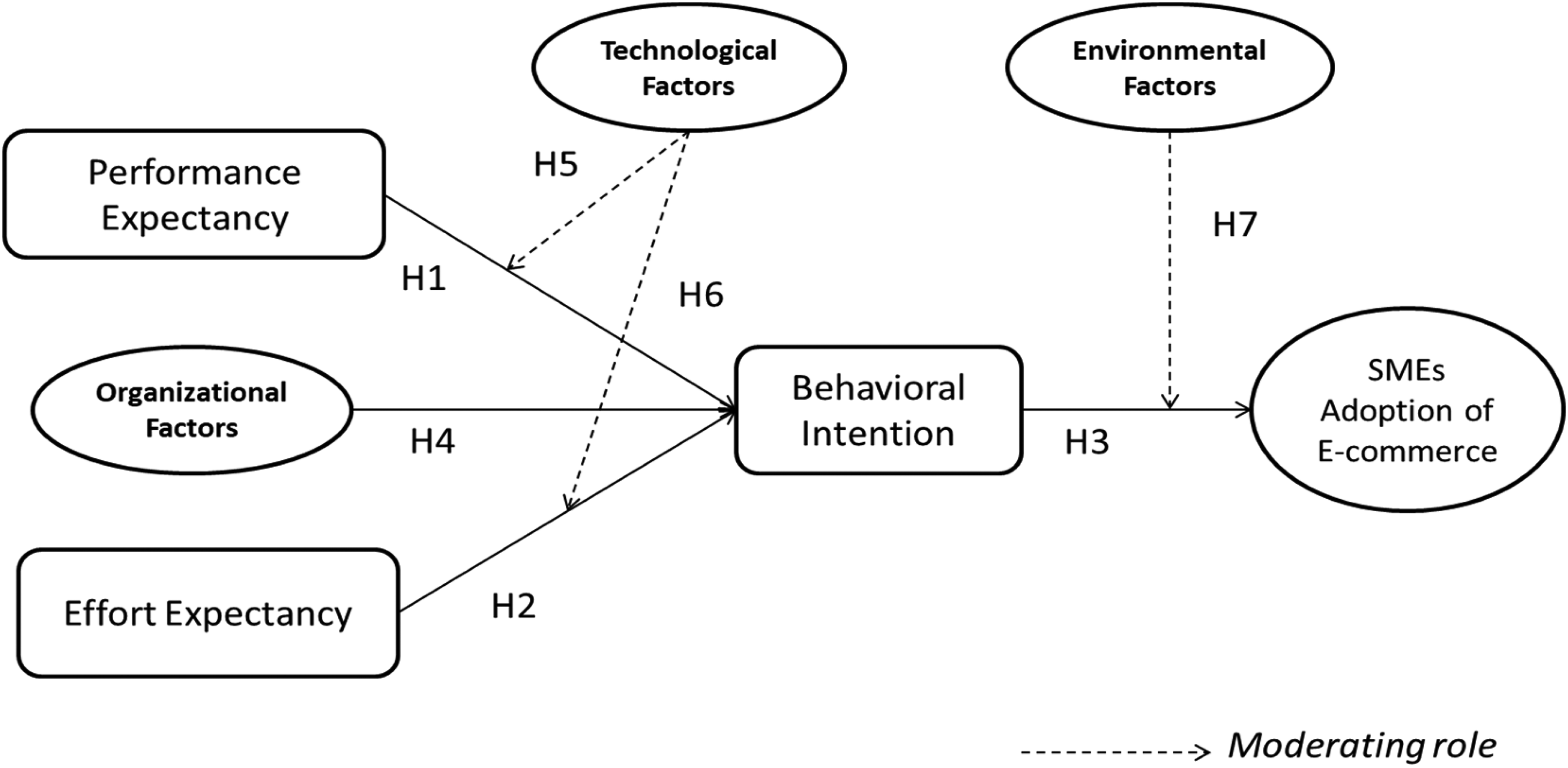
Proposed research model.
Research methodology
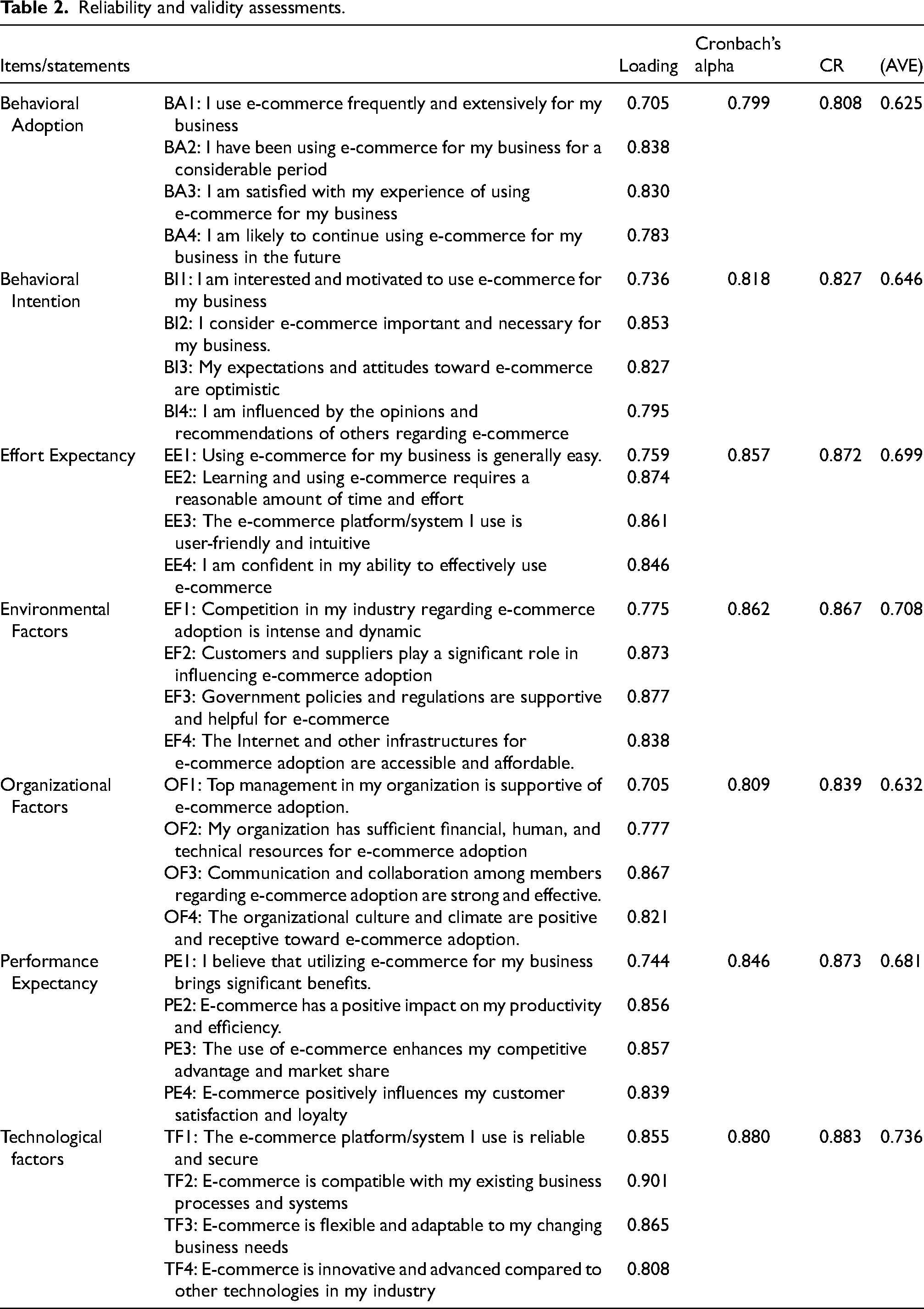
To investigate the adoption of e-commerce (EC) by Small and Medium-sized Enterprises (SMEs) in Ghana, this study employs a quantitative research design, using the Technology, Organization, and Environment (TOE) framework alongside the Unified Theory of Acceptance and Use of Technology (UTAUT) as its theoretical foundation. Data collection is primarily conducted through questionnaire surveys to ensure a comprehensive understanding of the factors influencing adoption. The questionnaire items were derived from previous literature but were reworded to fit the context of this study. They were adapted as follows: Performance Expectancy (PE) (Mensah et al., 2021; Noor et al., 2023), Effort Expectancy (EE) (Dagnoush and Khalifa, 2021; Ezennia and Marimuthu, 2022), Technological Factors (TF) (Kaabous Alzaabi et al., 2021), Organizational Factors (OF) (Ezennia and Marimuthu, 2022; Mensah et al., 2023), Environmental Factors (EF) (Emon and Nahid, 2023; Hussain et al., 2020), Behavioral Adoption (BA) (Mensah et al., 2023; Saprikis, 2018), and Behavioral Intention (BI) (Dharta et al., 2024; Yılmaz and Rızvanoğlu, 2022).The questionnaire item was measured on a five Likert scale which ranged from 1 = strongly disagree to 5 = strongly agree. The questionnaire was divided into two parts. The first contained basic information about the respondents such as age, gender, education, etc. and the second part had information about the variables displayed in the research model (Figure 1) for this study. To make sure it was relevant, clear, and suitable for the Ghanaian SME setting, the questionnaire was pre-tested. Also, it was to improve the validity of the questionnaire and inculcate inputs from the participants. The research items along with their reliability and validity indicators are shown in Table 2.
The stratified random sampling technique (probability sampling method) was applied in this study to reach the sample which consisted of SMEs engaging in Industries such as Manufacturing, Retail, Services, Agro-based, IT, Tourism, etc., located in Ghana (Kumasi, Sunyani, Accra, Goaso, and Sekondi-Takoradi) within the country. These areas were chosen because they are part of the most vibrant towns and cities and hence serve as economic areas with existing e-commerce adopters (Awiagah et al., 2016). This research focused on businesses that meet the criteria established by the National Board of Small-Scale Industries Ghana (NBSSI) for classification as small and medium-sized enterprises (SMEs). The use of stratified sampling framework empowers the study to provide valued insights into the adoption of e-commerce among SMEs, capturing the diversity within the sector and making more informed conclusions about the sample studied. Also, stratified sampling can reduce variance and thus lead to more reliable and generalizable results (Shao et al., 2021). The questionnaire was designed online (Google Forms) and the link together with the QR code created was shared via social media systems and emails to the targeted population. The data collection lasted from November 2023 to April 2024 and a total of 362 valid responses were obtained. This was because the respondents could not complete and submit their responses without completing all sections of the questionnaire. Ethical principles, including informed consent (Association, 2013), confidentiality, and data protection (Association, 2002; Regulation, 2016), were strictly adhered to throughout the study. Participants were briefed on the research purpose and their rights, ensuring voluntary participation and anonymity. The adequacy of the sample size was determined using the “10 times rule of thumb” which is usually used in the PLS-SEM (Tompson et al., 1995). A minimum sample size that is ten (10) times larger than the number of study items is recommended to effectively carry out multivariate research, including multiple regression analysis (Roscoe, 1969). Our study has 28 construct items which means that according to the “10 times rule of thumb,” the minimum sample size of 280 respondents is required for our study. Consequently, the 362 samples acquired for this study are more than the required minimum sample of 280 required. This demonstrates the adequacy of the sample used which guarantees the meaningful and reliable results as well as the generalization of our study’s findings and conclusions.
Structural Equation Modeling (SEM) using Smart PLS software was used to analyze the 362 valid samples acquired. SEM facilitates the exploration of complex relationships between variables, thereby aligning with the theoretical foundations of the study (Byrne, 2013; Kline, 2023). With Smart PLS-SEM, researchers are equipped to analyze the significance of the relationships within their models and to derive confidence intervals for the parameters involved (Sarstedt and Cheah, 2019). Also, it provides the capability to utilize both formative and reflective constructs. This versatility enables researchers to more precisely represent the theoretical constructs under investigation (Ringle et al., 2015). Additionally, the utilization of e-commerce technologies in SMEs is a relatively recent and evolving area of research. Partial Least Squares (PLS) is well-equipped for exploratory studies that seek to identify and elucidate the relationships among multiple latent variables. As the factors affecting e-commerce adoption are often numerous and interconnected, PLS can effectively model these relationships, providing a deeper understanding of how they collectively impact the adoption process. Furthermore, SMEs frequently encompass a wide range of industries, making it difficult to gather large sample sizes. Hence, PLS is especially beneficial in this context, as it can operate efficiently with smaller sample sizes (Willaby et al., 2015) in contrast to conventional covariance-based Structural Equation Modeling (SEM) techniques. This feature enables researchers to derive significant insights even when data collection is constrained, a common scenario in studies focused on SMEs. These are the reasons influencing the use of PLS-SEM in our study.
Sample characteristics
The sample characteristics of the respondents are shown in Table 1. The gender distribution of the respondents indicates a predominance of male participants, accounting for 70.4% (n = 255), while females represent 29.6% (n = 107). This disparity suggests a potential gender imbalance in the sample population, which could influence the perspectives on e-commerce adoption within SMEs. Also, the age distribution of the respondents reveals a diverse age range among participants. The majority fall within the 31-40 age group (36.7%, n = 133) and the 41-50 age group (38.1%, n = 138), indicating that middle-aged individuals dominate the sample. The younger age groups (18-25 and 26-30) comprise only a small percentage (3.9% and 9.1%, respectively), while participants aged 51 and above account for 12.2%. This demographic trend may suggest that the workforce involved in SMEs is predominantly experienced, potentially impacting the adoption of new technologies such as e-commerce. Furthermore, in terms of educational attainment, the respondents are well-educated, with the largest segment holding Master’s degrees (40.1%, n = 145). PhD holders comprise 30.1% (n = 109), and those with bachelor’s degrees represent 12.2% (n = 44). Additionally, 17.6% (n = 64) of respondents fall into the ‘Others’ category, which may include various forms of professional training or certifications. This high level of education among respondents could correlate with a greater understanding and acceptance of e-commerce technologies. Additionally, the respondents come from various industries, with the service sector being the most represented (40.9%, n = 148), followed by retail (21.0%, n = 76) and agro-based industries (14.1%, n = 51). Manufacturing and tourism account for smaller proportions, with 5.5% (n = 20) and 6.6% (n = 24), respectively. The diversity of industries represented in the sample suggests a broad perspective on e-commerce adoption across different sectors, which may provide insights into sector-specific challenges and opportunities. Also, Respondents occupy various positions within their respective SMEs, with sales executives representing the largest group at 38.1% (n = 138), followed by marketing managers (14.4%, n = 52) and managing directors (11.6%, n = 42). Other positions, including IT managers and operation managers, account for smaller percentages. The significant representation of sales and marketing professionals may reflect the critical roles these positions play in influencing e-commerce strategies and practices within SMEs.
Sample characteristics.
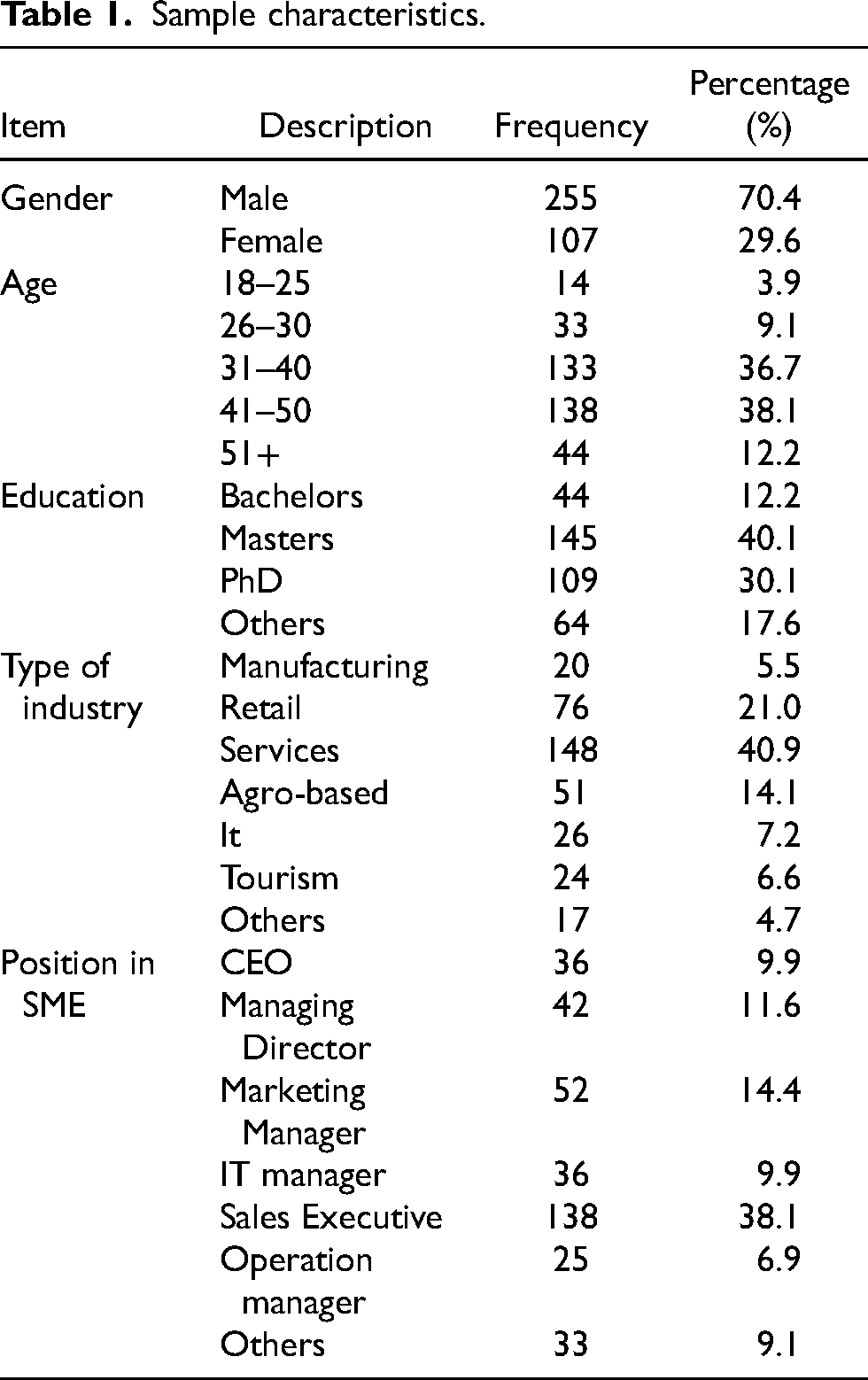
Finally, demographic and occupational characteristics of the respondents in this study highlight a sample that is predominantly male, middle-aged, and well-educated, with substantial representation from the service industry. The insights gleaned from this diverse respondent pool are crucial for understanding the factors influencing e-commerce adoption among SMEs in Ghana.
Data analysis and results
Common method bias (CMB)
The data was collected from both endogenous and exogenous variables by using only questionnaires as a sole data source and thus, there was a potential risk of common method bias (CMB) to affect the data. CMB signifies a severe problem arising mostly in self-survey research (Podsakoff and Organ, 1986; Spector, 2006). Preventive measures to address and reduce potential CMB issues in this study included assuring respondents that their identities and responses would remain private and anonymous. Also, the questionnaire was pre-tested and piloted to ensure that all the respective constructs and items used in this study were clearly understood by the respondents. Additionally, this study employed Harman’s full factor analysis for CMB, and the result showed that no single factor explained more than 34.44% of the total variance. As this remains lower than 50%, there is therefore no issue with CMB in the data. Furthermore, we used CFA as an additional measure to examine the presence of CMB if any. The results demonstration that the saturated model has a slightly better fit (0.073) than the assessed model (0.077), signifying that the saturated model fits the observed data better. d_ULS and d_G: Both distance-based measures indicate that the saturated model also performs better, with lower values in both cases. Chi-square: The chi-square value for the saturated model (1570.519) is lower than the estimated model (1594.484), indicating a better fit; however, both values are high, which may indicate a poor fit overall. NFI: The NFI of the saturated model (0.754) is higher than that of the estimated model (0.750), although both are below the acceptable threshold of 0.90, indicating that there is room for improvement in model fit. We conclude that the NFI values for both models are below the acceptable threshold of 0.90, but the saturated model is slightly better (0.754 vs. 0.750). Low NFI values indicate that the models do not explain a significant portion of variance, which can suggest the absence of CMB. Also, in terms of the Model Fit: The superior fit of the saturated model in comparison to the estimated model indicates that the constructs are being assessed appropriately, without considerable overlap that could result in common method bias (CMB). Again the Distance Measures (d_ULS and d_G): Both distance measures reveal that the saturated model exhibits enhanced performance, as evidenced by lower values relative to the estimated model, thereby supporting the notion that the variables are distinct and not excessively affected by the measurement approach.
Measurement model
A measurement model refers to a framework or structure that defines how variables are measured and how they relate to the underlying theoretical constructs under study. The measurement model examines the reliability and validity of the constructs used in the study. Reliability and validity assessments are critical to research that ensures that the tools, instruments, or measurements used are consistent, accurate, and meaningful. Both reliability and validity provide important information about the quality of the data collected. Factor loadings, Cronbach alpha, composite reliability (CR), and average variance extracted (AVE) were used to assess the reliability and validity of the items in this paper. As shown in Table 2 the factor loadings are above 0.70 (Hair Jr et al., 2014), Cronbach's alpha and composite reliability values are also above the threshold of 0.70 (Henseler et al., 2009) and AVE values are greater than the minimum values of 0.50 (Fornell and Larcker, 1981a), which is indicative of the reliability of the measures used in this paper.
Reliability and validity assessments.
Discriminant validity
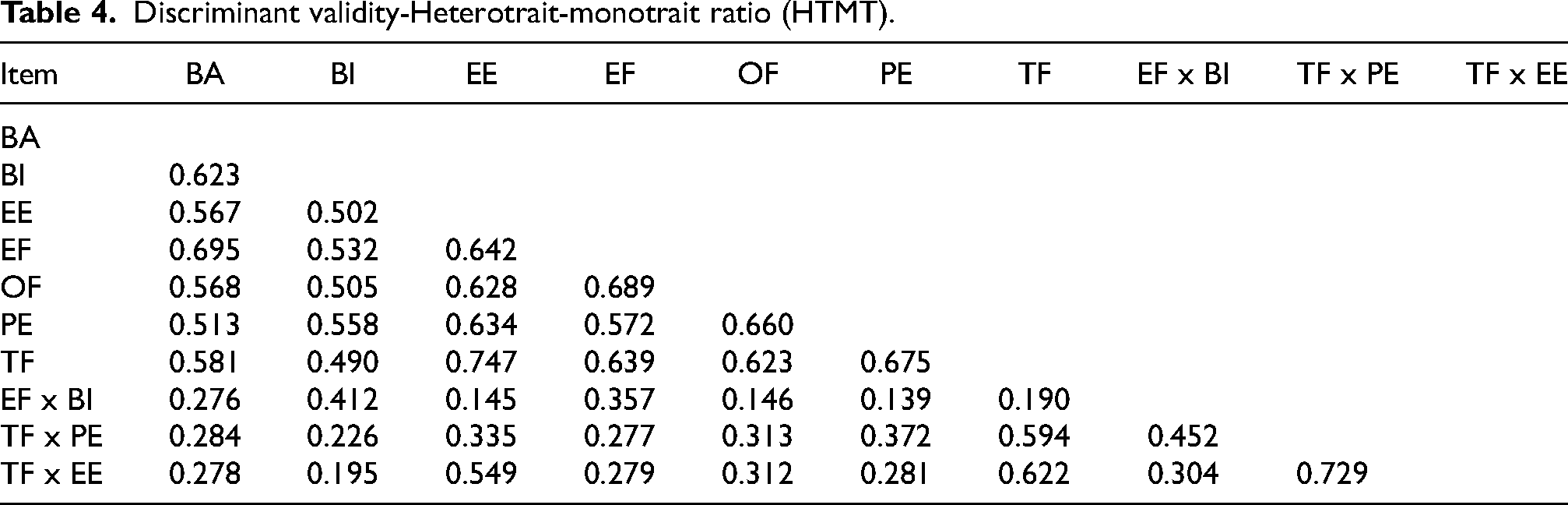
Discriminant validity denotes that, the degree to which a construct (or variable) truly differs from other constructs (especially those that are theoretically unrelated). Simply put, it tests whether a concept or measure that is thought to be irrelevant is, in fact, irrelevant. This is an important aspect of construct validity in research because it ensures that the construct being measured is unique and not simply a reflection of another construct. We used the Fornell-Larcker Criterion and Heterotrait-monotrait ratio (HTMT) to examine discriminant validity in this study. Firstly, the Fornell-Larcker criterion is a statistical approach utilized to evaluate discriminant validity in structural equation modeling (SEM), especially when applying partial least squares (PLS).It ensures that latent variable shares more variance with its assigned indicator (item) than other constructs in the model. As shown in Table 3 the square roots of AVE are greater than the correlations with other constructs which demonstrates a good discriminant validity (Fornell and Larcker, 1981b). Furthermore, Heterotrait-monotrait ratio (HTMT) is a relatively new method of assessing discriminant validity. It compares correlations between constructs (heterotrait correlations) with correlations within the same construct (unitrait correlations) (Sarstedt et al., 2021). The HTMT ratios, which assess the correlations between various traits concerning those within the same trait, demonstrate the discriminant validity of the constructs when their values are significantly below 1 or 0.90 (Leguina, 2015). As shown in Table 4 HTMT values are below the threshold of 1 or 0.90 which is another indication of good discriminant validity of our study.
Discriminant validity - fornell-larcker criterion.
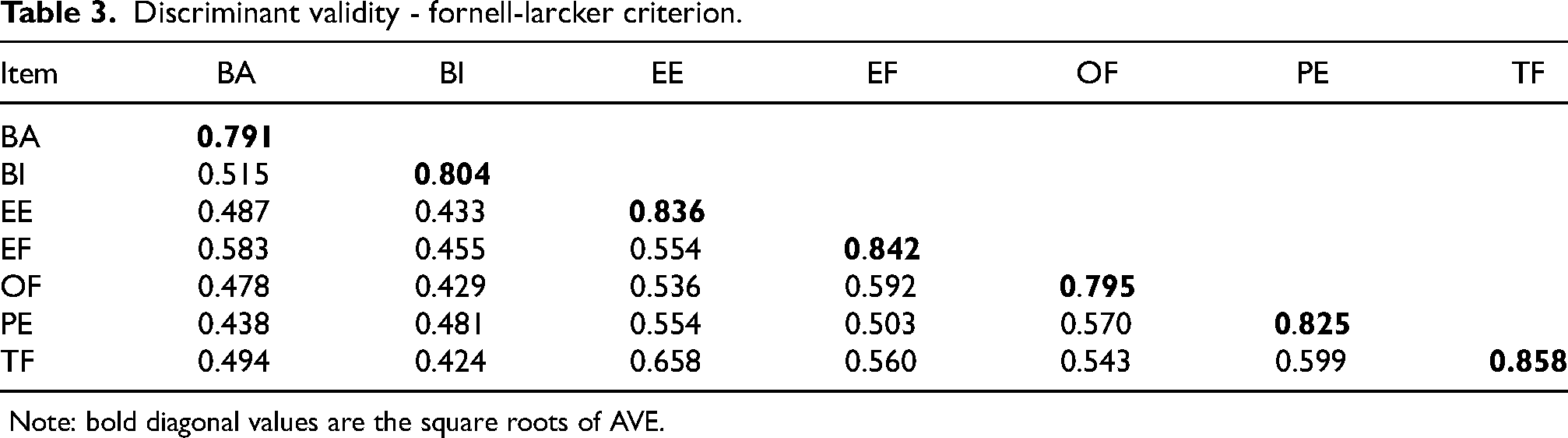
Note: bold diagonal values are the square roots of AVE.
Discriminant validity-Heterotrait-monotrait ratio (HTMT).
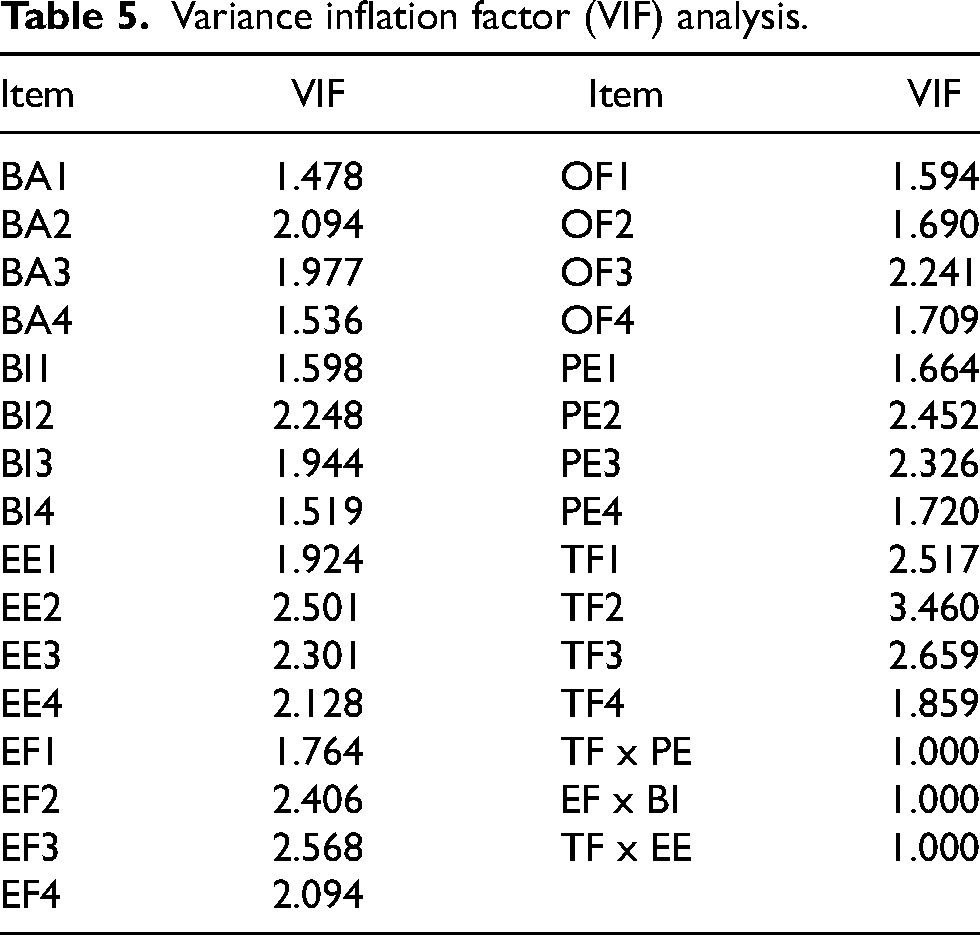
Variance inflation factor (VIF) analysis
VIF (variance inflation factor) is a measure used to identify multicollinearity in regression analysis. Multicollinearity occurs when the independent variables (predictor variables) in a regression model are highly correlated with each other, which may distort the estimates of regression coefficients and affect the interpretability of the model (Akinwande et al., 2015; Liao and Valliant, 2012). The general rule is that when the VIF exceeds 4 then it warrants further investigation while VIFs exceeding 10 are signs of serious multicollinearity requiring correction (Wetherill et al., 1986). As presented in Table 5 all the VIF values are underneath 4 indicative that are no issues of multicollinearity in our study.
Variance inflation factor (VIF) analysis.
Outer loading and R-squared
R-squared (R²), also known as the coefficient of determination, is a statistical measure used in regression analysis to evaluate how well a model explains variation in a dependent variable. It indicates the goodness of fit of a model by quantifying the proportion of variance in the dependent variable that can be predicted from the independent variables. The r-square estimations shown in Table 6 and represented in Figure 2 demonstration that performance expectancy, organizational factors and effort expectancy accounted 29.8% of variance toward behavioral intention. Additionally, intention explained about 41.9% of the variance toward adoption behavior.
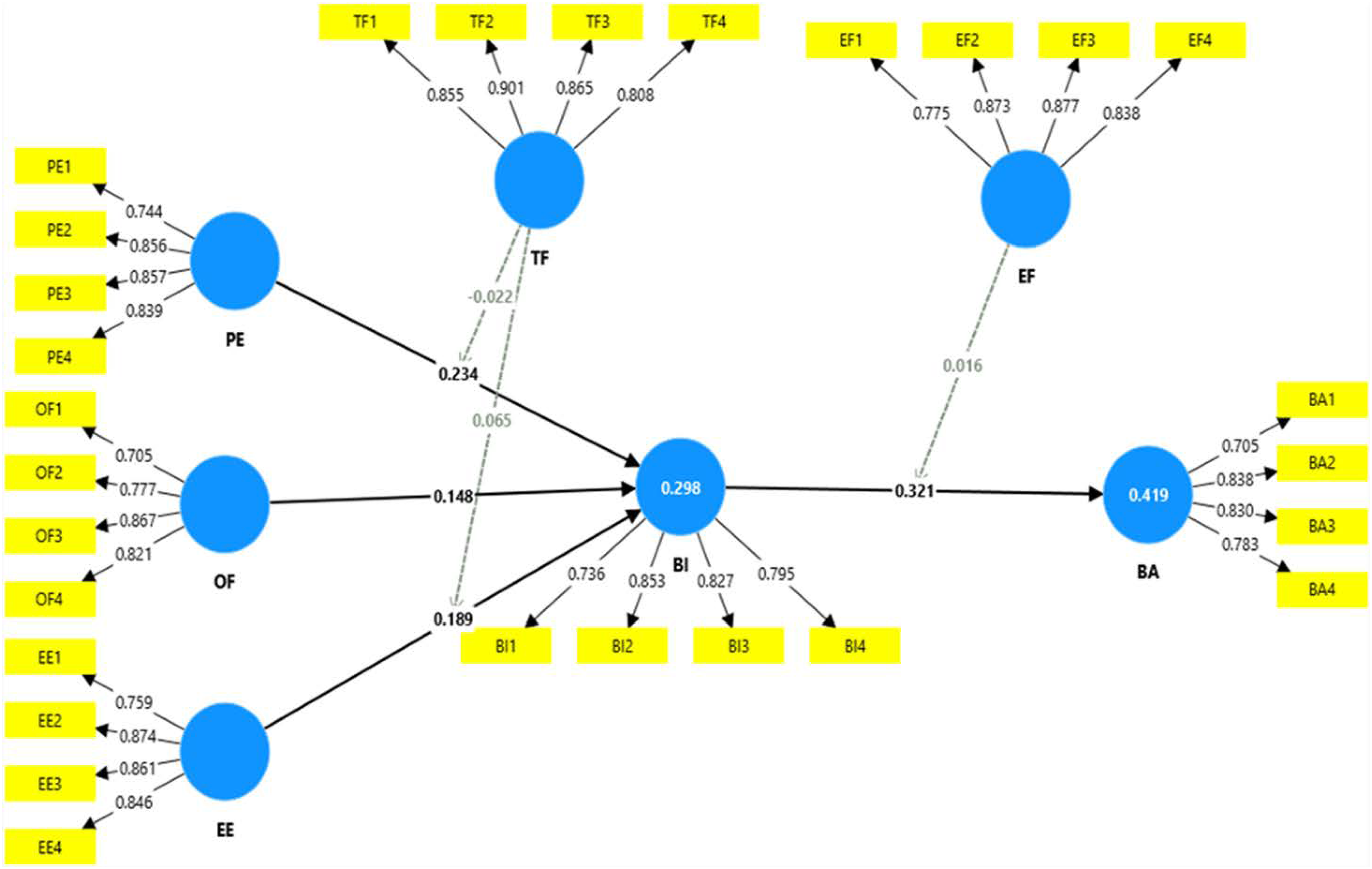
Outer loadings and r-square values.
R-square values.
Structural model
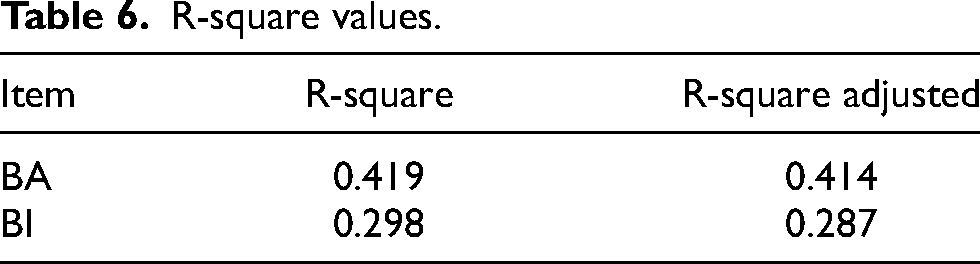
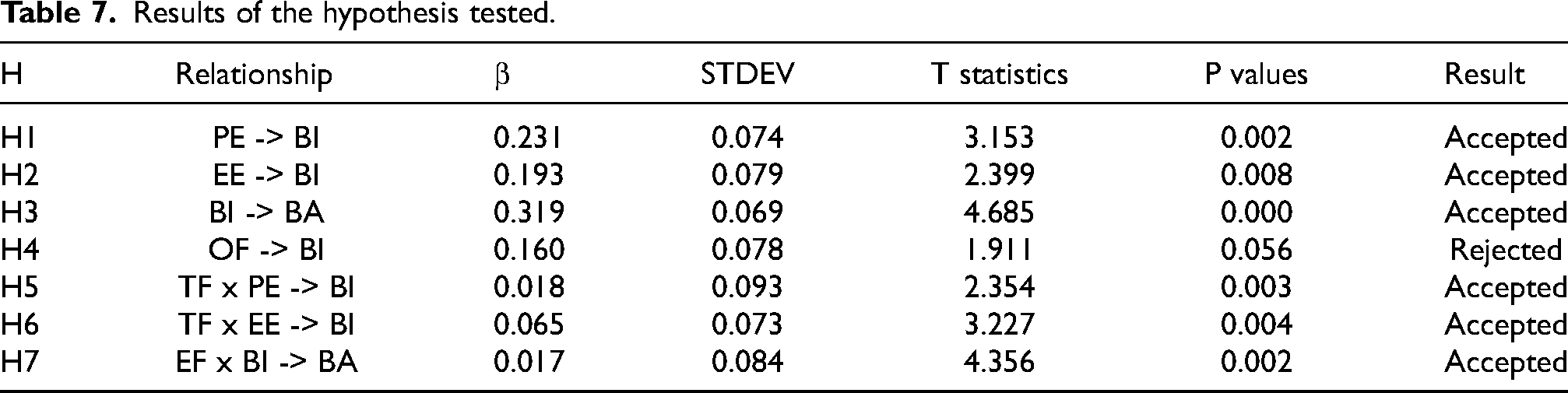
The bootstrapping process was utilized to study the hypotheses of this study. The structural mode examines the hypothesized relationship in this study. Table 7 shows the results of a statistical analysis, from structural equation modeling (SEM) using Smart PLS or regression analysis, showing the relationship between different variables, their beta values (regression coefficients), standard deviation (STDEV), T-statistic (t-value), p-value and the final decision regarding acceptance or rejection of the hypothesis. Also, R-squared (R²), is also recognized as the coefficient of determination, is a statistical measure used in regression analysis to evaluate how well a model explains variation in a dependent variable. It indicates the goodness of fit of a model by quantifying the proportion of variance in the dependent variable that can be predicted from the independent variables. The results of the direct research hypothesis tested showed that both performance expectancy (β = 0.231, p > 0.05) and effort expectancy (β = 0.193, p > 0.05) have a positive signification influence on the intention to use e-commerce systems. According H1 and H2 were supported. Also, the intention to use showed a positive significant influence on behavioral adoption (β = 0.319, p > 0.05). H3 was subsequently supported. However, organizational factors failed to be significant in driving the intention to use (β = 0.160, p > 0.05). H4 was not supported. In terms of the moderating analysis, it was shown that the entire three moderation hypotheses were supported. Specifically, technological factors were noteworthy in moderating the influence of both performance expectancy (β = 0.018, p > 0.05) and effort expectancy (β = 0.065, p > 0.05) on the behavioral intention to use. H5 and H6 were thus supported. Finally, environmental factors were significant in moderating the influence of intention to use on adoption behavior (β = 0.017, p > 0.05). The results of the hypothesis and the validated structural model with p-values as well as r-square estimates are shown in Table 7 and Figure 3 respectively.
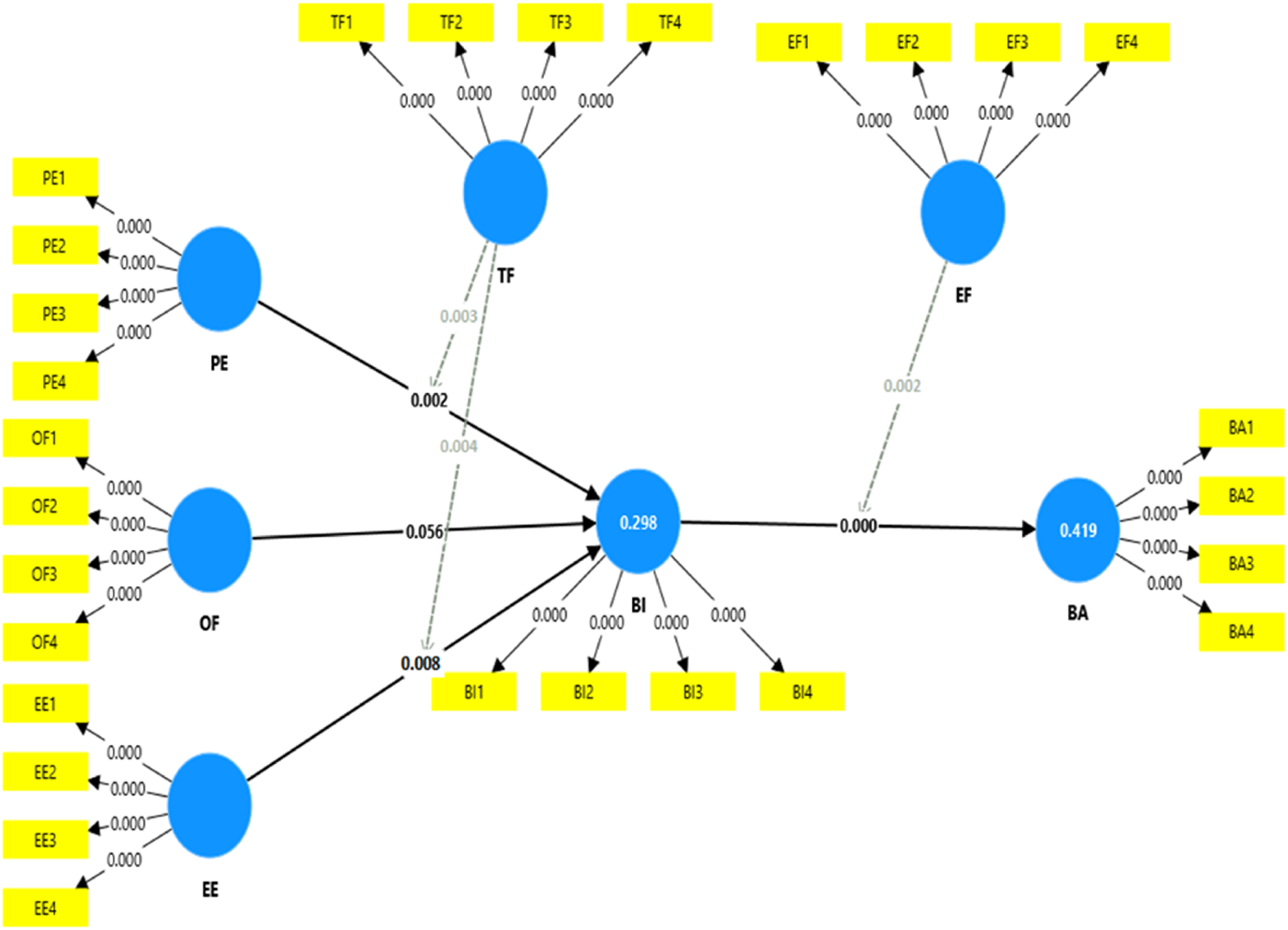
P-Values and r-square of the validated structural model.
Results of the hypothesis tested.
Discussion
This paper examined the adoption of EC systems among Ghanaian SMEs by integrating UTAUT and TOE frameworks as their theoretical foundations. It specifically investigates how performance expectancy (PE), TOE framework and effort expectancy (EE) drive the behavioral intention to use e-commerce systems. Additionally, the study examines how technological factors moderate the relationship between performance expectancy, effort expectancy, and the intention to use e-commerce (EC) systems. It also explores how the intention to use EC systems influences adoption behavior and how this relationship is moderated by environmental factors. The data analysis results indicate that both performance expectancy and effort expectancy have a significant positive impact on SMEs in Ghana regarding their intention to adopt EC systems. Furthermore, the intention to use was found to be a significant determinant of EC adoption behavior. However, unexpectedly, organizational factors did not have a significant impact on EC adoption. Moderating analysis showed that technological factors were significant in moderating the influence of both performance expectancy and effort expectancy on the intention to use e-commerce systems. Also, environmental factors show a significant moderating influence on the interaction between behavioral intention and adoption behavior.
The positive influence of performance expectancy on the intention to use e-commerce means that in the context of e-commerce among small and medium-sized enterprises (SMEs), performance expectancy can considerably influence the intention to adopt and use EC platforms. Since SMEs often seek ways to optimize their operations. When business owners and employees perceive that e-commerce can streamline processes, reduce costs, and save time, their intention to adopt these technologies increases. It further means that SMEs that recognize the potential of e-commerce to enhance their market reach and customer engagement are more likely to embrace it. If they believe that using e-commerce will give them an edge over competitors, their intention to adopt this technology rises. The positive influence of performance expectancy on the intention to use e-commerce among SMEs is multifaceted. It encompasses perceived benefits such as improved efficiency, competitive advantage, and revenue growth, all of which can motivate such enterprises to embrace e-commerce solutions effectively. The positive influence of performance expectancy on intention to use e-commerce is confirmed by previous studies (Kwarteng et al., 2024; Mensah and Khan, 2024; Pinyanitikorn et al., 2024). This is also contrary to a finding that performance expectancy fails to encourage the adoption intention of a technology (Li et al., 2024)
Also, the positive significant influence of effort expectancy on the intention to use e-commerce among SMEs means that when e-commerce platforms are perceived as easy to use, SMEs are more likely to adopt and integrate them into their business processes. A user-friendly interface can lower the barriers to entry and encourage business owners to experiment with online selling. Also, if the perceived ease of use is high, SMEs may feel less intimidated by the technological aspects of e-commerce. This reduction in complexity can make it easier for staff to engage with the system, leading to a higher likelihood of implementation. Easy-to-use e-commerce solutions often streamline operational processes, such as inventory management and order processing. SMEs that perceive these systems as efficient may be more inclined to adopt them, thereby increasing their intention to use e-commerce. This finding is supported by studies that have shown that the effort expectancy of e-commerce systems drives their adoption (Chetioui et al., 2024; Mensah and Khan, 2024; Nguyen and Nguyen, 2024). How is a departure from studies that have shown that effort expectancy is not a significant driver of intention to use a technology (Issaka, 2024; Li et al., 2024).
Furthermore, the direct impact of behavioral intention on the adoption of e-commerce systems is an indication that behavioral intention plays a crucial role in the adoption of e-commerce systems among SMEs. A nuanced understanding of how perceptions, attitudes, and social influences shape these intentions can help stakeholders devise strategies to encourage e-commerce adoption, ultimately enhancing the growth and sustainability of SMEs in an increasingly digital economy. So, when there is a strong intention to adopt e-commerce, SMEs may be more entrepreneurial and willing to overcome barriers such as financial constraints, technological challenges, or lack of digital skills. Our finding is in line with studies that have demonstrated that intention leads to adoption behavior (Nguyen and Nguyen, 2024).
Additionally, the study’s finding of the inability of organizational factors to influence the behavioral intention to use e-commerce systems means that personal attitudes, technical skills, and individual motivation are more crucial in shaping a user’s intention to adopt e-commerce systems than the organizational context. If employees feel competent and motivated, they may use such systems regardless of organizational support. Also, factors outside of the organization, such as market trends, customer demands, and competitive pressure, might play a more critical role than internal organizational factors. This suggests that organizations may need to focus on external alignment rather than solely improving internal processes. Our discovery is a complete parting from other studies that have established a direct relationship between organizational factors and intention (Salimon et al., 2023; Setyowati et al., 2024).
Furthermore, the positive significant moderating influence of technological factors on the interaction between performance expectancy and behavioral intention means that the presence or quality of technological factors enhances the relationship between performance expectancy and behavioral intention. When e-commerce platforms are robust, reliable, and provide a seamless user experience, the constructive relationship between performance expectancy and intention to use is amplified. If SMEs experience high system quality, they will be more likely to believe that e-commerce systems can boost their performance. Access to high-speed internet and modern technological infrastructure ensures that SMEs can operate e-commerce systems efficiently. The perception of effective technology can positively skew performance expectancy, encouraging adoption. Availability of training, support, and resources can enhance user confidence in e-commerce systems. This increases performance expectancy as users are more likely to perceive those systems as beneficial, thereby increasing their intention to use them. Ultimately by addressing these technological aspects, SMEs can not only increase their likelihood of adopting e-commerce systems but also ensure they reap the benefits those systems can provide, ultimately leading to improved business performance.
Also, the positive moderating influence of technological factors in the relationship between effort expectancy and intention to use e-commerce systems shows that the interaction between effort expectancy and behavioral intention to use e-commerce systems among SMEs is significantly enhanced by supportive technological factors. By focusing on reducing effort through improved usability, training, and integration, SMEs can foster a stronger intention to engage with e-commerce, leading to greater adoption rates and potential competitive advantages in the marketplace. Also, when technological factors improve system usability, this directly increases effort expectancy. If SMEs find e-commerce platforms easy to use, their intention to engage with these platforms increases. For instance, well-designed websites with intuitive navigation can enhance user satisfaction and lower perceived effort. Technological support such as training programs or customer support can reduce the perceived effort needed to adopt and use e-commerce systems. SMEs with access to these resources are likely to perceive the systems as more manageable. Also, the continuous improvement of technological factors (e.g., software updates, and user-friendly features) can positively impact effort expectancy. As e-commerce systems evolve, they may become easier to use, consequently boosting behavioral intentions. The integration of e-commerce systems with existing business processes and technologies can lower resistance to adoption. When SMEs see e-commerce systems as compatible with their current methods, the perceived effort decreases, enhancing the likelihood of adoption.
Finally, environmental factors showed a significant moderating influence between behavioral intention and adoption behavior meaning that that environmental factors do not just correlate with behavioral intention and adoption behavior; instead, they dynamically alter the relationship between the two. For example, a supportive regulatory environment might strengthen the positive relationship between an SME's intention to adopt e-commerce and its actual adoption behavior. On the other hand, a lack of technological infrastructure could weaken this relationship. The positive moderation effect of environmental factors on the intention-adoption behavior relationship further highlights the importance of a conducive external environment (i.e. regulatory, market conditions, technological infrastructure, and social influence) for the successful adoption of e-commerce among SMEs. Policymakers, industry leaders, and SME owners should work towards creating and maintaining favorable conditions that not only encourage intention but also facilitate actual adoption behaviors.
The moderating outcomes presented in this paper cannot be compared with any previous or existing literature, thereby highlighting the originality of these findings within the academic discourse.
Theoretical implications
The integration of UTAUT and TOE to examine the acceptance of e-commerce systems among Ghanaian SMEs contributes effectively to the appreciation of the utilization of EC systems and thus has theoretical implications in the application of UTAUT and TOE in the context of EC systems adoption. First, this study excluded the social influence and facilitating conditions from the UTAUT and only utilized performance expectancy and effort expectancy. The exclusion of these variables was because social influence (SI) and facilitating conditions(FC) are adequately represented and captured under the TOE framework specifically, the environmental contexts. Thus including them in the model used for this study which integrated UTAUT and TOE will be redundant, ambiguous, and ineffective. Second, this approach helped in refining the UTAUT model in the context of TOE by examining its core components and their interplay, which led to the new model and new hypotheses examined in this study. Thirdly, the validated model showed that organizational factors failed to influence behavioral intention while technological factors were significant in moderating the influence of both PE and EE on the intention to use. Also, environmental factors moderated positively the influence of intention on the adoption behavior of e-commerce systems. Fourthly, performance expectancy, organizational factors, and effort expectancy accounted for 29.8% of factors determining the behavioral intent to use while behavioral intention explained 41.9% of the variance toward acceptance behavior of e-commerce (EC) systems. These findings provide a sound theoretical basis for researchers to further validate our model in the context of EC adoption with SMEs.
Practical implications
SMEs should communicate and identify the tangible benefits of e-commerce (EC) to their stakeholders, including increased sales, greater market reach, and improved customer convenience. Being able to showcase these benefits can influence employees’ and management's intention to adopt e-commerce. Also, SMEs should adequately invest in technology and infrastructure to enhance performance in areas such as aster websites, better inventory management systems, and advanced analytics tools that improve decision-making. SME leaders are encouraged to set a vision with clarity regarding the role of e-commerce (EC) in the future of their businesses. By articulating a strong belief in the expected performance benefits, they can drive a culture that favors innovation and adoption.
Additionally, e-commerce platforms targeting SMEs should prioritize user-friendly designs and intuitive interfaces. Simple navigation, clear instructions, and readily accessible customer support can enhance effort expectancy and encourage SMEs to adopt these technologies. Policymakers should promote initiatives that support SMEs in their e-commerce journey by subsidizing training programs or providing resources that simplify the adoption process. Educating SMEs about the advantages of e-commerce can help reduce resistance. Marketing efforts should focus on highlighting how easily e-commerce can integrate into their existing operations and the potential return on investment.
Furthermore, SME owners should consider developing strategic plans that include e-commerce as a core component, thus fostering a stronger intention to engage with online markets. Businesses may need to allocate resources for training, technology, and infrastructure that facilitate e-commerce adoption based on their intention to use these platforms. SMEs should highlight successful e-commerce adoption stories, to inspire others to develop the intention to implement e-commerce solutions. Governments can create incentive programs to assist SMEs in their shift towards e-commerce, reinforcing the intention to adopt these practices. Ensuring that SMEs have access to the necessary digital infrastructure (e.g., reliable internet, and payment systems) can enhance their intention to engage in e-commerce.
Moreover, e-commerce platform providers should consider the technological capabilities and infrastructure of SMEs when designing their solutions. Customization or flexibility in e-commerce platforms can enhance performance expectancy and effort expectancy. Given that technological factors influence user perception, offering training programs and ongoing support can help SMEs understand e-commerce solutions better. This reduces the perceived effort required to adopt these technologies and can enhance their perceived benefits. Policymakers and industry organizations might consider initiatives that improve the overall technological infrastructure available to SMEs. Providing better internet access, affordable software solutions, and cloud services can enhance SMEs’ ability to adopt e-commerce. SMEs may need to allocate resources toward upgrading their existing technology to improve their overall experience with e-commerce. Understanding the moderating role of technology on their perceptions can guide this investment decision.
Conclusion
This paper has demonstrated the acceptance of e-commerce (EC) systems among small business in Ghana is driven by the core constructs of the UTAUT and TOE frameworks. The study has shown that for SMEs to take advantage from the e-commerce (EC) systems, performance expectancy and effort expectancy of e-commerce systems should be a top priority since they ultimately drive the intention to use. However, organizational factors failed to drive SMEs’ intent to use e-commerce. Technological factors positively enhance the impact of both performance expectancy and effort expectancy on the intention to adopt e-commerce (EC) systems and environmental factors also moderate significantly the influence of behavioral intention on the adoption behavior of e-commerce systems among SMEs. These results further show that recognizing the moderating role of technological factors can inform strategies for promoting e-commerce adoption among SMEs, ensuring that the solutions provided are both beneficial and easy to use. Developers and vendors should focus on creating user-friendly interfaces that reduce the complexity involved in e-commerce adoption. This aspect is crucial for SMEs that may lack extensive technical expertise. Again, policymakers should recognize the importance of environmental factors in promoting e-commerce among SMEs. Creating supportive regulations, improving internet infrastructure, and offering incentives could enhance SMEs’ intent to adopt e-commerce (EC).
Limitations and suggestions for future research
First, since the study's sample was drawn from a single developing country's perspective, caution should be taken when interpreting and generalizing its findings. Second, while the approach and model validated in this research may be applied in other countries, their results may not necessarily align with the conclusions of this study. Third, not all factors influencing e-commerce (EC) adoption is comprehensively examined, as no single study can cover every aspect. Therefore, further research is needed to investigate how cultural dimensions such as power distance, individualism vs. collectivism, uncertainty avoidance, masculinity vs. femininity, long-term vs. short-term orientation, and indulgence vs. restraint affect e-commerce adoption among SMEs within the framework of UTAUT and TOE in the Ghanaian context.
Footnotes
Data availability statement
Data will be provided on request from the corresponding author
Declaration of conflicting interest
The authors declared no potential conflicts of interest with respect to the research, authorship, and/or publication of this article.
Ethical approval and informed consent statements
Ethical approval was not required for the conduct of this study however respondents were informed of their right to decline or accept to participate in this study. Informed consent was implied when respondents submitted their responses.
Funding
The authors received no financial support for the research, authorship and/or publication of this article.
