







Abstract
This study investigates the digital competency stress and coping mechanisms among college librarians in Pakistan. The research used an expanded version of the transactional model of stress and coping theory as a theoretical framework. The data was collected from 302 college librarians in Khyber Pakhtunkhwa, a province of Pakistan, through an online questionnaire. Descriptive statistics, confirmatory factor analysis, and structural equation modeling were used to analyze the collected data. The findings reveal that rapid technological change and technological complexity significantly contribute to digital competency stress among librarians, challenging their ability to adapt and perform in a constantly evolving technological landscape. Furthermore, coping mechanisms through social media platforms emerged as effective tools to mitigate this stress, enhancing both learning and peer collaboration. These insights shed light on the critical need for targeted interventions to reduce digital competency stress, such as specialized training programs and resource accessibility, which can empower librarians to navigate the digital divide more effectively. This study contributes to the growing body of literature on stress management in the digital era and offers practical implications for policymakers and library administrators to enhance the digital resilience of college librarians in developing regions.
Keywords
Introduction
The Fourth Industrial Revolution (4IR) is a new technological shift that integrates and revolutionizes industries worldwide (Asim et al., 2022). Famous technologies of 4IR such as Artificial Intelligence (AI), Internet of Things (IoT), blockchain, big data analytics, robotics, and other related types of technologies not only pave the ground to transition the global economy but also to revolutionize several sectors including education (Aboagye et al., 2020). Libraries are an integral part of any academic institution and have been at the forefront of adopting new technologies to fulfill the information needs of their users. These state-of-the-art technologies significantly shape libraries and entail a faster transition towards smart libraries. Current libraries are far beyond simply the stores of books and documents; they are gradually evolving into the centers of digital technologies priest where new approaches reshape conventional functions (Asim et al., 2023; Mustar and Rahmadanita, 2023). However, this revolution in libraries created a new challenge for library professionals to identify the necessary competencies to integrate these technologies effectively and meet modern society's evolving needs (Joel and Ibrahim, 2021; Rao, 2014).
The emergence of 4IR technologies connotation is of paramount importance for library professionals to possess and cultivate high and specific digital literacy (Asim and Arif, 2023). The active application of AI-enhancing tools, IoT systems, as well as secure data platforms in managing libraries, requires a large set of digital competencies. These are technical literacy in handling the current large computer systems, data management skills, security skills, and the ability to deploy and adopt these technologies in the library environment (Bignoli and Stara, 2020). The growing prevalence of digitization in libraries has led to an increase in digital competency stress among library professionals. This challenge is further exacerbated by limited access to training and development opportunities, as the evolving technological landscape creates new demands that many library professionals struggle to meet (Horton, 2016; McKirahan and Cheney, 2016). This stress not only hampers performance but also raises concerns about how libraries will adapt and thrive in an era increasingly defined by digital technologies (Borbely and Némethi, 2023).
Digital competency stress has become prevalent among library professionals and social media as a coping tool is answering this need (Khan and Mahapatra, 2017; Kim, 2018). Networking sites like Facebook, LinkedIn, WhatsApp, X (former Twitter), etc. are rubber forums and provide easy access to informal learning resources (Lee and Trace, 2009; Vijayalatha, 2023). These platforms afford professional working interactions where library professionals can consult, share experiences, and be acquainted with various technologies. Participation in such communities helps library professionals minimize stress when trying to follow developments in technology and boost digital literacy (Borbely and Némethi, 2023). Due to the supportive environment encouraged by social media, library professionals especially from developing countries such as Pakistan can interact with experts on new technologies and seek ways to implement these technologies in their libraries (Arif et al., 2024; Isiaka et al., 2024).
Statement of the problem
The transformative impact of digital technologies has placed libraries at the forefront of the information revolution, reshaping their roles as essential hubs of knowledge dissemination and digital learning. However, in developing regions such as Khyber Pakhtunkhwa, a province of Pakistan, college library professionals face an uphill battle in adapting to these changes. While the 4IR emphasizes the integration of advanced technologies in library systems, the lack of sufficient funding, outdated technological infrastructure, and limited professional development opportunities have significantly hindered this progress (Asim et al., 2023). College library professionals often operate in resource-constrained environments where even basic tools like Internet access and library automation software are inconsistently available (Rafiq et al., 2017). Despite these changes, librarians are still expected to embrace emerging technologies, acquire advanced digital skills, and meet the growing demands of library users. This disparity between institutional expectations and the lack of necessary support creates a high-pressure environment that amplifies digital competency stress among library professionals.
This stress is further exacerbated by the rapid pace of technological innovation, the inherent complexities of digital systems, and the persistent digital divide, which marginalizes library professionals in less developed regions. The inability to keep pace with technological advancements has not only hindered the adoption of innovative library practices but also negatively impacted job satisfaction, productivity, and morale among library professionals. In response to these challenges, social media platforms have emerged as informal learning spaces where librarians can seek professional support, share knowledge, and enhance their digital competencies. However, it remains unclear whether social media serves as an effective coping mechanism for mitigating digital competency stress or if its impact varies based on different levels of technological exposure and institutional constraints. Given these concerns, this study aims to investigate the factors contributing to digital competency stress among college librarians, examine how they utilize social media as a coping mechanism, and assess the overall impact on their professional outcomes. By exploring these relationships, this research seeks to provide insights into the digital struggles of librarians in resource-limited environments and offer recommendations for improving digital adaptation strategies in academic libraries.
Research objectives
This study aims to investigate digital competency stress and coping mechanisms among college librarians in Pakistan. To achieve the stated aim, the following two objectives were framed.
• To investigate the impact of technological factors on digital competency stress among college librarians in Pakistan. • To examine the role of social media as a coping mechanism for managing digital competency stress and its impact on professional outcomes.
Literature review theoretical framework
This section consisted of various headings such as digital competencies stress among librarians, coping digital competencies stress with social media platforms, and theoretical framework and hypotheses development.
Digital competencies stress among librarians
Digital competency stress refers to the anxiety and pressure experienced by professionals, particularly in rapidly evolving fields such as librarianship, due to the necessity of mastering new technologies and digital tools (Peng, 2019). The growing usage of sophisticated digital tools poses a problem in developing and sustaining high qualifications in technology among librarians. Studies show that the constant progress of technologies in libraries results in librarian’s inadequacy, due to their struggle to meet the challenges of lifelong education (Ahmed and Sheikh, 2021; Hamad et al., 2021; Okeji et al., 2020). This stress is then exacerbated by the need to support users almost instantaneously and to do this, librarians need to be confident in the digital environment. Research has indicated that this stress hinders contentment with the job, productivity, and health and therefore warrants efficient means of stress management whenever staff are in libraries (Ekwelem, 2015; Kolek and Saunders, 2008; Loos, 2017).
The digital divide also contributes to the digital competency stress in librarians. Differences in access to technology and training resources pose a threat to evenness in the capacities of librarians to apply and employ novelty effectively (Kinney, 2010; Ogunmode et al., 2023). Under the aforementioned challenges, librarians may develop more stress, especially while working to close existing gaps while at the same time seeking to improve themselves and their institutions’ technological strategies (Kaur and Sharma, 2018; Raju and Muthu, 2019). This has fostered increased concern about how best to help teachers find ways of managing stress, such as using social media, partnering with their peers, and engaging in professional development activities. So, by considering sources of digital competency stress and future implications in libraries, librarians will be able to create a more robust and efficient workforce of staff that is fit to effectively meet the complexities of the digital age (Mustar and Rahmadanita, 2023).
Coping digital competencies stress with Social Media Platforms
Current social tools like Twitter, Facebook, LinkedIn, and WhatsApp have become key methods through which people get together, share information, and work (Hampton and Shin, 2016). These platforms enable live interaction and connection, and provide features like membership, posts and participation, and following industry topics. From the given study, social media platforms have risen to be a major way through which college librarians can cope with digital competency stress (Aichner, 2021; Tuten and Solomon, 2015). These platforms offer librarians special possibilities to communicate with professional colleagues, to exchange means and experiences connected to new technologies (Khan and Mahapatra, 2017; Kim, 2018). Community participation enables the librarian to gather a lot of information about what is available and how best to use it in the new technologies available. Studies show that this kind of communication relieves feelings of loneliness and helps the subject to have the feeling of being with people, which makes it possible to minimize the impact of stress on the mental state of the librarian. Through these informal interactions, librarians can find out various trends, consult, and discover creative strategies and, thus, improve digital literacy and self-epistemology (Sun, 2023).
Social media is a platform used in continuous professional learning since it provides librarians with current information about current developments in the profession (Bennett and Maton, 2010; Secker and Williams, 2014). Webinars, library technology discussion forums, and groups are an excellent way of improving the skills of the librarians by attending them regularly (Bryson, 2020). Apart from solving the problem of stress associated with digital competency, such engagement also fosters personal and organizational resilience and adaptability given the dynamic world of technology. When stressed librarians turn to social media to seek support, they play into the development of a culture of sharing and knowledge within the profession that will help the members of that profession to be better prepared for the challenges of the current librarian’s practice (Ekwelem, 2015; Yates and Starling 2019).
Theoretical framework and hypotheses development
The original Transactional Model of Stress and Coping, developed by Lazarus and Folkman (1984), conceptualizes stress as a dynamic process that arises from the interaction between an individual and their environment (Biggs et al., 2017). This model emphasizes that stress is not merely a reaction to external pressures but involves cognitive appraisal and coping responses. Cognitive appraisal consists of two key stages: primary appraisal, where individuals evaluate whether an event is a threat or challenge, and secondary appraisal, where they assess their resources for coping with that event. This subjective evaluation plays a critical role in shaping how individuals experience stress and respond to various challenges, highlighting the importance of personal perceptions in the stress process (Lazarus and Folkman, 1987).
The Transactional Model has been expanded to recognize other factors affecting the stress and coping process in its expanded form. They include contextual stressors that have not been given much consideration in earlier models, namely, rapid technology change (RTC), technology complexity (TC), and the digital divide (DD). These factors can in turn generate digital competencies stress (DCS) for college librarians as they work with various demands of modern technology in their workplaces. That is why the extension of the model based on the identification of these specific stressors helps to specify the assessment of librarians from each of the above types of stressors in the digital environment. However, in resource-constrained environments, social media applications emerged as coping tools that allow college librarians to discuss their challenges to implement modern technologies in their libraries.
Developments of the hypotheses
The rapid technological change increases digital competency strain among college librarians because they are constantly being compelled to learn new technologies and service conditions (Asim et al, 2023). The rapid growth of technological advancement is a major cause of stress because librarians have to learn how to apply these technologies and at the same time practice the current and better ways of practicing library science (Ahmad et al., 2009). This constant need for upskilling leads to anxiety, and pressure, especially in a situation where one is expected to help students and faculty the moment they seek it. With the advancement of technologies getting steeper and steeper, the stress experienced in adapting to the new technology affects the librarians’ professional practice and professional growth, while on the other hand, their performance of the professional tasks affects their ability to deliver the necessary services (Joel and Ibrahim, 2021; Rao, 2014). Thus, it is proposed the hypothesis below:
Interestingly, IT sophistication not only has a significant positive effect on stress about digital competency but does so in the context of a range of technologically complex systems, tools, and resources confronting college librarians (Yuvaraj and Singh, 2015). The diverse features of the current technologies mean that librarians need to have a lot of knowledge about these platforms and this may result in frustration and inefficiency when it comes to learning new features of the tools (Dina, 2016). This complexity tends to elevate stress to a point where librarians are working hard to assist users who may also be struggling with these technologies (Page et al., 2018; Thompson and Mihaela, 2005). However, this stress is compounded by the need to offer help immediately in case of queries, as librarians must get to grips with new and developing technologies. Finally, due to technological enmeshment, college librarians are subjected to high levels of technological competencies demand or stress, which impacts their self-confidence to provide critical services (Gunapala, 2017). Thus, the hypothesis of the study is formulated as follows.
The digital divide positively affects college librarians’ digital competency stress as they concentrate on adopting modern technology in libraries. One of the issues that librarian faces while working with new technologies is the necessity to learn how to operate complex systems that demand rather profound digital literacy (Manžuch and Macevičiūtė, 2020; Rai and Sharma, 2019). This is always worrisome because they are always in pursuit of mastering the new technologies that continue to develop as to their functionalities and platforms (Weiss, 2012). To boot, steering these technologies within the library context and the need to achieve all this without disrupting existing operations also adds to the overwhelm. Technology and training resources are not equal, and this makes it even harder for them, as they seek to improve their ability in a constantly evolving process. Therefore, the challenges that accompany the incorporation of modern technologies in libraries due to the digital divide greatly affect college librarians to experience the stress of digital competency (Kinney, 2010).
Self-estimated digital competency stress affects the usage of coping through social media platforms among college librarians as they search for efficient ways to mitigate work pressure. In the case of emerging technologies and the emerging complications of digital resources librarians seek support in social media from other individuals (Asibi et al., 2023). Participating in online groups helps librarians learn and be motivated; being part of a community reduces feelings of loneliness and increases their staying power (Omini and Osuolale, 2019). Moreover, the open and relaxed character of social media means that it is relatively safe to experiment with new tools and practices in a context where librarians can also gain confidence about their digital illiteracy (Vanwynsberghe et al., 2015). Therefore, the stress arising from the need to be digitally competent encourages the use of social media as a way to employ the profession and support in the course of the librarians’ work. Therefore, the overarching hypothesis of this study is as follows:
Applying social media to manage digital competency stress has a positive impact on the results because it helps to find professional enrichment and emotional support for college librarians. Through such interactions on social media, librarians and other related workers can share different approaches, materials, and practices, which in effect improve their abilities to deal with issues digitally (Anwar and Zhiwei, 2019). It is a learning environment that also promotes the policy of togetherness and negates loneliness which is a result of stress (Chakrabarti, 2016). Moreover, the communication of informal experience on social networks enables librarians to test new technologies and methods in the support environment, which contributes to the growth of their digital literacy (Kenton and Blummer, 2010). Therefore, using social media for coping purposes not only reduces the impact of stress due to digital competency required in college librarians’ working environment but also leads to better job performance, job satisfaction, and professional networks among college librarians (Lasic et al., 2021). Therefore, based on the above perspective, the following hypothesis is developed.
Research methodology
This section consists of various headings such as research approach, population and sampling technique, research instrument development and data collection procedure, reliability and validity, and techniques used for analysis.
Research approach, population, and sampling technique
This study aims to investigate DCS among college librarians and coping strategies using social media by applying a conceptual model. To test the hypotheses in a study, the most suitable research approach is quantitative (Wildemuth, 1993). So, a quantitative research approach was used to investigate the impact of digital competency stress on college librarians in Pakistan and how they use social media as a coping mechanism. The population for this study comprises librarians working in various colleges across Khyber Pakhtunkhwa, a province of Pakistan. Given the unique nature of the research topic and the diverse settings in which these librarians operate, a purposive sampling technique was used to select respondents who have substantial exposure to digital technologies and were active on social media platforms. This targeted approach ensures that the participants are relevant to the study’s objectives and can provide meaningful insights into the phenomenon under investigation.
Research instrument development and data collection procedure
A questionnaire was adapted to collect the data from the college librarians. The statements of each construct were adapted from different studies and rephrased according to the needs of this study (Fischer et al., 2021; Han, 2024; Kavanagh, 2022; Wrede et al., 2023). The questionnaire consisted of five main sections including demographic information, digital competency stress, rapid technological change, technological complexity, digital divide, coping through social media, and outcomes. The questionnaire was prepared on Google Docs, and the link of this online questionnaire was shared with 212 college librarians through email, different professionals WhatsApp groups, and Facebook. The data was collected from 206 college librarians, out of which 203 responses were deemed suitable and included in the study.
Data analysis techniques, reliability, and validity
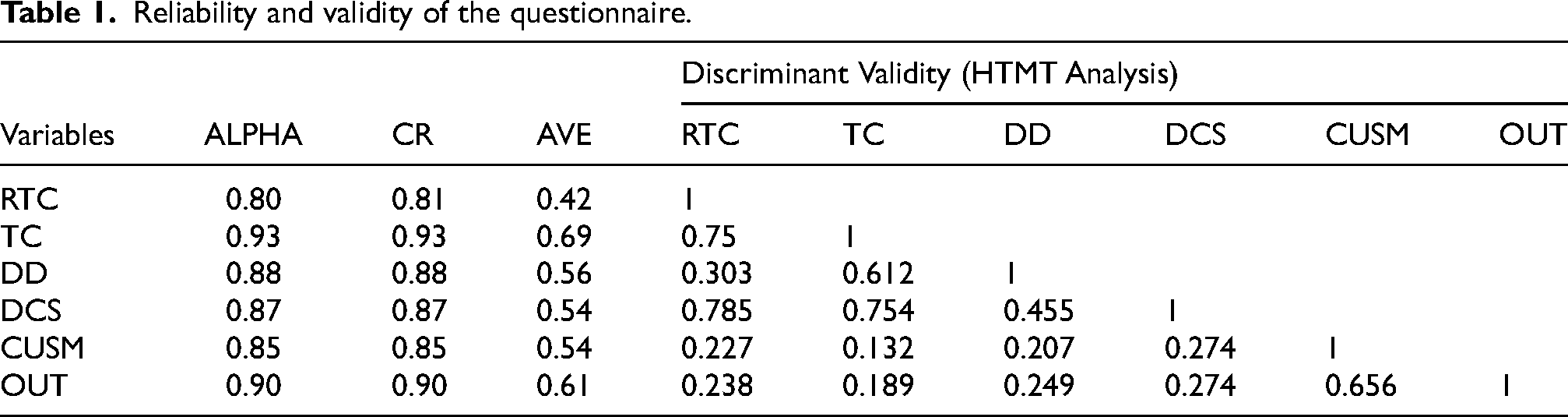
This study applied confirmatory factor analysis to assess the measurement model fitness and used the structural equation model in Analysis of Moment Structures (AMOS, 26th version) to test the relationship between the variables. After receiving data, the missing values were checked, outliers were deleted, and the normality of the data was ensured using Statistical Package for Social Sciences (SPSS). The normality of the data was assessed using skewness and kurtosis values, all of which fell within the acceptable threshold limits. Moreover, the Cronbach alpha test was applied to test the reliability of the questionnaire in SPSS. Table 1 shows that all constructs’ alpha values were above the 0.70 threshold value (Hair et al., 2010). The composite reliability was checked in AMOS. Table 1 shows that the composite reliability of all constructs was above the threshold value of 0.70 (Fornell and Larcker, 1981). Hence, the reliability of the questionnaire was established. The validity of the content of the questionnaire was ensured through an expert review. However, the construct validity was checked through convergent validity and discriminant validity. First convergent validity was calculated through Average Variance Extracted (AVE) and composite reliability. Table 1 shows that the AVE values of most of the constructs are above the threshold value of 0.50 (Byrne, 2016). Hence the convergent validity of all constructs was established. The discriminant validity, assessed using Heterotrait-Monotrait (HTMT) analysis, is confirmed since all HTMT values are below 0.85, indicating that the constructs are distinct from each other (Henseler et al., 2015). Thus, the discriminant validity of all constructs was established. Moreover, the measurement of model fitness and hypotheses were tested by applying equation structure modeling in AMOS.
Reliability and validity of the questionnaire.
Research findings
This section is divided into three headings: demographic information, confirmatory factor analysis, and hypotheses testing through structural equation modeling.
Demographic information
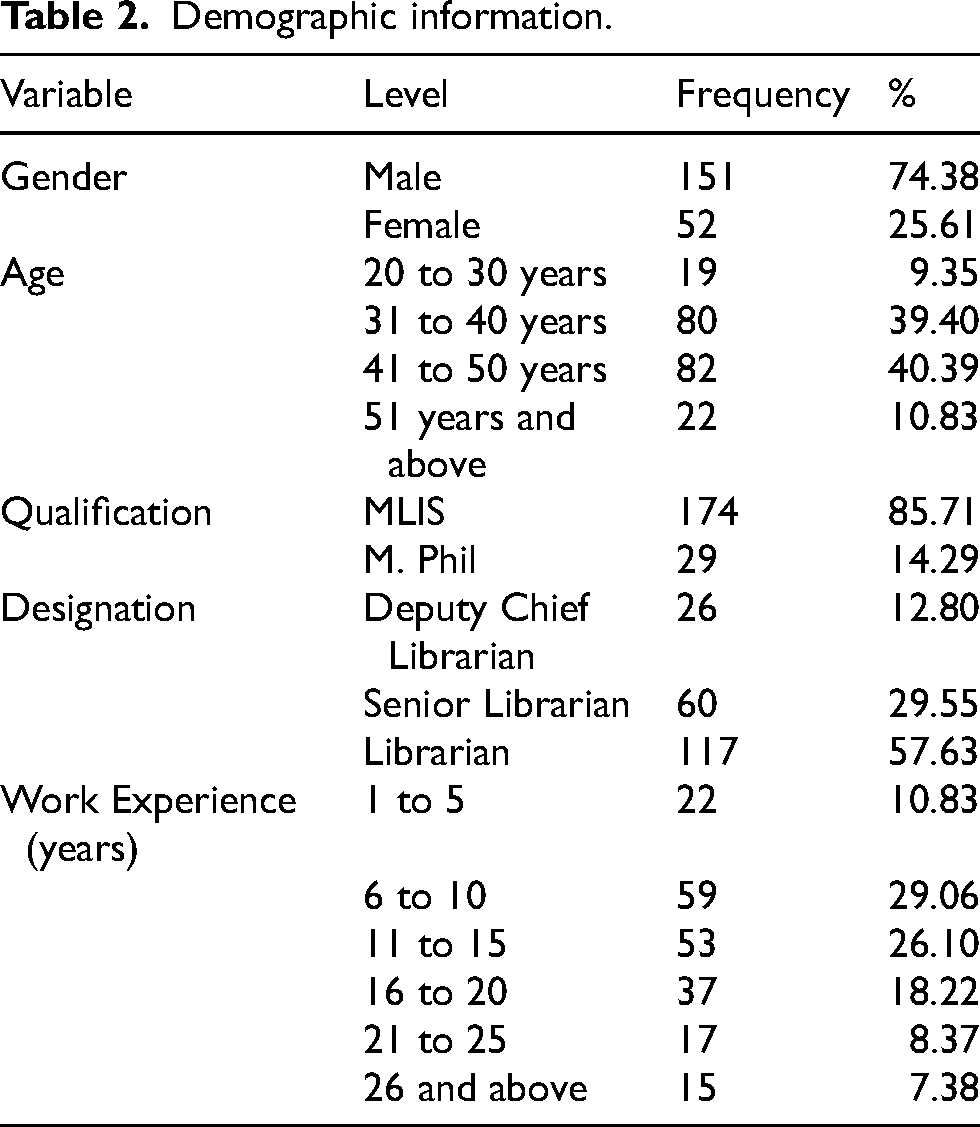
The findings (Table 2) show that most respondents were male 151 (74.38%). Regarding age distribution, most respondents were between 41-50 years 82 (40.9%), followed by 31-40 years 80 (39.40%). The outcomes show that most of the respondents have a master’s degree in library and information science. The findings demonstrate that most respondents were working as librarians 117 (57.63%) and 60 (29.55%) respondents were senior librarians. Moreover, the results show that most respondents were working from 6-10 years 59 (29.06%), 11-15 years 53 (26.10%)
Demographic information.
Measurement of model fitness
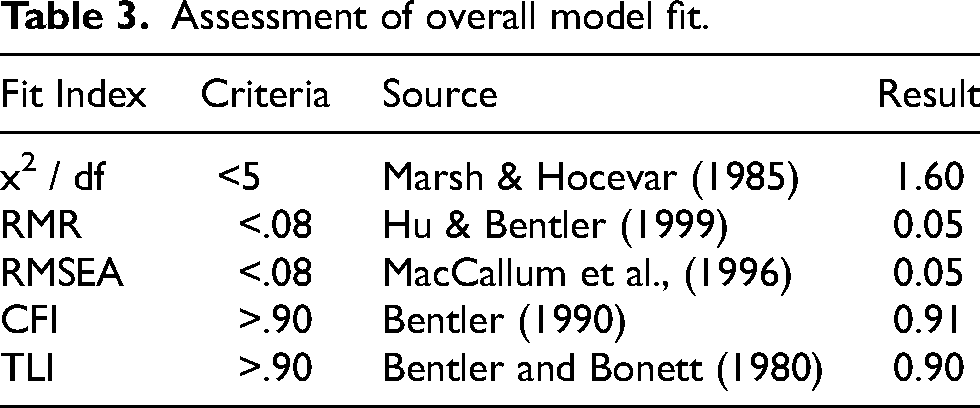
To evaluate the model fitness, CFA was applied in AMOS software. In CFA, the model fit indices were examined by considering the values of x2 /df, comparative-fit-index (CFI), goodness-of-fit index (GFI), root mean residual (RMR), and root mean square error of approximation (RMSEA) (Bollen, 1989; Williams et al., 2009). The results in Table 3 indicate that the measurement model fits well, as shown by various goodness-of-fit indices: x2 /df = 1.60 (which suggests an acceptable ratio of chi-square to degrees of freedom), RMSEA = 0.05 (indicating a close fit of the model to the data), and both CFI = 0.91 and TLI = 0.90 (which are in line with the criteria for good model fit, being close to 0.90). The standardized factor loadings for the observed variables linked to each latent construct are robust, ranging from 0.45 to 0.80. In particular, the indicators for RTC, TC, DD, DCS, CUSM, and OUT all show significant loading onto their respective latent variables. This confirms that the observed variables (like RTC1 through RTC6, TC1 through TC6, etc.) are valid and reliable measures, providing strong evidence for the underlying structure of the constructs in the model. These findings validate the connections between the observed indicators and their latent factors, ensuring that the constructs are accurately represented within the study’s context.
Assessment of overall model fit.
Hypotheses testing through structural equation modeling
Structural equation modeling was applied in AMOS 26.0 to test the hypotheses of this study. Figure 2 shows that four hypotheses were supported, and one hypothesis was not supported. Figure 2 depicts that path analysis (R2=.097) revealed that RTC, TC, and DD collectively accounted for 9.7% of the variance in the DCS. The SEM results indicate that RTC significantly and positively affects DCS (β = 0.65, t = 3.86, P = 0.00), which supports that RTC heightens stress related to digital skills. Additionally, TC shows a positive and significant impact on DCS (β = 0.24, t = 2.21, P = 0.02), suggesting that more complex technologies lead to increased stress levels. On the other hand, the hypothesis that DD influences DCS is not supported, as this relationship is not significant (β = 0.11, t = 1.49 P = 0.13). The results of the path analysis (R2=.533) reveal that DCS explained 53.3% of the variability in CUSM. The outcomes reveal that DCS positively and significantly affects CUSM (β = 0.20, t = 3.20, P = 0.00), indicating that those facing stress from digital competencies often turn to social media for support. The findings of path analysis (R2=.533) demonstrate that CUSM accounted for 53.3% of the variances in OUT. Lastly, CUSM has a strong positive effect on OUT (β = 0.73, t = 6.78, P = 0.00), reinforcing that coping through social media results in improved outcomes.
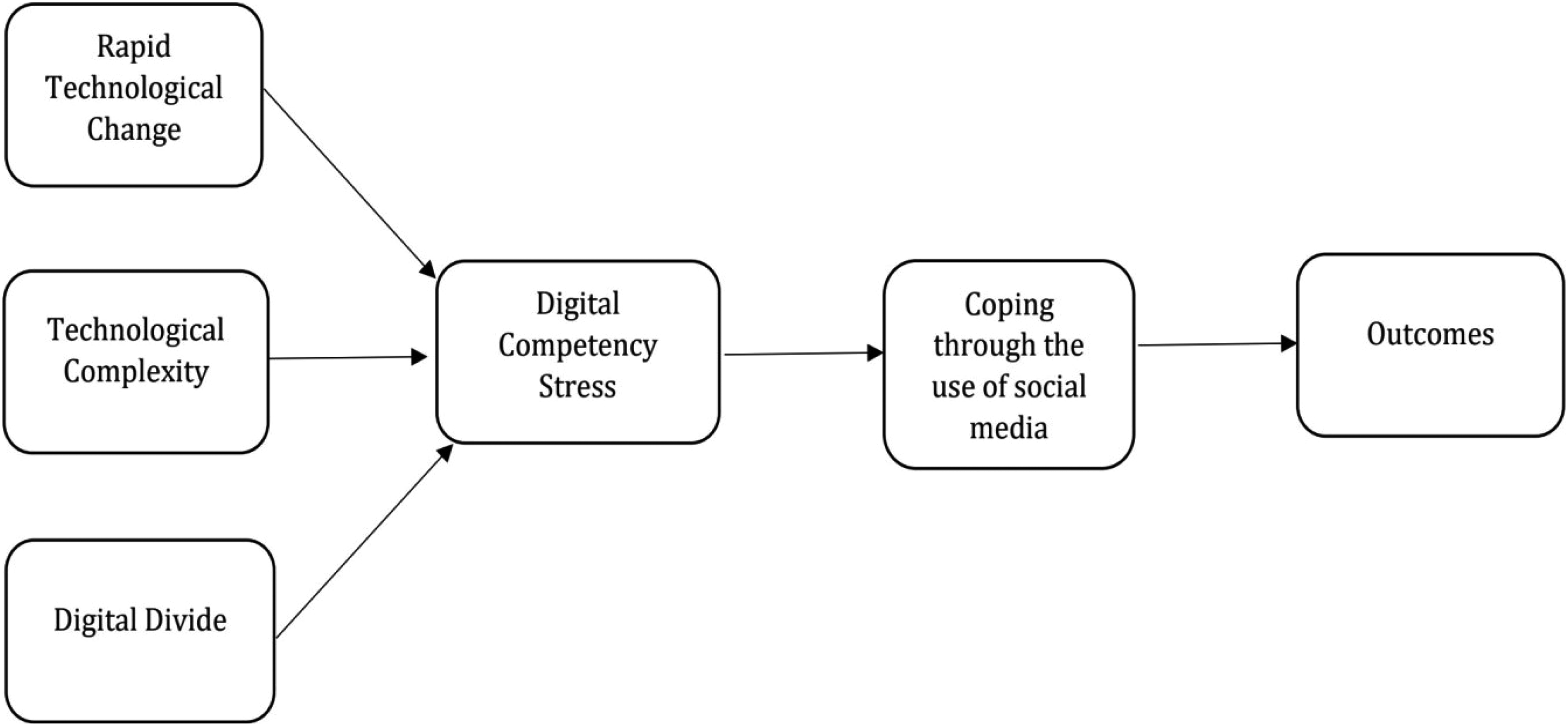
Research model.
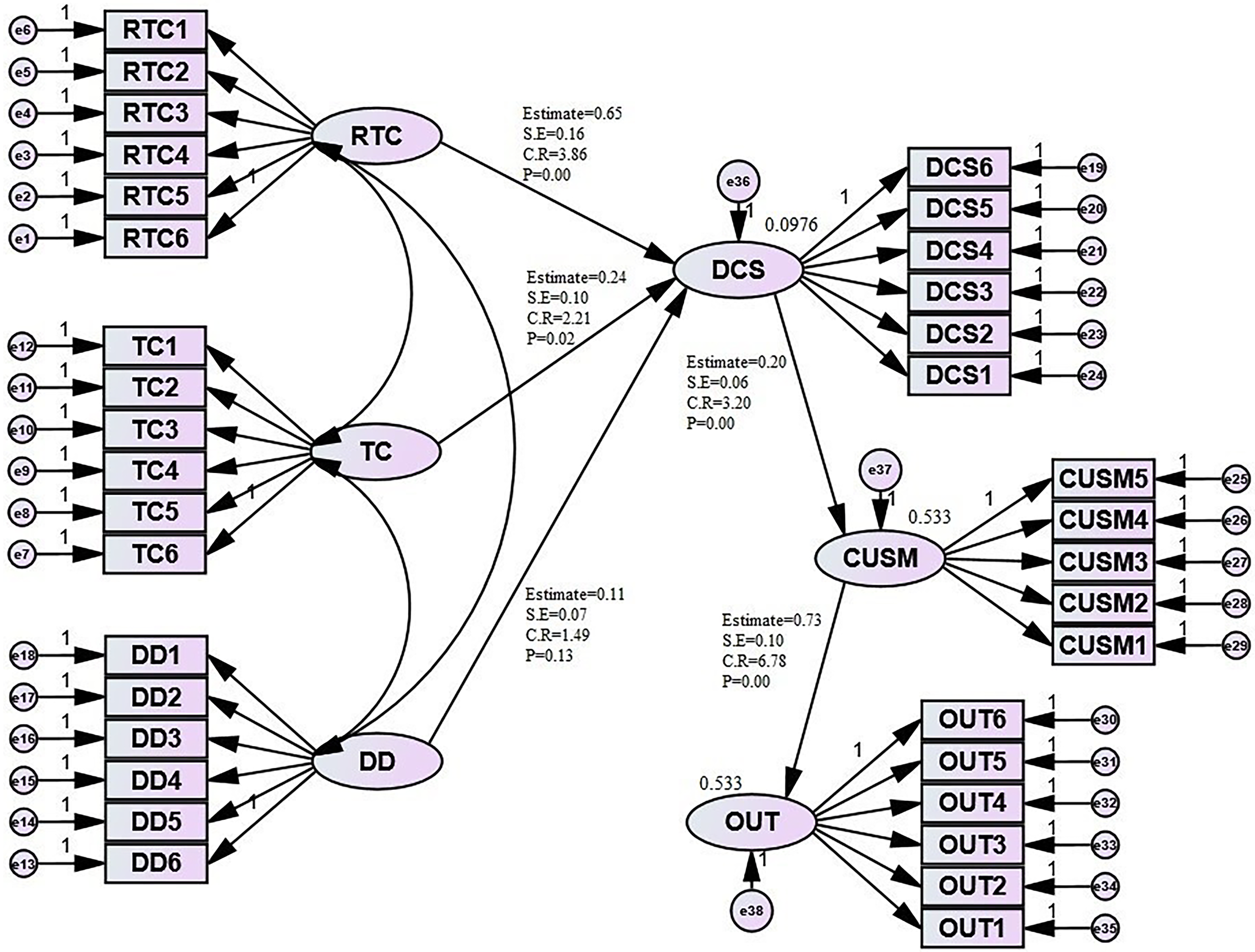
Structural equation modeling.
Discussion and recommendations
Libraries around the globe are adopting modern technologies like AI, IoT, blockchain, robotics, etc. However, library professionals especially from developing countries such as Pakistan didn’t possess relevant competencies to adopt and implement these modern technologies (Asim et al., 2024). Moreover, the reviewed literature shows scant studies on the required competencies to implement emerging technologies. Therefore, this study investigates the digital competency stress and coping mechanisms among college librarians in Pakistan. This study found that rapid technological change and technology complexity have a positive impact on digital competencies stress. Moreover, this study also explored the college librarians from KPK can reduce this digital competency stress through interactions with peers and experts in the field through social media applications.
The results reveal that rapid technological change significantly impacts digital competency stress. This has a specific implication for college librarians because the rapid development of technologies means they are under pressure to update themselves frequently. Due to increasing tools, platforms and systems which are available in the libraries, librarians have to cope up with the challenges, which results in pressure and anxiety (Bignoli and Stara, 2020). Due to high technology turnover, institutions are unable to offer training and support in time, and librarians are forced to figure it out by themselves (Asim et al., 2023; Asim et al., 2022). This pressure can increase stress levels as librarians try to adopt new technologies into their practice but at the same time have to deliver high-quality service delivery to the library patrons. However, the pressure to learn about multiple technologies simultaneously may result in skimming over some of these key areas of concern because it creates additional work and an overall impression of overload (Rahman et al., 2024). This constant shifting is particularly wearing on librarians psychologically, especially when they feel that their current competencies are no longer adequate to meet proliferating professional demands for change (Ahmad and Amin, 2012). To address this situation, we need to allocate enough resources for librarians together with clearly defined training programs, and sufficient time required to notice and implement changes. The study by Sabzwari et al. (2023) highlights that techno-stress, particularly techno-overload and techno-uncertainty, negatively impacts the job performance of academic librarians. Similarly, this study finds that digital competency stress arises due to rapid technological advancements and limited training opportunities, affecting college librarians in KPK. This suggests that while techno-stress is a common challenge among librarians, effective coping mechanisms such as social media engagement can play a significant role in reducing its adverse effects.
The analysis shows that technological complexity has a significant effect on digital competency stress. This highlights the reality that tech solutions often have multiple layers, convoluted interfaces, stages, and software issues. These systems are commonly challenging for librarians to acquire, particularly when they are not designed with simplicity or knowledge in mind. This complexity can cause frustration and stress when the tools are things the employees need for their daily workloads (Matumba and Rajkoomar, 2024; Shahzad and Iqbal, 2020). Since systems are complex, one can develop a feeling of ineffectiveness and helplessness since librarians may spend numerous hours handling or asking other people for help. These challenges are worse when there are time constraints, or inadequate institutional backing, which increases stress rates beyond normal levels (Gupta, 2024). One way to reduce this complexity is to simplify the technological tools, give very clear directions, and be present to offer a physical hand to those who need it. Institutions should also involve librarians for they will help in the selection and application of the current tools in preparation for the digital tool as it should meet the user friendly and also be a practical tool. Librarians can be supported through workplace training and feedback and this study shows the ways through which stress arising from technology use can be reduced. Moreover, the findings of this study align with the results of Avila-Sánchez et al. (2024), who reported a significant negative correlation between digital competence and stress-related factors such as anxiety and fatigue among university teachers. Similarly, this study confirms that rapid technological changes, technology complexity, and the digital divide contribute to digital competency stress among college librarians.
The results indicate that the digital divide does not have a statistically significant impact on digital competency stress. This means that the difference that may exist in the availability of digital resources and infrastructure may not correspondingly influence the level of stress of college librarians (Diseiye et al., 2024). The reason for this is that, though the digital divide could cut off access to some technologies, its influence on stress seems to be moderated by factors such as institutional support or individual resilience (Lehtinen et al., 2023). This result suggests that there are other aspects of the digital divide that should be investigated in detail and that may affect the librarians’ capacity to deal with digital pressures. This is further compounded by the involvement of personal resilience and adaptive coping styles showing that while these disparities are real, it is only those Adapt librarians who may suffer stress due to these disparities. Subsequent endeavors should cover these peculiarities by advocating for fairness in digital literacy and supporting organizational practices that would close the divide so that digital differences do not become a lasting impediment in the process of career advancement.
The findings demonstrate that digital competency stress significantly influences coping through the use of social media. This shows that librarians may use social media platforms like Facebook, WhatsApp, and LinkedIn to connect, exchange ideas, and discuss difficulties, creating a sense of camaraderie (Wolfers and Utz, 2022). This demonstrates how social media can help librarians deal with stress. These interactions not only act as sources of comfort but also as sounding boards to some of the problems that confront them in their professional capacities (Panda, 2024). Social media is also useful as a course where librarians have access to tutorials, webinars, and forums that improve their digital literacies (Bano et al., 2023). Additionally, the constant availability of social media sites makes them a perfect means for instant trouble shooting and connection. For instance, librarians can conduct a poll on how to solve a technical problem, learn trends in the profession, or engage in discussing issues that can be helpful in their work. Recommendation of social networking sites and stressful outlets in the profession may be beneficial in enhancing support for librarians as they carry out their work (Soomro, et al., 2024). Management should investigate options for creating official social media platforms in order to harness the social aspect of social media in reducing stress among its members as well as creating social media support groups. The study by Anwar and Zhiwei (2023) highlights the significant role of social media in facilitating communication, information sharing, and user engagement in libraries, while also acknowledging the challenges faced by librarians in effectively integrating social media into their professional activities. Similarly, this study finds that social media serves as a coping mechanism for digital competency stress among college librarians in KPK, enabling them to share knowledge, seek support, and stay updated on technological advancements. These findings align in emphasizing the transformative potential of social media in library settings, demonstrating its dual role as both a professional resource and a platform for overcoming workplace challenges.
The analysis confirms that coping using social media has a substantial positive effect on outcomes. This result provides support for the assertion that coping results can significantly influence the overall results. When librarians manage stress by turning to social media, they are more likely to see an advancement in job performance, an increase in creative performance, and higher levels of satisfaction in their positions (Ilo, 2016). Besides addressing the clients’ short-term stressors, social media also assists in their long-term development by way of receiving or updating information or forming networks and digital skills (Usuka et al., 2019). For example, active membership in professional groups on social networking websites can offer librarians visibility of best practices, new ideas, and partnerships. Such engagements may create new learning which is useful in enhancing performance and creativity in the task accomplished. These benefits can be more effectively leveraged by institutions through supporting formalized ways of using social media for business as aligned to professional development. Supporting guidelines on how to properly engage in the process of social media can also improve the quality of the interactions as well as librarians’ appreciation of the work they do on these platforms. In addition, encouraging a supportive network that develops through learning by sharing via social media is a strong professional community that is resistant to adversity.
The findings of this research carry several practical implications. Training programs should address these two aspects of the technological landscape: rate of change and complexity so that librarians are prepared to deal with changes in technology. The government and other authorities need to increase the chances of equal distribution of digital tools and infrastructure to reduce the effects of the divide. Employers and organizations must engage social media as a professional practice framework that promotes support among the working population. This study helps to explain the relationship between technology factors and the level of concern for digital competencies among college librarians in Pakistan. In that sense, the study’s objective of identifying social media as a coping mechanism determines the directions for intervention with librarians in the age of digital social interaction. Further research can include other mediating factors and long-term consequences of digital competency stress for developing a better perspective and a rich understanding of the phenomenon.
Implications of the study
This study holds significant implications for practitioners, policymakers, and educators in library science, particularly for college librarians in Pakistan. The findings indicate that the fast pace of technological advancements and the intricacies of technology contribute notably to digital competency stress. Consequently, institutions should prioritize the creation of comprehensive training programs that equip librarians with the essential skills to navigate new technologies, proactively addressing these stressors. Furthermore, the positive correlation between digital competency stress and coping through social media suggests that librarians find social media to be a valuable resource for support and knowledge sharing. Libraries should consider establishing official online platforms or forums where librarians can connect, share experiences, and exchange resources, fostering a supportive community that can help mitigate some of the stress associated with digital competencies. The strong positive influence of social media coping on outcomes underscores its importance in enhancing professional performance and job satisfaction. Libraries should encourage librarians to utilize social media not only as a coping mechanism but also to access professional development opportunities and stay informed about industry trends. Additionally, promoting a culture of continuous learning within libraries will empower librarians to adapt more effectively to technological changes and alleviate stress. Ultimately, this study sets the stage for further exploration into the impacts of digital competency stress in various contexts within library science. Moreover, the findings of this study are highly relevant to third-world countries, where similar challenges exist due to limited technological infrastructure, inadequate funding, and restricted access to professional development opportunities for librarians. In many developing nations, digital competency stress is exacerbated by the digital divide, making it difficult for library professionals to keep pace with emerging technologies. The study’s findings suggest that social media can serve as an alternative learning and coping platform, enabling librarians in resource-constrained environments to access training materials, network with peers, and share best practices. Policymakers and educational institutions should harness these insights to formulate strategies that foster mental well-being and professional resilience among librarians, ensuring they are equipped to face the challenges of an increasingly digital landscape. By acknowledging these implications, libraries can better prepare their staff to succeed in an era of rapid technological progress.
Limitations of the study and future direction
This study provides valuable insights into the digital competency stress experienced by college librarians in Pakistan, but it does have some limitations. One significant limitation is the reliance on self-reported measures to assess digital competency stress and coping strategies, which could introduce response bias and affect the validity of the findings. Furthermore, while the sample size is adequate for preliminary analysis, it may not fully capture the diverse experiences of librarians from various regions and types of institutions in Pakistan. The cross-sectional nature of the research limits the ability to draw causal conclusions, as the observed relationships may not account for changes over time or the influence of external factors. Additionally, while the focus on social media as a coping strategy is relevant, it may overlook other support systems or methods that librarians employ to manage digital competency stress.
Future research should consider employing longitudinal designs to gain a better understanding of how digital competency stress affects librarians over time. Expanding the sample size and diversity of participants will enhance the relevance of the findings across various fields of library science. Furthermore, looking into additional coping strategies beyond social media, such as formal training programs or mentorship opportunities, could provide a more comprehensive view of how librarians manage digital challenges. Qualitative approaches, including interviews or focus groups, might also offer richer insights into the lived experiences of librarians dealing with digital competency stress. Lastly, future studies could examine how institutional support can mitigate stress and improve job satisfaction, offering valuable recommendations for libraries seeking to cultivate a more supportive and resilient work environment.
Conclusion
This research emphasizes the substantial impact of digital competency stress on college librarians in Pakistan, shining a light on the connections between rapid technological developments, technological complexity, and stress levels. The results suggest that as librarians confront quick technological advancements, they tend to feel increased stress concerning their digital abilities. Additionally, those experiencing this stress often look for support through social media, which can have a beneficial impact on their professional outcomes. Understanding how librarians manage the demands of their roles in an increasingly digital environment is crucial. By exploring these aspects, this study provides valuable insights into the experiences of librarians, reinforcing the need for further investigation into the influences on digital competency stress and its implications for the profession.
