







Abstract
This paper investigates university students’ attitudes toward information literacy (IL), explores their perceived IL self-efficacy and examines the influence of demographic and academic factors, experiential factors, self-reported proficiencies and IL attitudes on their perceived IL self-efficacy. Guided by Bandura's Social Cognitive Theory and using a quantitative research approach, the study employed a 23-item validated IL self-efficacy scale to collect data from 406 university students in Bangladesh using a convenience sampling method. Descriptive statistics, correlation analysis and various non-parametric tests were used to analyze the data. The study found significant variations in students’ perceived IL self-efficacy based on several factors, including education level, participation in IL training, use of e-resources, English language, computer and internet proficiency, research experience, and frequency of using AI tools. The findings also revealed a statistically significant positive correlation between students’ IL attitudes and perceived IL self-efficacy. Finally, the study emphasizes the importance of enhancing IL education to close the gap between students’ perceived and real abilities.
Keywords
Introduction
As the basis for science, technology, and innovations that greatly improve our quality of life, information has always been essential to human civilization (Hsu et al., 2003). Paul Zurkowski coined the term “information literacy” (IL) in 1974 and defined it as the capacity to identify the need for information and to find, assess, and apply it efficiently (Kurbanoglu, 2013). In 1989, the American Library Association (ALA) broadened this definition, highlighting the significance of these abilities in a society that is becoming more and more information-driven (Rader, 2002). Since then, IL has expanded to encompass the development of new knowledge, the ethical use of information, and the critical assessment of sources (Weiner, 2014).
Self-efficacy, a term introduced by Albert Bandura in 1977, describes an individual's belief in their ability to succeed in specific tasks (Bandura, 1977). This self-belief influences behavior, motivation, and persistence, impacting how individuals set goals, confront challenges, and overcome obstacles (Bandura et al., 2001). In this context, information literacy self-efficacy (ILSE) refers to an individual's confidence in their capability to perform tasks related to IL, including locating, evaluating, and managing information (Kurbanoglu et al., 2006). Students with higher ILSE tend to approach information tasks with greater confidence, enhancing their academic performance and problem-solving skills (Atikuzzaman and Ahmed, 2023b).
Statement of the problem
In the context of IL, perceived self-efficacy is central to understanding how students approach information-related challenges. One popular tool for measuring perceived ILSE is Kurbanoglu et al.'s (2006) scale, which offers trustworthy self-assessment information for a range of demographics (Mahmood, 2017). Using this tool, extensive research has been conducted to measure the factors influencing students’ IL self-efficacy (Atikuzzaman and Ahmed, 2023b; De Meulemeester et al., 2018; Keshavarz et al., 2017; Odede, 2018). However, there is still a lack of understanding of what influences students’ IL self-efficacy, particularly in non-Western contexts such as Bangladesh, where infrastructural, educational, and technological disparities may have a unique impact on students’ access to IL development opportunities (Islam and Inan, 2021). In terms of internet and smartphone use, Bangladesh is lagging compared to other regions. According to IBRD (2024), only 39% of Bangladeshis use the internet, however, the rate of smartphone users is 51.77% in this country, both of which are lower than the rates in several South Asian countries. Prior research has mostly examined characteristics such as IL training, library use, and academic background as predictors of IL abilities (Aharony and Gazit, 2019; Atikuzzaman and Ahmed, 2023b; Liu, 2023; Prabowo et al., 2024). However, little attention has been paid to how students’ views about IL, demographic and academic traits, and proficiency in technology use, research, and AI tools affect their perceived IL self-efficacy.
Therefore, this study addresses a significant gap by investigating how a range of individual-level factors including IL attitudes and technology-related proficiencies shape students’ perceived IL self-efficacy in the Bangladeshi higher education context. By doing so, it provides context-specific insights that can inform IL curriculum design, policy development, and targeted interventions to strengthen students’ confidence and capacity to manage information effectively.
Objective and research questions (RQs) of the study
This study aims to investigate university students’ information literacy attitudes, their perceived IL self-efficacy, and the extent to which demographic and academic backgrounds, experiential factors, and proficiencies influence their self-efficacy. To fulfill this objective, the following research questions (RQs) were developed:
Literature review
Students’ attitudes toward IL
Several Previous studies revealed diverse attitudes of students toward information literacy. For instance, Rapchak et al. (2018) found that students generally show positive attitudes toward IL when aligned with digital competencies and critical thinking skills. However, there are disparities in students’ self-assessment of their skills, often leading to gaps between perceived and actual competencies (Pinto and Fernández-Pascual, 2014). Attitudinal differences are also observed across academic disciplines, where students of social sciences and law backgrounds showed varying degrees of engagement with IL concepts (Balog and Siber, 2017). Students’ attitudes about information literacy have a considerable impact on their information literacy skills, according to Adekunle et al. (2019). Contrarily, Hatlevik et al. (2018) found that socioeconomic background, gender, and self-efficacy are significant factors in determining students’ computer and information literacy. However, fostering positive attitudes toward IL requires targeted pedagogical strategies, including competency-based instruction and ongoing assessment (Pinto and Fernández-Pascual, 2014).
IL self-efficacy scale and its diverse use
Several self-assessment instruments have been developed for measuring IL abilities, and the ILSE scale developed by Kurbanoglu et al. (2006) is the most widely used among them (Mahmood, 2017). Using a seven-point Likert scale, with 1 denoting “almost never true” and 7 denoting “almost always true,” Kurbanoglu and his colleagues first developed a 40-item scale by gathering information from over 370 teachers. The number of scale items was first lowered to 28 and then to 17 following the completion of item analysis, item discrimination indices, Cronbach's alpha, and principal component analysis.
Several studies measured students’ perceived IL self-efficacy levels using this scale. For instance, Aharony and Gazit (2019) revealed that graduate students generally exhibited higher IL self-efficacy than undergraduates due to their academic experience and research familiarity. Liu (2023) found that motivation and course design significantly impacted students’ IL self-efficacy, with students showing higher confidence when actively engaged in the learning process. Naveed and Mahmood (2022) found that Pakistani business students struggled with more complex IL tasks but they had higher self-efficacy for basic IL skills. In a similar vein, Seng et al. (2021) discovered that students studying business administration and tourism had considerably higher levels of self-efficacy than students studying the arts, humanities, and social sciences. Michalak et al. (2017) found that women in their 30 s scored highest on IL tests, suggesting that age and gender influence self-perceived IL. They also discovered a confidence gap between male and female students, with females underestimating their abilities compared to males, possibly due to societal expectations or personality traits.
Demographic, individual and other factors influencing IL self-efficacy
Several studies have demonstrated the relationship between IL self-efficacy and various academic, demographic and other factors (for example, Aharony and Gazit, 2019; Atikuzzaman and Ahmed, 2023b; Liu, 2023; and Prabowo et al., 2024). Atikuzzaman and Ahmed's (2023b) study reported significant differences in ILSE based on students’ gender, age, study level, computer knowledge, IL training, and e-resource use in Bangladesh, whereas Soroya et al. (2021) found strong links between emotional intelligence and ILSE among medical students in Pakistan.
The studies of Bazrafkan et al. (2017) and Liu and Sun (2012) demonstrated that male students have higher IL skills than females. Contrarily, Atikuzzaman and Ahmed (2023b) and Michalak et al. (2017) found that female students are more confident in their perceived IL compared to male students. Other studies have reported no significant differences in IL skills concerning gender (Mahmood, 2013; Pinto and Fernández-Pascual, 2014). The study by Conway (2011) reported that postgraduate students demonstrated higher levels of IL than undergraduates, whereas Kale (2016) found no significant differences by study level.
Although students’ confidence in their abilities is reflected in their self-efficacy, research shows that this confidence does not always correspond with their actual ability levels. For example, Coates (2013) found that first-year community college students’ self-assessed IL skills and their actual performance differed significantly, with many overestimating their competencies. Wendekier's (2021) study also found only a moderate relationship between IL self-efficacy and actual knowledge, indicating that high self-efficacy is not always a sign of great competency. In a qualitative study, Nakaziba et al. (2022) investigated nursing students’ information literacy experiences and competencies at Aga Khan University in Uganda. The study discovered that nursing students who achieved certain IL competencies had no trouble finding the information they needed.
Scenario among university students in Bangladesh
Several studies have been conducted in Bangladesh that provided insights into IL skills among university students. For instance, Ferdows and Ahmed (2015) assessed the IL skills of students in a public university and found that variables such as gender, age, and computer access played significant roles in IL competency, with many students failing to demonstrate basic IL proficiency. In a recent study, Akter and Ahmed (2024) further emphasized that IL instruction boosts students’ confidence in handling research tasks, enhancing their ability to source credible information and apply it in academic projects. Atikuzzaman and Ahmed (2023b), using a Bangla version of the ILSES, found moderate self-efficacy among 408 Dhaka University students, with higher confidence in basic IL tasks. Tabassum et al. (2024) found that demographic factors such as age, gender, and academic background significantly influenced students’ media and IL self-efficacy. Tasmim and Atikuzzaman (2023) examined the information-seeking behavior of campus journalists, showing their struggles with source credibility and advocating for tailored IL training to enhance their research practices and ethical standards in reporting.
Research gap
While many studies have looked at university students’ information literacy (IL) self-efficacy, the majority have concentrated on different regional contexts and/or general IL competencies rather than attitudes, demographics, and experiential learning. Furthermore, previous research has primarily examined IL self-efficacy without investigating heterogeneity across varied student backgrounds and learning experiences, particularly in developing countries such as Bangladesh. Though Atikuzzaman and Ahmed (2023a) validated Kurbanoglu et al.'s 28-item scale and found that 23 items were usable for use among Bangla-speaking people, no study investigated differences in students’ self-perceived IL self-efficacy as well as the impact of their attitudes towards IL on their perceived IL self-efficacy, using this refined scale. This study addresses this gap by investigating how demographic and experiential characteristics influence Bangladeshi university students’ perceived IL self-efficacy.
Theoretical framework
This study is primarily guided by Bandura's Social Cognitive Theory (SCT) (1986), which focuses on the personal, behavioral, and environmental factors that influence human learning and performance. One of the core principles of this theory is self-efficacy which is the belief that an individual holds regarding their ability to perform a particular task successfully (Bandura, 1986).
In the context of this study, students’ perceived IL self-efficacy reflects their confidence in handling information-related tasks such as searching, evaluating, and using information effectively. Based on SCT, this perceived self-efficacy is shaped by personal factors (e.g., attitudes toward IL), behavioral experiences (e.g., research participation, AI tool use, and engagement with e-resources), proficiencies (e.g., English language, computer and internet) and environmental and background factors (e.g., demographic and academic characteristics). The conceptual framework of this study is shown in Figure 1.
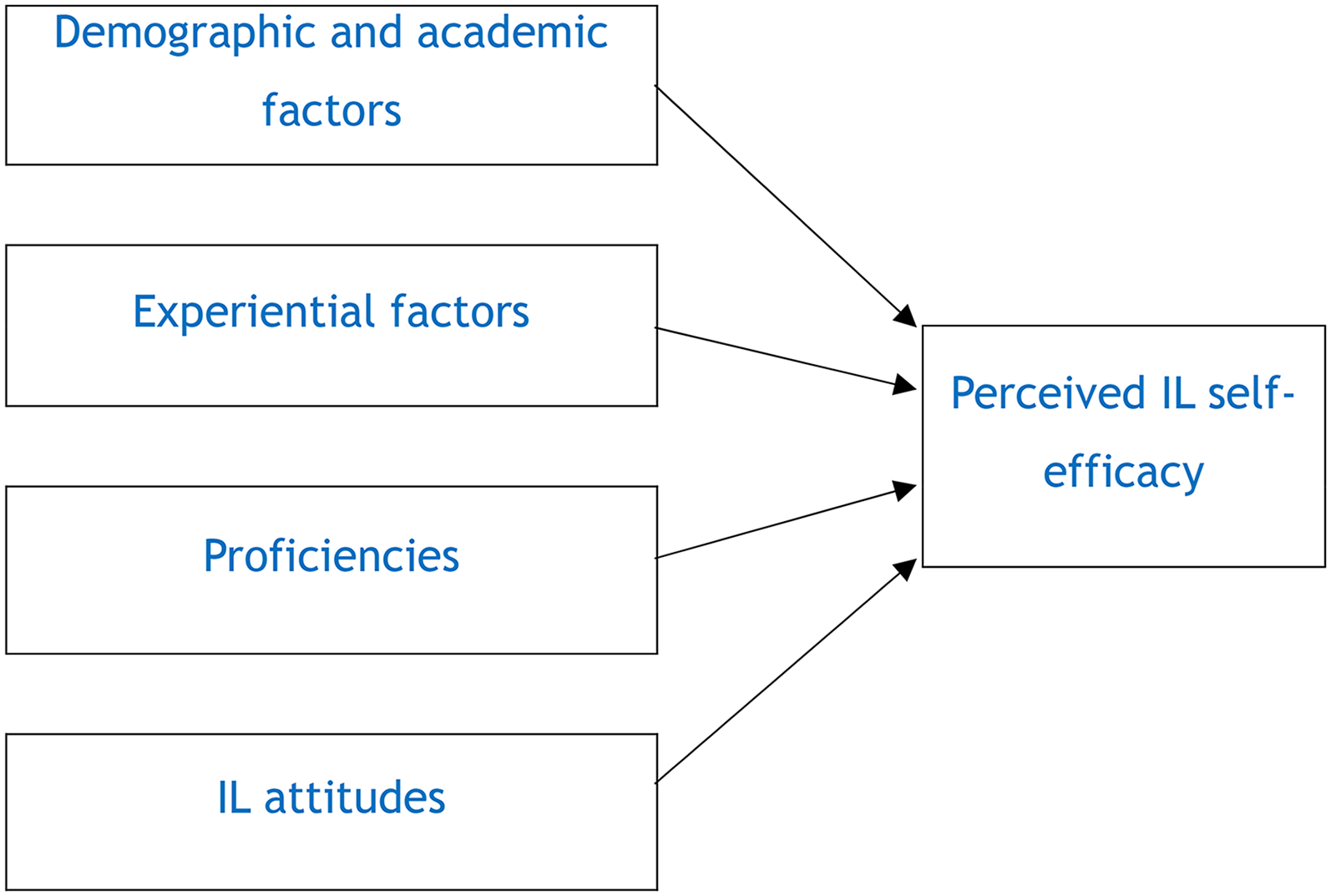
Conceptual model of factors influencing students’ perceived IL self-efficacy.
Hypotheses development
Demographic and academic factors
Prior research suggests that students’ backgrounds including age, gender, residence, and academic discipline may shape their learning experiences and confidence in applying IL skills (Gross and Latham, 2012; Kurbanoglu et al., 2006). Recently, Atikuzzaman and Ahmed's (2023b) study reported significant differences in students’ ILSE based on their gender, age, study level, computer knowledge, IL training, and e-resource use. Therefore, the present study formulated the following hypotheses:
Experiential learning factors
Experiential learning is one of the most powerful sources of self-efficacy according to SCT. Engaging in research, using electronic and AI-based tools, attending IL training or courses, and visiting the library can provide hands-on knowledge that boosts confidence in navigating and evaluating information (Atikuzzaman and Ahmed, 2023b; Liu, 2023; Prabowo et al., 2024). Therefore, the following hypotheses were developed:
Proficiency variables
Previous studies have demonstrated how proficiencies impact students’ IL self-efficacy. Research by Johnston et al. (2014) found a strong correlation between English reading skills and IL abilities. According to Tang and Tseng (2013), students with higher levels of computer and internet skills demonstrated significantly greater IL self-efficacy. Similarly, Atikuzzaman and Ahmed (2023b) found a positive relationship between computer proficiency and students’ IL self-efficacy. Therefore, the following hypothesis is proposed:
Attitudes toward IL
Attitudes act as key personal determinants in SCT and play an essential role in learners’ motivation and engagement. A positive attitude toward IL promotes proactive information-seeking behavior and is strongly associated with higher IL self-efficacy (Kurbanoglu et al., 2006; Nakaziba et al., 2022). Thus, the following hypothesis is proposed:
Methodology
Study population and sample calculation
The study was conducted at one of Bangladesh's public universities, which comprises approximately 7500 students across thirty-one departments under six faculties and two institutes. The sample size was calculated based on the assumption that 50% of students have proper ILSE skills, with a 5% margin of error and a 95% confidence level, resulting in a required sample size of 366. Data were collected from a sample of 406 students, exceeding the required number, using a convenience sampling technique selecting participants from various departments based on accessibility and willingness to participate. While this approach allowed efficient data collection, it might affect the generalizability of the findings by creating selection bias as a large proportion of the responses came from science and technology disciplines.
Instrument development
This study used a quantitative approach to collect data from the students. A well-designed questionnaire, comprising several closed-ended questions, was created using Google Forms. To ensure an easy understanding of the questions, the questionnaire was translated into both English and Bengali languages. The first part collected information on students’ academic and demographic variables. The second section collected information on students’ experiences and proficiencies such as participation in IL training, experience in research, frequency of using AI-related tools and university-subscribed e-resources and their self-reported English language, computer and internet proficiency levels. For each proficiency variable, participants selected one of four levels: Beginner, Intermediate, Advanced, or Expert. This approach is consistent with the study of Atikuzzaman and Ahmed (2023b) and Soroya et al. (2021). Variables such as research experience, use of AI tools, and e-resources were measured using frequency-based or binary responses to evaluate students’ experiential learning and practical exposure. They served as proxy indicators of experience, which are commonly employed in research where standardized skill assessment or direct observation are impractical (Gross and Latham, 2012). The third section of the questionnaire contained 10 statements that measured students’ self-reported attitudes toward IL. The statements were rated on a seven-point Likert scale ranging from 1 = strongest disagree to strongly agree = 7. These statements were derived from the Framework for Information Literacy for Higher Education (ACRL, 2015). This measure helped us explore the relationship between students’ IL attitudes and their self-efficacy and learning practices. The fourth section was designed to measure students’ perceived IL self-efficacy through the 23-item ILSE scale validated by Atikuzzaman and Ahmed (2023a) from the original 28-item ILSE scale developed by Kurbanoglu et al. (2006). The ILSE scale developed by Kurbanoglu et al. is widely recognized as the most appropriate data collection instrument with high reliability and consistency and is widely used in the measurement of self-efficacy (Keshavarz et al., 2017; Mahmood, 2017).
Data collection and analysis
Data were collected in two steps. In the first step, 132 data were collected online by sharing the link to the questionnaire among the students via different social media platforms like Facebook, Messenger and WhatsApp. In the second step, permission was obtained from the heads of departments to disseminate printed questionnaires to students during their physical classes. The students were informed of the study's purpose and that their participation in the survey was entirely voluntary. In this way, another 274 data were received. The whole data collection process took nearly two months, June - July 2024. The collected data were analyzed using SPSS version 25. Students’ attitudes regarding IL and their perceived IL self-efficacy were summed up using descriptive statistics, such as mean, standard deviation, weighted mean and frequency distributions. Because of the non-normal distribution and ordinal nature of the data, non-parametric tests such as the Mann-Whitney U test (for two-group comparisons such as gender, residential status, IL training and e-resource use) and Kruskal-Wallis test (for multiple-group comparisons) were used to assess differences in IL self-efficacy based on their faculty/institute, age groups, study levels, CGPA, library visit frequency, research experience, AI use frequency and English language, computer and internet proficiencies. The association between students’ reported IL self-efficacy and their IL attitudes was evaluated using the Pearson correlation coefficient.
Findings of the study
Demographic information of the students
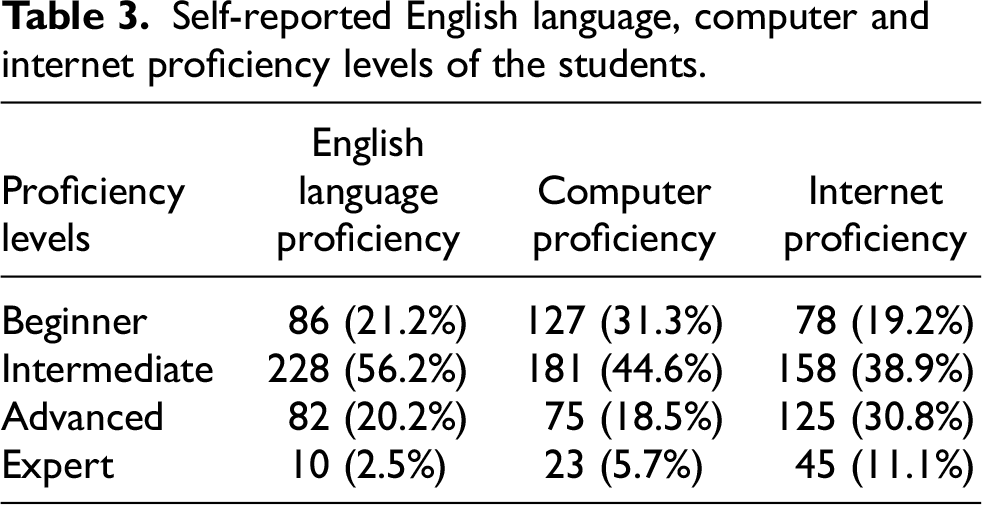
406 students responded to this survey. According to Table 1, the highest number of participants was from the Faculty of Social Science & Humanities (97, 23.9%), whereas the lowest number of students was from the Faculty of Education Science (30, 7.4%)
Academic and demographic data of the students.
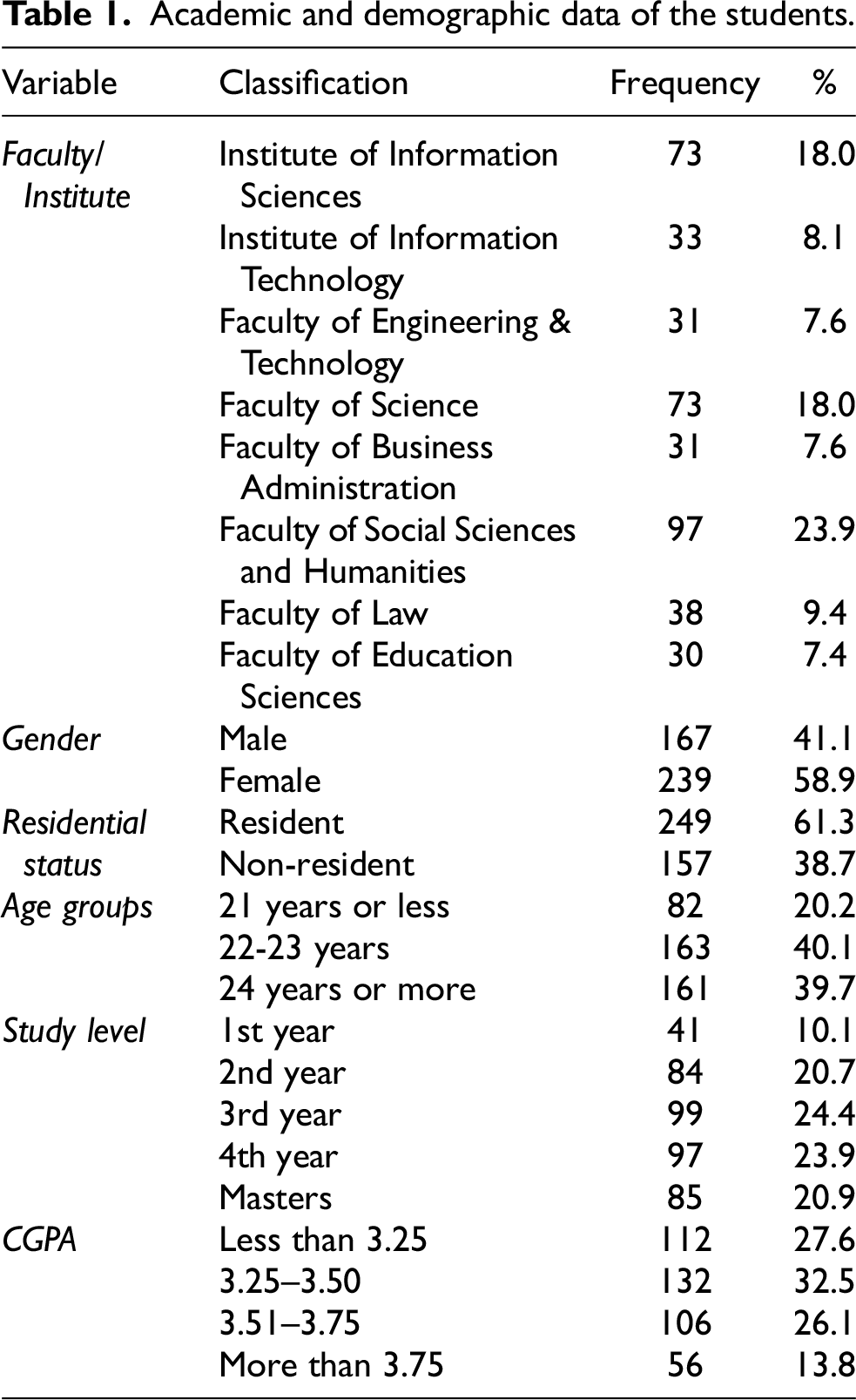
Experiences of the students
Table 2 shows students’ different types of experiences. The majority of the students used the university library less often (116, 28.65) than once in a semester. Almost four-fifths of them didn’t receive IL training (322, 79.3%) and nearly two-thirds of them do not use the university's e-resources (278, 68.5%). In terms of research experience, almost half of them replied negatively (192, 47.3%), however, 120 (29.6%) students were experienced in research and the rest 94 (23.2%) students were involved in ongoing research. Lastly, in terms of AI usage, most of them mentioned that they use AI tools ‘frequently’ (121, 29.8%) followed by always (110, 27.1%). Only 34 (8.4%) students had no experience of using AI.
Experiences of the students.
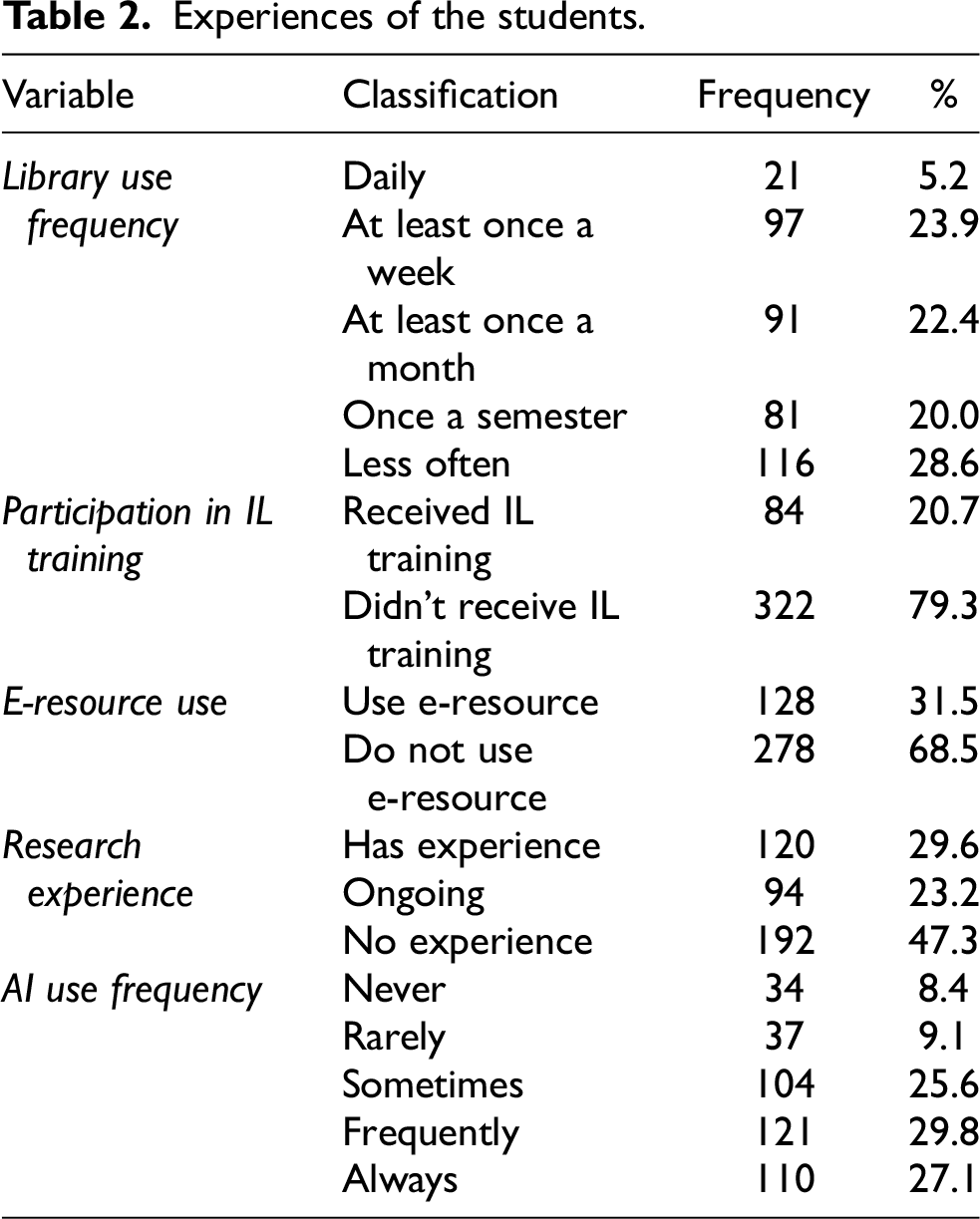
Self-reported English language, computer and internet proficiency levels
Table 3 shows students’ English language, computer and internet proficiency levels. The majority of the students rated themselves as intermediate-level users in terms of English language (228, 56.2%), computer (181, 44.6%) and internet (158, 38.9%) usage. However, the numbers of expert-level users in all three categories were very limited compared to the other levels.
Self-reported English language, computer and internet proficiency levels of the students.
Respondents’ attitudes toward information literacy
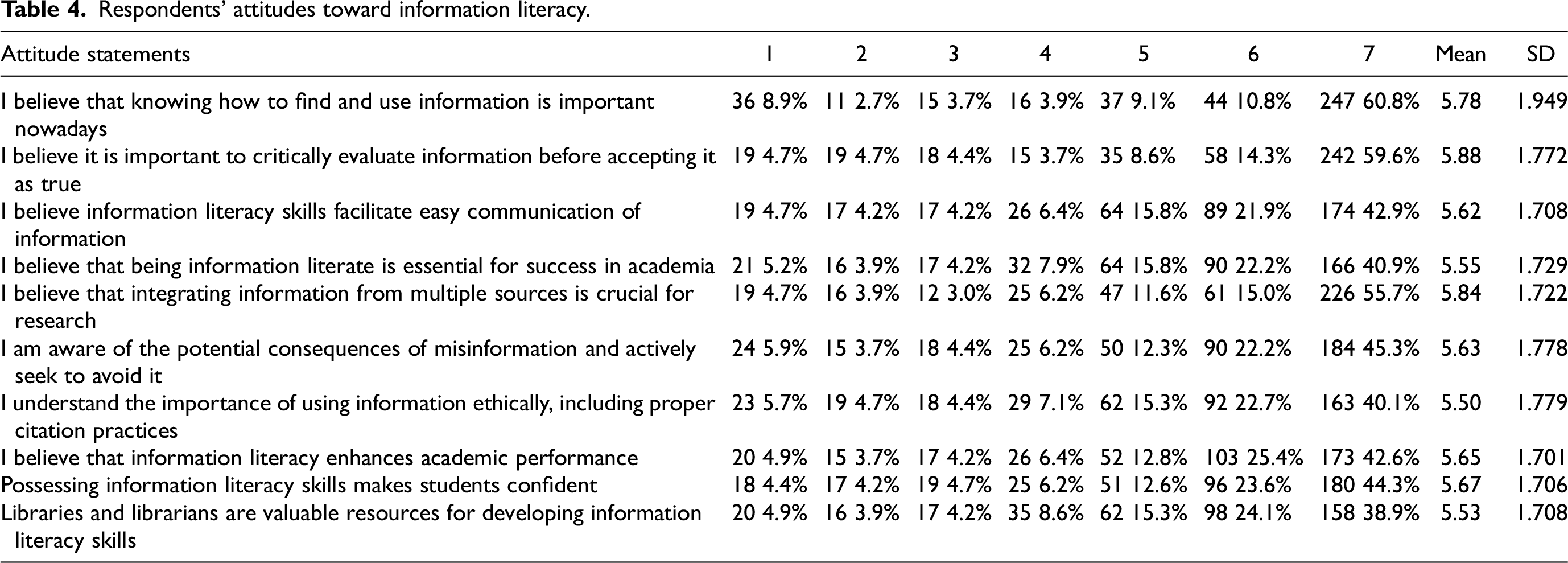
The respondents were asked to agree on ten statements about their attitudes toward IL. Data were collected using a 7-point Likert scale, with 1 indicating strong disagreement and 7 indicating strong agreement. Table 4 shows that the majority of the respondents believe that it is important to critically evaluate information before accepting it as true (mean = 5.88, SD = 1.772), followed by “I believe that integrating information from multiple sources is crucial for research” (mean = 5.84, SD = 1.722) and “I believe that knowing how to find and use information is important nowadays” (mean = 5.78, SD = 1.949) are also rated well by the students. However, the overall mean values of all the attitude statements were higher than the average mean value of 4 meaning that the students had a favorable attitude towards IL.
Respondents’ attitudes toward information literacy.
Students’ perceived IL self-efficacy
The students were asked to mention their self-perceived IL self-efficacy levels using the 23-item ILSE scale validated by Atikuzzaman and Ahmed (2023a) from the original 28-item ILSE scale developed by Kurbanoglu et al. (2006). Responses were collected on a seven-point Likert scale ranging from 1 = almost never true to almost always true = 7. The weighted mean values as shown in Table 5 indicated that the students had a high level of confidence in fundamental IL self-efficacy skills, particularly in using electronic information sources (weighted mean 5.86, ranked 1), determining the content and forming different sections of a presentation (weighted mean 5.72, ranked 2), evaluating www sources, selecting information most suitable to their information need (weighted mean 5.70, ranked 3) and recognizing points of agreement and disagreement among sources (weighted mean 5.69, ranked 5). However, results also revealed that the students had a relatively low level of self-efficacy in locating information sources in the library (weighted mean 5.32, ranked 19), writing a research paper (weighted mean 5.25, ranked 20), preparing a bibliography (weighted mean 5.20, ranked 21), producing bibliographic records for diverse kinds of materials (weighted mean 5.18, ranked 22) and making bibliographic records and organize the bibliography (weighted mean 5.17, ranked 23). In general, the students were more or less competent in all the ILSE statements as their mean values were higher than the average mean value of 4.
Perceived IL self-efficacy levels of the students.
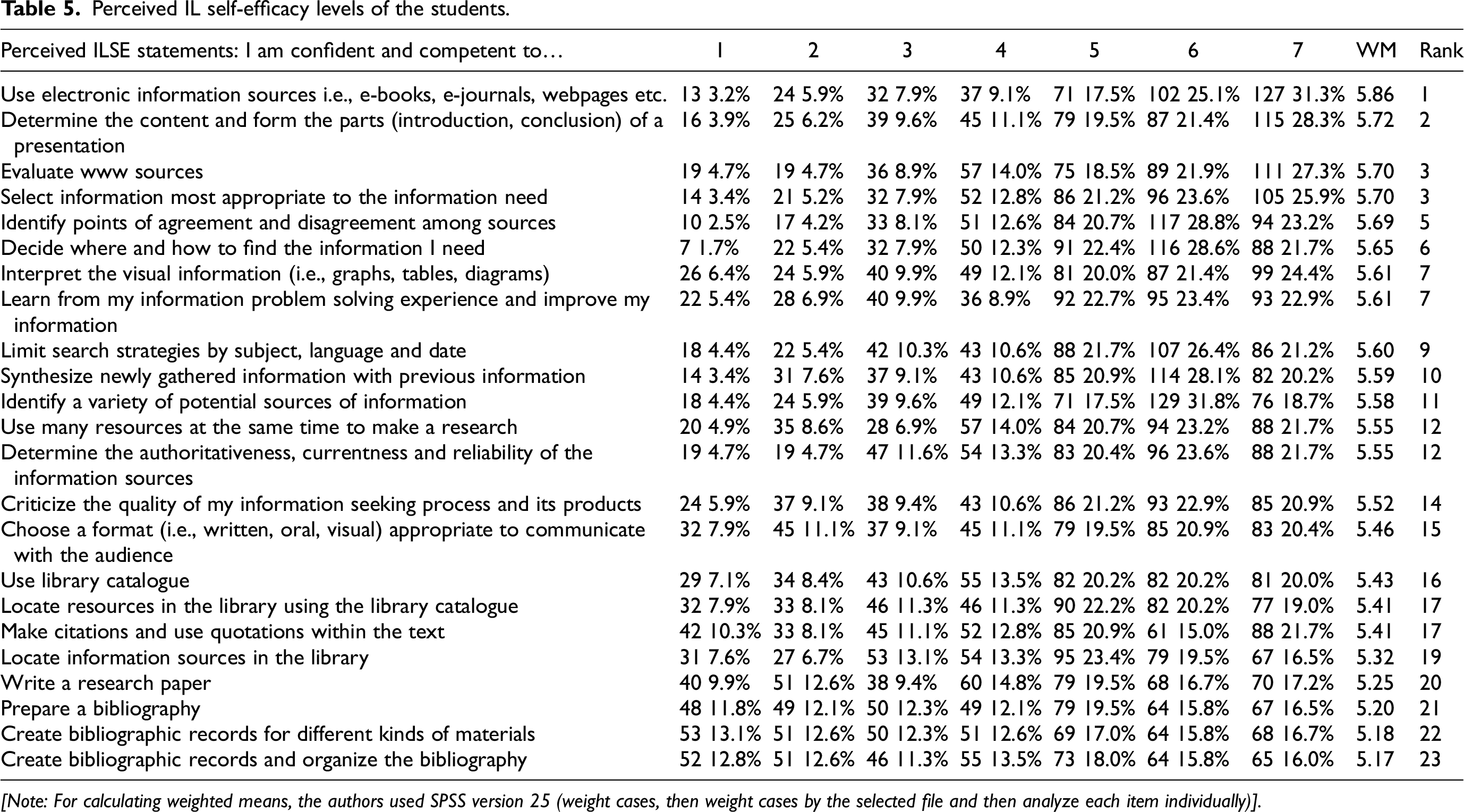
[Note: For calculating weighted means, the authors used SPSS version 25 (weight cases, then weight cases by the selected file and then analyze each item individually)].
Variations in students’ perceived IL self-efficacy based on their academic and demographic backgrounds, experiential factors and proficiencies
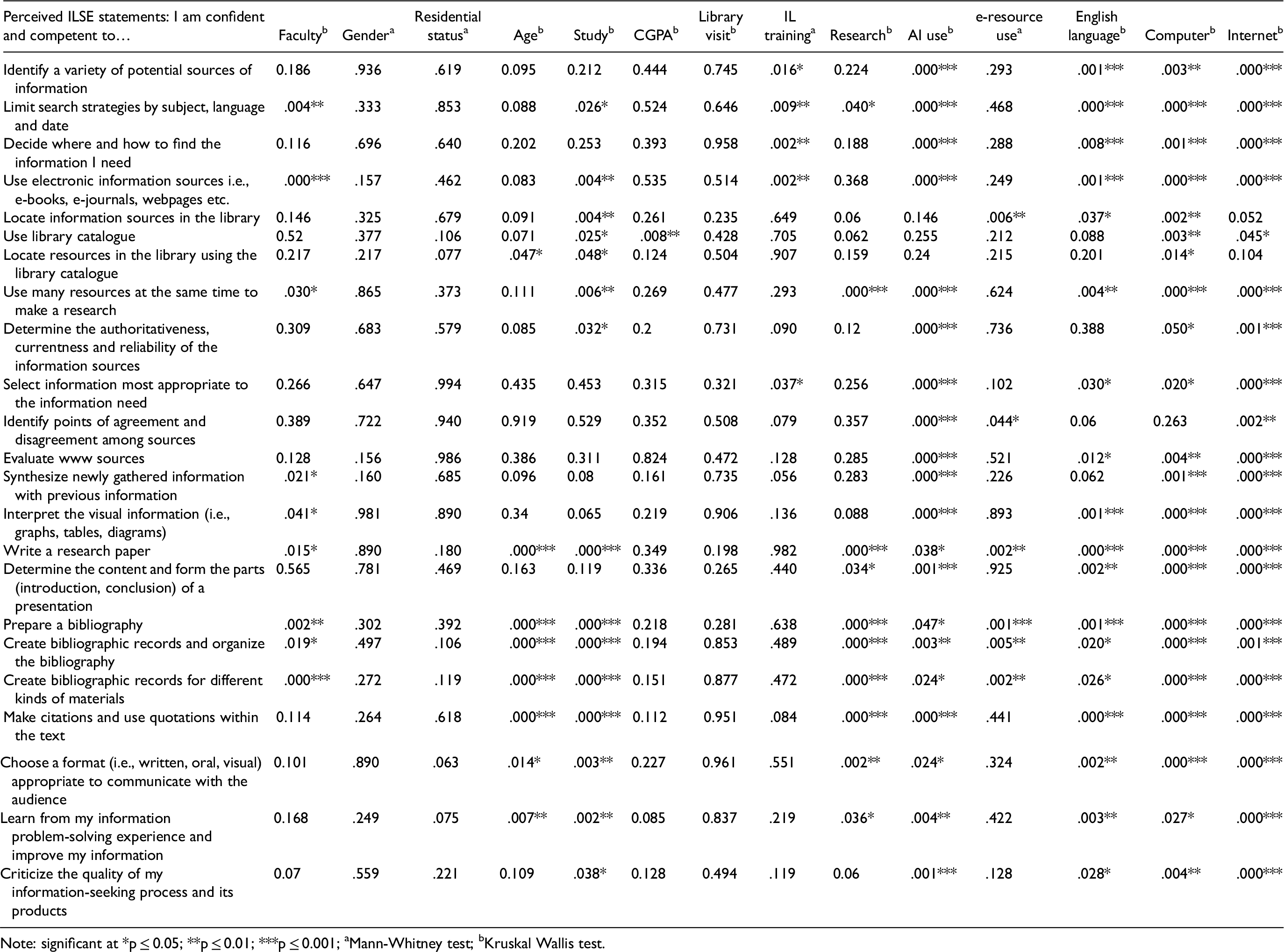
To know whether students’ IL self-efficacy varies depending on their gender, residential status, participation in IL training and/or course and access to university-subscribed e-resources, separate Mann-Whitney U tests were conducted. On the other hand, to identify the differences in students’ IL self-efficacy based on their faculty/institute, age groups, study level, CGPA, frequency of visiting the university library, English language, computer and internet proficiencies, research experience and frequency of using AI, separate Kruskal-Wallis tests were conducted. The level of significance was set at p ≤ 0.05. All the test results are shown in Appendix 1.
In terms of faculty/institutes, the Kruskal-Wallis test results indicated significant differences for eight out of twenty-three measures, i.e., “Limit search strategies by subject, language, and date”, “Use electronic information sources”, “Use many resources at the same time to make research”, “Synthesize newly gathered information with previous information”, “Interpret the visual information”, “Write a research paper”, “Prepare a bibliography”, and “Create bibliographic records for different kinds of materials”. Therefore, the null hypothesis H1 is rejected for these eight statements and accepted for the other fifteen statements.
In terms of students’ gender, the Mann-Whitney test results found no difference in any of the twenty-three statements indicating that there are no significant differences between male and female students’ perceived IL self-efficacy. Similarly, no difference was found in terms of residential status indicating that there are no significant differences between resident and non-resident students’ perceived IL self-efficacy. Therefore, the null hypothesis H2 is accepted.
In terms of age group, the Kruskal Wallis test results revealed significant differences for eight statements, i.e., “locating resources in the library using the library catalogue”, “writing a research paper”, “preparing a bibliography”, “creating bibliographic records and organizing the bibliography”, “creating bibliographic records for different kinds of materials”, and “making citations and using quotations within the text”, “choosing a format appropriate to communicate with the audience” and “learning from information problem-solving experiences”. However, the other fifteen statements showed no significant difference based on their age group. Therefore, the null hypothesis H3 is rejected for age groups for these eight statements and accepted for the other fifteen statements. In terms of study level, results suggested significant differences for fifteen statements, i.e., “limiting search strategies by subject, language, and date”, “locating resources in the library”, “locating information sources in the library”, “using many resources at the same time to make research”, “writing a research paper” and more. Hence, the null hypothesis H3 is rejected for students’ study level for the above fifteen statements and accepted for the remaining eight statements, indicating that study level has a significant influence on students’ IL self-efficacy. Furthermore, the results showed that students’ perceived IL self-efficacy varied significantly for only one statement in terms of CGPA, i.e., “Use library catalogue
The Kruskal-Wallis test results showed no significant differences in students’ perceived ILSE across all twenty-three measures regarding the frequency of visits to the university library. This indicates that students’ IL self-efficacy does not vary based on how often they visit the library. Consequently, the null hypothesis H4 is accepted.
In terms of students’ participation in any IL training or course, the test results revealed significant differences in five statements, i.e., “Identify a variety of potential sources of information”, “Limit search strategies by subject, language and date”, “Decide where and how to find the information I need”, “Use electronic information sources”, and “Select information most appropriate to the information need”. In these statements, students who received IL training had higher mean scores than those who did not, indicating that IL training contributes to students’ IL self-efficacy. Therefore, the null hypothesis H5 is rejected for these five statements and accepted for eighteen statements.
In terms of research experience, significant differences were observed in ten statements i.e., “Limit search strategies by subject, language, and date
In terms of English language proficiency, results identified significant differences in eighteen out of twenty-three statements i.e., “Identify a variety of potential sources of information
Correlation between students’ attitudes toward IL and their perceived IL self-efficacy
Table 6 shows the result of Pearson correlation analysis between students’ attitudes toward IL and their perceived IL self-efficacy. The results found that there is a significant positive correlation between students’ total attitude scores and their total IL self-efficacy scores (r = 0.569, p < 0.01). This indicates that students with positive attitudes toward IL are more likely to have higher perceived self-efficacy toward their own IL skills. Therefore, hypothesis H8 is accepted.
Correlation between students’ attitudes toward IL and their perceived IL self-efficacy.
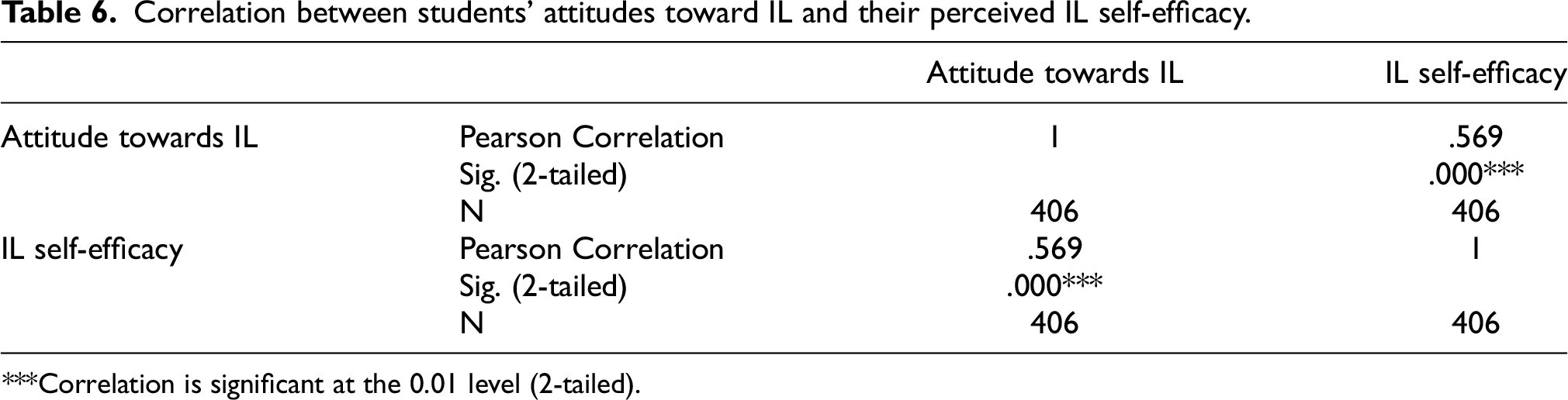
***Correlation is significant at the 0.01 level (2-tailed).
Discussion
This study aims to measure university students’ IL attitudes, their perceived IL self-efficacy, and the influence of their demographic and academic variables, experiential factors and proficiencies on their self-efficacy. Four research questions were developed and answered based on the quantitative analysis of 406 data. The findings are discussed as follows:
Attitude of university students toward information literacy
Findings from the first research question (RQ1) showed university students had overall positive attitudes toward IL. Among ten different statements, the highly rated statements were related to the importance of critically evaluating information before accepting it as true, integrating information from multiple sources and knowing how to find and use information is important nowadays. This might be because university students consider critical thinking while processing information. This finding is supported by Saunders (2012) who reported that students who possess critical thinking in information evaluation are likely to make informed decisions. Similarly, Head and Eisenberg (2010) showed that students who integrated multiple sources produced more comprehensive and well-rounded research outcomes. Furthermore, Mery et al. (2011) identified that respondents refer to double-check information from different sources to ensure accuracy and detail.
Level of perceived IL self-efficacy among the students
Findings from the second research question (RQ2) indicated that university students perceived higher levels of ILSE in key areas. They particularly felt confident in using electronic information sources, determining content, structuring parts and evaluating web-based information. However, they were less confident in tasks related to writing research papers and formal academic writing. This finding indicates a gap between knowledge retrieval abilities and higher-order skills. Therefore, the findings underscore the need for focused interferences, such as academic writing support or integrated training on using information in scholarly communication, in closing the gap and improving students’ overall research skills. The results were corroborated by Naveed and Mahmood (2019), who found that Pakistani business students lacked confidence in complex IL tasks. In another study, Mahmood (2013) discovered that although Pakistani university students were confident in their ability to use computers and the internet, they had trouble with certain information-searching tasks. In contrast to advanced skills, students with moderate self-efficacy demonstrated more confidence in basic and intermediate-level IL tasks, according to another study by Atikuzzaman and Ahmed (2023b).
Variations in students’ perceived ILSE based on their demographic and academic variables, experiential factors and proficiencies
The third research question (RQ3) investigated whether students’ academic and demographic factors, experiential factors and proficiencies affected their perceived IL self-efficacy. The Kruskal-Wallis and Mann-Whitney U tests revealed that students from various faculties had significantly different levels of IL self-efficacy. Students from science and technology-related disciplines reported higher self-efficacy compared to others. This finding is quite obvious as these students are more likely to use academic resources, digital tools, and research-based coursework, all of which may improve their perceived IL self-efficacy. On the contrary, students from various fields may perceive self-efficacy differently since they may rely more on conventional information-gathering techniques. This finding contradicts with Julien and Barker (2009) who reported that students from humanities and social sciences disciplines tend to have higher IL self-efficacy. The present study also found that students’ gender does not significantly affect their IL self-efficacy, meaning that male and female students feel equally capable in their IL skills. These findings are supported by other studies i.e., Bronstein (2014), Mahmood (2013), Naveed and Mahmood (2022) who also found no gender differences in IL skills. However, some studies reported that females tend to have higher IL self-efficacy (Akter and Ahmed, 2024; Atikuzzaman and Ahmed, 2023b; Michalak et al., 2017; Naveed and Ameen, 2017). Other studies showed that males had better IL skills than females (Baro and Fyneman, 2009; Liu and Sun, 2012).
The study revealed that age has a significant impact on students’ IL self-efficacy. Older students demonstrated higher confidence in tasks like writing research papers and making citations. This result is consistent with several research that also reported that age influences IL self-efficacy (Aharony and Gazit, 2019; Bronstein, 2014; Naveed and Mahmood, 2022). Moreover, Atikuzzaman and Ahmed (2023b) and Akter and Ahmed (2024) showed that older students tend to exhibit higher IL self-efficacy than younger students. In this study, students’ study level was found to significantly affect their IL self-efficacy. Several previous studies found that university students’ self-efficacy perceptions do not differ significantly according to study level (Akter and Ahmed, 2024; Demircioğlu and Işık, 2020; Kale, 2016). The study also found that students’ confidence in their perceived IL self-efficacy skills was not influenced by their CGPA. This contradicts the findings of Gross and Latham (2012) and Kebebe (2020), who reported a positive link between self-efficacy and academic performance. In this study, students with higher self-efficacy generally scored better, while those with lower self-efficacy scored lower. Further, Ferla et al. (2009) and Akomolafe et al. (2013) confirmed that students with higher CGPAs are more confident in their IL abilities. However, some research suggests that IL self-efficacy doesn’t have a strong effect on academic success (Spisak, 2018; Yusuf, 2011). The findings also suggested that residential status does not impact students’ confidence in their IL skills which is supported by other studies i.e., Bronstein (2014), Mahmood (2013) and Naveed and Mahmood (2022).
The study did not find the impact of library visits on IL self-efficacy, however, it demonstrated that students who regularly used e-resources did better when it came to finding information and creating bibliographies. According to Odede (2018), access to institutional resources improves IL self-efficacy among students. The study also found that students’ computer proficiency, internet proficiency, and English language skills significantly boost their confidence in IL self-efficacy. This result is in line with the results of Naveed and Mahmood (2022) and Demiralay and Karadeniz (2010). Akter and Ahmed (2024) revealed that students who rate their skill levels in using internet resources and library tools as high tend to perform well in completing specific tasks.
Participation in IL courses or training significantly impacted students’ ILSE. This finding is supported by those of Saunders (2012) who also showed that IL training boosts self-efficacy. Further, Zinn (2013) found that teachers’ self-efficacy for IL skills is positively impacted by the IL course intervention. Findings also showed that students with research experience had higher IL self-efficacy, especially in tasks like writing research papers and preparing bibliographies. This is supported by Head and Eisenberg (2010) who noted that students with research experience are more confident in evaluating information sources. Moreover, students who frequently used AI tools were more confident in tasks such as synthesizing information and creating bibliographies. This finding is supported by Abbas et al. (2023) who suggested that AI tools enhance students’ information-seeking, performance, and research abilities.
Relationship between students’ IL attitudes and IL self-efficacy
Findings from the fourth research question (RQ4) indicated that students who have a positive attitude toward IL tend to feel more capable and confident in their IL abilities. This result implies that students’ perceptions of their own information literacy (IL) self-efficacy are significantly influenced by their attitudes toward IL. Students who have a positive outlook are probably more motivated, engaged, and eager to learn, all of which boost their self-confidence in their IL skills. Kurbanoğlu et al. (2006) reported similar results, showing that students with positive attitudes toward IL had more confidence in tasks like finding and evaluating information. Similarly, Julien and Barker (2009) discovered that students with a more positive view of IL were more confident in handling information-related tasks, which also improved their academic performance. However, Mahmood (2017) reported a negative link between IL skills and research confidence among postgraduate students.
Limitations, recommendations and conclusion
This study explored the perceived IL self-efficacy of university students, focusing on their attitudes toward IL and the factors that influence their perceived competency. The findings offer meaningful insights into ILSE among Bangladeshi students. While the results cannot be generalized across the entire student population of Bangladesh due to the study's limited scope, they accurately represent the sample, providing a valuable reflection of the IL skills and attitudes of students. Another limitation is that a significant proportion of the respondents were from information science and technology disciplines which may not fully represent the broader university population. Future research should ensure a more balanced disciplinary representation to provide a comprehensive understanding of IL self-efficacy across different academic backgrounds. Moreover, the study focused on students’ perceptions of their own IL skills using only a quantitative approach. A qualitative method, such as focus groups, organized interviews, or task-based analysis could provide deeper insights by documenting their actual information literacy problems and problem-solving techniques. To close the gap between students’ views and real IL proficiencies, future research should take into account mixed-method approaches that combine quantitative surveys with qualitative studies. The study found no difference in students’ IL self-efficacy based on gender though several previous studies reported conversed results. Future in-depth exploration should focus on gender differences in IL self-efficacy. Lastly, future research may explore the impact of social media platforms on students’ information literacy development as social media has a significant impact on their capacity to obtain, assess, and use information successfully (Zhu et al., 2021; Shabani and Keshavarz, 2022). Investigating how students interact with information on sites such as Facebook, YouTube, TikTok, and X (formerly Twitter) can provide valuable insights regarding their IL habits and self-efficacy.
The findings revealed a generally positive attitude towards IL among students, suggesting that they appreciate the skills essential for effective information navigation and evaluation in academic contexts. Students reported high self-efficacy in areas such as accessing electronic information sources, organizing presentations, and evaluating online content. However, they displayed lower confidence in traditional library-related skills, like using the library catalog and preparing bibliographies, indicating a familiarity gap with non-digital resources. One major trend identified in this study is students’ diminishing ability to use non-electronic equipment. While digital literacy is important in today's information world, relying entirely on electronic sources may hinder students’ capacity to critically analyze a variety of information types. This shift raises important educational concerns: Should universities continue to emphasize traditional IL skills alongside digital literacy? If so, how can institutions balance the integration of electronic and non-electronic IL training?” To solve this issue, IL training programs should include blended learning techniques that involve both digital and non-digital resource management, such as hands-on workshops on managing information from both digital and physical sources. Encouraging students to use non-electronic tools in coursework and exams may help them retain these vital abilities.
Practical implications
The study's conclusions have important real-world applications for educators, librarians, and university administrators looking to improve students’ IL competencies. Universities can include IL training in their courses and provide focused workshops that enhance students’ digital and research abilities, as the study found a favorable association between IL attitudes and perceived self-efficacy. The study also reveals differences in IL self-efficacy according to prior training and academic background, indicating the necessity for discipline-specific IL therapies as opposed to a one-size-fits-all strategy.
These findings highlight the value of funding digital literacy initiatives for policymakers and decision-makers in order to close the gap between students’ perceived and actual IL skills. To guarantee that students are prepared to assess and handle information in both academic and professional contexts, universities should think about requiring IL training as part of undergraduate curricula. In order to handle the increasing dependence on digital materials, AI-driven IL assistance tools should also be included to library services.
Footnotes
Declaration of interest
We wish to confirm that there are no conflicts of interest associated with this publication and we have not received any financial support for this work.
Disclosure statement
The authors declare no financial or non-financial conflict of interest.

About the authors
Appendix 1. Differences in students’ perceived ILSE based on their academic and demographic variables,experiences and proficiencies (Mann-Whitney and Kruskal Wallis test results)
| Perceived ILSE statements: I am confident and competent to… | Facultyb | Gendera | Residential statusa | Ageb | Studyb | CGPAb | Library visitb | IL traininga | Researchb | AI useb | e-resource usea | English languageb | Computerb | Internetb |
|---|---|---|---|---|---|---|---|---|---|---|---|---|---|---|
| Identify a variety of potential sources of information | 0.186 | .936 | .619 | 0.095 | 0.212 | 0.444 | 0.745 | .016* | 0.224 | .000*** | .293 | .001*** | .003** | .000*** |
| Limit search strategies by subject, language and date | .004** | .333 | .853 | 0.088 | .026* | 0.524 | 0.646 | .009** | .040* | .000*** | .468 | .000*** | .000*** | .000*** |
| Decide where and how to find the information I need | 0.116 | .696 | .640 | 0.202 | 0.253 | 0.393 | 0.958 | .002** | 0.188 | .000*** | .288 | .008*** | .001*** | .000*** |
| Use electronic information sources i.e., e-books, e-journals, webpages etc. | .000*** | .157 | .462 | 0.083 | .004** | 0.535 | 0.514 | .002** | 0.368 | .000*** | .249 | .001*** | .000*** | .000*** |
| Locate information sources in the library | 0.146 | .325 | .679 | 0.091 | .004** | 0.261 | 0.235 | .649 | 0.06 | 0.146 | .006** | .037* | .002** | 0.052 |
| Use library catalogue | 0.52 | .377 | .106 | 0.071 | .025* | .008** | 0.428 | .705 | 0.062 | 0.255 | .212 | 0.088 | .003** | .045* |
| Locate resources in the library using the library catalogue | 0.217 | .217 | .077 | .047* | .048* | 0.124 | 0.504 | .907 | 0.159 | 0.24 | .215 | 0.201 | .014* | 0.104 |
| Use many resources at the same time to make a research | .030* | .865 | .373 | 0.111 | .006** | 0.269 | 0.477 | .293 | .000*** | .000*** | .624 | .004** | .000*** | .000*** |
| Determine the authoritativeness, currentness and reliability of the information sources | 0.309 | .683 | .579 | 0.085 | .032* | 0.2 | 0.731 | .090 | 0.12 | .000*** | .736 | 0.388 | .050* | .001*** |
| Select information most appropriate to the information need | 0.266 | .647 | .994 | 0.435 | 0.453 | 0.315 | 0.321 | .037* | 0.256 | .000*** | .102 | .030* | .020* | .000*** |
| Identify points of agreement and disagreement among sources | 0.389 | .722 | .940 | 0.919 | 0.529 | 0.352 | 0.508 | .079 | 0.357 | .000*** | .044* | 0.06 | 0.263 | .002** |
| Evaluate www sources | 0.128 | .156 | .986 | 0.386 | 0.311 | 0.824 | 0.472 | .128 | 0.285 | .000*** | .521 | .012* | .004** | .000*** |
| Synthesize newly gathered information with previous information | .021* | .160 | .685 | 0.096 | 0.08 | 0.161 | 0.735 | .056 | 0.283 | .000*** | .226 | 0.062 | .001*** | .000*** |
| Interpret the visual information (i.e., graphs, tables, diagrams) | .041* | .981 | .890 | 0.34 | 0.065 | 0.219 | 0.906 | .136 | 0.088 | .000*** | .893 | .001*** | .000*** | .000*** |
| Write a research paper | .015* | .890 | .180 | .000*** | .000*** | 0.349 | 0.198 | .982 | .000*** | .038* | .002** | .000*** | .000*** | .000*** |
| Determine the content and form the parts (introduction, conclusion) of a presentation | 0.565 | .781 | .469 | 0.163 | 0.119 | 0.336 | 0.265 | .440 | .034* | .001*** | .925 | .002** | .000*** | .000*** |
| Prepare a bibliography | .002** | .302 | .392 | .000*** | .000*** | 0.218 | 0.281 | .638 | .000*** | .047* | .001*** | .001*** | .000*** | .000*** |
| Create bibliographic records and organize the bibliography | .019* | .497 | .106 | .000*** | .000*** | 0.194 | 0.853 | .489 | .000*** | .003** | .005** | .020* | .000*** | .001*** |
| Create bibliographic records for different kinds of materials | .000*** | .272 | .119 | .000*** | .000*** | 0.151 | 0.877 | .472 | .000*** | .024* | .002** | .026* | .000*** | .000*** |
| Make citations and use quotations within the text | 0.114 | .264 | .618 | .000*** | .000*** | 0.112 | 0.951 | .084 | .000*** | .000*** | .441 | .000*** | .000*** | .000*** |
| Choose a format (i.e., written, oral, visual) appropriate to communicate with the audience | 0.101 | .890 | .063 | .014* | .003** | 0.227 | 0.961 | .551 | .002** | .024* | .324 | .002** | .000*** | .000*** |
| Learn from my information problem-solving experience and improve my information | 0.168 | .249 | .075 | .007** | .002** | 0.085 | 0.837 | .219 | .036* | .004** | .422 | .003** | .027* | .000*** |
| Criticize the quality of my information-seeking process and its products | 0.07 | .559 | .221 | 0.109 | .038* | 0.128 | 0.494 | .119 | 0.06 | .001*** | .128 | .028* | .004** | .000*** |
Note: significant at *p ≤ 0.05; **p ≤ 0.01; ***p ≤ 0.001; aMann-Whitney test; bKruskal Wallis test.