







Abstract
Institutional self-evaluation processes for accreditation require reviewing and managing a large volume of documentation throughout all stages. This article introduces the concept of the Documentary Arch as a model that facilitates the efficient provision and use of documentary information in internal self-evaluation processes. Additionally, it presents the application of this model at a Chilean university during its most recent institutional self-evaluation process for accreditation. Finally, the concept's contributions, practical applicability, and challenges for using the Documentary Arch to improve university self-evaluation processes are analyzed.
Keywords
Introduction
Quality assurance and management in Chilean higher education are largely based on the results obtained from institutional accreditation processes of Higher Education Institutions [HEIs] (Universities and Professional Institutes). Each of these processes, in turn, consists of two evaluation stages based on the dimensions established by law: internal evaluation (or self-assessment) and external evaluation by external peers. In the case of Chile, these dimensions are currently addressed in Law 21.091, approved by the National Congress (Congreso Nacional de Chile, 2018), and operationalized through various documents issued by the National Accreditation Commission [CNA] (CNA-Chile, 2023a, 2023b, 2023e, 2023f)
While institutional self-assessment constitutes an essential analytical exercise aimed at identifying institutional priorities by recognizing strengths and weaknesses to ensure the fulfillment of its strategic purposes and objectives (CNA-Chile, 2015), it is through self-assessment that the institution has a unique opportunity to provide comprehensive information for accreditation. At the same time, it establishes a foundation for fostering a culture of self-regulation and continuous improvement. As stated by the CNA in 2023 (CNA-Chile, 2023b: 10), it serves the purpose of “strategic and aligned decisions for achieving institutional goals”.
The self-assessment process is further divided into critical analysis and strategic analysis. In particular, the critical analysis must incorporate evidence and all necessary background information to support each assertion and judgment made by the HEI and involve numerous individuals and working teams, requiring organized information management mechanisms and a secure and centralized repository to enable efficient routing and tracking of reports and documents. As Salleh et al. (2020), noted, information technology-based systems are highly useful for these purposes. The documentary support should include institutional records, statistical data, and perception reports derived from consultations conducted with key informants (Cano et al., 2017; CNA-Chile, 2023b). Despite the central role that documentary support plays in internal evaluation processes—where various university community members actively and significantly participate—it is striking that no existing model proposes a structured design for the appropriate provision and use of documentary information throughout the internal self-assessment process, integrating structured information flows and governance mechanisms
While there is evidence related to developing information or documentary systems to support quality assurance procedures, many focus on automating storage or report generation without comprehensively addressing document flows’ traceability, governance, and logical structuring throughout the self-assessment process. Furthermore, the literature shows little discussion of models that articulate document management with institutional decision-making in Latin American contexts.
Given this gap, it is important to propose models that systematize documentary information, integrate it into internal quality assurance processes, and allow for replicability, adaptability, and institutional traceability. These models have the potential to significantly improve the accreditation process and bring about a positive change in higher education. These models must be developed, making this issue a main research problem.
This research aims to propose and analyze the Documentary Arch model as a structured solution for document management in institutional self-assessment processes in higher education and evaluate its relevance in university contexts. This article introduces the concept of the documentary arch and its working model. It links the different stages of the self-assessment process with the characteristics of information provision, as well as its associated challenges and proposed solutions. The article applies this conceptual approach to a Chilean University, and its self-assessment process developed between 2021 and 2023. Finally, it synthesizes conclusions and proposes guidelines for future applications and studies.
Theoretical Background
The self-assessment process
According to Harman et al. (2000), a university's self-assessment process seeking accreditation produces one or more documents detailing various aspects of the organization (components, objectives, resources) and evaluating achievements in relation to the originally planned objectives. The formats of self-assessment reports vary across countries, reflecting differences in how institutions conduct their critical analysis, particularly in the extent to which they emphasize accountability (with comprehensive documentary support) through compliance with requirements or standards (AQ Austria (Agentur für Qualitätssicherung und Akkreditierung Austria), 2014)
Literature generally agrees on the role of self-assessment in institutional accreditation. Despite variations among countries and systems, institutions typically lay the groundwork for accreditation through a self-assessment process based on the compilation of materials related to their internal operations. This process includes documents that serve as evidence to support the statements presented in an accreditation process (European Quality Assurance Association, 2015: 21).
Self-assessment processes are essential for quality assurance and accreditation in higher education institutions. These processes allow institutions and programs to evaluate their performance against the standards and criteria set by accrediting bodies. As a fundamental activity, self-assessment drives continuous improvement across both administrative and academic areas (Chen, 2023; Duarte and Vardasca, 2023).
Documentary evidence is crucial throughout the self-assessment process, and Institutions must provide comprehensive documentation to demonstrate their compliance with quality criteria (Delgado-Florez et al., 2020). This evidence supports the narratives presented in self-assessment reports and is scrutinized by accreditation agencies during the assessment process. Managing the data generated during self-assessment can be complex, requiring systematic data collection and analysis. Institutions aim to gather objective data and conduct thorough assessments to identify areas for improvement (Chen, 2023; Duarte and Vardasca, 2023). Providing solid documentary evidence is a cornerstone of this process in several European countries, including Denmark, the UK, Sweden, and Portugal, as well as in the U.S. and Latin American countries such as Chile and Colombia, and Asian countries like China and Japan. This evidence allows institutions to corroborate their quality claims and meet the requirements set by accrediting bodies. It is essential for achieving successful accreditation and fostering a culture of quality within higher education (Chen, 2023; Degn et al., 2023; Duarte and Vardasca, 2023).
In Chile, the conditions for institutional self-assessment for accreditation purposes were established by Law 20,129 and subsequently refined and updated by Law 21,091. These laws establish self-assessment as an analytical, participatory, critical, and evidence-based process, which requires institutions to systematically collect, analyze, and verify information related to their mission, strategic objectives, and compliance with accreditation criteria and standards (Congreso Nacional de Chile, 2006; Congreso Nacional de Chile, 2018)
“The self-assessment process in the Chilean accreditation system consists mainly of two phases: critical analysis and strategic analysis. The critical analysis phase involves a thorough review of institutional documentation and information, assessing the results of policies and mechanisms implemented to ensure quality management across the different evaluated areas or dimensions” (CNA-Chile, 2015; Congreso Nacional de Chile, 2018). This phase also requires active participation and consultation with key informants from various institutional sectors, who respond to consultation instruments designed to evaluate compliance with and the status of defined quality criteria (Gallardo et al., 2011).
The critical analysis relies on various institutional sources, including normative and strategic information, policies and models related to mission-driven processes, follow-up reports on fulfilling strategic plans, opinion study results, and reports from collegiate bodies. Since this phase involves an in-depth and detailed examination of the institutional mechanisms designed to ensure quality across the different dimensions stipulated by law, it requires a comprehensive and systematic approach to evaluating the effectiveness of institutional quality assurance efforts (CNA-Chile, 2015). It constitutes a highly demanding process for stakeholders and working committees involved, and the rigorous nature of critical analysis necessitates meticulous data collection, thorough documentation review, and coordinated collaboration among institutional teams to ensure a comprehensive and evidence-based evaluation (Maassen, 2019). The documentary materials and evidence serve as the foundation for developing a preliminary diagnosis, which evaluates the performance of institutional quality assurance policies and mechanisms and ultimately forms the basis of the critical analysis report.
On the other hand, the strategic analysis builds upon the foundation established in the critical analysis stage, allowing for a preliminary diagnosis of the strengths and weaknesses related to institutional self-regulation mechanisms’ formal existence and functioning. This diagnosis is supplemented with additional information, often statistical, which provides a more detailed perspective on the institution's overall performance (Congreso Nacional de Chile, 2018). The participation of the entire institutional community, previously engaged during the critical analysis phase—such as through opinion studies— is expected to continue in the strategic analysis phase. This participatory approach ensures that every group can stay informed and contribute from their specific area of expertise and role within the institution (CNA-Chile, 2022). This collective commitment enhances strategic analysis and strengthens the sense of belonging and shared responsibility in the pursuit of sustained institutional quality.
The strategic analysis outlines the overall situation, identifying aspects that need improvement, those that the institution has already addressed, those requiring medium-term planning, and those that cannot be resolved due to their dependence on external bodies or unmanageable resources at the institutional program, or degree level (Núñez and Rincón, 2021). This strategic analysis enables the higher education institution (HEI) to establish specific guidelines and actions to improve each area (Mora, 2006).
Finally, the institution defines the objectives it commits to achieving or at least the areas requiring improvement that have been identified (Núñez and Rincón, 2021). This step lays the foundation for the institutional improvement plan, ensuring a structured approach to continuous quality enhancement.
State of the art in documentary management
The state of the art in documentary management for self-assessment purposes in higher education reveals a growing recognition of the importance of information management and the development of systems that facilitate access to the documents required for self-evaluation processes. One of the most frequently reported challenges is the workload associated with documentation tasks—particularly collecting, organizing, verifying, and maintaining large volumes of information. Institutions often face issues such as document duplication, loss of traceability, and difficulties retrieving specific evidence without appropriate systems. These limitations have led to increased emphasis on developing tools that simplify and systematize these processes (Sidhimantra et al., 2024).
In response to these challenges, several repository systems have been proposed and implemented to support accreditation efforts. A notable example is the Sirepak (Sistem Informasi Repositori Akreditasi) system, developed to assist the accreditation process for the Applied Bachelor of Informatics Management program at the State University of Surabaya (Sidhimantra et al., 2024). This system categorizes and indexes documents according to the standards, sub-categories, and scope defined by Indonesia's National Accreditation Board for Higher Education (BAN-PT). Sirepak reduces the workload associated with document management and improves access to relevant information. It was developed using the waterfall methodology and Laravel framework and includes functional features such as document recording, indexing by standard, and metadata management (e.g., category, date, and scope). The authors suggest its adaptability to various accreditation frameworks—national, industrial, and international—demonstrating its potential for broader applicability (Sidhimantra et al., 2024).
In addition to repository systems, the literature highlights the importance of designing structured information flows to guide data collection, organization, and analysis during self-evaluation (Pérez García et al., 2023; Pérez González, 2023). These flows clarify the procedural stages, link key actors with their roles, and support decision-making. According to Pérez González (2023), flows should clearly define information sources, key inputs, and expected outputs—such as documents, indicators, and institutional decisions. Furthermore, standardized process symbols facilitate understanding, documentation, and monitoring.
Research conducted at the University of Sancti Spíritus “José Martí Pérez” (Cuba) identified limitations in how self-evaluation was conceptualized and implemented—often lacking systematic and participatory approaches. In response, methodological actions were developed to improve the self-evaluation process, including forming commissions, organizing and verifying information, analyzing strengths and weaknesses, planning for improvements, and reflective workshops (Valdés Rojas et al., 2024). Applying these stages has proven effective in strengthening the process and even achieving some programs’ “Excellence” category.
From a broader perspective, information management is increasingly understood as a strategic pillar of university governance and a foundational element of quality assurance systems. In contexts like Cuba, current regulatory frameworks underscore the importance of designing and evaluating information systems that support institutional decision-making. Integrating document management into broader information management systems has been proposed as a key strategy for improving quality assurance practices in higher education (Pérez García et al., 2023). Pérez García et al. (2023) emphasize that information, defined as transformed data with value for decision-making, requires properly designed and managed information flows to contribute to the improvement of university processes. These flows must be upward, downward, transversal, and horizontal and offer timely, clear, and truthful information. In summary, the literature indicates that higher education's self-evaluation processes face significant documentation challenges, particularly regarding efficiency, traceability, and access. In response, there is a growing adoption of repository systems and the formalization of methodological frameworks and information flows. Systems such as Sirepak (Sidhimantra et al., 2024), structured archival systems like those developed by Naufalin et al. (2020), and flow-based models proposed in Latin America significantly improve self-assessment procedures. Together, they point toward a paradigm shift in which document management is no longer an operational burden but a strategic function essential to institutional improvement and accreditation success.
Problem statement
While systems have been developed to support quality assurance procedures, many focus solely on automating storage and report generation, neglecting critical aspects like traceability, governance, and the logical flow of documents in the self-assessment process. This highlights the need for models that organize documentary information effectively for self-assessment processes, enhancing replicability, adaptability, and traceability. Poor document management during self-assessment can lead to wasted time, inconsistencies in reports, duplicated efforts, and challenges in demonstrating compliance with accreditation standards, undermining the quality of the final report and the institution's accreditation results.
This research proposes and analyzes the Documentary Arch model as a structured solution for document management in institutional self-assessment processes in higher education and evaluates its relevance in university contexts.
Inputs for the Self-assessment process and the concept of the Documentary Arch
Institutional self-assessment processes for accreditation purposes involve consolidating and reviewing many bibliographic materials that must be used in each stage. From the HEI's commitment to initiating an accreditation process to a possible appeal against an accreditation decision, institutional documents that are indispensable at each stage must be made available to those involved.
The guidelines provided by the accrediting entity regarding the documents that must be considered are the starting point for the information collection. In all cases, this evidence illustrates the HEI's central aspects related to its Mission and Development in the different mission areas, based on valid, reliable, and verifiable information.
Thus, collecting information must begin with analyzing and systematizing the norms and regulations established by the HEI to verify compliance with its purposes and objectives and ensure the quality of the institutional work. These include the institution's constitutive background, regulations, strategic diagnoses, development plans, reports, minutes of council meetings, management reports, educational projects, organizational charts, and area policies (CNA-Chile, 2015, 2022; Harman et al., 2000). In recent documents, the CNA of Chile has mentioned additional examples such as “resolutions, minutes of meetings and activities” (CNA-Chile, 2023d: 26).
Regarding the operating results, it is feasible to consider enrollment, retention, graduation, research productivity, creation or innovation, and the impact of community engagement. The opinion information of the members of the academic community and relevant actors, for example, the academic body, student body, graduates or graduates employers, can be collected through surveys or other quantitative or qualitative methodologies (Núñez and Rincón, 2021)
Much of this information is expected to be available to the university community in institutional platforms, with the goals and indicators in the Development Plan, the Action Plans, the procedures, and the institutional regulations (Gallego Giraldo, 2016). On the other hand, successive institutional strategic plans are useful documentary tools for institutional self-assessment to the extent that the evaluating bodies will require evidence demonstrating that the activities that use their resources align with the institution's vision, mission, and development objectives (Mensah, 2020). Study reports, progress reports on key indicators, or other background information illustrating compliance with the standards are beneficial (CNA-Chile, 2022).
In Chile, when submitting the self-assessment report, the CNA requests that the HEI provide the documents and essential information used during the process and a report summarizing the results of the consultation process with key informants. It also considers the possibility of including other documents, such as those mentioned up to here, if they contribute to a better understanding of the work carried out and that can be accessible “if the external evaluators request them, either before or during the visit” (CNA-Chile, 2015: 31). Looking at an example from another country, in the U.S., annual goals and compliance indicators, studies on the effectiveness of the programs and the performance of their graduates are often included, among others; comparisons of tests that show initial and final competencies, availability of library resources and student services, among many others (Gratch-Lindauer, 2002)
In any case, the documents mentioned here are not exclusive. Each HEI must decide what additional evidence it wants to include in the analysis, decision-making in its quality assurance processes, and the self-assessment process as a whole. That is, the relevance of the evidence reported by an HEI “will depend on what it seeks to report concerning the criteria and standards and how it contextualizes and articulates them” (CNA-Chile, 2022: 14). Finally, considering the volume of information that may be involved in articulating what has been indicated up to this point, the documents themselves may be replaced by “hyperlinks or references to institutional documents provided in the set of annexes of the institutional self-assessment report” when the self-assessment report is delivered (CNA-Chile, 2023d: 39).
The concept of Documentary Arch
The self-assessment process requires a significant and prolonged effort from HEIs, and it can take two years or more, depending on the institution's complexity. From the moment the process is formally initiated, the HEI must begin to collect and systematize all available information to ensure its good development and that all participants have easy access to it.
Since institutions frequently work with committees, commissions, or task forces throughout the critical and strategic analysis process, it is necessary to anticipate not only the information that will be required but also how this information will be delivered to the key actors. Indeed, it is relevant to review how information governance is built. The document management system implemented in the institutional self-assessment process allows us to get closer to understanding the internal control, the mechanisms activated to avoid loss, deterioration, or leakage of documents, and the mechanisms that facilitate and enable their conservation, security, and preservation, in addition to the functionality of the information. The stages of the life cycle of a document, fully aligned with the literature and which apply to the one used for an institutional self-assessment process (Díaz and González, 2020; Prada Rozas, 2020) are creation, organization, storage, access, use, maintenance, disposition and preservation.
The need for a global information management design that identifies the different stages of the process and their specific requirements has not been described in the literature on self-assessment and accreditation processes at the higher education level. This design is essential, as it provides a working guide to HEIs for conducting their self-assessment process based on robust evidence.
The concept of Documentary Arch, which we present in this article, is proposed as a solution to this lack. Documentary Arch will be understood as “the complete circuit of provision and management of the information necessary to develop an institutional self-assessment process in higher education. This circuit covers from the formal beginning of the process through the different stages of work: 1) initial compilation, 2) beginning of the work of the commissions, 3) critical analysis, strategic analysis, and improvement plan, 4) writing of the self-assessment report, 5) delivery of the self-assessment report, 6) visit of peers, 7) response to the report of peer evaluators and accreditation decision, 8) eventual appeal to the accreditation decision. The concept of documentary arch considers the nature and magnitude of the information requirements at each stage, adapting to the needs of the process.”
The term “Documentary Arch” has been deliberately chosen to highlight the structured, cohesive, and functional nature of the documentary system, which aids in institutional self-assessment. Similar to how an architectural arch distributes weight and provides stability, the Documentary Arch organizes documentary evidence to ensure traceability, coherence, and resilience throughout the self-assessment process.
The concept implies an increasing gradient of information requirements reached during the critical analysis (with its respective synthesis report), which diminishes over time, regarding the number of necessary documents.
Figure 1 presents the arch's shape and considers the different stages of the process. The approximate number of documents used at the University of Concepción at each stage is mentioned for illustrative purposes.
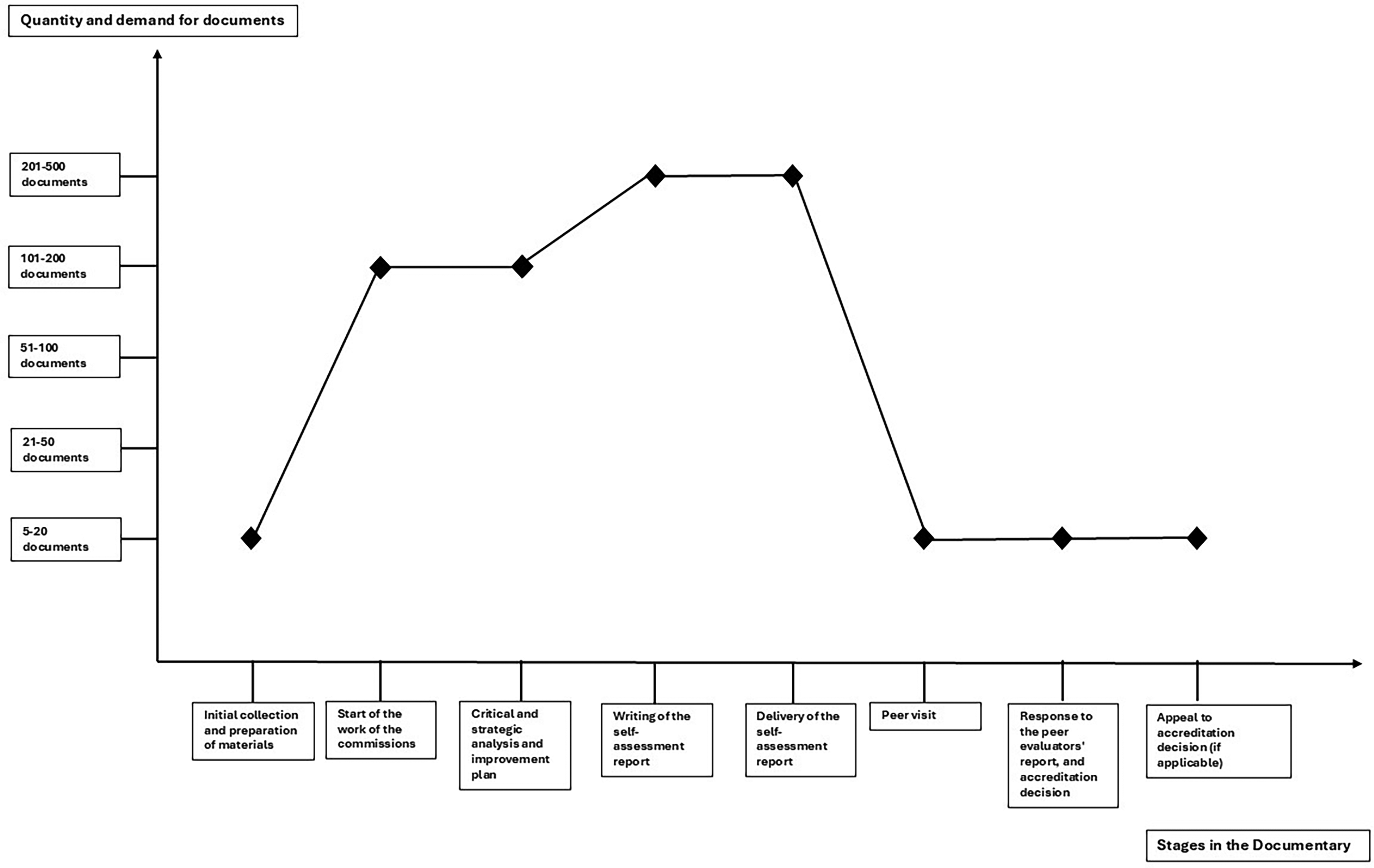
Quantity and demand for documents, at each stage of the Documentary arch in the institutional self-assessment process (own elaboration).
Below is a detailed description of each stage included in the definition and their basic requirements.
This stage is one of the most important phases of the process, as it lays the foundation for the work in the later stages. It begins when the Institution publicly and formally commits to starting its self-assessment process. At this stage, the work team in charge of the documentary arch must access institutional materials ranging from meeting minutes to consolidated or public reports. This fact implies that it must have the responsibility and requirement to access different types of files: online repositories, libraries, and documentation on websites, among many others. The required documents are often not always easily accessible to the team (Szkiel, 2024)
Some of the key elements of this stage are the following:
1.1. The work team that will centralize the administration of documentary sources, which we will call the Documentary Arch Task Force (DATF), must be defined. Team members must have extensive knowledge of computer tools, reference management software packages, and unified communication and collaboration platforms, among other skills. A main person in charge and two people who will assist in each of the functions required throughout the process are suggested. 1.2. A reference management software package is chosen, which allows the administration of documentation throughout the process and, in turn, to work with citations and references when writing the drafts and final report. Endnote 20 was used in the present work. 1.3. The format of citations and references to be used has been decided upon. It is important to choose a format that provides the committees with a large amount of information about the document being used (year, authors, series number, etc.) and that is also intuitive for members from different areas of knowledge. 1.4. A standard way of naming documents is decided. A formula that works appropriately is to keep the exact name of the APA reference. Since the documents begin to be systematically loaded into the software package, and it can automatically generate a reference that can be copied to rename the file, this does not represent a significant difficulty. 1.5. As far as possible, the .pdf files used and attached to the software package should have the same name as the reference created (or, failing that, as close to it as possible, depending on the number of characters supported by the operating system). Finally, a folder is created where the essential files for the work are archived (for example, those related to the institution's central characteristics or mission areas). Access to this folder will be provided at the start of the next phase. It is important to note that the custody and proper management of this information are essential for effective process management (Díaz and González, 2020).
According to Prada Rozas (2020), document management also aims to make information available—often supported by computer technologies—for work teams to use and leverage.
This second process occurs when the executive team conducting the self-assessment establishes the composition, Gantt chart, and general operation of the work commissions. At this point, the DATF must work on the necessary materials for this stage, considering two fundamental steps: a) preparing a shared folder where all the initial materials with which the commissions will work are consolidated, and b) articulating the work guides for the commissions with the recommended bibliography.
Key elements of this stage are the following.
2.1. Creating the shared folder involves depositing the necessary materials in a single repository and choosing the digital medium to make the folder available to interested parties. This action can be through a cloud folder (e.g. One Drive, Google Drive, Dropbox, Microsoft Teams). Once the folder has been created, generating the links, allowing users to access the materials must be done. 2.2. Once the commission work guides have been drawn up, the documentary sources for their required work must be identified and provided. The abovementioned task is carried out in an iteration and coordination between those responsible for drafting the guides and those responsible for the documentary arch. The latter proposes an initial list, supplemented by the guide writers, progressively enriching the guidelines. The maximum deadline for this is when the commissions’ work begins. The guides are not expected to exhaust all the pertinent materials but rather to indicate the minimum for the beginning of the work.
This stage formally begins when the committees have begun their work on the dimensions and criteria for accreditation. During the critical analysis work, which can last for months, the committees address the different aspects contained in the guidelines. In parallel, the DATF continues to complement the original list of materials. That is, during this stage, four fundamental tasks are identified:
3.1. Respond to the committees’ documentary needs, providing the necessary materials already identified or searching for and delivering materials not considered in the original list. 3.2. Extend the total list of materials available in the shared folder based on those indicated in the previous point for all the committees. During this process, the DATF identifies new materials that may be of interest for the self-assessment process as a whole or for a particular committee and communicates their availability to the respective committee (or person) once the documents have been added to the shared folder. Frequently, the committees themselves suggest that specific documents be incorporated. 3.3. During the strategic analysis, the committees establish desirable objectives based on the aspects detected as weaknesses. These suggestions will improve the plan (Núñez and Rincón, 2021). This stage requires that the DATF remain alert to the materials the committees need to justify the relevance of the objectives they are establishing and committed to achieving. In this sense, it is a natural extension of the previous stage. 3.4. Then, in drafting the improvement plan, the work carried out in the strategic analysis is maintained. However, an important difference is that, since the institutional improvement plan is being constructed, the nature of the required materials will be more focused on those that contain specific indicators that quantitatively or qualitatively illustrate the progress and projection of the University. In other words, the Improvement Plan can incorporate projections on data already evaluated by the institution in previous instances. For example, the institutional data sheet required by the CNA, monitoring reports of the institutional strategic plan and the previous improvement plan, and final reports of projects that have addressed institutional problems, among others.
Once the working committees have generated the reports of their work, which will constitute the basis of the drafts of the chapters of the self-assessment report, it is possible to generate a first integrated version of a draft of the total report. Although the specific method that the management team of the process (CNA-Chile, 2015) will determine for the drafting of the final report is not the responsibility of the DATF, it is their responsibility to ensure that the evidence cited and mentioned throughout the report corresponds to the cited sources, in the format chosen by the DATF.
The following stages of the process can be identified:
4.1. The process coordinating team sends the DATF the set of reports prepared by the working committees. 4.2. The DATF team integrates all these documents into a single “Preliminary Integrated Report” file, on which it will work on the documentary aspects. 4.3. Since the committees may not have used a reference management software package—due to convenience, to expedite the process, or because of unfamiliarity with such tools—and have not adhered to a single format for citations or bibliographical references, the DATF's first task will be to standardize the citations and references in the report. This will involve generating them in the chosen software, such as EndNote. 4.4. The previous issue is a time-consuming and resource-intensive task, as not all committees have necessarily used the same format, nor have they provided all the information for identifying the required sources. The DATF must often consult the committees about the sources used or search within the shared folder (based on the data cited by the committee) for the source used. 4.5. The “Preliminary Integrated Report” must include all sections that were not the direct result of the committees’ work. It includes the report's presentation by the Rector, the institutional frame of reference, the progress made concerning the previous accreditation process, and the description of the self-assessment process. 4.6. During this process, the DATF identifies new materials that may be of interest for the self-assessment process as a whole or for a particular committee and communicates their availability to the respective committee (or person) once the documents have been added to the shared folder. Frequently, the committees themselves suggest that specific documents be incorporated. 4.7. Considering that the CNA (Chile) has recently promoted brief self-assessment reports (Bartet, 2023), the authors of this article recommend the “Vancouver” style (Imperial College London Library, 2009), or another similar one. 4.8. Since the bibliographical references at the end of the document incorporate a consecutive number when making this adaptation, the DATF team can rename the .pdf files (in some isolated cases, they may be shortcuts to web pages, image files, or files from the office suite) in the shared folder, adding the corresponding number associated with the bibliographical references. This action will facilitate the work in the subsequent stages. 4.9. Finaly, it should be noted that this final review allows for the identification of duplicate files, similar versions of the same material, or two versions of a document (one original and one improved). Although this is not a frequent anomaly, resolving it reduces the number of references in the report and ensures a clean final submission.
Once the self-assessment report has been completed, the accreditation process's coordinating team must send it to the CNA. This is generally done through a web platform, where a limited number of annexes are also sent (maximum 50).
The documentary work carried out by DATF will allow the identification of the final versions of the annexes sent to the accrediting entity.
Once the self-assessment report has been submitted and analyzed, during the visit of the external peer review committee, it will be necessary to have available, in an expeditious and precise manner, the additional information that they request during the visit (CNA-Chile, 2023b).
This may include information mentioned in the report that was not included in the selection of annexes or any other relevant information that could clarify or elaborate on points already made. The DATF often has access to this information within its files or can guide on the most effective ways to obtain it.
Once the visits of peer reviewers have ended, after 20 working days, the CNA sends the external evaluation report they prepared to the institution. In this regard:
7.1. This report contains the committee's statement on the institution's compliance with the criteria and standards, including an approach to strengths and weaknesses by dimension and a comprehensive judgment on the institution's functioning. The committee's judgment must be based on and supported by the evidence provided by the IES in the annexes, in the bibliography, or the information provided during the visit of peer evaluators. The responsibility for this information falls on the DATF. 7.2. Once the external evaluation report has been received, the HEI may send the CNA a formal response with observations on this report. This response should ideally be accompanied by documents that correspond to “evidence that supports the arguments presented” (CNA-Chile, 2023b: 19), which is again facilitated by the work of the DATF. 7.3. The CNA finally issues an accreditation decision in this phase, which involves a comprehensive evaluative judgment about the HEI based on evidence gathered during the self-assessment (centralized by the DATF) and the external evaluation. This judgment considers compliance with criteria and standards, as well as the systematic progress of the institution in its purposes. Among the sources of information considered are the self-assessment reports, the external evaluation, the financial reports submitted by external entities, and the observations presented by the HEI. The decision is formalized in a resolution that establishes the level of accreditation (excellence, advanced or basic) (CNA-Chile, 2023b) 7.4. In this phase, the process coordinating committee's role is central, and the DATF must assist it in verifying that the accreditation decision is consistent with the information presented as evidence throughout the process.
Once the HEI receives this resolution with the grounds for the judgment, it may eventually file a motion for reconsideration before the CNA or even appeal to the National Council of Education (CNED). These instances allow the institution to question specific aspects of the process or the final decision, providing additional evidence.
The DATF's role is vital insofar as it will be responsible for making available and developing in-depth the documents, background information, and evidence that support the motion for reconsideration (CNA-Chile, 2023b).
Methodological Approach
This study used the case study methodology (Yin, 2003) combining a conceptual development (Documentary Arch) with its application in a real-life institutional context. The application component was possible in collaboration with the University's Strategic Development Directorate, the unit responsible for conducting the self-assessment process. It was based on institutional, public, and internal documents, including access to the materials used in preparing the self-assessment report, and under strict institutional authorization, particularly for documents of strategic scope.
The Documentary Arch Task Force (DATF) comprised three professionals from the Strategic Studies Unit responsible for managing and systematizing documentary sources. The team used EndNote 20 to classify and manage more than 360 documentary sources and applied the APA 6th edition citation style to ensure consistency and clarity. All documents were renamed according to bibliographic entries, and folders were structured using Microsoft Teams 365, organizing access to documents according to the assessment dimensions. As part of the study's evidence, quantitative data on the number of documents required at each stage was collected.
The model will be validated based on the opinions regarding the documentary process issued by the University's peer evaluators during their self-assessment process.
Practical application: the case of the university of concepción (UdeC)
The University of Concepción is a higher education institution organized as a private non-profit corporation (Humphrey Clasificadora de Riesgo, 2022). It was founded in 1919 in the city of Concepción, Chile. It is the third oldest University in the country and the first to be founded outside of Santiago (Universidad de Concepción, 2022a).
By 2022, it had 26,603 undergraduate students and 3,111 graduate students, teaching more than 89 undergraduate degrees, 74 master's programs, 29 doctoral programs, and 44 specialties in the health area, in three cities: Concepción, Chillán, and Los Ángeles (Humphrey Clasificadora de Riesgo, 2022)
In the last institutional accreditation process, it obtained 7 years of accreditation, the maximum allowed by law and equivalent to the level of excellence.
Understanding the work carried out by DATF in the institutional self-assessment process at UdeC, requires knowing both the analysis of the work methodology and the role played by the coordinating team of the process, the Strategic Development Directorate, and the extended Advisory Council. This understanding allows us to illustrate the different levels of use of documents to enhance the self-assessment process in terms of document management (Prada Rozas, 2020).
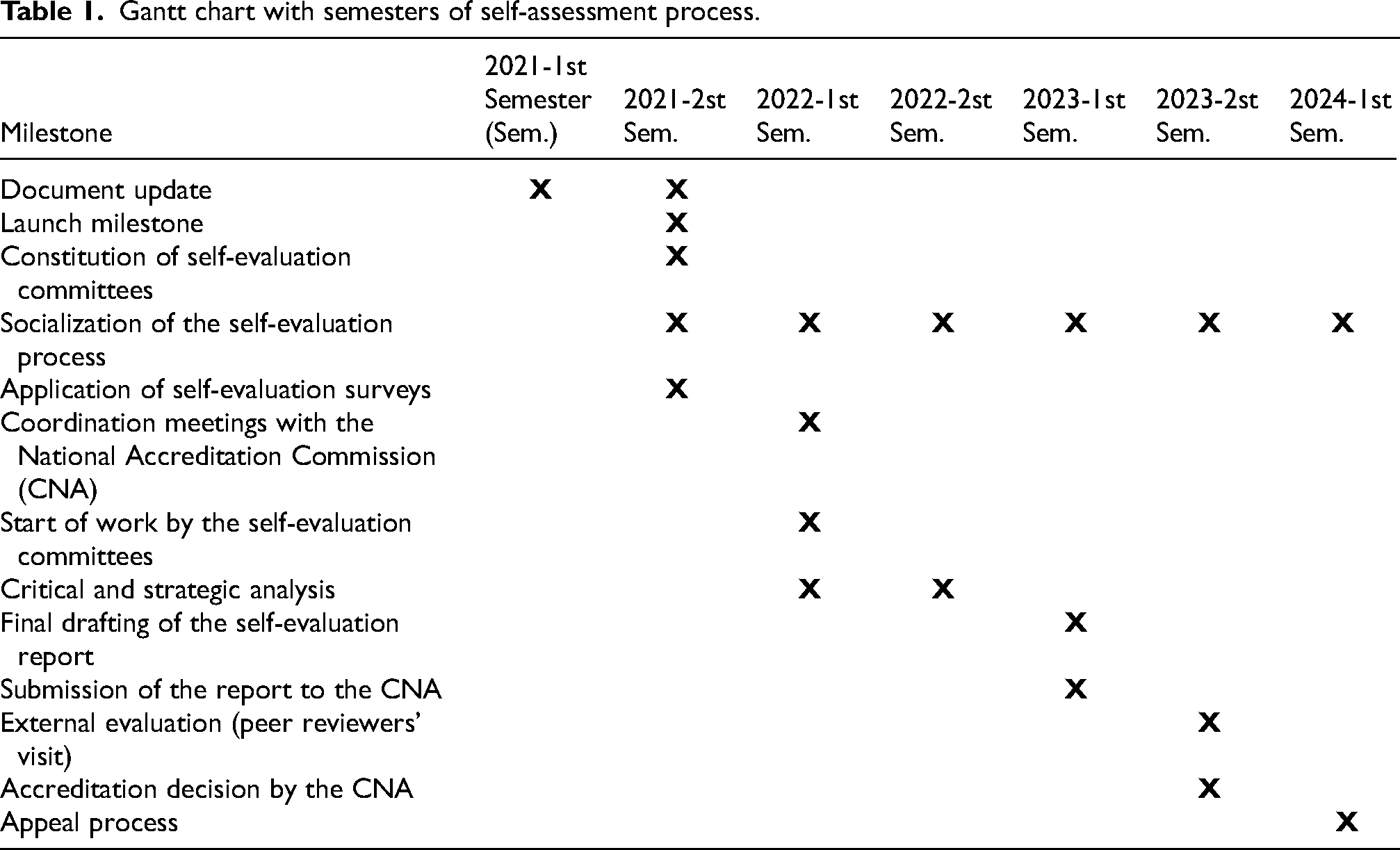
The University's self-assessment process was developed from its official launch in 2021 until the accreditation decision by the National Accreditation Commission in 2023. The specific periods in which the self-assessment process as a whole was developed were the following Table 1:
Gantt chart with semesters of self-assessment process.
Ethical issues
The documents used in the self-assessment process were accessed to develop this article section. Although most of the documents are public, such as area policies (Universidad de Concepción, 2020), corporate reports (Corporación Universidad de Concepción, 2020, 2021; Universidad de Concepción, 2022b, 2023c), accreditation resolutions (CNA-Chile, 2016a), an executive Resume of Self-Assessment report (Universidad de Concepción, 2023b), or peer review reports, there are others of a strategic nature that are for confidential use.
In these cases, the Director of Strategic Development at UdeC (general coordinator of the accreditation process) authorized access to the documentation required to prepare this document but not its dissemination. Due to this, once the generated documents have been accessed, the authors only indicate the number of documents used in each stage of the documentary arch but do not reproduce their content, given the confidentiality limitations.
General organization of work
The Strategic Development Directorate (DDE) of the University of Concepción advises the Rector's Office and other university departments on defining strategic guidelines and institutional management systems for quality management. It is also responsible for guiding and monitoring the Institution's self-assessment process.
The DDE has a permanent Advisory Board made up of representatives of the Vice-Rectorates of the University, the four groups of UdeC faculties, the DDE director and deputy director, and the four heads of DDE units. This advisory board was modified during the self-assessment and accreditation process, including the university's rector and the directors of the various campuses. It became the highest directive authority of the self-assessment process. It was regularly reported on the development of the process and, in turn, guided the strategic decision-making around it. In addition, the DDE presented both the work plan for the self-assessment and the progress made to the University's Academic Council in different sessions (Universidad de Concepción, 2023a).
The institutional analysis work was distributed in commissions organized by the dimensions of institutional accreditation: Teaching and learning outcomes, Research Creation and/or Innovation, Community Engagement, Strategic Management and Institutional Resources, and Internal Quality Assurance. The direction of the work was in charge of authorities and professionals who had a broader vision of the dimension and who had the information related to the actions carried out and the difficulties faced in each area. The vice-rectors participated in the commissions and directors of key units in evaluating each dimension's value flow. They also had the support of the management team and professionals from the Strategic Development Directorate (DDE) and could invite or summon key informants permanently or temporarily (Universidad de Concepción, 2023a).
The committees held two extended meetings with full participation from all members. The first meeting occurred at the beginning of the critical analysis process, where the work methodology was presented. The second meeting occurred at the end of the critical analysis, during which each committee shared its findings regarding the strengths and weaknesses of each dimension. This collaborative effort enabled the identification of common thematic nodes for strategic analysis and facilitated the development of the improvement plan. The Strategic Development Directorate carried out the final review of the strategic analysis and the improvement plan. Feedback was incorporated from the results obtained from the analysis by the faculties and the collegiate bodies, and the improvement plan was articulated and integrated with the Institutional Strategic Plan (Universidad de Concepción, 2023a).
The working committees focused on the different dimensions of accreditation. They considered broad participation and integration of the community, from the validation of the opinion instruments to the preparation of the self-assessment report through the validation of dissemination materials, preparation of drafts, working documents, and workshops with Faculties or other departments. This work was conducted with the support of the Microsoft Teams 365 collaborative platform (Universidad de Concepción, 2023a).
Results
Application of the Documentary Arch at each stage, at the UdeC
The Commissions were instructed to use the suggested materials to support their analysis and, based on them, provide a critical analysis with judgments based on the evidence found in the documents or other relevant sources.
In the case of the University of Concepción, from the design of the guides that supported the work of the commissions, supporting documents such as regulations, strategic plans, public accounts, and results of opinion studies, among others, were recommended. (Universidad de Concepción - Dirección de Desarrollo Estratégico, 2022a, 2022b, 2022c, 2022d), which required a work of systematization and provision of information.
On the other hand, it was necessary to know which documents each of the commissions would use, the origin of said information, or the authors of a possible systematization (Bonett et al., 2024; Díaz and González, 2020).
Initial collection and preparation of materials (UdeC)
The DATF at UdeC comprised three DDE professionals: the head of the Strategic Studies Unit being the main person in charge, and two data analyst professionals from the same unit.
For all the stages prior to the integrated writing of the report, the Endnote software version 20.0 was chosen, and the citation and reference format of the American Psychological Association (APA) in its sixth edition was chosen. The latest edition (7th) was not used since some materials from the so-called grey literature (González-Bravo et al., 2021), were challenging to manage within the style.
Start of work of the UdeC commissions
Documents were named according to the APA style based on the titles of the references. A folder was created within a Microsoft Teams 365 team specifically for the committees’ work. This folder, labeled “0_Documents for All Committees,” was strategically placed in a designated channel to enhance its visibility for committee members.
These materials are also accessible to individuals or teams working on other related sections of the report, such as a brief history of the University.
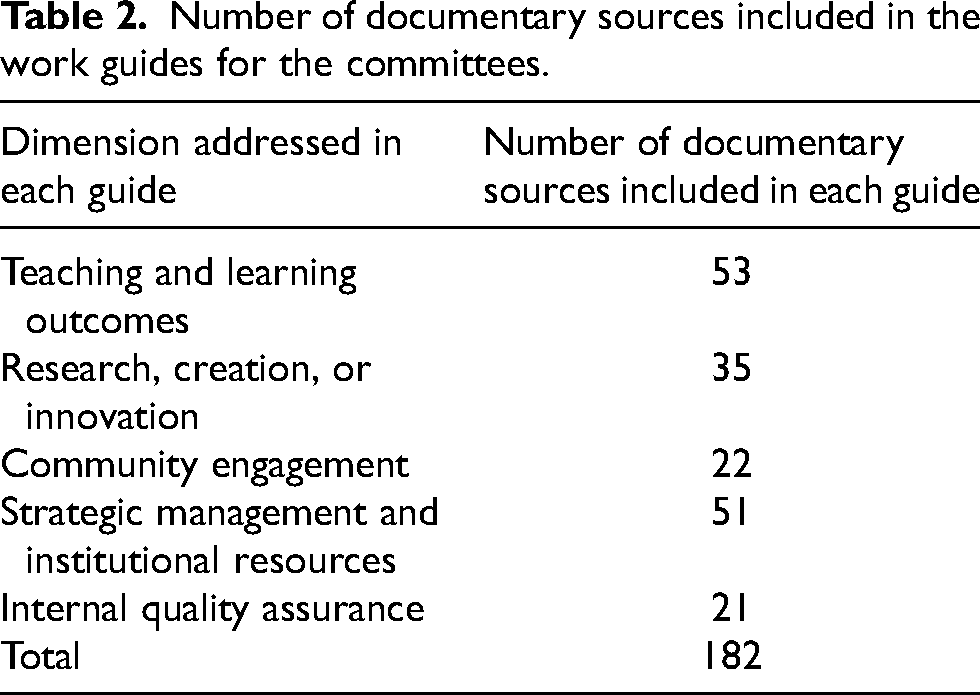
Subsequently, work guides for the committees were developed. Five work guides were created, each containing a recommended minimum bibliography. Naturally, some central documents were repeated across the guides, including area policies, the institutional quality policy, the educational model, and the results of opinion studies. Table 2 provides an overview of the references used in each guide.
Number of documentary sources included in the work guides for the committees.
Critical and strategic analysis and improvement plan
For the critical analysis, DATF increasingly made available to the UdeC commissions the documents necessary for the performance of their work.
At the end of the commissions’ critical analysis work, this shared folder came to consolidate 56 documents.
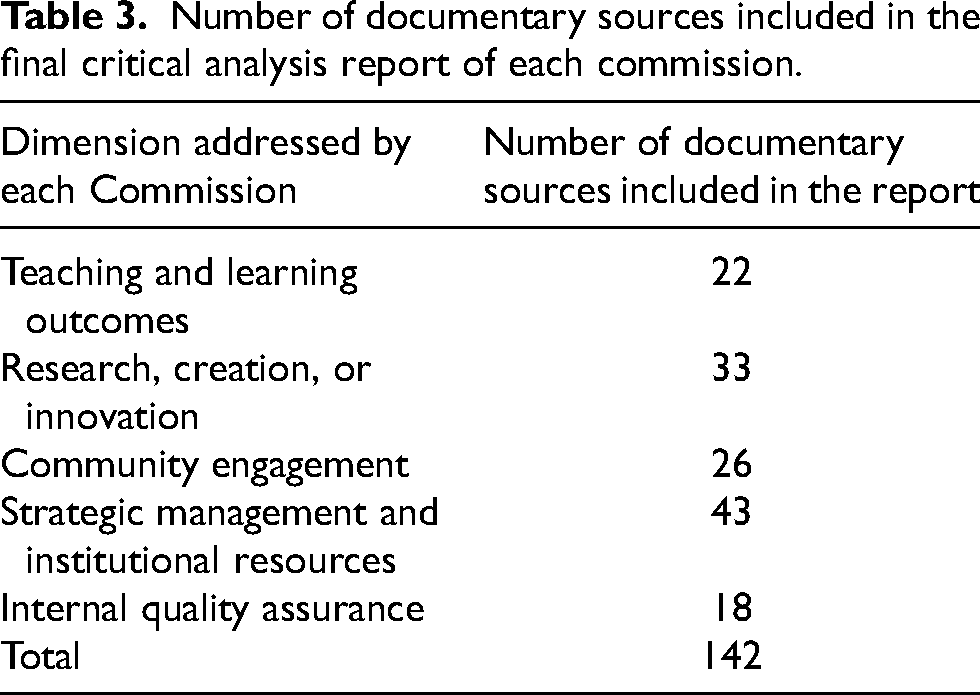
At the end of this stage, each commission had to issue a report with the analysis results. Table 3 shows the number of documents cited by each report.
Number of documentary sources included in the final critical analysis report of each commission.
In the case of the strategic analysis identifying strengths and priorities by dimensions, although the same materials used for the critical analysis were available and consulted, no new materials were requested other than those already available in the folder “0_Documents for all committees”.
In the case of the Improvement Plan, no additional materials were requested or cited either.
Writing of the self-assessment report
At the beginning of 2023, the DATF UdeC prepared the “Preliminary Integrated Report”. This preliminary document consolidated a total of 340 documentary sources. As noted in the previous section of this article, this increase is due to the incorporation of references not appropriately considered by the commissions and of the sections not directly worked on by the latter (for example, history of the University, progress about the previous process, etc.).
The document, in its final version, has a total of 363 bibliographical references cited.
Submission of the self-assessment report
At this stage, the DATF sent the annexes to the process coordinating team, who uploaded them to the digital platform designed by the CNA for sending the report. Forty-six documentary annexes (evidence) were sent to the CNA.
Peer visit
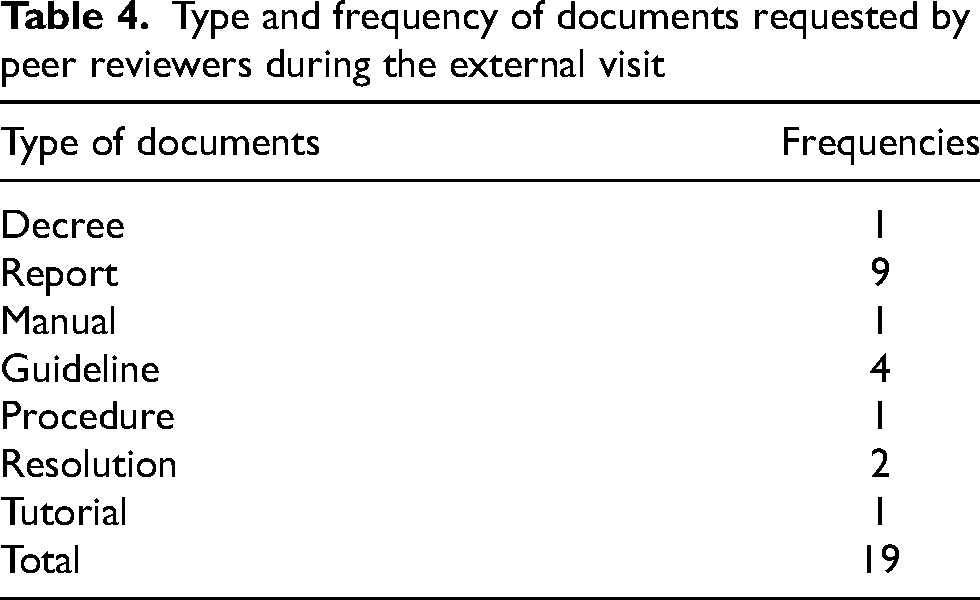
During the peer evaluators’ visit between August 4 and 8, 2023, various additional documents were requested from an official counterpart of the UdeC Strategic Development Directorate, which were delivered during the visit to the UdeC campuses. Table 4 shows the number of documents requested by the peer evaluators.
Type and frequency of documents requested by peer reviewers during the external visit
Response to peer review report and accreditation decision
In the response to the Peer Review Report, 33 documents were included, all of them included in the institutional self-assessment report as bibliographical references.
Possible appeal to accreditation decision
Although the University had reached the maximum number of years of accreditation, it filed an appeal for reconsideration because it disagreed with some of the arguments and assertions raised in the document in the accreditation decision.
The appeal for reconsideration included only two (2) additional bibliographical references, both of which refer to external reports from risk consulting firms.
Perspectives for Evaluation and Empirical Validation
Although the present study primarily focuses on the conceptual development and institutional application of the Documentary Arch, its structured nature also allows for future evaluations through empirical methods. Preliminary evidence of its effectiveness is already discernible based on several official documents. The external peer review report (CNA-Chile, 2023c: 6) noted the institutional self-assessment report as having “a very clear structure, with quantitative and qualitative information, a high level of consistency across sections, and adequate systematization and synthesis.” The model was deployed across five thematic commissions aligned with accreditation dimensions. These groups met weekly for five months using the “great workshops” methodology and collaborative platforms like Teams and MIRO to coordinate across three campuses (CNA-Chile, 2023c)
The Documentary Arch was the central documentary infrastructure throughout this extended, participatory, and evidence-based process. Furthermore, the CNA partially accepted the formal appeal submitted by the University, explicitly recognizing the strength of the arguments and documentation provided (CNA-Chile, 2024).
This explicit acknowledgment of the work done regarding the documentary support for the self-assessment and accreditation process was not reflected in the accreditation resolution from the previous institutional process conducted in 2016 (CNA-Chile, 2016b).
Discussion
Self-assessment processes for institutional accreditation require consolidating and managing the various documents and evidence to be used effectively and efficiently.
The first challenge that research on this topic presents is that most of the documents are: 1) grey literature (González-Bravo et al., 2021), which implies that they are not necessarily found in academic repositories or not controlled by commercial publishers (Paez, 2017), but rather are within the institutions, which makes their access difficult; 2) of a strategic nature and with restricted access in Universities (for example, strategic plans (Bieler and McKenzie, 2017), investment plans, self-assessment reports, among others); 3) they are often found in different repositories within the University: databases, library, archives of minutes of meetings of collegiate bodies, intranet, among others.
This set of antecedents suggests that the Document Accreditation Task Force (DATF) must thoroughly understand the university's structure and engage with the entities that provide necessary information to make relevant requests. Given the volume of work and documents involved, the concept of the documentary arch becomes increasingly valuable in document management for accreditation processes. It links each stage of the self-assessment process with the specific documentary requirements and associated challenges.
Furthermore, this concept incorporates global strategies that enhance document provision through information technologies aimed at supporting the work of the commissions throughout the process. These strategies cover everything from the initial collection of materials to the accreditation resolution, including, if necessary, the presentation of appeals.
The present research has demonstrated that the implementation of the Document Arch in a higher education institution is closely linked to the technological platforms that support the process in terms of document management. Well-structured document management in the context of self-assessment for accreditation positively impacts the agility, efficiency, and effectiveness of the process as a whole and the ability to accurately identify and provide evidence of strengths and weaknesses in mission areas. Implementing the Documentary Arch model addresses longstanding challenges in documentation governance within institutional accreditation processes. Although the model is tailored to the Chilean context, its conceptual foundations and technical applications resonate with broader international efforts to enhance documentation systems in higher education quality assurance.
Several models have been developed in response to the growing complexity and volume of documentation required for accreditation. Notably, Akhter and Ibrahim (2016) proposed the Intelligent Web-Based Accreditation System (IWBAS) to resolve procedural bottlenecks such as data fragmentation, limited faculty engagement, and time inefficiencies. While IWBAS and the Documentary Arch seek to improve documentation practices through structured digital environments, the Documentary Arch introduces an additional dimension: institutional traceability anchored in documentary flow and decision-making logic, enhancing usability and organizational learning. By contrast, IWBAS emphasizes automation in data collection and streamlining reporting procedures.
Similarly, Naufalin et al. (2020) developed a web-based accreditation archive system to address recurring issues of document loss, inefficient retrieval, and redundancy—particularly under the constraints imposed by the COVID-19 pandemic. Their system facilitates intuitive access and minimizes document duplication, which are challenges also confronted by the Documentary Arch. However, the latter presents a more holistic approach by linking documents to specific phases of the self-assessment process and establishing governance protocols for evidence validation and reuse, thus elevating the strategic value of documentation from passive storage to active institutional knowledge.
Other platforms, such as those described by Trinidad (2022) and Olalia Jr and Bugayong (2014), emphasize mobile data reporting, visualization, and version control via centralized repositories. These innovations significantly enhance user experience and contribute to the digital transformation of accreditation workflows. The Documentary Arch presented in the present work, contributes to this ecosystem by reinforcing a document production, circulation, and institutional validation systems designed to fulfill accreditation requirements and support internal quality assurance and strategic decision-making processes.
While various digital systems have advanced the technical management of accreditation-related documentation, the Documentary Arch model offers additional conceptual and operational value by integrating structured information flows, governance mechanisms, and institutional adaptability. These features reinforce the model's originality and its broader applicability beyond the immediate institutional case presented in this study.
The Documentary Arch concept empowers institutions to tailor it to their unique needs and provides a robust structure for systematically organizing and managing information for self-assessment. While the model was initially developed in the context of institutional accreditation in Chile, its general stages of collecting, analyzing, and providing documentary evidence for internal task forces, are universally applicable to quality assurance processes in higher education.
Regarding the model’s transferability, institutions should adapt the specific stages and documentary requirements to their particular regulatory frameworks and evaluation criteria, such as those established by different regional or national accreditation agencies. Furthermore, the choice of technological tools for document management and the formation of support teams must be adapted to the infrastructure and resources available in each institutional context, providing a sense of reassurance and support in the implementation process.
Indeed, HEIs vary widely in terms of mission, size, and complexity, which requires contextualized implementation of the model, for example, if the HEI has strong development on research or community engagement, affecting the number of required supporting evidence in these dimensions. Additionally, the implementation of the model must be aligned with the institutional culture, existing internal quality management processes (Sursock, 2011), and the idiosyncratic issues specific to each country, for example, about trust (Dussaillant and Guzmán, 2014). One significant area where these differences, particularly institutional ones, could impact on the transferability of the Documentary Arch model is the access to restricted or strategic documents that the respective governing bodies of the HEIs submit to the working committees. The limited access to such documentation can pose significant challenges to the normal flow of information and the rigor of a thorough self-assessment process and the corresponding report.
In the specific case of our Institution, during the process of applying the Documentary Arch by the DATF, multiple challenges were faced, among which we can list 1) the large volume of information, 2) the importance of having official (and not preliminary) versions of the documents, 3) getting the required documents to the commissions in very short periods (one or two days), 4) viewing different types of documentation related to different areas of the University, in a unified manner, 5) identifying within the drafts of the documents prepared by the commissions, documents mentioned that were not necessarily correctly referenced (Szkiel, 2024), 6) given the length and complexity of a self-assessment process, working on an integrated document in periods that do not necessarily correspond to the regular calendar of the University.
As specific limitations of the research process in this area, it is worth mentioning the restrictions researchers face while implementing the Documentary Arch, often working with grey literature, which is strategic in universities. It implies, as occurred in the present case, that the information consulted cannot be disseminated without restrictions. It's essential to build a trusting relationship with the people in charge of leading the process and clearly establish the extent to which information will be disseminated, whether public or information that cannot be disseminated by researchers.
It is crucial to emphasize that implementing the Documentary Arch concept in an institution requires the necessary resources, which include assigning dedicated professionals to manage the process and having suitable support systems and software in place. Unfortunately, this requirement may pose a financial challenge for some HEIs due to economic constraints. Nevertheless, as has been said up to this point, while the accreditation requirements for Chilean higher education institutions (HEIs) are unique, the proposed model is generic enough to be applied to universities of various orientations and levels of complexity, with only minor adaptations needed. Although the specific stages or the number of documents required at each stage may vary, the authors of this article consider that the concept of the Documentary Arch can be applied to contexts other than Chile, thus highlighting the core elements of the concept that are aligned with any document management process. As mentioned in the research by Prada Rozas (2020) and Díaz and González (2020), the fundamental processes of document management, which the Documentary Arch integrates, include the creation, organization, storage, access, use, maintenance, disposition, and preservation of documents. These processes are inherent to document management in any institution, being consistent with what was pointed out by Pérez García et al. (2023), who emphasize the characteristics that information flows must have to improve university processes in terms of direction, timeliness, clarity, and veracity.
While though quality management, continuous improvement, and fostering a quality culture involve more complex elements than information management, implementing a Documentary Arch provides a systematic approach to gathering the evidence needed for institutions’ self-assessment and accreditation, facilitating ongoing institutional improvement.
Footnotes
Acknowledgments
We want to thank the Strategic Development Department of the University of Concepción for its constant support in carrying out this research.
Consent to participate
A declaration in this regard is not applicable since one does not work directly with participating individuals as subjects of observation during the investigation.
Data availability statement
All necessary information to find public university documents online is included in the references.
Declaration of conflicting interest
The author(s) declared no potential conflicts of interest concerning this article's research, authorship, and/or publication.
Ethical considerations
No additional ethical considerations need to be addressed for this research.
Funding
No funding was received for the development of this work.
Statements and declarations
This article is based on public documents used during the University of Concepción's self-assessment process, and other confidential and strategic documents related to the organization. While the latter documents are cited in the text, they are not included in the list of references.
