







Abstract
Education 5.0 represents a transformative shift in Zimbabwe's higher education sector, aiming to equip students with the skills necessary to drive economic growth and development. This policy focuses on evolving university education from traditional methodologies to more innovative and industrialized approaches. However, the Chinhoyi University of Technology (CUT) Library faces challenges in aligning its services with the Ministry of Higher Education's mandate, which emphasizes a practice-based approach that integrates teaching, research, community engagement, innovation, and industrialization. This study investigates the role of the CUT Library in facilitating the implementation of Education 5.0 and identifies the associated challenges. Employing a sequential explanatory mixed methods design, the research incorporates both qualitative and quantitative strands to provide a comprehensive analysis. The sample size of 80 was determined using Krejcie and Morgan's (1970) method, balancing representation and practical constraints. The study's combined quantitative and qualitative findings reveal mixed perceptions of the CUT Library's services and resources in supporting Education 5.0, with a neutral mean score (M = 3.40, SD = 0.692) across key areas such as electronic resources, internet connectivity, catalog system, and physical space, indicating both satisfactory aspects and notable gaps. The study discovered several challenges that hinder effectiveness, including limited financial resources (75%), lack of staff training (52%), and limited access to current digital tools (75%). Additionally, the research highlights the need for improved training and professional development programs for library staff to enhance their capacity to support research, teaching, community engagement, innovation, and industrialization. CUT Library should strengthen support for Education 5.0 to foster a sustainable and innovative education system.
Keywords
Introduction
The global higher education landscape is evolving to bridge the gap between academic knowledge and practical application, fostering innovation and industrialization (Giesenbauer and Müller-Christ, 2020). Academic libraries play a pivotal role in this transformation by providing access to essential resources, facilitating research, and supporting digital innovation. By integrating cutting-edge technologies, libraries can support Education 5.0 objectives, such as promoting interdisciplinary learning, making real-time data accessible, and stimulating creative educational materials (Adel, 2024). In Africa, academic libraries are key to universities’ Education 5.0 transition, driving technological advancement (Ramakrishna et al., 2020). South Africa, Kenya, and Nigeria have made notable progress in integrating digital innovation into their academic libraries (Subaveerapandiyan et al., 2024). Specifically, the academic libraries of South Africa, such as the University of Cape Town and Stellenbosch University, have adopted open-access programs that offer digital repositories, thus increasing student access to research materials (Masenya and Ngulube, 2021).
In Zimbabwe, the government introduced Education 5.0 as a national policy to transform the education system, focusing on practical, skill-based education that addresses socioeconomic challenges (Goto, 2021). Ministry of Higher Education, Innovation, Science and Technology has mandated that all institutions of higher learning in Zimbabwe transform from a theory-based approach to a practical-based approach that emphasizes teaching, research, community engagement, innovation and industrialization in addition to teaching, research and community engagement. However, the Chinhoyi University of Technology (CUT) Library faces challenges in aligning its services with these goals. The ill-defined nature of library services that facilitate such objectives is a serious obstacle that raises questions regarding their efficacy. If the learning resources offered fail to impact pedagogical innovations positively, this would negatively impact the learning outcomes of the students. There is also ambiguity in the library's role in enabling integrated learning and its impact on student achievements.
University libraries must evolve into innovation hubs that support entrepreneurial skills, problem-solving, and hands-on learning (Khongmalai and Distanont, 2024). Despite the importance of libraries in supporting Education 5.0, there is a lack of empirical evidence on their role in Zimbabwean universities. A considerable body of scholarly research has been carried out in Zimbabwe with respect to the perceptions and challenges surrounding the adoption of Education 5.0. Muzira and Bondai's (2020) research on educators’ attitudes toward integrating Education 5.0 in a university setting in Zimbabwe showed that although educators showed a fair degree of readiness to accept Education 5.0, there was a serious lack of readiness on the part of institutions to bring about this transformation owing to a lack of adequate resources. The interaction between libraries and educational innovation at universities in Zimbabwe is not yet fully understood or conclusively resolved. There remains a significant research gap in terms of how libraries in Zimbabwean universities can support the transition toward Education 5.0, particularly in terms of technology adoption and skill building. Research has highlighted the need for libraries to adapt to the changing educational landscape, but the interaction between libraries and educational innovation in Zimbabwe is not well understood (Adigun et al., 2024; Carayannis and Morawska-Jancelewicz, 2022). This study aims to address this gap by examining the role of CUT Library in supporting Education 5.0. The CUT has embraced Education 5.0 principles, but faces challenges in fully supporting them (Munikwa & Mapara, 2022). Several scholars have argued that understanding the role of libraries in adopting innovations can significantly enhance the implementation of Education 5.0 (Adigun et al., 2024; Carayannis and Morawska-Jancelewicz, 2022; Noh, 2015).
The Resource-Based View (RBV) theory, developed by Jay Barney (1991) and further refined by other scholars, provided a suitable framework for investigating the role of the CUT Library in supporting Education 5.0. By examining the library's resources (technological, human, and physical) and capabilities (information literacy, digital services, and staff expertise), this study understood how these internal factors contributed to the university's implementation of Education 5.0 initiatives. The RBV perspective suggests that organizations can achieve competitive advantage by leveraging their unique resources and capabilities, and that this can be achieved not only by utilizing existing assets but also by building new potential capabilities through learning, skill acquisition, and asset accumulation over time. In the context of CUT, the library's resources and capabilities were found to play a crucial role in supporting the university's Education 5.0 initiatives. The theory guided the development of the research questions outline below.
Research questions
What specific services and resources does the CUT Library provide to support the implementation of Education 5.0?
How effective are the training and professional development initiatives for library staff in preparing them to support Education 5.0?
In what ways do the technological resources and digital infrastructure at the CUT contribute to Education 5.0?
What are the challenges faced by the CUT Library in supporting Education 5.0?
Literature review
Current state of academic libraries in Zimbabwe
Zimbabwe's library landscape is characterized by significant challenges, particularly in terms of funding and infrastructure (Madziwo and Chigwada, 2022; Machimbidza and Mutula, 2019). Despite these challenges, university libraries have demonstrated resilience and adaptability. One notable initiative is the formation of the Zimbabwe University Libraries Consortium (ZULC), which enables member libraries to collectively acquire information resources and support education and research (INASP, 2016; Machimbidza and Mutula, 2019). The adoption of open-source software has also been a key strategy for academic libraries in Zimbabwe. For instance, some libraries have successfully established institutional repositories using platforms like DSpace and Greenstone, thereby enhancing access to local research and scholarly output (Chisita & Chiparausha, 2019). However, university libraries in Zimbabwe continue to face significant hurdles in providing effective services, primarily due to limited funding and a lack of resources (Chisita et al., 2022). In response to these challenges, researchers have proposed innovative solutions, such as a framework for the entrenchment of intellectual property (IP) information services in university libraries, aimed at supporting innovation and development (Munyoro et al., 2023).
Education 5.0 philosophy
The concept of “5.0” builds upon its predecessors, commencing from the 1.0 era characterized by hunting and culminating in the 4.0 era marked by digital disruption (Nurdiana and Harsoyo, 2021). In Zimbabwe, the contemporary approach to tertiary education is termed Education 5.0. Unlike Model 3.0, which concentrated solely on teaching, research, and community service, Education 5.0 incorporates two additional pillars: innovation and industrialization. As highlighted by Maringehosi (2020), the primary emphasis of these initiatives is on products and services. Furthermore, Jonathan (2019) asserts that the ministerial doctrine of Education 5.0 aims to equip Zimbabwean education to adequately address the requirements of the current fourth industrial revolution. Murwira (2019) contends that Zimbabwe's educational landscape necessitates novel methodologies for harnessing intellectual potential and positioning the country as a premier educational destination. Plans have been initiated to establish innovation centers at every state university, underscoring the critical role of student engagement in the pursuit of quality assurance and the generation of high-quality education (Murwira, 2019).
Services and resources that support the implementation of education 5.0 in universities
University libraries assume a pivotal role in supporting Education 5.0 by furnishing an array of services and resources that facilitate teaching, research, community engagement, innovation, and industrialization (Murwira, 2019). Notably, these libraries provide access to a plethora of academic resources, including e-books, journals, research databases, and digital repositories, thereby facilitating research-driven pedagogy and learning (Kumar, 2024). Furthermore, instructional support is rendered through workshops and training programs focused on research methodologies, academic writing, and data analysis tools, thus enhancing the research capabilities of students and faculty (Hsieh et al., 2021). In promoting innovation, university libraries offer access to specialized resources, such as business intelligence tools and intellectual property resources (Adigun et al., 2024). The provision of collaborative workspaces, innovation labs, and maker spaces within these libraries fosters interdisciplinary collaboration and creative thinking. Moreover, university libraries support inclusivity and accessibility by championing open educational resources (OERs), thereby ensuring equitable access to education (Mncube, 2024). In facilitating the translation of research into practical solutions, libraries play a vital role by providing resources, such as market research, patent databases, and commercialization guides (Roy and Habib, 2024). By brokering connections between academia and industry, libraries support the development of innovation hubs and industrial parks. The integration of cutting-edge technologies, including artificial intelligence, data analytics, and virtual learning platforms, enables students and faculty to navigate vast amounts of information efficiently, engage in personalized learning experiences, and develop digital literacy skills (Aithal and Maiya, 2023).
Challenges in supporting education 50
University libraries encounter substantial challenges in supporting Education 5.0, a paradigm that integrates teaching, research, community service, innovation, and industrialization (Muzira and Bondai, 2020). Insufficient funding constrains academic libraries’ capacity to provide requisite technological resources, thereby limiting their ability to modernize and expand services (Oduwole and Kanu, 2017; Vurayai, 2024). Furthermore, library personnel necessitate ongoing professional development opportunities to acquire advanced competencies in emerging technologies, digital literacy, and research support services (Meesad and Mingkhwan, 2024; Okiy, 2020). Technological infrastructure challenges, including slow internet connectivity, outdated hardware, and limited access to global research networks, hinder the efficacy of university libraries in Zimbabwe (Mohanty et al., 2024; Zhou and Ngunyi, 2021). Limited collaboration between university libraries and external stakeholders weakens the role of academic institutions in supporting industrialization and commercialization of research (Atkinson, 2019; Vurayai, 2024). Moreover, resistance to change can impede efforts to integrate advanced information systems into academic libraries, often stemming from fear of redundancy, lack of training, or skepticism about new systems (Ciccone and Hounslow, 2019; Gkrimpizi et al., 2023).
Previous research on education 50
A growing body of research in Zimbabwe has investigated perceptions and challenges associated with adopting Education 5.0. Muzira and Bondai's (2020) study on educators’ perceptions toward Education 5.0 adoption at a Zimbabwean university revealed that while educators were somewhat prepared for adoption, the institution faced readiness challenges due to limited resources. Notably, this study highlights a significant gap in understanding the role of libraries in adopting Education 5.0. Matorevhu's (2023) exploration of curriculum innovation for industrialization in Education 5.0 underscored the interconnectedness of diverse ontologies related to innovation and implementation. However, despite these valuable insights, research specifically examining the role of libraries in facilitating the transition to Education 5.0 remains scarce. This knowledge gap underscores the need for further investigation into the contributions and challenges of libraries in supporting Education 5.0 initiatives.
Methods
This study employed a mixed-methods research strategy, aligning with the pragmatic research philosophy. By combining qualitative and quantitative approaches, the researchers aimed to gather comprehensive insights from academic staff, library staff, and students who regularly engage with the library's resources and services. The mixed-methods strategy enabled a more in-depth analysis of the role of university libraries in supporting Education 5.0 compared to a single research strategy. A case study research design was adopted, focusing on the CUT Library. This approach facilitated an in-depth, multifaceted examination of the library's role in supporting Education 5.0 within its natural context. This research utilized questionnaires and interviews as methods for data collection. The creation of these tools was guided by a conceptual framework based on relevant literature regarding Education 5.0, library services, and user needs, ensuring they were aligned with the study's research objectives. The study targeted academic staff, library staff, and students who regularly engage with the library's resources and services. Senior library management, including department heads and directors, were also included in the target population due to their expertise and insights into library operations and strategic planning. For the questionnaire survey, stratified random sampling was employed for students and academic staff to ensure fair representation across diverse subgroups.
The sample size for this study was determined via Krejcie and Morgan's (1970) method, which yielded a sample size of 80 participants for the questionnaire survey. The selection of 80 questionnaires was based on the researcher's aim to achieve a representative sample of the target population, while also considering practical constraints such as time, participant apathy and resources. For the interviews, purposive sampling was used to target 10 senior library management staff and lecturers. The criteria for selecting interview participants included having experience working in university libraries or teaching at the university, insights into library strategic planning or education, and expertise in relevant areas such as library management, information technology, or education. Lecturers were selected based on their experience in teaching and research, their familiarity with library resources, and their potential to provide insights into the role of the library in supporting Education 5.0. The interview guide explored key themes, including library strategies for supporting Education 5.0, challenges faced by the library in this endeavor, and strategies for effectively utilizing library resources in teaching and research. Additionally, it sought to understand lecturers’ perceptions of the library's role in supporting Education 5.0 and identified ways in which the library can better support the needs of lecturers, while also uncovering challenges lecturers face in using library resources.
The Statistical Package for Social Sciences (SPSS) was used to analyze the quantitative data, while thematic analysis was employed for the qualitative data. The mixed-methods approach allows for triangulation of data, which enhances the validity and reliability of the findings. Quantitative data provided a broad overview of the phenomena under study, while qualitative data, gathered through interviews, offered depth and nuance to the findings. Quantitative and qualitative data were integrated and presented in a weaving fashion. This approach involved presenting both quantitative and qualitative data together within the same themes to create a cohesive and comprehensive narrative. By weaving the data together, the study aimed to provide a more nuanced and detailed understanding of the role of the university library in supporting Education 5.0, allowing for a richer interpretation of the findings.
Limitations of sample size
It is acknowledged that the sample size of 90 participants may have limitations in supporting the conclusions made. Specifically, the small sample size may limit the generalizability of the findings to other universities or libraries, and may not capture the full range of perspectives and experiences relevant to the research problem. Additionally, the small sample size may result in reduced statistical power and increased risk of bias. Nevertheless, the mixed-methods approach allows for triangulation of data, which enhances the validity and reliability of the findings.
Results
A total of 80 questionnaires were administered, and 65 were completed and returned, resulting in an 81.25% response rate. Additionally, 8 interviews were conducted with library management staff and academics against a target of 10 participants to gather in-depth, qualitative insights. The 65 returned questionnaires and 8 valid interviews were considered sufficient to provide a nuanced understanding of the research problem within the specific context of the CUT Library.
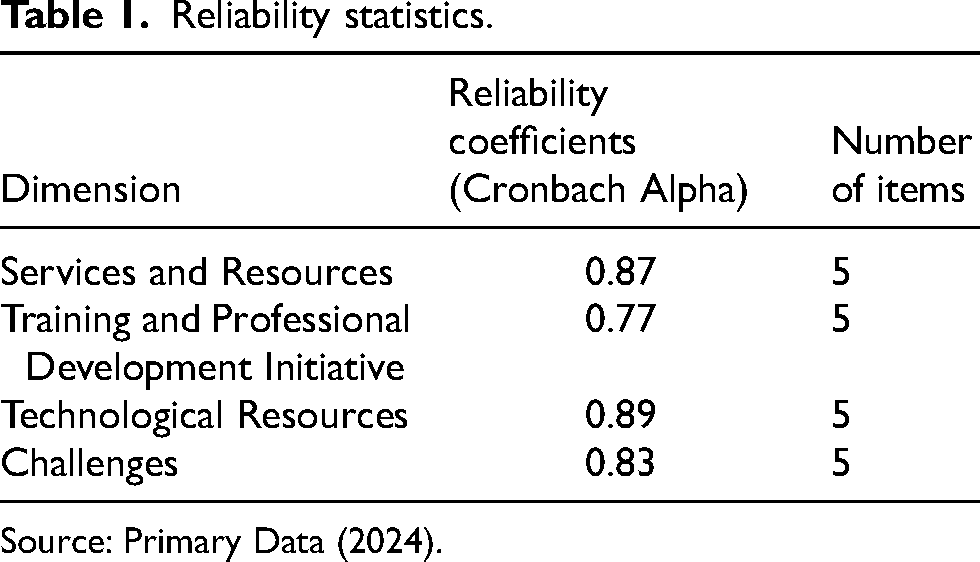
The reliability statistics in this study provide insights into the internal consistency of the measured variables (Table 1). The Cronbach's alpha coefficients for the four variables are services (0.87), training and equipment (0.77), technological resources (0.89), and challenges (0.83). Cronbach's alpha values range from 0 to 1, with a threshold of 0.70 indicating reliable scales (Pallant, 2020). All the alpha values in this study exceed this threshold, indicating strong internal consistency. Coefficients above 0.80 are deemed highly reliable, indicating that items within each dimension consistently measure the same underlying construct (Bryman et al., 2022).
Reliability statistics.
Source: Primary Data (2024).
Services provision in support of education 50
The respondents were asked to indicate the extent to which the services and resources offered by the Chinhoyi University of Technology Library align with the principles of Education 5.0. The scale used has the following response points: 1 = very low, 2 = low, 3 = moderate, 4 = high, and 5 = very high. Results were analyzed using arithmetic mean (M) and standard deviation (SD) as in Table 2. The statement “Electronic resources (e.g., e-books, and databases) at the university are easily accessible” received a mean value of M = 2.10, SD = 0.775 (REE2), indicating that students and researchers perceive access to these resources as challenging. Results indicate that the mean values range from M = 2.10, SD = 0.775 (SRE2) to M = 4.60, SD = 0.656 (SRE1). The overall mean score of M = 3.40, SD = 0.692, calculated out of a possible five (strongly agree), suggests that respondents neither strongly agreed nor disagreed about the services and resources offered by the Chinhoyi University of Technology (CUT) align with the principles of education 5.0.
Services provided to support education 5.0.
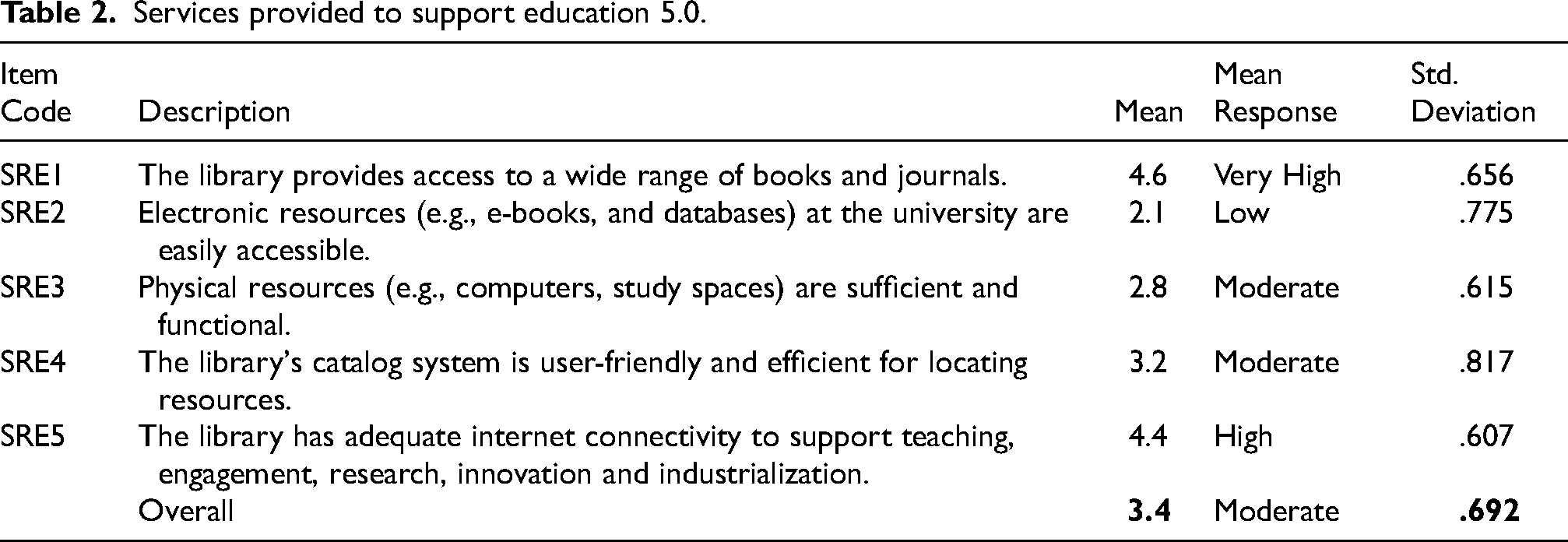
Statement “The library's catalog system is user friendly and efficient for locating resources” received a mean value of M = 3.20, SD = 0.817 (SRE4), suggesting moderate satisfaction among users. While the catalog system works, user responses vary significantly, indicating that some individuals still have difficulty navigating it. The literature on library usability (e.g., Panda and Kaur (2024) suggests that well-designed library systems enhance the user experience and reduce frustration. Moreover, the statement “The library has adequate internet connectivity to support teaching, engagement, research, innovation, and industrialization” received a mean value of M = 4.40, SD = 0.607 (REE5), suggesting that respondents generally agree that the university's internet infrastructure supports these critical functions. This positive finding is especially significant, as reliable and fast internet is crucial for enabling digital learning, accessing e-resources, and fostering collaborative research—essential elements of Education 5.0. Research by Sato et al. (2023). supports the idea that reliable internet access significantly enhances students’ ability to engage with digital learning materials, conduct research, and participate in global knowledge-sharing initiatives.
The interviews with the library staff highlighted several challenges related to training and support to do with resource access and lack of information literacy skills. One participant explained: “Many students struggle to access e-books and databases, especially when they are off campus. Some are unaware of how to log in remotely, whereas others encounter issues with expired access credentials. We need better communication and training to help them navigate these resources. Additionally, the university subscribes to several databases, but not all students know which ones are relevant to their research. Some resources also require additional authentication, which can be frustrating. We receive numerous queries about access issues, and we often refer students to IT support for assistance.” “The catalog is functional, but many students find it confusing when trying to search for research papers or digital books. Some students give up and come to the help desk for assistance, indicating that the system could be more intuitive. We do our best to help students, but many are unfamiliar with the advanced search filters. If we provided short tutorial videos or interactive guides, more students might find the system user friendly.” She also mentioned that while we have a stable internet connection, the real challenge is whether students know how to use it effectively for research. Many rely on general web searches instead of academic databases, which negatively impacts the quality of their research.”
The training and professional development initiatives provided to library staff in supporting education 5.0
The respondents were asked how training and professional development initiatives offered to library staff their ability to support Education 5.0. The scale used has the following response points: 1 = Strongly Disagree, 2 = Disagree, 3 = Neutral, 4 = Agree, and 5 = Strongly Agree. The findings presented in Table 3 indicate that the mean values range from M = 1.20, SD = 0.693 (item LST4), to M = 3.97, SD = 0.717 (item LST3). The score was calculated and averaged (overall mean 2.29, SD 0.674) out of a possible five (strongly agree). This indicates that respondents disagreed that training and professional development initiatives offered to library staff support the educational needs associated with Education 5.0. The statement “Library personnel are approachable and provide timely support” has a mean value of M = 3.67, SD = 0.717 (item LST3), suggesting that respondents generally perceive library personnel as approachable and able to provide timely support. This aligns with the findings of Bladek (2021), who emphasized that the accessibility and responsiveness of library staff are crucial in creating effective academic support. However, despite this positive perception, the relatively moderate mean score suggests that there is room for improvement in ensuring that all users consistently receive high-quality support
Library staff of training and professional development initiatives.
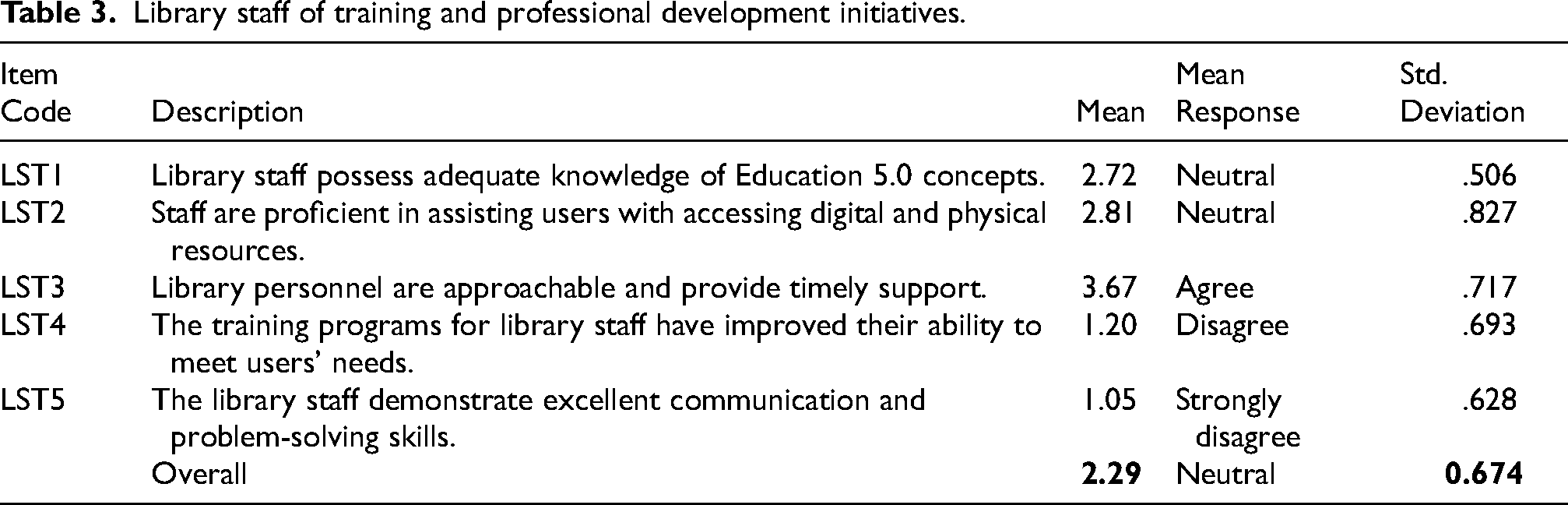
In addition, the statement “The training programs for library staff have improved their ability to meet users’ needs” received a mean value of M = 1.20, SD = 0.693 (item LST4), indicating that respondents strongly disagree with the assertion that training programs have improved staff ability to meet users’ needs. This finding contradicts studies such as those by Dadzie and Walt (2015), which highlight the importance of continuous professional development in improving library service delivery. The low score suggests a significant gap in staff training at the Chinhoyi University of Technology Library, which could hinder the institution's ability to align its services with the demands of Education 5.0. Given that Education 5.0 emphasizes innovation and industry engagement, inadequate training may limit the library's ability to facilitate research, innovation-driven learning, and the entrepreneurial activities central to this educational framework.
The statement “The library staff demonstrate excellent communication and problem-solving skills” received a mean value of M = 1.05, SD = 0.628 (item LST5), suggesting that library staff are perceived as having poor communication and problem-solving skills. Effective communication is crucial for providing high-quality library service, as noted by Tabor (2010), who argue that library personnel must possess strong interpersonal and problem-solving skills to support diverse user needs. The low rating in this area may indicate difficulties in user engagement, information retrieval, and issue resolution—all of which are vital for meeting the dynamic academic and research requirements of Education 5.0.
In an interview one senior academic member lamented lack of knowledge regarding education 5.0, "Most library staff members do not seem to fully understand what Education 5.0 entails. When we ask for assistance related to innovation and research support, they often struggle to provide relevant guidance. The library staff are accustomed to traditional roles of issuing books and assisting with catalog searches. They are not adequately trained to support innovation-driven learning, which is central to Education 5.0. Some of the digital tools required for industrial research are either unavailable or not well understood by the library staff. This makes it difficult for students to access the right materials for innovation-related projects.” "We have had minimal training programs in recent years. Most of the knowledge we have gained is through personal learning, not structured training by the institution.” “There is no structured capacity-building program for library staff. Those who know how to navigate research databases learned it on their own, but many struggle with newer digital platforms.” "Sometimes, it feels like the library staff are overwhelmed. Their communication is not as frequently as needed, and they seem take their time in assisting with research-related problems.”
Technology and digital infrastructure for education 50
The respondents were asked to rate the role of the technological resources and digital infrastructure of the library in facilitating the achievement of the Education 5.0 objectives. The scale used has the following response points: 1 = satisfactory, 2 = fair, 3 = neutral, 4 = disappointing, and 5 = very disappointing. The results are statistically presented in Table 4. The findings presented in Table 4. indicate that the mean values range from M = 1.52, SD = 0.711 (item TRD3) to M = 3.37, SD = 0.731 (item TRD4). The score was calculated and averaged (overall mean 2.49, SD 0.679) out of a possible five (satisfactory).
Role of technological resources and digital infrastructure.
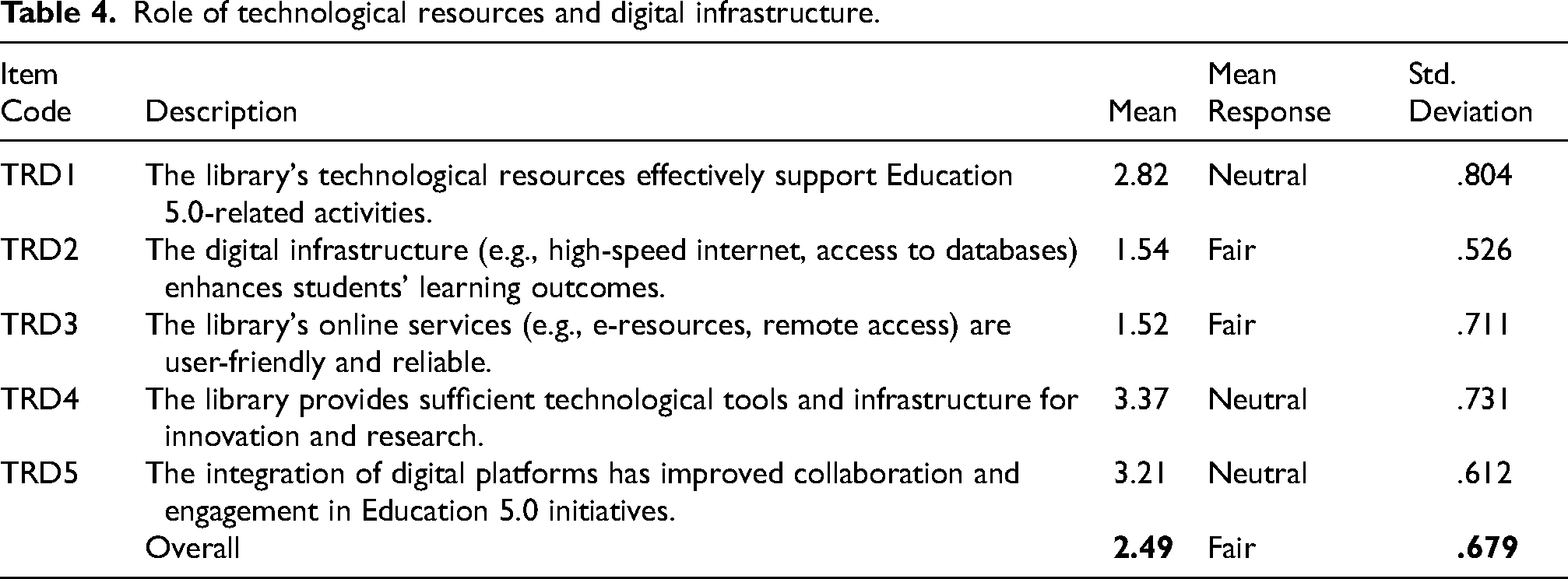
The statement “The library's online services (e.g., e-resources, remote access) are user friendly and reliable” has a mean value of M = 1.52, SD = 0.711 (item TRD3), suggesting that respondents largely disagree with the statement that the library's online services are user friendly and reliable. This indicates a major gap in the accessibility and usability of digital services, which are essential for promoting independent learning and research under Education 5.0. Studies by Rafiq et al. (2024) highlight that well-structured and user-friendly digital resources enhance knowledge access, student engagement, and research productivity. The low rating suggests that technical issues, lack of awareness, or inadequate support systems may hinder the effective utilization of digital resources, which could limit students’ ability to engage in research and innovation-driven learning.
In addition, the statement “The library provides sufficient technological tools and infrastructure for innovation and research” received a mean value of M = 3.37, SD = 0.731 (item TRD4), suggesting a relatively moderate perception regarding the sufficiency of technological tools and infrastructure for innovation and research. While this score is higher than other technology-related aspects, it still indicates that some gaps exist. According to Makinde et al. (2024) access to adequate technology—such as high-speed internet, digital repositories, and research tools—is essential for libraries to support modern academic and research initiatives effectively. The findings suggest that while some level of technological infrastructure is available, it may not be sufficient to fully support the demands of Education 5.0.
Furthermore, the statement “The integration of digital platforms has improved collaboration and engagement in Education 5.0 initiatives” received a mean value of M = 3.21, SD = 0.612 (item TRD5), indicating that respondents generally agree that digital platforms contribute positively to collaboration and engagement in Education 5.0 initiatives. This aligns with findings from previous research (e.g., Sato et al., 2023), which emphasize that digital technologies, including virtual libraries, online discussion forums, and cloud-based research tools, enhance knowledge-sharing and interdisciplinary collaboration. However, given the issues highlighted in TRD3 regarding the usability and reliability of online services, the effectiveness of these platforms may still be constrained by accessibility challenges.
These findings were confirmed by library staff expressed in an interview. One librarian notes, "We always strive to be available and assist students with their queries. However, owing to staff shortages and limited training on emerging technologies, we sometimes cannot provide the level of support they expect. Many students need help using digital resources, and we often lack the expertise to guide them effectively. Although we are approachable, some students feel intimidated when they do not understand how to use the library's online systems. If we had more structured training sessions for users, our engagement with them would likely improve.” "We have not received sufficient training on the latest developments in digital library services. Although the library has introduced several online databases, many staff members lack formal training to assist students in accessing them effectively. Previously, we held occasional workshops, but these are no longer held regularly. Most of us learn on the job. Given the requirements of Education 5.0, we need more structured training, especially in research support, digital literacy, and innovation-focused library services.” We do have computers and internet access, but it is not sufficient to fully support Education 5.0. We require more advanced research tools, including data analysis software and access to high-impact journals. Although improvements have been made in the library's technological infrastructure, we still lack innovation hubs and specialized research tools. Increasing investment in digital research spaces could enhance our ability to support research and industrialization.”
Challenges faced by the Chinhoyi University of Technology library in supporting education 5.0
The respondents were asked to indicate the challenges faced by the CUT Library in supporting Education 5.0. The scale used has the following response points: 1 = Strongly Disagree, 2 = Disagree, 3 = Neutral, 4 = Agree, and 5 = Strongly Agree. The results are statistically presented in Table 4.8.
As shown in Figure 1, the results indicate that limited financial resources (75%), lack of staff training (52%), and limited access to current digital tools and databases (75%) are significant challenges hindering the Chinhoyi University of Technology Library's support for Education 5.0 objectives. Additionally, resistance to new technologies (74%) is a challenge that must be addressed to facilitate Education 5.0's practical-based approach.
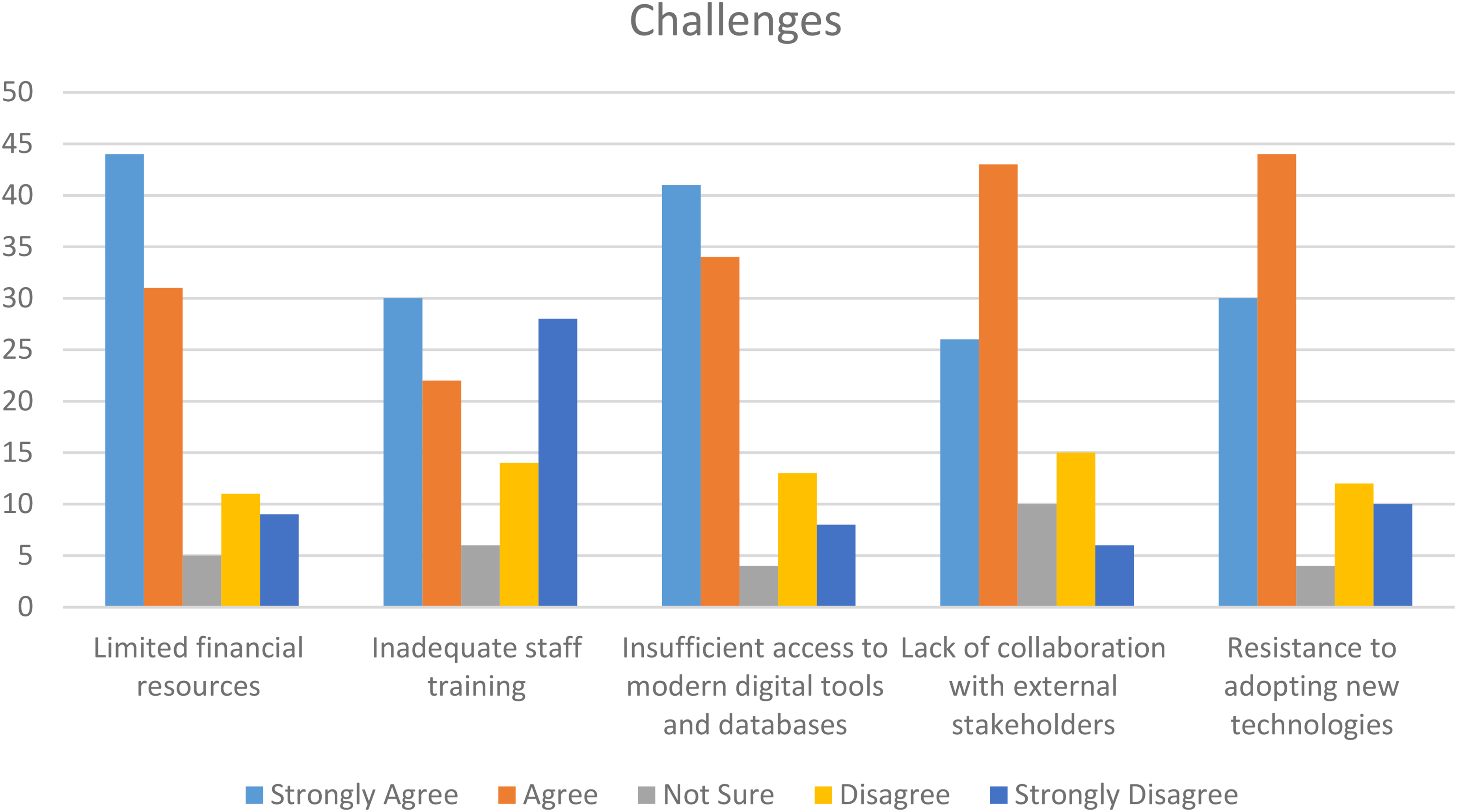
Challenges in support of Education 5.0.
Discussion
The study's findings provide insight into the challenges faced by the CUT Library in supporting Education 5.0. The respondents’ neutral views on the library's provision of e-books, journals, research databases, multimedia content, and digital repositories suggest a potential gap in the effectiveness or awareness of these services. This neutral response implies that while the university may offer these services, they might not be well-utilized, adequately promoted, fully aligned with user needs, or offering services that are not of the required standard or level. These results corroborate the findings of previous studies (Makinde et al., 2024), which highlight the challenges academic libraries face in ensuring seamless access to electronic resources due to factors such as poor infrastructure, poor awareness, and authentication barriers.
According to Subaveerapandiyan (2023) university libraries play a crucial role in facilitating research activities, such as research methodology workshops, citation management, and data analysis software. However, the study findings highlight a lack of reliable internet as a significant challenge that restricts students’ ability to research and innovate. This aligns with Sato et al. (2023) who explained that robust and uninterrupted internet access is fundamental for students to engage with digital learning materials, conduct research, and participate in global knowledge-sharing initiatives. The study also sought to examine the effectiveness of training and professional development initiatives offered to library staff in supporting Education 5.0. The study findings revealed a concerning trend where respondents largely disagreed that existing training and professional development initiatives adequately prepared library staff to support Education 5.0. Dadzie and Walt (2015), which highlighted that the importance of continuous professional development in improving library service delivery. A well-trained library workforce is essential in bridging the gap between traditional and digital knowledge resources, yet the study findings suggest that the CUT Library's training programs may not be sufficiently aligned with the demands of Education 5.0.
Furthermore, the study findings from both interviews and questionnaires indicate that library staff were perceived to lack communication and problem-solving skills, which are essential for engaging with students and researchers effectively. This finding aligns with Oghenekaro (2018), who argue that library personnel must possess strong interpersonal and problem-solving skills to support diverse user needs. The absence of these skills not only affects the efficiency of service delivery but also discourages students from fully utilizing library resources. The study findings reveal a significant deficiency in the accessibility and usability of digital services, which are essential for promoting independent learning and research under Education 5.0. Rafiq et al. (2024) argue that well-structured and user-friendly digital resources enhance knowledge access, student engagement, and research productivity. Makinde et al. (2024) highlights that the availability of proper technology—e.g., high-speed internet, digital libraries, and research equipment—is critical for libraries to fully support modern academic and research activities. However, the study findings also indicate that the existing digital infrastructure at the CUT Library is insufficient, limiting students’ ability to engage with digital learning platforms, access real-time research materials, and collaborate on innovative projects. Additionally, the findings establish that integrated digital platforms significantly enhance collaboration and engagement. This supports previous research (Sato et al., 2023), which highlights the function of digital technologies—e.g., virtual libraries, online forums, and cloud-based research tools—to promote knowledge sharing and interdisciplinary collaboration. The study's findings emphasize the need for the library to invest in digital infrastructure, staff training, and continuous professional development to support Education 5.0 effectively. Resistance to new technologies was also identified as a challenge, highlighting the need for libraries to address staff reluctance to change and embrace innovative approaches (Gkrimpizi et al., 2023).
Conclusion
In conclusion, this study highlights several challenges faced by the CUT Library in supporting Education 5.0 objectives. Despite strong internet connectivity, students face difficulties accessing electronic resources, hindering their research and innovation endeavors. The library catalog system, although operational, requires improvements in usability and efficiency. Moreover, the study emphasizes the importance of prioritizing digital resource accessibility to align with Education 5.0's focus on research, innovation, and industrialization. The study also reveals that library personnel's friendly and approachable nature is undermined by insufficient training, poor communication, and inadequate problem-solving skills. These shortcomings limit the library's ability to support teaching, community engagement, research, innovation, and industrialization. Furthermore, despite efforts to integrate technology, challenges persist in terms of user-friendliness, infrastructure adequacy, and accessibility. The study identifies limited financial resources, inadequate staff training, insufficient access to modern digital tools and databases, lack of collaboration with external stakeholders, and resistance to adopting new technologies as the primary challenges faced by the CUT Library in supporting Education 5.0 objectives. Addressing these challenges is crucial to enhancing the library's ability to support the academic and research goals associated with Education 5.0.
Recommendations
Based on the study's conclusions, the following recommendations are made to enhance the Chinhoyi University of Technology Library's support for Education 5.0:
There is a need to increase distant access to e-resources, facilitating smooth processes of authentication to allow easy download of scholarly material wherever and whenever it is needed. Regular training should be provided to users to better navigate digital databases, open-access materials, and library catalog systems. One of the primary objectives of Education 5.0 is to catalyze innovation and industrialization via applied studies and technical innovations. In support of this vision, libraries should provide AI-based search technologies, repositories in the cloud, and interactive learning systems that allow knowledge generation and entrepreneurship. For Education 5.0 to be a reality, university library services must be served by digitally proficient professionals who can support teaching, research, and innovation. Professional programs should be created to enable library staff to be digitally proficient, handle data, and support research and new technologies. Education 5.0 emphasizes the importance of community service, requiring university library services to extend their impact beyond campus. Libraries should enable more user engagement by making digital interfaces more accessible, providing structured programs of user education, and enabling technology-based mechanisms for providing regular feedback to sharpen services constantly. The university needs to deepen partnerships with research institutions, policymakers, and industry partners to support innovation and industrialization. Libraries can provide resources to enable industry-oriented research, including patent databases, case studies, and industry reports. Joint studies, funded research programs, and knowledge-sharing programs should be enabled to allow scholars and students to carry out applied studies that generate a concrete impact on economic growth.
Footnotes
Declaration of conflicting interests
The authors declared no potential conflicts of interest with respect to the research, authorship, and/or publication of this article.
Funding
The authors received no financial support for the research, authorship, and/or publication of this article.
