







Abstract
The integration of Information and Communication Technology (ICT) in academic libraries is pivotal for modernizing service delivery and meeting the evolving needs of users. This study evaluates the deployment of ICT in Nnamdi Azikiwe Library, University of Nigeria, Nsukka, focusing on availability, utilization, challenges, and strategies for improvement. A descriptive survey design was employed, with data collected from 132 library staff via structured questionnaires. Findings indicate that 73.68% of ICT resources such as computers, library software, and internet access are available, but their deployment faces challenges like erratic power supply, inadequate funding, and insufficient ICT skills among staff. The study emphasizes the transformative potential of ICT in enhancing library services through digital catalogs, electronic resources, and automated systems. Recommendations include ensuring stable power supply, continuous staff training, and increased funding from government and international partners. This research contributes to the existing studies on ICT adoption in Nigerian academic libraries and advocates for systemic improvements to align with global digital trends.
Introduction
Information and Communication Technology (ICT) has been a driving force in national progress and development. Consequently, the integration of ICT in libraries plays an important role in meeting the information needs of citizens by facilitating efficient and equitable access to resources. Furthermore, ICT enhances the seamless delivery of library services, ensuring that users receive timely and accurate assistance.
Historically, many library operations were conducted using analog systems; however, the advent of ICT has transformed these processes into digital workflows, significantly improving service efficiency and user satisfaction (Ikolo, 2020). This digital revolution has redefined library operations, shifting from traditional methods to advanced technological platforms that optimize accessibility and performance (Sharma and Khan, 2024).
The implementation of ICT in libraries has also redefined the role of librarians, empowering them with new competencies and responsibilities. The Nnamdi Azikiwe University Library, like many others, has embraced this transformation. ICT serves as a key motivator for library staff, academics, students, researchers, and the university community. As a result, ICT has become an indispensable component of contemporary library systems, fundamentally reshaping their functions and service delivery (Ikolo, 2020).
Digital technologies including computers, websites, telecommunications, email, and the internet have become essential tools for facilitating communication between libraries and users. Libraries and information centers employ information and communication technologies (ICTs) alongside electronic devices to convert, store, preserve, transmit, and disseminate information in response to user needs (Ibegbulam in Oladokun et al., 2021).
This study is grounded in two theoretical frameworks: the Uses and Gratifications Theory (UGT) and the Technology Acceptance Model (TAM). UGT explains the reason behind ICT adoption to fulfill user demands, while TAM elucidates the factors influencing successful or unsuccessful adoption, emphasizing usability and utility. Together, these theories show the importance of user-centered ICT design (UGT) and the necessity of staff training and stable infrastructure (TAM). The study aligns with these frameworks, demonstrating that ICT adoption in academic libraries is driven by user needs yet constrained by practical challenges.
In developing regions, ICT adoption encounters obstacles such as infrastructure deficits, funding constraints, and skill gaps (Ntorukiri et al., 2022). Despite these challenges, innovative solutions are emerging. Initiatives like Library for All provide low-bandwidth access to educational resources, illustrating adaptive strategies in resource-limited settings (Sejane, 2017). For Nnamdi Azikiwe Library to align with global standards, key interventions are necessary: upgrading legacy systems to integrated library management systems (ILMS), adopting renewable energy solutions to mitigate power instability, and implementing continuous staff training in emerging ICT tools.
Like other academic libraries, Nnamdi Azikiwe Library has embraced advancements in information technology to enhance service delivery for lecturers, students, researchers, and other users. As the world becomes increasingly interconnected, knowledge dissemination relies heavily on digital repositories and global accessibility functions predominantly enabled by computing technologies. As the central academic support unit of the University of Nigeria, Nsukka, Nnamdi Azikiwe Library serves as the institution's knowledge backbone, transitioning from a traditional custodian of print resources to a service-oriented provider of electronic information resources.
This rapid evolution of ICT has revolutionized service delivery across sectors, including academic libraries. University libraries, as critical pillars of teaching, learning, and research, must integrate advanced ICT tools to improve efficiency, accessibility, and user satisfaction (Khan et al., 2023). In Nigeria, institutions such as Nnamdi Azikiwe Library are progressively adopting ICT to support these functions. However, disparities in infrastructure, funding, and technical expertise hinder optimal utilization.
Globally, academic libraries are transitioning to digital environments to meet evolving user expectations. Nnamdi Azikiwe Library has incorporated cutting-edge technologies such as cloud computing, artificial intelligence (AI), and blockchain to enhance cataloging, resource sharing, and user engagement. Additionally, the library utilizes institutional repositories and open-access platforms to democratize research dissemination. Cloud-based systems (e.g., Koha, Alma) facilitate 24/7 access to e-books, journals, and databases via mobile devices.
Despite these advancements, Nigerian academic libraries, including Nnamdi Azikiwe Library, face significant challenges in ICT integration. Although 73.68% of basic ICT infrastructure is available, persistent issues such as unreliable power supply, insufficient funding for maintenance and upgrades, and staff skill gaps impede effective service delivery (Rahman et al., 2024). These limitations result in underutilized resources, operational inefficiencies, and an inability to meet users’ digital demands.
While prior studies have examined ICT adoption in Nigerian libraries (Adekoya and Inyang, 2023; Adeyemi et al., 2025), few focus on institution-specific implementation challenges (Kodua-Ntim, 2020; Kodua-Ntim and Fombad, 2020). This study investigates the root causes of poor ICT deployment at Nnamdi Azikiwe Library, analyzes its impact on service quality, and proposes targeted solutions to bridge the gap between available technologies and their optimal use. The ultimate goal is to transform the library into a modern, digitally enabled academic resource center. Specifically, the study seeks to address the following key questions:
Purpose of study
This study examines the extent of ICT deployment in Nnamdi Azikiwe Library, identifying gaps and proposing actionable solutions. The research addresses five key objectives:
To ascertain the available ICT facilities. To examine their extent of deployment. To ascertain how effective they are in service delivery. To ascertain the challenges associated with their deployment. To determine the strategies that could enhance their deployment.
Research questions
The listed key questions were formulated to guide the study in achieving its set objectives.
What ICT facilities are available? How extensively are they deployed? How effective are they in delivery service? What challenges impede their deployment? What strategies can enhance their effectiveness?
Literature review
Service delivery in libraries
Libraries provide essential services to their members and users, encompassing both traditional and digital resources. A key service is reference assistance, where librarians offer support by responding to inquiries through various channels, including in-person consultations, phone calls, and live chat (Ikolo, 2020). Additionally, libraries grant access to extensive online databases that cover a wide range of scholarly journals and publications across diverse disciplines. Many libraries also curate subject-specific research guides, citation manuals, and other instructional materials to aid researchers (Davis, 1989).
Modern academic libraries further enhance accessibility by offering study spaces in various sizes, accommodating both individual and group study sessions. Beyond physical resources, they provide digital and electronic collections to support the research process. These include web-based services such as digital reference assistance, online document delivery, interlibrary loans, information literacy tutorials, and virtual help desks (Maluleke et al., 2020). Such services not only streamline information retrieval but also elevate the library's professional standing (Hong and Mia, 2017).
E-libraries extend these offerings by integrating traditional information services with global digital resources via computer and telecommunication networks. Ekere et al. (2016) outline several digital library services, including:
Online search and email services Digital reference, cataloging, and classification assistance Online database management and user support Subscription alerts and workshop facilitation Audio-visual communication and newsgroup services Electronic document delivery and interoperability solutions ICT training for staff and users Online interlibrary loans and digital finding aids (e.g., bibliographies and indexes)
Mashui (2023) defines e-services as technology-mediated actions or performances, encompassing e-tailing, customer support, and remote service delivery. This model highlights three core elements: the service provider, the recipient, and the delivery mechanism. E-libraries facilitate resource sharing, literature searches, institutional repositories, email publishing, bibliographic services, and online public access catalogs (OPACs), among other functions (Mashui, 2023).
ICT in academic libraries
Information and Communication Technology (ICT) comprises tools for information management, including computers, software, and internet systems (Ikolo, 2020). Its integration into libraries enhances efficiency in cataloging, reference services, and resource sharing (Chaputula and Mutula, 2018). The adoption of ICT has significantly transformed library services, enabling librarians to leverage technological advancements to better serve users. As Iyanda and Opele (2015) assert, institutions can no longer rely solely on traditional print resources to function effectively. In the current technological era, modern university libraries must incorporate digital resources to maintain efficient service delivery (Oduwole and Akpati, 2018). Manual systems are increasingly inadequate for storing, accessing, and retrieving the vast amounts of information now available.
Electronic resources are particularly valuable in academic libraries due to their flexibility, dynamic retrieval capabilities, and efficient storage and processing, facilitating access to timely and relevant scholarly information (Kato et al., 2021; Verma and Dwivedi, 2023). ICT has become indispensable in libraries, allowing for faster, more accurate, and advanced user services (Igwe and Sulyman, 2022). The late twentieth century saw rapid transformations due to advancements in computing and telecommunications. The digitization of collections, along with improvements in hardware and seamless software access, has made remote information retrieval a reality. Consequently, ICT has expanded the scope of library resources to include electronic and web-accessible materials, while still fulfilling core functions such as resource evaluation, user assistance, and information organization.
In Nigeria, universities play an important role in national development by producing high-level manpower through teaching, learning, and research (Edidiong et al., 2015). The effective integration of ICT in academic libraries supports this mandate by enhancing access to diverse information resources that were previously difficult to obtain.
Benefits of ICT in academic libraries
One of the most significant advantages of Information and Communication Technology (ICT) lies in its capacity to enhance operational efficiency through automation. By replacing labor-intensive manual processes with digital solutions, ICT minimizes human error and expedites workflow (Dauda, 2018). Practical applications such as automated data entry, intelligent scheduling systems, and AI-powered analytics optimize organizational processes across various sectors, enabling personnel to allocate their efforts toward higher-value strategic tasks. This not only boosts productivity but also reduces operational expenditures, thereby strengthening organizational competitiveness in an increasingly digitalized global economy.
Furthermore, ICT has dramatically improved accessibility by facilitating remote engagement with digital resources (Tom-George and Onyema, 2020). This transformation has been particularly impactful in education and healthcare, where e-learning platforms allow students to access academic materials remotely, while telemedicine enables patients to consult healthcare providers virtually (Akpojotor and Ekuerhare, 2023). Such innovations foster greater inclusivity by extending essential services and knowledge resources to underserved populations, including those in geographically isolated regions.
Additionally, ICT enhances service delivery speed, which correlates strongly with user satisfaction (Ocks, 2020). Digital platforms including online journals, cloud-based systems, electronic databases, and streaming services minimize delays and improve convenience. When users experience seamless, efficient service, their trust in and engagement with institutional offerings, such as those provided by libraries, increase significantly. This heightened satisfaction not only reinforces user loyalty but also contributes to institutional growth, as positive user experiences often lead to word-of-mouth referrals, creating a self-reinforcing cycle of engagement and improvement.
Challenges of ICT in academic libraries
One of the primary obstacles to the successful integration and sustained use of Information and Communication Technology (ICT) in libraries and other institutions is inadequate infrastructure. In many regions, unreliable electricity supply disrupts ICT operations, undermining the continuity of digital services (Ntorukiri et al., 2022). Furthermore, the prevalence of outdated hardware, including slow processing computers and obsolete software, compromises operational efficiency and restricts access to contemporary digital tools (Korabayev et al., 2024). The absence of robust infrastructure impedes institutions’ ability to deliver consistent digital services, ultimately diminishing user satisfaction and the overall efficacy of ICT implementation.
A second critical challenge is the insufficient ICT competencies among librarians and institutional personnel. Many library staff lack the necessary training to operate modern digital systems, resulting in inefficiencies in managing electronic resources (Oyedokun et al., 2018). This skills gap constrains libraries’ capacity to harness ICT for enhanced service provision, including digital cataloging, online database management, and virtual reference services. To address this deficiency, ongoing professional development and structured training initiatives are imperative to equip librarians with the technical proficiencies required to maximize available technologies.
Compounding these challenges is the issue of limited financial resources, which severely restricts ICT adoption and long-term sustainability. Many institutions operate under constrained budgets, leaving insufficient funds for the acquisition of up-to-date technology or the maintenance of existing systems (Okiy, 2020). Inadequate financial allocation prevents libraries from upgrading hardware, securing software licenses, or investing in staff training. This fiscal limitation perpetuates a cycle of technological obsolescence, wherein outdated systems grow increasingly inefficient, further disincentivizing ICT investment. To mitigate this, governments and key stakeholders must prioritize budgetary allocations for ICT in libraries to ensure sustained digital accessibility and service enhancement.
Theoretical framework
Uses and Gratification Theory
The Uses and Gratifications Theory, proposed by Elihu Katz in 1970, examines how individuals utilize media to fulfill their needs. Rooted in Abraham Maslow's hierarchy of needs, this theory asserts that audiences actively select media content based on their preferences, while media outlets compete to meet these diverse demands. During the 1960s and 1970s, as scholarly attention shifted toward cognitive and behavioral motivations, mass media audiences were increasingly perceived as rational actors who engage with media to address specific needs.
This theoretical framework holds particular relevance for the present study, as library patrons frequently employ ICT facilities to satisfy various informational and academic requirements, including accessing reference materials, completing research projects, updating knowledge, reviewing lecture notes, communicating, registering for courses, and preparing for examinations. Similarly, library management adopt ICT systems for essential operations such as cataloging, circulation, electronic documentation, acquisitions, data processing, information storage, retrieval, and dissemination. The efficiency and convenience afforded by ICT have significantly enhanced user gratification, fostering sustained reliance on these digital resources.
Technology acceptance model
Davis (1989) developed the TAM, a theoretical framework designed to predict the acceptability of information systems. The model aims to assess the likelihood of user adoption and identify necessary modifications to enhance system acceptability. TAM provides valuable information into the factors influencing technology acceptance or rejection, a major challenge in information systems research. By examining users’ attitudes toward new technologies, particularly their perceived ease of use and perceived usefulness (PU), the model serves as a foundational tool for researchers and practitioners investigating technology deployment processes.
TAM has been widely utilized to explain and predict user behavior in information technology adoption, including Information and Communication Technology (ICT) implementations. For successful ICT deployment in institutional settings such as university libraries, end-users primarily library staff must recognize the system's utility. A technology perceived as easy to use enhances users’ self-efficacy, reinforcing their confidence in deploying and utilizing the system effectively. Consequently, individuals with high self-efficacy exhibit more favorable attitudes toward technology adoption.
The model posits that behavioral intention to use a system is shaped by both attitude toward usage and PU. Crucially, an individual's attitude is not the sole determinant of technology adoption; rather, the anticipated impact on performance plays an important role. For instance, even if an employe initially resists an ICT deployment, they are more likely to adopt it if they believe it will enhance their work efficiency.
Additionally, TAM hypothesizes a direct relationship between PU and perceived ease of use, suggesting that systems requiring minimal effort to operate are more likely to be viewed as beneficial. This theoretical aligns with the present study, supporting the notion that positive user perceptions contribute to effective ICT deployment for enhanced service delivery in the twenty-first century (Figure 1).
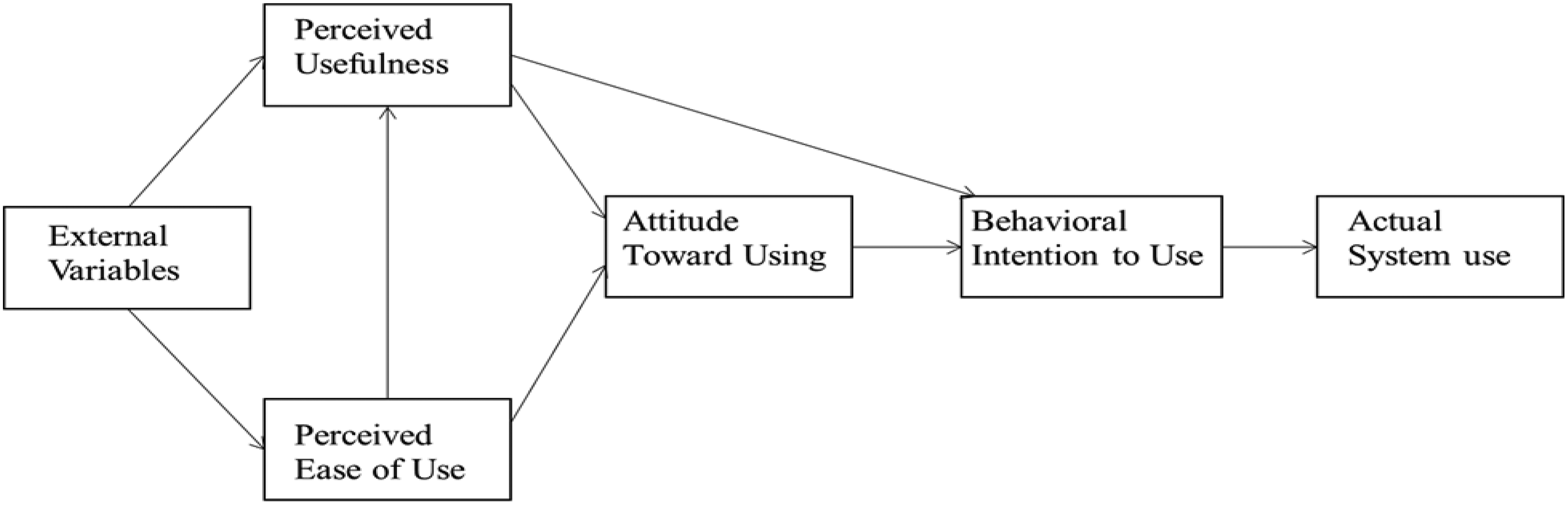
Illustration of the technology acceptance model (TAM).
Application of theories for the study
The Uses and Gratifications Theory (UGT) elucidates the adoption of ICTs by librarians and users to fulfill specific needs, such as rapid access to electronic resources and efficient cataloging, among others. This theory shows the professional gratification derived from librarians’ utilization of ICT facilities, as well as the academic gratification experienced by users in research and communication. Consequently, libraries must strategically integrate ICT tools in alignment with users’ needs to optimize engagement and satisfaction.
Similarly, the TAM predicts ICT adoption based on PU and perceived ease of use (PEOU). The model demonstrates how ICT enhances service efficiency for instance, through faster information retrieval while also acknowledging that challenges such as power outages diminish perceived utility. PEOU suggests that librarians with insufficient technical skills may encounter difficulties in operating ICT tools, thereby impeding adoption. Thus, to ensure successful ICT integration, it is imperative to implement training programs to improve PEOU and establish reliable infrastructure to reinforce PU.
Methodology
This study employed descriptive survey design. The research was conducted in Enugu State, specifically at the Nnamdi Azikiwe Library. The study population comprised 132 librarians from the university under investigation, including 44 academic staff, 48 non-academic staff, and 40 technical staff. A total enumeration sampling technique was adopted, meaning the entire population was included in the study.
The primary data collection instrument was a structured questionnaire, which was validated by three experts one from the Department of Measurement and Evaluation and two from the Department of Library and Information Science at the University of Nigeria, Nsukka. The questionnaire was divided into two sections (A and B):
➢ Section A (EICTDESDQ) collected demographic data, including the respondents’ university affiliation, gender, and staff profile. ➢ Section B consisted of four clusters containing a total of 63 items, each with distinct response modes.
To ensure instrument reliability, a test-retest method was used to assess internal consistency. A pilot study was conducted by administering 20 copies of the questionnaire to librarians at Enugu State University. The Cronbach's Alpha coefficient was computed to evaluate the internal consistency of the Likert-scale items, yielding an overall reliability index of 0.80, indicating high consistency.
The data collected were analyzed using the Statistical Package for the Social Sciences (SPSS). Descriptive statistics, including percentages, mean scores, and standard deviations, were computed to facilitate clarity and interpretation.
Results
Table 1 presents the findings on the availability of ICT facilities for service delivery at Nnamdi Azikiwe Library. The data indicate that 14 (73.68%) of the assessed resources including computers, library-specific software, Local Area Network (LAN), Internet access, CD-ROM databases, online library catalogs, and institutional repositories are operational and utilized within the library. This suggests that the library has undertaken significant efforts to integrate ICT resources into its service provision.
Frequency count and percentages on ICT the available ICT facilities.
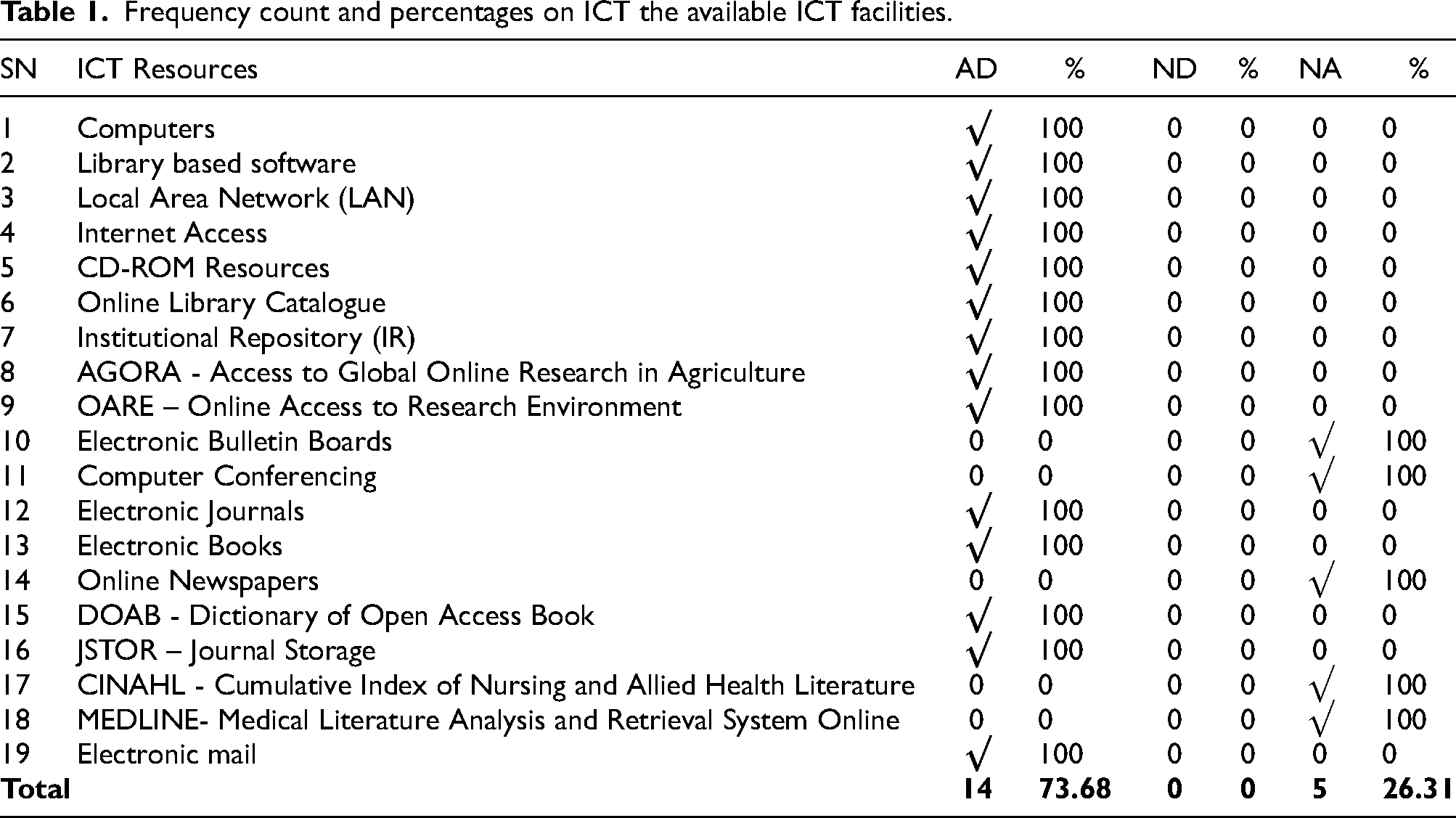
Table 2 presents the results on the extent to which ICT facilities are deployed for service delivery at the Nnamdi Azikiwe Library. The data indicates that two ICT facilities, LAN and the online library catalogue are highly deployed. Meanwhile, 17 other identified ICT facilities, including computers, e-books, e-journals, online newspapers, institutional repositories, and electronic bulletin boards, among others, are rated as deployed. The cluster mean of 3.07 ± 0.93 suggests that ICT facilities are moderately too highly deployed in library service delivery. Furthermore, the standard deviation scores, ranging from 0.58 to 1.15, indicate a considerable dispersion in responses among the librarians.
Mean rating of librarians on the extent ICT facilities are deployed for service delivery.
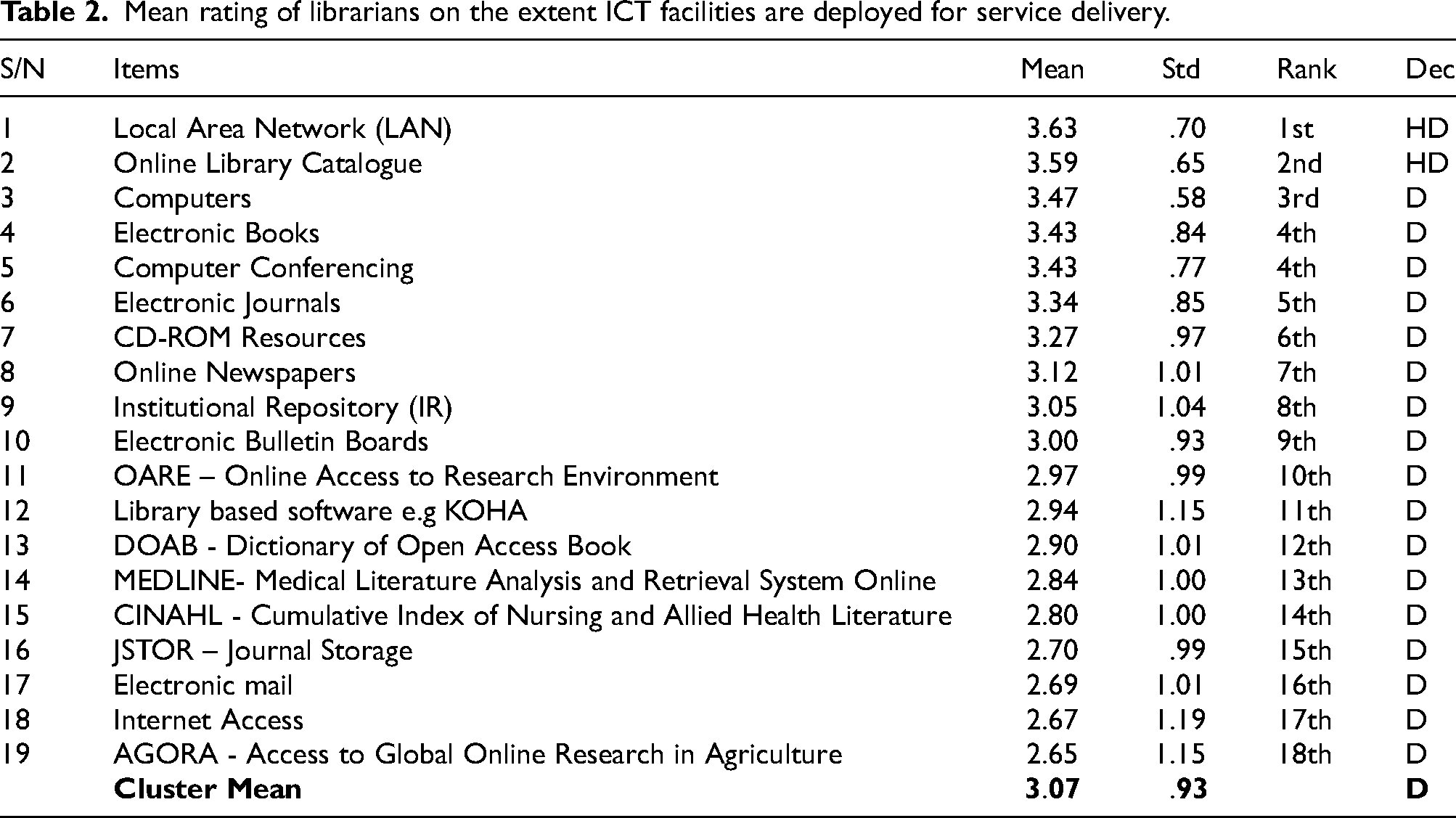
Table 3 presents the findings on the extent to which ICT facilities enhance service delivery at Nnamdi Azikiwe Library. The results indicate that the implementation of library-specific software is highly effective in improving services. In contrast, other ICT resources including electronic mail, e-books, institutional repositories, CD-ROMs, OPAC, and e-journals are rated as effective. The cluster mean of 3.10 (±0.87) suggests that, overall, the integration of ICT resources in service delivery is effective. However, the standard deviation scores, ranging from 0.66 to 1.25, reflect significant variability in librarians’ responses, indicating differing perceptions of effectiveness. These findings show the substantial benefits and advantages associated with deploying ICT resources in library service provision.
Mean rating of librarians to the extent of the effectiveness of ICT facilities’ use in the library.
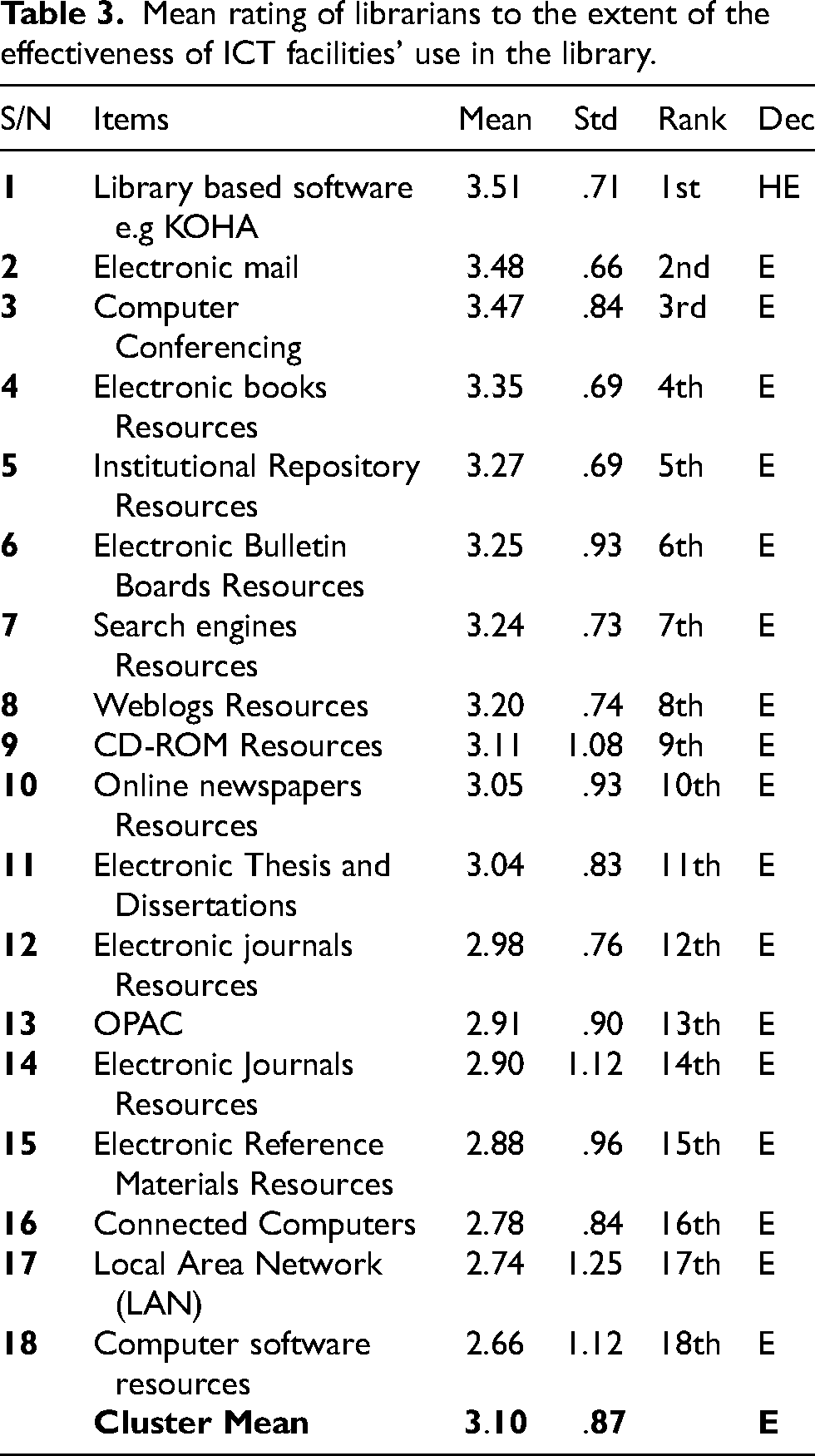
Table 4 presents the findings on the challenges associated with the deployment of ICT facilities in the Nnamdi Azikiwe Library. The results indicate that epileptic power supply and the library management's lack of interest in facilitating ICT skill upgrades for librarians were rated as major challenges, with respondents strongly agreeing on their significance. Conversely, other challenges such as librarians’ lack of basic ICT skills, insufficient ICT facilities, limited ICT competencies among librarians, constrained financial resources, poor internet connectivity, and frequent system breakdowns were rated as moderately significant, with respondents generally agreeing on their impact. The cluster mean score of 3.17 (±0.76) suggests an overall agreement regarding the presence of these challenges. Furthermore, the standard deviation scores, ranging from 0.67 to 1.03, indicate considerable responses in respondents’ perceptions.
Frequency counts and mean rating of librarians on the challenges associated with the deployment of ICT facilities in the library.
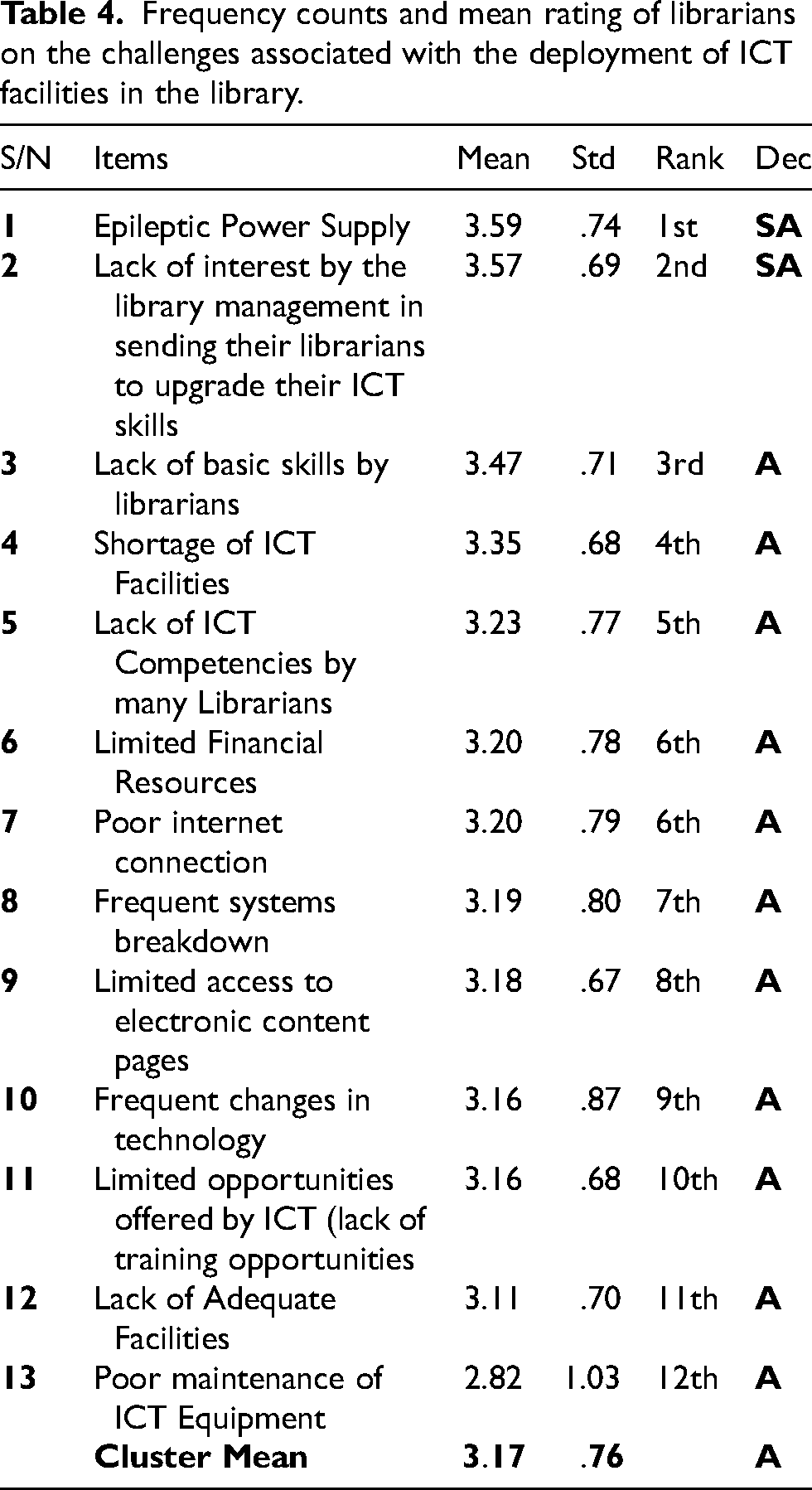
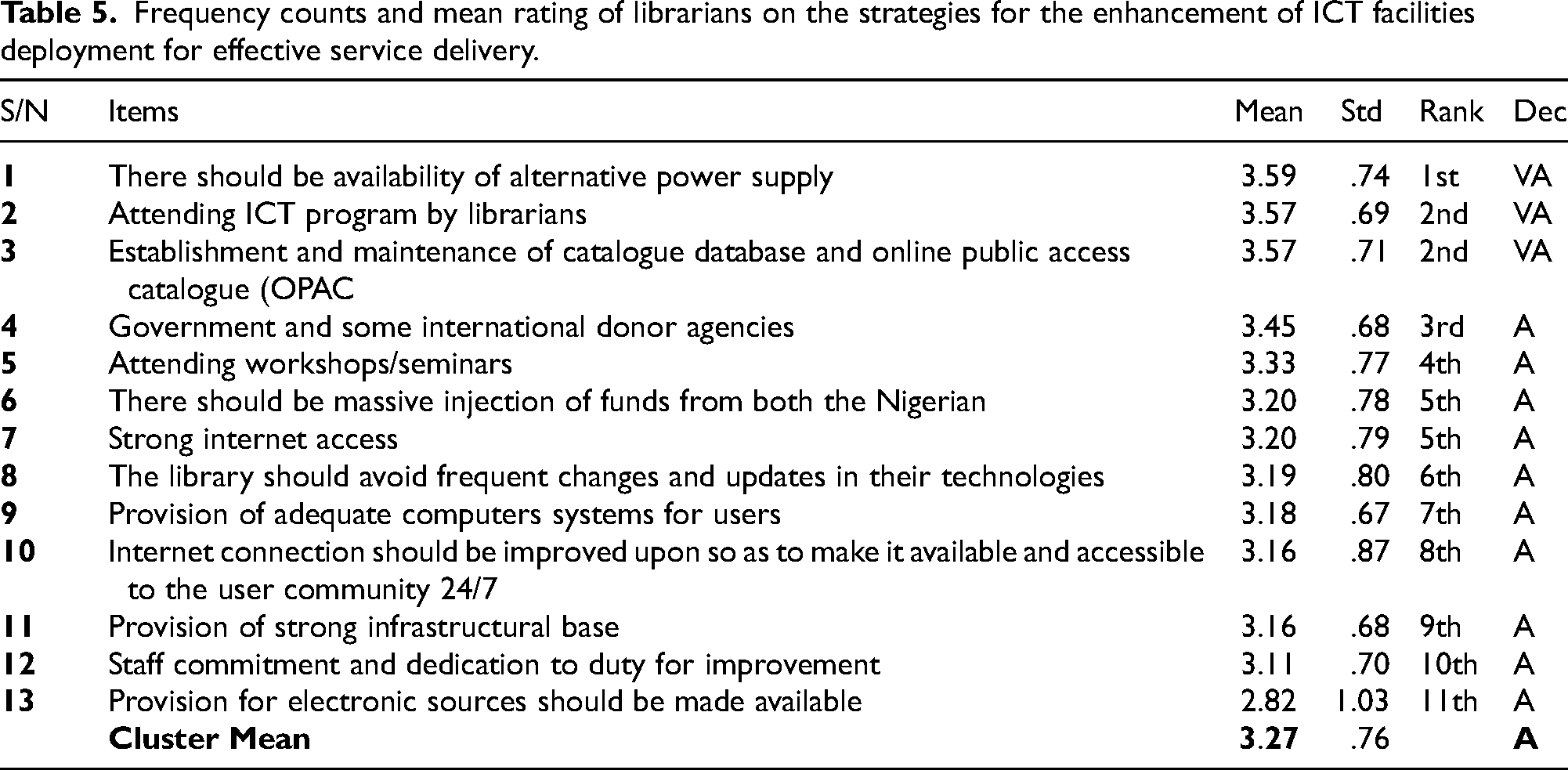
Table 5 presents the findings on the strategies for enhancing ICT facility deployment to improve service delivery at Nnamdi Azikiwe Library. The data indicates that the most effective strategies include ensuring an alternative power supply and librarians’ participation in ICT training programs. Other viable strategies include securing funding from the government and international donor agencies, regular attendance at workshops and seminars, substantial financial investment by the Nigerian government, reliable internet access, minimizing frequent technological changes and updates, and providing adequate computer systems for users. The cluster mean score of 3.27 ± 0.71 confirms that the identified strategies are appropriate for ICT deployment in service delivery. Additionally, the standard deviation scores, ranging from 0.68 to 1.03, suggest significant variation among the librarians’ responses.
Frequency counts and mean rating of librarians on the strategies for the enhancement of ICT facilities deployment for effective service delivery.
Discussion
The findings on the availability of ICT resources for service delivery in the library under study indicate that efforts have been made to acquire and deploy such technologies. This aligns with the assertion that access to ICT facilities enhances user engagement and facilitates efficient service delivery, thereby enabling value-added library services (Akintola, 2021). Consequently, this contributes to the achievement of institutional objectives and user satisfaction. Similarly, Essien et al. (2022) established that the extent of ICT adoption significantly influences the quality of library services, as evidenced in comparative studies across libraries in China and Ghana.
However, the results reveal that ICT facilities in the Nnamdi Azikiwe Library have not been fully embraced or optimally implemented. This finding corroborates Faboyinde's (cited in Etebu, 2020) observation that ICT adoption in Nigerian tertiary institutions remains inconsistent, with poor implementation even where technologies have been introduced. Furthermore, the study found that key ICT facilities, including RFID gates, LAN, wireless routers, institutional websites, learning management systems (LMS), digital cameras, interactive whiteboards, multimedia projectors, and flat-screen televisions are not uniformly available across all library sections. This is consistent with recent research demonstrating that modern technologies remain underutilized in-service delivery within special libraries in southeastern Nigeria, despite their potential to enhance existing services (Ekere et al., 2019).
The study also highlights that while library-based software is highly effective in-service delivery, other resources such as email services, e-books, institutional repositories, CD-ROMs, OPAC, and e-journals are rated as moderately effective. These findings establish the substantial impact of ICT on daily library operations, supporting the argument that cloud-based consortium models could reduce infrastructure costs, minimize duplication of resources, and facilitate collaborative resource sharing among academic libraries (Shaw and De Sarkar, 2021).
Several barriers impede the effective deployment of ICT facilities in the Nnamdi Azikiwe Library, including erratic power supply, insufficient funding, inadequate ICT infrastructure, a lack of technical expertise, and the library management's reluctance to facilitate ICT training for staff. These challenges mirror those identified by Ogunode et al. (2021), who noted that Nigerian public university libraries faced similar constraints such as unstable electricity, poor internet connectivity, and weak ICT policy implementation during the COVID-19 pandemic. Additionally, Boachie (2018) observed that developing countries commonly struggle with inadequate ICT infrastructure, exorbitant internet costs, unreliable power supply, and a shortage of skilled personnel to manage technological systems.
To address these challenges, the following measures are recommended: (1) ensuring a stable power supply through alternative energy sources, (2) institutionalizing continuous ICT training for librarians, (3) securing increased funding from both government and international donor agencies, and (4) recruiting qualified ICT personnel. These proposals align with Boachie's (2018) recommendation that libraries require global partnerships to bridge ICT infrastructure gaps and align with Sustainable Development Goals. Similarly, Okiy (2020) advocates for financial support from the Nigerian government and external bodies like the Carnegie Corporation of New York. Finally, sustained investment in librarian upskilling, coupled with reliable electricity provision across university campuses, is critical for optimizing ICT-driven library services.
Contributions to knowledge
The following contributions were made through the study to the existing body of knowledge:
The study provides empirical data on ICT deployment in Nnamdi Azikiwe Library, filling a gap in literature specific to Nigerian academic libraries. The study shows actionable strategies such as alternative power supply, staff training to enhance ICT adoption, and offering a roadmap for similar institutions. Theoretically, the study demonstrates the relevance of the Uses and Gratification Theory (UGT) and Technology Acceptance Model (TAM) in understanding ICT adoption dynamics in libraries. In policy, the study established the need for government and donor funding to sustain ICT infrastructure, contributing to policy discussions on educational technology in developing nations.
Areas of weakness and suggestion for future research
Future research could compare ICT deployment across academic libraries in different regions of Nigeria (e.g., Southwest, South-South) to identify regional disparities and best practices.
Studies could be carried out to examine the role of cutting-edge technologies in transforming library services and their feasibility in resource-constrained settings in developing countries.
Similar study could be extended to other African countries to assess cross-border ICT adoption trends and challenges in academic libraries.
The same study should be carried out employing qualitative methods such as interviews, focus groups among others to explore librarians’ and users’ perspectives on ICT challenges and benefits in depth.
Research could investigate the long-term impact of ICT adoption on user satisfaction and academic performance in Nigerian universities.
The study focused on one library; future research should include multiple institutions for large generalizability.
The study primarily surveyed librarians. Future work should incorporate student/lecturer feedback to assess ICT effectiveness from the user standpoint.
There could be some technological bias as the study did not evaluate specific ICT tools (e.g., KOHA software) in depth. Future research could analyze tool-specific efficacy.
Due to dynamic changes, rapid technological changes may render some findings obsolete. Therefore, periodic updates to the study are recommended.
Conclusions and recommendations
The findings shed light on the availability and deployment of ICTs within the university, revealing a mixed picture. While there has been specific progress in adopting these technologies, their deployment remains incomplete and inconsistent across different areas. This suggests that while the institution has taken steps toward digital transformation, there is still room for improvement in achieving its full integration.
Where ICTs have been successfully implemented, the study found that they significantly enhance service delivery, reinforcing the importance of technology in modernizing operations. This aligns with existing research, such as the work of Essien et al. (2022), which documented similar improvements in libraries in China and Ghana. The positive correlation between ICT uses and efficient service provision further establish the transformative potential of these technologies in academic and administrative settings.
Beyond effectiveness, the study also highlights the persistent challenges in ICT adoption, both at the local level such as within the Nnamdi Azikiwe Library and on a broader national or regional scale. These recurring difficulties lend credibility to the findings, as they demonstrate a consistent pattern that extends beyond a single institution. Recognizing these barriers is crucial in developing targeted strategies to overcome them.
Finally, the study directly addresses specific solutions to improve ICT deployment, showing practical recommendations grounded in both empirical evidence and existing literature. The study does not only identify gaps but also provides important steps to bridge them, contributing to a more comprehensive and sustainable approach to ICT integration in higher education.
The recommended strategies logically emerge from the identified challenges, providing a forward if been adopted for the effective delivery service in the library.
➢ By ensuring steady power supply, it will enable students, lecturers, and researchers to make use of the library effectively thereby meeting their information needs. ➢ Additionally, with the provision of alternative power supply the library will be able to provide alternative power supplies such as a big generator to enable library staff to do their job without any interruption. ➢ Also, training and re-training librarians to upgrade their ICT skills by the library management will enhance effective service delivery in the library. ➢ Provision of adequate funds by the government as well as university management will help us to purchase more ICT facilities, upgrade them and maintain them. ➢ Integrate UGT and TAM into library ICT policy frameworks to ensure tools are both functional and user-friendly.
Footnotes
Declaration of Conflicting Interests
The authors declared no potential conflicts of interest with respect to the research, authorship, and/or publication of this article.
Funding
The authors received no financial support for the research, authorship, and/or publication of this article.
