







Abstract
Food security (FS) is becoming increasingly problematic for the Gulf Cooperation Council (GCC) countries because of their high reliance on food imports, paucity of arable land, and water shortage. As regional and worldwide demands increase, “information and communication technology (ICT)” has become a viable instrument to boost food system governance, optimise supply chains, and increase agricultural output. This study investigates the asymmetric influence of ICT on Food Security (FS), monitoring the corruption control (CC), government effectiveness (GE), and CO2 emissions in GCC nations. It uses data from 2002 to 2021 and employs the “Augmented mean group (AMG)” approach, and the second-generation unit root. We also use the “Dumitrescu-Hurlin (D-H) causality test” to assess the reliability of the AMG results. AMG findings demonstrate an unbalanced relationship between ICT and FS; both negative and positive shocks in ICT have a positive impact on FS. The AMG findings indicate a favourable correlation between CO2 emissions and FS, but the management of corruption and government effectiveness also have a role in FS. The findings imply that improving FS in the GCC region requires advancing ICT. The D-H causality outcomes authenticate the AMG results.
Introduction
Although agriculture and the closely related industries only contribute 4% to the global GDP, in 2019, these sectors employed 27% of the workforce (according to the World Development Indicator [WDI], 2022). It is anticipated that the global population will increase from its current level of 7.6 billion to a predicted level of 9 billion by 2050. As a result, the most significant challenge over the next several decades will be to meet the demand for food. The primary objective of the “2030 Agenda for Sustainable Development” is to eradicate “hunger and malnutrition” on a global scale. Within the framework of the 2030 Agenda, the “second Sustainable Development Goal (SDG)” aspires to eradicate hunger, enhance nutrition and food security, and promote sustainable agricultural practices. Its primary objectives include ensuring that all individuals have access to safe, nutritious, and sufficient food (Target 2.1) and eliminating all forms of hunger (Target 2.2), respectively. Furthermore, the success of Sustainable Development Goal 2 is contingent upon and significantly contributes to the realization of numerous other goals outlined in the 2030 Agenda, as well as to sustainable growth in general (FAO, IFAD, UNICEF, WFP, WHO, 2018).
The agricultural sector's impact must not be disregarded. The food supply is met, raw resources are supplied to industry, and industrial goods have a market (Ahmad and Heng, 2012). The expansion of the industrial sector is thus highly dependent on the agricultural sector. Additionally, as a result of farmers’ and rural residents’ increased incomes, poverty is alleviated through agricultural expansion (Ahmad and Heng, 2012). The second objective of sustainable development is to ensure that all people have access to cheap, healthy food; however, in 2021, agricultural output and related industries grew at less than 4% per year (WDI, 2022). Economical and healthy food has become even more important since the COVID-19 pandemic began (Ahmed et al., 2021). Therefore, the agricultural sector must be given greater priority.
Encompassing a territory of one million square miles, a population exceeding 54 million, and a GDP of over $3.464 trillion, the Gulf Cooperation Council (GCC) nations are genuinely remarkable. In 2011, a strategy was devised to transform the GCC from an intergovernmental organisation into a “Gulf Union” online, modelled after the EU, to strengthen the economic, political, and military ties among member nations (World Population Review, 2023). The NENA region has long-standing issues with food shortages and malnutrition (FAO, 2017). Breisinger et al. (2010) stated that “…the MENA region's longstanding challenges persist; yet taking immediate action is more urgent in light of the recent global food, fuel, and financial crisis and projected severe impacts of climate change.” It is widely acknowledged that a nation's food security improves in conjunction with its economic advancement. However, even the rich GCC nations have their own set of problems to solve before they can claim to be food secure. Given the current state of global politics and the rapid pace of climate change, this study examines how Information and Communication Technology (ICT) has impacted financial services in the Gulf Cooperation Council (GCC) nations, with a focus on preventing corruption and preserving the environment.
Food scarcity has never been an issue for the GCC nations. These nations need to worry about depleting their currency reserves to buy food, as they are financially secure (Shahid and Ahmed, 2014). Consequently, these nations have been able to compensate for low domestic production through their strong fiscal positions and high purchasing power (Ben Hassen and El Bilali, 2019). This makes them less vulnerable to price risk, which is the possibility that a country could import food, but not have enough money to buy enough for its citizens. Table 1 from the 2018 Global Food Security Index shows that the six GCC nations were among the most food-secure in the world in 2018 and the most food-secure in the Arab region. Although there is an ample food supply, the GCC states cannot guarantee their own food security. That “FS does not equal self-sufficiency” (Breisinger et al., 2010) is therefore very clear. Even if these countries are economically prosperous and sophisticated, they still lack food sovereignty (Babar and Kamrava, 2014). Problems with food availability have persisted since the global food crisis of 2007–2008. When it comes to GCC politics, FS is crucial for several reasons.
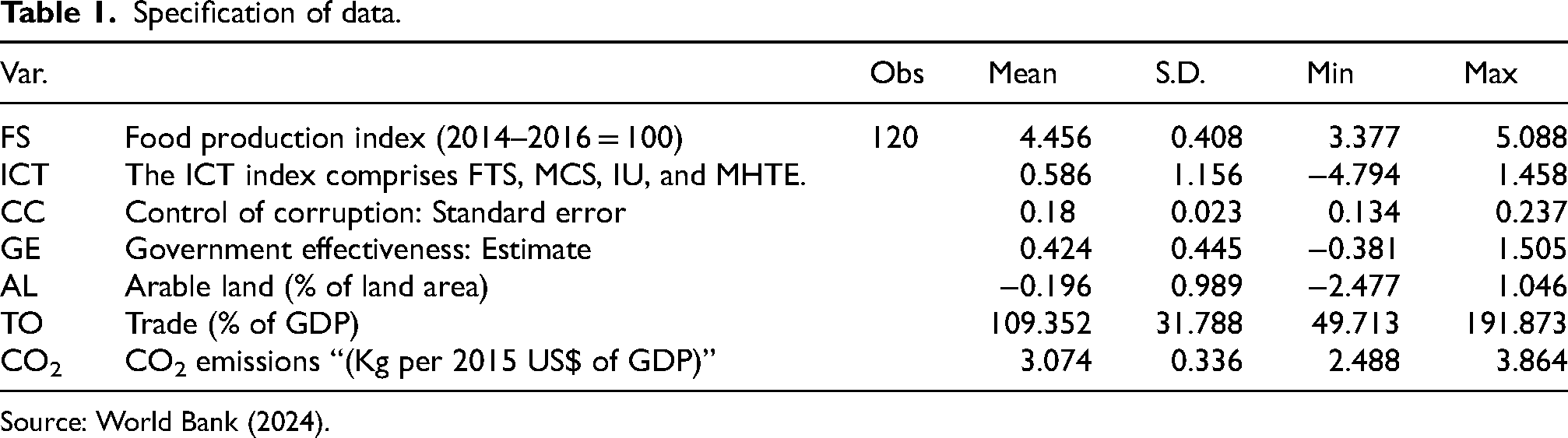
Specification of data.
Source: World Bank (2024).
With the use of ICTs, there are many ways that rural economies and food security may improve. Firstly, farmers may be better informed about new technologies, input management, and productivity due to ICTs. Secondly, there is a chance that farmers may find more favourable markets for their products. Third, food supply, food price stability, and agricultural market efficiency may all be enhanced through the use of ICTs. By providing information on food safety and quality, they may also encourage healthier lifestyle choices. Finally, they may improve households’ food security by increasing nonfarm work, mobile money access, and remittances (Nakasone and Torero, 2016).
The need to ensure food security for small farmer households is gaining increasing attention in conversations about global agricultural policy and planning. Regardless, pastoral and peri-urban sections of “low- and middle-income nations” have experienced catastrophic levels of enduring hunger, poverty, and other types of deprivation over the past decade (Fawole et al., 2019; Sasson, 2012). To tackle food insecurity, policymakers and other important stakeholders are working to create and execute a variety of agricultural and development planning strategies (Foran et al., 2014; Liu et al., 2021; Sabi et al., 2018; Swavely et al., 2019). The goal of these projects is to enhance the agribusiness market, improve land management, increase food production, and improve food distribution.
Among the goals of Sustainable Development Goal 2 is the preservation of food security, which aims to “halve the proportion of people in the world who go to bed hungry each night” (Anser et al., 2021). According to FAOSTAT (2023) and Osabohien et al. (2021), the food supply is at risk since the pace of population expansion is surpassing the rate of food production. Food demand is projected to increase, and food insecurity is expected to worsen in regions of Africa and South Asia, where farm labor efficiency is low, as scientists envisage that the world population will be 9 billion by 2050. (FAOSTAT, 2023; Ibidunni et al., 2020). There must be a 70% improvement in agricultural production and marginal labour productivity by 2050 if the world is to feed 9 billion people sustainably. Given the alarming increase in food insecurity, this is very crucial. The UN Food and Agriculture Organization estimated that 700 million individuals (9.2% of the global population) faced food insecurity in 2018. Food insecurity affects all individuals, including low birth weight, maternal malnutrition, and childhood stunting, which increase the likelihood of obesity in subsequent stages of life. Pregnant women are not immune to food insecurity. Consequently, to mitigate the impact of food insecurity, it is necessary to enhance agricultural output through the use of innovative ICT and sustainable governance (FAOSTAT, 2023).
The agriculture industry is vital to food production and economic prosperity. Agriculture expansion may reduce poverty and provide food security more than other businesses (Osabohien et al., 2021). Agriculture sustains almost half the population, especially in developing nations. Despite attempts, several growing nations, such as the GCC, still experience food insecurity. Political issues in the subregion have hampered economic growth in practically every sector. Poor governance and inadequate ICT infrastructure have contributed to these issues, slowing production (Beecroft et al., 2020; Ramphul et al., 2016).
Research by Fafchamps and Minten (2012) examined the use of SMS to deliver agricultural advice and weather predictions to farmers in India. The study found no impact on agricultural techniques or crop yield disappointments. Casaburi et al. (2014) examined a Kenyan sugar cane farmers’ SMS guide to agricultural tasks. Farmers received SMS messages at ideal times based on cane maturity and harvest schedule. The authors reported 11.5% harvest upsurges using this method. Larochelle et al. (2019) examined the impact of a program on Ecuadorian smallholder agriculture, utilizing farmer field days and SMS reminders. Reminders helped farmers adopt new habits, the authors found. Innovative farm management strategies have been promoted by authorities to boost agricultural output. Almost all countries now offer agricultural extension services. Extension initiatives have been criticized (Gautam, 2000; Latif et al., 2018; Swanson and Rajalahti, 2010), and it remains unclear whether these significant investments have led to increased agricultural production among farmers.
Many rural farmers receive assistance from itinerant government officials through traditional extension programs, but there are three significant complications with this system. First, poor countries often lack sufficient infrastructure, making rural travel difficult and expensive. Second, farmers may forfeit long-term benefits derived from unchanging extension program information due to insufficient feedback and follow-up. Additionally, extension personnel are unaccountable, making it difficult to evaluate their advice or frequency of rural visits (Nakasone and Torero, 2016). These issues may be solved via ICTs (Cole and Fernando, 2012). ICT enhances farmer-agent communication and facilitates government access to rural regions, reducing transportation costs. ICTs make extension worker advice monitoring easier, improving accountability. ICTs can help farmers access confidential information and agricultural support through social networks, thereby reducing the costs associated with publicly available information provided by extension services (Aker, 2011).
There is a research gap concerning ICT's on food security (FS) in GCC regions. Thus, we aim to assess ICT's impact on FS in GCC states, focusing on corruption control, government efficiency, and environmental quality. From 2002 until 2021, GCC nations will gather panel data. This study employs various econometric methods to quantify the positive and negative influences of ICT on FS. These insights will help GCC authorities assess how ICT can improve FS. The GCC countries’ inclusion enables a targeted examination of an area where ICT's contribution to food security is underexplored, making the results extremely pertinent to regional policymakers. The omission of other nations is cited as a deliberate decision to steer clear of generalizations that would fail to account for variations in governance and economic systems.
The study examines the asymmetric effects of ICT, Corruption Control, Government Effectiveness, and Environmental Sustainability on GCC food security from 2002 to 2021. The study uses panel version of the Augmented Mean Group (AMG) model in a multivariate context (Eberhardt and Bond, 2009; Eberhardt and Teal, 2010) . The AMG model is used because positive and negative shocks in the explanatory factors may impact the dependent variable asymmetrically. In various ways, the study significantly contributes to the existing body of literature. This is the first study to investigate the relationship between food security, the asymmetric influence of ICT, Corruption Control, Government Effectiveness, and Environmental Sustainability in GCC countries. Second, the analysis reveals that ICT, corruption control, government effectiveness, and environmental sustainability impact food security asymmetrically. Secondly, the investigation establishes the asymmetric impact of ICT, Corruption Control, Government Effectiveness, and Environmental Sustainability on food security.
The outcomes of this study will expand the existing knowledge. The contributions of this study includes: (i) this is the first study in GCC nations to indicate asymmetric (non-linear) connections between ICT deployment and food security, suggesting that ICT access may affect food outcomes significantly, (ii) This work addresses multicollinearity, endogeneity bias, and serial correlation using asymmetric modelling tools such as AMG estimation techniques. (iii) This study examines the dynamic effects of positive and negative shocks on the ICT-FS nexus, utilizing control variables such as corruption control, government efficiency, arable land, trade openness, and environmental quality. The subsequent parts of this study include the following. We reviewed the most recent literature in Section 2, discussed the data and methodology in Section 3, analyzed the asymmetric results and their causes in Section 4, and concluded the study and provided directions for future research in Section 5.
Literature review
Numerous studies have investigated the asymmetric influence of ICT on food security. This study reviews previous research to emphasize the importance of ICT in attaining food security. The GCC nations are actively engaged in initiatives to address climate change and improve food security by increasing their food imports. ICT can regulate corruption and reduce CO2 emissions. Rahaman and Islam (2025) used data from 2002 to 2021 and confirmed a long-term linear relationship between FS and ICT. Promotion of ICT has been crucial for enhancing food security in the GCC states. According to Rahaman et al. (2024), there is a linear association between ICT and FS, which is linked to increased CO2 emissions in South Asian nations. On the other hand, economic expansion and renewable energy use boost the latter. The development of ICT is essential for improving FS in South Asia due to its considerable beneficial impact on food security.
Mobile phones and other ICTs provide rural families with growth opportunities. Agricultural technology innovations may boost economic growth and provide nutritious food and reliable income to impoverished regions, such as those in the GCC. The quality of information, home literacy, and the ability to apply knowledge all impact the effectiveness of initiatives to enhance access to ICTs for development (Nakasone and Torero, 2016). Barling and Duncan (2015) analyzed the global policy landscape, focusing on privately led corporate control of the food supply and the broader international policy framework. It contrasts environmental and FS policies. The work also highlights the multipolarity of international food and agriculture policy since the Washington Consensus. The study recommends more inclusive and cooperative governance frameworks for sustainable food production and consumption policies (Barling and Duncan, 2015). To enhance agricultural productivity, governments emphasize creative and effective farm management. Thus, agricultural extension programs have grown in most nations. Extension programs have been criticised for many reasons, but little is known about their impact on farmer production (Gautam, 2000).
Throughout history, every community has been affected by food insecurity. Food accessibility, use, availability, and stability are emphasised. Governments in the GCC have historically been less vulnerable to price risk due to their wealth of money and the absence of foreign currency limitations on food imports. The worldwide food crisis of 2007–2008, however, exposed their reliance on imports and the need for domestic production. Limited resources and unfavourable weather conditions might limit agricultural practices. Ben Hassen and El Bilali (2019) argued that the GCC countries can enhance their food security by promoting ecologically and economically viable agriculture. Due to the insufficiency of domestic food production, numerous GCC states will persistently depend on food imports, and food security will remain a paramount priority for many governments.
Food imports may be secured by buying foreign agricultural land, according to Pirani and Arafat (2016). Also examined is the rising GCC tourism industry and its influence on FS. Food waste and consumption have skyrocketed due to the sector. Finally, GCC states should reduce consumption and diversify food suppliers (Pirani and Arafat, 2016). The escalation of food prices precipitated a global financial crisis in 2007–2008. Backed by the civil society and industry, the “United Nations Committee on World Food Security (CFS)” serves as the foremost global platform for food security. Robert and Brown (2004) examined the reorganization and operational functions of the CFS in the context of policy issues and civil society involvement. Civil society plays a pivotal role in shaping policy outcomes while simultaneously competing with global power brokers.
Reuters Market Light (RML) has helped Indian farmers, according to Fafchamps and Minten (2012). A randomised controlled study was conducted in 100 villages in Maharashtra. RML data influences farmers’ decisions, affecting geographical arbitrage and crop grading. The ultimate sales price, along with the crop value-added, storm-related agricultural losses, and crop type, remained unaffected. RML market adoption indicated a static client base, supporting these findings (Fafchamps and Minten, 2012). The use of text messaging to provide agronomic advice has resulted in an 11.5% increase in yields for small-scale farmers, particularly those with little expertise and minimal interaction with executives in the sugar cane industry.
By facilitating the reporting process for farmers’ delays, we have successfully reduced the fertilizer delivery time by 21.6%, thereby creating a beneficial geographic spillover effect, where additional plots in the surrounding area also received fertilizer (Casaburi et al., 2014). Mobile extension programs enhanced yields for farmers in southern India. In the context of high-stakes pigeon pea cultivation, improving the flow of information can lead to increased crop yields when encountering an aggregate shock, as evidenced by 300 studies conducted with farmers. New, more affordable agricultural methods led to the change. Undamaged crop yields were unaffected by the shock. For agricultural production, time- and crop-specific guidance is needed (Subramanian, 2021).
Hunger reduction is one of the Sustainable Development Goals (SDGs), which aims to reduce undernourishment through well-planned efforts that align with the 1996 World Food Summit's decision that food is a human right. The goal needs a shift from long-term, sustainable tactics to shorter-term, technical ones to eradicate world hunger. It neglected “wage-exchange-dependent alternatives,” social assignments, and slight production. The outcomes were unequivocal as the criteria did not take into consideration factors such as susceptibility, nutritional quality, and the limitations imposed by social and political contexts. (Fukuda-Parr and Orr, 2014). Mekonnen (2012) examines how modern ICT affects Africa's agricultural business, using examples from Asia. The paper advises that governments favour diverse suppliers over monopoly ones to increase agricultural productivity, practices, and living conditions. This boosts production and lowers prices (Mekonnen, 2012).
India's IT software and service exports may inspire other divisions. The nation's potential to utilize technology to enhance industrial efficiency is still being assessed. An unreported industry-level dataset reveals that investing in IT improves both fractional and total factor productivity, despite its relatively low intensity. Policy and institutional efforts to promote the adoption of industrial IT may be beneficial (Joseph and Abraham, 2007). Aker (2010) estimated that mobile phones reduced price dispersion in Niger's grain markets by 10–16% from 2001 to 2006, particularly for market pairings with higher transportation costs. The Market Information Service initiative in Uganda used FM radio to spread agricultural commodity prices nationwide. Despite radio accessibility disparities, knowledgeable farmers may be able to get better prices for their surplus products directly from buyers. (Svensson and Yanagizawa, 2009).
Access to ICT, especially mobile phones, instills optimism in rural populations. These advances enhance farm profitability, agricultural operations, and employment opportunities, while also improving practices and risk management in underdeveloped countries, thereby raising living standards and food security (FS). Increasing access to ICTs for developmental purposes requires enhancing data quality, availability, and utilization (Nakasone and Torero, 2016). Food shortages and rising food prices have made food insecurity a global concern, especially in developing countries. ICTs, such as those in the global food supply, healthcare, and disaster response, may help address this challenge. Mobile phones in developing nations have provided farmers with new options and increased agricultural productivity. The potential for ICTs to enhance FS is vast, and we have only begun to explore it. Standardized USN and RFID tag creation and usage guidelines indicate that ICT in agriculture can contribute to safer food (ITU, 2009).
The impact of technology on South African cuisine is explored by Jere and Maharaj (2017). The study examined how ICT was adopted through the perspective of the diffusion of innovations model, Hofstede's theory of cultural elements, and the technical acceptance model. Five hundred seventeen smallholder farmers were surveyed by the iLembe district municipality using structural equation modeling. Perceived ease of use is a key factor in farmers’ adoption of ICTs, according to the study. No correlations were found between inventive traits and social systems. The research suggests studying ICT advocacy for FS and policy suggestions. 2017 (Jere and Maharaj, 2017)
A nationwide host of web, “interregional decision-support tools,” and a vast farming database are the three pillars of the coordinated effort to alleviate food insecurity put forth by Asogwa et al. (2015). If Nigeria implements an all-encompassing ICT platform, it may lead to more precise farming and increased food security. Mikhailov et al. (2022) examined the benefits of ICT for the food sector from the perspective of service users. Utilizing exploratory research, this article presents a compilation of electronic technologies supplied by 131 agricultural food technology enterprises. These technologies can help cut expenditures and maximise efficiency in decision-making. The research highlights two new tendencies: the servitization of agriculture and production. Both sides want increased control of different parts of production, although the former emphasises the role of services in agricultural output. Black households in South Africa rely on the complex and precarious black farming economy for supplementary food. Nearly 4 million subsistence farmers still require substantial assistance, despite their industry requiring minimal inputs. This assistance must be customized to address the distinct requirements of each area, strengthen existing methods, and mitigate the impact of potential production risks. Aliber and Hart (2010) urged leaders to strengthen local practices in order to tackle these difficulties. To better disseminate and utilize agricultural research in rural regions of Kenya, Kiplang'at (1999) investigated the possibilities of information technology (IT). It achieved this by showcasing businesses that have effectively utilized IT to disseminate data related to agriculture. The article explores the benefits and drawbacks of IT in rural development, examining topics such as its capacity to store vast amounts of data, its high transmission speed and low cost, its cross-media capabilities, and its user-friendliness and declining prices. Potentially more effective in promoting rural development is requirements-driven IT, which prioritizes end-user demands while utilizing suitable technology. Research findings were presented at the SCANUL-ECS Conference in Kenya (Kiplang'at, 1999).
Through the use of an advanced panel estimate approach, Ximei et al. (2024) analyzed the influence that the use of the Internet has on corruption from 2005 to 2015. The findings demonstrate that the Internet is a powerful tool for eradicating corruption through the implementation of e-government, which in turn improves economic performance and fosters confidence among international investors. The study's conclusions have far-reaching policy implications for Asian nations (Ximei et al., 2024).
The aforementioned studies regarding the ICT-FS link employed distinct theoretical frameworks, yet they all yielded varying outcomes. Various estimation approaches, including GIS spatial analysis, SEM, GMM, PMG, NARDL, and others, have been used in previous research. However, AMG estimate techniques developed by Eberhardt and Bond (2009) and Eberhardt and Teal (2010) are utilized in this investigation. The D-H causality check is used to evaluate the strength of the AMG technique”. A succinct overview reveals that the definition of ICT is articulated through several key factors, including “mobile subscription,” “fixed telephone use (FTS),” “internet usage,” or through an “ICT index” that integrates these component factors. The share of manufacturing exports that are “medium and high-technology exports” is also included in the new ICT index that we create by combining the four indicators mentioned earlier.
Additionally, it appears that the GCC states have received less attention in this particular aspect. As a result, we make an effort to expand this canon by applying AMG techniques to investigate the asymmetric influence of ICT on financial services in GCC states, focusing on their efforts to combat corruption, enhance governance efficiency, and promote ecological protection.
Methodology
Data
This study examines the asymmetric impact of ICT on food security in six GCC nations, utilizing panel data spanning the years 2002–2021. The data span is established according to the availability of the data. It is common practice to utilise a variety of indicators as stand-ins for technology. A total of four ICT indicators have been utilized by us, such as “mobile cellular subscription (MCS), Internet subscription (IU), fixed telephone subscription FTS), and medium and high-tech exports (MHTE).” We have devised an index by utilizing the “principal component analysis (PCA)” method, as applied by Rahaman et al. (2024) and Islam and Rahaman (2023). According to Chien et al. (2021), Alatas (2021), Khan et al. (2022), Islam et al. (2023), and Islam and Rahaman (2023), we have incorporated “mobile cellular subscription and internet subscription” into the ICT index. According to Rahaman et al. (2024) and Alatas (2021), we have included “fixed telephone subscription.” Additionally, we have used the percentage of “medium and high-tech exports” relative to “total manufacturing exports” as determined by Rahaman and Islam (2025), and Rahaman et al. (2024). FS is used as “the FS index (2014–2016 = 100)”. Data on ICT, corruption control, government effectiveness, arable land (AL), trade openness, CO2, and food security are all obtained from the World Bank (2024). Except for CC, GE, and TO, all data have been transformed to natural logarithms. Table 1 presents the descriptive statistics of the variables.
Model construction
This study examines the asymmetric effects of ICT on FS within GCC nations in relation to CO2 emissions, governmental efficiency, and the regulation of corruption, employing the specified equation (1). ICTNeg and ICTPos refer to negative and positive shocks of the ICT variable.
As the pre-estimation strategy, we use several “cross-sectional dependency (CD)” tests, including Pesaran (2004) CD, BP-LM, Pesaran-LM, and Bias-corrected scaled LM tests to detect cross-sectional dependence. The second-generation stationary tests, namely the “Cross-sectional augmented Dickey-Fuller (CADF)” and the “Cross-sectional Im, Pesaran, and Shin (CIPS)” tests (Pesaran, 2007; Pesaran et al., 2013), are used to guarantee that panel variables have unit root (UR) properties if the cross-sections are correlated. We also double-check the slope heterogeneity test offered by Pesaran and Yamagata (2008).
We use the “Augmented Mean Group (AMG)” estimation (Eberhardt nd Bond, 2009; Eberhardt and Teal, 2010) to accommodate CD and slope heterogeneity, as well as mixed-order variable integration. Equation (2) outlines the steps used to estimate AMG.
Here, 
Subsequently, we use the “Dumitrescu-Hurlin (2012) causality” test to see if the variables are connected. Equation (4) defines the model, which allows you to modify the CD coefficients.
Constant slope (β1), lag parameter (αi), and lag parameter (δi) exist. The equations for the alternative (
Results
Cd and unit root test
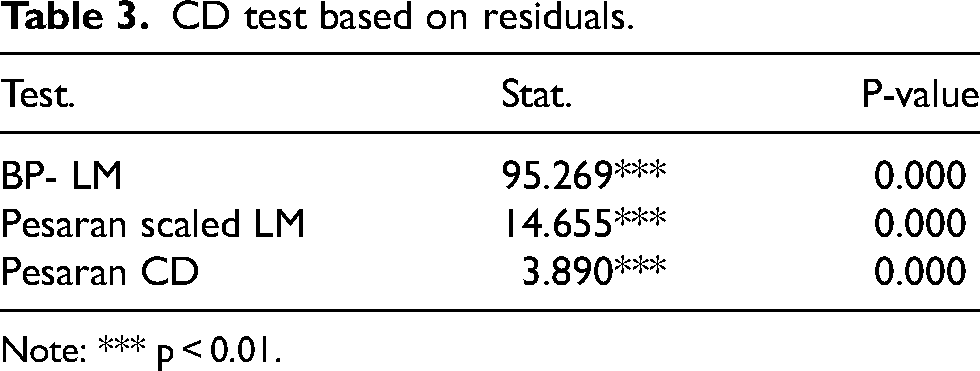
Table 2 illustrates the results of the CD test, suggesting the variables are not independent; instead, they are interdependent. (Table 3)
CD test results.

Note: *** p < 0.01.
CD test based on residuals.
Note: *** p < 0.01.
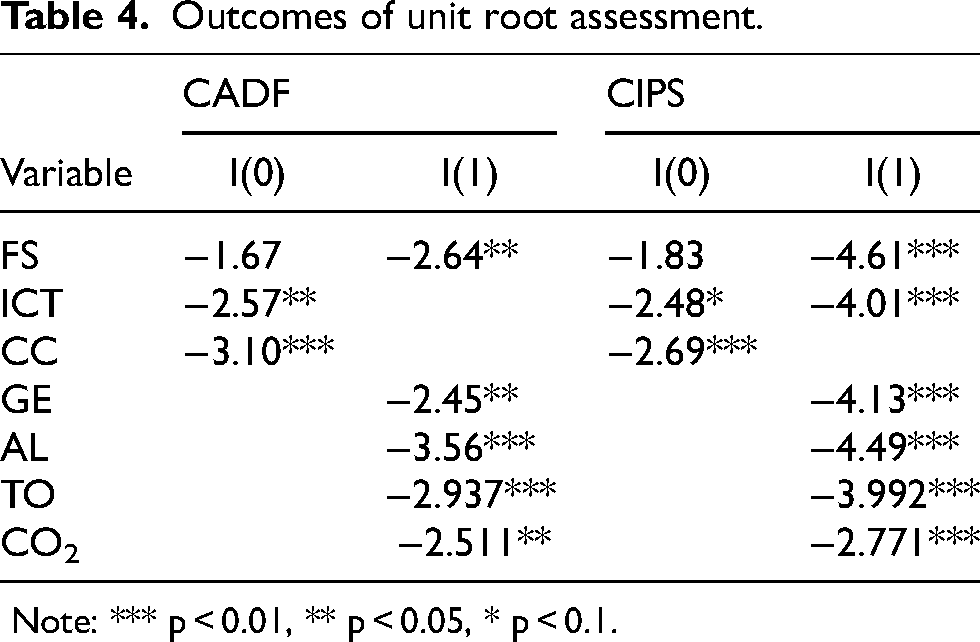
Table 4 presents the UR test outcomes, showing different integrating orders. Specifically, as they already exhibit stationary behavior in their level form, some variables can be considered stationary without the need for differencing. It appears that some of them had a unit root in their original form since they do not become stationary until after the first difference.
Outcomes of unit root assessment.
Note: *** p < 0.01, ** p < 0.05, * p < 0.1.
Outcome of slope heterogeneity
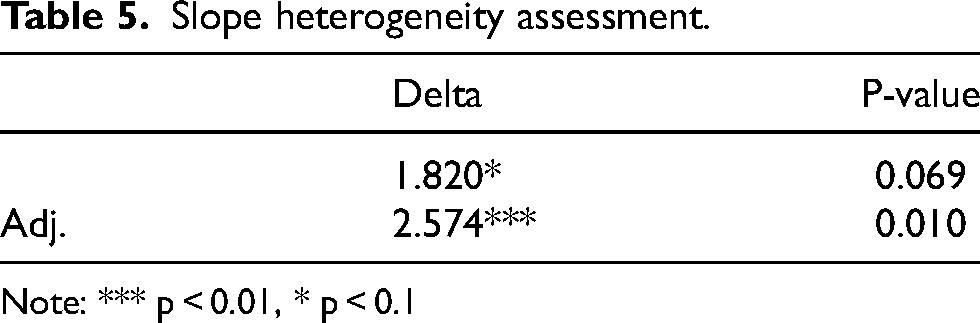
Table 5 presents the results of the Pesaran and Yamagata (2008) test to assess slope heterogeneity. The adjusted delta value is 2.574, with a corresponding p-value of 0.010. At the conventional 5% significance level, the adjusted Delta test (p = 0.010) leads to rejecting the null hypothesis of slope homogeneity, permitting us to utilize AMG estimation.
Slope heterogeneity assessment.
Note: *** p < 0.01, * p < 0.1
AMG results
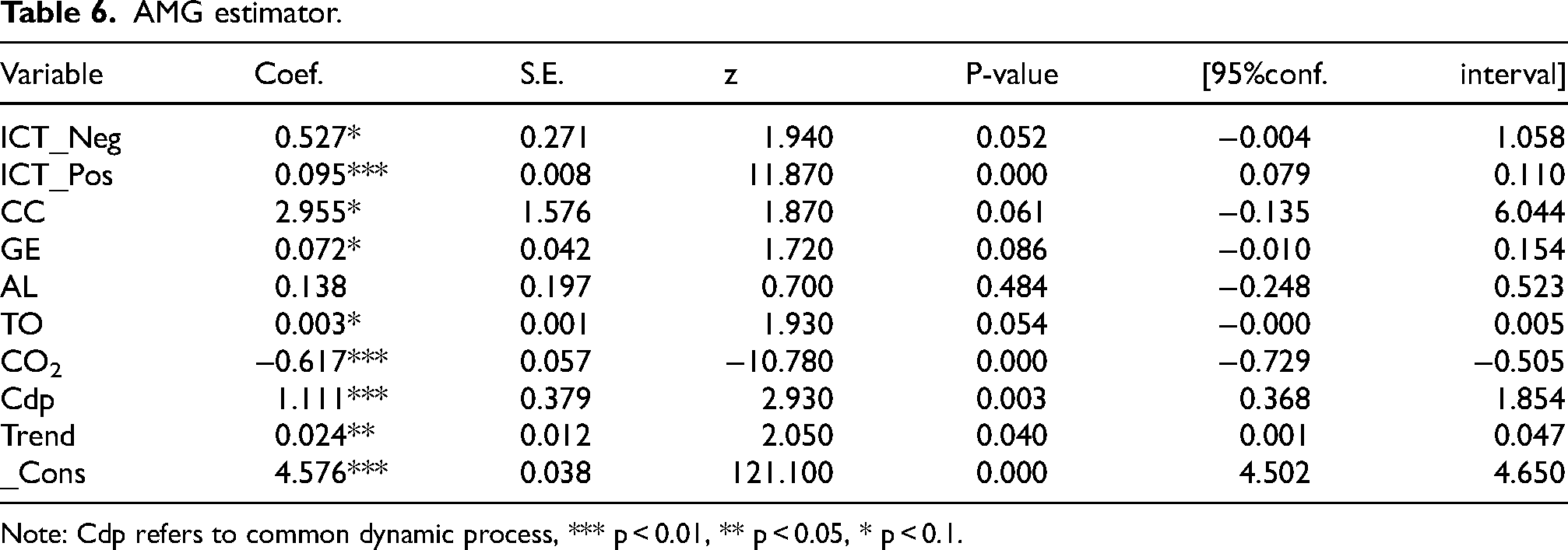
When analyzing panel data with several entities tracked over time, the AMG assessment technique is a useful statistical tool. To quantify ICT's asymmetric impact on food security in GCC countries, the estimated output of the AMG estimation is presented in Table 6. Each variable's coefficient indicates the strength and direction of its link to food security.
AMG estimator.
Note: Cdp refers to common dynamic process, *** p < 0.01, ** p < 0.05, * p < 0.1.
Discussion
Except for carbon dioxide, all independent variables have a positive long-term impact on food security, according to the AMG results. Because of the favourable effects of both ICT_neg and ICT_pos on food security, we can say that ICT is contributing to food security. In GCC nations, FS will rise as ICT, CC, and GE levels rise, while FS will fall as CO2 emissions rise. Conclusions drawn from the AMG assessment point to a positive and statistically significant relationship between ICT_neg, ICT_pos, and FS in the long term. Both Larochelle et al. (2019), Rahaman et al. (2024), and Rahaman and Islam (2025) found that ICT improved FS over time, lending credence to their assertions. Nonetheless, Aker (2011), Cole and Fernando (2012), and Casaburi et al. (2014) all found that ICT hurt FS. Another major issue in the GCC states is corruption, which, if addressed, may have a profoundly beneficial effect on food security. These findings align with those of Rahaman and Islam (2025).
As a result, food producers and distributors may incur increased expenses, resulting in higher consumer prices. Furthermore, the presence of corruption can potentially undermine food safety. The substantial and positive correlation between corruption control at 1% indicates that addressing corruption enhances long-term financial stability in GCC nations. GCC countries have implemented measures to combat corruption, including the establishment of anti-corruption bodies and legislation, as well as efforts to enhance openness and accountability within governmental institutions and foster good governance practices. In GCC countries, a favourable correlation exists between government effectiveness and food security. The augmented revenues resulting from a control of corruption and government effectiveness (GE) allow individuals to acquire more sustenance. It enhances agricultural investment, boosts food output, and reduces food costs. Moreover, an augmentation in GE might enhance infrastructure, hence facilitating the transportation and distribution of food.
The GCC has dry and hyper-arid climates, with insufficient arable land and freshwater, which substantially limits large-scale domestic agricultural output, especially for staple crops that require extensive land and water. Thus, 80–90% of GCC food needs are imported (Harry Menear, 2024). Thus, global food markets, supply chain stability, and international trade ties affect their food security more than their limited arable land. When it comes to food security, trade openness is positively and significantly correlated. As mentioned, the GCC area lacks arable land and freshwater resources, making large-scale domestic food production difficult and insufficient to feed the growing population. Trade openness helps these nations overcome production constraints and ensure food availability by providing a broad and reliable supply of food from foreign markets.
A substantial and adverse relationship exists between carbon dioxide emissions and food security over the long term. Carbon dioxide emissions significantly exacerbate global warming, thereby increasing the frequency and severity of extreme weather events, including droughts, floods, and heat waves. Such events adversely affect crops and livestock, while increasing sea levels pose a significant threat to inundate agricultural land along coastlines, resulting in salinization of freshwater resources. Furthermore, alterations in precipitation and temperature patterns complicate the cultivation of specific crops, subsequently diminishing food production. According to the findings derived from the AMG model selection, a significant long-term correlation exists between the identified factors and food security. Future FS variations may be predicted, and the effects of various policy shocks on FS can be evaluated using the model. It is essential to note that the AMG estimator accommodates “Cdp” (Common dynamic process), which accounts for unobserved common factors across units. The ‘Trend’ is significant too.
D-H causality outcomes
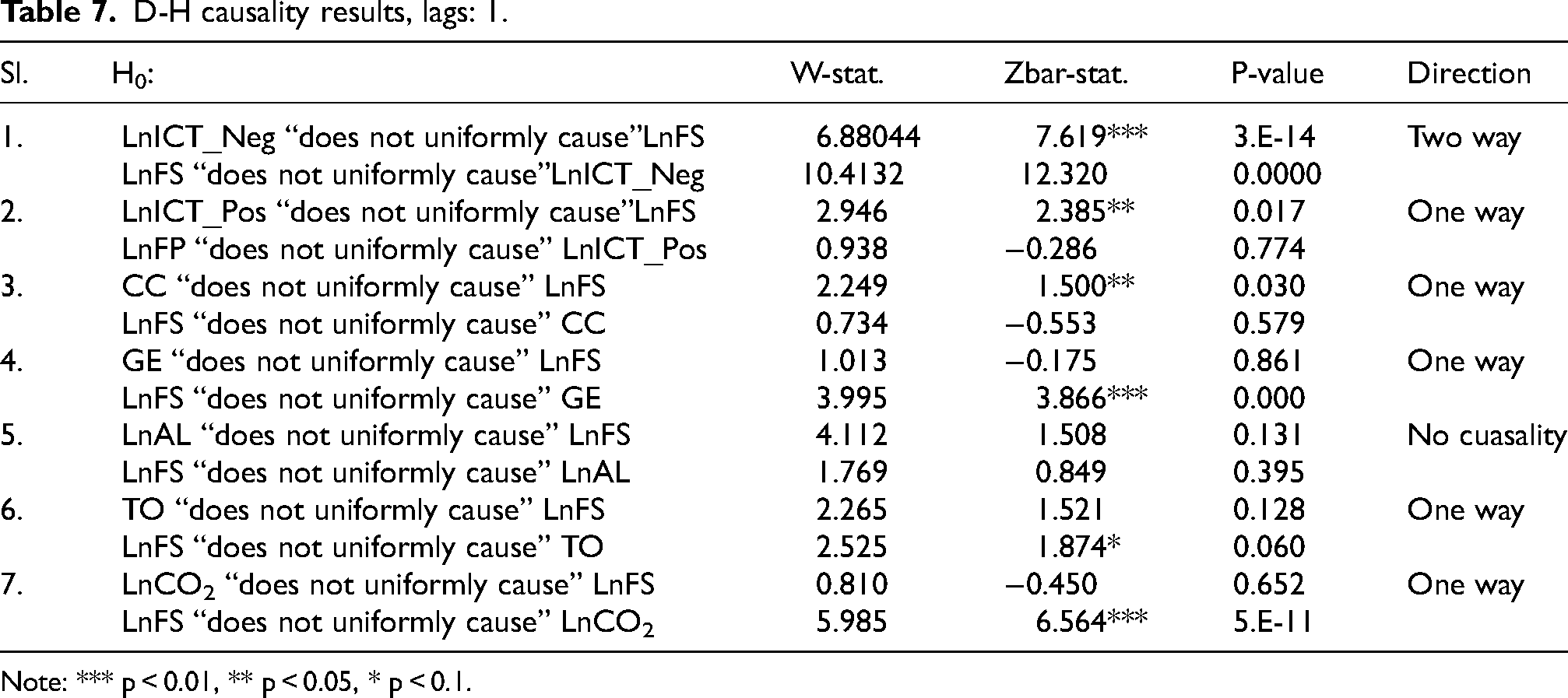
With several one-way and two-way causal linkages provided by the D-H assessment outlined in Table 7. However, to evaluate the strength of the AMG estimates, we only exhibit the seven most significant causalities related to food security. The first and only bidirectional causal relationship occurs from the negative shock of ICT to food security (LnICT_Neg↔LnFS). A bidirectional causal relationship between negative ICT disruptions and food security is a plausible scenario, particularly in a context such as the GCC, where technology plays a crucial role in maintaining a stable food supply in the face of significant domestic production constraints. It is essential to comprehend these intricate interdependencies in order to construct resilient food and technology systems.
D-H causality results, lags: 1.
Note: *** p < 0.01, ** p < 0.05, * p < 0.1.
There are several ways in which CT can contribute to food security. Thanks to the internet and mobile apps, farmers can access the most up-to-date news and information on pests, soil, weather, and best practices. This enables better decision-making and potentially higher returns. Drones, sensors, and global positioning systems enable the targeted application of water, pesticides, and fertilizer, thereby maximizing productivity while minimizing waste.
The second one-way causal relationship occurs from the positive shock of ICT to food security (LnICT_Pos → LnFS), indicating that positive advances and increased use of ICT in GCC nations may improve food security in various ways, ranging from supply chains and agriculture to consumer empowerment and government. This unidirectional causal link suggests that technology can help address the region's food security issues. The third causal link is that preventing corruption is vital for building resilient and strong food systems, as it leads to food security (CC→LnFS). To ensure that everyone has enough to eat, there must be less corruption, allowing resources to be used efficiently, markets to operate fairly, and institutions to function correctly.
Fourth, a unidirectional causation runs from GE to FS; this means that GE may stabilize and finance the agriculture sectors of nations that are struggling. Consequently, enhancements in transport network, storage facility, and irrigation setup have the potential to mitigate post-harvest losses and augment agricultural output. More effective farming methods and greater harvests are possible outcomes of GE's assistance in the spread of breakthrough agricultural technology and know-how. As an insignificant relation between arable land and food security. The dry and hyper-arid conditions of the GCC hinder large-scale domestic agricultural output, particularly for staple crops that require extensive land and water resources.
The sixth instance of unidirectional causality occurs from TO to FS; harsh temperatures and limited arable land constrain GCC nations’ food production. Trade openness enables them to import a wide range of food goods to meet their people's needs, ensuring food availability, a key factor in food security.
Seventh, there is a one-way causation from CO2 to FS; that is, higher CO2 levels may cause warmer weather and different patterns of precipitation, albeit more intense storms can lessen these effects. Several factors may contribute to a decrease in agricultural production and food availability.
Every single causality demonstrates that the findings of the AMG are accurate. As a consequence, the estimated results are reliable and satisfying.
Conclusion and recommendations
The asymmetric influence of ICT on food security has been analyzed in relation to corruption control, CO2 emissions, and government performance in the GCC nations. Initially, we ensured that the panel variables satisfied all of our criteria. The AMG calculation revealed that, in comparison to other industrialized nations, both ICT_Neg and ICT_Pos have a positive influence on the food security of GCC countries. At the same time, CO2 emissions (environmental degradation) exert an adverse effect. Increased economic activity, less corruption, and effective governance are equally vital to FS. An adverse effect exists between CO2 emissions and food security, which has a negative impact on food governance.
Clean and renewable energy sources in the ICT industry can help mitigate environmental consequences and enhance food production. The report also emphasizes the necessity for energy-efficient technology (EET) to mitigate the consequences of CO2 emissions on food shortages. Routers, servers, and data centers must be regulated for energy efficiency by GCC governments. The aforementioned aspect may encourage producers to create greener ICT products, thereby accelerating the development of energy-efficient solutions.
It has been demonstrated that food security in GCC nations can be significantly enhanced by implementing measures to combat corruption. Within the food system, corruption can result in the misallocation of funds, inefficiency, and waste. Farmers may find it more challenging to produce food, which could lead to higher prices for consumers.
The similarity between these results and those from the D-H causality greatly supports the findings drawn from the AGM results. The study's findings are accurate, robust, and plausible as a consequence. Lawmakers in the GCC region may implement green ICT laws that encourage the use of energy-efficient technologies, such as smart grids, efficient data centers, and energy-efficient strategies in the telecom industry networks. If the ICT industry adopts these techniques, it can reduce its environmental impact. When considering ICT's asymmetric effect on FS, the government should consider ways to reduce taxes, provide incentives, and provide financial support for technology to encourage sustainable practices and the embracing of ICT. Green ICT research may receive funding from governments to enhance food security, environmental quality, and economic growth. When addressing the ICT sector, policymakers should thoughtfully consider energy efficiency, ecological sustainability, and economic growth, as informed by the policy implications derived from the study. By potentially reducing the negative impacts of ICT on food supply, these measures could enhance technical innovation in the GCC. According to this research, the GCC countries can enhance their food security by investing in ICT infrastructure, integrating ICT into farming practices, and reducing carbon emissions through the adoption of innovative green technologies. To maximize the benefits to food security from the deployment of ICT, the report recommends that GCC governments enhance government efficiency, minimize corruption, and utilize technology to reduce carbon emissions.
Limitations and future directions
While this study's findings are constructive and have significant policy implications, they are not without their flaws. Not all nations that are members of the GCC are included in the research. Future studies investigating the impact of ICT on financial services could increase the number of variables and cross-sections examined. The inclusion of other control factors, such as disaggregated energy usage, energy efficiency, economic growth, and urbanization, should be considered for future study.
Footnotes
Author's contributions
Each author contributes equally.

Declaration of conflicting interests
The authors declared no potential conflicts of interest with respect to the research, authorship, and/or publication of this article.
Funding
The authors received no financial support for the research, authorship, and/or publication of this article.