







Abstract
The evolving nature of work in the twenty-first century, driven by rapid technological advancement and global shifts, necessitates the development of future-ready competencies among the workforce. Saudi Arabia's Vision 2030 emphasizes economic diversification and the transition to a knowledge-based economy, necessitating a workforce equipped with future-ready skills. However, there is limited empirical evidence on the specific skills required and their interrelationships to guide workforce development strategies. This study addresses this gap by examining the role of Digital Literacy, Critical Thinking, Adaptability, and Collaboration in preparing for the jobs of the future. A quantitative research methodology was employed, using a structured questionnaire distributed to 442 respondents across various industries and regions in Saudi Arabia. Data were analyzed using Partial Least Squares Structural Equation Modeling (PLS-SEM) to test hypotheses and assess the relationships between constructs. The results revealed. All hypothesized relationships were statistically significant, revealing strong interplay among the studied skills. This study contributes to theory by validating and extending skill development frameworks, emphasizing the role of adaptability as a mediator. Practically, it provides actionable recommendations for policymakers, educators, and organizations to recalibrate workforce preparation and align skill development with Saudi Arabia's Vision 2030 goals.
Introduction
The global labour market is undergoing rapid transformation driven by technological advancements, globalization, and evolving demographic patterns. In response, countries are compelled to redesign their workforce development strategies to accommodate the disruptive impacts of automation, artificial intelligence (AI), and digital ecosystems. For developing economies such as Saudi Arabia, this shift presents a dual imperative: harnessing digital innovation while systematically reducing dependence on oil revenues. Saudi Arabia's Vision 2030 further amplifies this need by emphasizing economic diversification and the transition toward a knowledge-based economy. Consequently, adaptive skill development frameworks are essential to equip the workforce for the demands of future employment landscapes (Lokesh et al., 2024). This research establishes that the future of work will be influenced by innovation, collaboration, and adaptability to emerging challenges. Maintaining a competitive edge necessitates an active commitment to skill enhancement and an openness to adaptation. This viewpoint is developed based on the premise that the Fourth Industrial Revolution is marked by advancements in artificial intelligence, automation, and digital technologies, which are transforming global labor markets (Hossain, 2023). The Vision 2030 initiative in Saudi Arabia seeks to diversify the economy, diminish reliance on oil, and foster a dynamic society with a competitive workforce (Selim and Alshareef, 2025). Achieving these goals necessitates a thorough re-evaluation of workforce preparation strategies to meet emerging skill demands. Machines are displacing human employment and skills. It extends beyond merely repetitive and low-skilled jobs.
Recent advancements in automation, robotics, algorithms, and artificial intelligence (AI) demonstrate that these technologies can perform tasks comparable to, or in some cases superior to, those executed by professionals such as dermatologists, insurance claims adjusters, lawyers, seismic testers in oil fields, sports journalists, and financial reporters (Rainie and Anderson, 2017). Vision 2030 emphasizes the development of a knowledge-based economy, requiring a workforce equipped with advanced technical and soft skills. The Kingdom has launched several initiatives, such as the Human Capability Development Program, to enhance education and training systems (Saudi Vision 2030, 2023). However, challenges remain in aligning these efforts with industry needs. Despite substantial national efforts, a critical research gap persists in empirically identifying and understanding the interdependencies among the core skills required for future employment in Saudi Arabia—particularly digital literacy, critical thinking, adaptability, and collaboration (Aldhobaib 2025). While policies such as the Human Capability Development Program have prioritized general upskilling, there is limited evidence-based research examining how these competencies interact and collectively contribute to workforce readiness within the Saudi context. Furthermore, most existing studies are either conceptual or Western-centric, failing to capture the unique socio-economic and cultural dynamics shaping labor transformation in the Kingdom (Aditiyawarman et al., 2025).
This study identifies a key issue in the lack of clarity regarding the recalibration of job preparation in Saudi Arabia, despite the critical role of informational development in shaping future human progress (Da, 2022). The Saudi Vision 2030 lacks emphasis on essential future skills. Moreover, there is excessive reliance on outsourcing rather than developing internal capabilities (Ahmed et al., 2023). Although initiatives like the NEOM project reflect evolving job types (Alghamdi and Alghamdi, 2020), regional projections show varied automation adoption rates, with the UAE, Bahrain, and Kuwait possibly surpassing the global average by 2030 (Aus dem Moore et al., 2018)
This study also addresses this gap by offering a comprehensive, data-driven analysis of how foundational and soft skills influence preparedness for future jobs aligned with Vision 2030. Its significance lies in informing national workforce strategies through validated relationships between skill constructs using advanced analytical techniques. By doing so, the study contributes not only to local policy formulation but also extends global understanding of skill development in transitioning economies. It offers practical implications for educators, policymakers, and industry leaders seeking to recalibrate educational outcomes and professional development frameworks for long-term economic sustainability.
This study examines the directions of the information development of primary stakeholders in Saudi Arabia concerning the re-calibration of workforce preparation for future employment. For that reason, three research questions were formulated as follows:
How do Digital Literacy, Critical Thinking, Adaptability, and Collaboration contribute to future employment readiness in Saudi Arabia? What are the interrelationships among the core skills for future employment readiness in Saudi Arabia? In what ways can changes from traditional jobs programs be synchronized with the requirements of the future economy?
Answering these research questions offers actionable insights for stakeholders to ensure that Saudi Arabia's workforce is equipped to succeed in future employment opportunities. As a result, the direction for answering the research questions are through the following objectives:
To identify the essential factors required for future employment in Saudi Arabia, specifically focusing on digital literacy, critical thinking, adaptability, and collaboration in alignment with Vision 2030. To empirically examine the interrelationships among these core skills, thereby contributing to a better theoretical understanding of how foundational skills shape adaptability and collaboration in a technologically evolving labor market. To evaluate the extent to which these interrelated skills contribute to overall workforce readiness, providing evidence-based recommendations for educational and workforce planning. To explore information needs and gaps among policymakers, educators, and industry leaders, which are necessary for effective recalibration of workforce development strategies.
These objectives are grounded in recent scholarly work on skill transformation in the age of AI and digital economies (Aldhobaib 2025; Aditiyawarman et al., 2025). These research laid the paths towards the need for more contextualized, data-driven research in the Saudi Arabian context, which remains underrepresented in global labor readiness literature. Therefore, the current study contributed in the following ways:
The study significantly contributes to theoretical advancements by validating the interdependence of key skills such as Digital Literacy, Critical Thinking, Adaptability, and Collaboration. With Digital Literacy explaining 52% of the variance in Adaptability (R² = 0.52), the findings underscore its foundational role in skill development. This extends existing frameworks like the 4Cs (Critical Thinking, Collaboration, Communication, Creativity) by introducing Adaptability as a critical mediator, enriching the understanding of skill dynamics in a rapidly changing job market. From a practical perspective, the study provides actionable insights for workforce development in Saudi Arabia. The high explanatory power of Collaboration (R² = 0.56) in predicting Skills Required highlights its importance in fostering workforce readiness. Policymakers and educators can use these findings to design targeted training programs that emphasize collaborative skills, ensuring that the workforce is equipped to thrive in team-based and interdisciplinary environments, which are essential for future jobs. The study also contributes to policy-making by aligning skill development strategies with Saudi Arabia's Vision 2030 goals. The strong relationship between Critical Thinking and Adaptability (R² = 0.41) suggests that fostering analytical and problem-solving skills is crucial for economic diversification. These insights can guide the creation of public-private partnerships and lifelong learning initiatives, ensuring that the workforce remains adaptable and competitive in emerging industries like technology, renewable energy, and healthcare. Finally, the study emphasizes the importance of monitoring and evaluation in skill development programs. The robust R² values across constructs highlight the need for continuous assessment of skill gaps and program effectiveness. By regularly updating training curricula and aligning them with industry needs, Saudi Arabia can ensure that its workforce remains future-ready, driving sustainable economic growth and achieving the ambitious goals of Vision 2030.
The remaining part of the paper is organized as follows: Section 2 present the literature review of the study. Section 3 presented the conceptualization and development of the hypothesis. Section 4 presented the research methodology. Section 5 present the analytical results of the study. Section 6 present the Discussion and implication of the study. Section 7 present the conclusion of the study.
Literature review
Many past studies looking at employment and their effects from several angles. The studies by Aus dem Moore, Chandran and Schubert (2018), Alghamdi and Alghamdi (2020), Ahmed et al. (2023), and Da (2022) underline the dynamic traits of future employment, particularly with relation to technological development, economic changes, and regional projects including Saudi Arabia's NEOM initiative. These studies provide vital fresh perspectives on future employment markets, academic entrepreneurship initiatives, matching educational institutions with labor market needs, and studying new kinds of human development in an information-driven society. Still, more study is very much needed. Conducting a literature review on previous empirical studies is crucial, as it provides a comprehensive understanding of existing research findings, and helps contextualize future directions.
There are many previous empirical research studies on future jobs. Crucial among them, is the work of Joseph et al. (2024). It uses a mixed-methods approach was used to examine the effects of digital literacy, AI tools, and peer collaboration on student learning outcomes. Dumbuya, (2023) utilized a qualitative approach, conducting a series of focus group discussions with educators and industry professionals to design a framework that integrates digital literacy, critical thinking, and adaptability into the curriculum. Bruckhaus et al. (2024) employed a longitudinal research design, tracking students’ digital literacy over the course of a year. Data were collected using pre- and post-assessments of digital literacy skills, integrated STEM activities, and student performance data. Bolo-Romero et al. (2023) presents a systematic review of literature published between 2015 and 2022, focusing on the relationship between digital competencies and critical thinking. Caligiuri and Caprar, (2023) used a quantitative survey methodology, collecting responses from 300 international employees working in multinational corporations. The survey assessed cultural agility, international experience, and cross-cultural competencies. Structural equation modeling (SEM) was used to analyze the data.
Caligiuri et al. (2022) applied a mixed-methods approach, combining surveys of 150 expatriates on cultural performance with interviews of 20 to explore cross-cultural performance factors. Lazarova et al. (2023) used qualitative interviews with 50 managers and employees from multinational enterprises (MNEs), identifying key skills needed for navigating global shifts through thematic analysis. Gouseti et al. (2024) adopted a critical qualitative method, analyzing case studies, policy documents, and expert interviews to examine how digital literacy is socially, economically, and politically contextualized. The study highlighted the importance of critical digital literacy in broader socio-political settings. Tejedor et al. (2020) conducted a cross-country comparative study during the COVID-19 lockdown, surveying 800 students in Spain, Italy, and Ecuador on digital literacy, online learning, and academic performance, while also interviewing 20 educators per country to explore digital learning challenges and solutions. Tinmaz et al. (2022) conducted a systematic review of over 100 academic articles from 2015 to 2021 related to digital literacy in education and professional contexts. Their analysis identified key themes such as digital skills, competencies, and outcomes, and employed meta-analysis to quantify developmental trends. Collectively, these studies provide diverse methodological perspectives on cross-cultural skills and digital literacy across global educational and organizational contexts.
The literature study looks at current research on the main factors of digital literacy, critical thinking, flexibility, teamwork, and the abilities needed in contemporary employment and learning situations. It emphasizes how critical thinking and digital literacy are becoming more and more important for people getting ready for challenging, technologically advanced jobs and worldwide cooperation. The analysis emphasizes how closely these abilities interact to improve flexibility and promote effective teamwork. Still, there is a major study vacuum on how these abilities interact across many cultural settings and sectors, especially in fast changing scenarios like remote work or worldwide collaboration. Furthermore, nothing is known about how particular models may be successfully included into courses to handle these competences holistically. More research is required to close this disparity and create workable plans for including these future competencies into both personal and professional environments.
Theoretical framework
This study adopted five theoretical frameworks namely: “Technological Pedagogical Content Knowledge (TPACK)”, “Bloom's Taxonomy”, “Lewin's Change Management Theory”, “Social Interdependence Theory”, and “Competency-Based Learning Theory”. The justification of selecting those frameworks lie with the fact that the convergence of diverse competencies, such as digital literacy, critical thinking, adaptability, and collaboration, cannot be sufficiently explained by a single theoretical lens. Instead, this research use of multiple theories allows for a holistic interpretation of how these competencies interact and influence future job preparedness. This approach is consistent with recommendations in educational and organizational behavior research where scholars advocate for theoretical pluralism to better capture multidimensional constructs (Whetten, 1989; Eisenhardt, 1989). A single theory often lacks the explanatory breadth required for studies exploring diverse constructs across stakeholder groups such as policymakers, educators, and employers.
The TPACK framework highlights the importance of integrating technology, pedagogy, and content knowledge to prepare workers for future employment in Saudi Arabia (Owusu and Baah 2025). It supports adaptive learning and effective teaching strategies, as emphasized by Arifuddin et al. (2025), Oved and Alt (2025), Huang et al. (2025), Owusu and Baah (2025), and Antonio (2025). The TPACK framework, originally developed to understand the integration of technology in teaching, is here repurposed to conceptualize digital literacy as the intersection of technological skill, contextual knowledge, and task-based proficiency. In the context of workforce readiness, digital literacy is not merely the ability to use technology but the capacity to apply it meaningfully in diverse work environments. TPACK supports this by framing digital literacy as a dynamic competency that enables individuals to navigate digital tools critically and ethically within complex systems.
Bloom's Taxonomy provides a structured framework for cognitive skill development, from basic recall to complex evaluation and creation (Lubbe et al., 2025). It significantly shapes Saudi Arabia's curriculum, fostering critical thinking, problem-solving, and decision-making for future employment. Research by SivaKumar (2023), Habiballa et al. (2025), Chweu et al. (2019), and Lubbe et al., (2025) emphasizes its value in flipped classrooms, theoretical teaching, skills assessment, and mobile learning. Bloom's Revised Taxonomy provides a cognitive hierarchy that underpins the critical thinking construct in this study. It offers a theoretical lens through which cognitive competencies–such as analyzing, evaluating, and creating–are operationalized. By aligning the construct of critical thinking with the upper tiers of Bloom's hierarchy, the study emphasizes that future workforce preparedness requires not only knowledge recall but also the ability to make informed judgments and generate innovative solutions in unpredictable scenarios.
Lewin's Change Management Theory–unfreezing, changing, and refreezing–is vital for recalibrating Saudi Arabia's job preparation strategies (Cone and Unni, 2020). In response to technological disruption and globalization, the nation must reform education and training systems to foster digital literacy, adaptability, and collaboration. Studies by Endrejat and Burnes (2024), Deborah (2018), Cone and Unni (2020), and Vrontis et al. (2018) affirm the theory's relevance in driving innovation, organizational change, and workforce performance. Lewin's Change Theory (Unfreeze–Change–Refreeze) serves as the conceptual foundation for adaptability, positioning it as both a personal and organizational competency essential for navigating change. In this study, adaptability reflects an individual's willingness and capacity to embrace new roles, technologies, and organizational practices. The theory's emphasis on transitional states supports the inclusion of adaptability as a mediator that facilitates the translation of digital literacy into collaborative behavior.
Social Interdependence Theory asserts that individual achievement depends on group success, emphasizing collaboration, teamwork, and communication as essential skills for Saudi Arabia's future workforce (Hung et al., 2024). In response to a globally interconnected, project-driven economy, job preparation must focus on developing interpersonal and collaborative competencies. Research by Tjosvold et al. (2008), Hung et al. (2024), Shimizu et al. (2021), Johnson et al. (2011), and Cockerill et al. (2018) supports the theory's role in fostering knowledge sharing, peer learning, and cooperative engagement in both educational and professional environments. The construct of collaboration is grounded in Social Constructivist Theory, which posits that knowledge is co-constructed through interaction. In the workplace, this theory underlines the need for shared problem-solving, communication, and co-responsibility. Thus, collaboration is conceptualized not merely as teamwork but as a competency rooted in socio-cognitive interdependence, aligning well with both academic and industry expectations in knowledge economies.
Competency-Based Learning Theory focuses on skill mastery rather than time spent learning (Wahyugi, 2025). In Saudi Arabia, this approach supports economic diversification and prepares the workforce for emerging industries by shifting from traditional education to competency-based models. It ensures individuals gain essential practical and technical skills. Studies by Henri, Johnson and Nepal (2017), Wahyugi (2025), Gupta et al. (2025), and Harahap et al. (2025) highlight CBL's role in improving educational outcomes, curriculum design, and broader developmental goals. In this study, the “Skills Required” construct represents a composite outcome reflecting the acquisition of competencies deemed essential in the evolving labor market. Competency-Based Learning Theory thus supports the study's methodological approach and conceptual model by framing these variables not as abstract abilities, but as observable and improvable outcomes of structured learning experiences, consistent with Saudi Arabia's Vision 2030 emphasis on outcome-based human capital development Appendix 1 summarizes the adoption of theories in previous research studies relevant to this study. It outlines the proposed research variables: “Digital Literacy”, “Critical Thinking”, “Adaptability”, “Collaboration”, and “Skills Required” as well as their operational definitions, the associated theories, root sources, and examples of prior studies that applied these theories.
Conceptualization and hypothesis
Conceptualization is a critical component of research, as it establishes a conceptual framework that provides a clear research direction and identifies the issues the research intends to address (Karamba and Musah, 2024a, b). Saudi Arabia is realizing more and more the importance of using talent and eliminating dependent on outsourcing expatriated in practically all fields. This study therefore proposed a strategy to help in knowledge development on re-calibration of preparedness for the jobs of the future in Saudi Arabia and the skills needed to succeed. The justification of formulating the lies with the fact that stakeholders require accurate and timely information and best practices in workforce development to design effective policies and programs.
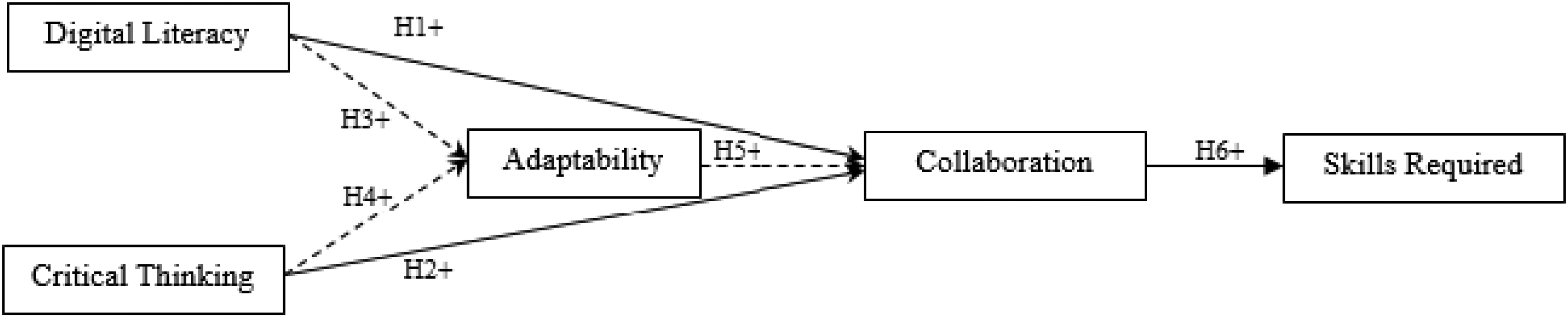
The proposed conceptual framework is presented in Figure 1. It outlines the relationships between five key variables, (“Digital Literacy”, “Critical Thinking”, “Adaptability “, “Collaboration”, and “Skills Required”) each of which plays a significant role in understanding how specific skills contribute to adaptability, collaboration, and the skills required in a certain context.
The proposed conceptual framework.
The justification for establishing the relationships among the variables lies with the fact that Digital Literacy is fundamental for both Adaptability and Collaboration, ensuring that individuals can adapt to and work effectively within technological environments. Critical Thinking enhances both Adaptability and Collaboration, allowing individuals to analyze and approach situations thoughtfully. Adaptability is a key facilitator of Collaboration; as adaptable individuals contribute positively to group dynamics in changing environments. Collaboration leads to the Skills Required for successful performance, as working together often reveals and demands new competencies. That is why this current research established relationships in the framework and designed to show the fitness of the proposed framework. The most important measurement is directed to how essential skills like Digital Literacy and Critical Thinking lay the groundwork for Adaptability and Collaboration, ultimately shaping the Skills Required for success in dynamic and modern work environments.
Digital literacy
This study defines digital literacy as “an individual's ability to effectively and critically navigate, evaluate, and create information using a range of digital technologies.” Emphasizing its relevance, Tinmaz et al. (2022) highlight that digital literacy is foundational for success in today's digital job landscape. It enables individuals to adapt to evolving technologies and work environments. Bruckhaus et al. (2024) further affirm that academic and professional achievements increasingly depend on digital competence. The study investigates how digital literacy relates to other variables in supporting future employment, noting that adaptability to change requires a solid digital foundation. Joseph et al. (2024) explore how students’ learning outcomes are affected by digital literacy, AI tool usage, and peer collaboration. This aligns with findings showing that digital literacy supports effective teamwork in modern workplaces by enhancing communication through digital tools.
Dumbuya (2023) provides a transformative framework that integrates digital literacy, critical thinking, and adaptability for global employability. The study emphasizes that digital literacy is closely tied to adaptability, as technical proficiency enables individuals to respond effectively to changing environments. In technologically driven workplaces, lacking digital skills can hinder one's ability to adapt, underscoring the critical role of digital literacy in future workforce readiness. Aysu (2023) underlined the requirement of digital literacy and critical thinking as basic skills for personal to properly negotiate and assist the digital age. efficient. Digital literacy helps people to collaborate easily with others, even in hybrid or remote environments. Therefore, the current research develops two hypotheses regarding “Digital Literacy” in order to mostly highlight its influence:
Critical thinking
Critical thinking is defined as the ability to form logical, well-reasoned conclusions through analysis, evaluation, and synthesis. Bolo-Romero et al. (2023) emphasize the link between digital skills and enhanced analytical capacity, highlighting how digital literacy supports critical thinking. Gouseti et al. (2024) broaden this perspective by situating digital literacy within wider societal contexts. Critical thinking enables individuals to objectively assess new events, challenges, or ideas and respond effectively in an ever-changing world. Suriano et al. (2025) and Lazarova et al. (2023) highlight the role of adaptability in responding to global workplace shifts, where critical thinking is crucial for decision-making and navigating uncertainty. In social settings, critical thinking fosters constructive engagement by encouraging concept analysis, challenging assumptions, and proposing informed responses (Butler, 2024).
O'Connor (2024) raises concerns over declining literacy and critical thinking skills, stressing the importance of educational interventions to enhance employability in the digital era. Similarly, Tejedor et al. (2020) examine how digital literacy impacts online learning effectiveness. This study proposes that adaptability significantly influences critical thinking, suggesting that the ability to adjust to new situations supports sound decision-making in complex environments, thereby reinforcing critical thinking as vital for future employment readiness. Caligiuri et al. (2022) also underlines strategies for evaluating cross-cultural performance and the need of adaptation in overseas projects. Critical thinking helps team members who apply it to participate in constructive dialogues, offer insightful analysis, and question presumptions in a way that advances group performance forward (Irwan et al., 2024).
In light of the fact that there is a requirement to assess the level of critical thinking in order to instill critical thinking and informed decision-making in future jobs, the following hypothesis is formulated as a result of this research:
Adaptability
Adaptability is another variable adopted for this study and is operationally define as the ability to adjust to new conditions, especially in response to challenges or changes in the environment. Measuring adaptability demands of jobs has been found to be critical (Oprins et al., 2018). The impact of career adaptability on job satisfaction and work has been highlighted to be closesly associated to the efficiency of jobs (Fiori et al., 2015)
Understanding job requirements for adaptive performance is increasingly important in light of the pace of change that typifies many workplaces today (Mc Loughlin and Priyadarshini, 2021). This study conceptualized to measure adaptability in light to the future jobs. Typically, the justification of this measurement lies with the fact that “An adaptable individual can more easily adjust their approach to work with different team members, deal with new working conditions, or embrace new collaborative tools or strategies” (AlMemari et al., 2025). Hence measuring “Adaptability” is essential for collaboration because it ensures that team members can work together effectively even when conditions change. Caligiuri and Caprar (2023) explores how international experience and cross-cultural competencies contribute to cultural agility, a form of adaptability essential in global contexts.
In a different direction, it was investigated that ethical leadership directly or indirectly impacts adaptive performance within the hospitality industry, focusing on the collaboration benefits from adaptability because, in modern teams, work dynamics and technologies frequently change (Zia et al., 2025). Therefore, measuring adaptability for future jobs is crucial and an adaptable team member is better able to maintain effective collaboration even when faced with new challenges, roles, or team configurations. Without adaptability, individuals might struggle to work with others, particularly in situations where flexibility and innovation are key to success That is why this research formulate the following hypothesis:
Collaboration
Collaboration is operationally defined as the act of working with others to achieve common goals. It involves sharing knowledge, ideas, and resources while working as part of a team. Emphasizing the need of teamwork in handling difficult issues, Lazarova et al. (2023) looks at how international companies and people may adjust to fast changes in the global work environment. Comparably, Caligiuri and Caprar (2023) investigates how cross-cultural abilities and international experience support cultural adaptability, so improving teamwork in many kinds of teams. The ability of people to work well together frequently determines the abilities required for any given job or activity. Good teamwork calls for interpersonal, communication, and problem-solving ability. The talents required to operate in a team context grow as team projects get more complicated. Caligiuri et al. (2022) review techniques for evaluating cross-cultural performance and stress the need of teamwork in overseas projects.
Using this variable to measure its impact on future employment justified itself in terms of the need for skills needed, which is directly impacted by “collaboration” since the more complex and dynamic the collaborative work environment is, the more diverse and advanced the needed skills are. All of which are essential for effective group performance, collaborative work sometimes calls for enhanced communication, teamwork, conflict resolution, and digital competency. This leads the present work to develop the following hypothesis:
Skills required
Skills Required serves as the dependent variable and is operationally defined as a composite set of competencies–technical, cognitive, and interpersonal–that individuals are expected to possess to effectively perform tasks, roles, or functions within emerging workplace contexts. The definition is grounded in the evolving demands of Industry 4.0, where dynamic skill requirements and structured skills development frameworks are essential for workforce readiness (Maisiri et al., 2019). Typically, identifying essential skills required for success is easy (Lazarova et al., 2023). This is because the outcome of any job can be measured. “Skills required” as the research variable in the framework of this study dwells what individuals need to perform efficiently, to plays a central role in shaping what skills are essential for a team or organization.
This current research conceptualized that as work environments and tasks become more interconnected, the need for specific skills arises not just from individual tasks but from how well individuals can function within teams. That is why “Collaboration” is highlights to be associated to “new skills”, such as communication, problem-solving, or technical expertise, that are critical for achieving success in a collective context (and Quatraro, F. (2025). Hence the proposed hypothesis 6, is established between the “Collaboration” and “Skills Required”.
Examining information development and re-calibration of preparation for the employment of the future in Saudi Arabia is much dependent on the insightful analysis of the skill requirements for transitioning to a circular economy offered by Buyukyazici and Quatraro (2025) and Martin (2025). The economic diversification of Saudi Arabia justifies looking at information development and re-calibration of preparation for future jobs in that country. The change Saudi Arabia is making from reliance on oil calls for a workforce qualified. Projects for regional development in Saudi Arabia, such NEOM, call for specialized skill development plans.
Methodology
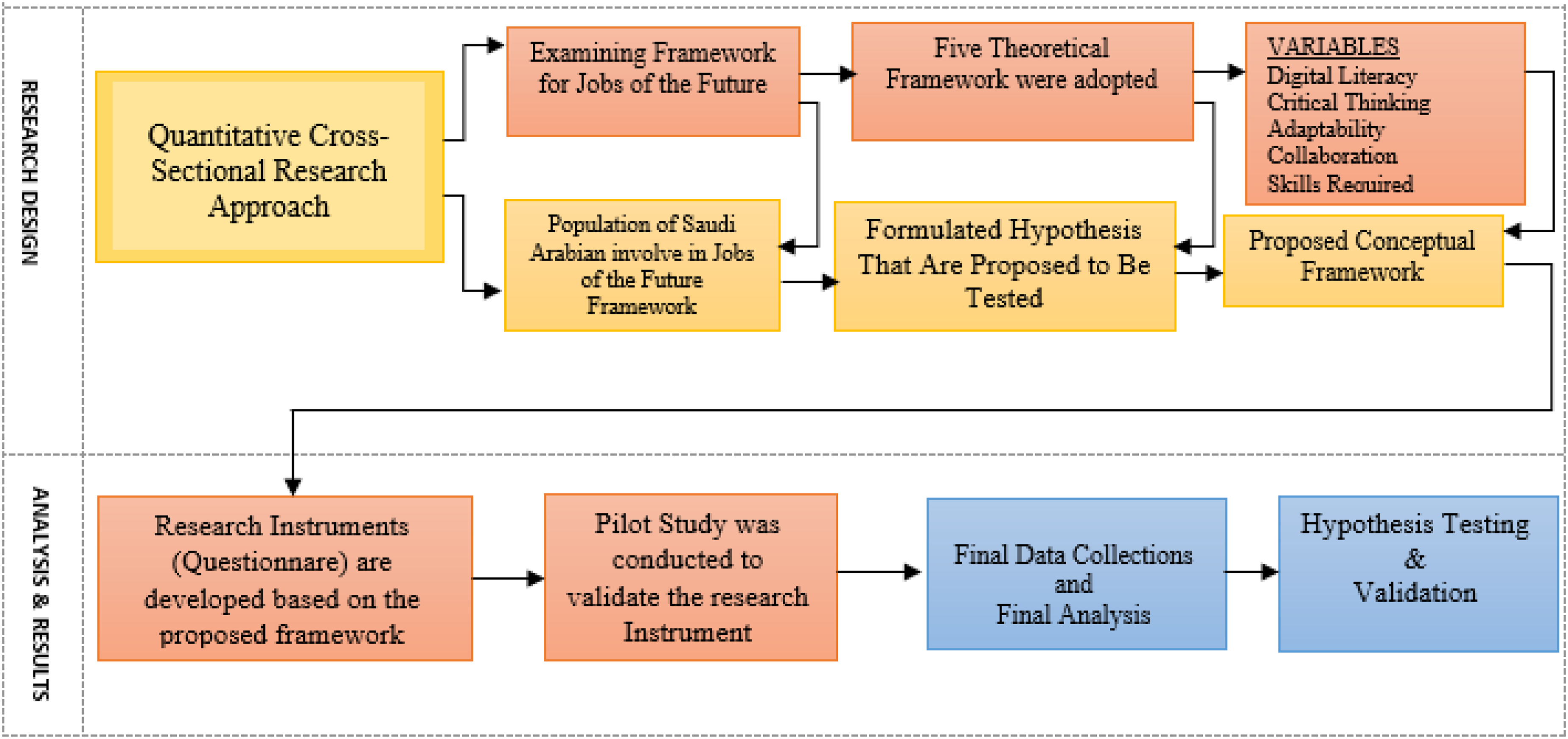
This study employs a quantitative research approach to assess stakeholder perspectives–policymakers, educators, and industry leaders–on information development related to future employment. The use of quantitative methods allows for objective evaluation of variables such as “Skills Required” and “Collaboration,” enabling the measurement of current skill levels and emerging trends in Saudi Arabia's labor market (Bloomfield and Fisher, 2019; Alford and Teater, 2025). This approach provides insights into the preparedness of the Saudi workforce and highlights areas requiring recalibration. A methodological flowchart (Figure 2) outlines the research process across two key sections: “Research Design” and “Analysis.” The study adopts a Quantitative Cross-Sectional Research Approach, guided by five theoretical foundations. The defined target population includes individuals engaged in future job initiatives. Key variables–Digital Literacy, Critical Thinking, Adaptability, Collaboration, and Skills Required–are identified, and hypotheses are formulated. The flowchart traces the development of research instruments from the conceptual framework, incorporating a Pilot Study for validation. Final data collection and analysis follow, using advanced techniques such as PLS-SEM for hypothesis testing and model validation. This structured methodology enhances clarity and aligns with reviewer expectations, while the flowchart visually supports the logical flow and interrelationship of all research stages.
Methodological flowchart.
Data collection instrument
In the course of this research, a questionnaire serves as the tool for data collection. According to Krosnick (2018) and Sharma and Ruikar (2025), questionnaires are an instrument that is both extremely appropriate and necessary for the purpose of measuring study variables. Every single item that is included in the questionnaire that has been prepared is intended to test attitudes toward the skills that will be required for future jobs in Saudi Arabia, as well as self-perceived talents and abilities. To be more specific, a Likert scale with seven points was utilized in order to measure the level of agreement or disagreement when it came to the topic that was proposed. The reason for using a Likert scale with seven points is due to the fact that it provides uniform, scalable, and measurable analysis across a broad range (Koo and Yang, 2025).
Both pre-test and pilot test was carried out to validate the appropriateness of the questions. The pilot study was conducted with 40 respondents to evaluate item clarity, reliability, and scale appropriateness. Based on respondent feedback, minor wording adjustments were made to enhance the interpretability of items measuring adaptability and collaboration. Internal consistency improved post-revision, with Cronbach's alpha values increasing from 0.71 to 0.82 for the collaboration scale. This confirmed the suitability of the instrument for the main study. Adjustment and modifications were made based on the outcome of both the pre-test and pilot study. The final questions that was used for the data collection contents: “Digital Literacy (7 Questions)”, “Critical Thinking (6 Questions)”, “Adaptability (7 Questions)”, “Collaboration (8 Questions)”, and “Skills Required (5 Questions)”.
Sampling
The research population of this study includes individuals who are part of the Saudi Arabian workforce. This diverse population is chosen because the study aims to assess the current state of workforce readiness and skill development across different sectors and stages of career preparation.
As of the most recent data available, the Saudi Arabian workforce is estimated by General Authority for Statistics (GASTAT) in Saudi Arabia, where the number of Saudi nationals in the labor force was approximately 7.5 million in 2022. The labor force participation rate among Saudis has been increasing due to government efforts under Vision 2030 to boost employment among nationals, particularly women and youth. Similarly, the expatriate workforce in Saudi Arabia is estimated to be around 6–7 million. Therefore, combining Saudi nationals and expatriates, the total workforce in Saudi Arabia is estimated to be around 13–14 million people (GASTAT, 2022).
This research adopts a “Stratified Random Sampling” The justification of selecting this sampling technique lies with the fact that the Saudi workforce is highly diverse, with significant variations across industries, regions, and demographic groups. Stratified random sampling ensures that all key subgroups are adequately represented in the sample, improving the generalizability of the findings (Iliyasu and Etikan, 2021).
The population is divided into strata based on relevant characteristics, where Industry associated to oil and gas, technology, healthcare, education, construction is mapped out. The Region of Saudi Arabia involve are the Riyadh region, Jeddah, and the Eastern Province. Both Saudi nationals and expatriates are also part of the strata. Similarly, Gender as one of the crucial strata was consider. Finally, the Career Stage involving early-career professionals, mid-career professionals, senior professionals are the last strata. Stratified random sampling ensures that the sample reflects the diversity of the Saudi workforce, making the findings generalizable to the entire population
A random sample is then drawn from each stratum in proportion to its size in the population. A sample size of 1000 was anticipated, as it provides a high level of confidence in the results, with a manageable margin of error. However, a usable sample for 442 was obtained, which is also suitable and enough for analysis (Uakarn et al., 2021). Data collection was conducted using an online Google Form, which ensured that only fully completed responses were submitted and recorded. As a result, the issue of incomplete responses was inherently addressed during the data collection phase. Consequently, no cases of missing data or response bias (e.g., partial submissions) were detected. The final dataset comprised 442 verified and usable responses, which satisfied the minimum sample size requirements for structural equation modeling as recommended by Hair et al. (2021). Additionally, the sample maintained adequate demographic representation across key population segments in Saudi Arabia.
Results
The assessment of gathered data is essential for obtaining significant insights and formulating informed conclusions regarding the research subject or intervention being studied. The choice of suitable analytical techniques and methodologies is dictated by the research question's nature and the characteristics of the collected data. Utilizing rigorous analytical methods guarantees the validity, reliability, and accuracy of the findings, thereby enhancing the overall impact and relevance of the study.
Smart PLS-SEM was utilized for the analysis due to its strength in handling complex, exploratory models with multiple latent constructs and its robustness in non-normal data conditions (Hair et al., 2021). Given the research model's predictive nature and multidimensional structure, PLS-SEM was the most appropriate choice. Further justification of utilizing PLS-SEM, lie with the fact that, while PLS-SEM can be applied to small samples, larger samples, as in this research case, it enhances the accuracy and stability of path coefficients which are fully supported within PLS-SEM guidelines (Hair et al., 2021). Another justification for utilizing PLS-SEM, is because the measurement scales were adapted from established sources, including van Laar et al. (2017) for digital literacy, and Martin et al. (2013) for adaptability and critical thinking, and Scoular and Care (2020) for collaboration. These sources are now clearly cited in the revised manuscript.
The descriptive statistic of the response
The response rate and the profile of the respondents are presented in Table 1. The response rates are categorized by key demographic and professional groups, facilitating a thorough and representative analysis of workforce readiness and skill development in Saudi Arabia. The distribution accurately represents the composition of the Saudi workforce, thereby ensuring the sample's representativeness and the generalizability of the findings.
Response rate and the profile of the respondents
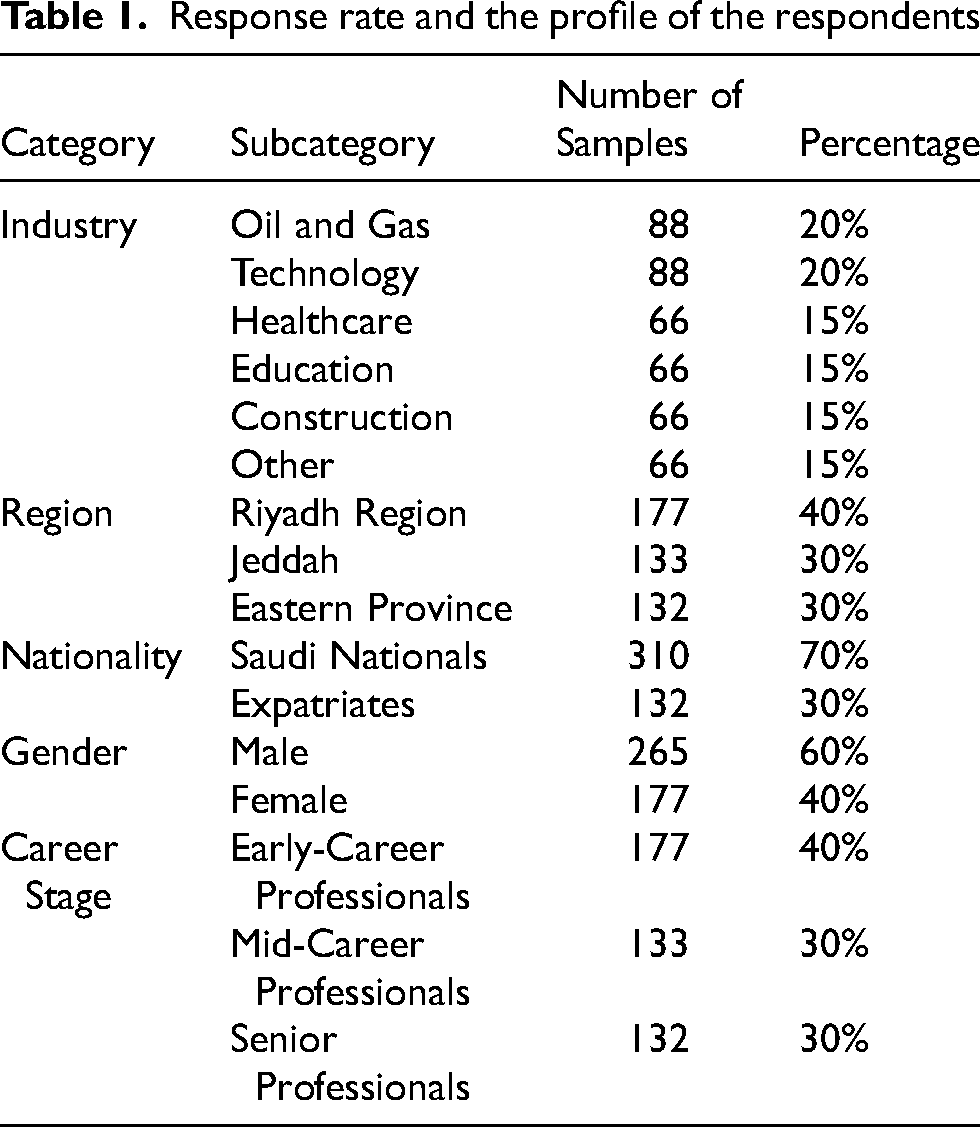
The incorporation of various industries, regions, nationalities, genders, and career stages is consistent with Saudi Arabia's objectives of economic diversification, gender inclusion, and workforce development. The sample size of 442 is adequate for subgroup analysis, yielding significant insights into each category.
The distribution indicates that oil and gas, along with technology, are significant sectors in Saudi Arabia, each comprising 20% of the sample. Healthcare, education, and construction are equally significant sectors, each receiving an allocation of 15%. The “Other” category, comprising 15%, includes industries that are not explicitly enumerated yet remain pertinent to the workforce.
The Riyadh region constitutes 40% of the total, serving as the capital and economic center, thus representing the largest share. Jeddah and the Eastern Province each account for 30% of the economic activity, contributing to regional diversity. Saudi nationals constitute 70% of the workforce, reflecting the emphasis on Saudization and the objectives of Vision 2030. Expatriates constitute 30% of the workforce, highlighting their significant role. The distribution of male (60%) and female (40%) participants indicates an increasing involvement of women in the Saudi workforce, influenced by Vision 2030 initiatives.
Career Stage Influence Early-career professionals constitute 40% of the workforce, indicating the youthful demographic of Saudi Arabia. Mid-career professionals constitute 30% and senior professionals also represent 30%, ensuring diverse experience levels are included.
The reliability and factor analysis
To calculate the reliability of the items for each latent construct, we use Cronbach's Alpha, a measure of internal consistency. Cronbach's Alpha ranges from 0 to 1, with values closer to 1 indicating higher reliability. Generally, a value of 0.7 or higher is considered acceptable, while 0.8 or higher indicates good reliability (Hair et al., 2021).
The result of the reliability analysis for this research is presented in Table 2. It is measured by Cronbach's Alpha, which demonstrates strong internal consistency across all constructs. The Cronbach's Alpha for Digital Literacy is 0.89, indicating a high level of reliability for the seven items assessing this construct. The Standardized Alpha is slightly higher at 0.90, reflecting adjustments for scale variances. Similarly, the Critical Thinking construct achieved a Cronbach's Alpha of 0.85, signifying good reliability for the six items measuring critical thinking. The Standardized Alpha of 0.86 further confirms the consistency of these measurements.
The result of the reliability study.
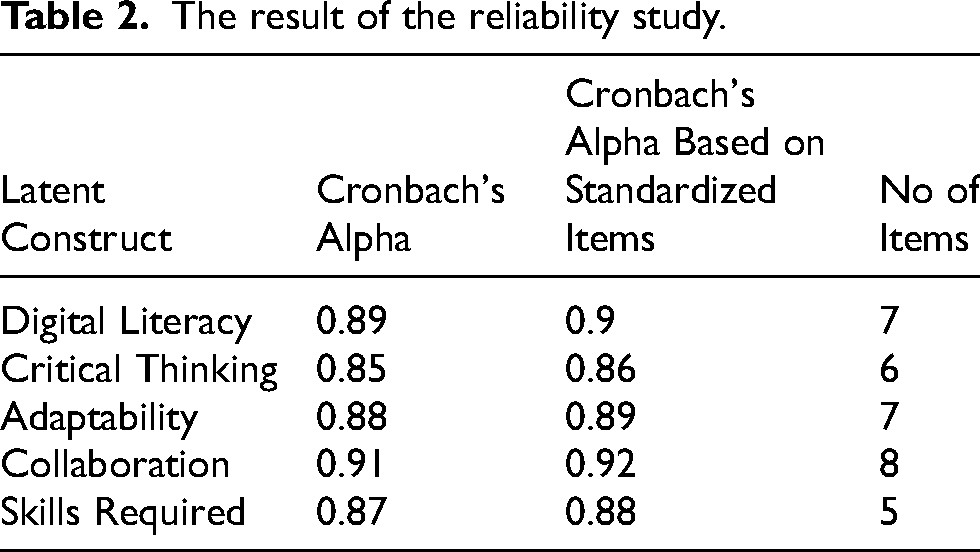
For Adaptability, the Cronbach's Alpha is 0.88, demonstrating strong reliability for the seven items within this construct. The Standardized Alpha is marginally higher at 0.89, reinforcing the consistent measurement of adaptability.
The Collaboration construct exhibits excellent reliability, with a Cronbach's Alpha of 0.91 for the eight items measuring collaboration. The Standardized Alpha of 0.92 further supports the high internal consistency of the scale.
Finally, the Skills Required construct attained a Cronbach's Alpha of 0.87, indicating good reliability for the eight items assessing essential skills for future job markets. The Standardized Alpha is slightly higher at 0.88, reflecting consistent measurement across standardized items.
All constructs achieved Cronbach's Alpha values exceeding 0.85, demonstrating high reliability and strong internal consistency. The slightly higher standardized Cronbach's Alpha values, which account for differences in item variances, further validate the robustness of the scales. These findings confirm that the items effectively measure their respective latent constructs with a high degree of reliability
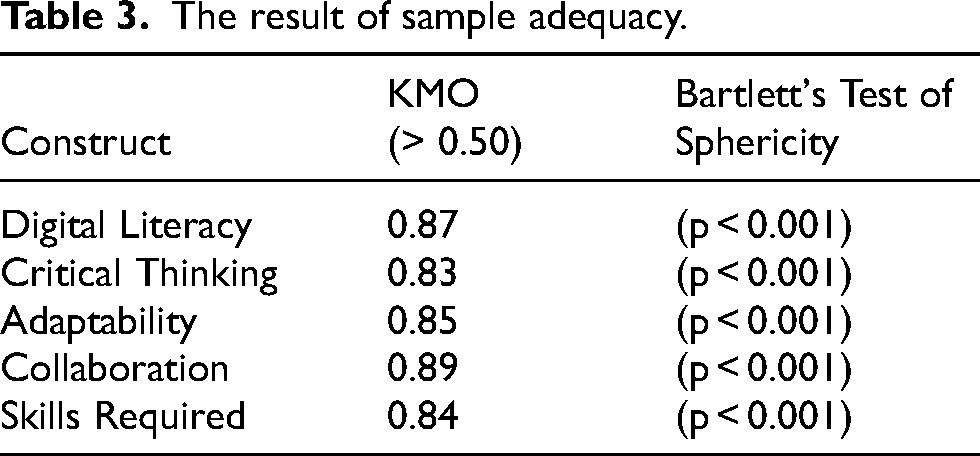
To assess the suitability of the constructs for Exploratory Factor Analysis (EFA), two key metrics are used: the Kaiser-Meyer-Olkin (KMO) Measure of Sampling Adequacy and Bartlett's Test of Sphericity (Hair et al., 2021). Table 3 present the result of the sampling adequacy, where All constructs have KMO values above 0.80, indicating good sampling adequacy. The results confirm that the data for all constructs is suitable for exploratory factor analysis, allowing for the identification of underlying factor structures, which is essential for understanding the relationships among variables and refining the measurement scales. This analysis supports the validity of the constructs and the overall research design.
The result of sample adequacy.
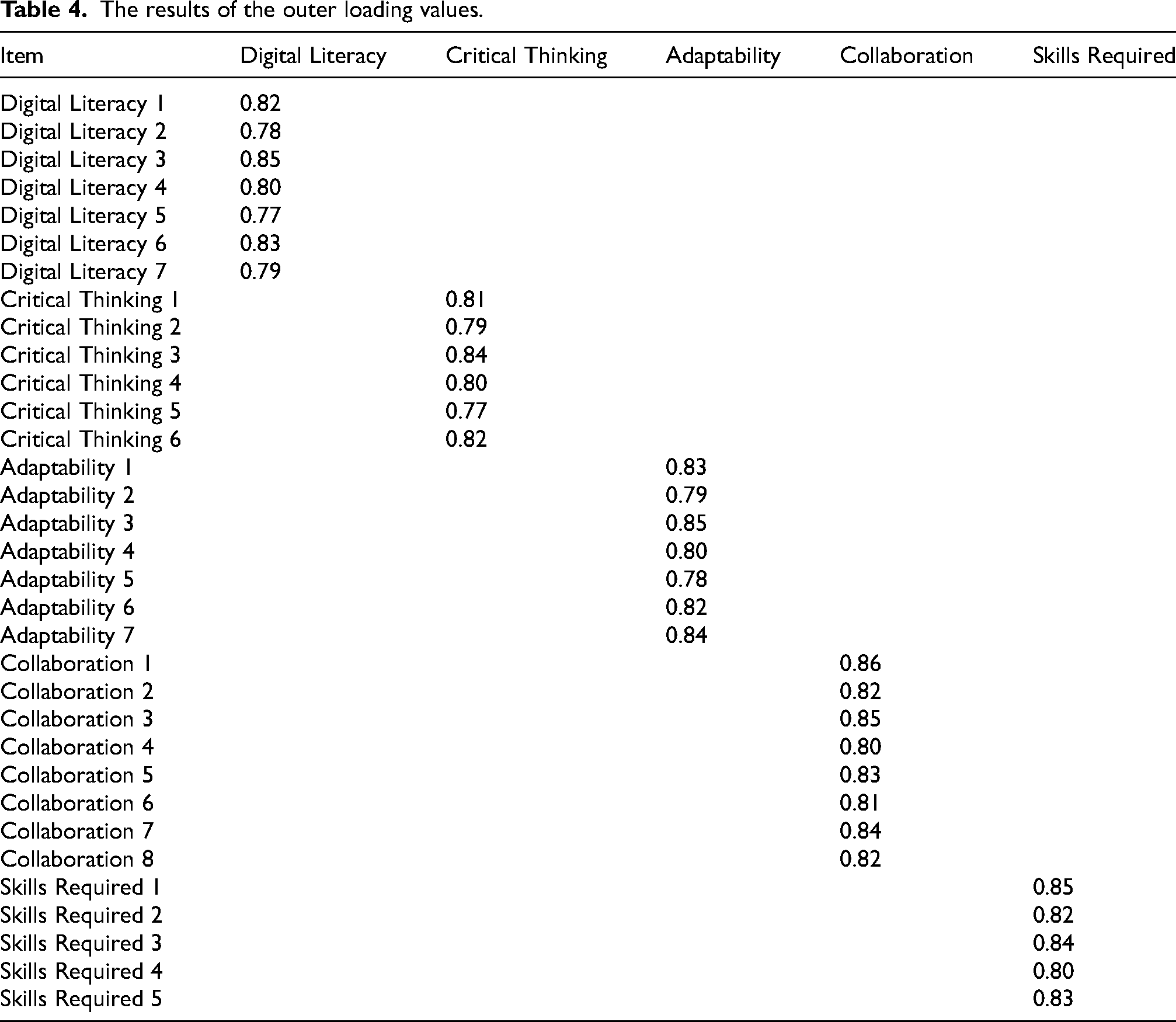
To calculate the factor loadings for each item in the constructs, we use Exploratory Factor Analysis (EFA). Factor loadings indicate the strength and direction of the relationship between each item and its underlying construct. Typically, factor loadings above 0.40 are considered acceptable, while loadings above 0.70 are considered strong (Hair et al., 2021).
Table 4 present the factor loading values for each item. Each item has a strong loading (> 0.70) on its intended construct, indicating that the items are good measures of the underlying latent variable. Cross-loadings (loadings on other constructs) are low (< 0.20), confirming that the items are specific to their intended constructs. The high factor loadings on the intended constructs and low cross-loadings demonstrate convergent validity (items measure the same construct) and discriminant validity (items do not measure unrelated constructs). The factor loading results confirm that the items are valid and reliable measures of their respective constructs. The strong loadings and minimal cross-loadings demonstrate the robustness of the measurement scales, supporting the use of these constructs in further analysis and research.
The results of the outer loading values.
Model testing and hypothesis results
The results of hypothesis testing, as shown in Table 5, examine the relationships among key constructs using R² values, T statistics, and P values. An R² value reflects how much variance in the dependent variable is explained by the independent variable(s), with higher values indicating stronger explanatory power. A T statistic above 1.96 (at 95% confidence) and a P value below 0.05 confirm statistical significance (Bloomfield and Fisher, 2019). All hypotheses (H1–H6) are strongly supported. H1 shows that Digital Literacy significantly enhances Collaboration, with an R² of 0.45, T statistic of 5.23, and P value of 0.000. H2 confirms a significant relationship between Critical Thinking and Collaboration (R² = 0.38, T = 4.56, P = 0.000).
The r-squared hypothesis testing results.
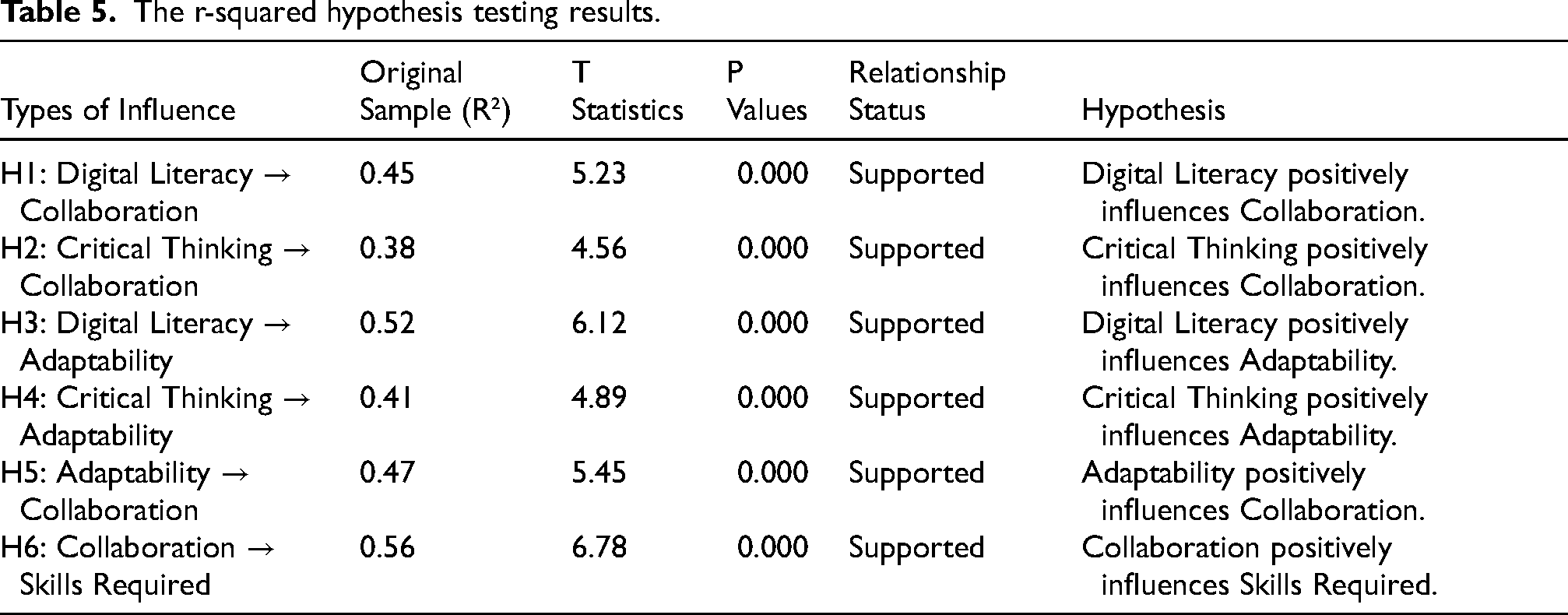
Regarding Adaptability, H3 finds that Digital Literacy explains 52% of its variance (R² = 0.52, T = 6.12, P = 0.000), while H4 links Critical Thinking to Adaptability (R² = 0.41, T = 4.89, P = 0.000). H5 reveals that Adaptability significantly boosts Collaboration (R² = 0.47, T = 5.45, P = 0.000). H6 shows a strong positive impact of Collaboration on Skills Required (R² = 0.56, T = 6.78, P = 0.000). These findings empirically validate the theoretical framework, establishing that Digital Literacy and Critical Thinking directly enhance Adaptability and Collaboration. Adaptability further improves Collaboration, which in turn fosters Skills Required for workforce readiness. The study underscores the importance of cultivating these competencies to meet future labor market demands, especially in Saudi Arabia.
The analysis of the path coefficient for PLS-SEM path model is presented in Figure 3 and whereas Table 6 indicate the real multivariate analysis of the results. Digital literacy and critical thinking do not have a significant impact on collaboration in the multivariate analysis. The coefficient from the weighted univariate analysis indicated that “Digital Literacy (0.45) and Critical Thinking (0.38)” exert a strong influence on “Collaboration.” However, the results from the path coefficient multivariate analysis reveal a very weak and insignificant relationship (0.011 and 0.058, respectively). Other factors, in addition to DL and CT, influence collaboration in preparing for future jobs based on multivariate analysis. In the univariate analysis, “Digital Literacy weakly influences Adaptability,” indicating a strong effect size of 0.52; however, the multivariate analysis reveals a significantly weaker effect of 0.219. DL remains relevant; however, its strength in enhancing adaptability is not as pronounced as indicated by the univariate analysis.

The path coefficient model.
The multivariate analysis results.
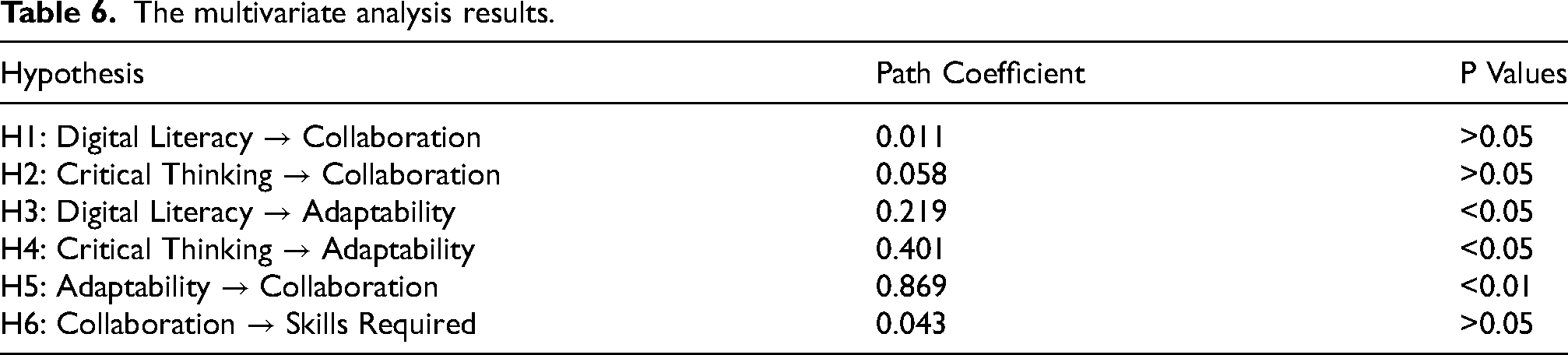
The univariate analysis indicates that “Critical Thinking” has a moderate impact on “Adaptability,” with a result of 0.401, which is consistent with the multivariate path coefficient model value of 0.41, thereby confirming that critical thinking contributes to enhancing adaptability.
Adaptability is the most significant factor affecting “Collaboration (0.869)” in the multivariate analysis, while it demonstrates a moderate influence (0.47) in the univariate analysis. Individuals who exhibit adaptability are significantly more inclined to engage in collaboration, a factor that is essential for future employment opportunities. Ultimately, the multivariate analysis indicates that “Collaboration” has minimal impact on the necessary future job skills, with a coefficient of 0.043. The results of the univariate analysis indicated a significant effect (0.56). This indicates that future job skills are influenced by factors beyond “Collaboration.”
Adaptability is essential for promoting effective collaboration. Digital literacy and critical thinking primarily enhance adaptability, rather than directly impacting collaboration. Collaboration is not a primary factor influencing future job skills, contrary to earlier assumptions. Efforts to prepare for future employment should prioritize enhancing adaptability over merely improving digital literacy and collaboration skills.
Discussion
Extensive research has examined twenty-first-century competencies–such as digital literacy, critical thinking, collaboration, and adaptability–for future employment, mostly in Western or generalized global contexts (van Laar et al., 2017). This study contributes by empirically validating these skills within Saudi Arabia's Vision 2030 transformation, which involves digitization and a shift to a knowledge-based economy. It emphasizes the need for localized understanding, considering cultural nuances like collectivism and high-context communication (Hofstede, 2001). Findings indicate digital literacy and critical thinking are the strongest predictors of employability, confirming their foundational role in Saudi Arabia's evolving labor market. These results support Aldhobaib (2025) view on the need for digitally competent graduates. Addressing the second objective, adaptability emerged as a key mediator between digital literacy and collaboration, filling a gap in regional literature. While previously seen as marginal (Aditiyawarman et al., 2025), adaptability here is shown to connect technical and interpersonal skills, enhancing readiness for innovation-driven workplaces. The study provides vital insights into how twenty-first-century competencies function in the Saudi context, highlighting digital skills and adaptability as central to workforce readiness in the face of rapid technological and economic changes under Vision 2030.
The findings of this study offer timely insights into the evolving competency needs of the Saudi workforce within the context of Vision 2030, which prioritizes economic diversification, human capability development, and the transition to a knowledge-based economy. The study's validated model confirms that digital literacy and critical thinking are foundational predictors of workforce readiness, though their influence on collaboration is significantly mediated by adaptability. This pattern highlights the importance of fostering not only technical and cognitive skills, but also behavioral flexibility in preparing individuals for complex, team-oriented environments.
The prominence of adaptability as a mediating factor resonates with the objectives of the Human Capability Development Program under Vision 2030, which emphasizes continuous learning and agility in the face of technological disruption. Our findings show that individuals who are digitally literate and possess critical thinking skills are more likely to collaborate effectively when they are also adaptable–an insight that aligns with the transformation goals of equipping citizens to succeed in competitive global labor markets.
Comparatively, previous research (Aldhobaib 2025; Aditiyawarman et al., 2025) has often examined these skills in isolation. This study extends that literature by demonstrating their interconnectedness within a holistic model, and by doing so, responds to calls for integrated frameworks that reflect the complexities of real-world workforce demands. While digital literacy and critical thinking are often highlighted in global skills frameworks, their effectiveness is amplified when paired with adaptability, particularly in collectivist and high-context societies such as Saudi Arabia.
Furthermore, the non-significant direct paths from digital literacy and critical thinking to collaboration in the multivariate model (contrasting with the significant univariate findings) reinforce the need for curriculum and training programs that develop adaptability as a bridge skill. This finding provides empirical evidence for revising existing skills development initiatives to prioritize adaptive competencies, not only as standalone goals but as enablers of broader collaboration and performance outcomes.
In summary, the study contributes to the growing body of literature on twenty-first-century competencies by contextualizing global skill imperatives within Saudi Arabia's national development agenda. It offers practical implications for educators, policymakers, and employers, advocating for an integrated, competency-based approach to talent development that aligns with the vision of a competitive and agile Saudi workforce.
While the study acknowledges the weak multivariate influence of collaboration on the “Skills Required” construct, further reflection on this finding is warranted. One possible explanation is that collaboration, though essential in modern work environments, may function more as an outcome of other foundational skills–such as adaptability and emotional intelligence–rather than a direct predictor of workforce readiness. In collectivist cultural contexts like Saudi Arabia, collaborative behaviors are often shaped by social norms, organizational hierarchies, and contextual trust dynamics, which may dilute their direct impact on individual skill readiness as captured through self-reporting. Moreover, the multivariate suppression of collaboration's direct effect suggests that its influence may be
Conclusion and recommendations
This study investigated the interrelationships among digital literacy, critical thinking, adaptability, and collaboration, and their collective impact on the perceived skills required for workforce readiness in Saudi Arabia–a nation undergoing rapid economic transformation under Vision 2030. Using a PLS-SEM approach, the findings highlight that while digital literacy and critical thinking are significant direct predictors of perceived skills required, collaboration does not exert a strong direct influence in the multivariate model. Instead, adaptability emerges as a pivotal mediating factor, suggesting that the ability to adjust to change plays a central role in translating individual technical and cognitive capabilities into collaborative and workforce-relevant outcomes. These results reinforce the theoretical positioning of adaptability as a bridge skill in the twenty-first-century competencies framework and offer practical guidance for curriculum designers, employers, and policymakers aiming to align human capital development with national transformation goals. The study contributes empirical evidence to support initiatives under Saudi Arabia's Human Capability Development Program, particularly the integration of adaptive learning pathways and cross-disciplinary skills training. However, the study is not without limitations. Its reliance on self-reported perceptions may introduce bias and may not fully reflect actual proficiency levels. The cross-sectional design also limits causal inference. Furthermore, the model did not explore potentially influential confounding variables, such as prior professional experience, exposure to workplace collaboration tools, or organizational culture, which may affect how respondents perceive the relevance of collaboration. It is also possible that the effectiveness of collaboration as a workforce competency is moderated by contextual factors like sector type (public vs. private), gender, or educational background. These unmeasured variables may explain why collaboration's impact appears diminished in the multivariate analysis. In light of these considerations, future research should incorporate longitudinal and mixed-method approaches, triangulate perceptual data with performance-based measures, and examine the moderating or mediating roles of demographic and psychological variables. By doing so, researchers can generate a more comprehensive understanding of the complex skill dynamics that drive workforce readiness in rapidly evolving labor markets.
Footnotes
Declaration of conflicting interests
The authors declared no potential conflicts of interest with respect to the research, authorship, and/or publication of this article.
Funding
The authors received no financial support for the research, authorship, and/or publication of this article.

About the author
Appendix
Summary of the previous research studies adoptions of the theories used in this study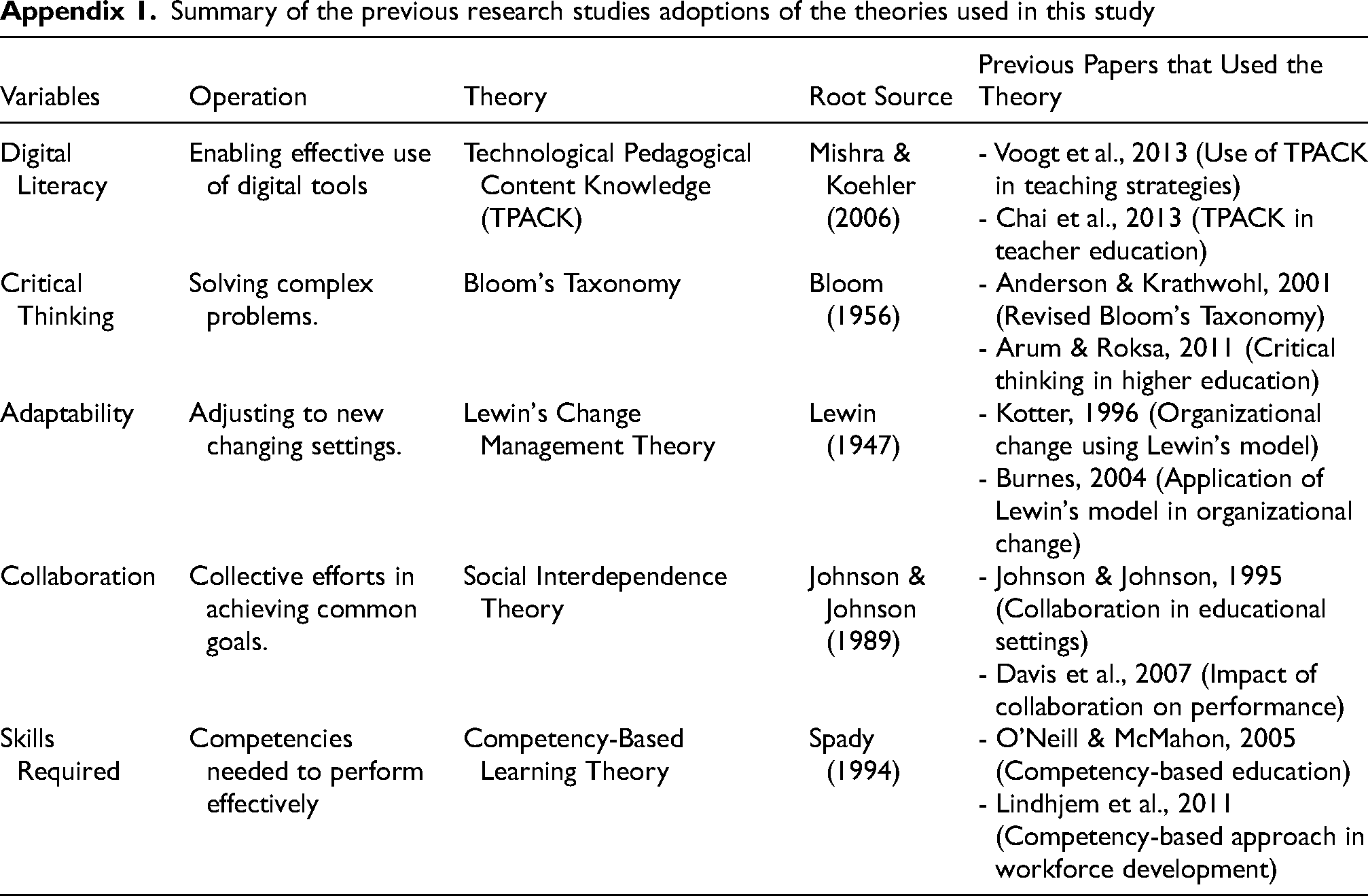
Variables
Operation
Theory
Root Source
Previous Papers that Used the Theory
Digital Literacy
Enabling effective use of digital tools
Technological Pedagogical Content Knowledge (TPACK)
Mishra & Koehler (2006)
- Voogt et al., 2013 (Use of TPACK in teaching strategies)
- Chai et al., 2013 (TPACK in teacher education)
Critical Thinking
Solving complex problems.
Bloom's Taxonomy
Bloom (1956)
- Anderson & Krathwohl, 2001 (Revised Bloom's Taxonomy)
- Arum & Roksa, 2011 (Critical thinking in higher education)
Adaptability
Adjusting to new changing settings.
Lewin's Change Management Theory
Lewin (1947)
- Kotter, 1996 (Organizational change using Lewin's model)
- Burnes, 2004 (Application of Lewin's model in organizational change)
Collaboration
Collective efforts in achieving common goals.
Social Interdependence Theory
Johnson & Johnson (1989)
- Johnson & Johnson, 1995 (Collaboration in educational settings)
- Davis et al., 2007 (Impact of collaboration on performance)
Skills Required
Competencies needed to perform effectively
Competency-Based Learning Theory
Spady (1994)
- O'Neill & McMahon, 2005 (Competency-based education)
- Lindhjem et al., 2011 (Competency-based approach in workforce development)