







Abstract
Use of metakaolin (MK) as a partial substitute for cement is studied with agro-waste materials of rice husk ash (RHA) and sugarcane bagasse ash (SBA) to target up to M50 concrete grade in normal and acidic curing environments. Experimental work and ANOVA analysis indicate that 30% partial replacement of cement by SBA 15%, MK 5% and RHA 10% is the optimum combination; achieving the highest mechanical strengths for tested grades of concrete. Strength improvements are noted at 10% and 20% under normal and acidic curing respectively; while chloride penetration and permeability are reduced. Noteworthy, the combination is achieving a high strength of more than 61 MPa (28 days) even in acidic curing that is closer to M60 concrete grade.
Introduction
Rice husk ash (RHA) and sugarcane bagasse ash (SBA) are agricultural waste materials with pozzolanic properties derived from rice mills and sugar industries, respectively, as schematically shown in Figure 1.
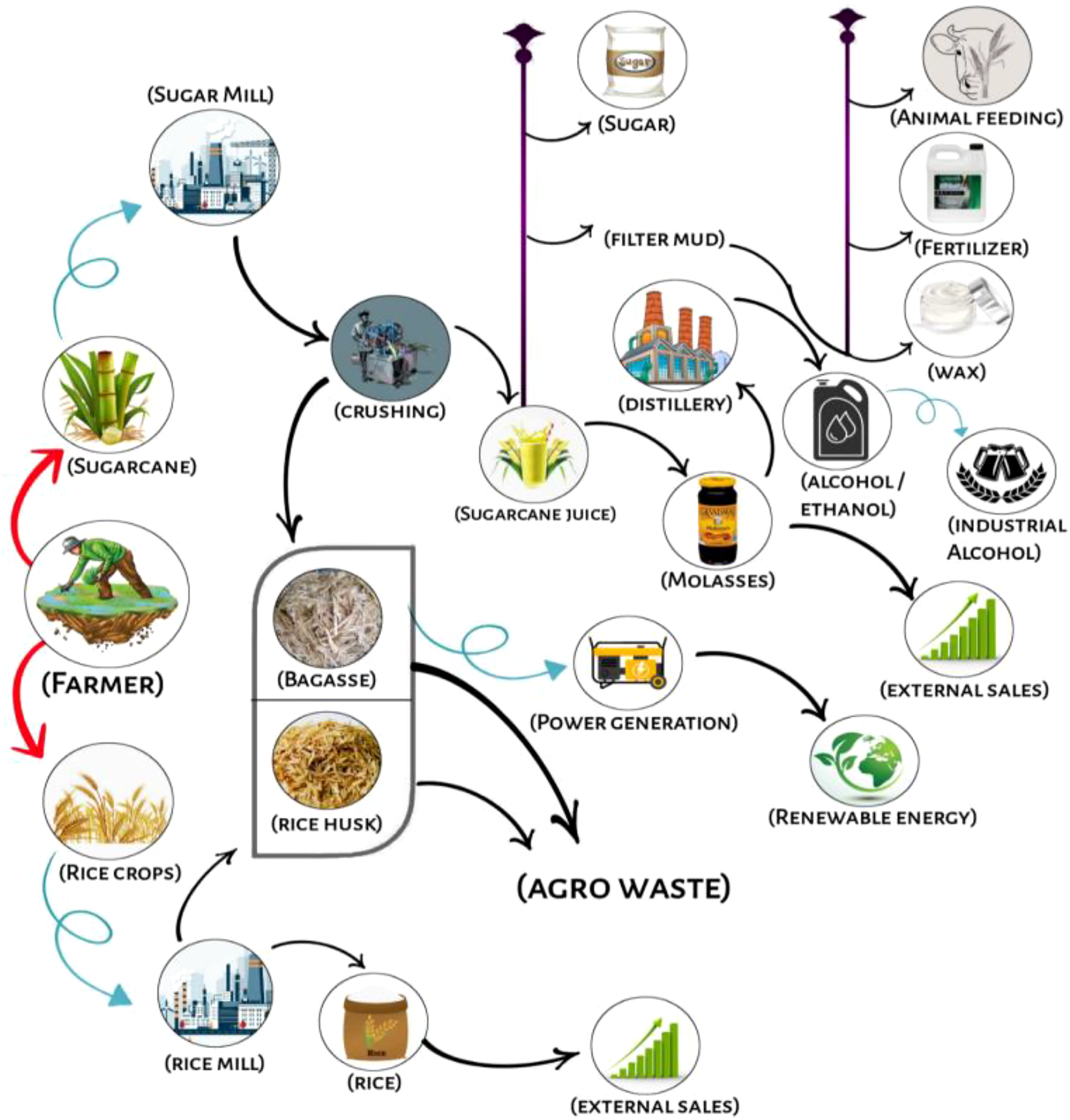
General schematic of agro-waste production (bagasse and rice husk)
India is the world's second-largest producer of sugarcane after Brazil, with India producing around 300 million metric tonnes of sugarcane each year. Brazil produces roughly 39% of the world's sugarcane, while India accounts for 20% of world sugarcane production; China and Thailand produce 6% and 5% of sugarcane, respectively 1 . For every 1000 kg of sugarcane that is extracted, 270 kg of wet bagasse is extracted. At temperatures ranging from 300 to 600 degrees Celsius, approximately 62 kilogrammes of SBA are generated for each sugarcane metric tonne 2 . A certain amount of bagasse is utilized as fuel in the sugar-producing process 3 . SBA is anticipated to be an effective SCM that might replace some Portland cement in concrete due to its high glass content, small particle size, and reasonably stable chemical composition. SBA is a pozzolanic substance with a higher silica content than cement that might partially substitute cement in concrete 4 . When loose lime and silica-containing pozzolanic material come into contact, calcium silicate hydrate gel (CSH-G) develops which improves concrete's mechanical properties (MPC) 5 . Zhang et al. 6 investigated SBA's compositional benefits as a supplemental cementitious material (SCM), in this research SBA was compared with the coal-combustion fly ash (CFA) in terms of chemical compositions, morphology, glass content, chemical status and element distribution. It is observed that SBA has a stable chemical composition, and fine particles which are suitable as SCM in concrete and high silica content. Deepika et al. 7 investigated SBA's performance as a component of unburned bricks, paver blocks, and alkali-activated concrete. It was discovered that when river sand was added to blended mixes containing 10% and 20% SBA, the permeability was much lower than in control specimens and the crusher sand mixes followed similar observations. Ganesan et al. 8 investigated the effect of partial replacement of cement by SBA on concrete properties which and showed that 20% OPC substitution by SBA is highly efficient in producing early strength, reducing impermeability, and increasing concrete resistance to chlorides. Loganayagan et al. 9 investigated SBA as a substitute SCM, in this study the bagasse collected from various juice shops was dried for 2 days then converted to SBA by burning. The obtained SBA is used as partial replacement of cement in concrete, the result shows the highest strength achieved at 10% cement replacement. Wagh and Waghe 10 investigated the utilization of SBA in SCC, it is observed that MP's of concrete are enhanced by using the SBA at a higher proportion of SBA while the fresh properties of concrete are declined marginally. Nikhade et al. 11 investigated the utilization of SBA for the development of filler material that can reduce the burden of disposal of agro-waste, in this study filler material is prepared by using SBA, Blast furnace slag (BFS) and glass fibre as reinforcing material. It is observed that the compressive strength (CS) of filler material increases as cement content increases from 10% to 20% while density of filler material decreases as percent of glass fibre increases. Wu et al. 12 investigated the sustainable, highly efficient concrete (HEC) developed using SBA to cement. By substituting SBA for cement in HEC, paste shrinkage is reduced, workability is improved, and compressive strength remains constant. Memon et al. 13 investigated using SBA in concrete by replacing cement in weight fractions of 10%, 20%, 30%, and 40%. The MPC, such as hardened density and CS, improved when using SBA instead of cement.
Rice husk is a significant byproduct of paddy rice. In the world, India stands second in rice production after China. India produces about 120 million tons of rice crop annually 14 . The rice husk put into the furnace burnt up to a temperature between 600o-700°C for 6 h. Then after the cooling, the ash obtained is white in colour &its texture is fine. The chemical analysis of rice husk ash can be obtained by X-ray fluorescence. During milling, paddy rice yields around 20% of the husk, which contains approximately 75% volatile organic matter. When the husk is burned, around 25% converts into ash, known as RHA. Compared to cement, RHA has significantly more silica—greater than 80%. When these RHA are used in correct proportions, they assist in preventing environmental pollution while also producing cost-effective concrete. It may also be necessary in the development of durable concrete. As a result, RHA can be used in concrete to partially replace the cement 15 . Hu et al. 16 suggested that residual RHA enhances the CS of mortar, it has also developed the sulphate resistance by forming the C-S-H gel. Jung et al. 17 discovered that 10% RHA and 10% lime powder, when combined, perform exceedingly well in terms of strength and voids, resulting in an excellent pozzolanic reaction that increases the formation of CSH. Madandoust and Ghavidel 18 studied that 10% of glass powder and 5% of RHA are effective combinations for the development of pozzolanic activity. The durability and strength of self-compacting concrete (SCC) can be increased by replacing 10% to 15% of the cement with RHA 19 .
According to Lawal et al. 20 , unburned crushed rice husk can reduce cement by up to 15% while maintaining the required CS, mainly when WA is not a concern. Nisar and Bhat 21 investigate that RHA can be used as a 15% replacement for cement to improve strength and corrosion resistance. Huang et al. 22 investigates that the refined pore structure formed by adding RHA improves the CS and impermeability of ultra-high-performance concrete. Muthadhi and Kothandaraman 23 investigated the use of RHA up to 20% in place of traditional Portland cement and found that the concrete CS was higher than that of the reference mixes. However, RHA concrete durability was higher for all doses when compared to the reference combinations. Abolhasani et al. 24 investigated the addition of RHA into calcium aluminate cement (CAC) concrete to stabilize the long-term qualities of the CAC hydration product and limit its phase transition. In this study, there were several concrete mixes with various quantities of RHA (0, 2.5, 5, 7.5, and 10%) as replacement of cement, with maximum strength achieved at 5% replacement of RHA.
Metakaolin (MK) is another type of pozzolanic material. As per the United Nations Framework Classification for Resources (UNFC) mineral ore for metakaolin in India is about 2705.21 million tonnes. The sources of metakaolin are scattered in India in different states 25 . Metakaolin is formed when kaolinitic clay is calcined at temperatures ranging from 650 to 800 degrees Celsius. The silica content of metakaolin is higher than that of cement. Sankar & Ramadoss 26 investigated the performance of concrete by using Metakaolin and silica fume, it is observed that the engineering properties of concrete are enhanced and the most suitable results are obtained at 10% of MK & 10% of SF. Zhan et al. 27 reviewed the use of MK in concrete, from studying the various literature it found that addition of nano MK improves concrete characteristics, particularly MPC, at an early age. Barbhuiya et al. 28 investigates the use of MK which replaced the cement by 0, 5, 10 and 15 percent, the result shows that the MK modifies the cement paste in four ways. Firstly, the pozzolanic process converts portlandite to CSH-G; secondly, porosity is reduced; thirdly, hydration nucleation sites are formed; and finally, the proportional values of various CSH-G phases are changed. Ahmad et al. 29 reviewed the use of MK as pozzolanic material in concrete, from the various literature it is observed that 10% to 20% of the use of MK in concrete has significantly improved strength & durability properties of concrete. Rong et.al 30 investigated the effect of MK on mechanical & microstructural properties of ultra-high performance cement-based composite (UHPCC), and results show C-S-H in mortar also improve the durability properties of UHPCC. Paiva et al. 31 investigated the effect of high-range water reducer (HRWR) additive and deflocculated metakaolin particles in concrete; it was found that this combination had improved performance and efficiency as well as an impact on workability. Ferreira et al. 32 investigated strength and DOC by using MK in concrete as partial replacement of cement between 10%-20%. It is observed that MK enhances strength, durability, and chloride ion penetration (CP) resistance properties of metakaolin-containing concrete.
Kannan 33 investigated the ternary system of self-combustion RHA and MK in combination in SCC, which can modify OPC attributes and improve several SCC qualities effectively. Gill and Siddique 34 investigated concrete by using MK and RHA. In this study, MK replaced the cement in three proportions, 5%, 10% and 15% while RHA replaced the sand about 10%. It is observed that there was a significantly improved durability of concrete (DOC). The OPC has very less resistance against acidic attacks. When the PH value of any solution is less than 4, the OPC is unable to resist it. Sulphuric acid (H2SO4) is very detrimental in deteriorating the concrete structures 35 . The acid rain particularly in the vicinity of industrial areas, softened, pulpified & cracked formations in the concrete material finally leads to damage to the structure 36 . The use of metakaolin in concrete reduces the effect of acidic environment on concrete 37 .
A microstructural investigation confirmed the promising trend of the results. Table 1 highlights key points from recent developments to assess the overall impact of SBA, RHA and MK and the research gap for new concrete.
Summary of recent literature on SBA, RHA and mk
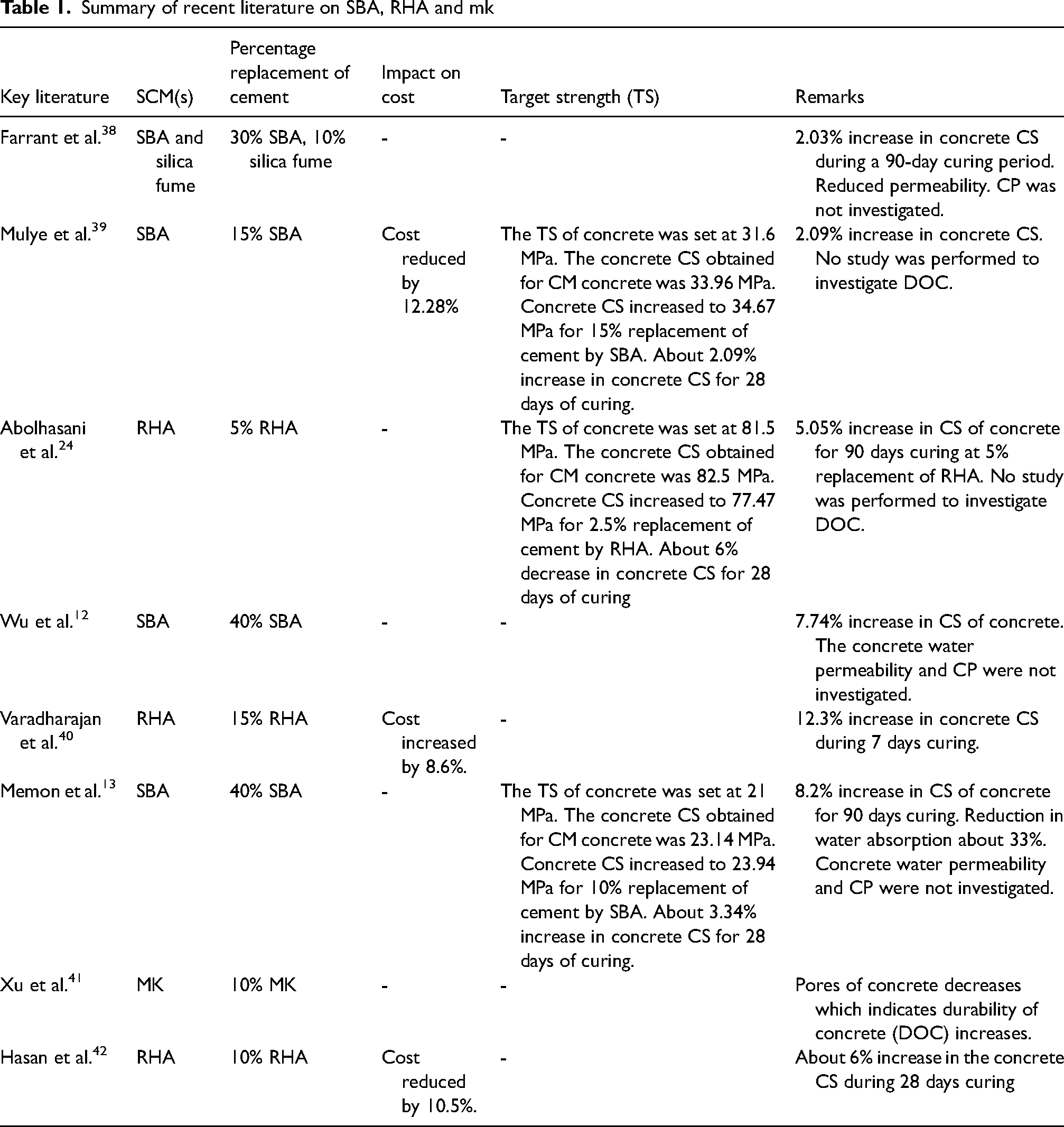
From the majority of the literature review, the key takeaways are SBA and RHA were used to improve the strength parameters of concrete whereas MK was used to improve the DOC. Most of the studies focused on the performance of concrete mixes in a standard environment. The proportions of replacement of cement by these materials range from 5% up to 40%. SBA and RHA are agricultural waste, while Kaolin clay is calcined to produce metakaolin. The literature review also observed that the concrete with SBA, RHA, and MK has not been investigated in an acidic environment. Moreover, the impact of including MK is to be studied for affecting the concrete strength when used with SBA and RHA in an acidic environment. The novelty of the present work is that the SBA, RHA, and MK are used in combinations in concrete as a partial replacement of cement to study the impact on concrete strength and DOC. The work is focused on the maximum utilization of agricultural waste (SBA and RHA). The effect of both the normal as well as the acidic environments was examined on the performance of the new concrete mix to be able to achieve target strength. The response surface method (RSM) is performed on SBA, MK, and RHA combinations to develop the regression models for compressive strength and RCPT value of concrete. The developed regression model for compressive strength & RCPT defines the dependency of strength & durability. The developed models help to predict the compressive strength & RCPT values of concrete and compare the predicted values with experimental values.
Properties of basic ingredient of concrete
Table 2 indicates the physical properties of the ingredients in concrete. Tests were performed on the cement, fine aggregate and coarse aggregate as per the guidelines mentioned in the respective standards mentioned therein. Figure 2 shows tests performed on cement, sand & aggregate.
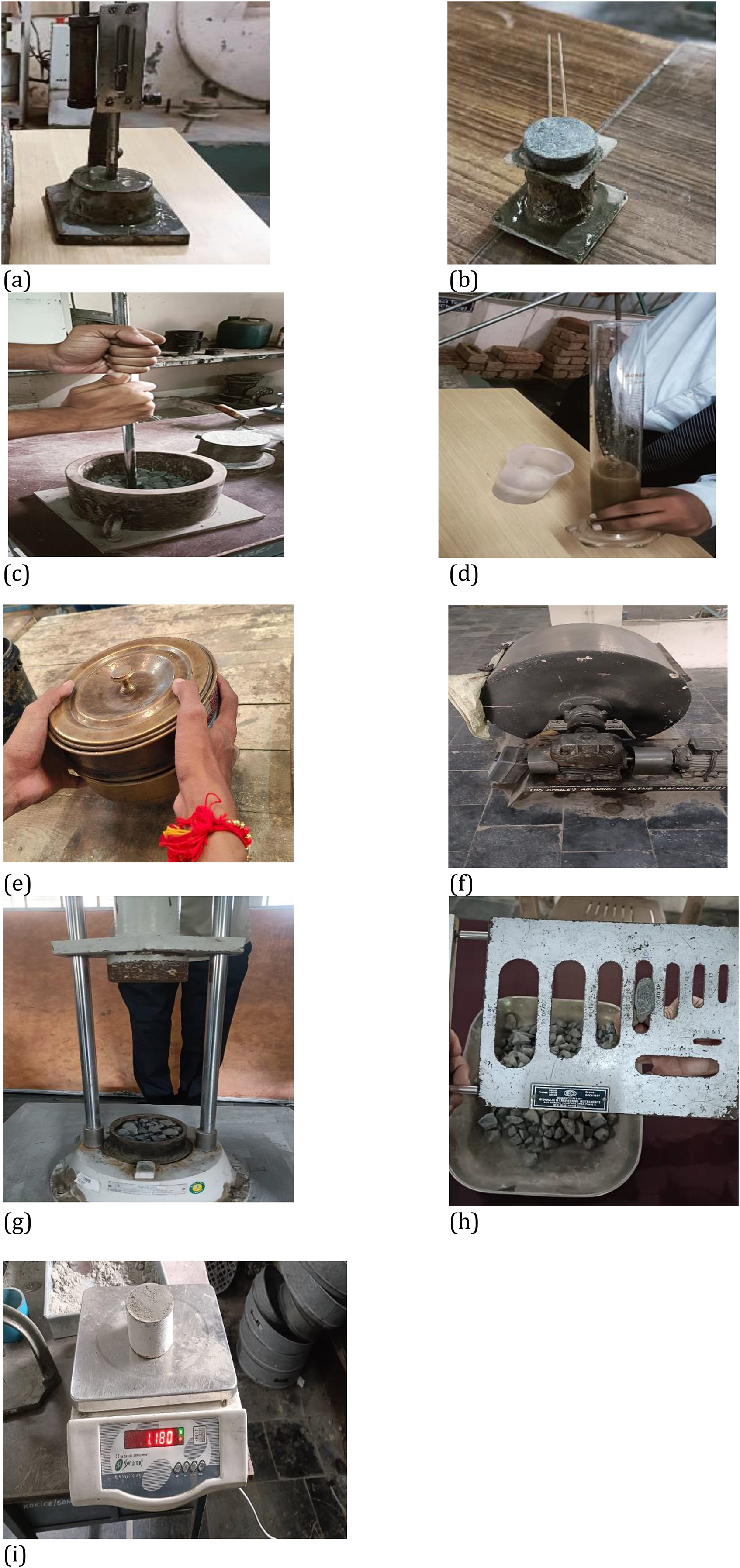
(a) consistency test on cement, (b) soundness test on cement, (c) crushing test, and (d) bulking of sand test, (e) fineness test on cement, (f) Los Angeles test on coarse aggregate, (g) impact test on coarse Aggregate, (h) flakiness Index test, and (i) density test on cement
Physical properties of concrete ingredients
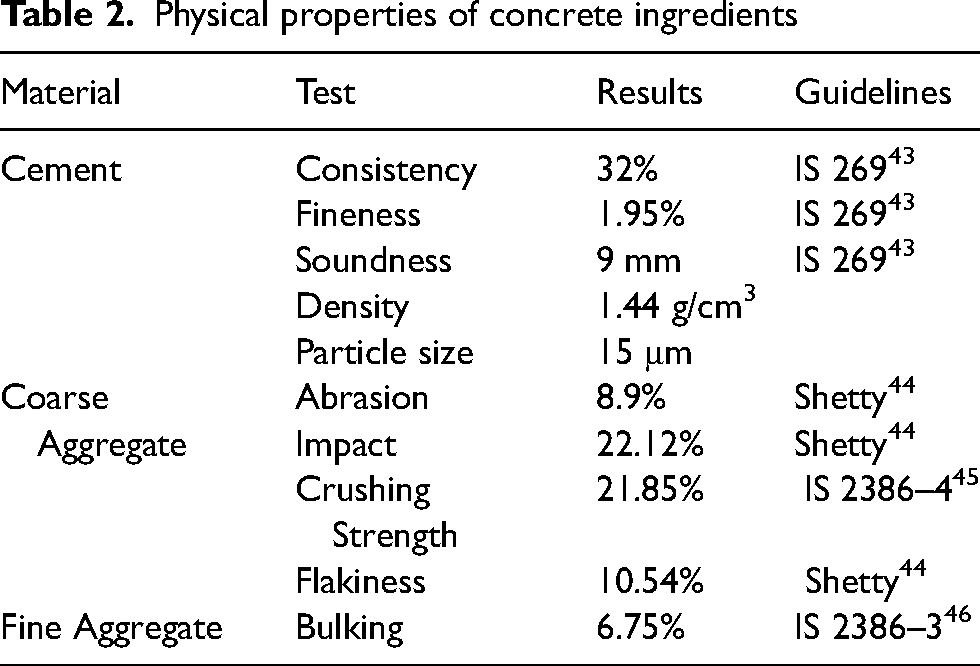
The percentage of water necessary for making the cement paste workable can be determined by the cement consistency test. Cement fineness has a significant impact on the way quickly it hydrates; as fineness increases, more surface area is available, which accelerates the rate of hydration and accelerates the development of strength. To understand the variances in cement volume, a soundness test is performed on cement. The proportion of cement in the concrete mix can be determined using a density test on cement. Concrete curing qualities and cement strength are affected by the particle size distribution. Coarse aggregates are tested for hardness using the Los Angeles Test and toughness using the Impact Test. The resistance to sudden load is determined by the crushing strength test. The suitability of coarse aggregates for construction can be determined by the Flakiness Index. Bulking of sand ensures the proportion of concrete mix & maintains the structural integrity. All the test results satisfy the standards of Indian standard code IS459–2000.
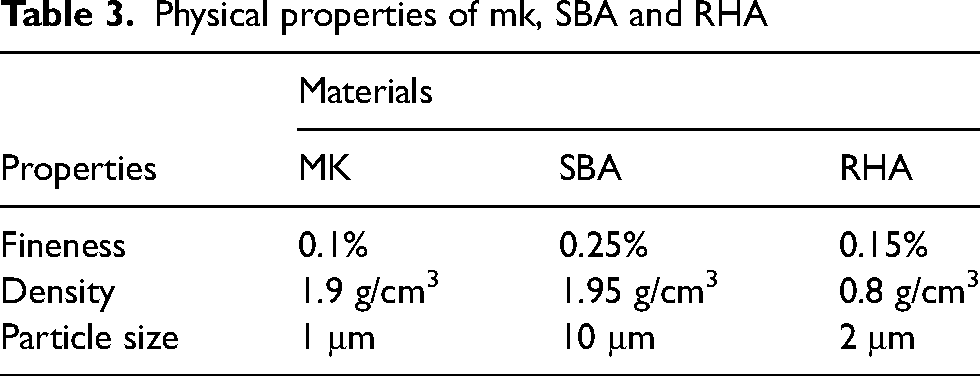
Materials were procured from different sources as per the availability of materials. MK was procured from supplier Apple Chemie, Nagpur. SCAB and RHA are agricultural waste and were available free of cost. SBA was taken from Wainganga Sugar Plant Dewada, Tumsar, District Bhandara, while RHA was taken from Rice Mill Khapa, Tumsar, District Bhandara. Collected materials are shown in Figure 3. Following the Indian standard code IS:4031(Part11)-1988 that was used to find the density of materials, and IS 4031(Part1):1996 (reaffirmed 2005) for fineness of materials; the physical properties are shown in Table 3.

Materials and their corresponding SEM, (a) and (b) mk, (c) and (d) SBA, and (e) and (f) RHA
Physical properties of mk, SBA and RHA
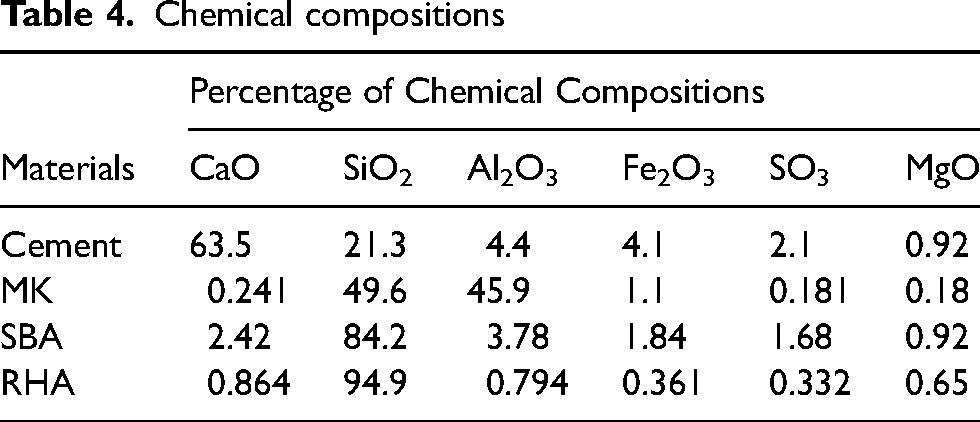
Chemical compositions
The SEM of MK in Figure 3(b) shows the surface of metakaolin. It has an aggregated spherical, rod-like aggregate structure. According to SEM, the particle size of MK is 1 μm. The SEM of SBA is shown in Figure 3(d), where the prismatic particles with sharp edges represent silicon and oxygen, and the irregular porous particles represent the organic components of the SBA. SEM is used to find the particle size of the materials 47 . SEM shows that the particle size of SBA is 10 μm. The SEM of RHA is shown in Figure 3(f), where the irregular shape represents the presence of organic material, and the regular and sharp edges indicate the availability of silicon. According to SEM, the particle size of RHA is 2 μm. Figure 4 depicts the variation in particle size distribution of cement, MK, SBA, and RHA. It is also discovered that the particle sizes of MK, SBA, and RHA are finer than those of cement, which has a significant impact on the slump value of concrete. The SEM of metakaolin indicates the surface having more voids, elongated structures having a rod-like appearance, some of the particles are shapeless and some are spherical 48 . The SEM of SBA comprise various shapes of particles indicating the surface having irregular, prismatic & fibrous particles49,50. The SEM of RHA indicates the surface has sharp edges & irregular shape particles 51 . SEM of Metakaolin shows the spherical shapes of particles which contribute to excellent fluidity of concrete & improve workability. In addition, using less water to mix spherical cement leads to the creation of concrete that is stronger and more durable 52 . The tensile and fracture strengths could be substantially enhanced by fibrous shape particles 53 . The particle size of MK, SBA & RHA are smaller than cement particles, a smaller particle size generally leads to an increase in hydration rate and, therefore, improved early attributes such as higher early strengths for a given water-to-cement (w/c) ratio 54 .
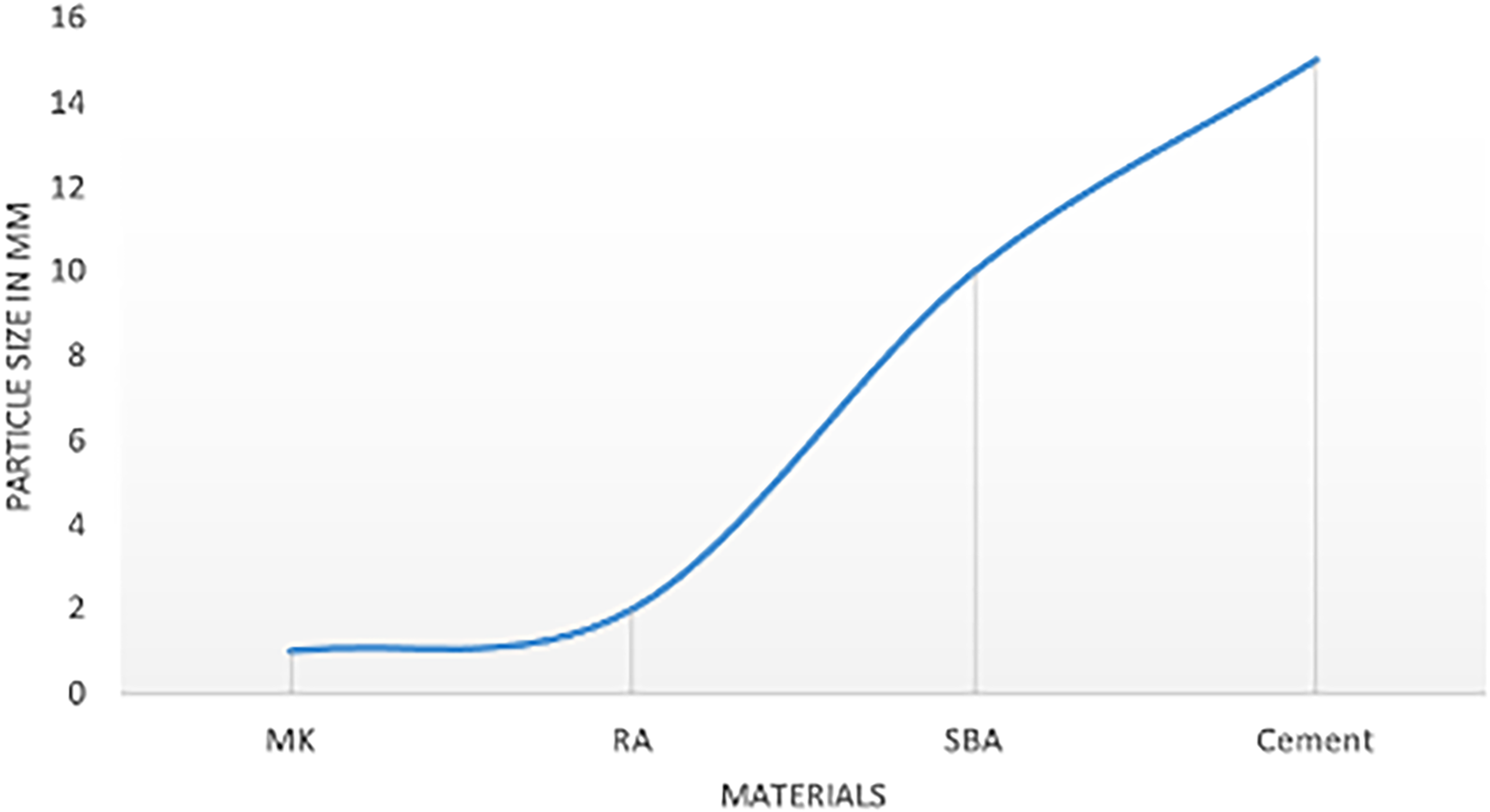
Pozzolanic materials particle size distribution
Table 4 shows the chemical constituents of the materials used in this specific experimental program using X-ray fluorescence: MK, RHA, and SBA. The chemical composition shows that the RHA has a higher silica concentration (SiO2) than the SBA and MK. The RHA has a silica content of 94.9%, while the SBA and MK have 84.2% and 49.6%, respectively. While SBA contains 2.42% lime, MK and RHA contain very little lime (CaO). The alumina (Al2O3) concentration of SBA and RHA is deficient compared to MK. MK has a high alumina content, which is approximately 45.9%. Figure 5 compares the chemical compositions of cement, MK, SBA, and RHA. Strength and binding properties are given by calcium oxide (CaO), an essential component of cement. silicon dioxide (SiO2), gives it strength by reacting chemically with calcium and producing tri- and di-calcium silicate. Al2O3 (aluminum oxide) strengthens, improves durability, and increases reactivity. Iron oxide (Fe2O3) increases flexural strength, durability, and mechanical performance. Cement setting time is controlled by sulphur trioxide (SO3). The strength, setting time, and microstructure of cement are all significantly influenced by magnesium oxide (MgO). In MK, SBA & RHA chemical composition SiO2 is only comparable with cement, other chemical compositions are negligible. The content of SiO2 is very high in MK, SBA & RHA as compared to cement hence strength & durability of concrete are increased to some extent.
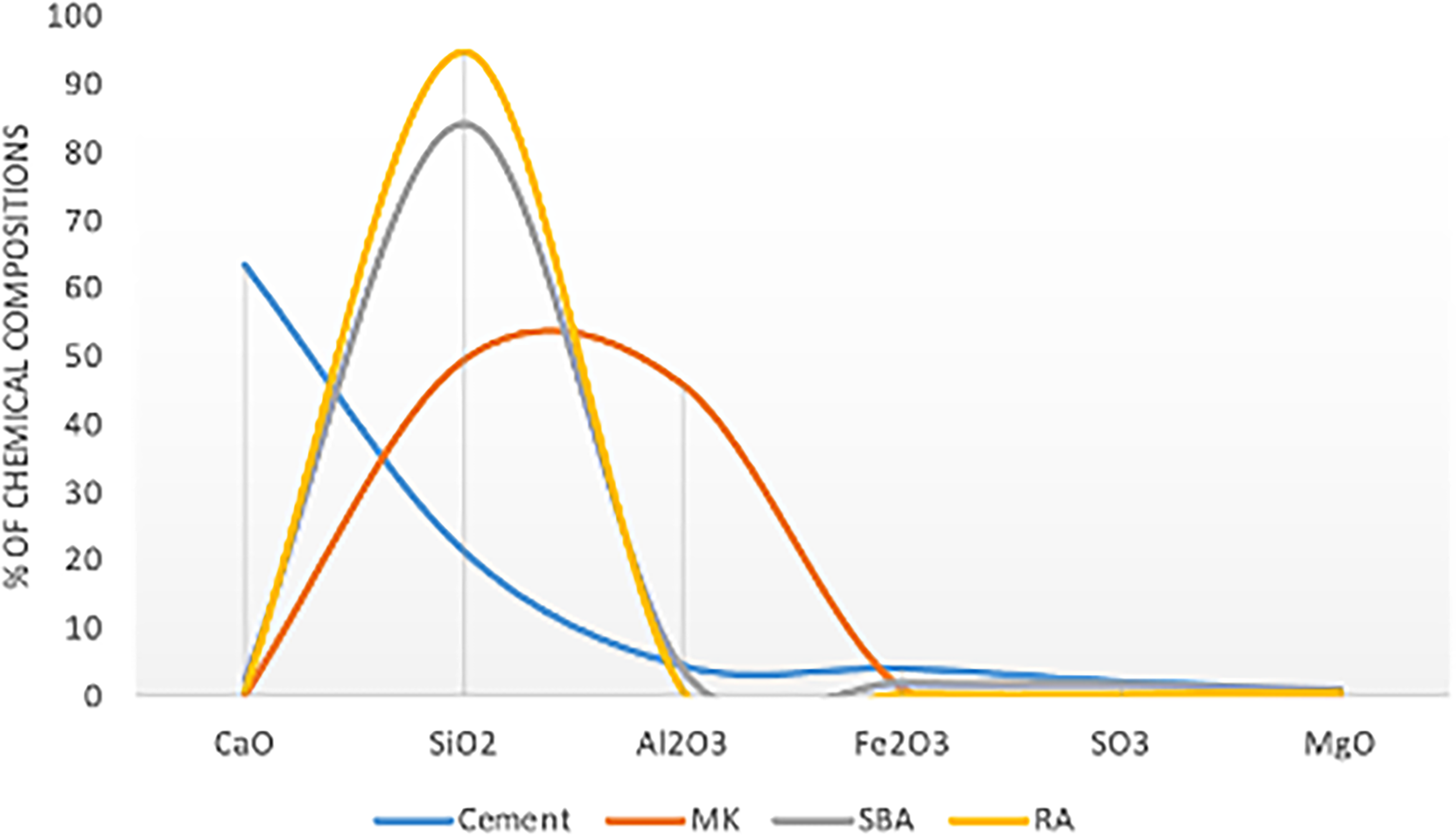
Pozzolanic materials chemical compositions
Percentage of materials in concrete
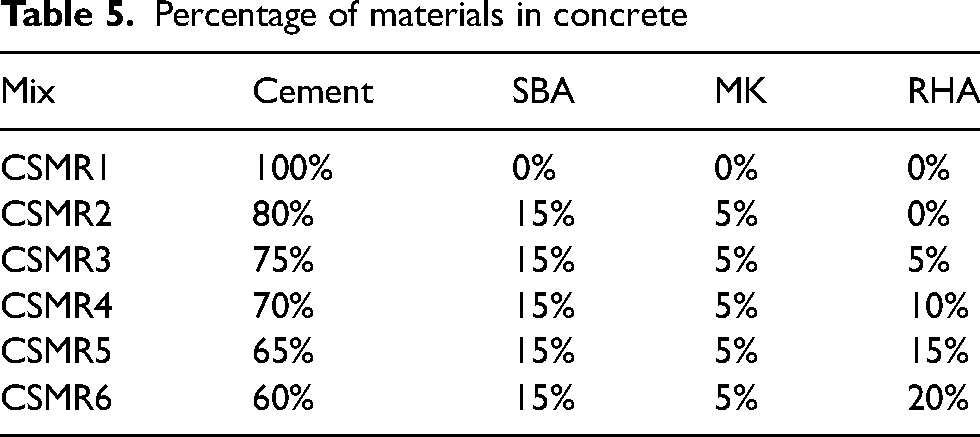
The percentage of cement replacement by SBA, MK, and RHA was determined based on chemical composition and literature. As SBA has a higher calcium oxide concentration than the other two materials, it accounts for 15% of the cement in the concrete set mix proportions. MK contains very little calcium oxide and is expensive, its percentage in concrete is set at 5% of the cement. However, as it is finely ground and penetrates concrete pores, it reduces the permeability of the concrete. The percentage of RHA varies from 5% to 20% since it contains very little calcium oxide, but it is easily available and has a very high silica content. Therefore, it is necessary to choose the ideal proportion so that the greatest quantity of RHA may be mobilized for use in the production of sustainable concrete. Table 5 shows the percentage of cement, SBA, MK and RHA in concrete, while Table 6 sums up the subsequent quantities of the materials used.
Quantity of materials different proportions
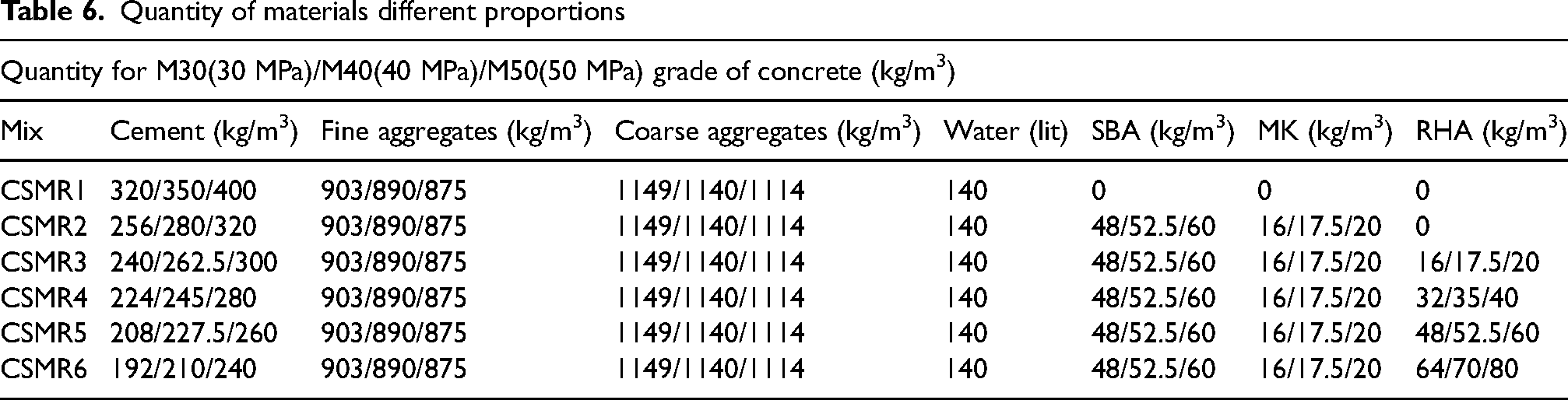
Quantity of materials different proportions
Table 6 indicates the quantity of cement, fine aggregate, coarse aggregate, water, SBA,MK & RHA for M30 (30 MPa),M40 (40 MPa) & M50 (50 MPa) grades of concrete.
Concrete fresh properties
Figure 6(a) compare the density and workability of fresh concrete, indicating that the density of the CM of CSMR1 is achieved as required. Because RHA has a lower density than cement, it lowers the density of the concrete. As SBA and MK have a higher density as compared to cement, the mix CSMR2 has the highest density because it does not has RHA. The concrete density in the mixes CSMR3, CSMR4, CSMR5, and CSMR6 decreases but remains higher than that of CSMR1. Concrete slump increases for CSMR2, CSMR3, CSMR4, CSMR5, and CSMR6 when compared to mix CSMR1. In this research 2 per cent superplasticizer is used in all the combinations which reduces the water demand 61 Further, the use of metakaolin improves the workability of concrete 62 .5% to 10% of user of metakaolin exhibit more slump as compared to control mix concrete Hence the slump of concrete increases, especially for higher RHA content in CSMR5 and CSMR6 (Figure 6(b)). Overall, the densities of concrete grades vary little while the slump varies with the properties of supplementary materials.
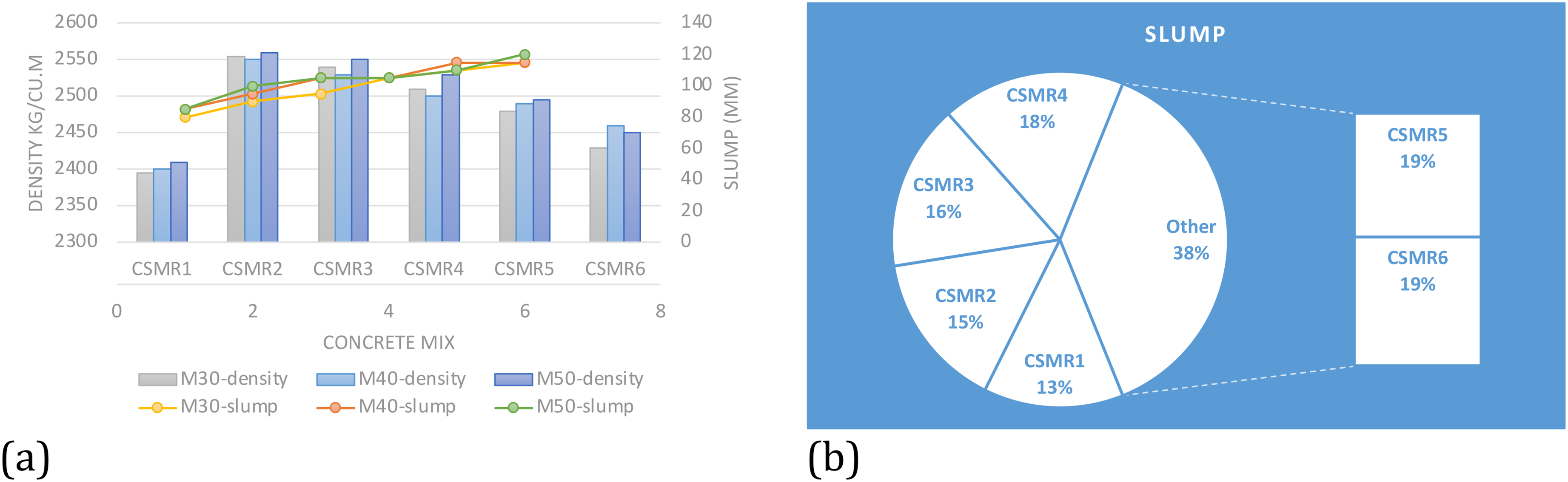
Comparison of density and slump of concrete of grades, 30 mpa, 40 mpa, and 50 mpa
Concrete is a robust and long-lasting building material, but water contains ionised hydrogen (H+) and acid, resulting in a lower pH value. Several factors can cause concrete to lose strength over time when exposed to acidic environments, such as through curing water. These elements could include chemical reactions 63 , cement caste dissolution 64 and calcium leaching 65 . The impact of incorporating MK, SBA and RHA will have direct consequences on such properties of concrete.
Stress-Strain response
The compressive CST stress-strain relationship of the best combination of CSMR4 under the conditions N1, A1, N2, and A2 is determined using standard concrete cylinders 150 mm in diameter and 300 mm in height. The CM combination CSMR1 was also tested for N1 and A1 conditions. The tests are carried out using a compression testing machine with a capacity of 1000 kN. The average stresses throughout a central 20 cm length are measured in the uniaxial compression test using an extensometer attached to the specimen surface, as shown in Figure 7(a). The tests are carried out at a constant displacement rate to obtain the entire stress-strain curve. The test procedure adheres to C469 guidelines 66 .
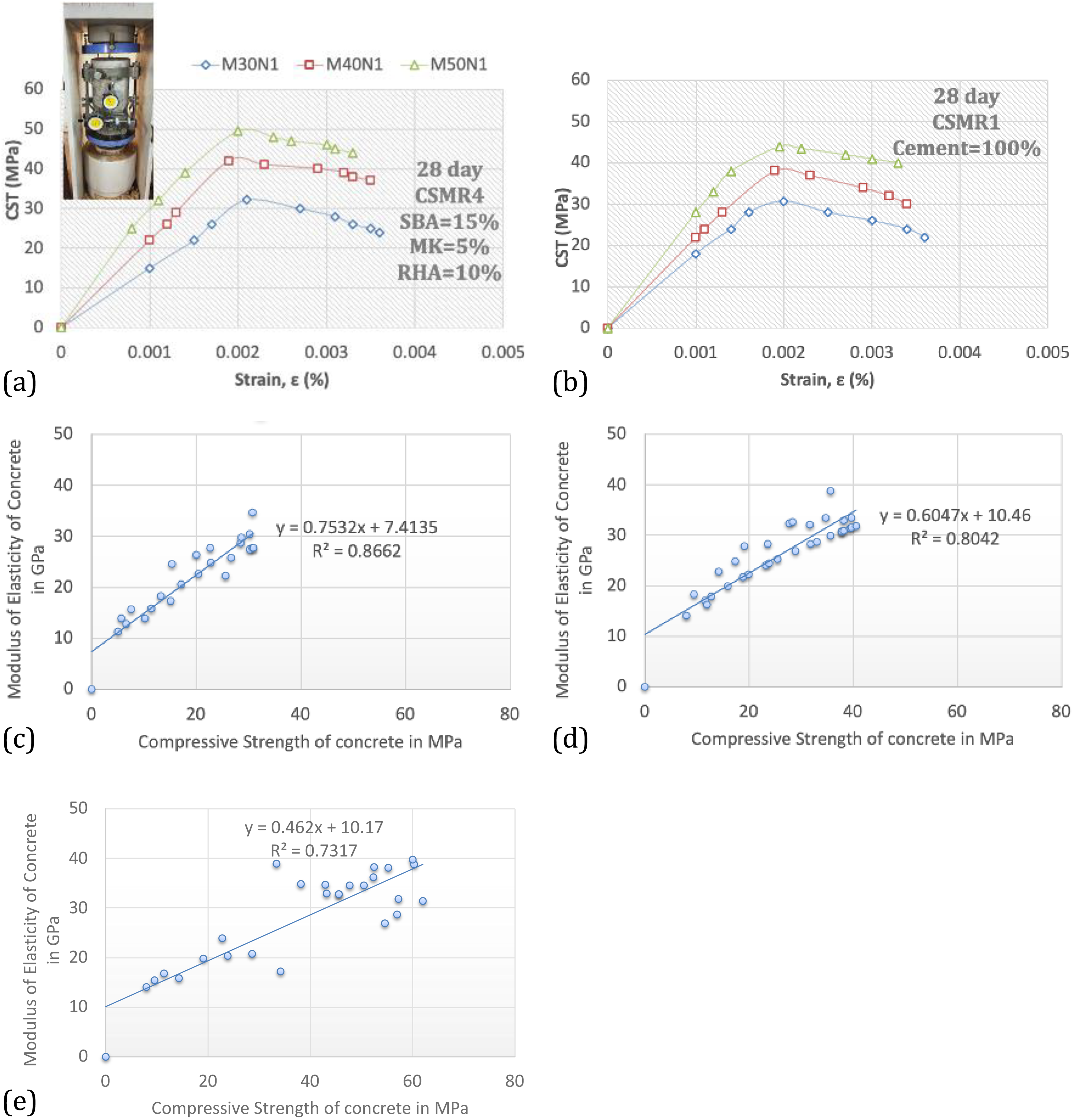
Stress-strain relationship under N1 and the association between cs and initial tangent modulus of grades, (a) CSMR4, (b) CSMR1, (c) M30 (30 MPa) (d) M40 (40 MPa) and (e) M50 (50 MPa)
The stress-strain response is needed to determine the elastic modulus at a point on the ascending branch of the diagram. Figure 7(a) depicts stress-strain curves for CSMR4 under condition N1, whereas Figure 7(b) depicts stress-strain curves for CSMR1 under condition N1. CSMR4 is the best combination for maximum strength and durability. Stress-strain curves are prepared only for Control mix combination CSMR1 & Best combination CSMR4 to verify the strain criteria mentioned in Indian standard IS456–2000. It is observed that the strain values for all the combinations almost satisfy the criteria of IS 456–2000.
The stress-strain relationship is effectively represented by the relation between the CS (
The interdependency of compressive strength & modulus of elasticity is less, this is due to the use of pozzolanic materials in concrete which forms the C-S-H gel & enhances the strength of concrete but the respective modulus of elasticity of concrete may not be changed as C-S-H gel forms 67 . Further, for the higher grades of concrete, the elasticity properties of concrete reduce or are unpredictable 68 . Hence there is less interdependency of compressive strength & modulus of elasticity of concrete.
Figure 8 depicts concrete CS M30 (30 MPa), M40 (40 MPa) and M50 (50 MPa) grades for various proportions, as well as normal and acidic water curing conditions. When the CS of concrete is compared for CSMR1 under N1, A1, and N2, A2 conditions, the CS of concrete is reduced by about 15%.
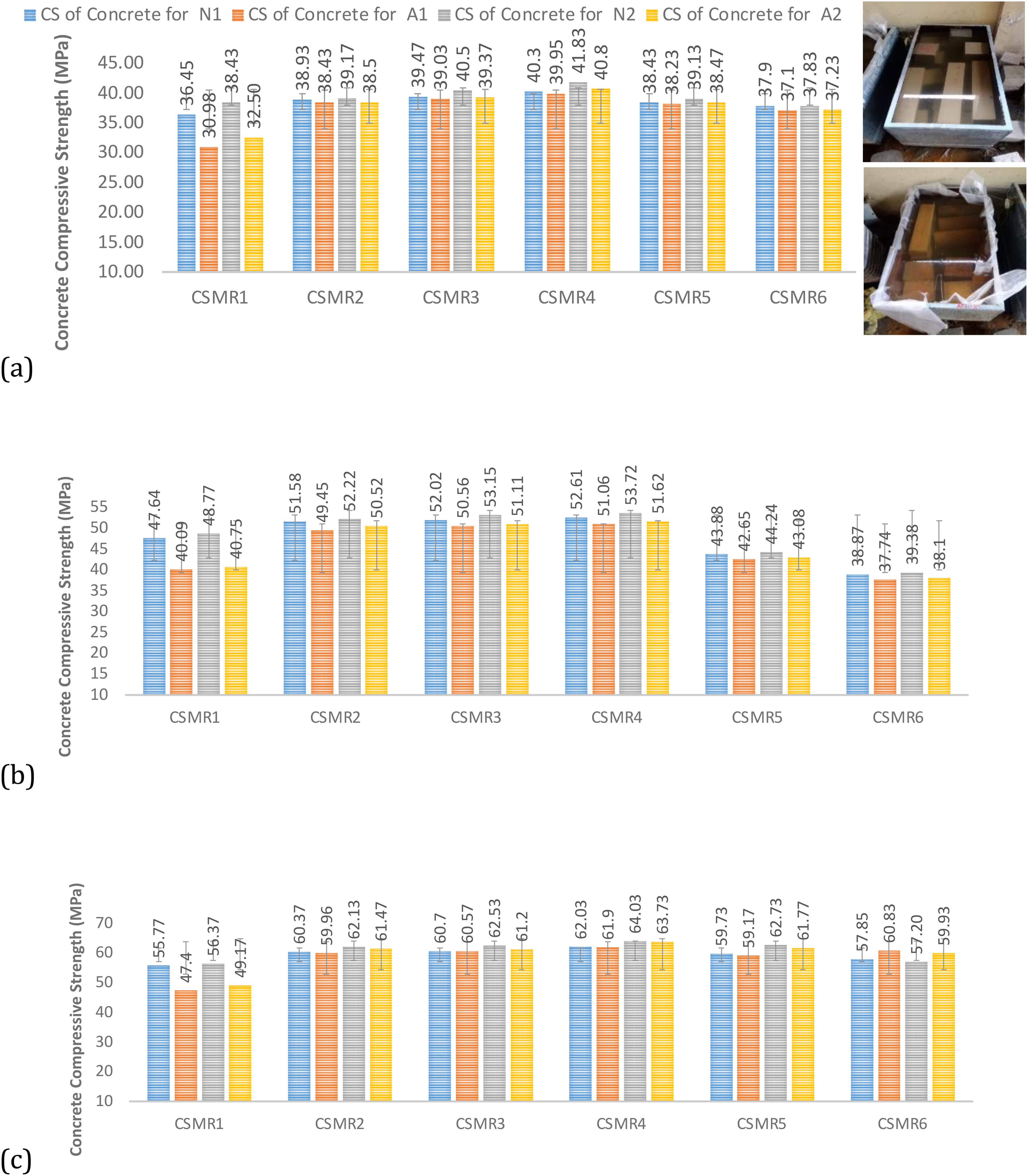
Comparing CS of concrete grades, (a) 30 mpa (b) 40 mpa, and (c) 50 mpa
In the CSMR2 concrete mixture, compared to the N1 condition of CSMR1, the concrete CS improved by nearly 10%. In the CSMR2 A1 condition, concrete CS improves by about 24%. Furthermore, there was a 2% and 18% increase in concrete's CS in N2 and A2 conditions compared to CSMR1. When 30% of the cement is substituted, the CSMR4 combination of 15% SBA, 5% metakaolin, and 10% RHA produces the best results. The N1 and N2 concrete CS of CSMR4 are approximately 10% higher than the N1 and N2 concrete CS of CSMR1, while the A1 and A2 conditions of CSMR4 obtained 27% greater concrete CS than the A1 and A2 conditions of CSMR1. The concrete CS increases as one of the cement hydration products is calcium hydroxide (CaOH), with which SBA, MK, and RHA react pozzolanically. Because of the production of CSH-G, which has a higher CS, concrete becomes denser and more compact69,70. . SiO2 content is very high in MK, SBA & RHA hence the strength of concrete increases up to 30% replacement cement. Further replacement of cement means above 30% makes the cement matrix less homogeneous and prevents the particles from dispersing evenly due to the lack of CaO in Pozzolanic materials as compared to cement 71 . The consistency of cement is affected by the water-cement ratio. In case of less water-cement ratio strength of concrete increases. Too low a water-cement ratio makes concrete dry, decreasing its strength 72 . The consistency of cement is within the range of standard code IS269–1989 hence sufficient strength of concrete is achieved. A more homogenous and refined microstructure develops in concrete because of finer cement or finer pozzolanic materials which could ultimately enhance strength and durability 73 . The fineness of cement is within the range of IS269–1989 hence the strength & durability of concrete are enhanced. The soundness of cement avoids cracks after the hardening of concrete, in this study cement satisfies the criteria of IS269–1989 which reduces the chances of cracks after the hardening of concrete and increases the structural integrity of concrete hence the strength of concrete increases. The particle size of SBA, MK & RHA is smaller than the cement which makes concrete denser & increases its structural integrity of concrete which leads to increases in the strength of concrete 74 . The abrasion value, impact value & crushing strength value of coarse aggregate are within the range of IS 2386 (Part 4): 1963. These values provide strength to the concrete hence the strength of the concrete increases 75 .The bulking of sand leads to a change in volume which affects the mix design of concrete. In this case, the bulking of sand is within the range of Indian standard code IS 2386 (Part 3): 1963, hence the strength of concrete increases.
In acidic curing, SBA, MK, and RHA can act as buffers in acidic environments, aiding in the neutralization of acidity and reducing its harmful effects on the concrete. Interestingly, the CS obtained for CSMR4 under N2 and A2 are closer to the target strength of 64.9 MPa for high-strength concrete grade M60. When control mix concrete is cured in acidic water A1 & A2 its compressive strength is reduced by 10–15% as compared to the compressive strength achieved for the condition normal water curing N1. When compared to the A1 to A2 condition of the control mix concrete slightly rises or negligible rise in compressive strength is may be due to the more time allowed for further hydration of the cement particles, leading to increased strength. The extended period supports more complete chemical reactions within the cement matrix76,77,78. In this research, SBA, MK & RHA are used as partial replacements for cement particularly metakaolin which increases the resistance of concrete against penetration hence there is a slight rise in compressive strength for other combinations in A2 as compared to the A1. Also, increases the strength as compared to N1 condition.
Farrant et al. 38 investigated concrete strength and DOC when cement is replaced with 30% SBA and 10% silica fume. Mulye 39 investigated using SBA in concrete and the maximum strength at 15% cement replacements by SBA. Abolhasani et al. 24 studied the effect of RHA on the MPC and discovered that it replaced the cement by 2.5%, 5%, 7.5%, and 10% of RHA, respectively. Maximum strength was obtained with RHA replacing 5% of the cement. Wu et al. 12 investigate cement replacement by 20%, 40%, and 60%, with SBA achieving the best results at 40% cement replacement. Memon et al. 13 used SBA to investigate the strength and durability properties of concrete. Figure 9 compares the current research to similar previous findings. The strength of the control mix concrete is reduced in acidic water curing because acidic water enters the pores of the concrete and damages its pores. The strength of newly developed concrete is improved in both the normal and acidic water curing due to the use of metakaolin, sugarcane bagasse ash & rice husk ash in concrete. This is because of the particle size of these pozzolanic materials. These pozzolanic materials are finer than cement, pass into the pores of concrete & reduce the chances of the penetration of acidic water into the concrete pores. The increase in the CS performance of concrete varies depending on the author's investigation. The curing process, mix design, silica content, and material fineness all impact concrete CS. When the current investigation is compared to previous research attempts, it is discovered that the CS of the concrete has increased by 10%, which is the highest among similar studies in recent years—mainly pertaining to the fineness of the MK and the extremely high silica content of the RHA and SBA, that the permeability and CP of the concrete are reduced. In the current study, the target strength is not only met but also exceeded by 10%, whereas in a few previous similar studies, the CS is close to the target strength in normal curing but not in acidic curing. In the respective studies, the highest percentage of improvement in concrete CS is considered after 7 days, 28 days, and 90 days. The maximum CS is achieved at 28 days of curing of concrete still after that the strength of concrete increases hence 90 days CS is higher than 28 days CS of concrete.
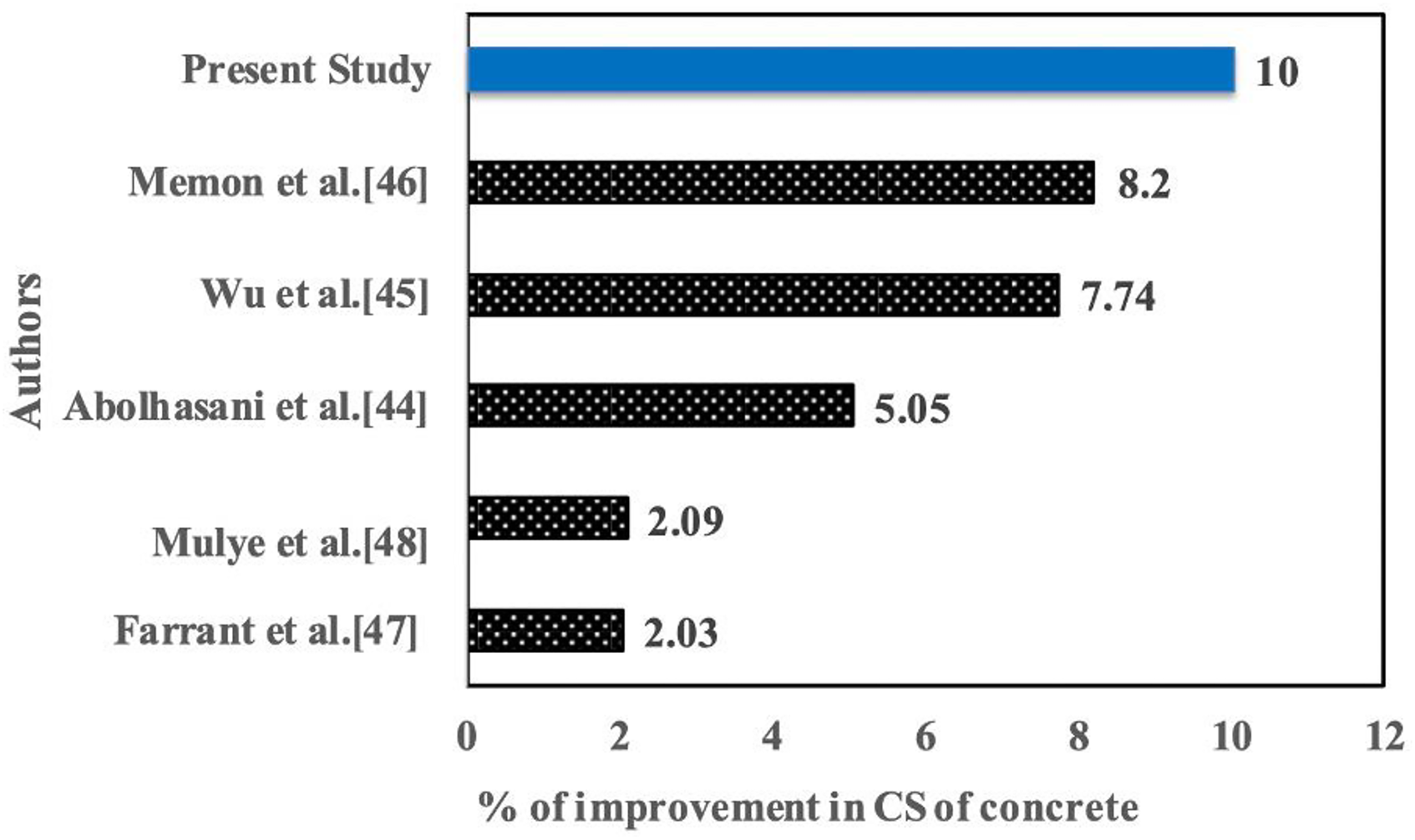
Comparison of improvement in cs of concrete with literature
Figures 10(a)-(c) compares the flexural strength of concrete grades M30 (30 MPa),M40 (40 MPa), and M50 (50 MPa), indicating that the FS of CM concrete is lower in the A1 and A2 conditions than the N1 and N2 conditions, respectively. When cement is replaced by SBA 15% and MK 5%, the concrete FS improves by about 20% in the N1 and N2 conditions of CM concrete, while it improves by 30% in the A1 and A2 conditions. It is also discovered that replacing 30% of the cement with 15% SBA, 5% metakaolin, and 10% RHA is the most effective combination in improving concrete FS, with approximately 30% of the concrete FS being higher than the CM in all conditions, namely, N1, N2, A1, and A2.
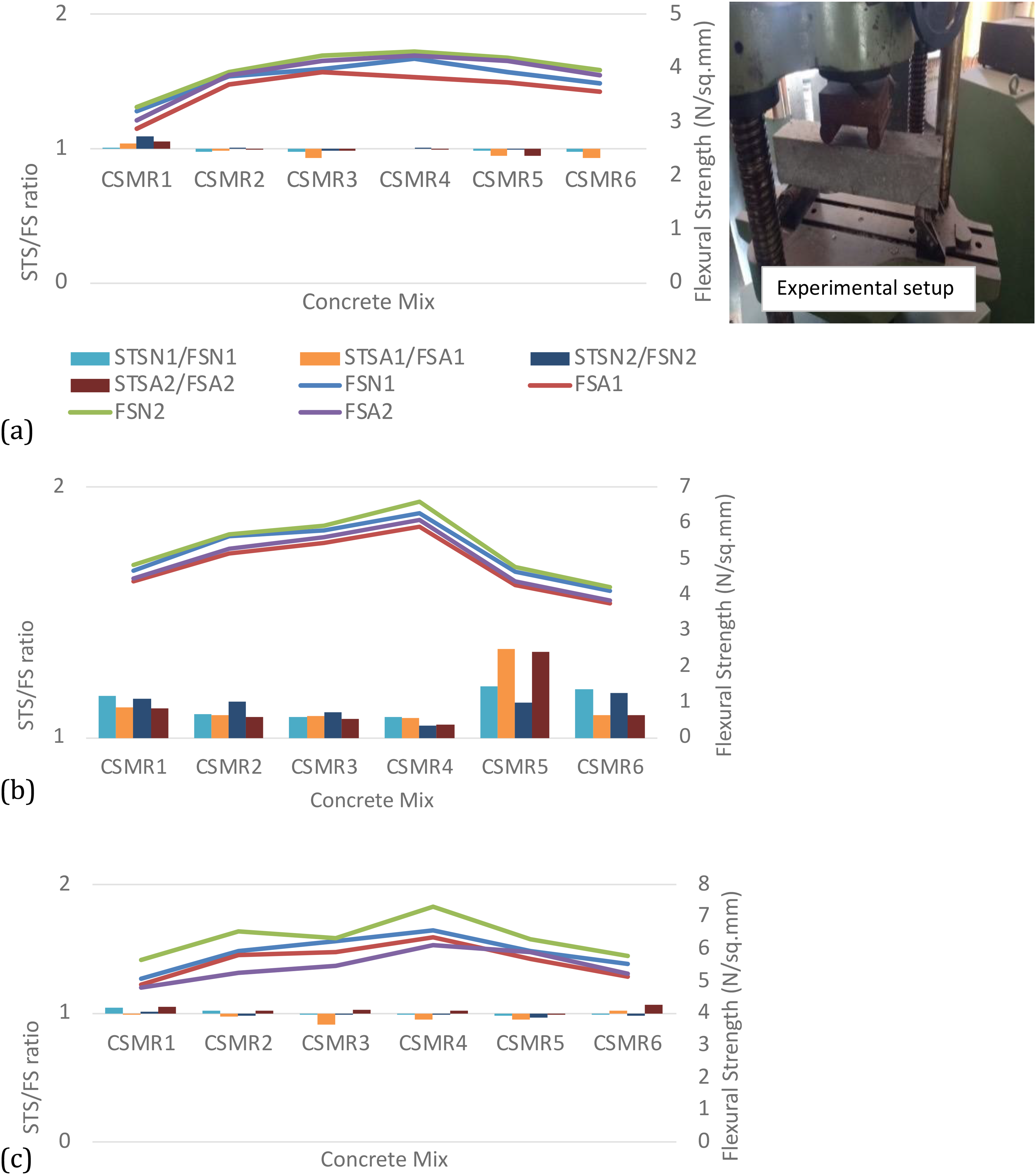
Comparing STS and fs of concrete grades, (a) M30 (30 mpa) (b)M40 (40 mpa), and (c) M50 (50 mpa)
FS of concrete is increases because pozzolans have been added to the cement paste, that decreased its flowability, consistency, and setting time while accelerating up the hardening process. In addition, it is produced in a denser matrix, strengthening the concrete matrix strength 79 .
Figures 11(a)-(c) also shows the comparative variation in STS of concrete grades M30 (30 MPa), M40 (40 MPa), and M50 (50 MPa) in terms of the STS/FS ratio. The STS is greater than FS for all cases of 40 MPa concrete and best for CSMR5 both under normal and acidic curing, while FS observes better improvement for CSMR4, thereby indicating the optimum content of RHA. Compared to specimens subjected to normal water curing, concrete STS decreases by around 10% when subjected to acidic curing. Figure 11(a)-(c) shows STS of concrete of grades M30 (30 MPa), M40 (40 MPa) & M50 (50 MPa). There are several reasons for the decrease in concrete STS, including the mineral ettringite, which contributes strength to concrete, and can dissolve in acidic environments. When ettringite degrades in an acidic environment, the MPC may be weakened 80 . Cement aggregates used in concrete can react with acidic water, weakening the aggregate particles, and the concrete's STS may decrease 80 . The pore solution in the concrete has a lower pH because it contains acidic water. This pH change may cause a decrease in strength, which may also affect the stability of hydrated cementitious phases 81 .
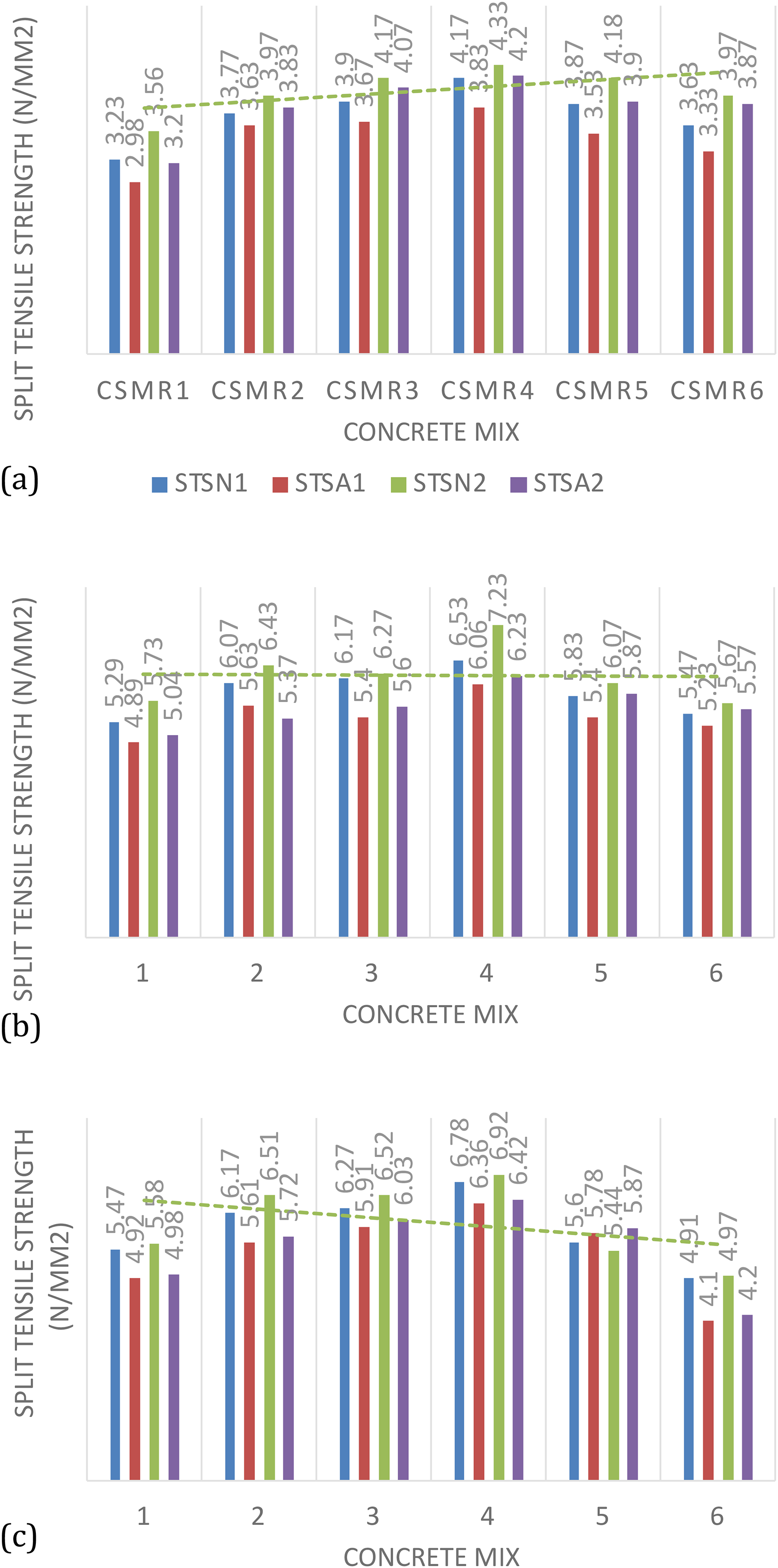
Bar chart of STS of concrete grades, (a) M30 (30 mpa) (b) M40 (40 mpa), and (c) M50 (50 mpa)
The use of SBA, RHA, and metakaolin increases the STS of concrete. Concrete STS improves by about 15% when cement is replaced by 15% SBA and 5% metakaolin, and by about 20% when cement is replaced by 15% SBA and 5% metakaolin under conditions N1 and N2, by about 20% when cement is replaced by 15% SBA and 5% metakaolin under conditions A1 and A2. The best results are obtained when 30% of the cement is replaced with 15% SBA, 5% metakaolin, and 10% RHA. During both normal and acidic curing, the concrete STS increases by around 30% when compared to CM concrete. The pozzolanic reaction that strengthened the bonding property could have led to the formation of a stronger C-S-H gel, which might account for the STS increase 82 .
Comparison of rapid chloride penetration test values
The RCPT values of 30 MPa, 40 MPa, and 50 MPa concrete grades at 28 days curing for the conditions N1, A1, N2, and A2 are compared. The RCPT values for the CSMR1 of 30 MPa, 40 MPa and 50 MPa grades of concrete are 1021.33 columbs, 892.33 columbs and 865 columbs, respectively.
Chloride ion penetrability based on AASHTO T277 or ASTM C1202
83
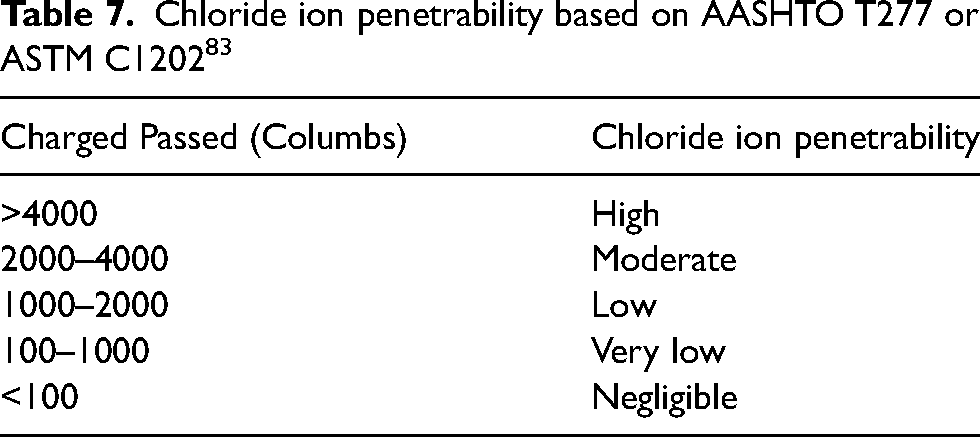
Chloride ion penetrability based on AASHTO T277 or ASTM C1202 83
As per the AASHTO T277 or ASTM C1202 (Table 7), the permeability of concrete is categorized as low permeability. These values indicate that the amount of chloride penetrating concrete decreases as the grade of concrete increases. The reasons for CP are as follows:
The w/c ratio is typically lower in high-grade concrete mixes. The concrete matrix becomes denser and less porous as the water content decreases, increasing its resistance to chloride ion penetration 84 .
CSMR2 is a 20% cement replacement with 15% SBA and 5% metakaolin. The RCPT values of 30 MPa, 40 MPa, and 50 MPa concrete grades were reduced by 5%, 6%, and 12%, respectively, indicating improved CP resistance in concrete. The RCPT values of 30 MPa, 40 MPa, and 50 MPa grades of concrete are reduced by approximately 15% when the CSMR4 combination is used. Lowering RCPT values indicates that the DOC is improving.
The RCPT values in acidic curing are higher than in normal water curing. When all cases are considered, concrete RCPT values increase by about 10% in acid water curing, indicating that CP is increasing in the concrete, resulting in a decrease in the durability of the concrete in an acidic condition compared to normal water curing. For the CSMR4 combination, there is an improvement in the RCPT values for acidic curing; RCPT values are declining and closer to the RCPT values for normal water curing, which means that 30% cement replacement by SBA 15%, Metakaolin 5%, and RHA 10% is a very effective combination in enhancing the DOC in acidic conditions. The reason for this is that:
the very fine particles of metakaolin could fill spaces and holes in the concrete matrix, causing the pores and capillaries that serve as water passageways to shrink, reducing the permeability of the concrete
85
. RHA acts as a micro filler, filling pores left by the cement particles. As a result, there is less permeability because particle packing is improved, and the size and continuity of the pores are reduced
86
.
According to Figures. 12(a) and 12(b), the CP of concrete after 28 days of normal and acidic water curing was reduced by about 20% against normal water curing of 12%, while the impermeability of concrete increased by about 20% against 30%. This is because MK reacts with water to form a denser, more compact microstructure within the concrete matrix; as a result, the concrete permeability decreases. This is particularly important in acidic water as it protects the concrete from chemical reactions that could otherwise deteriorate it.
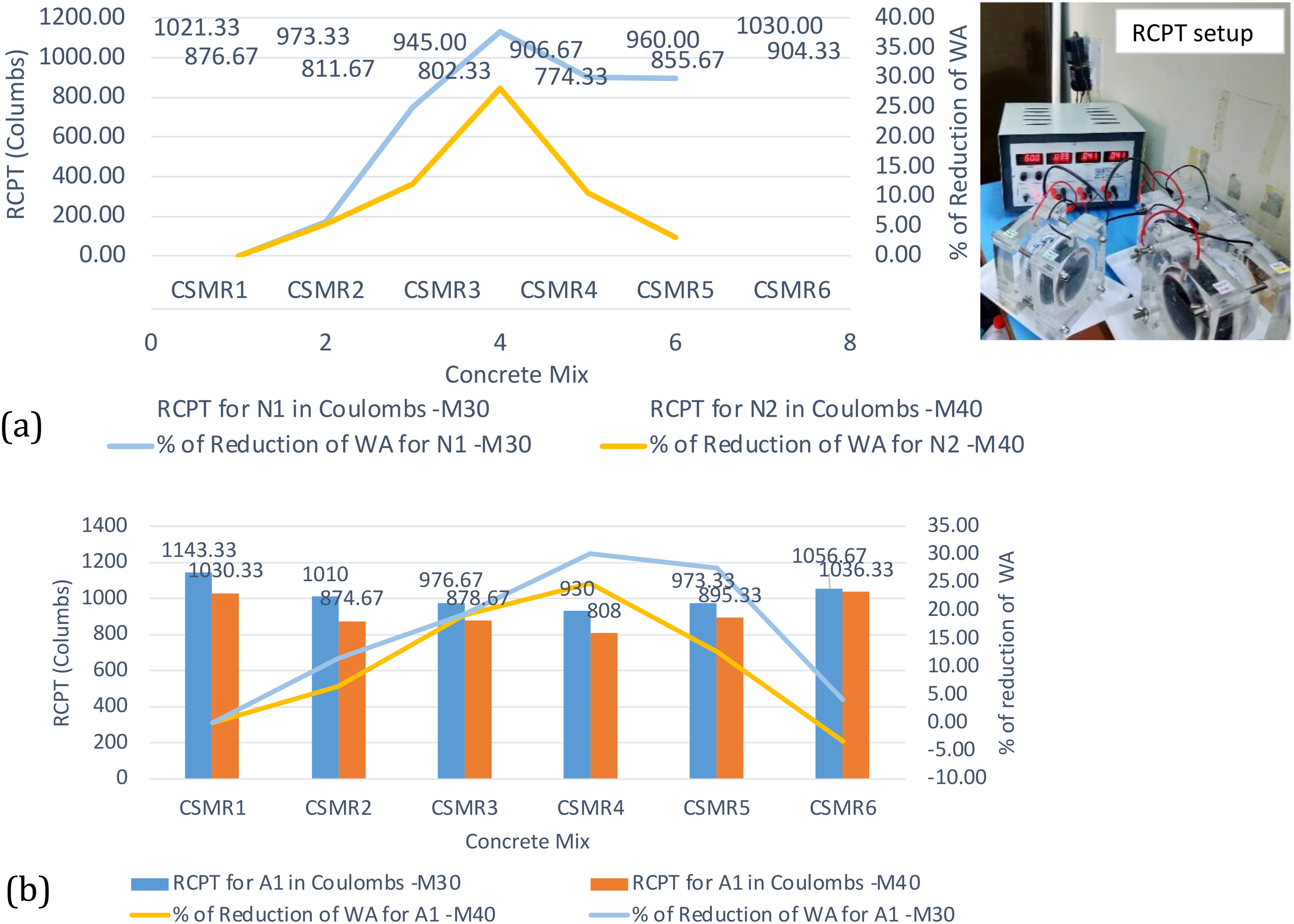
Comparison of RCPT and wa under conditions (a) N1 (M30) and N2 (M40), (b) A1 (M30) and A2 (M40)
SBA, MK, and RHA have a higher specific surface area than conventional cement. That increases their fineness and pozzolanic reactivity, making it easier for them to react with CaOH in the presence of water, thereby improving concrete strength and DOC. According to Figure 12(b), the CP of concrete after 90 days of acidic water curing was reduced by about 20% against 12% under normal water curing, while the impermeability of concrete increased by about 25% against 20%. This is because the acidic water erodes the silica and lime content in the concrete pores. Using SBA, MK, and RHA reduces the pores in the concrete while increasing its strength and impermeability. CSMR4 has the lowest values of permeability, for this concrete mix 30% cement is replaced by MK,RHA & SBA. The particle size of these materials is smaller than the particle size of cement hence for the mix CSMR4 the lowest permeability is observed.
Regression surface methodology (RSM) is an optimization technique that makes use of statistics to design experiments, build a model to predict the relationship between predictor and response variables, and assess the effect of each predictor on the response. When there are numerous independent factors influencing the response variable, this strategy works especially well. The present study employed regression structural modelling (RSM) analyses to determine the effects of the major components (SBA + MK and RHA defined as A and B respectively) and their interactions with the response variable (CS & RCPT values).
A regression model for the CS and RCPT values of M30 (30 MPa) grade concrete is developed. Minitab software is utilized to create the regression model, which employs the RSM. The model is developed using the central composite design (CCD) concept. The statistical analysis is done by using ANOVA & RSM employed between the parameters CS & RCPT (response variables) because these two parameters influence the strength & durability of the concrete. The output of RSM are regression models that are obtained by using experimental values at different combinations. As shown in Table 8, 13 combinations were used to develop models. From the 13 combinations, the most effective combination is 22.5% of SCBA + MK & 12.5% of RHA in which the highest CS is 40.3 MPa & RCPT value is 906.67 Coulomb. Using CCD all the 13th combinations are arranged on the cube, axial points in the cube & axial points in the center. To validate the regression model, a Pareto chart, probability plot, residual versus fitted graph, histogram, and residual versus observation order graph were created. Furthermore, p < 0.05 and F values with a 95% confidence level were used to validate the statistical model's primary variables.
Combinations of cement, SBA, mk and RHA
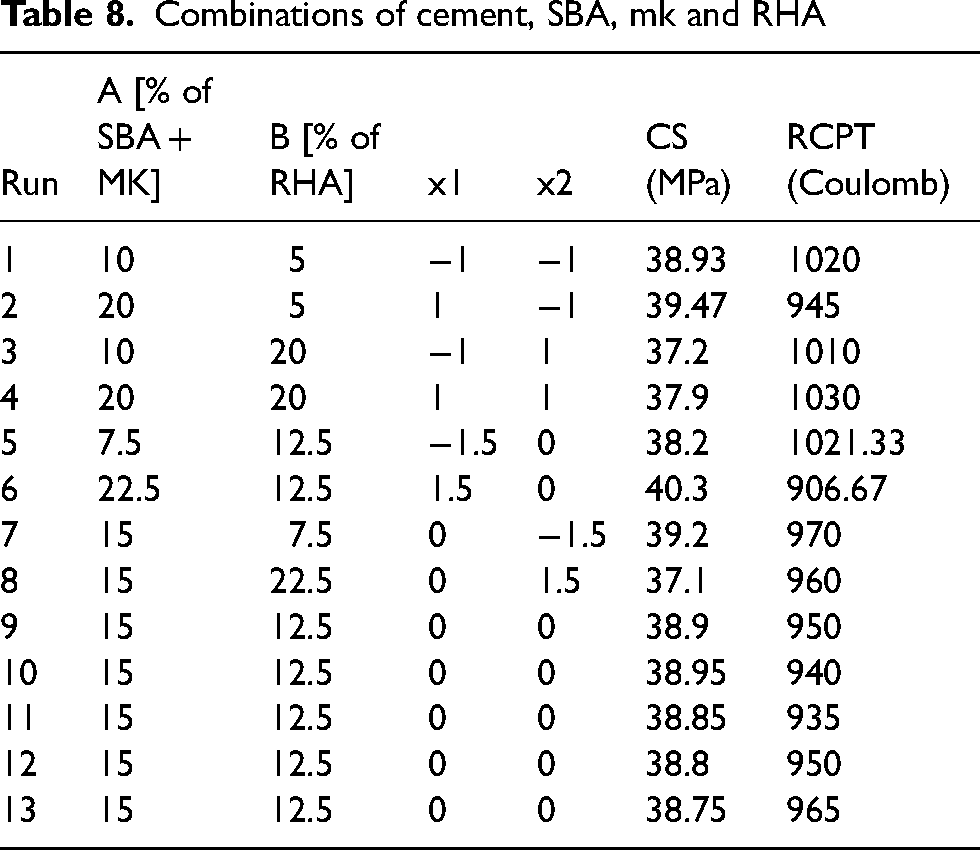
Combinations of cement, SBA, mk and RHA
Regression equation 1 is used to predict the concrete CS, while regression equation 2 is used to predict the RCPT values. The proportions of SBA + MK and RHA (predictor variables) in the concrete determine the coefficients A and B. Variations of coefficients are directly related to variations in the combinations of SBA + MK and RHA and respective CS and RCPT values required for the development of models. Similar models can be created for the remaining grades of concrete.

The ANOVA analysis for the RSM equation utilizing SBA + MK and RHA in the agro-concrete judged against CS and RCPT is displayed in Table 9. The table demonstrates that, for CS, the response variable was significantly predicted by the linear terms (A and B) and their interaction term (AB), with p-values less than 0.05 signifying statistical significance. P-values greater than 0.05 for the square terms,
Analysis of variance (ANOVA) for RSM
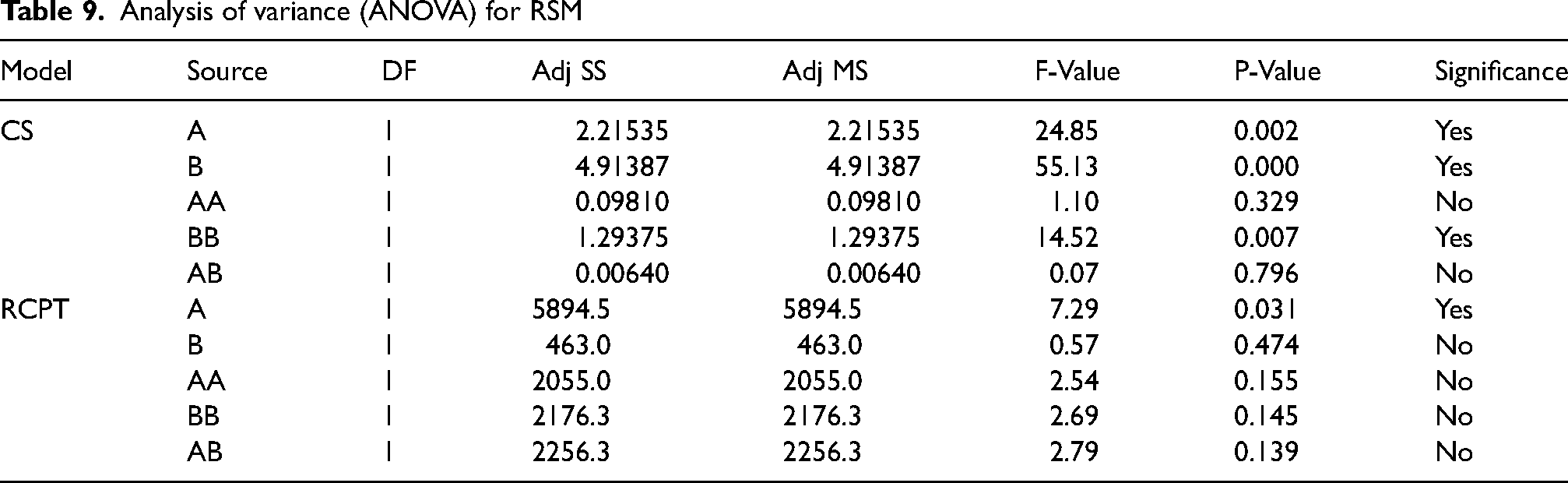
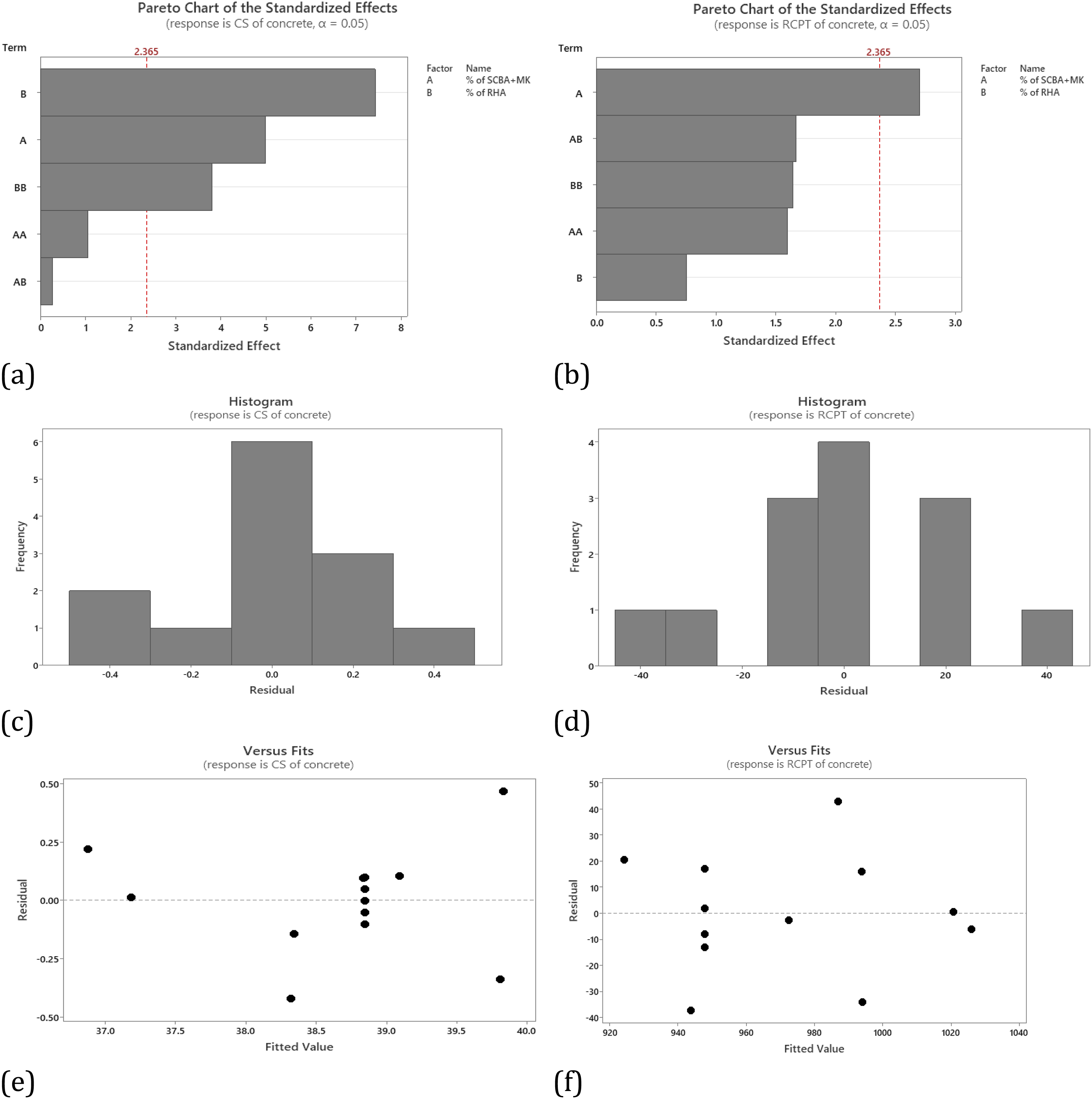
Concrete's cs and RCPT, (a) and (b) pareto charts, (c) and (d) histogram charts, (e) and (f) residual versus fitted value, (g) and (h) residual versus observation order, and (i) and (j) experiment versus predicted values
Figures 13(i) and 13(j) compare experimental and predicted values of the CS and RCPT of concrete, having the
Sugarcane bagasse ash and rice husk ash are agricultural by-products; by using these by-products in concrete, the expenditure and load on the system required to dispose of the by-products can be reduced. High-strength concrete can be obtained by utilizing Metakaolin with sugarcane bagasse ash and rice husk ash; an obtained target strength for M50 grade concrete is closer to high-strength concrete of grade M60. The quantitative findings of the study are:
In the present study, concrete's CS, WA, RCPT, FS, and STS decreased under an acidic curing environment for CM concrete. The suitable combination of SBA, RHA and MK enhances all these parameters under an acidic environment. Partial replacement of cement by 5% Metakaolin can improve the resistance of concrete against CP and WA. Further, the concrete strength declined more than 10% in acidic curing. Using 15% SBA and 5% MK in concrete improved the concrete strength and DOC; however, CS was behind the target strength. Hence, the additional use of 5–20% RHA is studied as cement replacement in concrete along with SBA and MK. The combination of sugarcane bagasse ash (15%), rice husk ash (10%), and Metakaolin (5%) is very effective in enhancing the strength and DOC. The 30% replacement of cement by sugarcane bagasse ash (15%), rice husk ash (10%), and Metakaolin (5%) is the optimum replacement that is effective against an acidic environment and in achieving the target strength of the new concrete mix. Strength improvements of up to 10% under normal curing and 20% under acidic curing environments were achieved. The ANOVA analysis results showed that the linear terms (for SBA + MK and RHA) were significant predictors of the new agro-concrete's CS. Moreover, the term that interacts turned out to be a significant predictor. Meanwhile, only the term (SBA + MK) came out to be significant predictor for new concrete's RCPT. Thereby, indicating on the effectiveness of MK.
In this study, maximum usage of agricultural waste is focused on enhancing the properties of concrete to attain target strength not only in the normal environment but also in the acidic environment. This research forms the basis for furthering research work on several agricultural wastes that have cementitious and pozzolanic properties.
Footnotes
Acknowledgements
The authors extend their appreciation to the Deanship of Research and Graduate Studies at King Khalid University for funding this work through Large Research Project under grant number RGP.2/253/45.
Data Availability
Data is available on reasonable request made to first author.
Declaration of conflicting interests
The authors declared no potential conflicts of interest with respect to the research, authorship, and/or publication of this article.
Funding
The authors disclosed receipt of the following financial support for the research, authorship, and/or publication of this article: This work was supported by the King Khalid University, (grant number RGP.2/253/45).
