







Abstract
An electrochemical deposition process was used to effectively coat 304 stainless steel surfaces with a robust and long lasting superhydrophobic ceramic composite featuring nanostructures. Graphene oxide (GO) and cerium oxide (CeO2) nanoparticles were integrated into nanocomposite coatings, with stearic acid acting as the binding agent. Through structural analysis, chemical interactions between GO and CeO2 nanoparticles were identified, while surface analysis highlighted the essential function of GO in nanocomposite coatings. The nanocomposite coatings that were synthesized demonstrated excellent adhesion, outstanding mechanical resilience and superhydrophobic characteristics, as confirmed by adhesion evaluations, microhardness tests and water contact angle measurements. The superhydrophobic surface that was produced exhibited strong mechanical stability and enduring durability, along with properties that resist corrosion. In a 3.5% NaCl solution, electrochemical tests demonstrated that the GO/CeO2 nanocomposite coatings offered enhanced corrosion resistance compared to both uncoated and other treated substrates. The improved anticorrosive properties are due to the superhydrophobic characteristics of the coatings applied. This findings indicates that the GO/CeO2 nanocomposite coatings could act as efficient protective layers, enhancing the corrosion resistance of 304 SS in environments with high chloride content. The technique that has been developed shows significant potential for industrial use in producing superhydrophobic surfaces and could be modified to improve the corrosion resistance of a variety of other metallic materials.
Introduction
Stainless steel (SS) alloys are widely utilized in numerous sectors due to their exceptional characteristics. These materials find extensive application in diverse fields, including industrial settings, petrochemical operations, aviation and aircraft manufacturing, shipbuilding, electrical power generation, transportation systems, construction projects, maritime endeavors, aeronautical pursuits, and space exploration.1–5 SS alloys are predominantly utilized as structural components across nearly all industrial sectors due to their superior resistance to corrosion compared to carbon steels, even in harsh environments. The durability of a passive film primarily relies on its structural non-uniformity, including factors such as the occurrence of inclusions and the elemental makeup of the alloy components. Typically, the onset of localized corrosion in SS alloys occurs when the passive film deteriorates near manganese sulfide inclusions in the SS substrate, particularly in chloride ion-containing aqueous environments.6–9 Considerable efforts have been conducted to enhance the durability of SS alloys for practical applications.
Over the past few years, materials based on graphene, including graphene oxide (GO) and modified graphene derivatives, have garnered considerable interest for their ability to protect against corrosion.10–14 This attention stems from their exceptional corrosion resistance properties, described by their fragile, layered structure and remarkably high aspect ratio. GO, the oxidized form of graphene demonstrates significant potential for creating nanoscale structures. This material features various reactive hydrophilic functional groups, including carboxyl (-COOH) and hydroxyl (-OH). A potent oxidizing agent was employed to introduce these onto graphene's surface, effectively inhibiting graphene layers from restacking.15,16 Graphene's unique properties, including its chemical stability, impermeability, robustness, and single-atom thickness, make it an intriguing option for coating applications. It is particularly promising for anticorrosion coatings, potentially as a novel and superior protective material. Nevertheless, the separate GO sheets tended to clump together and restack due to the π-π interactions between planes and van der Waals forces occurring among the graphene layers. The particle clustering reduces the exposed surface area of GO films and hinders electrolyte ion movement, resulting in diminished electrochemical efficiency. To counteract this stacking issue, blending GO with metal oxides appears to be a practical approach.17,18
The first reported work of superhydrophobic studies developed by Jagdheesh et, al. had laser induced nanoscale superhydrophobic structures on SS 304 sheets. 19 The use of ultra-short pulse laser machining is a promising method for creating surfaces with dual scale roughness. Achieving superhydrophobic surfaces requires a combination of this dual scale roughness and a low surface energy coating. The findings indicate that increasing the number of pulses per irradiated area transforms nanoscale structures into microscale ones. In a recent study, Gupta and Srivastava evaluated the ideal concentrations of GO in tin-GO composite coatings applied through electro-deposition.20,21 They aimed to enhance the protection against corrosion for mild steel when exposed to a chloride environment. A study by Wang et al. examined how electro-deposition conditions affected the surface characteristics and anti-corrosion capabilities of Ni-GO composite coatings applied to Ni plates in a NaCl environment. Their study demonstrated that GO could serve as an effective nano-additive to enhance the protective properties of metal matrix composites against corrosive processes. 22 Raghypathy et al. investigated how GO additions affected the surface microstructure and protective capabilities of Cu/GO composite coatings electrodeposited on mild steel. 23 Their findings indicated that the Cu/GO composite coating could be an effective corrosion resistance layer for mild steel when exposed to seawater environments. Jing et al. developed coatings of Fe-Mn-Si-Cr-Ni shape memory alloy on 304 stainless steel. 24 They created a superhydrophobic coating resembling armor by employing femtosecond laser and nano SiO2 spray coating methods. The microstructure allowed for the incorporation of SiO2 nanoparticles. This study highlighted the combined effects of ultrasound assisted laser cladding, femtosecond lasers and nano SiO2 spraying. Deng et al. employed hydrothermal and sol-gel techniques to create superhydrophobic surfaces on 304 stainless steel and to investigate the frosting behavior of ZnO coatings with different levels of wettability at low temperatures. 25 These superhydrophobic surfaces are effective in preventing frost formation, thereby reducing energy consumption and pollution. This ability to inhibit frost demonstrates significant practical potential. Fei et al. developed a superhydrophobic surface on stainless steel 304 through a process involving etching, oxidation and the application of TiN nanoparticles, aimed at enhancing deicing efficiency. 26 The combination of metal oxide and TiN nanoparticles ensures high solar absorptivity, which is beneficial for practical anti-icing uses with solar thermal superhydrophobic surfaces. Sun et al. developed superhydrophobic surfaces on 304 SS substrates by employing wire electrochemical etching with neutral sodium nitrate. 27 These surfaces exhibited contact angles close to 166° and roll off angles around 10°. The superhydrophobic 304 SS surface showed remarkable anti-icing and self-cleaning capabilities, making it suitable for use in extreme conditions. Guerra et al. developed a superhydrophobic surface with outstanding corrosion resistance by applying a stearic acid coating to sandblasted 304 steel. 28 The sandblasted sample with the smooth coating demonstrated superior corrosion resistance in saline solution during polarized tests, proving to be more effective than surfaces that were not smooth. Yin et al. developed a self-healing, anti-fouling superhydrophobic Ni3S2 coating for SS. 29 This coating effectively resisted water penetration and remained stable even when subjected to ethanol immersion and heat treatment at 300 °C. It was able to restore its superhydrophobic properties after undergoing O2 plasma etching cycles and acted as a robust barrier against surface contamination. The anti-fouling test confirmed that the steel surface remained uncontaminated due to the protective barrier created by the superhydrophobic coating.
Ceria (CeO2) has garnered significant attention as a promising material for various applications, including corrosion protection and environmental catalysis. Additionally, cerium compounds have demonstrated the ability to function as coatings and inhibitors, effectively slowing down substrate oxidation by polarizing cathodic reactions. Adding CeO2 nanoparticles to the metal matrix improved several properties, including resistance to wear, corrosion, high-temperature oxidation, and increased microhardness. Given the complementary characteristics of CeO2 and GO nanosheets, their combination is expected to significantly enhance their effectiveness as nanofillers in protective coating applications. Nakayama et al. described an electrochemical method for creating a self-healing superhydrphobic CeO2 coating on 304 SS. 30 Although CeO2 deposited anodically on smooth SS is hydrophilic, when sintered at high temperatures, it becomes hydrophobic. Applying CeO2 to SS with a hierarchically rough surface results in a superhydrophobic layer that can restore its properties after being treated with O2 plasma, simply by being exposed to air.
To tackle corrosion issues associated with 304 SS, a sustainable one step electro deposition technique was devised to apply CeO2 and CeO2/GO coatings onto 304 SS. Stearic acid CeO2/GO/SA served as a binder to create a superhydrophobic protective layer. This novel method aims to effectively address the challenges faced by 304 SS in corrosive work environments. Through a series of experiments and evaluations, the coating's wetting properties, stability and corrosion resistance were thoroughly assessed. The findings from this study will pave the way for the advancement of efficient and sustainable superhydrophobic surface coating technologies, offering new solutions for the application of Fe-based alloy coatings in corrosion resistance. When subjected to simulated seawater, the developed coating is anticipated to demonstrate an increased water contact angle and enhanced corrosion resistance.
Experimental
Sample preparation
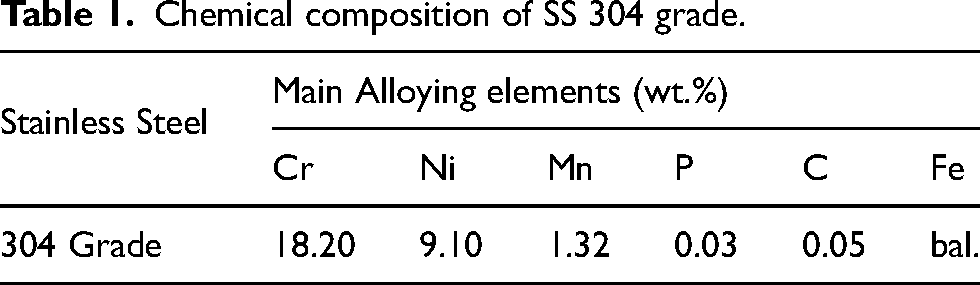
The current study used SS 304 grade specimens with dimensions 10 mm×5 mm×2 mm as the primary substrate. The chemical composition of these specimens is presented in Table 1. Before electro-deposition, SS 304 grade samples underwent mechanical grinding using Silicon Carbide (SiC) emery sheets ranging from 120 to 1200 grit. The specimens were then thoroughly cleaned with flowing distilled water. Subsequently, the samples were subjected to ultrasonic cleaning in acetone for 10 min. The process concluded with a final rinse using distilled water and air drying at room temperature.
Chemical composition of SS 304 grade.
Electrodeposition of GO/CeO2 nanocomposite coatings
The fabrication of GO/CeO2 nanocomposite coatings on SS 304 grade was accomplished using a specific method. Electrodeposition was conducted in a standard three-electrode electrochemical cell configuration. In this setup, SS 304 grade samples served as the working electrode, while platinum foil acted as the counter electrode. A saturated calomel electrode (SCE) was employed as the reference electrode. A homogeneous solution was prepared by dispersing 0.5 M of Ce(NO3)3.6H2O, 100 mg of GO, and 0.1 M of stearic acid in 200 ml of ethanol. The mixture was continuously stirred until homogeneity was achieved. The chronoamperometry technique was employed for electro-deposition experiments conducted at ambient temperature. A steady potential of −0.85 VSCE was applied while the solution was agitated at 300 rpm. Following the electro-deposition process, the samples with coatings were meticulously cleansed using ethanol. The specimens were dried in an oven at 70 °C for 12 h to prevent contamination.
Surface characterization
X-ray diffraction (XRD) patterns were obtained using a Bruker D8 diffractometer. The measurements were conducted over a 2θ range of 10° to 80°, with a step size of 5°/min, employing Cu Kα radiation (λ = 0.154 nm). The X-ray source was operated at a scan rate of 0.028/min. Attenuated total reflectance Fourier Transform Infrared (ATR FT-IR) spectra were acquired on a Perkin Elmer Spectrum Two instrument. The spectra were recorded in the 2000–400 cm−1 range, utilizing a UATR accessory and a KBr window. The Almega dispersive instrument, utilizing a He-Ne 532 nm wavelength, was employed to acquire Raman spectra. A minimal laser beam power of 0.65 nW was applied to avoid damaging the substrates with rust products. The samples’ surface composition and chemical states were examined using X-ray Photoelectron Spectroscopy (XPS). A Kratos/Shimadzu Amicus device featuring a monochromatic Al Kα X-ray source with a photon energy of 1486.6 eV was utilized for the XPS measurements. The instrument was operated in ultra-high vacuum conditions, typically ranging from 10–8 to 10–9 mbar, to reduce contamination from atmospheric gases. A Nikon microscope with a low magnification of 50 µm was employed to observe the analyzing spot. A Hitachi S4800 equipped with Energy Dispersive X-ray Analysis (SEM-EDAX) was utilized to examine the microstructure and elemental composition of the superhydrophobic coatings. An atomic Force Microscope (AFM) was employed to investigate the surface topography of the superhydrophobic coating. AFM images were acquired using a NANO Station II Surface Imaging System device. The roughness Ra was determined from line profiles on 5 × 5 µm dimensional images. A scanning probe image processor, WSxM 5.0, developed 7.0 software, was utilized to obtain 2D line profiles of the SEM images. The attachment strength between the ceria/GO/SA thin films and the 304 SS substrate was evaluated using cross-cut tape adhesion tests by ASTM D3359 standards. The bonding effectiveness of the nanocomposite coating to the 304 SS surface was assessed through an adhesive tape test. A microhardness testing system (Fischer scope H100C) was employed to measure the Vickers microhardness of the coating. The surface hardness profile was evaluated using a constant load of 200 mN, with measurements taken at 10 points per specimen, to examine the mechanical properties of the stainless steel super hydrophobic coatings. The duration for both loading and unloading was set at 10 s The hydrophobic characteristics of the electrodeposited substrates were assessed by measuring contact angle values using an Easy DROP device (KRUSS, Germany). This involved placing a tiny droplet (2–3 µL) of double distilled water on the surface. Contact angle measurements were performed at five distinct locations on the substrate under ambient conditions and temperatures to ensure accuracy.
Electrochemical characterization
A standard three-electrode cell configuration was employed to conduct electrochemical corrosion tests on the coated 304 SS. The setup utilized 304 SS as the working electrode, exposing a 1 cm2 surface area, while a platinum foil served as the counter electrode. This arrangement used a saturated calomel electrode (SCE) as the reference electrode. The electrochemical corrosion experiments were conducted at an open circuit potential (OCP) using a 3.5% NaCl solution. A part 2263 electrochemical workstation was employed to analyze Electrochemical Impedance Spectroscopy (EIS). EIS measurements were performed using a Frequency Response Analyzer (FRA) with a ten mV amplitude ranging from 100 kHz to 10 mHz. Electrochemical tests involving potentiodynamic polarization were conducted by initiating a potential of −250 mV in the cathodic zone from the Open Circuit Potential (OCP) and progressing to 1000 mV versus Saturated Calomel Electrode (SCE) in the anodic region, utilizing a scan rate of 0.197 mV/s. Using Tafel extrapolation, the polarization curves yielded values for corrosion potential (Ecorr), corrosion current density (Icorr), and both anodic and cathodic slopes. The polarization resistance was determined from the gradient of the potential-current graph, also known as linear polarization resistance. Furthermore, calculations were made for the breakdown potential (Eb) and passivation current density (ipass). The experiments were conducted three times to ensure the results were reproducible.
Results and discussion
Electrodeposition of GO/CeO2 nanocomposite coatings
Electrodeposition is a technique where ions in a solution are used to deposit material onto the surface of an electrical conductor or electrode. This approach is commonly utilized in electrochemical sensors, specifically for applying a nanocomposite material to an electrode's surface. Super-hydrophobic nanocomposite coatings were electrodeposited using an ethanol solution, both with and without 0.1 mg/mL GO, by applying a constant potential of −0.85 V vs. SCE. Figure 1 displays the corresponding current–time transient curves for these processes. The CE/GO/SA coatings exhibited a high current during electrodeposition. Concurrently, the oxygen-containing functional groups on the GO sheets underwent reduction on the deposited surface of the 304 SS substrates, resulting from the electrodeposition of rGO on the electrode surface. As reported by Raeissi et al. and Lu et al., the observed decrease in GO and rGO during the electrodeposition process and the elevated current density can be explained by a substantial amount of reduction and electrodeposition occurring on the surface of the 304 SS substrates.31,32 Du et al. developed and examined a novel glucose sensor utilizing an rGO nanocomposite through a single-step electrodeposition process. 33 Their research also encompassed the study of dendritic gold nanostructures combined with rGO functionalized with β-lactoglobulin. These globular proteins were deposited onto a glassy carbon electrode (GCE) using chronoamperometry, an electrochemical technique. A technique for depositing rGO/Cn nanocomposites onto indium tin oxide (ITO) glass substrate has been implemented by Reza et al. 34 Their electrode preparation method through electrodeposition involved using two electrodes submerged in a suspension of rGO/Cn nanocomposite colloids. The ITO glass substrate functioned as the anode in this setup, while a platinum foil was the cathode.
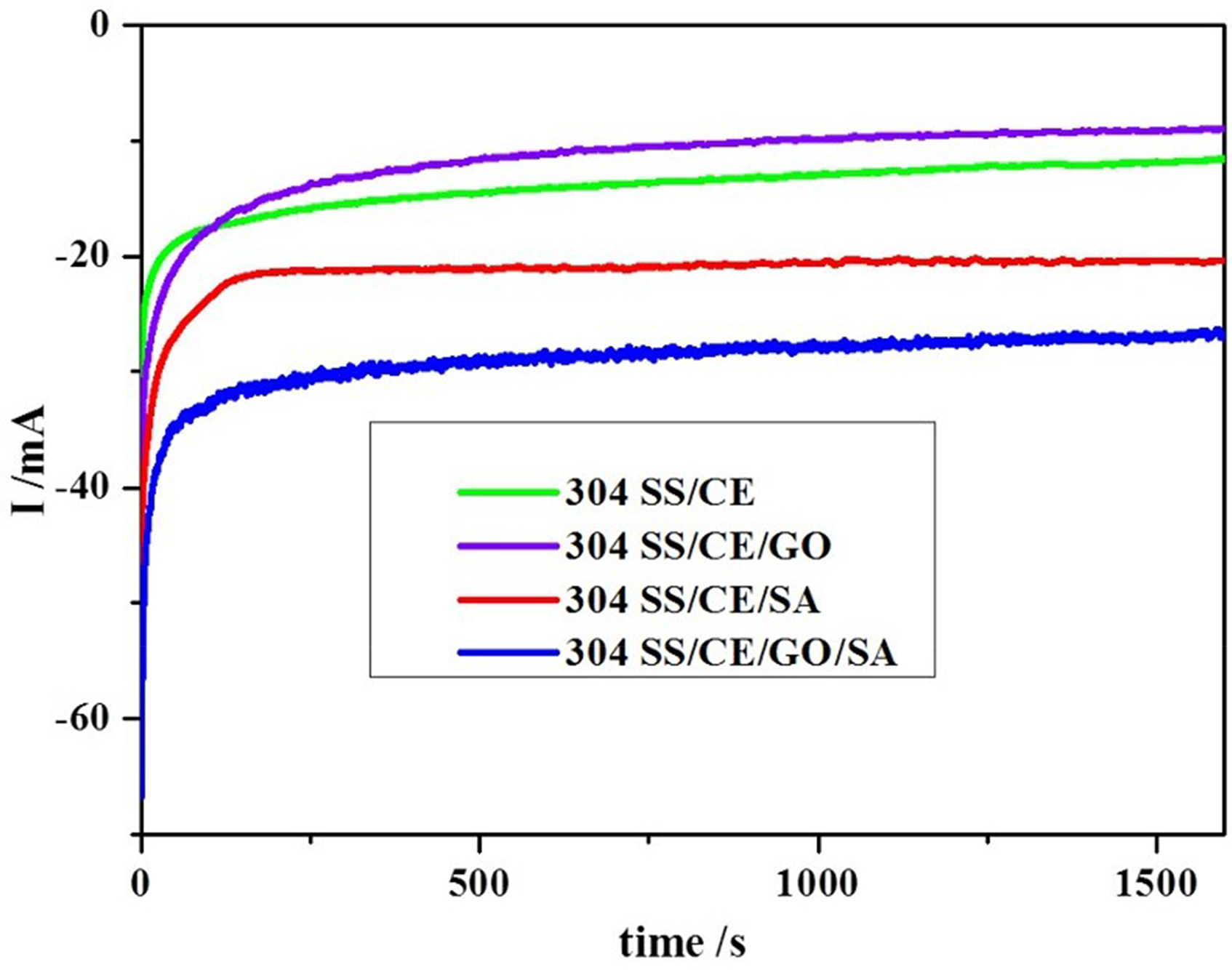
Chronoamperometry curves for various electrodeposited samples of 304 SS.
Structural characterization results
X-ray diffraction (XRD) analysis was conducted on the newly synthesized nanocomposite coatings to determine their crystal structure. Figure 2 displays the XRD patterns obtained from the CE/GO coatings that were electrodeposited onto 304 SS substrates. The distinctive diffraction peaks observed at 2θ angles of 28.96°, 33.58°, 47.81°, and 56.73° correspond to the (111), (200), (220), (311), and (222) crystallographic planes, respectively. These peaks are consistent with the cubic fluorite-type crystal structure of CeO2, as confirmed by the JCPDS No. 75-0076 reference pattern.35,36 The presence of GO in the nanocomposite coatings was evidenced by the XRD diffraction peak observed at 10.65°, which corresponded to the (001) reflection of GO. Additionally, the amorphous nature of the stearic acid components was indicated by a broad peak at 22°. The presence of distinct CeO2 and GO peaks, without any amorphous peaks associated with stearic acid, showed the successful formation of nanocomposite coatings on the SS substrates. Furthermore, the significantly diminished intensity of the base substrate peaks suggested that the nanocomposite coatings formed a dense and uninterrupted layer on the SS surfaces. 37 According to the Verma et al. study, the (111) plane of CeO2/RGO exhibited increased broadening compared to pure CeO2. Additionally, their findings indicated that the interaction between CeO2 and RGO led to numerous defects in the CeO2 crystal structure, resulting in its distortion. 38 According to Sachin et al., the XRD analysis of the rGO-CeO2 nanocomposite indicated that the graphene oxide component had undergone significant reduction. Their findings suggested that the synthesized samples consisted of either a single layer of graphene or a minimal number of layers. 39 Figure 3 displays the ATR-IR spectra of the produced nanocomposite coatings. The prominent bands observed at around 2910 cm−1 and 2810 cm−1 correspond to the symmetric and asymmetric C-H stretching vibrations of the SA molecules, respectively. The prominent signal observed between 1670 cm−1 and 1810cm−1 is attributed to carboxyl groups’ carbonyl (C=O) stretching vibration. Two distinctive bands at 1539 cm−1 and 1444 cm−1 indicate the presence of cerium carboxylate within the nanocomposite coating formulations. The stretching of hydroxyl (-OH) groups on the GO surface was suggested by a broad peak at 3530 cm−1. Unoxidized graphitic carbons’ aromatic C=C skeletal vibrations were represented by a peak ranging from 1150 cm−1 to 1650 cm−1. The successful synthesis of the GO/CeO2 nanocomposite was further validated by these findings, as reported by several researchers.37,40–42
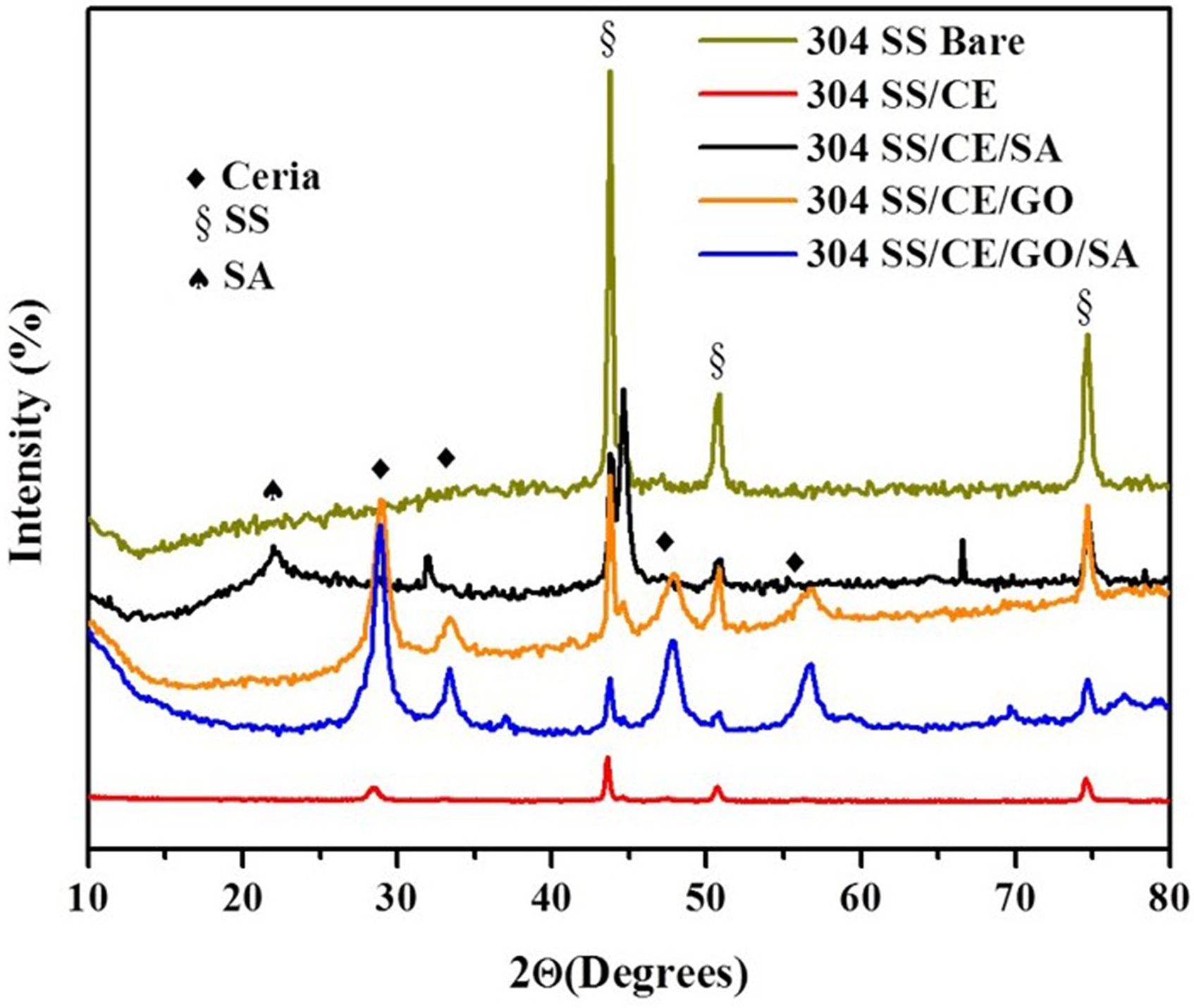
XRD patterns for various electrodeposited samples of 304 SS.
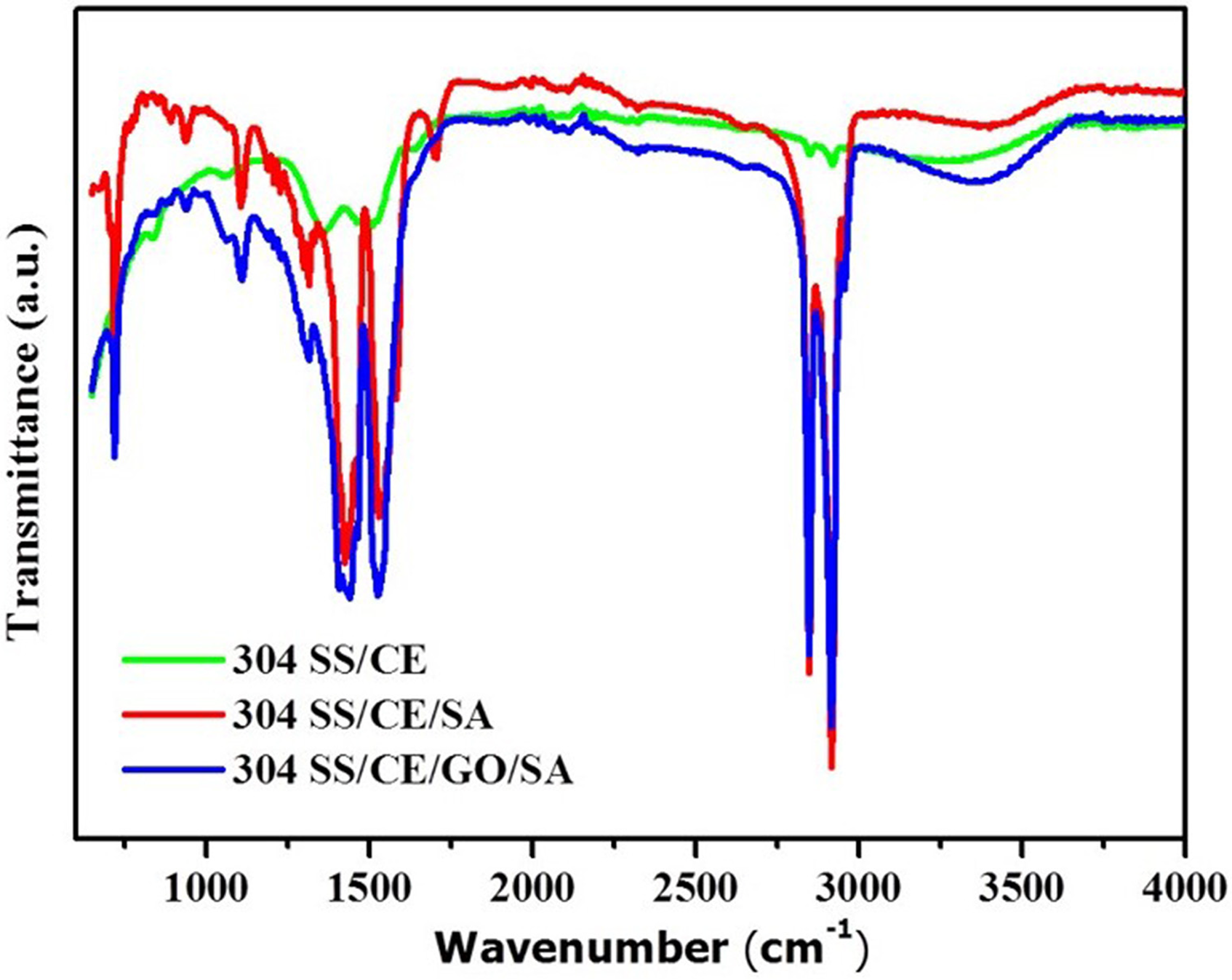
ATR-IR spectre of the nanocomposite coatings on 304 SS.
Raman spectroscopy is a powerful, non-destructive analytical tool that offers valuable insights into graphitic materials’ quality, phase, and purity. This versatile technique is beneficial for examining the presence of defects in both ordered and disordered crystal structures. Raman spectroscopy provides a convenient and non-invasive method for material characterization by analyzing the vibrational energies of sample molecules. Analyzing Raman spectra allows for the detection of minute alterations in material structure. Figure 4 displays the Raman spectrum obtained from electrodeposited coatings. The spectrum revealed a distinctive Raman peak for ceria at 450 cm−1, corresponding to the Fe2g mode's symmetric vibration of the Ce-O bond. Additionally, the transformation of the broadband at 601 cm−1 is indicative of the asymmetric Ce-O peak in nanocomposite coatings. The Raman spectrum of GO exhibits two primary bands: the G band at 1576 cm−1 and the D band at 1350 cm−1. These correspond to the first-order scattering of the E2g mode of sp2 carbon domains. Moreover, a 2D band is observed at 2717 cm−1. For the GO-incorporated coatings, the D and G bands of graphene oxide were also detected at 1355 cm−1 and 1600 cm−1, respectively. The D band is associated with the A1 g phonon's breathing vibrational mode, while the G band is linked to the E2g phonon on the carbon sp2 atoms, resulting from the elongation of the sp2 carbon pairs. 39 Additionally, the observed changes in G and D band values, both with and without stearic acid, suggested the presence of π–π interactions between GO and stearic acid components.43–45 These alterations can be linked to the interaction of cerium and oxygen within the nanocomposite coatings. This facilitates charge transfer between the GO layers and the coating material. XPS analysis was conducted to investigate the elemental composition and oxidation states within the fabricated nanocomposite coatings. The findings of this analysis are displayed in Figure 5(a) to (d). The formation of CeO2/rGO/stearic acid composites during electrodeposition was evident from the survey spectra of the GO/CE nanocomposite coatings. This was demonstrated by the clear presence of cerium (Ce 3d and Ce 4d), oxygen (O 1 s), and carbon (C 1 s) in the spectra. The C 1 s spectra of Figure 5(a) can be broken down into four distinct peaks at 284.1, 284.9, 285.7, and 288.2 eV, indicating the presence of C-C, -C-OH, and O-C=O bonds, respectively. The most prominent peak at 284.9 eV is attributed to sp2 graphitized carbon. Compared to CE/GO nanocomposite coatings without SA, the CE/GO/SA coatings exhibited a higher intensity of C-C bonds.
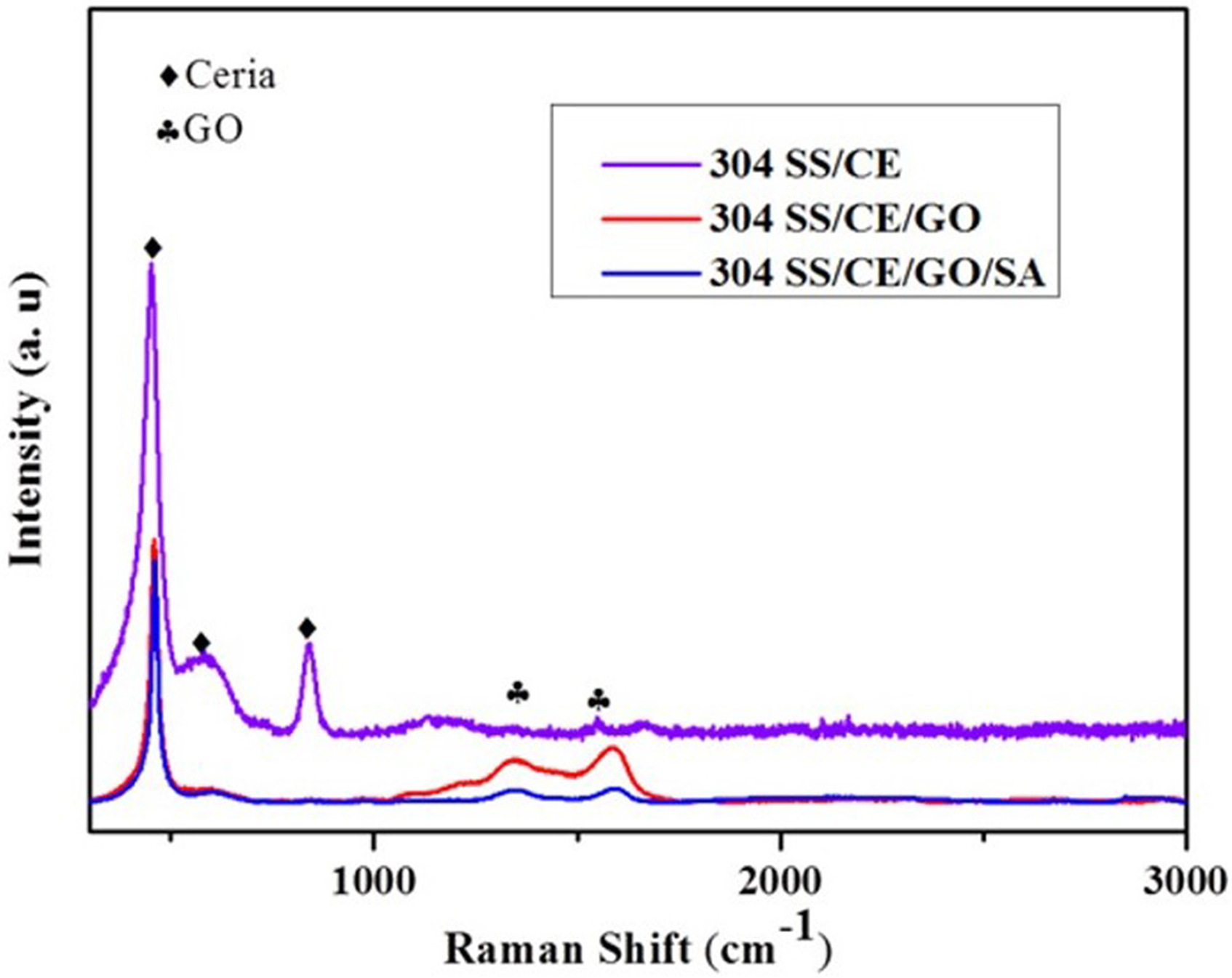
Raman spectrum analysis of super hydrophobic coatings on 304 SS.
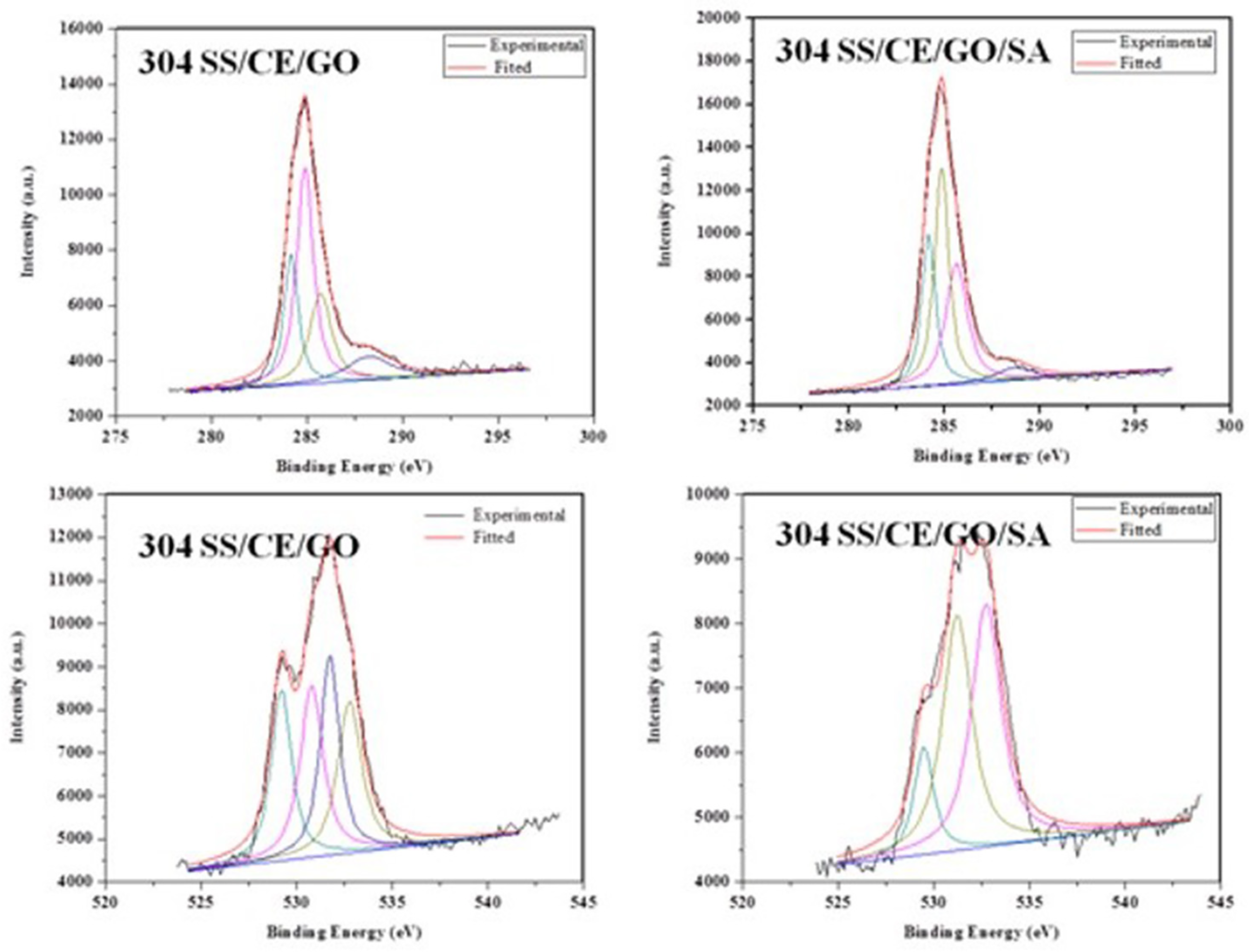
Figure 5(c) displays the deconvoluted X-ray photoelectron spectroscopy (XPS) findings for Ce 3d and 5d. Distinct peaks in the binding energy spectrum are observed, with those at 882.4, 886.1, and 898.2 ev attributed to Ce 3d5/2. Additionally, peaks at 900.1, 903.8, 907.7, and 917.2 eV indicate the presence of Ce 3d3/2. The spectral features observed at 886.1 and 907.7 can be attributed to Ce3+ ions. It is widely recognized that CeO2 exhibits a cubic fluorite crystal structure, where eight O2 anions effectively encircle the Ce4+ cation. The detection of Ce3+ ions in the composite coatings indicated a substantial presence of oxygen vacancies within the CeO2. This characteristic can facilitate electron transfer between CeO2 and reduced GO. The alteration in binding energy suggests charge transfer between CeO2 and rGO. Consequently, the XPS findings presented here align well with and are corroborated by the Raman analysis conducted in this study and previously published reports. 46
Surface characterization results
SEM was employed to examine the surface characteristics of CE/GO coatings electrodeposited on 304 SS. Figure 6(a) to (f)) displays SEM images of both uncoating and coating specimens. The uncoated 304 SS exhibited a uniform surface due to mechanical polishing. For 304 SS/CE, minor micro-cracks containing small clusters of particles were detected within the cracks, resulting from the accumulation of CeO2 particles, as shown in Figure 6(b). In contrast, 304 SS/CE/GO exhibited a clustered surface due to the incorporation of GO, as in Figure 6(c). At higher magnification, the surface of 304 SS/CE/GO/SA exhibited a fractured morphology, characterized by the random distribution of white spherical clustered particles as represented in Figure 6(e). This appearance was attributed to the interaction between the binding agent stearic acid and GO. A study by Liu et al. on AZ91D Mg alloy revealed similar findings, noting that the alloy surface was nearly completely covered with CeO2.. 47 However, they observed the formation of small cracks in the coating. They have attributed these cracks primarily to oxidation processes and to the preparation of samples or the evaporation of water from the coating after the specimens were removed from the solution. The EDAX spectrum of the Ce/GO electrodeposited coatings on 304 SS is depicted in Figure 7. This spectrum reveals the elemental composition of the sample surface, which includes Ce and O. Based on this analysis, we concluded that the granular products were formed from CeO2.
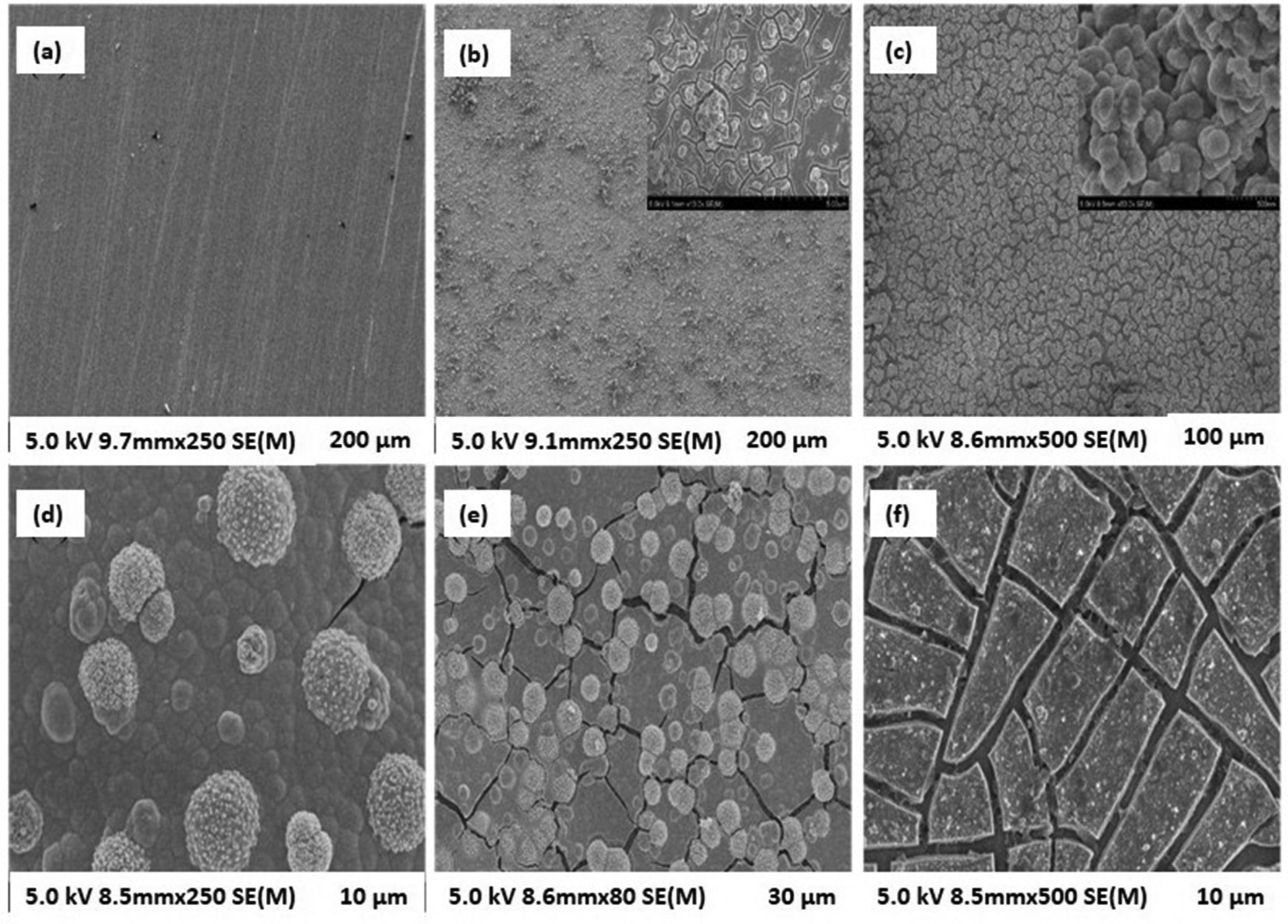
(a-f) SEM micrographs of super hydrophobic coatings on 304 SS.
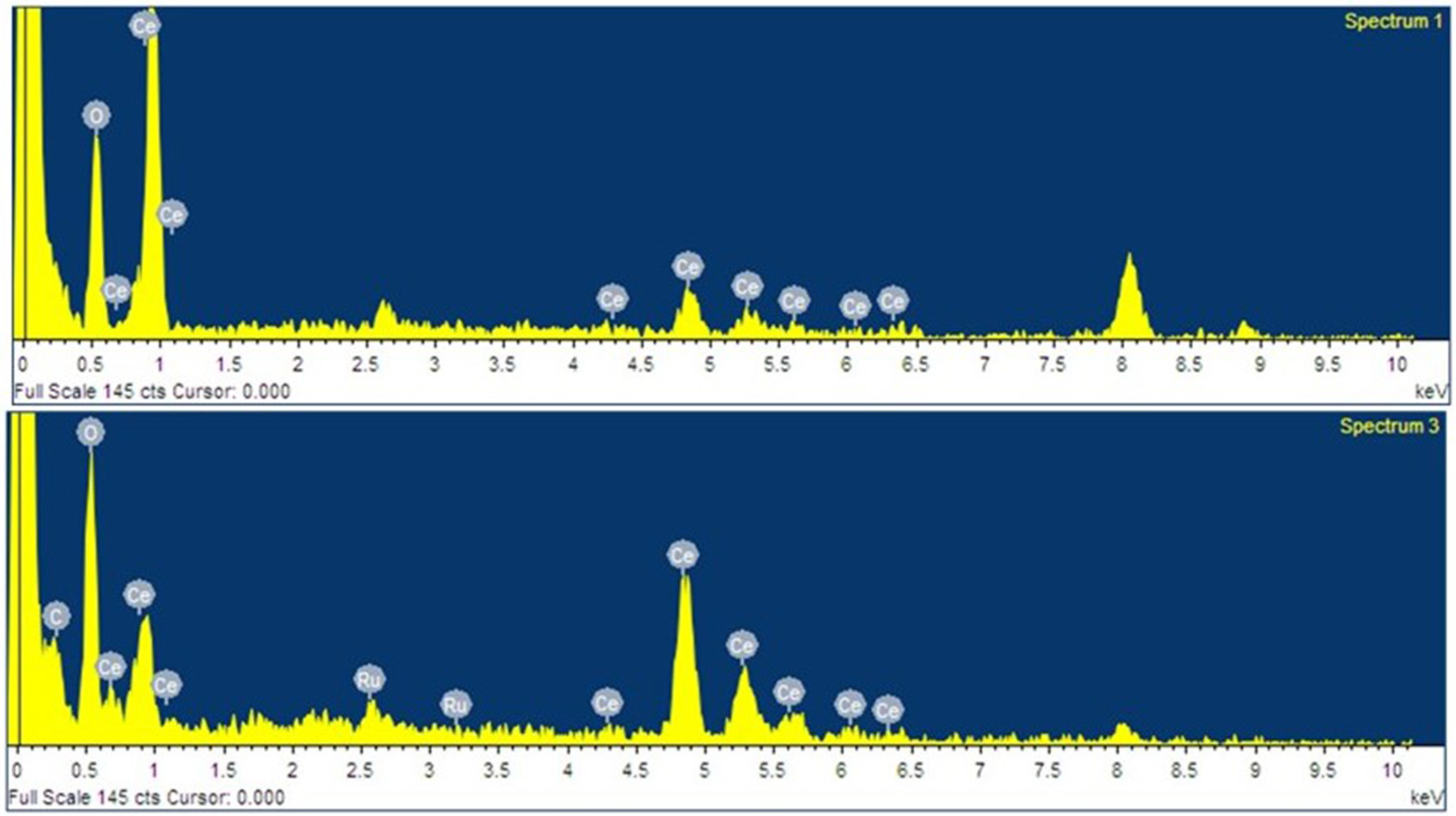
EDAX of CE/GO coating on 304 SS.
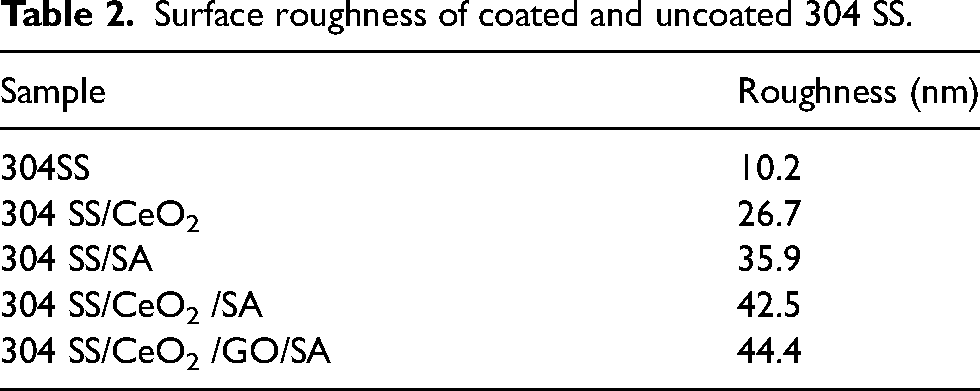
Surface topography and roughness are crucial factors in determining hydrophobicity, as they enhance the interaction between water droplets and the material's surface, significantly impacting its corrosion resistance. We examined the surface topography of electrodeposited 304 SS using AFM. The resulting topographic images are displayed in Figure 8. Table 2 presents the obtained roughness parameter values. An examination of the 304 SS specimen's surface before and after electrodeposition showed a consistent layer of hemispherical globules, providing additional evidence for successfully creating GO/CE nanocomposite coatings. Figure 9 displays the results of the line and depth profile analyses. The data reveals an increase in surface roughness following electrodeposition, which may be attributed to the coating's porous nature. Furthermore, the film-coating porous structures will increase the air fraction on the surface of the pores, further diminishing the actual contact area between water and the rough surface. Consequently, this topography will create a highly water-repellent surface with hydrophobic functional groups, demonstrating superhydrophobic characteristics. This property is likely attributed to the uniform rough surface formed by the nanocomposite coating. 48 The results of surface characterization, such as roughness, are directly linked to the water contact angle outlined in that corresponding section 3.6, as both elements play a crucial role in determining wettability and hydrophobic properties.
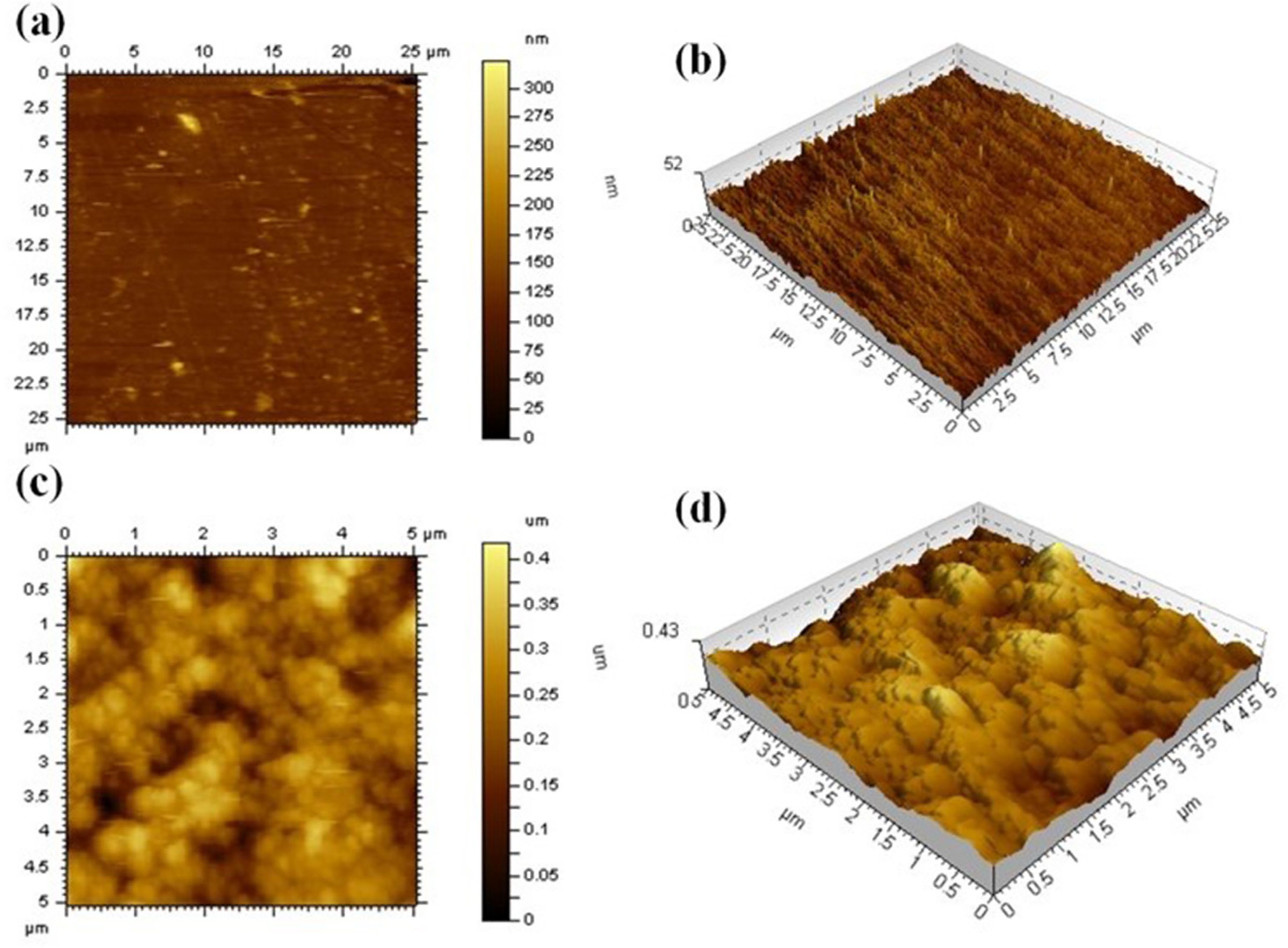
AFM topographic images of (a & b) 304 SS, (c & d) 304 SS/CeO2/GO/SA.
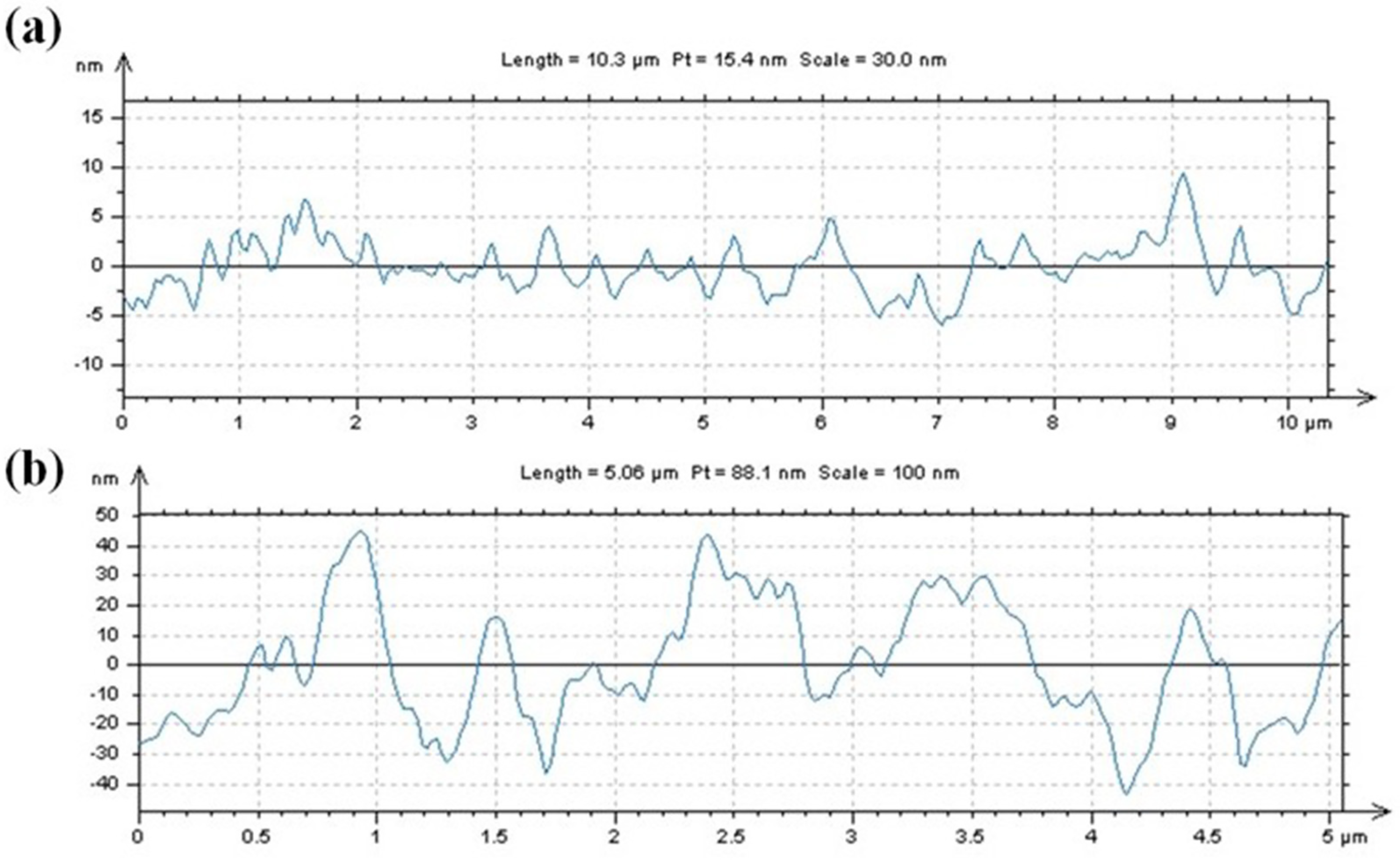
Line and depth scanning of CE/GO 304 SS using AFM.
Surface roughness of coated and uncoated 304 SS.
Hardness measurement analysis
A microhardness tester was employed to evaluate the Vickers microhardness of the specimens, applying a consistent force of 200 mN. Ten measurements were taken for each sample. To examine the mechanical characteristics of the superhydrophobic coatings on stainless steel, the loading and unloading durations were fixed at 10 s The hardness measurements of uncoated and coated SS samples are depicted in Figure 10. The uncoated SS specimen with a superhydrophobic surface demonstrated a hardness of about 351 ± 10 HV. In comparison, the SS/CE sample showed a hardness of 330 ± 10 HV, while both SS/CE/SA and SS/CE/GO samples exhibited hardness values of 385 ± 10 HV. Nevertheless, SS/CE/GO/SA exhibits a superior hardness value of 450 ± 10 Hv. The specimen with a superhydrophobic coating (SS/CE/GO/SA) demonstrated an excellent microhardness value compared to the uncoated SS. This suggests that the superhydrophobic surfaces were anticipated to enhance the mechanical characteristics and broaden the applicability of SS samples. 49 Jing et al. compared the microhardness of cladding layer and substrate surface with and without ultrasonic field application for 304 SS. 24 Results showed that shape memory alloy coating hardness was 294 Hv, exceeding the 304 SS substrate's 267 Hv. Under identical conditions, the claddin layer's surface microhardness with ultrasonic energy at 20 cm was 324 Hv than without ultrasonic assistance.
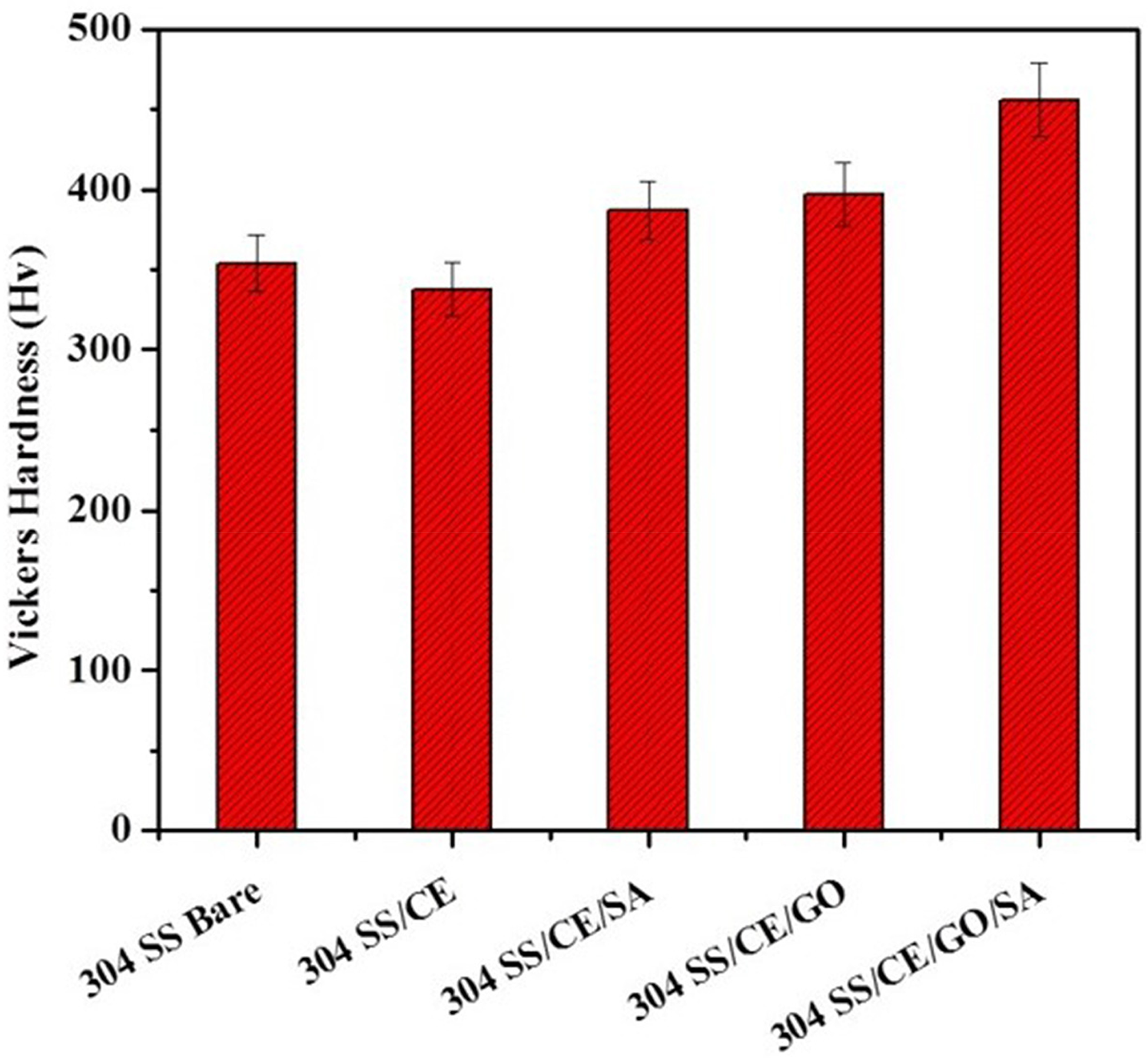
Hardness measurements of coated and uncoated 304 SS.
Adhesion measurement analysis
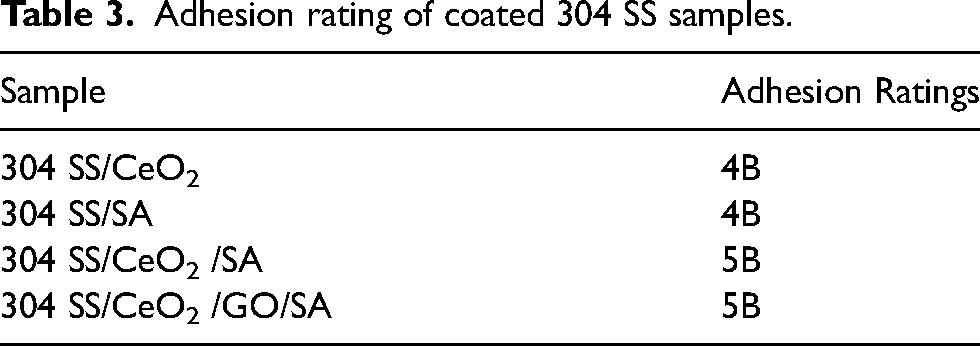
The bond strength of the CE/GO/SA coatings on the 304 SS substrate was evaluated using cross-cut tape adhesion tests, following the guidelines outlined in ASTM D3359. 50 The attachment of the nanocomposite layer to the 304 SS surface was assessed through a tape adhesion test. Table 3 displays the adhesion ratings for the coated 304 SS samples. The scratch adhesion evaluation demonstrated that the coating adhered sufficiently to the SS in 304 SS/CE/GO and 304 SS/CE/GO/SA specimens. All nanocomposite coatings applied through electro-deposition showed strong adhesion characteristics, and no notable damage was detected on the 304 SS substrates following the adhesion assessment. In terms of physical properties, the cohesive forces within a water molecule are weaker than the adhesive force that a metallic surface applies to a water droplet. Consequently, the droplet spreads out more and exhibits increased wettability on a rough surface compared to a smooth one. The adhesion force is greater on the 304SS surface because the surface atoms are more chemically active due to the absence of neighboring atoms to share their charges. Additionally, the coated surface exhibits a reduced number of active atoms on its exterior due to its soft structural characteristics. The application of the coating, along with the low free energy surface treatment, resulted in a fourfold increase in hydrophobicity compared to the 304 SS substrate. In essence, the Cassie-Baxter theory does not apply to surfaces with roughness considered smooth. 51 On the other hand for CeO2/GO/SA surfaces the contact angle is greater than 150°, indicating their superhydrophobic nature.
Adhesion rating of coated 304 SS samples.
Water contact angle analysis
Wenzel introduced the concept of surface roughness to wettability theory to quantitatively describe a rough surface's wettability, known as the ‘Wenzel model.’ The control of a solid surface's wettability is crucial for surface engineering applications. This property is primarily determined by two factors: the roughness of the surface and its composition. To examine the super hydrophobic characteristics, water contact angle measurements were conducted on uncoated and coated SS samples. The average contact angle (CA) values for these specimens are displayed in Figure 11. Table 4 shows the corresponding CA measurements. The surface of the uncoated SS specimen exhibited hydrophilic properties attributed to the hydroxyl groups on its surface. Nakayama et al. observed that a CeO2 coating, which is anodically deposited on a smooth SS surface, initially exhibits hydrophilic properties right after deposition. 30 The observed CA was approximately 80°. The surface properties of CE (90.25), CE/SA (140.5), and CE/GO (144.4) exhibit hydrophobicity, while CE/GO/SA (153.5) demonstrates super hydrophobic characteristics. Nevertheless, as Nakayama et al. noted, it becomes hydrophilic when exposed to the air. 30 This shift in wettability is due to the buildup of hydrocarbon pollutants present in the atmosphere. Jing et al. combined femtosecond laser processing with nano SiO2 spraying to create an armor like superhydrophobic shape memory alloy coating with exceptional corrosion resistance. 24 The laser created microstructure provided nano SiO2 particles, forming a dense oxide layer that enhanced thermal and mechanical stability. The coating showed remarkable resistance to chloride ions, achieving 71% protective effect on 304 SS substrates. The increased CA value observed in CE/GO/SA correlates with elevated surface roughness, as confirmed by AFM analysis. Additionally, incorporating GO and cerium stearate on the coating surface enhanced the water-repelling properties of the SS substrate during electro-deposition. Similar studies conducted by Guerra et al. demonstrated that the effect of a rough surface can be assessed by examining the contact angle which exhibited better contact angle of 146.2° for sandblasted 304SS, whereas smooth sample displayed a contact angle of 114.2°. 28 The uncoated 304 SS surface had a contact angle measuring 80.43°. The grain boundaries and scratches on the surface of the substrate were clearly visible. When scratches on the surface have a roughness value of 10. Nm and are deep, they can serve as sites that enhance wettability and capture small particles of water or electrolyte solutions, potentially initiating corrosive processes. Table 2 presents the roughness measurements recorded during the coating processes. The enhancement in wettability, indicated by a reduced contact angle, resulted from the increased surface area due to the roughness. The dispersion of water droplet was more pronounced compared to the sample with a smooth surface. The 304 SS/CeO2/GO/SA surface exhibited increased chemical activity, which weakened the cohesive forces among the water droplet molecules relative to the surface energy acting on the droplet, resulting in greater dispersion across the metallic surface. At smaller contact angles, it was determined that the sample exhibited a rough and varied surface texture. However, identifying the presence of peaks and valleys with precision is not feasible.
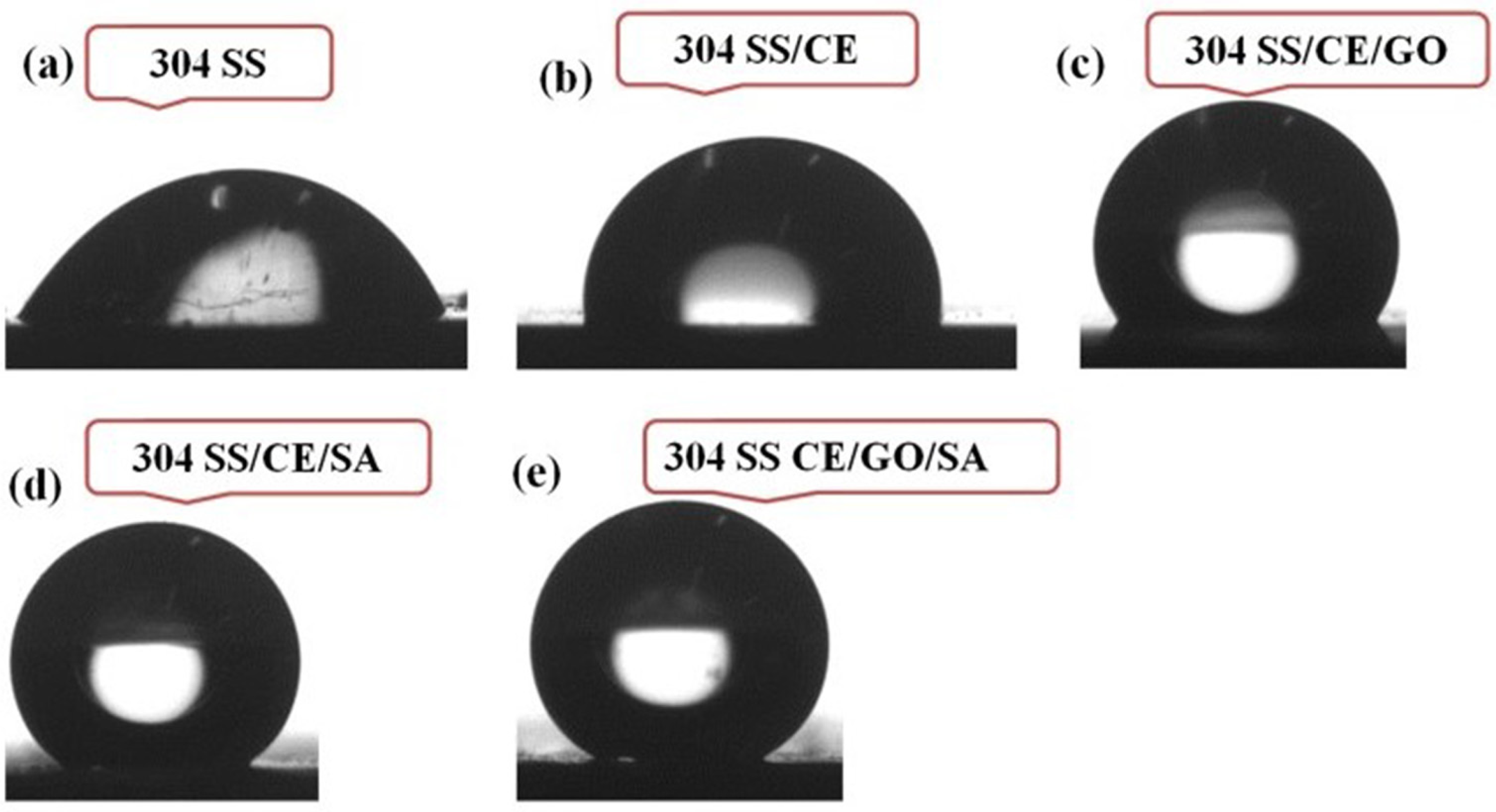
Contact angle behaviour of various coated and uncoated SS 304 samples.
Measurement of contact angle for corresponding coated and uncoated SS 304.
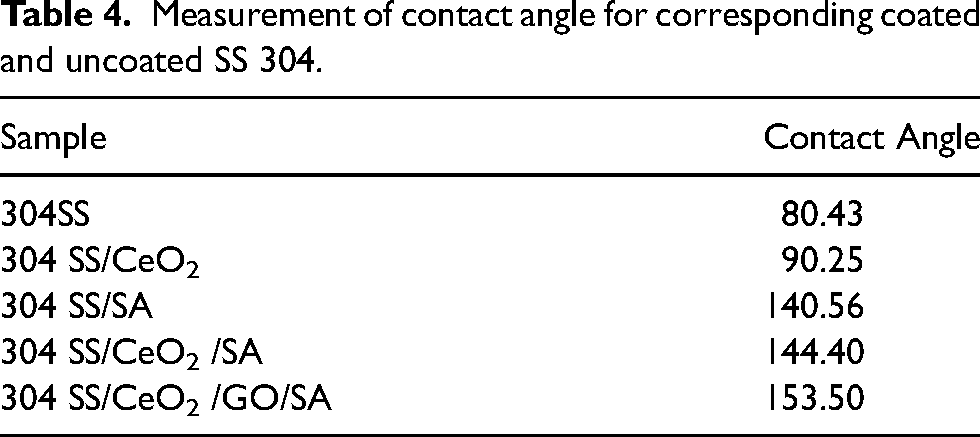
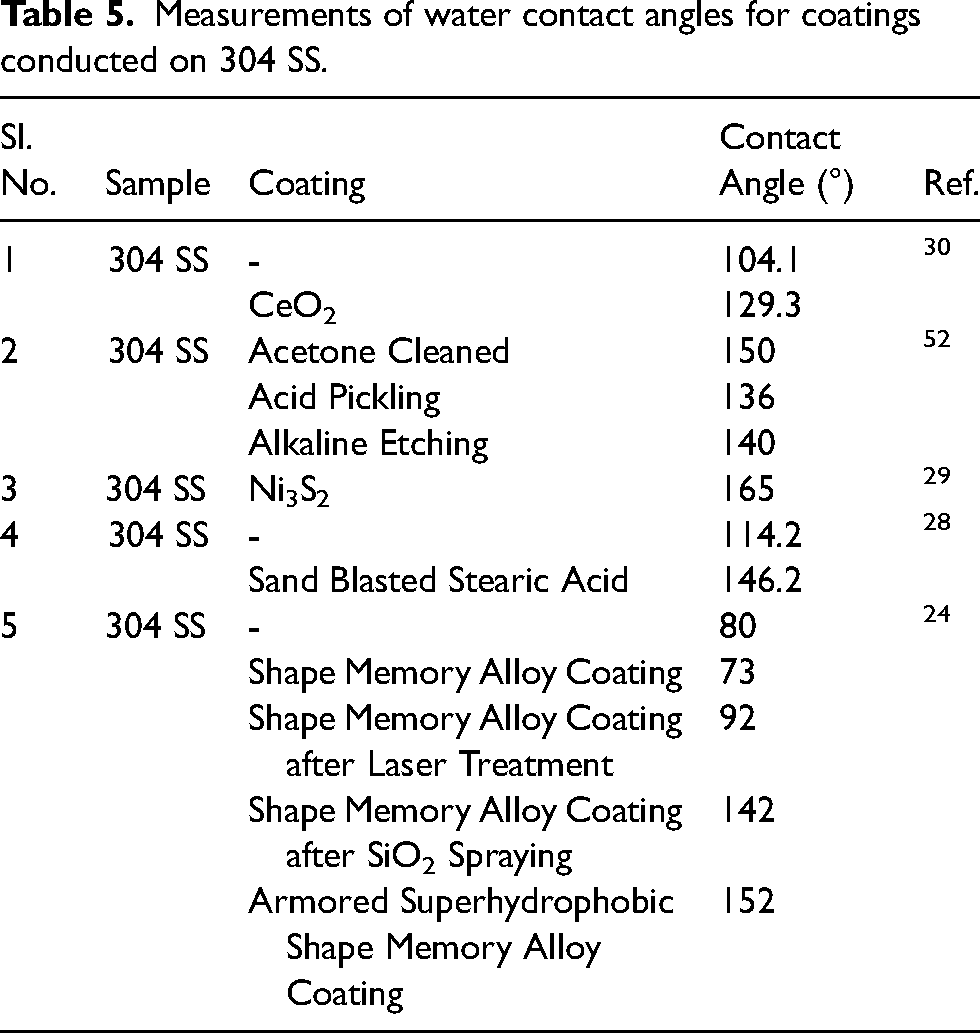
Figure 6(a) to (f)) illustrates that conventional SEM can be used to examine the grain boundaries on the surface of 304 SS. Upon examining the surfaces of the samples coated with CeO2/GO/SA, one can notice the appearance of small white dots on the coated surface, as illustrated in Figure 6(f). When examined at a scale of 10 μm, the 304 SS surface coated with CeO2/GO/SA exhibits a varied and rough texture. The small scale presence of uneven dots tends to attract liquid, a phenomenon known as the petal effect. 52 This phenomenon arises due to the structural differences at smaller scales, which lead to the trapping of water particles as a result of increased surface roughness and wettability. Table 5 displays the measurements of water contact angles for coatings conducted on 304 SS.
Measurements of water contact angles for coatings conducted on 304 SS.
Electrochemical corrosion analysis
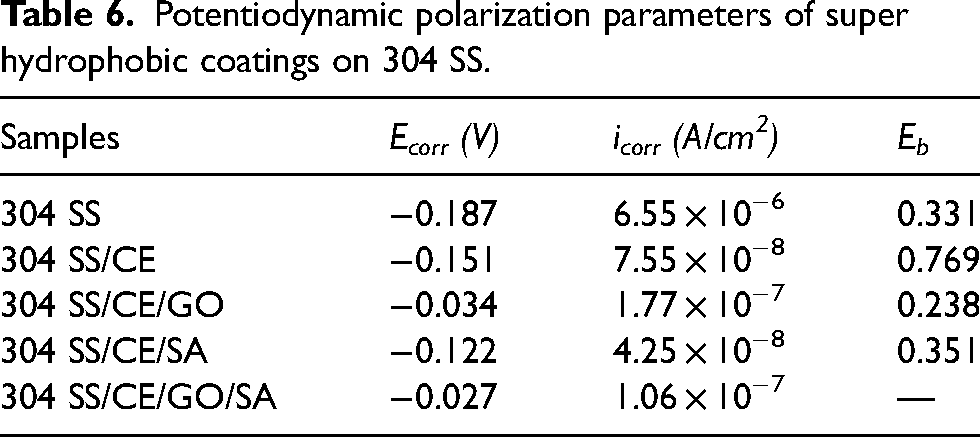
The corrosion-resistant properties were evaluated for superhydrophobic surfaces using potentiodynamic polarization (PDP) and electrochemical impedance spectroscopy (EIS). The characteristic PDP curves for both uncoated and coated SS samples, tested in 3.5% NaCl solution, are shown in Figure 12. Table 6 displays the vital electrochemical parameters extracted from the polarization curves, including the corrosion resistance (color), corrosion potential (Ecorr), and corrosion rate values. Analysis of these curves revealed that the Ecorr values for all specimens fell within a potential range spanning from −0.1 V to 0.02 V. The uncoated 304 SS exhibited an Ecorr value of −0.187 V. In comparison, the 304 SS/CE sample displayed an Ecorr of −0.151 V. At the same time, the 304 SS/CE/GO specimen showed an Ecorr −0.034 V. Notably, the 304 SS/CE/GO/SA sample demonstrated the most positive Ecorr shift at 0.027 V, indicating superior corrosion resistance compared to the other tested materials. Additionally, the corrosion current density (icorr) values were measured for different samples. The uncoated sample showed an icorr of 6.55 × 10⁻⁶ A/cm2, while the 304 SS/CE sample had an icorr of 7.55 × 10⁻⁶ A/cm2. The 304 SS/CE/GO sample exhibited an icorr of 1.77 × 10⁻⁷ mA/cm2 and the 304 SS/CE/SA sample had an icorr of 4.25 × 10⁻⁸ A/cm2. Notable, the 304 SS/CE/GO/SA sample demonstrated the lowest icorr value at 1.06 × 10⁻⁷ A/cm2, indicating a reduction in corrosion current density by approximately one order of magnitude. This observation confirms the improved corrosion resistance behavior of the 304 SS/CE/GO/SA sample. The findings demonstrated that the 304 SS/CE/GO/SA coated surface exhibited superior corrosion resistance to the uncoated and other treated substrates. This enhanced anticorrosive performance can be attributed to the superhydrophobic nature of the applied coatings.
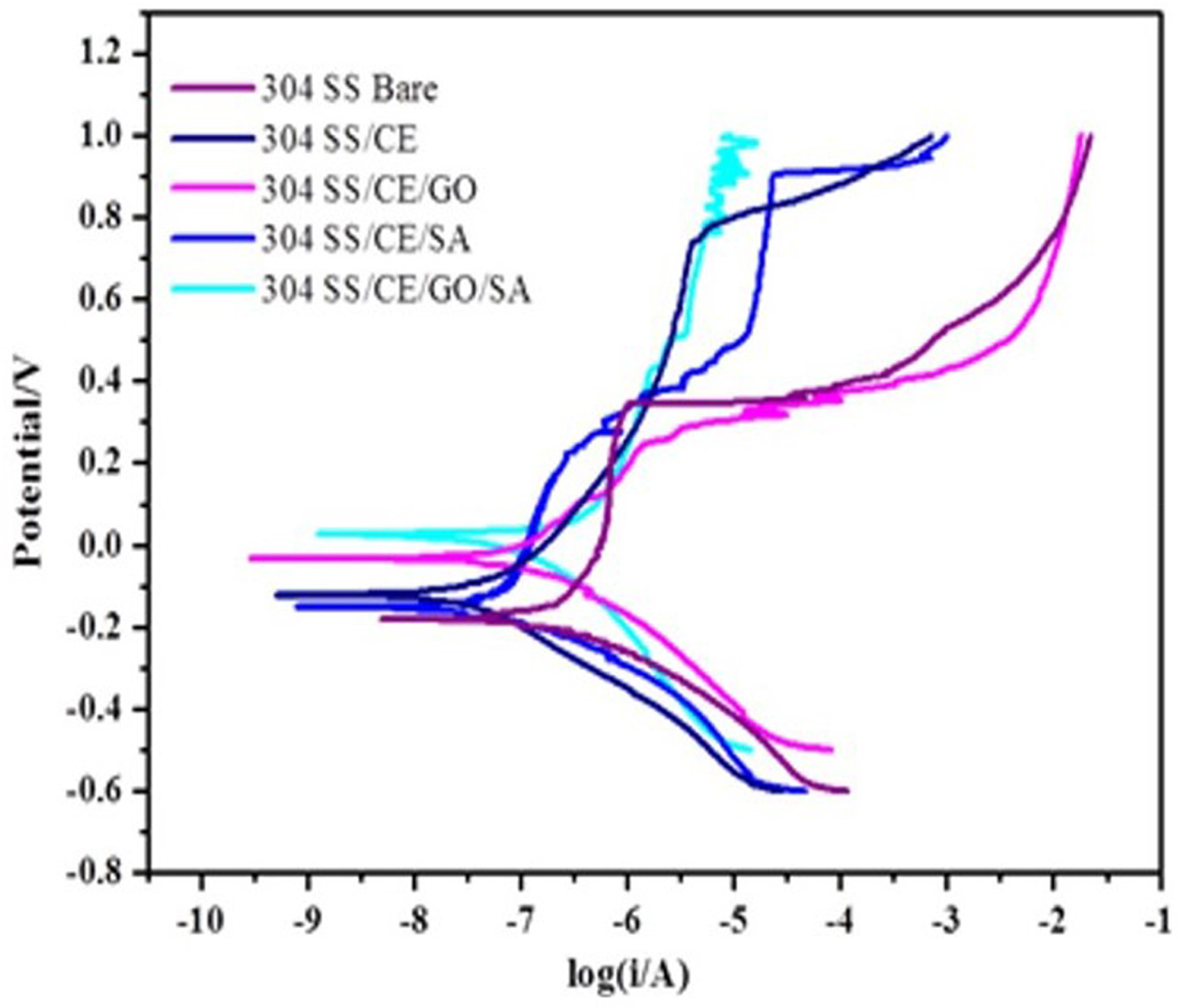
Potentiodynamic polarization curves for both coated and uncoated samples.
Potentiodynamic polarization parameters of super hydrophobic coatings on 304 SS.
EIS was utilized to evaluate the corrosion resistance properties of the uncoated and coated SS samples. The EIS diagrams and their corresponding fitted results for both the unprotected and coated 304 SS specimens, when exposed to a 3.5 wt% NaCl solution, are presented in Figure 13. Semicircular depressions are noted for both uncoated and coated samples. Nevertheless, the 304 SS/CE/GO/SA specimen exhibited a capacitive loop with infinite behavior, characterized by a larger diameter than the uncoated and coated 304 SS. This suggests superior corrosion resistance and improved anti-corrosion properties of the coatings. The enhanced protection may be attributed to the CE coatings combined with GO and SA, which effectively shield the 304 SS surface and impart excellent super hydrophobic characteristics. A frequency-dependent term known as a constant phase element (CPE) is introduced instead of using a pure capacitor to fit the EIS data to achieve a good match between theoretical and experimental data in the fitting process. The electrochemical impedance response for the CPE is represented by equation (1) (Figure 14).
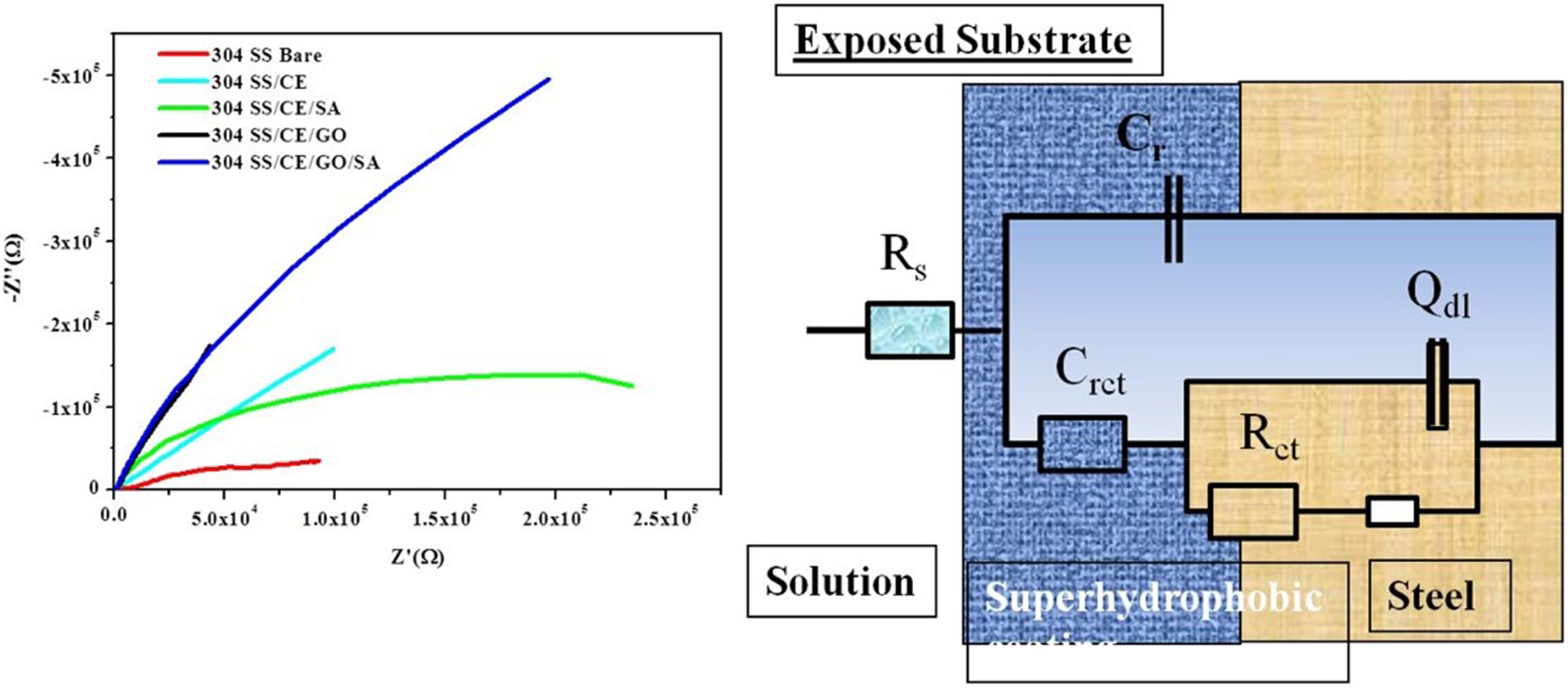
Nyquist plot of super hydrophobic coatings on 304 SS specimen along with EIS representation.
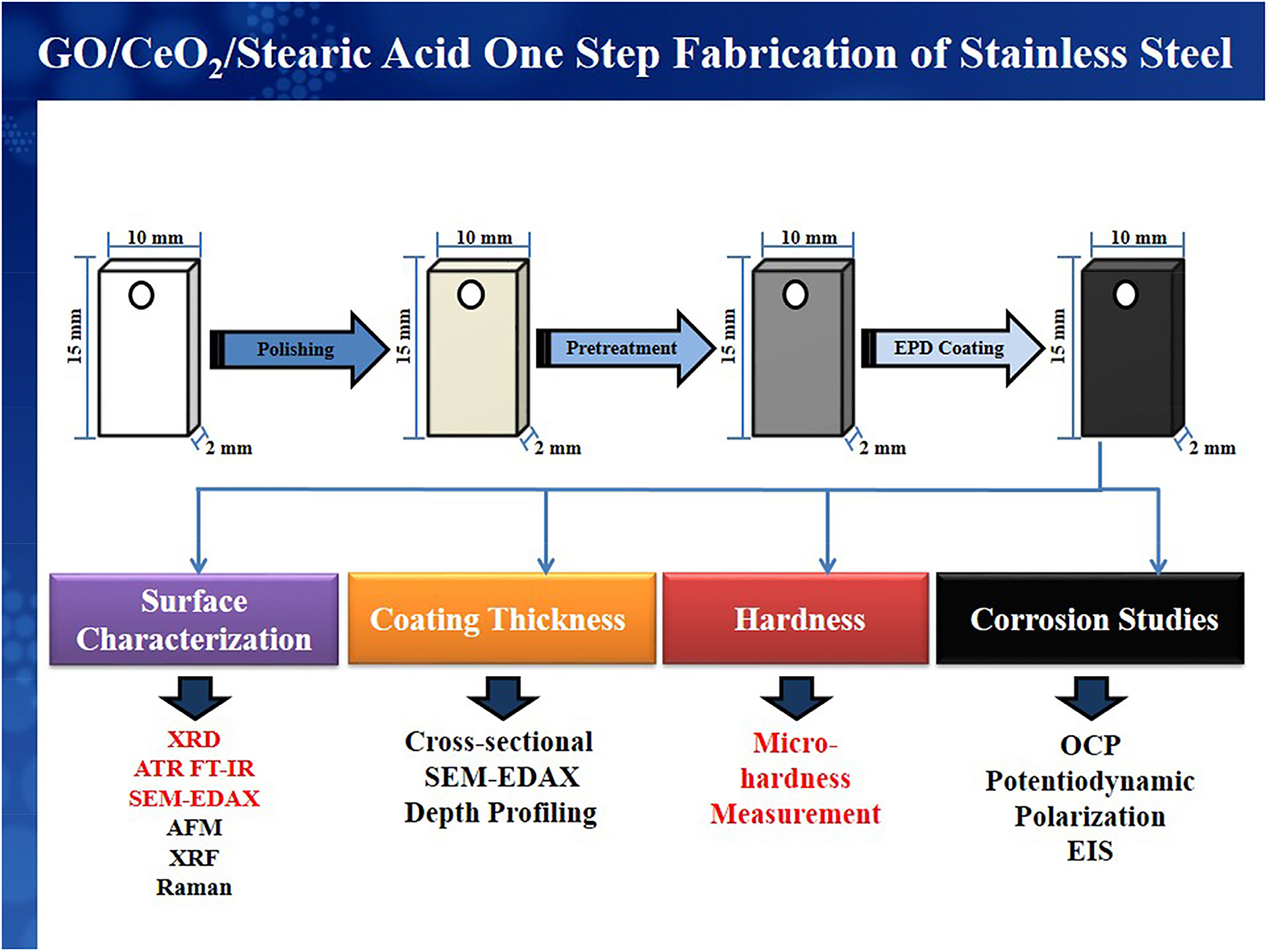
Graphical abstract.
Where Z represents the impedance, Q is the Constant Phase Element (CPE), ɷ represents the angular frequency = 2√Πf (rad s−1), j denotes the imaginary number (j = √1), n and Q represent the frequency-independent parameters depending on the temperature conditions. In general, the conditions applied for any electrochemical system will mainly depend on the value of n, which is given by n is −1 ≤ n ≤ 1. The value of n determines the electrical component represented: n = 1 indicates an ideal capacitor, n = 0 signifies a pure resistor, and n = −1 denotes a pure inductor. The introduction of a CPE, typically symbolized by Q, substituted an ideal capacitor for a pure one due to the electrode surface's non-uniformity. Alternatively, this concept can be described using the distribution of relaxation times, which may result from non-uniform diffusion in a heterogeneous arrangement of RC transmission lines analogous to an electrical system. In the fitting approach, the chi-square value indicates how well the theoretical data aligns with the experimental data when utilizing Q. 47 The primary factors considered to determine the optimal fit for the EIS data model were minimal chi-square values and low percentage errors in the impedance spectrum's derived parameters. Table 7 displays the resulting impedance parameters that were obtained.
Electrochemical impedance parameters of super hydrophobic coatings on 304 SS.

Conclusions
Based on the comprehensive experimental investigation of superhydrophobic GO/CeO₂/stearic acid nanocomposite coatings on 304 stainless steel, the following major conclusions can be drawn:
➢ This research successfully developed a one-step electrochemical deposition method for fabricating GO/CeO₂/stearic acid superhydrophobic nanocomposite coatings on 304 stainless steel substrates using chronoamperometry at −0.85 V vs. SCE. ➢ Enhanced corrosion protection is achieved, with remarkable corrosion resistance, with approximately one order of magnitude reduction in corrosion current density from 6.55 × 10⁶ A/cm² (uncoated) to 1.06 × 10⁷ A/cm² (CE/GO/SA coated), demonstrating superior protective performance in 3.5% NaCl solution. ➢ Exceptional superhydrophobic performance demonstrated excellent water-repelling properties with a contact angle reaching 153.5° for the CE/GO/SA coating, confirming superhydrophobic behavior and self-cleaning characteristics. ➢ Superior mechanical properties achieved enhanced microhardness of 450 ± 10 HV for the superhydrophobic coating, representing a 28% improvement over uncoated 304 SS (351 ± 10 HV), along with excellent adhesion characteristics. ➢ Successful chemical integration confirmed chemical interactions between GO and CeO₂ nanoparticles through comprehensive characterization, including XRD, FTIR, Raman, and XPS, validating the formation of stable nanocomposite structures with stearic acid as an effective binding agent. ➢ Optimized surface morphology demonstrated that the combination of GO, CeO₂, and stearic acid creates an optimal surface roughness and chemical composition for achieving superhydrophobic properties while maintaining coating integrity. ➢ The developed coating technology shows significant promise for protecting metallic substrates in chloride-rich environments, with potential applications in marine, petrochemical, and industrial settings where corrosion resistance is critical. ➢ Sustainable coating approach established an environmentally friendly, one-step electrodeposition process that can be easily scaled for industrial applications, offering a practical alternative to complex multi-step coating procedures.
The findings indicate that GO/CeO₂/stearic acid nanocomposite coatings can serve as effective protective layers for enhancing corrosion resistance of 304 stainless steel in aggressive environments, with considerable potential for adaptation to other metallic materials and industrial applications.
Footnotes
Acknowledgments
All authors acknowledge the Railway Technical Centre, National Kaohsiung University of Science & Technology, for financial support
Author contribution(s)
Declaration of conflicting interests
The authors declared no potential conflicts of interest with respect to the research, authorship, and/or publication of this article.
Funding
The authors received no financial support for the research, authorship, and/or publication of this article.
