






Abstract
The Au7.5Ni1.5Cu alloy exhibits high stability and excellent electrical conductivity, and is widely used in applications such as aerospace precision conductive slip-rings, micro-motor brushes, high-end connectors, and low-load sliding electrical contact applications. To overcome the inherent inverse relationship between strength and electrical conductivity in this alloy, a liquid-nitrogen cold-rolling process was employed, and the resulting microstructural evolution, mechanical properties, and electrical conductivity were systematically investigated. The results demonstrate that when the cold-rolling reduction increased from 20% to 30%, a nanoscale twin structure was induced within the alloy, accompanied by the development of a strong ⟨111⟩ fiber texture along the rolling direction. Under liquid-nitrogen cold-rolling conditions, both the tensile strength and microhardness increased markedly, while the electrical conductivity exhibited an initial increase followed by a slight decline. At an optimal reduction of 25%, the alloy achieved a desirable combination of high strength and high conductivity, with a tensile strength of 796 MPa, a microhardness of 221 HV0.1, and an electrical conductivity of 9.72% IACS. Compared with the untreated alloy, these values represent increases of 246 MPa in tensile strength, 49 HV0.1 in microhardness, and 1.09% IACS in electrical conductivity. This synergistic enhancement in mechanical and electrical performance is primarily attributed to the formation of nanoscale twins during liquid-nitrogen cold rolling. The nanoscale twin boundaries effectively impede dislocation motion, thereby strengthening the material, while their highly ordered atomic structure minimizes electron scattering, enabling the simultaneous improvement of strength and electrical conductivity in the Au7.5Ni1.5Cu alloy.
Keywords
Introduction
The Au-Cu-Ni ternary alloy system exhibits excellent chemical stability and favorable electrical contact properties and is resistant to the formation of oxide, sulfide, or organic surface films that could otherwise lead to high contact resistance. These characteristics ensure stable electrical contact performance, making this alloy system particularly well suited for use as a sliding electrical contact material under demanding or specialized operating environments, such as in aerospace precision conductive slip rings, micro-motor brushes, high-end connectors, and other low-load sliding electrical contact applications.1–3
However, the Au7.5Ni1.5Cu alloy exhibits a pronounced trade-off between mechanical strength and electrical conductivity. Extensive studies on gold-based alloys have shown that alloying and thermomechanical processing are effective approaches for enhancing strength and hardness. The introduction of microstructural features such as dislocations, grain boundaries, solute atoms, and precipitates can effectively hinder dislocation motion, thereby strengthening the material. Nevertheless, according to Matthiessen's rule, these conventional strengthening mechanisms inevitably introduce a high density of lattice defects. Such defects significantly intensify electron scattering, reduce the electron mean free path, and ultimately lead to a deterioration in electrical conductivity. 4 Conversely, post-deformation annealing treatments can restore conductivity by reducing defect density, but this improvement is typically accompanied by a substantial loss of strength and hardness. For example, Dong Peng et al. 5 reported that during the processing of an Ag-15Cu-10Au-2Ni alloy, the densities of point defects and dislocations increased markedly. After 95% deformation, the alloy exhibited a hardness of 201 Hv, more than twice that of the as-cast state (90 Hv), and a tensile strength of 744 MPa, albeit with a limited elongation of only 3.2%. The accumulation of defects induced lattice distortion and enhanced electron scattering, thereby shortening the electron mean free path and reducing electrical conductivity. Subsequent annealing effectively eliminated a large fraction of these defects, decreased the solute atom concentration, and partially restored lattice order, resulting in a minimum resistivity of 3.98 μΩ·cm and a corresponding improvement in conductivity. Similarly, Luo Yao et al. 6 observed that annealing an Au-Ag-Cu-Ni alloy at 350 °C reduced its resistivity to 0.119 Ω·mm2/m. In contrast, under hardened conditions, increasing cold deformation led to the accumulation of vacancies, lattice distortions, and dislocations, intensifying electron scattering and causing resistivity to reach its maximum. Furthermore, Tian et al. 7 demonstrated that plastic deformation of Au/Ag multilayer composites increased material strength by up to five times relative to the initial state, but at the expense of a 15–30% reduction in electrical conductivity at 300 K.
Low-temperature deformation provides an effective strategy for the precise regulation of the microstructure and properties of gold-based alloys by promoting twin formation, suppressing dislocation slip, and optimizing lattice arrangements. Through these mechanisms, it is possible to achieve significant strength enhancement while largely preserving electrical conductivity. In recent years, the effects of low-temperature deformation on the microstructural evolution and performance of gold-based alloys have been extensively investigated. Zhang et al. 8 fabricated Cu-Ag alloys using low-temperature plastic deformation and observed the formation of abundant nanoscale twin structures, demonstrating that reduced deformation temperatures strongly favor twin formation in face-centered cubic metals. Wang et al.9,10 compared Au nanowires with and without twin structures and found that a high density of twin boundaries increased the ultimate tensile strength from 1.43 GPa to 3.12 GPa. This remarkable enhancement was attributed to the Hall-Petch strengthening effect, whereby coherent twin boundaries act as highly effective barriers to dislocation motion. Similarly, Lu et al. 11 subjected coarse-grained Cu to high-strain-rate impact deformation at liquid nitrogen temperature and reported the formation of nanoscale twins. Their results showed that the introduction of twin structures led to an approximately 200% increase in strength while maintaining nearly unchanged electrical resistivity. This behavior was explained by the fact that coherent twin boundaries possess only about 5% of the resistivity of conventional grain boundaries, and their highly ordered atomic structure significantly suppresses electron scattering. Further evidence for the beneficial role of twin boundaries was provided by Chuang et al., 12 who regulated annealing twins in Ag-8Au-3Pd alloy wires and found that an increased twin boundary density during recrystallization resulted in a 30% improvement in electrical conductivity, confirming the general effectiveness of twin boundary engineering in conductivity optimization. In addition, Gwak et al. 13 successfully introduced twin structures into nanoporous Au and experimentally demonstrated that the presence of twin boundaries increased tensile strength from 27.4 MPa to 87.5 MPa. These findings collectively indicate that high-density twin boundaries can simultaneously impede dislocation motion and preserve low-resistance electron transport pathways, thereby enabling the synergistic enhancement of mechanical strength and electrical conductivity.
In this study, a liquid-nitrogen cold-rolling process was employed to modify the Au7.5Ni1.5Cu alloy, effectively suppressing dislocation slip and dynamic recovery while reducing the critical stress required for twin formation, thereby promoting the generation of twin structures. By exploiting the strong dislocation-blocking effect of twin boundaries together with their intrinsically low electron-scattering characteristics, this processing strategy achieves a simultaneous enhancement of mechanical strength and preservation of high electrical conductivity. The findings provide a valuable reference for addressing the long-standing trade-off between strength and conductivity in Au7.5Ni1.5Cu alloys.
Experimental section
Materials and methods
The experimental material investigated in this study was an Au7.5Ni1.5Cu alloy (nominal composition: Au 91 wt.%, Ni 7.5 wt.%, and Cu 1.5 wt.%), supplied by the Kunming Institute of Precious Metals. The alloy was initially processed into sheets with a thickness of 0.8 mm through melting, casting, and subsequent annealing. Liquid-nitrogen cold rolling was then conducted at −196 °C with thickness reduction ratios of 20%, 25%, and 30%, while the undeformed sheet was retained as a reference sample.
Characterization and testing
Phase identification was performed by X-ray diffraction (XRD) over a scanning range of 10–90°, and shifts in diffraction peaks were analyzed to evaluate atomic solid-solution effects. A step-scanning mode was employed to minimize instrumental broadening, and zero-shift errors were calibrated using a standard Si sample. Surface morphology and elemental distribution were characterized using scanning electron microscopy coupled with energy-dispersive spectroscopy. Electron backscatter diffraction (EBSD) analysis was conducted on the sample with a 25% rolling reduction to obtain inverse pole Fig. (IPF) maps, grain boundary distributions, and ⟨111⟩ texture characteristics. Nanoscale twin lamellae and stacking faults were examined by transmission electron microscopy (TEM), and selected area diffraction patterns were used to identify characteristic twin diffraction spots corresponding to the (200), (1̅11), and (11̅1) planes. To avoid artifacts arising from sample preparation and instrumentation, final thinning of the TEM samples was performed at a low acceleration voltage to prevent ion-beam heating-induced dynamic recovery of the nano-twin structures. Mechanical properties were evaluated using an HV-1000IS Vickers microhardness tester with an applied load of 100 g and a dwell time of 15 s. Five indentations were performed on each sample, and the average value was reported. Room-temperature tensile tests were carried out using a universal testing machine at a strain rate of 0.5 mm/min to determine tensile strength and elongation. Electrical conductivity was measured using a Sigma2008B digital eddy-current conductivity meter, with five measurements obtained for each specimen and the mean value taken as the final result.
Results and discussion
Effects of liquid nitrogen cold rolling on nanotwin and grain structures
Figure 1 shows the XRD patterns of the Au7.5Ni1.5Cu alloy after liquid-nitrogen cold rolling with reduction ratios of 20%, 25%, and 30%. The diffraction results indicate that, following the initial pre-treatment, the alloy exhibits a single-phase α₀ continuous solid solution with a FCC structure. Characteristic diffraction peaks corresponding to the (111), (200), (220), (311), and (222) planes are clearly observed, and no secondary phases are detected, confirming the absence of phase precipitation. Because the atomic radii of Ni (rNi=0.124 nm, rCu=0.128 nm) are smaller than that of the Au matrix (rAu=0.144 nm), the substitutional solid solution of Ni and Cu results in a contraction of the lattice parameter. This lattice distortion gives rise to solid-solution strengthening, while concurrently contributing to a reduction in electrical conductivity. The decrease in lattice constant is manifested by a shift of the diffraction peaks toward higher diffraction angles. Following liquid-nitrogen cold rolling at different reduction levels, the phase constitution remains unchanged, with no additional diffraction peaks appearing, indicating that the rolling process does not induce phase transformation or precipitation. The matrix of the Au7.5Ni1.5Cu alloy therefore remains a single-phase FCC α₀ solid solution. With increasing rolling reduction, the diffraction peaks exhibit a slight shift toward lower angles, accompanied by an increase in the intensities of the (111), (200), and (220) reflections.
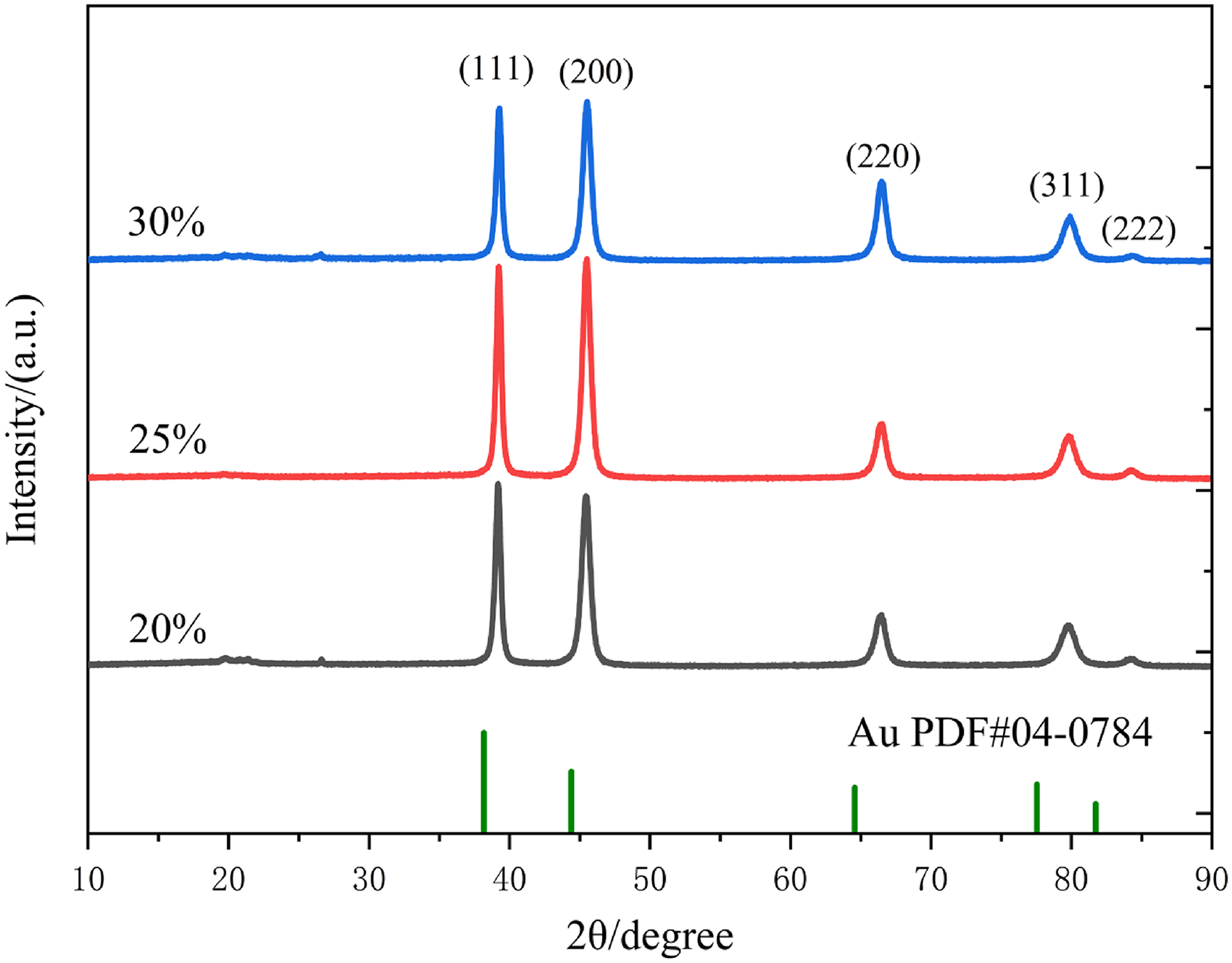
XRD patterns of Au7.5Ni1.5Cu alloy under liquid nitrogen cold rolling with different reductions (20%, 25%, 30%)
Table 1 lists the diffraction peak positions and corresponding full width at half maximum (FWHM) values of the Au7.5Ni1.5Cu alloy after liquid-nitrogen cold rolling. The results show that the FWHM values of the (220), (311), and (222) diffraction peaks increase progressively with increasing rolling reduction. Grain sizes calculated using Bragg's law (Eq. 1) and the Scherrer equation (Eq. 2) reveal a gradual decrease in crystallite size for the corresponding crystallographic planes (Table 1). Specifically, the average grain size decreases from an initial value of 9.89 nm to 9.21 nm and further to 8.86 nm as the reduction ratio increases. This continuous reduction in crystallite size indicates that liquid-nitrogen cold rolling effectively refines the grain structure of the alloy to the nanoscale (<10 nm), with the refinement becoming more pronounced at higher reductions. Such nanoscale refinement is consistent with the formation of nano-twin structures during the liquid-nitrogen cold rolling process, providing microstructural evidence for twin-induced strengthening in the alloy.

Position, FWHM, and grain size of diffraction peaks of Au7.5Ni1.5Cu alloy after liquid nitrogen cold rolling

Where
Where L represents the crystallite (grain) size,
To further distinguish the contributions of grain refinement and lattice distortion to XRD peak broadening, the Williamson-Hall (W-H) method was employed to analyze the diffraction peaks of samples with different rolling reductions.
14
Through linear fitting of the W-H equation (Eq. 3), the data points exhibited a certain degree of dispersion, indicating that the classical isotropic W-H model is limited in this context. Combined with subsequent TEM characterization, this deviation precisely confirms the formation of abundant nanoscale twins and stacking faults during liquid-nitrogen cold rolling, as stacking fault effects induce anisotropic additional broadening on different crystallographic planes. Nevertheless, by performing an approximate linear fitting on the dislocation-affected crystallographic planes using the W-H equation (Eq. 3), the micro-lattice strains within the alloy at liquid-nitrogen cold-rolling reductions of 20%, 25%, and 30% were determined to be 2.34 × 10⁻³、1.87 × 10⁻³、2.87 × 10⁻³, respectively.
Where
These results indicate that higher reductions introduce micro-lattice strain within the alloy. At the 20% reduction, dislocation slip dominated, leading to the initial accumulation of severe lattice distortion. When the reduction reached 25%, the deformation mechanism gradually transitioned to twinning. The formation of coherent twin boundaries effectively accommodated plastic deformation and released the local stress concentrations caused by dislocation pile-ups, resulting in a transient decrease in microstrain. However, when the reduction was increased to 30%, excessive shear stress caused the nanoscale twins to fracture, and a high density of dislocations re-accumulated, leading to a subsequent rebound in lattice strain.
To verify the presence of twin structures and clarify their microstructural characteristics, EBSD and TEM analyses were conducted on the sample subjected to a 25% rolling reduction. Figure 2 presents the IPF map and grain boundary distribution of the Au7.5Ni1.5Cu alloy after liquid-nitrogen cold rolling. The IPF map shows that the grains are markedly elongated along the rolling direction, forming a fibrous microstructure with refined grain dimensions. A pronounced orientation preference is observed, with most grains aligned along the ⟨111⟩ and ⟨101⟩ crystallographic directions, indicating the development of a strong ⟨111⟩ fiber texture. After 25% liquid-nitrogen cold rolling, numerous fine, stripe-like grains emerge throughout the microstructure. The corresponding grain boundary map reveals clear and uniformly distributed boundaries with a relatively high overall boundary density. Low-angle grain boundaries are widely distributed, whereas high-angle grain boundaries account for only approximately 35.2% of the total boundary population. This distribution is attributed to the suppression of dynamic recrystallization under ultra-low-temperature deformation conditions, which limits the formation of high-angle grain boundaries. As a result, the retention of low-angle boundaries and twin-related interfaces contributes to the enhanced strength and hardness of the alloy.
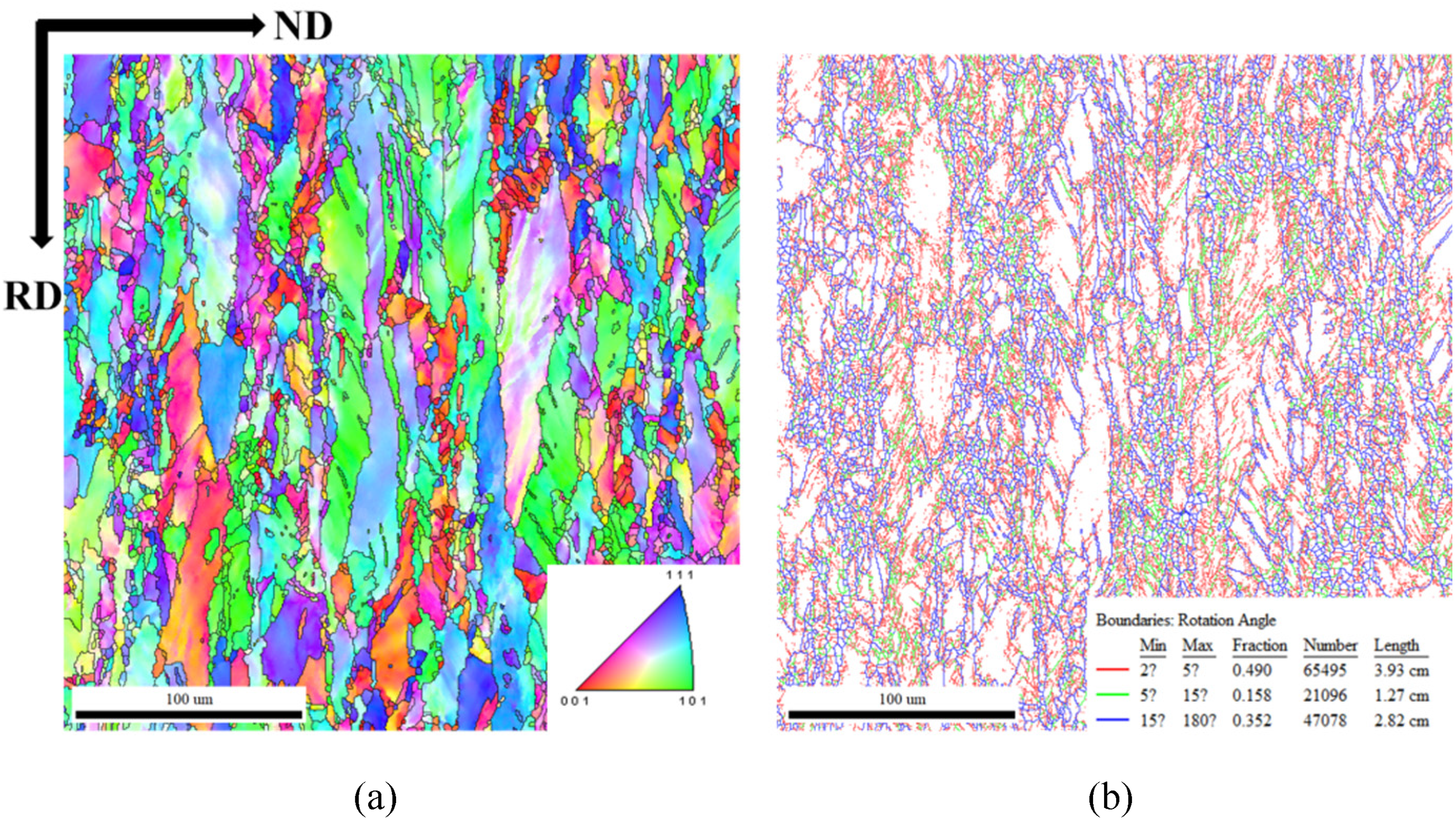
IPF map and grain boundary distribution of Au7.5Ni1.5Cu alloy after liquid nitrogen cold rolling with 25% reduction: (a) IPF map, (b) grain boundary distribution map
When combined with the crystallite size calculations derived from the XRD analysis, these results confirm the presence of nanoscale grains in the alloy during the liquid-nitrogen cold rolling process. Furthermore, the fine stripe-like features observed in the IPF map, together with previous reports indicating that such morphologies often correspond to twin bundles composed of multiple nanoscale twins, 15 provide strong evidence for the formation of a nano-twin structure in the Au7.5Ni1.5Cu alloy under liquid-nitrogen cold rolling conditions.
Figure 3 presents a clear TEM image revealing a series of parallel twin lamellae within the alloy. Analysis of the corresponding selected area electron diffraction (SAED) pattern shows the presence of superlattice diffraction spots associated with the (200) planes, which are characteristic of twinned structures. These diffraction spots exhibit mirror symmetry with respect to the twin lamellae, a hallmark feature of crystallographic twinning. Interplanar spacing measurements obtained from the selected region yield values of 0.2346 nm for the (11̅1) planes, 0.2084 nm for the (200) planes, and 0.2334 nm for the (1̅11) planes, all of which are in good agreement with the theoretical spacings expected for nanoscale twin structures. When considered together with the XRD and EBSD results, these TEM observations provide conclusive evidence for the formation of a nano-twin structure in the Au7.5Ni1.5Cu alloy following liquid-nitrogen cold rolling.
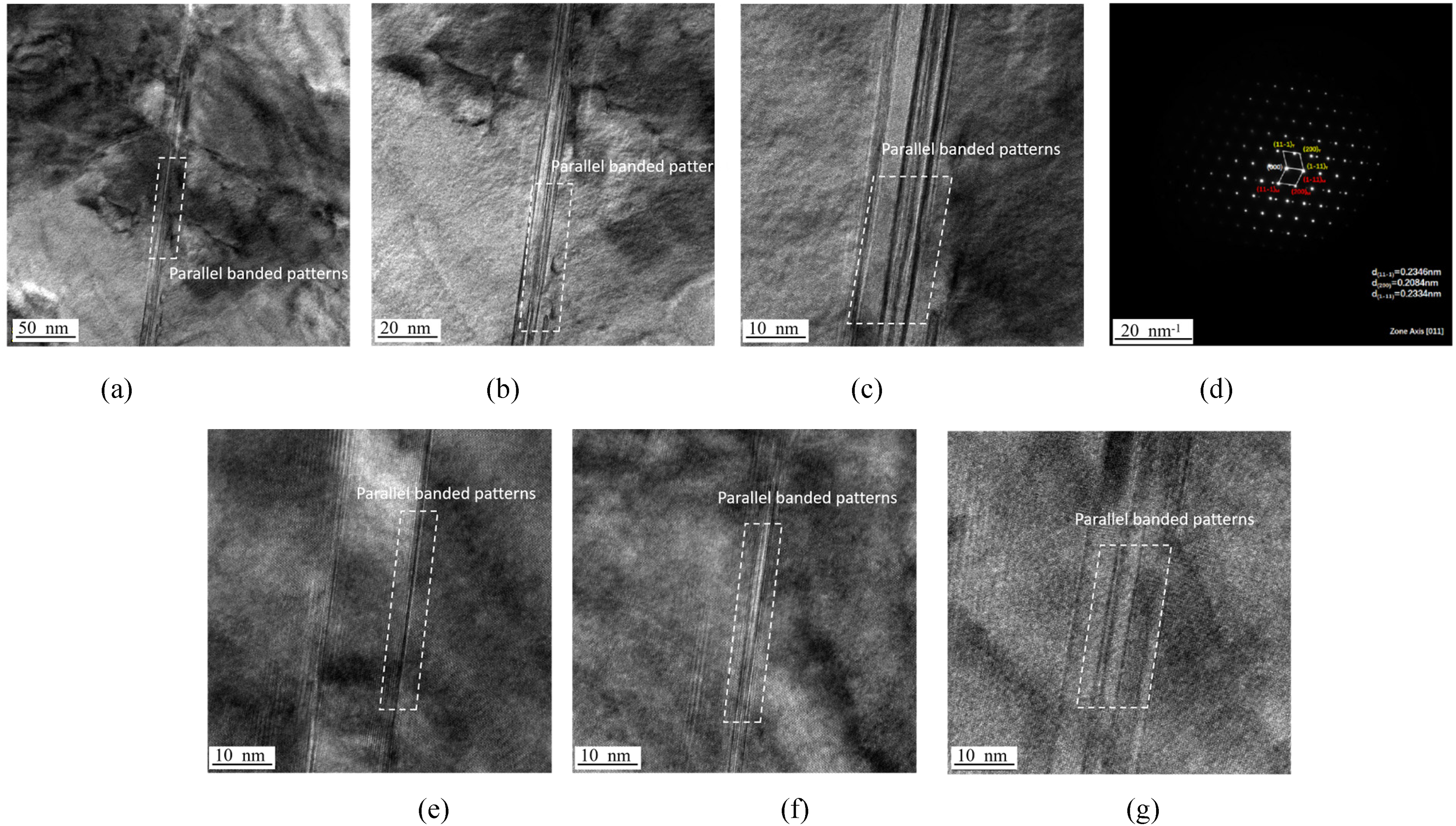
TEM micrographs and SAED patterns of the Au7.5Ni1.5Cu alloy after liquid nitrogen cold rolling with 25% reduction: (a-c) morphology at different magnifications, (d) SAED pattern, (e-g) morphology in different regions at the same magnification.
During ultra-low-temperature deformation, the alloy undergoes plastic deformation primarily through dislocation slip and twinning, leading to the accumulation of a high density of dislocations and the formation of nanoscale twins. Under conventional room-temperature conditions, the Au7.5Ni1.5Cu alloy typically does not exhibit deformation twinning; however, ultra-low-temperature environments strongly promote twin formation. At such temperatures, dislocation glide and climb are significantly impeded, which enhances work-hardening behavior and results in elevated internal stresses during deformation. These increased stresses favor the activation of twinning, gradually shifting the dominant deformation mechanism from dislocation slip to twinning. When the cold-rolling reduction exceeds 20%, twinning becomes increasingly prevalent, and at a reduction of 25%, nanoscale twin structures are successfully induced within the alloy.
The uniformity of deformation in this study can be corroborated by dual macroscopic and microscopic evidence. At the microscopic level, the EBSD orientation map in Fig. 2(a) reveals a high degree of consistency in grain refinement and texture evolution along the rolling direction (RD). No regions were observed to retain coarse equiaxed grains while others underwent severe shear deformation. At the macroscopic level, multi-point measurements of mechanical and electrical properties exhibited minimal data dispersion, with no anomalous variations induced by localized uneven deformation. This high consistency in macroscopic performance, coupled with the homogeneity in microstructural morphology, collectively confirms the absence of significant temperature gradients or strain localization during the liquid-nitrogen cold-rolling process, thereby verifying the uniformity of deformation.
Figure 4 presents a statistical analysis of the microstructural characteristics of the Au7.5Ni1.5Cu alloy after 25% liquid nitrogen cold rolling. The grain boundary misorientation distribution indicates that low-angle grain boundaries predominate, while the fraction of high-angle grain boundaries remains relatively low, with an average grain boundary misorientation of 18.93°. The markedly lower proportion of high-angle grain boundaries compared with low-angle ones suggests that dynamic recrystallization is effectively suppressed during the liquid nitrogen cold rolling process. This suppression contributes to the retention of deformation-induced substructures, thereby enhancing the alloy's strength and hardness.
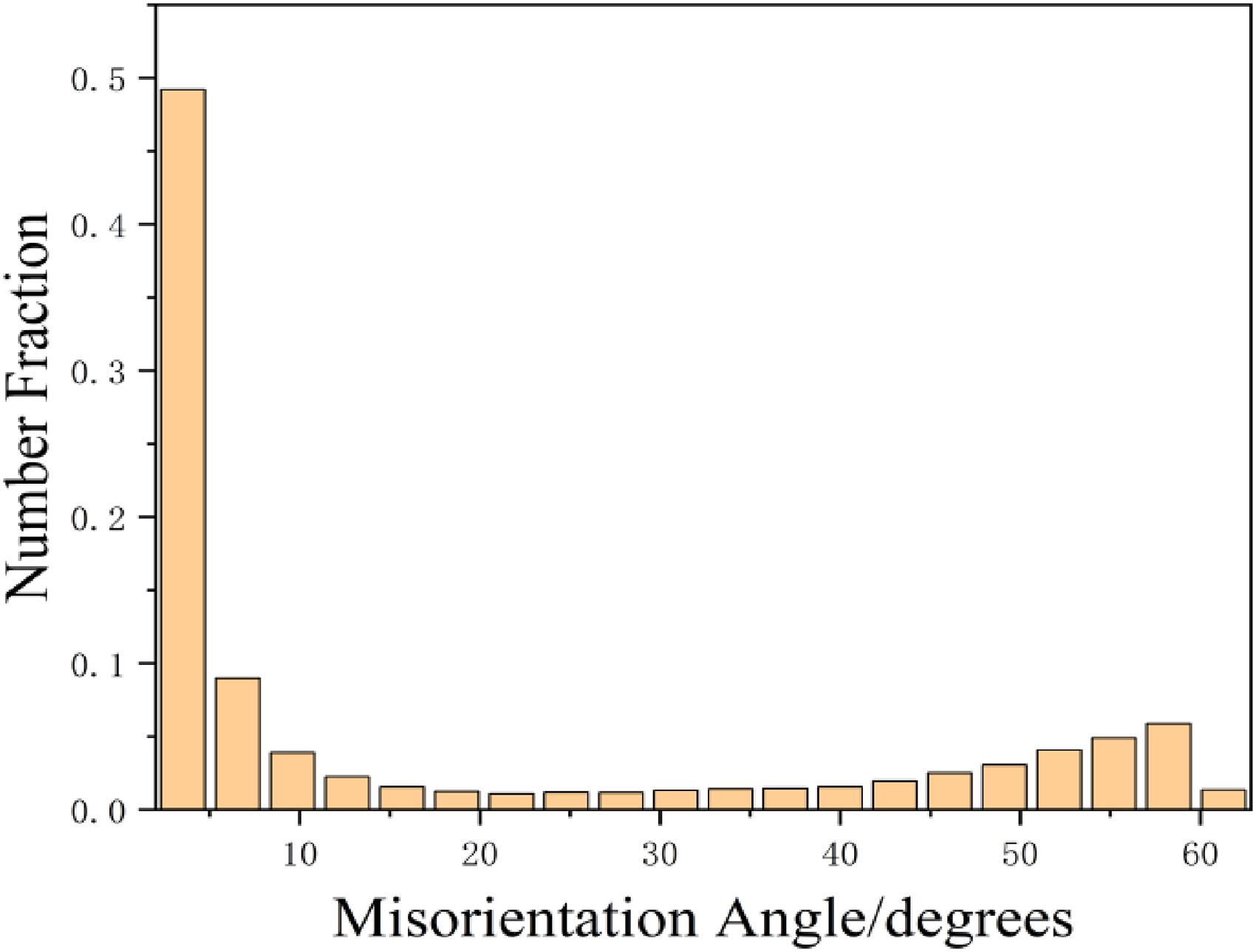
Grain boundary misorientation in Au7.5Ni1.5Cu alloy after liquid nitrogen cold rolling with 25% reduction
Figure 5 reveals a high density of stacking faults in the vicinity of the twin bands. Twin formation is intrinsically associated with the generation of stacking faults, and a reduction in stacking fault energy facilitates the nucleation and growth of nanoscale twins. 16 Therefore, liquid nitrogen cold rolling promotes deformation-induced nano-twin formation in the Au7.5Ni1.5Cu alloy by increasing stacking fault activity under ultra-low-temperature deformation conditions.
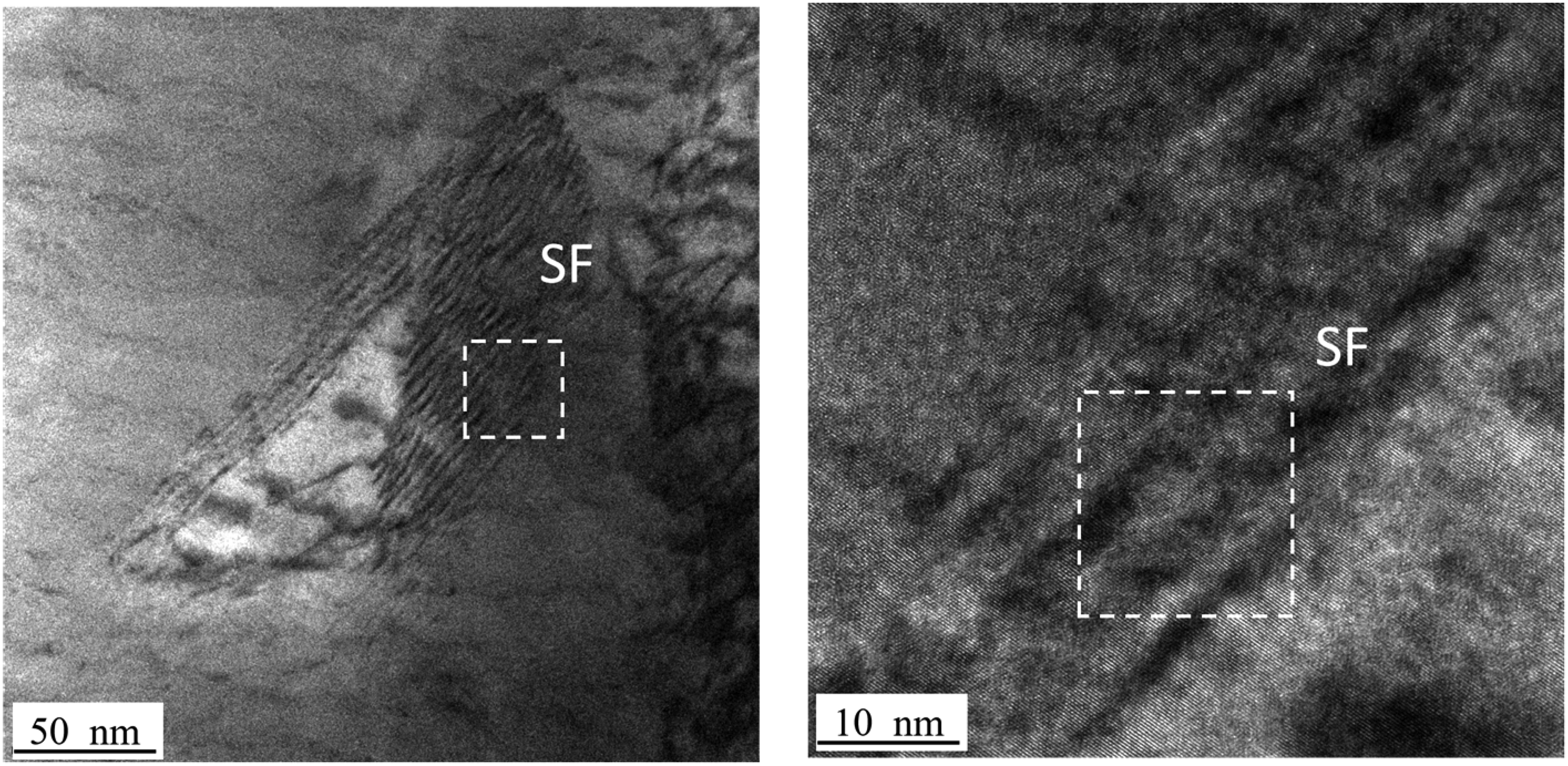
Stacking faults in the alloy after liquid nitrogen cold rolling with 25% reduction
Figure 6 illustrates the texture orientation selection of the Au7.5Ni1.5Cu alloy after 25% liquid nitrogen cold rolling, demonstrating the formation of a pronounced <111 > fiber texture under this deformation condition. In the pole Fig., the (111) direction exhibits a highly concentrated red region, indicating a strong preferential grain orientation, whereas the (100) and (110) directions display relatively dispersed distributions. The stress gradient from the (001) to the (101) orientations is relatively uniform; however, a sharp increase in stress is observed in the vicinity of the (111) orientation, where the stress reaches its maximum value. This stress distribution arises from the preferential activation of crystal slip systems during liquid nitrogen cold rolling, which promotes grain alignment along the densely packed (111) planes. The results confirm that a 25% rolling reduction represents a critical optimization point, at which the development of a strong <111 > texture enhances the alloy's strength through the Hall-Petch mechanism while preserving an acceptable level of ductility.
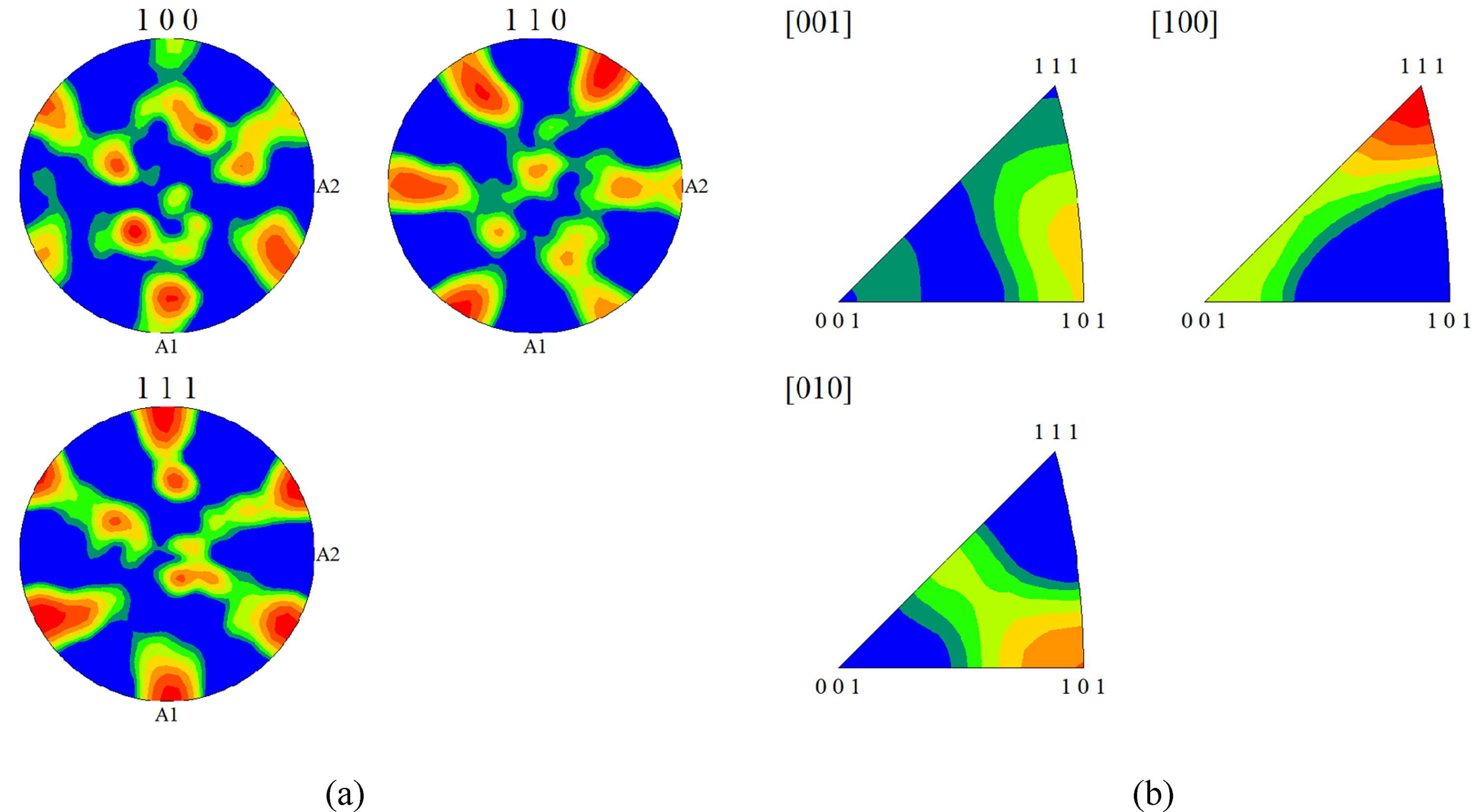
Pole Fig. and IPF of Au7.5Ni1.5Cu alloy after liquid nitrogen cold rolling with 25% reduction
This process is difficult to reproduce at room temperature. During room-temperature deformation of face-centered cubic metals, dislocation cross-slip and climb occur readily, typically triggering dynamic recovery. Consequently, it is difficult to accumulate sufficiently high local stresses to reach the critical resolved shear stress required for twinning. The liquid-nitrogen environment suppresses thermally activated processes to an extremely low level, forcing the deformation mechanism to shift from dislocation slip to twinning, which represents a necessary thermodynamic condition for inducing nanoscale twins.
Regulation of mechanical properties of Au7.5Ni1.5Cu alloy by liquid nitrogen cold rolling
Figure 7 illustrates the mechanical and electrical properties of the Au7.5Ni1.5Cu alloy in the untreated state. The tensile strength was determined from the stress-strain curves, while the microhardness was obtained by averaging five independent measurements for each sample. The untreated Au7.5Ni1.5Cu alloy exhibits a tensile strength of 550 MPa, an elongation of 5.65%, and a microhardness of 172 HV0.1.
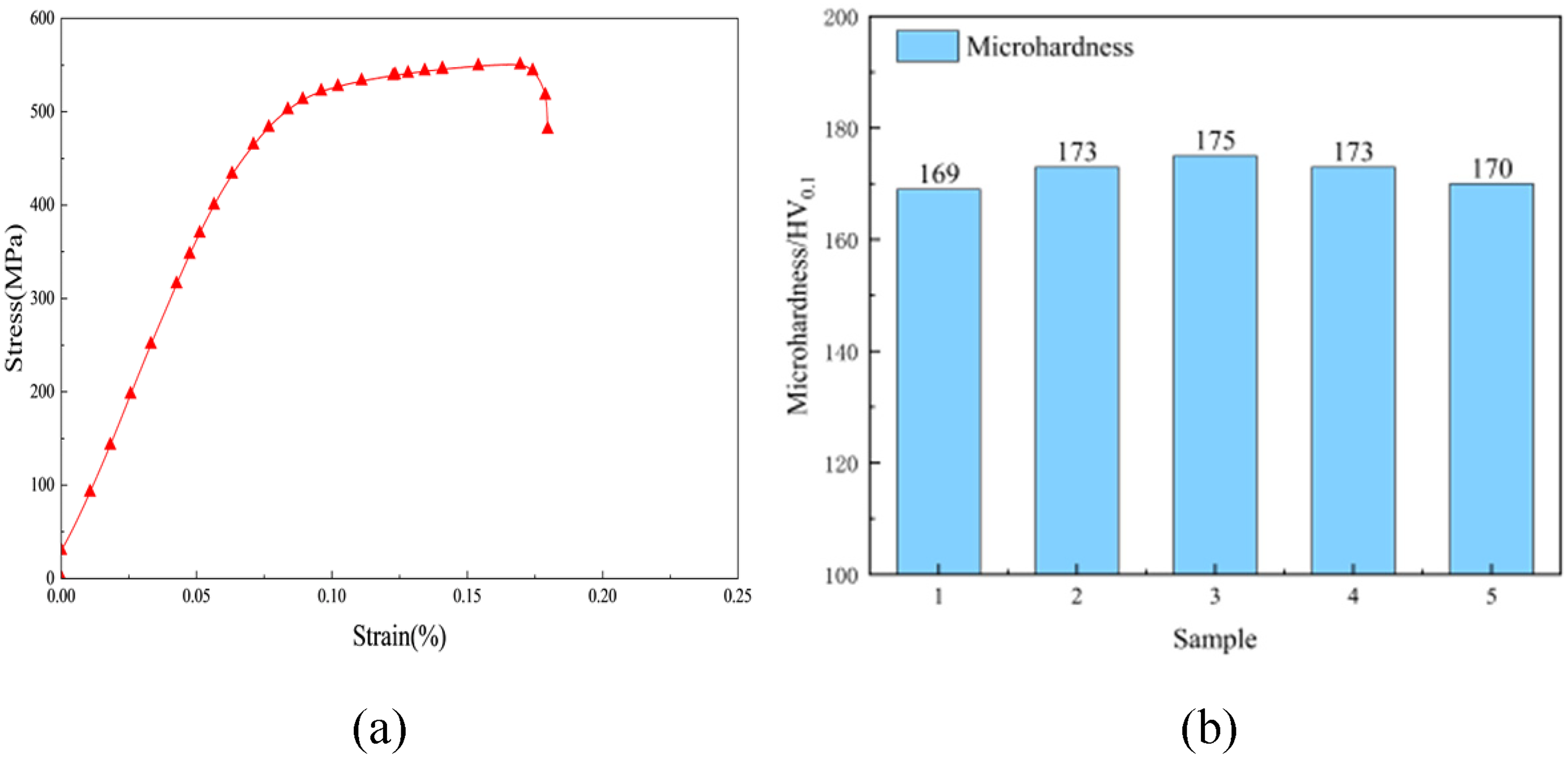
Mechanical properties of Au7.5Ni1.5Cu alloywithout liquid nitrogen cold rolling: (a) stress-strain curve, (b) microhardness.
Figure 8 presents the mechanical properties of the Au7.5Ni1.5Cu alloy after liquid nitrogen cold rolling. As shown, after a 20% reduction, the microhardness increases from 172 HV0.1 to 205 HV0.1, the tensile strength rises to 755 MPa, and the elongation decreases to 4.73%. When the reduction is increased to 25%, the tensile strength further increases to 796 MPa, while the elongation slightly decreases to 4.92%. However, upon increasing the reduction to 30%, the microhardness continues to increase to 232 HV0.1, whereas the tensile strength decreases to 723 MPa and the elongation drops to 4.21%. The enhancement in microhardness with increasing rolling reduction can be attributed to two primary mechanisms. First, the accumulation of dislocations during cold deformation leads to pronounced work hardening. Second, progressive grain refinement further strengthens the alloy. The synergistic effect of dislocation strengthening and grain refinement results in the observed increase in hardness with increasing cold rolling reduction..
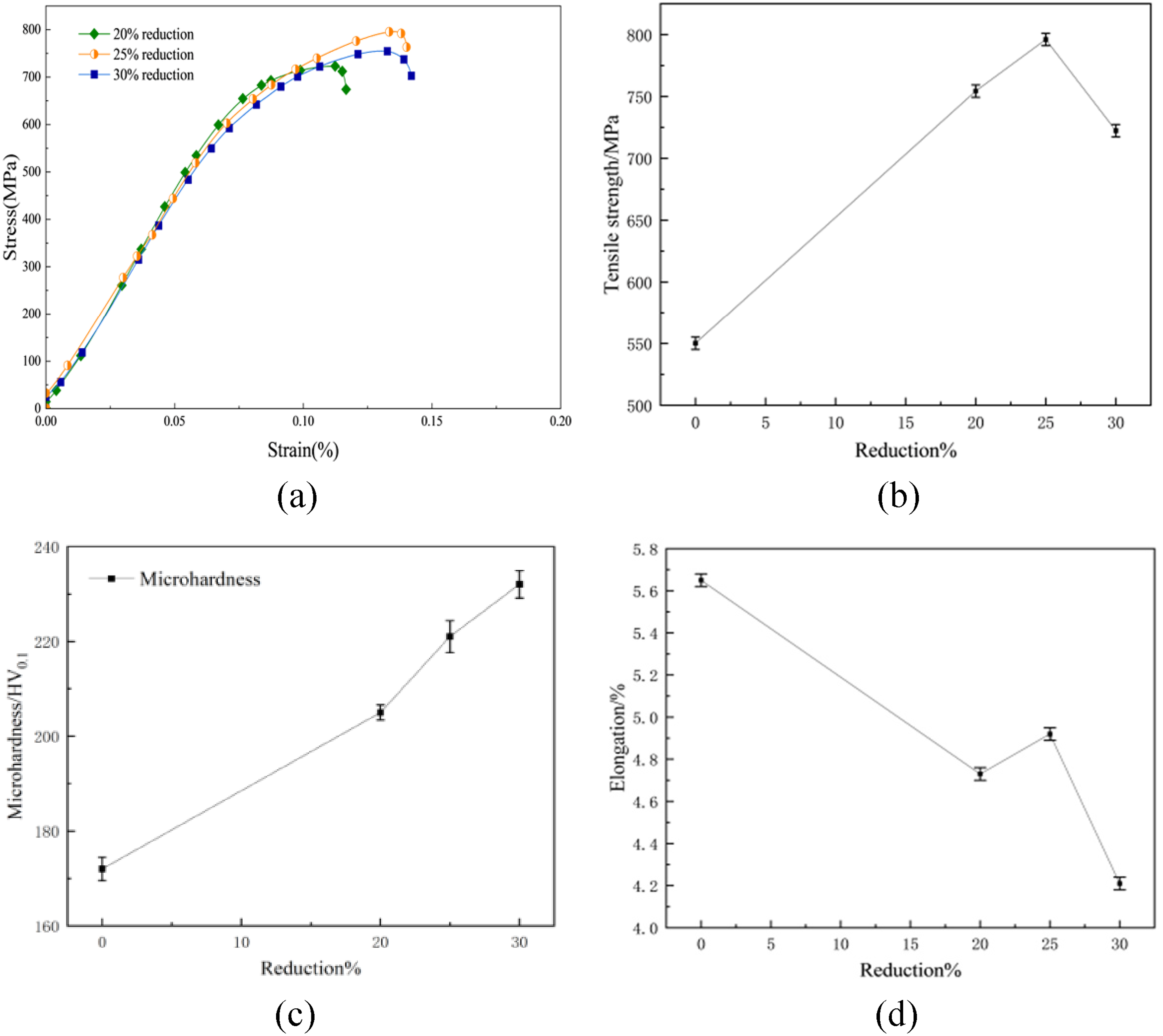
Mechanical properties of the Au7.5Ni1.5Cu alloy after cryogenic rolling treatment: (a) stress-strain curve, (b) tensile strength, (c) microhardness, (d) elongation.
Within the reduction range of 20%-25%, the increase in tensile strength of the Au7.5Ni1.5Cu alloy is accompanied by a simultaneous improvement in elongation. This unusual strength-ductility synergy is closely associated with the formation of nano-twins induced by low-temperature deformation. Hodge et al. systematically investigated the deformation behavior of nano-twinned copper at liquid nitrogen temperatures and demonstrated that low-temperature deformation significantly promotes nano-twin formation while generating multiple shear bands. These shear bands effectively redistribute strain, enabling uniform plastic deformation and allowing the material to retain ductility despite increased strength. 17 A similar mechanism operates in the Au7.5Ni1.5Cu alloy during liquid nitrogen cold rolling. The parallel nano-twin bands generated under ultra-low temperature conditions serve a dual role: on one hand, they act as effective barriers to dislocation motion, thereby enhancing the alloy's strength; on the other hand, twin boundaries function as dislocation sources and pathways for dislocation transmission, facilitating homogeneous plastic deformation. As a result, the alloy maintains, and even slightly improves, its elongation while achieving higher strength.
Grain refinement strengthening is one of the most effective strengthening mechanisms in polycrystalline alloys. Liquid nitrogen cold rolling promotes the formation of nano-twins, introducing a high density of additional interfaces that induce grain refinement and generate a dynamic Hall-Petch effect, thereby significantly enhancing the mechanical properties of metallic materials. Laplanche et al. 18 investigated the twin evolution behavior of FeCoNiCrMn high-entropy alloys at low temperatures and reported the formation of a large number of nano-twins at 77 K. The increased twin boundary area acted as an effective barrier to dislocation motion, giving rise to a pronounced dynamic Hall-Petch strengthening effect and consequently improving the mechanical performance of the alloy. Furthermore, liquid nitrogen cold rolling suppresses dynamic recovery and recrystallization during deformation, leading to the accumulation of a high density of dislocations and the enhanced generation of nano-twins. Under ultra-low temperature conditions, twin shear subdivides the original grains, while dislocation slip is strongly inhibited. This synergistic interaction between twinning and restricted dislocation activity results in significant grain refinement and a marked increase in alloy strength.
When the cold rolling reduction reaches 30%, the nano-twin structure within the alloy becomes unstable and progressively breaks down, resulting in a weakened strengthening effect.19,20 At this deformation level, the applied strain exceeds the load-bearing capacity of the nano-twin architecture. The excessive shear stress disrupts the originally highly ordered twin boundaries, leading to the loss of their coherence and structural integrity, which in turn diminishes their effectiveness as barriers to dislocation motion. Xiong et al. 21 reported that in regions of severe plastic deformation, such as localized shear bands, nano-twin structures can be completely destroyed and transformed into elongated subgrains bounded by high-angle grain boundaries. Moreover, excessive rolling reductions can introduce microcracks and severe stress concentrations within the alloy. 22 These defects act as preferential sites for crack initiation and propagation during tensile loading, ultimately promoting premature fracture. Consequently, both the tensile strength and elongation of the alloy decrease simultaneously at high deformation levels.
At a cold-rolling reduction of 20%, the deformation mechanism is dominated by dislocation slip, accompanied by the nucleation of a limited number of deformation twins. When the reduction reaches 25%, the elevated flow stress triggers twinning-dominated deformation, leading to the formation of high-density nano-twin bundles. At a reduction of 30%, the applied strain exceeds the load-bearing capacity of the nano-twin architecture, causing the nanoscale twins within localized shear bands to undergo de-coherence and fracture.18,20 Consequently, the deformation mechanism transitions to grain boundary-mediated plasticity and dislocation slip among fragmented subgrains.
At a 25% cold rolling reduction, the Au7.5Ni1.5Cu alloy exhibits optimal mechanical performance. The tensile strength reaches 796 MPa, representing an increase of 246 MPa compared with the untreated alloy, while the microhardness increases to 221 HV0.1, an improvement of 49 HV0.1. This significant enhancement in mechanical properties is primarily attributed to the dynamic Hall-Petch strengthening effect induced by the high-density nano-twin boundaries, as well as the stress localization and strengthening effect associated with the formation of a strong <111 > crystallographic texture.
Although liquid-nitrogen cold rolling enhances the mechanical properties of the alloy, the decline in elongation at higher reductions restricts its further processability. This limitation could potentially be addressed in future work by introducing a short-term low-temperature annealing process. Studies have shown 23 that appropriate low-temperature annealing of nano-twinned structures can eliminate residual internal stresses and promote the rearrangement of partial dislocations. Simultaneously, by exploiting the proliferation effect of annealing twins, it is expected to restore the alloy's ductility while maintaining high strength levels.12
Regulation of electrical conductivity of Au7.5Ni1.5Cu alloy by liquid nitrogen cold rolling
Figure 9 presents the electrical properties of the Au7.5Ni1.5Cu alloy in the untreated state. For each sample, five measurements were conducted, and the average value was taken as the electrical conductivity. The untreated Au7.5Ni1.5Cu alloy exhibited an electrical conductivity of 8.63% IACS.
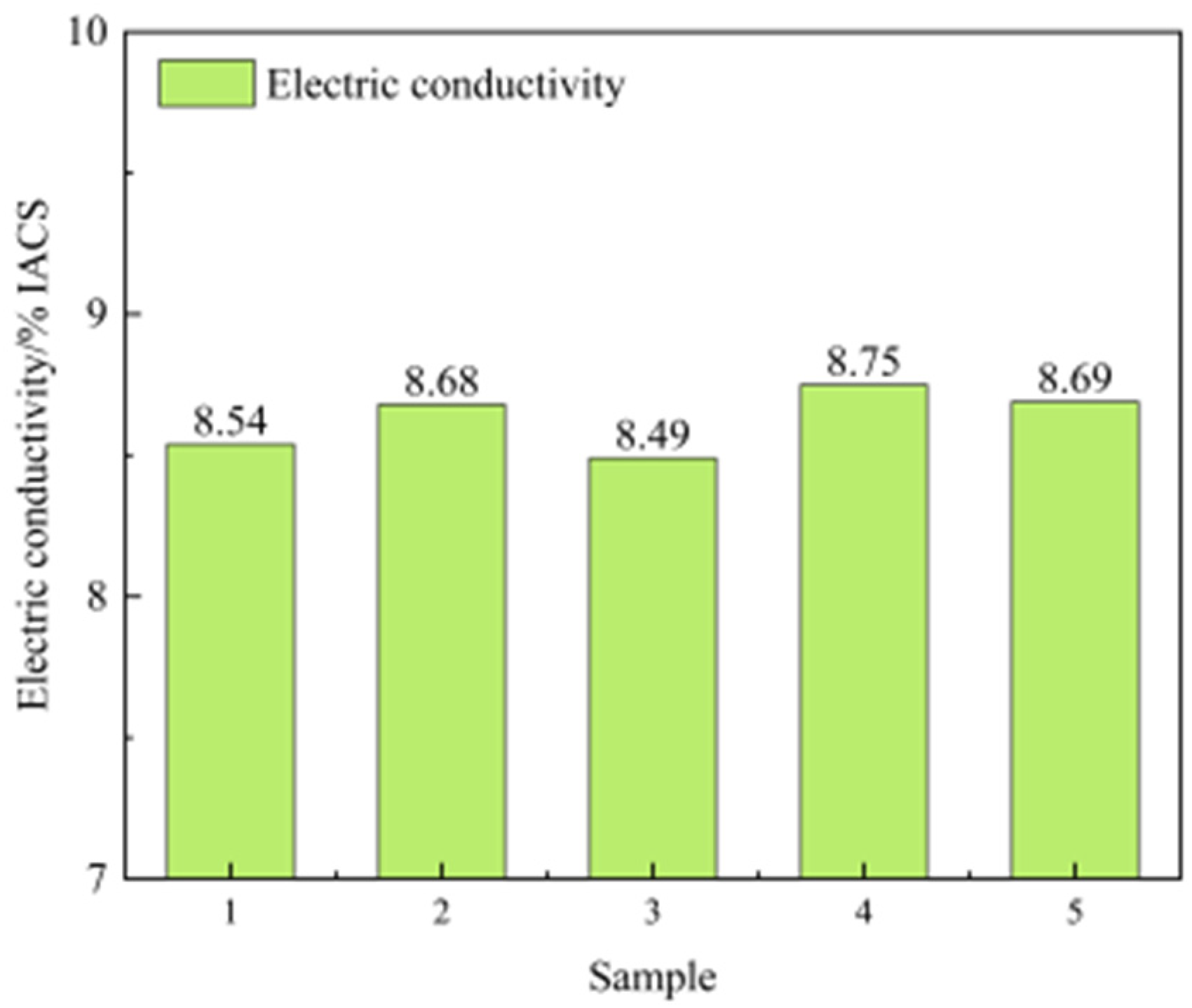
Electrical conductivity of the Au7.5Ni1.5Cu alloy without liquid nitrogen cold rolling
Figure 10 illustrates the variation in electrical conductivity of the Au7.5Ni1.5Cu alloy after liquid nitrogen cold rolling. As the cold rolling reduction increases, the conductivity first increases and then slightly decreases. After a 20% reduction, the conductivity increases from 8.63% IACS to 9.11% IACS. When the reduction reaches 25%, the conductivity further improves to 9.72% IACS. However, with a further increase in reduction to 30%, the conductivity decreases to 9.35% IACS. These results indicate that liquid nitrogen cold rolling can effectively enhance the electrical conductivity of the alloy within an appropriate reduction range.
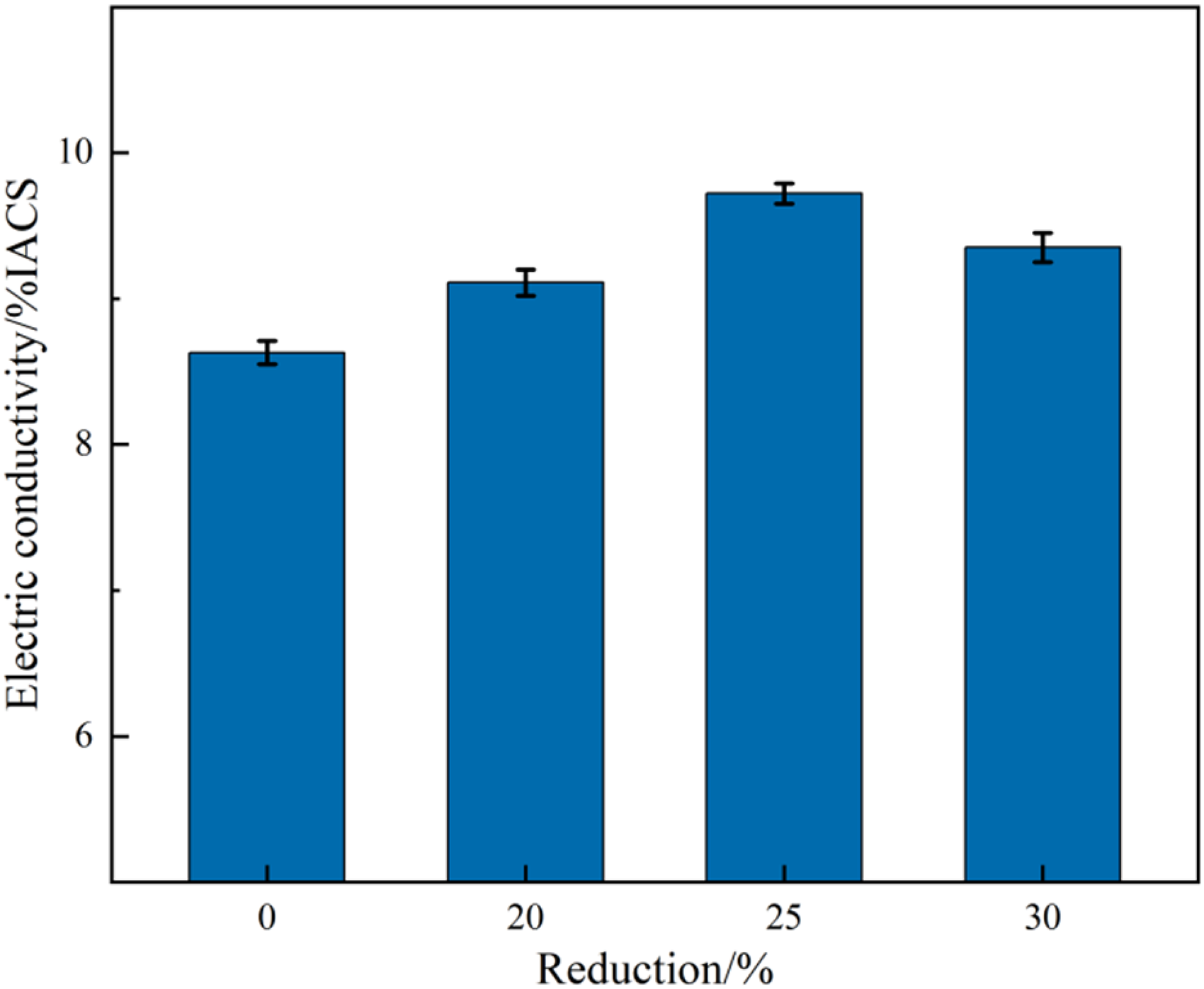
Electrical conductivity of Au7.5Ni1.5Cu alloy after liquid nitrogen cold rolling
The improvement in conductivity is primarily attributed to the formation of high-density nano-twin boundaries. Compared with conventional grain boundaries, nano-twin boundaries exhibit an electron scattering coefficient that is approximately one order of magnitude lower, resulting in significantly reduced electron scattering. Consequently, the electron mean free path is increased, leading to enhanced electrical conductivity. When the cold rolling reduction reaches 30%, the conductivity begins to decline. This decrease is associated with the partial breakdown of the nano-twin structure caused by excessive deformation. In addition, excessive cold rolling introduces defects such as microcracks, high dislocation densities, and localized stress concentrations. These defects act as additional electron scattering centers, shortening the electron mean free path and ultimately reducing the alloy's electrical conductivity.
To quantitatively elucidate the effect of twin boundaries on electrical conductivity, the classical Mayadas-Shatzkes (M-S) electron scattering model
24
was introduced. Under the weak scattering approximation, a Taylor expansion was performed on the model, retaining only the first-order term to obtain a more intuitive approximate expression (Eq. 4). This model characterizes electron scattering at grain boundaries using a reflection coefficient R, whereby the overall resistivity increases with increasing grain boundary density and R. Recent studies and first-principles calculations have demonstrated that the specific interfacial resistivity of coherent twin boundaries is significantly lower than that of conventional high-angle grain boundaries, with the latter being approximately 10–20 times higher than the former.
25
Therefore, the microstructural evolution observed at the 25% reduction in this study—where high-density coherent twin boundaries replace a fraction of the conventional high-angle grain boundaries—corresponds to a reduction in the reflection coefficient R within the M-S electron scattering model. This is semi-quantitatively consistent with the experimentally observed enhancement in electrical conductivity.
Where
Synergistic regulation of mechanical and electrical properties of Au7.5Ni1.5Cu alloy by liquid nitrogen cold rolling
Conventional strengthening mechanisms introduce conventional high-angle grain boundaries that disrupt lattice periodicity, leading to severe electron scattering. In contrast, coherent twin boundaries act as special planar defects characterized by perfectly mirror-symmetric atomic arrangements, which do not alter the fundamental lattice periodicity. According to electron scattering theory, the electron reflection coefficient of coherent twin boundaries is significantly lower than that of conventional grain boundaries. 11 Consequently, when nanoscale twins replace an equivalent volume fraction of dislocation networks and conventional grain boundaries, the alloy achieves dislocation-blocking strengthening while avoiding the shortening of the electron mean free path, thereby realizing a synergistic enhancement of mechanical and electrical performance.
The size and structural integrity of nano-twins are key variables governing material performance. Wang et al. 26 demonstrated that when the grain size exceeds 10 nm, plastic deformation is dominated by full dislocations intersecting the twin plane. When the grain size is reduced to 6–10 nm, deformation is primarily governed by partial dislocations gliding parallel to the twin plane. As the grain size further decreases below 6 nm, the deformation mechanism transitions to grain boundary-mediated plasticity, becoming largely independent of dislocation activity.
At a 25% reduction during liquid nitrogen cold rolling, the nano-twin size falls precisely within the optimal range of 6–10 nm. Within this regime, plastic deformation is predominantly governed by partial dislocation activity, with partial dislocations gliding parallel to the twin planes. This deformation mode enables effective plastic accommodation while maintaining strong dislocation-blocking effects at twin boundaries. Consequently, it avoids excessive work hardening and enhanced electron scattering associated with full dislocation-dominated deformation in coarser grains, as well as the strength degradation and severe electron scattering arising from grain boundary-mediated plasticity in ultrafine grains. In contrast, at a 30% reduction, excessive deformation disrupts the integrity of the nano-twin structure, leading to a deterioration in both mechanical strength and electrical conductivity.
Under identical cold rolling reduction conditions, liquid nitrogen cold rolling achieves a more effective balance between strength, hardness, and electrical conductivity in the alloy, primarily due to the formation of nanoscale twin structures during deformation.27–29 The ultra-low-temperature environment significantly suppresses atomic diffusion, thereby inhibiting dislocation slip and climb and promoting the accumulation of a high dislocation density, which contributes to pronounced work hardening. Moreover, previous studies have demonstrated that deformation at liquid nitrogen temperatures reduces the critical resolved shear stress required for twin nucleation, facilitating the formation of nano-twins in alloys with low stacking fault energy during plastic deformation.30,31 Nano-twin boundaries act as effective obstacles to dislocation motion while simultaneously serving as preferential sites for dislocation nucleation and multiplication, leading to a substantial enhancement in alloy strength. 32 Importantly, the electron scattering coefficient of coherent nano-twin boundaries is approximately an order of magnitude lower than that of conventional grain boundaries. As a result, electron scattering is significantly suppressed, the electron mean free path is extended, and the electrical conductivity of the alloy is correspondingly improved. 33
Through systematic experimental investigation and detailed microstructural analysis, this study confirms that liquid nitrogen cold rolling effectively induces the formation of nanoscale twins in the Au7.5Ni1.5Cu alloy. The presence of this nano-twin structure not only significantly enhances the alloy's strength and hardness but also preserves favorable electrical conductivity and plasticity. The ultra-low-temperature environment reduces the effective stacking fault energy and lowers the critical stress required for twin nucleation, enabling nano-twins to preferentially form at a 25% rolling reduction. Importantly, this occurs without introducing excessive lattice distortion or intensified electron scattering, which are commonly observed during conventional cold working at higher deformation levels.
Based on the liquid nitrogen cold rolling experiments, the Au7.5Ni1.5Cu alloy exhibits optimal synergistic enhancement of mechanical strength and electrical conductivity at a 25% reduction. Under this condition, the alloy achieves a tensile strength of 796 MPa, a microhardness of 221 HV0.1, and an electrical conductivity of 9.72% IACS. These results demonstrate that liquid nitrogen cold rolling at a 25% reduction successfully overcomes the traditional strength-conductivity trade-off, enabling the simultaneous realization of high strength and high conductivity.
Conclusions
This study employed liquid-nitrogen cold rolling to process an Au7.5Ni1.5Cu alloy, systematically investigating the effects of rolling reduction on the alloy's microstructure and properties. By establishing a clear relationship between processing conditions, microstructural evolution, and resulting properties, this work provides a valuable reference for addressing the long-standing inverse relationship between strength and electrical conductivity in this alloy system. The main conclusions are summarized as follows:
Liquid-nitrogen cold rolling successfully induced a high-density nanoscale twin structure and stacking faults in the Au7.5Ni1.5Cu alloy. At a 25% reduction, the grains were refined to a nanoscale critical optimization range, accompanied by the development of a strong (111) fiber texture along the rolling direction. The combined results from XRD, EBSD, and TEM analyses conclusively demonstrate that liquid-nitrogen cold rolling induces the formation of a stable nano-twin structure in the alloy. By regulating the nano-twin structure through liquid-nitrogen cold rolling, the Au7.5Ni1.5Cu alloy achieved a simultaneous enhancement in strength, hardness, and electrical conductivity. At a 25% reduction, the nano-twin boundaries effectively impeded dislocation motion via a dynamic Hall-Petch strengthening effect to enhance strength, while their highly ordered atomic stacking minimized electron scattering to optimize electrical conductivity. Consequently, the alloy reached its peak performance, exhibiting a tensile strength of 796 MPa, a microhardness of 221 HV0.1, and an electrical conductivity of 9.72% IACS.
Footnotes

Author contribution(s)
Funding
The authors disclosed receipt of the following financial support for the research, authorship, and/or publication of this article: This work was supported by the Yunnan Provincial Science and Technology Department, (grant number 202203ZA080001).
Declaration of conflicting interests
The authors declared no potential conflicts of interest with respect to the research, authorship, and/or publication of this article.