






Abstract
Artificial intelligence (AI) is transforming surface engineering, enabling a shift from empirical, trial-and-error approaches to a data-centric, predictive, and increasingly autonomous paradigm for designing and controlling surface processes. Traditionally, surface modification processes, be they coatings or surface texturing, have relied heavily on expert experience and iterative experimentation to navigate complex, tightly coupled, and nonlinear relationships among processing conditions, microstructure evolution, and resulting properties. The increasing availability of high-dimensional experimental data, in-situ monitoring signals, and performance datasets is enabling systematic learning of these relationships rather than heuristic inference. In this context, Machine learning (ML) and other AI techniques provide a toolset for identifying patterns, developing predictive models of process-structure-property relationships, and guiding decision-making throughout design and manufacturing workflows. More generally, AI is setting the stage for an integrated surface engineering ecosystem in which design, processing, characterization, and performance evaluation become methodically interconnected and computationally guided. 1
The breadth of AI applications in surface engineering, spanning design, processing, and performance evaluation, is illustrated in Figure 1.

Artificial intelligence across the surface engineering ecosystem.
Interest in AI-enabled surface engineering has grown rapidly in recent years. A Scopus search using the keywords “artificial intelligence” and “surface engineering” identified only 3 publications in 2016, compared with 468 publications in 2025 (Figure 2). More than 85% of the retrieved publications were published between 2023 and 2026, showing the increasing interest in developing AI-driven approaches across the surface engineering community.
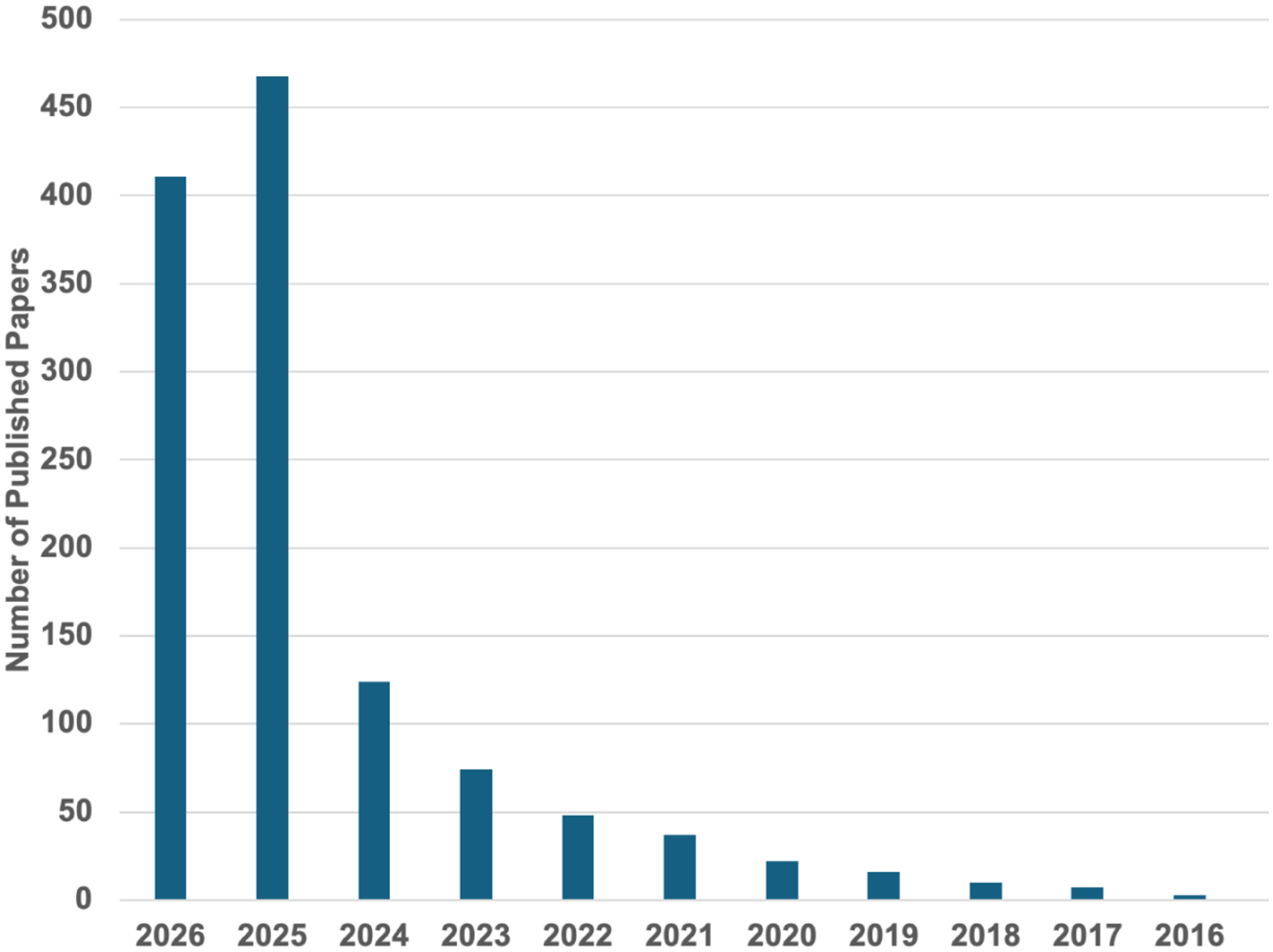
Annual number of publications related to artificial intelligence in surface engineering based on a scopus search using the keywords “artificial intelligence” and “surface engineering” for the period 2016–2026.
The subject area distribution from the Scopus search shows that AI-driven surface engineering is a highly interdisciplinary research field. Although Engineering (22.1%), Computer Science (14.9%), and Materials Science (10.4%) account for the largest share of publications, substantial contributions from Physics, Chemical Engineering, Chemistry, Energy, Environmental Science, and Medicine indicate the growing influence of AI across diverse surface-related applications and industries (Figure 3).
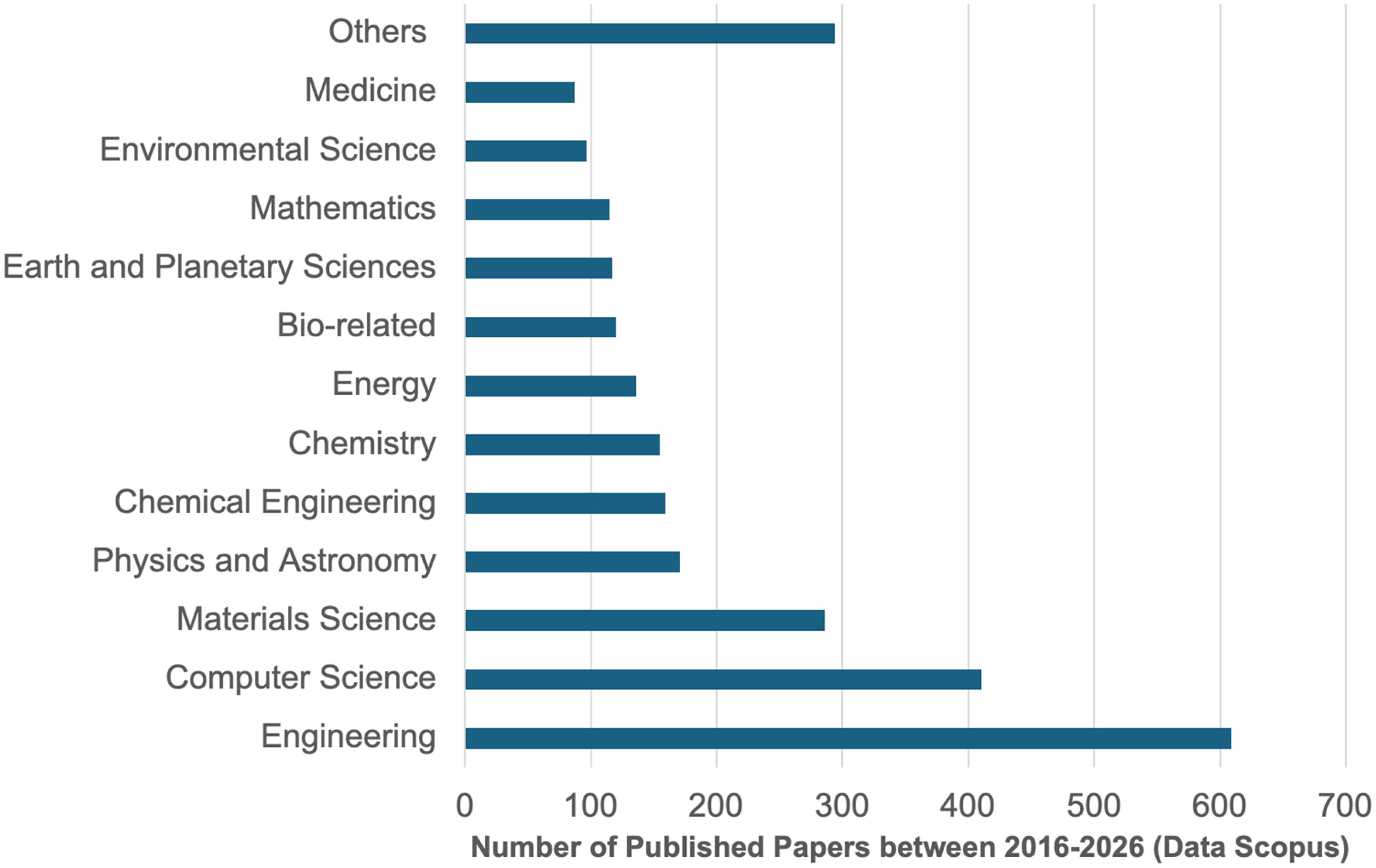
Domain of publications related to artificial intelligence in surface engineering based on a scopus search using the keywords “artificial intelligence” and “surface engineering” for the period 2016–2026.
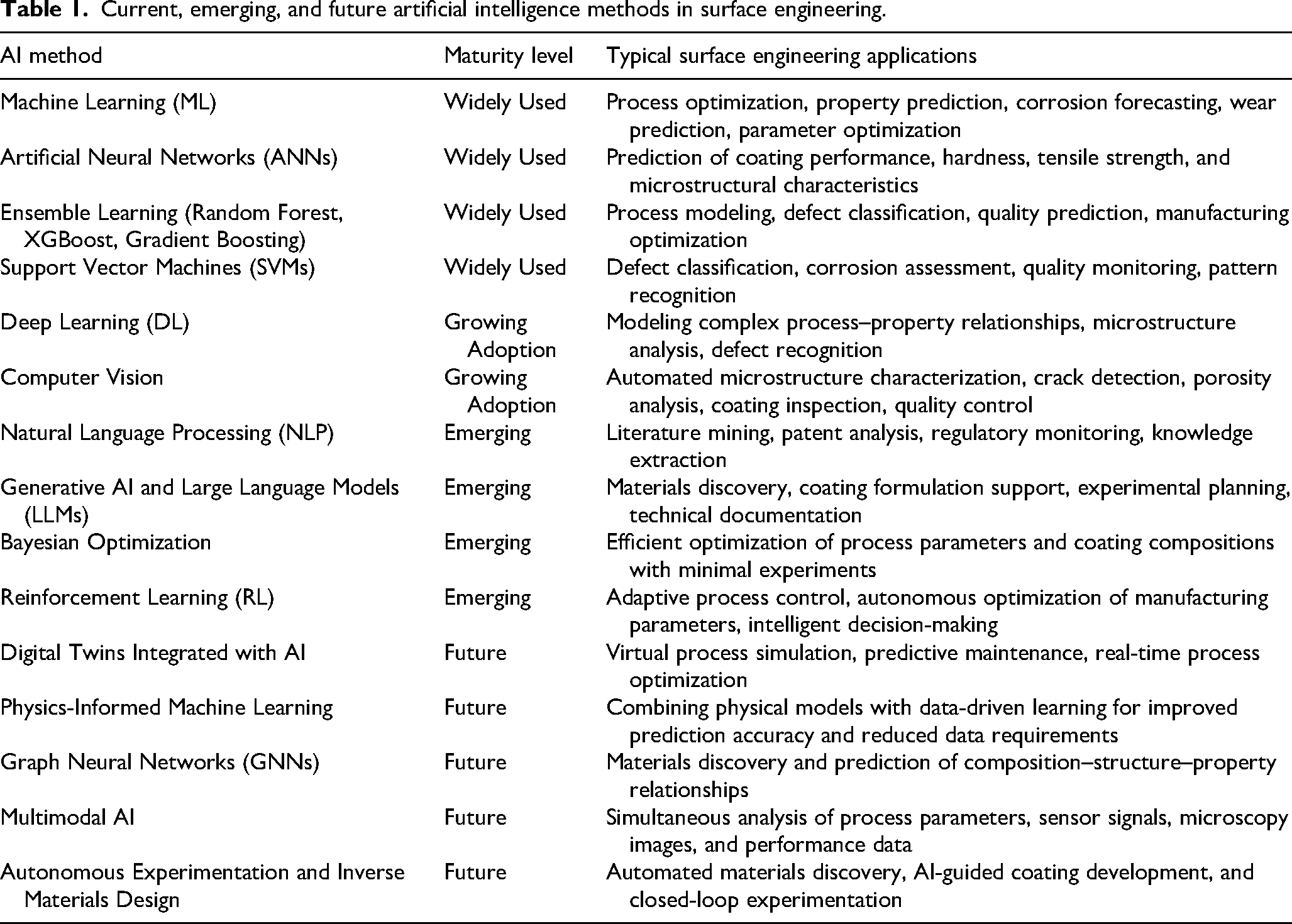
The growing influence of AI across surface engineering is driven by a suite of complementary technologies. ML identifies relationships between processing parameters, microstructure, and properties. Deep Learning (DL) captures complex nonlinear interactions, while computer vision enables automated microstructure and defect analysis. Reinforcement learning supports adaptive process control, and generative AI is emerging for materials discovery and coating design. These capabilities are summarized in Table 1.
Current, emerging, and future artificial intelligence methods in surface engineering.
AI for process optimization and quality control
Today, ML is the most widely adopted technology in surface engineering, particularly for process optimization and property prediction. One of the earliest and most extensively explored applications is the development of predictive models that relate processing parameters to coating characteristics and materials characteristics.
Laser cladding, for example, involves complex interactions between laser energy, powder feed rate, scanning speed, melt pool dynamics, and substrate characteristics, making process optimization challenging. Researchers investigating laser cladding of Inconel 718 on an A286 substrate employed multiple ML algorithms, including Extra Trees, Random Forest Regression, Decision Tree Regression, and XGBoost, to predict clad geometry and dilution characteristics. ML models could accurately capture process–property relationships, with different algorithms excelling in the prediction of clad width, height, and dilution rate. 2
Similar success has been reported in friction stir processing (FSP), where complex thermo-mechanical interactions significantly influence properties. Linear Regression, Support Vector Regression, Artificial Neural Networks, and Extreme Gradient Boosting (XGBoost) models were used to predict ultimate tensile strength based on processing parameters for AA8090/SiC surface composites fabricated by FSP. 3 Among the investigated techniques, XGBoost delivered the highest predictive accuracy, further demonstrating the potential of AI-driven approaches for process optimization and property prediction in surface engineering applications (Figure 4).
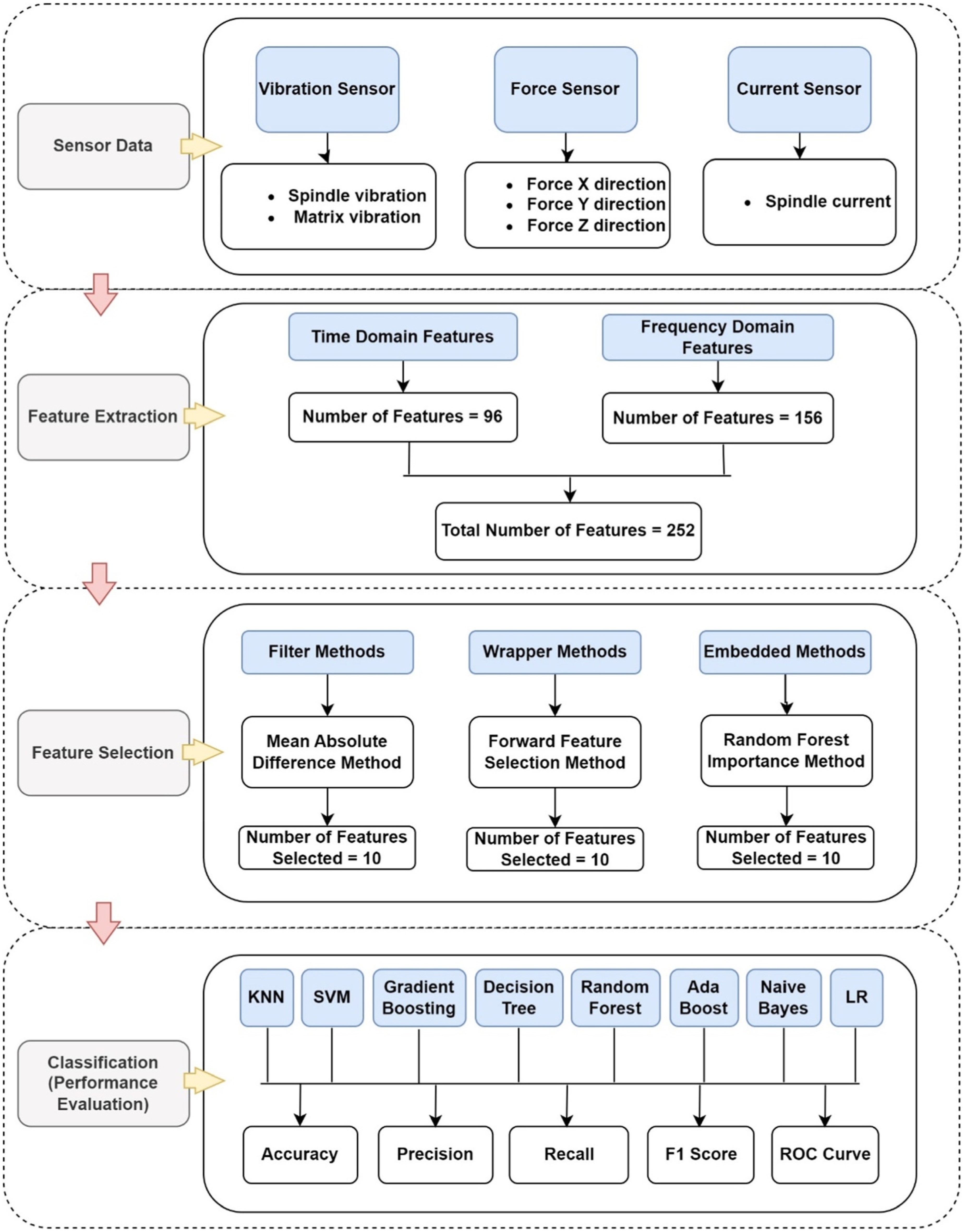
Ai methodology adopted in 3 for fault classification of surface composites prepared by FSP. Image reproduced without modification from the original paper.
AI is also increasingly being applied to the design of engineered surfaces, particularly for tribological applications where traditional trial-and-error and simulation-based approaches can be time-consuming. A recent review classified AI-assisted surface texture design methods into data-driven, model-driven, and hybrid approaches. 4 By combining experimental and simulation data, AI can optimize texture geometries for specific operating conditions and predict their effects on lubrication performance. This enables the development of surface architectures that improve friction reduction, wear resistance, and load-carrying capacity more efficiently than conventional design methods.
AI for predictive design, surface functionality and formulation
Beyond process optimization, AI is also transforming quality assurance through intelligent monitoring and defect detection. In a study on Al6061 surface composites reinforced with copper and graphene and fabricated by friction stir processing, researchers used vibration, current, and force sensor data to identify defects such as pin breakage, rough surfaces, and incomplete composite formation. Following feature extraction and selection, various ML and ensemble learning classifiers were evaluated. The results demonstrated the effectiveness of AI-enabled multisensor monitoring systems for real-time defect detection and quality assurance, highlighting their potential for integration into smart manufacturing environments. 5
AI is also making inroads into formulation development, one of the most time-consuming and resource-intensive activities in the coatings industry. Designing new paints, coatings, and inks requires balancing numerous factors, including rheology, stability, surface properties, durability, and environmental compliance, a process that traditionally relies on extensive trial-and-error experimentation. To accelerate development, AI-based platforms such as FastFormulator combine AI, DL, and formulation science to identify promising ingredient combinations based on performance requirements (Figure 5). By analyzing large datasets of materials properties and application data, these systems can rapidly generate optimized formulation candidates, allowing formulators to focus on a small number of high-probability options while significantly reducing development time and cost.

Dashboard of FastFormulator. Screenshot from https://fastformulator.com/.
The effectiveness of AI-assisted formulation and coating design is increasingly supported by academic research. Several studies have demonstrated the successful application of ML for coating compatibility assessment, performance prediction, degradation modeling, and materials discovery. For example, an integrated machine-learning and experimental framework was used to identify key molecular and formulation descriptors governing compatibility in oil-modified silicone elastomer coatings, with predictions validated through experimental characterization. 6
AI has also been employed to accelerate the discovery of high-performance self-healing epoxy coatings, where machine-learning-assisted formulation screening identified optimized coating systems that were subsequently validated through electrochemical and self-healing performance tests. 7 In another study, a two-stage machine-learning approach linked environmental exposure conditions to coating degradation and corrosion failure, enabling improved service-life prediction based on experimentally obtained degradation data. 8
AI is increasingly contributing to the design of next-generation coating systems. The value of these capabilities is particularly evident in the development of sustainable coatings and inks. 9 As manufacturers seek to replace traditional petroleum-derived ingredients with bio-based alternatives, the number of potential formulation combinations increases dramatically. Selecting the optimal combination of pigments, polymers, emulsifiers, and additives while maintaining product performance can become prohibitively complex using conventional trial-and-error approaches. AI can significantly reduce this complexity by rapidly screening candidate materials and recommending the most promising formulations for experimental validation. In some cases, tasks that previously required months of iterative testing can be reduced to a matter of days or even hours, accelerating the development of environmentally friendly products without compromising performance.
Machine-learning models have also been successfully applied to predict the tribological performance of epoxy composite coatings, achieving close agreement between predicted and experimentally measured friction and wear behavior (Figure 6). 7
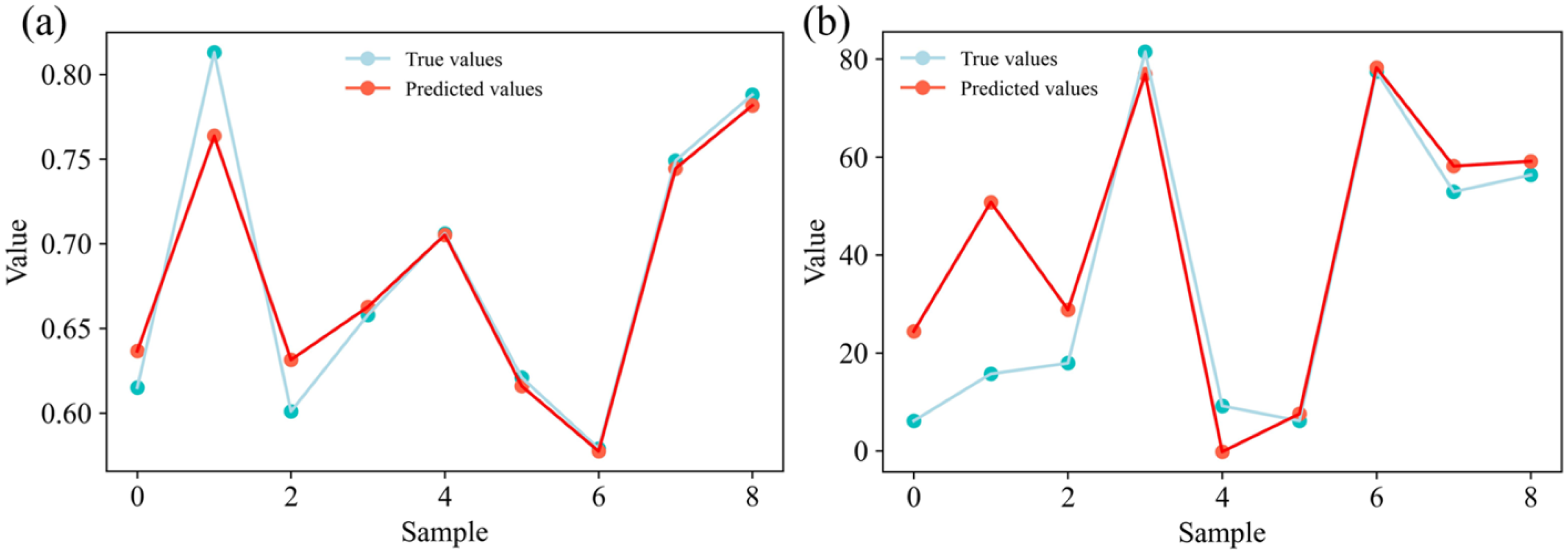
AI-predicted versus real values of (a) Coefficient of friction and (b) wear rate of epoxy composite. Image reproduced without modification from 7 .
AI-Enabled autonomous systems and industrial integration
While many of these advances originated in academic research, AI is increasingly transitioning into industrial surface engineering practice. Advances in sensing technologies, cloud computing, ML, and automation have enabled companies to integrate AI into production environments, where it is being used to improve efficiency, reduce waste, enhance product quality, and accelerate product development. Recent industry reports have highlighted the use of AI-powered platforms such as CoatingAI's Blueprint OS, which optimizes powder coating lines through real-time analysis of process data. By monitoring parameters such as part geometry and coating thickness, the system can automatically adjust spray settings to improve transfer efficiency and coating consistency. Such approaches have reportedly achieved significant reductions in powder consumption while simultaneously improving coating quality and enabling predictive maintenance capabilities.
AI is also being combined with advanced robotics to automate surface preparation, coating application, and inspection processes. For example, GrayMatter Robotics has developed AI-driven robotic systems capable of adapting to complex part geometries in real time (Figure 7). Unlike conventional robotic systems that rely on predefined motion paths, AI-enabled platforms can continuously adjust their actions based on sensor feedback, allowing them to handle highly variable components with minimal human intervention.
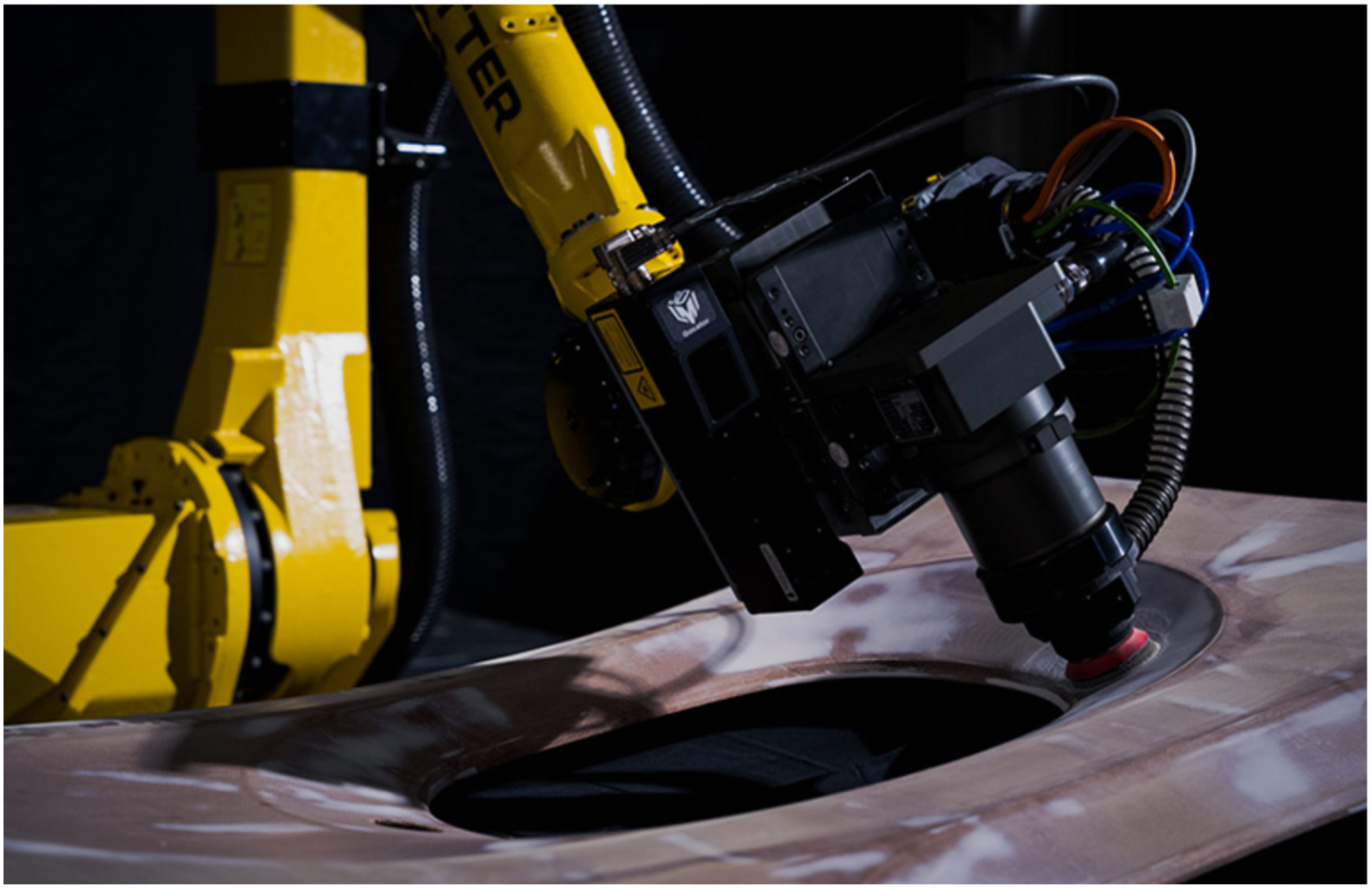
AI-enabled surface engineering by GrayMatter robotics. Image reproduced from https://www.therobotreport.com/graymatter-robotics-opens-physical-ai-innovation-center/.
AI can also support regulatory compliance and knowledge management. Modern AI platforms can continuously monitor regulatory requirements, supplier databases, scientific literature, and patent information, providing formulators with up-to-date guidance during product development. This capability is particularly valuable in the coatings industry, where changing environmental regulations may restrict the use of specific chemicals and require rapid reformulation of existing products. AI can identify suitable alternative ingredients, evaluate their compatibility with existing systems, and suggest optimized replacements while maintaining performance requirements. Similarly, AI-assisted analysis of patents and technical literature can help identify emerging technological trends, uncover innovation opportunities, and reduce duplication of research efforts. These capabilities provide manufacturers with a strategic advantage by accelerating innovation while improving awareness of the evolving technological and regulatory landscape.
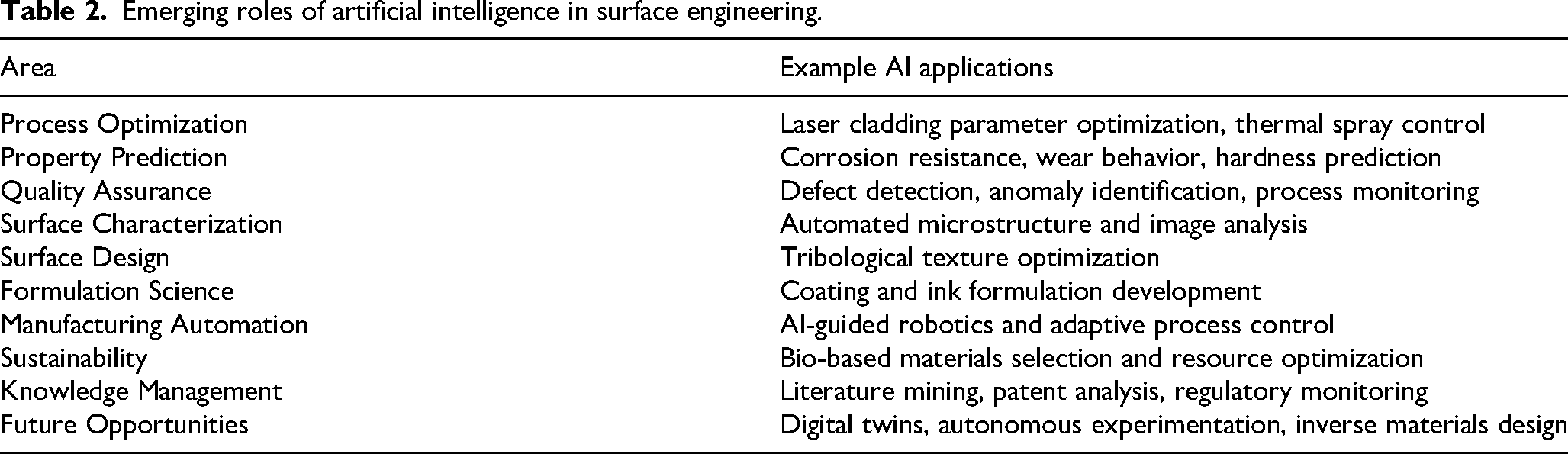
The breadth of current and emerging AI applications in surface engineering is summarized in Table 2.
Emerging roles of artificial intelligence in surface engineering.
Challenges and limitations
Despite these promising developments, the widespread adoption of AI is not without challenges. Among the most common are fears of job displacement, uncertainty regarding the reliability of AI-generated recommendations, and concerns that AI systems may eventually make decisions without human oversight. In addition, many AI models rely on large quantities of high-quality data, yet surface engineering often suffers from fragmented datasets, inconsistent reporting practices, and a lack of standardized databases. The limited availability of openly accessible, well-curated datasets can restrict model development, validation, and transferability across different materials systems and manufacturing environments.
Current industrial applications suggest that AI functions primarily as a decision-support tool rather than a replacement for human expertise. AI systems rely on human-defined objectives, training data, and validation procedures, and their effectiveness remains dependent on expert interpretation and oversight. A more significant challenge may be organizational rather than technical. Many companies remain hesitant to adopt AI due to limited understanding of its capabilities, uncertainty regarding return on investment, and resistance to changing established workflows. Nevertheless, as successful applications continue to emerge across both research and industry, confidence in AI-driven approaches is likely to grow.
Future outlook: towards autonomous surface engineering
Although the applications of AI in surface engineering are largely focused on process optimization, quality control, and formulation support, the technology's long-term potential extends much further. Emerging concepts such as digital twins, closed-loop manufacturing, and autonomous experimentation could enable coating processes to continuously monitor performance, predict outcomes, and automatically adjust operating conditions in real time. The future of surface engineering will be defined not by AI alone, but by the ability of human expertise and intelligent technologies to work together to accelerate innovation, improve sustainability, and solve increasingly complex engineering challenges.
Footnotes
Funding
The authors received no financial support for the research, authorship, and/or publication of this article.
Declaration of conflicting interests
The authors declared no potential conflicts of interest with respect to the research, authorship, and/or publication of this article.