






Abstract
Introduction
During neonatal and infant cardiac surgery, rapid transfusion of fresh frozen plasma (FP) and platelet concentrates (PC), with simultaneous removal of excess water, are performed during modified ultrafiltration (MUF), to raise plasma fibrinogen concentration and platelet counts. Although calcium is administered to treat citrate transfused during this procedure, the appropriate dose of calcium relative to transfusion volume is unknown.
Methods
This retrospective study included neonates (babies under 28 days of age) and infants (babies from 28 days old to less than 1 year old) who underwent MUF during cardiac surgery at our institution in 2 years. Blood ionized calcium concentration ([Ca2+]) at the end of cardiopulmonary bypass (CPB) (T0), end of administration of FP, PC and CaCl2 during MUF (T1), and chest closure (T2) were analyzed. Volumes of FP and PC and dose of CaCl2 administered between T0 and T1 and between T1 and T2 were examined.
Results
Eight neonates and 45 infants were included. Regression equations for the total transfusion volume (mL) of FP & PC (y) relative to supplemented dose CaCl2 (mg) (x) were as follows: y = 1.00*x (r2 = 1.00, p < .001) during MUF, and y = 1.05*x (r2 = 0.76, p < .001) after MUF. Blood ionized calcium concentrations ([Ca2+]) were within the normal range at both T1 (end of transfusion during MUF) and T2 (chest closure).
Conclusions
Administering 20 mg CaCl2 per 20 mL of FP & PC maintains adequate [Ca2+] levels at T1 and T2 during cardiac surgery in neonates and infants.
Introduction
Neonates (babies under 28 days of age) and infants (babies from 28 days old to less than 1 year old) undergoing cardiac surgery with cardiopulmonary bypass (CPB) are at risk for bleeding and coagulopathy due to acquired hypofibrinogenemia and thrombocytopenia induced by various mechanisms, including hemodilution from CPB, activation of coagulation and fibrinolysis, consumptive coagulopathy, and hypothermia. 1 Since the CPB circuit volume is relatively large in comparison with the blood volume in the body of neonates and infants, hemodilution is more prominent in these subgroups than in older children and adults. 1 Supplementation of fibrinogen and platelets is required in most neonates and infants undergoing cardiac surgery under CPB. 1 Although 2019 Network for the Advancement of Patient Blood Management, Haemostasis and Thrombosis (NATA) guidelines recommend the use of cryoprecipitate or fibrinogen concentrates for fibrinogen supplementation, neither of these blood products are available in many institutions in Japan. 1 Thus, most Japanese institutions use fresh frozen plasma (FP) for fibrinogen supplementation. While FP contains a range of coagulation factors, including fibrinogen, it does not contain a high enough concentration of fibrinogen to sufficiently raise the patients’ fibrinogen level. Therefore, large volumes of FP need to be transfused, often leading to hemodilution. 1
Modified ultrafiltration (MUF) is widely performed following the termination of CPB in cardiac surgery for neonates and infants, for removal of inflammatory mediators, excess fluid and hemoconcentration. The combined transfusion of FP and platelet concentrates (PC), and simultaneous removal of excess water by the ultrafiltration procedure during MUF can effectively raise the patients’ plasma fibrinogen concentration and platelet count. 2 For example, transfusion of 100 mL FP (containing 0.2 g fibrinogen) with simultaneous ultrafiltration of 100 mL water, raises the plasma fibrinogen concentration in a neonate by 1 g/L. 3 The transfusion rate for FP exceeds 5 mL/min in this procedure, because MUF is performed in less than 20 minutes in most cases.
The rapid transfusion of FP & PC results in a dose-dependent reduction in the patient’s blood ionized calcium concentration ([Ca2+]), because the sodium citrate in blood products binds to [Ca2+]. The amount of citrate in FP or PC is higher than that in packed red blood cells (PRBC). 4 However, the appropriate dose of calcium required to maintain normocalcemia in proportion to the volume of FP & PC transfused during MUF is unknown. An in vitro study showed that addition of 5 mL FP to 95 mL heparinized blood reduces [Ca2+] levels from 1.24 mmol/L to 0.81 mmol/L. 5 Thus, since the circulating blood volume of a neonate or a small infant is less than 300 mL, calcium repletion is required with every transfusion of 15 mL FP. Thus, theoretically, as the transfusion rate of FP is around 20 mL/min during MUF, calcium repletion is required every minute. Although calcium supplementation should ideally be performed under calcium monitoring, since blood sampling for multiple blood calcium level assessments is impossible in such a short time period, calcium is administered empirically and prophylactically in this situation.
The data from a previous in vitro study suggested that supplementation of 0.43 mmol (47.7 mg) calcium chloride (CaCl2) is needed following transfusion of 50 mL FP. 5 This equals a ratio of 0.96 g CaCl2 per liter of FP. This aligns with data from liver transplant patients, where 1.09 g CaCl2 per liter of citrated blood maintained [Ca2+] between 0.8 and 1.6 mmol/L. 6 This liver transplant study was, however, conducted during the anhepatic phase, i.e., in the absence of citrate metabolism. 6 It remains uncertain whether the “1 g CaCl2 per liter of citrated blood (supplementation of 10 mg CaCl2 per 10 mL FP)” is appropriate during MUF (rapid transfusion with intact citrate metabolism). 7 This study aimed to examine whether this ratio maintains normocalcemia during MUF in neonates and infants undergoing cardiac surgery.
Methods
This study was approved by the Institutional Review Board of our institution (16/Jun/2023 No.866) which waived the requirement for written informed consent owing to the study’s retrospective nature. The study complied with the principles of the Declaration of Helsinki. We conducted a retrospective chart review of neonates and infants who had undergone cardiac surgery with CPB at our institution between April 2020 and March 2022. [Ca2+] values at the end of CPB (T0), end of administration of FP, PC and CaCl2 solution during MUF (T1), and chest closure (T2) were analyzed. The volumes of FP, PC and CaCl2 administered between T0 and T1 and between T1 and T2 were examined, and the (FP + PC) (mL) / CaCl2 (mg) ratio was calculated as the ratio of total volume of FP & PC transfused to the administered volume of CaCl2 during MUF. The exclusion criteria in this study included cases with missing or incomplete data at T0, T1 or T2, patients who had not undergone MUF, patients with no transfusion of FP or PC during MUF, and patients who had undergone a second CPB run following MUF.
The general management of CPB and MUF at our institution for neonates and infants is as follows. The CPB circuit, consisting of a Terumo oxygenator (CAPIOX FX05RW, TERUMO, Inc., Tokyo, Japan) and ultrafilter, is primed with a volume of 200-450 mL. The circuit was primed with PRBC, 25% albumin solution, and dialysis fluid (SUBLOOD Substitution Fluid for Hemofiltration BSG; Fuso Pharmaceutical Industries, Ltd, Osaka, Japan). Transfusion of PRBC and conventional ultrafiltration are performed during CPB until the hematocrit value reaches above 35 or 40%, depending on the cardiac condition of each case at the end of CPB (typically >40% for cyanotic patients and >35% for acyanotic patients). MUF is performed immediately after the termination of CPB in most neonates and infants. At our institution, the MUF is conducted by using the veno-venous (VV) technique with a flow rate of approximately 100-200 mL/min and typically lasts for 10 to 25 minutes. The MUF circuit volume ranges from 100 to 110 mL. The ultrafiltration rate is 0.5-8 mL/kg/min (2 mL/kg/min on average). Bleeding in the surgical field is aspirated by CPB suction and returned to the patient during MUF. Most patients receive transfusion of FP with or without PC via the intravenous line during MUF. During the MUF procedure, the patient is repeatedly given empirical doses of CaCl2 (multiple boluses of 1 mL of 2% CaCl2) via a separate central venous line inserted into the patient by an anesthesiologist, along with the transfusion of FP & PC. The empirical (FP + PC) (mL) / CaCl2 (mg) ratio is approximately 1. After termination of the rapid transfusion of FP & PC, the [Ca2+] level in the patients’ arterial blood gas samples is measured repeatedly using a thermostated, automated, flow-through electrode system (ABL90 FLEX PLUS, Radiometer, Inc., Tokyo, Japan), with additional transfusion and CaCl2 being administered based on the surgical blood loss, hemodynamic parameters, and laboratory data for the patient.
[Ca2+] values were judged to be within the normal range when they ranged from 0.9 to 1.5 mmol/L. Data are expressed as the median [first quartile, third quartile]. The correlation between changes in [Ca2+] (Δ[Ca2+]) during MUF (increments of [Ca2+] from T0 to T1) and the total supplemented dose of CaCl2 administered during MUF were also examined. The correlation was analyzed using Pearson’s product-moment correlation coefficient (r) and was determined to be positive for r > 0.4 and significant for p < .01.
Results
Characteristics of the 53 patients.
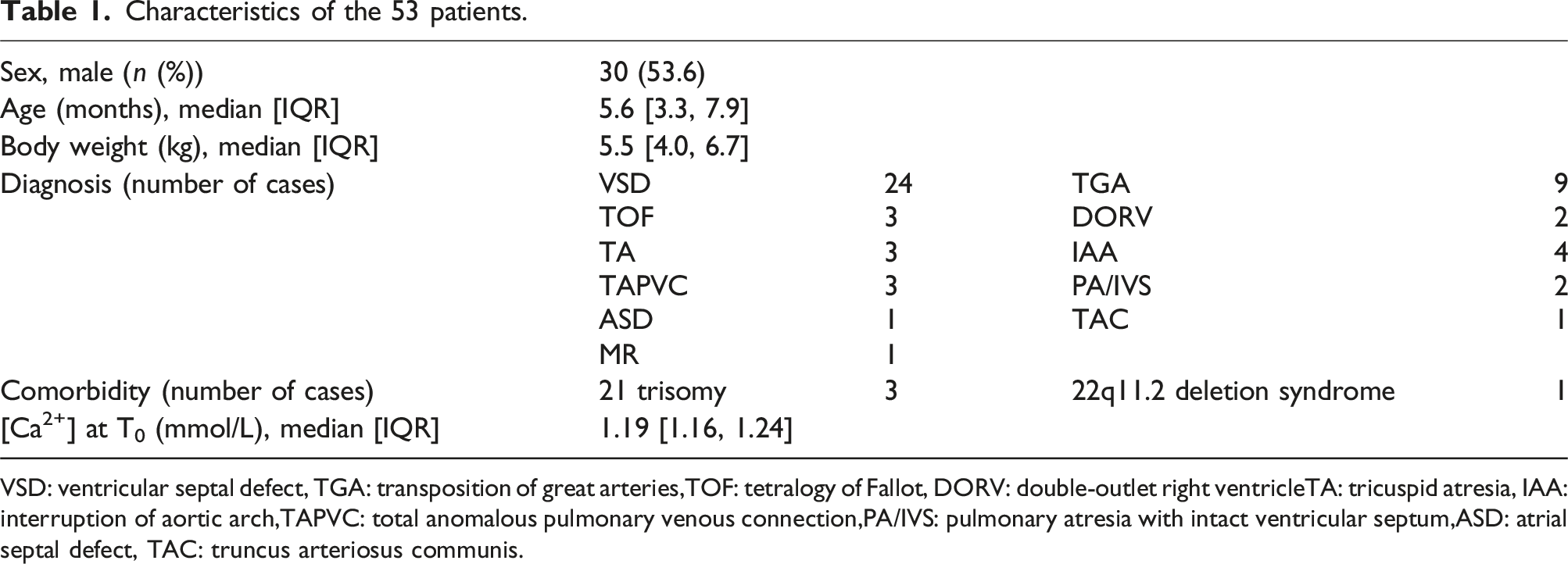
VSD: ventricular septal defect, TGA: transposition of great arteries,TOF: tetralogy of Fallot, DORV: double-outlet right ventricleTA: tricuspid atresia, IAA: interruption of aortic arch,TAPVC: total anomalous pulmonary venous connection,PA/IVS: pulmonary atresia with intact ventricular septum,ASD: atrial septal defect, TAC: truncus arteriosus communis.
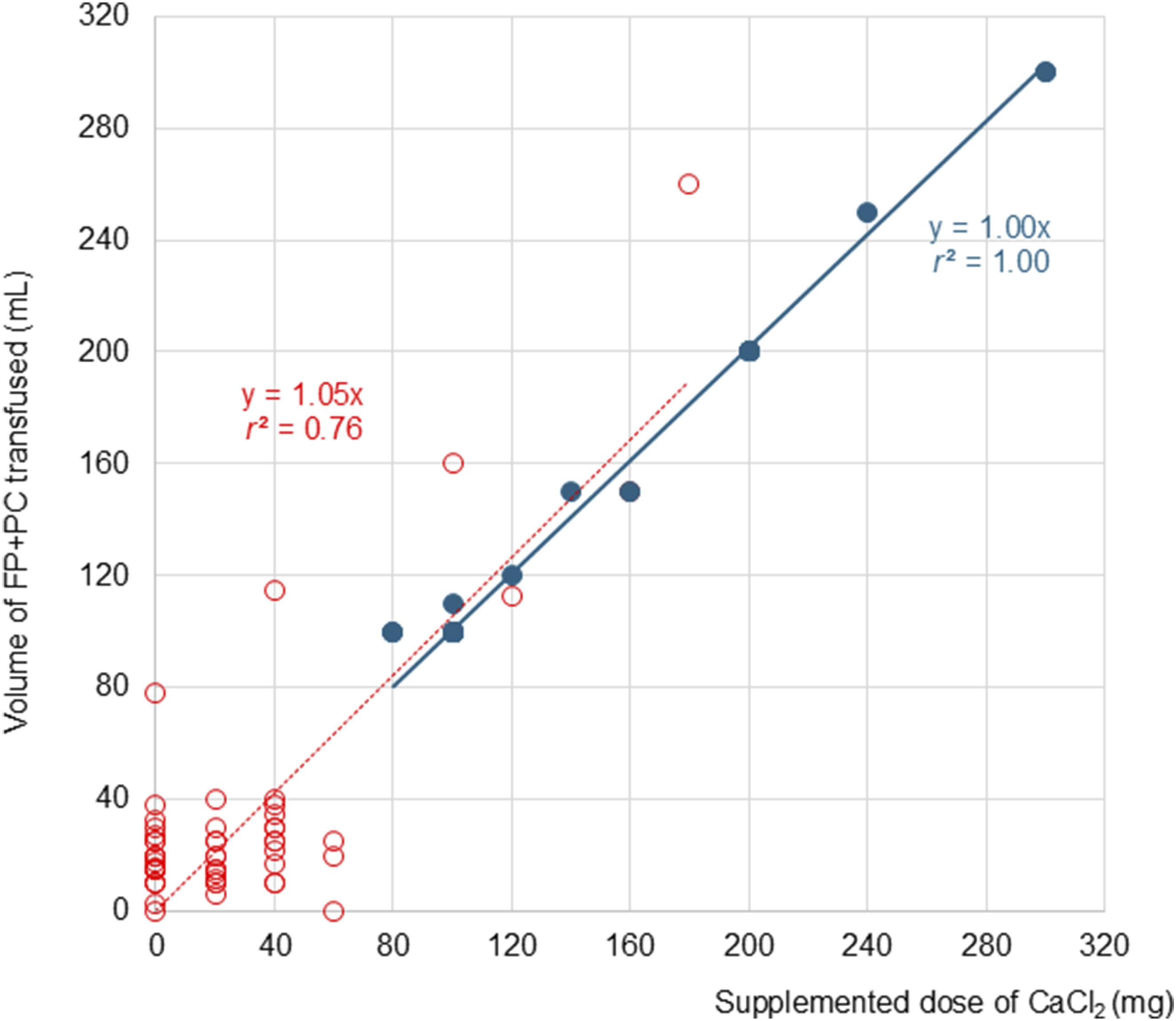
Relationship between the CaCl2 dose and transfusion volume of FP & PC. The solid blue circles represent the data during MUF, and open red circles represent the data after MUF. The solid blue line represents the regression line during MUF and the dotted red line represents the regression line after MUF. The data along the x-axis represent the total volume of CaCl2 administered during each period, and data along the y-axis represent the total transfusion volume of FP & PC in each period. FP, fresh frozen plasma; PC, platelet concentrates; and MUF, modified ultrafiltration.
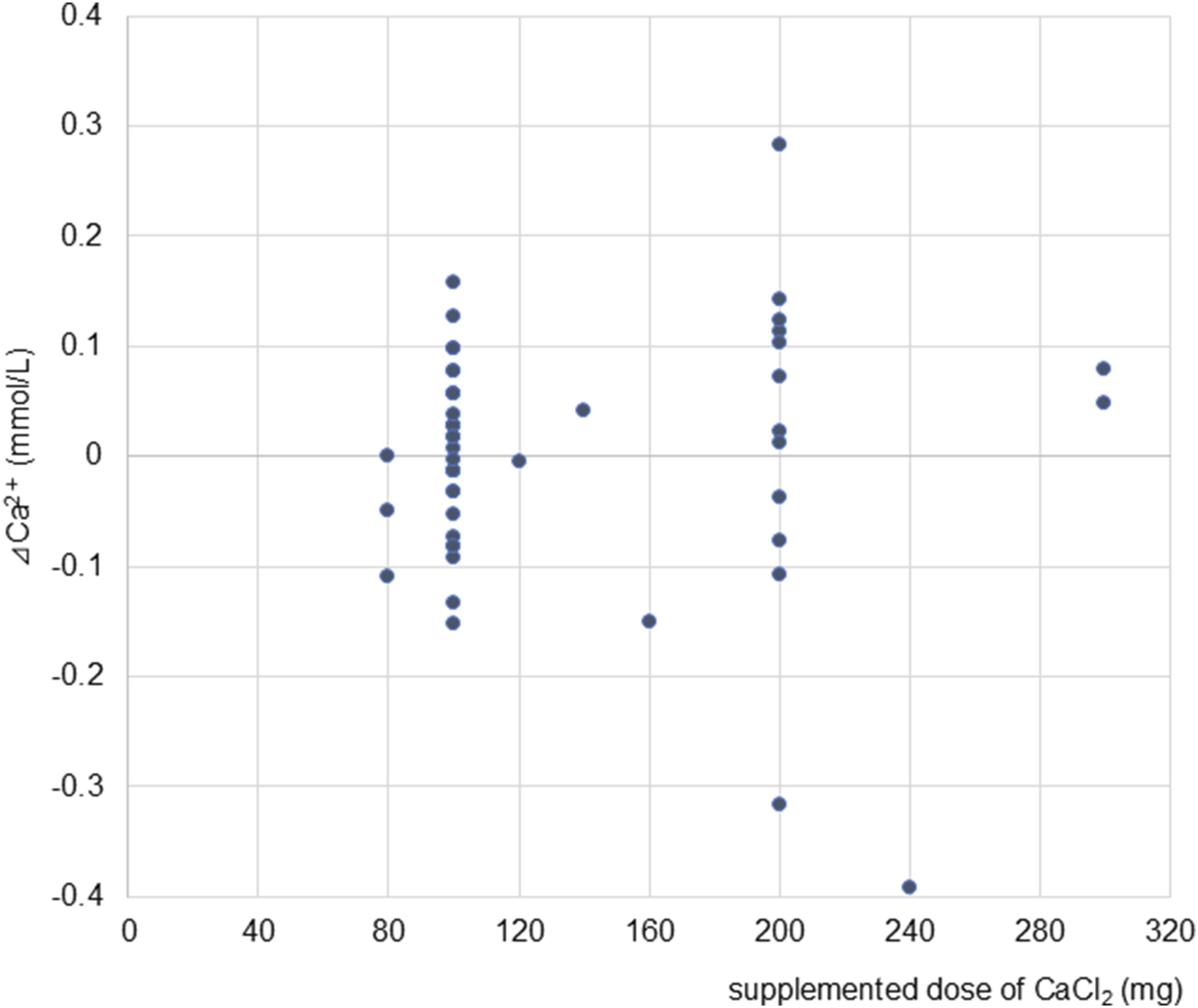
The [Ca2+] values at T1 were 1.16 [1.12, 1.22] mmol/L (Figure 2). The values followed a nearly unimodal distribution, and all the values were within the normal range. The time fromT1 to T2 ranged from 29 to 244 min. The [Ca2+] values at T2 were 1.26 [1.22, 1.30] mmol/L, and were slightly higher than those at T1. The values at T2 also followed a unimodal distribution, and all the values were in the normal range (Figure 2). The total dose of CaCl2 administered during MUF varied from case to case, but there was no significant difference in [Ca2+] fluctuations during MUF (Figure 3). Histogram of [Ca2+] values at T1 and T2. Blue bars represent the data at T1, and orange bars represent the data at T2. T1, end of administration of FP, PC and CaCl2 solution during MUF; T2, chest closure. Distribution of Δ[Ca2+] during MUF relative to the total dose of CaCl2 administered during MUF. The correlation coefficient (r) was 0.31, which does not indicate a significant correlation. Δ[Ca2+]: increments in ionized calcium ([Ca2+]) levels from T0 to T1.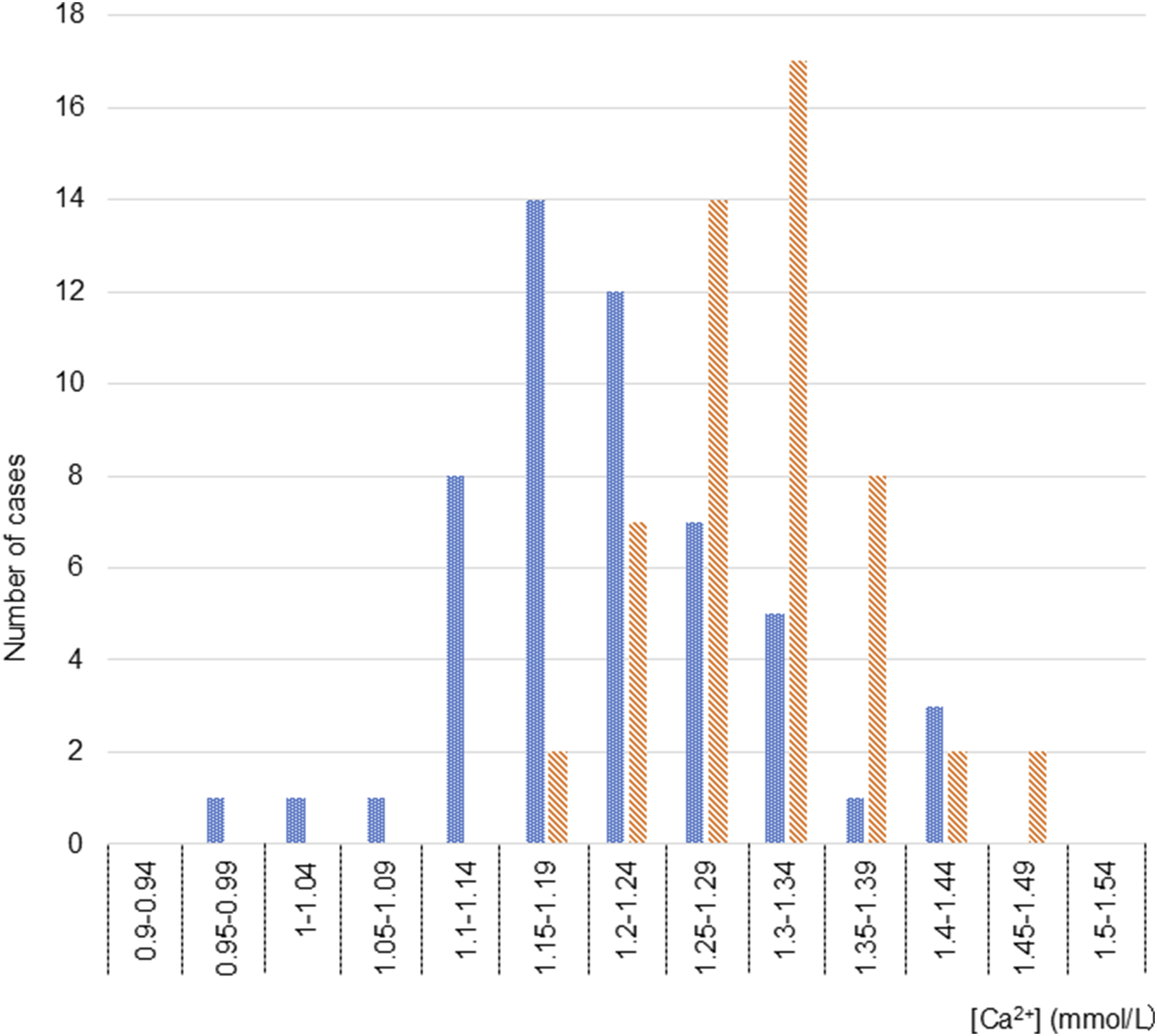
Discussion
The present results show that administration of 20 mg CaCl2 for every 20 mL FP & PC administered maintained normal [Ca2+] levels at T1 and T2 during cardiac surgery in neonates and infants. The finding that Δ[Ca2+] during MUF did not correlate with the total dose of CaCl2 administered during this period in the present study indicates that a fixed ratio of (FP + PC) (mL) to CaCl2 (mg), approximately 1 (0.93-1.25), and not the total dose of CaCl2 administered, contributes to maintenance of ionized normocalcemia. This is the first study to verify the validity of the replacement formula “(FP + PC) (mL) / CaCl2 (mg) = 1” during MUF in cardiac surgery for neonates and infants.
Ionized hypocalcemia reduces myocardial contractility of neonates because neonatal heart is dependent on the Ca2+ flux across the plasma membrane for its functioning and because they lack the calcium stores of the adult myocardium.8–10 Further, since the neonatal heart does not have much reserve capacity in the weaning period after termination of CPB, reduction of cardiac contractility in this period induces cardiac overdistension and hypotension. 11 Timely and appropriate supplementation of calcium is required to maintain normocalcemia when rapidly administering FP & PC to neonates and infants during cardiac surgery.
The (FP + PC) (mL) / CaCl2 (mg) ratios in the present study was close to 1, which approximates the data from an in vitro study and the data from a study in patients undergoing liver transplantation.5,6 The (FP + PC) (mL) / CaCl2 (mg) ratios in our study, on the other hand, were about a sixth lower than those in a previous adult study, which showed that [Ca2+] levels decrease from 0.9 mmol/L to 0.7 mmol/L following transfusion of 450 mL of citrated blood at a rate of 1.5 mL/kg/min. 12 Since average-weight adults have a plasma volume of approximately 3.5 L, administration of only 0.7 mmol (78 mg) of CaCl2 will raise plasma Ca2+ levels from 0.7 mmol/L to 0.9 mmol/L. The adult study theoretically indicates an (FP + PC) (mL) / CaCl2 (mg) ratio of 5.8 (450 / 78) in this situation. In adults, supplementation with 1 mg of CaCl2 per 1 mL of blood product is not recommended in common on recent findings. 7 The difference in the transfusion rate per kg body weight might explain the reason for the large discrepancy between the data in our present study and those in the previous adult study. 12 It may be actually due to the difference in calcium stores as well as plasma availability of calcium in the neonate and infant compared to adults. 13 Additionally, the transfusion rates per kg body weight in neonates and infants in the present study ranged from 2 to 10 mL/kg/min, which exceed those in the previous adult study. 12 In the case of neonates with a total venous return of 400 mL/min receiving an FP transfusion of 20 mL/min, the transfused FP occupies 5% of the systemic venous return. With MUF, since excessive water is removed by ultrafiltration at the same rate as the transfusion (20 mL/min), 5% of the patient’s blood in the systemic veins consists of administered FP. Further, since the mixed blood from the veins first flows directly into the right atrium without going through the hepatic circulation (hepatic artery), the situation resembles the in vitro situation and an anhepatic situation. Thus, the (FP + PC) (mL) / CaCl2 (mg) ratios in our study probably approximate those in the previous in vitro study and those of the study in patients undergoing liver transplantation for this reason.5,6 Citrate, used as an anticoagulant in FP, is normally cleared by the kidneys and metabolized in the liver and muscles via the Krebs cycle. 14 However, in neonates and infants, this clearance is reduced due to immature liver and kidney function, increasing the risk of citrate accumulation and subsequent hypocalcemia.15,16
CaCl2 administration can cause latent hypercalcemia following the cessation of FP transfusion due to metabolism of the citrate. A previous adult study showed an increase in [Ca2+] from 0.7 mmol/L to 0.9 mmol/L 10 min after the cessation of transfusion of 900 mL of citrated blood. 12 Our study showed, however, that [Ca2+] increases only slightly and remains within the normal range 29-244 min after cessation of a rapid transfusion of FP & PC during MUF. Furthermore, our study showed that additional transfusion of FP & PC in the post-MUF period required additional CaCl2 supplementation. We did not analyze the determinants of need for the continuation of calcium supplementation post MUF to the end of surgery. However the need for the continuation of calcium supplementation and the lack of latent hypercalcemia can be attributed to immaturity of citrate metabolism in neonates, since neonates are physiologically immature in terms of hepatic metabolism and are, therefore, vulnerable to drug dosing. 17 Furthermore, the transfusion volume per kg body weight in neonates and infants in our present study was relatively large in comparison with that in adults in the previous study. Hence, neonates and infants might not be able to completely metabolize the full dose of exogenous citrate over 29 to 244 min, leading to its persistence in circulation and continued combination with ionized calcium, preventing hypercalcemia.
Our study demonstrates the validity of the formula “(FP + PC) (mL) / CaCl2 (mg) = 1” in rapid transfusion (>2 mL/kg/min) during MUF for neonates and infants. This formula might also be applicable in other situations requiring rapid transfusion (>2 mL/kg/min) in infants and children. A pediatric plasmapheresis study showed that infusing 11 mmol calcium with each liter of FP helps maintain ionized normocalcemia. 18 The (FP + PC) (mL) / CaCl2 (mg) ratio in the plasmapheresis study was 0.8, which is approximately the same as the ratio of 1 used in this study. However, the appropriate CaCl2 dose with a lower rate of transfusion of FP & PC (of less than 2 mL/kg/min) is unclear. Generally, patients’ [Ca2+] levels should be measured repeatedly, if possible, to titrate the CaCl2 dose in transfusion of citrated blood.
There are various methods for administering CaCl2. We have clinically seen that rapid transfusion of 20 mL FP to neonates causes a gradual deterioration of cardiac contractility, lowers arterial blood pressure, and raises the left atrial pressure and central venous pressure. Subsequent administration of 10 mg CaCl2 immediately improves cardiac contractility, raises the arterial blood pressure, and lowers the left atrial pressure and the central venous pressure. Thus, in cases with low cardiac reserve, we give 10 mg CaCl2 per 10 mL FP, and not 20 mg CaCl2 per 20 mL of FP. Based on our clinical experience, this finely divided dosing method leads to smaller hemodynamic fluctuations, even though the transfusion rates of the FP are the same. Calcium can also be given as in infusion, although adjusting the CaCl2 administration rate to match the FP transfusion rate is complicated, since the FP transfusion rate is instantaneously raised or lowered depending on the patients’ hemodynamics at that moment.
Limitations
There are some limitations to our study. First, we did not measure total calcium or citrate concentrations in serum. Thus, we cannot provide a conclusive explanation for the mechanism of maintenance of ionized normocalcemia. Second, blood loss in the surgical field would have influenced the data, even though the blood was aspirated by CPB suction and returned to the patient during MUF. Third, (FP + PC) (mL) / CaCl2 ratios were approximately 1 during MUF in all cases in our study. Thus, we did not assess the required [Ca2+] levels using a management strategy of “(FP + PC) (mL) / CaCl2 ratio >1.25” during MUF. This is because we assumed that “(FP + PC) (mL) / CaCl2 (mg) ratio >1.25” would result in hypocalcemia and, thus, hemodynamic instability. This assumption is supported by our data for post-MUF transfusion of FP & PC in cases in which CaCl2 was supplemented in a timely manner for achieving normal calcium concentrations while monitoring [Ca2+] levels. The post-MUF data showed that the (FP + PC) (mL) /CaCl2 (mg) ratio calculated using a regression analysis was also close to 1 (1.05).
Conclusion
Administering 20 mg CaCl2 per 20 mL of FP & PC maintains the patients’ [Ca2+] levels during MUF. The appropriate supplementation dose of CaCl2 per transfusion of FP & PC after MUF remains the same as during MUF. Thus, the “(FP + PC) (mL)/ CaCl2 (mg) = 1” rule can be used as a guide during cardiac surgery in neonates and infants, although titration of the CaCl2 dose using repeated measurements of the patients’ [Ca2+] levels, if possible, is recommended.
Footnotes
Acknowledgements
A part of this study was presented at the 71st Annual Meeting of the Japanese Society of Anesthesiologists, Kobe, Japan, on June 7, 2024. We thank Forte Science Communications for English editing services.
Author contributions
Kouki Fukuda: This author helped to handle this manuscript, to design the study, to conduct the study and to write the manuscript. Tatsuhiko Masue: This author helped to design the study, to conduct the study and to write the manuscript.
Declaration of conflicting interests
The author(s) declared no potential conflicts of interest with respect to the research, authorship, and/or publication of this article.
Funding
This work was supported by the Department of Anesthesiology, Gifu Prefectural General Medical Center, Gifu, Japan. The Japanese Society of Pediatric Anesthesiology provided financial support for the submission of this paper in English.
Ethical approval
This study was approved by the Institutional Review Board of Gifu Prefectural General Medical Center (16/Jun/2023 No.866). The study complied with the principles of the Declaration of Helsinki.
Consent to participate
This study was approved by the Institutional Review Board of Gifu Prefectural General Medical Center (16/Jun/2023 No.866) which waived the requirement for written informed consent owing to the study’s retrospective nature.

Data Availability Statement
Data release was withheld to protect patients’ personal information.